
• Home
  • About
  • DavidKitz.ca
  • Youtube Videos
  • Books by David
  • Books on Amazon.com

I love the Psalms

~ Connecting daily with God through the Psalms

I love the Psalms

Tag Archives: destruction of Jerusalem

Spared by the Grace of God

27 Wednesday Aug 2025

Posted by davidkitz in Psalm 137

≈ Leave a comment

Tags

Bible, compassion, destruction of Jerusalem, devotion, Esau, grace of God, mercy, Prayer, pride, Psalms, Schadenfreude, the LORD

Reading: Psalm 137:7-9

Remember, LORD, what the Edomites did
on the day Jerusalem fell.
“Tear it down,” they cried,
“tear it down to its foundations!”
Daughter Babylon, doomed to destruction,
happy is the one who repays you
according to what you have done to us.
Happy is the one who seizes your infants
and dashes them against the rocks
(NIV). *
Reflection
German is a fascinating language. It’s a language that seems to specialize in compound words—short words that are combined to form longer words. Some English language examples of compound words are homerun, overcoat and windshield.

Schadenfreude is a compound German word. It’s such a useful and descriptive word that it has migrated into the English language, and it can be found in any quality English dictionary. Schaden means harm or damage. Freude means joy. Simply put schadenfreude means joy experienced at another person’s expense—rejoicing in someone else’s suffering or loss.

Today’s reading from Psalm 137 is all about schadenfreude. The Edomites celebrated the destruction of Jerusalem. Rather than mourn over their neighbor’s calamity, they joined in calling for the destruction of the Jewish capital.

This manifestation of schadenfreude was rooted in centuries of fraternal rivalry and envy. The Edomites were the descendants of Esau, while the people of Jerusalem were the descendants of Jacob. These two people groups were linked by heredity, language, and culture, and yet generation after generation they continued this brothers’ feud.

This psalm is not the only biblical counsel for us to avoid rejoicing in other people’s harm: Do not gloat when your enemy falls; when they stumble do not let your heart rejoice, or the LORD will see and disapprove and turn his wrath away from them (Proverbs 24:17-18).

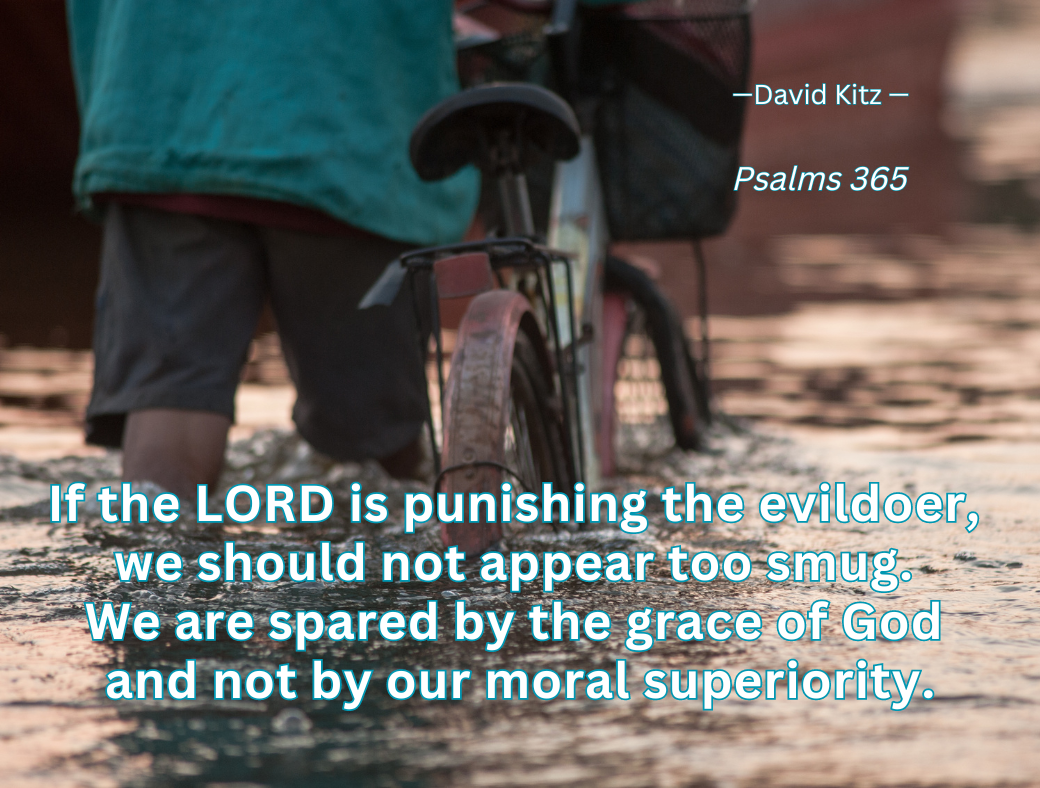
If the LORD is punishing the evildoer, we should not appear too smug. We are spared by the grace of God and not by our moral superiority. The self-righteous suffer from delusions of pride. It’s best not to identify with that camp. The opposite response is called for. Rather than crowing over someone else’s misfortune, we should be offering help or drawing lessons on how to avoid a similar calamity.

When I see others experiencing calamity, I need to replace my schadenfreude with the genuine joy found in extending mercy, grace and compassion.

Response: LORD God, at times I have been guilty of schadenfreude. Help me to show compassion rather than smug indifference when I see others experience loss. Thank you for your ongoing mercy. Amen.

Your Turn: Have you experienced schadenfreude? How do you keep it in check?

Para la publicación de Salmos 365 de hoy en español haga clic aquí.

bgbg_v4.3_1501818
* NEW INTERNATIONAL VERSION, COPYRIGHT ©1973, 1978, 1984, 2011 BY BIBLICA

Please pray for peace to return to Israel, Gaza, and Ukraine!

Volume I of Psalms 365: Develop a Life of Worship and Prayer won the Best Book of the Year Award from The Word Guild and Volume II has won the Best Devotional of the Year Award. For those who love God’s word, this three-book series is an ideal way to daily meet with the Lord. To purchase or for a closer look click here.
A gripping read from David Kitz.
Is a return-to-Jesus revival possible in our time?
This book points the way forward.
For details click here.
A Lament for Jerusalem

26 Tuesday Aug 2025

Posted by davidkitz in Psalm 137

≈ Leave a comment

Tags

Babylon, Babylonian exile, Bible, destruction of Jerusalem, devotion, God, idolatry, Jerusalem, judgment, mercy of God, Psalms, repentance, Ten Commandments, Zion

Reading: Psalm 137:1-6

By the rivers of Babylon we sat and wept
when we remembered Zion.
There on the poplars we hung our harps,
 for there our captors asked us for songs,
our tormentors demanded songs of joy;
they said, “Sing us one of the songs of Zion!”
How can we sing the songs of the LORD
while in a foreign land?
If I forget you, Jerusalem,
may my right hand forget its skill.
May my tongue cling to the roof of my mouth
if I do not remember you,
if I do not consider Jerusalem my highest joy
(NIV) *

Reflection
It’s difficult to pinpoint the time in history when many of the Psalms were written. Many scholars believe that the Old Testament was compiled over a period of about 900 to 1,000 years. As for the Book of Psalms, there is considerable evidence to suggest that psalms were collected from three distinct periods: the reign of King David (1 Chronicles 23:5), the rule of Hezekiah (2 Chronicles 29:30), and during the leadership of Ezra and Nehemiah (Nehemiah 12:24).[1]

Psalm 137 is distinct, because we can tell from its content that this psalm was written early during the period of the Babylonian exile. Memories of Nebuchadnezzar’s destruction of Jerusalem in 586 BC were still fresh—etched with bitterness and pain in the mind of the author.

There are two great pivot points in the history of Old Testament Israel. The first is the liberation of Israel from Egypt and the subsequent conquest of the holy land. The second is the destruction of Jerusalem and the temple, which was followed by the seventy-year exile in Babylon. The mercy and power of God brought about the first pivotal event. The disobedience and idolatry of man set in motion the catastrophe of the second event.

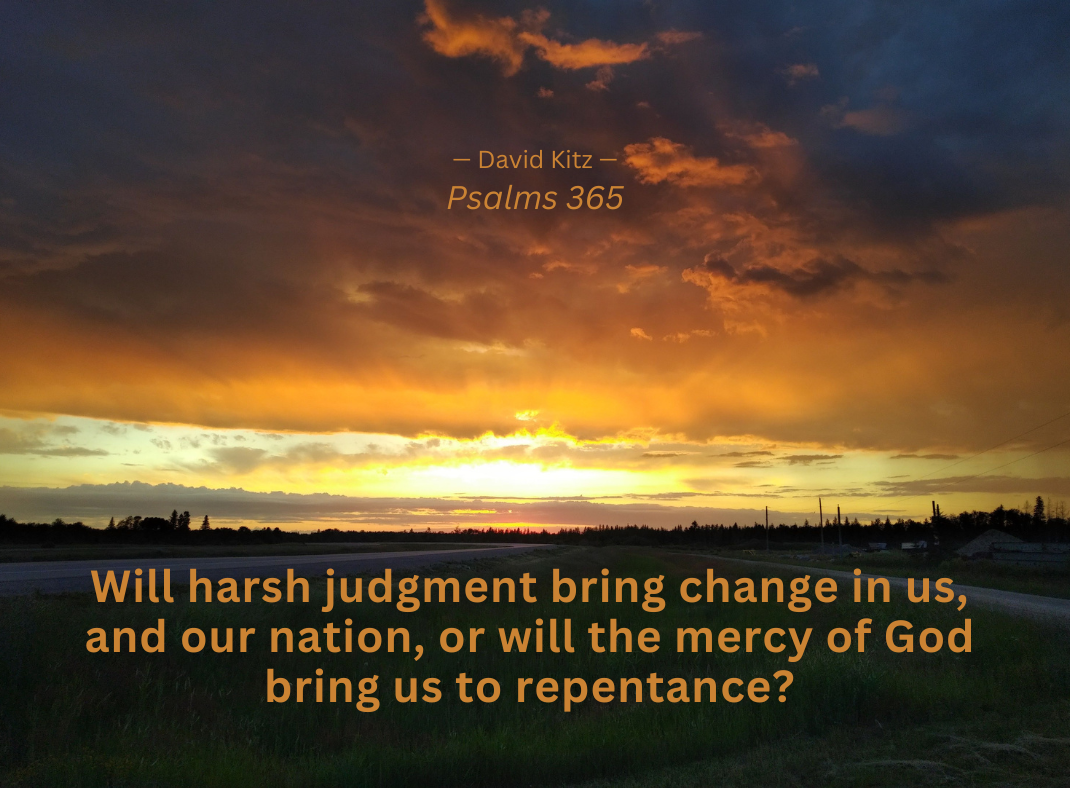
From its inception the Jewish nation flirted with idolatry. While Moses was receiving the Ten Commandments, the people were reveling before a golden calf. King Solomon set up idols in Jerusalem so his foreign wives could worship their gods. See 1 Kings 11:1-8. This duplicity continued generation after generation until the Babylonians swept in and destroyed Jerusalem. Harsh judgment brought change. Will harsh judgment bring change in us, or will the mercy of God bring us to repentance?

Response: Father God, I don’t want to learn things the hard way. I want to be quick to obey you. Help me to learn from the lessons of history. You are the one, true God. I worship you. Amen.

Your Turn: How faithful are you to the LORD? Do other interests draw you away?

[1] K.R. “Dick” Iverson, Spirit Filled Life Bible, New King James Version, Jack W. Hayford, General Editor, Thomas Nelson Publishers, Nashville, TN, 1991, p. 750.

Para la publicación de Salmos 365 de hoy en español haga clic aquí.

bgbg_v4.3_1501818
* NEW INTERNATIONAL VERSION, COPYRIGHT ©1973, 1978, 1984, 2011 BY BIBLICA


Please pray for peace to return to Israel, Gaza, and Ukraine!

Volume I of Psalms 365: Develop a Life of Worship and Prayer won the Best Book of the Year Award from The Word Guild and Volume II has won the Best Devotional of the Year Award. For those who love God’s word, this three-book series is an ideal way to daily meet with the Lord. To purchase or for a closer look click here.

A gripping read from David Kitz.
Is a return-to-Jesus revival possible in our time?
This book points the way forward.
For details click here.

Schadenfreude in the Psalms

03 Wednesday Apr 2024

Posted by davidkitz in Psalm 137, Psalms

≈ 3 Comments

Tags

compassion, destruction of Jerusalem, grace of God, mercy of God, Prayer, pride, Psalms, Schadenfreude, self-righteous, the LORD

Today’s Devotion from the Psalms

Reading: Psalm 137:7-9
Remember, LORD, what the Edomites did
on the day Jerusalem fell.
“Tear it down,” they cried,
“tear it down to its foundations!”
Daughter Babylon, doomed to destruction,
happy is the one who repays you
according to what you have done to us.
Happy is the one who seizes your infants
and dashes them against the rocks
(NIV). *

pxl_20240306_093546342

Carcassonne Castle, France — photo by David Kitz

Reflection
German is a fascinating language. It’s a language that seems to specialize in compound words—short words that are combined to form longer words. Some English language examples of compound words are homerun, overcoat, and windshield.

Schadenfreude is a compound German word. It’s such a useful and descriptive word that it has migrated into the English language, and it can be found in any quality English dictionary. Schaden means harm or damage. Freude means joy. Simply put schadenfreude means joy experienced at another person’s expense—rejoicing in someone else’s suffering or loss.

Today’s reading from Psalm 137 is all about schadenfreude. The Edomites celebrated the destruction of Jerusalem. Rather than mourn over their neighbor’s calamity, they joined in calling for the destruction of the Jewish capital.

This manifestation of schadenfreude was rooted in centuries of fraternal rivalry and envy. The Edomites were the descendants of Esau, while the people of Jerusalem were the descendants of Jacob. These two people groups were linked by heredity, language, and culture, and yet generation after generation they continued this brothers’ feud.

This psalm is not the only biblical counsel for us to avoid rejoicing in other people’s harm: Do not gloat when your enemy falls; when they stumble do not let your heart rejoice, or the LORD will see and disapprove and turn his wrath away from them (Proverbs 24:17-18).

If the LORD is punishing the evildoer, we should not appear too smug. We are spared by the grace of God and not by our moral superiority. The self-righteous suffer from delusions of pride. It’s best not to identify with that camp. The opposite response is called for. Rather than crowing over someone else’s misfortune, we should be offering help or drawing lessons on how to avoid a similar calamity.

When I see others experiencing calamity, I need to replace my schadenfreude with the genuine joy found in extending mercy, grace, and compassion. 

Response: LORD God, at times I have been guilty of schadenfreude. Help me to show compassion rather than smug indifference when I see others experience loss. Thank you for your ongoing mercy. Amen.

Your Turn: Have you experienced schadenfreude? How do you keep it in check?

Para la publicación de Salmos 365 de hoy en español haga clic aquí.

* NEW INTERNATIONAL VERSION, COPYRIGHT ©1973, 1978, 1984, 2011 BY BIBLICA

BGBG_v4.3_150[1818]

Please pray for peace to return to Israel, Gaza, and Ukraine!

Volume I of Psalms 365: Develop a Life of Worship and Prayer won the Best Book of the Year Award from The Word Guild and Volume II has won the Best Devotional of the Year Award. For those who love God’s word, this three-book series is an ideal way to daily meet with the Lord. To purchase or for a closer look click here.TheElishaCodeCVR5

To purchase or for a closer look click here.

One of the Great Pivot Points

02 Tuesday Apr 2024

Posted by davidkitz in Psalm 137, Psalms

≈ Leave a comment

Tags

Babylon, Babylonian exile, destruction of Jerusalem, devotion, idolatry, idols, Israel, Jerusalem, Prayer, Psalms, repentance, the LORD

Today’s Devotion from the Psalms

Reading: Psalm 137:1-6
By the rivers of Babylon, we sat and wept
when we remembered Zion.
There on the poplars we hung our harps,
 for there our captors asked us for songs,
our tormentors demanded songs of joy;
they said, “Sing us one of the songs of Zion!”
How can we sing the songs of the LORD
while in a foreign land?
If I forget you, Jerusalem,
may my right hand forget its skill.
May my tongue cling to the roof of my mouth
if I do not remember you,
if I do not consider Jerusalem my highest joy
(NIV) *

pxl_20240308_103400918

Crossing the Aude River, Carcassonne, France — photo by David Kitz

Reflection
It’s difficult to pinpoint the time in history when many of the Psalms were written. Many scholars believe that the Old Testament was compiled over a period of about 900 to 1,000 years. As for the Book of Psalms, there is considerable evidence to suggest that psalms were collected from three distinct periods: the reign of King David (1 Chronicles 23:5), the rule of Hezekiah (2 Chronicles 29:30), and during the leadership of Ezra and Nehemiah (Nehemiah 12:24).[1]

Psalm 137 is distinct, because we can tell from its content that this psalm was written early during the period of the Babylonian exile. Memories of Nebuchadnezzar’s destruction of Jerusalem in 586 BC were still fresh—etched with bitterness and pain in the mind of the author.

There are two great pivot points in the history of Old Testament Israel. The first is the liberation of Israel from Egypt and the subsequent conquest of the holy land. The second is the destruction of Jerusalem and the temple, which was followed by the seventy-year exile in Babylon. The mercy and power of God brought about the first pivotal event. The disobedience and idolatry of man set in motion the catastrophe of the second event.

From its inception the Jewish nation flirted with idolatry. While Moses was receiving the Ten Commandments, the people were reveling before a golden calf. King Solomon set up idols in Jerusalem so his foreign wives could worship their gods. See 1 Kings 11:1-8. This duplicity continued generation after generation until the Babylonians swept in and destroyed Jerusalem. Harsh judgment brought change. Will harsh judgment bring change in us, and our nation, or will the mercy of God bring us to repentance?

Response: Father God, I don’t want to learn things the hard way. I want to be quick to obey you. Help me to learn from the lessons of history. You are the one, true God. I worship you. Amen.

Your Turn: How faithful are you to the LORD? Do other interests draw you away?

[1] K.R. “Dick” Iverson, Spirit Filled Life Bible, New King James Version, Jack W. Hayford, General Editor, Thomas Nelson Publishers, Nashville, TN, 1991, p. 750.

Para la publicación de Salmos 365 de hoy en español haga clic aquí.

* NEW INTERNATIONAL VERSION, COPYRIGHT ©1973, 1978, 1984, 2011 BY BIBLICA

BGBG_v4.3_150[1818]

Please pray for peace to return to Israel, Gaza, and Ukraine!

Volume I of Psalms 365: Develop a Life of Worship and Prayer won the Best Book of the Year Award from The Word Guild and Volume II has won the Best Devotional of the Year Award. For those who love God’s word, this three-book series is an ideal way to daily meet with the Lord. To purchase or for a closer look click here.TheElishaCodeCVR5

To purchase or for a closer look click here.

Suffering from Smug Superiority

13 Monday Jan 2020

Posted by davidkitz in Devotionals, Psalm 137, Psalms

≈ 3 Comments

Tags

compassion, destruction of Jerusalem, joy, mercy, Schadenfreude

Reading: Psalm 137
(Verses 7-9)
Remember, LORD, what the Edomites did
on the day Jerusalem fell.
“Tear it down,” they cried,
“tear it down to its foundations!”
Daughter Babylon, doomed to destruction,
happy is the one who repays you
according to what you have done to us.
Happy is the one who seizes your infants
and dashes them against the rocks
(NIV).

effects

Winter scene Montebello, Quebec — photo by David Kitz

Reflection
German is a fascinating language. It’s a language that seems to specializes in compound words—short words that are combined to form longer words. Some English language examples of compound words are quarterback, overcoat and windshield.

Schadenfreude is a compound German word. Actually, it’s such a useful and descriptive word that it has migrated into the English language and it can be found in any quality English dictionary. Schaden means harm or damage. Freude means joy. Simply put schadenfreude means joy experienced at another person’s expense—rejoicing in someone else’s suffering or loss.

Today’s reading from Psalm 137 is all about schadenfreude. The Edomites celebrated the destruction of Jerusalem. Rather than mourn over their neighbor’s calamity, they joined in calling for the destruction of the Jewish capital.

This manifestation of schadenfreude was rooted in centuries of fraternal rivalry and envy. The Edomites were the descendants of Esau, while the people of Jerusalem were the descendants of Jacob. These two people groups were linked by heredity, language and culture, and yet generation after generation they continued this brothers’ feud.

This psalm is not the only biblical counsel for us to avoid rejoicing in other people’s harm: Do not gloat when your enemy falls; when they stumble do not let your heart rejoice, or the LORD will see and disapprove and turn his wrath away from them (Proverbs 24:17-18).

If the LORD is punishing the evildoer, we should not appear too smug. We are spared by the grace of God and not by our moral superiority. The self-righteous suffer from delusions born of pride. It’s best not to identify with that camp. The opposite response is called for. Rather than crowing over someone else’s misfortune, we should be offering help, or drawing lessons on how to avoid a similar calamity.

When I see others experiencing calamity, I need to replace my schadenfreude with the genuine joy found in extending mercy, grace and compassion.

Response: LORD God, at times I have been guilty of schadenfreude. Help me to show compassion rather than smug indifference when I see others experience loss. Thank you for your ongoing mercy. Amen.

Your Turn: Have you experienced schadenfreude? How do you keep it in check?

How generous is God?

11 Friday Aug 2017

Posted by davidkitz in Bible, Devotionals, Psalm 31, Psalms

≈ 4 Comments

Tags

abundance, bless, compassion, destruction of Jerusalem, faithfulness, favor, God, God's blessing, grace, Holy Spirit, Jeremiah, joy, Lord God, mercy, peace, Righteousness

Reading:                                      Psalm 31

Verses 19-20

How abundant are the good things
that you have stored up for those who fear you,
that you bestow in the sight of all,
on those who take refuge in you.
In the shelter of your presence you hide them
from all human intrigues;
you keep them safe in your dwelling
from accusing tongues
(NIV).

Reflection
Our view of God is of crucial importance. It will greatly influence how we live our lives on planet earth. Is He a divine ogre waiting to pounce on us for the slightest transgression? Is He aloof, hard of hearing, out of touch and out of reach? Does He stand opposed to your wishes and dreams—the nagging heavenly parent who frowns at your ambitions?

2017-08-03

Bilberry Creek, Orleans, Ontario — photo by David Kitz

That’s not David’s view of God. He saw a caring LORD of heaven and earth, who was only too eager to bless those who sought refuge in Him. That’s why David exclaims, “How abundant are the good things that you have stored up for those who fear you that you bestow in the sight of all, on those who take refuge in you.” 

Think of it for a moment: God has a storehouse of good things just waiting for you. He has prepared a whole series of blessings that He will lavish on those who fear Him. Furthermore, the LORD will bestow those blessings in the sight of all—on all who seek shelter in the shadow of His wings. Now that’s a picture of an amazing God.

What might some of those good things be? First and foremost the LORD has an abundance of mercy set aside just for you. In the midst of unparalleled disaster, as a witness to the destruction of Jerusalem, the prophet Jeremiah rightly discerned the heart of the LORD. Through the LORD’s mercies we are not consumed, because His compassions fail not. They are new every morning; great is your faithfulness (Lamentations 3:22-23). For Jeremiah God was good all the time, even in disaster.

God has an abundance of love, peace and joy set aside just for you. Tap into it; drink deep of it. It’s there for you. For the kingdom of God is not a matter of eating and drinking, but of righteousness, peace and joy in the Holy Spirit, because anyone who serves Christ in this way is pleasing to God and receives human approval (Romans 14:17-18).

We serve a generous God—a God of grace who extends unmerited favor to us. In your mind, stop limiting His blessings. They are abundant, they are stored up for you and they will manifest in the lives of those who love and fear Him.

Response: LORD God, thank you for all the good things you have stored up for me, both temporal and spiritual. I rejoice in you! You are a generous God lavishing mercy on me through your son, Jesus. Amen.

Your Turn: How do you see God? Do you have the right perspective of Him? Is He opposed to your wishes and dreams?

Psalms 365: Develop a Life of Worship and Prayer

Psalms 365 Volume II

Psalms 365 vol 3
— Psalms 365 Volume III

Psalms

Recent posts

  • Ready for the King of Glory December 19, 2025
  • My Spirit Rejoices in God My Savior December 18, 2025
  • Joining the Generation That Seeks God December 18, 2025
  • Why Am I So Favored December 17, 2025
  • How Can You Find the Good Life? December 17, 2025
  • The Power of the Most High December 16, 2025
  •  The Earth Turns to the LORD December 16, 2025

Calendar

December 2025
M T W T F S S
1234567
891011121314
15161718192021
22232425262728
293031  
« Nov    

Blog Posts

Comments

  • davidkitz on Joining the Generation That Seeks God
  • cjsmissionaryminister on God Sent His Son
  • cjsmissionaryminister on The God of the Broken

Blog at WordPress.com.

Privacy & Cookies: This site uses cookies. By continuing to use this website, you agree to their use.
To find out more, including how to control cookies, see here: Cookie Policy
  • Subscribe Subscribed
    • I love the Psalms
    • Join 1,378 other subscribers
    • Already have a WordPress.com account? Log in now.
    • I love the Psalms
    • Subscribe Subscribed
    • Sign up
    • Log in
    • Report this content
    • View site in Reader
    • Manage subscriptions
    • Collapse this bar
 

Loading Comments...