• Home
  • About
  • DavidKitz.ca
  • Youtube Videos
  • Books by David
  • Books on Amazon.com

I love the Psalms

~ Connecting daily with God through the Psalms

I love the Psalms

Tag Archives: forgiveness

When Jesus Saw Their Faith

23 Wednesday Apr 2025

Posted by davidkitz in Psalm 103

≈ 1 Comment

Tags

Bible, faith, forgiveness, grace of God, healing, Jesus, mercy of God, Prayer, Psalms

Today’s quote and prayer from
“Psalms 365: Develop a Life of Worship and Prayer”
by David Kitz.

 Reading: Psalm 103:7-12

Heavenly Father,
because of your love,
mercy, and grace I want to serve you.
Please accept my feeble attempts
at loving you back.
Jesus,
your forgiveness leaves me
with a debt of love I cannot pay.

Amen.

— — —

Some men came,
bringing to him a paralyzed man,
carried by four of them.
 
Since they could not get him to Jesus
because of the crowd,
they made an opening in the roof above Jesus
by digging through it
and then lowered the mat the man was lying on.
 
When Jesus saw their faith,
he said to the paralyzed man,
“Son, your sins are forgiven.”

Now some teachers of the law
were sitting there,
thinking to themselves,
“Why does this fellow talk like that?
He’s blaspheming!
Who can forgive sins but God alone?”

Immediately Jesus knew in his spirit
that this was what they were thinking in their hearts,
and he said to them,
“Why are you thinking these things?

Which is easier:
to say to this paralyzed man,
‘Your sins are forgiven,’
or to say,
‘Get up, take your mat and walk’?

But I want you to know
that the Son of Man
has authority on earth to forgive sins.”
So he said to the man,
“I tell you, get up,
take your mat and go home.”

He got up, took his mat
and walked out in full view of them all.
This amazed everyone
and they praised God, saying,
“We have never seen anything like this!”

(Mark 2:3-12 NIV)*

Para la publicación de Salmos 365 de hoy en español haga clic aquí.

bgbg_v4.3_1501818
* NEW INTERNATIONAL VERSION, COPYRIGHT ©1973, 1978, 1984, 2011 BY BIBLICA

Please pray for peace to return to Israel, Gaza, and Ukraine!

Volume I of Psalms 365: Develop a Life of Worship and Prayer won the Best Book of the Year Award from The Word Guild and Volume II has won the Best Devotional of the Year Award. For those who love God’s word, this three-book series is an ideal way to daily meet with the Lord. To purchase or for a closer look click here.

Today’s review of “The Soldier Who Killed a King“

DavidKitz_Reviews Preview

DavidKitz_Reviews Preview


This biblically accurate novel is ideal for the Lent/Easter season.
For details click here.

Reframing Our View of God

23 Wednesday Apr 2025

Posted by davidkitz in Psalms

≈ Leave a comment

Tags

accuser, compassion, faith, forgiveness, grace, love, mercy, nature of God, patience, Reflection, the LORD, transformation

Today’s Devotion from Psalms 365 by David Kitz

Reading: Psalm 103:7-12
He made known his ways to Moses,
his deeds to the people of Israel:
The LORD is compassionate and gracious,
slow to anger, abounding in love.
He will not always accuse,
nor will he harbor his anger forever;
he does not treat us as our sins deserve
or repay us according to our iniquities.
For as high as the heavens are above the earth,
so great is his love for those who fear him;
as far as the east is from the west,
so far has he removed our transgressions from us (NIV). *

The heavens declare the glory of God — photo by David Kitz

Reflection
Here is a little secret that will be a secret no longer: Of all the psalms, Psalm 103 is my favorite.

Why do I have such a deep love for this psalm? The answer lies in what the psalm tells us about God. The LORD is compassionate and gracious, slow to anger, abounding in love (v. 8).

That sentence should be etched on our hearts and minds. The character of God is revealed in these traits. I stand in need of a God who has these qualities because by nature I am the polar opposite. In various situations I have lacked compassion. I have reasoned that those who suffer are getting what they deserve. Rather than extent grace, I tend to be judgmental. When things don’t go my way, I can be quick tempered rather than slow to anger. I like to think I am loving, but I’m not sure others would always agree.

The amazing truth is that despite all our shortcomings God still loves you and me. He [the LORD] will not always accuse, nor will he harbor his anger forever; he does not treat us as our sins deserve or repay us according to our iniquities (v. 9-10).

Satan is the accuser; God is the merciful forgiver. Sometimes I think in our minds we have reversed those roles. That’s why this psalm acts as such a powerful antidote to wrong thinking. Do you think God cannot forgive you because of some past transgression? Think again. Psalm 103 tells us to view God differently. He is more compassionate than we can imagine, more loving than we can fathom, more patient than we can comprehend.

For as high as the heavens are above the earth, so great is his love for those who fear him; as far as the east is from the west, so far has he removed our transgressions from us (v. 11-12).

Infinite—our God’s love and compassion are infinite. Enough said.

Response: Father God, because of your love, mercy, and grace I want to serve you. Please accept my feeble attempts at loving you back. Your forgiveness leaves me with a debt of love I cannot pay. Amen.

Your Turn: Have you had a distorted view of God? How can the compassionate nature of God as seen in this Psalm reshape your perception? What is your favorite psalm? Why?

Para la publicación de Salmos 365 de hoy en español haga clic aquí.

bgbg_v4.3_1501818
* NEW INTERNATIONAL VERSION, COPYRIGHT ©1973, 1978, 1984, 2011 BY BIBLICA

Please pray for peace to return to Israel, Gaza, and Ukraine!

Volume I of Psalms 365: Develop a Life of Worship and Prayer won the Best Book of the Year Award from The Word Guild and Volume II has won the Best Devotional of the Year Award. For those who love God’s word, this three-book series is an ideal way to begin the new year, and daily meet with the Lord. To purchase or for a closer look click here.

RGB72PsalmsVol2

A gripping read from David Kitz.
4485 SHARABLE-2

To purchase or for a closer look click here.

They Crucified Him There

18 Friday Apr 2025

Posted by davidkitz in Psalm 102, Psalms

≈ Leave a comment

Tags

amazing grace, Bible, crucified, forgiveness, Jesus, king of the Jews, Messiah, paradise, Prayer

Today’s quote and prayer from
“Psalms 365: Develop a Life of Worship and Prayer”
by David Kitz.

 Reading: Psalm 102:18-22

Heavenly Father,
 I thank you for your intervention in my life.
You have given me a story to tell—
a testimony to your amazing grace.
Help me to carry that testimony to a future generation—
a generation that is not yet born. 

Amen.

— — —

 Two other men, both criminals,
were also led out with him to be executed.
When they came to the place called the Skull,
they crucified him there,
along with the criminals—
one on his right, the other on his left.
Jesus said,
“Father, forgive them,
for they do not know what they are doing.”
And they divided up his clothes by casting lots.

The people stood watching,
and the rulers even sneered at him.
They said,
“He saved others;
let him save himself if he is God’s Messiah,
the Chosen One.”

The soldiers also came up and mocked him.
They offered him wine vinegar
 and said,
“If you are the king of the Jews, save yourself.”

There was a written notice above him,
which read:
This Is the King of the Jews.

One of the criminals
who hung there hurled insults at him:
“Aren’t you the Messiah?
Save yourself and us!”

But the other criminal rebuked him.
“Don’t you fear God,” he said,
“since you are under the same sentence?

We are punished justly,
for we are getting what our deeds deserve.
But this man has done nothing wrong.”

Then he said,
“Jesus, remember me
when you come into your kingdom.”

Jesus answered him,
“Truly I tell you,
today you will be with me in paradise.”
(Luke 23:32-43, NIV)*

Para la publicación de Salmos 365 de hoy en español haga clic aquí.

bgbg_v4.3_1501818
* NEW INTERNATIONAL VERSION, COPYRIGHT ©1973, 1978, 1984, 2011 BY BIBLICA

Please pray for peace to return to Israel, Gaza, and Ukraine!

Volume I of Psalms 365: Develop a Life of Worship and Prayer won the Best Book of the Year Award from The Word Guild and Volume II has won the Best Devotional of the Year Award. For those who love God’s word, this three-book series is an ideal way to daily meet with the Lord. To purchase or for a closer look click here.

Today’s review of “The Soldier Who Killed a King“

An Immensely Readable Historical Fiction about Easter and the Passion of Christ. Recommended!

I’ve read this book and enjoyed it. It is biblically accurate and any dramatization never went beyond the realm of reality and plausibility. The thorough research behind the writing is quite obvious.
Kitz keeps a tight pace through the narrative and keeps it true to the spirit of Jesus Christ’s life, death, and resurrection without ever getting preachy.
I wished there were more books like this. It’s a historical fiction, for sure, but there was nothing within the fiction that would contradict what the Gospels in the Bible describe.
Best of all, the book is intended for general readership and not restricted to Christians. For anyone who would like to enjoy an immensely readable, dramatic, emotional, and accurate account of Easter and the time leading up to it, I highly recommend “The Soldier Who Killed a King.” For Christians, it’s a great read for Lent and Easter.
— Fast Eddie


This biblically accurate novel is ideal for the Lent/Easter season.
For details click here.

Passing Faith to Future Generations

18 Friday Apr 2025

Posted by davidkitz in Psalms

≈ Leave a comment

Tags

faith, forgiveness, freedom, generation, Good Friday, grace, hope, Jesus, Psalms, redemption, salvation, testimony, the LORD

Today’s Devotion from Psalms 365 by David Kitz

Reading: Psalm 102:18-22
Let this be written for a future generation,
that a people not yet created may praise the LORD:
“The LORD looked down from his sanctuary on high,
from heaven he viewed the earth,
to hear the groans of the prisoners
and release those condemned to death.”
So the name of the LORD will be declared in Zion
and his praise in Jerusalem
when the peoples and the kingdoms
assemble to worship the LORD (NIV). *

Photo by Mu00e1ximo on Pexels.com

Reflection
Time capsules are a fascinating idea. They can tell us a great deal about what people at a certain point in history considered important or indicative of that particular time. What was significant in the lives of people 100 years ago? A time capsule gives us a glimpse into that long ago period. For instance, a time capsule from 1959 might contain a hula-hoop, but the significance of that craze might well be lost on the current generation of young people.

In some respects, this reading from Psalm 102 acts as a time capsule. It is a written testimony of what the LORD has done. “The LORD looked down from his sanctuary on high, from heaven he viewed the earth, to hear the groans of the prisoners and release those condemned to death” (v. 19-20).

Generation after generation of Bible readers has read this written testimony. They know that the LORD hears the groans of prisoners and sets them free. But this testimony doesn’t end there. It doesn’t end there because the LORD has not stopped listening and acting. He continues to do these things today.

I can personally testify to being set free from the bondage of sin. I know that due to my sinful nature I was condemned to die. But Jesus suffered the punishment I deserve on my behalf. When I called out to God, He heard my cry and set me free from the death penalty I was living under. My body may perish, but through the blood shed by Jesus and the work of the Holy Spirit, I have eternal life. That’s my testimony. That’s the time capsule message I want to send to the next generation and beyond.

By the way, my testimony is not unique. Millions of people around the world can testify to the life changing power of the LORD. They all have time capsule testimonies that they want to send to a generation yet unborn.

What about you? Do you have a testimony to God’s redeeming forgiveness and power? It might be worth your time to write it down. We overcome the attacks of the enemy by the words of our testimony. You have a story to tell. It’s a time capsule with contents far more valuable than a hula-hoop.

Response: Heavenly Father, I thank you for your intervention in my life. You have given me a story to tell—a testimony to your amazing grace. Help me to carry that testimony to a future generation—a generation that is not yet born. Amen.

Your Turn: Have you testified to the saving power of Jesus? How has the Lord changed your life?

Today is Good Friday.
May the Christ’s sacrifice fill your heart with awe and gratitude!

Para la publicación de Salmos 365 de hoy en español haga clic aquí.

bgbg_v4.3_1501818
* NEW INTERNATIONAL VERSION, COPYRIGHT ©1973, 1978, 1984, 2011 BY BIBLICA

Please pray for peace to return to Israel, Gaza, and Ukraine!

Volume I of Psalms 365: Develop a Life of Worship and Prayer won the Best Book of the Year Award from The Word Guild and Volume II has won the Best Devotional of the Year Award. For those who love God’s word, this three-book series is an ideal way to begin the new year, and daily meet with the Lord. To purchase or for a closer look click here.

RGB72PsalmsVol2

A gripping read from David Kitz.
4485 SHARABLE-2

To purchase or for a closer look click here.

They Do Not Know What They Are Doing

10 Thursday Apr 2025

Posted by davidkitz in Psalm 99

≈ 1 Comment

Tags

Bible, criminals, crucified, forgiveness, God, holy, Jesus, needy, Prayer, Psalms, the LORD

Today’s quote and prayer from
“Psalms 365: Develop a Life of Worship and Prayer”
by David Kitz.

 Reading: Psalm 99:6-9

LORD God,
 you are holy.
I want to live in a way that honors you.
You know my failings and shortcomings.
Forgive me as I call on you.
I am needy,
but in you I find all that I need,
thanks to Jesus.

Amen.

— — —

Two other men,
both criminals,
were also led out with him to be executed.

When they came to the place called the Skull,
they crucified him there,
along with the criminals—
one on his right,
the other on his left.

Jesus said,
“Father, forgive them,
for they do not know what they are doing.”
And they divided up his clothes by casting lots.
(Luke 23:32-34, NIV)*

Para la publicación de Salmos 365 de hoy en español haga clic aquí.

bgbg_v4.3_1501818
* NEW INTERNATIONAL VERSION, COPYRIGHT ©1973, 1978, 1984, 2011 BY BIBLICA

Please pray for peace to return to Israel, Gaza, and Ukraine!

Volume I of Psalms 365: Develop a Life of Worship and Prayer won the Best Book of the Year Award from The Word Guild and Volume II has won the Best Devotional of the Year Award. For those who love God’s word, this three-book series is an ideal way to daily meet with the Lord. To purchase or for a closer look click here.

Today’s review of “The Soldier Who Killed a King“
What a tremendous story!! This may be fiction but it is very closely knit with Scriptural account of Jesus’ crucifixion and Resurrection. Oh, how my heart broke over the gruesome account of His crucifixion…I couldn’t read some of the worst brutal parts..it was so very painful to think about and unbearable to read…I felt like I was actually right there observing every horrific detail! What our precious LORD underwent was an atrocity beyond words! The love of God for us pathetic undeserving humans is indescribable and our worth to Him is unimaginable!! This is a story that will sear your heart and soul and bring you to your knees in worship to our marvelous ineffable Creator and Savior! Everyone must read this amazing wonderful story that is MUCH MORE than a novel from a man’s imagination…it is the first hand account of a Centurion Roman soldier, Marcus Longinus, who partook of Jesus’ crucifixion and the total forgiveness and healing that he experienced afterwards. Glory and praise be to our God and Savior forever!!! \0/ — Paulette


This biblically accurate novel is ideal for the Lent/Easter season.
For details click here.

Spiritual Accountability

10 Thursday Apr 2025

Posted by adeyemiasaba1 in Psalms

≈ Leave a comment

Tags

David, discipline, faith, forgiveness, holiness, leadership, mercy, Moses, obedience, Reflection, repentance, Scripture, the LORD

Today’s Devotion from Psalms 365 by David Kitz

Reading: Psalm 99:6-9
Moses and Aaron were among his priests,
Samuel was among those who called on his name;
they called on the LORD
and he answered them.
He spoke to them from the pillar of cloud;
they kept his statutes and the decrees he gave them.
LORD our God,
you answered them;
you were to Israel a forgiving God,
though you punished their misdeeds.
Exalt the LORD our God
and worship at his holy mountain,
for the LORD our God is holy (NIV). *

Flood your people with your grace mercy and peace, LORD — photo by David Kitz

Reflection
David’s name appears in the text of several of the psalms, but this is the only psalm that lists other heroes of the faith. Moses, Aaron, and Samuel, three heavy hitters of the Old Testament, are honored here. They are honored because they called on the LORD and he answered them.

I could quibble with the choice of these three. Moses struck the rock in anger when he was told to speak to it and thereby bring forth water for the people. As a consequence, he was not allowed to enter the Promised Land. Aaron gave into the people’s will and fashioned an idol—the golden calf. Samuel appointed Saul as the first king of Israel—a man who became a disappointing, disastrous leader who descended into witchcraft.

But… But then can I claim to be error free in the way I have lived my life? Like Moses I have lost my patience in more than one situation. If God treated me like Moses, there would be little hope of me reaching the Promised Land. Like Aaron, I tend to be led astray by the crowd, and like the prophet Samuel, at times I have backed people who stumbled badly and betrayed the Lord.

I have not lived a flawless life. That’s why I take comfort in these words: LORD our God, you answered them; you were to Israel a forgiving God, though you punished their misdeeds (v. 8).

I need a forgiving God. I need a God who forgives my transgressions—those times when I think I know better, but of course I’m wrong. And if I am truly honest, I also admit that I need a God who punishes my misdeeds. If there are no consequences for my wrongdoing, my transgressions will escalate. I need the discipline of the LORD, or I will go astray by following my own selfish desires. Just like the ancient people of Israel I need to live under the wise and loving rule of a holy God. How about you? Do you need a forgiving God?

Response: LORD God, you are holy. I want to live in a way that honors you. You know my failings and shortcomings. Forgive me as I call on you. I am needy, but in you I find all that I need. Amen.

Your Turn: If there were no consequences for sin would that change your life and conduct? Do you fear the consequences that come from wrongdoing?

Para la publicación de Salmos 365 de hoy en español haga clic aquí.

bgbg_v4.3_1501818
* NEW INTERNATIONAL VERSION, COPYRIGHT ©1973, 1978, 1984, 2011 BY BIBLICA

Please pray for peace to return to Israel, Gaza, and Ukraine!

Volume I of Psalms 365: Develop a Life of Worship and Prayer won the Best Book of the Year Award from The Word Guild and Volume II has won the Best Devotional of the Year Award. For those who love God’s word, this three-book series is an ideal way to begin the new year, and daily meet with the Lord. To purchase or for a closer look click here.

RGB72PsalmsVol2

A gripping read from David Kitz.
4485 SHARABLE-2

To purchase or for a closer look click here.

The LORD Speaks

06 Sunday Apr 2025

Posted by davidkitz in Psalm 32, Psalms

≈ Leave a comment

Tags

counsel, David, forgiveness, God's voice, good shepherd, guidance for life, hearing God, Jesus, Prayer, Psalms, the LORD

Psalm 32:8-11
I will instruct you and teach you
in the way you should go;
I will counsel you and watch over you.
Do not be like the horse or the mule,
which have no understanding
but must be controlled by bit and bridle
or they will not come to you.
Many are the woes of the wicked,
but the LORD’s unfailing love
surrounds the man who trusts in him.
Rejoice in the LORD and be glad, you righteous;
Sing all you who are upright in heart! 

This past Sunday morning I spent an hour and a half at a local university radio station. I was there as a special quest on the station’s weekly contemporary gospel music program. The host of the show introduced me, and between various music selections we engaged in some lively banter. I talked about the books I have written, and I did a number of spoken word dramatizations of the Bible. This was live radio. Throughout the on airtime, both the host and I needed to be verbally on our toes—always ready to jump in at a moment’s notice.

The greatest fear of any radio host is “dead air,” that awkward silence that indicates someone has missed their verbal cue. That noise box that we call the radio, must always be pumping out music, advertisements or conversation. Silence is the great taboo of any broadcast media. To connect to the listeners, the audio broadcaster must never go silent.  Prayer however works differently. It has been said that prayer is a two-way street. To put it another way, God answers back when we pray. Consequently, during times of prayer, we need to listen for God, instead of only speaking out our requests. True prayer is two-way communication.

Unfortunately, this kind of prayer is only rarely modelled during times of public worship. Think for a moment of what might happen, if the pastor or worship leader at your church led the congregation in prayer and then paused to say, “Now let’s wait for God to answer.”

Silence might well follow. The listeners in the congregation might experience some “dead air.” We have been conditioned to see this as somehow wrong. We immediately feel that someone has missed their cue; they have dropped the ball. Every moment during a church service must be filled with music, or audible verbal communication of some kind. Like the radio broadcaster, we have come to see silence as a taboo, as though it were our enemy. But in that silence, if we are listening, God might speak.

Perhaps public prayer, as we know it, is not prayer at all. In most cases it is only one-way communication. And if that is so, we may more closely resemble the Pharisee that Jesus warned us about in the Gospel of Luke, than we even dare imagine. In the parable of the tax collector and the Pharisee, we are told that, “the Pharisee stood up and prayed to himself” (Luke 18:11).

Every minister of the gospel should ask him or herself, “When I pray in public, am I like the Pharisee, praying to myself? Am I praying just to be heard by my audience? Am I praying to the LORD, or am I posturing for people? As a leader am I effectively modelling that prayer is two-way communication? How do I allow God to speak back to the congregation?”

In Psalm Thirty-two God speaks back. David begins this psalm and we clearly can hear his voice addressing us, as he tells how wonderful it is to be forgiven. He then goes on to speak of his own struggle with unconfessed sin. Finally, he tells us of the great relief he experienced as he is pardoned and restored to a place of close fellowship with the LORD. But then abruptly in verse eight, we hear a different voice. God is speaking. The LORD responds to what David has said. This psalm is two-way communication.

We have heard David’s words; let’s hear God’s words now. “I will instruct you and teach you in the way you should go; I will counsel you and watch over you.”

Clearly this is not the voice of David. David is not going to counsel and watch over us. This is the work of the LORD. The LORD will teach and guide us. It is His role to shepherd the flock of His pasture.

These words, from verse eight to the end of this psalm are coming from the LORD. David has heard God speak, and now he is passing on this message from the LORD directly to us. In this respect David is fulfilling the role of a prophet. He is acting as God’s spokesperson. In fact, in Acts Chapter two, Peter asserts that David was a prophet. See Acts 2:30. And what is a prophet? In the simplest terms, it is someone who hears God, and then passes on God’s message to others.

Do you hear God? This is no idle, rhetorical question. It is essential to our Christian faith that we as believers hear the voice of God. I would go so far as to say, that you cannot experience salvation unless you first hear God. Jesus said, “My sheep listen to my voice; I know them, and they follow me. I give them eternal life, and they shall never perish” (John 10:27-28a).

In short, we must be able to hear Jesus in order to follow Him, and it is in following Him that we receive eternal life.

At this point in my mind’s eye, I can see some of my readers furrowing their brows with worry. They are asking, “Do I really hear God’s voice?”

In all likelihood the answer is a resounding, “Yes, you hear God’s voice.”

If you have felt the convicting power of the Holy Spirit, revealing your sin to you, then you have heard God. If you have taken those sins to God in prayer, then you have obeyed the voice of God. If you have felt joy in knowing that your sins are forgiven, then in your spirit you have heard the Good Shepherd’s pardon. Rejoice then, because you have heard His voice and are part of His flock. 

Within the context of Psalm Thirty-two, we have seen all of this play out in the life of David. He has been convicted of sin; he has confessed his sin, and he has received God’s pardoning forgiveness. Because of all this he is numbered among blessed, even as he states as he beginning of this psalm, “Blessed is he whose transgressions are forgiven, whose sins are covered.”

If you have heard and obeyed God’s voice, you too are among that blessed number. And now we are assured by the LORD in the words of this psalm: “I will instruct you and teach you in the way you should go.“

Now this is a promise you can hang your hat on. If you have your ears open to hear the LORD, you can be sure that He will speak into your life to provide guidance. And remember, our God is a God of infinite variety. He can speak to you in numerous ways, and listed below are some of them.

God can speak to you, and He can direct you—

            – through the Holy Scriptures
            – through the gentle nudge of the Holy Spirit
            – through his anointed servant leaders
            – through events and circumstances
            – through open doors and closed doors
            – through dreams and visions
            – and through prophetic words.
            – He can even speak to you through the words of the ungodly.

And please bear in mind that this is only intended as an illustrative list, not an exhaustive list. If you have come to Christ, the Good Shepherd, you can rest assured that He “will instruct you and teach you in the way you should go.“

Many years ago now, a teaching colleague suggested I take a summer university course in a subject I particularly enjoyed, but had no formal training in. Taking the course would mean leaving my young family for a full month in the summer, taking a temporary leave from my pastoral responsibilities, and finding a temporary residence in a city five hours away. I also needed to come up with money, which I did not have to pay for tuition and all the other related expenses. Furthermore taking this course came with no guarantees that a teaching position would be waiting for me at the end of the process. Though I mentioned this suggested course to my wife, we both dismissed the idea as impractical and unworkable in our circumstances. I gave it no further thought.

One night about two weeks later, I went to bed as usual and promptly fell asleep. About an hour later I was abruptly aroused from a deep sleep by a voice saying, “You need to take that course.”

I was so startled by this voice that I was breathless for several seconds. My wife was sound asleep beside me. It was clear that she had not spoken; this voice did not sound at all like hers. It was a different, yet somehow familiar voice.

Then I was reminded of the story of the young boy Samuel, as he was called out of his place of sleep by the LORD. The full account can be found in 1 Samuel Chapter three. I could only conclude that the LORD was calling me out of a dead sleep to set me on a course of action, which I had earlier rejected. I resolved right then to obey the midnight voice.

That decision set into motion a whole series of events, which when taken together can only be described as miraculous. Money arrived from unexpected sources. Doors opened that had previously been shut. An unknown relative offered lodging in the city where this course was offered. And most surprising of all, within days of saying yes to the voice, through a series of divinely arranged coincidences, I was hired for a teaching position based on my decision to take this summer course. When I said yes to the LORD, He went before me and prepared the way.

Through this entire experience I was learning the truth of these words, I will instruct you and teach you in the way you should go; I will counsel you and watch over you.

Are you about to make a choice that will affect the course of your entire life? Take those decisions to the LORD. Do not make those decisions by yourself. Pray with a listening heart. Here in His word, we have His promise. The LORD “will instruct you and teach you in the way you should go; [He] will counsel you and watch over you.”

When you set your feet on the course that God has chosen for you, He will watch over you. There is ongoing counsel as you walk on the path that He has chosen for you. Listen for it. It can come in a variety of ways, including a voice at midnight.

By way of contrast we read this admonition from the LORD. Do not be like the horse or the mule, which have no understanding but must be controlled by bit and bridle or they will not come to you.

 For those unfamiliar with a horse’s bit and bridle, this metaphor may require some explanation. The bit and bridle are really the steering mechanisms for the horse and rider. The bit is a round metal bar attached to the bridle. It is inserted into the horse’s mouth. A slight pull on both reins should bring the horse to a stop. A tug on the right rein will direct the horse to the right, and of course a tug on the left rein turns the horse to the left. The bit works because it pulls on the soft lips of the horse. A stubborn horse can seize control by clamping the bit in his teeth, leaving the rider powerless to provide direction.

Harness the supernatural horsepower of Jesus — photo by David Kitz

My father grew up working with horses. He once had a horse that habitually took the bit in its teeth, when the time for an unpleasant task arrived. For that moment the horse had seized control, but in reality he was setting himself on a direct route for the dog food factory. As a work horse, he was useless, unreliable, and when needed most, he was out of control.

If we refuse to hear what God is saying to us, we are like that horse. We are taking our own direction, setting out on the wrong path—a path that leads to destruction.

Lest we miss the point, the LORD has both a warning and an encouragement for us. Many are the woes of the wicked, but the LORD’s unfailing love surrounds the man who trusts in him.

 The choice before us is clear. If we heed the LORD’s call, He surrounds us with His unfailing love. Oh, what a promise! If we choose to listen to another voice, and follow the wrong path, a life of woe will follow. We need to choose our path carefully. What do you want to be surrounded by? The LORD’s love or self-inflicted woe.

If we trust and obey, we have embarked on a course that will bring us lasting joy—joy down to the core, spilling over the sides, and filling our days. And the LORD has some final instructions for us, if we have heard Him and embarked on that course. Rejoice in the LORD and be glad, you righteous; sing all you who are upright in heart! 

Bringing Life to the Psalms

  1. Read the calling of Samuel as found in 1 Samuel Chapter 3. Have you ever felt God was calling you to a particular course of action? How did you respond?
  2. Are you currently facing choices that will affect the direction of your life? Take time to pray and wait for God to answer. Have others pray with you as well. Close friends who also walk with the LORD can provide wise counsel and confirm God’s will for your life.
  3. If you are walking on God’s chosen path for your life, take some time to rejoice. Give Him thanks for leading you so clearly. Sing and let your worship flow to the LORD.
  4. Reread Psalm 32. Take time to listen as you read. What is God saying to you by His Spirit?


Today’s post is Chapter 8 from the book Psalms Alive! Connecting Heaven & Earth by David Kitz. To find out more or purchase click here.

The Hidden God and the Hiding Place

30 Sunday Mar 2025

Posted by davidkitz in Psalm 32, Psalms

≈ Leave a comment

Tags

Bible, cougar encounter, David, faith, fear factor, fear of God, forgiveness, God, Jesus, nearness of God, Prayer, Psalms, seeking God, the LORD

Psalm 32:6-7

Therefore let everyone who is godly pray to you,
while you may be found;
Surely when the mighty waters rise,
they will not reach him.
You are my hiding place;
You will protect me from trouble
and surround me with songs of deliverance. (NIV) *

In the previous stanza of this psalm, David has just received the marvellous dam-busting forgiveness of God. Can you hear the excitement still ringing in David’s voice? He has just experienced a wonderful release from a load of guilt. But now in his next breath he has some advice for us, and here it is. Therefore let everyone who is godly pray to you, while you may be found.

We are to pray to God while He may be found. This raises some interesting questions. Is God unavailable at times? If God cannot be found, is He hiding? Furthermore, if God is hiding, where does He hide?

At this point I feel like jumping to my feet, like a lawyer in the court of reason, and shouting out, “I object! All that David has told us about God so far would lead us to believe that God is always close at hand. Didn’t David testify to this earlier in Psalm twenty-three? He said the following words about the LORD his shepherd: Even though I walk through the valley of the shadow of death, I will fear no evil, for you are with me. And now it seems David is telling us that there are times when God cannot be found. Which is it David? It can’t be both.”

Ah, but it is both. This is one of those great divine paradoxes. The God, who is near, even in my heart, can also be distant—light years away, both in time and place. There exists a perceived distance between us that can vary according to the state of my heart—that is according to the state of my relationship with God.

The fact remains that we cannot see God. We can see evidence of His handiwork all around us. Our infinitely complex human bodies and finely tuned senses are themselves proof of His existence, yet Him we cannot see. He is a hidden God, and when we walk beside Him, we walk by faith and not by sight.

Repeatedly in the scriptures we are commanded to seek after the LORD. I find this to be a rather curious expression. We cannot see God, and yet we are commanded to seek Him, as though He might suddenly appear over the next hill, or around the next bend in the road. Suddenly, in unexpected ways, we may encounter God. In reality the Psalms are all about encounters with God. Psalm nineteen began that way. Suddenly the starry hosts began talking to David about God, declaring His glory. We may pick up the Bible, and suddenly it speaks to our deepest need—the need of the moment, and we know that this is the voice of God with a word specifically for us today.

Even the ungodly people of this world recognize that people encounter God. They use expressions like, “He found God,” to describe someone’s conversion to faith in Christ.

As a young lad growing up on a farm in Saskatchewan, I had a very frightening experience that left me totally baffled for several days. I was about eleven years old at the time, and my younger brother, who always accompanied me, was about nine. During our summer vacation we loved to tramp about the wooded pastureland that surrounded our farm home. In the far corner of the pasture, we found a secluded spot, where we chopped down a few saplings and set up a makeshift tent.

My dog, Champ, always tagged along on these excursions. On one of these outings, while we were relaxing by our tent, Champ went totally berserk. He began barking frantically. He ran in tight circles around us. Every hair on his back stood erect. He was totally panicked.

We looked about to see what had set the dog into such a sudden frenzy but could see nothing. But his urgent alarm grew even more intense. The dog was completely beside himself with fear as he continued to run circles around us. Each frantic bark urged us out of there. I picked up the axe and together we ran for our lives. From what we ran, my brother and I could only guess. Was it some large wild animal? A malicious human intruder? I had never seen my dog react this way to anything or anyone.

We reported this event to our parents, who listened with interest, but they could offer no further insight, except to say that it was wise to heed Champ’s warning and leave. We were spooked by this happening, and for well over a week we did not return to our favourite spot.

Finally, we took courage and on a sunny summer afternoon, we set out for our secluded campsite once again. Of course, Champ tagged along with us. All went well until we were very near our destination. As we emerged into an open grassy area, Champ suddenly went ballistic. But this time I clearly saw the cause of his alarm. There a short distance ahead, a huge tawny cat—a cougar—reared up and bounded off into the woods.

We froze in our tracks. We were shaken to the core. But now we knew what was out there. On that earlier occasion, only my faithful dog stood between us and that powerful predator. Without his fierce protection, two prairie boys may well have become a hungry cougar’s lunch and supper.

In a peculiar way, an unexpected encounter with the living God can be a lot like an encounter with a cougar. Suddenly, we realize our every move has been studied and watched; we are not alone. And that other being out there, watching us, is much bigger and more powerful than we are. Are you really prepared to meet Him around the next curve in the road, or just over the next hill?

Sometimes I think we seriously underestimate the fear factor when we speak of God with those who do not know Him. They are not prepared to meet Him, and the very thought of meeting Him should send them into bouts of soul-cleansing terror. The writer of the Book of Hebrews reminds us that “it is a dreadful thing to fall into the hands of the living God (Hebrews 10:31). In many instances, I believe intuitively, the ungodly understand this truth better than believers do. When was the last time you heard a soul-stirring message on the fear of the LORD? We prefer our God to be soft and cuddly, so we have defanged and de-clawed the Lion of the Tribe of Judah. We have relegated the God of fearful judgment to those unread pages of the Old Testament. Surely, we reason that God has reformed His ways.

But my God is still an awesome God. I have carefully avoided the use of the word awesome to describe the Almighty up to this point. I have avoided the word because it is over used and has lost its power. In its original form the word awesome connotes a confrontation—an encounter—with knee-buckling, soul-arresting, pant-wetting consequences. Awesome? Our God is not awesome. He is uber-awesome. No human language can begin to capture the vast and fearful awesomeness of this holy God.

Yet, it is this fear-inducing God that we are to seek. Why seek after a lesser god? We are commanded to search for Him, while He may be found. But why would we want to find this God, a God of holiness and judgment? How can we even coexist with this uber-awesome God?

We must seek and find Him so that we can be forgiven. That is the only way that we can cohabit the same neck of the woods. And remember that though this God is hidden, He always knows our exact whereabouts, and He can pounce upon us in love or in judgment at any moment He chooses. David knew he needed to find Him so that he could be forgiven. I need His forgiveness too. I need this all-powerful, holy God on my side. I do not want to meet Him in judgment around the next bend. But rather I need to find God so that I can be reconciled to Him. Then I will discover that this hidden God is working behind the scenes on my behalf.

In 1 Chronicles we read of David celebrated the arrival of the Ark of the Covenant in Jerusalem, by teaching Asaph and his priestly associates a psalm. In that psalm David calls on the people of Israel to “look to the LORD and his strength; seek his face always. (1 Chronicles 16:11).

When in humility I call out to the strong One, and find Him, I want His strength working with me, in me and on my behalf.

About five hundred years after David taught the words to the above-mentioned Psalm, the idolatrous people of Judah went into exile. After a long siege Jerusalem was sacked and burned. The temple of the LORD was destroyed. Jeremiah, the weeping prophet, was charged with delivering God’s stark message of judgment to the people of that time.

What I find most remarkable about this grievous time of judgment is God’s command to Jeremiah. He is ordered by the LORD not to pray for the people of his homeland, “Do not pray for this people nor offer any plea or petition for them, because I will not listen when they call to me in the time of their distress” (Jeremiah 11:14).

In effect, God was saying that this was one of those times when He would be hidden from His people. He would not hear their prayers. They may seek after the LORD, but He would not be found. Though they cry out, the heavens would be as brass. Though I wish it were otherwise, there are times when God simply cannot be found. We read the word of God, and it is as dry and palatable as sawdust on our tongue. Our prayers fall to the ground lifeless like so much deadwood, and though we wait, no answer comes.

Fortunately seasons change. The cold winter of the soul does not last forever. Later, speaking of a time yet to come, Jeremiah reports, “Then you will call upon me and come to pray to me, and I will listen to you. You will seek and find me when you seek me with all your heart. I will be found by you,” declares the LORD, “and will bring you back from captivity” (Jeremiah 29:12-14).

The lesson we can draw from all this is that we should never presume that God is standing by to do our beckoning. He reveals himself to us when, and as He sees fit. One believer may hear the audible voice of God, while another can hear of God only through someone else. To one believer God’s word is a feast of unmatched proportions, while another may struggle to glean even a single kernel from His word. One believer hears the wondrous love of God being trumpeted straight into his heart; another questions if God even cares. Strangely, on the road of life, the above-mentioned believers may find their roles completely reversed tomorrow. He, who was so full of faith, may find himself racked with doubt. He, who was so close, may find himself estranged.

If we have seen His face today, we cannot presume the hidden God will be showing us His face tomorrow. We must rejoice in what He has revealed of Himself today and holdfast, for we do not know what tomorrow brings.

So then let’s heed David as he admonishes us, “Let everyone who is godly pray to you, while you may be found.” 

If we have found the LORD, been forgiven by Him, and reconciled to Him, then we can build our lives on that rock, which is Christ. We can experience the security of the next statement that David makes in this Psalm. Surely when the mighty waters rise, they will not reach him. You are my hiding place; you will protect me from trouble and surround me with songs of deliverance.

The Rock, which is Christ, stands above all else. There is no higher ground. He towers above the storms of life, immovable and secure. Surely, Jesus had this very passage in mind when he told the parable of the wise and foolish builders, as found in Matthew chapter seven. If we put Christ’s teaching into practice, we have a foundation set upon that high Rock. Though the storm winds blow, the rains beat down and the flood streams rise, they will not reach Him. And the destructive force of the mighty waters will not reach us either, if our life is built on Him.

At times of catastrophe, we can find rest in this hiding place. Noah knew that hiding place, during the greatest calamity to hit this planet. He also built his house, the ark, upon the Rock. When the rains began, it was the LORD who closed the door shutting him in. While all outside perished, Noah and his family were hidden in God. 

In the greatest storm to hit Europe during the twentieth century, a young Dutch woman found a hiding place in God. While Nazi terror reigned, Corrie ten Boom found refuge in the words of this psalm. Amid the horror of the concentration camp, she found a secret place, a hiding place secure from the raging storm.[1] 

The LORD becomes our hiding place. Take a moment to imagine that. The uber-awesome, hidden God becomes our hiding place. I am tucked snugly between the paws of the great and fearsome Lion of the Tribe of Judah. None can harm me there. No cougar, no wild beast, no human scheme, no demon from hell, can snatch me from between those fearsome, gentle paws. And while the storm rages, while the demons gnash their teeth, while kingdoms fall, I can hear the Lion’s purr. He is protecting me from trouble. He is surrounding me with songs of deliverance.

[1] The Hiding Place, by Corrie ten Boom, Random House Inc., 1982, paperback.

Bringing Life to the Psalms

  1. Have you read any of the books in the Chronicles of Narnia series by C. S. Lewis? Aslan, the great lion in the series, represents Christ, our redeeming king. Consider reading, The Lion, the Witch, and the Wardrobe, or you can rent the movie. Be prepared for a blessing as you draw the links between this children’s story and the great truths of the Gospel message
  2. What are you doing to seek God? This week take special note of how God reveals Himself to you. Watch for Him. If we are not careful, we can miss the ways He manifests His presence in our lives. A journal can be helpful way to record these events.
  3. We all need a shelter from the storms of life. Are you going through a difficult time right now? Throw yourself into the arms of Jesus. He knows how to shelter you.
  4. The God we seek also revealed Himself as the Saviour—the predator God—who actively seeks us. Jesus said, “The Son of Man came to seek and to save what was lost” (Luke 19:10). Take a moment to read the account of how Jesus pounced on Zacchaeus the tree-sitting tax collector. Jesus is a hunter—hunting sinners that he might save them. Read Luke 19:1-10 to catch a glimpse of the Lion of the Tribe of Judah on the prowl.
  5. There is something quite unnatural about humans seeking after God. C.S. Lewis said it was like the mouse seeking the cat. How is seeking God unnatural though we are commanded to do it?

Today’s post is the seventh chapter from the book Psalms Alive! Connecting Heaven & Earth by David Kitz. To find out more or purchase click here.

Breaking the Dam

23 Sunday Mar 2025

Posted by davidkitz in Psalm 32, Psalms

≈ Leave a comment

Tags

beavers, Bible, confess, dam, David, forgiveness, forgiveness of sins, God, Jesus, Prayer, Psalms, the LORD, transgressions

Psalm 32:1-5

A Psalm of David
 

Blessed is he whose transgressions are forgiven,
whose sins are covered.
Blessed is the man whose sin the LORD does not count against him
and in whose spirit is no deceit. 
When I kept silent,
my bones wasted away through my groaning all day long.
For day and night your hand was heavy upon me;
My strength was sapped as in the heat of summer. (Selah)
Then I acknowledged my sin to you
and did not cover up my iniquity.
I said, “I will confess my transgressions to the LORD”
And you forgave the guilt of my sin. (Selah) 

Beavers are certainly among the most intelligent and industrious of all of God’s creatures. They are ingenious designers and builders of both homes and dams, which completely transform the environment in which they live. Only humans outperform them in this regard. In the wilderness their activity and its effects are a sight well worth seeing.

However, to the rural property owner, the arrival of beavers can turn into a disaster of appalling proportions. The gentle flowing stream that was a source of much pleasure is now blocked. Prized trees are daily being felled by these industrious little devils. Acres of valuable land are being turned into a fetid swamp. As the dam’s reservoir rises, hundreds more trees succumb to drowning. Their stark branches and dead trunks punctuate the sky. A blocked stream can produce an atrocious mess.

A right relationship with God is like a flowing stream. In such a relationship there is a natural giving to God that includes prayer, worship, time spent in His word, and periods of quiet communion. In turn, God by the Holy Spirit pours His peace, love and joy into our lives. And just as trees naturally line a riverbank, there is a verdant fruitfulness that comes to the believer as that refreshing current is allowed to flow.

Sin acts like a boulder hindering the flow of God’s Spirit in our lives. As more and more unrepented sin piles up, a dam is formed. Suddenly prayer stops. Worship and thanksgiving that once cascaded so freely from our lips comes to a halt. The word of God becomes boring, and we find other interests. Times of quiet communion with our Maker are replaced by a search for other things or for constant entertainment.

Now let’s read David’s description of the spiritual swamp his life was turning into because of unconfessed sin.

            “When I kept silent, my bones wasted away through my groaning all day long. For day and night your hand was heavy upon me. My strength was sapped as in the heat of summer.”

The flow had stopped. Where was the overflowing cup experience of Psalm twenty-three? At this point David’s cup—his soul—was sitting stagnant. And in the natural realm any liquid left unstirred becomes foul as time goes by.

As I write this, on the veranda below me there’s a small coffee table, and on that table sits a bottle of orange juice. I first noticed this bottle exactly a week ago when I first arrived here in Chicago. After passing this bottle several times on the way up to my room, I became curious and went over for a closer inspection. That’s when I discovered why the bottle was there. It was acting as a paperweight to keep a handwritten note from blowing away. No one would move the bottle in the hope that the unknown person, to whom the note was addressed, would finally show up. In the past few days, due to the summer sun and heat, the orange juice has taken on a rather brown hue.

Judging from David’s comment regarding the strength sapping heat of summer, we might assume that the contents of his soul had taken on a rather brown hue as well. The problem was he kept silent. Sin has an insidious way of silencing our relationship with God. We are not told what sin or transgression produced this damming effect. Yet that is just what it was. A dam caused by sin was now completely blocking up David’s relationship with God.

Perhaps it is better that we don’t know the particulars of David’s transgression here. A certain sense of personal spiritual superiority might set in. But sin is sin. Sin in any of its various forms fouls our relationship with God. James reminds us that a single sin can have huge consequences: “For whoever keeps the whole law and yet stumbles at one point is guilty of breaking all of it” (James 2:9).

What can break the sin dam and bring us back into a right relationship with God? David discovered the answer within this Psalm. Now, hear his pivotal words: Then I acknowledged my sin to you and did not cover up my iniquity. I said, “I will confess my transgressions to the LORD.”

Confession breaks the dam. David verbally brought his sin out in the open before God. He acknowledged what God knew all along. You see David’s sin was not hidden from God. It was in plain sight of the LORD from the moment of its conception.

Once again, the words of James are very instructive in this regard, as he states, “each one is tempted when, by his own evil desire, he is dragged away and enticed. Then, after desire has conceived, it gives birth to sin, and sin when it is full-grown, gives birth to death (James 1:14-15).

Sin was already working with deadly effect on David’s soul. By his own admission, his bones were wasting away, and his strength was sapped. Only a dam-busting experience could bring David back into right relationship with God, and restore the flow of praise, prayer and worship that had once been there.

One of the critical allied successes of World War II was the June 16, 1944, RAF raid on the Mohne and Eder dams on the Ruhr River system in Germany. To break the dams a specially designed spinning cylindrical bomb was created by British inventor Barnes Wallis. These huge bombs were dropped by specially modified Lancaster bombers from a height of sixty feet. The bomb would hit and skip across the surface of the water of the dam’s reservoir. They would then slam into the back of the dam, begin to sink, and then explode with massive dam-busting force. A decisive victory was achieved that night as these dam-busting bombs unleashed their power.

Fortunately, God has equipped each of us with dam-busting bombs to destroy the spiritual dams in our life—dams which our own sins have built. Words of confession and contrite acknowledgement are dam-busters. They break strongholds of sin, and in so doing they release the putrid dead waters that have backed up into our lives.

It is well worth noting that these putrid dead waters can be the cause of actual physical disease within our bodies. The human spirit is inextricably linked to the human body, and when our spiritual man is sick due to unrepented sin, physical ailments and sickness often follow. They are the natural by-products of a sin-blocked spirit.

When David states my bones were wasting away, and my strength was sapped as in the heat of summer, we can see these words simply as a nice poetic touch. But the stark reality is, spiritual sickness can produce a plethora of physical symptoms. Doctors have been aware of this link for many years now.

Again, the brother of our Lord has much to say on this point. Let’s look at his thoughts on this topic:

If you are sick, ask the church leaders to come and pray for you. Ask them to put olive oil on you in the name of the L
ord. If you have faith when you pray for sick people, they will get well. The Lord will heal them, and if they have sinned, he will forgive them. If you have sinned, you should tell each other what you have done. Then you can pray for one another and be healed (James 5:14-16 CEV).

What stands out most clearly in this passage is the link between physical healing and forgiveness. Confession is the bridge that re-establishes our link to God, and it is God who is the source of both forgiveness and healing. Re-establish the link, and the current of God’s grace can once again flow into your life.

I do dramatizations of the Epistle of James, and it is always amazing to hear accounts of what happens when God’s people put His word into action. In one case a pastor contacted me to report how a young woman in his congregation was miraculously healed of rheumatoid arthritis after watching me doing a dramatization of James. She acted on the word of God. Her relationship with her father was completely broken down. After confessing her faults and seeking restoration, God not only healed that relationship, He also healed her of the arthritis that had been crippling her body for years. The sin dam was broken, and God flooded her body with healing.

Can you hear the joy in David’s voice as he announces to the world, “And you forgave the guilt of my sin?”

The forgiveness of God is amazing. It breaks the chains of sin’s bondage. There is no liberation like the liberation of full and free forgiveness. It frees the tormented soul from guilt and sets the liberated individual on the path to heaven, the very path that all the saints have trod. Oh, that our nation would be awakened by the joyous cry of liberated sinners. We need a society-changing sinners’ liberation.

David experienced the dam-busting, soul-liberating power of the LORD’s forgiveness. Is it any wonder then that he begins this Psalm by announcing, “Blessed is he whose transgressions are forgiven, whose sins are covered. Blessed is the man whose sin the LORD does not count against him and in whose spirit is no deceit.”

David knew this blessed state of forgiveness.  Now for him, the long ledger of sin has been wiped clean. The debt has been paid. Any person who finds himself in such a position is truly blessed.

Yesterday’s gospel reading, at my home church here in Ottawa, was the Beatitudes from Jesus Sermon on the Mount. Each beatitude begins with the phrase, “Blessed are …” I wonder if in his mind, Jesus was using the opening lines of Psalm thirty-two as his springboard for launching into the Beatitudes. The blessed state of the forgiven is certainly a key theme throughout Jesus’ teaching and ministry.

There is a rather curious statement in the opening lines of this Psalm, and it is made in regard to our sins being covered. We are wonderfully blessed when our sins are covered. Yet only a few lines down David laments the fact that he tried to cover up his iniquity. On the one hand he is saying that our sin being covered is a good thing, and on the other hand covering our sins is terrible. David, what do you mean?

The question we need to ask ourselves is, “Who is covering my sin?”

If you are covering your sin, it is an abomination—an affront to God. God can see your sin and any amount of cover-up that you attempt is utter foolishness before the all-seeing, all-knowing LORD of the universe. Before Him the whole of it, is always fully exposed. David’s attempt to hide his iniquity was an act of sheer stupidity. Any of our attempts at sin-hiding, fall under the same category. It is a form of spiritual deceit. We must bring our sins out into the open before God. That’s what David eventually did, and that’s when forgiveness flowed. At that moment, David entered that blessed state, the blessed state of the forgiven.

But what happens to that exposed sin? God covers it. As believers who stand on this side of the cross, we know that Jesus covers it with his blood. Only the all-seeing, all-knowing God can cover our sin so well that even He cannot find it.

God gave us a lesson in sin covering on its very first occurrence in Genesis. Adam and Eve hid and covered their nakedness with fig leaves. Their cover-up was not acceptable to the LORD back then, even as our cover-up is unacceptable to Him now. We read, “The LORD God made garments of skin for Adam and his wife and clothed them” (Genesis 3:21).

The LORD covered them. He shed the blood of an animal to provide a covering of skins for them. Because I need a covering today, two thousand years ago the LORD God shed the blood of His one and only Son, so that I too could be covered. O, what a blessed covering that is!

Because of Jesus I am blessed. I am forgiven! How about you?


Bringing Life to the Psalms

  1. Words of contrite confession are like dam-busting bombs. Are there unconfessed sins that are clogging and hindering your relationship with God? Make it your priority to confess these sins to God. If your relationship with others has been affected, seek reconciliation with them. God desires that all our relationships be healthy and filled with the free-flowing life of His Spirit.
  2. Do a James five health check. If you are sick or disabled in anyway, ask the church leaders to anoint you with oil and pray for you. Jesus Christ is the same yesterday and today and forever (Hebrews 13:8). His healing grace is available to those who humbly call on him. And remember he still makes house calls.
  3. Read the Beatitudes as recorded in Matthew 5:3-12. Consider possible attitudinal links to Psalm 32.
  4. If forgiveness is a key theme in Jesus’ ministry and teaching, can you think of accounts in the Gospels that reflect this? Stumped? Here are a few quick references to check out: Mark 2:1-12; Luke 23:39-43; Luke 19:1-10; Luke 7:36-50; Luke 18:9-14

Today’s post is the sixth chapter from the book Psalms Alive! Connecting Heaven & Earth by David Kitz. To find out more or purchase click here.

Restoration Through Divine Favor

20 Thursday Feb 2025

Posted by davidkitz in Psalms

≈ Leave a comment

Tags

faith, favor, forgiveness, grace, joy, love, nearness, restoration, revival

Today’s Devotion from Psalms 365 by David Kitz

Reading: Psalm 85:1-7
For the director of music. Of the Sons of Korah. A psalm.
You, LORD, showed favor to your land;
you restored the fortunes of Jacob.
You forgave the iniquity of your people
and covered all their sins.
You set aside all your wrath
and turned from your fierce anger.
Restore us again, God our Savior,
and put away your displeasure toward us.
Will you be angry with us forever?
Will you prolong your anger through all generations?
Will you not revive us again,
that your people may rejoice in you?
Show us your unfailing love, LORD,
and grant us your salvation (NIV). *

Reflection
Psalm 85 begins on a high note as the psalmist reflects on God’s goodness in the past. You, LORD, showed favor to your land; you restored the fortunes of Jacob (v. 1).

God’s favor is not something we earn; it is undeserved. God’s favor is synonymous with God’s grace. We may attempt to explain God’s grace, but in reality, there’s no accounting for it. God showers His grace upon us, but why on us and not someone else? There is an aspect of Divine grace that we may never fully comprehend. We simply need to receive it and rejoice in God’s favor when it comes our way.

Make no mistake. God’s grace and His favor are rooted in forgiveness. Note the words of the psalmist: You forgave the iniquity of your people and covered all their sins. You set aside all your wrath and turned from your fierce anger (v. 2-3).

Because of our sins and disobedience, we deserve God’s wrath and anger, but instead He has shown us favor and forgiveness. How awesome is that! There is something over-the-moon wonderful about the love of God. When we experience its fullness, it puts a smile on our face and a wellspring of joy in our hearts.

But… But there is a point of transition in this psalm. The wonderful sense of nearness to God has been lost. About midway through the passage above the psalmist cries out in anguish. Restore us again, God our Savior, and put away your displeasure toward us. Will you be angry with us forever? (v. 4-5a).

We are not told what has caused this sense of separation from God. Is it sin? Is it unforeseen hardships or calamities of various kinds? Whatever the cause, the psalmist pleads for revival and a return to joy.

Response: LORD God, revive my love for you. I want to sense you near me again—smiling down on me. Show me your favor and your unfailing love. Let me know your grace. Amen.

Your Turn: Have you lost a sense of nearness to God? What can you do to restore it?

Para la publicación de Salmos 365 de hoy en español haga clic aquí.

bgbg_v4.3_1501818
* NEW INTERNATIONAL VERSION, COPYRIGHT ©1973, 1978, 1984, 2011 BY BIBLICA

Please pray for peace to return to Israel, Gaza, and Ukraine!

Volume I of Psalms 365: Develop a Life of Worship and Prayer won the Best Book of the Year Award from The Word Guild and Volume II has won the Best Devotional of the Year Award. For those who love God’s word, this three-book series is an ideal way to begin the new year, and daily meet with the Lord. To purchase or for a closer look click here.

RGB72PsalmsVol2

A gripping read from David Kitz.
4485 SHARABLE-2

To purchase or for a closer look click here.

← Older posts
Newer posts →

Psalms 365: Develop a Life of Worship and Prayer

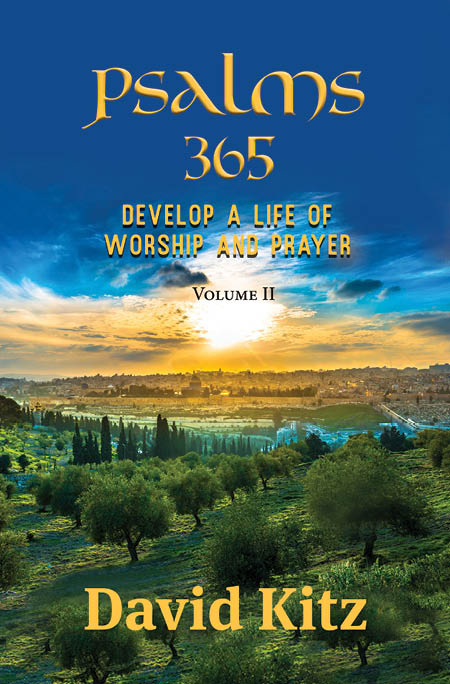
Psalms 365 Volume II

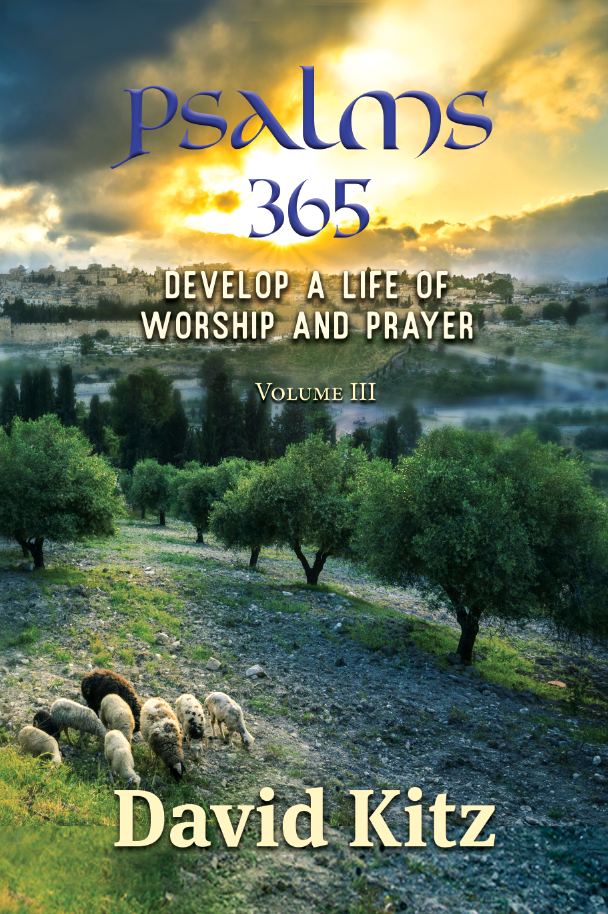
Psalms 365 vol 3
— Psalms 365 Volume III

Psalms

Recent posts

  • The Earth Is Full of His Unfailing Love January 31, 2026
  • Harassed at Every Turn January 30, 2026
  • Do you have a picture of God? January 30, 2026
  • This Is My Body January 29, 2026
  • Tasting God January 29, 2026
  • Much Superior to the Angels January 28, 2026
  • Praise Always for Answered Prayer January 28, 2026

Calendar

January 2026
M T W T F S S
 1234
567891011
12131415161718
19202122232425
262728293031  
« Dec    

Blog Posts

Comments

  • davidkitz on Much Superior to the Angels
  • Much Superior to the Angels – QuietMomentsWithGod on Much Superior to the Angels
  • davidkitz on Do you have a picture of God?

Blog at WordPress.com.

Privacy & Cookies: This site uses cookies. By continuing to use this website, you agree to their use.
To find out more, including how to control cookies, see here: Cookie Policy
  • Subscribe Subscribed
    • I love the Psalms
    • Join 1,383 other subscribers
    • Already have a WordPress.com account? Log in now.
    • I love the Psalms
    • Subscribe Subscribed
    • Sign up
    • Log in
    • Report this content
    • View site in Reader
    • Manage subscriptions
    • Collapse this bar
 

Loading Comments...