• Home
  • About
  • DavidKitz.ca
  • Youtube Videos
  • Books by David
  • Books on Amazon.com

I love the Psalms

~ Connecting daily with God through the Psalms

I love the Psalms

Tag Archives: Galilee

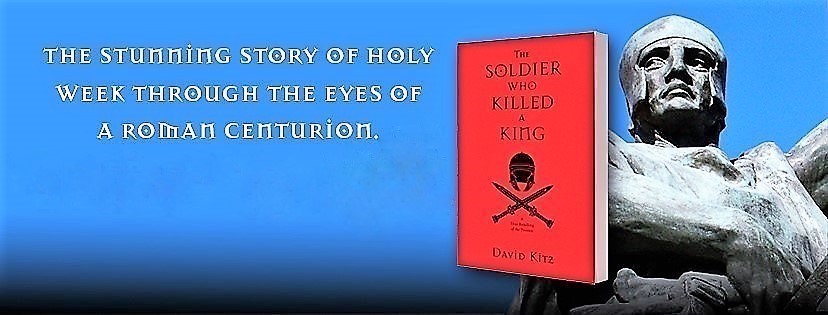
An Excerpt from The Soldier Who Killed a King

12 Saturday Mar 2022

Posted by davidkitz in Books by David Kitz, The Soldier Who Killed a King

≈ Leave a comment

Tags

Galilee, Jesus of Nazareth, Kingdom of God, Messiah

A journey to the cross is a journey to repentance. It’s a journey to deep personal change. Will you take this journey with me?

In today’s reading, Marcus the centurion meets with Flavio, the Roman tribune, who is his commanding officer. He lays out his concerns about a Galilean prophet that he sees as a dangerous threat—Jesus of Nazareth.

“Sometimes I think you worry too much, Marcus.”
“I worry because it’s my job to worry,” I shot back. “Barabbas is in prison because I worry.”
Flavio appeared to consider my reply as he swallowed another stringy morsel. “So what do you know about this prophet?”
“A lot of people think he’s the Messiah.”
“May all the gods help us! Another Roman-killing messiah!” Flavio jeered.
“This one just might be the real thing,” I said.
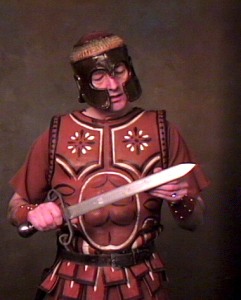
Centur. Sw“Ha!” he scoffed. “Bring him on!” He reached for his flagon. Finding it empty, he bellowed, “Where’s my wine?”
“Bloody incompetent servants,” he muttered. Then turning to me, he asked, “Does he have weapons?”
“No, not that I’ve seen.”
“Has he threatened us?”
“Not exactly.”
“Assaulted the tax collectors?”
“No.”
“Then leave the Jewish dog alone.”
The servant arrived with a bowl of hot, sticky cheese and placed it before me, along with two small barley loaves.
“Wine! Where’s the ruddy wine?” Flavio demanded of his harried attendant.
“He is preaching about a kingdom—the kingdom of God,” I countered.
“So let him preach.”
“Who do you think will be the king of this kingdom?” I reasoned. When Flavio remained silent, I answered my own question. “I’m sure it will be none other than Jesus of Nazareth. I don’t think there’s room for two kings in this town, and a Roman governor too.”
“I see your point,” Flavio said. He wiped a greasy hand across his mouth and thenbiblical-fiction-award-2017_orig rubbed the three days of stubble on his chin. “So he talks about a kingdom?”

“The coming kingdom,” I clarified. “It’s the whole point—the core of his message. So I’m told.”
The servant arrived with the wine. Flavio helped himself. Drank two- thirds of it in a massive gulp, then poured himself some more.
“And he has followers?” Flavio continued.
“Most of the Galilean pilgrims are firmly in his camp.”
“Galilee?” Flavio questioned. “He’s Herod’s man.” He paused to rub the tip of his nose. “I wonder what the Fox thinks of this Messiah.”

American readers click this link to purchase The Soldier Who Killed a King.

Canadian readers click this link to purchase The Soldier Who Killed a King directly from the author.

Resurrection!

12 Sunday Apr 2020

Posted by davidkitz in Easter Sunday

≈ 7 Comments

Tags

crucified, Galilee, Jesus, risen

I will praise the LORD!

backlit cemetery christianity clouds

Photo by Pixabay on Pexels.com

But when they looked up, they saw that the stone, which was very large, had been rolled away. As they entered the tomb, they saw a young man dressed in a white robe sitting on the right side, and they were alarmed.

“Don’t be alarmed,” he said. “You are looking for Jesus the Nazarene, who was crucified. He has risen! He is not here. See the place where they laid him. But go, tell his disciples and Peter, ‘He is going ahead of you into Galilee. There you will see him, just as he told you.’”

  (Mark 16:4-7, NIV)*

* New International Version, Copyright ©1973, 1978, 1984, 2011 by Biblica

Reading 11 for Lent from “The Soldier Who Killed a King”

16 Saturday Mar 2019

Posted by davidkitz in Lent, The Soldier Who Killed a King

≈ 2 Comments

Tags

Galilee, Herod, Jesus of Nazareth, Lent, repentance

A journey to the cross is a journey to repentance. It’s a journey to deep personal change. Will you take this journey with me?

In today’s reading, Marcus the centurion meets with Flavio, the Roman tribune, who is his commanding officer. He lays out his concerns about a Galilean prophet that he sees as a dangerous threat—Jesus of Nazareth.

“Sometimes I think you worry too much, Marcus.”
“I worry because it’s my job to worry,” I shot back. “Barabbas is in prison because I worry.”
Flavio appeared to consider my reply as he swallowed another stringy morsel. “So what do you know about this prophet?”
“A lot of people think he’s the Messiah.”
“May all the gods help us! Another Roman-killing messiah!” Flavio jeered.
“This one just might be the real thing,” I said.
Centur. Sw“Ha!” he scoffed. “Bring him on!” He reached for his flagon. Finding it empty, he bellowed, “Where’s my wine?”
“Bloody incompetent servants,” he muttered. Then turning to me, he asked, “Does he have weapons?”
“No, not that I’ve seen.”
“Has he threatened us?”
“Not exactly.”
“Assaulted the tax collectors?”
“No.”
“Then leave the Jewish dog alone.”
The servant arrived with a bowl of hot, sticky cheese and placed it before me, along with two small barley loaves.
“Wine! Where’s the ruddy wine?” Flavio demanded of his harried attendant.
“He is preaching about a kingdom—the kingdom of God,” I countered.
“So let him preach.”
“Who do you think will be the king of this kingdom?” I reasoned. When Flavio remained silent, I answered my own question. “I’m sure it will be none other than Jesus of Nazareth. I don’t think there’s room for two kings in this town, and a Roman governor too.”
“I see your point,” Flavio said. He wiped a greasy hand across his mouth and thenbiblical-fiction-award-2017_orig rubbed the three days of stubble on his chin. “So he talks about a kingdom?”
“The coming kingdom,” I clarified. “It’s the whole point—the core of his message. So I’m told.”
The servant arrived with the wine. Flavio helped himself. Drank two- thirds of it in a massive gulp, then poured himself some more.
“And he has followers?” Flavio continued.
“Most of the Galilean pilgrims are firmly in his camp.”
“Galilee?” Flavio questioned. “He’s Herod’s man.” He paused to rub the tip of his nose. “I wonder what the Fox thinks of this Messiah.”

To download a free study guide for this high-impact, bible-based novel visit: https://www.davidkitz.ca/centurion.php/free study guide PDF

For book purchases of The Soldier Who Killed a King try Amazon or https://www.christianbook.com

Reading 4 for Lent from “The Soldier Who Killed a King”

09 Saturday Mar 2019

Posted by davidkitz in Books by David Kitz, Lent

≈ 1 Comment

Tags

Galilee, Jesus of Nazareth, Lent, miracles, repentance, Romans

A journey to the cross is a journey to repentance. It’s a journey to deep personal change. Will you take this journey with me?

In today’s reading, Marcus the centurion, disguised in his civilian clothes, is in a discussion about Jesus with Timaeus, a linen merchant from Damascus.

“As for this Jesus of Nazareth?” He shrugged. “I know only a little more than you. My brother here in Jerusalem knew nothing about him. Had never heard the name. But I heard of him once, about a year ago, in Damascus.”
“In Damascus?”
“Yes. I’m in the linen trade.” He put his hand to an elaborately embroidered sleeveBiblical fiction winner 2017 and stroked the pattern. “We supply market stalls in Galilee. One of our sellers there told me of this prophet. He had seen him in Galilee.”
“So what did he say about him?”
“Actually, he told me quite a lot, but I don’t know how much I can believe. He said this Jesus worked miracles.”
“Miracles? What do you mean, miracles?”
“He said Jesus drove out demons, healed the sick. He told me about this one time he went out to hear this prophet, if that’s what he is. Jesus was on this hillside. Thousands had come to hear him speak. Matthias—that’s the man’s name—he said he had never heard anyone speak like him. ‘It was like heaven was talking.’ He kept saying that. ‘It was like heaven was talking.’”
Timaeus spread his arms heavenward in mock imitation. “Poor Matthias!” He shook his head.
“So was that the miracle? The way he talked?”
“No, no. It’s not that, though Matthias kept going on about ‘the kingdom of God.’ Whatever that is. I suppose he got that from this Jesus. Anyway, after they had been there all day—he said there were more than five thousand people—this prophet told them all to sit down in groups of fifty or a hundred. Then he prayed and started breaking bread. He fed that whole crowd. Every last one of them.”
“What’s so miraculous about that?”
“Matthias said he only had five loaves and two fish when he started. He was watching him, and Jesus just kept on breaking bread until the whole crowd was fed. Five thousand people.”
“Five thousand people?”
“More than five thousand people.” He shrugged incredulously. “Look, I wasn’t there. I’m just repeating this fool’s story. Matthias kept saying, ‘It was like he was giving himself to us! Like it came from inside him!’”
Now I was incredulous. I paused in my walk and asked, “What did he mean by that?”
“I swear by the altar, I have no idea.”
“So what do you make of this Matthias and his story?”
“Matthias? He’s a nutcase. And he’s from a fine family in Capernaum.” He frowned, shaking his head. “I know them well. It’s hard to believe he’d get into something like this. He’s following this prophet around the country. It’s all he talks about. He was probably up some tree yesterday breaking off palm branches.” He spat out the words in utter disgust.
“And Jesus of Nazareth?” He raised a stout index finger and waved it in my face. “There’s the real nutcase! There’s no nut like a religious nut! And this kingdom of God talk. It’ll end in disaster.”
He glanced about to see if other ears were listening.
I continued in a more hushed voice. “How do you mean? Do you think the Romans will get involved?”
“Look, I’m no prophet, but by the throne I swear.” He looked me square in the eyes. “You don’t preach about a kingdom in this place and get away with it. Rome will see to that!”
4485 TWITTER

To download a free study guide for this high-impact, bible-based novel visit: https://www.davidkitz.ca/centurion.php/free study guide PDF

For book purchases of The Soldier Who Killed a King try Amazon or https://www.christianbook.com

Excerpt 25 for Lent from The Soldier Who Killed a King

23 Friday Mar 2018

Posted by davidkitz in Books by David Kitz, Christ's Passion, Good Friday, Lent

≈ 5 Comments

Tags

Galilee, Herod, Jesus, Jesus of Nazareth, king, King Herod, Lent, majesty, Messiah, prophet, repentance, wine

A journey to the cross is a journey to repentance. It’s a journey to deep personal change. Will you take this journey with me?

Date: Seven fifteen in the morning, Friday, April 7 30A.D.
Jesus is questioned by Herod Antipas.

“Jesus of Nazareth,” the Fox pompously intoned. “The prophet of Galilee. I’ve longed to see you, my most noteworthy subject.”
With that Herod arose, and holding his robe shut, he approached the Messiah. He inspected the taller man, walked fully around him. Noticing the welts and the dried spittle, he looked my way and asked, “Is this your work, centurion?”
“No, Your Majesty.” My eyes darted to Jonathon and back to Herod again.
“Ah, the high priest’s work!” the Fox remarked grandly as he turned to Jonathon. “I didn’t think you temple boys were capable.”
This bit of sarcasm drew an acknowledging nod and a slight smile from the chief temple guard. Here was a backhanded compliment from the pretentious Fox.
“Your Majesty, I have here a letter from His Excellency the governor and certain chargesJames Wri brought by—”
The king halted me with an uplifted hand and a shake of his head.
“That can wait, centurion.” He paused, and then with a certain dramatic flourish, he began. “We have here a man of rare talent. He makes the lame to walk, the blind to see, has cured the leper. I have heard reports that he has raised the dead.” And then spotting a gold chalice on the inlaid table, he seized it by the stem and with relish declared, “He has even turned water into wine.”
He lifted the chalice before the Messiah and grandly asked, “Isn’t that so, Jesus?”
The Messiah did not answer him a word.
If Herod was perturbed by this silence, he didn’t show it. “Servant girl!” he hollered. “Servant girl!”
An attractive young woman entered from the door on the left, and with short, quick steps, she made her way before the tetrarch. She bowed low.
“Fill this chalice with water and bring it back.”
He stared after her as she left.
I noticed Herodias following his hungry gaze.
“Soon we will see if this prophet can perform the works of which we heard.” He nodded his head with an eager enthusiasm. Then addressing Jesus, he asked, “Tell us of your magic arts.”
The Messiah fixed his eyes straight ahead. He looked beyond the Fox and did not answer him a word. His silence was challenging enough.
4485 TWITTER

American readers click this link to purchase The Soldier Who Killed a King.

Canadian readers click this link to purchase The Soldier Who Killed a King directly from the author.


Excerpt 24 for Lent from The Soldier Who Killed a King

22 Thursday Mar 2018

Posted by davidkitz in Books by David Kitz, Christ's Passion, Good Friday, Lent

≈ 6 Comments

Tags

Annas, Caiaphas, Galilee, Herod, high priest, Jesus, Lent, Messiah, Pontius Pilate, The Soldier Who Killed a King, trial, trial of Jesus

A journey to the cross is a journey to repentance. It’s a journey to deep personal change. Will you take this journey with me?

Date: Seven in the morning, Friday, April 7 A.D.
Jesus trial before Pontius Pilate continues.

In due course we all resumed our previous positions. At this point I fully expected Pilate to pronounce the prisoner guilty of high treason. After all, this Messiah had freely confessed to being a king. But I can only guess that Jesus’s words did have an impact on the governor. Upon taking his seat, Pilate announced, “I find no basis for a charge against him.”
A murmur arose from beyond the pikemen.
Caiaphas was livid. He let fly with a torrent of accusations, the last of these being that Jesus had threatened to destroy the temple and then rebuild it in three days.
Showing extraordinary patience, Pilate let the high priest rage. When Caiaphas’s fury was spent, Pilate turned to Jesus and asked, “Don’t you hear the testimony they are bringing against you?”
Free WW-e FACEBOOK-2 (2)
But Jesus answered him not a word. His silence itself became a challenge. Pilate had cleared him. Why should he answer to these further allegations?
Though stunned by this silence, Pilate repeated his position. “I find no basis for a charge against him.”
Once again discontent began to rumble through the crowd on the street.
At this point I expected the trial to end and the prisoner to be released. Let the crowds rage. Rome had spoken.
But Annas stepped smartly into the breach. “He stirs up the people all over Judea by his teaching. He started in Galilee and has come all the way here.”
“Is he a Galilean?” Pilate asked. “Under Herod’s jurisdiction?”
“Yes,” the flustered Caiaphas confessed, not knowing where this questioning might lead. “Then to Herod he should go,” was Pilate’s prompt response. “Why drag me into this?” He sneered at the high priest.
The governor seemed weary of the whole affair, and for the third time that morning, he found a way to dodge and retreat.
This trial was over.
The dark-eyed Badger rose from his judgment seat. He walked over to Jesus, the accused, and with a rather cunning smile and a nod, he said, “Off to Herod you will go, man of truth.”

American readers click this link to purchase The Soldier Who Killed a King.

Canadian readers click this link to purchase The Soldier Who Killed a King directly from the author.

Excerpt 20 for Lent from The Soldier Who Killed a King

16 Friday Mar 2018

Posted by davidkitz in Books by David Kitz, Christ's Passion, Friday's Focus, Lent, The Soldier Who Killed a King

≈ 1 Comment

Tags

Caesar Augustus, Caiaphas, Galilee, Herod Antipas, Herod the Great, Herodias, kings, Messiah, Pontius Pilate, power, repentance

A journey to the cross is a journey to repentance. It’s a journey to deep personal change. Will you take this journey with me?

Date: Mid afternoon on Thursday, April 6th, 30 A.D.
In today’s reading, Governor Pontius Pilate gives a brief speech formally welcoming Herod the tetrarch to Jerusalem.

At last the two mounted commanders arrived before Pilate’s chariot. They were motioned to take their position on either side. After a brief confusion of feet, the royal litter managed to turn sideways so the royal couple could face the governor as he stood upon his imperial chariot. The trumpeters sounded the fanfare. When the last note had echoed off the marble wall, Pilate unrolled the parchment handed to him by an attendant. He cleared his throat and began his oration.
Free WW-e FACEBOOK-2 (2)
“It was under the rule of the great and wise Emperor Caesar Augustus that this magnificent temple behind us began to take shape. He recognized the desire of the Jewish people for a central place to worship. It was Herod the great Idumean king who oversaw the construction of this masterpiece of the empire, and today it stands as a symbol of Roman respect for the unity and diversity of all the peoples of the empire. It is only fitting today that I, as the emperor’s representative, welcome the son of this master builder, Herod Antipas, the tetrarch of Galilee and Perea.”
With a wave of his hand, Pilate signaled the sounding of a second trumpet fanfare. As the first note was sounded, he stepped off the chariot and then graciously lent a hand to his wife. Thus accompanied by his mate, he swaggered over to the royal litter to personally greet Herod and Herodias, who both stood to meet them.
Greetings were exchanged, none of which I could discern from a distance. After a brief discussion Claudia joined Herodias in the royal litter. Herod barked out some orders. The litter bearers stood to their feet and headed off in the direction of the governor’s residence. Apparently the ladies would have their own time together.
At a leisurely pace Pilate escorted Herod over to where the priestly delegation waited.Soldier book
It was an unusual sight, these three hostile, inflated men exchanging greetings and meaningless pleasantries. Herod Antipas, Pontius Pilate, and Joseph Caiaphas; the Fox, the Badger, and the Weasel. All three were kings in their own right, within their own jurisdiction. All three craved more power, absolute power, while fiercely holding one another in check.
Pilate turned to me and gave a quick, tight nod. I signaled up to Claudius, and the great Golden Gate, the Messiah Gate, was hoisted, granting entrance to the three competing kings.
Only the fourth king, the people’s king—the donkey king—only he was absent.

American readers click this link to purchase The Soldier Who Killed a King.

Canadian readers click this link to purchase The Soldier Who Killed a King directly from the author.


Excerpt 5 for Lent from “The Soldier Who Killed a King”

23 Friday Feb 2018

Posted by davidkitz in Books by David Kitz, Lent

≈ Leave a comment

Tags

Alexandria, blind, demons, Galilee, Jericho, Jerusalem, Jesus, Kidron Valley, Longinus, repentance, Son of David

A journey to the cross is a journey to repentance. It’s a journey to deep personal change. Will you take this journey with me?

In today’s reading, Marcus Longinus the centurion, disguised in his civilian clothes, is waiting by the city gate for the arrival of Jesus. It is the morning of the second day of Passover Week.

Then someone ahead of me pointed and yelled, “That’s him! He’s coming!”
Necks craned. I raised my hand to shade my eyes. Just over the brow of the hill, a figure in white rabbinical robes was beginning his descent into the Kidron Valley. It soon became apparent he was not alone. A clutch of young bearded men surrounded him, and trailing behind was an assortment of wives, children, and barking dogs of both types, canine and human. The whole entourage may have numbered a hundred twenty. There was no donkey today and, to my relief, no thronging thousands. I’m sure there was a collective sigh of relief above the gate as well.
The near-giddy anticipation of these spectators was something I had not expected. I wasFree WWe SHARABLE-1 (2) surprised to find myself caught up in it. The front edges of the crowd by the wall surged forward to line the roadside. Meanwhile, others continued to pour through the gate.

The man to my left stepped forward, planting his foot on my toes. I grunted in pain and instinctively pushed my thumb and knuckles into his ribs. This brought the desired relief, and the man turned to face me. It was the man with the boy on his shoulders.
“My toes!” I gestured.
“Sorry, my friend.”
I felt slightly embarrassed by the gruffness of my response. “You’re waiting to see Jesus,” I offered, stating the obvious.
“Yeah. The kids are crazy about him.” He nodded in the direction of the brood to my right. “It’s all they talked about since we came yesterday.”
I could tell from his accent that he was from Galilee, so I continued. “Do you know much about him? See, I’m a Passover pilgrim from Alexandria in Egypt. All I know is what I saw yesterday.”
“That was incredible!” he enthused. “Did you see him come in on the donkey? That’s fulfillment of a prophecy.”
Then he took on a more distant, thoughtful look, and he began to quote. “Rejoice greatly, Daughter Zion! Shout, Daughter Jerusalem!” And now his eyes brightened. “See, your king comes to you, righteous and victorious.” He slowed for emphasis, and with his free hand stabbed the air. “Lowly and riding on a donkey, on a colt, the foal of a donkey.”
It always amazed me how these people memorized their Scriptures. “So, do you think he’s”—I hesitated—“the Christ?”
“Shh!” He gestured with a finger to his lips and a glance to the wall. “Or the stones will hear.”
He continued. “There is no one like him. He drives out demons. He heals the sick. Even the dead have been raised. And yesterday”—his voice raced with excitement— “yesterday I saw this with my own eyes. He healed a man born blind.”
Seeing my interest, he pressed on.
“In the morning, we were leaving Jericho, the whole throng from Galilee, and by the side of the road was this blind beggar. He was yelling, ‘Jesus, Son of David, have mercy on me!’ Jesus stopped and touched the man’s eyes.”
He made as though he would touch my eyes.
“And he was healed!” His own bright eyes beamed at me as he smiled broadly. The boy on his shoulders also joined in his father’s enthusiasm as for the first time he smiled down at me.
We began to reposition ourselves, for the object of our conversation was now drawing near.
He nudged my shoulder. “And when he speaks, it’s like God is talking to me. None of the rabbis speak like him. It’s like he has seen heaven and heard the voice of the Holy One.” A girl in her teens near the front edge of the crowd shouted, “Hosanna to the Son of David!”
Soon others joined in. The masses surged around him, and together we squeezed through the Messiah Gate and pressed on toward the temple.

Excerpt 2 for Lent from “The Soldier Who Killed a King”

20 Tuesday Feb 2018

Posted by davidkitz in Lent

≈ Leave a comment

Tags

conquer, David Kitz, donkey, Galilee, Hosanna, Jesus, Jesus of Nazareth, Lord, Messiah, prophet, Rome, Son of David, temple, The Soldier Who Killed a King

A journey to the cross is a journey to repentance. It’s a journey to deep personal change. Will you take this journey with me?

Soldier bookI could see him clearly now. Donkey or not, he had the look of a man who knew exactly what he was doing. Those about him might not know or understand, but he knew. He had a destination in mind, a purpose. You could see it on his face.
“Hosanna to the Son of David!”
“Blessed is he who comes in the name of the Lord!”
“Hosanna in the highest heaven!”
There was something else different about him. At the time I didn’t know what it was. I couldn’t put it into words for a long time. I think I noticed it because I had watched all those other men come into Rome in their triumphal processionals. They were conquerors, but still they were hollow men, feeding off the adulation of the crowd, thirsting but never satisfied. You could see them vainly drink it in, hoping it would somehow fill the empty soul.
This donkey-riding king wasn’t drinking from the crowd. I somehow sensed he was full already, and what he had within must have come from a different source.
“Hosanna in the highest heaven!”
“Hosanna to the Son of David!”
“Blessed is he who comes in the name of the Lord!”
Just at that moment a strange feeling seemed to rise within me. Maybe it was the joy of the crowd. I had expected anger. Maybe it was the children waving palm branches or the spontaneity of the singing? I don’t know. For one moment it all seemed to come together. It seemed right somehow. Like heaven and earth had finally, for a moment, come into agreement—an agreement that had never been achieved before.
“Hosanna in the highest heaven!”
He was much closer now.
“Hosanna to the Son of David!”
He was now within the shadow of the gate.
“Blessed is he who comes in the name of the Lord!”
At that moment he looked up. For an instant our eyes met. Then I heard a voice—clearly heard a voice say, “I have a future for you.”
I was confused.
I turned to Claudius and said, “What did you mean by that?”
“What did I mean by what?” He had a blank look on his face.
“By what you said about—about the future?”
“I didn’t say anything about the future, sir. I didn’t say anything.”4485 SHARABLE-1
I was totally baffled. Was I hearing voices? This whole thing was making no sense, no sense at all. Passover pilgrims weren’t supposed to come into the city this way. We had a revolutionary on the loose—riding a donkey. And now I was hearing things?
I rubbed the sweat from my forehead, hoping for some clarity to emerge.
I had a hundred men whose lives were in danger from this Jewish Messiah and his horde of followers. That was what mattered.
By this time the donkey man had passed under the gate and was heading in the direction of the temple in the heart of the city.
I signaled for Claudius to follow as I raced down the stairs of the gatehouse. I emerged onto the street and grabbed the first two-legged bit of Jewish scum I saw. Pressing him against the stone wall, I demanded, “Who is that man?”
I pointed at the retreating figure on the donkey.
The poor wretch was in shock and seemed quite unable to get out a word.
Claudius reached for his sword.
“Je- Jesus of Nazareth,” he stammered and then quickly added, “the prophet from Nazareth in Galilee.”
I loosened my grip. Then in a voice loud enough for all near to hear, I announced, “Well, there is one thing I do know. We’re going to have to keep an eye on that man.”

The Time Came for the Baby to be Born

24 Sunday Dec 2017

Posted by davidkitz in Bible, Christmas, Psalms

≈ 1 Comment

Tags

Bethlehem, Galilee, Joseph, manger, Mary, Nazareth, praise

I will praise Him!

d-adam-winter-farm

Winter wonders and Christmas greetings — photo courtesy of Donald Adam

 So Joseph also went up from the town of Nazareth in Galilee to Judea, to Bethlehem the town of David, because he belonged to the house and line of David. He went there to register with Mary, who was pledged to be married to him and was expecting a child. While they were there, the time came for the baby to be born, and she gave birth to her firstborn, a son. She wrapped him in cloths and placed him in a manger, because there was no guest room available for them.

(Luke 4:4-7, NIV)

Psalms 365: Develop a Life of Worship and Prayer

Psalms 365 Volume II

Psalms 365 vol 3
— Psalms 365 Volume III

Psalms

Recent posts

  • Ready for the King of Glory December 19, 2025
  • My Spirit Rejoices in God My Savior December 18, 2025
  • Joining the Generation That Seeks God December 18, 2025
  • Why Am I So Favored December 17, 2025
  • How Can You Find the Good Life? December 17, 2025
  • The Power of the Most High December 16, 2025
  •  The Earth Turns to the LORD December 16, 2025

Calendar

December 2025
M T W T F S S
1234567
891011121314
15161718192021
22232425262728
293031  
« Nov    

Blog Posts

Comments

  • davidkitz on Joining the Generation That Seeks God
  • cjsmissionaryminister on God Sent His Son
  • cjsmissionaryminister on The God of the Broken

Blog at WordPress.com.

Privacy & Cookies: This site uses cookies. By continuing to use this website, you agree to their use.
To find out more, including how to control cookies, see here: Cookie Policy
  • Subscribe Subscribed
    • I love the Psalms
    • Join 1,378 other subscribers
    • Already have a WordPress.com account? Log in now.
    • I love the Psalms
    • Subscribe Subscribed
    • Sign up
    • Log in
    • Report this content
    • View site in Reader
    • Manage subscriptions
    • Collapse this bar
 

Loading Comments...