• Home
  • About
  • DavidKitz.ca
  • Youtube Videos
  • Books by David
  • Books on Amazon.com

I love the Psalms

~ Connecting daily with God through the Psalms

I love the Psalms

Tag Archives: God

Where Does My Help Come From?

24 Thursday Jul 2025

Posted by davidkitz in Psalms

≈ Leave a comment

Tags

devotion, encouragement, endurance, faith, God, help, hope, journey, pilgrimage, Prayer, Psalms, Reflection, Scripture, strength, trust, worship

Today’s Devotion from Psalms 365 by David Kitz

Reading: Psalm 121
A song of ascents.
I lift up my eyes to the mountains—
where does my help come from?
My help comes from the LORD,
the Maker of heaven and earth.
He will not let your foot slip—
he who watches over you will not slumber;
indeed, he who watches over Israel
will neither slumber nor sleep.
The LORD watches over you—
the LORD is your shade at your right hand;
the sun will not harm you by day, nor the moon by night.
The LORD will keep you from all harm—
he will watch over your life;
the LORD will watch over your coming and going
both now and forevermore (NIV). *

He has listened to his cry for help — photo by David Kitz

Reflection
Psalm 121 is the second Song of Ascents, and as such it was a psalm, which was intended for use by pilgrims as they journeyed to Jerusalem. This particular psalm was most often sung or chanted as the pilgrims set out from Jericho. As they lifted up their eyes, the sharply rising hill country of Judah stretched off into the distance. Hill after hill rose before them. Jesus often made this journey to Jerusalem from his youth (see Luke 2:41-52) until his final Passover pilgrimage (see Luke 19).

This final portion of the pilgrimage was truly an ascent. From the Dead Sea plain the road to Jerusalem climbs nearly five thousand feet—1600 meters. This is truly a climb—an ascent from the Dead Sea plain, the lowest point on the earth’s surface, to the heights of Mount Zion.

For the bone-weary pilgrims, who had already walked more than one hundred kilometers (60 miles) from Galilee, the sight of those distant hills must have brought a measure of aching discouragement. Here was a looming challenge. Could they make this final ascent? The opening question of this psalm was not a matter of poetic whimsy. It was spoken in earnest. I lift up my eyes to the mountains—where does my help come from? (v. 1)

The weary pilgrim may well be asking, “Having come this far, can I complete this journey? Do I have enough energy—enough stamina to climb those hills? Will I be able to reach Zion? I am exhausted now—before I even start the ascent. I can’t do this on my own. Where does my help come from?”

The psalmist’s answer resounds off those ancient hills. Even today, it echoes down through the ages and reverberates through the chambers of the heart. My help comes from the LORD, the Maker of heaven and earth (v.2).

Response: Father God, I am on a lifelong journey—a pilgrimage to the heavenly Jerusalem. When I become weary, give me strength. I need your help. I know my strength comes from you, LORD. Amen.

Your Turn: Do you need strength? How has the Lord helped you when you were weary?

Para la publicación de Salmos 365 de hoy en español haga clic aquí.

bgbg_v4.3_1501818
* NEW INTERNATIONAL VERSION, COPYRIGHT ©1973, 1978, 1984, 2011 BY BIBLICA

Please pray for peace to return to Israel, Gaza, and Ukraine!

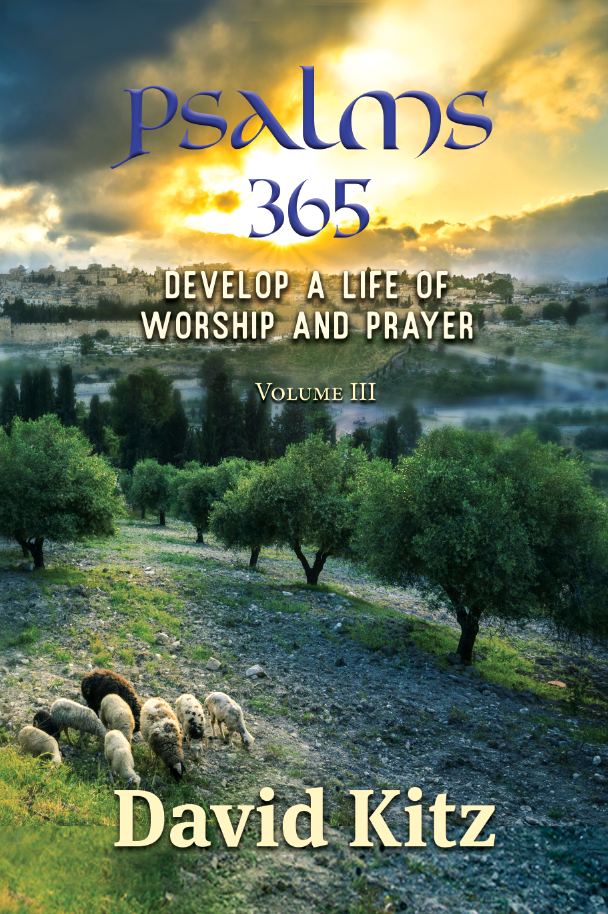
Volume I of Psalms 365: Develop a Life of Worship and Prayer won the Best Book of the Year Award from The Word Guild and Volume II has won the Best Devotional of the Year Award. For those who love God’s word, this three-book series is an ideal way to daily meet with the Lord. To purchase or for a closer look click here.
A gripping read from David Kitz.
Is a return-to-Jesus revival possible in our time?
This book points the way forward.
For details click here.

Hope and Help Found in God’s Promises

17 Thursday Jul 2025

Posted by davidkitz in Psalm 119

≈ Leave a comment

Tags

Bible, devotion, faith, God, God's promises, God's word, hope, Jesus, meditate, meditating on God's word, meditation, Psalms, the LORD

Today’s Devotion from Psalms 365 by David Kitz

Reading: Psalm 119:145-152
ק Qoph
I call with all my heart; answer me, LORD,
and I will obey your decrees.
I call out to you; save me
and I will keep your statutes.
I rise before dawn and cry for help;
I have put my hope in your word.
My eyes stay open through the watches of the night,
that I may meditate on your promises.
Hear my voice in accordance with your love;
preserve my life, LORD, according to your laws.
Those who devise wicked schemes are near,
but they are far from your law.
Yet you are near, LORD,
and all your commands are true.
Long ago I learned from your statutes
that you established them to last forever (NIV). *

Redemption’s promise — photo by David Kitz

Reflection
Meditation. It seems everyone is doing it. Have you taken up meditation? Even the Bible encourages us to meditate.

Ah, but there are some fundamental differences between transcendental meditation and the meditation that is described in the Bible. Eastern meditation, which springs from the Hindu religion, calls on the practitioner to relax and empty his or her mind.

Biblical meditation is not an emptying of the mind, or a disengagement with the thought process. Instead, it is active, concentrated thought on a topic, word or Bible verse. On an intellectual level, it has been compared to rumination—a cow chewing her cud. It involves getting the most out of what God has said—digesting His word—so it is fully incorporated into the life of the believer.

Today’s reading sheds light on the psalmist’s practice of biblical meditation: I rise before dawn and cry for help; I have put my hope in your word. My eyes stay open through the watches of the night, that I may meditate on your promises (v. 147-148).

The psalmist is thoroughly engaged with God. He is crying out to Him. He is focused on the word of God and His promises: I have put my hope in your word.

In the rush of life, do we stop and meditate on God’s word? Is Bible reading just a box to check off as we speed through our day? It’s the LORD who calls us aside to spend time with Him.

Response: LORD God, with all the distractions around me, I want to get in the habit of meditating on your Word. Help me to focus my attention and thoughts on your promises. You are good to me. Amen.

Your Turn: Are you easily distracted from God’s word? How do you take it with you through the day?

Para la publicación de Salmos 365 de hoy en español haga clic aquí.

bgbg_v4.3_1501818
* NEW INTERNATIONAL VERSION, COPYRIGHT ©1973, 1978, 1984, 2011 BY BIBLICA

Please pray for peace to return to Israel, Gaza, and Ukraine!

Volume I of Psalms 365: Develop a Life of Worship and Prayer won the Best Book of the Year Award from The Word Guild and Volume II has won the Best Devotional of the Year Award. For those who love God’s word, this three-book series is an ideal way to daily meet with the Lord. To purchase or for a closer look click here.

A gripping read from David Kitz.
Is a return-to-Jesus revival possible in our time?
This book points the way forward.
For details click here.

True freedom through God’s Word

15 Tuesday Jul 2025

Posted by davidkitz in Psalm 119, Psalms

≈ Leave a comment

Tags

Bible, deliverance, devotion, faith, freedom, God, habits, Jesus, Light, mercy, obedience, Prayer, Psalm, repentance, Scripture, sin, surrender, temptation

Today’s Devotion from Psalms 365 by David Kitz

Reading: Psalm 119:129-136
פ Pe
Your statutes are wonderful;
therefore I obey them.
The unfolding of your words gives light;
it gives understanding to the simple.
I open my mouth and pant,
longing for your commands.
Turn to me and have mercy on me,
as you always do to those who love your name.
Direct my footsteps according to your word;
let no sin rule over me.
Redeem me from human oppression,
that I may obey your precepts.
Make your face shine on your servant
and teach me your decrees.
Streams of tears flow from my eyes,
for your law is not obeyed (NIV). *

Reflection
Slavery is distasteful. Distasteful is a rather mild term. Let’s call it what it is—an abomination. It’s difficult these days to find someone who is in favor of slavery. We all seem to be in favor of personal liberty. But are we?

While trumpeting our personal liberty, are we letting ourselves become shackled by crippling habits? We seem quite willing—maybe even eager—to let sin enslave us.

James, the brother of our Lord, provides us with this warning: When tempted, no one should say, “God is tempting me.” For God cannot be tempted by evil, nor does he tempt anyone; but each person is tempted when they are dragged away by their own evil desire and enticed. Then, after desire has conceived, it gives birth to sin; and sin, when it is full-grown, gives birth to death (James 1:13-15).

Clearly sin has consequences. Yielding to temptations takes us down a dark path. We may think we are in control, but before long we discover we have a new master. Our sinful nature takes over. Evil desires are in control. If we persist in that pattern of behavior, the end result is a seared conscious and death.

We need a Savior to set us free. The psalmist expresses that earnest desire: Turn to me and have mercy on me, as you always do to those who love your name. Direct my footsteps according to your word; let no sin rule over me (v. 132-133).

Is that your prayer and the desire of your heart?

Response: Father God, I need you to liberate me from every stronghold of sin. Establish within me a clean heart. Help my thoughts and actions to be pure. Lord Jesus, be my master. Amen.

Your Turn: Have you yielded control to sinful habits? Take some time to go to the cross of Jesus.

Para la publicación de Salmos 365 de hoy en español haga clic aquí.

bgbg_v4.3_1501818
* NEW INTERNATIONAL VERSION, COPYRIGHT ©1973, 1978, 1984, 2011 BY BIBLICA

Please pray for peace to return to Israel, Gaza, and Ukraine!

Volume I of Psalms 365: Develop a Life of Worship and Prayer won the Best Book of the Year Award from The Word Guild and Volume II has won the Best Devotional of the Year Award. For those who love God’s word, this three-book series is an ideal way to daily meet with the Lord. To purchase or for a closer look click here.

A gripping read from David Kitz.
Is a return-to-Jesus revival possible in our time?
This book points the way forward.
For details click here.
The Timing of God

13 Sunday Jul 2025

Posted by davidkitz in Psalms, Psalms Alive!

≈ Leave a comment

Tags

baptized, burning bush, dead men, Egypt, Egyptians, God, Moses, perfect timing, Peter, Psalms, Red Sea, the LORD, timing

Psalm 114:1-4

When Israel came out of Egypt,
the house of Jacob from a people of foreign tongue,
Judah became God’s sanctuary,
Israel his dominion.
The sea looked and fled,
the Jordan turned back;
The mountains skipped like rams,
the hills like lambs.

All day, I just wanted to get out. The park across the street beckoned. On sunny days it only seems natural to want to get outside—at least for part of the day. In January sunny warm days are a rarity in Ottawa, and this particular day was a real gem. There was no snow on the ground—an unheard-of phenomenon for this part of the country—at what is normally the coldest time of year. The thermometer was on the plus side of the ledger, and from dawn onward, warm sunshine was pouring down. Best of all, this January gem had landed on the weekend.

But a variety of chores and obligations kept me indoors. Finally at three thirty in the afternoon I was able to escape the confines of our home. But it was too late. Only moments before I stepped outside, the sun disappeared behind a thick cloud. Within an hour it sank below the horizon. My much-anticipated sunlit stroll through the park never happened. Actually, the stroll took place, but it transpired in an ever-deepening midwinter gloom.

Time works that way; it always works that way. If we don’t seize the moment, the moment escapes, never to be recaptured. We can try to make amends, or rearrange our schedule, but time is an unforgiving tyrant. It marches on, the sun sets. We will never have that day, hour, minute or moment again. We seize it or lose it. We catch the sun’s rays, when it shines, or we reap the gathering gloom.

Furthermore, events that occur in time can affect all of eternity. Catch the right moment and you change the course of the world. Seize the apex moment with God, and all of human history will be transformed. That familiar old maxim is true. Timing is everything

Here in Psalm 114 we find an apex moment. Moses seized that apex moment—the ideal instant in time—and as a consequence a nation was set free. Israel, the nation, was born in that apex moment.

“When Israel came out of Egypt, the house of Jacob from a people of foreign tongue, Judah became God’s sanctuary, Israel his dominion.”

Moses was first summoned by God at the burning bush, and despite his hesitance, he responded to the LORD’s call. His full obedience to that call resulted in his people’s deliverance from the yoke of cruel oppression. There was a perfect timing—a divine timing—in all this. Deliverance did not come a moment too soon or arrive a moment too late. The LORD is always right on time.

We are the ones who are impatient, who miss the moment, who come too early or show up too late. Young Moses suffered from this problem too. His timing was off. He harboured ambitions of delivering his people. He wanted to rescue them. And why not? He saw their desperate need. He wanted to help. He was both a son of Pharaoh’s daughter, and a son of Israel. Moses bridged these two communities. Surely, as a man of position and influence raised in Pharaoh’s household, he could use that influence to bring about change. But unfettered ambition can be impetuous. After murdering an Egyptian taskmaster, Moses fled in fear for his life.

The burning bush, Regina, SK — photo by David Kitz

Moses had jumped the gun. On his own strength, he had raced ahead of God. He was fuelled by good intentions, but his ill-conceived attempt at helping his people ended in disaster and disgrace. For forty years he lived as a guilt-ridden fugitive in the Desert of Sinai. His self-generated efforts were out of sync with God. Forty years is a long time. Sometimes it takes a long time to get right timing—to get into God’s timing.

Finally, when the time was right, it was God who got Moses. Now that is a strange reversal. Typically, we see a need, and we then go and enlist God to help us rectify the situation. But here it was God who initiated the project. This rescue mission was the LORD’s idea, and it would be done His way, on His timetable, under His leadership. The LORD made this perfectly clear in his introductory remarks to Moses at the burning bush. Speaking of the suffering Israelites He says, “I have come down to rescue them from the hand of the Egyptians and to bring them up and out of that land into a good land, a land flowing with milk and honey” (Exodus 3:8).

Unlike Moses’ earlier clumsy attempt at national deliverance, this time, this was solely the LORD’s rescue mission; it was His project. Moses was invited to join the operation, or he could sit on the sidelines.

The formerly eager Moses almost chose the sidelines.

Take a moment to consider this. How many needs do you see? How many well-intentioned projects do you take on? And now ask yourself, how many of these projects are first conceived in the heart of God? How many are initiated by Him? There is a vast difference between what is self-initiated and that which is God-initiated. Has the LORD summoned you to the burning bush? Or are you busy trying to enlist Him to your well-intentioned causes?

There is no room for personal ambition at the burning bush. Perhaps that was the reason for Moses’ reluctance to sign on for this divine rescue mission. He had already tried and failed to bring deliverance, and now the LORD wanted him to take up the cause again. But this time Moses would not be in charge. The LORD would be calling all the plays. Personal pride would need to be sent to the sidelines.

I doubt that among the descendants of Israel, the LORD could have found a more reluctant leader than Moses. Moses spent a full chapter and a half in the Book of Exodus trying to wheedle his way out of this divine assignment. Finally, in Exodus 4:13 we read: “Moses begged, ‘LORD, please send someone else to do it'” (CEV).

If I was Moses and the LORD had tapped me for this assignment, I too may have been reluctant. I might have had a few choice questions for the LORD. I think the first question would have been, “Where have you been for the last eighty years? It’s nice for you to show up now, LORD, but this suffering has been going on for a very long time. My people have been whipped and mistreated, and their babies have been tossed in the Nile. Where have you been, LORD? I think your timing is off.

And where were you, LORD, when I tried to get something going forty years ago? I could have used your help back then. Now you show up forty years after the fact. Suddenly you’re a convert to the cause—a late comer. Welcome on board. But aside from your heavenly status, I am not sure why you should be the one in charge of this Hebrew rescue mission?”

They were all baptized into Moses in the cloud and in the sea (1 Corinthians 10:2). Photo by David Kitz

These questions may be crudely put, but I suspect that below the surface they were percolating in Moses’ mind. Fortunately for the Hebrews, I was not living in Moses’ skin, or they might still be stuck in the slime pits of Egypt.

But this was a different Moses, than the rash young man, who fled to the Sinai Desert forty years earlier. Perhaps it was time spent in the wilderness that liberated Moses from the tyranny of self. His personal agenda now lay buried under the shifting sands of time. Youthful self-assurance yielded at last to the Master’s plan. When this hard earthen vessel finally removed his shoes in submission, the LORD could use him. The old Moses was dead—dead and buried. The new Moses—the Moses of the burning bush—was at last pliable in the Master’s hands. 

Forty years earlier Moses had buried the Egyptian taskmaster beneath the sands of Egypt. Now the self-confident, I’ll-do-it-myself Moses, the do-it-my-way Moses was finally laid to rest beneath the desert sands of Sinai. 

God is accustomed to using dead men. In fact, it can be argued that they are His preferred instruments to accomplish His purpose in the world. Dead men don’t take credit for the sovereign work of God. They don’t swell with pride. Dead men don’t argue with the Master over His chosen course of action. Dead men don’t frighten easily. They don’t shrink back when they are asked to do the impossible. Dead men don’t give up when the going gets tough. Only dead men are fully in sync with God’s timing.

God can use dead men. He did not use Abraham to become the father of the faithful until the apex moment—until Abraham was “as good as dead … so from this one man … came descendants as numerous as the stars in the sky and as countless as the sand on the seashore (Hebrews 11:12).

Figuratively, Isaac the son of promise needed to die on the hill of sacrifice. Out of death came life—life in harmony with God. Jacob’s grasping ambition died at Peniel. Joseph’s dreams of glory died a thousand deaths before Israel and his sons bowed before the master of all of Egypt. When at last the strong arm of the flesh is dead and buried, there is room for the life of God to spring forth.

Headstrong, impetuous Peter needed to hear the third crow from the rooster before his heart broke. Only then was he fully ready to yield to the master’s touch. All his self-deceiving, self-aggrandising ambition needed to die. His rancid sinful nature was a stench in the very nostrils of God. The old man—the old egotistical Peter—was finally buried in the tomb right along with the body of Jesus. The old man was dead.

Future Site of a Mass Resurrection, Landestreu Cemetery, Landestreu, SK — photo by Donald Adam

A new life awaited. The resurrected Jesus raised a new Peter to a new life—a life infused with the Spirit of God—a new life moving in God’s perfect timing.

The grave is the best place for our bloated sinful nature. It is always out of sync with God. It loves to dictate to God. The sinful nature, by its very nature, always feels it knows best. Like the pre-Pentecost Peter, our fleshly nature always believes it lives and moves in God’s timing. But the only god it serves is the god of self.

No one understood this truth better than Paul the apostle. The old Paul—Saul of Tarsus—died on the road to Damascus. So, it was this new man—the new Paul—who wrote, “I have been crucified with Christ and I no longer live, but Christ lives in me. The life I live in the body, I live by faith in the Son of God, who loved me and gave himself for me” (Galatians 2:20).

When Moses died to himself and his worldly ambitions, God could use him for His eternal purpose. He became a vessel of honor, fit for the master’s use. The new Moses was infused with life and power from on high. It was the new Moses who led Israel out of Egypt.

“When Israel came out of Egypt, the house of Jacob from a people of foreign tongue, Judah became God’s sanctuary, Israel his dominion.”


Have you come out of Egypt? Have you left the world and its enticements behind?
Or are you still under pharaoh’s jurisdiction, within Satan’s domain? Are you a slave to the same old taskmasters? Have you crossed the Red Sea? In 1 Corinthians 10, Paul likens this passing through the sea to Christian baptism.

Or don’t you know that all of us who were baptized into Christ Jesus were baptized into his death? We were therefore buried with him through baptism into death in order that, just as Christ was raised from the dead through the glory of the Father, we too may live a new life (Romans 6:3-4).

When we come out of Egypt, God can come in. When the old man is dead and buried, the new life of Christ can be formed within us. When we have crossed the sea, our hearts become God’s sanctuary, His habitation. We have renounced the world and its ways; we are now citizens in His dominion. When God comes in, everything changes.

“When … Judah became God’s sanctuary, Israel his dominion … the sea looked and fled, the Jordan turned back; the mountains skipped like rams, the hills like lambs.”


When God is present, He changes everything.
When our time is aligned with God’s time, we are in the apex moment. Anything is possible. The seas flee—the sea of worry, the sea of doubt, the sea of guilt. They all flee away at the presence of the LORD. Mountains of heartache and trouble begin to skip away. They skip right out of sight. The God of the impossible casts them into the heart of the sea.

When God is present my needs are met; God’s purpose is accomplished. There is joy. I am God’s dwelling place—His sanctuary. He has dominion here. The old, rancid, sinful man is dead—dead and buried. Christ has arisen in me. I am in God’s timing. It is as Jesus says, “Everything is possible for him who believes” (Mark 9:23).

Resurrection Sunrise, Durham, ON –David Kitz

The Son is shining. The LORD is here.

Bringing Life to the Psalms

  1. Have there been instances in your life where you have caught the apex moment with God? Reflect on those times. Were there preconditions of the heart or your attitude that brought you into right timing with God? What is the role of God’s sovereign grace during such times?
  2. Many believers have not been baptized. Have you buried the old man—your sinful nature—through baptism? Have you been resurrected with Christ to a new life? Are you still struggling with sin? Baptism can act as a clear break with the old life. Take time to read Romans 6:1-14. New life begins on the other side of the sea.
  3. Are you trying to enlist God to your well-intentioned causes? Have you taken on tasks without hearing from God first? Examine your life in the light of God’s calling. Weed out what has not been planted by God. We are all called to fulfill God’s purpose for our lives. Remember, if the LORD is giving you an assignment, He will direct and empower you. It may be your assignment, but it will always be His project—His mission. Be sure to do it His way.

Today’s post is Chapter 20 from the book Psalms Alive! Connecting Heaven & Earth by David Kitz. To find out more or purchase click here.


The Heavens Are the Work of Your Hands

12 Saturday Jul 2025

Posted by davidkitz in Psalm 102

≈ Leave a comment

Tags

brevity of life, children, constancy of God, creation, God, praise the LORD, Prayer, Psalms, the heavens

I will praise the LORD!

Photo courtesy of D. Kranz

Psalm 102:23-28

In the course of my life he broke my strength;
    he cut short my days.
So I said:
“Do not take me away, my God,
in the midst of my days;

    your years go on through all generations.
In the beginning you laid the foundations of the earth,
    and the heavens are the work of your hands.
They will perish, but you remain;
    they will all wear out like a garment.
Like clothing you will change them
    and they will be discarded.
But you remain the same,
    and your years will never end.
The children of your servants will live in your presence;
    their descendants will be established before you.”
*

Para la publicación de Salmos 365 de hoy en español haga clic aquí.

bgbg_v4.3_1501818
* NEW INTERNATIONAL VERSION, COPYRIGHT ©1973, 1978, 1984, 2011 BY BIBLICA

Please pray for peace to return to Israel, Gaza, and Ukraine!

Volume I of Psalms 365: Develop a Life of Worship and Prayer won the Best Book of the Year Award from The Word Guild and Volume II has won the Best Devotional of the Year Award. For those who love God’s word, this three-book series is an ideal way to daily meet with the Lord. To purchase or for a closer look click here.

A gripping read from David Kitz.
Is a return-to-Jesus revival possible in our time?
This book points the way forward.
For details click here.
It Is God Who Works in You

02 Wednesday Jul 2025

Posted by davidkitz in Psalm 119

≈ 2 Comments

Tags

Father God, God, grace of God, Holy Spirit, Prayer, Psalms, salvation

Today’s quote and prayer from
“Psalms 365: Develop a Life of Worship and Prayer”
by David Kitz.


Reading: Psalm 119:57-64

Father God,
help me. I want to obey your word.
I want to live out the words of this psalm.
I can only succeed by your grace,
so give me the will to do your will
by the power of your Holy Spirit.
Amen.

— — — —

Therefore,
my dear friends,
as you have always obeyed—
not only in my presence,
but now much more in my absence—
continue to work out your salvation
with fear and trembling,

for it is God who works in you
 to will and to act
in order to fulfill his good purpose.
(Philippans 2:12-13 NIV)*

Para la publicación de Salmos 365 de hoy en español haga clic aquí.

bgbg_v4.3_1501818
* NEW INTERNATIONAL VERSION, COPYRIGHT ©1973, 1978, 1984, 2011 BY BIBLICA

Happy Canada Day to my Readers in Canada!

Please pray for peace to return to Israel, Gaza, Iran, and Ukraine!

Volume I of Psalms 365: Develop a Life of Worship and Prayer won the Best Book of the Year Award from The Word Guild and Volume II has won the Best Devotional of the Year Award. For those who love God’s word, this three-book series is an ideal way to daily meet with the Lord. To purchase or for a closer look click here.

A gripping read from David Kitz.
Is a return-to-Jesus revival possible in our time?
This book points the way forward.
For details click here.

Reverence for God’s Holy Word

30 Monday Jun 2025

Posted by davidkitz in Psalm 119

≈ Leave a comment

Tags

Bible, faith, God, God's word, Jesus, permanence of God's Word, Prayer, Psalms, reverence, the LORD, unchanging nature of God

Today’s Devotion from Psalms 365 by David Kitz

Reading: Psalm 119:41-48

ו Waw

May your unfailing love come to me, LORD,
your salvation, according to your promise;
 then I can answer anyone who taunts me,
for I trust in your word.
 Never take your word of truth from my mouth,
for I have put my hope in your laws.
I will always obey your law,
for ever and ever.
I will walk about in freedom,
for I have sought out your precepts.
I will speak of your statutes before kings
and will not be put to shame,
for I delight in your commands
because I love them.
I reach out for your commands, which I love,
that I may meditate on your decrees
(NIV). *

Entrance to the Foster farm — Durham, ON

Reflection
We live in uncertain times. I am sure people have been saying words to that effect for generations, but it’s true. Developments in technology have been driving change at an ever increasing tempo. With major political and economic changes on the horizon, there seems to be more uncertainty than ever. The only thing that seems certain is that change will certainly happen.

In times like this, we need certainty. This world can’t offer us certainty, but God’s word can. Isaiah reminds us of the permanence of God’s word. “The grass withers and the flowers fall, but the word of our God endures forever” (Isaiah 40:8).

Jesus offers us the same assurance.  “Do not think that I have come to abolish the Law or the Prophets; I have not come to abolish them but to fulfill them. For truly I tell you, until heaven and earth disappear, not the smallest letter, not the least stroke of a pen, will by any means disappear from the Law until everything is accomplished. Therefore anyone who sets aside one of the least of these commands and teaches others accordingly will be called least in the kingdom of heaven, but whoever practices and teaches these commands will be called great in the kingdom of heaven” (Matthew 5:17-19).

Jesus fully endorsed a reverence for God’s holy word. This is the reverence that we see expressed here in Psalm 119. We can place our trust in God’s word because it’s not changing with the times. It stands eternal. Good and evil continue as they always have. They war against each other. In uncertain times, we need God’s word in our minds and on our lips more than ever. May this be our prayer:  Never take your word of truth from my mouth, for I have put my hope in your laws (v. 43).

Response: Father God, help me grow in my love for your word. Help me to read, meditate and apply it to my daily life. I reach out for your commands, which I love, that I may meditate on your decrees (v. 48). Amen.

Your Turn: Are you spending time daily in God’s word? How has meditating on God’s word helped you?

Para la publicación de Salmos 365 de hoy en español haga clic aquí.

bgbg_v4.3_1501818
* NEW INTERNATIONAL VERSION, COPYRIGHT ©1973, 1978, 1984, 2011 BY BIBLICA

Please pray for peace to return to Israel, Gaza, Iran, and Ukraine!

Volume I of Psalms 365: Develop a Life of Worship and Prayer won the Best Book of the Year Award from The Word Guild and Volume II has won the Best Devotional of the Year Award. For those who love God’s word, this three-book series is an ideal way to daily meet with the Lord. To purchase or for a closer look click here.

A gripping read from David Kitz.
Is a return-to-Jesus revival possible in our time?
This book points the way forward.
For details click here.

You Welcomed the Message

23 Monday Jun 2025

Posted by davidkitz in Psalm 119

≈ Leave a comment

Tags

Bible, Christianity, faith, God, Jesus

Today’s quote and prayer from
“Psalms 365: Develop a Life of Worship and Prayer”
by David Kitz.


Reading: Psalm 119:1-8

Father God,
like the psalmist
I want to fall in love with your Word.
Here is the purpose to my desire.
I want to live a blameless life
that brings honor to my Creator
because you are good.
Amen.

— — — —

For we know,
brothers and sisters loved by God,
that he has chosen you,
 because our gospel came to you
not simply with words
but also with power,
with the Holy Spirit
and deep conviction.
You know how we lived among you
for your sake.
 
You became imitators of us
and of the Lord,
for you welcomed the message
in the midst of severe suffering
with the joy given by the Holy Spirit.
 
And so you became a model
to all the believers in Macedonia and Achaia.
 
The Lord’s message rang out from you
not only in Macedonia and Achaia—
your faith in God has become known everywhere.
Therefore
we do not need to say anything about it,
 
for they themselves report
what kind of reception you gave us.
They tell how you turned to God
from idols to serve the living and true God,
 
and to wait for his Son from heaven,
whom he raised from the dead—
Jesus, who rescues us from the coming wrath.

(1 Thessalonians 1:4-10 NIV)*

Para la publicación de Salmos 365 de hoy en español haga clic aquí.

bgbg_v4.3_1501818
* NEW INTERNATIONAL VERSION, COPYRIGHT ©1973, 1978, 1984, 2011 BY BIBLICA

Please pray for peace to return to Israel, Gaza, Iran, and Ukraine!

Volume I of Psalms 365: Develop a Life of Worship and Prayer won the Best Book of the Year Award from The Word Guild and Volume II has won the Best Devotional of the Year Award. For those who love God’s word, this three-book series is an ideal way to daily meet with the Lord. To purchase or for a closer look click here.

A gripping read from David Kitz.
Is a return-to-Jesus revival possible in our time?
This book points the way forward.
For details click here.
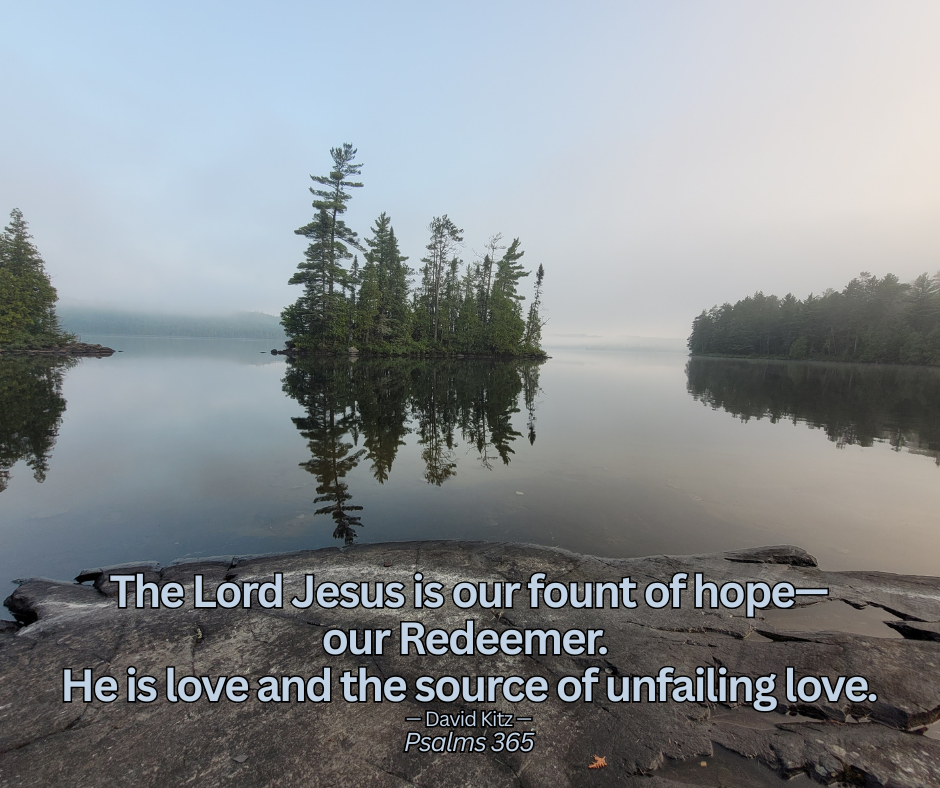
The LORD Rules over All

22 Sunday Jun 2025

Posted by davidkitz in Psalms, Psalms Alive!

≈ Leave a comment

Tags

Bible, circumstances, constancy of God, David, God, Jesus, Martin Rinkart, praise, praise the LORD, Prayer, Psalms, sacrifice of praise, sing praise, worship, worship amid suffering

Psalm 103:19-22

The LORD has established his throne in the heavens,
and his kingdom rules over all.
Praise the LORD you his angels,
you mighty ones who do his bidding,
who obey his word.
Praise the LORD all his heavenly hosts,
you his servants who do his will.
Praise the L
ORD, all his works everywhere in his dominion.
Praise the LORD, O my soul.

Psalm 103 is a sandwich, or if you prefer, a big beefy hamburger. By that I mean this psalm begins with a personal call to praise the LORD, and it ends, as we see from the passage above, with what amounts to a universal call to praise the LORD. Between these calls to worship, we find a great big helping of God’s goodness. In between we discover the why—the reasons why—we should be overflowing with praise to the LORD.

David experienced God’s saving grace, goodness, love and forgiveness over and over again. Consequently, his heart was full to bursting with praise. Herein is the why of praise; the reason for praise rests in God, not in us, or our circumstances.

But Psalm 103 is not just a beefy hamburger. It is also an express train—a big steam locomotive. There is a distinct momentum to this psalm, which can be missed by breaking it into sections. It begins with David addressing his soul. It would appear, at the start, to be a sluggish soul that is somewhat reluctant to praise God. But this reluctance begins to melt away as David recounts the LORD’s great goodness. One by one David declares the character qualities of the LORD. As each attribute is portrayed, David’s sense of awe and his desire to praise God picks up momentum. By the end of this psalm, David’s praise has become an express train, loaded with divine purpose and headed full speed for glory!

Shinkansen (bullet train) photo by David Kitz

His final call to worship in the above stanza is a great cry for all to get aboard this express train of praise. Now with a full head of steam, in exultant praise, I can hear him shouting, “Hop on board, one and all. Praise the LORD! We are heaven bound!”

Many see praise and worship as a purely cathartic response to the manifest goodness of God. Something good happens to us. Unexpectedly, we get a thousand-dollar payment in the mail. Quite naturally our response is praise to God.

For many people, praise to God never progresses beyond this natural, cathartic level. If God does not bless, no praise is forthcoming. Our praise for the LORD becomes or simply remains circumstance dependent. But that was not the case with David. His praise extended beyond simple catharsis. He taught his soul to praise the LORD in all circumstances. True biblical praise and worship is after all a spiritual exercise, a discipline we grow in, just as we grow in the discipline of prayer.

The LORD, the object of our praise, does not change with our circumstances. He is forever the same. Jesus Christ is the same yesterday and today and forever (Hebrews 13:8). He is constant, hence our praise and worship of him should be constant, unaffected by weather conditions, world events, the gyrations of the stock market, our swings of mood or our personal situation.

Of course, this constancy in praise is something the natural man simply rebels against. Our world needs to be right in order for us to praise God aright, or so we reason. The only problem with this logic is that the world has never been right since the Fall. Death, disease, war and misery have been raining down on the children of Adam, since wilful disobedience to God first took root among us. And this is one weather forecast, for all humanity, that is not about to change—not until Christ returns.

If we are waiting for a perfect world before we lift our voice in praise to God, we will never praise Him. In fact, if our eyes are on the world, or on ourselves, there will always be grounds to withhold our praise. But then, the whole purpose of praise and worship is to lift up our eyes. We desperately need to get our eyes off ourselves, off the world, and onto God our Maker.

Photo by Thirdman on Pexels.com

Martin Rinkart was a man who could be forgiven for cursing God. But rather than cursing his Creator, or withholding worship, he composed the ageless hymn of praise, Now Thank we all our God. Pastor Rinkart (1586-1649) was caught up in the horrors of the Thirty Years’ War. For a full year his hometown, Eilenburg in Saxony, was besieged as war raged round about. The triple scourge of war, disease and famine ravaged the community. Death was everywhere. The walled city was swamped by destitute refugees. Three times it was overrun by pillaging armies. As the crisis worsened, Rinkart’s pastoral colleagues succumbed to the plague; only he was left to conduct the funerals. In that horrific year, 1637, he conducted more than 4,000 funerals, as many as fifty in a single day. One of those funerals was for his own dear wife.

Yet it was this man, Martin Rinkart, who composed these words of praise:

            Now thank we all our God
            With heart and hands and voices
            Who wondrous things hath done
            In whom this world rejoices;
            Who from our mothers’ arms
            Hath blessed us on the way
            With countless gifts of love
            And still is ours today.

Martin Rinkart did not live in a perfect world. But his eyes saw beyond the death and destruction that lay before him. He lifted his eyes above the world, and beyond himself. And when he did, he beheld God. He saw Him as LORD over all, and a God to be thanked and praised for countless gifts of love. Amid the most desperate situation imaginable, Pastor Rinkart fixed his gaze on the LORD his Maker. Then this humble pastor did a most remarkable thing—a Spirit-directed thing. He raised his voice in praise to God.

In a world run amok, the first casualty all too often is our faith in God. The chaos of disaster leads us to question the very existence of God. The god of order and control would not—should not—unleash tsunamis of war and disease on this world. We reason, “What kind of god is this? Why would an all-powerful god permit this? Why would he not spare those dear to me?”

Photo by Pixabay on Pexels.com

But Martin Rinkart the hymnist, and David the psalmist, knew the true God, a god who exists beyond our narrow definitions of order and control. Both these men knew the LORD of all the earth. Here in Psalm 103, David declared, “The LORD has established his throne in the heavens, and his kingdom rules over all.”

That divine rule, and that eternal kingdom, truly encompasses all, including disasters. Yes, He is LORD over disasters too, over war, over hurricanes, over floods and droughts, over both feasts and famines, joys and sorrows. He is LORD of all.

This declaration of God’s kingdom rule collides head on with my own preconceived notions of how the world should be. In my world death should never steal a friend away. In my world abundance should be a preordained right. In my world sickness should have no foothold, cancer should hold no sway. In my world all stories should have happy endings.

I want an ideal world like that. I want the real world to conform to my desired ends. And when God does not meekly comply, by granting me my ideal vision of the world, I stamp my foot and shake my fist at Him. In reality, when I do that, I am announcing that I want to be God. I want to be LORD. A refusal to bow in worship before God, is a declaration of my desire to be the sole ruler of my life, and the Creator my own world apart from God.

In a world run amok, Martin Rinkart did not stamp his foot and shake his fist at God; he lifted his voice in praise. Praise to God in the midst of tragedy aligns us afresh with the LORD of the universe. It re-establishes and reasserts his direct rule over us. Along with David we declared, “The LORD has established his throne in the heavens, and his kingdom rules over all.”

God in His wisdom has not given me my ideal world. He has given me His world—the real world—where sorrow mingles with joy, where the curse and the blessing of Eden coexist, where life and death dance nimbly together.

Man praying to God.

Prayer is my attempt before God to change this present world. And this world is in desperate need of change. God and I are in agreement on that point. That’s why He sent His Son. The world can be changed by God through prayer. What an astonishing truth! My prayers can change the world. God can as a consequence of my prayers, intervene and stunningly alter the natural course of events. I have seen Him do astonishing miracles. He is after all, who says He is. He is LORD.

But if God does not intervene, if my prayers are not answered, if no miracle comes, He is still LORD. He is still to be praised. This inalterable fact remains, “The LORD has established his throne in the heavens, and his kingdom rules over all.”

After 4,000 funerals, after his hopes and dreams lay buried, for Martin Rinkart, God was still God. He was still LORD over all. He was still worthy of all praise and so he wrote:

            O may this bounteous God 
            Through all our life be near us,
            With ever joyful hearts
            And blessed peace to cheer us;
            And keep us in his grace,
            And guide us when perplexed,
            And free us from all ills
            In this world and the next.[1]

How shallow is your praise? Do you believe your world needs to be right before you praise God? Lift up your eyes for a moment. Lift them to the One, who was lifted up for you. Lift your eyes to the Father, who did not spare His Son, but sent him into a messed-up world to die upon a cross. Fix your eyes on Him, the bloodied fount of redemption. Fix your eyes on the one who said, “I am the way, the truth and the life” (John 14:6).

Then, lift your voice in praise to God.

How shallow is your praise? Do you believe you need to feel right in order to praise right? After all, wouldn’t we be hypocritical if we were outwardly exuberant in praise to God, but our heart was not in it? Now in this instance, when we are speaking of our heart, we really mean our feelings. But if we see praise as a biblical command, our feelings are inconsequential. We are to praise God regardless of our feelings. Feelings come and go, but the goodness of God stands secure and unchanging. 

As residents of North America, we are a pampered lot. We live in affluence, materially rich, but mired in deep spiritual poverty. Gratification must be instant. Personal comfort trumps all other considerations. What do we know of hardship? In this sheltered atmosphere, praise for God grows like a spindly hothouse plant. Untested by hardship or the cold winds of adversity, our faith lacks depth. Our worship remains shallow.

If the music isn’t right on Sunday, we are incapable of praise. What an outrageous affront to God! True worship is so much more than a lip-synced ditty. It goes deeper. It flows higher. It breaks through our emotional indifference and reaches the heart of God.

The deepest praise is sacrificial. It floats heavenward on a sea of suffering. It confounds all logic and rises above whim or emotion.

Through Jesus, therefore, let us continually offer to God a sacrifice of praise—the fruit of lips that confess his name (Hebrews 13:15).

True worship is born of the Spirit. Along with David, it invites all of heaven—all of creation to join in the chorus of praise.

Praise the LORD you his angels, you mighty ones who do his bidding, who obey his word. Praise the LORD all his heavenly hosts, you his servants who do his will. Praise the LORD, all his works everywhere in his dominion. Praise the LORD, O my soul!  

Bringing Life to the Psalms

  1. What does it mean to offer a sacrifice of praise? Have you faced times of hardship when you found it difficult to praise God? Were you able to offer praise?
  2. Read a biographical portrait of Martin Rinkart. There are several internet sites that provide a closer look at this man who knew how to praise God through adversity.
  3. Read or sing Rinkart’s great hymn, Now Thank we all our God. It’s a wonderful way to set free the wellspring of praise within you.
  1. Reread Psalm 103. Is it a hamburger, an express train, or both? Can you think of another metaphor that helps our minds to capture the magnificence of this psalm? What is God saying to you as you read this psalm?

[1] Now Thank We All Our God, words by Martin Rinkart (1586-1649), 1636. Translated by Catherine Winkworth (1827-1878), 1858 MIDI: Nun danket alle Gott (later form of melody by Johann Cruger, (1598-1662).


Today’s post is Chapter 17 from the book Psalms A
live! Connecting Heaven & Earth by David Kitz. To find out more or purchase click here.


The Best Possible Servant

13 Friday Jun 2025

Posted by davidkitz in Psalm 116

≈ Leave a comment

Tags

God, gratitude, Jesus, Passover, Prayer, Psalms, servant, service to others, serving God, the LORD

Today’s quote and prayer from
“Psalms 365: Develop a Life of Worship and Prayer”
by David Kitz.


Reading: Psalm 116:15-19

LORD God,
I want to serve you.
Today, please show me
how I can be the best possible servant
to you and those around me.
Open my eyes to the needs of others.
I want to serve with a heart
filled with gratitude and joy.
Amen.

— — — —

It was just before the Passover Festival.
Jesus knew that the hour had come for him
to leave this world and go to the Father.
Having loved his own who were in the world,
he loved them to the end.

The evening meal was in progress,
and the devil had already prompted Judas,
the son of Simon Iscariot, to betray Jesus.

Jesus knew that the Father had put all things
under his power,
and that he had come from God
and was returning to God;
so he got up from the meal,
took off his outer clothing,
and wrapped a towel around his waist.

After that, he poured water into a basin
and began to wash his disciples’ feet,
drying them with the towel
that was wrapped around him.

(John 13:1-5 NIV)*

Para la publicación de Salmos 365 de hoy en español haga clic aquí.

bgbg_v4.3_1501818
* NEW INTERNATIONAL VERSION, COPYRIGHT ©1973, 1978, 1984, 2011 BY BIBLICA

Please pray for peace to return to Israel, Gaza, and Ukraine!

Volume I of Psalms 365: Develop a Life of Worship and Prayer won the Best Book of the Year Award from The Word Guild and Volume II has won the Best Devotional of the Year Award. For those who love God’s word, this three-book series is an ideal way to daily meet with the Lord. To purchase or for a closer look click here.

A gripping read from David Kitz.
Is a return-to-Jesus revival possible in our time?
This book points the way forward.
For details click here.

← Older posts
Newer posts →

Psalms 365: Develop a Life of Worship and Prayer

Psalms 365 Volume II

Psalms 365 vol 3
— Psalms 365 Volume III

Psalms

Recent posts

  • The Gift of God February 24, 2026
  • Salvation from the LORD February 24, 2026
  • Overflowing Hope February 23, 2026
  • What’s Your Intention? February 23, 2026
  • The LORD Loves the Just February 22, 2026
  • A Not So Immaculate Conception February 22, 2026
  • Silence February 21, 2026

Calendar

February 2026
M T W T F S S
 1
2345678
9101112131415
16171819202122
232425262728  
« Jan    

Blog Posts

Comments

  • Salvation from the LORD | Talmidimblogging on Salvation from the LORD
  • davidkitz on A Not So Immaculate Conception
  • davidkitz on Commit Your Way to the LORD

Blog at WordPress.com.

Privacy & Cookies: This site uses cookies. By continuing to use this website, you agree to their use.
To find out more, including how to control cookies, see here: Cookie Policy
  • Subscribe Subscribed
    • I love the Psalms
    • Join 1,385 other subscribers
    • Already have a WordPress.com account? Log in now.
    • I love the Psalms
    • Subscribe Subscribed
    • Sign up
    • Log in
    • Report this content
    • View site in Reader
    • Manage subscriptions
    • Collapse this bar
 

Loading Comments...