
• Home
  • About
  • DavidKitz.ca
  • Youtube Videos
  • Books by David
  • Books on Amazon.com

I love the Psalms

~ Connecting daily with God through the Psalms

I love the Psalms

Tag Archives: governor

Excerpt 23 for Lent from The Soldier Who Killed a King

21 Wednesday Mar 2018

Posted by davidkitz in Books by David Kitz, Christ's Passion, Good Friday, Lent

≈ 1 Comment

Tags

governor, Jesus, Jewish, king, kingdom, Messiah, Pontius Pilate, prophet, repentance, truth

A journey to the cross is a journey to repentance. It’s a journey to deep personal change. Will you take this journey with me?

Date: Six fifty in the morning, Friday, April 7 A.D.
Jesus trial before Pontius Pilate continues.

When we entered the judgment hall, the dark-eyed Badger was seething. He knew Caiaphas was using him. He had said so to the assessor. He let fly a string of profanity. “He has me trapped!” he snarled. “Trapped like a rat in a stone water jar.” And with that he tossed the list of charges onto his desk.
James ThtThen he turned to Jesus in the center of the room. He looked him over, walked fully around him. Pilate sighed and nervously ran his fingers through his thinning hair. He made a smacking sound with his lips and asked, “Are you the king of the Jews?”
“You have said so,” came his equivocal answer.
This answer left the governor rocking on his heels. He brought a finger to his lips in pensive thought.
Jesus was not making an acquittal any easier.
But after a moment Jesus continued. “Is that your own idea, or did others talk to you about me?”
“Am I a Jew?”
Pilate shot back with an ample measure of haughty contempt. “Your own people and chief priests handed you over to me.” He continued the questioning. “What is it you have done?”
“My kingdom is not of this world,” Jesus said, and to drive home this point, he added, “If it were, my servants would fight to prevent my arrest by the Jewish leaders. But now my kingdom is from another place.”
Certain words that Claudius had spoken came echoing back into my mind. He had been convinced that this kingdom Jesus spoke of was somehow different from kingdoms as we know them. Now I heard it from this would-be Messiah’s mouth. He was no armed insurrectionist, and he had offered the actions of his followers as proof.
But Pilate seized on that word—kingdom. “You are a king, then!” Pilate deduced.
With calm, clear deliberation the prophet spoke. “You say that I am a king. In fact, the reason I was born and came into the world is to testify to the truth. Everyone on the side of truth listens to me.”
It almost seemed from this response that Jesus was operating from, and speaking on,Biblical fiction winner 2017 some higher plane—a dimension I had witnessed him operate from during the healings at the temple. He was inviting Pilate to join him in discovering this higher ground of truth.
Pilate would not be moved. They were speaking past each other.
“What is truth?” Pilate shrugged. The question was rhetorical. He had no intention of being dragged into a philosophical discussion with this prophet of the Jewish masses. Once again, the Badger retreated.
Grabbing the list of charges from off his desk, he motioned for us to follow him back outside.

American readers click this link to purchase The Soldier Who Killed a King.

Canadian readers click this link to purchase The Soldier Who Killed a King directly from the author.

 

Excerpt 19 for Lent from The Soldier Who Killed a King

15 Thursday Mar 2018

Posted by davidkitz in Books by David Kitz, Christ's Passion, Lent, The Soldier Who Killed a King

≈ 1 Comment

Tags

Caiaphas, centurion, Claudia Procula, governor, Herod, Herod the tetrarch, high priest, King Herod, Pontius Pilate, repentance, Savior

A journey to the cross is a journey to repentance. It’s a journey to deep personal change. Will you take this journey with me?

In today’s reading, the rivalry and tension between the Governor Pontius Pilate, and Joseph Caiaphas, the high priest are on full display. The two leaders are waiting for the official arrival of Herod the tetrarch. Date: Mid afternoon on Thursday, April 6th, 30 A.D.

When all were in position, I called for the lowering of the heavy, grated iron gate. From now on, the Passover celebrants would be forced to use an alternate entrance or exit.
In short order the toga-clad governor, Pontius Pilate, arrived on his gold-ornamented chariot. The gate was raised. By the governor’s side stood Claudia Procula lavishly dressed in full-length scarlet. Her bejeweled opulence contrasted sharply with the poverty common to most women of this province. The chariot took a position allowing the ruling couple to look out to the Mount of Olives, in readiness for the approaching king.
The only missing player was Caiaphas. In due time his delegation arrived, and the enormous gate was hauled up once more on creaking chains, only to be lowered again when the priestly party had exited.
4485 TWITTER
Pilate had been gazing down the road stretched out before him when Caiaphas arrived, and it was only the coarse rattle coming from the gate chains behind him that alerted him to the approach of the high priest and his delegation. He turned, stepped down from the chariot, and briskly strode over to the dumbfounded cleric. The expression on Caiaphas’s face said it all. He clearly did not expect to see Pilate here. He had intended this to be a discreet, private tour and consultation.
“You’re expecting someone?” Pilate brusquely inquired.
An uncomfortable pause followed. Caiaphas cast a hasty glance at those accompanying him, adjusted the folds in his robe, cleared his rusty throat, and replied, “Yes, King Herod requested a tour of the great temple.”
“Did he now?” There was a coldness in Pilate’s voice that betrayed the utter contempt he felt toward this Jewish leader. “Ahh!” He gestured grandly. “There is no king in these parts. I know of no king.” Then spotting me on horseback nearby, the governor turned and in mock sincerity called out, “Centurion. Is there a king around here?”
“We have no king here but Caesar,” I answered, joining in the sport.
“The centurion says there is no king but Caesar. Do you have some other king I’m unaware of? Perhaps I should meet this king.”
By now the high priest was well beyond flustered. He had stepped into a trap. Surrounded by Roman troops and cut off from the safety of the temple’s hallowed sanctum, he was now being hectored by his chief political rival. It seemed more than he could endure. He began to tremble uncontrollably, whether from fear or anger I could not tell.
“Your Excellency”—he swallowed hard—“I was referring to the . . . te-tetrarch of Galilee.” 
“The te-tetrarch?” Pilate mimicked not only the high priest’s tremulous stammer, but also the rusty-gate scratch of his voice. “Is that so? Well, the tetrarch is no king. And he certainly isn’t your king.” Then with slow, icy deliberation, Pilate said, “There is no king here but Caesar. Did you hear that?”
This was no rhetorical question. “Yes, Your Excellency. I heard.”Biblical fiction winner 2017
“Do you, any of you”—he scanned the delegation—“have any other king?”
The cowering dogs dutifully answered, “No, we have no other king.”
Caiaphas, however, was silent. A fact well noted by the governor.
Then Pilate took a step closer to the trembling priest, pointed a bony finger in his face, and hissed, “Now don’t forget that, you old goat, or your blood will be running down the Kidron! Did you hear that?”
“I . . . I am your servant, Your Excellency,” Caiaphas rasped.
“Ha!” Pilate laughed an icy laugh in a show of disdain for that remark. Then he turned on his heels and marched back to his chariot, where once more he joined his wife.
For a full minute there was stunned silence from the religious delegation, and then suddenly they all began to speak at once in a huddle of hushed tones like schoolboys after a tongue-lashing from the headmaster.
But there was murder in the high priest’s eye. Nothing childish there. From my vantage point I could see that. He didn’t have the means, but he most certainly had the intent.
I am sure that if the gate had been open, the delegation would have returned to the safety of the sanctuary to plot their revenge, but that option was not open to them. They were trapped in this pocket, surrounded by hated foreign troops, subject to the whim and ridicule of their enemy, awaiting the arrival of their pretentious savior king.
Long, awkward moments passed. But they were saved from this interminable purgatory by Herod’s arrival.

American readers click this link to purchase The Soldier Who Killed a King.

Canadian readers click this link to purchase The Soldier Who Killed a King directly from the author.
Excerpt 13 for Lent from The Soldier Who Killed a King

07 Wednesday Mar 2018

Posted by davidkitz in Books by David Kitz, Christ's Passion, Lent, Psalms

≈ 3 Comments

Tags

governor, Herod, Jerusalem, Lent, Marcus, Ottawa Citizen, Pontius Pilate, soldier, The Soldier Who Killed a King

A journey to the cross is a journey to repentance. It’s a journey to deep personal change. Will you take this journey with me?

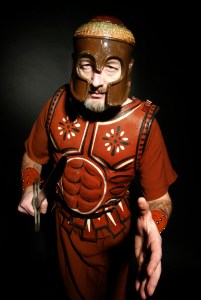
In today’s reading, Marcus is among the detail of soldiers assigned to welcome Herod the Tetrarch to Jerusalem. As the royal procession is about to enter the city a disturbing incident takes place that reveals the character of the man that Jesus called a fox.

Suddenly, just ahead, among the bowing throng, a small copper bowl flashed in the sun. I sucked in a shallow breath and hoped it had gone unnoticed.
Herod’s hand shot out from the left side of the litter, just a few feet above and ahead of my horse’s ears.
“There! There!” he yelled. “Stop the litter!”
Flavio bellowed, “Halt!”
“Bring the boy over.” Herod gestured to the bodyguard next to me.
The guard beckoned with his hand, and the once crippled Lucas stepped forward. He wore a shy smile, but there was an eager glint in his eye.
“Is that a beggar’s bowl in your hand?” the king inquired.
“Yes, sir.”
“I didn’t come to feed beggars,” Herod said coldly. “Now, teach this boy not to beg from a king.” Herod again gestured to the guard.
With one hand the guard grabbed the boy’s free hand. With the other hand he raised his gleaming sword above his head.

OTT0304-KITZ1

Photo credit Jean Levac, Ottawa Citizen

With sudden terror in his eyes, Lucas instinctively yanked back.
The blade flashed down.
The boy fell back into the crowd as the guard triumphantly raised the severed, dripping hand above his head.
“Well done, Cestas!” Herod cheered. “Well done!”
I saw Lucas flee, white- faced and stumbling, clutching tight the bleeding stump.
“There are no beggars in Galilee,” the Fox announced to the crowd. “And if I ruled here, there would be none in Jerusalem.”
The onlookers were stunned—riveted to the spot. Herod paused, and after a brief search he pulled out the flimsy purple robe from among the cushions behind him. He made a great show of folding it carefully several times.
“Bring me your trophy.”
Biblical fiction winner 2017Cestas came forward and placed the small, severed hand in the folds of the purple robe, bowing graciously to his monarch.
“Ah, tribute for the governor.” Herod laughed coarsely. “Let’s be off!”
The remainder of the processional was uneventful. Following the trumpeters’ fanfare, Pontius Pilate and his wife, Claudia Procula, received the tetrarch graciously, with considerable pomp. The Roman governor politely inquired about the journey and made flattering comments about Herodias and her attire.

American readers click this link to purchase The Soldier Who Killed a King.

Canadian readers click this link to purchase The Soldier Who Killed a King directly from the author.
Excerpt 11 for Lent from The Soldier Who Killed a King

05 Monday Mar 2018

Posted by davidkitz in Books by David Kitz, Christ's Passion, Lent, Psalms

≈ 1 Comment

Tags

governor, Jesus of Nazareth, king, King Herod, kingdom, Kingdom of God, Marcus, Messiah, pilgrims, prophet, Roman, The Soldier Who Killed a King, weapons

A journey to the cross is a journey to repentance. It’s a journey to deep personal change. Will you take this journey with me?

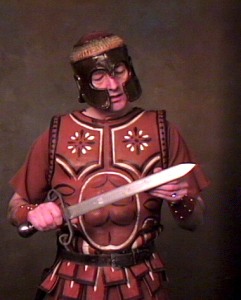
In today’s reading, Marcus the centurion meets with Flavio, the Roman tribune, who is his commanding officer. He lays out his concerns about a Galilean prophet that he sees as a dangerous threat—Jesus of Nazareth.

“Sometimes I think you worry too much, Marcus.”
“I worry because it’s my job to worry,” I shot back. “Barabbas is in prison because I worry.”
Flavio appeared to consider my reply as he swallowed another stringy morsel. “So what do you know about this prophet?”
“A lot of people think he’s the Messiah.”
“May all the gods help us! Another Roman-killing messiah!” Flavio jeered.
“This one just might be the real thing,” I said.
Centur. Sw“Ha!” he scoffed. “Bring him on!” He reached for his flagon. Finding it empty, he bellowed, “Where’s my wine?”

“Bloody incompetent servants,” he muttered. Then turning to me, he asked, “Does he have weapons?”
“No, not that I’ve seen.”
“Has he threatened us?”
“Not exactly.”
“Assaulted the tax collectors?”
“No.”
“Then leave the Jewish dog alone.”
The servant arrived with a bowl of hot, sticky cheese and placed it before me, along with two small barley loaves.
“Wine! Where’s the ruddy wine?” Flavio demanded of his harried attendant.
“He is preaching about a kingdom—the kingdom of God,” I countered.
“So let him preach.”
“Who do you think will be the king of this kingdom?” I reasoned. When Flavio remained silent, I answered my own question. “I’m sure it will be none other than Jesus of Nazareth. I don’t think there’s room for two kings in this town, and a Roman governor too.”
“I see your point,” Flavio said. He wiped a greasy hand across his mouth and thenbiblical-fiction-award-2017_orig rubbed the three days of stubble on his chin. “So he talks about a kingdom?”
“The coming kingdom,” I clarified. “It’s the whole point—the core of his message. So I’m told.”
The servant arrived with the wine. Flavio helped himself. Drank two- thirds of it in a massive gulp, then poured himself some more.
“And he has followers?” Flavio continued.
“Most of the Galilean pilgrims are firmly in his camp.”
“Galilee?” Flavio questioned. “He’s Herod’s man.” He paused to rub the tip of his nose. “I wonder what the Fox thinks of this Messiah.”

American readers click this link to purchase The Soldier Who Killed a King.

Canadian readers click this link to purchase The Soldier Who Killed a King directly from the author.

Psalms 365: Develop a Life of Worship and Prayer

Psalms 365 Volume II

Psalms 365 vol 3
— Psalms 365 Volume III

Psalms

Recent posts

  • He Refreshes My Soul December 21, 2025
  • The Church and the Third Temptation of Christ December 21, 2025
  • May the LORD Grant All Your Requests December 20, 2025
  • A Horn of Salvation December 19, 2025
  • Ready for the King of Glory December 19, 2025
  • My Spirit Rejoices in God My Savior December 18, 2025
  • Joining the Generation That Seeks God December 18, 2025

Calendar

December 2025
M T W T F S S
1234567
891011121314
15161718192021
22232425262728
293031  
« Nov    

Blog Posts

Comments

  • davidkitz on The Church and the Third Temptation of Christ
  • My Life in Our Father's World on The Church and the Third Temptation of Christ
  • davidkitz on My Spirit Rejoices in God My Savior

Blog at WordPress.com.

Privacy & Cookies: This site uses cookies. By continuing to use this website, you agree to their use.
To find out more, including how to control cookies, see here: Cookie Policy
  • Subscribe Subscribed
    • I love the Psalms
    • Join 1,377 other subscribers
    • Already have a WordPress.com account? Log in now.
    • I love the Psalms
    • Subscribe Subscribed
    • Sign up
    • Log in
    • Report this content
    • View site in Reader
    • Manage subscriptions
    • Collapse this bar
 

Loading Comments...