• Home
  • About
  • DavidKitz.ca
  • Youtube Videos
  • Books by David
  • Books on Amazon.com

I love the Psalms

~ Connecting daily with God through the Psalms

I love the Psalms

Tag Archives: idolatry

Regime Change: the Mission of the Dynamic Duo

23 Sunday Nov 2025

Posted by davidkitz in The Elisha Code

≈ Leave a comment

Tags

Ahab, Elijah, Elisha, fire from heaven, God's power, humility, idolatry, Jesus, Jezebel, John the Baptist, lies, Mount Carmel, pride, Pride and Humility, regime change, repentance, Russia, the LORD, Ukraine

At that time Jesus, full of joy through the Holy Spirit, said, 
“I praise you, Father, Lord of heaven and earth,
because you have hidden these things from the wise and learned,
and revealed them to little children. 
Yes, Father, for this is what you were pleased to do.
(Luke 10:21, NIV)

Before sunrise on February 24, 2022, Russia launched a multi-pronged attack on Ukraine by air, land, and sea. Kiev, the capital, was expected to fall within days. President Biden offered to evacuate Ukrainian President Volodymyr Zelenskyy from the besieged capital. But a resolute and defiant Zelensky replied, “I need ammunition, not a ride.”[i]

What was Vladimir Putin’s objective in launching this unprovoked Russian attack on his smaller southern neighbor? His immediate goal was regime change. He wanted to oust the democratic, pro-western government of Ukraine and replace it with a pro-Russian regime subservient to his will.

Putin failed in his immediate objective. The Ukrainian defenders mounted a fierce resistance. The invaders were beaten back, though they engaged in rape, and a wanton killing of civilians, and inflicted massive destruction.

Photo by Pixabay on Pexels.com

At the time of this writing, the war rages on. The outcome remains uncertain. Regime change may yet come. But will the regime change be in Kiev or in Moscow? Time will tell.

Here is what we know with certainty from the Scriptures. The LORD wants regime change. Elijah and Elisha, the Old Testament dynamic duo, were on a mission. They had an assignment directly from the LORD God Almighty. What was their mission—the task the LORD assigned to them?

In broad terms their assignment was regime change. The northern Kingdom of Israel had turned its back on God—the God who generations earlier had rescued them from slavery in Egypt. Worse yet, Israel had turned to idolatry. Under the autocratic rule of Ahab and Jezebel, the worship of the fertility gods Baal and Asherah flourished.[ii]

First Elijah, and then, Elisha was tasked with bringing the wayward people of God back to worshipping Yahweh. But King Ahab and Queen Jezebel—Satan’s power couple—stood in the way.

Furthermore, this was a life and death struggle for the minds and hearts of the people.

Amid a famine brought on by a severe drought some dared to defy Israel’s King and Queen. Obadiah, Ahab’s palace administrator, was such a man. A devout believer in the LORD, Obadiah risked his life.

While Jezebel was killing off the Lord’s prophets, Obadiah had taken a hundred prophets and hidden them in two caves, fifty in each, and had supplied them with food and water (1 Kings 18:4, NIV).

In response, Elijah courageously confronted King Ahab and challenged him to assemble all of Israel for a duel to the death on Mount Carmel. Ahab was to bring with him “the four hundred and fifty prophets of Baal and the four hundred prophets of Asherah, who eat at Jezebel’s table” (1 Kings 18:19, NIV).
Thus the stage was set for what many consider the greatest challenge and display of God’s power in the Hebrew Scriptures.

          Elijah went before the people and said, “How long will you waver between two opinions? If the Lord is God, follow him; but if Baal is God, follow him.”
          But the people said nothing.
Then Elijah said to them, “I am the only one of the Lord’s prophets left, but Baal has four hundred and fifty prophets. Get two bulls for us. Let Baal’s prophets choose one for themselves, and let them cut it into pieces and put it on the wood but not set fire to it. I will prepare the other bull and put it on the wood but not set fire to it. Then you call on the name of your god, and I will call on the name of the Lord. The god who answers by fire—he is God.”
Then all the people said, “What you say is good”
(1 Kings 18:21-24, NIV).

The LORD vindicated his prophet, Elijah, by sending fire from heaven that “burned up the sacrifice, the wood, the stones and the soil, and also licked up the water in the trench” (1 Kings 18:38, NIV).

The prophets of Baal were vanquished.[iii] But rather than turn on Ahab and have him killed as well, Elijah declares the king should go and celebrate because a drought-ending rainfall was on its way. Then Elijah ascended the mountain, fell on his knees, and prayed for the rain to come, and after much prayer the downpour arrives.[iv]

Why this show of mercy to Ahab, the tyrant and accessory murder?[v] If the ultimate goal is regime change, then why not eliminate the man who stood in the way? Why didn’t the prophet mete out God’s wrath and retribution? Instead, Elijah portrays mercy and the abundant grace of God. Why?

The answer lies at the heart of the gospel message. The gospel message according to Jesus is all about regime change. It’s about letting King Jesus rule our hearts and minds. The government that affects us most directly isn’t in Washington, London, Moscow, or Ottawa, and it isn’t in a state or provincial capital. The government that affects us most directly is the government of our heart and mind. Is Jesus enthroned there? Is he governing your decision making? Is he calling the shots?

Far too often, we think a change of government at the national, state, or local level will transform our lives. That’s a political fantasy politicians love to peddle. True transformational change begins at the individual level. And there is nothing more transformational than spiritual rebirth. Jesus’ conversation with Nicodemus reveals that truth.[vi]

In Elijah’s interaction with Ahab, we see this principle of repentance and rebirth at work. Elijah was working to change the heart of the king. He wanted to see the LORD enthroned there. What could bring about that profound change in the king Ahab’s heart?

Clearly there was a need for repentance. And what could bring about that change? A jaw-dropping, heart-stopping demonstration of God’s power set the stage for genuine repentance. Surely, the miracle of fire falling from heaven would result in a change of heart and a change allegiance—a change from the worship of Baal to the worship of Yahweh.

Take up the Armor of God

Secondly, nothing melts stony hearts like the kindness and mercy of God. Elijah demonstrated that mercy by his treatment of Ahab, and by praying for the rain that ended a three and-a-half-year drought and famine in the land.[vii]

There’s something extravagant about the patience and mercy of God.

Don’t forget that the Lord is patient because he wants people to be saved
(2 Peter 3:15a, CEV).

Or do you show contempt for the riches of his kindness, forbearance and
patience, not realizing that God’s kindness is intended to lead you to repentance?
(Romans 2:4, NIV).

 In his interactions with Ahab, Elijah consistently displayed the undeserved kindness and patience of God. Nothing demonstrates this better than Elijah’s confrontation of Ahab after the incident involving Naboth’s vineyard. Jezebel plotted to have Naboth killed, and Ahab then seized Naboth’s land.[viii]

Elijah spoke these prophetic words to the king:

‘This is what the Lord says: In the place where dog licked up Naboth’s
blood, dogs will lick up your blood—yes, yours!’”
(1 Kings 21:19, NIV).

Of Jezebel, Elijah said:

“And also concerning Jezebel the Lord says: ‘Dogs will devour Jezebel by the
wall of Jezreel’
(1 Kings 21:23, NIV).

But what happen next is truly astonishing. We read that Ahab “tore his clothes, put on sackcloth, and fasted. He lay in sackcloth and went around meekly” (1 Kings 21:27, NIV).

And how did the LORD respond to Ahab’s apparent repentance and contrition?

Then the word of the LORD came to Elijah the Tishbite: “Have you noticed how Ahab has humbled himself before me? Because he has humbled himself, I will not bring this disaster in his day, but I will bring it on his house in the days of his son” (1 Kings 21:28-29, NIV).

What this turn of events demonstrates is the power of personal repentance. Genuine repentance has the power to change the course of history. It prevented the brutal end to Ahab’s dynasty during his lifetime.

Was Ahab’s repentance genuine? We can certainly debate that question. It appears that Ahab turned away from sin, but did he turn his affections to the LORD? Did he seek after God? Or was this a caught-with-a-hand-in-the-cookie-jar repentance that signaled he was sorry to be caught, but not sorry enough to change his ways?

Let’s remember that true biblical repentance brings about a regime change in the mind. The selfish ego that ruled for so long must abdicate. God is in charge now. King Jesus governs our thoughts and actions.

Perhaps Ahab experienced a measure of true repentance, but the real power—the true ruler of his life—was Queen Jezebel. She suppressed Ahab’s repentance and conversion, both after fire fell from heaven at Mount Carmel, and after Elijah confronted him over the incident involving Naboth’s vineyard.

For national regime change to occur, the true power behind the throne needed to repent or be replaced. But in this case, the kingpin wasn’t the king. The kingpin was Queen Jezebel. All of Elijah’s efforts appear to be aimed at King Ahab. But the queen remained untouched, unchanged, and unrepentant. And she ruled the day.

By faith, Elijah engineered an astonishing display of God’s power at Mount Carmel. But shortly thereafter, he also displayed an astonishing level of cowardice in the face of Jezebel’s threats.

Frequently, a great victory is followed by great temptation.

           Now Ahab told Jezebel everything Elijah had done and how he had killed all the prophets with the sword. So Jezebel sent a messenger to Elijah to say, “May the gods deal with me, be it ever so severely, if by this time tomorrow I do not make your life like that of one of them.
Elijah was afraid and ran for his life.
(1 Kings 19:1-3, NIV)

How could this prophet display such raw courage one day, and on the next day wilt before the threats of this depraved woman? After all, Jezebel was calling on the same disgraced gods that Elijah had revealed as powerless a day earlier. Where was the God of Elijah now in the face of this threat? Was he hiding, or had he fallen asleep?

Of course, not! But the prophet succumbed to his fleshly nature, sheer exhaustion, and the fear of man—or more precisely the fear of a woman.

Some psychologists see the classic hallmarks of a manic-depressive in Elijah’s response. He swings from extreme highs to extreme lows. He storms the mountain heights of emotion, exerts himself to an extreme,[ix] and then sinks into the depths of despair.

After fleeing to Horeb, the mountain of God, twice Elijah lays out his complaint before the LORD.

“I have been very zealous for the Lord God Almighty. The Israelites have rejected your covenant, torn down your altars, and put your prophets to death with the sword. I am the only one left, and now they are trying to kill me too” (1 Kings 19:14, NIV).

How does the LORD respond to Elijah’s complaint? He has him appoint his successor and then corrects his self-pitying exaggeration. The modern equivalent might be an announcement from your boss that you are fired for just cause. Let’s take a closer look at the LORD’s reply to Elijah:

“Go back the way you came, and go to the Desert of Damascus. When you get there, anoint Hazael king over Aram. Also, anoint Jehu son of Nimshi king over Israel, and anoint Elisha son of Shaphat from Abel Meholah to succeed you as prophet. Jehu will put to death any who escape the sword of Hazael, and Elisha will put to death any who escape the sword of Jehu. Yet I reserve seven thousand in Israel—all whose knees have not bowed down to Baal and whose mouths have not kissed him” (1 Kings 19:15-18, NIV).

Let’s first look at Elijah’s lie and Yahweh’s response to it. Yes, Elijah lied. He said he was the only prophet of the LORD left, yet Obadiah specifically told Elijah that as a faithful follower of the LORD since his youth, he had hidden a hundred prophets of the LORD in two caves.[x] Yet, before the people gathered on Mount Carmel, Elijah repeats his boast about being the only prophet of the LORD left in the land.[xi] Clearly this was not true.
Furthermore, there is false humility in Elijah’s plea before the LORD. He states, “I have been very zealous for the LORD God Almighty.” Though he has been zealous he has made his zeal a point of pride. He has compared himself with others and concluded their faith and sacrifices in the face of severe persecution merit no consideration. His efforts alone are noteworthy. Thus, he concludes he is the only faithful man left.

Depression begins when we believe a lie. Elijah believed the lie that he alone was faithful to Yahweh. In addition, depression breeds isolation and self-pity. Both are hallmarks of the state Elijah is in.

Sadly, this great man of God fell short and now a replacement is needed to continue the deep work he set in motion in Israel. The will and purpose of God must prevail. But the LORD uses pure vessels rather than those tainted by pride.[xii]

Elijah’s failings all too frequently have been repeated by churches and ministries down through the annals of history. God dramatically uses an individual or a movement to bring about a spiritual awakening or renewal. But then pride sets in. A sense of superiority emerges. This is coupled with a degree of exclusivity that manifests itself by restricting fellowship to a certain group or an inner circle. Attitudes or statements declaring that, “We alone have the full truth” begin to emerge.

Soon the Spirit that was so evidently present in the early days of fruitful ministry is absent. Pride sets in and the Holy Spirit flees. The LORD will use a different vessel—the humble vessel wiped clean.

There is a striking parallel between the ministry of Elijah and John the Baptist:

  • There appears to be a very deliberate attempt by John to take on the appearance of Elijah in his dress, diet, and demeanor.[xiii]
  • Both men boldly called the nation to repentance.
  • Both directly confronted the political leaders of their time (Ahab and Herod Antipas).
  • Both sank into states of depression where they questioned their ministry (Elijah at Mount Horeb, John while imprisoned).
  • Both had their life and ministry undermine or cut short by a woman (Jezebel and Herodias).
  • Both sought regime change but failed to see it in their day.
  • Both sowed the seeds of a remarkable transition.
  • Both were succeeded by men who brought the work they began to fruition (Elisha and Jesus).

With Elijah’s fiery departure, the mission of regime change fell to Elisha to accomplish. A double portion of Elijah’s anointing now rests on him, and under the LORD’s guidance through his ministry Elisha performs miracle after miracle—fourteen in total—doubling Elijah’s total.

Though the overall mission of this prophetic dynamic duo remained the same, there are some striking differences between Elijah and Elisha in terms of their calling, ministry, character, and personality. In the same vein, there are striking differences between the New Testament duo of John the Baptist and Jesus.

First, we should note that Elisha came from a wealthy farm family. We read that at the time of his calling, he was plowing with twelve yoke of oxen. A common farm family might have a single yoke (pair) of oxen, but Elisha was plowing with twelve yoke (twenty-four oxen). That’s an astonishing number, and it implies the family farm is enormous.

Elijah went up to him and threw his cloak around him. Elisha then left his oxen and ran after Elijah. “Let me kiss my father and mother goodbye,” he said, “and then I will come with you.”
“Go back,” Elijah replied. “What have I done to you?”
So Elisha left him and went back. He took his yoke of oxen and slaughtered them. He burned the plowing equipment to cook the meat and gave it to the people, and they ate. Then he set out to follow Elijah and became his servant
(1 Kings 19:19-21,NIV).

Elisha left all to follow Elijah. There is something highly symbolic about Elisha’s sacrifice of his oxen and the burning of his plow. In his farewell, he burned the bridges back to his former lifestyle. It’s a stunning about face for a wealthy young man. Elisha turned his back on the riches and prestige of this world to become the servant/slave of a homeless roving prophet.
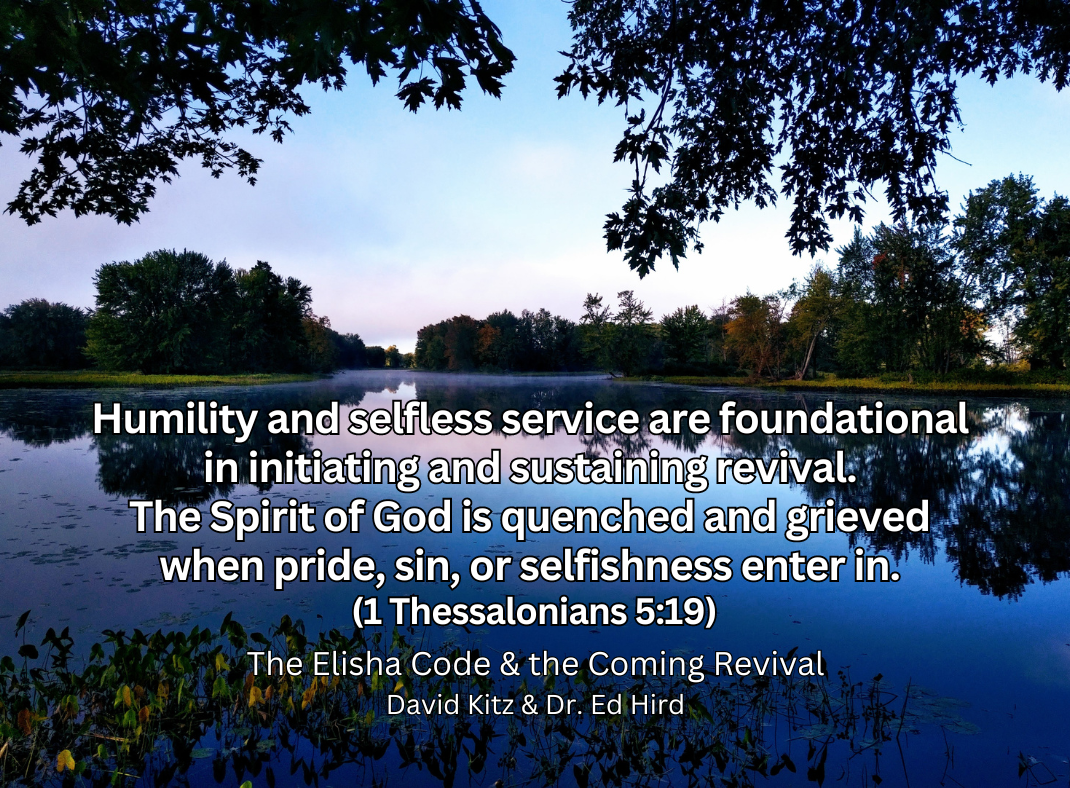
Jesus, the prophet of the new covenant, left his throne in glory to become the servant of all. He set aside the wealth of heaven to serve among the poor. He asks his followers to do the same. Some like Peter, James, John, and Matthew, the tax collector, heeded his call, left all, and followed him. Others like the rich young ruler clung to the security of their wealth.[xiv]

It’s striking that Elijah repeatedly tried to dissuade Elisha from following him.[xv] Yet, Elisha persisted. Similarly, Jesus repeatedly warned his followers of the cost they would bear in becoming his disciples.[xvi] Have you and I persevered in following Jesus despite hardship and opposition?

Second, Elisha was a man of the people, whereas Elijah was a man of solitude—a man of the desert wilderness.

Elijah spent months—possibly years—hidden in a raven while he was fed by ravens.[xvii] Again when he fled from Jezebel, he first retreated to the wilderness and then went on a forty-day trek into the Sinai Desert and Horeb, the mountain of God.[xviii] Elijah chose long periods of isolation and God spoke to him during these times.

By contrast, in the biblical record, there are no extended periods where Elisha self-isolated. Instead, we see a man who was actively engaged with others. His leadership role in the company of the prophets illustrates his gregarious nature. He is portrayed as a man of food and fellowship.[xix]

In his social life Elisha resembles Jesus, his New Testament counterpart. He too was outgoing—a man of the people. Similarly, Elijah, the austere prophet, resembles John the Baptist in his spartan ways and his desert lifestyle. In his discourse on John, Jesus draws our attention to the contrast between his temperament and ministry style when compared with John.

“To what can I compare this generation? They are like children sitting in the marketplaces and calling out to others:

“‘We played the pipe for you,
and you did not dance;
we sang a dirge,
and you did not mourn.’

For John came neither eating nor drinking, and they say, ‘He has a demon.’ The Son of Man came eating and drinking, and they say, ‘Here is a glutton and a drunkard, a friend of tax collectors and sinners.’ But wisdom is proved right by her deeds” (Matthew 11:16-19, NIV).

These words of Jesus are the prelude to his lament over the unrepentant cities (Matthew 11:20-24). Despite their sharply contrasting lifestyles, this New Testament dynamic duo was unable to bring about the deep nationwide repentance both men sought. Furthermore, despite miraculous works the population was largely unmoved, and therefore God’s judgment would fall.[xx]

Let’s remember the paramount goal for the prophetic Old Testament and New Testament dynamic duos is regime change. And genuine regime change starts with repentance. Hearts must be changed. Repentance is entirely about a change in direction. The wayward and rebellious turn away from sin and toward God. A new King begins to reign in the repentant heart and as a result a life is changed from the inside out.

When this happens broadly in a society, a true Spirit led awakening occurs.

Though Elijah was unable to bring about regime change, Elisha succeeded in doing just that, and he accomplished that transition in a remarkable way. He did it by commissioning an unnamed young man. Elisha entrusted the most significant nation-changing-assignment of his career into the hands of a biblical nobody.

And Elisha the prophet called one of the sons of the prophets, and said to him “Get yourself ready, take this flask of oil in your hand, and go to Ramoth Gilead. Now when you arrive at that place, look there for Jehu the son of Jehoshaphat, the son of Nimshi, and go in and make him rise up from among his associates, and take him to an inner room. Then take the flask of oil, and pour it on his head, and say, ‘Thus says the Lord: “I have anointed you king over Israel.”’ Then open the door and flee, and do not delay” (2 Kings 9:1-3, NIV).

The young man did just as he was told. The result was the overthrow of a brutal dynasty that for three generations had led the nation into a cesspool of sin and the clutches of idolatry. The demonic yoke of Jezebel’s oppression over Israel and Judah was broken and the worship of the LORD was restored. This dramatic regime change was the culmination of the prophetic work of Elijah and Elisha.

Why did Elisha entrust this nation-changing-assignment to this unnamed son of the prophets? Since Elisha received the revelation that regime change was at hand, why didn’t he deliver the message himself? Why work through this nameless young man?

The answer lies in the character and ministry style of the prophet. Elisha was a man of humility, and a team builder. He delegated responsibility rather than attempting to do everything by himself. This team building quality is displayed by his leadership role in the company of the prophets.[xxi] He continually worked with and alongside others including his devious servant Gehazi.[xxii]

In his ministry style Elisha resembles Jesus, our Lord and Savior. Above all, Jesus was a humble team builder. Yes, like Elisha, he was a miracle worker, but his most significant work (excluding redemption) was the education and equipping of his disciples. He too, had his greedy Gehazi. His name was Judas Iscariot.[xxiii] But Jesus risked all to train an army of followers who would overthrow the dark spiritual masters of this world and establish his kingdom. As Paul so eloquently states:

For our struggle is not against flesh and blood, but against the rulers, against the authorities, against the powers of this dark world and against the spiritual forces of evil in the heavenly realms (Ephesians 6:12, NIV).

Jesus deputized, empowered, and commissioned his followers to carry on his work, and he began doing so early in his ministry. He sent out the seventy (some translations seventy-two) into the towns where he was about to go. They returned rejoicing that the demons were subject to them. Their success brought Jesus great joy. See Luke 10:1-24.

Yes, Jesus has been using young, unsung, unnamed nobodies to accomplish his purpose from the very beginning.

This is the eleventh weekly excerpt from the award-winning book 
The Elisha Code & the Coming Revival 

A soul-gripping read.
Is a return-to-Jesus revival possible in our time?
This book points the way forward.
For details click here.

[i] “Volodymyr Zelenskiy stands defiant in face of Russian attack”, The Guardian, 26 February 2022. Archived from the original on 1 March 2022. Retrieved 2 March 2022.

[ii] “I have not made trouble for Israel,” Elijah replied. “But you and your father’s family have. You have abandoned the Lord’s commands and have followed the Baals. Now summon the people from all over Israel to meet me on Mount Carmel. And bring the four hundred and fifty prophets of Baal and the four hundred prophets of Asherah, who eat at Jezebel’s table” (1 Kings 18:18-20).

[iii] Then Elijah commanded them, “Seize the prophets of Baal. Don’t let anyone get away!” They seized them, and Elijah had them brought down to the Kishon Valley and slaughtered there (1 Kings 18:40).

[iv] 1 Kings 18:41-45

[v] 1 Kings 18:4, 1 Kings 21:1-16

[vi] John 3:1-21

[vii] James 5:17-18

[viii] 1 Kings 21:1-16

[ix] 1Kings 18:44-46

[x] 1 Kings 18:12-15

[xi] 1 Kings 18:22

[xii] 2 Timothy 2:19-21

[xiii] 2 Kings 1:8, Matthew 3:1-4

[xiv] Matthew 19:16-24, Mark 10:17-23, Luke 18:18-30

[xv] 1 Kings 19:20, 2 Kings 2:2, 2:4, 2:6

[xvi] Matthew 8:18-22, Luke 14:25-33, Matthew 10:37-39,

[xvii] 1 Kings 17:1-9

[xviii] 1 Kings 19:3-9

[xix] 2 Kings 6:1-7, 2 Kings 4:38-41, 2 Kings 4:42-44

[xx] Matthew 11:23-24, Luke 19:41-44

[xxi] 2 Kings 6:1-7

[xxii] 2 Kings 5:19-27, 2 Kings 6:15-17

[xxiii] John 12:4-6

Finding Christ Beyond the Noise

06 Thursday Nov 2025

Posted by davidkitz in Psalm 4, Psalms

≈ Leave a comment

Tags

Christmas, devotion, Distraction, faith, God, greed, humility, idolatry, pride, Redeemer, Reflection, season, seeking, worship

Today’s Devotion from Psalms 365 by David Kitz

Reading: Psalm 10:1-4

Listen to today’s reading by Jonathan Dent:

https://davidkitz.blog/wp-content/uploads/2025/11/psalm-101-4-final-mix.mp3

Why, LORD, do you stand far off?
Why do you hide yourself in times of trouble?
In his arrogance the wicked man hunts down the weak,
who are caught in the schemes he devises.
He boasts about the cravings of his heart;
he blesses the greedy and reviles the LORD.
In his pride the wicked man does not seek him;
in all his thoughts there is no room for God (NIV). *

Early snowfall — photo by David Kitz

Reflection
As I write these thoughts on Psalm 10, outside my window snow is drifting down and appropriate or not, my mind returns to our annual rendezvous with Christmas. Ah, Christmas! I love the significance of the season—time spent with family and thoughts of a babe in a manger.

But for many, the celebration of Christ’s birth has become a mangled wreck—a gross distortion. For millions of people, this commercial bonanza is completely devoid of any spiritual meaning. It is nothing more than a buying and selling frenzy—a pursuit of trinkets signifying nothing—nothing of eternal value.

In this psalm we see the deceptive signs—the misdirected signs of that season. Through clever advertising and marketing schemes we too were hunted down by the top-level merchandisers of this world. Perhaps you were caught in the schemes they devised. Rather than being a season where we seek the LORD, we too can fall into a trap. We can find ourselves boasting about the cravings of our heart. As the Psalmist says, we bless the greedy and in so doing, we revile the LORD.

The words of the Psalmist ring true, “In his pride the wicked man does not seek him; in all his thoughts there is no room for God” (v. 4).

No room for God… in today’s world? In a perverse way it seems rather appropriate. There was no room for God in Bethlehem on the night Jesus was born. No room for God… no room for the Maker and Savior of the universe! That sounds insane, but then it seems we live in a world gone mad.

For you and me, it doesn’t have to be that way. While there was no room for God incarnate in Bethlehem, the magi were busy seeking Him. They were hungry to know more about this Redeemer of Israel and they crossed deserts to reach Him. They came to bow down and worship that baby in a manger.

Regardless of the season, or the season of our lives, you and I can set our hearts to be God seekers. In the year that lies before us, let’s set our hearts to seek after the LORD.

Response: Jesus, I seek after you. Open my eyes to see you at work today. You are not distant from me in time or space. Show up in my world today. I wait expectantly for you. Amen.

Your Turn: Have you seen Jesus in others? How can you seek God throughout the week? What would seeking God look like for you?

Para la publicación de Salmos 365 de hoy en español haga clic aquí.

bgbg_v4.3_1501818
* NEW INTERNATIONAL VERSION, COPYRIGHT ©1973, 1978, 1984, 2011 BY BIBLICA

Thank God for peace in Israel and Gaza,
and continue to pray for peace to return to Ukraine and Russia!

Volume I of Psalms 365: Develop a Life of Worship and Prayer won the Best Book of the Year Award from The Word Guild and Volume II has won the Best Devotional of the Year Award. For those who love God’s word, this three-book series is an ideal way to daily meet with the Lord. To purchase or for a closer look click here.

New from David Kitz

James—the brother of Jesus—who was this man? What evidence do we have that this “brother of our Lord” even existed?

David Kitz digs deep into archeology, family dynamics, church history, and the biblical texts. What emerges from his research is a portrait of a decisive, pivotal leader who embodied the will and character of Jesus Christ.

But how did James—James the unbeliever—transform to become a leader who changed the course of world history? In these pages you will uncover the answer and rediscover for yourself the life-changing power of the gospel.

A Lament for Jerusalem

26 Tuesday Aug 2025

Posted by davidkitz in Psalm 137

≈ Leave a comment

Tags

Babylon, Babylonian exile, Bible, destruction of Jerusalem, devotion, God, idolatry, Jerusalem, judgment, mercy of God, Psalms, repentance, Ten Commandments, Zion

Reading: Psalm 137:1-6

By the rivers of Babylon we sat and wept
when we remembered Zion.
There on the poplars we hung our harps,
 for there our captors asked us for songs,
our tormentors demanded songs of joy;
they said, “Sing us one of the songs of Zion!”
How can we sing the songs of the LORD
while in a foreign land?
If I forget you, Jerusalem,
may my right hand forget its skill.
May my tongue cling to the roof of my mouth
if I do not remember you,
if I do not consider Jerusalem my highest joy
(NIV) *

Reflection
It’s difficult to pinpoint the time in history when many of the Psalms were written. Many scholars believe that the Old Testament was compiled over a period of about 900 to 1,000 years. As for the Book of Psalms, there is considerable evidence to suggest that psalms were collected from three distinct periods: the reign of King David (1 Chronicles 23:5), the rule of Hezekiah (2 Chronicles 29:30), and during the leadership of Ezra and Nehemiah (Nehemiah 12:24).[1]

Psalm 137 is distinct, because we can tell from its content that this psalm was written early during the period of the Babylonian exile. Memories of Nebuchadnezzar’s destruction of Jerusalem in 586 BC were still fresh—etched with bitterness and pain in the mind of the author.

There are two great pivot points in the history of Old Testament Israel. The first is the liberation of Israel from Egypt and the subsequent conquest of the holy land. The second is the destruction of Jerusalem and the temple, which was followed by the seventy-year exile in Babylon. The mercy and power of God brought about the first pivotal event. The disobedience and idolatry of man set in motion the catastrophe of the second event.

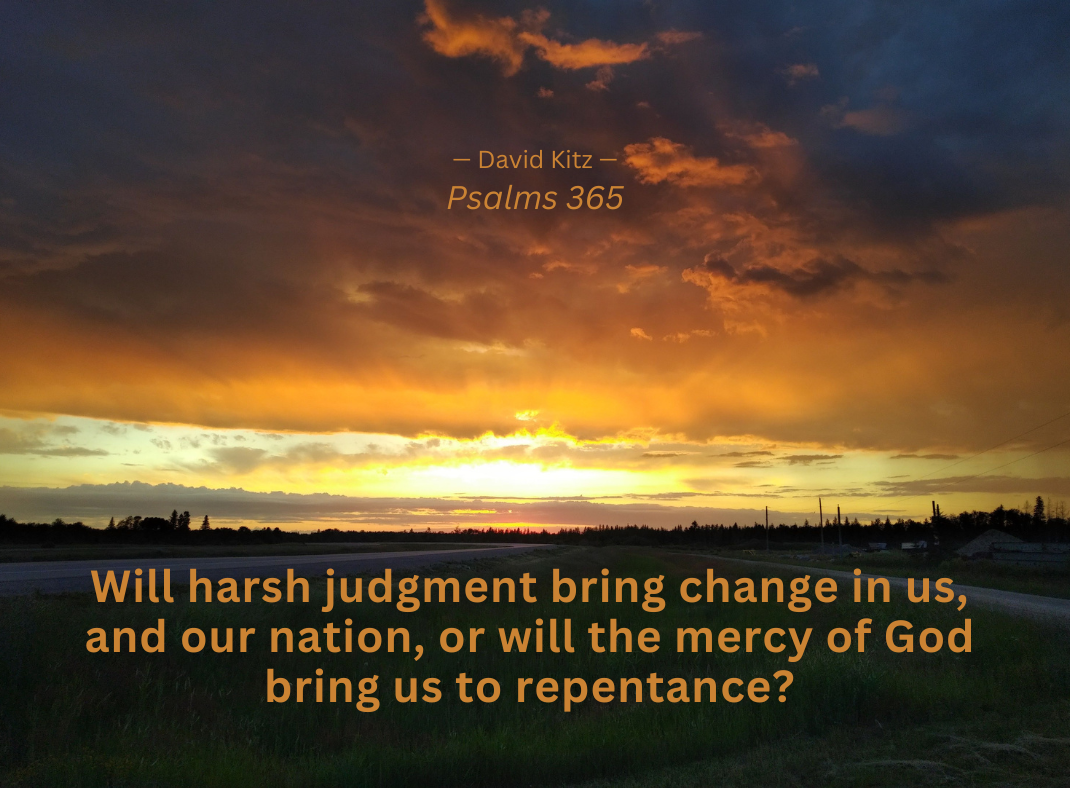
From its inception the Jewish nation flirted with idolatry. While Moses was receiving the Ten Commandments, the people were reveling before a golden calf. King Solomon set up idols in Jerusalem so his foreign wives could worship their gods. See 1 Kings 11:1-8. This duplicity continued generation after generation until the Babylonians swept in and destroyed Jerusalem. Harsh judgment brought change. Will harsh judgment bring change in us, or will the mercy of God bring us to repentance?

Response: Father God, I don’t want to learn things the hard way. I want to be quick to obey you. Help me to learn from the lessons of history. You are the one, true God. I worship you. Amen.

Your Turn: How faithful are you to the LORD? Do other interests draw you away?

[1] K.R. “Dick” Iverson, Spirit Filled Life Bible, New King James Version, Jack W. Hayford, General Editor, Thomas Nelson Publishers, Nashville, TN, 1991, p. 750.

Para la publicación de Salmos 365 de hoy en español haga clic aquí.

bgbg_v4.3_1501818
* NEW INTERNATIONAL VERSION, COPYRIGHT ©1973, 1978, 1984, 2011 BY BIBLICA


Please pray for peace to return to Israel, Gaza, and Ukraine!

Volume I of Psalms 365: Develop a Life of Worship and Prayer won the Best Book of the Year Award from The Word Guild and Volume II has won the Best Devotional of the Year Award. For those who love God’s word, this three-book series is an ideal way to daily meet with the Lord. To purchase or for a closer look click here.

A gripping read from David Kitz.
Is a return-to-Jesus revival possible in our time?
This book points the way forward.
For details click here.

Of Greater Worth than Silver and Gold

20 Wednesday Aug 2025

Posted by davidkitz in Psalm 135, Psalms

≈ Leave a comment

Tags

Almighty, Bible, blood of Christ, Christ, devotion, idol worship, idolatry, praise the LORD, Prayer, Psalms, silver and gold, the LORD, wealth, worship of wealth

Reading: Psalm 135:15-21

The idols of the nations are silver and gold,
made by human hands.
They have mouths, but cannot speak,
eyes, but cannot see.
They have ears, but cannot hear,
nor is there breath in their mouths.
Those who make them will be like them,
and so will all who trust in them.
All you Israelites, praise the LORD;
house of Aaron, praise the L
ORD;
house of Levi, praise the L
ORD;
you who fear him, praise the L
ORD.
Praise be to the L
ORD from Zion,
to him who dwells in Jerusalem.
Praise the LORD (NIV). *

Giant Bhudda, Kamakura, Japan — photo by David Kitz

Reflection
Though it may not be obvious, there is something timeless about the first sentence from today’s reading: The idols of the nations are silver and gold, made by human hands (v. 15).

In today’s world shaping silver or gold into an idol may be unusual, but it still occurs. India and the nations of Southeast Asia have plenty of gold and silver idols. This is not a dying worship form. Many have been cast in recent years.

In the western world we frown on such openly idolatrous displays of wealth and worship. Or do we? Gold and silver represent wealth. In reality, we have simply transformed our worship of wealth from bulky commodities like silver and gold to more transferable assets like securities and paper currency. We are still guilty of bowing before silver and gold, but it comes with a different name. Now we call it the almighty dollar.

The almighty dollar, or more broadly speaking, the market, determines the ebb and flow of commerce, and by extension impacts every aspect of our daily lives. It is not an exaggeration to say we are caught up in a financial system that is deeply idolatrous. Our society has taken the worship of wealth (Mammon) to new heights. We elect our political leaders not based on morality or personal integrity, but rather can they deliver a higher level of GDP—put more money in our pockets.

Into this corrupt world, the apostle, Peter, speaks these words to those who have been called to follow Christ:  For you know that it was not with perishable things such as silver or gold that you were redeemed from the empty way of life handed down to you from your ancestors, but with the precious blood of Christ, a lamb without blemish or defect (1 Peter 1:18-19).

Response: Father God, I need the right perspective on wealth and finances. Jesus, your precious blood is worth more than all the silver and gold this world has to offer. I bow before you as my Almighty Savior. Amen.

Your Turn: Is Jesus the Lord of your finances? Is your Redeemer more important than wealth?

Para la publicación de Salmos 365 de hoy en español haga clic aquí.

bgbg_v4.3_1501818
* NEW INTERNATIONAL VERSION, COPYRIGHT ©1973, 1978, 1984, 2011 BY BIBLICA


Please pray for peace to return to Israel, Gaza, and Ukraine!

Volume I of Psalms 365: Develop a Life of Worship and Prayer won the Best Book of the Year Award from The Word Guild and Volume II has won the Best Devotional of the Year Award. For those who love God’s word, this three-book series is an ideal way to daily meet with the Lord. To purchase or for a closer look click here.

A gripping read from David Kitz.
Is a return-to-Jesus revival possible in our time?
This book points the way forward.
For details click here.

Modern forms of Idolatry

09 Monday Jun 2025

Posted by davidkitz in Psalms

≈ 2 Comments

Tags

devotion, Discipleship, faith, heartcheck, idolatry, obedience, Reflection, Scripture, truth, worship

Today’s Devotion from Psalms 365 by David Kitz

Reading: Psalm 115:1-8
Not to us, LORD, not to us
but to your name be the glory,
because of your love and faithfulness.
Why do the nations say,
“Where is their God?”
Our God is in heaven; he does whatever pleases him.
But their idols are silver and gold,
made by human hands.
They have mouths, but cannot speak,
eyes, but cannot see.
They have ears, but cannot hear,
noses, but cannot smell.
They have hands, but cannot feel,
feet, but cannot walk,
nor can they utter a sound with their throats.
Those who make them will be like them,
and so will all who trust in them (NIV). *

Street Corner Idol — Nagakute, Japan — David Kitz

Reflection
Where are your idols? “I have none,” you say. Are you sure? Most readers of this post would deny being idol worshippers, but perhaps we have more idols than we care to admit.

Idolatry was commonly practiced during Israel’s kingdom era. In Old Testament times, the nations around God’s people all practiced various forms of idol worship. One might assume God’s redeemed people, who were rescued from slavery, would have nothing to do with such vile practices. But you would be wrong. Time and again Israel fell into idolatry.

King Solomon, who was revered for his wisdom, is a prime example of someone who condoned idol worship. Here’s what we read about this ‘esteemed’ leader: On a hill east of Jerusalem, Solomon built a high place for Chemosh the detestable god of Moab, and for Molek the detestable god of the Ammonites. He did the same for all his foreign wives, who burned incense and offered sacrifices to their gods (1 Kings 11:7-8).

When leaders go astray, there will be many who follow. In the church today we have many leaders who have fallen captive to the god of Mammon—material goods. Jesus said, “No one can serve two masters. Either you will hate the one and love the other, or you will be devoted to the one and despise the other. You cannot serve both God and money” (Matthew 6:24).

Before we claim to be free from idols, we need to examine our hearts. Are we yielding to the Holy Spirit, or are we controlled by our desire for what this world has to offer?

Response: Father God, show me if there are idols in my life. In love, correct me when I stray. I want to serve you—put you first in my life. Lord Jesus, be my master. It’s an honor to serve you. Amen.

Your Turn: What things have become idols in your life? What actions can you take to establish Jesus as your Lord?

Para la publicación de Salmos 365 de hoy en español haga clic aquí.

bgbg_v4.3_1501818
* NEW INTERNATIONAL VERSION, COPYRIGHT ©1973, 1978, 1984, 2011 BY BIBLICA

Please pray for peace to return to Israel, Gaza, and Ukraine!

Volume I of Psalms 365: Develop a Life of Worship and Prayer won the Best Book of the Year Award from The Word Guild and Volume II has won the Best Devotional of the Year Award. For those who love God’s word, this three-book series is an ideal way to daily meet with the Lord. To purchase or for a closer look click here.

A gripping read from David Kitz.
Is a return-to-Jesus revival possible in our time?
This book points the way forward.
For details click here.

From Judgment to Restoration

14 Wednesday May 2025

Posted by davidkitz in Psalms

≈ 1 Comment

Tags

disobedience, faithfulness, forgiveness, God, idolatry, justice, mercy, Moses, rebellion, repentance, Righteousness, sin, the LORD

Today’s Devotion from Psalms 365 by David Kitz

Reading: Psalm 106:28-39
They yoked themselves to the Baal of Peor
and ate sacrifices offered to lifeless gods;
they aroused the LORD’s anger by their wicked deeds,
and a plague broke out among them.
But Phinehas stood up and intervened,
and the plague was checked.
This was credited to him as righteousness
for endless generations to come.
By the waters of Meribah they angered the LORD,
and trouble came to Moses because of them;
for they rebelled against the Spirit of God,
and rash words came from Moses’ lips.
They did not destroy the peoples as the LORD had commanded them,
but they mingled with the nations and adopted their customs.
They worshiped their idols, which became a snare to them.
They sacrificed their sons and their daughters to false gods.
They shed innocent blood, the blood of their sons and daughters,
whom they sacrificed to the idols of Canaan,
and the land was desecrated by their blood.
They defiled themselves by what they did;
by their deeds they prostituted themselves (NIV). *

Reflection
Psalm 106 began with with praise, but in verse three it transitioned to this opening thought, “Blessed are those who act justly, who always do what is right.”

Now there’s a mind-blowing concept. Talk about setting the bar completely out of reach! Nobody—I repeat—nobody always does right and acts justly in every situation. Human fallibility and self-interest dictate to the contrary.

The psalmist then goes on to recount a litany of Israel’s sins. By my estimation there are nine major transgressions outlined in Israel’s history through this psalm. There’s a failure to remember God’s kindness. There’s rebellion, wickedness, idolatry, envy, sensual craving, impatience, ingratitude, unbelief, outright disobedience, bloodshed, human sacrifice, and further rebellion.

What is truly remarkable about this psalm is not Israel’s sinful ways; sinful ways are common to all humanity. What is truly mind-boggling is God’s faithfulness and readiness to forgive. He hears us in our distress. He seeks out the lost and wayward. He welcomes back the sin infested prodigals knowing full well where they have been. That’s the wonder of our God. He is always, always, always ready to forgive, when we are ready to admit the error of our ways. Now that’s a reason for praise!

Response: Father God, I acknowledge that my people and my nation have been caught up in sinful ways. Please be merciful to us. We are deserving of your judgment. Forgive us through your son Jesus. Amen.

Your Turn: Like Phinehas are you ready to take a stand against sin in your life and your community? What can you do today to show appreciation for the Lord’s mercy?

Para la publicación de Salmos 365 de hoy en español haga clic aquí.

bgbg_v4.3_1501818
* NEW INTERNATIONAL VERSION, COPYRIGHT ©1973, 1978, 1984, 2011 BY BIBLICA

Please pray for peace to return to Israel, Gaza, and Ukraine!

Volume I of Psalms 365: Develop a Life of Worship and Prayer won the Best Book of the Year Award from The Word Guild and Volume II has won the Best Devotional of the Year Award. For those who love God’s word, this three-book series is an ideal way to daily meet with the Lord. To purchase or for a closer look click here.

A gripping read from David Kitz.
Is a return-to-Jesus revival possible in our time?
This book points the way forward.
For details click here.

One of the Great Pivot Points

02 Tuesday Apr 2024

Posted by davidkitz in Psalm 137, Psalms

≈ Leave a comment

Tags

Babylon, Babylonian exile, destruction of Jerusalem, devotion, idolatry, idols, Israel, Jerusalem, Prayer, Psalms, repentance, the LORD

Today’s Devotion from the Psalms

Reading: Psalm 137:1-6
By the rivers of Babylon, we sat and wept
when we remembered Zion.
There on the poplars we hung our harps,
 for there our captors asked us for songs,
our tormentors demanded songs of joy;
they said, “Sing us one of the songs of Zion!”
How can we sing the songs of the LORD
while in a foreign land?
If I forget you, Jerusalem,
may my right hand forget its skill.
May my tongue cling to the roof of my mouth
if I do not remember you,
if I do not consider Jerusalem my highest joy
(NIV) *

pxl_20240308_103400918

Crossing the Aude River, Carcassonne, France — photo by David Kitz

Reflection
It’s difficult to pinpoint the time in history when many of the Psalms were written. Many scholars believe that the Old Testament was compiled over a period of about 900 to 1,000 years. As for the Book of Psalms, there is considerable evidence to suggest that psalms were collected from three distinct periods: the reign of King David (1 Chronicles 23:5), the rule of Hezekiah (2 Chronicles 29:30), and during the leadership of Ezra and Nehemiah (Nehemiah 12:24).[1]

Psalm 137 is distinct, because we can tell from its content that this psalm was written early during the period of the Babylonian exile. Memories of Nebuchadnezzar’s destruction of Jerusalem in 586 BC were still fresh—etched with bitterness and pain in the mind of the author.

There are two great pivot points in the history of Old Testament Israel. The first is the liberation of Israel from Egypt and the subsequent conquest of the holy land. The second is the destruction of Jerusalem and the temple, which was followed by the seventy-year exile in Babylon. The mercy and power of God brought about the first pivotal event. The disobedience and idolatry of man set in motion the catastrophe of the second event.

From its inception the Jewish nation flirted with idolatry. While Moses was receiving the Ten Commandments, the people were reveling before a golden calf. King Solomon set up idols in Jerusalem so his foreign wives could worship their gods. See 1 Kings 11:1-8. This duplicity continued generation after generation until the Babylonians swept in and destroyed Jerusalem. Harsh judgment brought change. Will harsh judgment bring change in us, and our nation, or will the mercy of God bring us to repentance?

Response: Father God, I don’t want to learn things the hard way. I want to be quick to obey you. Help me to learn from the lessons of history. You are the one, true God. I worship you. Amen.

Your Turn: How faithful are you to the LORD? Do other interests draw you away?

[1] K.R. “Dick” Iverson, Spirit Filled Life Bible, New King James Version, Jack W. Hayford, General Editor, Thomas Nelson Publishers, Nashville, TN, 1991, p. 750.

Para la publicación de Salmos 365 de hoy en español haga clic aquí.

* NEW INTERNATIONAL VERSION, COPYRIGHT ©1973, 1978, 1984, 2011 BY BIBLICA

BGBG_v4.3_150[1818]

Please pray for peace to return to Israel, Gaza, and Ukraine!

Volume I of Psalms 365: Develop a Life of Worship and Prayer won the Best Book of the Year Award from The Word Guild and Volume II has won the Best Devotional of the Year Award. For those who love God’s word, this three-book series is an ideal way to daily meet with the Lord. To purchase or for a closer look click here.TheElishaCodeCVR5

To purchase or for a closer look click here.

Idols of Silver and Gold

27 Wednesday Mar 2024

Posted by davidkitz in Psalms

≈ Leave a comment

Tags

blood of Christ, finances, idolatry, idols, Jesus, Mammon, Psalms, Redeemer, silver and gold, wealth

Today’s Devotion from the Psalms

Reading: Psalm 135:15-21
The idols of the nations are silver and gold,
made by human hands.
They have mouths, but cannot speak,
eyes, but cannot see.
They have ears, but cannot hear,
nor is there breath in their mouths.
Those who make them will be like them,
and so will all who trust in them.
All you Israelites, praise the LORD;
house of Aaron, praise the L
ORD;
house of Levi, praise the L
ORD;
you who fear him, praise the L
ORD.
Praise be to the L
ORD from Zion,
to him who dwells in Jerusalem.
Praise the LORD (NIV). *

closeup photo of three round coins in person s palm

Photo by Worldspectrum on Pexels.com

Reflection
Though it may not be obvious, there is something timeless about the first sentence from today’s reading: The idols of the nations are silver and gold, made by human hands. 

In today’s world shaping silver or gold into an idol may be unusual, but it still occurs. India and the nations of Southeast Asia have plenty of gold and silver idols. This is not a dying worship form. Many have been cast in recent years.

In the western world we frown on such openly idolatrous displays of wealth and worship. Or do we? Gold and silver represent wealth. In reality, we have simply transformed our worship of wealth from bulky commodities like silver and gold to more transferable assets like securities and paper currency. We are still guilty of bowing before silver and gold, but it comes with a different name. Now we call it the almighty dollar.

The almighty dollar, or more broadly speaking, the market, determines the ebb and flow of commerce, and by extension impacts every aspect of our daily lives. It is not an exaggeration to say we are caught up in financial system that is deeply idolatrous. Our society has taken the worship of wealth (Mammon) to new heights. We elect our political leaders not based on morality or personal integrity, but rather can they deliver a higher level of GDP—put more money in our pockets.

Into this corrupt world, the apostle, Peter, speaks these words to those who have been called to follow Christ:  For you know that it was not with perishable things such as silver or gold that you were redeemed from the empty way of life handed down to you from your ancestors, but with the precious blood of Christ, a lamb without blemish or defect (1 Peter 1:18-19).

Response: Father God, I need the right perspective on wealth and finances. Your precious blood is worth more than all the silver and gold this world has to offer. I bow before you as my Almighty Savior. Amen.

Your Turn: Is Jesus the Lord of your finances? Is your Redeemer more important than wealth?

* NEW INTERNATIONAL VERSION, COPYRIGHT ©1973, 1978, 1984, 2011 BY BIBLICA

BGBG_v4.3_150[1818]

Please pray for peace to return to Israel, Gaza, and Ukraine!

Volume I of Psalms 365: Develop a Life of Worship and Prayer won the Best Book of the Year Award from The Word Guild and Volume II has won the Best Devotional of the Year Award. For those who love God’s word, this three-book series is an ideal way to daily meet with the Lord. To purchase or for a closer look click here.

4485 SHARABLE-2

Lent is here. Easter is approaching.
Are you ready for a journey to the cross?
For a closer look or to purchase click here.

From Sea to Sea

11 Friday Aug 2023

Posted by davidkitz in Psalm 72, Psalms

≈ 2 Comments

Tags

dominion, idolatry, messianic, Prayer, prosperity, Solomon

Reading: Psalm 72:1-11
Of Solomon
Endow the king with your justice, O God,
the royal son with your righteousness.
May he judge your people in righteousness,
your afflicted ones with justice.
May the mountains bring prosperity to the people,
the hills the fruit of righteousness.
May he defend the afflicted among the people
and save the children of the needy;
may he crush the oppressor.
May he endure as long as the sun,
as long as the moon, through all generations.
May he be like rain falling on a mown field,
like showers watering the earth.
In his days may the righteous flourish
and prosperity abound till the moon is no more.
May he rule from sea to sea
and from the River to the ends of the earth.
May the desert tribes bow before him and his enemies lick the dust.
May the kings of Tarshish and of distant shores bring tribute to him.
May the kings of Sheba and Seba present him gifts.
May all kings bow down to him and all nations serve him
(NIV). *

time lapse photography of waterfalls during sunset

Photo by Pixabay on Pexels.com

Reflection
There is a verse from Psalm 72 carved in stone into Canada’s Parliament building. From the King James Version it reads, “He shall have dominion also from sea to sea, and from the river unto the ends of the earth” (Psalm 72:8).

There are several ways of interpreting this verse. First, it should be noted Psalm 72 is a prayer of Solomon. During his reign, Solomon brought the nation of Israel to the pinnacle of greatness, prosperity, and dominance over its surrounding neighbors. But Solomon also sowed the seeds that brought about the nation’s decline after his death. His marriage to hundreds of foreign wives led directly to idolatry and a forsaking of the ways of the LORD. Personal wealth and aggrandizement were achieved by means of forced labor and high taxation. Revolt was festering beneath a surface of calm.

Another interpretation of this psalm takes a more messianic approach. The Messiah will reign. He will have dominion from sea to sea. Many believe this is how the Fathers of Confederation viewed this passage. They longed for the reign of Christ on the earth. Even so we pray, thy Kingdom come, thy will be done on earth as it is in heaven. That should be the prayer of every Christian believer in whatever country we live.

Response: LORD Jesus, have dominion over me. I willingly submit to your rule. You are my King and my God. I willingly bow my knees before you. Reign over me, and in me to the end of time. Amen.

Your Turn: Are you by nature rebellious or do you find it easy to submit to God’s rule? How do you demonstrate your citizenship in God’s Kingdom?

* NEW INTERNATIONAL VERSION, COPYRIGHT ©1973, 1978, 1984, 2011 BY BIBLICA

BGBG_v4.3_150[1818]

Your prayers for the people of Ukraine are making a difference.

Volume I of Psalms 365: Develop a Life of Worship and Prayer won the Best Book of the Year Award from The Word Guild, and Volume II has won the Best Devotional of the Year Award. For those who love God’s word, this three-book series is an ideal way to daily meet with the Lord. Start your day with a new devotional series. To purchase or for a closer look click here.

Vol III 2021-07-17 at 8.15.36 AM

The Idols of Our Nation

03 Thursday Nov 2022

Posted by davidkitz in Psalm 135, Psalms

≈ 7 Comments

Tags

idolatry, idols, silver and gold, wealth

Reading: Psalm 135:15-21
The idols of the nations are silver and gold,
made by human hands.
They have mouths, but cannot speak,
eyes, but cannot see.
They have ears, but cannot hear,
nor is there breath in their mouths.
Those who make them will be like them,
and so will all who trust in them.
All you Israelites, praise the LORD;
house of Aaron, praise the L
ORD;
house of Levi, praise the L
ORD;
you who fear him, praise the L
ORD.
Praise be to the L
ORD from Zion,
to him who dwells in Jerusalem.
Praise the LORD (NIV). *

170 Giant Bhudda

Giant Bhudda, Kamakura, Japan — photo by David Kitz

Reflection
Though it may not be obvious, there is something timeless about the first sentence from today’s reading: The idols of the nations are silver and gold, made by human hands.

In today’s world shaping silver or gold into an idol may be unusual, but it still occurs. India and the nations of Southeast Asia have plenty of gold and silver idols. This is not a dying worship form. Many have been cast in recent years.

In the western world we frown on such openly idolatrous displays of wealth and worship. Or do we? Gold and silver represent wealth. In reality, we have simply transformed our worship of wealth from bulky commodities like silver and gold to more transferable assets like securities and paper currency. We are still guilty of bowing before silver and gold, but it comes with a different name. Now we call it the almighty dollar.

The almighty dollar, or more broadly speaking, the market, determines the ebb and flow of commerce, and by extension impacts every aspect of our daily lives. It is not an exaggeration to say we are caught up in financial system that is deeply idolatrous. Our society has taken the worship of wealth (Mammon) to new heights. We elect our political leaders not based on morality or personal integrity, but rather can they deliver a higher level of GDP—put more money in our pockets.

Into this corrupt world, the apostle, Peter, speaks these words to those who have been called to follow Christ:  For you know that it was not with perishable things such as silver or gold that you were redeemed from the empty way of life handed down to you from your ancestors, but with the precious blood of Christ, a lamb without blemish or defect (1 Peter 1:18-19).

Response: Father God, I need the right perspective on wealth and finances. Your precious blood is worth more than all the silver and gold this world has to offer. I bow before you as my Almighty Savior. Amen.

Your Turn: Is Jesus the Lord of your finances? Is your Redeemer more important than wealth?

* NEW INTERNATIONAL VERSION, COPYRIGHT ©1973, 1978, 1984, 2011 BY BIBLICA

BGBG_v4.3_150[1818]

Please pray for the people of Ukraine!

Volume I of Psalms 365: Develop a Life of Worship and Prayer won the Best Book of the Year Award from The Word Guild and Volume II has won the Best Devotional of the Year Award. For those who love God’s word, this three-book series is an ideal way to daily meet with the Lord. To purchase or for a closer look click here.

← Older posts

Psalms 365: Develop a Life of Worship and Prayer

Psalms 365 Volume II

Psalms 365 vol 3
— Psalms 365 Volume III

Psalms

Recent posts

  • A Horn of Salvation December 19, 2025
  • Ready for the King of Glory December 19, 2025
  • My Spirit Rejoices in God My Savior December 18, 2025
  • Joining the Generation That Seeks God December 18, 2025
  • Why Am I So Favored December 17, 2025
  • How Can You Find the Good Life? December 17, 2025
  • The Power of the Most High December 16, 2025

Calendar

December 2025
M T W T F S S
1234567
891011121314
15161718192021
22232425262728
293031  
« Nov    

Blog Posts

Comments

  • davidkitz on Joining the Generation That Seeks God
  • cjsmissionaryminister on God Sent His Son
  • cjsmissionaryminister on The God of the Broken

Blog at WordPress.com.

Privacy & Cookies: This site uses cookies. By continuing to use this website, you agree to their use.
To find out more, including how to control cookies, see here: Cookie Policy
  • Subscribe Subscribed
    • I love the Psalms
    • Join 1,377 other subscribers
    • Already have a WordPress.com account? Log in now.
    • I love the Psalms
    • Subscribe Subscribed
    • Sign up
    • Log in
    • Report this content
    • View site in Reader
    • Manage subscriptions
    • Collapse this bar
 

Loading Comments...