• Home
  • About
  • DavidKitz.ca
  • Youtube Videos
  • Books by David
  • Books on Amazon.com

I love the Psalms

~ Connecting daily with God through the Psalms

I love the Psalms

Tag Archives: Jerusalem

Read a Chapter

08 Thursday Jun 2017

Posted by davidkitz in Books by David Kitz, Psalms

≈ Leave a comment

Tags

centurion, Christ's Passion, David Kitz, donkey, historic novel, Hosanna, Jerusalem, Jesus of Nazareth, Kregel, palm branches, Passion Week, Passover, Roman centurion, Son of David

Four in the afternoon, Sunday, April 2, AD 30

It was never like this before.

I have been posted here, in Jerusalem for ten years now, but in all that time I had never seen a Passover crowd like this. It was not the numbers. I had seen that before.

What made the big difference was the person at the center of it all. You see there had never been a central figure before. The Passover pilgrims just came plodding into the city in reverent caravans. Some of them would be chanting psalms. Others were silent; looking bone weary as they trudged, like fretful herdsmen with children in tow. Undoubtedly many were relieved that their holy city was finally in view.

Soldier bookBut, this year it was different. There was this man – at the center of the whole procession. Every movement within that huge throng seemed focused on him.

Squinting in a futile attempt to get a better view, I gave Claudius a backhanded slap to the shoulder and demanded, “What are they doing?”

“They’re climbing the trees, sir.”

“I can see that!” I snapped impatiently, “But what are they doing?”

“They seem to be tearing off the palm branches, sir.”

“What is going on here?” I said it more to myself than to any of the men standing near me. An uncomfortable feeling crept into me as the procession advanced.

“They don’t usually do this?” Claudius questioned.

“No.  . . .  They’ve never done this before.” There was worry in my voice.

Claudius had been recently assigned to this place, the festering armpit of the Empire, and I was at a loss to explain what was happening before us. We were standing on the wall above the gate of Jerusalem, and there less than a half mile ahead of us, we could see the jubilant pilgrims surging toward us, in numbers that were alarming.

“They’re laying the palm branches on the road in front of that man – the man on the donkey.”

Until Claudius said it, I had not noticed the donkey. Its small size, and the frenzy of activity round about, must have obscured this detail in the picture before me. What an odd way for this man to come? I could make no sense of it.

“They’re throwing down their cloaks before him.”

The sweat-glistened bodies of several men were clearly visible. Outer garments were being cast down as a sign of homage before this man. At the same time the rhythmic chanting of their voices became more distinct.

What were they singing? Could I pick up the words?

“Hosanna to the Son of David!
Blessed is he who comes in the name of the Lord!
Hosanna in the highest!”[i]

That’s when it hit me like a barbarian’s club. I realized what I was witnessing. It was a triumphal entry – the entry of a king.

It was the words.  The words they were now boisterously shouting. He was their Messiah. The son of David! The one they were waiting for! The one who would rid them of the Romans. He would set up his glorious Jewish kingdom, here, in Jerusalem! This is what I had been warned about since the day I first set foot on this cursed Judean soil.

And we, I and my men, and the garrison in the city, were all that stood in their way.

This crowd of thousands was sweeping down the Mount of Olives into the Kidron Valley and then on toward us. They advanced like a huge human wave about to collide with the rock hewn palisades on which we stood.

Would they sweep us away?

My initial curiosity had grown into worry. Now in an instant my worry turned to alarm. Instinctively, everything within me shouted, “Stand! Resist! Be a Roman!”

We had soldiers posted all about the city, especially along the pilgrim route. My own hundred men were among the first to be deployed. During Jewish feasts like this we made certain we were highly visible. I dreaded what might happen if this crowd ran wild. Rioting could erupt, and with an impassioned throng such as this riots have a way of quickly turning deadly.

For several moments a debate raged in my mind. Should I order the gate closed to keep this rabble with their pretender king out of the city? Or, should I let everything proceed – let it proceed as though somehow, we had not taken note of what was going on?

“Stand! Ready for orders!” I shouted above the swelling din. The sentinels on the wall snapped to attention.

I hastily scanned the crowd for any sign of weapons, any hint of armed treachery. To my surprise I saw none. They were paying no attention to us. Everyone was caught up with hailing this man, the man on the donkey.

The front edges of the crowd had now reached the first platoon of eight men that I had positioned by the roadside about four hundred yards before the gate. But they ignored them, sweeping past the clump of soldiers, without so much as creating a ripple, like a round stone in a swift flowing stream.

At that moment I knew it made no sense to lower the gate. It would only enrage this crowd that was already fully aroused and moving as one.

Let them come. We’ll handle them and their king inside the city.

Their king. On a donkey. I could only shake my head in disbelief.

I had watched many a triumphal entry, while growing up in Rome, and the conquering hero always rode a gallant war horse. And as a boy, I too had  dreams of personal glory. But a donkey? It could only happen here, I thought with an incredulous grin.

I could see him clearly now. Donkey or not, he had the look of a man who knew exactly what he was doing. Those about him might not know, or understand, but he knew. He had a destination in mind, a purpose. You could see it on his face.

“Hosanna to the Son of David!
Blessed is he who comes in the name of the Lord!”
Hosanna in the highest!”

There was something else that was different about him. At the time I did not know what it was. I could not put it into words for a long time. I think I noticed it because I had watched all those other men come into Rome in their triumphal processionals. They were conquerors, but still they were hollow men, feeding off of the adulation of the crowd, thirsting but never satisfied. You could see them vainly drink it in, hoping it would somehow fill the empty soul.

He was not drinking from the crowd. I somehow sensed he was full already, and what he had within, must have come from a different source.

“Hosanna in the highest!
Hosanna to the Son of David!
Blessed is he who comes in the name of the Lord!”

Just at that moment a strange feeling seemed to rise within me. Maybe it was the joy of the crowd. I had expected anger. Maybe it was the children waving the palm branches, or the spontaneity of the singing? I don’t know. For one moment it all seemed to come together. It seemed right somehow. Like heaven and earth had finally, for a moment, come into agreement – an agreement that had never been achieved before.

“Hosanna in the highest!”
He was much closer now.
“Hosanna to the Son of David!”
He was now within the shadow of the gate.
“Blessed is he who comes in the name of the Lord!”

At that moment he looked up. For an instant our eyes met. Then I heard a voice – clearly heard a voice say, “I have a future for you.”

I was confused.

I turned to Claudius and said, “What did you mean by that?”

“What did I mean by what?” He had a blank look on his face.

“By what you said about – about the future?”

“I didn’t say anything about the future, Sir. I didn’t say anything.”

Now I was totally baffled. Was I hearing voices? This whole thing was making no sense, no sense at all. Passover pilgrims are not supposed to come into the city this way. We’ve got a revolutionary on the loose – riding a donkey. And now I’m hearing things?

I rubbed the sweat from my forehead, hoping for some clarity to emerge out of all this.

I had a hundred men whose lives were in danger from this Jewish messiah, and his horde of followers. That’s what mattered now.

By this time the donkey man had passed under the gate and was heading in the direction of the temple in the heart of the city.

I signaled for Claudius to follow, as I raced down the stairs of the gatehouse. As I emerged onto the street, I grabbed the first two-legged bit of Jewish scum I saw. Pressing him against the stone wall I demanded, “Who is that man?” At the same time I pointed at the retreating figure on the donkey.

The poor wretch was in shock and seemed quite unable to get out a word.
Claudius reached for his sword.

“Je – Jesus of Nazareth!” He stammered and then quickly added, “The prophet from Nazareth in Galilee.”

I loosened my grip. Then in a voice loud enough for all near to hear I announced, “Well there is one thing I do know. We’re going to have to keep an eye on that man.”

  • For the month of June The Soldier Who Killed a King is available for preorder from Kregel Publishing for the early bird price of $10.99. The worldwide release date is July 25th.
  • Place your order today: http://www.kregel.com/fiction/the-soldier-who-killed-a-king/

Kissing the Son

23 Tuesday May 2017

Posted by davidkitz in Psalm 2, Psalms

≈ Leave a comment

Tags

Christ, financial affairs, Jerusalem, king, Kiss, kissing, Messiah, messianic, monarch, prophetic, submission, submit, the LORD, Zion

Reading:                                              Psalm 2

Why do the nations conspire and the peoples plot in vain?
The kings of the earth rise up and the rulers band together
against the L
ORD and against his anointed, saying,
“Let us break their chains and throw off their shackles.”

The One enthroned in heaven laughs; the Lord scoffs at them.
He rebukes them in his anger and terrifies them in his wrath, saying,
“I have installed my king on Zion, my holy mountain.”

I will proclaim the LORD’s decree:
He said to me, “You are my son; today I have become your father.
Ask me, and I will make the nations your inheritance,
the ends of the earth your possession.
You will break them with a rod of;
you will dash them to pieces like pottery.”

Therefore, you kings, be wise; be warned, you rulers of the earth.
Serve the L
ORD with fear and celebrate his rule with trembling.
Kiss his son, or he will be angry and your way will lead to your destruction,
for his wrath can flare up in a moment.
                               Blessed are all who take refuge in him (NIV).                            

Reflection

Kisses are so close-up and personal, so intimate. I don’t know about you, but I don’t kiss everyone I meet. Kisses are reserved for those special people in my life—people I know and trust—people I love.

597

Butchart Gardens, Victoria, BC — photo by David Kitz

Here in Psalm 2, kings and rulers are commanded to kiss the Son of God. What an odd command? What is the significance of this? The kiss in this case signals full submission to the supreme potentate. Kings and rulers are to submit to the overarching rule of Christ over themselves, their affairs and their entire domain.

Psalm 2 is the first of several messianic psalms scattered throughout the Book of Psalms. There is nothing subtle about the messianic message found here. The LORD has installed His anointed as king in Zion and furthermore this anointed one is identified as the Son of God. The term the LORD’s “anointed” is frequently translated as Messiah or Christ.

In the Book of Acts, we see the apostles viewed this psalm as the prophetic fulfillment of Christ’s mission during his last days in Jerusalem. The anointed Son of God was rejected by Herod and Pilate, the rulers of that time. They refused to kiss the Son. See Acts 4:23-31.

But what about me? Have I kissed the Son? Have I submitted to his will for my life? In my own small way, I too am a monarch, a ruler of my own domain. Today, will I allow him to rule over me, my conduct, my activities and my financial affairs?

Response: Dear Lord Jesus, thank you for your unconditional love. You want only the best for me. I yield to you. Help me to embrace your will and purpose for my life. I trust in you. I love you, Lord. With my lips I kiss the Son. Amen.

Your Turn: Have you kissed the Son? How can you show your love and loyalty to Jesus today?

The Healer of the Brokenhearted

05 Friday May 2017

Posted by davidkitz in Psalm 147, Psalms

≈ 7 Comments

Tags

brokenhearted, comfort, exiles, flooding, grieving, heal, healing, Israel, Jerusalem, Lord

Reading:                                         Psalm 147

(Verses 1-3)
Praise the LORD.
How good it is to sing praises to our God,
how pleasant and fitting to praise him!
The LORD builds up Jerusalem;
he gathers the exiles of Israel.
He heals the brokenhearted
and binds up their wounds (NIV).

Reflection

There are a lot of brokenhearted people in this world. No, I’m not talking about sports fans who have suffered heartbreak because their team has lost. I’m talking about the more serious issues that arise—the loss of a home, a career, or a family member. I’m talking about those devastating life events from which full recovery may never be possible.

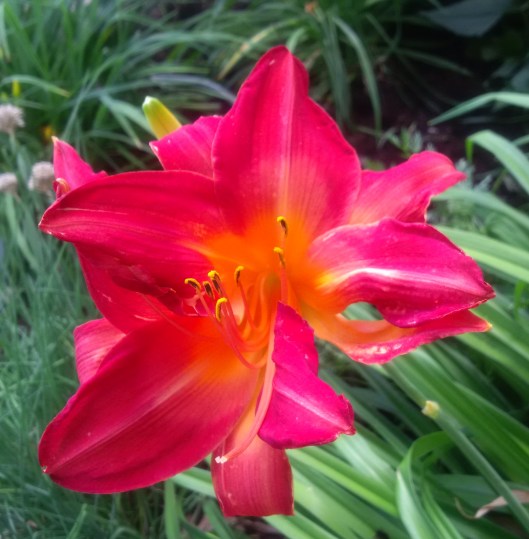
img_20160723_183809

Flaming day lily — photo by David Kitz

Today’s evening news carried the story of a woman who had lost her home due to severe flooding throughout our region. There she stood with her voice breaking as she described all the work she and her husband had put into their lovely home. Looking beyond her you could see nothing but brown water lapping against the sides of her house. Everything they had worked for was ruined.

Every Friday morning for a dozen years I have been meeting with a group of men who have entered into a covenant to grow stronger in their relationship with the Lord. We are accountable to one another in our commitment to grow in love and service to Jesus. But faithful commitment to the Lord provides us with no guarantee against personal heartbreak.

One of the leaders of our group lost his wife last fall due to pancreatic cancer. Now Chris must cope with the loss of his wife while also providing care and comfort for his young son and his teenage daughter. That’s heartbreaking. That’s a daunting task!

I’m not sure that I could cope with that level of loss.

In today’s reading from Psalm 147, we see a call to praise coupled with a promise that the LORD will build up, restore, and heal the heartbroken. The LORD builds up Jerusalem; he gathers the exiles of Israel. He heals the brokenhearted and binds up their wounds.

I need words like that. I need healing words. The wounded need healing words. As God’s people we need to give and receive words that comfort the grieving, build up the downcast, and minister healing to the wounded. All too often our tongues do more harm than good. Too often we speak words of judgment, when we should leave judgment to the LORD.

Today, remember there are a lot of brokenhearted people in this world.

Response: LORD God, heal my hurts so I can help heal the hurts of others. I pray that your people will find comfort in your word. May your words bring health and healing. You are worthy of praise. Amen.

Your Turn: How can we bind up the wounds of others? Do you have wounds that need healing?

Schadenfreude

15 Wednesday Mar 2017

Posted by davidkitz in Psalm 137, Psalms

≈ 1 Comment

Tags

Babylon, calamity, damage, destruction, Esau, Grey Nuns Park, harm, Jacob, Jerusalem, joy, Orleans, Schadenfreude

Reading:                                         Psalm 137

(Verses 7-9)

Remember, LORD, what the Edomites did
on the day Jerusalem fell.
“Tear it down,” they cried,
“tear it down to its foundations!”
Daughter Babylon, doomed to destruction,
happy is the one who repays you
according to what you have done to us.
Happy is the one who seizes your infants
and dashes them against the rocks
(NIV).

Reflection

German is a fascinating language. It’s a language that specializes in compound words—short words that are combined to form longer words. Some English language examples of compound words are homerun, overcoat and windshield.

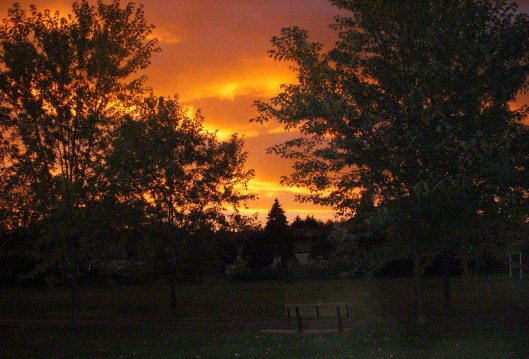
553

Sunrise in Grey Nuns Park, Orleans, ON — photo by David Kitz

Schadenfreude is a compound German word. Actually, it’s such a useful and descriptive word that it has migrated into the English language and it can be found in any quality English dictionary. Schaden means harm or damage. Freude means joy. Simply put schadenfreude means joy experienced at another person’s expense—rejoicing in someone else’s suffering or loss.

Today’s reading from Psalm 137 is all about schadenfreude. The Edomites celebrated the destruction of Jerusalem. Rather than mourn over their neighbor’s calamity, they joined in calling for the destruction of the Jewish capital.

This manifestation of schadenfreude was rooted in centuries of fraternal rivalry and envy. The Edomites were the descendants of Esau, while the people of Jerusalem were the descendants of Jacob. These two people groups were linked by heredity, language and culture, and yet generation after generation they continued this brothers’ feud.

This psalm is not the only biblical counsel for us to have to avoid rejoicing in other people’s harm: Do not gloat when your enemy falls; when they stumble do not let your heart rejoice, or the LORD will see and disapprove and turn his wrath away from them (Proverbs 24:17-18).

If the LORD is punishing the evildoer, we should not appear too smug. We are spared by the grace of God and not by our moral superiority. The self-righteous suffer from delusions of pride. It’s best not to identify with that camp. The opposite response is called for. Rather than crowing over someone else’s misfortune, we should be offering help or drawing lessons on how to avoid a similar calamity.

I need to replace my schadenfreude with the joy found in extending mercy, grace and compassion.

Response: LORD God, at times I have been guilty of schadenfreude. Help me to show compassion rather than smug indifference when I see others experience loss. Thank you for your ongoing mercy. Amen.

Your Turn: Have you experienced schadenfreude? How do you keep it in check?

The City of the Great King

04 Saturday Mar 2017

Posted by davidkitz in Psalms, Saturday's Psalm

≈ 2 Comments

Tags

city, city of God, fortress, God, Jerusalem, Mount Zion, Psalm 48, the LORD

I will praise Him!

via-dolorosa

Via-Dolorosa in Jerusalem — photo courtesy of Lois Morrow

Great is the LORD, and most worthy of praise,
    in the city of our God, his holy mountain.

Beautiful in its loftiness,
    the joy of the whole earth,
like the heights of Zaphon is Mount Zion,
    the city of the Great King.
God is in her citadels;
    he has shown himself to be her fortress.

(Psalm 48:1-3, NIV)

The House of the LORD

01 Wednesday Feb 2017

Posted by davidkitz in Psalm 122, Psalms

≈ 5 Comments

Tags

Israel, Jerusalem, Landestreu, peace, pilgrim, pilgrimage, prosperity, Psalms of Ascent, shalom, the LORD

Reading:                                       Psalm 122

A song of ascents. Of David.

I rejoiced with those who said to me,
“Let us go to the house of the L
ORD.”
Our feet are standing in your gates, Jerusalem.

Jerusalem is built like a city
that is closely compacted together.
That is where the tribes go up—
the tribes of the L
ORD—
to praise the name of the L
ORD
according to the statute given to Israel.
 There stand the thrones for judgment,
the thrones of the house of David.

Pray for the peace of Jerusalem:
“May those who love you be secure.
May there be peace within your walls
and security within your citadels.”
For the sake of my family and friends,
I will say, “Peace be within you.”
For the sake of the house of the L
ORD our God,
I will seek your prosperity
(NIV).

Reflection

This third psalm in the Song of Ascents series is a psalm of arrival. The pilgrims have arrived at Jerusalem the destination of their pilgrimage. The following statement makes it clear that the weary travelers have arrived: Our feet are standing in your gates, Jerusalem. Jerusalem is built like a city that is closely compacted together. That is where the tribes go up—the tribes of the LORD—to praise the name of the LORD according to the statute given to Israel.

d-adam-4

Landestreu sunrise — photo courtesy of Donald Adam

It should be noted that this pilgrimage to Jerusalem was not merely an event for the occasional tourist. As the psalmist states, he came to praise the name of the LORD according to the statute given to Israel. In fact, this pilgrimage to the holy city was required according to the Law of Moses. Three times a year all your men are to appear before the Sovereign Lord, the God of Israel. I will drive out nations before you and enlarge your territory, and no one will covet your land when you go up three times each year to appear before the Lord your God (Deuteronomy 34-23-24).

Our Lord and Savior, Jesus Christ, frequently made this journey to fulfill the requirements of the Law. The first reference to this pilgrimage is found in the account of the twelve-year-old Jesus remaining in the city after his parents had left to return to Galilee (Luke 2:41-50). His last pilgrimage to celebrate the Passover ended with his crucifixion and resurrection.

With the psalmist we join in praying for the peace of Jerusalem, and peace within the church of God.

Response: Father God, we pray for your peace—the shalom of God. May your peace come to Jerusalem, and to all of Israel, and especially to all the followers of your dear son, Jesus. Amen.

Your Turn: Do you regularly pray for peace in the house of the LORD our God?

I Lift Up my Eyes

31 Tuesday Jan 2017

Posted by davidkitz in Psalm 121, Psalm 41, Psalms

≈ 3 Comments

Tags

Dead Sea, Jericho, Jerusalem, journey, pilgrim, pilgrimage, Psalms, Psalms of Ascent, Songs of Ascent, stamina, strength, weary

Reading:                                        Psalm 121

A song of ascents.

I lift up my eyes to the mountains—
where does my help come from?
My help comes from the L
ORD,
the Maker of heaven and earth.

He will not let your foot slip—
he who watches over you will not slumber;
indeed, he who watches over Israel
will neither slumber nor sleep.

The LORD watches over you—
the L
ORD is your shade at your right hand;
 the sun will not harm you by day, nor the moon by night.

The LORD will keep you from all harm—
he will watch over your life;
the L
ORD will watch over your coming and going
both now and forevermore
(NIV).

Reflection

Psalm 121 is the second Song of Ascents, and as such it was a psalm, which was intended for use by pilgrims as they journeyed to Jerusalem. This particular psalm was most often sung or chanted as the pilgrims set out from Jericho. As they lifted up their eyes, the sharply rising hill country of Judah stretched off into the distance. Hill after hill rose up before them. Jesus often made this journey.

CIMG3309

Chapel of the Transfiguration, Grand Teton National Park — Photo courtesy of Matthew Taylor

This final portion of the pilgrimage was truly an ascent. From the Dead Sea plain the road to Jerusalem climbs nearly five thousand feet—1600 meters. This is truly an ascent—an ascent from the Dead Sea plain, the lowest point on earth’s surface, to the heights of Mount Zion.

For the bone-weary pilgrims, who had already walked more than one hundred kilometers (60 miles) from Galilee, the sight of those distant hills must have brought a measure of aching discouragement. Here was a looming challenge. Could they make this final ascent? The opening question of this psalm was not a matter of poetic whimsy. It was spoken in earnest. I lift up my eyes to the mountains—where does my help come from?

The weary pilgrim may well be asking, “Having come this far, can I complete this journey? Do I have enough energy—enough stamina to climb those hills? Will I be able to reach Zion? I am exhausted now—before I even start the ascent. I can’t do this on my own. Where does my help come from?”

The psalmist’s answer resounds off those ancient hills. Even today, it echoes down through the ages and reverberates through the chambers of the heart. My help comes from the LORD, the Maker of heaven and earth.

Response: Father God, I am on a lifelong journey—a pilgrimage to the heavenly Jerusalem. When I become weary, give me strength.  I know my strength comes from you, LORD. Amen.

Your Turn: Do you need strength? Have you become weary at times in serving the Lord?

He heals the brokenhearted

15 Saturday Oct 2016

Posted by davidkitz in Psalms, Saturday's Psalm

≈ 4 Comments

Tags

brokenhearted, Jerusalem, praise, the LORD, wounds

I will praise Him!

img_20161004_132618_hdr

Petrie Island Park, Ottawa, ON — photo by David Kitz

Praise the LORD.

How good it is to sing praises to our God,

how pleasant and fitting to praise him!

The LORD builds up Jerusalem;
    he gathers the exiles of Israel.
He heals the brokenhearted
    and binds up their wounds.

(Psalm 147:1-3 NIV)

Strongholds in Ruins

08 Thursday Sep 2016

Posted by davidkitz in Psalm 89, Psalms

≈ 2 Comments

Tags

archeologists, atheist, Creator, Darwin, Jerusalem, spiritual attacks, stronholds, Via Dolorosa

This is a repeat of a post that was inadvertently published on Sunday, September 5th.

Reading:                                          Psalm 89

Verses 38-45

But you have rejected, you have spurned,
you have been very angry with your anointed one.
You have renounced the covenant with your servant
and have defiled his crown in the dust.
You have broken through all his walls
and reduced his strongholds to ruins.
All who pass by have plundered him;
he has become the scorn of his neighbors.
You have exalted the right hand of his foes;
you have made all his enemies rejoice.

 Indeed, you have turned back the edge of his sword
and have not supported him in battle.
You have put an end to his splendor
and cast his throne to the ground.
You have cut short the days of his youth;
you have covered him with a mantle of shame
(NIV).

Reflection

Though we cannot be absolutely certain, it seems likely that Psalm 89 was written during the time of the Babylonian invasion of Judea. These were days of disaster brought on by idolatry as the people turned away from God. The rebellious King of Judah suffered a catastrophic defeat as the words of this psalm state: You have put an end to his splendor and cast his throne to the ground. You have cut short the days of his youth; you have covered him with a mantle of shame.

Via Dolorosa

Via-Dolorosa in Jerusalem — photo courtesy of Lois Morrow

In the last few decades the church in North America has also experienced a number of defeats or setbacks. Enemies of the Christian faith have risen up and become bold in their attacks. Just as ancient Jerusalem was attacked and laid low, so too Christian belief systems have been under constant assault. The walls and strongholds of our faith have been undermined.

Two unshakeable biblical truths have come under relentless attack. The first is the truth of creation. Our God is the Creator of the universe—the source point of all matter and life. Since the days of Darwin, who incidentally believed in God, atheists have mounted a ferocious attack on this foundational truth. The Christian response has often been jingoistic or at best disjointed. A more coherent and scientifically sound defense is needed.

The second truth that has been under continual attack is the veracity of the Bible. God’s holy word is mocked and routinely discredited especially at our universities. The word of God is our stronghold. Over and over again it has been proven to be accurate, reliable and true. Archeologists and scholars have marvelled at the veracity and authenticity of God’s word. But the real proof of the inerrancy of God’s word does not come from scholarly research. It comes from the transformed lives of believers.

Response: LORD God, my trust is in you and your word. Creator God, I want my faith to be as secure for me as the earth beneath my feet and the air in my lungs. You are all around me. Thank you, Lord. Amen.

Your Turn: Have attacks on your faith caused doubt? How did you overcome?

Jerusalem!

09 Thursday Jun 2016

Posted by davidkitz in Psalms, Thursday's Thought

≈ 1 Comment

Tags

citizenship, home, homeland, Jerusalem, Kingdom of God, tongue

Jerusalem, if I forget you,
    let my right hand go limp.
Let my tongue stick
    to the roof of my mouth,
    if I don’t think about you
    above all else (Psalm 137:5-6, CEV).

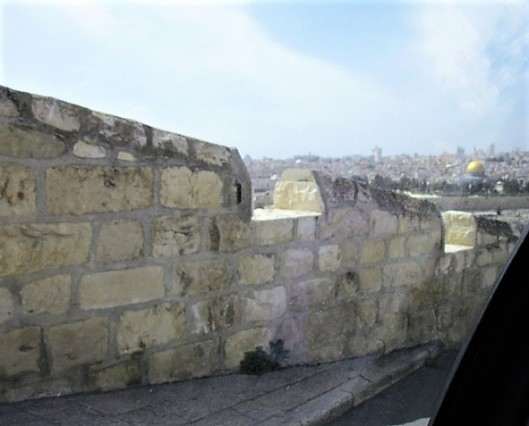
Rampart Walk- Lois Walker

Greenery growing on the rampart walls of Jerusalem — photo courtesy of Lois Morrow

Reflection

This week’s I Love the Psalms theme is the tongue.

Today’s verse from the Psalms highlights the psalmist’s love for Jerusalem. While in captivity in Babylon, he longs to return to Jerusalem.

Jerusalem, if I forget you, let my right hand go limp. Let my tongue stick to the roof of my mouth, if I don’t think about you above all else (Psalm 137:5-6, CEV).

In this verse the psalmist was expressing his deep-felt desire to return home. We all have a homeland and that desire for home never leaves us. We may grow up and move a thousand miles from home, but that desire to return home—and the imprint of that place of belonging remains with us for a lifetime.

On the spiritual level, we too have a homeland and it’s not defined by national borders. Our true homeland is within the Kingdom of God, which is both here and now, and far beyond and forever.

May I never forget that place of spiritual rebirth—that place of belonging near to the heart of God.

Response: LORD God, my real and forever home is with you. I never want to forget that truth. With my tongue I affirm my citizenship is in your eternal Kingdom. Amen.

Your Turn: Are you a citizen of the New Jerusalem? How do you define your citizenship?

← Older posts
Newer posts →

Psalms 365: Develop a Life of Worship and Prayer

Psalms 365 Volume II

Psalms 365 vol 3
— Psalms 365 Volume III

Psalms

Recent posts

  • This Is My Body January 29, 2026
  • Tasting God January 29, 2026
  • Much Superior to the Angels January 28, 2026
  • Praise Always for Answered Prayer January 28, 2026
  • All About Hope January 27, 2026
  • It Is Good to Wait Quietly January 26, 2026
  • The Plans of Nations January 26, 2026

Calendar

January 2026
M T W T F S S
 1234
567891011
12131415161718
19202122232425
262728293031  
« Dec    

Blog Posts

Comments

  • davidkitz on Tasting God
  • pastorpete51 on Tasting God
  • davidkitz on A Strong Fortress to Save Me

Blog at WordPress.com.

Privacy & Cookies: This site uses cookies. By continuing to use this website, you agree to their use.
To find out more, including how to control cookies, see here: Cookie Policy
  • Subscribe Subscribed
    • I love the Psalms
    • Join 1,383 other subscribers
    • Already have a WordPress.com account? Log in now.
    • I love the Psalms
    • Subscribe Subscribed
    • Sign up
    • Log in
    • Report this content
    • View site in Reader
    • Manage subscriptions
    • Collapse this bar
 

Loading Comments...