• Home
  • About
  • DavidKitz.ca
  • Youtube Videos
  • Books by David
  • Books on Amazon.com

I love the Psalms

~ Connecting daily with God through the Psalms

I love the Psalms

Tag Archives: Jesus

Jesus Feeds the Five Thousand

01 Monday Jun 2026

Posted by Victor Uduh in Psalm 71, Psalms

≈ 2 Comments

Tags

A Prophet Of God, Abundance In Christ, believe in Jesus, Come To Jesus, Compassion Of Christ, dependence on God, Faith And Unbelief, gospel, gospel reading, Jesus, lack of faith, Miraculous Provision, Psalms, spiritual blindness, The Miracle Of Multiplication, The Power Of Faith, Turn To Christ

Today’s quote and prayer from
“Psalms 365: Develop a Life of Worship and Prayer
”


Today’s
Reading:
Psalm 71:1-8 (NIV)*

Listen to today’s reading by Jonathan Dent:

https://davidkitz.blog/wp-content/uploads/2026/06/ps-711-8-mix2final2-1.mp3

LORD God,
thank you for being my solid rock.
Your faithfulness has steadied me
in stormy times.
You have been my help and strength,
my shelter and fortress.
Amen.

   — — — —

Gospel Reading:
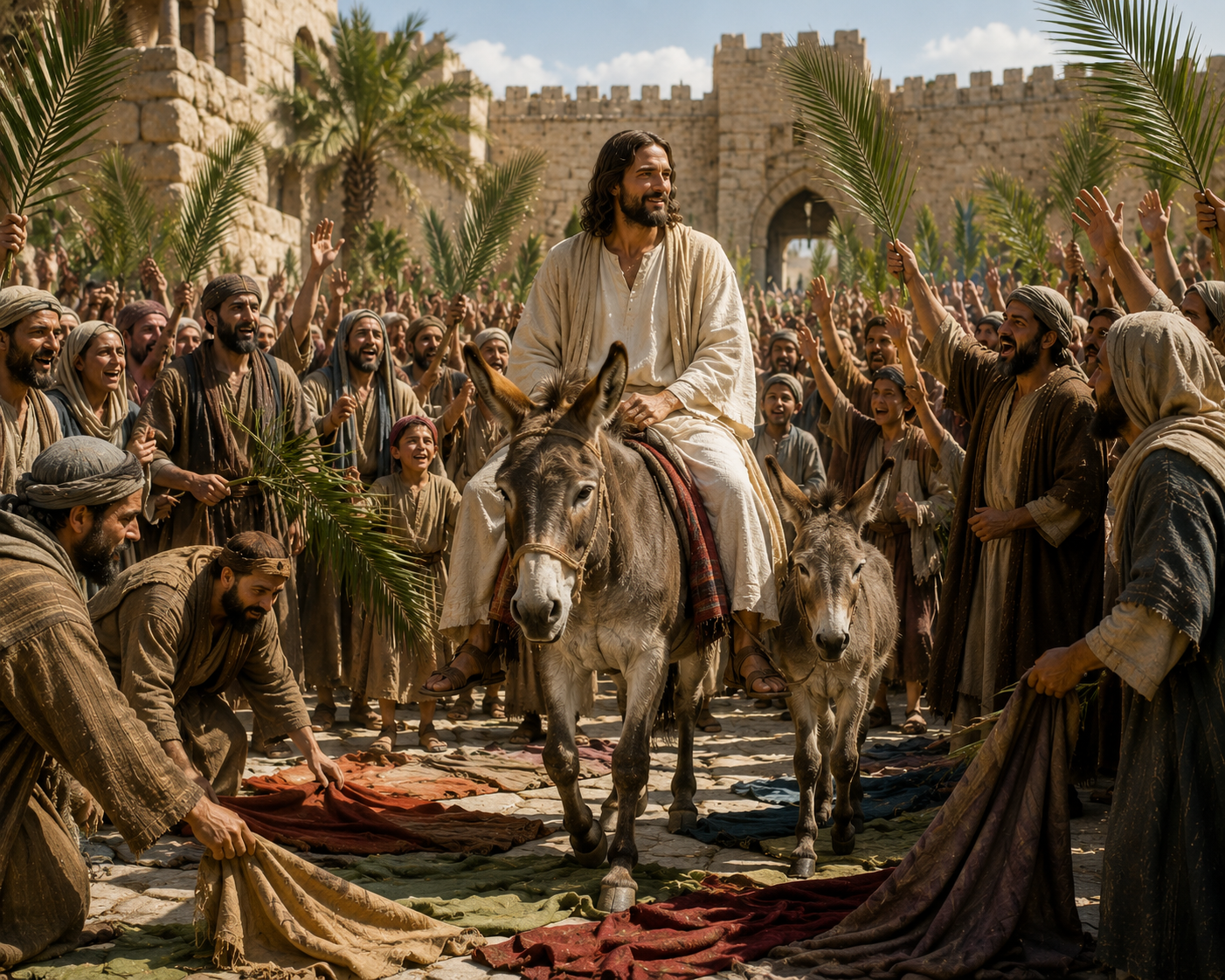
Jesus Feeds the Five Thousand

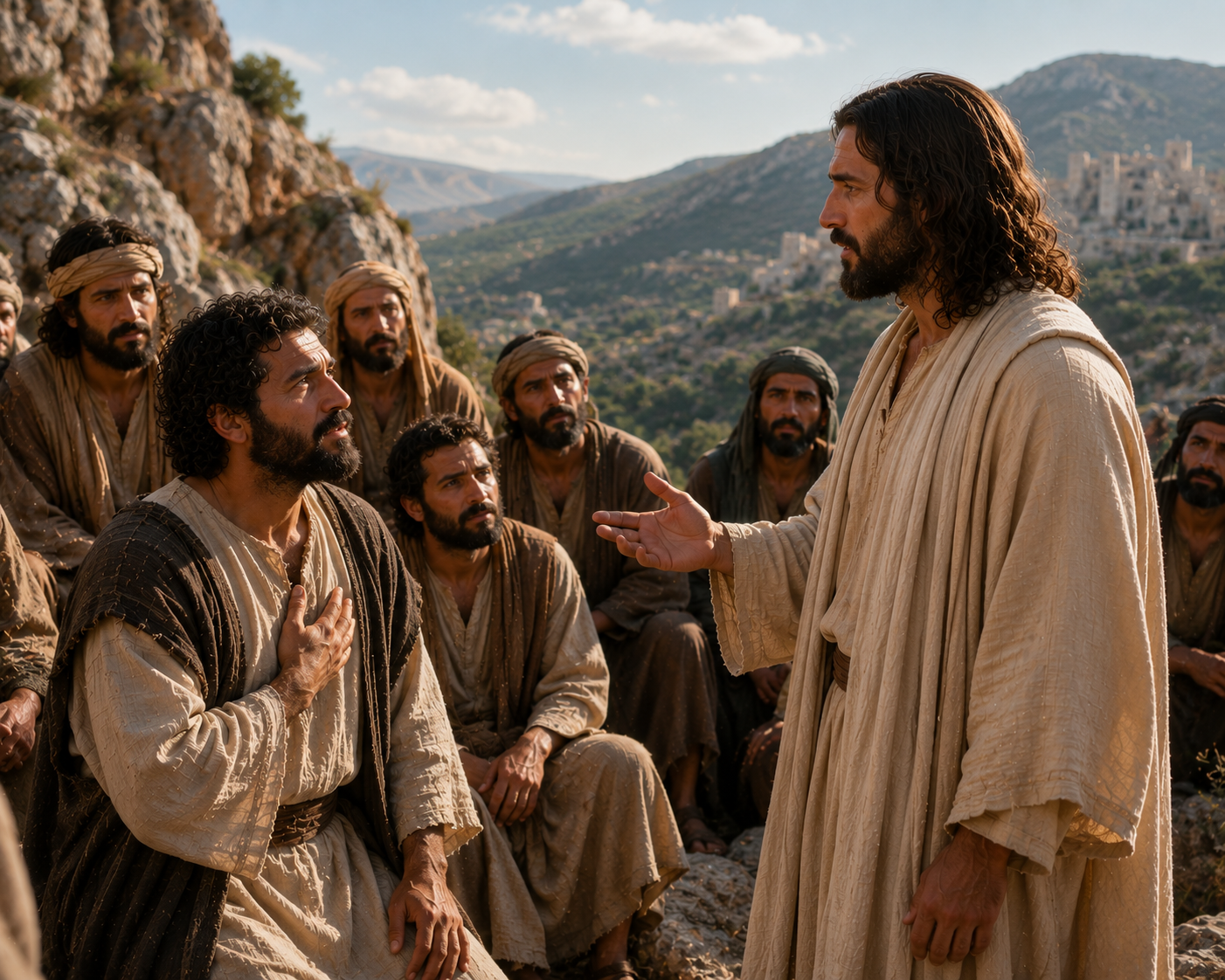
When Jesus heard what had happened,
he withdrew by boat privately to a solitary place.
Hearing of this, the crowds followed him on foot from the towns.
When Jesus landed and saw a large crowd,
he had compassion on them and healed their sick.

As evening approached, the disciples came to him and said,
“This is a remote place, and it’s already getting late.
Send the crowds away,
so they can go to the villages and buy themselves some food.”

Jesus replied,
“They do not need to go away.
You give them something to eat.”

“We have here only five loaves of bread and two fish,”
they answered.

“Bring them here to me,” he said.
And he directed the people to sit down on the grass.
Taking the five loaves and the two fish and looking up to heaven,
he gave thanks and broke the loaves.
Then he gave them to the disciples,
and the disciples gave them to the people.
They all ate and were satisfied,
and the disciples picked up twelve basketfuls
of broken pieces that were left over.
The number of those who ate was about five thousand men,
besides women and children.
(Matthew 14:13-21).

* * *

Dear friends,
 if our hearts do not condemn us,
we have confidence before God

and receive from him anything we ask, 
because we keep his commands 
and do what pleases him.

(1 John 3:21-22 NIV)

Para la publicación de Salmos 365 de hoy en español haga clic aquí.

bgbg_v4.3_1501818
* NEW INTERNATIONAL VERSION, COPYRIGHT ©1973, 1978, 1984, 2011 BY BIBLICA

Pray for peace in Israel, Iran and the Middle East
and continue to pray for peace to return
to Ukraine and Russia!

Volume I of Psalms 365: Develop a Life of Worship and Prayer won the Best Book of the Year Award from The Word Guild and Volume II has won the Best Devotional of the Year Award. For those who love God’s word, this three-book series is an ideal way to daily meet with the Lord. To purchase or for a closer look click here.

New from David Kitz.

To view further details or purchase click here.

James the Mediator between Two Camps

31 Sunday May 2026

Posted by davidkitz in Books by David Kitz

≈ Leave a comment

Tags

Bible, Christ, Christianity, church, circumcision, faith, Gentiles, gospel, grace, James, James the brother of Jesus, Jerusalem, Jesus, leadership, legalism, Paul, Peter, Scripture

James: the Lynchpin of Our Faith — Chapter 13

As the leader of the church, James finds himself straddling the gulf between two factions: the Judaizers who insist that male Gentile coverts to Christianity be circumcised and follow the Mosaic Law, and a faith-oriented faction led by Paul that believes in the sufficiency of grace, apart from adherence to the Law. The struggle between these opposing positions informs a considerable portion of New Testament scripture. Paul’s letter to the Galatians focuses almost exclusively on this topic, but this issue or doctrine forms an underlying theme throughout Paul’s writing.

At the Jerusalem Council, James comes down decisively on the side of grace and the expansion of the Christian faith into the Gentile world. His ruling clearly endorsed the position taken by Peter and Paul, and he even tempers his remarks by placing some rather minor restrictions on the Gentile converts. Some may view this as a concession to the hardliners in the Jewish faction.

It is my judgment, therefore, that we should not make it difficult for the Gentiles who are turning to God. Instead we should write to them, telling them to abstain from food polluted by idols, from sexual immorality, from the meat of strangled animals and from blood. For the law of Moses has been preached in every city from the earliest times and is read in the synagogues on every Sabbath. (Acts 15:19–21)
James certainly does not abandon the law entirely. He is not saying, “Believe in Christ and then live as you please.” Neither do any of the apostles. In his letter to the Romans, Paul claims he is falsely accused of promoting this errant doctrine. (See Romans 6:1–3.) Instead, Paul says faith in Christ prompts conformity to the image Christ, who fulfilled the Law (Colossians 3:9–11). Spiritual rebirth initiates and instills life transformation. Believers are changed by their faith in Christ and drawn to obedience to him. Spiritual DNA expresses itself, even as natural DNA does. The child resembles his natural father. Even so, the character and conduct of the born-again believer should increasingly resemble his heavenly Father and his spiritual brother Jesus Christ.

Paul amplifies this thought in his letter to the Romans:

For those God foreknew he also predestined to be conformed to the image of his Son, that he might be the firstborn among many brothers and sisters. (Romans 8:29)

The restrictions or regulations that James places on the Gentile believers appear to be relatively inconsequential, but they had implications for the daily lives of Gentile believers. It was common for meat sold in the Gentile markets to be offered first as an animal sacrifice to idols. This made the Christian consumer of this meat an unwilling participant in pagan idolatry. Clearly this would be offensive to the sensibilities of Jewish believers.

Photo by Sora Shimazaki on Pexels.com

How strictly these regulations were adhered to remains an open question. In the fourteenth chapter of his letter to the Romans Paul discusses this issue of food and abstaining from meat at some length. He also gives these instructions to the believers in Corinth:

Eat anything sold in the meat market without raising questions of conscience, for, “The earth is the Lord’s, and everything in it.”

If an unbeliever invites you to a meal and you want to go, eat whatever is put before you without raising questions of conscience. But if someone says to you, “This has been offered in sacrifice,” then do not eat it, both for the sake of the one who told you and for the sake of conscience. I am referring to the other person’s conscience, not yours. For why is my freedom being judged by another’s conscience? If I take part in the meal with thankfulness, why am I denounced because of something I thank God for?

So whether you eat or drink or whatever you do, do it all for the glory of God. Do not cause anyone to stumble, whether Jews, Greeks or the church of God—even as I try to please everyone in every way. For I am not seeking my own good but the good of many, so that they may be saved. (1 Corinthians 10:25–33)

Similarly, the entire eighth chapter of 1 Corinthians is devoted to this topic. Clearly Paul saw James’ injunction against eating meat offered to idols as an issue of considerable importance, or he would not have addressed this topic in his epistles to the church.

Undoubtedly, the advice cited above was given in keeping with Paul’s understanding of James’ directive in Acts 15. Overall Paul’s concern is chiefly that believers keep their conscience pure. He does not see “food polluted by idols” as a clear black and white issue, but rather as a matter of the heart or the intent of the believer. Paul implies that food is sanctified if it is received with thanksgiving. In so doing, he is providing a practical interpretation of how believers can keep themselves spiritually pure while living in a pagan world.

The injunction against sexual immorality needs little explanation. The Greco-Roman world was awash in sexual immorality, much of it linked to various fertility cults. Abstinence from sexual immorality also involved a rejection of the shrine prostitutes—both male and female—and ritual orgies linked to the worship of these deities. Clearly there was a strong sense that these new Gentile believers must renounce these practices and forms of worship as they embrace a new lifestyle within the body of Christ.

James’ command to abstain “from the meat of strangled animals and from blood” stems directly from Levitical law, where God says:

I will set my face against any Israelite or any foreigner residing among them who eats blood, and I will cut them off from the people. For the life of a creature is in the blood, and I have given it to you to make atonement for yourselves on the altar; it is the blood that makes atonement for one’s life. Therefore I say to the Israelites, “None of you may eat blood, nor may any foreigner residing among you eat blood.” (Leviticus 17:10–12)

This reference to the foreigner, as cited here, has direct relevance as the Jewish believers contemplate welcoming Gentiles into their fellowship. The fellowship meal has particular significance in Middle Eastern culture. For friendship and fellowship to be sealed, the sharing of a meal together was essential. If this overture to the Gentiles was to be significant and meaningful, then Jewish Christian believers and Gentile Christian believers should be able to sit together and eat a fellowship meal together.

But truly the focal point of their fellowship must be Christ—Christ whose redeeming sacrifice was sealed in blood—Christ Jesus who instituted the Eucharist to commemorate the shedding of his blood. By his blood, atonement was made for both Jews and Gentiles. Their fellowship meals included the celebration of the Eucharist. Evidence of this can be found in Paul’s instructions on communion. (See 1 Corinthians 11:17–34.)

Surely the following words had true resonance as James considered the unity of faith between Jews and Gentiles: “it is the blood that makes atonement for one’s life.” His brother’s blood was shed to make that atonement possible. True communion centered around the sacrificial shedding of Jesus’ blood.

Photo by Kaboompics .com on Pexels.com

With James having ruled on this matter, the assembly decided to communicate its decision to those most directly affected—the Gentile churches. Their message also makes it clear that those who caused this doctrinal disturbance were not sent or authorized by the apostolic leadership.

Then the apostles and elders, with the whole church, decided to choose some of their own men and send them to Antioch with Paul and Barnabas. They chose Judas (called Barsabbas) and Silas, men who were leaders among the believers. With them they sent the following letter:

The apostles and elders, your brothers,
To the Gentile believers in Antioch, Syria and Cilicia:

Greetings.

We have heard that some went out from us without our authorization and disturbed you, troubling your minds by what they said. So we all agreed to choose some men and send them to you with our dear friends Barnabas and Paul—men who have risked their lives for the name of our Lord Jesus Christ. Therefore we are sending Judas and Silas to confirm by word of mouth what we are writing. It seemed good to the Holy Spirit and to us not to burden you with anything beyond the following requirements: You are to abstain from food sacrificed to idols, from blood, from the meat of strangled animals and from sexual immorality. You will do well to avoid these things.

Farewell.

So the men were sent off and went down to Antioch, where they gathered the church together and delivered the letter. The people read it and were glad for its encouraging message. (Acts 15:22–31)

James has decisively sided with Peter and Paul on this critical issue. The gospel of grace as opposed to Jewish legalism has triumphed. For the sake of unity, James has added some conditions onto his sweeping welcome of the Gentile believers. Despite this ruling, some Judaizers will persist in trying to force Gentile converts to be circumcised, but they will lack the authority of the church. A certain tension will remain between the proponents of grace and the proponents of legalism. It is a tension that remains in some form between legalistically-inclined and grace-centered believers to this day. Nevertheless, the message is clear: James has ruled in favor of grace.

By welcoming the Gentile believers into the church, James signaled that he fully grasps the significance of the born-again experience. He has come full circle. He has come fully around to his brother’s position, which he so vehemently opposed as a young man—when he gathered the family around him to take charge of Jesus because, by his reasoning, Jesus had gone mad (Mark 3:20–22).

On that occasion with his family waiting at the door, Jesus responded with these words:

“Who are my mother and my brothers?” he asked. Then he looked at those seated in a circle around him and said, “Here are my mother and my brothers! Whoever does God’s will is my brother and sister and mother.” (Mark 3:33–35)

According to Jesus’ reasoning the spiritual family—spiritual genetics—took precedence over the natural family. Though at the time James rejected his brother and his concept of spiritual rebirth, he now finds himself in full agreement with it. His conversion at the appearance of the risen Christ changed everything. (See 1 Corinthians 15:3–9.) What he rejected as heresy before his own rebirth, he now affirms as gospel truth. James now sees the family of believers as his true family—a family that includes even Gentiles.

On a personal level, James was now Jesus’ brother in the Spirit as well as in the flesh.

Furthermore, at the Jerusalem Council, James plays the role his brother would have him play. He institutes his brother’s will by ensuring that the gospel message was available to all throughout the world, regardless of race or gender. James recognizes that those seated before him, eager to hear the gospel message, are his brothers and sisters. He is acting as a doorkeeper to the kingdom of God. In that role, he is guaranteeing that the door is open to all. Anyone can come and enter through repentance and faith in the shed blood of his brother Jesus.

Without question this was a difficult decision to make. By welcoming the Gentiles, James may have sealed the fate of the Jewish church—the church he led. There was a point when it appeared as though Christianity might become the dominant belief system among the Jews. Then severe persecution hindered its advance. Now, with its doors open to the Gentiles, the legalistic members of the Jewish faith could quickly and easily dismiss the Christian faith as an aberrant heresy, unworthy of consideration. As a result, further church growth among the Jewish community was likely stymied.

Did James know that this would be the outcome of his decision to throw the doors open to Gentiles? He probably had some idea of how this would impede the growth of the church among the Jews in their homeland. He knew the ethos of his people. The hardline Pharisaic viewpoint was popular with many Jews, and a fierce, religiously motivated ethnic pride was even more widespread. Generations of religious indoctrination are not easily set aside. Jesus clashed with it; now James does as well.

Despite this, James chose his brother’s will—God’s will—not his own. Perhaps he caught a glimpse of the long view—a view that saw the swift rise to prominence of the church in the Greco-Roman world. Perhaps he simply recognized that this was God’s doing—a work of the Spirit—not simply the work of man. Whatever the reason, James played a pivotal role in promoting the advance of the gospel and in shaping world history for the next two thousand years. Without him Christianity may well have remained an obscure Jewish sect. He was the hinge—the doorkeeper—and he opened the gospel door to the sea of humanity.

But one question remains. How did James come to play such a prominent role in the early church?

New from David Kitz

James—the brother of Jesus—who was this man? What evidence do we have that this “brother of our Lord” even existed?

David Kitz digs deep into archeology, family dynamics, church history, and the biblical texts. What emerges from his research is a portrait of a decisive, pivotal leader who embodied the will and character of Jesus Christ.

But how did James—James the unbeliever—transform to become a leader who changed the course of world history? In these pages you will uncover the answer and rediscover for yourself the life-changing power of the gospel.

To view further details or purchase directly from the author click here.

 

John the Baptist Beheaded

29 Friday May 2026

Posted by Victor Uduh in Psalm 70, Psalms

≈ Leave a comment

Tags

A Prophet Of God, believe in Jesus, Boldness In Christ, Choose Righteousness, Come To Jesus, Faith And Unbelief, gospel, gospel reading, Jesus, John the Baptist, lack of faith, Psalms, spiritual blindness, The Carpenter’s Son, The Power Of Faith, Turn To Christ

Today’s quote and prayer from
“Psalms 365: Develop a Life of Worship and Prayer
”


Today’s
Reading:
Psalm 70 (NIV)*

Listen to today’s reading by Jonathan Dent:

https://davidkitz.blog/wp-content/uploads/2026/05/ps-70-mix-1final.mp3

LORD God,
I don’t want to live the life of the self-satisfied.
You are my treasure and my very great reward.
I am needy—in constant need of you.
Come quickly to me, O God.
Amen.

   — — — —

Gospel Reading:
John the Baptist Beheaded

At that time Herod the tetrarch heard the reports about Jesus,
and he said to his attendants,
“This is John the Baptist; he has risen from the dead!
That is why miraculous powers are at work in him.”

Now Herod had arrested John and bound him
and put him in prison because of Herodias,
his brother Philip’s wife, 
for John had been saying to him:
“It is not lawful for you to have her.” 

Herod wanted to kill John,
but he was afraid of the people,
because they considered John a prophet.

On Herod’s birthday the daughter of Herodias
danced for the guests and pleased Herod so much
that he promised with an oath to give her whatever she asked. 

Prompted by her mother, she said,
“Give me here on a platter the head of John the Baptist.” 

The king was distressed,
but because of his oaths and his dinner guests,
he ordered that her request be granted 
and had John beheaded in the prison.

His head was brought in on a platter and given to the girl,
who carried it to her mother.

John’s disciples came and took his body and buried it.

Then they went and told Jesus.
(Matthew 14:1-12).

* * *

Dear children,
let us not love with words or speech
but with actions and in truth.

(1 John 3:18 NIV)

Para la publicación de Salmos 365 de hoy en español haga clic aquí.

bgbg_v4.3_1501818
* NEW INTERNATIONAL VERSION, COPYRIGHT ©1973, 1978, 1984, 2011 BY BIBLICA

Pray for peace in Israel, Iran and the Middle East
and continue to pray for peace to return
to Ukraine and Russia!

Volume I of Psalms 365: Develop a Life of Worship and Prayer won the Best Book of the Year Award from The Word Guild and Volume II has won the Best Devotional of the Year Award. For those who love God’s word, this three-book series is an ideal way to daily meet with the Lord. To purchase or for a closer look click here.

New from David Kitz.

To view further details or purchase click here.

A Prophet Without Honor

28 Thursday May 2026

Posted by Victor Uduh in Psalm 69, Psalms

≈ 2 Comments

Tags

believe in Jesus, Choose Righteousness, Come To Jesus, Faith And Unbelief, gospel, gospel reading, Jesus, lack of faith, Psalms, spiritual blindness, The Carpenter’s Son, The Power Of Faith, Turn To Christ

Today’s quote and prayer from
“Psalms 365: Develop a Life of Worship and Prayer
”


Today’s
Reading:
Psalm 69:29-36 (NIV)*

Listen to today’s reading by Jonathan Dent:

https://davidkitz.blog/wp-content/uploads/2026/05/ps-6929-36-mix-1final.mp3

LORD God,
in my difficulties, I praise you.
This pain-prone human flesh praises you.
Thank you for this life you have given me.
Your goodness and mercy never end.
Amen.

   — — — —

Gospel Reading:
A Prophet Without Honor

When Jesus had finished these parables,
he moved on from there.
Coming to his hometown,
he began teaching the people in their synagogue,
and they were amazed.
“Where did this man get this wisdom and these miraculous powers?”
they asked.
 “Isn’t this the carpenter’s son?
Isn’t his mother’s name Mary,
and aren’t his brothers James, Joseph, Simon and Judas?
 
Aren’t all his sisters with us?
Where then did this man get all these things?”
 
And they took offense at him.

But Jesus said to them,
“A prophet is not without honor
except in his own town and in his own home.”

And he did not do many miracles there
because of their lack of faith.
(Matthew 13:53-58).

* * *

Dear children,
let us not love with words or speech
but with actions and in truth.

(1 John 3:18 NIV)

Para la publicación de Salmos 365 de hoy en español haga clic aquí.

bgbg_v4.3_1501818
* NEW INTERNATIONAL VERSION, COPYRIGHT ©1973, 1978, 1984, 2011 BY BIBLICA

Pray for peace in Israel, Iran and the Middle East
and continue to pray for peace to return
to Ukraine and Russia!

Volume I of Psalms 365: Develop a Life of Worship and Prayer won the Best Book of the Year Award from The Word Guild and Volume II has won the Best Devotional of the Year Award. For those who love God’s word, this three-book series is an ideal way to daily meet with the Lord. To purchase or for a closer look click here.

New from David Kitz.

To view further details or purchase click here.

The Parable of the Net

27 Wednesday May 2026

Posted by Victor Uduh in Psalm 69, Psalms

≈ Leave a comment

Tags

Choose Righteousness, Come To Jesus, Discernment And Wisdom, gospel, gospel reading, Jesus, Kingdom Growth, Kingdom Worth Pursuing, Psalms, Seeking The Kingdom, Spiritual Accountability, spiritual growth, The Final Separation, The Great Harvest, Turn To Christ

Today’s quote and prayer from
“Psalms 365: Develop a Life of Worship and Prayer
”


Today’s
Reading:
Psalm 69:19-28 (NIV)*

Listen to today’s reading by Jonathan Dent:

https://davidkitz.blog/wp-content/uploads/2026/05/ps-6919-28-mix-1final2.mp3

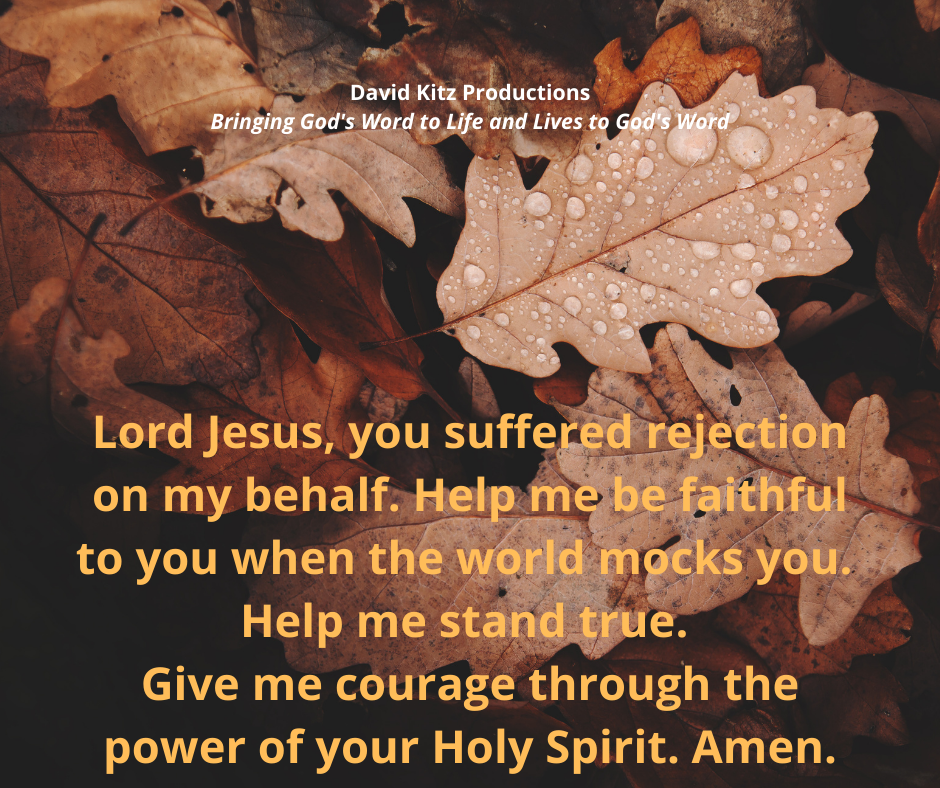
LORD Jesus,
you suffered rejection on my behalf.
Help me be faithful to you
when the world mocks you.
Help me stand true.
Give me courage through the power
of your Holy Spirit.
Amen.

   — — — —

Gospel Reading:
The Parable of the Net

“Once again,
the kingdom of heaven is like a net that was let down
into the lake and caught all kinds of fish.
When it was full, the fishermen pulled it up on the shore.
Then they sat down and collected the good fish in baskets,
but threw the bad away.
This is how it will be at the end of the age.
The angels will come and separate the wicked from the righteous
and throw them into the blazing furnace,
where there will be weeping and gnashing of teeth.

“Have you understood all these things?” Jesus asked.

“Yes,” they replied.

He said to them,
“Therefore every teacher of the law
who has become a disciple in the kingdom of heaven
is like the owner of a house
who brings out of his storeroom new treasures as well as old.”
(Matthew 13:47-52).

* * *

Dear children,
let us not love with words or speech
but with actions and in truth.

(1 John 3:18 NIV)

Para la publicación de Salmos 365 de hoy en español haga clic aquí.

bgbg_v4.3_1501818
* NEW INTERNATIONAL VERSION, COPYRIGHT ©1973, 1978, 1984, 2011 BY BIBLICA

Pray for peace in Israel, Iran and the Middle East
and continue to pray for peace to return
to Ukraine and Russia!

Volume I of Psalms 365: Develop a Life of Worship and Prayer won the Best Book of the Year Award from The Word Guild and Volume II has won the Best Devotional of the Year Award. For those who love God’s word, this three-book series is an ideal way to daily meet with the Lord. To purchase or for a closer look click here.

New from David Kitz.

To view further details or purchase click here.

Vinegar for His Thirst   

27 Wednesday May 2026

Posted by Tim K in Psalm 64, Psalm 69, Psalms

≈ 3 Comments

Tags

courage, crucifixion, David, fear, Jesus, Judas, Peter, testing, the Psalms

Today’s Devotion from Psalms 365 by David Kitz

Listen to today’s reading by Jonathan Dent:

https://davidkitz.blog/wp-content/uploads/2026/05/ps-6919-28-mix-1final2.mp3

Reading: Psalm 69:19-28 (NIV)*

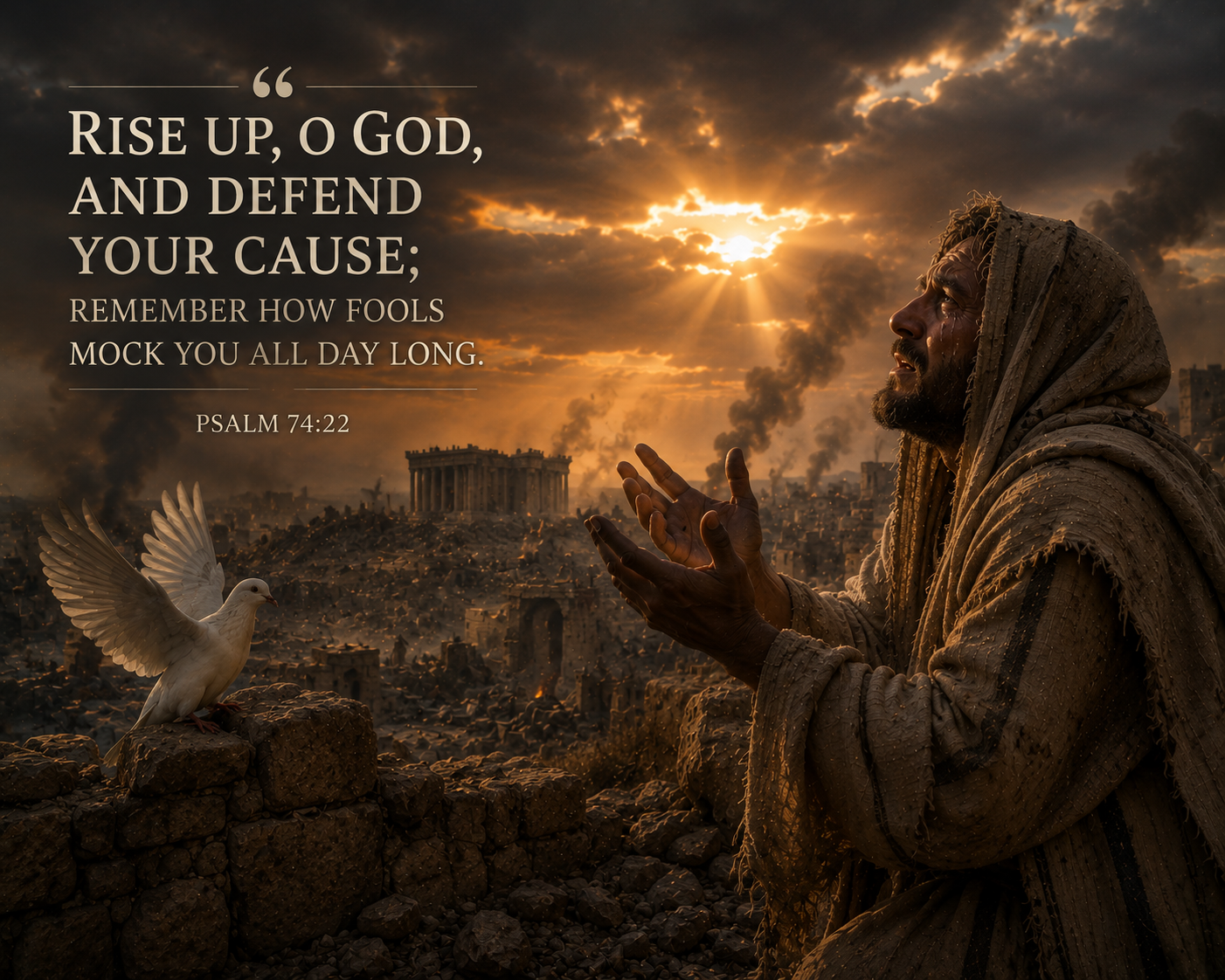
You know how I am scorned, disgraced and shamed;
    all my enemies are before you.
Scorn has broken my heart and has left me helpless;
I looked for sympathy, but there was none,
    for comforters, but I found none.
They put gall in my food
and gave me vinegar for my thirst.
May the table set before them become a snare;
    may it become retribution and a trap.
May their eyes be darkened so they cannot see,
    and their backs be bent forever.
Pour out your wrath on them;
    let your fierce anger overtake them.
May their place be deserted;
    let there be no one to dwell in their tents.
For they persecute those you wound
    and talk about the pain of those you hurt.
Charge them with crime upon crime;
    do not let them share in your salvation.
May they be blotted out of the book of life
    and not be listed with the righteous.

Reflection

Vinegar is not the first thing I would reach for if I wanted to quench my thirst. Vinegar sets my teeth on edge. It curdles milk. It crinkles the stomach. Why? Because it’s acid, a naturally occurring acid.

You don’t give your friend acid to drink. But at his crucifixion that’s what the soldiers gave Jesus to quench his thirst. The soldiers also came up and mocked him. They offered him wine vinegar (Luke 23:36).

Like many of David’s psalms, there is a prophetic element in them, and in this portion of Psalm 69, we see that prophetic element vividly portrayed. Jesus experienced the rejection described here. His friends deserted him. There were none to comfort him. He was scorned, disgraced, and shamed. As he hung dying, he was given vinegar for his thirst.

The retribution this psalm calls for fell on Judas. In Acts 1:20, Peter references this psalm as he speaks of the judgment that fell on Judas for his betrayal of Jesus. Yet in his moment of weakness even Peter denied knowing the Lord.

When our time of testing comes will we stand true to the Lord?

Response

Lord Jesus, you suffered rejection on my behalf. Help me be faithful to you when the world mocks you. Help me stand true. Give me courage through the power of your Holy Spirit. Amen.

Your Turn

Are there times when you have failed to take a stand for the Lord? Has fear hindered you? How have you stood true, aligning yourself with Jesus?


Para la publicación de Salmos 365 de hoy en español haga clic aquí.

bgbg_v4.3_1501818
* NEW INTERNATIONAL VERSION, COPYRIGHT ©1973, 1978, 1984, 2011 BY BIBLICA

Pray for peace in Israel, Iran and the Middle East
and continue to pray for peace to return to Ukraine and Russia!

Volume I of Psalms 365: Develop a Life of Worship and Prayer won the Best Book of the Year Award from The Word Guild and Volume II has won the Best Devotional of the Year Award. For those who love God’s word, this three-book series is an ideal way to daily meet with the Lord. To purchase or for a closer look click here.

The Parables of the Hidden Treasure and the Pearl

26 Tuesday May 2026

Posted by Victor Uduh in Psalm 69, Psalms

≈ Leave a comment

Tags

Choose Righteousness, Choosing What Matters Most, Come To Jesus, Discernment And Wisdom, Eternal Value, gospel, gospel reading, Hidden Treasure, Jesus, Kingdom Growth, Kingdom Truth, Kingdom Worth Pursuing, Psalms, Seeking The Kingdom, spiritual growth, The Greatest Treasure, Treasure In Christ, Turn To Christ

Today’s quote and prayer from
“Psalms 365: Develop a Life of Worship and Prayer
”


Today’s
Reading:
Psalm 69:13-18 (NIV)*

Listen to today’s reading by Jonathan Dent:

https://davidkitz.blog/wp-content/uploads/2026/05/ps-6913-18-mix-1final.mp3

LORD God,
favor me. Show up in your perfect timing.
I need you now. I need you always.
You know best. Teach me patience and grant me peace.
Answer me with your sure salvation.
Amen.

   — — — —

Gospel Reading:
The Parables of the Hidden Treasure and the Pearl

“The kingdom of heaven is like treasure hidden in a field.
When a man found it, he hid it again,
and then in his joy went and sold all he had
and bought that field.

“Again,
the kingdom of heaven is like a merchant looking for fine pearls.

When he found one of great value,
he went away and sold everything he had and bought it.
(Matthew 13:44-46).

* * *

Dear children,
let us not love with words or speech
but with actions and in truth.

(1 John 3:18 NIV)

Para la publicación de Salmos 365 de hoy en español haga clic aquí.

bgbg_v4.3_1501818
* NEW INTERNATIONAL VERSION, COPYRIGHT ©1973, 1978, 1984, 2011 BY BIBLICA

Pray for peace in Israel, Iran and the Middle East
and continue to pray for peace to return
to Ukraine and Russia!

Volume I of Psalms 365: Develop a Life of Worship and Prayer won the Best Book of the Year Award from The Word Guild and Volume II has won the Best Devotional of the Year Award. For those who love God’s word, this three-book series is an ideal way to daily meet with the Lord. To purchase or for a closer look click here.

New from David Kitz.

To view further details or purchase click here.

The Parable of the Weeds Explained

25 Monday May 2026

Posted by Victor Uduh in Psalm 69, Psalms

≈ 1 Comment

Tags

Called By Christ, Choose Righteousness, Come To Jesus, Discernment And Wisdom, Eternal Hope, God’s Perfect Timing, Good Seed, gospel, gospel reading, Jesus, Judgment And Justice, Kingdom Growth, Kingdom Separation, Kingdom Truth, Living God’s Will, Psalms, spiritual growth, Turn To Christ

Today’s quote and prayer from
“Psalms 365: Develop a Life of Worship and Prayer
”


Today’s
Reading:
Psalm 69:6-12 (NIV)*

Listen to today’s reading by Jonathan Dent:

https://davidkitz.blog/wp-content/uploads/2026/05/ps-696-12-mix-2final.mp3

LORD God,
give me a zeal for your house and your presence.
As the months and years roll by,
I want my values to be reflected in my actions
and my passion for you.
Replace my lukewarm heart with a burning desire
to know and love you.
Amen.

   — — — —

Gospel Reading:
The Parable of the Weeds Explained

Then he left the crowd and went into the house.
His disciples came to him and said,
“Explain to us the parable of the weeds in the field.”

He answered,
“The one who sowed the good seed is the Son of Man.
The field is the world,
and the good seed stands for the people of the kingdom.
The weeds are the people of the evil one,

and the enemy who sows them is the devil.
The harvest is the end of the age,
and the harvesters are angels.

“As the weeds are pulled up and burned in the fire,
so it will be at the end of the age.

The Son of Man will send out his angels,
and they will weed out of his kingdom
everything that causes sin and all who do evil.

They will throw them into the blazing furnace,
where there will be weeping and gnashing of teeth.

Then the righteous will shine like the sun
in the kingdom of their Father.
Whoever has ears, let them hear.
(Matthew 13:36-43).

* * *

Dear children,
let us not love with words or speech
but with actions and in truth.

(1 John 3:18 NIV)

Para la publicación de Salmos 365 de hoy en español haga clic aquí.

bgbg_v4.3_1501818
* NEW INTERNATIONAL VERSION, COPYRIGHT ©1973, 1978, 1984, 2011 BY BIBLICA

Pray for peace in Israel, Iran and the Middle East
and continue to pray for peace to return
to Ukraine and Russia!

Volume I of Psalms 365: Develop a Life of Worship and Prayer won the Best Book of the Year Award from The Word Guild and Volume II has won the Best Devotional of the Year Award. For those who love God’s word, this three-book series is an ideal way to daily meet with the Lord. To purchase or for a closer look click here.

New from David Kitz.

To view further details or purchase click here.

James the Door Hinge for the Gentile World

24 Sunday May 2026

Posted by davidkitz in Books by David Kitz

≈ Leave a comment

Tags

Bible, Christ, Christianity, church, circumcision, faith, Gentiles, gospel, James, James the brother of Jesus, Jerusalem, Jesus, leadership, Paul, Peter, Scripture, speaking in tongues

James: the Lynchpin of Our Faith — Chapter 12 — Part II

Peter’s declaration in favor of grace for the Gentiles rather than the Mosaic Law was followed by the testimony of Paul and Barnabas:

The whole assembly became silent as they listened to Barnabas and Paul telling about the signs and wonders God had done among the Gentiles through them. (Acts 15:12)

Through their testimony, Barnabas and Paul persuasively reinforced the argument Peter had presented. The conversion of the Gentiles was God’s doing. He had initiated it through Peter and now was continuing that work through Barnabas and Paul. The proof of this was in “the signs and wonders God had done.” If God was opposed to the inclusion of the Gentiles in the Christian faith, there would be no signs and wonders as the gospel message was presented. Instead, miraculous signs and wonders accompanied the preaching of the gospel, giving it credence. Large numbers of Gentiles believed the message they heard because they witnessed demonstrations of God’s power.

Signs and wonders were an integral part of the spread of the gospel as recorded in the Book of Acts. (1) Certainly, the apostles viewed these wonders as a natural extension of Jesus’ ministry. According to Mark’s Gospel, after his resurrection Jesus predicted this bursting forth of the miraculous:

Later Jesus appeared to the Eleven as they were eating; he rebuked them for their lack of faith and their stubborn refusal to believe those who had seen him after he had risen. He said to them, “Go into all the world and preach the gospel to all creation. Whoever believes and is baptized will be saved, but whoever does not believe will be condemned. And these signs will accompany those who believe: In my name they will drive out demons; they will speak in new tongues; they will pick up snakes with their hands; and when they drink deadly poison, it will not hurt them at all; they will place their hands on sick people, and they will get well.” (Mark 16:14–18)

Furthermore, Jesus had promised his disciples that they would do even greater things than he had done.

Very truly I tell you, whoever believes in me will do the works I have been doing, and they will do even greater things than these, because I am going to the Father. And I will do whatever you ask in my name, so that the Father may be glorified in the Son. You may ask me for anything in my name, and I will do it. (John14:12–14)

As the apostles heard the testimony of Paul and Barnabas, they undoubtedly harkened back to the words of Jesus. God was at work claiming a people for Himself. The proof of this was in the manifestation of signs and wonders as the gospel was presented to the Gentiles, their positive response to the message, and the demonstrable presence of the Holy Spirit among them.

There are those who see substantial differences between Peter and Paul, but there are none on display here. The core of the gospel message they present is essentially the same: the door to salvation is open to all, Jew and Gentile, by grace through faith alone in the redeeming death and resurrection of Jesus Christ.

Together here at the Jerusalem Council, Peter and Paul present a united front. They act as a tag team delivering the decisive blows that demolished the argument in favor of circumcision and adherence to Mosaic Law. We see them work in cooperation with one another here at the Council and later out on the field.

We know their position carried the day due James’ response:

When they finished, James spoke up. “Brothers,” he said, “listen to me. Simon [Peter] has described to us how God first intervened to choose a people for his name from the Gentiles. The words of the prophets are in agreement with this, as it is written:

“‘After this I will return and rebuild David’s fallen tent. Its ruins I will rebuild, and I will restore it, that the rest of mankind may seek the Lord, even all the Gentiles who bear my name, says the Lord, who does these things’—things known from long ago.'” (See Amos 9:11–12.)

“It is my judgment, therefore, that we should not make it difficult for the Gentiles who are turning to God. Instead we should write to them, telling them to abstain from food polluted by idols, from sexual immorality, from the meat of strangled animals and from blood. For the law of Moses has been preached in every city from the earliest times and is read in the synagogues on every Sabbath.” (Acts 15:13–21)


From this account one clearly has the sense that James is presiding over this gathering or Council. He is providing oversight as the question is framed and opposing arguments are debated. At the conclusion of the debate, James states his position and renders his judgment on the matter. In this regard the Jerusalem Council proceedings resemble a court case with a presiding judge, namely James, pronouncing the final verdict.

There is no indication that this is a democratic assembly where a final vote on the motion is taken. Rather the Council follows the format of a judicial council, where the matter is considered and decided by a judge or overseer. This format was customary in both Jewish and Roman practise during this time and continues in various forms to this day.

In his statement James concurs with Peter’s testimony. In essence, he concludes that this is a decision that God has already made. “Simon has described to us how God first intervened to choose a people for his name from the Gentiles” (Acts 15:14). He then goes on to reinforce his position by quoting from the prophet Amos.

There are several Old Testament scriptures that predict the Gentiles will turn in faith to the God of Israel. Why did James choose to quote this particular passage?

First and foremost, the Amos passage captures the thought that the entry of the Gentiles into God’s kingdom is God’s idea. It is the Lord “who does these things.” What Peter had described was an intervention of God in bringing the Gentiles at the household of Cornelius to faith. Similarly, Paul and Barnabas described God’s intervention by means of signs and wonders as they preached the gospel to the Gentiles on their first missionary journey. So James concludes that the conversion of the Gentiles was God’s idea and indeed God’s doing.

The phrase “David’s fallen tent” also merits some consideration. Jesus was a direct descendant from the kingly line of David. James sees God’s intervention as restoring the rule of the Davidic dynasty through the eternal reign of King Jesus. As the brother of Jesus, James may well have seen himself as part of that Davidic line extending the kingdom of God on the earth. Again, this is God’s doing, and James finds himself in the pivotal role of opening wide the door to the Gentiles.

Having stated his position on the matter, James renders his verdict. “It is my judgment, therefore, that we should not make it difficult for the Gentiles who are turning to God” (Acts 15:19). The Greek word krino is translated here as judgment. In fact, krino is translated as judge or judgment eighty-seven times in the New Testament. (2) Most modern translations render krino as judgment; however, the traditional King James Version translates krino as sentence. “Wherefore my sentence is, that we trouble not them, which from among the Gentiles are turned to God” (Acts 15:19). By translating krino in this way, the King James translators highlight the magisterial role of James at the Council. He has declared his ruling on the matter.

There can be little doubt that James is viewed as the head of the church by all those present. He fulfills the role of chief executive officer. How do we know this? He has the undisputed final word on this crucial matter of faith, practice, and doctrine.

But one gets the sense that James was not heavy handed or dictatorial in reaching his decision. Through the discussion and a full airing of the matter, he was working to reach a consensus within the church. Evidence for this can be found in the actions that follow his ruling.

Then the apostles and elders, with the whole church, decided to choose some of their own men and send them to Antioch with Paul and Barnabas. They chose Judas (called Barsabbas) and Silas, men who were leaders among the believers. (Acts 15:22)

There was agreement among the apostles, the elders, and the whole church on this matter.

With his decision James secured the future of the church. Christianity would not remain as an obscure sect within Judaism. It would spread around the world and become a dominant force in world history through the next two millennia. His decision made possible the unhindered progress of the gospel in the Roman Empire and beyond.

James’ judgment puts truth to these words, which were sung about his brother Jesus and recorded in John’s Revelation:

And they sang a new song, saying:
“You are worthy to take the scroll and to open its seals, because you were slain, and with your blood you purchased for God persons from every
tribe and language and people and nation. You have made them to be a kingdom and priests to serve our God, and they will reign on the earth.”
(Revelation 5:9–10)

(1) See Acts 3:7, Acts 5:5 & 10, Acts 5:15, Acts 9:34, Acts 9:40, Acts 13:11, Acts 14:3, Acts 14:10, Acts 19:11–12, Acts 20:10, Acts 28:5, Acts 28:8.
(2) Robert Young, Analytical Concordance to the Bible, Index-Lexicon to the New Testament, Revised by William B. Stevenson (Eerdmans, 1972), p. 78.

New from David Kitz

James—the brother of Jesus—who was this man? What evidence do we have that this “brother of our Lord” even existed?

David Kitz digs deep into archeology, family dynamics, church history, and the biblical texts. What emerges from his research is a portrait of a decisive, pivotal leader who embodied the will and character of Jesus Christ.

But how did James—James the unbeliever—transform to become a leader who changed the course of world history? In these pages you will uncover the answer and rediscover for yourself the life-changing power of the gospel.

To view further details or purchase directly from the author click here.

 

The Parables of the Mustard Seed and the Yeast

22 Friday May 2026

Posted by Victor Uduh in Psalm 69, Psalms

≈ Leave a comment

Tags

Called By Christ, Come To Jesus, Discernment And Wisdom, Good Seed, gospel, gospel reading, Jesus, Kingdom Growth, Little Things Big Impact, Living God’s Will, Mustard Seed Faith, Power In Small Things, Psalms, Rooted In Faith, spiritual growth, The Lord Of The Harvest, Trust The Process, Turn To Christ

Today’s quote and prayer from
“Psalms 365: Develop a Life of Worship and Prayer
”


Today’s
Reading:
Psalm 69:1-5 (NIV)*

Listen to today’s reading by Jonathan Dent:

https://davidkitz.blog/wp-content/uploads/2026/05/ps-691-5-mixfinal.mp3

LORD God,
thank you for showing us mercy when we don’t deserve it.
Thank you for coming to rescue the likes of me.
For this mercy and a thousand more,
I give you thanks.
Amen.

   — — — —

Gospel Reading:
The Parables of the Mustard Seed and the Yeast

He told them another parable:
“The kingdom of heaven is like a mustard seed,
which a man took and planted in his field.
Though it is the smallest of all seeds,
yet when it grows,
it is the largest of garden plants and becomes a tree,
so that the birds come and perch in its branches.”

He told them still another parable:
“The kingdom of heaven is like yeast
that a woman took and mixed into about sixty pounds of flour
until it worked all through the dough.”

Jesus spoke all these things to the crowd in parables;
he did not say anything to them without using a parable.
 
So was fulfilled what was spoken through the prophet:

“I will open my mouth in parables,
    I will utter things hidden since the creation of the world.”
(Matthew 13:31-35).

* * *

Dear children,
let us not love with words or speech
but with actions and in truth.

(1 John 3:18 NIV)

Para la publicación de Salmos 365 de hoy en español haga clic aquí.

bgbg_v4.3_1501818
* NEW INTERNATIONAL VERSION, COPYRIGHT ©1973, 1978, 1984, 2011 BY BIBLICA

Pray for peace in Israel, Iran and the Middle East
and continue to pray for peace to return
to Ukraine and Russia!

Volume I of Psalms 365: Develop a Life of Worship and Prayer won the Best Book of the Year Award from The Word Guild and Volume II has won the Best Devotional of the Year Award. For those who love God’s word, this three-book series is an ideal way to daily meet with the Lord. To purchase or for a closer look click here.

New from David Kitz.

To view further details or purchase click here.

← Older posts
Newer posts →

Psalms 365: Develop a Life of Worship & Prayer

Psalms 365 Volume II

Psalms 365 vol 3
— Psalms 365 Volume III

Now available:

Psalms

Recent posts

  • Jesus Heals a Deaf and Mute Man September 9, 2026
  • Thanksgiving Every Day September 9, 2026
  • Jesus Honors a Syrophoenician Woman’s Faith September 8, 2026
  • They Called on the LORD September 8, 2026
  • Jesus Walks on the Water September 7, 2026
  • A Throne of Cherubim September 7, 2026
  • A Devotional Journey through the Epistle of James September 6, 2026

Calendar

September 2026
M T W T F S S
 123456
78910111213
14151617181920
21222324252627
282930  
« Aug    

Blog Posts

Comments

  • atimetoshare.me on They Called on the LORD
  • atimetoshare.me on A Throne of Cherubim
  • davidkitz on A Devotional Journey through the Epistle of James

Blog at WordPress.com.

Privacy & Cookies: This site uses cookies. By continuing to use this website, you agree to their use.
To find out more, including how to control cookies, see here: Cookie Policy
  • Subscribe Subscribed
    • I love the Psalms
    • Join 1,353 other subscribers
    • Already have a WordPress.com account? Log in now.
    • I love the Psalms
    • Subscribe Subscribed
    • Sign up
    • Log in
    • Report this content
    • View site in Reader
    • Manage subscriptions
    • Collapse this bar
Loading Comments...