• Home
  • About
  • DavidKitz.ca
  • Youtube Videos
  • Books by David
  • Books on Amazon.com

I love the Psalms

~ Connecting daily with God through the Psalms

I love the Psalms

Tag Archives: meditation

Guide Our Feet into the Path of Peace

04 Thursday Dec 2025

Posted by davidkitz in Psalm 19, Psalms

≈ Leave a comment

Tags

forgiveness of sins, Jesus, John the Baptist, meditation, mercy of God, Prayer, Redeemer, Rock, salvation, the LORD

Today’s quote and prayer from
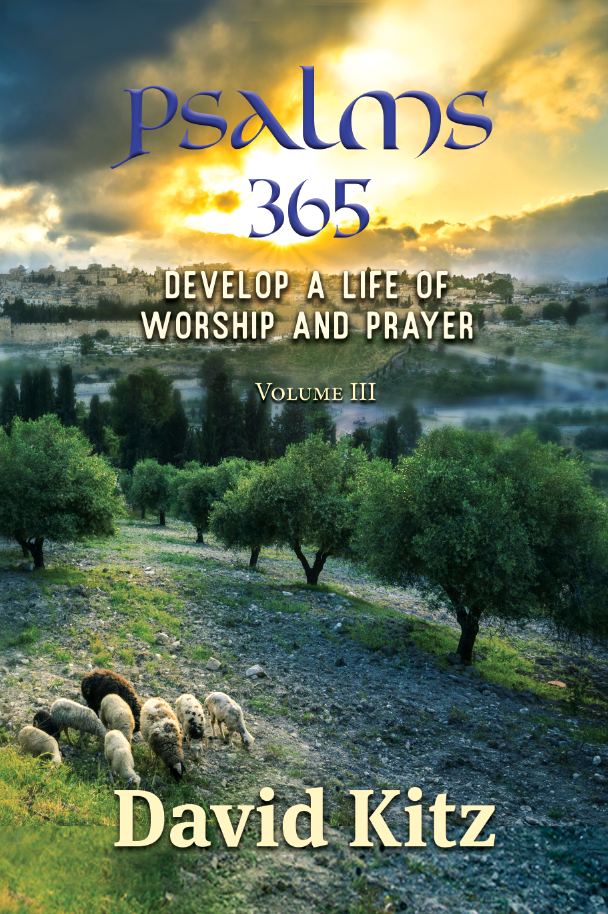
“Psalms 365: Develop a Life of Worship and Prayer


Today’s
Reading: Psalm 19:12-14

Listen to today’s reading by Jonathan Dent:

https://davidkitz.blog/wp-content/uploads/2025/12/psalm-1912-14-mix1-final1-declick.mp3


Heavenly Father,
please forgive my sins.
Often,
I have lived according to my will,
not yours.
Forgive my selfish ways.
May these words of my mouth
and this meditation of my heart
be pleasing in your sight, L
ORD,
my Rock and my Redeemer.

Amen.

— — — —


Zechariah’s Prophecy concerning Jesus
and John the Baptist

And you, my child,
will be called a prophet of the Most High;

    for you will go on before the Lord
to prepare the way for him,

to give his people the knowledge of salvation
    through the forgiveness of their sins,
because of the tender mercy of our God,
    by which the rising sun will come to us from heaven
to shine on those living in darkness
    and in the shadow of death,
to guide our feet into the path of peace.”
(Luke 1:76-79 NIV)*

Para la publicación de Salmos 365 de hoy en español haga clic aquí.

bgbg_v4.3_1501818
* NEW INTERNATIONAL VERSION, COPYRIGHT ©1973, 1978, 1984, 2011 BY BIBLICA

Pray for enduring peace in Israel and Gaza,
and continue to pray for peace to return to Ukraine and Russia!

Volume I of Psalms 365: Develop a Life of Worship and Prayer won the Best Book of the Year Award from The Word Guild and Volume II has won the Best Devotional of the Year Award. For those who love God’s word, this three-book series is an ideal way to daily meet with the Lord. To purchase or for a closer look click here.

New from David Kitz

James—the brother of Jesus—who was this man? What evidence do we have that this “brother of our Lord” even existed?

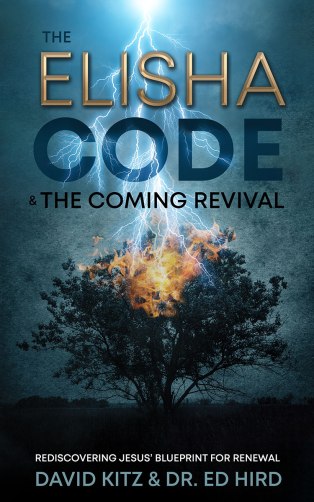
David Kitz digs deep into archeology, family dynamics, church history, and the biblical texts. What emerges from his research is a portrait of a decisive, pivotal leader who embodied the will and character of Jesus Christ.

But how did James—James the unbeliever—transform to become a leader who changed the course of world history? In these pages you will uncover the answer and rediscover for yourself the life-changing power of the gospel.

To view further details or purchase this or other books directly from the author click here.

I Rejoice in the LORD

16 Saturday Aug 2025

Posted by davidkitz in Psalm 104

≈ Leave a comment

Tags

Bible, glory of God, meditation, praise the LORD, Psalms, rejoice, the LORD

I will praise the LORD!

Banff townsite as viewed from the top of Sulphur Mountain — photo by David Kitz

Psalm 104:31-35

May the glory of the LORD endure forever;
    may the LORD rejoice in his works—
he who looks at the earth, and it trembles,
    who touches the mountains, and they smoke.
I will sing to the LORD all my life;
    I will sing praise to my God as long as I live.
May my meditation be pleasing to him,
    as I rejoice in the LORD.
But may sinners vanish from the earth
    and the wicked be no more.

Praise the LORD, my soul.
    Praise the LORD. *

Para la publicación de Salmos 365 de hoy en español haga clic aquí.

bgbg_v4.3_1501818
* NEW INTERNATIONAL VERSION, COPYRIGHT ©1973, 1978, 1984, 2011 BY BIBLICA

Please pray for peace to return to Israel, Gaza, and Ukraine!

Volume I of Psalms 365: Develop a Life of Worship and Prayer won the Best Book of the Year Award from The Word Guild and Volume II has won the Best Devotional of the Year Award. For those who love God’s word, this three-book series is an ideal way to daily meet with the Lord. To purchase or for a closer look click here.

A gripping read from David Kitz.
Is a return-to-Jesus revival possible in our time?
This book points the way forward.
For details click here.

I Will Not Neglect Your Word

03 Sunday Aug 2025

Posted by davidkitz in Psalm 119, Psalms, Psalms Alive!

≈ 2 Comments

Tags

Bible, faith in God, God's word, Jesus, meditating on God's word, meditation, memorization, praise, Psalm 119, Righteousness, the LORD, word of God

Psalm 119:12-16

Praise be to you, O LORD;
Teach me your decrees.
With my lips I recount
all the laws that come from your mouth.
I rejoice in following your statutes
as one rejoices in great riches.
I meditate on your precepts
and consider your ways.
I delight in your decrees;
I will not neglect your word.

Psalm 119 is the longest psalm in the Bible. It is also an acrostic poem, which in this case means each stanza of this poetic psalm begins with a different letter of the Hebrew alphabet. The section above for instance, begins with the letter Beth, which roughly corresponds to our letter B. Also, within each alphabetic stanza are eight verses, which all begin with the same Hebrew letter. In this way the psalm’s composer works his way through the entire twenty-two letters of the Hebrew alphabet. This psalm is in fact a remarkable literary composition, which was originally structured to be memorized, like the alphabet. Unfortunately, for the English reader, much of the elaborate, intricate beauty of this psalm is lost the moment it is translated from its original tongue.

The theme of this psalm is consistent throughout. It is a poetic testimony in praise of God’s holy, unchanging word. Here we find the alpha and omega of the psalms—a literary tribute to the A to Z wonder of God’s word. Every letter trumpets the salutary goodness of God’s written word. Charles Spurgeon, the nineteenth century theologian, has called Psalm 119, “A pearl island, or better still, a garden of sweet flowers.”[1]

Here in Psalm 119, we find these immortal words of comfort and encouragement, “Your word is a lamp to my feet and a light for my path” (Psalm 119:105).

Throughout the ages the saints of God have found that light for the journey comes streaming through the written pages of the word of God. Where can we turn in times of despair? How can we scale mountains of fear? How can we cross an ocean of worry? In this sin-darkened world, the word of God stands secure. It sends out a beam of radiant truth to light the traveller’s path. Is it any wonder then that the psalmist declares, “I have put my hope in your word” (Psalm 119:147b).

The light of your presence, LORD — photo by David Kitz

While Psalm 119 shouts out the eternal praises of God’s word, it does so, from a kneeling position. There is an unmistakable posture to this psalm. It rings most true, when it is spoken by a worshipper on his knees. This is a psalm filled with humble supplication. It is humble supplication that kneels and bows low before the Holy One of Israel.

There is an earnest pleading in this psalm that springs from the realization that apart from God and His Holy Word, personal holiness and salvation are impossible. Hence, we have the opening question that frames this stanza, “How can a young man keep his way pure?” 

But in His mercy the LORD has provided a response: “Praise be to you, O LORD; teach me your decrees.”

Unless God teaches me His decrees, I stumble through life lost, without direction, meaning or purpose. In reality, the eat, drink and be merry philosophy that governs the actions of so many in this world, simply springs naturally from their lost state. Hedonism is after all a rather logical response, if life has no meaning or purpose, or if our souls have no eternal destiny.

But to the soul that has heard God’s whisper in the wind or caught a glimpse of His unfading glory in the setting sun, hedonism has lost much of its allure. The soul that takes the long view—that sees beyond the grave—lives life in a different light. We are called to live on a higher plain—a plain that is sustained and nourished by God’s life-giving, life-invigorating Word.

So, in humility with the psalmist, we cry out to the LORD, “Teach me your decrees.”

Now, aware of our fallen position—from a position of need—we cry out to the LORD, “Teach me your decrees.”

The arrogant and self-satisfied are unfamiliar with this prayer. It has no resonance within them. This is the prayer of the hungry and the thirsty. It is Jesus, the word incarnate, who takes it upon himself to personally answer this prayer. Through the beatitudes he answers the cry of our heart, “Blessed are those who hunger and thirst for righteousness, for they will be filled” (Matthew 5:6).

There is a righteousness that does not spring from our performance or our merit. It does not come from observing the law. It comes directly from the crucified and risen Christ, the one who knew no sin. This righteousness—the righteousness of Christ—is credited to our account by faith.  So then as the apostle Paul asserts, “we have believed in Jesus Christ, that we might be justified by faith in Christ and not by the works of the law; for by the works of the law no flesh shall be justified” (Galatians 2:16 NKJV).

Did the writer of Psalm 119 understand the true source of holiness, or was he simply trying to achieve holiness through his own human effort? Is the psalmist’s focus on the law of the LORD and His commands and decrees, just a misdirected reflection of legalistic Old Testament thinking? For today’s believers, who look back in history from this side of the cross, this is a valid question.

On this point, the psalmist’s prayer in later in Psalm 119 is truly insightful. Notice both his choice of words and his posture in supplication, “May your unfailing love come to me, O LORD, your salvation according to your promise; then I will answer the one who taunts me, for I trust in your word” (Psalm 119:41).

Clearly the psalmist saw his need for salvation—salvation that comes freely from a God of grace and unfailing love. Secondly, in the same way as New Testament believers find salvation, the psalmist puts his trust in the word of God and the LORD’s sure promises—promises that include the coming of a Saviour-Redeemer. Satan’s taunts are no match for the believer who has put his faith in the LORD and His word.

Bridge across the Assiniboine River — photo courtesy of Donald Adam

Biblical revelation is progressive through time. The full revelation of God’s way of redemption was not revealed to the Old Testament prophets. They saw in part and prophesied in part concerning the coming of our Lord and Saviour, Jesus Christ. But the partial nature of their revelation does not invalidate their testimony or the authority of their words. Even as the above passage reveals, they saw the way of salvation with an uncanny accuracy—an accuracy that was Holy Spirit breathed.

In fact, the apostle Peter validates the ministry of the Old Testament writers by declaring of these men that they “spoke from God as they were carried along by the Holy Spirit” (2 Peter 1:21).

Again, Peter confirms the authority of the Old Testament scriptures by quoting the words of Isaiah, “All men are like grass and their glory is like the flowers of the field; the grass withers and the flowers fall, but the word of the Lord stands forever” (1 Peter 1:24- 25).

If the word of the LORD stands forever, why do so many Christians discount the Old Testament scriptures? They maybe scriptures, but we discount them. They have been dumped into the half-off bin at the back of our scriptural storehouse. They’re in the front of the Bible, but for many of us, they are in that unused, unread portion. Mentally, we have moved them to the back forty. They have become the back forty-four—out of sight and out of mind. 

But the words of Psalm 119 break into our mind. Here we have some radical thinking—a radical all out devotion to God’s word.

“With my lips I recount all the laws that come from your mouth. I rejoice in following your statutes as one rejoices in great riches.”

In my mind, recounting something with my lips sounds a lot like a rehearsal. Have you rehearsed God’s laws? Doing a rehearsal with my lips sounds a lot like recitation. Have you recited God’s laws? And how can anyone recite something without memorizing it? Have you committed portions of God’s word to memory?

Photo by Thirdman on Pexels.com

Memorization is a skill that has fallen by the wayside. At one time it was routinely taught and practised at our schools. Alas, in many classes, at many schools, those days are long gone. For many years the church was the last bastion of memorization. But in many churches, here too, this skill has fallen by the wayside. As a result, God’s word has fallen by the wayside. 

In recent years the birds of the air have had plenty to devour, because God’s people have forgotten how to hide the word of the LORD in their hearts. But Satan’s emissaries have been busy doing double duty. Not only have they been snatching away the word of God, they also have been filling the empty spots in our minds. They have been planting illicit images where God’s word should be growing.

Is it any wonder then that the church is anaemic? The Spirit-infused bread of life has not been digested and incorporated into the church, the earthbound corpus Christi.  

Memorization is hard work; it takes discipline. A disciple embraces discipline. Are you a disciple in the body of Christ? Then you will discover there is a joy that comes through incorporating God’s word more fully into your mind and into your life.   

The psalmist found a wellspring of joy in the word of God. Hear his words, “I rejoice in following your statutes as one rejoices in great riches.”

Light shines on the righteous and joy on the upright in heart — photo by David Kitz

Memorization very naturally leads to incorporation. The word becomes part of us, just as the food we eat. God’s word is lived out—expressed daily through our lives. We follow the written word—the statutes—and in so doing we are following Christ. After all, it was Jesus who told his disciples, “If you love me, you will obey what I command” (John 14:15).

When we obey, the word becomes fully alive in us. As it was at Christ’s conception, once again, the word becomes incarnate. But this time, God’s word is alive in us—alive in our earthen vessels.

Are you rich with this world’s wealth? Or are you rich in God’s word? Are you finding joy in following Jesus’ commands? If you are discovering that joy, a wonderful promise awaits you. Jesus said, “If anyone loves me, he will obey my teaching. My Father will love him, and we will come to him and make our home with him” (John 14:23).

The empty spot in the garden of our heart will be filled. Jesus will live there through the power of His Word. Your heart will become His dwelling place.

Meditating on God’s word makes room for Jesus in our mind. The psalmist did not only know the secret of a clean mind, he also knew how to keep his mind occupied, healthy and active. Hear him again, “I meditate on your precepts and consider your ways.”

Unlike mind emptying transcendental meditation, biblical meditation fills the mind with God’s holy word. Our mind becomes a garden of life—a garden of sweet flowers—bringing glory to God our Creator.

Autumn sunflowers, Churchbridge, SK — photo by David Kitz

By meditating on God’s word and His ways, we put into practice the apostle Paul’s, advice to us, “Whatever is true, whatever is noble, whatever is right, whatever is pure, whatever is lovely, whatever is admirable—if anything is excellent or praiseworthy—think about such things” (Philippians 4:8).

As we meditate on these things and put them into practice, the God of all peace will be with us. He resides in His Word. His presence in us will manifest itself through an ever-increasing measure of spiritual power, when we open our hearts and our minds to meditate on His word. Then we will find joy coming to us through God’s word. The psalmist’s confession will become our own. “I delight in your decrees.”

“I will not neglect your word.”

For me, these words have become a daily challenge, and a personal commitment. I will not neglect God’s word. When I am walking in His garden, Jesus finds me there.

[1] The Treasury of David, Psalms 111-150 (Classic Reflections on the Wisdom of the Psalms, Volume 3) by Charles H. Spurgeon, Henderson Publishing, 2005.

Bringing Life to the Psalms

  1. Memorization and meditation are sisters. Both practices bury God’s word more deeply in our minds. The buried seed of God’s word germinates, grows and bears fruit. Why not commit yourself to memorize God’s word? Psalm 119 Beth is a wonderful place to begin this life changing practice.
  2. When the word of God takes root in our hearts, we become living epistles—letters from God to a lost generation. You are the only Bible many in this world will ever read. Take a moment to read 2 Corinthians 3:1-3. What do those around you see when they read your life?
  3. Is the Old Testament in your scriptural deep-discount bin? What relevance does it have for your life today? Have there been instances when an Old Testament passage or story significantly impacted your life? What steps can be taken to honor the whole of God’s word more fully in our churches today?
  4. Take time to read all of Psalm 119. Highlight those verses that particularly speak to your heart. Review these same passages later in the day or the week. Take time to think on these things. By doing so, you are meditating on God’s word.

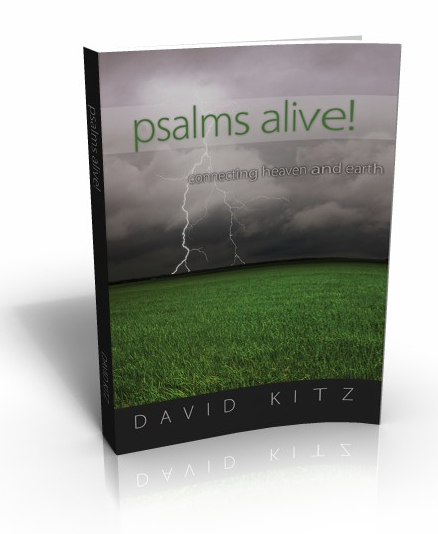
Today’s post is Chapter 23 from the book Psalms Alive! Connecting Heaven & Earth by David Kitz. To find out more or purchase click here.


Hope and Help Found in God’s Promises

17 Thursday Jul 2025

Posted by davidkitz in Psalm 119

≈ Leave a comment

Tags

Bible, devotion, faith, God, God's promises, God's word, hope, Jesus, meditate, meditating on God's word, meditation, Psalms, the LORD

Today’s Devotion from Psalms 365 by David Kitz

Reading: Psalm 119:145-152
ק Qoph
I call with all my heart; answer me, LORD,
and I will obey your decrees.
I call out to you; save me
and I will keep your statutes.
I rise before dawn and cry for help;
I have put my hope in your word.
My eyes stay open through the watches of the night,
that I may meditate on your promises.
Hear my voice in accordance with your love;
preserve my life, LORD, according to your laws.
Those who devise wicked schemes are near,
but they are far from your law.
Yet you are near, LORD,
and all your commands are true.
Long ago I learned from your statutes
that you established them to last forever (NIV). *

Redemption’s promise — photo by David Kitz

Reflection
Meditation. It seems everyone is doing it. Have you taken up meditation? Even the Bible encourages us to meditate.

Ah, but there are some fundamental differences between transcendental meditation and the meditation that is described in the Bible. Eastern meditation, which springs from the Hindu religion, calls on the practitioner to relax and empty his or her mind.

Biblical meditation is not an emptying of the mind, or a disengagement with the thought process. Instead, it is active, concentrated thought on a topic, word or Bible verse. On an intellectual level, it has been compared to rumination—a cow chewing her cud. It involves getting the most out of what God has said—digesting His word—so it is fully incorporated into the life of the believer.

Today’s reading sheds light on the psalmist’s practice of biblical meditation: I rise before dawn and cry for help; I have put my hope in your word. My eyes stay open through the watches of the night, that I may meditate on your promises (v. 147-148).

The psalmist is thoroughly engaged with God. He is crying out to Him. He is focused on the word of God and His promises: I have put my hope in your word.

In the rush of life, do we stop and meditate on God’s word? Is Bible reading just a box to check off as we speed through our day? It’s the LORD who calls us aside to spend time with Him.

Response: LORD God, with all the distractions around me, I want to get in the habit of meditating on your Word. Help me to focus my attention and thoughts on your promises. You are good to me. Amen.

Your Turn: Are you easily distracted from God’s word? How do you take it with you through the day?

Para la publicación de Salmos 365 de hoy en español haga clic aquí.

bgbg_v4.3_1501818
* NEW INTERNATIONAL VERSION, COPYRIGHT ©1973, 1978, 1984, 2011 BY BIBLICA

Please pray for peace to return to Israel, Gaza, and Ukraine!

Volume I of Psalms 365: Develop a Life of Worship and Prayer won the Best Book of the Year Award from The Word Guild and Volume II has won the Best Devotional of the Year Award. For those who love God’s word, this three-book series is an ideal way to daily meet with the Lord. To purchase or for a closer look click here.

A gripping read from David Kitz.
Is a return-to-Jesus revival possible in our time?
This book points the way forward.
For details click here.

The Better Offer

09 Wednesday Jul 2025

Posted by davidkitz in Psalms

≈ Leave a comment

Tags

closeness, delight, devotion, holiness, insight, Jesus, love, meditation, obedience, renewal, repentance, Scripture, transformation, understanding, wisdom

Today’s Devotion from Psalms 365 by David Kitz

Reading: Psalm 119:97-104
מ Mem
Oh, how I love your law!
    I meditate on it all day long.
Your commands are always with me
    and make me wiser than my enemies.
I have more insight than all my teachers,
    for I meditate on your statutes.
 I have more understanding than the elders,
    for I obey your precepts.
I have kept my feet from every evil path
    so that I might obey your word.
I have not departed from your laws,
    for you yourself have taught me.
How sweet are your words to my taste,
    sweeter than honey to my mouth!
I gain understanding from your precepts;
    therefore I hate every wrong path (NIV). *

Reflection
Here’s a question for you: How do you take a bone away from a hungry dog?

Answer: You offer him a steak.

In many respects humans respond just like dogs. We won’t give up our filthy habits unless we are offered something much better. Many years back I remember a conversation with a drug addict—a former drug addict. I asked him if he found it difficult to give up his drug habit.

“No it was easy. Once I experienced the love of God—the real love of Jesus for me on the cross—it was easy. I found something so much better,” he said with a huge grin on his face.

These words from today’s reading reflect the same concept: I have not departed from your laws, for you yourself have taught me. How sweet are your words to my taste, sweeter than honey to my mouth! (v. 102-103)

It’s not hard to walk the straight and narrow when you are walking that path with the Lord—when He Himself is teaching you—when your heart is burning within you as the resurrected Jesus opens the eyes of your understanding. See Luke 24:13-32. There is a closeness in the Spirit that has no equal. Those are the moments that change you forever because you are fully with God. His word is rich. It’s nourishment to your famished soul. His love is the air you breathe.

Who here wants a dirty chewed up bone when there’s steak on offer?

Response: Father God, renew my first love for you. I want to fall in love with you again. Fill me with delight for your word and your Spirit. Completely change my affections. Amen.

Your Turn: Are you too content with your bone? Have you experienced the nearness of Jesus?

Para la publicación de Salmos 365 de hoy en español haga clic aquí.

bgbg_v4.3_1501818
* NEW INTERNATIONAL VERSION, COPYRIGHT ©1973, 1978, 1984, 2011 BY BIBLICA

Please pray for peace to return to Israel, Gaza, and Ukraine!

Volume I of Psalms 365: Develop a Life of Worship and Prayer won the Best Book of the Year Award from The Word Guild and Volume II has won the Best Devotional of the Year Award. For those who love God’s word, this three-book series is an ideal way to daily meet with the Lord. To purchase or for a closer look click here.

A gripping read from David Kitz.
Is a return-to-Jesus revival possible in our time?
This book points the way forward.
For details click here.

God’s Hands, My Hope

04 Friday Jul 2025

Posted by davidkitz in Psalms

≈ 2 Comments

Tags

adversity, comfort, creation, faith, God's word, Growth, hope, identity, meditation, obedience, Psalms, purpose, redemption, Suffering, transformation

Happy Independence Day to my readers
in the United States!


Today’s Devotion from Psalms 365 by David Kitz

Reading: Psalm 119:73-80
י Yodh
Your hands made me and formed me;
give me understanding to learn your commands.
May those who fear you rejoice when they see me,
for I have put my hope in your word.
I know, LORD, that your laws are righteous,
and that in faithfulness you have afflicted me.
May your unfailing love be my comfort,
according to your promise to your servant.
Let your compassion come to me that I may live,
for your law is my delight.
May the arrogant be put to shame for wronging me without cause;
but I will meditate on your precepts.
May those who fear you turn to me,
those who understand your statutes.
May I wholeheartedly follow your decrees,
that I may not be put to shame (NIV). *

Photo by RDNE Stock project on Pexels.com

Reflection
You have been touched by God. Pause. Consider that for a moment.

When did God touch you? According to the psalmist it happened at the very beginning of your life. Your hands made me and formed me; give me understanding to learn your commands.

Implied in that statement is God’s personal care—His attention to detail. You are not an accident or an afterthought in the mind of God. He formed you with a plan and a purpose. According to the apostle Paul, a large part of that purpose is that you may know Him, and be conformed to the image of His dear Son. And we know that in all things God works for the good of those who love him, who have been called according to his purpose. For those God foreknew he also predestined to be conformed to the image of his Son, that he might be the firstborn among many brothers and sisters (Romans 8:28-29).

When we face difficulties, hardship and suffering has God abandoned us? The answer is a resounding no. Consider the psalmist’s response to these things: I know, LORD, that your laws are righteous, and that in faithfulness you have afflicted me. May your unfailing love be my comfort, according to your promise to your servant (v. 75 -76).

Every adversity you face should bring you nearer to God. See it as an opportunity to learn, grow and be changed into someone who is more like Jesus. He did not run from adversity, but instead faced suffering and death head on. God the Father brought Jesus safely to the other side, and it’s His purpose to bring you through to glory too.

Response: Father God, I want to be like Jesus. Thank you for touching my life and forming me with your hands. I am yours—yours by creation—yours by redemption. I will meditate on your precepts. Amen.

Your Turn: Have you questioned God’s love for you? Are you living out His plan?

Para la publicación de Salmos 365 de hoy en español haga clic aquí.

bgbg_v4.3_1501818
* NEW INTERNATIONAL VERSION, COPYRIGHT ©1973, 1978, 1984, 2011 BY BIBLICA

Please pray for peace to return to Israel, Gaza, and Ukraine!

Volume I of Psalms 365: Develop a Life of Worship and Prayer won the Best Book of the Year Award from The Word Guild and Volume II has won the Best Devotional of the Year Award. For those who love God’s word, this three-book series is an ideal way to daily meet with the Lord. To purchase or for a closer look click here.

A gripping read from David Kitz.
Is a return-to-Jesus revival possible in our time?
This book points the way forward.
For details click here.

Purity in the Digital Age

24 Tuesday Jun 2025

Posted by davidkitz in Psalms

≈ 2 Comments

Tags

discipline, faith, holiness, meditation, obedience, purity, Scripture, temptation, transformation, youth

Today’s Devotion from Psalms 365 by David Kitz

Reading: Psalm 119:9-16
ב Beth
How can a young person stay on the path of purity?
By living according to your word.
I seek you with all my heart;
do not let me stray from your commands.
I have hidden your word in my heart
that I might not sin against you.
Praise be to you, LORD;
teach me your decrees.
With my lips I recount
all the laws that come from your mouth.
I rejoice in following your statutes
as one rejoices in great riches.
I meditate on your precepts
and consider your ways.
I delight in your decrees;
I will not neglect your word (NIV). *

Are you walking the path of purity? — photo by David Kitz

Reflection
In the age of the internet and one-click-away pornographic websites, the opening question in today’s reading from Psalm 119 has never been more salient. How can a young person stay on the path of purity? (v. 9).

Why would a young man want to keep his way pure? Why not chase every skirt in town? Why not have some fun? Why not eat, drink and be merry? We only pass through this life once. Why not live it up?

But if the God of the universe has called men and women into relationship with Him, then purity and holiness are at the very core of that relationship. If we are called to be with God—to dwell in harmony with Him—then we must embrace holiness. To embrace God is to embrace holiness. Those filthy sin spots have got to go. If we are to walk with God, we must willingly walk away from mind and soul-fouling sin.

The writer of the Book of Hebrews urges on the young faith runners with these words: Let us fix our eyes on Jesus, the author and perfecter of our faith, who for the joy set before him endured the cross, scorning its shame, and sat down at the right hand of the throne of God (Hebrews 12:1-2, NIV).

In a world awash in pornography, we all need fixed eyes—eyes fixed on Jesus—eyes that see the cross— eyes that see the blood-drenched cross. Purity comes at a price. It cost the heavenly Father the life of His very own Son. A young man named Jesus—in flesh like my own—in skin like my own—poured out his life’s blood to make me pure. Fix your eyes on Him!

Response: LORD, I want to live my life according to your word. I seek you with all my heart; do not let me stray from your commands. I have hidden your word in my heart that I might not sin against you. Amen.

Your Turn: Do you struggle with impure thoughts? Are you neglecting God’s word? How can we overcome?

Para la publicación de Salmos 365 de hoy en español haga clic aquí.

bgbg_v4.3_1501818
* NEW INTERNATIONAL VERSION, COPYRIGHT ©1973, 1978, 1984, 2011 BY BIBLICA

Please pray for peace to return to Israel, Gaza, and Ukraine!

Volume I of Psalms 365: Develop a Life of Worship and Prayer won the Best Book of the Year Award from The Word Guild and Volume II has won the Best Devotional of the Year Award. For those who love God’s word, this three-book series is an ideal way to daily meet with the Lord. To purchase or for a closer look click here.

A gripping read from David Kitz.
Is a return-to-Jesus revival possible in our time?
This book points the way forward.
For details click here.

The Third Witness Prompts Response

02 Sunday Mar 2025

Posted by davidkitz in Psalms, Psalms Alive!

≈ Leave a comment

Tags

confession, Creator, David, God, God's forgiveness, Holy Spirit, Jesus, meditation, Prayer, Psalms, the LORD, transgressions, wilful sins, witness

Psalm 19:12-14
Who can discern his errors?
Forgive my hidden faults.
Keep your servant also from wilful sins;
may they not rule over me.
Then will I be blameless,
innocent of great transgression.
May the words of my mouth
and the meditation of my heart
be pleasing in your sight,
O LORD, my Rock and my Redeemer. (NIV)

What is your response to God’s word and His voice as it speaks to your heart?

That’s exactly what we find here in this final portion of Psalm 19. Here we see David’s response to God. God has been doing the talking thus far. God has been speaking to David through the stars, through the night sky, and the blazing heat of the sun—the first witness. He has spoken to him through the Word of God—His written revelation—the second witness. Now as this Psalm draws to a close, we hear David responding back to God.

In actuality, David is responding to the third witness. His heart is bearing witness to the reality of God. His conscience is convicting him of his sin and of the righteousness of God. We all have this third witness within us—a witness that will not be silenced, though we may try to drown out this inner voice of the Spirit.

This dialogue between God and man is one of the unique features of the Psalms. The Psalms are not simply the statements of a man in prayer, or even the words of a man caught up in praise and worship of his Creator. God speaks back, or as we see here in this Psalm, God initiates the conversation. We are eaves dropping on a conversation between a human being—someone just like us, caught up in the same travails and passions—and the transcendent, eternal God of the universe.

What a conversation! What communion we find here! This isn’t God pronouncing His dictates from heaven, though He has every right to do so. This is God whispering in the ear of an individual who is struggling to know and understand God’s will. And if God can speak to David in this manner, then there is hope for us. God can speak to us too. Surely this is why the Psalms have resonated with humankind throughout the ages. 

If along with David, we have heard the voices of the first and second witness, then there is only one appropriate response. It is the response recorded here in Holy Scriptures. If we see and grasp the awesome power and majesty of God, if through His word we have glimpsed His holiness, then we are brought low. We are humbled before him. Our greatest achievements are nothing. Our pride dissolves. Our weakness, our smallness is self-evident in the presence of the LORD of heaven and earth. We are exposed; our sin is exposed before this holy, magnificent God. 

Hear David’s response, “Who can discern his errors? Forgive my hidden faults.

We all stand naked of soul before our Creator. The all-seeing One knows us. He knows us intimately. There are no secrets in His all-encompassing dominion. He sees all. He knows all. We can hide nothing from Him.

But hiding is the human heart’s first response. Adam and Eve did it first. They hid from their Creator immediately after their initial sin. In fact, hiding is what our Adamic nature does best. Since our first parents fall, we have had thousands of years to perfect the art of hiding. And it truly is an art. We have all seen and heard a young child’s amateur attempts at a lie. And lies are simply a verbal attempted at hiding the truth. As we mature, we become ever more sophisticated at hiding the truth. We excuse our faults and quickly sweep them under the carpet, and for many of us the thickest and most luxurious carpets are religious carpets. They are great for hiding a multitude of sins.

One of my earliest childhood memories is an attempt to hide from my mother. I hid behind the living room drapes. They were made of thick, heavy material. I could not see her through them, so I reasoned that I must be safe. My feet were left exposed, and the form of my body was obvious as I pressed my back against the wall. It’s not hard to guess the outcome of this bit of childish foolery.

 All of us have tried to play peek-a-boo with God. Our faulty reasoning goes something like this. If I hide from Him, and I can’t see Him—if I completely ignore Him —He must not be there. I cannot see Him; He cannot see me. He will pass by without noticing me.

But a barefaced encounter with the Almighty exposes all. We have come to the Light. Nothing is hidden or can be hidden. We can’t play peek-a-boo with God.

David has been found by God. He has been found naked, just as our first parents were found naked in the Garden. Ah, but that’s not what the Adam and Eve story says. The Bible says, “they sewed fig leaves together and made coverings for themselves” (Genesis 3:7).

They were not naked. No, Eve and Adam had managed to pull a curtain over themselves as they hid in God’s living room. But their feet were exposed, even as their butts were pressed against the proverbial wall.

The truth is they were naked of soul before the all-seeing God. We are always naked of soul before Him, no matter what outer garb we put on.

Hence, David’s first response to God is so appropriate, “Who can discern his errors? Forgive my hidden faults.”

With these words, David is giving voice, to his inner voice, his conscience. The third witness is testifying to the reality of God—a God before whom, we must all give account. The God, who speaks externally through creation, and his holy written word, also speaks from within the human heart. His voice is prompting David to respond.

David is confessing that before the all-seeing One, he is naked. Not only is he fully exposed, but he is incapable of fully discerning his own sin. He cannot see himself in his entirety. Only God can see him completely.

We should note our inability to fully see ourselves is true on every level. All too often, we are blind to the consequences of our actions, blind to our character faults, blind to the annoying quirks that drive others from us. We cannot stand outside of ourselves and see ourselves fully or accurately. This is as true on the physical level as it is on the spiritual level.

Think on the following statement for a moment: You have never seen your own face. It’s true. A photograph of your face is an image of your face caught in time, but it is only an image. It is not your face. The image of your face in a mirror is just that. It is an image; it is not your face. The truth is you have never seen your own face. Only others can see your full physical form.

Only God can see you in your entirety, spirit, soul and body. He sees you from the outside and from the inside, from your beginning to your end.

 In this Psalm, David finds himself face to face with this all-seeing, all-knowing God. In humility he pleads, “Forgive my hidden faults.”

If we perceive God correctly, and if we assess ourselves accurately and honestly, then we quickly realize our greatest need. Our greatest need is for forgiveness. This is the bedrock on which any human relationship with God is built.

Next, because David longs to live in relationship with this amazing God, he cries out for holiness, “Keep your servant also from wilful sins; may they not rule over me. Then will I be blameless, innocent of great transgression (Psalm 19:13).

 We should note here that there are degrees of sin. For example, John the disciple, writes in his first letter, “There is a sin that leads to death” (1 John 5:16). John then goes on to state that, “All wrongdoing is sin, and there is a sin that does not lead to death (1 John 5:16).

But perhaps nowhere in all of the scriptures are the degrees of sin more clearly delineated than here in this passage. David begins by asking, “Who can discern his errors?”

There is no intent in errors. We all make mistakes. In this great exam called life, errors will occur. Even the most spiritually studious fall short of perfection. To sin is to miss the mark, and all, even the saintliest, will from time to time miss God’s mark of perfection.

David asks God to forgive hidden sins. We all possess an ample supply of these. Some sins are hidden from others. We may confess these sins to God, but to others they remain a secret that we take with us to our graves.

Yet other sins are hidden from us. We fail to see our own faults, which may be glaringly obvious to others. A truly good friend will not only forgive our faults, but in time he will help us to see and overcome these hidden sins.
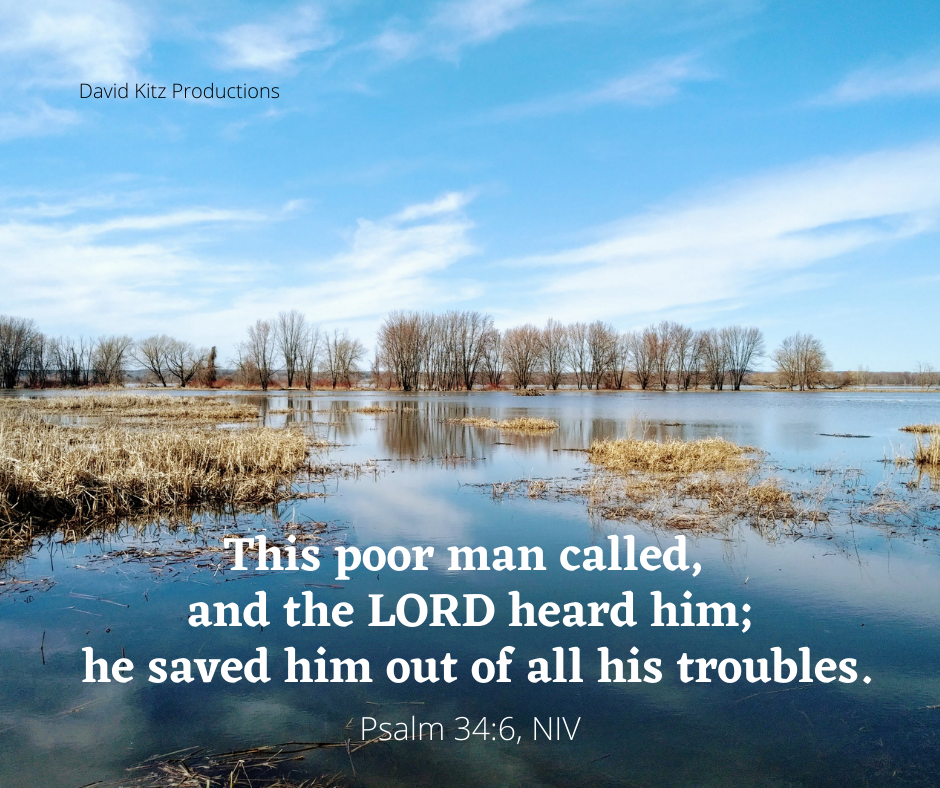
Now as David prays, he asks, “Keep your servant also from wilful sins; may they not rule over me.”

Here we have transitioned from errors, which are unintentional sins, to the realm of wilful sins. This is a conscious decision to do wrong, to disobey God and His laws or requirements. This is a very slippery slope. Notice how wilful sin can turn into a controlling monster. We begin by wilfully choosing to disobey, but when this sin has taken root and is allowed to grow, something changes. It grows into a monstrosity. What we freely chose, now chooses us. We become its slave. It rules over us. Our will is overpowered. Any addict can testify to the ravenous power of this sin monster. Every wilful sin has an addictive power associated with it. That’s why David wants to avoid this trap. He prays, “Keep your servant also from wilful sins.”

David longs to be “blameless, innocent of great transgression.”

What is great transgression? It could be argued that it is sin that leads to death. James, the brother of our LORD writes, “We are tempted by our own desires that drag us off and trap us. And when sin is finished with us, it leaves us dead” (James 1:14-15).

But within David beats a different heart. He longs for holiness. His desire is for a blameless life—a life lived in relationship with God. It’s as though David is saying to God, “Those evening walks you took with Adam in the Garden, can we go for one of those LORD?”

Hear his prayer, “May the words of my mouth and the meditation of my heart be pleasing in your sight, O LORD, my Rock and my Redeemer.”

With these words David has identified the source of sin and the cornerstone of any hope for holiness, as we live out our lives on this earth. The source point is the human heart. If our hearts are right before God, there is hope. If our hearts are fixed on our Rock and our Redeemer, we can bring pleasure to Him.

Jesus said, “The things that come out of the mouth come from the heart, and these make a man ‘unclean’. For out of the heart come evil thoughts, murder, adultery, sexual immorality, theft, false testimony, slander. These make a man unclean” (Matthew 15:18-20).

Jesus knew the desperately wicked state of our hearts. David knew his own heart too. He knew it needed cleansing and forgiveness. That’s why he cries out for it. He knew that our mouths speak from the overflow of the heart. The meditation of the heart must be pure if the words we speak are to bring life and encouragement.

Your words are important. There is no such thing as an idle word. In a world that constantly spews forth verbal sewer filth, God is looking for those with a pure heart. Your heavenly Father does not need a stethoscope to check the condition of your heart. He only needs to listen to the words coming out of your mouth.

Notice how David wants his words and his heart to bring pleasure to God. His prayer is that they be pleasing in His sight. O, to bring pleasure to the all-seeing One! That is his prayer. He does not wish to hide; hiding is futile. No, he longs to consciously live his life in the full and constant view of the LORD.

We have all endured annoying music, droning noises or irritating voices that grate on our nerves. But the opposite is so refreshing. Soothing music, joyful noises and happy voices invigorate us. They bring gladness into our lives.

Like David, make it your goal to bring gladness to your Rock and your Redeemer. Put a smile on your Father’s face.   

Bringing Life to the Psalms

  1. Read James 2:1-12. There is no clearer biblical discourse on the power of the tongue for both good and evil. Heed the advice found there.
  2. Do you have a foul mouth? Determine to clean up your conversation. When you slip up make Psalm 19:14 your prayer.
  3. Is the third witness—the inner voice of God’s Spirit—speaking to you? Take time to respond to God. Use David’s prayer in this final portion of Psalm 19 as a pattern for your own response to the Holy Spirit’s prompting.
  4. Take time to meditate on God’s word. Select a passage and read it repeatedly. See it; smell it; taste it. Let it become part of you. In our rushed world become a cow. Lie down, relax and chew your mental cud. Meditating on God’s word is like that.
  5. Psalm 19 has a Trinitarian structure that points to the Triune God, who is the source point of all Holy Scripture. The first portion of this psalm introduces us to our heavenly Father, the LORD God of creation. The second portion extols the virtues of the Word of God. John’s Gospel introduces Jesus as the Word of God. The Word became flesh and made his dwelling among us. We have seen his glory, the glory of the one and only Son, who came from the Father, full of grace and truth (John 1:14). Finally, we witness the convicting power of the Holy Spirit as David cries out, “Forgive my hidden faults. Keep your servant also from wilful sins; may they not rule over me” (Psalm 19:12-13). The concept of the Trinity was and is foreign to the Jewish faith, yet it is written into its foundational texts. How do you account for the remarkable presence of this coded truth?
  6. Now take a minute to reread all of Psalm 19. What is God saying to you by His Spirit?

Today’s post is the third chapter from the book Psalms Alive! Connecting Heaven & Earth by David Kitz. To find out more or purchase click here.
Remembering God’s Miracles in Times of Trouble

21 Tuesday Jan 2025

Posted by adeyemiasaba1 in Psalms

≈ Leave a comment

Tags

faith, God, hope, meditation, miracles, perseverance, Reflection, strength, Suffering, trust

Reading: Psalm 77:10-15
Then I thought, “To this I will appeal:
the years when the Most High stretched out his right hand.
I will remember the deeds of the LORD;
yes, I will remember your miracles of long ago.
I will consider all your works
and meditate on all your mighty deeds.”
Your ways, God, are holy.
What god is as great as our God?
You are the God who performs miracles;
you display your power among the peoples.
With your mighty arm you redeemed your people,
the descendants of Jacob and Joseph (NIV). *

Psalm-77-Digital-Banner-620x407

Reflection
Psalm 77 began with the psalmist in a state of anguish approaching despair. He was filled with questions for the LORD—questions but no answers. This brings us to our reading for today. After pouring out his complaint, the psalmist recalls the mighty works of the LORD.

“To this I will appeal: the years when the Most High stretched out his right hand. I will remember the deeds of the LORD; yes, I will remember your miracles of long ago. I will consider all your works and meditate on all your mighty deeds” (v. 10-12).

When in doubt, remember. In a time of suffering, remember. When troubles assail from every side, remember. What should we remember? Remember the God who performs miracles. Remember He is your personal redeemer. The blood Jesus shed was for you. The resurrection he accomplished was for you. The forgiveness he offers is for you.

During trying times, “I will consider all your works and meditate on all your mighty deeds” (v. 12).

Our faith isn’t tested and purified in the good times while the choir sings sweetly in the background. Faith is tested and purified in the furnace of affliction. There’s no lineup of volunteers signing up for affliction. The gospel that is often presented today is branded as affliction-free. But Jesus gave no such promise. He promised persecution to those who leave all to follow him. (See Mark 10:29-31).

Paul, the apostle, makes this assertion: “We also glory in our sufferings, because we know that suffering produces perseverance; perseverance, character; and character, hope. And hope does not put us to shame, because God’s love has been poured out into our hearts through the Holy Spirit, who has been given to us” (Romans 5:3-5).

As you face difficult times, reflect on the ever-present, never-changing, miracle-working power of God.

Response: LORD God, you are at work on my behalf even when I can’t see it. I believe in you, the miracle-working God. May my meditation center on you and your word because your word brings light. Amen.

Your Turn: Does God have your attention when you are in trouble or pain? Have times of suffering prompted you to grow in perseverance and character? Reflect on that growth.

Para la publicación de Salmos 365 de hoy en español haga clic aquí.

* NEW INTERNATIONAL VERSION, COPYRIGHT ©1973, 1978, 1984, 2011 BY BIBLICA

Please pray for peace to return to Israel, Gaza, and Ukraine!

Volume I of Psalms 365: Develop a Life of Worship and Prayer won the Best Book of the Year Award from The Word Guild and Volume II has won the Best Devotional of the Year Award. For those who love God’s word, this three-book series is an ideal way to daily meet with the Lord. To purchase or for a closer look click here.
RGB300Kitz2AWARD

New from David Kitz
TheElishaCodeCVR5

To purchase or for a closer look click here.

Whose Word Do You Trust?

21 Thursday Nov 2024

Posted by davidkitz in Psalms

≈ Leave a comment

Tags

faith, God, Light, meditation, praise, Psalm, salvation, Scripture, trust, word

Reading: Psalm 56:8-13
Record my misery;
list my tears on your scroll—
are they not in your record?
Then my enemies will turn back
when I call for help.
By this I will know that God is for me.
In God, whose word I praise,
in the LORD, whose word I praise—
in God I trust and am not afraid.
What can man do to me?
I am under vows to you, my God;
I will present my thank offerings to you.
For you have delivered me from death
and my feet from stumbling,
that I may walk before God
in the light of life (NIV).

7_Sept2022_KWH_MainArticle_Graphic

Reflection
Psalm 56 is a relatively short psalm. Yet in this short psalm, David repeats the phrase ‘whose word I praise’ three times. In today’s reading he states, “In God, whose word I praise, in the LORD, whose word I praise—in God I trust and am not afraid.”

For me this phrase raises a question. Whose word do I praise? Do I praise God’s word? Do I appreciate and value the written word of God? Have I made it my refuge as it was for David? Is it my sustenance? Do I feed on it daily? While fasting in the wilderness Jesus answered the tempter, “It is written, ‘One does not live by bread alone, but by every word that comes from the mouth of God’” (Matthew 4:4).

Do you trust the living, active word of God to help you today and every day? Trust really is crucial. If I don’t trust God’s word will help, encourage, correct, and sustain me, I won’t bother reading it or meditating on it. I’ll trust in my own abilities or seek direction from other sources.

Trust is crucial in election campaigns. During such campaigns politicians from a variety of parties make their pitch to the electorate. Again, the fundamental question for each voter is whose word, do you trust? Politicians often promise more than they can deliver. Often, I have been let down by a politician who promised to do things differently, but once in office failed to deliver, or became caught up in scandal after scandal. I presume the same disappointment holds true for many voters.

We need to remember salvation won’t ever be achieved at the ballot box. It was achieved at the cross—only at the cross. The remedy for my sin is found there. The living word of God reminds us of that trustworthy, unchanging truth.

Response: LORD God, I put my trust in your word. I praise your life-giving word for it is good and completely trustworthy. Your word is a lamp for my feet, a light on my path (Psalm 119:105). Amen.

Your Turn: Do you make it your habit to read and meditate on the word of God? How can you demonstrate your trust in the living active word of God today and every day?

Para la publicación de Salmos 365 de hoy en español haga clic aquí.

* NEW INTERNATIONAL VERSION, COPYRIGHT ©1973, 1978, 1984, 2011 BY BIBLICA

Please pray for peace to return to Israel, Gaza, and Ukraine!

Volume I of Psalms 365: Develop a Life of Worship and Prayer won the Best Book of the Year Award from The Word Guild and Volume II has won the Best Devotional of the Year Award. For those who love God’s word, this three-book series is an ideal way to daily meet with the Lord. To purchase or for a closer look click here.
RGB300Kitz2AWARD

New from David Kitz
TheElishaCodeCVR5

To purchase or for a closer look click here.

← Older posts

Psalms 365: Develop a Life of Worship and Prayer

Psalms 365 Volume II

Psalms 365 vol 3
— Psalms 365 Volume III

Psalms

Recent posts

  • May the LORD Grant All Your Requests December 20, 2025
  • A Horn of Salvation December 19, 2025
  • Ready for the King of Glory December 19, 2025
  • My Spirit Rejoices in God My Savior December 18, 2025
  • Joining the Generation That Seeks God December 18, 2025
  • Why Am I So Favored December 17, 2025
  • How Can You Find the Good Life? December 17, 2025

Calendar

December 2025
M T W T F S S
1234567
891011121314
15161718192021
22232425262728
293031  
« Nov    

Blog Posts

Comments

  • davidkitz on Joining the Generation That Seeks God
  • cjsmissionaryminister on God Sent His Son
  • cjsmissionaryminister on The God of the Broken

Blog at WordPress.com.

Privacy & Cookies: This site uses cookies. By continuing to use this website, you agree to their use.
To find out more, including how to control cookies, see here: Cookie Policy
  • Subscribe Subscribed
    • I love the Psalms
    • Join 1,377 other subscribers
    • Already have a WordPress.com account? Log in now.
    • I love the Psalms
    • Subscribe Subscribed
    • Sign up
    • Log in
    • Report this content
    • View site in Reader
    • Manage subscriptions
    • Collapse this bar
 

Loading Comments...