• Home
  • About
  • DavidKitz.ca
  • Youtube Videos
  • Books by David
  • Books on Amazon.com

I love the Psalms

~ Connecting daily with God through the Psalms

I love the Psalms

Tag Archives: Pilate

You Say That I Am a King

09 Wednesday Apr 2025

Posted by davidkitz in Psalms

≈ Leave a comment

Tags

holiness, holy, Holy Spirit, Jesus, king, kingdom, Pilate, Prayer, the LORD, worship

Today’s quote and prayer from
“Psalms 365: Develop a Life of Worship and Prayer”
by David Kitz.

 Reading: Psalm 99:1-5

LORD God,
I want to see you at work in my life.
Help me with the help of your Holy Spirit
to clean up those areas
that distort my view of you.
You are holy.
I worship you in the beauty
of your perfect holiness.

Amen.

— — —

Pilate then went back inside the palace,
summoned Jesus and asked him,
“Are you the king of the Jews?”

“Is that your own idea,” Jesus asked,
“or did others talk to you about me?”

“Am I a Jew?” Pilate replied.
“Your own people and chief priests
handed you over to me.
What is it you have done?”

Jesus said,
“My kingdom is not of this world.
If it were,
my servants would fight
to prevent my arrest by the Jewish leaders.
But now my kingdom is from another place.”

“You are a king, then!” said Pilate.

Jesus answered,
“You say that I am a king.
In fact, the reason I was born
and came into the world is to testify to the truth.
Everyone on the side of truth listens to me.”

(John 18:33-37, NIV)*

Para la publicación de Salmos 365 de hoy en español haga clic aquí.

bgbg_v4.3_1501818
* NEW INTERNATIONAL VERSION, COPYRIGHT ©1973, 1978, 1984, 2011 BY BIBLICA

Please pray for peace to return to Israel, Gaza, and Ukraine!

Volume I of Psalms 365: Develop a Life of Worship and Prayer won the Best Book of the Year Award from The Word Guild and Volume II has won the Best Devotional of the Year Award. For those who love God’s word, this three-book series is an ideal way to daily meet with the Lord. To purchase or for a closer look click here.

Today’s review of “The Soldier Who Killed a King“
I really enjoyed reading this book about what happened during Holy Week from the Roman Centurion’s viewpoint. I’ve had the book for several years now and won the book from the author in a giveaway. I try to read it during each day of Holy Week following along as the days progress. I have bought a few copies and given it to friends just before Palm Sunday so they can read it also. — NY Buckeye


This biblically accurate novel is ideal for the Lent/Easter season.
For details click here.

Your Reputation

29 Monday Apr 2024

Posted by davidkitz in Psalm 143, Psalms

≈ Leave a comment

Tags

Canada, Christ, David, followers of Christ, God, Pilate, Prayer, Psalms, reputation, the LORD, your name

Today’s Devotion from the Psalms

Reading: Psalm 143:11-12
For your name’s sake, LORD, preserve my life;
in your righteousness,
bring me out of trouble.
In your unfailing love,
silence my enemies;
destroy all my foes,
for I am your servant (NIV). *

L Kranz 2023-07-28

Photo courtesy of L. Kranz

Reflection
Are you proud of your family name? To be honest, on most days my family name is not a top of mind thought. But if I scratch beneath the surface, I must admit my name is important to me. I am sure your name is important to you as well. Why would that be?

The simple answer is because your name is directly linked to your reputation. A good reputation is built over a lifetime, but it can be ruined in a careless moment. The following proverb sums up the value of having a good reputation: A good name is more desirable than great riches; to be esteemed is better than silver or gold (Proverbs 22:1).

Both individuals and corporations will go to extraordinary lengths to protect their name. Walmart sued a small, family-run wool business in Canada called Woolmart, because they argued the name could be confused with Walmart. The big multinational won even though Woolmart had registered its legal name several years before Walmart opened its first store in Canada.

In today’s final reading from Psalm 143, David makes this plea: For your name’s sake, LORD, preserve my life; in your righteousness, bring me out of trouble. In your unfailing love, silence my enemies; destroy all my foes, for I am your servant.

Will the LORD go to extraordinary lengths to uphold His name? Absolutely. When the Son of God was slandered before Pilate and then sentenced to death as a common criminal, the LORD God parted the heavens and rendered His judgment. He shook the earth, reversed death, and brought Jesus back to life. For the sake of His name, the LORD would not allow His Son to remain in the mud and mire of death and disrepute.

David bases his appeal to the Almighty on his role as a servant of God. In essence David is saying, “Come to my rescue because I am your servant. LORD, your good name will be defamed, if you don’t help me.”

Why should God answer my prayers—your prayers? Are you closely associated with the LORD? Have you fully identified with Him? Are you His servant—His child? Does the LORD’s reputation hinge on the conduct and the outcome of your life? Will He answer your prayers for the sake of His good name? How closely are you linked to God? Is He your Father or a casual acquaintance?

Response: LORD God, please help me. I am your child. I identify with you. My Savior and Lord, for your name’s sake I want to live a life that is pleasing to you and brings honor to the name of Christ. Amen.

Your Turn: Can others clearly see that you have identified yourself as a Christ follower? What evidence might they find?

Para la publicación de Salmos 365 de hoy en español haga clic aquí.

* NEW INTERNATIONAL VERSION, COPYRIGHT ©1973, 1978, 1984, 2011 BY BIBLICA

BGBG_v4.3_150[1818]

Please pray for peace to return to Israel, Gaza, and Ukraine!

Volume I of Psalms 365: Develop a Life of Worship and Prayer won the Best Book of the Year Award from The Word Guild and Volume II has won the Best Devotional of the Year Award. For those who love God’s word, this three-book series is an ideal way to daily meet with the Lord. To purchase or for a closer look click here.TheElishaCodeCVR5

To purchase or for a closer look click here.

Trial before Pilate

07 Friday Apr 2023

Posted by davidkitz in The Soldier Who Killed a King

≈ 3 Comments

Tags

Caiaphas, centurion, crucifixion, Jesus of Nazareth, Pilate

What would it be like to be in Jerusalem during the most pivotal week in human history—the week of Christ’s arrest, trial, crucifixion and resurrection? Here is your frontrow seat to all the action as seen through the eyes of a Roman centurion.

Date: Six thirty in the morning, Friday, April 7, 30 A.D.
Jesus’ trial before Pontius Pilate begins.

The governor peered over the heads of the men directly in front of him. He scanned the assemblage on the street, took in the significance of it all, and then cleared his throat. “Where is the man?”
Jonathon turned quickly. On reaching the first step, he beckoned beyond our pikemen to three of his own temple guards, who then advanced with their prisoner—Jesus of Nazareth.
He was a mess, almost unrecognizable. His hair was matted. He had been spat upon. The spittle was drying in his beard. There were red welts on his face and neck, a blood-oozing gash above his left eye, a discernable limp to his gait.
It was apparent that during the night they’d had their way with him.
He was escorted to a position directly before me. Intuitively I knew he was my man now, my charge.
A twitch of Pilate’s eyebrow hinted his surprise at the condition of the man.
“Loose him,” he directed with a slight wave of his hand.
Two temple guards hastened to unfasten the leather strap binding Jesus’s arms to his torso. The third man freed the prisoner’s hands. With a second wave of his hand, Pilate dismissed the temple guards, who repositioned themselves on the first step and stood facing the proceedings.

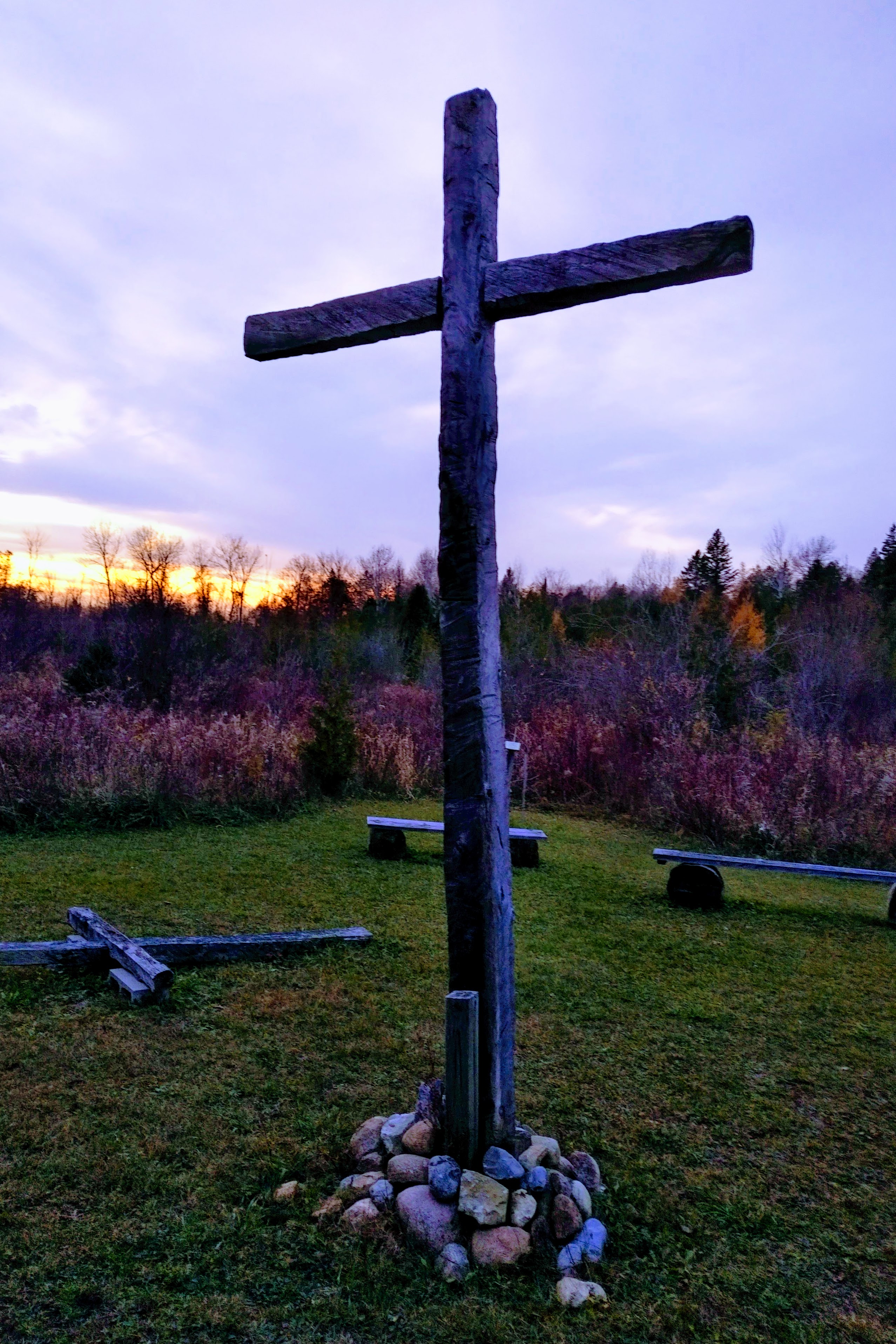
img_20211111_1625240

Photo by David Kitz

Pilate took a seat on the throne of judgment, which had been brought out for him by two attendants. Raising the scroll in his left hand, he asked, “What charges are you bringing against this man?”
It was clear from this gesture that he was referring to the charges written on the scroll he now clutched in his hand. Undoubtedly he had read these charges himself, and in all likelihood had discussed them
with the assessor standing to his right. But he wanted the high priest to articulate them. “If he were not a criminal, we would not have handed him over to you,” Caiaphas said with a huff.
A rather cheeky response, I thought.
“Take him yourselves and judge him by your own law,” Pilate answered.
Here Annas interjected, “But we have no right to execute anyone.”
A devious response if there ever was one. The temple, in fact, routinely acted as both judge and executioner in religious matters and had been granted full authority to do so. Death by stoning was commonplace. I had witnessed Annas himself cast the first stone at some hapless adulteress within the first week of my arrival here ten years ago. No, the temple had the right to execute, and these crafty fellows could surely find grounds to execute this man. They just didn’t want the blood on their hands. They did not want to be blamed for the death of this rabbi. For many he had become the hope of the nation. No, they wanted us to do the job, to act as their executioners. They wanted him judged and executed under Roman law. What Caiaphas said next made this abundantly clear.
“We have found this man”—he aimed a bony finger at Jesus—“subverting our nation. He opposes payment of taxes to Caesar and claims to be Messiah, a king.”
Now here was a capital offense—a capital offense under Roman law.
The Weasel had backed the Badger into a corner, and he was relishing the moment. These charges would need further examination. But Pilate would not proceed in full view of a gloating high priest, urged on by his consorts and a handpicked audience. He retreated.
He abruptly arose from his throne, fixed his eyes on me, and said, “Bring the man.” He motioned with a jerk of his head toward the great doors behind us and then marched off into his residence.
I stepped down to escort Jesus, but he was already in motion. It became clear that the steps were painful for him. I put my hand to his elbow.

4485 SHARABLE-1

To download a free study guide for this high-impact, bible-based novel visit: https://www.davidkitz.ca/centurion.php/free study guide PDF

To purchase or for a closer look at this 5 star biblical account click here. Or here.

Excerpt 17 from The Soldier Who Killed a King

11 Monday Apr 2022

Posted by davidkitz in Books by David Kitz

≈ Leave a comment

Tags

Caiaphas, crucify, Jesus, Messiah, Pilate

A journey to the cross is a journey to repentance. It’s a journey to deep personal change. Will you take this journey with me?

Date: Eight forty in the morning, Friday, April 7 30A.D.
The trial of Jesus ends. The verdict is delivered.
Characters: Pontius Pilate (the Badger), Caiaphas (the Weasel)

Pilate was already seated, ready to pronounce judgment. A thin smile was now on his face. The cunning Badger would make the most of his final moves. When Jesus was in position, he began. Once more he motioned in the direction of the Christ, and to all assembled he announced, “Here is your king.”
“Take him away!” came the instant response. “Take him away! Crucify him!”
There was vehement insistence coming from the crowd. Some began to hurl dust in theBiblical fiction winner 2017 air. This was verging on a riot, a point that was surely obvious to the governor, yet he played them on.
“Shall I crucify your king?” Pilate called back to the throng.
“We have no king but Caesar,” the Weasel spat back.
The Badger’s eyebrows shot up.
The governor smiled and nodded. It was a smile of triumphant satisfaction. We have no king but Caesar. The Badger mulled over these words. I knew he had waited years for these words. After all he had endured in this place, wasn’t it well worth hearing this confession from the high priest’s mouth?
Ironically, the governor had Jesus to thank for the high priest’s sudden conversion and submission to imperial Rome. This declaration would never have come forth from the Weasel’s lips, except to secure the conviction of the good Galilean. Caiaphas was willing to stoop before Rome in order to spill the blood of this prophet. Here was the true measure of his hatred for the Northern Messiah.
Pilate knew all this, and he drew a good measure of perverse satisfaction from it. He understood his foe.
He called for his personal attendant to bring a basin of water. Now he would lay the blame where the bloody blame belonged. With the attendant holding the basin before him, Pilate made a great show of washing his hands before the crowd, and with insistence in his voice, he declared, “I am innocent of the blood of this man.”
Here was the feint, the great pretend.
Next came the dodge.
With water still dripping from his hands, he looked out over the crowd and declared, “You yourselves see to it.”
He spoke as though he had abdicated—bore no responsibility for the blood that now trickled down Jesus’s back. He absolved himself of that and of all that would soon flow on Golgotha.
This Badger could throw a bit of dirt.
Free WW-e FACEBOOK-2 (2)
It was fitting for Annas the aged priest to respond. It was he who answered for the people. With his finger pointed at Jesus and his gaze fixed on him, he replied, “His blood be on us.” Then he paused as though looking down through the generations of time. “And on our children,” he added with a cold, sardonic stare.
Out on the street the people answered, “Yes!” They nodded their agreement with this verdict.

American readers click this link to purchase The Soldier Who Killed a King.

Canadian readers click this link to purchase The Soldier Who Killed a King directly from the author.

Excerpt 14 from The Soldier Who Killed a King

08 Friday Apr 2022

Posted by davidkitz in Books by David Kitz

≈ Leave a comment

Tags

Caiaphas, Jesus, king, Messiah, Pilate

A journey to the cross is a journey to repentance. It’s a journey to deep personal change. Will you take this journey with me?

Date: Seven in the morning, Friday, April 7 A.D.
Jesus trial before Pontius Pilate continues.

In due course we all resumed our previous positions. At this point I fully expected Pilate to pronounce the prisoner guilty of high treason. After all, this Messiah had freely confessed to being a king. But I can only guess that Jesus’s words did have an impact on the governor. Upon taking his seat, Pilate announced, “I find no basis for a charge against him.”
A murmur arose from beyond the pikemen.
Caiaphas was livid. He let fly with a torrent of accusations, the last of these being that Jesus had threatened to destroy the temple and then rebuild it in three days.
Showing extraordinary patience, Pilate let the high priest rage. When Caiaphas’s fury was spent, Pilate turned to Jesus and asked, “Don’t you hear the testimony they are bringing against you?”
Free WW-e FACEBOOK-2 (2)
But Jesus answered him not a word. His silence itself became a challenge. Pilate had cleared him. Why should he answer to these further allegations?
Though stunned by this silence, Pilate repeated his position. “I find no basis for a charge against him.”
Once again discontent began to rumble through the crowd on the street.
At this point I expected the trial to end and the prisoner to be released. Let the crowds rage. Rome had spoken.
But Annas stepped smartly into the breach. “He stirs up the people all over Judea by his teaching. He started in Galilee and has come all the way here.”
“Is he a Galilean?” Pilate asked. “Under Herod’s jurisdiction?”
“Yes,” the flustered Caiaphas confessed, not knowing where this questioning might lead. “Then to Herod he should go,” was Pilate’s prompt response. “Why drag me into this?” He sneered at the high priest.
The governor seemed weary of the whole affair, and for the third time that morning, he found a way to dodge and retreat.
This trial was over.
The dark-eyed Badger rose from his judgment seat. He walked over to Jesus, the accused, and with a rather cunning smile and a nod, he said, “Off to Herod you will go, man of truth.”

American readers click this link to purchase The Soldier Who Killed a King.

Canadian readers click this link to purchase The Soldier Who Killed a King directly from the author.

Excerpt 13 from The Soldier Who Killed a King

07 Thursday Apr 2022

Posted by davidkitz in Books by David Kitz

≈ Leave a comment

Tags

Jesus, king, kingdom, Pilate

A journey to the cross is a journey to repentance. It’s a journey to deep personal change. Will you take this journey with me?

Date: Six fifty in the morning, Friday, April 7 A.D.
Jesus trial before Pontius Pilate continues.

When we entered the judgment hall, the dark-eyed Badger was seething. He knew Caiaphas was using him. He had said so to the assessor. He let fly a string of profanity. “He has me trapped!” he snarled. “Trapped like a rat in a stone water jar.” And with that he tossed the list of charges onto his desk.
James ThtThen he turned to Jesus in the center of the room. He looked him over, walked fully around him. Pilate sighed and nervously ran his fingers through his thinning hair. He made a smacking sound with his lips and asked, “Are you the king of the Jews?”
“You have said so,” came his equivocal answer.
This answer left the governor rocking on his heels. He brought a finger to his lips in pensive thought.
Jesus was not making an acquittal any easier.
But after a moment Jesus continued. “Is that your own idea, or did others talk to you about me?”
“Am I a Jew?”
Pilate shot back with an ample measure of haughty contempt. “Your own people and chief priests handed you over to me.” He continued the questioning. “What is it you have done?”
“My kingdom is not of this world,” Jesus said, and to drive home this point, he added, “If it were, my servants would fight to prevent my arrest by the Jewish leaders. But now my kingdom is from another place.”
Certain words that Claudius had spoken came echoing back into my mind. He had been convinced that this kingdom Jesus spoke of was somehow different from kingdoms as we know them. Now I heard it from this would-be Messiah’s mouth. He was no armed insurrectionist, and he had offered the actions of his followers as proof.
But Pilate seized on that word—kingdom. “You are a king, then!” Pilate deduced.
With calm, clear deliberation the prophet spoke. “You say that I am a king. In fact, the reason I was born and came into the world is to testify to the truth. Everyone on the side of truth listens to me.”
It almost seemed from this response that Jesus was operating from, and speaking on,Biblical fiction winner 2017 some higher plane—a dimension I had witnessed him operate from during the healings at the temple. He was inviting Pilate to join him in discovering this higher ground of truth.
Pilate would not be moved. They were speaking past each other.
“What is truth?” Pilate shrugged. The question was rhetorical. He had no intention of being dragged into a philosophical discussion with this prophet of the Jewish masses. Once again, the Badger retreated.
Grabbing the list of charges from off his desk, he motioned for us to follow him back outside.

American readers click this link to purchase The Soldier Who Killed a King.

Canadian readers click this link to purchase The Soldier Who Killed a King directly from the author.

Excerpt 12 from The Soldier Who Killed a King

06 Wednesday Apr 2022

Posted by davidkitz in Books by David Kitz

≈ Leave a comment

Tags

Caiaphas, executioner, Jesus of Nazareth, Messiah, Pilate

A journey to the cross is a journey to repentance. It’s a journey to deep personal change. Will you take this journey with me?

Date: Six thirty in the morning, Friday, April 7 A.D.
Jesus trial before Pontius Pilate begins.

The governor peered over the heads of the men directly in front of him. He scanned the assemblage on the street, took in the significance of it all, and then cleared his throat. “Where is the man?”
Jonathon turned quickly. On reaching the first step, he beckoned beyond our pikemen to three of his own temple guards, who then advanced with their prisoner—Jesus of Nazareth.
Picture Cent-helmetHe was a mess, almost unrecognizable. His hair was matted. He had been spat upon. The spittle was drying in his beard. There were red welts on his face and neck, a blood-oozing gash above his left eye, a discernable limp to his gait.
It was apparent that during the night they’d had their way with him.
He was escorted to a position directly before me. Intuitively I knew he was my man now, my charge.
A twitch of Pilate’s eyebrow hinted his surprise at the condition of the man.
“Loose him,” he directed with a slight wave of his hand.
Two temple guards hastened to unfasten the leather strap binding Jesus’s arms to his torso. The third man freed the prisoner’s hands. With a second wave of his hand, Pilate dismissed the temple guards, who repositioned themselves on the first step and stood facing the proceedings.
Pilate took a seat on the throne of judgment, which had been brought out for him by two attendants. Raising the scroll in his left hand, he asked, “What charges are you bringing against this man?”
It was clear from this gesture that he was referring to the charges written on the scroll he now clutched in his hand. Undoubtedly he had read these charges himself, and in all likelihood had discussed them
with the assessor standing to his right. But he wanted the high priest to articulate them. “If he were not a criminal, we would not have handed him over to you,” Caiaphas said with a huff.
A rather cheeky response, I thought.
“Take him yourselves and judge him by your own law,” Pilate answered.
Here Annas interjected, “But we have no right to execute anyone.”
A devious response if there ever was one. The temple, in fact, routinely acted as bothbiblical-fiction-award-2017_orig judge and executioner in religious matters and had been granted full authority to do so. Death by stoning was commonplace. I had witnessed Annas himself cast the first stone at some hapless adulteress within the first week of my arrival here ten years ago. No, the temple had the right to execute, and these crafty fellows could surely find grounds to execute this man. They just didn’t want the blood on their hands. They did not want to be blamed for the death of this rabbi. For many he had become the hope of the nation. No, they wanted us to do the job, to act as their executioners. They wanted him judged and executed under Roman law. What Caiaphas said next made this abundantly clear.
“We have found this man”—he aimed a bony finger at Jesus—“subverting our nation. He opposes payment of taxes to Caesar and claims to be Messiah, a king.”
Now here was a capital offense—a capital offense under Roman law.
The Weasel had backed the Badger into a corner, and he was relishing the moment. These charges would need further examination. But Pilate would not proceed in full view of a gloating high priest, urged on by his consorts and a handpicked audience. He retreated.
He abruptly arose from his throne, fixed his eyes on me, and said, “Bring the man.” He motioned with a jerk of his head toward the great doors behind us and then marched off into his residence.
I stepped down to escort Jesus, but he was already in motion. It became clear that the steps were painful for him. I put my hand to his elbow.

American readers click this link to purchase The Soldier Who Killed a King.

Canadian readers click this link to purchase The Soldier Who Killed a King directly from the author.

Excerpt 11 from The Soldier Who Killed a King

05 Tuesday Apr 2022

Posted by davidkitz in Books by David Kitz

≈ 3 Comments

Tags

Caiaphas, high priest, Messiah, Passover, Pilate

A journey to the cross is a journey to repentance. It’s a journey to deep personal change. Will you take this journey with me?

Date: Five forty-five in the morning, Friday, April 7 A.D.
In today’s reading, a messenger from Pontius Pilate arrives at the home of Marcus Longinus, the Roman centurion, with the news that Jesus has been arrested.

“Sir, I have just come from the governor. You are to report to the Praetorium immediately. Jesus of Nazareth has been arrested. The high priest has brought him before the governor for judgment.”
“Is that so?” I said in a state of consternation. “Who sent you?”
“The governor himself. He said you were familiar with the Galilean.”
I blew a short puff of air through my nostrils. All of Jerusalem was somewhat familiar with the Galilean.
“So he wants me there immediately?”
“Immediately, sir.” He shifted from one foot to the other and then, as if to justify thisCentur. Sw response, he added, “The high priest and a big delegation, maybe three hundred men, maybe more, arrived at the palace door at first light. They had the prisoner—Jesus—with them.”

“Tell the governor I’m on my way.”
With a quick nod of my head, I dismissed the messenger. Instantly he turned and began his run back to the governor’s residence. I took one step back inside the gate and began barking orders.
“You, you, and you!” I stabbed my index finger in the direction of the most dressed and prepared-looking soldiers. “Strap on your swords and follow me. Now!”
Then, addressing the other soldiers, I announced, “The rest of you, meet me at the Praetorium as soon as you are ready.”
“Claudius”—I nodded in his direction—“you are in charge. I’ll give everyone their assignment for the day when they get there.”
I stepped back through the gate and began covering the ground with long, quick strides. My three recruits had to run to catch up. With each stride a new thought came jogging into my head. Stupid Arius! Why didn’t he tell me the messenger was from Pilate? I would have moved a good deal faster.
Obviously my concerns about the prophet had moved up the chain of command. Flavio must have informed Pilate about my worries and the actions I had taken, hence this unusual move—a direct summons by the governor. I harbored the hope that he would consult directly with me on the matter. Three hundred men! Three hundred men at first light? The Weasel must have had a busy night. It takes a good deal of effort to set your troops in array. Caiaphas must have been hatching this plot for a good long while. 4485 TWITTER
But the Weasel caught his prey! What a sweet bit of treachery that must have been. I wondered how he pulled that off. Now the high priest would move in for the kill. We would see if he could slaughter his own Passover lamb. The people! If the pilgrims, especially the Galilean pilgrims, knew their Messiah had been seized, there could be a mass revolt. That must be why the Weasel had done his dirty work in the dark of the night. And furthermore, he had played out this drama at the zenith of the festival, while minds and hearts were on faith, home, and family. Here was a cunning scheme worthy of the Fox, played out by the Weasel.
Undoubtedly most of the population would still be unaware of these developments, even as I had been caught off guard. Off guard but not surprised. I could smell this coming.
My conversation with Renaldo at the bathhouse came echoing back. It gave me an eerie feeling knowing I had spoken like some prophetic oracle. It made me wonder from where that insight had really come.
“By Jupiter! I forgot the spikes.” I wheeled around while reaching out my hand to halt the soldier at my side. Addressing him directly, I said, “I forgot them—the spikes. They’re in a pouch hanging on a peg in my bedchamber. My wife, she’ll know where they are. Ask her to get the pouch for you. Then bring it to me at the Praetorium. Oh, and tell the other men to hurry. This is urgent.” I fixed my eyes on him to stress the importance of this last statement and then added, “Now run.”

American readers click this link to purchase The Soldier Who Killed a King.

Canadian readers click this link to purchase The Soldier Who Killed a King directly from the author.

Excerpt from The Soldier Who Killed a King

13 Sunday Mar 2022

Posted by davidkitz in The Soldier Who Killed a King

≈ 5 Comments

Tags

healed, Herod, Jesus of Nazareth, Pilate

A journey to the cross is a journey to repentance. It’s a journey to deep personal change. Will you take this journey with me?

In today’s reading, Marcus meets with his fellow centurion and friend, Renaldo. Renaldo has just seen the young boy Lucas who was healed in the temple courts on the previous day by Jesus of Nazareth.

“Marcus! Marcus!”
I spun around to see Renaldo emerging from the gateway stairway.
“Hey, Marcus! You were right. That boy really was healed.”
He voiced the words with such bald enthusiasm that I was completely disarmed.
“I just saw him. He was here—here at the gate.” He gestured down the gateway parapet4485 SHARABLE-2 to a point below us. “I saw him. I examined his leg. It’s completely healed. Just like the other one. It’s incredible!” he enthused. “He can jump! And run!”
“I told you. I told you, Renaldo,” I said while shaking my head.
“Yeah, but you don’t expect it,” he said as he justified his unbelief. “I mean, this kid’s been like this from birth. You see him the same way, day after day. And then one day . . . Boom! He’s completely different.”
“I told you. You didn’t believe me?” I uttered the words with a certain smug satisfaction.
“Well, you don’t expect it,” he repeated. “I mean, it’s one thing to hear it, but it’s quite something else to see it for yourself.”
“That’s exactly what I was trying to tell you. I said you’ve got to see this for yourself to understand.”
I sighed. Now I was beginning to realize why I wasn’t getting through.
“So it was Lucas,” I stated.
“It was Lucas!” Renaldo confirmed, shaking his head in a state of incredulous wonderment.
I changed the topic.
“Look, Renaldo, I would like to talk with you more about this, but we’ve both got some work to do. Word has just come in to Flavio. Herod has accepted Pilate’s invitation. He’ll be going directly to the Praetorium. Arriving at four. The Fish Gate route needs to be cleared. You know those temple traders have set up shop in there, and you’ve got to get them out. And the sooner, the better. Flavio says that’s your sector, so you’re on.” Renaldo took all this in stride. “Sure, Marcus. I’ll get right on it.”
I turned from him, but he called after me.
“Marcus. We need to talk more about this Jesus—this Jesus of Nazareth.”

American readers click this link to purchase The Soldier Who Killed a King.

Canadian readers click this link to purchase The Soldier Who Killed a King directly from the author.

Kingdom Conquests

04 Friday Mar 2022

Posted by davidkitz in Psalm 68, Psalms

≈ 3 Comments

Tags

hymn of triumph, Pilate, The King

Reading: Psalm 68:24-31
Your procession, God, has come into view,
the procession of my God and King into the sanctuary.
In front are the singers, after them the musicians;
with them are the young women playing the timbrels.
Praise God in the great congregation;
praise the L
ORD in the assembly of Israel.
There is the little tribe of Benjamin, leading them,
there the great throng of Judah’s princes,
and there the princes of Zebulun and of Naphtali.
Summon your power, God;
show us your strength, our God, as you have done before.
Because of your temple at Jerusalem
kings will bring you gifts.
Rebuke the beast among the reeds,
the herd of bulls among the calves of the nations.
Humbled, may the beast bring bars of silver.
Scatter the nations who delight in war.
Envoys will come from Egypt;
Cush will submit herself to God
(NIV).*

img_20220215_1413366

Cross-country ski trail — Photo by David Kitz

Reflection
All of Psalm 68 is a hymn of triumph—national triumph. In today’s reading it is apparent this psalm is a triumphant processional song penned by David. The enemies of Israel have been vanquished and God’s army has returned victorious.

For Christians today, does this psalm hold a deeper significance? Does it signify more than a celebration after a military conquest?

The King we serve—the one born in a stable—didn’t come to establish an earthly kingdom by means of guns and war. In his defence before Pilate Jesus said, “My kingdom is not of this world. If it were, my servants would fight to prevent my arrest by the Jewish leaders. But now my kingdom is from another place” (John 18:36).

Make no mistake; Jesus calls us to be citizens in his heavenly Kingdom. It is a Kingdom headquartered in heaven, but its address on the earth is the human heart—your heart—my heart. Furthermore, that Kingdom grows in power and influence as we yield our will to God and joyfully become more like His son, Jesus. For followers of Jesus, battles are won as we submit our will to God.

There are nations—Egypt and Cush (the upper Nile region) mentioned in today’s reading. They will submit themselves to God. But for us today, submission must first come from our own stubborn heart.

Response: LORD God, I yield my will to you. Conquer my heart with your love. Through Jesus sacrifice on the cross I am yours. Help me to joyfully live as a productive citizen of your Kingdom on earth. Amen.

Your Turn: Have you been conquered by the love of God? Where is your primary citizenship?

* NEW INTERNATIONAL VERSION, COPYRIGHT ©1973, 1978, 1984, 2011 BY BIBLICA

BGBG_v4.3_150[1818]

Volume I of Psalms 365: Develop a Life of Worship and Prayer has won the 2021 Best Book of the Year Award and for those who love God’s word, it’s an ideal way to daily meet with the Lord. For a closer look at Volumes II and III click here.

← Older posts

Psalms 365: Develop a Life of Worship and Prayer

Psalms 365 Volume II

Psalms 365 vol 3
— Psalms 365 Volume III

Psalms

Recent posts

  • A Horn of Salvation December 19, 2025
  • Ready for the King of Glory December 19, 2025
  • My Spirit Rejoices in God My Savior December 18, 2025
  • Joining the Generation That Seeks God December 18, 2025
  • Why Am I So Favored December 17, 2025
  • How Can You Find the Good Life? December 17, 2025
  • The Power of the Most High December 16, 2025

Calendar

December 2025
M T W T F S S
1234567
891011121314
15161718192021
22232425262728
293031  
« Nov    

Blog Posts

Comments

  • davidkitz on Joining the Generation That Seeks God
  • cjsmissionaryminister on God Sent His Son
  • cjsmissionaryminister on The God of the Broken

Blog at WordPress.com.

Privacy & Cookies: This site uses cookies. By continuing to use this website, you agree to their use.
To find out more, including how to control cookies, see here: Cookie Policy
  • Subscribe Subscribed
    • I love the Psalms
    • Join 1,377 other subscribers
    • Already have a WordPress.com account? Log in now.
    • I love the Psalms
    • Subscribe Subscribed
    • Sign up
    • Log in
    • Report this content
    • View site in Reader
    • Manage subscriptions
    • Collapse this bar
 

Loading Comments...