Tags
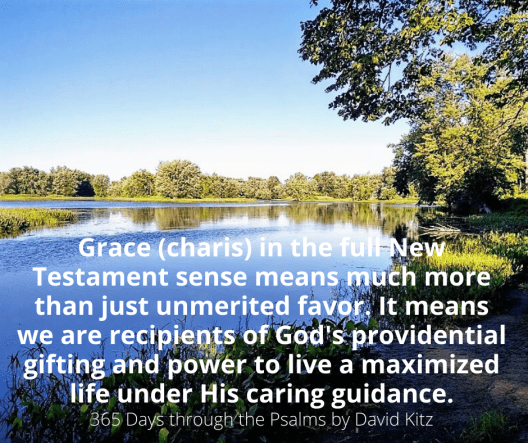
May God’s grace rest upon you.

25 Saturday Jul 2020
Posted in Psalms
Tags
May God’s grace rest upon you.
22 Wednesday Jul 2020
Tags
Reading: Psalm 40
(Verses 11-17)
Do not withhold your mercy from me, LORD;
may your love and faithfulness always protect me.
For troubles without number surround me;
my sins have overtaken me, and I cannot see.
They are more than the hairs of my head,
and my heart fails within me.
Be pleased to save me, LORD;
come quickly, LORD, to help me.
May all who want to take my life
be put to shame and confusion;
may all who desire my ruin be turned back in disgrace.
May those who say to me, “Aha! Aha!”
be appalled at their own shame.
But may all who seek you rejoice and be glad in you;
may those who long for your saving help always say,
“The LORD is great!”
But as for me, I am poor and needy; may the LORD think of me.
You are my help and my deliverer; you are my God, do not delay (NIV).*

Photo by RUN 4 FFWPU on Pexels.com
Reflection
David begins Psalm 40 by praising the LORD for rescuing him from the slimy pit of the past. But David ends this psalm with a fresh appeal for God’s mercy. Do not withhold your mercy from me, LORD may your love and faithfulness always protect me.
As we move forward, it is only fitting that we take time to praise God for what He has done for us in the past. Let us never forget that the LORD’s faithfulness has brought us to this point. We are not where we are today because of our own cleverness, effort or ability. Every talent we have is a gift from God; every breath we take is a gift from the Giver of Life.
Yet again David appeals for God’s salvation. Be pleased to save me, LORD; come quickly, LORD, to help me.
By the grace of God I have experienced an initial point of salvation, just like David, but my salvation needs to be renewed from time to time. We all need to experience fresh surges of God’s grace and love. Grace (charis) in the full New Testament sense means much more than just unmerited favor. It means we are recipients of God’s providential gifting and power to live a maximized life under His caring guidance. There’s something supernatural about grace. It goes beyond human ability or ingenuity because it comes from the LORD, the Maker of heaven and earth. When we call out to God as David did, we are tapping into an ocean full of help, strength and possibilities beyond fathoming.
May that grace, that charis of God, be with you and upon you in the days ahead.
Response: LORD God, I need you as I face the days ahead. Equip me with divine grace and ability for each day through the love and power of Jesus. Amen.
Your Turn: Have you experienced God’s grace in the past week—the past year?
This post by award-winning author David Kitz will be published in book format later in 2020 by Elk Lake Publishing under the title 365 Days through the Psalms.
06 Monday Jul 2020
22 Monday Apr 2019
Posted in Devotionals, Psalm 62, Psalms
Tags
death, power, resurrection, unchanging, unfailing love, values, wealth
Reading: Psalm 62
(Verses 9-12)
Surely the lowborn are but a breath,
the highborn are but a lie.
If weighed on a balance, they are nothing;
together they are only a breath.
Do not trust in extortion
or put vain hope in stolen goods;
though your riches increase,
do not set your heart on them.
One thing God has spoken,
two things I have heard:
“Power belongs to you, God,
and with you, Lord, is unfailing love”;
and, “You reward everyone
according to what they have done” (NIV).

Sunset on the Ottawa River — photo by David Kitz
Reflection
In this life that we have been given, what things are solid? What things are sure? Not much according to the psalmist, David.
Our station in life is just a fabricated lie. At heart, the highborn are no different than the street pauper. We breathe the same air, suffer the indignities of aging, and our bodies are fated for death and decay. In his epistle, James makes our fate quite clear. What is your life? You are a mist that appears for a little while and then vanishes (James 4:14b).
As for this world’s wealth, it has no lasting value. Here is sound advice—advice from this psalm that you won’t get from a financial planner: though your riches increase, do not set your heart on them.
What then should we do? How should we live? Live in the light and knowledge of eternity and the One who holds eternity in His hands. David reminds us God will…“reward everyone according to what they have done.”
In other words, how we live matters. It matters for now and eternity. That knowledge should inform and give shape to all that we say and do. But there are two additional truths that should bring meaning to our lives. One thing God has spoken, two things I have heard: “Power belongs to you, God, and with you, Lord, is unfailing love.”
God alone has the power of life, death and resurrection. And in Jesus, He demonstrated his unfailing power and love for every man, woman and child on this planet. On the cross Jesus showed his unfailing love. Other loves—human loves—may fail us, but God’s love stands firm and unwavering. In a changing world of eroding values our LORD remains firm and immovable.
Response: LORD God, thank you for the unfailing love of Jesus. You love me even when I have failed and despite my shortcomings. Help me live my life in the light of eternity. Amen.
Your Turn: Is God’s love a motivator for you to change your ways, since He never changes?
13 Saturday Apr 2019
Posted in poetry
An Awakening
by David Kitz
I awoke…
rolled out of bed…
and there they were.
Three nails…
three nails lying on the carpet…
at my feet.
How did they get there?
I have no idea.
Why three nails?
Why not six
or five or two?
What can you do with three nails?
Not much I guess?
Except…
Except…
I know this carpenter
that saved the world
with just
three nails.
07 Thursday Feb 2019
Tags
Reading: Psalm 37
Of David
(Verses 1-6)
Do not fret because of those who are evil
or be envious of those who do wrong;
for like the grass they will soon wither,
like green plants they will soon die away.
Trust in the LORD and do good;
dwell in the land and enjoy safe pasture.
Take delight in the LORD,
and he will give you the desires of your heart.
Commit your way to the LORD;
trust in him and he will do this:
He will make your righteous reward shine like the dawn,
your vindication like the noonday sun (NIV).

Take delight in the LORD — photo by David Kitz
Reflection
What are the desires of your heart? What do you want more than anything else? Wealth? Fame? Power and influence? Is this what you want? We all have desires. Some are noble some are not. How we manage and direct our desires fundamentally determines the direction of our lives.
Here in Psalm 37, David compares and contrasts the life of the evil person with the life of the individual who does right in God’s eyes. The differences are stark; this is a night and day comparison. But at its core, everything in life centers on the desires of our heart and how we handle them.
There is a promise embedded in this psalm: Take delight in the LORD, and he will give you the desires of your heart. It’s a promise that is well worth pondering.
Will the LORD grant us our desires if our desires are evil? Most certainly not! In Psalm 34 we read, “The face of the LORD is against those who do evil, to blot out their name from the earth” (Psalm 34:16).
God’s promises are conditional. There is something required of us before the promise can take effect. In this case we are to “Take delight in the LORD.” What does that really mean?
If I take delight in someone, my wife for example, I enjoy being around her. It’s a delight to spend time with her. I take pleasure in the sound of her voice. I pay careful attention to her wishes and desires. Ah, there’s that word again, desires. If I take delight in the LORD, then my desires will align themselves with the LORD’s desires. I’ll be concerned about what He wants. My selfish desires will be tempered by my love for Him. He in turn will grant the desires of my heart because I love Him and want the best for Him and His eternal Kingdom.
It’s easy to get the desires of your heart, if your desires are His desires.
Response: LORD God, help me to delight myself in you. May I love what you love. Help me to recognize when my desires are right and wholesome, and when they are misdirected. I pray in Jesus name. Amen.
Your Turn: How do you keep your desires in check and in line with God?
16 Friday Mar 2018
Tags
Caesar Augustus, Caiaphas, Galilee, Herod Antipas, Herod the Great, Herodias, kings, Messiah, Pontius Pilate, power, repentance
Date: Mid afternoon on Thursday, April 6th, 30 A.D.
In today’s reading, Governor Pontius Pilate gives a brief speech formally welcoming Herod the tetrarch to Jerusalem.
At last the two mounted commanders arrived before Pilate’s chariot. They were motioned to take their position on either side. After a brief confusion of feet, the royal litter managed to turn sideways so the royal couple could face the governor as he stood upon his imperial chariot. The trumpeters sounded the fanfare. When the last note had echoed off the marble wall, Pilate unrolled the parchment handed to him by an attendant. He cleared his throat and began his oration.
“It was under the rule of the great and wise Emperor Caesar Augustus that this magnificent temple behind us began to take shape. He recognized the desire of the Jewish people for a central place to worship. It was Herod the great Idumean king who oversaw the construction of this masterpiece of the empire, and today it stands as a symbol of Roman respect for the unity and diversity of all the peoples of the empire. It is only fitting today that I, as the emperor’s representative, welcome the son of this master builder, Herod Antipas, the tetrarch of Galilee and Perea.”
With a wave of his hand, Pilate signaled the sounding of a second trumpet fanfare. As the first note was sounded, he stepped off the chariot and then graciously lent a hand to his wife. Thus accompanied by his mate, he swaggered over to the royal litter to personally greet Herod and Herodias, who both stood to meet them.
Greetings were exchanged, none of which I could discern from a distance. After a brief discussion Claudia joined Herodias in the royal litter. Herod barked out some orders. The litter bearers stood to their feet and headed off in the direction of the governor’s residence. Apparently the ladies would have their own time together.
At a leisurely pace Pilate escorted Herod over to where the priestly delegation waited.
It was an unusual sight, these three hostile, inflated men exchanging greetings and meaningless pleasantries. Herod Antipas, Pontius Pilate, and Joseph Caiaphas; the Fox, the Badger, and the Weasel. All three were kings in their own right, within their own jurisdiction. All three craved more power, absolute power, while fiercely holding one another in check.
Pilate turned to me and gave a quick, tight nod. I signaled up to Claudius, and the great Golden Gate, the Messiah Gate, was hoisted, granting entrance to the three competing kings.
Only the fourth king, the people’s king—the donkey king—only he was absent.
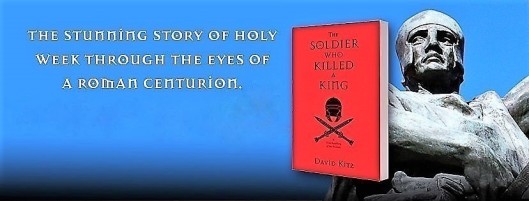
American readers click this link to purchase The Soldier Who Killed a King.
Canadian readers click this link to purchase The Soldier Who Killed a King directly from the author.
14 Wednesday Mar 2018
Posted in Books by David Kitz, Christ's Passion, Lent, Mid-Week Medtiation
Tags
blind, demon, God, Jesus, Jewish, king, Kingdom of God, Messiah, miraculous, Pool of Siloam, power, repentance
In today’s reading, Marcus, the centurion, rides back into Jerusalem on horseback. As he rides his mind turns over his thoughts about Jesus of Nazareth. Date: Near noon on Thursday, April 6th, 30 A.D.
We continued on to the fortress, but my mind was on the Northern Messiah. His penetrating eyes haunted my thoughts. There was a power there that I had no ability to fathom. I was reminded of Ruth’s words. Ruth was one of our household servants, a Jewish girl. When at the supper table I had told Zelda about Jesus and his miraculous powers, Ruth’s eyes brightened. I asked her if she knew anything about this man.
 “Oh, yes,” she’d said. “Almost a year ago he healed a blind beggar from the Lower City. Jesus made some mud, put it on the beggar’s eyes, and sent him to wash in the Pool of Siloam. When he washed, he could see. It was a miracle. I’ve seen this man myself. I know it’s true,” she earnestly avowed.
When I’d asked her about this power Jesus had and where it came from, she bowed her head and answered, “From God.”
But she seemed somehow uncomfortable with her answer. She added, “It must be from God. He does good things. But our leaders aren’t sure. They think it may be demon power. But demons don’t heal the sick.”
Maybe the religious leaders were right. Maybe it was demonic power that made the blind see. It seemed preposterous. But why had I heard this voice? Why did this man trouble me so? Thinking of him seemed to stir up nothing but torment within me, and I didn’t even know why. I felt strangely attracted to him, yet at the same time repelled.
Then there was this talk about the kingdom of God. Maybe Timaeus was right about this prophet. The words of the wealthy merchant came back to me: “You don’t talk about a kingdom in this place and get away with it. Rome will see to that!”
Maybe we would see to it. Maybe we should see to it soon. But Jesus’s enemies were the same pompous, self-serving leaders I despised. He had aligned himself with the common man, with the poor, the oppressed, the sick and suffering. And he didn’t just champion their cause for personal benefit like some crass politician lobbying for the emperor’s favor. No, he healed them. He fed them. He walked with them, ate with them. He was one of them. He was their king, whether he wore a crown or not. I saw that clearly when he entered on the donkey. He was the donkey king. A horse would have put him above the crowd. A horse would have meant elevating himself like all the other egotistical men who led in this upside-down world.
In his case others would have to do the elevating.
The meaning of his entry on Sunday came clear to me now. It was a perspective gained from my comfortable perch on the back of my own noble steed.
By the time I reached the fortress for the second time in the week, I resolved to shut this Messiah out of my mind. He didn’t fit any of my categories for human behavior or religious thought. He was beyond understanding, an unwelcome intruder into my city and my thought life.
American readers click this link to purchase The Soldier Who Killed a King.
Canadian readers click this link to purchase The Soldier Who Killed a King directly from the author.
21 Thursday Dec 2017
Posted in Bible, Devotionals, Psalm 70, Psalms
Tags
confession, David, God, Grey Nuns Park, heroes of faith, humble, poor, poor in spirit, power, rich, Shepherd King, station in life, suburban home, the LORD, wealth
Reading: Psalm 70
For the director of music. Of David. A petition.
Hasten, O God, to save me;
come quickly, Lord, to help me.
May those who want to take my life
be put to shame and confusion;
may all who desire my ruin
be turned back in disgrace.
May those who say to me, “Aha! Aha!”
turn back because of their shame.
But may all who seek you rejoice and be glad in you;
may those who long for your saving help always say,
“The LORD is great!”
But as for me, I am poor and needy;
come quickly to me, O God.
You are my help and my deliverer;
LORD, do not delay (NIV).
Reflection
When I consider my situation—my station in life—I would not call myself poor, but neither would I say I am rich. I live in a comfortable suburban home. It’s no mansion, but we are mortgage free. I have income that covers our expenses with a little left over at the end of the month. We can afford one major trip each year, as long as we do a little penny pinching along the way. Our eight-year-old car will need to be replaced at some point, but for now it’s doing just fine. I have no worries about retirement.
![IMG_20170325_071742[151]](https://davidkitz.blog/wp-content/uploads/2017/03/img_20170325_071742151.jpg?w=529)
Snow covered tree in Grey Nuns Park — photo by David Kitz
David did not see himself that way. Hear his confession—his desperate prayer: But as for me, I am poor and needy; come quickly to me, O God. You are my help and my deliverer; LORD, do not delay.
We don’t know at what point in his life David penned this humble petition. We know that the Shepherd-King of Israel was a man of humble origin, but he also ruled as King of Judah for seven years and for all of Israel for another thirty-three years. From the midpoint of his life onward, he was a man of wealth and power, but his humility remained. Like authoritarian rulers throughout the ages, he could have had his personal history cleansed of such self-effacing pleas for mercy, but David chose a different path. He let the record stand. Perhaps like other heroes of our faith he was looking for a better country—a better kingdom. See Hebrews 11:16.
Jesus said, “Blessed are the poor in spirit, for theirs is the kingdom of heaven” (Matthew 5:3). Some poverty and humility of spirit might be fitting for me as well. How about you?
Response: LORD God, I don’t want to live the life of the self-satisfied. You are my treasure and my very great reward. I am needy—in constant need of you. Come quickly to me, O God. Amen.
Your Turn: Are you poor in spirit? How do we remain poor in spirit even when we are blessed financially or in other ways?
24 Friday Nov 2017
Posted in Bible, Devotionals, Psalm 62, Psalms
Tags
David, eroding values, financial planner, God, God's love, Green's Creek, James, Jesus, Ottawa River, power, power of God, the LORD, uncertainty, uncertainty of wealth, unfailing love
Reading: Psalm 62
(Verses 9-12)
Surely the lowborn are but a breath,
the highborn are but a lie.
If weighed on a balance, they are nothing;
together they are only a breath.
Do not trust in extortion
or put vain hope in stolen goods;
though your riches increase,
do not set your heart on them.
One thing God has spoken,
two things I have heard:
“Power belongs to you, God,
and with you, Lord, is unfailing love”;
and, “You reward everyone
according to what they have done” (NIV).
Reflection
In this life that we have been given, what things are solid? What things are sure? Not much according to the psalmist, David.
![IMG_20171121_154656_hdr[1748]](https://davidkitz.blog/wp-content/uploads/2017/11/img_20171121_154656_hdr1748.jpg?w=529)
Setting sun at Green’s Creek Point on the Ottawa River — photo by David Kitz
As for this world’s wealth, it has no lasting value. Here is sound advice—advice from this psalm that you won’t get from a financial planner: though your riches increase, do not set your heart on them.
What then should we do? How should we live? Live in the light and knowledge of eternity and the One who holds eternity in His hands. David reminds us God will…“reward everyone according to what they have done.”
In other words, how we live matters. It matters for now and eternity. That knowledge should inform and give shape to all that we say and do. But there are two additional truths that should bring meaning to our lives. One thing God has spoken, two things I have heard: “Power belongs to you, God, and with you, Lord, is unfailing love.”
God alone has the power of life, death and resurrection. And in Jesus, He demonstrated his unfailing power and love for every man, woman and child on this planet. On the cross Jesus showed his unfailing love. Other loves—human loves—may fail us, but God’s love stands firm and unwavering. In a changing world of eroding values our LORD remains firm and immovable.
Response: LORD God, thank you for the unfailing love of Jesus. You love me even when I have failed and despite my shortcomings. Help me live my life in the light of eternity. Amen.
Your Turn: Is God’s love a motivator for you to change your ways, since He never changes?

 I love the Psalms