Tags

08 Friday May 2020
08 Friday May 2020
Tags
Reading: Psalm 25
Of David.
(Verses 1-7)
In you, LORD my God, I put my trust.
I trust in you; do not let me be put to shame,
nor let my enemies triumph over me.
No one who hopes in you will ever be put to shame,
but shame will come on those
who are treacherous without cause.
Show me your ways, LORD,
teach me your paths.
Guide me in your truth and teach me,
for you are God my Savior,
and my hope is in you all day long.
Remember, LORD, your great mercy and love,
for they are from of old.
Do not remember the sins of my youth
and my rebellious ways;
according to your love remember me,
for you, LORD, are good (NIV).*

Tulip fields, Abbotsford, BC — photo by David Kitz
Reflection
Shame is often viewed as a very negative feeling, and it is. Some pop psychologists are of the opinion that this emotional response should be completely removed from our lives. They argue it has no useful function, since it often holds us back from exploring and experimenting with new behaviors and activities in the world around us.
However, a life lived without any sense of shame is a life without an active conscience. Those who lack a shame gland soon find themselves trapped in self-destructive behavior that spirals out of control. A sense of shame when we have done wrong can act as the messenger of God calling us to repentance and a change of heart.
Here in this psalm, David pleads with the LORD that he will not be put to shame. That should be our prayer as well. And how can we avoid being put to shame? David gives us the answer. No one who hopes in you [the LORD] will ever be put to shame, but shame will come on those who are treacherous without cause.
If your hope is in the LORD, He will protect you from shame and disgrace. Trusting in God, rather than in ourselves is the point where freedom from shame begins. A humble teachable spirit is what God desires. Because of His great mercy and love, He forgives the sins of our youth and our rebellious ways. Praise the LORD!
Response: LORD, this is my prayer: Show me your ways, LORD, teach me your paths. Guide me in your truth and teach me, for you are God my Savior, and my hope is in you all day long. Amen.
Your Turn: How does trusting in God protect you from experiencing shame?
This post by award-winning author David Kitz will be published in book format later in 2020 by Elk Lake Publishing under the title 365 Days through the Psalms.
01 Tuesday Oct 2019
Posted in Devotionals, Psalm 106, Psalms
Tags
Reading: Psalm 106
(Verses 40-48)
Therefore the LORD was angry with his people
and abhorred his inheritance.
He gave them into the hands of the nations,
and their foes ruled over them.
Their enemies oppressed them
and subjected them to their power.
Many times he delivered them,
but they were bent on rebellion
and they wasted away in their sin.
Yet he took note of their distress when he heard their cry;
for their sake he remembered his covenant
and out of his great love he relented.
He caused all who held them captive to show them mercy.
Save us, LORD our God, and gather us from the nations,
that we may give thanks to your holy name and glory in your praise.
Praise be to the LORD, the God of Israel,
from everlasting to everlasting.
Let all the people say, “Amen!”
Praise the LORD (NIV).

Creek-side trees — photo by David Kitz
Reflection
Have you ever tried to drive in a crooked nail? You are asking for trouble if you make the attempt. If the nail has even a slight bend in it, it will either buckle or be misdirected as it enters the wood. Over the years I have hammered home a lot of nails. And only straight nails stay true.
Today’s final reading from Psalm 106 reminds me of bent nails. The psalmist laments the corrupt ways of the nation of Israel despite the LORD’s mercy and patience. Many times he delivered them, but they were bent on rebellion and they wasted away in their sin.
Many people are like bent nails. Despite many blows—many hard knocks—they refuse to run true. They are bent on rebellion and they waste away in their sin. Their troubles are self-inflicted, but rather than acknowledge their errors, they blame God or others for their circumstances. Repentance or self-correction never enters their mind.
But… But God remains merciful. Yet he took note of their distress when he heard their cry; for their sake he remembered his covenant and out of his great love he relented.
Why would God have mercy on bent nails? Maybe it has something to do with the bent nails that held Jesus, His son, in place on a wooden cross. That’s where mercy flowed down over this bent nail—this flawed human. Oh, what love He showed!
Response: Father God, I give up on understanding your mercy and grace. It’s beyond comprehension. Thank you for loving me despite my sinful bent. Your love is amazing. Thank you, Jesus. Amen.
Your Turn: Is rebellion part of your nature? Can we self-correct or do we need God’s help?
27 Friday Sep 2019
Posted in Devotionals, Psalm 106, Psalms
Tags
Reading: Psalm 106
(Verses 16-27)
In the camp they grew envious of Moses
and of Aaron, who was consecrated to the LORD.
The earth opened up and swallowed Dathan;
it buried the company of Abiram.
Fire blazed among their followers; a flame consumed the wicked.
At Horeb they made a calf and worshiped an idol cast from metal.
They exchanged their glorious God
for an image of a bull, which eats grass.
They forgot the God who saved them,
who had done great things in Egypt,
miracles in the land of Ham and awesome deeds by the Red Sea.
So he said he would destroy them—
had not Moses, his chosen one,
stood in the breach before him
to keep his wrath from destroying them.
Then they despised the pleasant land;
they did not believe his promise.
They grumbled in their tents and did not obey the LORD.
So he swore to them with uplifted hand
that he would make them fall in the wilderness,
make their descendants fall among the nations
and scatter them throughout the lands (NIV).

The Peace Tower was constructed to honour those who died in WWI — photo by David Kitz
Reflection
Annually we pause to commemorate Veterans Day in United States, or Remembrance Day as it is known in Canada. That day was chosen to honor and remember our fallen soldiers because November 11, 1918 marked the end of the First World War. It is fitting that we remember those who sacrificed their lives in the defense of their country and its way of life. To forget them would be a disgrace to them and to the nation. We owe our liberty to these brave men and women. Lest we forget is the oft repeated motto of this day of solemn remembrance.
Though today is not November 11th, today’s reading from Psalm 106 highlights the importance of a nation’s collective memory. Israel was redeemed and set free from slavery in Egypt by the miracle working power of God, yet in a few short years they forgot, or chose to ignore the LORD who rescued them. They forgot the God who saved them, who had done great things in Egypt, miracles in the land of Ham and awesome deeds by the Red Sea.
There are serious consequences for the nation that forgets, or turns its back on the God who called its people out of darkness. The same is true on a personal level. We need to routinely remind ourselves that Jesus paid the ultimate price to redeem us and make us his very own.
Response: Father God, I thank you for my personal redemption. Lead me in the right path for my life. Guide our nation. May there be a collective turning to you in repentance and faith. Amen.
Your Turn: Is there such a thing as national redemption or salvation, or is it always personal?
15 Monday Apr 2019
Posted in Christ's Passion, The Soldier Who Killed a King
To download a free study guide for this high-impact, bible-based novel visit: https://www.davidkitz.ca/centurion.php/free study guide PDF
For book purchases of The Soldier Who Killed a King try Amazon or christianbook.com.
12 Friday Apr 2019
Posted in Lent, The Soldier Who Killed a King
Tags
Date: 10:00 in the morning, Saturday, April 8, 30 A.D.
Marcus Longinus, the Roman centurion, seals Jesus’ tomb in compliance with the orders from Caiaphas, the high priest.
“Look,” I argued. “This is Jesus of Nazareth, if that’s your concern. I saw him taken off the cross”—I motioned in the vague direction of Golgotha—“wrapped in that shroud.”
I pointed to it. “He was carried into this tomb. This is his body.” I put stress on each word.
“Will you swear to that?”
I raised my right hand. “By the emperor’s throne, by the sacred temple, by all that is holy, I will swear.” I spoke with mounting anger.
This assertion appeared to satisfy them.
We walked out of the tomb, and I chose two fresh men to roll the stone back.
Then once more I addressed the high priest’s men. “I didn’t bring any plaster, or water, or a pot to mix it in. I will need to send someone to get these.”
This news was greeted with a disdainful sigh, but they insisted they would wait by the tomb until the job was done. I sent two men off to retrieve the required tools and material, and in due course they returned.
We mixed the fine-powdered plaster with water in an ample-sized iron pot. Using a stonemason’s trowel I scooped the wet, gray plaster over the narrow crevice that separated the rock door from the rock face of the hill. Soon an airtight plaster seal was in place around the giant circular rock door. At two points, one on either side, I affixed the governor’s own stamp into the yet pliable wet plaster.
Any tampering would break this seal and obliterate the imperial stamp.
At last they were satisfied. Caiaphas himself would have approved of this seal.
But then, why was I working for him?
To download a free study guide for this high-impact, bible-based novel visit: https://www.davidkitz.ca/centurion.php/free study guide PDF
For book purchases of The Soldier Who Killed a King try Amazon or christianbook.com.
11 Thursday Apr 2019
Posted in Books by David Kitz, The Soldier Who Killed a King
Date: Eight in the morning, Saturday, April 8, 30 A.D.
Marcus Longinus, the Roman centurion, on his way to set a guard at the tomb, considers the possibility of Jesus rising from the dead.
On the surface I protested being drawn into this, the high priest’s plan of preemptive precaution, but within me, I was filled with dark apprehension. These measures had merit. This guarding of the tomb might well be warranted.
I did not fear his disciples. There had been no sign of them, no sign of armed uprising. No, it was the prophet himself that I feared.
This notion of him rising from the dead did not strike me as all that far fetched. On the surface the Christ’s prediction seemed impossible— utterly impossible—totally preposterous. But then in life he had been a total master of the impossible. The example of the blind Bartimaeus sprang to mind. This Messiah had tossed off miracles like he was tossing off the covers from his bed. Could he now toss off the shroud of death?
There was something far larger at work here. This was more than the raving of a lunatic. Why else would the sun refuse to shine as he hung dying? Why else would the earth shudder with his last breath? No, he was the Son of God. My very own words came back to haunt me. Anything was possible; nothing could be ruled out!
I remembered the worried look I saw on Pilate’s face just this morning, when Annas had raised this matter. Without saying a word I knew we both were of the same mind on this. He too thought a resurrection could occur. Why else his prompt response?
Oh yes, and then there was the rubbing of the hands. Guilt stains are not so easily removed. I should know. After all these years the blond-haired girl still visits me quite regularly on those soul- tormenting nights.
Only the high priest’s men seemed sure of themselves, cocky in their victory, but not cocky enough to throw all caution to the wind. Why else post a guard? But winds can change, and all this might yet blow up in their faces.
To download a free study guide for this high-impact, bible-based novel visit: https://www.davidkitz.ca/centurion.php/free study guide PDF
For book purchases of The Soldier Who Killed a King try Amazon or christianbook.com.
10 Wednesday Apr 2019
Posted in Lent, The Soldier Who Killed a King
Tags
Date: Eight in the morning, Saturday, April 8, 30AD
Marcus Longinus, the Roman centurion, meets with Renaldo, a fellow centurion, to discuss the setting of a guard at Jesus’ tomb.
“I may have some work for you men,” I called out to these soldiers. “So don’t leave just yet.”
Upon hearing my voice Renaldo emerged from a side room where he and his wife had been tending to Lucas. “What is it, Marcus?” he asked.
“Oh, I need some men to guard the prophet’s tomb.” It was impossible to hide my frustration.
“Why?” Renaldo reacted with a shake of his head. He found this quite perplexing.
“Well,” I responded, “it seems that the high priest and his crew are worried that either Jesus will arise from the dead or his disciples will come and steal his body.”
“That’s bizarre.” Renaldo shook his head again. “Just bizarre. Where did they get that notion?”
“From Jesus. From the prophet himself. Apparently he predicted it.”
He bowed his head slightly, and then brought his hand to his forehead in what appeared to be a desperate attempt to mentally digest it all.
“Look, Renaldo. I don’t have time to try and explain this.” My exasperation was clearly showing. “And I don’t really know if I even can. Right now I need sixteen men to take to the tomb for the first shift. I need them there within the hour. I thought if we combined your men here with my men next door, we could make up this first contingent.”
“First contingent?”
“First contingent—first shift. They want it guarded day and night for the next three days.”
He shook his head again. “Fine.” He threw up his hands in exasperation. “We’ll prance around and do the Weasel’s bidding.” He was clearly angry. “Did Pilate approve this?”
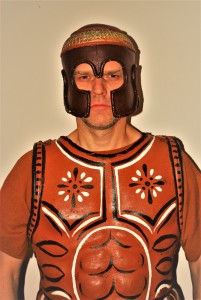
Roman centurion — Andrew Nicholls
“Yes sir.” I bowed low in a show of mock subservience. “He’s back lickin’ the holy man’s stinkin’ feet—once again! He started yesterday during the Messiah’s trial,” I said bitterly, “and now, who knows when he’ll stop.”
“I can only shake my head,” Renaldo answered as he did just that. Then after a pause, with grim resignation in his voice, he said, “Let’s get on with it. I suppose we have to do it.”
He turned and bellowed at the twelve waiting men, “All of you head over next door.”
To download a free study guide for this high-impact, bible-based novel visit: https://www.davidkitz.ca/centurion.php/free study guide PDF
For book purchases of The Soldier Who Killed a King try Amazon or christianbook.com.
09 Tuesday Apr 2019
Posted in Lent, The Soldier Who Killed a King
Tags
crown of thorns, crucifixion, Golgotha, Jesus, Lent, repentance
Date: Eight in the morning, Saturday, April 8, 30 A.D.
Marcus Longinus, the Roman centurion, endures a sleepless night as he reflects on his role in Christ’s crucifixion.
It was a horrible night. Horrible!
I could not sleep. The events of the day kept flooding over my mind—a constant bloody torrent. During the daylight hours you can steel yourself against another man’s suffering. But at night your hard shell dissolves from around you, and you are left in just your own skin again. Then their suffering soaks into your flesh, and it becomes your own.
There seemed to be no end to it—no end to this torment. I willed myself to sleep. But I could not find that door of escape. It eluded me.
Instead I was pursued relentlessly by the dreadful events of the day. The hammer blows kept ringing in my head. And now their pain was mine.
All night my mind was on Golgotha.
Why me? Why Jesus? Why by some cruel twist of heaven’s fate did I find myself with him upon the hill of execution?
When I closed my eyes, his face appeared before me. His gentle eyes stared down on me, boring a hole into my very soul. Blood oozed down from the stabbing crown of thorns. It pooled and dried along his eyebrows. And his pain? His pain was my own.
Once in the night Zelda put her arm around me and drew close.
I pulled away. I could not be comforted. I could not be loved, and neither could I give love. She could not reach me. I was well beyond all this.
Why did I spit in Jesus’s face? Why did all hell erupt from within me? I hated being forced into this role, the role of the killer, the executioner. Just as in Germania, I was compelled—forced by circumstances into a role that I despised. But when my moment came, with my men gathered around, I played it to the hilt. The brute lurking at the bottom of the chasm within me took full control. Today on Golgotha the horror and rage of Germania had found a fresh vent.
But this was no barbarian village. This was no blond-haired girl; this was the Son of God. The Son of God . . .
The words of my confession reverberated through my throbbing mind, over and over, until I thought my head would split.
To download a free study guide for this high-impact, bible-based novel visit: https://www.davidkitz.ca/centurion.php/free study guide PDF
For book purchases of The Soldier Who Killed a King try Amazon or christianbook.com.
06 Saturday Apr 2019
Posted in Lent, The Soldier Who Killed a King
Tags
Date: Nine in the morning, Sunday, April 9, 30 A.D.
Marcus Longinus, the Roman centurion, investigates his soldiers’ report that Jesus had risen from the dead.
It was as they said. The stone was rolled away. But it was not merely rolled to the side as I had expected. It had been pushed right up and out of its stone track, and it had toppled over a good distance from the tomb entrance.
I edged my way toward it. About two paces from the end of the stone track, there was gouge in the shallow soil, where the round cover stone had landed and then rolled. This was a real headshaker. How had this happened? It must have been rolled back with such force that when it reached the end of the track, it bounced up and out. No wonder the men were scared! This was awesome. Forty men could not do this!
Suddenly I felt very small, small and afraid.
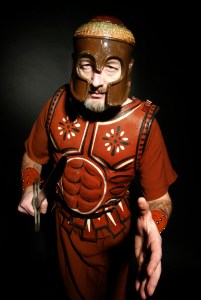
Photo credit Jean Levac, Ottawa Citizen
And this was the very stone we had sealed just a day earlier. A close examination showed that in a few spots there were still fragments of broken plaster on it. I exhaled a huge puff of air. This discovery in itself was beyond all expectation. The force of the quake could not have done this. A quake of such magnitude would have collapsed the tomb itself, and not a building in the city would be standing. No, a direct force had hurled this boulder away from the tomb’s entrance.
An almighty warrior from heaven’s realm?
I rejoined my two men. Suddenly they gained a new level of respect in my eyes. Their fears had become my own. I found I was rolling my head from side to side just as I had seen Claudius do.
“You saw this happen?” I gestured to the fallen round rock and then put a finger to my lips. I was astounded.
“Actually,” Philip admitted, “I didn’t see him roll the stone. We all fell like dead men when the earthquake hit. But after, when I opened my eyes, the angel was sitting on it, and . . . and Jesus was walking out of the tomb.” He fell to his knees and began to beat the ground as he said this last part. He was gripped afresh by the memory.
“Where were you when this happened?” He raised his head and pointed to a spot a few paces away. “Right there.”
“And you?” I looked at Claudius. He pointed to another spot. “Just over here,” he said. “That’s my cloak. I left it when I ran.”
There was, in fact, a good bit of flotsam scattered about: a few cloaks, a water jug, Philip’s precious dice, even a helmet. Here were all the signs of panicked flight. They had left all and fled for their lives.
For me only one question remained. Was the open tomb truly empty?
“Get to your feet, Philip,” I said. “You two stay here and watch while I go take a look inside.”
I took three deep breaths and set out on my little journey. It was only about twenty paces to the tomb entrance. A distance made much longer by my fear. But the whole scene was bathed in the warmth of morning sunlight. I started slowly. About halfway to the entrance, a songbird broke forth in glorious melody. The sun’s rays streamed into the rock tomb, lighting my way.
It was empty! The stone slab lay empty. Actually, it was not entirely so. The death shroud had been rolled up, and the face covering was neatly folded and lay off to one side. It appeared as though the awakened corpse took a moment to make his bed after getting up.
The Galilean prophet, the true king, had arisen and gone forth!
To download a free study guide for this high-impact, bible-based novel visit: https://www.davidkitz.ca/centurion.php/free study guide PDF
For book purchases of The Soldier Who Killed a King try Amazon or https://www.christianbook.com

