• Home
  • About
  • DavidKitz.ca
  • Youtube Videos
  • Books by David
  • Books on Amazon.com

I love the Psalms

~ Connecting daily with God through the Psalms

I love the Psalms

Tag Archives: Sermon on the Mount

A Call for Literary Prophets

19 Sunday Oct 2025

Posted by davidkitz in The Elisha Code

≈ 4 Comments

Tags

Charles Dickens, Elijah, Elisha, Harriet Beecher Stowe, Jesus, Kingdom of God, Leo Tolstoy, literary prophets, Martin Luther, Napolean, novel, prophets, Russia, Sermon on the Mount, Ukraine, war

Jesus performed many other signs in the presence of his disciples,
which are not recorded in this book.
But these are written that you may believe that Jesus is the Messiah, the Son of God, 
and that by believing you may have life in his name.
(John 20:30-31, NIV)

As stated earlier, the Old Testament prophetic duo of Elijah and Elisha can be categorized as non-literary prophets, in contrast to a host of literary prophets such as Isaiah, Ezekiel, and Micah, who provided us with the Old Testament canon.
            Like Elijah and Elisha, John the Baptist and Jesus are the premier non-literary prophets of the New Testament period. They wrote nothing for us to read. In fact, the memory of their incredible lives and deeds would undoubtedly have faded into obscurity without the work of four diligent publicists named Matthew, Mark, Luke, and John. Such is the indelible power of the written word.
            Have literary prophets arisen in our time—in the era in which we live? There are ample reasons to believe the answer is yes. But before we look for examples of current or historic literary prophets, a point of clarification is required. This search for literary prophets is not about adding to the established canon of Holy Scripture. The literary prophets we are talking about simply draw people back into relationship with God. This after all was the primary goal of godly prophetic voices down through the ages. Often that involved challenging the norms, beliefs, and systems of the time.

           In this respect perhaps the greatest prophet of the last millennium was Martin Luther [1483-1546]. He brought Europe out of the dark ages and into the glorious light of the gospel—a gospel that had been distorted almost beyond recognition by layers of institutional corruption, false doctrine, and a profound ignorance of the Holy Scriptures.
            How did Luther bring about such a radical change? The answer primarily lies in his work as a literary prophet. Scholars and historians agree that foremost among his literary works is his translation of the Bible into German, the vernacular of the people of central Europe. Of course, this inspired translators in other lands to produce Bibles in their local tongue. Suddenly, the Word of God was unleashed and active, changing hearts and lives across the continent and the work of Bible translation continues to this day.
            None of this would have taken place with such speed without the invention of Gutenberg’s printing press which for the first time made the Scriptures affordable and readily available. New technology presents new opportunities to transmit the gospel message. Are we currently using the new technologies available to us to advance the redeeming message of Christ in the world?
            In addition to translating the Bible, Luther authored a host of books, pamphlets, and tracts that expounded on biblical truth and exposed doctrinal error. Some of his views have been discredited, but many remain relevant.[i] He was a prophetic voice to his generation, and through his writing, his message still resounds five hundred years later.
            Four centuries after Luther, in eastern Europe, another literary figure arose to challenge the religious and political thinking of his time. His name was Leo Tolstoy [1828-1910].
            What might it take for peace to come today between Ukraine and Russia? What seems impossible with people is still possible with God.
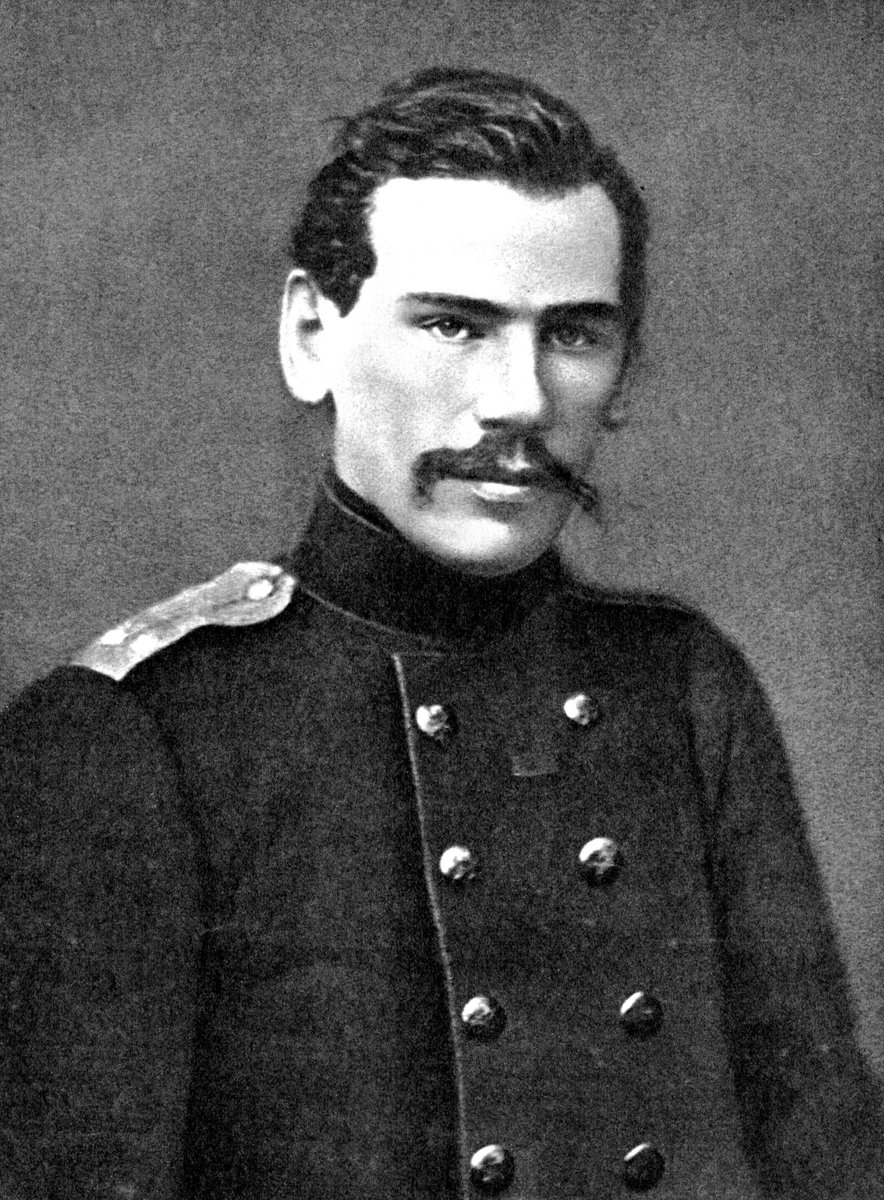
A young Leo Tolstoy

          What if Ukrainians and Russians would both rediscover the message of peace, forgiveness, and reconciliation in Tolstoy’s War & Peace? Sadly, this book is currently banned in Ukraine because of the mistaken idea that it glorifies the Russian military.
            After serving in the Crimean War as a young officer in the Russian army, Tolstoy became a committed pacifist. War & Peace never glorifies war, but rather, accurately portrays how war often embitters our souls, dehumanizes us, and robs us of the love of neighbor. Ironically, the Russian Orthodox Church excommunicated Tolstoy in 1901, partially because of his questioning their uncritical support for the Russian military.
           Many see Tolstoy as a Russian Charles Dickens. Considered by many as the world’s best novel, War & Peace overwhelms potential readers by its 1,400-page size. What surprised us as readers was how deeply Jesus’ gospel message of forgiveness was woven into this book. God is mentioned 312 times in War & Peace. Outwardly, the book is about Napoleon’s invasion of Russia, but at a deeper level, it was about human conflict and how the Kingdom of God is the only solution. 
           The Russian Prince Andrei, who represented the glorification of war in War & Peace, initially despised forgiveness as just for women and children.[i] After being mortally wounded, Andrei learns to forgive his dying enemy Anatole Kuragin, and his ex-fiancée Natasha who almost ran off with Anatole. He notably commented:

          Compassion, love of our brothers, for those who love us and for those who hate us, love of our enemies; yes, that love which God preached on earth…and I did not understand—that is what made me sorry to part with life, that is what remained for me had I lived. But now it is too late. I know it![ii]

           Andrei asks his doctor to get him a copy of the Gospels, saying that he had now a new source of happiness which had something to do with the Gospels. After discovering the law of love, Andrei met again with Natasha who was devastated with guilt and shame:

          “Forgive me!” she whispered, raising her head and glancing at him. “Forgive me!”
          “I love you,” said Prince Andrei…
          “Forgive…!”
          “Forgive what?” he asked.
          “Forgive me for what I have do-ne!” faltered Natasha in a scarcely audible, broken whisper, and began kissing his hand more rapidly, just touching it with her lips.
          “I love you more, better than before,” said Prince Andrei, lifting her face with his hand so as to look into her eyes.[iii]

            This novel could have been called Love & Forgiveness. Seventy-two times, Tolstoy talks about forgiveness in War & Peace. It was not just about the war with Napoleon, it was about the war between the sexes.

The Word of God — photo by David Kitz

            Another character in War & Peace, Pierre Bezukhov, is like a Russian Forrest Gump. He is a tragically comic figure who awkwardly stumbles into all the key times of the Napoleonic conflict, unexpectedly being a savior figure, and allowing us to observe the historic conflict in person, up close. Everything about him is unlikely, from his being an illegitimate son to becoming the wealthiest person in all of Russia. Through dreams and visions, Pierre discovered on Napoleon’s battlefield that:

            To love life is to love God. Harder and more blessed than all else is to love this life in one’s sufferings, in innocent sufferings.[i]

           Through discovering God, Pierre experienced a deep tranquility and happiness. He was no longer tormented by the meaningless of life: 

          …a simple answer was now always ready in his soul: “Because there is a God, that God without whose will not one hair falls from a man’s head.[ii]

          Meeting God gave him such a new ability to listen that people regularly told Pierre their most intimate secrets. This deep listening was what caused the embittered princess Natasha to fall in love and marry him.
           Tolstoy, a Russian aristocrat, became so enamoured with the Sermon on the Mount that he gave away all his wealth and chose to live like a peasant, tilling the land. When he decided to give up all his book income, his wife threatened to divorce him, so he compromised by only giving away the money from any of his newly written books.
            Tolstoy’s book The Kingdom of God Is Within You so impacted Mahatma Gandhi that he gave it out to his followers. Gandhi was so impressed by Tolstoy’s emphasis on the Sermon on the Mount (Matthew 5 to 7) that he read Jesus’ famous Sermon every day for the rest of his life. Tolstoy’s emphasis on non-violent resistance formed the basis of Gandhi’s campaign for Indian nationhood. Thus, through the influence of Tolstoy’s writing the entire subcontinent of India was transformed.
            Martin Luther King Jr., after reading E. Stanley Jones’ book on Gandhi, discovered the nonviolent key for his civil rights movement in America. So, the torch light of a peace-making gospel passed from a Russian author to India and onto America.
            Tolstoy’s passion for peace-making and forgiveness might even change Russian President Putin, if he would only take the time to read Tolstoy’s book.
            The late British journalist and Christian apologist Malcolm Muggeridge deeply admired the genius of Tolstoy:

         Tolstoy was one of those truly great men who come into the world at long intervals, and we need them, and we rightly continue to look to them just as the Russians do, despite all the changes that have happened.

            What if instead of resenting Russia for its tragic invasion of the Ukraine, we, like Tolstoy, began to pray passionately for its transformation? Could we have faith to believe that Russia will become a Sermon on the Mount nation, overflowing with peacemakers like Tolstoy? Let’s call out to God for such a miracle.
            On this continent in 1852, Harriet Beecher Stowe wrote a novel that transfixed America. Uncle Tom’s Cabin was the bestselling book in United States in the nineteenth century, surpassed only by the Bible.[iii] Stowe was motivated by her deep Christian faith. Her book pricked the conscience of the nation, exposed the horrors of slavery, and fomented the upheaval that led to the American Civil War which culminated in the emancipation of millions.   
            Martin Luther, Leo Tolstoy, and Harriet Beecher Stowe exemplify the incredible power of the printed page. Literary prophets are history shapers. They transformed nations and their influence remains to this day. We need more literary prophets—prophets filled with the courage of their convictions—prophets for our time.
            The written word inspires faith—life transforming faith. Perhaps John, the beloved, expressed this truth best when a the close of his Gospel he penned these immortal words: But these are written that you may believe that Jesus is the Messiah, the Son of God, and that by believing you may have life in his name (John 20:31).

[i] graf Leo Tolstoy. War and Peace (Kindle Locations 22902-22903). Kindle Edition.

[ii] graf Leo Tolstoy. War and Peace (Kindle Locations 23761-23762). Kindle Edition.

[iii] Uncle Tom’s Cabin – Wikipedia accessed March 1, 2023.

[i] graf Leo Tolstoy. War and Peace (Kindle Locations 19935-19936). Kindle Edition.

[ii] graf Leo Tolstoy. War and Peace (Kindle Locations 22902-22903). Kindle Edition.

[iii] graf Leo Tolstoy. War and Peace (Kindle Locations 19935-19936). Kindle Edition.

[i] While we honor Martin Luther as a literary prophet used in the Reformation, we acknowledge the tragic nature of the antisemitism that Luther slipped into later in his ministry.

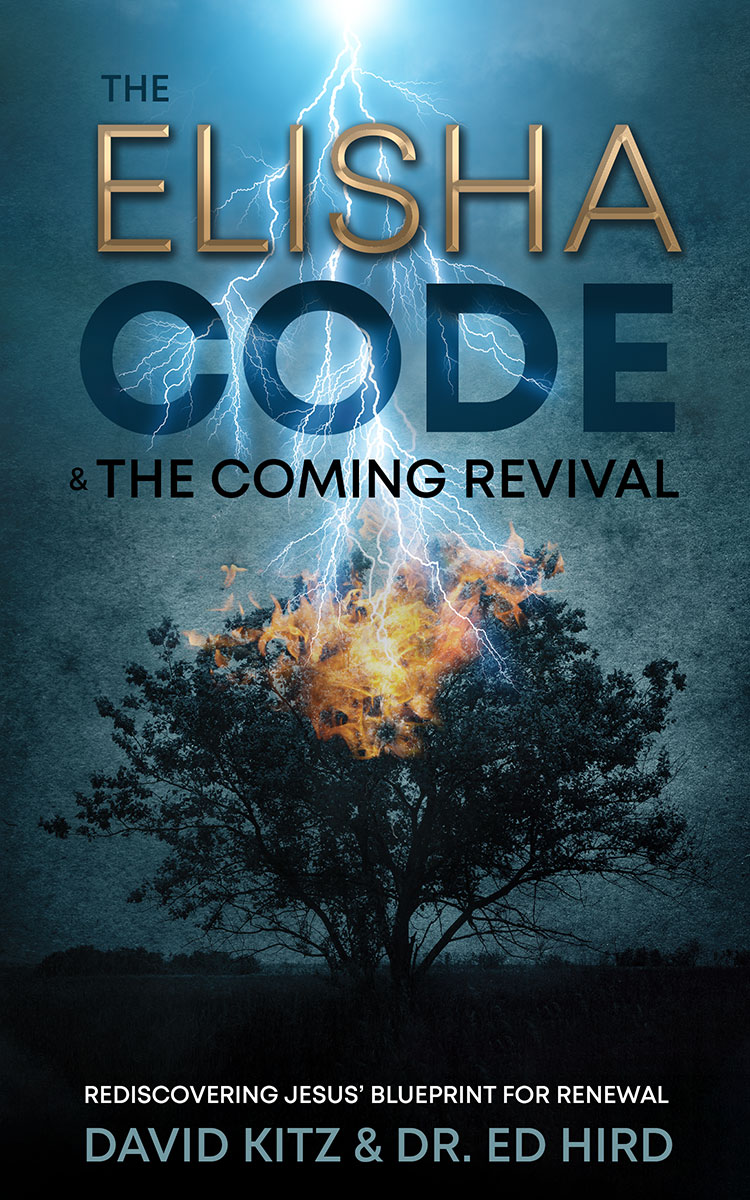
This is the sixth weekly excerpt from the award-winning book 
The Elisha Code & the Coming Revival 

A soul-gripping read.
Is a return-to-Jesus revival possible in our time?
This book points the way forward.
For details click here.

Has the LORD’s Holiness Caught Your Attention?

09 Wednesday Apr 2025

Posted by adeyemiasaba1 in Psalm 99, Psalms

≈ 1 Comment

Tags

beauty, Bible, God, holiness, holy, Jesus, praise the LORD, Psalms, pure in heart, Sermon on the Mount, the LORD, worship

Today’s Devotion from Psalms 365 by David Kitz

Reading: Psalm 99:1-5
The LORD reigns,
let the nations tremble;
he sits enthroned between the cherubim,
let the earth shak
Great is the LORD in Zion;
he is exalted over all the nations.
Let them praise your great and awesome name—
Exalt the LORD our God
and worship at his footstool;
he is holy (NIV). *

White water — Mormora & Lake, ON — photo by David Kitz

Reflection
What does it mean to be holy? There are several shades of meaning for the word holy. It can mean being consecrated or dedicated for a special purpose. It also means righteous. But the definition that fits best in the light of Psalm 99 reads like this: “awe-inspiring—having a character that evokes reverence” (Encarta Dictionary).

The psalmist is effusive with his praise for the LORD, but three times in this short psalm, he centers back to this phrase: he is holy. Yes, the LORD reigns, He is righteous and exalted, but what has really caught the psalmist’s attention is the LORD’s holiness. That’s what sets Him apart and elevates Him above the stratosphere.

Has the LORD’s holiness caught your attention? Have you been filled with awe by the holiness of God? I fear that far too often we have diminished God. We have tried to make Him like us—powerful but a bit quirky—maybe short-tempered or set in His ways. What nonsense! Our God is holy. We need to wake up to that fact. It must be central to our understanding of God.

In the Beatitudes from his Sermon on the Mount Jesus said, “Blessed are the pure in heart, for they will see God” (Matthew 5:8). To clarify, I might add the pure in heart will see the true God, not a distorted caricature. Our sinful nature has a way of distorting our view of the LORD. That’s why personal purity and holiness are so essential. The apostle Peter provides this admonition: As obedient children, do not conform to the evil desires you had when you lived in ignorance. But just as he who called you is holy, so be holy in all you do; for it is written: “Be holy, because I am holy” (1 Peter 1:14-16).

Response: LORD God, I want to see you at work in my life. Help me with the help of your Holy Spirit to clean up those areas that distort my view of you. You are holy. I worship you in the beauty of your perfect holiness. Amen.

Your Turn: Are there times when you have seen God as short-tempered or set in His ways? Have you avoided God’s call to holiness?

Para la publicación de Salmos 365 de hoy en español haga clic aquí.

bgbg_v4.3_1501818
* NEW INTERNATIONAL VERSION, COPYRIGHT ©1973, 1978, 1984, 2011 BY BIBLICA

Please pray for peace to return to Israel, Gaza, and Ukraine!

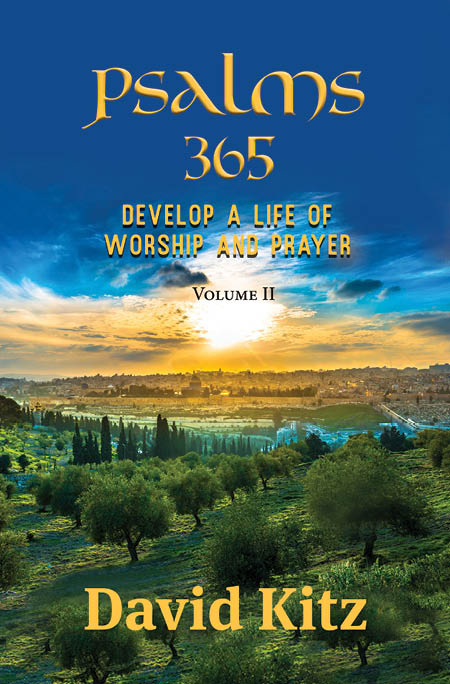
Volume I of Psalms 365: Develop a Life of Worship and Prayer won the Best Book of the Year Award from The Word Guild and Volume II has won the Best Devotional of the Year Award. For those who love God’s word, this three-book series is an ideal way to begin the new year, and daily meet with the Lord. To purchase or for a closer look click here.

RGB72PsalmsVol2

A gripping read from David Kitz.
4485 SHARABLE-2

To purchase or for a closer look click here.

A Psalm Reading that Makes My Head Hurt

11 Thursday Apr 2024

Posted by davidkitz in Psalm 139

≈ 1 Comment

Tags

Bible, devotion, God, hate, love, Prayer, Psalms, Sermon on the Mount, wounded, wounded heart, wounded people

Today’s Devotion from the Psalms

Reading: Psalm 139:19-22
If only you, God, would slay the wicked!
Away from me, you who are bloodthirsty!
They speak of you with evil intent;
your adversaries misuse your name.
Do I not hate those who hate you, L
ORD,
and abhor those who are in rebellion against you?
 I have nothing but hatred for them;
I count them my enemies. *

img_20220812_2011585

Photo by David Kitz

Reflection
As much as I love the psalms of the Bible, there are some psalms, or verses within psalms that I would just like to skip. I wish they weren’t there. Today’s reading from Psalm 139 is a prime example. The author’s words are filled with venom. Why are they even in the Bible? (Please bear with me.)

Passages like today’s reading are particularly troubling in light of Jesus’ teaching in the New Testament. In his great Sermon on the Mount, he gave us this teaching: “You have heard that it was said, ‘Love your neighbor and hate your enemy.’ But I tell you, love your enemies and pray for those who persecute you, that you may be children of your Father in heaven. He causes his sun to rise on the evil and the good, and sends rain on the righteous and the unrighteous” (Matthew 5:43-45).

Reconciling today’s reading from Psalm 139 with Jesus’ words makes my head hurt. Jesus calls us to an incredibly high standard—God’s standard. God shows kindness and love even to the unrighteous. They like us receive both sunshine and rain. Let’s face it, when someone hurts me, my default position is to hurt them back. That’s the natural human response. That’s the way it has been since the beginning, and the world is full of lasting scars—intergenerational scars because of it. Wounded people have been busy hurting other wounded people as hate builds on hate in the home, at work and internationally.

But Jesus came to interrupt that corrosive cycle. He asks us to counter that hurt—that slight—that injury with love. Now that’s truly revolutionary. It’s a revolt against the status quo of hatred that has poisoned human relations in our country and the world. Has someone gone out of their way to hurt you? Retaliate with an act of love. That’s what Jesus is saying.

Is that hard? Absolutely. It’s much easier to respond like the author of today’s reading from Psalm 139. So why is this portion of Psalm 139 in the Bible? Maybe it should be redacted—blacked over like a secret government file.

Psalm 139 like all the psalms, began as someone’s personal prayer—their personal interaction with God. They are pouring out their heart before God. It’s a heart that has been wounded by others. Should they bottle-up those feelings and never express them to God? Of course not. We need to pour out our hurts to God. He alone can heal and change the wounded heart.

Response: LORD God, you know all my hurts. I bring them before you. Pour your love into me, so I can love my enemies. Show me the way forward. Jesus, you forgave even those who killed you. Amen.

Your Turn: Have you changed your default position from hate to love? How can we cultivate a heart attitude of love toward others?

Para la publicación de Salmos 365 de hoy en español haga clic aquí.

* NEW INTERNATIONAL VERSION, COPYRIGHT ©1973, 1978, 1984, 2011 BY BIBLICA

BGBG_v4.3_150[1818]

Please pray for peace to return to Israel, Gaza, and Ukraine!

Volume I of Psalms 365: Develop a Life of Worship and Prayer won the Best Book of the Year Award from The Word Guild and Volume II has won the Best Devotional of the Year Award. For those who love God’s word, this three-book series is an ideal way to daily meet with the Lord. To purchase or for a closer look click here.TheElishaCodeCVR5

To purchase or for a closer look click here.

Humility Determines Destiny

15 Friday Mar 2024

Posted by davidkitz in Psalm 131

≈ Leave a comment

Tags

devotion, humble, humility, Jesus, Prayer, pride, Psalms, Sermon on the Mount, the proud

Today’s Devotion from the Psalms

Reading: Psalm 131
A song of ascents. Of David.
My heart is not proud, LORD,
my eyes are not haughty;
I do not concern myself with great matters
or things too wonderful for me.
But I have calmed and quieted myself,
I am like a weaned child with its mother;
like a weaned child I am content.
Israel, put your hope in the LORD
both now and forevermore
(NIV). *

father and son outside

Photo by Anna Shvets on Pexels.com

Reflection
In my personal quiet time this morning I highlighted this verse. When pride comes, then comes disgrace, but with humility comes wisdom (Proverbs 11:2).

The wisdom that comes with humility is a rare commodity in today’s world. It appears that the crude bravado of boasting egocentrics is winning the day. Every field of human endeavor has its loudmouthed champions—men who heap scorn on meeker souls.

But Jesus has a message that runs completely contrary to this approach. In his Sermon on the Mount, he said, “Blessed are the meek, for they will inherit the earth” (Matthew 5:5). On another occasion, the disciples asked Jesus this question, “Who, then, is the greatest in the kingdom of heaven?”

This is Jesus’ response.  “Truly I tell you, unless you change and become like little children, you will never enter the kingdom of heaven. Therefore, whoever takes the lowly position of this child is the greatest in the kingdom of heaven. And whoever welcomes one such child in my name welcomes me.” (See Matthew 18:1-5).

Jesus turns this world’s operating system on its head. He heaps honor on the weak, the humble and the vulnerable. He praises the soul of the weaned child—the one who takes the position of humility. Of course, Jesus is right. The folly of the proud ends in disgrace, but the humility of the meek ends in honor and a glorious inheritance.

Your eternal destiny is determined by your humility. These words of Jesus are an ominous warning: “Truly I tell you, unless you change and become like little children, you will never enter the kingdom of heaven.”

I need to become like the weaned child of Psalm 131. Can I truthfully say these words? My heart is not proud, LORD, my eyes are not haughty. Have I calmed and quieted myself? Am I like a weaned child with its mother? Am I content? Becoming like the weaned child requires change. I need to change. Jesus asks me to change. How about you?

Response: Father God, help me to change. I want to become more like Jesus. He was the servant of all.  Help me to avoid the pitfall of pride. Teach me how to quiet my soul and be content in you. Amen.

Your Turn: Are you learning to quiet your soul before God? How do you quiet your spirit?

* NEW INTERNATIONAL VERSION, COPYRIGHT ©1973, 1978, 1984, 2011 BY BIBLICA

BGBG_v4.3_150[1818]

Please pray for peace to return to Israel, Gaza, and Ukraine!

Volume I of Psalms 365: Develop a Life of Worship and Prayer won the Best Book of the Year Award from The Word Guild and Volume II has won the Best Devotional of the Year Award. For those who love God’s word, this three-book series is an ideal way to daily meet with the Lord. To purchase or for a closer look click here.

4485 SHARABLE-2

Lent is here. Easter is approaching.
Are you ready for a journey to the cross?
For a closer look or to purchase click here.

Still God is Merciful

13 Wednesday Apr 2022

Posted by davidkitz in Psalm 78

≈ 2 Comments

Tags

God's mercy, self-righteousness, Sermon on the Mount, sin

Reading: Psalm 78:32-39
In spite of all this, they kept on sinning;
in spite of his wonders, they did not believe.
So he ended their days in futility
and their years in terror.
Whenever God slew them, they would seek him;
they eagerly turned to him again.
They remembered that God was their Rock,
that God Most High was their Redeemer.
But then they would flatter him with their mouths,
lying to him with their tongues;
their hearts were not loyal to him,
they were not faithful to his covenant.
Yet he was merciful;
he forgave their iniquities
and did not destroy them.
Time after time he restrained his anger
and did not stir up his full wrath.
He remembered that they were but flesh,
a passing breeze that does not return
(NIV).*

people looking at laptop computer

Photo by Fox on Pexels.com

Reflection
Psalm 78 is a lengthy indictment against the people of Israel for their unfaithfulness to the LORD. Sometimes it’s easy to forget these were the people of God—His chosen people—yet they responded with lies, unbelief and disloyalty. If this is how the people of God conduct themselves, what are we to expect from those who do not know the LORD?

Unfortunately, the people of God today are not so different from the people of Israel 3,000 years ago. When we look about the church world, we see a plenty of division, backbiting and sin. All too often hate rules instead of love. We cover ourselves with a fig leaf of self-righteousness and then proceed to attack those who fail to meet our standard. We do all this while we are trapped in our own secret web of sin. We are determined to clean up the world while ignoring our personal pile of filth.

The words of Jesus from his Sermon on the Mount still ring true today, “How can you say to your brother, ‘Let me take the speck out of your eye,’ when all the time there is a plank in your own eye? You hypocrite, first take the plank out of your own eye, and then you will see clearly to remove the speck from your brother’s eye” (Matthew 7:4-5).

But given this deplorable state of affairs, what does the LORD do? The psalmist states, “Yet he was merciful; he forgave their iniquities and did not destroy them.” Like the people of ancient Israel, we are saved not because of our righteousness, but solely because of God’s mercy and grace.

Response: LORD God, I cannot boast because of my righteousness. You know all my shortcomings. I have an impressive pile of personal sin. Forgive me through the mercy of your son, Jesus. Amen.

Your Turn: Have you been guilty of pointing out the faults of others while ignoring your own? If so, repent before the Lord today.

* NEW INTERNATIONAL VERSION, COPYRIGHT ©1973, 1978, 1984, 2011 BY BIBLICA

BGBG_v4.3_150[1818]

Please pray for the people of Ukraine!

Volume I of Psalms 365: Develop a Life of Worship and Prayer has won the 2021 Best Book of the Year Award and for those who love God’s word, it’s an ideal way to daily meet with the Lord. For a closer look at Volumes II and III click here.

My Rock and my Salvation

15 Tuesday Feb 2022

Posted by davidkitz in Psalm 62, Psalms

≈ 2 Comments

Tags

salvation, Sermon on the Mount, the rock

Reading: Psalm 62:1-8
For the director of music. For Jeduthun. A psalm of David.
Truly my soul finds rest in God;
my salvation comes from him.
Truly he is my rock and my salvation;
he is my fortress, I will never be shaken.
How long will you assault me?
Would all of you throw me down—
this leaning wall, this tottering fence?
Surely they intend to topple me from my lofty place;
they take delight in lies.
With their mouths they bless,
but in their hearts they curse.
Yes, my soul, find rest in God; my hope comes from him.
Truly he is my rock and my salvation;
he is my fortress, I will not be shaken.
My salvation and my honor depend on God;
he is my mighty rock, my refuge.
Trust in him at all times, you people;
pour out your hearts to him, for God is our refuge
(NIV).*

img_20220128_1520520

Photo by David Kitz

Reflection
Jesus concluded his Sermon on the Mount by telling the parable of the wise and foolish builders (Matthew 7:24-29). One man built his house on sand, while the other built his home on the rock. Only the house built on the rock was able to withstand the floods and storms of life. Having Jesus and his teaching at the very foundation of your life will help you withstand all the hardship and temptation the world and the devil can throw at you. 

Did Jesus use Psalm 62 as his story prompter as he told the parable of the wise and foolish builders? Until we pass over to eternity and can question Jesus personally, we cannot know the answer with absolute certainty; nevertheless, there is a striking parallel between Jesus’ built-on-a-rock parable and Psalm 62.

According to this psalm, David found his rest in God. God was his rock. His life rested secure on that eternal foundation. Here is David’s confession: Yes, my soul, find rest in God; my hope comes from him. Truly he is my rock and my salvation; he is my fortress, I will not be shaken.

To David’s declaration of allegiance to the Rock, Jesus adds this thought. Our connection to the Rock is established as we put his words—Jesus’ words—into practice. What is your life resting on? 

Response: LORD God, you are my mighty rock, my refuge. In a troubled world you are a sure foundation. My soul finds rest in you. Help me put into practice the words of life—the words of Jesus. Amen.

Your Turn: In a changing world has the LORD become your rock of stability? Are you heeding this admonition from James, the brother of our Lord? Do not merely listen to the word, and so deceive yourselves. Do what it says (James 1:22).

* NEW INTERNATIONAL VERSION, COPYRIGHT ©1973, 1978, 1984, 2011 BY BIBLICA

BGBG_v4.3_150[1818]

Volume I of Psalms 365: Develop a Life of Worship and Prayer has won the 2021 Best Book of the Year Award and for those who love God’s word, it’s an ideal way to daily meet with the Lord. For a closer look at Volumes II and III click here.

A Revolt against the Status Quo of Hatred

22 Tuesday Jun 2021

Posted by davidkitz in Psalm 139, Psalms

≈ 4 Comments

Tags

enemies, hatred, Jesus, love, Sermon on the Mount

Reading: Psalm 139:19-22
If only you, God, would slay the wicked!
Away from me, you who are bloodthirsty!
They speak of you with evil intent;
your adversaries misuse your name.
Do I not hate those who hate you, L
ORD,
and abhor those who are in rebellion against you?
 I have nothing but hatred for them;
I count them my enemies.*

img_20210610_1054292-effects

Wild flowers — photo by David Kitz

Reflection
As much as I love the psalms of the Bible, there are some psalms, or verses within psalms that I would just like to skip. I wish they weren’t there. Today’s reading from Psalm 139 is a prime example. The author’s words are filled with venom. Why are they even in the Bible? (Please bear with me.)

Passages like today’s reading are particularly troubling in light of Jesus’ teaching in the New Testament. In his great Sermon on the Mount, he gave us this teaching: “You have heard that it was said, ‘Love your neighbor and hate your enemy.’ But I tell you, love your enemies and pray for those who persecute you, that you may be children of your Father in heaven. He causes his sun to rise on the evil and the good, and sends rain on the righteous and the unrighteous” (Matthew 5:43-45).

Reconciling today’s reading from Psalm 139 with Jesus’ words makes my head hurt. Jesus calls us to an incredibly high standard—God’s standard. God shows kindness and love even to the unrighteous. They like us receive both sunshine and rain. Let’s face it, when someone hurts me, my default position is to hurt them back. That’s the natural human response. That’s the way it has been since the beginning, and the world is full of lasting scars—intergenerational scars because of it. Wounded people have been busy hurting other wounded people as hate builds on hate in the home, at work and internationally.

But Jesus came to interrupt that corrosive cycle. He asks us to counter that hurt—that slight—that injury with love. Now that’s truly revolutionary. It’s a revolt against the status quo of hatred that has poisoned human relations in our country and the world. Has someone gone out of their way to hurt you? Retaliate with an act of love. That’s what Jesus is saying.

Is that hard? Absolutely. It’s much easier to respond like the author of today’s reading from Psalm 139. So why is this portion of Psalm 139 in the Bible? Maybe it should be redacted—blacked over like a secret government file.

In reality, Psalm 139 like all the psalms, began as someone’s personal prayer—their personal interaction with God. They are pouring out their heart before God. It’s a heart that has been wounded by others. Should they bottle up those feelings and never express them to God? Of course not. We need to pour out our hurts to God. He alone can heal and change that wounded heart.

Response: LORD God, you know all my hurts. I bring them before you. Pour your love into me, so I can love my enemies. Show me the way forward. Jesus, you forgave even those who killed you. Amen.

Your Turn: Have you changed your default position from hate to love? How can we make that change?

* NEW INTERNATIONAL VERSION, COPYRIGHT ©1973, 1978, 1984, 2011 BY BIBLICA

Volume II of Psalms 365: Develop a Life of Worship and Prayer by award-winning author David Kitz is available now. For a closer look at Volumes I and II click here.

Built on a Rock

23 Thursday Nov 2017

Posted by davidkitz in Bible, Devotionals, Psalm 62, Psalms

≈ 1 Comment

Tags

David, foundation, God, hope, Jesus, parable, Psalm, refuge, rest, Rock, salvation, Sermon on the Mount, temptations, trust in God

Reading:                                        Psalm 62

For the director of music. For Jeduthun. A psalm of David.
Truly my soul finds rest in God;
my salvation comes from him.
Truly he is my rock and my salvation;
he is my fortress, I will never be shaken.
How long will you assault me?
Would all of you throw me down—
this leaning wall, this tottering fence?
Surely they intend to topple me from my lofty place;
they take delight in lies.
With their mouths they bless,
but in their hearts they curse.
Yes, my soul, find rest in God;
my hope comes from him.
Truly he is my rock and my salvation;
he is my fortress, I will not be shaken.
My salvation and my honor depend on God;
he is my mighty rock, my refuge.
Trust in him at all times, you people;
pour out your hearts to him, for God is our refuge
(NIV).

Reflection
Jesus concluded his Sermon on the Mount by telling the parable of the wise and foolish builders (Matthew 7:24-29). One man built his house on sand, while the other built his home on the rock. Only the house built on the rock was able to withstand the floods and storms of life. Having Jesus and his teaching at the very foundation of your life will help you withstand all the hardship and temptation the world and the devil can throw at you.

2017-11-20

First snow of the season, Ottawa, ON — photo by David Kitz

Did Jesus use Psalm 62 as his story prompter as he told the parable of the wise and foolish builders? Until we pass over to eternity and can question Jesus personally, we cannot know the answer with absolute certainty; nevertheless, there is a striking parallel between Jesus’ built-on-a-rock parable and Psalm 62.

According to this psalm, David found his rest in God. God was his rock. His life rested secure on that eternal foundation. Here is David’s confession: Yes, my soul, find rest in God; my hope comes from him. Truly he is my rock and my salvation; he is my fortress, I will not be shaken.

To David’s declaration of allegiance to the Rock, Jesus adds this thought. Our connection to the Rock is established as we put his words—Jesus’ words—into practice. What is your life resting on?

Response: LORD God, you are my mighty rock, my refuge. In a troubled world you are a sure foundation. My soul finds rest in you. Help me put into practice the words of life—the words of Jesus. Amen.

Your Turn: In a changing world has the LORD become your rock of stability? Are you heeding this admonition from James? Do not merely listen to the word, and so deceive yourselves. Do what it says (James 1:22).

I wish American followers of this post a blessed Thanksgiving Day. May your home rest secure on Jesus our mighty rock and refuge.

Wait for the LORD

13 Wednesday Sep 2017

Posted by davidkitz in Bible, Devotionals, Psalm 37, Psalms

≈ 3 Comments

Tags

hope, learned response, meek, patience, peace, problems, prosperity, Sermon on the Mount, the LORD, trust, trust in God, waiting, waiting on God, worry

Reading:                                      Psalm 37

(Verses 7-11)
Be still before the LORD
and wait patiently for him;
do not fret when people succeed in their ways,
when they carry out their wicked schemes.
Refrain from anger and turn from wrath;
do not fret—it leads only to evil.
For those who are evil will be destroyed,
but those who hope in the L
ORD will inherit the land.
A little while, and the wicked will be no more;
though you look for them, they will not be found.
But the meek will inherit the land
and enjoy peace and prosperity
(NIV).

Reflection
When I consider this passage from Psalm 37, two thoughts stand out: Be still before the LORD and wait patiently for him and do not fret—it leads only to evil.

2017-09-02d

Be still before the LORD — photo by David Kitz

 My natural tendency is not to wait or be still. I tend to fret and worry and then charge ahead simultaneously in different directions. Trust me; it’s hard to go in different directions at the same time. The end result is usually a bad case of self-inflicted paralysis, which often results in—you guessed it—a renewed bout of fret and worry. When will I learn? When will we learn?

Being still before the LORD requires practice. It is a learned response, not a natural reaction. When we wait for the LORD we show that we trust Him. We know that He has not forgotten us or the problems we face. In every situation He has our best interests in mind, even if we don’t understand the reasons, causes or solutions to our difficulties.

By being still and waiting before the LORD we demonstrate that we don’t have the answer within in ourselves. The answer—the solution—lies in Him. If we wait patiently, He will show us the way. And having waited patiently for Him, we can move forward with confidence when He gives us the green light.

It is quite likely that Jesus had the words of this psalm in mind when he gave these instructions in his Sermon on the Mount:  “Therefore I tell you, do not worry about your life, what you will eat or drink; or about your body, what you will wear. Is not life more than food, and the body more than clothes? Look at the birds of the air; they do not sow or reap or store away in barns, and yet your heavenly Father feeds them. Are you not much more valuable than they? Can any one of you by worrying add a single hour to your life?” Matthew 6:25-27.

We are to live in quiet confidence. In this psalm we read this promise, “But the meek will inherit the land and enjoy peace and prosperity.” We can put our trust in the God who stands behind that promise.

Response: LORD God, help me to trust you today. Give me a peaceful heart that I may wait patiently for you even when the storms of life descend. I pray in Jesus’ name. Amen.

Your Turn: Do you tend to fret? Does quiet prayer still your worries?

A Place for Hate?

29 Wednesday Mar 2017

Posted by davidkitz in Psalm 139, Psalms

≈ 4 Comments

Tags

Bible, enemy, God, hate, hatred, hurts, Prayer, Psalm 139, retaliate, revolt, Sermon on the Mount, wounded, wounds

Reading:                                         Psalm 139

(Verses 19-22)

If only you, God, would slay the wicked!
Away from me, you who are bloodthirsty!
They speak of you with evil intent;
your adversaries misuse your name.
Do I not hate those who hate you, L
ORD,
and abhor those who are in rebellion against you?
 I have nothing but hatred for them;
I count them my enemies.

Reflection

As much as I love the psalms of the Bible, there are some psalms, or verses within psalms that I would just like to skip. I wish they weren’t there. Today’s reading from Psalm 139 is a prime example. The author’s words are filled with venom. Why are they even in the Bible? (Please bear with me.)

IMG_20170325_071742[151]

Snow covered tree in Grey Nuns Park — photo by David Kitz

Passages like today’s reading are particularly troubling in light of Jesus’ teaching in the New Testament. In his great Sermon on the Mount, he gave us this teaching: “You have heard that it was said, ‘Love your neighbor and hate your enemy.’ But I tell you, love your enemies and pray for those who persecute you, that you may be children of your Father in heaven. He causes his sun to rise on the evil and the good, and sends rain on the righteous and the unrighteous” (Matthew 5:43-45).

Reconciling today’s reading from Psalm 139 with Jesus’ words makes my head hurt. Jesus calls us to an incredibly high standard—God’s standard. God shows kindness and love even to the unrighteous. They like us receive both sunshine and rain. Let’s face it, when someone hurts me, my default position is to hurt them back. That’s the natural human response. That’s the way it has been since the beginning, and the world is full of lasting scars—intergenerational scars because of it. Wounded people have been busy hurting other wounded people as hate builds on hate in the home, at work and internationally.

But Jesus came to interrupt that corrosive cycle. He asks us to counter that hurt—that slight—that injury with love. Now that’s truly revolutionary. It’s a revolt against the status quo of hatred that has poisoned human relations in our country and the world. Has someone gone out of their way to hurt you? Retaliate with an act of love. That’s what Jesus is saying.

Is that hard? Absolutely. It’s much easier to respond like the author of today’s reading from Psalm 139. So why is this portion of Psalm 139 in the Bible? Maybe it should be redacted—blacked over like a secret government file.

In reality, Psalm 139 like all the psalms, began as someone’s personal prayer—their personal interaction with God. They are pouring out their heart before God. It’s a heart that has been wounded by others. Should they bottle up those feelings and never express them to God? Of course not. We need to pour out our hurts to God. He alone can heal and change that wounded heart.

Response: LORD God, you know all my hurts. I bring them before you. Pour your love into me, so I can love my enemies. Show me the way forward. Jesus, you forgave even those who killed you. Amen.

Your Turn: Have you changed your default position from hate to love?

Psalms 365: Develop a Life of Worship and Prayer

Psalms 365 Volume II

Psalms 365 vol 3
— Psalms 365 Volume III

Psalms

Recent posts

  • Above All Gods January 9, 2026
  • The Need for a Place of Refuge January 9, 2026
  • David Dances before the LORD January 8, 2026
  • The God of Turn-Arounds January 8, 2026
  • The LORD Who Heals You January 7, 2026
  • Why Praise God? January 7, 2026
  • I Give You My Peace January 6, 2026

Calendar

January 2026
M T W T F S S
 1234
567891011
12131415161718
19202122232425
262728293031  
« Dec    

Blog Posts

Comments

  • davidkitz on The Ultimate Come from Behind Victory  
  • cjsmissionaryminister on Preparing a Landing Strip for the Holy Spirit
  • cjsmissionaryminister on The Ultimate Come from Behind Victory  

Blog at WordPress.com.

Privacy & Cookies: This site uses cookies. By continuing to use this website, you agree to their use.
To find out more, including how to control cookies, see here: Cookie Policy
  • Subscribe Subscribed
    • I love the Psalms
    • Join 1,381 other subscribers
    • Already have a WordPress.com account? Log in now.
    • I love the Psalms
    • Subscribe Subscribed
    • Sign up
    • Log in
    • Report this content
    • View site in Reader
    • Manage subscriptions
    • Collapse this bar
 

Loading Comments...