• Home
  • About
  • DavidKitz.ca
  • Youtube Videos
  • Books by David
  • Books on Amazon.com

I love the Psalms

~ Connecting daily with God through the Psalms

I love the Psalms

Tag Archives: Unbelief

The Folly of Denying God

14 Friday Nov 2025

Posted by davidkitz in Psalm 14, Psalms

≈ Leave a comment

Tags

accountability, Atheism, David, faith, God, humanity, Jesus, morality, Psalms, Reflection, repentance, sin, the LORD, Unbelief, wisdom

Today’s Devotion from Psalms 365 by David Kitz

Reading: Psalm 14

Listen to today’s reading by Jonathan Dent:

https://davidkitz.blog/wp-content/uploads/2025/11/psalm-14-final-mix-2.mp3


For the director of music. Of David.

The fool says in his heart, “There is no God.”
They are corrupt, their deeds are vile;
there is no one who does good.
The LORD looks down from heaven on all mankind
to see if there are any who understand, any who seek God.
All have turned away, all have become corrupt;
there is no one who does good, not even one.
Do all these evildoers know nothing?
They devour my people as though eating bread;
they never call on the LORD.
But there they are, overwhelmed with dread,
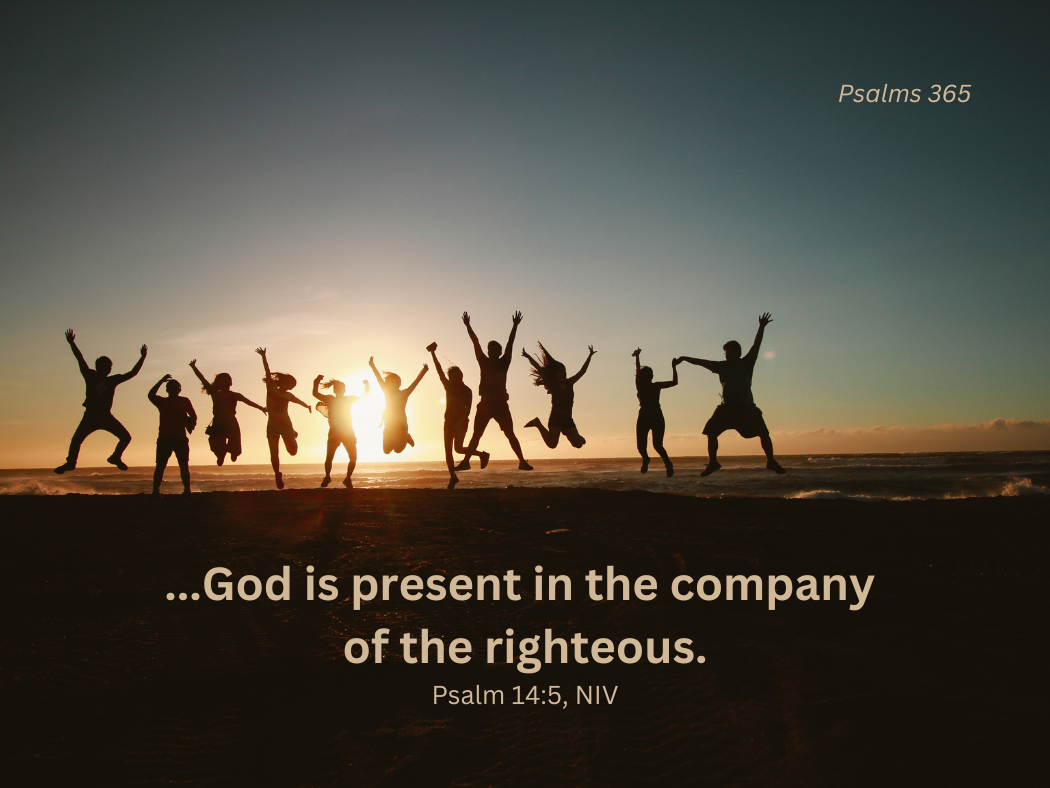
for God is present in the company of the righteous.
You evildoers frustrate the plans of the poor,
but the LORD is their refuge.
Oh, that salvation for Israel would come out of Zion!
When the LORD restores his people,
let Jacob rejoice and Israel be glad! (NIV) *
Reflection
Apparently, atheism is not a modern phenomenon. Three thousand years ago in David’s time, there were people who said in their heart, “There is no God.” Atheism has a long and ignoble pedigree. I say ignoble because as David observes, it is the fool who says, “There is no God” (v. 1).

There is a footnote in my Bible indicating the word translated in this psalm as fool denotes someone who is morally deficient. David goes on to describe this moral deficiency. He uses the words corrupt and vile. In fact, there is a complete absence of anything good. But this isn’t just David’s indictment against a few errant atheists; this is the LORD’s view of all mankind. All have turned away, all have become corrupt; there is no one who does good, not even one (v. 3). In the New Testament, Paul the Apostle quotes from this psalm in his epistle to the Romans as he outlines the depravity of humanity.

Is there a link between unbelief and the sinful state of the human soul? Does sin breed unbelief? There is ample biblical and anecdotal evidence that it does. When Adam and Eve sinned, in an instant, they turned from God seekers to God avoiders. Add a little more sin, and it’s only a short step for a God avoider to become a God denier.

We deny the existence of God to avoid accountability for our sin. We foolishly assume that since we can’t see God, He can’t see us and our misdeeds. Better yet why not pretend God doesn’t exist? Then we are at liberty to sin as much as we please without fear of God’s judgment. That sounds like morally deficient reasoning to me. But the fool fools only himself.

Response: Father, I want to seek you always, especially when I sin. That’s when I need you most. You have the remedy for my sin—the blood of Jesus. You forgive me and clean me up. Amen.

Your Turn: Does sinful conduct affect or infect your belief system? How does sin cloud our reasoning?

Para la publicación de Salmos 365 de hoy en español haga clic aquí.

bgbg_v4.3_1501818
* NEW INTERNATIONAL VERSION, COPYRIGHT ©1973, 1978, 1984, 2011 BY BIBLICA

Thank God for peace in Israel and Gaza,
and continue to pray for peace to return to Ukraine and Russia!

Volume I of Psalms 365: Develop a Life of Worship and Prayer won the Best Book of the Year Award from The Word Guild and Volume II has won the Best Devotional of the Year Award. For those who love God’s word, this three-book series is an ideal way to daily meet with the Lord. To purchase or for a closer look click here.

New from David Kitz

James—the brother of Jesus—who was this man? What evidence do we have that this “brother of our Lord” even existed?

David Kitz digs deep into archeology, family dynamics, church history, and the biblical texts. What emerges from his research is a portrait of a decisive, pivotal leader who embodied the will and character of Jesus Christ.

But how did James—James the unbeliever—transform to become a leader who changed the course of world history? In these pages you will uncover the answer and rediscover for yourself the life-changing power of the gospel.

To view further details or purchase this or other books directly from the author click here.

They Did Not Believe in God

11 Monday Apr 2022

Posted by davidkitz in Psalm 78, Psalms

≈ 15 Comments

Tags

childlike faith, faith in God, trust in God, Unbelief

Reading: Psalm 78:17-22
But they continued to sin against him,
rebelling in the wilderness against the Most High.
They willfully put God to the test
by demanding the food they craved.
They spoke against God;
they said, “Can God really
spread a table in the wilderness?
True, he struck the rock,
and water gushed out,
streams flowed abundantly,
but can he also give us bread?
Can he supply meat for his people?”
When the Lord heard them, he was furious;
his fire broke out against Jacob,
and his wrath rose against Israel,
for they did not believe in God
or trust in his deliverance
(NIV).*

img_20220404_1058102

Ice chunks on the river shore — photo by David Kitz

Reflection
Psalm 78 is largely an indictment against the people of Israel for their lack of faith and their rebellious ways. As the psalmist says, “They willfully put God to the test.”

As a child I recall reading the entire book of Exodus and thinking to myself, “Wow, these people sure are dumb. How could they see God’s amazing miracles and then a few days later grumble, complain and doubt that the LORD would help them? These people are real losers!”

Then I grew up and had a family of my own. At times I saw amazing miracles and God’s supernatural provision. But guess what? When the next big difficulty arose, I found myself doubting God would come through. I complained about the difficulty I was in and acted just like the people of Israel in the wilderness.

Oops! I thought I was different. I thought I was smarter than those spiritual dullards in the Old Testament. In reality my grownup faith was much weaker than my childhood faith. When real testing and temptation came, I was and still am, as susceptible to unbelief as any of the wandering Israelites in the wilderness. Faith is a gift from God—a wonder-filled gift that carries us through the hard times.

The indictment against Israel is that they did not believe in God or trust in his deliverance. Do I truly believe in God and trust in his deliverance? Is my faith more than a creedal statement? Does it have legs and wings to carry me through the toughest situation? Often, I am more like the rebellious children of Israel than I would like to admit. How about you?

Response: LORD God, I humbly ask you for the gift of faith—faith to sustain me through the tough times ahead. You are my help, my salvation, and my deliverer. I praise you for your faithfulness. Amen.

Your Turn: Do you have grown-up faith or childlike faith? Which is better? Why?

* NEW INTERNATIONAL VERSION, COPYRIGHT ©1973, 1978, 1984, 2011 BY BIBLICA

BGBG_v4.3_150[1818]

Please pray for the people of Ukraine!

Volume I of Psalms 365: Develop a Life of Worship and Prayer has won the 2021 Best Book of the Year Award and for those who love God’s word, it’s an ideal way to daily meet with the Lord. For a closer look at Volumes II and III click here.

They Are Corrupt

02 Thursday Sep 2021

Posted by davidkitz in Psalm 14, Psalms

≈ 12 Comments

Tags

Atheism, atheists, depravity, Unbelief

Reading: Psalm 14
For the director of music. Of David.
The fool says in his heart, “There is no God.”
They are corrupt, their deeds are vile;
there is no one who does good.
The L
ORD looks down from heaven on all mankind
to see if there are any who understand, any who seek God.
All have turned away, all have become corrupt;
there is no one who does good, not even one.
Do all these evildoers know nothing?
They devour my people as though eating bread;
they never call on the L
ORD.
But there they are, overwhelmed with dread,
for God is present in the company of the righteous.
You evildoers frustrate the plans of the poor,
but the L
ORD is their refuge.
Oh, that salvation for Israel would come out of Zion!
When the L
ORD restores his people,
let Jacob rejoice and Israel be glad!
(NIV)*

img_20210817_1435597

Backyard garden glory — photo by David Kitz

Reflection
Apparently, atheism is not a modern phenomenon. Three thousand years ago in David’s time, there were people who said in their heart, “There is no God.” Atheism has a long and ignoble pedigree. I say ignoble because as David observes, it is the fool who says, “There is no God.”

There is a footnote in my Bible indicating that the word translated in this psalm as fool denotes someone who is morally deficient. David goes on to describe this moral deficiency. He uses the words corrupt and vile. In fact there is a complete absence of anything good. But this isn’t just David’s indictment against a few errant atheists; this is the LORD’s view of all mankind. All have turned away, all have become corrupt; there is no one who does good, not even one. In the New Testament, Paul the Apostle quotes from this psalm in his epistle to the Romans as he outlines the depravity of humanity.

Is there a link between unbelief and the sinful state of the human soul? Does sin breed unbelief? There is ample biblical and anecdotal evidence that it does. When Adam and Eve sinned, in an instant, they turned from God seekers to God avoiders. Add a little more sin, and it’s only a short step for a God avoider to become a God denier.

We deny the existence of God to avoid accountability for our sin. We foolishly assume that since we can’t see God, He can’t see us and our misdeeds. Better yet, why not pretend that God doesn’t exist? Then we are at liberty to sin as much as we please without fear of God’s judgment. That sounds like morally deficient reasoning to me. The fool fools only himself.

Response: Father, I want to seek you always, especially when I sin. That’s when I need you most. You have the remedy for my sin—the blood of Jesus. You forgive me and clean me up. Amen.

Your Turn: Does sinful conduct affect or infect your belief system? How does sin cloud our reasoning?

* NEW INTERNATIONAL VERSION, COPYRIGHT ©1973, 1978, 1984, 2011 BY BIBLICA

BGBG_v4.3_150[1818]

https://BibleGateway.com/blog/bloggergrid/

Volume III of Psalms 365: Develop a Life of Worship and Prayer by award-winning author David Kitz is available now. Journey through the Psalms in a year. For a closer look at Volumes I and II click here.

We Trust God to Break Chains

23 Saturday Jan 2021

Posted by davidkitz in Psalm 107

≈ 1 Comment

Tags

chains, disease, gospel, sin, Unbelief

Today’s verse from the Psalms
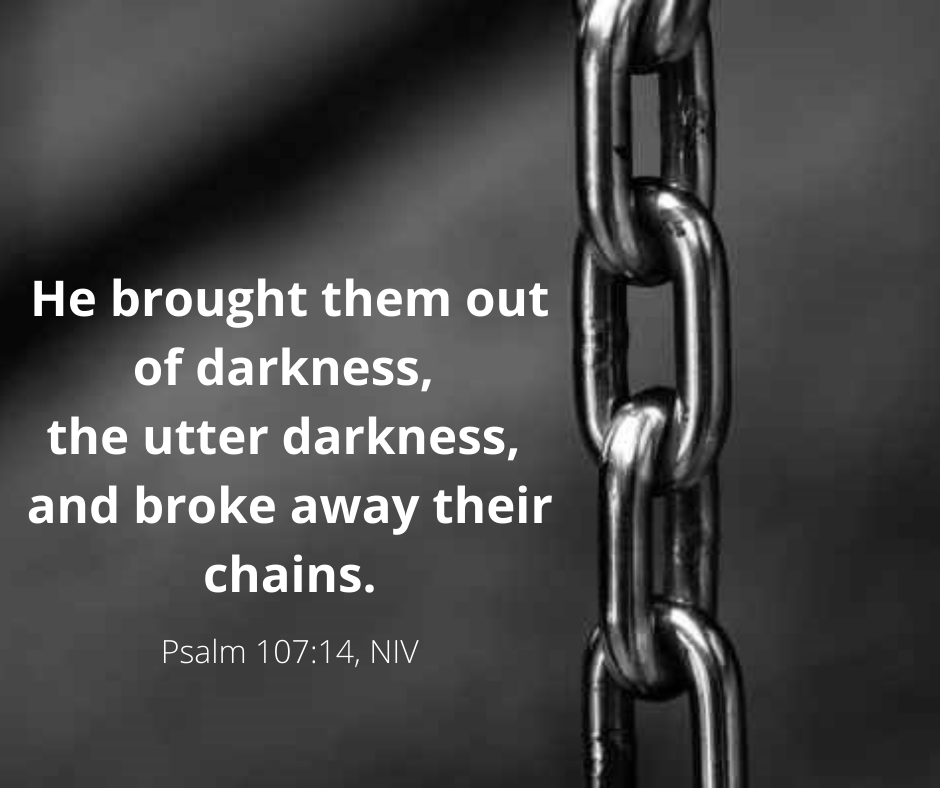
Psalm 107_14Heavenly Father,
In 2021, we trust you to break away our chains,
and release those who are bound
in whatever form that takes.
We pray and decree release from sin,
disease and unbelief
by the power of the gospel
and the shed blood of Jesus.
Amen.

The first volume of Psalms 365: Develop a Life of Worship and Prayer by award-winning author David Kitz is now available. For a closer look at this 262-page daily devotional book click here.

Old Testament Spiritual Dullards

09 Monday Nov 2020

Posted by davidkitz in Psalm 78, Psalms

≈ 5 Comments

Tags

childlike faith, faith, faith in God, miracles, Unbelief

Reading: Psalm 78
(Verses 17-22)
But they continued to sin against him,
rebelling in the wilderness against the Most High.
They willfully put God to the test
by demanding the food they craved.
They spoke against God;
they said, “Can God really
spread a table in the wilderness?
True, he struck the rock,
and water gushed out,
streams flowed abundantly,
but can he also give us bread?
Can he supply meat for his people?”
When the Lord heard them, he was furious;
his fire broke out against Jacob,
and his wrath rose against Israel,
for they did not believe in God
or trust in his deliverance
(NIV).*

20201015a L Kranz

Algonquin Park photo courtesy of Liz Kranz

Reflection
Psalm 78 is largely an indictment against the people of Israel for their lack of faith and their rebellious ways. As the psalmist says, “They willfully put God to the test.”

As a child I recall reading the entire book of Exodus and thinking to myself, “Wow, these people sure are dumb. How could they see God’s amazing miracles and then a few days later grumble, complain and doubt that the LORD would help them? These people are real losers!”

Then I grew up and had a family of my own. At times I saw amazing miracles and God’s supernatural provision. But guess what? When the next big difficulty arose, I found myself doubting that God would come through. I complained about the difficulty I was in and acted just like the people of Israel in the wilderness.

Oops! I thought I was different. I thought I was smarter than those spiritual dullards in the Old Testament. In reality my grownup faith was much weaker than my childhood faith. When real testing and temptation came, I was and still am, as susceptible to unbelief as any of the wandering Israelites in the wilderness. Faith is a gift from God—a wonder-filled gift that carries us through the hard times.

The indictment against Israel is that they did not believe in God or trust in his deliverance. Do I truly believe in God and trust in his deliverance? Is my faith more than a creedal statement? Does it have legs and wings to carry me through the toughest situation? Often I am more like the rebellious children of Israel than I would like to admit. How about you? 

Response: LORD God, I humbly ask you for the gift of faith—faith to sustain me through the tough times ahead. You are my help, my salvation and my deliverer. I praise you for your faithfulness. Amen.

Your Turn: Do you have grown-up faith or childlike faith? Which is better?

* New International Version, Copyright ©1973, 1978, 1984, 2011 by Biblica

Some good news: The first volume of Psalms 365: Develop a Life of Worship and Prayer by award-winning author David Kitz will be published in November, 2020, by Elk Lake Publishing. Two additional volumes will follow in 2021 to complete the three volume set of devotions from the Psalms.

Are We God Avoiders?

02 Thursday Apr 2020

Posted by davidkitz in Devotionals, Psalm 14, Psalms

≈ 3 Comments

Tags

accountability, Atheism, atheists, seeking God, Unbelief

Reading: Psalm 14
For the director of music. Of David.
The fool says in his heart, “There is no God.”
They are corrupt, their deeds are vile;
there is no one who does good.
The L
ORD looks down from heaven on all mankind
to see if there are any who understand, any who seek God.
All have turned away, all have become corrupt;
there is no one who does good, not even one.
Do all these evildoers know nothing?
They devour my people as though eating bread;
they never call on the L
ORD.
But there they are, overwhelmed with dread,
for God is present in the company of the righteous.
You evildoers frustrate the plans of the poor,
but the L
ORD is their refuge.
Oh, that salvation for Israel would come out of Zion!
When the L
ORD restores his people,
let Jacob rejoice and Israel be glad!
(NIV)*

img_20200327_1539419

Spring melt along the Ottawa River — photo by David Kitz

Reflection
Apparently, atheism is not a modern phenomenon. Three thousand years ago in David’s time, there were people who said in their heart, “There is no God.” Atheism has a long and ignoble pedigree. I say ignoble because as David observes, it is the fool who says, “There is no God.”

There is a footnote in my Bible indicating that the word translated in this psalm as fool denotes someone who is morally deficient. David goes on to describe this moral deficiency. He uses the words corrupt and vile. In fact there is a complete absence of anything good. But this isn’t just David’s indictment against a few errant atheists; this is the LORD’s view of all mankind. All have turned away, all have become corrupt; there is no one who does good, not even one. In the New Testament, Paul the Apostle quotes from this psalm in his epistle to the Romans as he outlines the depravity of humanity.

Is there a link between unbelief and the sinful state of the human soul? Does sin breed unbelief? There is ample biblical and anecdotal evidence that it does. When Adam and Eve sinned, in an instant, they turned from God seekers to God avoiders. Add a little more sin, and it’s only a short step for a God avoider to become a God denier.

We deny the existence of God to avoid accountability for our sin. We foolishly assume since we can’t see God, He can’t see us and our misdeeds. Better yet, why not pretend that God doesn’t exist? Then we are at liberty to sin as much as we please without fear of God’s judgment. That sounds like morally deficient reasoning to me. The fool fools only himself.

Response: Father, I want to seek you always, especially when I sin. That’s when I need you most. You have the remedy for my sin—the blood of Jesus. You forgive me and clean me up. Amen.

Your Turn: Does sinful conduct affect or infect your belief system? How does sin cloud our reasoning?

* New International Version, Copyright ©1973, 1978, 1984, 2011 by Biblica

This post by award-winning author David Kitz will be published in book format later in 2020 by Elk Lake Publishing under the title 365 Days through the Psalms.

The Atheist Deceives Himself

06 Tuesday Nov 2018

Posted by davidkitz in Bible, Devotionals, Psalm 14, Psalms

≈ 29 Comments

Tags

accountability, Atheism, fool, moral deficiency, sin, sinful nature, Unbelief

Reading: Psalm 14
For the director of music. Of David.
The fool says in his heart, “There is no God.”
They are corrupt, their deeds are vile;
there is no one who does good.
The L
ORD looks down from heaven on all mankind
to see if there are any who understand, any who seek God.
All have turned away, all have become corrupt;
there is no one who does good, not even one.
Do all these evildoers know nothing?
They devour my people as though eating bread;
they never call on the L
ORD.
But there they are, overwhelmed with dread,
for God is present in the company of the righteous.
You evildoers frustrate the plans of the poor,
but the L
ORD is their refuge.
Oh, that salvation for Israel would come out of Zion!
When the L
ORD restores his people,
let Jacob rejoice and Israel be glad!
(NIV)

20181010_1211486

The forest surrounding Lake Fortune in Gatineau Park — photo by David Kitz

Reflection
Apparently, atheism is not a modern phenomenon. Three thousand years ago in David’s time, there were people who said in their heart, “There is no God.” Atheism has a long and ignoble pedigree. I say ignoble because as David observes, it is the fool who says, “There is no God.”

There is a footnote in my Bible indicating that the word translated in this psalm as fool denotes someone who is morally deficient. David goes on to describe this moral deficiency. He uses the words corrupt and vile. In fact there is a complete absence of anything good. But this isn’t just David’s indictment against a few errant atheists; this is the LORD’s view of all mankind. All have turned away, all have become corrupt; there is no one who does good, not even one. In the New Testament, Paul the Apostle quotes from this psalm in his epistle to the Romans as he outlines the depravity of humanity.

Is there a link between unbelief and the sinful state of the human soul? Does sin breed unbelief? There is ample biblical and anecdotal evidence that it does. When Adam and Eve sinned, in an instant, they turned from God seekers to God avoiders. Add a little more sin, and it’s only a short step for a God avoider to become a God denier.

We deny the existence of God to avoid accountability for our sin. We foolishly assume that since we can’t see God, He can’t see us and our misdeeds. Better yet, why not pretend that God doesn’t exist? Then we are at liberty to sin as much as we please without fear of God’s judgment. That sounds like morally deficient reasoning to me. The fool fools only himself.

Response: Father, I want to seek you always, especially when I sin. That’s when I need you most. You have the remedy for my sin—the blood of Jesus. You forgive me and clean me up. Amen.

Your Turn: Does sinful conduct affect or infect your belief system? Does sin cloud our reasoning?

Someone Stood Up and Intervened

04 Friday May 2018

Posted by davidkitz in Bible, Devotionals, God's word, Psalm 106, Psalms

≈ 1 Comment

Tags

Baal, idolatry, MacNutt SK, merciful, Moses, Phinehas, prodigal, rebellion, the LORD, transgressions, Unbelief

Reading:                                     Psalm 106                                                                 

 (Verses 28-39)
They yoked themselves to the Baal of Peor
and ate sacrifices offered to lifeless gods;
they aroused the L
ORD’s anger by their wicked deeds,
and a plague broke out among them.
But Phinehas stood up and intervened,
and the plague was checked.
This was credited to him as righteousness
for endless generations to come.
By the waters of Meribah they angered the L
ORD,
and trouble came to Moses because of them;
for they rebelled against the Spirit of God,
and rash words came from Moses’ lips.
They did not destroy the peoples as the LORD had commanded them,
but they mingled with the nations and adopted their customs.
They worshiped their idols, which became a snare to them.
They sacrificed their sons and their daughters to false gods.
 They shed innocent blood, the blood of their sons and daughters,
whom they sacrificed to the idols of Canaan,
and the land was desecrated by their blood.
They defiled themselves by what they did;
by their deeds they prostituted themselves
(NIV).

Reflection
Psalm 106 began with with praise, but in verse three it transitioned to this opening thought, “Blessed are those who act justly, who always do what is right.”

D Adam 3

Setting sun near MacNutt, SK — photo courtesy of Donald Adam

Now there’s a mind-blowing concept. Talk about setting the bar completely out of reach! Nobody—I repeat—nobody always does right and acts justly in every situation. Human fallibility and self-interest dictate to the contrary.

The psalmist then goes on to recount a litany of Israel’s sins. By my estimation there are nine major transgressions outlined in Israel’s history through this psalm. There’s a failure to remember God’s kindness. There’s rebellion, wickedness, idolatry, envy, sensual craving, impatience, ingratitude, unbelief, outright disobedience, bloodshed, human sacrifice and further rebellion.

What is truly remarkable about this psalm is not Israel’s sinful ways; sinful ways are common to all humanity. What is truly mind-boggling is God’s faithfulness and readiness to forgive. He hears us in our distress. He seeks out the lost and wayward. He welcomes back the sin infested prodigals knowing full well where they have been. That’s the wonder of our God. He is always, always, always ready to forgive, when we are ready to admit the error of our ways. Now that’s a reason for praise!

Response: Father God, I acknowledge that my people and my nation have been caught up in sinful ways. Please be merciful to us. We are deserving of your judgment. Forgive us through your son Jesus. Amen.

Your Turn: Like Phinehas are you ready to take a stand against sin in your life and your community?

Lies, Unbelief and Disloyalty

22 Monday Jan 2018

Posted by davidkitz in Bible, Devotionals, Psalm 78, Psalms

≈ 6 Comments

Tags

disloyal, Gatineau Park, God, grace of God, hate, lies, love, mercy, Righteousness, the LORD, Unbelief

Reading:                                      Psalm 78

(Verses 32-39)
In spite of all this, they kept on sinning;
in spite of his wonders, they did not believe.
So he ended their days in futility
and their years in terror.
Whenever God slew them, they would seek him;
they eagerly turned to him again.
They remembered that God was their Rock,
that God Most High was their Redeemer.
But then they would flatter him with their mouths,
lying to him with their tongues;
their hearts were not loyal to him,
they were not faithful to his covenant.
Yet he was merciful;
he forgave their iniquities
and did not destroy them.
Time after time he restrained his anger
and did not stir up his full wrath.
He remembered that they were but flesh,
a passing breeze that does not return
(NIV).

Reflection
Psalm 78 is a lengthy indictment against the people of Israel for their unfaithfulness to the LORD. Sometimes it’s easy to forget that these were the people of God—His chosen people—yet they responded with lies, unbelief and disloyalty. If this is how the people of God conduct themselves, what are we to expect from those who do not know the LORD?

DSCN1671

Autumn glory in Gatineau Park — photo by David Kitz

Unfortunately, the people of God today are not so different from the people of Israel 3,000 years ago. When we look about the church world, we see a plenty of division, backbiting and sin. All too often hate rules instead of love. We cover ourselves with a fig leaf of self-righteousness and then proceed to attack those who fail to meet our standard. We do all this while we are trapped in our own secret web of sin. We are determined to clean up the world while ignoring our personal pile of filth.

The words of Jesus from his Sermon on the Mount still ring true today, “How can you say to your brother, ‘Let me take the speck out of your eye,’ when all the time there is a plank in your own eye? You hypocrite, first take the plank out of your own eye, and then you will see clearly to remove the speck from your brother’s eye” (Matthew 7:4-5).

But given this deplorable state of affairs, what does the LORD do? The psalmist states, “Yet he was merciful; he forgave their iniquities and did not destroy them.” Like the people of ancient Israel, we are saved not because of our righteousness, but solely because of God’s mercy and grace.

Response: LORD God, I cannot boast because of my righteousness. You know all my shortcomings. I have an impressive pile of personal sin. Forgive me through the mercy of your son, Jesus. Amen.

Your Turn: Have you been guilty of pointing out the faults of others while ignoring your own?

The Faith of a Child

18 Thursday Jan 2018

Posted by davidkitz in Bible, Devotionals, Psalm 78, Psalms

≈ 6 Comments

Tags

Chateau Montebello, children, faith, grumbling, Israel, lack of faith, miracles, rebellious ways, temptations, testing God, trust in God, Unbelief

Reading:                                      Psalm 78

(Verses 17-22)
But they continued to sin against him,
rebelling in the wilderness against the Most High.
They willfully put God to the test
by demanding the food they craved.
They spoke against God;
they said, “Can God really
spread a table in the wilderness?
True, he struck the rock,
and water gushed out,
streams flowed abundantly,
but can he also give us bread?
Can he supply meat for his people?”
W
hen the Lord heard them, he was furious;
his fire broke out against Jacob,
and his wrath rose against Israel,
for they did not believe in God
or trust in his deliverance
(NIV).

Reflection
Psalm 78 is largely an indictment against the people of Israel for their lack of faith and their rebellious ways. As the psalmist says, “They willfully put God to the test.”

img_20170105_112937

Chateau Montebello, Montebello, QB — photo by David Kitz

As a child I recall reading the entire book of Exodus and thinking to myself, “Wow, these people sure are dumb. How could they see God’s amazing miracles and then a few days later grumble, complain and doubt that the LORD would help them? These people are real losers!”

Then I grew up and had a family of my own. At times I saw amazing miracles and God’s supernatural provision. But guess what? When the next big difficulty arose, I found myself doubting that God would come through. I complained about the difficulty I was in and acted just like the people of Israel in the wilderness.

Oops! I thought I was different. I thought I was smarter than those spiritual dullards in the Old Testament. In reality my grownup faith was much weaker than my childhood faith. When real testing and temptation came, I was and still am, as susceptible to unbelief as any of the wandering Israelites in the wilderness. Faith is a gift from God—a wonder-filled gift that carries us through the hard times.

The indictment against Israel is that they did not believe in God or trust in his deliverance. Do I truly believe in God and trust in his deliverance? Is my faith more than a creedal statement? Does it have legs and wings to carry me through the toughest situation? Often I am more like the rebellious children of Israel than I would like to admit. How about you?

Response: LORD God, I humbly ask you for the gift of faith—faith to sustain me through the tough times ahead. You are my help, my salvation and my deliverer. I praise you for your faithfulness. Amen.

Your Turn: Do you have grown-up faith or childlike faith? Which is better?

← Older posts

Psalms 365: Develop a Life of Worship and Prayer

Psalms 365 Volume II

Psalms 365 vol 3
— Psalms 365 Volume III

Psalms

Recent posts

  • Above All Gods January 9, 2026
  • The Need for a Place of Refuge January 9, 2026
  • David Dances before the LORD January 8, 2026
  • The God of Turn-Arounds January 8, 2026
  • The LORD Who Heals You January 7, 2026
  • Why Praise God? January 7, 2026
  • I Give You My Peace January 6, 2026

Calendar

January 2026
M T W T F S S
 1234
567891011
12131415161718
19202122232425
262728293031  
« Dec    

Blog Posts

Comments

  • davidkitz on The Ultimate Come from Behind Victory  
  • cjsmissionaryminister on Preparing a Landing Strip for the Holy Spirit
  • cjsmissionaryminister on The Ultimate Come from Behind Victory  

Blog at WordPress.com.

Privacy & Cookies: This site uses cookies. By continuing to use this website, you agree to their use.
To find out more, including how to control cookies, see here: Cookie Policy
  • Subscribe Subscribed
    • I love the Psalms
    • Join 1,381 other subscribers
    • Already have a WordPress.com account? Log in now.
    • I love the Psalms
    • Subscribe Subscribed
    • Sign up
    • Log in
    • Report this content
    • View site in Reader
    • Manage subscriptions
    • Collapse this bar
 

Loading Comments...