• Home
  • About
  • DavidKitz.ca
  • Youtube Videos
  • Books by David
  • Books on Amazon.com

I love the Psalms

~ Connecting daily with God through the Psalms

I love the Psalms

Author Archives: davidkitz

Glorious and Majestic Are His Deeds

05 Sunday Oct 2025

Posted by davidkitz in Psalm 111, Psalms

≈ Leave a comment

Tags

Bible, compassion of God, compassionate, covenant, grace of God, gracious, praise the LORD, Righteousness, the LORD

I will praise the LORD!

Psalm 111:1-5

Praise the LORD.
I will extol the LORD with all my heart
    in the council of the upright
and in the assembly.


Great are the works of the LORD;
    they are pondered by all who delight in them.
Glorious and majestic are his deeds,
    and his righteousness endures forever.
He has caused his wonders to be remembered;
    the LORD is gracious and compassionate.
He provides food for those who fear him;
    he remembers his covenant forever.
 *

Para la publicación de Salmos 365 de hoy en español haga clic aquí.

bgbg_v4.3_1501818
* NEW INTERNATIONAL VERSION, COPYRIGHT ©1973, 1978, 1984, 2011 BY BIBLICA

Please pray for peace to return to Israel, Gaza, and Ukraine!

Volume I of Psalms 365: Develop a Life of Worship and Prayer won the Best Book of the Year Award from The Word Guild and Volume II has won the Best Devotional of the Year Award. For those who love God’s word, this three-book series is an ideal way to daily meet with the Lord. To purchase or for a closer look click here.

Coming soon…

The Miraculous Power of the New Elisha

05 Sunday Oct 2025

Posted by davidkitz in The Elisha Code

≈ 2 Comments

Tags

Bible, Elijah, Elisha, feeding the five thousand, Jesus, Jewish, miracle, miracles, New Testament, Old Testament, prophet, supernatural, the LORD

Then he took the mantle of Elijah that had fallen from him,
and struck the water, and said,
“Where is the L
ORD
 God of Elijah?”
And when he also had struck the water, 
it was divided this way and that;
and Elisha crossed over.
(2 Kings 2:14, NKJV)

What defines you? Many of us are defined by our work, service, or occupation. We commonly identify people by their occupation or profession, so we speak of Bob, the plumber, Maryanne, the nurse, and Tom, the teacher.

Two office workers working at architect project, elevated view

The Old Testament prophets played a unique role in the plan of God for his people. But unlike angels sent from heaven, they were the LORD’s earthbound messengers—frail human agents sent to his wayward children. Frequently, they heralded a message of repentance, and they used various means to communicate the word of the LORD. Many of them were writers and their writings became an integral part of the Holy Scriptures. Isaiah, Jeremiah, and Amos are examples of these author-prophets who continue to influence lives today through the written Word.

Elijah and Elisha are prime examples of the non-literary prophets. They did not pen any of the books of the Bible, though their deeds are recorded in the Scriptures so we can learn from their ministry and example. What made this prophetic duo unique was the miraculous signs that accompanied their ministry. Specifically, Elisha, the prophet, was defined by his miracle-working power. The LORD granted his request for a double portion of Elijah’s miracle-working anointing.

But there is more to Elisha’s miraculous signs than a simple display of God’s power. In scope and sequence, Elisha’s miracles run parallel to the miracles of Jesus in a most remarkable way.
However, before we consider the miracles of Jesus and Elisha, we should first be aware that their names are identical in meaning. In his commentary on 1 & 2 Kings, Iain W. Provan makes the following statement:

…that the names “Joshua,” “Elisha,” and “Jesus” have essentially the same meaning (“God saves”), and that John the Baptist is so clearly identified in the Gospels with Elijah, it is intriguing that more is not explicitly made in the NT of the Jesus-Elisha connection.[i]

With these words, Provan has clearly identified the Jesus-Elisha connection that is at the heart of the Elisha Code. The first clue in interpreting the Elisha code is found in the names of these two Bible characters. Both men are identified as saviors of their people.

The second clue or identifying marker comes in the miracles they performed.

Let’s begin by looking at the first miracle of Elisha’s public ministry.

            The people of the city said to Elisha, “Look, our lord, this town is well situated, as you can see, but the water is bad and the land is unproductive.”

          “Bring me a new bowl,” he said, “and put salt in it.”

          So they brought it to him. Then he went out to the spring and threw the salt into it, saying, “This is what the Lord says: ‘I have healed this water. Never again will it cause death or make the land unproductive.’” And the water has remained pure to this day, according to the word Elisha had spoken. (1 Kings 2:19-22, NIV).

There is a striking similarity between Elisha’s first public miracle and Jesus’ first miracle—his turning of water into wine as recorded in John 2:1-12. Both miracles involve the transformation of water—foul water into good water by Elisha—and good water into amazing wine by Jesus.

Photo by cottonbro studio on Pexels.com

Both men act at the request of others. Both solve the problem before them by unexpected means.
Jericho is located on the plain of Jordan River near the very saline waters of the Dead Sea. Why was the water bad and the land unproductive? The obvious answer is the high salt content in the soil and water. But what does Elisha do? He asks for a new bowl full of salt.

Can you imagine the consternation of the onlookers as this rooky prophet throws a bowl full of salt into this alkaline spring? Can you hear them muttering, “Good grief! How will that help?”
But Elisha spoke the word of the LORD, “I have healed this water. Never again will it cause death or make the land unproductive.”

In the same way, Jesus, the Word incarnate, spoke transformation over the contents of six twenty-to-thirty-gallon stone jars at the Cana wedding. Imagine the astonishment of the servants who having poured in water, moments later draw out the finest of wines.[ii]

This miraculous sign pointed to the divine nature of the Messiah. He not only duplicates the Elisha miracles but elevates them to a new level. Furthermore, Jesus has been busy transforming the contents of earthen vessels—human vessels—since that time to this present moment.

Which of Elisha’s miracles do believers most readily recall? Undoubtedly, it is the healing of the leper Naaman (2 Kings 5). The story of this Syrian general is frequently taught in Sunday School and occasionally it forms the text for a Sunday sermon. From Elisha’s long series of miracles, pastors and teachers most often cite this account of a healed leper.

In Matthew’s Gospel, following the Sermon on the Mount, the first miracle Jesus performs is the healing of a man with leprosy.

           When Jesus came down from the mountainside, large crowds followed him. A man with leprosy came and knelt before him and said, “Lord, if you are willing, you can make me clean.”
           Jesus reached out his hand and touched the man. “I am willing,” he said. “Be clean!” Immediately he was cleansed of his leprosy. Then Jesus said to him, “See that you don’t tell anyone. But go, show yourself to the priest and offer the gift Moses commanded, as a testimony to them”
(Matthew 8:1-4, NIV).

This miracle acted as a signal—a beacon of hope. A new era had dawned. Surely, the prophets of old had returned. After a long absence, they had returned in spirit and power. Those who were alert to the Scriptures could read the signs of the times. The first sign was visible in the transformed body of this leper. The incurable leper had been cured!

Surely the final words of the prophet Malachi were being fulfilled:

            “See, I will send the prophet Elijah to you before that great and dreadful day of the LORD comes. He will turn the hearts of the parents to their children, and the hearts of the children to their parents; or else I will come and strike the land with total destruction” (Malachi 4:5-6, NIV).

The ministry of John the Baptist was the fulfilment of this prophecy, and now Jesus the miracle worker was on the scene duplicating the wonders of Elisha’s ministry. The Old Testament dynamic duo had returned, and the string of miracles recorded in Matthew chapters eight through ten bear witness to this thesis. Each successive miracle acts as a signpost helping us to crack the Elisha code.

Before we continue our look at these signposts, a word of clarification is warranted. When we consider the return of Elijah and Elisha in New Testament times, we should not view this as a form of biblical reincarnation. The Bible does not support an intrusion of Hindu religious philosophy into Christian theology.

When Jesus says of John the Baptist “he is the Elijah who was to come” (Matthew 11:14, NIV), Jesus is speaking metaphorically as he so often did. Other examples of Jesus employing metaphors are statements such as “I am the bread of life” (John 6:35) or “I am the gate for the sheep” (John 10:7).
In clear and direct language, Jesus was stating that John was the prophetic fulfillment of Malachi 4:5-6, the last passage of the Old Testament covenant.

John the Baptist’s link to Elijah is best summed up in the words of the angel Gabriel spoken to John’s father, Zechariah, before the conception of this New Testament prophet:

“He will bring back many of the people of Israel to the Lord their God. And he will go on before the Lord, in the spirit and power of Elijah, to turn the hearts of the parents to their children and the disobedient to the wisdom of the righteous—to make ready a people prepared for the Lord” (Luke 1:16-17, NIV).

Matthew immediately follows up his account of the healing of the leper with the healing of the centurion’s servant (Matthew 8:5-13). Again, there is an unmistakable link here. Elisha healed Naaman, a foreign military leader of leprosy. Similarly, Jesus, the New Testament healing prophet, after healing a leper, commends the great faith of a foreign military leader before going on to heal this Roman centurion’s servant.

The perceptive Jewish reader of Matthew’s Gospel would be intrigued by this juxtaposition of events. But alas, because we may not be steeped in the Jewish Old Testament tradition, we can too easily breeze past these accounts and see no connection between what Jesus is doing and what Elisha did.

Jesus is our source of living water — photo courtesy of Liz Kranz

The second most frequently sited miracle of Elisha is the raising of the Shunammite’s son from the dead. See 2 Kings 4:8-37. Again, there is a parallel story of bringing a child back to life in Matthew’s Gospel.

While he [Jesus] was saying this, a synagogue leader came and knelt before him and said, “My daughter has just died. But come and put your hand on her, and she will live” (Matthew 9:18, NIV).

The circumstances of the synagogue leader are strikingly similar to the plight of the Shunammite. In both cases, after the death of their child, they travel to their local healing prophet—respectively Elisha and Jesus—fall on their knees before him and plead for the prophet’s intervention. The healing prophet responds by traveling to their home, going alone into to a private room, and raising the child back to life.

Is this similarity a coincidence? Perhaps. If there were two or three instances of similarity in the miracles of Elisha and Jesus, we could chalk it up to coincidence, but as we continue to explore further, we will see a distinct pattern developing. Remarkably many of the miracles of Jesus resemble the miracles of Elisha, though they often rise to a new or higher level.

A classic example of this is Jesus’ feeding of the five thousand. This miracle is found in each of the four Gospels. Furthermore, Matthew and Mark record not one, but two mass feedings, the feeding of the five thousand (Matthew 14:13-21, Mark 6:30-44) and the feeding of the four thousand (Matthew 15:29-39, Mark 8:1-9). But who performed the first miracle of mass feeding recorded in the Scriptures? If you guessed Elisha, give yourself a gold star.

             A man came from Baal Shalishah, bringing the man of God twenty loaves of barley bread baked from the first ripe grain, along with some heads of new grain.

           “Give it to the people to eat,” Elisha said.

           “How can I set this before a hundred men?” his servant asked.

            But Elisha answered, “Give it to the people to eat. For this is what the LORD says: ‘They will eat and have some left over.’” Then he set it before them, and they ate and had some left over, according to the word of the LORD. (2 Kings 4:42-44, NIV)

Despite the much smaller scale of Elisha’s miracle, we see a similar pattern in how this miracle rolls out when it is compared with Jesus’ two crowd-feeding miracles. This includes the instructions given by the respective prophet, the response of their doubt-filled followers, and all three accounts conclude by referring to a surplus of leftovers.

Elisha also accomplished the only miracle of supernatural buoyancy found in the Hebrew Scriptures.

           As one of them was cutting down a tree, the iron axhead fell into the water. “Oh no, my lord!” he cried out. “It was borrowed!”
          The man of God asked, “Where did it fall?” When he showed him the place, Elisha cut a stick and threw it there, and made the iron float. “Lift it out,” he said. Then the man reached out his hand and took it. (2 Kings 6:5-7, NIV).

This is a stunning miracle, but Jesus—Elisha’s New Testament prophetic counterpart—elevates supernatural buoyancy to a whole new level. He walks on water (Matthew 14:22-33, Mark 6:45-52, John 6:15-21), and enables Peter to do the same.

There are also a few examples where Elisha’s miracles are more stunning or perhaps personally relatable than those demonstrated by Jesus. Topping this list is Elisha’s miracle of provision for a widow and her two boys who were about to be sold into slavery to cover an outstanding debt. At Elisha’s command, the widow’s jar of olive oil kept pouring golden liquid until there was sufficient to cover every debt and more leftover to live on. See 2 Kings 4:1-7.

This miracle of provision is an appropriate match with Jesus’ miracle in which he sent Peter to catch a fish. In the mouth of the fish was a four-drachma coin Peter was to use for paying the temple tax for himself and Jesus. See Matthew 17:24-27. Both miracles occur for the purpose of paying money that is owed, and both miracles are stunning when you consider how such events could be possible, but the story of the ever-flowing widow’s jar resonates more strongly with our hearts because of this family’s dire need.
In chapters eight through ten of his Gospel, Matthew is painting a portrait for his Jewish audience of Jesus the miracle-working prophet. It is a portrait that most closely resembles the works of the Old Testament prophet Elisha, and this portrait includes a miracle demonstrating Jesus’ power over nature.

            Then he got into the boat and his disciples followed him. Suddenly a furious storm came up on the lake, so that the waves swept over the boat. But Jesus was sleeping. The disciples went and woke him, saying, “Lord, save us! We’re going to drown!”
           He replied, “You of little faith, why are you so afraid?” Then he got up and rebuked the winds and the waves, and it was completely calm. The men were amazed and asked, “What kind of man is this? Even the winds and the waves obey him!”
(Matthew 8:23-27).

Elisha also has a power-over-nature miracle in his repertoire. During a time of war with Moab, he was called upon to prophecy as the armies of Edom, Israel and Judah faced death from thirst in the sun scorched desert.

           While the harpist was playing, the hand of the Lord came on Elisha and he said, “This is what the LORD says: I will fill this valley with pools of water. For this is what the LORD says: You will see neither wind nor rain, yet this valley will be filled with water, and you, your cattle and your other animals will drink. This is an easy thing in the eyes of the LORD; he will also deliver Moab into your hands (2 Kings 3:15-18, NIV).

Elisha’s word came true the next morning as the desert of Edom was filled with water.[iii]

The question the disciples asked in that boat more than two thousand years ago still resonates today. “What kind of man is this? Even the winds and the waves obey him!”[iv]

Crashing waves, Lake Ontario – photo courtesy of Eric E. Wright

If we are going to rightly interpret the Elisha code, we need a more accurate picture of Jesus. And to get that accurate picture we need eyes that see beyond the shallow surface. We need to comprehend the Old Testament roots of our faith more fully, or we will remain blind to aspects of what Jesus has done and is about to do through his followers in our day.

In his commentary, Iain Provan states that throughout church history “the typological significance of Elisha in relation to Jesus has been downplayed.”[v]

Now is a good time to correct that oversight.

[i] Iain W. Provan, 1 & 2 Kings, Understanding the Bible Commentary Series. Accordance electronic ed. (Grand Rapids: Baker Books, 2012), 234.

[ii] John 2:1-12

[iii] The next morning, about the time for offering the sacrifice, there it was—water flowing from the direction of Edom! And the land was filled with water (2 Kings 3:20, NIV).

[iv] Matthew 8:27, NIV

[v] Iain W. Provan, 1 & 2 Kings, Understanding the Bible Commentary Series. Accordance electronic ed. (Grand Rapids: Baker Books, 2012), 234.

This is the fourth weekly excerpt from the award-winning book 
The Elisha Code & the Coming Revival 

A soul-gripping read.
Is a return-to-Jesus revival possible in our time?
This book points the way forward.
For details click here.

Like Morning Dew

04 Saturday Oct 2025

Posted by davidkitz in Psalm 110

≈ Leave a comment

Tags

battle, Bible, enemies, holy, kings, Melchizedek, priest, Psalms, the LORD, troops, Zion

I will praise the LORD!

Psalm 110

Of David. A psalm.

The LORD says to my lord:
“Sit at my right hand
    until I make your enemies
    a footstool for your feet.”

The LORD will extend your mighty scepter from Zion, saying,
    “Rule in the midst of your enemies!”
Your troops will be willing
    on your day of battle.
Arrayed in holy splendor,
    your young men will come to you
    like dew from the morning’s womb.

The LORD has sworn
    and will not change his mind:
“You are a priest forever,
    in the order of Melchizedek.”

    The Lord is at your right hand;
    he will crush kings on the day of his wrath.
He will judge the nations, heaping up the dead
    and crushing the rulers of the whole earth.
He will drink from a brook along the way,
    and so he will lift his head high.
 *

Para la publicación de Salmos 365 de hoy en español haga clic aquí.

bgbg_v4.3_1501818
* NEW INTERNATIONAL VERSION, COPYRIGHT ©1973, 1978, 1984, 2011 BY BIBLICA

Please pray for peace to return to Israel, Gaza, and Ukraine!

Volume I of Psalms 365: Develop a Life of Worship and Prayer won the Best Book of the Year Award from The Word Guild and Volume II has won the Best Devotional of the Year Award. For those who love God’s word, this three-book series is an ideal way to daily meet with the Lord. To purchase or for a closer look click here.

Coming soon…

He Healed All the Sick

03 Friday Oct 2025

Posted by davidkitz in Psalms

≈ 1 Comment

Tags

Bible, compassion, healed, Isaiah, Jesus, Peter, Prayer, prophet, Psalms, the LORD, the needy

Today’s quote and prayer from
“Psalms 365: Develop a Life of Worship and Prayer”

Today’s Reading: Psalm 146:6-10

LORD God,
I confess that often I avoid the needy
rather than seeking to help them.
Give me a heart of compassion—
a heart like your Son, Jesus.
You are my great provider.
Thank you.
Amen.

— — — —

When Jesus came into Peter’s house,
he saw Peter’s mother-in-law
lying in bed with a fever.

He touched her hand
and the fever left her,
and she got up and began to wait on him.

When evening came,
many who were demon-possessed were brought to him,
and he drove out the spirits with a word
and healed all the sick.
 
This was to fulfill what was spoken
through the prophet Isaiah:

“He took up our infirmities
    and bore our diseases.”

(Matthew 8:14-17 NIV)*

Para la publicación de Salmos 365 de hoy en español haga clic aquí.

bgbg_v4.3_1501818
* NEW INTERNATIONAL VERSION, COPYRIGHT ©1973, 1978, 1984, 2011 BY BIBLICA

Please pray for peace to return to Israel, Gaza, Sudan, and Ukraine!

Volume I of Psalms 365: Develop a Life of Worship and Prayer won the Best Book of the Year Award from The Word Guild and Volume II has won the Best Devotional of the Year Award. For those who love God’s word, this three-book series is an ideal way to daily meet with the Lord. To purchase or for a closer look click here.

A gripping read from David Kitz.
Is a return-to-Jesus revival possible in our time?
This book points the way forward.

God’s Heart for the Needy and Oppressed

03 Friday Oct 2025

Posted by davidkitz in Psalms

≈ Leave a comment

Tags

compassion, dependence, faith, generosity, grace, hope, humility, justice, kindness, love, mercy, obedience, Prayer, Psalms, service, the LORD, the needy, trust

Today’s Devotion from Psalms 365 by David Kitz

Reading: Psalm 146:6-10
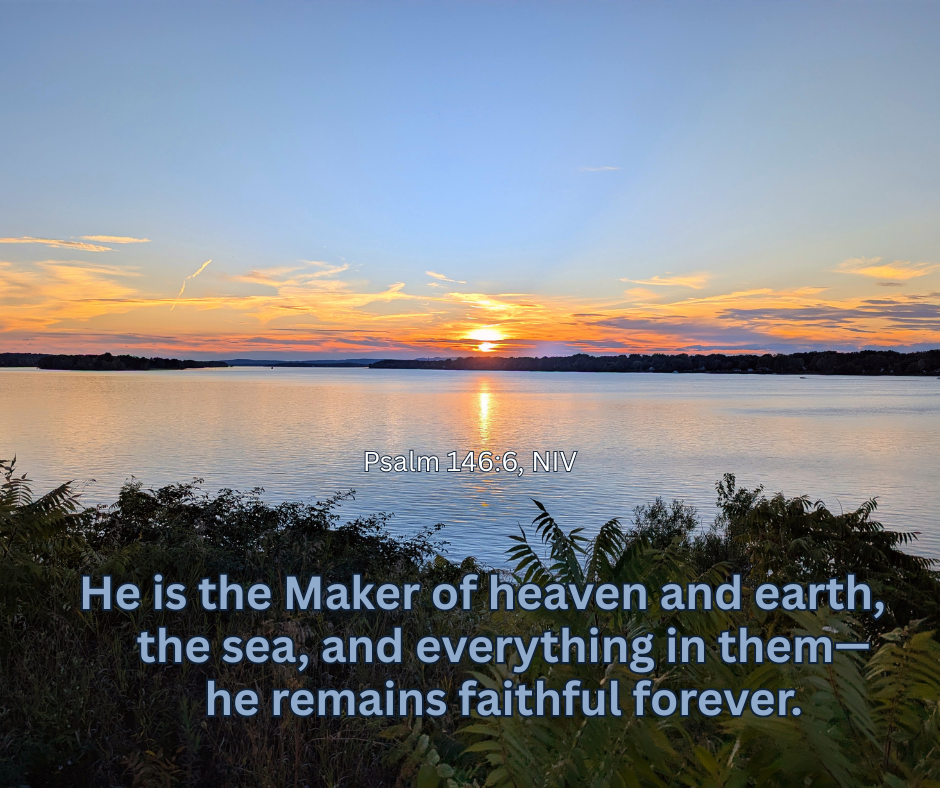
He is the Maker of heaven and earth,
the sea, and everything in them—
he remains faithful forever.
He upholds the cause of the oppressed
and gives food to the hungry.
The LORD sets prisoners free,
the LORD gives sight to the blind,
the LORD lifts up those who are bowed down,
the LORD loves the righteous.
The LORD watches over the foreigner
and sustains the fatherless and the widow,
but he frustrates the ways of the wicked.
The LORD reigns forever,
your God, O Zion, for all generations.
Praise the LORD (NIV). *

Reflection
Are you looking for the LORD’s help? Let’s be honest now. Many of us are. Well here’s a startling truth. The self-sufficient and well-to-do need not apply. We can also add the smug, the proud, and the arrogant to that list.

I thought the LORD was willing to help all who came to Him. True, but here is the sad reality; the arrogant and self-sufficient don’t come to God. They have no need for Him. They are too wrapped up in their successes and their pride to come in humility before the LORD. The LORD is the unseen author of any genuine human achievement of lasting value.

Today’s reading from Psalm 146 gives us a glimpse at those who should get their application in for the LORD’s help. Here’s the list as found in this psalm: the oppressed, the hungry, prisoners, the blind, the bowed down, foreigners, the fatherless and widows. Help is promised to all of these. To put it simply, the LORD helps the needy.

I have often heard it said that the Lord helps those who help themselves. I have even had people insist this statement is found in the Bible. It is not. This nonbiblical proverb is often used to justify human greed. In other words, I’ll grab whatever I can without any thought for those who are less fortunate. Furthermore, I’ll frame it as God blessing my greed. Ouch!

The character of God is the exact opposite. He is attracted to the needy. He helps the needy rather than running from them. Jesus continually demonstrated this quality in his earthly ministry. He showed compassion to the oppressed, the hungry, the blind, the foreigner, the widow and the fatherless. He set captives free from prisons of sin and shame. Jesus calls his followers to do the same.

Response: LORD God, I confess that often I avoid the needy rather than seeking to help them. Give me a heart of compassion—a heart like your Son, Jesus. You are my great provider. Thank you. Amen.

Your Turn: How do you respond to someone in need? Do you always help? What might help look like?

Para la publicación de Salmos 365 de hoy en español haga clic aquí.

bgbg_v4.3_1501818
* NEW INTERNATIONAL VERSION, COPYRIGHT ©1973, 1978, 1984, 2011 BY BIBLICA

Please pray for peace to return to Israel, Gaza, and Ukraine!

Volume I of Psalms 365: Develop a Life of Worship and Prayer won the Best Book of the Year Award from The Word Guild and Volume II has won the Best Devotional of the Year Award. For those who love God’s word, this three-book series is an ideal way to daily meet with the Lord. To purchase or for a closer look click here.

A gripping read from David Kitz.
Is a return-to-Jesus revival possible in our time?
This book points the way forward.
For details click here.

Meditate on His Wonderful Works

02 Thursday Oct 2025

Posted by davidkitz in Psalm 146, Psalms

≈ 1 Comment

Tags

Bible, Jesus, majesty, majesty of God, meditate, praise, Prayer, Psalms, Righteousness, sing for joy, the LORD, worship

Today’s quote and prayer from
“Psalms 365: Develop a Life of Worship and Prayer”

Today’s Reading: Psalm 146:1-5

LORD God,
I thank and praise you
for the gift of life.
You are worthy of worship.
I commit to worshipping you
every day for the rest of my life.
Thank you for eternal life
through Jesus.
Amen.

— — — —

I will exalt you, my God the King;
    I will praise your name for ever and ever.
Every day I will praise you
    and extol your name for ever and ever.
Great is the LORD and most worthy of praise;
    his greatness no one can fathom.
One generation commends your works to another;
    they tell of your mighty acts.
They speak of the glorious splendor of your majesty—
    and I will meditate on your wonderful works.
They tell of the power of your awesome works—
    and I will proclaim your great deeds.
They celebrate your abundant goodness
    and joyfully sing of your righteousness.
(Psalm 145:1-7 NIV)*

Para la publicación de Salmos 365 de hoy en español haga clic aquí.

bgbg_v4.3_1501818
* NEW INTERNATIONAL VERSION, COPYRIGHT ©1973, 1978, 1984, 2011 BY BIBLICA

Please pray for peace to return to Israel, Gaza, Sudan, and Ukraine!

Volume I of Psalms 365: Develop a Life of Worship and Prayer won the Best Book of the Year Award from The Word Guild and Volume II has won the Best Devotional of the Year Award. For those who love God’s word, this three-book series is an ideal way to daily meet with the Lord. To purchase or for a closer look click here.

A gripping read from David Kitz.
Is a return-to-Jesus revival possible in our time?
This book points the way forward.

Living for Now, Trusting for Eternity

02 Thursday Oct 2025

Posted by davidkitz in Psalms

≈ Leave a comment

Tags

commitment, eternity, faith, hope, humility, idols, praise, trust, worship

Today’s Devotion from Psalms 365 by David Kitz

Reading: Psalm 146:1-5
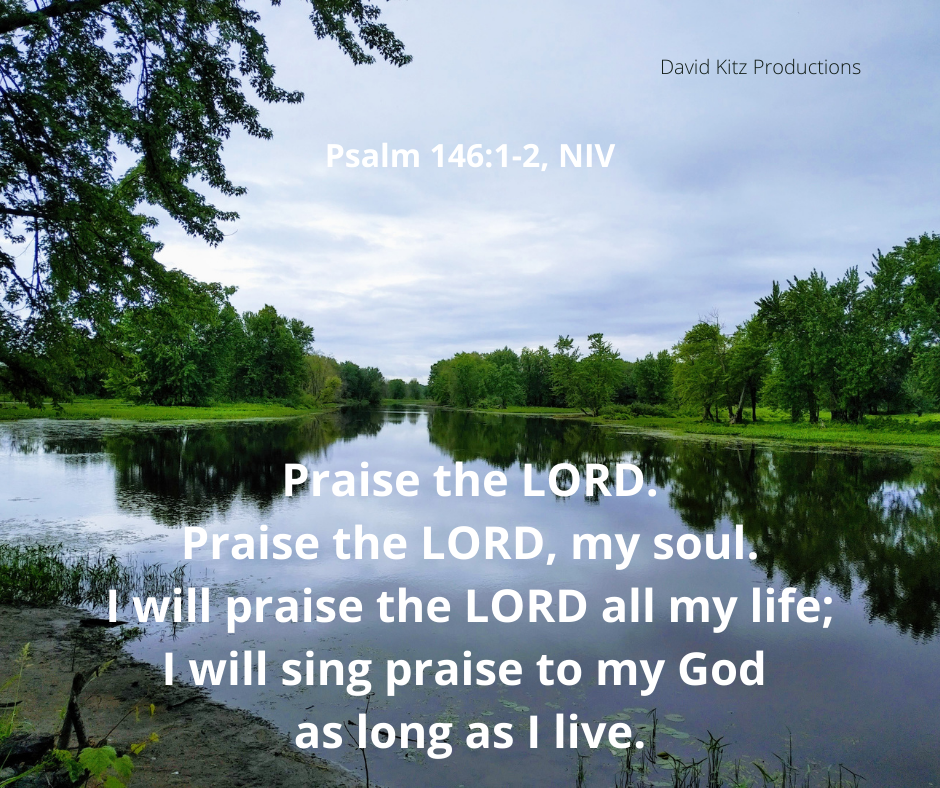
Praise the LORD.
Praise the LORD, my soul.
I will praise the LORD all my life;
I will sing praise to my God as long as I live.
Do not put your trust in princes,
in human beings, who cannot save.
When their spirit departs, they return to the ground;
on that very day their plans come to nothing.
Blessed are those whose help is the God of Jacob,
whose hope is in the LORD their God (NIV). *

Reflection
Last week I had a delightful telephone conversation with my mom. She was pleased to report that her last and final round of cataract surgery had gone very well. Her vision has greatly improved. Speaking of her follow-up exam, she said, “The most excited person in the room was the doctor. He was thrilled that the surgery turned out so well. I was the oldest patient he had ever operated on.”

My mom is ninety-four, but she doesn’t let a minor thing like that slow her down. After all, age is just a number. She still keeps a busy schedule and out works many women half her age. Who else but my mother would annually sew a hundred quilts and donate them to Lutheran World Relief?

But she knows, just as we all know that her life here on this earth will come to an end. We best make the most of it while we have this precious gift. Time marches on, and time will eventually march us off to the grave as surely as the sun will rise tomorrow on a new day.

In today’s reading from Psalm 146, the psalmist makes a lifelong commitment. He commits himself to praise the LORD. Praise the LORD, my soul. I will praise the LORD all my life; I will sing praise to my God as long as I live.

This is not an insignificant commitment. We were made to worship, and we all do it, even the atheists among us. Some worship their money; others worship the pleasures of this world. Perhaps the greatest god of the current age is the god of self. Monuments to personal vanity have been erected all around us. I have been known to set up a few of these myself.

Genuine praise for the LORD tears down personal idols. It establishes His lordship over our lives. It acknowledges that He is in control. I have so little power. I can’t turn a white hair to black, at least not in the true sense. But the LORD knows the number of hair on my head and the number of my days. Ultimately, my life is in His hands. My life here is temporary. That’s why I need to put my hope and my trust in God—the eternal One. The psalmist’s words ring true. Blessed are those whose help is the God of Jacob, whose hope is in the LORD their God. And that blessing holds true for ninety-four-year-olds too.

Response: LORD God, I thank and praise you for the gift of life. You are worthy of worship. I commit to worshipping you every day for the rest of my life. Thank you for eternal life through Jesus. Amen.

Your Turn: Will you praise the LORD for all of your life? Are you ready to make that commitment?

Para la publicación de Salmos 365 de hoy en español haga clic aquí.

bgbg_v4.3_1501818
* NEW INTERNATIONAL VERSION, COPYRIGHT ©1973, 1978, 1984, 2011 BY BIBLICA

Please pray for peace to return to Israel, Gaza, and Ukraine!

Volume I of Psalms 365: Develop a Life of Worship and Prayer won the Best Book of the Year Award from The Word Guild and Volume II has won the Best Devotional of the Year Award. For those who love God’s word, this three-book series is an ideal way to daily meet with the Lord. To purchase or for a closer look click here.

A gripping read from David Kitz.
Is a return-to-Jesus revival possible in our time?
This book points the way forward.
For details click here.

Humble Yourselves before the Lord

01 Wednesday Oct 2025

Posted by davidkitz in Psalm 145, Psalms

≈ 1 Comment

Tags

answered prayer, Bible, drawing near to God, humble, mourning, praise the LORD, Prayer, resisting the devil, sinners, the LORD

Today’s quote and prayer from
“Psalms 365: Develop a Life of Worship and Prayer”

Today’s Reading: Psalm 145:17-21

LORD God,
I am so glad that you are not distant
or aloof from those who call out to you.
You are near to me.
You answer prayer.
My mouth will speak in praise of the LORD
(Psalm 145:21a).
Amen.

— — — —

Submit yourselves,
then, to God.
Resist the devil,
and he will flee from you.
 
Come near to God
and he will come near to you.
Wash your hands, you sinners,
and purify your hearts,
you double-minded.
 
Grieve, mourn and wail.
Change your laughter to mourning
and your joy to gloom.
 
Humble yourselves before the Lord,
and he will lift you up.

(James 4:7-10 NIV)*

Para la publicación de Salmos 365 de hoy en español haga clic aquí.

bgbg_v4.3_1501818
* NEW INTERNATIONAL VERSION, COPYRIGHT ©1973, 1978, 1984, 2011 BY BIBLICA

Please pray for peace to return to Israel, Gaza, Sudan, and Ukraine!

Volume I of Psalms 365: Develop a Life of Worship and Prayer won the Best Book of the Year Award from The Word Guild and Volume II has won the Best Devotional of the Year Award. For those who love God’s word, this three-book series is an ideal way to daily meet with the Lord. To purchase or for a closer look click here.

A gripping read from David Kitz.
Is a return-to-Jesus revival possible in our time?
This book points the way forward.

God is Near in Every Season

01 Wednesday Oct 2025

Posted by davidkitz in Psalms

≈ 2 Comments

Tags

Assurance, experience, faithfulness, nearness, praise, Prayer, Righteousness, Scripture, testimony, trust

Today’s Devotion from Psalms 365 by David Kitz

Reading: Psalm 145:17-21
The LORD is righteous in all his ways
and faithful in all he does.
The LORD is near to all who call on him,
to all who call on him in truth.
He fulfills the desires of those who fear him;
he hears their cry and saves them.
The LORD watches over all who love him,
but all the wicked he will destroy.
My mouth will speak in praise of the LORD.
Let every creature praise his holy name
for ever and ever (NIV). *

Reflection
Psalm 145 begins with David calling us to praise the LORD, and it ends with a similar call to praise. David extols the virtues of the LORD. He sees Him as righteous and faithful. One can have these virtues, but still be distant or aloof. But that’s not how David sees the LORD.

David knows his God hears him when he prays. How does he know this? For David this isn’t an answer he learned from a textbook. He knows God hears prayer from personal experience. In his daily life, David called out to the LORD over and over again in times of trouble, and repeatedly the LORD helped him. That’s why he can record the following words in this psalm of praise: He fulfills the desires of those who fear him; he hears their cry and saves them (v.19).

What about you? Have you discovered from personal experience that God answers prayer? Have you called out to the LORD in a time of trouble? Has He brought help your way?

Just this week my wife lost/misplaced her driver’s license. This produced some anxious moments as she discovered this loss just as she was about to board a flight across the country. She had arranged a car rental at her destination, but without her driver’s license she could not access the car. Some desperate prayers were offered up and in due course, after she arrived at her destination, the answer came. The driver’s license was found.

Do we involve the LORD in our day-to-day activities? That should be the norm. Here is David’s testimony—the testimony of Holy Scripture: The LORD is near to all who call on him, to all who call on him in truth (v.18).

That should be our testimony in the daily grind of life, in the ups and the downs. The LORD is near 365 days of the year. Before Jesus ascended to heaven, he left his disciples with these words of assurance, “Surely I am with you always, to the very end of the age” (Matthew 28:20). We can rest assured He is as near as our next breath.

Response: LORD God, I am so glad that you are not distant or aloof from those who call out to you. You are near to me. You answer prayer. My mouth will speak in praise of the LORD (v. 21a). Amen.

Your Turn: Can you testify that the LORD is near, and He answers prayer? Take time to give thanks.

Para la publicación de Salmos 365 de hoy en español haga clic aquí.

bgbg_v4.3_1501818
* NEW INTERNATIONAL VERSION, COPYRIGHT ©1973, 1978, 1984, 2011 BY BIBLICA

Please pray for peace to return to Israel, Gaza, and Ukraine!

Volume I of Psalms 365: Develop a Life of Worship and Prayer won the Best Book of the Year Award from The Word Guild and Volume II has won the Best Devotional of the Year Award. For those who love God’s word, this three-book series is an ideal way to daily meet with the Lord. To purchase or for a closer look click here.

A gripping read from David Kitz.
Is a return-to-Jesus revival possible in our time?
This book points the way forward.
For details click here.
Learn from Me

30 Tuesday Sep 2025

Posted by davidkitz in Psalm 145

≈ 2 Comments

Tags

depression, health, humble, Jesus, Prayer, Psalms, rest, Savior, the LORD, weary, yoke

Today’s quote and prayer from
“Psalms 365: Develop a Life of Worship and Prayer”

Today’s Reading: Psalm 145:13-16

LORD God,
thank you for lifting me
out of the quagmire of sin.
Jesus,
you are my merciful Savior.
Thank you for restoring my health
and lifting me out of depression.
You are faithful
and kind.
Amen.

— — — —

“Come to me,
all you who are weary and burdened,
and I will give you rest.

Take my yoke upon you
and learn from me,
for I am gentle
and humble in heart,
and you will find rest for your souls.

For my yoke is easy
and my burden is light.”

(Matthew 11:28-30 NIV)*

Para la publicación de Salmos 365 de hoy en español haga clic aquí.

bgbg_v4.3_1501818
* NEW INTERNATIONAL VERSION, COPYRIGHT ©1973, 1978, 1984, 2011 BY BIBLICA

Please pray for peace to return to Israel, Gaza, Sudan, and Ukraine!

Volume I of Psalms 365: Develop a Life of Worship and Prayer won the Best Book of the Year Award from The Word Guild and Volume II has won the Best Devotional of the Year Award. For those who love God’s word, this three-book series is an ideal way to daily meet with the Lord. To purchase or for a closer look click here.

A gripping read from David Kitz.
Is a return-to-Jesus revival possible in our time?
This book points the way forward.

← Older posts
Newer posts →

Psalms 365: Develop a Life of Worship and Prayer

Psalms 365 Volume II

Psalms 365 vol 3
— Psalms 365 Volume III

Psalms

Recent posts

  • Givers & Takers February 19, 2026
  • Teach Me Your Paths February 18, 2026
  • Who holds you up? February 18, 2026
  • A Lesson from the Flowers February 17, 2026
  • Do not fret February 17, 2026
  • Minds Set on Things Above February 16, 2026
  • What are the desires of your heart? February 16, 2026

Calendar

February 2026
M T W T F S S
 1
2345678
9101112131415
16171819202122
232425262728  
« Jan    

Blog Posts

Enter your email address to follow this blog and receive notifications of new posts by email.

Comments

  • davidkitz on Teach Me Your Paths
  • K.L. Hale on Teach Me Your Paths
  • davidkitz on An Unflattering View of Yourself

Blog at WordPress.com.

Privacy & Cookies: This site uses cookies. By continuing to use this website, you agree to their use.
To find out more, including how to control cookies, see here: Cookie Policy
  • Subscribe Subscribed
    • I love the Psalms
    • Join 1,385 other subscribers
    • Already have a WordPress.com account? Log in now.
    • I love the Psalms
    • Subscribe Subscribed
    • Sign up
    • Log in
    • Report this content
    • View site in Reader
    • Manage subscriptions
    • Collapse this bar
 

Loading Comments...