• Home
  • About
  • DavidKitz.ca
  • Youtube Videos
  • Books by David
  • Books on Amazon.com

I love the Psalms

~ Connecting daily with God through the Psalms

I love the Psalms

Category Archives: The Soldier Who Killed a King

More about THE SOLDIER WHO KILLED A KING

01 Thursday Nov 2018

Posted by davidkitz in Books by David Kitz, Easter Sunday, Lent, Psalms, The Soldier Who Killed a King

≈ 5 Comments

Tags

centurion, David Kitz, dramatization, endorsements, Jesus, passion, The Soldier Who Killed a King

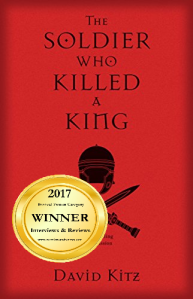
Soldier book“An awesome read: captivating, spellbinding, inspiring! Through the author’s masterful writing, the centurion stood out as a real and personable individual…The book also helped me visualize Jesus, my Savior, and his person and work for the forgiveness of my sins, for my daily walk, and for the eternal life he has in store for all who believe.”

Cliff Kentel, Prince of Peace Lutheran Church, Regina, Saskatchewan

“Story has a way of capturing our attention and enabling truth to move from head to heart. David Kitz creatively unpacks the events of Passion Week as seen through a Roman centurion’s eyes.  Through vivid word pictures, we see the whip-sliced back of our  Savior and hear the pounding of each nail that affixed him to the cross. We walk these lasts steps of Jesus’s earthly ministry, leading to his death, burial, and triumphant resurrection from the dead. Kitz Better helps us to do as the apostle John encourages: ‘See what great love the Father has lavished on us, that we should be called children of God!” (1 John 3:1)

Dean Ridings, author of The Pray! Prayer Journal and communications director of Navigator Church Ministries

For more information regarding the author and his live dramatizations visit https://davidkitz.ca/centurion.php

For more information regarding book purchase from the author visit https://www.davidkitz.ca/bookcart/index.php?route=product/product&product_id=50

or

For more information regarding U.S. book purchases visit https://www.amazon.com/Soldier-Who-Killed-King-Retelling/dp/0825444853/ref=sr_1_1?ie=UTF8&qid=1537465478&sr=8-1&keywords=the+soldier+who+killed+a+king


THE SOLDIER WHO KILLED A KING

20 Thursday Sep 2018

Posted by davidkitz in Books by David Kitz, Good Friday, Lent, The Soldier Who Killed a King

≈ Leave a comment

Tags

Centurion's Report, Christ's Passion, David Kitz, dramatization, Easter, Lent, Play, The Soldier Who Killed a King

Soldier book

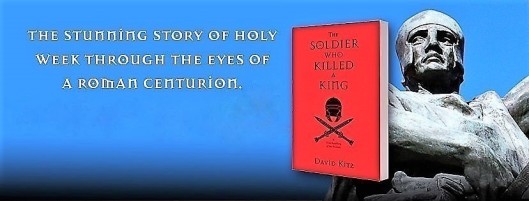
Christ’s Passion Week…a familiar account? So you think you know this story? Think again. There are more twists in this plot than in the cruelest crowns of thorns. This author takes you on a fast-paced ride through Christ’s Passion Week-an eight-day ride you will never forget. Scheming Herod, the bloody Fox, has more than one trick up his sleeve. The high priest and the governor are at each other’s throats. Four kings, together in the holy city for one week, compete for one
throne. Now here’s a deadly competition.

Written from a soldier’s perspective, you see a familiar story in a whole new light. Here is the horror of the cross, up close and graphic. While remaining true to the scriptural account, the author weaves with startling realism a very human tale of intrigue and subterfuge. There is a more than a little passion here. Did we mention the terrorist connection? So, you think you know how this ends? Ha! Think again! Have you been to the foot of the cross lately? Come, if you dare.

Author bio: 
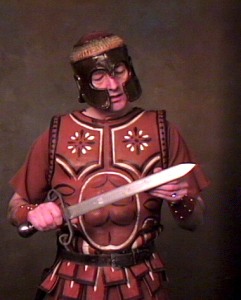
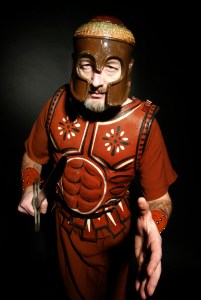
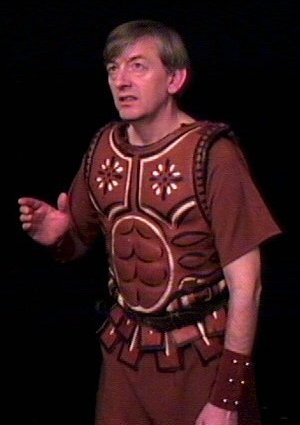
For a number of years now, David Kitz has been telling the soldier’s view of these events in a one-man play entitled, “The Centurion’s Report.”
Centur. Sw
For more information on the book visit: https://davidkitz.ca/centurion.php

For more information on the book purchase visit: https://www.davidkitz.ca/bookcart/index.php?route=product/product&path=62&product_id=58

or https://www.amazon.com/gp/product/0825444853?pf_rd_p=d1f45e03-8b73-4c9a-9beb-4819111bef9a&pf_rd_r=MDF7KQBS5SZGS214836H

For more information on the dramatization visit: https://davidkitz.ca/centurion.php


The Soldier Who Killed a King—A Review

17 Tuesday Apr 2018

Posted by davidkitz in book review, Books by David Kitz, Christ's Passion, The Soldier Who Killed a King

≈ 8 Comments

Tags

Bible, Caiaphas, David Kitz, Herod Antipas, Jesus, king, Longinus, Marcus, Palm Sunday, Pontius Pilate, redemption, resurrection, Roman, Roman centurion, The Soldier Who Killed a King

As published in Testimony Magazine, March/April Edition, 2018, reviewed by Dr. Darlene Witte-Townsend 

The Soldier Who Killed a King was voted the top book in the biblical fiction categorybiblical-fiction-award-2017_orig for 2017 by the Christian book service, Interviews and Reviews. Having recently read this book, it’s not difficult to see why. It plays like a high-stakes movie in your mind.

Canadian author, David Kitz, closely examines the events occurring between Jesus’ entry into Jerusalem on Palm Sunday and his resurrection a few days later. But we see all these events from a unique perspective—through the eyes of a Roman soldier.

This engaging, hard-hitting narrative is a distillation of Kitz’s study and prayer over a 50-year span, when as pastor, educator and Bible dramatist, he steeped himself in the wonder of this story. As a novelist, he reveals profound respect for the historical record through his characterization of Marcus Longinus, a Roman centurion who is unwillingly caught in the power struggles of the day. Furthermore, Kitz stays true to the scriptural account by integrating more than a hundred quotes from the Gospels into the story text.

Three corrupt men, Herod Antipas, “the Fox,” Pontius Pilate, “the Badger,” and Joseph Caiaphas, “the Weasel” have an insatiable lust for money and power. They each attempt to use the political tumult of the time for their own gain. In contrast to the stench of their machinations, Kitz offers a deep sense of Jesus, the donkey-riding King, as the man in whom all of heaven is invested. Jesus emerges in the Roman world offering an entirely new way for humankind to be reborn.

Above all else, this is a story of personal redemption. Marcus, the Roman Centurion is like us, caught between worlds. Who is his king? Why?

The Son of God shows unlimited compassion through healing the sick and feeding the hungry, and his purity catches the attention of the masses in a drama that still shakes the world, one aching, open, humble heart at a time. Do you need to rediscover the power of the cross? The Soldier Who Killed a King will take you there.

Excerpt 32 for Easter from The Soldier Who Killed a King

01 Sunday Apr 2018

Posted by davidkitz in Books by David Kitz, Christ's Passion, Easter Sunday, The Soldier Who Killed a King

≈ 1 Comment

Tags

centurion, corpse, David Kitz, Jesus, Longinus, Marcus, prophet, repentance, resurrection, shroud, tomb

A journey to the cross is a journey to repentance. It’s a journey to deep personal change. Will you take this journey with me?

Date: Nine in the morning, Sunday, April 9, 30 A.D.
Marcus Longinus, the Roman centurion, investigates his soldiers’ report that Jesus had risen from the dead.

It was as they said. The stone was rolled away. But it was not merely rolled to the side as I had expected. It had been pushed right up and out of its stone track, and it had toppled over a good distance from the tomb entrance.
I edged my way toward it. About two paces from the end of the stone track, there was gouge in the shallow soil, where the round cover stone had landed and then rolled. This was a real headshaker. How had this happened? It must have been rolled back with such force that when it reached the end of the track, it bounced up and out. No wonder the men were scared! This was awesome. Forty men could not do this!
Suddenly I felt very small, small and afraid.

OTT0304-KITZ1

Photo credit Jean Levac, Ottawa Citizen

And this was the very stone we had sealed just a day earlier. A close examination showed that in a few spots there were still fragments of broken plaster on it.I exhaled a huge puff of air. This discovery in itself was beyond all expectation. The force of the quake could not have done this. A quake of such magnitude would have collapsed the tomb itself, and not a building in the city would be standing. No, a direct force had hurled this boulder away from the tomb’s entrance.
An almighty warrior from heaven’s realm?
I rejoined my two men. Suddenly they gained a new level of respect in my eyes. Their fears had become my own. I found I was rolling my head from side to side just as I had seen Claudius do.

“You saw this happen?” I gestured to the fallen round rock and then put a finger to my lips. I was astounded.
“Actually,” Philip admitted, “I didn’t see him roll the stone. We all fell like dead men when the earthquake hit. But after, when I opened my eyes, the angel was sitting on it, and . . . and Jesus was walking out of the tomb.” He fell to his knees and began to beat the ground as he said this last part. He was gripped afresh by the memory.
“Where were you when this happened?” He raised his head and pointed to a spot a few paces away. “Right there.”
“And you?” I looked at Claudius. He pointed to another spot. “Just over here,” he said. “That’s my cloak. I left it when I ran.”
There was, in fact, a good bit of flotsam scattered about: a few cloaks, a water jug, Philip’s precious dice, even a helmet. Here were all the signs of panicked flight. They had left all and fled for their lives.
For me only one question remained. Was the open tomb truly empty?
“Get to your feet, Philip,” I said. “You two stay here and watch while I go take a look inside.”
I took three deep breaths and set out on my little journey. It was only about twenty paces4485 SHARABLE-2 to the tomb entrance. A distance made much longer by my fear. But the whole scene was bathed in the warmth of morning sunlight. I started slowly. About halfway to the entrance, a songbird broke forth in glorious melody. The sun’s rays streamed into the rock tomb, lighting my way.
It was empty! The stone slab lay empty. Actually, it was not entirely so. The death shroud had been rolled up, and the face covering was neatly folded and lay off to one side. It appeared as though the awakened corpse took a moment to make his bed after getting up.
The Galilean prophet, the true king, had arisen and gone forth!

American readers click this link to purchase The Soldier Who Killed a King.

Canadian readers click this link to purchase The Soldier Who Killed a King directly from the author.

Excerpt 31 for Lent from The Soldier Who Killed a King

31 Saturday Mar 2018

Posted by davidkitz in Books by David Kitz, Christ's Passion, Lent, The Soldier Who Killed a King

≈ 1 Comment

Tags

Annas, Golgotha, Joseph of Arimathea, Lent, Longinus, Marcus, Messiah, Pilate, Pontius Pilate, repentance, The Soldier Who Killed a King

A journey to the cross is a journey to repentance. It’s a journey to deep personal change. Will you take this journey with me?

Date: Seven in the morning, Saturday, April 8, 30 A.D.
Annas meets with Pontius Pilate and asks that Jesus’ tomb be guarded.

Pilate was seated even as I saw him yesterday. He wore a rather haggard look, as though he had slept on the bloodstained rocks of Golgotha. He motioned for the temple delegation to step forward. I waited at the back of the room in a repetition of the governor’s late- day interview with Joseph of Arimathea.
Annas bowed and began. “Sir, we remember that while he was still alive that deceiver said, ‘After three days I will rise again.’”
A strange tingle ran through me as he said this. Pilate rubbed his hands.
Annas continued. “So give the order for the tomb to be made secure until the third day. Otherwise, his disciples may come and steal the body and tell the people that he has been raised from the dead.” Then he concluded by lifting a bony finger and saying, “This last deception will be worse than the first.”
On hearing this, Pilate sighed deeply, then beckoned me forward. There was worry in his eyes. “The centurion here, Marcus Longinus, is fully acquainted with the case of the Galilean prophet. He oversaw his crucifixion.” Then he addressed me directly. “Is that not so?”
I nodded. “Yes, sir. It is as you say.”
With that he raised his hands and motioned both parties together. Then, speaking directly to all of us, he said, “Take a guard. Go, make the tomb as secure as you know how.” Rubbing his guilt- stained hands once more, the Badger got up and skulked off. Free WW-e FACEBOOK-2 (2)Annas was jubilant. With eagerness in his voice, he turned to address me. “How soon can you have your troops at the tomb?”
“We should be there in about an hour.”
“Excellent! These two gentlemen will meet you there. They will ensure that all is in order. Understood?”
“Yes. Understood,” I said. Then I addressed the Pharisees. “Do you know which tomb? Do you know where it is?”
Annas answered for them. “Ah, they know it well.” He gave a contemptuous snort. “The traitor’s tomb, Joseph of Arimathea!”
“I will bring my men and meet you there then.” I gave a slight bow with my head. The chamberlain saw us to the door, and then I was off, back to my home.
I shook my head several times in disbelief as I trudged back. Every time I tried to extricate myself from this Messiah pit, this kingdom of God affair, this abysmal hole, I would find myself sucked in even deeper. And now it had happened again. Was there no escape?
Would I ever be allowed to speak my mind before Pilate?

American readers click this link to purchase The Soldier Who Killed a King.

Canadian readers click this link to purchase The Soldier Who Killed a King directly from the author.


Excerpt 30 for Lent from The Soldier Who Killed a King

30 Friday Mar 2018

Posted by davidkitz in Books by David Kitz, Christ's Passion, Good Friday, Lent, The Soldier Who Killed a King

≈ Leave a comment

Tags

Christ, Creator, David Kitz, Elijah, Jesus, Jesus' last words, kingdom, pain, sacrilege, Son of God, the cross, The Soldier Who Killed a King

A journey to the cross is a journey to repentance. It’s a journey to deep personal change. Will you take this journey with me?

Date: Three o’clock in the afternoon, Friday, April 7, 30A.D.
Jesus’ final moments on the cross.

Here is the obscenity of crucifixion. Naked men are unwillingly mated to two wooden beams. They must thrust the whole of their bodies upward in excruciating pain, ever- increasing pain to catch their next breath—until all strength is drained away. Then death steals in.
This is the shame of the cross. Here is the depravity—a profane sacrilege inflicted upon the human body.
The ghastly rhythm of it was driving me mad.
Then in soul- wrenching anguish, his voice erupted. “Eli, Eli, lema sabachthani?”
“What does that mean?” I cried out into the darkness.
From beyond the military cordon came the answer. “My God, my God, why have you forsaken me?”
He had broken. The Christ hung broken. The cross had broken him. He too was human. We were all together now, a great crowd caught up in this drama. There was no us and them. We were together. We were caught between heaven and hell in this dark, surreal atmosphere.
It was dreadful. Centur Rep
Someone frantically yelled, “It’s Elijah! He’s calling Elijah.”
Exhaling.
Mounting up.
Ever-heightening pain.
Catching a breath.
Retreating.
From on the Mother’s Hill, a wail went up. It was steady, constant, a wave of woe flowing over the dark scene.
Exhaling.
Mounting up.
Ever-heightening pain.
Catching a breath.
Retreating.
“Will Elijah come?” someone asked. “Will he come?” Many of the hostile were even now on bended knees. The cavalrymen dismounted.
Exhaling.
Mounting up.
Ever-heightening pain.
Catching a breath.
Retreating.
“I thirst!” the king called out.
Claudius leaped to his feet. There was a jar of wine off to one side. The soldiers had been drinking freely from this. He ran over to it and got a sponge. He dropped the sponge into the jar of wine and then skewered it with a long reed. This he held up to dampen the lips of the donkey king.
But some yelled out, “Wait! Let’s see if Elijah will come and save him.”
Exhale.
Mounting up.
Ever-heightening pain.
Catch a breath.
Retreat.
The rarified air crackled with anticipation.
Exhaling.
Mounting up.
Ever-heightening pain.
Catching a breath.
Retreating.
Can the Creator—the God of heaven and earth—save him now?
Exhaling.
Mounting up.
Ever-heightening pain.
Catching a breath.
Retreating.
“It is finished!” he cried.
But there was no anguish in his voice. There was the ring of victory to it, as if he had caught with that last breath a glimpse—a glimpse of his kingdom. A glorious kingdom! He had gained the summit. Now with vigor renewed, he pushed up and forward one last time.Free WWe SHARABLE-1 (2)
Exhaling.
Mounting up.
Ever- heightening pain.
Catching a breath.
Retreating.
“Father . . .
“Into your hands . . .
“I commit . . .
“My Spirit.”
His head dropped. It was over.
As his chin hit his chest, the earth began to rumble. Low thrumming. Building . . . building . . .
The rock Skull began to move beneath my feet. And with it, my soul.
I fell to the ground.
The crosses began to vibrate and rock with the power of the quake. His head bobbed from side to side.
But he was dead.
He was dead!
Everyone was with me on bended knees.
Heaven had rendered its dark judgment. The sun had hidden its face. The very earth had answered back. The verdict was in.
I caught two huge breaths of air, and then for the whole world to hear, I cried out, “He really was the Son of God.”
He was the Son of God.
The sun broke through.
A rooster crowed.

American readers click this link to purchase The Soldier Who Killed a King.

Canadian readers click this link to purchase The Soldier Who Killed a King directly from the author.

Excerpt 29 for Lent from The Soldier Who Killed a King

29 Thursday Mar 2018

Posted by davidkitz in Books by David Kitz, Christ's Passion, Good Friday, Lent, The Soldier Who Killed a King

≈ 1 Comment

Tags

Christ, crucifixion, disciple, Golgotha, Jesus

A journey to the cross is a journey to repentance. It’s a journey to deep personal change. Will you take this journey with me?

Date: About noon, Friday, April 7 30A.D.
The crucifixion of Jesus.

Now there was movement on the Mother’s Hill. A middle-aged couple came down. Their heads were hanging. They clung to each other, supported each other, every step an anguish. They made their way before the encircling pikemen.
I knew who they were—knew why they had come. Here were the broken parents, broken beyond this world’s repair. I met them at the base of the hill, told them they had some time.
They advanced up the Skull. She fell, fell whimpering before her son. Thaddaeus. Boisterous soldiers fell silent and then walked off, right off the hill. The family was alone with their grief.
4485 TWITTER
Having witnessed this grim but welcoming reception, another party stepped off the Mother’s Hill and advanced to Golgotha. This was a group of five. The women clung to one another in couples. They were shepherded by a tall young man. His fresh face and scant beard bore witness to his youth. I recognized him. He had been with Jesus, had stood closest to him.
He introduced himself. He said his name was John. I received his party—ushered them by the outer ring of soldiers.
They were bowed by the sight. They clung to one another afresh, repulsed by the horror of what met their eyes.
After a few moments the young man came before two of the huddled older women. He stooped to speak with one of the women—the Christ’s mother, I assumed. Then with his arm about her shoulder, John advanced up the rock mound.
Jesus saw them.
He struggled.
“Woman . . . behold your son!”
There was a double- edged meaning here, almost too painful for words. At first I thought he was simply referring to himself—to his own wretched state. And perhaps on one level he was.
His body sagged. But then he thrust himself up and forward for another breath, and with his next words his meaning became clear. To the young man, to his disciple, he said, “Behold your mother!”
He had committed his mother into this disciple’s care. She fell to her knees. She trembled, unable to speak. Only wretched sobbing was heard from within the circle of the hill.
In due time I led both families off. They left willingly. This was too much to bear, too much to watch.
From his cross Animal watched the Mother’s Hill. But no one came. That’s when he broke—broke like a clay pot dropped onto the hard rock of the Skull.
He sobbed. He moaned.
His tears flowed like rivers into his dark, young beard.
But no mother came. No one came at all. Free WW-e FACEBOOK-2 (2)
The wind picked up. The sky grew dark. Then it grew darker yet. The horses began to neigh and paw the ground. In the distance a dog barked. It was a bark that changed to a howl but ended in a whimper. I looked about. I could see it on every face. It was fear. Raw fear. This was not the dark of cloud or storm. This was the sun covering, hiding its face from what it saw upon the earth.
A total darkness descended, as black as any night.
There was a discord here—a discord utter and complete. If heaven and earth had come into some perfect union—some perfect harmony—on the day Jesus arrived in this city, it was in blaring dissonance now. Blaring dissonance echoed off the empty chambers of my soul.
It was a deafening darkness.
The mocking crowds fell silent. The highway traffic stopped. All was still.
Silent.
Only the three men were heard. Heard in the darkness. Three men working to maintain this perverted thing called life.
Working.
Pushing up.
Up to catch a breath.

American readers click this link to purchase The Soldier Who Killed a King.

Canadian readers click this link to purchase The Soldier Who Killed a King directly from the author.


Excerpt 28 for Lent from The Soldier Who Killed a King

28 Wednesday Mar 2018

Posted by davidkitz in Books by David Kitz, Christ's Passion, Good Friday, Lent, The Soldier Who Killed a King

≈ Leave a comment

Tags

blood, bloodlust, Christ, crucifixion, David Kitz, Jesus, king, Messiah, pierced, repentance, The Soldier Who Killed a King

A journey to the cross is a journey to repentance. It’s a journey to deep personal change. Will you take this journey with me?

Date: Nine thirty in the morning, Friday, April 7 30A.D.
The crucifixion of Jesus.

I tipped the bucket to one side to get enough swill to fill the dipper. I offered it to Jesus. He took a sip, worked the liquid around in his mouth, discerned the true nature of this bitter potion, and then spit it out. It left a dark stain on the dull gray rock near his feet.
“It will dull the pain,” I said emphatically.
He raised his eyes. They locked with mine. I saw in him the same look, the samebiblical-fiction-award-2017_orig determination I saw on the first day I set eyes on him, the day he rode the donkey into this city. I could still see he had a destination in mind. Some mystical purpose he somehow felt compelled to fulfill.
I dropped my gaze. He must be a fool. In his condition, in this situation, he must be a fool. A fool who unnerved me, but a fool nonetheless.
Once more I offered the drink.
With lips pressed tight, he shook his head.
He was a fool. An arrogant fool! A fool who thinks he’s tough—who can handle this—who can take it straight.
We would see who’s tough. I would show him who’s tough!
Let the big show begin.
“Now, boys!” I called out to the crew. Still wearing the purple robe, he was snatched like a young child and slammed down onto the crossbeam.
A cheer went up.
My right hand seized the hammer from Octavio. My left fumbled, then dove into, the nail pouch.
I dropped my knee onto his fingers.
Stabbed the sharpened point of the spike into the base of the palm.
Raised the hammer.
Xchuuuung!
An enormous cheer went up from the crowd.
Blood spurted across my thigh.
Xchuuuung!
Xchuuuung!
Xchuuuung!
One in.
The Christ was silent. Still . . .
Octavio urged me on. “That’s it, Marcus!”
I sprang to my feet, remembering the full rush of battle. Then scrambled to the other arm. From just off the hill, in the throng, a chant began and established itself. “More. More. More. More.”
Knee on fingers.
“More!”
Spike jabbed in.
“More!”
Hammer raised.
“More!”
Xchuuuung!
“More!”
Xchuuuung!
“More!”
Xchuuuung!
Two in. The Christ was silent.
Still . . . He was still beneath the piercing blows.
I rose, panting. Heart pounding. Bloodied hand dripping. Seeing a stainfree area farther up my hairy arm, I wiped it across my sweat- drenched brow.
Octavio saluted me with a smile and a thumbs-up signal.
The crowd roared their approval.
This time it was Octavio who yelled, “Hoist him up.”
The Christ was dragged gasping—desperately gasping—to an upright position before the death mast.
Now they could see him, and the crowd went wild with frenzied excitement. Cheering. Clapping. Hooting. Bloodlust took hold.
The props were applied to the arms of the crossbeam.
A new chant went up. 4485 SHARABLE-2
“Raise him up!”
“Raise him up!”
“Raise him up!”
Octavio signaled, and the men in back lifted the beam on which the Christ was pinned above their heads.
Then we all saw it—saw the obvious. He was still clothed. The purple robe billowed out as it was caught by a sudden cold gust of wind. The sight of it brought all my frenzied demons to the fore.
I stepped before him, looked into his agonized face, and said, “You won’t be needing this . . . king of the Jews.”
Then to the cheers of my men, I spit into his face. I added my spittle to all the rest that had dried and was clinging to his beard.
I untied the royal robe and dropped it in a heap to my right. Finally, with a wicked smile, and to cheers all around, I snatched his breechcloth from off his loins.
I tossed it to Octavio. He held it up. A trophy!
We laughed. We all laughed. I
t was a laugh not our own.
I recognized it. It was Herod’s laugh.
When he had regained some composure, the head jailer started the final count.
“Ready . . . one . . . two . . . three . . . now!”
To chants of “Raise him up, raise him up,” the Christ, the Messiah, the king, was lifted up—up before the world.
His head twisted from side to side in writhing agony. His whip-sliced back slammed against the upright as he was dragged higher.
Then with a flesh-tearing lurch, the notch in the horizontal beam found its match in the vertical. The rope was flung around, then drawn tight, securing the two cross members as one.
The silent Christ hung. He hung naked and bleeding before a jeering world.
Only the last spike remained. Awkwardly, I fumbled for it.
But a creeping unease overshadowed me. I glanced over my shoulder. Claudius stood alone, off to the side. Silent . . . He was ghastly pale and silent, transfixed by the sight before him.
I handed the last nail and the hammer back to Octavio and said, “You do it.” He snorted his surprise, but then set quickly to his task.

American readers click this link to purchase The Soldier Who Killed a King.

Canadian readers click this link to purchase The Soldier Who Killed a King directly from the author.

Excerpt 20 for Lent from The Soldier Who Killed a King

16 Friday Mar 2018

Posted by davidkitz in Books by David Kitz, Christ's Passion, Friday's Focus, Lent, The Soldier Who Killed a King

≈ 1 Comment

Tags

Caesar Augustus, Caiaphas, Galilee, Herod Antipas, Herod the Great, Herodias, kings, Messiah, Pontius Pilate, power, repentance

A journey to the cross is a journey to repentance. It’s a journey to deep personal change. Will you take this journey with me?

Date: Mid afternoon on Thursday, April 6th, 30 A.D.
In today’s reading, Governor Pontius Pilate gives a brief speech formally welcoming Herod the tetrarch to Jerusalem.

At last the two mounted commanders arrived before Pilate’s chariot. They were motioned to take their position on either side. After a brief confusion of feet, the royal litter managed to turn sideways so the royal couple could face the governor as he stood upon his imperial chariot. The trumpeters sounded the fanfare. When the last note had echoed off the marble wall, Pilate unrolled the parchment handed to him by an attendant. He cleared his throat and began his oration.
Free WW-e FACEBOOK-2 (2)
“It was under the rule of the great and wise Emperor Caesar Augustus that this magnificent temple behind us began to take shape. He recognized the desire of the Jewish people for a central place to worship. It was Herod the great Idumean king who oversaw the construction of this masterpiece of the empire, and today it stands as a symbol of Roman respect for the unity and diversity of all the peoples of the empire. It is only fitting today that I, as the emperor’s representative, welcome the son of this master builder, Herod Antipas, the tetrarch of Galilee and Perea.”
With a wave of his hand, Pilate signaled the sounding of a second trumpet fanfare. As the first note was sounded, he stepped off the chariot and then graciously lent a hand to his wife. Thus accompanied by his mate, he swaggered over to the royal litter to personally greet Herod and Herodias, who both stood to meet them.
Greetings were exchanged, none of which I could discern from a distance. After a brief discussion Claudia joined Herodias in the royal litter. Herod barked out some orders. The litter bearers stood to their feet and headed off in the direction of the governor’s residence. Apparently the ladies would have their own time together.
At a leisurely pace Pilate escorted Herod over to where the priestly delegation waited.Soldier book
It was an unusual sight, these three hostile, inflated men exchanging greetings and meaningless pleasantries. Herod Antipas, Pontius Pilate, and Joseph Caiaphas; the Fox, the Badger, and the Weasel. All three were kings in their own right, within their own jurisdiction. All three craved more power, absolute power, while fiercely holding one another in check.
Pilate turned to me and gave a quick, tight nod. I signaled up to Claudius, and the great Golden Gate, the Messiah Gate, was hoisted, granting entrance to the three competing kings.
Only the fourth king, the people’s king—the donkey king—only he was absent.

American readers click this link to purchase The Soldier Who Killed a King.

Canadian readers click this link to purchase The Soldier Who Killed a King directly from the author.


Excerpt 19 for Lent from The Soldier Who Killed a King

15 Thursday Mar 2018

Posted by davidkitz in Books by David Kitz, Christ's Passion, Lent, The Soldier Who Killed a King

≈ 1 Comment

Tags

Caiaphas, centurion, Claudia Procula, governor, Herod, Herod the tetrarch, high priest, King Herod, Pontius Pilate, repentance, Savior

A journey to the cross is a journey to repentance. It’s a journey to deep personal change. Will you take this journey with me?

In today’s reading, the rivalry and tension between the Governor Pontius Pilate, and Joseph Caiaphas, the high priest are on full display. The two leaders are waiting for the official arrival of Herod the tetrarch. Date: Mid afternoon on Thursday, April 6th, 30 A.D.

When all were in position, I called for the lowering of the heavy, grated iron gate. From now on, the Passover celebrants would be forced to use an alternate entrance or exit.
In short order the toga-clad governor, Pontius Pilate, arrived on his gold-ornamented chariot. The gate was raised. By the governor’s side stood Claudia Procula lavishly dressed in full-length scarlet. Her bejeweled opulence contrasted sharply with the poverty common to most women of this province. The chariot took a position allowing the ruling couple to look out to the Mount of Olives, in readiness for the approaching king.
The only missing player was Caiaphas. In due time his delegation arrived, and the enormous gate was hauled up once more on creaking chains, only to be lowered again when the priestly party had exited.
4485 TWITTER
Pilate had been gazing down the road stretched out before him when Caiaphas arrived, and it was only the coarse rattle coming from the gate chains behind him that alerted him to the approach of the high priest and his delegation. He turned, stepped down from the chariot, and briskly strode over to the dumbfounded cleric. The expression on Caiaphas’s face said it all. He clearly did not expect to see Pilate here. He had intended this to be a discreet, private tour and consultation.
“You’re expecting someone?” Pilate brusquely inquired.
An uncomfortable pause followed. Caiaphas cast a hasty glance at those accompanying him, adjusted the folds in his robe, cleared his rusty throat, and replied, “Yes, King Herod requested a tour of the great temple.”
“Did he now?” There was a coldness in Pilate’s voice that betrayed the utter contempt he felt toward this Jewish leader. “Ahh!” He gestured grandly. “There is no king in these parts. I know of no king.” Then spotting me on horseback nearby, the governor turned and in mock sincerity called out, “Centurion. Is there a king around here?”
“We have no king here but Caesar,” I answered, joining in the sport.
“The centurion says there is no king but Caesar. Do you have some other king I’m unaware of? Perhaps I should meet this king.”
By now the high priest was well beyond flustered. He had stepped into a trap. Surrounded by Roman troops and cut off from the safety of the temple’s hallowed sanctum, he was now being hectored by his chief political rival. It seemed more than he could endure. He began to tremble uncontrollably, whether from fear or anger I could not tell.
“Your Excellency”—he swallowed hard—“I was referring to the . . . te-tetrarch of Galilee.” 
“The te-tetrarch?” Pilate mimicked not only the high priest’s tremulous stammer, but also the rusty-gate scratch of his voice. “Is that so? Well, the tetrarch is no king. And he certainly isn’t your king.” Then with slow, icy deliberation, Pilate said, “There is no king here but Caesar. Did you hear that?”
This was no rhetorical question. “Yes, Your Excellency. I heard.”Biblical fiction winner 2017
“Do you, any of you”—he scanned the delegation—“have any other king?”
The cowering dogs dutifully answered, “No, we have no other king.”
Caiaphas, however, was silent. A fact well noted by the governor.
Then Pilate took a step closer to the trembling priest, pointed a bony finger in his face, and hissed, “Now don’t forget that, you old goat, or your blood will be running down the Kidron! Did you hear that?”
“I . . . I am your servant, Your Excellency,” Caiaphas rasped.
“Ha!” Pilate laughed an icy laugh in a show of disdain for that remark. Then he turned on his heels and marched back to his chariot, where once more he joined his wife.
For a full minute there was stunned silence from the religious delegation, and then suddenly they all began to speak at once in a huddle of hushed tones like schoolboys after a tongue-lashing from the headmaster.
But there was murder in the high priest’s eye. Nothing childish there. From my vantage point I could see that. He didn’t have the means, but he most certainly had the intent.
I am sure that if the gate had been open, the delegation would have returned to the safety of the sanctuary to plot their revenge, but that option was not open to them. They were trapped in this pocket, surrounded by hated foreign troops, subject to the whim and ridicule of their enemy, awaiting the arrival of their pretentious savior king.
Long, awkward moments passed. But they were saved from this interminable purgatory by Herod’s arrival.

American readers click this link to purchase The Soldier Who Killed a King.

Canadian readers click this link to purchase The Soldier Who Killed a King directly from the author.

← Older posts
Newer posts →

Psalms 365: Develop a Life of Worship and Prayer

Psalms 365 Volume II

Psalms 365 vol 3
— Psalms 365 Volume III

Psalms

Recent posts

  • From the Bottom of the Dry Well January 13, 2026
  • They Do Not Know What They Are Doing January 12, 2026
  • Don’t Step into the Hate Trap January 12, 2026
  • A Fortress of Salvation January 11, 2026
  • Finishing Well and Growing in Fruitfulness  January 11, 2026
  • I Call to You for Help January 10, 2026
  • Above All Gods January 9, 2026

Calendar

January 2026
M T W T F S S
 1234
567891011
12131415161718
19202122232425
262728293031  
« Dec    

Blog Posts

Enter your email address to follow this blog and receive notifications of new posts by email.

Comments

  • davidkitz on I Call to You for Help
  • I Call to You for Help – QuietMomentsWithGod on I Call to You for Help
  • davidkitz on Finishing Well and Growing in Fruitfulness 

Blog at WordPress.com.

Privacy & Cookies: This site uses cookies. By continuing to use this website, you agree to their use.
To find out more, including how to control cookies, see here: Cookie Policy
  • Subscribe Subscribed
    • I love the Psalms
    • Join 1,379 other subscribers
    • Already have a WordPress.com account? Log in now.
    • I love the Psalms
    • Subscribe Subscribed
    • Sign up
    • Log in
    • Report this content
    • View site in Reader
    • Manage subscriptions
    • Collapse this bar
 

Loading Comments...