The Son Is the Radiance of God’s Glory

Tags

, , , , , , , , , , , ,

Today’s quote and prayer from
“Psalms 365: Develop a Life of Worship and Prayer”
Today’s Reading: Psalm 2

Dear Lord Jesus,
thank you for your unconditional love.
You want only the best for me.
I yield to you.
Help me to embrace your will
and purpose for my life.
I trust in you.
I love you, Lord.
With my lips I kiss the Son.
Amen.

— — — —

Photo by Timothy Kitz

In the past
God spoke to our ancestors
through the prophets
at many times and in various ways,

but in these last days
he has spoken to us by his Son,
whom he appointed heir of all things,
and through whom also
he made the universe.

The Son is the radiance of God’s glory
and the exact representation of his being,
sustaining all things
by his powerful word.
After he had provided purification for sins,
he sat down at the right hand
of the Majesty in heaven.

So he became as much superior to the angels
as the name he has inherited
is superior to theirs.

(Hebrews 1:1-4 NIV)*

Para la publicación de Salmos 365 de hoy en español haga clic aquí.

bgbg_v4.3_1501818
* NEW INTERNATIONAL VERSION, COPYRIGHT ©1973, 1978, 1984, 2011 BY BIBLICA

Thank God for peace in Israel and Gaza,
and continue to pray for peace to return to Ukraine and Russia!

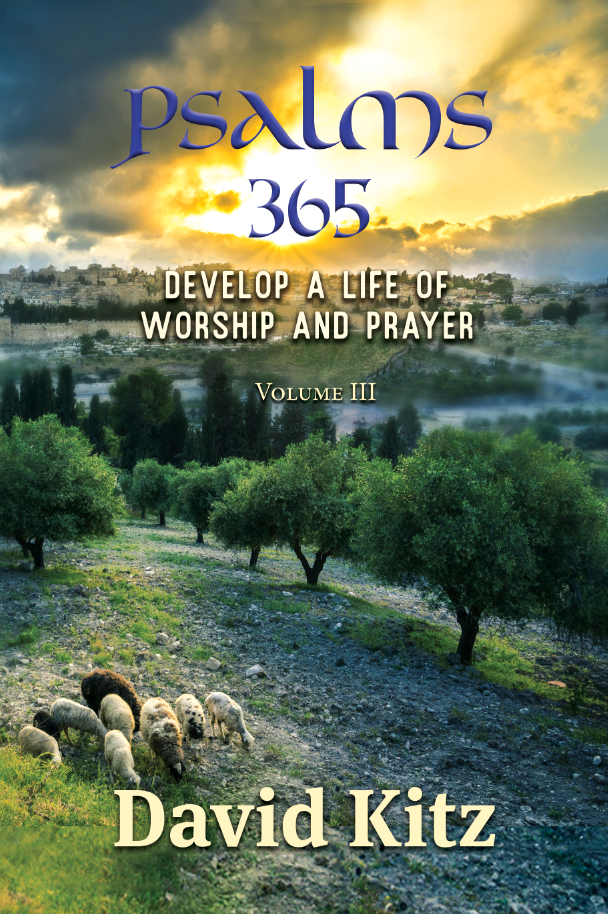
Volume I of Psalms 365: Develop a Life of Worship and Prayer won the Best Book of the Year Award from The Word Guild and Volume II has won the Best Devotional of the Year Award. For those who love God’s word, this three-book series is an ideal way to daily meet with the Lord. To purchase or for a closer look click here.

New from David Kitz

James—the brother of Jesus—who was this man? What evidence do we have that this “brother of our Lord” even existed?

David Kitz digs deep into archeology, family dynamics, church history, and the biblical texts. What emerges from his research is a portrait of a decisive, pivotal leader who embodied the will and character of Jesus Christ.

But how did James—James the unbeliever—transform to become a leader who changed the course of world history? In these pages you will uncover the answer and rediscover for yourself the life-changing power of the gospel.


Submitting to Christ’s Authority

Tags

, , , , , , , ,

Today’s Devotion from Psalms 365 by David Kitz

Reading: Psalm 2

Listen to Psalm 2 as read by Jonathan Dent:

Why do the nations conspire and the peoples plot in vain?
The kings of the earth rise up and the rulers band together
against the LORD and against his anointed, saying,
“Let us break their chains and throw off their shackles.”
The One enthroned in heaven laughs; the Lord scoffs at them.
He rebukes them in his anger and terrifies them in his wrath, saying,
“I have installed my king on Zion, my holy mountain.”
I will proclaim the LORD’s decree:
He said to me, “You are my son; today I have become your father.
Ask me, and I will make the nations your inheritance,
the ends of the earth your possession.
You will break them with a rod of iron;
you will dash them to pieces like pottery.”
Therefore, you kings, be wise; be warned, you rulers of the earth.
Serve the LORD with fear and celebrate his rule with trembling.
Kiss his son, or he will be angry and your way will lead to your destruction,
for his wrath can flare up in a moment.
Blessed are all who take refuge in him (NIV). *

Jesus before Pilate

Reflection
Kisses are so close-up and personal, so intimate. I don’t know about you, but I don’t kiss everyone I meet. Kisses are reserved for those special people in my life—people I know and trust—people I love.

Here in Psalm 2, kings and rulers are commanded to kiss the Son of God. What an odd command? What is the significance of this? The kiss in this case signals full submission to the supreme potentate. Kings and rulers are to submit to the overarching rule of Christ over themselves, their affairs, and their entire domain.

Psalm 2 is the first of several messianic psalms scattered throughout the Book of Psalms. There is nothing subtle about the messianic message found here. The LORD has installed His anointed as king in Zion, and furthermore, this anointed one is identified as the Son of God. The term the LORD’s “anointed” is frequently translated as Messiah or Christ.

In the Book of Acts, we see the apostles viewed this psalm as the prophetic fulfillment of Christ’s mission during his last days in Jerusalem. The anointed Son of God was rejected by Herod and Pilate, the rulers of that time. They refused to kiss the Son. See Acts 4:23-31.

But what about me? Have I kissed the Son? Have I submitted to his will for my life? In my own small way, I too am a monarch, a ruler of my own domain. Today, will I allow him to rule over me, my conduct, my activities, and my financial affairs?

Response: Dear Lord Jesus, thank you for your unconditional love. You want only the best for me. I yield to you. Help me to embrace your will and purpose for my life. I trust in you. I love you, Lord. With my lips I kiss the Son. Amen.

Your Turn: Have you kissed the Son? How can you show your love and loyalty to Jesus today?

Para la publicación de Salmos 365 de hoy en español haga clic aquí.

bgbg_v4.3_1501818
* NEW INTERNATIONAL VERSION, COPYRIGHT ©1973, 1978, 1984, 2011 BY BIBLICA

Thank God for peace in Israel and Gaza,
and continue to pray for peace to return to Ukraine and Russia!

Volume I of Psalms 365: Develop a Life of Worship and Prayer won the Best Book of the Year Award from The Word Guild and Volume II has won the Best Devotional of the Year Award. For those who love God’s word, this three-book series is an ideal way to daily meet with the Lord. To purchase or for a closer look click here.

Coming soon…

James—the brother of Jesus—who was this man? What evidence do we have that this “brother of our Lord” even existed?

David Kitz digs deep into archeology, family dynamics, church history, and the biblical texts. What emerges from his research is a portrait of a decisive, pivotal leader who embodied the will and character of Jesus Christ.

But how did James—James the unbeliever—transform to become a leader who changed the course of world history? In these pages you will uncover the answer and rediscover for yourself the life-changing power of the gospel.

For the Healing of the Nations

Tags

, , , , , , , , , , , , ,

Today’s quote and prayer from
“Psalms 365: Develop a Life of Worship and Prayer”
Today’s Reading: Psalm 1

Dear Lord Jesus,
thank you for your sacrifice.
Help me to always remember
you are the true source of my righteousness.
At your prompting,
help me to rid myself
of the worthless chaff in my life.
Wind of God,
blow on me.
Water of life,
refresh my soul.
May I be fruitful,
Lord, for you.
Amen.

— — — —

Early morning mist on the Ottawa River — photo by David Kitz

Then the angel showed me
the river of the water of life, 
as clear as crystal, 
flowing from the throne of God
and of the Lamb

down the middle of the great street of the city.
On each side of the river
stood the tree of life, 
bearing twelve crops of fruit,
yielding its fruit every month.
And the leaves of the tree
are for the healing of the nations.

No longer will there be any curse. 
The throne of God
and of the Lamb will be in the city,
and his servants will serve him.

They will see his face, 
and his name will be on their foreheads.

There will be no more night. 
They will not need the light of a lamp
or the light of the sun,
for the Lord God will give them light. 
And they will reign for ever and ever.

(Revelatian 22:1-5 NIV)*

Para la publicación de Salmos 365 de hoy en español haga clic aquí.

bgbg_v4.3_1501818
* NEW INTERNATIONAL VERSION, COPYRIGHT ©1973, 1978, 1984, 2011 BY BIBLICA

Thank God for peace in Israel and Gaza,
and continue to pray for peace to return to Ukraine and Russia!

Volume I of Psalms 365: Develop a Life of Worship and Prayer won the Best Book of the Year Award from The Word Guild and Volume II has won the Best Devotional of the Year Award. For those who love God’s word, this three-book series is an ideal way to daily meet with the Lord. To purchase or for a closer look click here.

New from David Kitz

James—the brother of Jesus—who was this man? What evidence do we have that this “brother of our Lord” even existed?

David Kitz digs deep into archeology, family dynamics, church history, and the biblical texts. What emerges from his research is a portrait of a decisive, pivotal leader who embodied the will and character of Jesus Christ.

But how did James—James the unbeliever—transform to become a leader who changed the course of world history? In these pages you will uncover the answer and rediscover for yourself the life-changing power of the gospel.


The Beauty of Redemption

Tags

, , , , , , , ,

Today’s Devotion from Psalms 365 by David Kitz

Reading: Psalm 1
Blessed is the one
who does not walk in step with the wicked
or stand in the way that sinners take
or sit in the company of mockers,
but whose delight is in the law of the LORD,
and who meditates on his law day and night.
That person is like a tree planted by streams of water,
which yields its fruit in season
and whose leaf does not wither—
whatever they do prospers.
Not so the wicked!
They are like chaff that the wind blows away.
Therefore the wicked will not stand in the judgment,
nor sinners in the assembly of the righteous.
For the LORD watches over the way of the righteous,
but the way of the wicked leads to destruction (NIV). *

Photo by 4FLY RJ on Pexels.com

Reflection
Have you ever noticed the prominent role trees play in the Bible? The creation account in Genesis begins with God planting two very special trees in the Garden of Eden: the Tree of Life and the Tree of the Knowledge of Good and Evil. After our first parent’s disobedience, we were banned from access to the Tree of Life. But the amazing, good news of the Bible is that at the end of the book, in the last chapter of the book of Revelation, God restores our access to the Tree of Life (Revelation 22:1-5).

In a very real sense, the Bible is a story about trees.

Here in the very first Psalm, the life of the righteous is compared to a fruit-bearing tree, flourishing by streams of water. The psalmist presents a picture of tranquil beauty. Is that a picture of my life, or am I caught up in busyness? Sometimes I feel more like windblown chaff—rather worthless and lacking a sense of direction.

But that’s where the other tree at the heart of the Bible comes into play. It stands on a hill called Calvary. There my Savior bled and died. There he showed me my true worth. There my sins were washed away, never to be remembered again. That’s where I became righteous, not by works that I had done, but by the grace and forgiveness of Christ.

What a beautiful tree! The tree on Mount Calvary isn’t t beautiful because of its leaves. It’s beautiful because of its fruit—the fruit of redemption purchased by the blood of Jesus. My righteousness is solely due to him.

Response: Dear Lord Jesus, thank you for your sacrifice. Help me to always remember you are the true source of my righteousness. At your prompting help me to rid myself of the worthless chaff in my life. Wind of God, blow on me. Water of life, refresh my soul. May I be fruitful, Lord, for you. Amen.

Your Turn: Have you knelt before the tree on Mount Calvary? Today, how can you show your appreciation for the tree God planted there?

Para la publicación de Salmos 365 de hoy en español haga clic aquí.

bgbg_v4.3_1501818
* NEW INTERNATIONAL VERSION, COPYRIGHT ©1973, 1978, 1984, 2011 BY BIBLICA

Thank God for peace in Israel and Gaza,
and continue to pray for peace to return to Ukraine and Russia!

Volume I of Psalms 365: Develop a Life of Worship and Prayer won the Best Book of the Year Award from The Word Guild and Volume II has won the Best Devotional of the Year Award. For those who love God’s word, this three-book series is an ideal way to daily meet with the Lord. To purchase or for a closer look click here.

Coming soon…

James—the brother of Jesus—who was this man? What evidence do we have that this “brother of our Lord” even existed?

David Kitz digs deep into archeology, family dynamics, church history, and the biblical texts. What emerges from his research is a portrait of a decisive, pivotal leader who embodied the will and character of Jesus Christ.

But how did James—James the unbeliever—transform to become a leader who changed the course of world history? In these pages you will uncover the answer and rediscover for yourself the life-changing power of the gospel.

The Prominent Role of Trees in the Bible

Tags

, , , , , , , , , , , ,

Today’s Devotion from Psalms 365 by David Kitz

Reading: Psalm 1

Listen to Psalm 1 as read by Jonathan Dent:

Blessed is the one
who does not walk in step with the wicked
or stand in the way that sinners take
or sit in the company of mockers,
but whose delight is in the law of the L
ORD,
and who meditates on his law day and night.
That person is like a tree planted by streams of water,
which yields its fruit in season
and whose leaf does not wither—
whatever they do prospers.
Not so the wicked!
They are like chaff that the wind blows away.
Therefore the wicked will not stand in the judgment,
nor sinners in the assembly of the righteous.
For the LORD watches over the way of the righteous,
but the way of the wicked leads to destruction
(NIV).

Be a fruitful tree of life — photo by David Kitz

Reflection
Have you ever noticed the prominent role trees play in the Bible? The creation account in Genesis begins with God planting two very special trees in the Garden of Eden: the Tree of Life and the Tree of the Knowledge of Good and Evil. After our first parent’s disobedience, we were banned from access to the Tree of Life. But the amazing, good news of the Bible is that at the end of the book, in the last chapter of the book of Revelation, God restores our access to the Tree of Life (Revelation 22:1-5).

In a very real sense, the Bible is a story about trees.

Here in the very first Psalm, the life of the righteous is compared to a fruit-bearing tree, flourishing by streams of water. The psalmist presents a picture of tranquil beauty. Is that a picture of my life, or am I caught up in busyness? Sometimes I feel more like windblown chaff—rather worthless and lacking a sense of direction.

But that’s where the other tree at the heart of the Bible comes into play. It stands on a hill called Calvary. There my Savior bled and died. There he showed me my true worth. There my sins were washed away, never to be remembered again. That’s where I became righteous, not by works that I had done, but by the grace and forgiveness of Christ.

What a beautiful tree! The tree on Mount Calvary isn’t t beautiful because of its leaves. It’s beautiful because of its fruit—the fruit of redemption purchased by the blood of Jesus. My righteousness is solely due to him.

Response: Dear Lord Jesus, thank you for your sacrifice. Help me to always remember you are the true source of my righteousness. At your prompting help me to rid myself of the worthless chaff in my life. Wind of God, blow on me. Water of life, refresh my soul. May I be fruitful, Lord, for you. Amen.

Your Turn: Have you knelt before the tree on Mount Calvary? Today, how can you show your appreciation for the tree God planted there?

Para la publicación de Salmos 365 de hoy en español haga clic aquí.

bgbg_v4.3_1501818
* NEW INTERNATIONAL VERSION, COPYRIGHT ©1973, 1978, 1984, 2011 BY BIBLICA

Thank God for peace in Israel and Gaza,
and continue to pray for peace to return to Ukraine and Russia!

Volume I of Psalms 365: Develop a Life of Worship and Prayer won the Best Book of the Year Award from The Word Guild and Volume II has won the Best Devotional of the Year Award. For those who love God’s word, this three-book series is an ideal way to daily meet with the Lord. To purchase or for a closer look click here.

New from David Kitz

James—the brother of Jesus—who was this man? What evidence do we have that this “brother of our Lord” even existed?

David Kitz digs deep into archeology, family dynamics, church history, and the biblical texts. What emerges from his research is a portrait of a decisive, pivotal leader who embodied the will and character of Jesus Christ.

But how did James—James the unbeliever—transform to become a leader who changed the course of world history? In these pages you will uncover the answer and rediscover for yourself the life-changing power of the gospel.


Hidden for Ages and Generations

Tags

, , , , , , , , , ,

Today’s quote and prayer from
“Psalms 365: Develop a Life of Worship and Prayer”
Today’s Reading: Psalm 150

LORD God,
I praise you.
You are my strength and my song.
Help me to discover new ways to praise you
because you are good.
Let my entire life reflect
the redemptive presence
of Jesus in me.
Amen.

— — — —

Now I rejoice
in what I am suffering for you,
and I fill up in my flesh
what is still lacking
in regard to Christ’s afflictions,
for the sake of his body,
which is the church.

I have become its servant
by the commission God gave me
to present to you the word of God
in its fullness—

the mystery that has been kept hidden
for ages and generations,
but is now disclosed to the Lord’s people.

To them God has chosen to make known
among the Gentiles
the glorious riches of this mystery,
which is Christ in you,
the hope of glory.

(Colossians 1:24-27 NIV)*

Para la publicación de Salmos 365 de hoy en español haga clic aquí.

bgbg_v4.3_1501818
* NEW INTERNATIONAL VERSION, COPYRIGHT ©1973, 1978, 1984, 2011 BY BIBLICA

Thank God for a measure of peace in Israel and Gaza,
and continue to pray for peace to return to Ukraine and Russia!

Volume I of Psalms 365: Develop a Life of Worship and Prayer won the Best Book of the Year Award from The Word Guild and Volume II has won the Best Devotional of the Year Award. For those who love God’s word, this three-book series is an ideal way to daily meet with the Lord. To purchase or for a closer look click here.

Available now from the author…

Let Everything Praise

Tags

, , , , , , , ,

Today’s Devotion from Psalms 365 by David Kitz

Reading: Psalm 150
Praise the LORD.
Praise God in his sanctuary;
praise him in his mighty heavens.
Praise him for his acts of power;
praise him for his surpassing greatness.
Praise him with the sounding of the trumpet,
praise him with the harp and lyre,
praise him with timbrel and dancing,
praise him with the strings and pipe,
praise him with the clash of cymbals,
praise him with resounding cymbals.
Let everything that has breath praise the LORD.
Praise the LORD (NIV). *

Praise from this earth, Grey Nuns Park, Orleans, ON — photo by David Kitz

Reflection
We have reached the crescendo—the conclusion and the high point of the Book of Psalms. Hallelujah and praise the LORD!

The word praise appears thirteen times in this final psalm. The number thirteen is suggestive of Jesus and his apostles. He is at the core—the very center of God ordained worship.

Eight forms or instruments of praise are listed in this psalm. Eight is the number of new beginnings. Seven suggests completeness, so we see that God rested on the seventh day. But eight signals a new start. In the same way, these eight means or instruments of praise do not represent a complete list. They simply suggest the varied ways in which we can express our praise to the LORD. We have only just begun to discover and explore the many ways in which we can show our gratitude to our Creator.

No one—no living being—is excluded from this call to praise. Let everything that has breath praise the LORD.

This call for all the breathing to praise the LORD is truly fitting. We received our original breath from the LORD. Then the LORD God formed a man from the dust of the ground and breathed into his nostrils the breath of life, and the man became a living being (Genesis 2:7). Now with our breath—our God-given breath—let us praise our Maker.

In the same way after his resurrection Jesus breathed on his disciples. Again Jesus said, “Peace be with you! As the Father has sent me, I am sending you.” And with that he breathed on them and said, “Receive the Holy Spirit” (John 20:21-22).

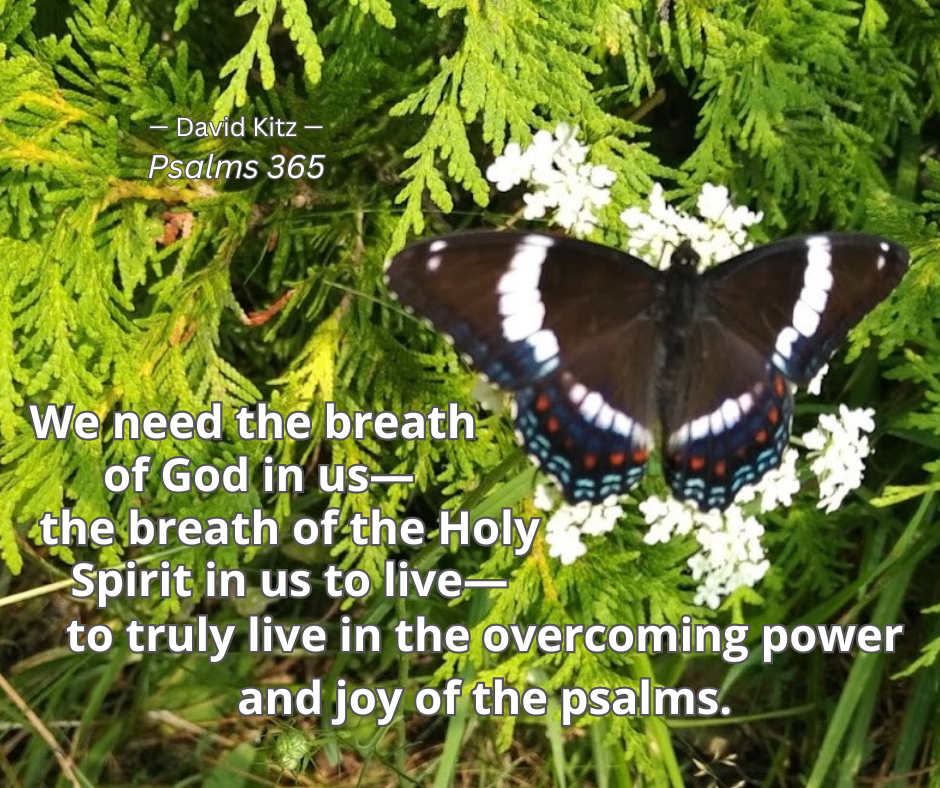
We need the breath of God in us—the breath of the Holy Spirit in us to live—to truly live in the overcoming power and joy of the psalms. For the Holy Spirit’s presence, I will praise the LORD!

Response: LORD God, I praise you. You are my strength and my song. Help me to discover new ways to praise you because you are good. Let my entire life reflect your redemptive presence in me. Amen.

Your Turn: Why are you breathing? Is praising God an integral part of your purpose?

Para la publicación de Salmos 365 de hoy en español haga clic aquí.

bgbg_v4.3_1501818
* NEW INTERNATIONAL VERSION, COPYRIGHT ©1973, 1978, 1984, 2011 BY BIBLICA

Thank God for peace in Israel and Gaza,
and continue to pray for peace to return to Ukraine and Russia!

Volume I of Psalms 365: Develop a Life of Worship and Prayer won the Best Book of the Year Award from The Word Guild and Volume II has won the Best Devotional of the Year Award. For those who love God’s word, this three-book series is an ideal way to daily meet with the Lord. To purchase or for a closer look click here.

Coming soon…

James—the brother of Jesus—who was this man? What evidence do we have that this “brother of our Lord” even existed?

David Kitz digs deep into archeology, family dynamics, church history, and the biblical texts. What emerges from his research is a portrait of a decisive, pivotal leader who embodied the will and character of Jesus Christ.

But how did James—James the unbeliever—transform to become a leader who changed the course of world history? In these pages you will uncover the answer and rediscover for yourself the life-changing power of the gospel.

Who Is Like the LORD

Tags

, , , , , , , , , , ,

I will praise the LORD!
Psalm 113

Praise the LORD.
Praise the LORD, you his servants;
praise the name of the LORD.
Let the name of the LORD be praised,
both now and forevermore.
From the rising of the sun to the place where it sets,
the name of the LORD is to be praised.
The LORD is exalted over all the nations,
his glory above the heavens.
Who is like the LORD our God,
the One who sits enthroned on high,
who stoops down to look
on the heavens and the earth?
He raises the poor from the dust
    and lifts the needy from the ash heap;
he seats them with princes,
    with the princes of his people.
He settles the childless woman in her home
    as a happy mother of children.
Praise the LORD. *

bgbg_v4.3_1501818
* NEW INTERNATIONAL VERSION, COPYRIGHT ©1973, 1978, 1984, 2011 BY BIBLICA

Please pray for peace to return to Israel, Gaza, and Ukraine!

Volume I of Psalms 365: Develop a Life of Worship and Prayer won the Best Book of the Year Award from The Word Guild and Volume II has won the Best Devotional of the Year Award. For those who love God’s word, this three-book series is an ideal way to daily meet with the Lord. To purchase or for a closer look click here.

Coming soon…

James—the brother of Jesus—who was this man? What evidence do we have that this “brother of our Lord” even existed?

David Kitz digs deep into archeology, family dynamics, church history, and the biblical texts. What emerges from his research is a portrait of a decisive, pivotal leader who embodied the will and character of Jesus Christ.

But how did James—James the unbeliever—transform to become a leader who changed the course of world history? In these pages you will uncover the answer and rediscover for yourself the life-changing power of the gospel.


A Call for Literary Prophets

Tags

, , , , , , , , , , , , , , ,

Jesus performed many other signs in the presence of his disciples,
which are not recorded in this book.
But these are written that you may believe that Jesus is the Messiah, the Son of God, 
and that by believing you may have life in his name.
(John 20:30-31, NIV)

As stated earlier, the Old Testament prophetic duo of Elijah and Elisha can be categorized as non-literary prophets, in contrast to a host of literary prophets such as Isaiah, Ezekiel, and Micah, who provided us with the Old Testament canon.
            Like Elijah and Elisha, John the Baptist and Jesus are the premier non-literary prophets of the New Testament period. They wrote nothing for us to read. In fact, the memory of their incredible lives and deeds would undoubtedly have faded into obscurity without the work of four diligent publicists named Matthew, Mark, Luke, and John. Such is the indelible power of the written word.
            Have literary prophets arisen in our time—in the era in which we live? There are ample reasons to believe the answer is yes. But before we look for examples of current or historic literary prophets, a point of clarification is required. This search for literary prophets is not about adding to the established canon of Holy Scripture. The literary prophets we are talking about simply draw people back into relationship with God. This after all was the primary goal of godly prophetic voices down through the ages. Often that involved challenging the norms, beliefs, and systems of the time.
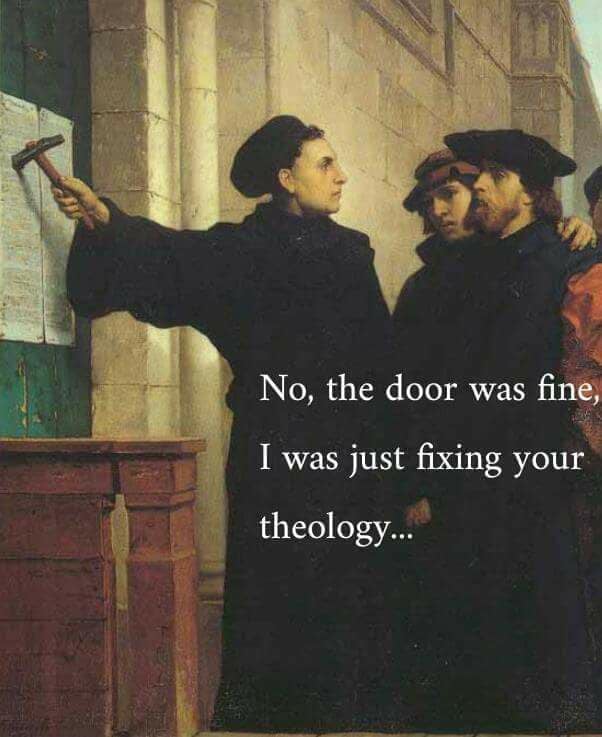
           In this respect perhaps the greatest prophet of the last millennium was Martin Luther [1483-1546]. He brought Europe out of the dark ages and into the glorious light of the gospel—a gospel that had been distorted almost beyond recognition by layers of institutional corruption, false doctrine, and a profound ignorance of the Holy Scriptures.
            How did Luther bring about such a radical change? The answer primarily lies in his work as a literary prophet. Scholars and historians agree that foremost among his literary works is his translation of the Bible into German, the vernacular of the people of central Europe. Of course, this inspired translators in other lands to produce Bibles in their local tongue. Suddenly, the Word of God was unleashed and active, changing hearts and lives across the continent and the work of Bible translation continues to this day.
            None of this would have taken place with such speed without the invention of Gutenberg’s printing press which for the first time made the Scriptures affordable and readily available. New technology presents new opportunities to transmit the gospel message. Are we currently using the new technologies available to us to advance the redeeming message of Christ in the world?
            In addition to translating the Bible, Luther authored a host of books, pamphlets, and tracts that expounded on biblical truth and exposed doctrinal error. Some of his views have been discredited, but many remain relevant.[i] He was a prophetic voice to his generation, and through his writing, his message still resounds five hundred years later.
            Four centuries after Luther, in eastern Europe, another literary figure arose to challenge the religious and political thinking of his time. His name was Leo Tolstoy [1828-1910].
            What might it take for peace to come today between Ukraine and Russia? What seems impossible with people is still possible with God.
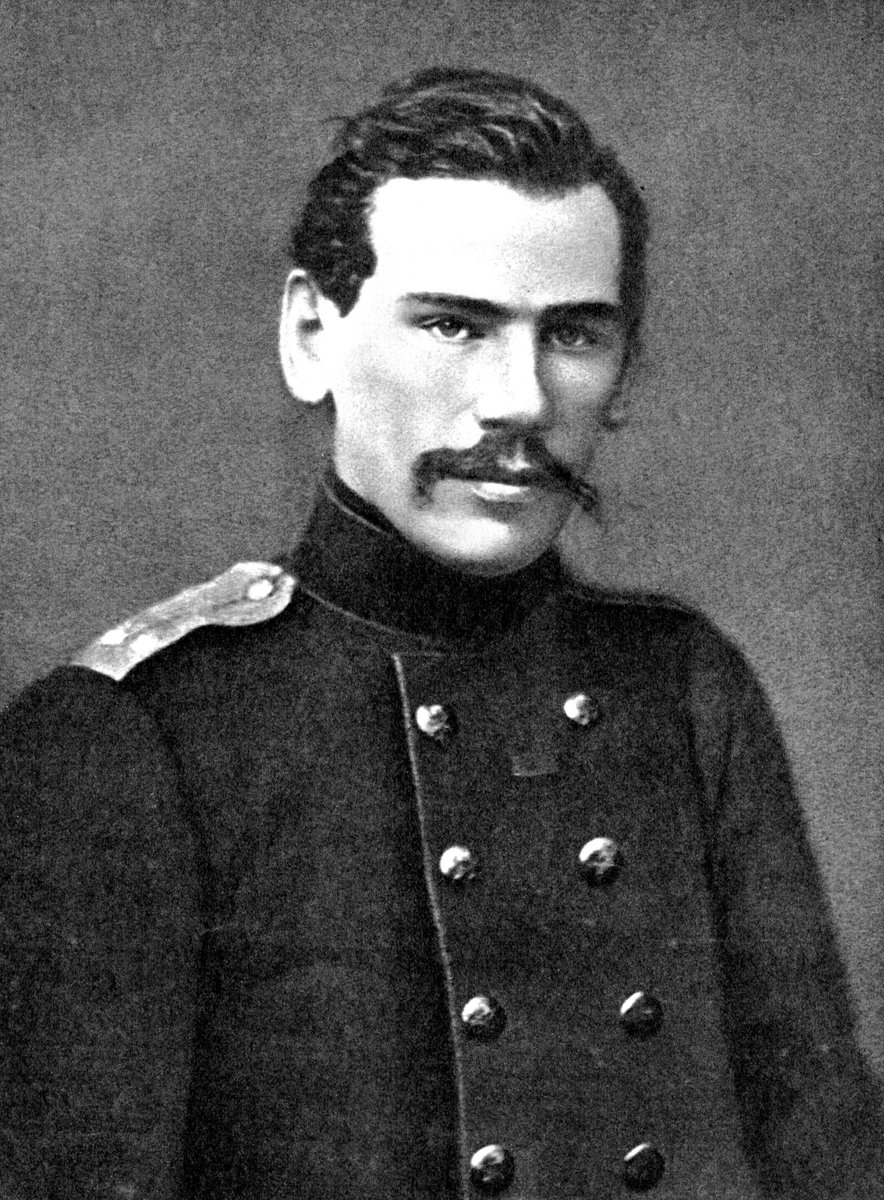
A young Leo Tolstoy

          What if Ukrainians and Russians would both rediscover the message of peace, forgiveness, and reconciliation in Tolstoy’s War & Peace? Sadly, this book is currently banned in Ukraine because of the mistaken idea that it glorifies the Russian military.
            After serving in the Crimean War as a young officer in the Russian army, Tolstoy became a committed pacifist. War & Peace never glorifies war, but rather, accurately portrays how war often embitters our souls, dehumanizes us, and robs us of the love of neighbor. Ironically, the Russian Orthodox Church excommunicated Tolstoy in 1901, partially because of his questioning their uncritical support for the Russian military.
           Many see Tolstoy as a Russian Charles Dickens. Considered by many as the world’s best novel, War & Peace overwhelms potential readers by its 1,400-page size. What surprised us as readers was how deeply Jesus’ gospel message of forgiveness was woven into this book. God is mentioned 312 times in War & Peace. Outwardly, the book is about Napoleon’s invasion of Russia, but at a deeper level, it was about human conflict and how the Kingdom of God is the only solution. 
           The Russian Prince Andrei, who represented the glorification of war in War & Peace, initially despised forgiveness as just for women and children.[i] After being mortally wounded, Andrei learns to forgive his dying enemy Anatole Kuragin, and his ex-fiancée Natasha who almost ran off with Anatole. He notably commented:

          Compassion, love of our brothers, for those who love us and for those who hate us, love of our enemies; yes, that love which God preached on earth…and I did not understand—that is what made me sorry to part with life, that is what remained for me had I lived. But now it is too late. I know it![ii]

           Andrei asks his doctor to get him a copy of the Gospels, saying that he had now a new source of happiness which had something to do with the Gospels. After discovering the law of love, Andrei met again with Natasha who was devastated with guilt and shame:

          “Forgive me!” she whispered, raising her head and glancing at him. “Forgive me!”
          “I love you,” said Prince Andrei…
          “Forgive…!”
          “Forgive what?” he asked.
          “Forgive me for what I have do-ne!” faltered Natasha in a scarcely audible, broken whisper, and began kissing his hand more rapidly, just touching it with her lips.
          “I love you more, better than before,” said Prince Andrei, lifting her face with his hand so as to look into her eyes.[iii]

            This novel could have been called Love & Forgiveness. Seventy-two times, Tolstoy talks about forgiveness in War & Peace. It was not just about the war with Napoleon, it was about the war between the sexes.

The Word of God — photo by David Kitz

            Another character in War & Peace, Pierre Bezukhov, is like a Russian Forrest Gump. He is a tragically comic figure who awkwardly stumbles into all the key times of the Napoleonic conflict, unexpectedly being a savior figure, and allowing us to observe the historic conflict in person, up close. Everything about him is unlikely, from his being an illegitimate son to becoming the wealthiest person in all of Russia. Through dreams and visions, Pierre discovered on Napoleon’s battlefield that:

            To love life is to love God. Harder and more blessed than all else is to love this life in one’s sufferings, in innocent sufferings.[i]

           Through discovering God, Pierre experienced a deep tranquility and happiness. He was no longer tormented by the meaningless of life: 

          …a simple answer was now always ready in his soul: “Because there is a God, that God without whose will not one hair falls from a man’s head.[ii]

          Meeting God gave him such a new ability to listen that people regularly told Pierre their most intimate secrets. This deep listening was what caused the embittered princess Natasha to fall in love and marry him.
           Tolstoy, a Russian aristocrat, became so enamoured with the Sermon on the Mount that he gave away all his wealth and chose to live like a peasant, tilling the land. When he decided to give up all his book income, his wife threatened to divorce him, so he compromised by only giving away the money from any of his newly written books.
            Tolstoy’s book The Kingdom of God Is Within You so impacted Mahatma Gandhi that he gave it out to his followers. Gandhi was so impressed by Tolstoy’s emphasis on the Sermon on the Mount (Matthew 5 to 7) that he read Jesus’ famous Sermon every day for the rest of his life. Tolstoy’s emphasis on non-violent resistance formed the basis of Gandhi’s campaign for Indian nationhood. Thus, through the influence of Tolstoy’s writing the entire subcontinent of India was transformed.
            Martin Luther King Jr., after reading E. Stanley Jones’ book on Gandhi, discovered the nonviolent key for his civil rights movement in America. So, the torch light of a peace-making gospel passed from a Russian author to India and onto America.
            Tolstoy’s passion for peace-making and forgiveness might even change Russian President Putin, if he would only take the time to read Tolstoy’s book.
            The late British journalist and Christian apologist Malcolm Muggeridge deeply admired the genius of Tolstoy:

         Tolstoy was one of those truly great men who come into the world at long intervals, and we need them, and we rightly continue to look to them just as the Russians do, despite all the changes that have happened.

            What if instead of resenting Russia for its tragic invasion of the Ukraine, we, like Tolstoy, began to pray passionately for its transformation? Could we have faith to believe that Russia will become a Sermon on the Mount nation, overflowing with peacemakers like Tolstoy? Let’s call out to God for such a miracle.
            On this continent in 1852, Harriet Beecher Stowe wrote a novel that transfixed America. Uncle Tom’s Cabin was the bestselling book in United States in the nineteenth century, surpassed only by the Bible.[iii] Stowe was motivated by her deep Christian faith. Her book pricked the conscience of the nation, exposed the horrors of slavery, and fomented the upheaval that led to the American Civil War which culminated in the emancipation of millions.   
            Martin Luther, Leo Tolstoy, and Harriet Beecher Stowe exemplify the incredible power of the printed page. Literary prophets are history shapers. They transformed nations and their influence remains to this day. We need more literary prophets—prophets filled with the courage of their convictions—prophets for our time.
            The written word inspires faith—life transforming faith. Perhaps John, the beloved, expressed this truth best when a the close of his Gospel he penned these immortal words: But these are written that you may believe that Jesus is the Messiah, the Son of God, and that by believing you may have life in his name (John 20:31).

[i] graf Leo Tolstoy. War and Peace (Kindle Locations 22902-22903). Kindle Edition.

[ii] graf Leo Tolstoy. War and Peace (Kindle Locations 23761-23762). Kindle Edition.

[iii] Uncle Tom’s Cabin – Wikipedia accessed March 1, 2023.

[i] graf Leo Tolstoy. War and Peace (Kindle Locations 19935-19936). Kindle Edition.

[ii] graf Leo Tolstoy. War and Peace (Kindle Locations 22902-22903). Kindle Edition.

[iii] graf Leo Tolstoy. War and Peace (Kindle Locations 19935-19936). Kindle Edition.

[i] While we honor Martin Luther as a literary prophet used in the Reformation, we acknowledge the tragic nature of the antisemitism that Luther slipped into later in his ministry.

This is the sixth weekly excerpt from the award-winning book 
The Elisha Code & the Coming Revival 

A soul-gripping read.
Is a return-to-Jesus revival possible in our time?
This book points the way forward.
For details click here.

Trusting in the LORD

Tags

, , , , , , , , , , ,

I will praise the LORD!
Psalm 112:6-10

Surely the righteous will never be shaken;
they will be remembered forever.
They will have no fear of bad news;
their hearts are steadfast, trusting in the LORD.
Their hearts are secure, they will have no fear;
in the end they will look in triumph on their foes.
They have freely scattered their gifts to the poor,
their righteousness endures forever;
their horn will be lifted high in honor.

The wicked will see and be vexed,
    they will gnash their teeth and waste away;
    the longings of the wicked will come to nothing. *

bgbg_v4.3_1501818
* NEW INTERNATIONAL VERSION, COPYRIGHT ©1973, 1978, 1984, 2011 BY BIBLICA

Please pray for peace to return to Israel, Gaza, and Ukraine!

Volume I of Psalms 365: Develop a Life of Worship and Prayer won the Best Book of the Year Award from The Word Guild and Volume II has won the Best Devotional of the Year Award. For those who love God’s word, this three-book series is an ideal way to daily meet with the Lord. To purchase or for a closer look click here.

Coming soon…

James—the brother of Jesus—who was this man? What evidence do we have that this “brother of our Lord” even existed?

David Kitz digs deep into archeology, family dynamics, church history, and the biblical texts. What emerges from his research is a portrait of a decisive, pivotal leader who embodied the will and character of Jesus Christ.

But how did James—James the unbeliever—transform to become a leader who changed the course of world history? In these pages you will uncover the answer and rediscover for yourself the life-changing power of the gospel.