• Home
  • About
  • DavidKitz.ca
  • Youtube Videos
  • Books by David
  • Books on Amazon.com

I love the Psalms

~ Connecting daily with God through the Psalms

I love the Psalms

Tag Archives: Bible

Obedience to God’s Word

23 Monday Jun 2025

Posted by davidkitz in Psalms

≈ Leave a comment

Tags

Bible, devotion, faith, Heart, holiness, Law, obedience, Prayer, Psalm119, purpose, Reflection, Righteousness, Scripture, word, worship

Today’s Devotion from Psalms 365 by David Kitz

Reading: Psalm 119:1-8
א Aleph
Blessed are those whose ways are blameless,
who walk according to the law of the LORD.
Blessed are those who keep his statutes
and seek him with all their heart—
they do no wrong
but follow his ways.
You have laid down precepts
that are to be fully obeyed.
Oh, that my ways were steadfast
in obeying your decrees!
Then I would not be put to shame
when I consider all your commands.
I will praise you with an upright heart
as I learn your righteous laws.
I will obey your decrees;
do not utterly forsake me (NIV). *

Reflection
We are about to start a twenty-two-day journey through Psalm 119, the longest Psalm in the Bible. This is also an acrostic poem, which in this case means each stanza of this poetic psalm begins with a different letter of the Hebrew alphabet. The section above for instance, begins with the letter Aleph, which roughly corresponds to our letter A. Also, within each alphabetic stanza are eight verses, which all begin with the same Hebrew letter. In this way the psalm’s composer works his way through the entire twenty-two letters of the Hebrew alphabet. This psalm is a truly remarkable literary composition, which was originally structured to be memorized, like the alphabet. Alas, for the English reader, much of the elaborate, intricate beauty of this psalm is lost the moment it is translated from its original tongue.

The theme of this psalm is consistent throughout. It is a poetic testimony in praise of God’s holy, unchanging word. Here we find the alpha and omega of the psalms—a literary tribute to the A-to-Z wonder of God’s word. Every letter trumpets the salutary goodness of God’s written word.

From the beginning of this poetic masterpiece the author recognizes his need. His life needs to be governed by the law of the LORD. His goal and heart’s desire is to lead a blameless life. God’s blessing comes to such a person. Blessed are those whose ways are blameless, who walk according to the law of the LORD. Blessed are those who keep his statutes and seek him with all their heart—they do no wrong but follow his ways (v. 1-3).

In a world of injustice and moral rot the words of Psalm 119 pierce like a steel-tipped bullet to the heart. The need for all humanity to follow his ways, rather than our own selfish ways has never been greater.

Response: LORD God, like the psalmist I want to fall in love with your Word. Here is the purpose to my desire. I want to live a blameless life that brings honor to my Maker because you are good. Amen.

Your Turn: Is holy living one of your goals? Do you see value in leading a blameless life before God?

Para la publicación de Salmos 365 de hoy en español haga clic aquí.

bgbg_v4.3_1501818
* NEW INTERNATIONAL VERSION, COPYRIGHT ©1973, 1978, 1984, 2011 BY BIBLICA

Please pray for peace to return to Israel, Gaza, and Ukraine!

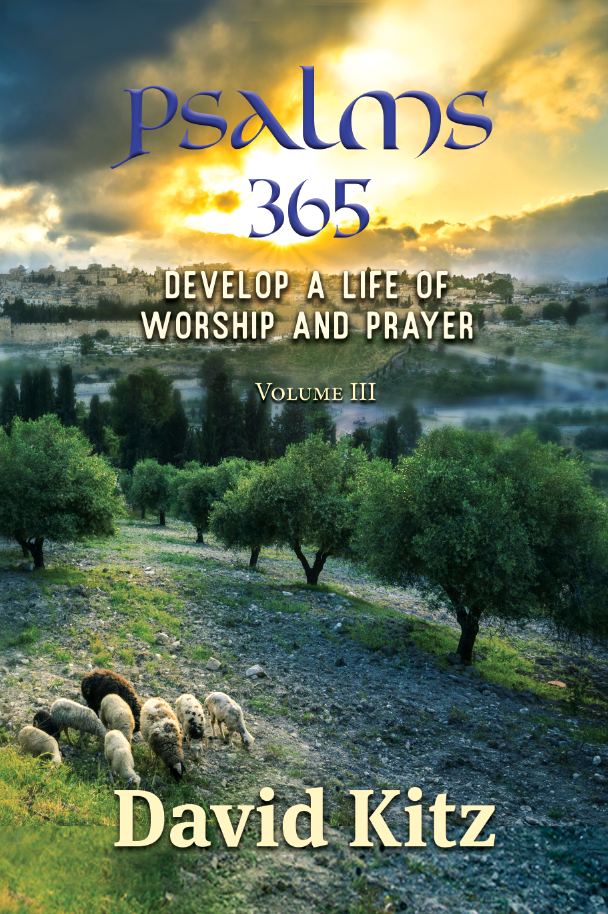
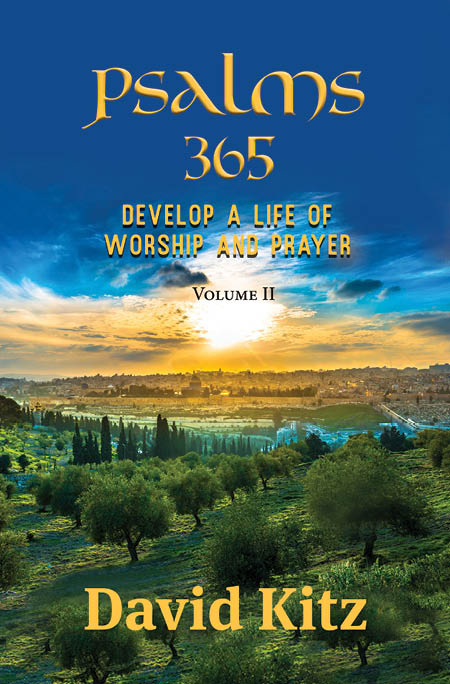
Volume I of Psalms 365: Develop a Life of Worship and Prayer won the Best Book of the Year Award from The Word Guild and Volume II has won the Best Devotional of the Year Award. For those who love God’s word, this three-book series is an ideal way to daily meet with the Lord. To purchase or for a closer look click here.

A gripping read from David Kitz.
Is a return-to-Jesus revival possible in our time?
This book points the way forward.
For details click here.

The LORD Rules over All

22 Sunday Jun 2025

Posted by davidkitz in Psalms, Psalms Alive!

≈ Leave a comment

Tags

Bible, circumstances, constancy of God, David, God, Jesus, Martin Rinkart, praise, praise the LORD, Prayer, Psalms, sacrifice of praise, sing praise, worship, worship amid suffering

Psalm 103:19-22

The LORD has established his throne in the heavens,
and his kingdom rules over all.
Praise the LORD you his angels,
you mighty ones who do his bidding,
who obey his word.
Praise the LORD all his heavenly hosts,
you his servants who do his will.
Praise the L
ORD, all his works everywhere in his dominion.
Praise the LORD, O my soul.

Psalm 103 is a sandwich, or if you prefer, a big beefy hamburger. By that I mean this psalm begins with a personal call to praise the LORD, and it ends, as we see from the passage above, with what amounts to a universal call to praise the LORD. Between these calls to worship, we find a great big helping of God’s goodness. In between we discover the why—the reasons why—we should be overflowing with praise to the LORD.

David experienced God’s saving grace, goodness, love and forgiveness over and over again. Consequently, his heart was full to bursting with praise. Herein is the why of praise; the reason for praise rests in God, not in us, or our circumstances.

But Psalm 103 is not just a beefy hamburger. It is also an express train—a big steam locomotive. There is a distinct momentum to this psalm, which can be missed by breaking it into sections. It begins with David addressing his soul. It would appear, at the start, to be a sluggish soul that is somewhat reluctant to praise God. But this reluctance begins to melt away as David recounts the LORD’s great goodness. One by one David declares the character qualities of the LORD. As each attribute is portrayed, David’s sense of awe and his desire to praise God picks up momentum. By the end of this psalm, David’s praise has become an express train, loaded with divine purpose and headed full speed for glory!

Shinkansen (bullet train) photo by David Kitz

His final call to worship in the above stanza is a great cry for all to get aboard this express train of praise. Now with a full head of steam, in exultant praise, I can hear him shouting, “Hop on board, one and all. Praise the LORD! We are heaven bound!”

Many see praise and worship as a purely cathartic response to the manifest goodness of God. Something good happens to us. Unexpectedly, we get a thousand-dollar payment in the mail. Quite naturally our response is praise to God.

For many people, praise to God never progresses beyond this natural, cathartic level. If God does not bless, no praise is forthcoming. Our praise for the LORD becomes or simply remains circumstance dependent. But that was not the case with David. His praise extended beyond simple catharsis. He taught his soul to praise the LORD in all circumstances. True biblical praise and worship is after all a spiritual exercise, a discipline we grow in, just as we grow in the discipline of prayer.

The LORD, the object of our praise, does not change with our circumstances. He is forever the same. Jesus Christ is the same yesterday and today and forever (Hebrews 13:8). He is constant, hence our praise and worship of him should be constant, unaffected by weather conditions, world events, the gyrations of the stock market, our swings of mood or our personal situation.

Of course, this constancy in praise is something the natural man simply rebels against. Our world needs to be right in order for us to praise God aright, or so we reason. The only problem with this logic is that the world has never been right since the Fall. Death, disease, war and misery have been raining down on the children of Adam, since wilful disobedience to God first took root among us. And this is one weather forecast, for all humanity, that is not about to change—not until Christ returns.

If we are waiting for a perfect world before we lift our voice in praise to God, we will never praise Him. In fact, if our eyes are on the world, or on ourselves, there will always be grounds to withhold our praise. But then, the whole purpose of praise and worship is to lift up our eyes. We desperately need to get our eyes off ourselves, off the world, and onto God our Maker.

Photo by Thirdman on Pexels.com

Martin Rinkart was a man who could be forgiven for cursing God. But rather than cursing his Creator, or withholding worship, he composed the ageless hymn of praise, Now Thank we all our God. Pastor Rinkart (1586-1649) was caught up in the horrors of the Thirty Years’ War. For a full year his hometown, Eilenburg in Saxony, was besieged as war raged round about. The triple scourge of war, disease and famine ravaged the community. Death was everywhere. The walled city was swamped by destitute refugees. Three times it was overrun by pillaging armies. As the crisis worsened, Rinkart’s pastoral colleagues succumbed to the plague; only he was left to conduct the funerals. In that horrific year, 1637, he conducted more than 4,000 funerals, as many as fifty in a single day. One of those funerals was for his own dear wife.

Yet it was this man, Martin Rinkart, who composed these words of praise:

            Now thank we all our God
            With heart and hands and voices
            Who wondrous things hath done
            In whom this world rejoices;
            Who from our mothers’ arms
            Hath blessed us on the way
            With countless gifts of love
            And still is ours today.

Martin Rinkart did not live in a perfect world. But his eyes saw beyond the death and destruction that lay before him. He lifted his eyes above the world, and beyond himself. And when he did, he beheld God. He saw Him as LORD over all, and a God to be thanked and praised for countless gifts of love. Amid the most desperate situation imaginable, Pastor Rinkart fixed his gaze on the LORD his Maker. Then this humble pastor did a most remarkable thing—a Spirit-directed thing. He raised his voice in praise to God.

In a world run amok, the first casualty all too often is our faith in God. The chaos of disaster leads us to question the very existence of God. The god of order and control would not—should not—unleash tsunamis of war and disease on this world. We reason, “What kind of god is this? Why would an all-powerful god permit this? Why would he not spare those dear to me?”

Photo by Pixabay on Pexels.com

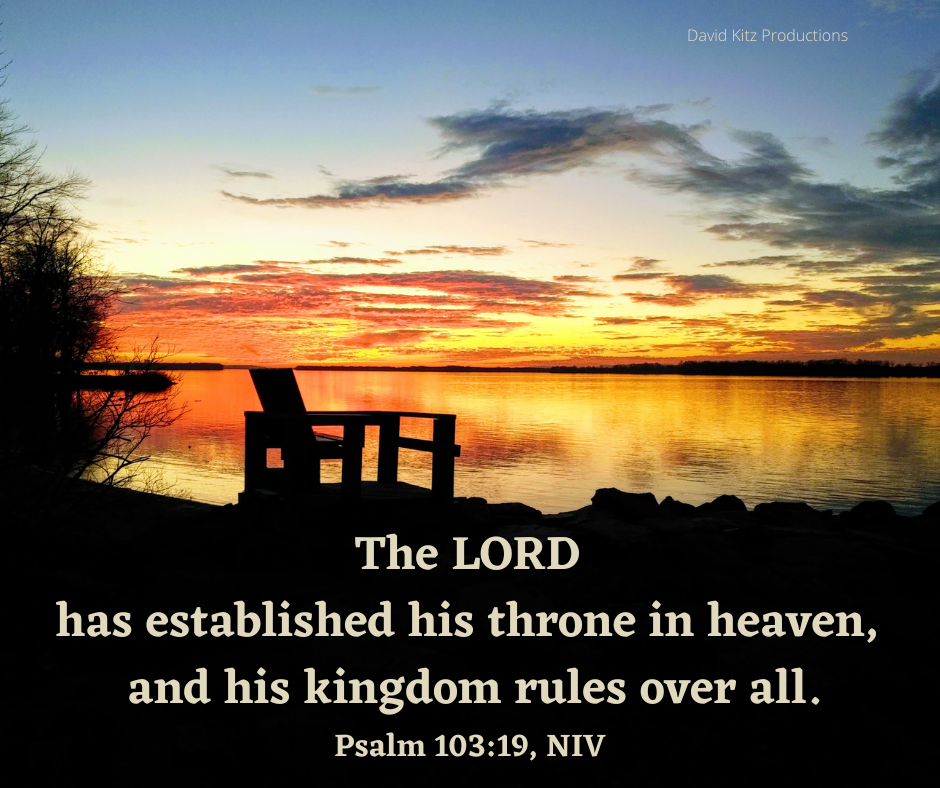
But Martin Rinkart the hymnist, and David the psalmist, knew the true God, a god who exists beyond our narrow definitions of order and control. Both these men knew the LORD of all the earth. Here in Psalm 103, David declared, “The LORD has established his throne in the heavens, and his kingdom rules over all.”

That divine rule, and that eternal kingdom, truly encompasses all, including disasters. Yes, He is LORD over disasters too, over war, over hurricanes, over floods and droughts, over both feasts and famines, joys and sorrows. He is LORD of all.

This declaration of God’s kingdom rule collides head on with my own preconceived notions of how the world should be. In my world death should never steal a friend away. In my world abundance should be a preordained right. In my world sickness should have no foothold, cancer should hold no sway. In my world all stories should have happy endings.

I want an ideal world like that. I want the real world to conform to my desired ends. And when God does not meekly comply, by granting me my ideal vision of the world, I stamp my foot and shake my fist at Him. In reality, when I do that, I am announcing that I want to be God. I want to be LORD. A refusal to bow in worship before God, is a declaration of my desire to be the sole ruler of my life, and the Creator my own world apart from God.

In a world run amok, Martin Rinkart did not stamp his foot and shake his fist at God; he lifted his voice in praise. Praise to God in the midst of tragedy aligns us afresh with the LORD of the universe. It re-establishes and reasserts his direct rule over us. Along with David we declared, “The LORD has established his throne in the heavens, and his kingdom rules over all.”

God in His wisdom has not given me my ideal world. He has given me His world—the real world—where sorrow mingles with joy, where the curse and the blessing of Eden coexist, where life and death dance nimbly together.

Man praying to God.

Prayer is my attempt before God to change this present world. And this world is in desperate need of change. God and I are in agreement on that point. That’s why He sent His Son. The world can be changed by God through prayer. What an astonishing truth! My prayers can change the world. God can as a consequence of my prayers, intervene and stunningly alter the natural course of events. I have seen Him do astonishing miracles. He is after all, who says He is. He is LORD.

But if God does not intervene, if my prayers are not answered, if no miracle comes, He is still LORD. He is still to be praised. This inalterable fact remains, “The LORD has established his throne in the heavens, and his kingdom rules over all.”

After 4,000 funerals, after his hopes and dreams lay buried, for Martin Rinkart, God was still God. He was still LORD over all. He was still worthy of all praise and so he wrote:

            O may this bounteous God 
            Through all our life be near us,
            With ever joyful hearts
            And blessed peace to cheer us;
            And keep us in his grace,
            And guide us when perplexed,
            And free us from all ills
            In this world and the next.[1]

How shallow is your praise? Do you believe your world needs to be right before you praise God? Lift up your eyes for a moment. Lift them to the One, who was lifted up for you. Lift your eyes to the Father, who did not spare His Son, but sent him into a messed-up world to die upon a cross. Fix your eyes on Him, the bloodied fount of redemption. Fix your eyes on the one who said, “I am the way, the truth and the life” (John 14:6).

Then, lift your voice in praise to God.
How shallow is your praise? Do you believe you need to feel right in order to praise right? After all, wouldn’t we be hypocritical if we were outwardly exuberant in praise to God, but our heart was not in it? Now in this instance, when we are speaking of our heart, we really mean our feelings. But if we see praise as a biblical command, our feelings are inconsequential. We are to praise God regardless of our feelings. Feelings come and go, but the goodness of God stands secure and unchanging. 

As residents of North America, we are a pampered lot. We live in affluence, materially rich, but mired in deep spiritual poverty. Gratification must be instant. Personal comfort trumps all other considerations. What do we know of hardship? In this sheltered atmosphere, praise for God grows like a spindly hothouse plant. Untested by hardship or the cold winds of adversity, our faith lacks depth. Our worship remains shallow.

If the music isn’t right on Sunday, we are incapable of praise. What an outrageous affront to God! True worship is so much more than a lip-synced ditty. It goes deeper. It flows higher. It breaks through our emotional indifference and reaches the heart of God.

The deepest praise is sacrificial. It floats heavenward on a sea of suffering. It confounds all logic and rises above whim or emotion.

Through Jesus, therefore, let us continually offer to God a sacrifice of praise—the fruit of lips that confess his name (Hebrews 13:15).

True worship is born of the Spirit. Along with David, it invites all of heaven—all of creation to join in the chorus of praise.

Praise the LORD you his angels, you mighty ones who do his bidding, who obey his word. Praise the LORD all his heavenly hosts, you his servants who do his will. Praise the LORD, all his works everywhere in his dominion. Praise the LORD, O my soul!  

Bringing Life to the Psalms

  1. What does it mean to offer a sacrifice of praise? Have you faced times of hardship when you found it difficult to praise God? Were you able to offer praise?
  2. Read a biographical portrait of Martin Rinkart. There are several internet sites that provide a closer look at this man who knew how to praise God through adversity.
  3. Read or sing Rinkart’s great hymn, Now Thank we all our God. It’s a wonderful way to set free the wellspring of praise within you.
  1. Reread Psalm 103. Is it a hamburger, an express train, or both? Can you think of another metaphor that helps our minds to capture the magnificence of this psalm? What is God saying to you as you read this psalm?

[1] Now Thank We All Our God, words by Martin Rinkart (1586-1649), 1636. Translated by Catherine Winkworth (1827-1878), 1858 MIDI: Nun danket alle Gott (later form of melody by Johann Cruger, (1598-1662).


Today’s post is Chapter 17 from the book Psalms A
live! Connecting Heaven & Earth by David Kitz. To find out more or purchase click here.


A Healthy Dose of Godly Fear

03 Tuesday Jun 2025

Posted by davidkitz in Psalm 111

≈ Leave a comment

Tags

Bible, consequences of sin, faith, fearing God, God, godly fear, holy, Jesus, Old Testament, Prayer, Psalms, Ten Commandments, the LORD

Today’s Devotion from Psalms 365 by David Kitz

Reading: Psalm 111

Praise the LORD!
I will give thanks to the L
ORD with my whole heart,
    in the company of the upright, in the congregation.
Great are the works of the L
ORD, studied by all who delight in them.
Full of honor and majesty is his work,
    and his righteousness endures forever.
He has gained renown by his wonderful deeds;
    the L
ORD is gracious and merciful.
He provides food for those who fear him; he is ever mindful of his covenant.
He has shown his people the power of his works,
    in giving them the heritage of the nations.
The works of his hands are faithful and just; all his precepts are trustworthy.
They are established forever and ever,
    to be performed with faithfulness and uprightness.
He sent redemption to his people; he has commanded his covenant forever.
    Holy and awesome is his name.
The fear of the L
ORD is the beginning of wisdom;
    all those who practice it have a good understanding.
    His praise endures forever
(NIV). *

The eyes of the LORD are on those who fear him — photo by David Kitz

Reflection
If the beginning of wisdom is the fear of the LORD, what is the end point or objective of this inducement to wisdom? I have often heard it argued that the fear of the LORD, which is frequently extolled in the Old Testament, has little to do with the common meaning for fear. We are to reverence or be in awe of the LORD, not be afraid of Him. To an extent this is true; however, I suspect we often push this fearless approach to God too far. The Lion of the Tribe of Judah is not toothless. He has claws.

A healthy dose of godly fear can prevent a massive case of sin enslavement and heartache.

The reaction of God’s people when the Ten Commandments were given at Mount Sinai is well worth noting. When the people saw the thunder and lightning and heard the trumpet and saw the mountain in smoke, they trembled with fear. They stayed at a distance and said to Moses, “Speak to us yourself and we will listen. But do not have God speak to us or we will die” (Exodus 20:18-19).

The very human fear expressed in this Exodus passage went well beyond a sense of awe and wonder. This was knee-buckling, heart-racing fear—the kind of fear that makes us dread doing anything that might offend this all-knowing, all-seeing, holy God. That’s a healthy fear—a fear that helps us to live and walk straight. Why would God want to induce this kind of fear?

God wants us to fear Him because He loves us. He wants to spare us from the agony of the terrible consequences of sin. A healthy fear of God leads us to an awe-induced love for Him. Now that’s wisdom.

Response: Father God, help me see your love for me in your commandments. In love, you correct me when I stray. Grant me understanding that comes through a healthy fear and love for you. Amen.

Your Turn: What does fearing God mean to you? Is God your chum, your friend, or your master?

Para la publicación de Salmos 365 de hoy en español haga clic aquí.

bgbg_v4.3_1501818
* NEW INTERNATIONAL VERSION, COPYRIGHT ©1973, 1978, 1984, 2011 BY BIBLICA

Please pray for peace to return to Israel, Gaza, and Ukraine!

Volume I of Psalms 365: Develop a Life of Worship and Prayer won the Best Book of the Year Award from The Word Guild and Volume II has won the Best Devotional of the Year Award. For those who love God’s word, this three-book series is an ideal way to daily meet with the Lord. To purchase or for a closer look click here.

A gripping read from David Kitz.
Is a return-to-Jesus revival possible in our time?
This book points the way forward.
For details click here.

Light Shines on the Righteous

01 Sunday Jun 2025

Posted by davidkitz in Psalm 97

≈ Leave a comment

Tags

Bible, hate evil, love the LORD, praise the LORD, Psalm 97, the LORD, the righteous, Zion

I will praise the LORD!

Even in darkness light dawns for the upright — photo by David Kitz

Psalm 97:8-12

Zion hears and rejoices
    and the villages of Judah are glad
    because of your judgments, LORD.
For you, LORD, are the Most High over all the earth;
    you are exalted far above all gods.
Let those who love the LORD hate evil,
    for he guards the lives of his faithful ones
    and delivers them from the hand of the wicked.
Light shines on the righteous
    and joy on the upright in heart.
Rejoice in the LORD, you who are righteous,
    and praise his holy name.
*

Para la publicación de Salmos 365 de hoy en español haga clic aquí.

bgbg_v4.3_1501818
* NEW INTERNATIONAL VERSION, COPYRIGHT ©1973, 1978, 1984, 2011 BY BIBLICA

Please pray for peace to return to Israel, Gaza, and Ukraine!

Volume I of Psalms 365: Develop a Life of Worship and Prayer won the Best Book of the Year Award from The Word Guild and Volume II has won the Best Devotional of the Year Award. For those who love God’s word, this three-book series is an ideal way to daily meet with the Lord. To purchase or for a closer look click here.

A gripping read from David Kitz.
Is a return-to-Jesus revival possible in our time?
This book points the way forward.
For details click here.

When You’re Hurt by a Friend

28 Wednesday May 2025

Posted by davidkitz in Psalms

≈ 2 Comments

Tags

anger, Bible, compassion, enemy, faith, forgiveness, grace, imprecatory, justice, Prayer, Psalms, Reflection, Scripture, struggle

Today’s Devotion from Psalms 365 by David Kitz

Reading: Psalm 109:6-15
Appoint someone evil to oppose my enemy;
let an accuser stand at his right hand.
When he is tried, let him be found guilty,
and may his prayers condemn him.
May his days be few;
may another take his place of leadership.
May his children be fatherless and his wife a widow.
May his children be wandering beggars;
may they be driven from their ruined homes.
May a creditor seize all he has;
may strangers plunder the fruits of his labor.
May no one extend kindness to him
or take pity on his fatherless children.
May his descendants be cut off,
their names blotted out  from the next generation.
May the iniquity of his fathers be remembered before the LORD;
may the sin of his mother never be blotted out.
May their sins always remain before the LORD,
that he may blot out their name from the earth (NIV). *

Backyard wisteria blossoms — photo by David Kitz

Reflection
This portion of Psalm 109 contains fourteen mays of condemnation. After reading this long list of curses spoken against this unnamed individual, it becomes abundantly clear that David, the author of this psalm, was not affectionately inclined toward this man of treachery. This man, who earlier was identified as a friend, had turned against David. In the verse just prior to today’s reading, David laments, “They repay me evil for good, and hatred for my friendship” (Psalm 109:5).

Psalm 109 is called an imprecatory psalm. The word imprecatory simply is a fancy term for cursing. I am sure many Christians are unaware that there is cursing in the Bible—cursing coming from the man who penned Psalm 23—the LORD is my shepherd.

Many find the imprecatory psalms deeply troubling. I include myself in that number. Does God condone calling down curses on our enemies? What about the words of Jesus? “You have heard that it was said, ‘Love your neighbor and hate your enemy.’ But I tell you, love your enemies and pray for those who persecute you, that you may be children of your Father in heaven. He causes his sun to rise on the evil and the good, and sends rain on the righteous and the unrighteous. If you love those who love you, what reward will you get? Are not even the tax collectors doing that?” (Matthew 5:43-46).

I remain convinced that Jesus calls us to live on a higher plane—the plane where he dwells.

Response: Father God, I need your help. I find it easy to lash out at those who have hurt me. When I want to go for the jugular help me reach out for the wisdom and compassion of Jesus instead. I want to be more like you, Jesus. Amen.

Your Turn: Is there a place for the imprecatory psalms in the Bible? What purpose might they serve?

Para la publicación de Salmos 365 de hoy en español haga clic aquí.

bgbg_v4.3_1501818
* NEW INTERNATIONAL VERSION, COPYRIGHT ©1973, 1978, 1984, 2011 BY BIBLICA

Please pray for peace to return to Israel, Gaza, and Ukraine!

Volume I of Psalms 365: Develop a Life of Worship and Prayer won the Best Book of the Year Award from The Word Guild and Volume II has won the Best Devotional of the Year Award. For those who love God’s word, this three-book series is an ideal way to begin the new year, and daily meet with the Lord. To purchase or for a closer look click here.

RGB72PsalmsVol2

A gripping read from David Kitz.
4485 SHARABLE-2

To purchase or for a closer look click here.

From Strength to Strength

25 Sunday May 2025

Posted by davidkitz in Psalms, Psalms Alive!

≈ 1 Comment

Tags

Bible, Christ, faith, God, Jesus, marathon, pilgimage, pilgrimage, Prayer, Psalms, Psalms Alive, Spiritual Strength, Strength in God, Terry Fox, the cross, the LORD

Psalm 84:5-9

Blessed are those whose strength is in you,
who have set their hearts on pilgrimage.
As they pass through the Valley of Baca,
they make it a place of springs;
the autumn rains also cover it with blessings.
They go from strength to strength,
till each appears before God in Zion.

Hear my prayer, O LORD God Almighty;
listen to me, O God of Jacob.
Look upon our shield, O God;
look with favour on your anointed one.  (Selah)

To be perfectly honest, I disgraced myself. At least that’s how I saw it then, and how I see it now. I entered a marathon and had to pull out at mile twenty-three. My friend Glen had persuaded me to join him on this venture, and right from the start, I had very few misgivings. I was confident that I was up to the challenge. After all I was a young, healthy, college student. I was used to heavy farm work during the summer. Certainly, this would be something I could handle, or so I thought.

It all began well enough. After all, it was a beautiful Saturday morning in spring, and thousands of people had turned out to participate in this twenty-six-mile event. Glen and I were excited to be part of the March for Millions, a fund raiser to help the hungry in third world countries. It seemed like half the population of the city set out from the starting point. This was great!

The first few miles went fine. By mile eight I was beginning to tire. By mile ten I had developed a large blister on the sole of my foot. By mile twelve the blister had broken and was bleeding. Soon other blisters were popping up like whack-a-moles at a county fair midway. The next few miles were pure agony. Every muscle in my legs was screaming for this torture to end.

All the while, Glen stuck with me, encouraging me, urging me on. My friend was doing fine. He was still bouncing around like a young colt out for a spring morning frolic.

By mile twenty-one my pace had slowed, and my gait was uneven. At mile twenty-three I hit the proverbial wall. Participants were dropping out like milk house flies caught in a fog of DDT. This was insanity; I could go no further. Some kind volunteer drove me back to the college; while the still energetic Glen went onto complete the full marathon.

My marathon experience was the complete antithesis of what is described in this portion of Psalm 84. Though I set my heart on this twenty-six-mile pilgrimage, I did not go from strength to strength. Just the opposite happened. My strength was drained away, and I never reached my end goal, the finish line, my personal Zion.

In retrospect it’s not difficult to determine why I failed, though my friend succeeded. While he was active on the basketball team through the winter season, I was lounging around the dorm. While he daily walked a mile to the college, I walked a few steps from the dorm to the academic center. While he was trying out for the track team, I was checking out the cheerleaders. My summertime muscle had turned marshmallow soft by the time spring rolled around. Glen was ready for the challenge; I was ready for the couch.

How about you? Are you ready for life’s great pilgrimage? Have you set your sights on Zion? Will you succeed in your faith walk or will you fall short of the great goal? Will you disgrace yourself as I did?

The pilgrimage experience is something that most twenty-first-century believers are unfamiliar with. But pilgrimage was a common community wide experience for all the residents of biblical Israel. It was decreed by Moses in the Book of the Law.

            Three times a year all your men must appear before for the LORD your God at the place he will choose: at the Feast of Unleavened Bread, the Feast of Weeks and the Feast of Tabernacles. No man should appear before the LORD empty-handed. Each of you must bring a gift in proportion to the way the LORD your God has blessed you (Deuteronomy 16:16-17).

In actual practice for the devout of Israel, this became a regular routine event—a family pilgrimage to the temple in Jerusalem. The whole clan would pack up and travel in large caravans to the holy city. Much of biblical literature and history is centered on these pilgrimages. In fact, many of the psalms were written for the community to sing or chant as they made their way to Jerusalem. The Songs of Ascent—Psalm 120 through to Psalm 134—are specifically written for this purpose. With this in mind, here in Psalm 84 we read, “Blessed are those whose strength is in you, who have set their hearts on pilgrimage.”

To the Jewish faithful of biblical times, these words would bring flashback memories of many miles travelled on dusty roads to Jerusalem. For many pilgrims this was a long and arduously painful journey made on foot. From Galilee to Jerusalem is almost seventy miles. This trip was no quick one-day trot. It was a challenging multi-day journey, even for the physically fit. Weary bones, aching muscles, and blistered feet, undoubtedly were a common occurrence. Strength was needed for the journey.

Where did that strength come from? For many there was strength and encouragement from family and friends. People walked and talked together. They visited, swapped stories, reconnected with their sons and daughters, and renewed lapsed friendships. The miles go by quicker in the company of faithful friends.

We catch a glimpse of all this in Luke’s account of Jesus’ boyhood Passover pilgrimage to Jerusalem. On the return trip we are told that Mary and Joseph thought Jesus was “travelling with some other people, and they went a whole day before they started looking for him. When they could not find him with their relatives and friends, they went back to Jerusalem and started looking for him there” (Luke 2:44-45, CEV).

With our post-modern fear of strangers harming our children, we may see in this story an example of parental irresponsibility. In reality it illustrates the strong sense of both family and community, which existed among these pilgrims. They looked after one another, and together they journeyed in fellowship as one body. They were knit together by the bonds of faith, family and friendship. The common experience of this annual pilgrimage cemented their love and commitment to one another. The nuclear family was so fused to the broader family of faith that it created a strong sense of mutual trust and responsibility.

We are called to a faith journey, despite our collective ignorance of pilgrimage during biblical times. After our initial introduction to Christ, we all find ourselves on a sacred pilgrimage. Many set out on this journey to the eternal arms of Christ, but there are many who fall by the wayside, unable or unwilling to continue the walk of faith. What characteristics mark the winners from the losers in this great marathon of faith? How can we ensure that we will make it safely to the other side of the finish line?  

Well inadvertently, we have already discovered one way to ensure success in our pilgrimage of faith. We are to undertake this walk together. This is a community walk. It is to be undertaken with family and friends at our side. Even in my failed marathon attempt, I had a faithful friend by my side. On my own, I likely would have quit at mile fifteen, but due to Glen’s encouragement I persisted for another eight miles. Pity the man or woman who has no fellowship in the journey—no one to boost their faith or urge them on.

The fellowship and regular encouragement of believers is essential, if we are to succeed in this lifelong marathon of faith. Join yourself to a church—a family of faith—that is journeying together with you to Zion, to the arms of Christ. Though your walk is yours alone, every marathoner needs a support team. If you are sincere in reaching Zion, you will welcome all the help you can get. This is not a trip for the self-isolating loner.

Landestreu Church

I cannot think of marathons without being reminded of Terry Fox. This incredible one-legged runner made it halfway across Canada in his great one-man pilgrimage to raise funds for cancer research. He ran the equivalent of a marathon a day for four and a half months from April 12th to September 1st, 1980. Most marathoners require a week or more to repair muscle and recharge their energy supply after the gruelling exertion of the run, but Terry was back on the road the next day to do it all over again. The stamina this requires defies description. Accomplishing such a feat on two legs is incredible, doing it on one leg, and a severed stump, quite simply boggles the mind.

Only a super elite athlete could hope to achieve what Terry Fox did. Physical conditioning is essential for success, but what about spiritual conditioning? If we are going to accomplish awesome things in God’s Kingdom, there is a spiritual conditioning that needs to take place inside of us. After all, Christ, the captain of our faith, has called us to be disciples, not bench-warmers.

Pilgrimage is not a spectator sport. But many view their Christian faith that way. The reasoning goes something like this: It’s fine for the paid clergy to engage in faith exercises such as regular Bible reading, fasting and prayer. Isn’t that why we pay them? The rest of us are busy with life’s daily grind.

Terry Fox Monument — source Tripadvisor

The busy, world-engaged laity is far too often content to coast on the second-hand faith of church leadership. In reality our own faith muscles need development and regular exercise. If regular spiritual conditioning isn’t taking place, we become weak in our faith. We are fit for the couch—not the pilgrim’s route. We stumble when others question our beliefs. Temptations overwhelm us. Doubts drain us of our spiritual vitality. We conform to the thinking of this world. We are not reaching the world with the message of Christ; the world is reaching us, and pressing us into its mold.  

But there is a different path for you to walk, an upward path. Christ has gone ahead, and he has prepared that path for you. Following that path will lead you to the grandest adventure imaginable. You have the assurance of his presence, his encouragement and his help for the journey. His blessing goes with you, and here in Psalm 84, we have the sure promise of his unfailing word. Blessed are those whose strength is in you, who have set their hearts on pilgrimage.

Our strength is truly in him. He is our forerunner, who has cleared the way. In fact, he is the way. On his last earthly Passover pilgrimage Jesus walked the way of the cross, and it is the way of the cross that will bring us safely into his arms. There is no greater pilgrimage—no other route we can take to Zion, our eternal home.

Our strength is not in prayer. It is not in fasting. It is not in the discipline of daily Bible reading or Bible study. All of these spiritual disciplines have value. These are exercises that enhance our level of spiritual conditioning. They turn our marshmallow flab into rock hard spiritual muscle. But our strength does not come from them. Our strength is in the LORD. Strength for our pilgrimage comes only from him.

We can pray from dusk to dawn, but unless the Sun of Righteousness shines upon us, we are calling out in vain. We can fast for forty days, but unless the Bread of Life meets with us, and sustains us, our sacrifice has no value. Daily, we can read God’s Holy Word, but unless Jesus walks off those pages and into our life, this exercise is meaningless.

Christ is our strength for the journey. We undertake these disciplines in order to meet with him, in order to hear his voice, in order to see his will and his purposes accomplished. Spiritual disciplines are a means to reach our source. But prayer is not our source—Jesus is. It is essential that we hear from him when we pray; meet with him as we fast; discover his will for us as we meditate on his word. Then, we will have strength for the journey, because he will be the strength within us. He will be the way beneath our feet. He will be to us the Bread of Life that nourishes and sustains us in the pilgrimage. He will be the Living Water for our thirsty soul.

Photo by SevenStorm JUHASZIMRUS on Pexels.com

Only with Christ in us, can we turn the Valley of Baca into a place of springs. Baca is the Hebrew word for weeping. The place of weeping becomes a place of living springs, when Jesus passes by. Christ in us can make that happen. He is the great transformer, bringing light into darkness, joy into hearts of sorrow, hope into Valley of Despair.

You see our pilgrimage is not just for our benefit. We are on this journey to bring pleasure to the heart of our Heavenly Father, and his Spirit prompts us to bring Christ’s love to all the travellers we meet on this road of life. In our own strength this is an impossible task—a daily uphill marathon without an end in sight. But if we meet daily, with the One who is our strength, this is a doable task—no, an enjoyable privilege.

Best of all, we will be numbered among the throng that crosses the finish line. Then it will be said of us, “They go from strength to strength, till each appears before God in Zion.”


Bringing Life to the Psalms

  1. Over a two-week period consider doing a daily reading through, “The Songs of Ascent”—Psalm 120 through to Psalm 134. What insights were you able to glean from these psalms? Can you see how the theme of pilgrimage is integral to these psalms?
  2. Have you ever undertaken a major endeavour and fallen short of your goal? What did you learn from that experience? Sometimes we learn far more from our failures than from our successes. How have your failures helped to shape your life? Remember that God can turn our failures into stepping stones to success.
  3. Are you building spiritual muscle or turning into a faithless couch potato? What spiritual disciplines are you exercising on a regular basis? Choose a spiritual discipline to focus on this week. Set an achievable goal, such as ten minutes of daily prayer. If you are in a study group, report back to others on your ability to meet that goal.
  4. What can church leadership do to increase the sense of group pilgrimage within your congregation? Can you think of ways to build a greater sense connectedness within your faith community? What role might God want you to play in this regard?

Today’s post is Chapter 13 from the book Psalms Alive! Connecting Heaven & Earth by David Kitz. To find out more or purchase click here.
 

Speak, for Your Servant Is Listening”

12 Monday May 2025

Posted by davidkitz in Psalms

≈ 1 Comment

Tags

Bible, God, God's servants, hearing God, Prayer, Psalms, Samuel, the LORD

Today’s quote and prayer from
“Psalms 365: Develop a Life of Worship and Prayer”
by David Kitz.

Backyard garden iris — photo by David Kitz

 Reading: Psalm 106:6-15

Father God,
I want to treasure the experiences
I have with you.
Each one is significant
as you guide me in your way.
Help me be attentive to your voice,
your Word, and your Spirit.
Amen.

— — — —

Now Samuel did not yet know the LORD:
The word of the LORD
 had not yet been revealed to him.

A third time the LORD called, “Samuel!”
And Samuel got up
and went to Eli and said,
“Here I am; you called me.”

Then Eli realized
that the LORD was calling the boy.

So Eli told Samuel,
“Go and lie down,
and if he calls you, say,
‘Speak, LORD, for your servant is listening.’”
So Samuel went and lay down in his place.

The LORD came and stood there,
calling as at the other times,
“Samuel! Samuel!”

Then Samuel said,
“Speak, for your servant is listening.”
(1 Samuel 3:7-10 NIV)*

Para la publicación de Salmos 365 de hoy en español haga clic aquí.

bgbg_v4.3_1501818
* NEW INTERNATIONAL VERSION, COPYRIGHT ©1973, 1978, 1984, 2011 BY BIBLICA

Please pray for peace to return to Israel, Gaza, and Ukraine!

Volume I of Psalms 365: Develop a Life of Worship and Prayer won the Best Book of the Year Award from The Word Guild and Volume II has won the Best Devotional of the Year Award. For those who love God’s word, this three-book series is an ideal way to daily meet with the Lord. To purchase or for a closer look click here.

A gripping read from David Kitz.
Is a return-to-Jesus revival possible in our time?
This book points the way forward.
For details click here.

Consequences of Disobedience

12 Monday May 2025

Posted by davidkitz in Psalms

≈ Leave a comment

Tags

Bible, disobedience, faith, faithfulness, forgetfulness, God, guidance, Jesus, obedience, Psalms, redemption, Reflection, remembrance, repentance, sin

Today’s Devotion from Psalms 365 by David Kitz

Reading: Psalm 106:6-15
We have sinned, even as our ancestors did;
we have done wrong and acted wickedly.
When our ancestors were in Egypt,
they gave no thought to your miracles;
they did not remember your many kindnesses,
and they rebelled by the sea, the Red Sea.
Yet he saved them for his name’s sake,
to make his mighty power known.
He rebuked the Red Sea, and it dried up;
he led them through the depths as through a desert.
He saved them from the hand of the foe;
from the hand of the enemy he redeemed them.
The waters covered their adversaries;
not one of them survived.
Then they believed his promises and sang his praise.
But they soon forgot what he had done
and did not wait for his plan to unfold.
In the desert they gave in to their craving;
in the wilderness they put God to the test.
So he gave them what they asked for,
but sent a wasting disease among them (NIV). *

Reflection
Psalm 106 begins with the psalmist pleading for God’s favor. He longs to be included among the blessed, who are saved and numbered among the LORD’s chosen ones. But in today’s reading we discovered the terrible truth. Sinful conduct has been rampant among God’s people; therefore, the psalmist makes this confession. We have sinned, even as our ancestors did; we have done wrong and acted wickedly.

As this psalm progresses, the psalmist catalogues an ever-growing list of transgressions. But what sets this downward progression into motion is a bout of forgetfulness. The psalmist laments, they did not remember your many kindnesses, and they rebelled by the sea, the Red Sea (v. 7b). Later he comments: But they soon forgot what he had done and did not wait for his plan to unfold (v. 13).

Usually, we do not consider forgetfulness to be a sin. But there is such a thing as willful forgetfulness. We remember those things we consider important. We forget the trivial—those things we consider of little significance. The redeemed people of Israel experienced the wonder-working power of God, yet they treated these events as though they were of little significance. They failed to grasp the paramount significance of these events and as result they stumbled into grumbling and disobedience. Do we grasp the significance of God’s interaction with us? The great Creator reaches out to us. There’s nothing insignificant in that. These are the high points in our sojourn through this life.

Response: Father God, I want to treasure the experiences I have with you. Each one is significant as you guide me in your way. Help me be attentive to your voice, your word, and your Spirit. Amen.

Your Turn: Have you been guilty of forgetting those times when God has spoken to you? This week try to listen for His voice.

Para la publicación de Salmos 365 de hoy en español haga clic aquí.

bgbg_v4.3_1501818
* NEW INTERNATIONAL VERSION, COPYRIGHT ©1973, 1978, 1984, 2011 BY BIBLICA

Please pray for peace to return to Israel, Gaza, and Ukraine!

Volume I of Psalms 365: Develop a Life of Worship and Prayer won the Best Book of the Year Award from The Word Guild and Volume II has won the Best Devotional of the Year Award. For those who love God’s word, this three-book series is an ideal way to begin the new year, and daily meet with the Lord. To purchase or for a closer look click here.

RGB72PsalmsVol2

A gripping read from David Kitz.
4485 SHARABLE-2

To purchase or for a closer look click here.

The LORD Has Become My Fortress

11 Sunday May 2025

Posted by davidkitz in Psalm 94, Psalms

≈ Leave a comment

Tags

Bible, corrupt, fortress, God, praise the LORD, Prayer, Psalms, sins, the LORD, the righteous

I will praise the LORD!

Psalm 94:20-23

Can a corrupt throne be allied with you—
    a throne that brings on misery by its decrees?
The wicked band together against the righteous
    and condemn the innocent to death.
But the LORD has become my fortress,
    and my God the rock in whom I take refuge.
He will repay them for their sins
    and destroy them for their wickedness;
    the LORD our God will destroy them.
*

Para la publicación de Salmos 365 de hoy en español haga clic aquí.

bgbg_v4.3_1501818
* NEW INTERNATIONAL VERSION, COPYRIGHT ©1973, 1978, 1984, 2011 BY BIBLICA

Happy Mother’s Day!

Please pray for peace to return to Israel, Gaza, and Ukraine!

Volume I of Psalms 365: Develop a Life of Worship and Prayer won the Best Book of the Year Award from The Word Guild and Volume II has won the Best Devotional of the Year Award. For those who love God’s word, this three-book series is an ideal way to daily meet with the Lord. To purchase or for a closer look click here.

A gripping read from David Kitz.
Is a return-to-Jesus revival possible in our time?
This book points the way forward.
For details click here.

Two Forms of Discipline

10 Saturday May 2025

Posted by davidkitz in Psalm 94

≈ Leave a comment

Tags

Bible, discipline, inheritance, joy, praise the LORD, Prayer, Psalms, Righteousness, the LORD, unfailing love

I will praise the LORD!

Psalm 94:12-19

Blessed is the one you discipline, LORD,
    the one you teach from your law;
you grant them relief from days of trouble,
    till a pit is dug for the wicked.
For the LORD will not reject his people;
    he will never forsake his inheritance.
Judgment will again be founded on righteousness,
    and all the upright in heart will follow it.
Who will rise up for me against the wicked?
    Who will take a stand for me against evildoers?
Unless the LORD had given me help,
    I would soon have dwelt in the silence of death.
When I said, “My foot is slipping,”
    your unfailing love, LORD, supported me.
When anxiety was great within me,
    your consolation brought me joy.
*

Para la publicación de Salmos 365 de hoy en español haga clic aquí.

bgbg_v4.3_1501818
* NEW INTERNATIONAL VERSION, COPYRIGHT ©1973, 1978, 1984, 2011 BY BIBLICA

Please pray for peace to return to Israel, Gaza, and Ukraine!

Volume I of Psalms 365: Develop a Life of Worship and Prayer won the Best Book of the Year Award from The Word Guild and Volume II has won the Best Devotional of the Year Award. For those who love God’s word, this three-book series is an ideal way to daily meet with the Lord. To purchase or for a closer look click here.

A gripping read from David Kitz.
Is a return-to-Jesus revival possible in our time?
This book points the way forward.
For details click here.

← Older posts
Newer posts →

Psalms 365: Develop a Life of Worship and Prayer

Psalms 365 Volume II

Psalms 365 vol 3
— Psalms 365 Volume III

Psalms

Recent posts

  • Jesus Prays on the Mount of Olives March 18, 2026
  • Your Complaint to God March 18, 2026
  • Jesus Predicts Peter’s Restoration March 17, 2026
  • Adversity Brings Character Development March 17, 2026
  • Jesus Predicts Peter’s Denial March 16, 2026
  • What brings success? March 16, 2026
  • A Prayer to the God of My Life March 15, 2026

Calendar

March 2026
M T W T F S S
 1
2345678
9101112131415
16171819202122
23242526272829
3031  
« Feb    

Blog Posts

Comments

  • davidkitz on What brings success?
  • cjsmissionaryminister on What brings success?
  • davidkitz on A House Divided

Blog at WordPress.com.

Privacy & Cookies: This site uses cookies. By continuing to use this website, you agree to their use.
To find out more, including how to control cookies, see here: Cookie Policy
  • Subscribe Subscribed
    • I love the Psalms
    • Join 1,382 other subscribers
    • Already have a WordPress.com account? Log in now.
    • I love the Psalms
    • Subscribe Subscribed
    • Sign up
    • Log in
    • Report this content
    • View site in Reader
    • Manage subscriptions
    • Collapse this bar
 

Loading Comments...