• Home
  • About
  • DavidKitz.ca
  • Youtube Videos
  • Books by David
  • Books on Amazon.com

I love the Psalms

~ Connecting daily with God through the Psalms

I love the Psalms

Tag Archives: Holy Spirit

It’s all about DNA

15 Sunday Feb 2026

Posted by davidkitz in Books by David Kitz

≈ 3 Comments

Tags

angel Gabriel, Christians, David, DNA, Holy Spirit, James the brother of Jesus, Jesus, Joseph, king, King Herod, Mary, Messiah

James: the Lynchpin of Our Faith — Chapter 1

Have you ever wondered what your life would be like, if you grew up in a different family? I think we all have considered that thought. Maybe it occurred to you the first time you slept over at a friend’s house. You thought, what would it be like to grow up in this house, with this family? Would you be where you are today? Now stretch that thought a bit. What if you were born into a different nation, culture or religious tradition? Would you still be the same person? What would you be like, if you were raised by a low-caste family in southern India, or by Masai warriors in Kenya? We all know that our home and upbringing influence our adult life in a thousand different ways.

Photo by samer daboul on Pexels.com

Then there is the question of DNA. We also know that our genetic make-up impacts everything about us. Every cell and fiber in our body is programmed according to the genetic code inherited from our parents. That code determines more than just our eye colour and shoe size. It shapes facets of personality, disposition, and even subtleties such as our posture, the way we move, and the gestures we use. Of course the influences of nature and nurture, DNA, and upbringing were just as important in biblical times as they are today. We are who we are because of the complex interactions of heredity, family, and social influences. These same influences were at play in shaping the life of James

It is only natural that, following in this vein, the New Testament begins by highlighting heredity. The Gospel of Matthew starts with a recitation of the lineage of Jesus. Incidentally, since they were half-brothers by blood, this also would be the lineage of James. And to truly under stand James—to paint a portrait of him—we need to grasp the paramount role that his older brother played. With this purpose in mind, let’s examine Matthew’s account.

This is the genealogy of Jesus the Messiah the son of David, the son of Abraham:
Abraham was the father of Isaac,
Isaac the father of Jacob,
Jacob the father of Judah and his brothers,
Judah the father of Perez and Zerah, whose mother
was Tamar,
Perez the father of Hezron,
Hezron the father of Ram,
Ram the father of Amminadab,
Amminadab the father of Nahshon,
Nahshon the father of Salmon,
Salmon the father of Boaz, whose mother was Rahab,
Boaz the father of Obed, whose mother was Ruth,
Obed the father of Jesse,
and Jesse the father of King David. (Matthew 1:1–5)

The gospel writer’s purpose here is to establish the quintessential Jewishness of Jesus. He does this in the most organic way possible, by linking him back to the father of the Jewish nation, Abraham. Matthew’s
gospel is written to a Jewish audience and so by doing this, Matthew is saying to his fellow Jews, “Look folks, Jesus, the Messiah is one of us. Just like you, he can trace back his bloodline right to Abraham. We have
a common heritage and here it is spelled out in black and white.” With the next portion of the genealogy Matthew takes this message a step further:

David was the father of Solomon, whose mother had been Uriah’s wife,
Solomon the father of Rehoboam,
Rehoboam the father of Abijah,
Abijah the father of Asa,
Asa the father of Jehoshaphat,
Jehoshaphat the father of Jehoram,
Jehoram the father of Uzziah,
Uzziah the father of Jotham,
Jotham the father of Ahaz,
Ahaz the father of Hezekiah,
Hezekiah the father of Manasseh,
Manasseh the father of Amon,
Amon the father of Josiah,
and Josiah the father of Jeconiah and his brothers
at the time of the exile to Babylon. (Matthew 1:6b–11)

To the casual present-day reader, this list of names means next to nothing, but in Matthew’s time every educated Jewish boy or girl would recognize that this is the full pantheon of Jewish kings. Here are the great and not so great leaders of the Jewish nation—royal heroes and scoundrels all. By providing this list Matthew has just upped the ante. He is telling his Jewish readers, “Have a look at this. Jesus is a royal descendant from the line of David. He is no ordinary Jew. Surely, he is marked for a higher calling.”

Matthew continues:

After the exile to Babylon:
Jeconiah was the father of Shealtiel,
Shealtiel the father of Zerubbabel,
Zerubbabel the father of Abihud,
Abihud the father of Eliakim,
Eliakim the father of Azor,
Azor the father of Zadok,
Zadok the father of Akim,
Akim the father of Elihud,
Elihud the father of Eleazar,
Eleazar the father of Matthan,
Matthan the father of Jacob,
and Jacob the father of Joseph, the husband of Mary,
and Mary was the mother of Jesus who is called
the Messiah. (Matthew 1:12–16)

Matthew has laid out this catalog of patriarchs to establish Jesus’ provenance. This is his royal heritage. To his Jewish audience he is saying, “We all know that the coming Messiah—the promised one—is a descendant of David. Well, here is Jesus’ family tree. He springs from the right stock. He’s got the bona fides.”

But did you notice that surprising little twist at the end? We are introduced to “Joseph, the husband of Mary, and Mary was the mother of Jesus who is called the Messiah” (Matthew 1:16). That’s right! After that great, long, monotonous list of was the-father-of’s, there’s an abrupt change. Joseph was not the father of Jesus. The genetic link breaks down. “Mary was the mother of Jesus who is called the Messiah” (Matthew 1:16).

Matthew goes on to explain:

This is how the birth of Jesus the Messiah came about:
His mother Mary was pledged to be married to Joseph,
but before they came together, she was found to be
pregnant through the Holy Spirit. (Matthew 1:18)


It’s as though God is saying through Matthew that royal heritage is significant, but it isn’t good enough; the best human DNA isn’t good enough. It’s only human after all. For the Messiah we must look to a higher source—a divine source. “But before they came together, she was found to be pregnant through the Holy Spirit” (Matthew 1:18).

God intervened. God put some skin in the game. If the redemption of mankind was a rescue mission, then the Maker of the universe just got seriously committed. He inserted Himself into the human genome.

Divine DNA—Holy Spirit DNA. Think of that for a minute. Divine DNA, the very nature of God, is linked with human DNA in theperson of Jesus. “She [Mary] was found to be pregnant through the HolySpirit” (Matthew 1:18). If you find it difficult to wrap your mind aroundthat statement, you are not alone. Joseph had some difficulty with it too. In fact, he needed a bit of angelic dream therapy to convince him of the heavenly origin this pregnancy. Let’s return to Matthew’s account:

This is how the birth of Jesus the Messiah came about:
His mother Mary was pledged to be married to Joseph,
but before they came together, she was found to be
pregnant through the Holy Spirit. Because Joseph her
husband was faithful to the law, and yet did not want
to expose her to public disgrace, he had in mind to
divorce her quietly.

But after he had considered this, an angel of the
Lord appeared to him in a dream and said, “Joseph son
of David, do not be afraid to take Mary home as your
wife, because what is conceived in her is from the Holy
Spirit. She will give birth to a son, and you are to give
him the name Jesus, because he will save his people
from their sins.”

All this took place to fulfill what the Lord had said
through the prophet: “The virgin will conceive and
give birth to a son, and they will call him Immanuel”
(which means “God with us”).

When Joseph woke up, he did what the angel of
the Lord had commanded him and took Mary home
as his wife. But he did not consummate their marriage
until she gave birth to a son. And he gave him the
name Jesus. (Matthew 1:18–24)

In a normal human pregnancy, the father’s sperm, containing his DNA, unites with the mother’s DNA in the egg to form a new child (zygote). In Mary’s case, the Holy Spirit supplied the required male DNA, or its spiritual equivalent, to set the growth of the zygote (child) into motion.

Theologians have pondered and debated the topic of the virgin birth from the very foundation of the Christian faith. For unbelievers it is a huge stumbling block. How could this come about? It should not surprise us that those most intimately involved with this miracle—Mary and Joseph— would also have doubts and questions. They needed divine assurance and convincing proofs, even as many believers do today.

It’s easy for us who live in a postmodern world to assume that the ancients of biblical times lived in an age of faith where everyone was quick to believe in miracles and the supernatural intervention of God. But a careful reading of the New Testament tells quite a different story. Many struggled with their faith. There are skeptics who demand proof in every age. But how glorious it is when the skeptic has his questions answered, his doubts stripped away, and he finds himself confronted by the living God. This was the case with both Mary and Joseph.

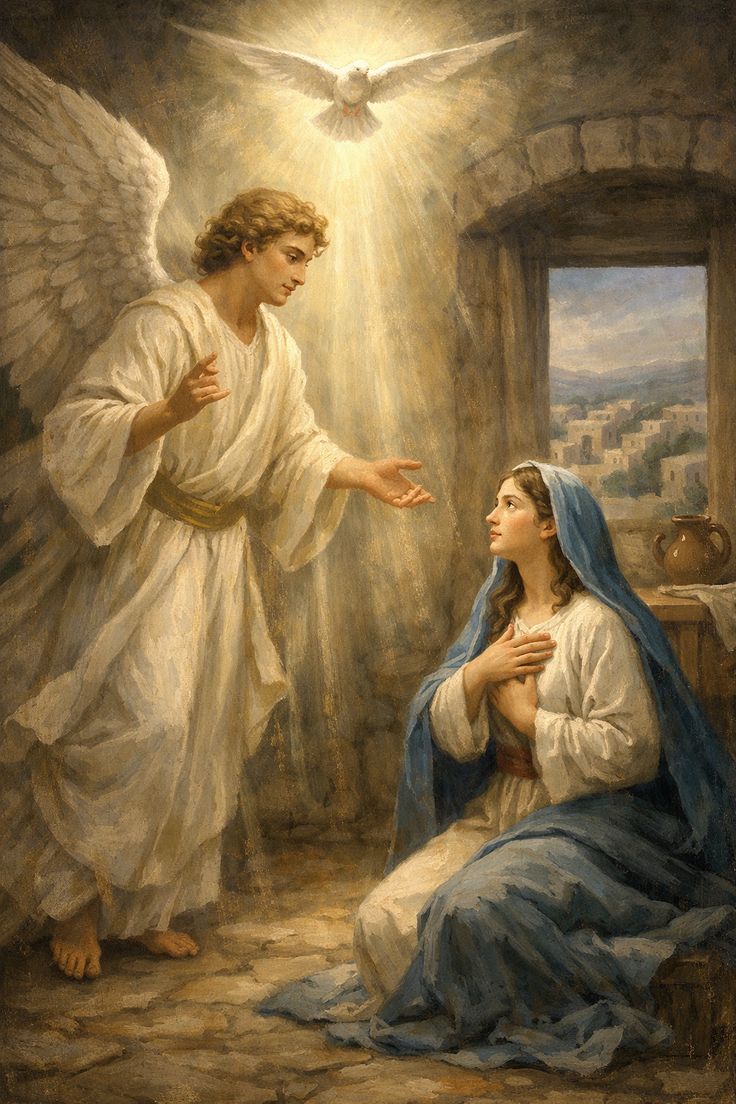
In Luke’s gospel account, Mary’s encounter with the angel Gabriel quite logically sets off some serious questions and doubts. We are told that “Mary was greatly troubled at his [Gabriel’s] words and wondered
what kind of greeting this might be” (Luke 1:29).

Mary had just heard that she “is highly favoured,” and “the Lord is with her.” If she found that angelic greeting disturbing, or as some translations say “confusing,” I am sure she found Gabriel’s announcement
which followed even more troubling.

“Do not be afraid, Mary; you have found favor with
God. You will conceive and give birth to a son, and you
are to call him Jesus. He will be great and will be called
the Son of the Most High. The Lord God will give him
the throne of his father David, and he will reign over
Jacob’s descendants forever; his kingdom will never
end.”
“How will this be,” Mary asked the angel, “since

I am a virgin?” (Luke 1:30b–34)
 

Evangelho — Lc 1, 26-38 AI Modified

Mary’s uncertainty is evident through her question. This girl without doubt knew about the birds and the bees and the normal ways and means that produce a pregnancy. Her question flowed logically from everything she knew about human reproduction. Would this promised-child come from her union with Joseph? That would certainly be the natural, predictable course of events, since she was already pledged in marriage to him. Can you imagine her surprise when she heard the angel’s response to her question?

The angel answered, “The Holy Spirit will come on
you, and the power of the Most High will overshadow
you. So the holy one to be born will be called the Son
of God. Even Elizabeth your relative is going to have a
child in her old age, and she who was said to be unable
to conceive is in her sixth month. For no word from
God will ever fail.” (Luke 1:35-37)

Mary is unequivocally told that God would be the father of this child, “so the holy one to be born will be called the Son of God.” This echoes what she had been told before she questioned Gabriel. Mary was told, “He will be great and will be called the Son of the Most High.” Undoubtedly, it takes time and repetition to fully grasp the implications of such statements. In Mary’s case it would take a lifetime. After all, this angelic announcement confounded her Jewish theology. How could God take on human flesh? It defied logic and the norms of human experience. While a Jewish Messiah was hoped for, even expected, who knew that it would come this way? From her own body no less?

To reassure Mary, Gabriel adds the news about Elizabeth’s pregnancy. This aged, barren woman was the last woman among her relatives that Mary would expect to be pregnant. If the miraculous pregnancy of Elizabeth was possible, then perhaps this divine conception via a virgin was possible too.

Mary’s response indicates the spark of faith was alive within her.

“I am the Lord’s servant,” Mary answered. “May your word to me be fulfilled.” Then the angel left her. (Luke 1:38)

Following this angelic visitation, Mary did not remain in her hometown, Nazareth, for long. Luke goes on to tell us that she went down to Zachariah and Elizabeth’s house in Judea. We are not told why she made this journey, but Mary probably hoped for confirmation that Gabriel’s words were true—that Elizabeth was indeed pregnant. If it was confirmation that she sought, it came upon her arrival.

When Elizabeth heard Mary’s greeting, the baby leaped in her womb, and Elizabeth was filled with the Holy Spirit. In a loud voice she exclaimed: “Blessed are you among women, and blessed is the child you will bear! But why am I so favored, that the mother of my Lord should come to me? As soon as the sound of your greeting reached my ears, the baby in my womb leaped for joy. Blessed is she who has believed that the Lord would fulfill his promises to her!” (Luke 1:41–45)

Elizabeth’s words confirm that the spark of faith in Mary was sufficient. She had believed the angel’s words—the Lord’s promise to her via Gabriel—and as a result conception had become reality. As the gospel writer John puts it, “The Word [Jesus] became flesh and made his dwelling among us” (John 1:14). In the coming days, God would become flesh within the womb of Mary.

Later, we see that this concept of power residing in spoken words becomes a prominent theme in Jesus’ ministry. When mixed with faith, the spoken word releases transformation, healing and the miraculous. Jesus speaks to the wind and the waves, and they obeyed him. With a simple spoken word, he heals the sick, restores sight to the blind and casts out demons. Time and again we hear him say, “Your faith has healed you,” as the afflicted walk away in perfect health (Matthew 9:22, Mark5:34, Mark 10:52, Luke 8:48, Luke18:42).

It is this potent mix of the spoken word and faith in the heart of the listener that brings forth amazing transformation. As it was at conception, so it continued through Jesus’ life—words and faith formed an astonishing blend. His words brought life; God’s word brings life.

Later we will see that James, the brother of Jesus, fully grasps this concept of power residing in the spoken word. It is a major theme in his writing, and he hammers it home like no other New Testament writer.

Is it legitimate to speak of divine DNA linking with human DNA to produce the God/man Jesus Christ? Deoxyribonucleic acid or DNA is a physical molecular structure after all, but the Bible asserts that God is a spirit. How could God, who is a spirit, have a physical component or discernible material structure?

If this question seems baffling, then consider this. For the last 50 years nuclear physicists have been trying to find the Higgs boson or ‘God particle’—that elusive element that gives everything in the universe its mass. After spending billions of dollars on the Large Hadron Collider near Geneva, Switzerland, and then creating millions of subatomic particle collisions, scientists have concluded that what we call nothing (totally empty space) is actually something. The God particle discovery announced on July 4th, 2012, is the theological equivalent of saying that God has substance.

For more than two thousand years, Christians have been arguing that God has substance. He took on substance at the conception of Christ in Mary’s womb. In an instant God took on human form. Godly characteristics found their full expression in a human form—first as a zygote, then a fetus, an infant, a child, an adolescent, and a man named Jesus. At every stage of development, he was both God and man. The essence and nature of God took on substance—a material form—and became incarnate. God was no longer only a spirit. He had a physical structure—a human form through which the world could see the express nature and character of God. As a human father expresses his nature and characteristics genetically through his offspring, so too the heavenly Father’s spiritual code was written into every molecule and fiber of Jesus’ being.

Furthermore, it bears noting that this God/man, Jesus Christ, was not a demigod in the Greek and Roman religious tradition of that period. He was simultaneously fully God and fully man, according to sound biblical interpretation and the earliest Christian conventions.

From a biblical perspective the divine nature of the child Jesus is undeniable. Jesus’ biological father was God, as clearly stated in Matthew and Luke’s gospel accounts. But why does Matthew bother listing his earthly, adoptive father’s genealogy if, as stated, Joseph had no DNA in the mix?

The answer appears to be threefold. First, nurture matters. An all-knowing God recognized that Joseph would act as an ideal father to the boy Jesus. Joseph would raise Jesus in the faith. He would love and discipline him in a godly way and educate him in what it means to be a man in Jewish society. Everything we know about child rearing points to the importance of the father figure in the home. This is especially true in the case of boys. Joseph played a very significant role in the life of Jesus. But Joseph played a crucial role in the life of James—crucial because he was the biological father of James. As the lives of these two boys develop, we will see the pivotal role this difference in DNA played.

Secondly, family lineage matters. In Western society we downplay the importance of family heritage. Rugged individualism is highly valued. But even today in Middle Eastern culture, a person’s family name and lineage are of great importance, even paramount. An individual’s life is always viewed in the context of family and family heritage. This is why such a high premium is placed on family honor. It is also why blood feuds go on for multiple generations, as families are locked into past modes of behavior and interaction. To fully introduce a person within such a society, one needs to provide their lineage. Matthew does just that by delineating Jesus’ heritage at the outset of his gospel account.

Finally, royalty matters. The long-awaited, promised Messiah was to come from the royal line of David. This was common knowledge to all Jews of this period. Hence, Matthew begins his gospel with these words: “This is the genealogy of Jesus the Messiah, the son of David, the son of Abraham” (Matthew 1:1). Similarly, in Joseph’s dream, recorded inthe first chapter, the angel does not address Joseph as the son of Jacob, Jacob being his immediate father, but rather as, “Joseph, son of David” (Matthew 1:29). Why jump fourteen generations back? Simply put, it’s because royalty matters.

Because royalty matters, it is the opening theme of Matthew’s first gospel narrative:

After Jesus was born in Bethlehem in Judea, during the
time of King Herod, Magi from the east came to Jerusalem
and asked, “Where is the one who has been born king of the Jews?
We saw his star when it rose and have come to worship him.”

When King Herod heard this he was disturbed,
and all Jerusalem with him. When he had called to
gether all the people’s chief priests and teachers of the
law, he asked them where the Messiah was to be born.
“In Bethlehem in Judea,” they replied, “for this is what
the prophet has written:

“‘But you, Bethlehem, in the land of Judah,
are by no means least among the rulers of Judah;
for out of you will come a ruler who will shepherd
my people Israel.’” (Matthew 2:1–6)

Because royalty matters, jealous King Herod had all the male infants under the age of two put to death in Bethlehem and its environs. Clearly this newborn king had the endorsement of heaven, since the appearance of a star marked his birth. Furthermore, the scriptures predicted his birth. The crafty Herod immediately sensed the threat to his dynastic rule.

In Luke’s gospel account we see that being a descendant of royalty mattered to Joseph. Why else would a resident of Nazareth make the long journey to Bethlehem for the sake of an imperial census, especially since his wife was in the final stages of pregnancy?

So Joseph also went up from the town of Nazareth in Galilee to Judea, to Bethlehem the town of David, because he belonged to the house and line of David. He went there to register with Mary, who was pledged to be married to him and was expecting a child. (Luke 2:4–5)

As you can see, it’s all about DNA—royal DNA—messianic DNA. It’s all about being from the right family, the right clan, and being born in the right place at the right time as a fulfillment of ancient biblical prophecy. It’s about divine DNA or its spiritual equivalent touching the right human DNA to trigger the birth of the Messiah—the God-man who came into the world.
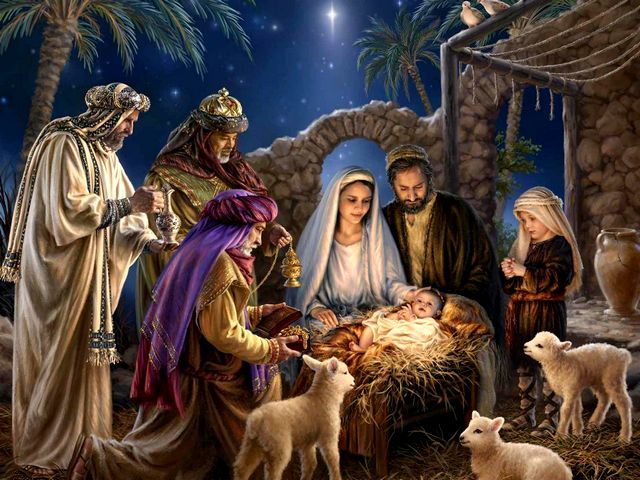
But the DNA that the Holy Spirit touched to trigger conception was Mary’s DNA. Luke provides us with a different genealogical list than Matthew as he traces back Jesus’ ancestors all the way to Adam and finally to God. (See Luke 3:23–38.) He does this because unlike Matthew, who is writing to a Jewish audience, Luke is writing to a Gentile audience. Luke wants his readers to understand that this Jewish Messiah is not just the Savior for Jews, but for all humankind. Of course, Luke goes on to describe the stable birth, the shepherd’s visit and the heavenly, angelic light and sound show that heralded the nativity of the Son of God.

Many Bible scholars believe that the differences between Matthew’s genealogical list and Luke’s list are due to Luke following Mary’s line of descent, while Matthew follows Joseph’s line. What is abundantly clear from both lists is that we are tracing the royal line of David, since at some point the lists merge and are identical.

Implicitly what both authors are saying by providing these lineages is that Jesus is the rightful heir of the Jewish throne. He is the long-awaited Messiah and the fulfillment of prophecy. His birth and arrival on the
scene mark a turning point in world history. God has stepped into human flesh and has come to live among us.

The gospel writer John puts it this way:

The Word became flesh and made his dwelling among us. We have seen his glory, the glory of the one and only Son, who came from the Father, full of grace and truth. (John 1:14)

James was born into this family, with this heritage, with this more-than-preeminent older brother. Talk about being overshadowed by an older brother! Like no one else on this planet James had the blessing, the challenge, and the curse of being overshadowed by the Almighty. And in human form, this Almighty was none other than his living, breathing, flesh, and blood older brother.


New from David Kitz

James—the brother of Jesus—who was this man? What evidence do we have that this “brother of our Lord” even existed?

David Kitz digs deep into archeology, family dynamics, church history, and the biblical texts. What emerges from his research is a portrait of a decisive, pivotal leader who embodied the will and character of Jesus Christ.

But how did James—James the unbeliever—transform to become a leader who changed the course of world history? In these pages you will uncover the answer and rediscover for yourself the life-changing power of the gospel.

To view further details or purchase directly from the author click here.
Because of His Mercy

13 Friday Feb 2026

Posted by davidkitz in Psalms

≈ Leave a comment

Tags

Holy Spirit, Jesus, justified, justified by grace, mercy of God, Prayer, Psalms, salvation, Savior, the LORD

Today’s quote and prayer from
“Psalms 365: Develop a Life of Worship and Prayer


Today’s Reading: Psalm 36:10-12

Listen to today’s reading by Jonathan Dent:

https://davidkitz.blog/wp-content/uploads/2026/02/ps-3610-12-mixfinal.mp3

LORD God,
give me a humble heart
that seeks after you.
Show me your ways, O Lord.
Give me a hunger for your word.
I want to know you more and more.
Help me to do the Father’s will today.
In Jesus’ name, I pray.
Amen.

     — — — —

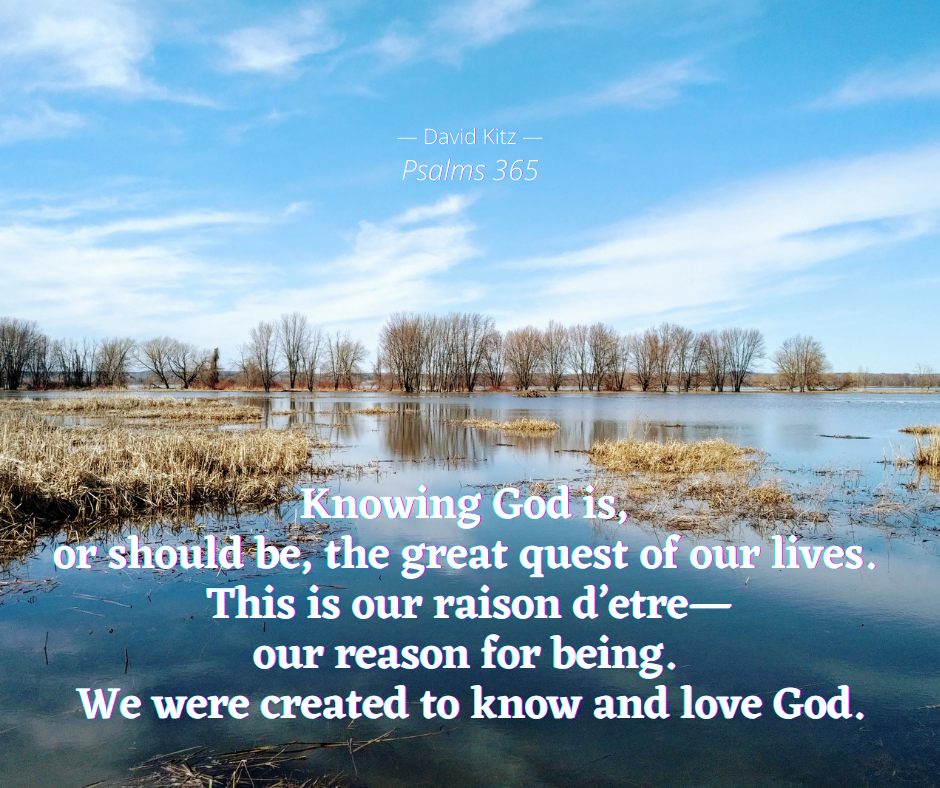
Photo by David Kitz


Because of His Mercy

At one time we too were foolish,
disobedient, deceived and enslaved
by all kinds of passions and pleasures.
We lived in malice and envy,
being hated and hating one another.

But when the kindness and love of God our Savior appeared,
he saved us,
not because of righteous things we had done,
but because of his mercy.
He saved us through the washing of rebirth
and renewal by the Holy Spirit,

whom he poured out on us generously
through Jesus Christ our Savior,

so that, having been justified by his grace,
we might become heirs having the hope of eternal life.
(Titus 3:3-7 NIV)*


Whoever does not love does not know God,
because God is love (1 John 4:8 NIV)

Para la publicación de Salmos 365 de hoy en español haga clic aquí.

bgbg_v4.3_1501818
* NEW INTERNATIONAL VERSION, COPYRIGHT ©1973, 1978, 1984, 2011 BY BIBLICA

Pray for enduring peace in Israel and Gaza,
and continue to pray for peace to return to Ukraine and Russia!

Volume I of Psalms 365: Develop a Life of Worship and Prayer won the Best Book of the Year Award from The Word Guild and Volume II has won the Best Devotional of the Year Award. For those who love God’s word, this three-book series is an ideal way to daily meet with the Lord. To purchase or for a closer look click here.

Also available from David KitzIs a return-to-Jesus revival possible in our time?
This book points the way forward.
For details click here.

The Conclusion of “The Elisha Code & the Coming Revival”

25 Sunday Jan 2026

Posted by davidkitz in The Elisha Code

≈ 4 Comments

Tags

courage, Elijah, Elisha, faith, Holy Spirit, Jesus, John the Baptist, miracles, revival, spiritual renewal

A code must be recognized, interpreted, and applied for it to be useful, and for it to effect meaningful change. Codes are recognized by the appearance of repetitive patterns. Through our examination of the lives and ministries of the Old Testament duo of Elijah and Elisha, and the New Testament duo of John the Baptist and Jesus, we can clearly see a pattern—a pattern of ever-increasing power and revelation.

In considerable detail, we have outlined how Elijah and John the Baptist are linked in terms of personality and the scope of their ministry. In the same way we have detailed how the miracles and ministry of Jesus runs parallel to the ministry of the prophet Elisha. The pattern is there for all to see.

What are the implications for Christians today? If we recognize this coded message in the Scriptures, how can it impact our lives in the twenty-first century?

Above all, The Elisha Code is a call to action. Yes, we can learn a great deal about the links between Elijah and John the Baptist and the links between Elisha and Jesus. But of first importance, we need the empowerment of the Holy Spirit to work within us and to transform our churches and society today.

The dynamic duos of this book were the greatest revivalists of their time. Elijah and Elisha brought about transformative change in Old Testament Israel. John the Baptist and Jesus set in motion the greatest spiritual transformation the world has ever seen—a transformation that continues to this day.

Here then are some key takeaways from studying the lives of these biblical dynamic duos and other revivalists and key figures in church history:

  • Revivals/spiritual renewals have been an integral part of our faith from the time of ancient Israel to the present.
  • The age of miracles has not ended. We have Jesus’ promise that believers will do even greater things (John 14:12).
  • Genuine revivals are initiated by the Holy Spirit through fallible, imperfect human vessels (2 Timothy 2:20-22).
  • Literary prophets have played, and will continue to play, an important role in fomenting revival and bringing about social and spiritual change.
  • We need leaders with prophetic hindsight, insight, and foresight for the church to reach its full potential.
  • Humility and selfless service are foundational in initiating and sustaining revival. The Spirit of God is quenched and grieved when pride, sin, or selfishness enter in (1 Thessalonians 5:19).
  • Life-changing repentance is at the core of any authentic revival (Mark 1:15, Acts 2:38).
  • The gospel message according to Jesus is all about regime change on a personal level. It’s about letting King Jesus rule our hearts and minds (Colossians 1:13-14).
  • True spiritual awakenings leap across religious, denominational, racial, and cultural barriers (Acts 10). The most effective revivalists build bridges rather than walls.
  • The church must remain focused on the core of the gospel message, rather than become swallowed by political agendas and yield to the third temptation of Christ (Matthew 4:8-11).
  • We are called to live a crucified life that elevates Christ and others by the power of relentless love and forgiveness (Galatians 2:20).
  • God uses broken people who are yielded to his will (John 21:15-19).
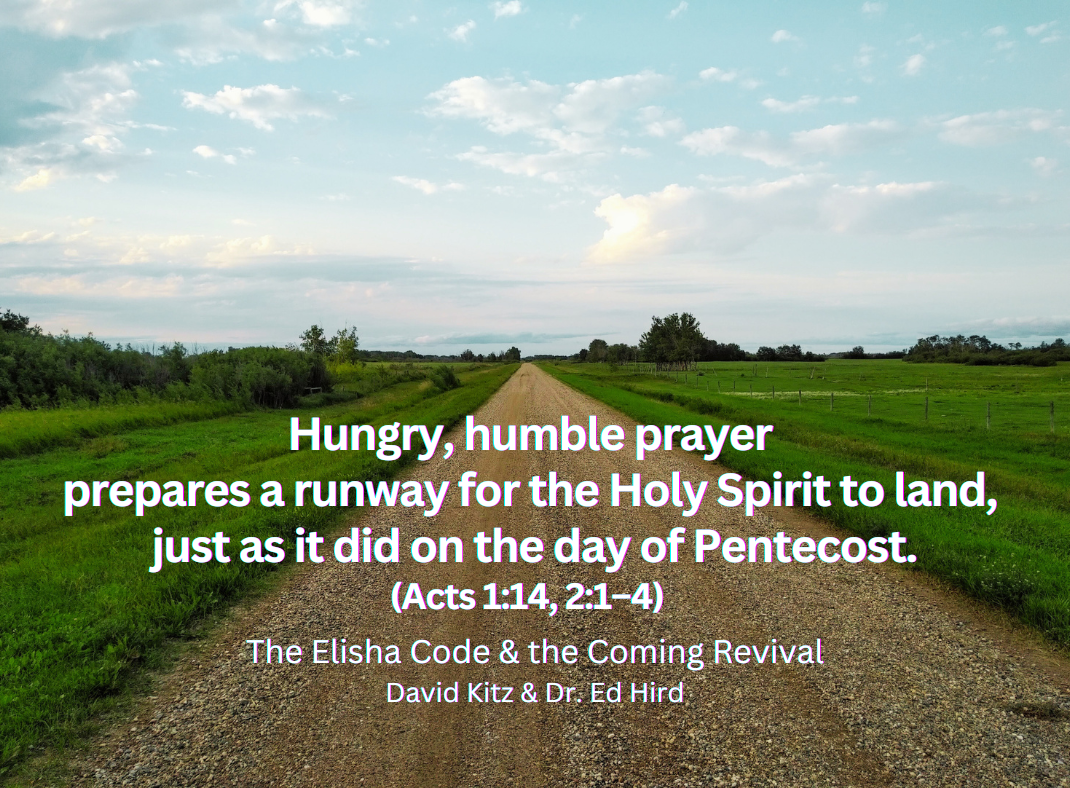
  • Hungry humble prayer prepares a runway for the Holy Spirit to land just as it did on the day of Pentecost (Acts 1:14, 2:1-4).
  • Frequently, revivals begin where and when we least expect them, and they are often spearheaded by the young.
  • Our goal should be to finish well. Our service to the Lord may involve many transitions, but his calling on our lives remains till we take our last breath (Romans 11:29).

Finally, the Elisha code is a call to courageous and audacious faith.

Courage is a matter of the heart. The word courage is derived from the Latin word for heart. We must put our heart into our faith. Courageous faith flows from a heart that has been captured by the love of Jesus.

Let this be our prayer. Lord, give us courageous faith.

Audacious faith refuses to remain silent. It speaks out. It must speak.

After Elijah was swept up to heaven in a chariot of fire, Elisha did not remain silent. He spoke up with audacious faith.

Then he took the mantle of Elijah that had fallen from him, and struck the water, and said, “Where is the LORD God of Elijah?” And when he also had struck the water, it was divided this way and that; and Elisha crossed over. (2 Kings 2:14, NKJV)

Audacious faith is bold—bold like Elisha. The word audacious is derived from the same Latin root as audio. Audacious faith makes noise. It must be heard. Is your faith loud enough to be heard by others? Is it being heard by God?

Jesus, whose New Testament miracles are patterned after Elisha’s miracles, frequently chided his disciples for their lack of faith (Matthew 17:17-20).

Let this be our prayer. Lord Jesus, grant us a mustard seed of your audacious faith—mountain moving faith, and as we walk this road with you, light your fire in our hearts.

This is the final excerpt from the award-winning book 
The Elisha Code & the Coming Revival

Is a return-to-Jesus revival possible in our time?
This book points the way forward.
For details click here.


Even Greater Things

18 Sunday Jan 2026

Posted by davidkitz in Psalms

≈ Leave a comment

Tags

church, David Kitz, faith in Christ, gospel, Holy Spirit, hunger for God, Jesus Movement, miracles, repent, revival, seeking God, signs and wonders

Everyone was filled with awe
at the many wonders and signs performed by the apostles.
(Acts 2:43, NIV)

On the evening before his trial and crucifixion, Jesus had what surely was one of his deepest and most intimate conversations with his disciples. What was on his mind as he shared these critical moments with his most dedicated followers?

Who may stand in His Holy place? — photo by David Kitz

Jesus spoke at length about the coming of the Holy Spirit, and the vital role the Spirit would play in the lives of the apostles and the early church. John devotes chapters fourteen to sixteen of his Gospel to this pivotal conversation. Early in that discussion Jesus makes this astonishing statement:

Very truly I tell you, whoever believes in me will do the works I have been doing, and they will do even greater things than these, because I am going to the Father (John 14:12, NIV).

How is this possible? Undoubtedly, the disciples were left speechless by that statement. They were eyewitnesses to the countless miracles Jesus performed. How could they possibly do even greater works than their Lord? Furthermore, this offer of miracle working power was and is not limited to the apostles. It is available widely—to whoever believes.

There are no space or time limitations placed on Jesus’ statement in John 14:12. The only limitation is our faith since we know “Jesus Christ is the same yesterday today and forever” (Hebrews 13:8). Have we taken up the challenge our Lord lays out in John 14:12?

Jesus then goes on to say:

And I will do whatever you ask in my name, so that the Father may be glorified in the Son. You may ask me for anything in my name, and I will do it” (John 14:13-14, NIV).

We confess when we read this statement, we may feel like objecting: “Lord, don’t you want to put some limitations on this amazing offer?”

Actually, there are some limitations built in. This amazing power and this ability is available “so that the Father may be glorified in the Son.” In other words, ask for anything in my name but know this: All the glory, all the credit, all the fame belongs to Jesus.

Nothing limits the miracle-working power of God like the pride of the miracle-working agent. This is so because in truth the Holy Spirit is the miracle-working agent, not the human vessel. The glory must continually go to Jesus the Son.

Why could Jesus make this bold assertion that his followers would do greater things than he did?

First, Jesus new the full power of the Holy Spirit. His entire ministry had been powered by the Holy Spirit. And the Father had revealed to him that in the coming days the same Holy Spirit would be poured out on his followers.

Secondly, Jesus knew the established biblical pattern. Holy Spirit power grows exponentially. Elijah came in the power of the Spirit. But his successor, Elisha, received a double portion of God’s anointing. John the Baptist came in the power of the Spirit. But as John’s successor, Jesus, moved in a far greater power of the Spirit.

Unfortunately, Elisha’s servant, Gehazi, due to his selfishness and greed, broke the chain of God’s blessing. Had he not succumbed to sin, Gehazi may well have walked in a fourfold anointing. Humble obedient faith is essential if we are going to walk in the full power of the Holy Spirit.

Jesus knew the ever-increasing-exponential power of the Holy Spirit would fall on his disciples. That is why Jesus could tell his followers that they would do greater things.

Did Jesus’ word come true? It most certainly did. The phrase “signs and wonders” appears nine times in the book of Acts. We read that many people came to faith in Jesus Christ because of the signs and wonders that accompanied the preaching of the gospel. This is in addition to multiple miracles that are described in detail. The New Testament church was a miracle working church where signs and wonders were common. This is why the first-century church experienced explosive growth across the Mediterranean world.

We need a return to Holy Spirit powered church growth. How will that happen?

It begins with hunger—a hunger for the Holy Spirit—a hunger for Jesus to walk among us again. It begins with a hunger for God’s word to be lived out among us.

In our earlier chapter on the Jesus movement, we pointed out that Acts 2:38 was the foundational verse for that revival. Acts 2:38 contains a threefold directive as spoken by the apostle Peter. “Repent and be baptized, every one of you, in the name of Jesus Christ for the forgiveness of your sins. And you will receive the gift of the Holy Spirit.”

Simple obedience to that threefold directive brought spiritual life, healing, and restoration to millions. Underpinning the Jesus people revival was an Old Testament scripture drawn from Jeremiah 29. But it was not the Jeremiah 29 scripture that is so frequently quoted today. Over the past twenty years, believers have zeroed in on Jeremiah 29:11. “For I know the plans I have for you,” declares the LORD, “plans to prosper you and not to harm you, plans to give you hope and a future.”

The Old Testament focal point of the Jesus movement was the verses immediately after Jeremiah 29:11.

Then you will call on me and come and pray to me, and I will listen to you. You will seek me and find me when you seek me with all your heart. I will be found by you,” declares the LORD, “and will bring you back from captivity. I will gather you from all the nations and places where I have banished you,” declares the LORD, “and will bring you back to the place from which I carried you into exile” (Jeremiah 29:12-14, NIV).

The emphasis in that earlier revival was placed on seeking God. We will have hope and a future if we seek God. But without seeking, there is no finding. Without seeking God, we will remain lost and distant from him. The wonderful promise of Jeremiah 29:12-14 is: “I will be found by you,” declares the LORD.

Seeing God’s grace in the setting sun, near Durham, ON — photo by David Kitz

The LORD will bring us back from our spiritual exile. This should be the cry of our hearts personally and corporately as the body of Christ. Many Jewish young people encountered their Messiah for the first time during the Jesus revolution of the early 1970s. For them, these verses from Jeremiah had a profound resonance.

This Old Testament passage has a New Testament counterpart drawn from Jesus’ Sermon on the Mount.

But seek first the kingdom of God and His righteousness, and all these things shall be added to you (Matthew 6:33, NKJV).

God meets with those who seek him. God is looking for hungry seeking hearts. The Holy Spirit may find those hungry seeking hearts out in the world or in your local church. Will we welcome the hungry hearts or turn them away because they do not meet our expectations or our standards?

Every revival has its own unique flavor and character. As a nineteen-year-old college student David Kitz bore witness to a spontaneous outbreak of revival on campus. It was totally unexpected, uncontainable, and sustained for years. That experience set him on a quest to seek the Lord.

Let’s prepare our hearts for what God is about to do. In this time of great spiritual darkness, God’s promise remains.

But to you who fear My name
The Sun of Righteousness shall arise
With healing in His wings…
(Malachi 4:2, NKJV).

This is the nineteenth weekly excerpt from the award-winning book 
The Elisha Code & the Coming Revival

Is a return-to-Jesus revival possible in our time?
This book points the way forward.
For details click here.

I Give You My Peace

06 Tuesday Jan 2026

Posted by davidkitz in Psalm 29, Psalms

≈ 1 Comment

Tags

Christ, Holy Spirit, Jesus, Prayer, Psalms, storms of life, worship

Today’s quote and prayer from
“Psalms 365: Develop a Life of Worship and Prayer

 Today’s Reading: Psalm 29

Listen to today’s reading by Jonathan Dent:

https://davidkitz.blog/wp-content/uploads/2026/01/psalm-29-mix2final.mp3


Heavenly Father,
you are the LORD of the storm
and the LORD of peace.
When storms arise in my life
help me to trust you completely.
Lord Jesus,
grant me peace
in the midst of the storm.
Amen.

     — — — —

Great peace have those who love your law — photo by David Kitz


The Peace of Christ

“All this I have spoken
while still with you.

But the Advocate,
the Holy Spirit,
whom the Father will send in my name,
will teach you all things
and will remind you of everything
I have said to you.

Peace I leave with you;
my peace I give you.
I do not give to you as the world gives.
Do not let your hearts be troubled
and do not be afraid.

(John 14:25-27 NIV)*

May God bless you in 2026!

Para la publicación de Salmos 365 de hoy en español haga clic aquí.

bgbg_v4.3_1501818
* NEW INTERNATIONAL VERSION, COPYRIGHT ©1973, 1978, 1984, 2011 BY BIBLICA

Pray for enduring peace in Israel and Gaza,
and continue to pray for peace to return to Ukraine and Russia!

Volume I of Psalms 365: Develop a Life of Worship and Prayer won the Best Book of the Year Award from The Word Guild and Volume II has won the Best Devotional of the Year Award. For those who love God’s word, this three-book series is an ideal way to daily meet with the Lord. To purchase or for a closer look click here.

Also available from David KitzIs a return-to-Jesus revival possible in our time?
This book points the way forward.
For details click here.

Preparing a Landing Strip for the Holy Spirit

04 Sunday Jan 2026

Posted by davidkitz in The Elisha Code

≈ 4 Comments

Tags

Asbury College, baptism, church, Elijah, hippie movement, Holy Spirit, Jesus People, repent, revival, The Jesus Revolution

And this was his message:
“After me comes the one more powerful than I,
the straps of whose sandals I am not worthy to stoop down and untie.
I baptize you with water, but he will baptize you with the Holy Spirit.”
(Mark 1:7-8, NIV)

The title of this chapter is a present-day metaphor that aptly describes the ministry mandate of John the Baptist as found in the gospels. John was preparing a landing strip for the spiritual revival that Jesus launched.

… as it is written in Isaiah the prophet:
“I will send my messenger ahead of you,
who will prepare your way”—

“a voice of one calling in the wilderness,
‘Prepare the way for the Lord,
make straight paths for him’”
(Mark 1:2-3, NIV).

John was the way maker for Jesus. With his message of repentance, followed by baptism, John prepared the ground for the great revival that occurred under the ministry of Jesus. John was Act One in this great drama of the ages. Jesus was Act Two. And via the Holy Spirit, the apostles are featured in Act Three, and of course, we read of their accomplishments in the Book of Acts. But the Book of Acts has no end. The work of the Holy Spirit continues to this present day.

John the Baptist and Jesus were revivalists—the greatest revivalists of all time. This dynamic New Testament duo set in motion a whole series of revivals that stretch down through the ages and continue to this day.

Remarkably, John the Baptist glimpsed all this. Operating in the prophetic realm, he predicted that Jesus would baptize his followers with the Holy Spirit. That prediction was fulfilled on the day of Pentecost when the Holy Spirit was poured out on those who were gathered in the upper room (Acts 2:1-4).
Oh, how we need an upper room experience—a baptism in the Holy Spirit experience!

It has been said that the Holy Spirit is like a jet plane. Jet planes cannot land just anywhere. They need a properly prepared runway.

Did any preparation precede the coming of the Holy Spirit on the day of Pentecost? Yes, there was a good deal of preparation. Jesus gave his disciples this specific command:

“Do not leave Jerusalem, but wait for the gift my Father promised, which you have heard me speak about. For John baptized with water, but in a few days you will be baptized with the Holy Spirit” (Acts 1:4-5, NIV).

The disciples obeyed Jesus’ command. They spent ten days gathered in prayer waiting for the coming of the Holy Spirit. Their hearts were yearning for what the Master promised. This was preparation time.

They were all baptized into Moses in the cloud and in the sea (1 Corinthians 10:2). Photo by David Kitz

Are you and I eagerly anticipating the coming of the Holy Spirit into our lives with power? Are we hungry for God? Are we expecting the mighty rush of the Holy Spirit to swoop down into our lives? Have we prepared the runway with prayer? Are we pregnant with expectant faith?

The Holy Spirit comes to prepared hearts, and he is actively engaged even now in preparing hearts. Is the Spirit preparing the runway of your heart for the moment of touchdown?

Times of revival often bring an unexpected wave of Christ-centered fervency among young people who have been lost in the world system. This has been true throughout the ages. In the notable revivals of the last century, young people were at the forefront.

In desperate times, God often shows up, surprising everyone.

Many young people today struggle with hopelessness. Even free drugs from government agencies are not solving the plague of tragic opioid deaths. There is an emptiness in the lives of many youths that only God can fill. Times of revival involve the prophesied turning of the hearts of the young back to their fathers and to the living God. This is really a return to one of the core truths of the Elisha code.

“See, I will send the prophet Elijah to you before that great and dreadful day of the Lord comes. He will turn the hearts of the parents to their children, and the hearts of the children to their parents; or else I will come and strike the land with total destruction” (Malachi 4:5-6, NIV).

We, David Kitz and Ed Hird, are an example of a dynamic duo writing about biblical dynamic duos. We have many things in common, such as our experience in charismatic renewal, the Jesus movement, and our similar Lutheran and Anglican heritage. We were teenagers and college students when God poured his Spirit out upon both of us again and again.

Both of us experienced the joy of being fully immersed, something that happened frequently during the Jesus movement at seaside beaches, lakesides, and church baptistries. Full immersion baptism was one of the defining features of the Jesus movement. Why was that the case?

It really was a full-blown return to first century Christianity. The key verse we heard quoted repeatedly during that time was drawn from Peter’s sermon on the day of Pentecost.

Then Peter said to them, “Repent, and let every one of you be baptized in the name of Jesus Christ for the remission of sins; and you shall receive the gift of the Holy Spirit (Acts 2:38, NKJV).

We saw ourselves as living and re-enacting the New Testament. The miracle of rebirth was our new reality.
But the Jesus movement was preceded by the Hippie movement. The Hippie movement brought 100,000 youth to Haight-Ashbury in San Francisco for the 1967 Summer of Love. But by the end of 1969, many had died from drug overdoses. Then in December 1969, a young man was stabbed to death at a free rock concert in Altamont, California. Out of the ashes of the failed hippie dream of free love and peace, the Jesus movement unexpectedly emerged.

Looking back, we can see there are some striking similarities between our current situation and the social and political climate of the late 1960s and early 1970s. We live in a time of sharp division and social and political upheaval. Everywhere long-established norms are being questioned and jettisoned. Many would say we have lost our moorings and are drifting in a dangerous current with no sense of direction. The same was true in the late 1960s and early 1970s. With the Vietnam War raging and sharp divisions between the generations, many found themselves at a social and emotional breaking point.

Jesus stepped into the mess of that time, and we are confident he will step into the upheaval and mess of our time as well.

With the recent Asbury revival and the release of The Jesus Revolution movie we are remind of the vitality of the 1970s Jesus movement. An estimated three million young people entered the Kingdom during this remarkable season of refreshing. It had a profound effect on the culture of that time. Revival is often a small thing when it breaks out, but it spreads like a prairie fire.

This was a fresh Spirit-prompted awakening with unique characteristics. It was a movement that spread from the bottom up. It sprang up spontaneously with no central theme or figure except the Lord Jesus. In the beginning, it had no defined leadership though overtime various leaders emerged. Though it began on the west coast and maintained a west coast vibe, it soon hitchhiked across the continent and marshalled young Jesus followers in diverse communities and every major city.

Like previous awakenings, the Jesus movement changed the music and the prevailing culture of that time.
A word of caution is warranted. The Jesus people movement of that time grew and filled many churches to overflowing. But at the same time, many churches were largely unaffected. Churches in decline often continued in decline. The tide of revival did not lift all boats.

Why was that the case?

Some churches welcomed these radical young Jesus followers, while others scoffed at their newfound faith seeing it as only a passing fad. For some who were swept up in the moment that criticism was valid. The devil is only too eager to snatch away the word that falls along life’s path so it cannot take root. But for those who were received into fellowship and grew in their love for the Lord and the Word of God, the impact was transformative and lifelong.

If revival breaks out among young people today will our churches be ready and welcoming, or will our response be negativity and criticism? We need to position ourselves to receive what the Holy Spirit brings our way. It may look different than what we expect.

Sometimes a revival, like with the Jesus movement, comes completely out of the blue. Similarly, no one planned or expected the latest Asbury outpouring among college students.

So many tens of thousands poured into this 6,000-person college town in Wilmore, Kentucky, that police had to post highway signs saying, ‘Revival Over Capacity.’

Asbury College has had many youth revivals over the years: 1905, 1908, 1921, 1950, 1958, 1970, 1992, 2006, and now 2023. One of our heroes, Dr. E. Stanley Jones, experienced the Asbury revival of joy and holy laughter in 1905, before being sent to India as a missionary for the next fifty years. He commented:

…suddenly we were all swept off our feet by a visitation of the Holy Spirit. We were all filled, flooded by the Spirit. Everything that happened to the disciples on the original Pentecost happened to us.[i]

Jones spoke about being calmly intoxicated with God’s love:

For three or four days, it could be said of us as was said of those at the original Pentecost.  ‘They are drunk.’  I was drunk with God (…) For three days, there were no college classes…I saw into the heart of reality, and the heart of reality was joy, joy, joy. And the heart of reality was love, love, love.[ii]

Asbury, said Jones, had both the ‘warmed heart’ and the ‘world parish’ missionary passion[iii]. Acts 1:8 reminds us that outpouring precedes outgoing. God is similarly raising up many young people in the current outpouring that will go to the ends of the earth with the good news.

Country trail at sunset — photo by David Kitz

Once you have a taste of revival, it leaves you longing for more. God willing, Jesus movement veterans like us may have the privilege of living through several coming revivals. We pray that we will be humble enough to have eyes to see, and not reject coming youth revivals because they may look different than what we remember.

Come Holy Spirit in revival fire. Touch down on the young generation. Land the jetliner of your presence with the sound of a mighty rushing wind.

This is the seventeenth weekly excerpt from the award-winning book 
The Elisha Code & the Coming Revival

Is a return-to-Jesus revival possible in our time?
This book points the way forward.
For details click here.

[i] E. Stanley Jones, A Song of Ascent (Abingdon Press, Nashville, Tennessee, 1979), 68.

[ii] Jones, A Song of Ascent, 69.

[iii] Jones, 67

My Eyes Have Seen Your Salvation

28 Sunday Dec 2025

Posted by davidkitz in Psalm 25, Psalms

≈ Leave a comment

Tags

Gentiles, Holy Spirit, Israel, Jerusalem, Jesus, Mary, Messiah, praise the LORD, Prayer, Psalms, Simeon, temple, the LORD

I will praise the LORD!

Photo by Laura Garcia on Pexels.com


Reading: Psalm 25:1-7

https://davidkitz.blog/wp-content/uploads/2025/12/psalm-251-7-mix5final.mp3


Jesus Presented in the Temple

Now there was a man in Jerusalem called Simeon,
who was righteous and devout.
He was waiting for the consolation of Israel,
and the Holy Spirit was on him.

It had been revealed to him by the Holy Spirit
that he would not die
before he had seen the Lord’s Messiah.

Moved by the Spirit,
he went into the temple courts.
When the parents brought in the child Jesus
to do for him what the custom of the Law required,

Simeon took him in his arms
and praised God, saying:

   “Sovereign Lord, as you have promised,
you may now dismiss your servant in peace.
For my eyes have seen your salvation,
which you have prepared in the sight of all nations:
a light for revelation to the Gentiles,
and the glory of your people Israel.”

The child’s father and mother marveled
at what was said about him.
 
Then Simeon blessed them
and said to Mary, his mother:
“This child is destined to cause the falling
and rising of many in Israel,
and to be a sign that will be spoken against,

so that the thoughts of many hearts
will be revealed.
And a sword will pierce your own soul too.”
*
(Luke 2:25-35, NIV)

Para la publicación de Salmos 365 de hoy en español haga clic aquí.

bgbg_v4.3_1501818
* NEW INTERNATIONAL VERSION, COPYRIGHT ©1973, 1978, 1984, 2011 BY BIBLICA

Please pray for peace to return to Israel, Gaza, and Ukraine!

Volume I of Psalms 365: Develop a Life of Worship and Prayer won the Best Book of the Year Award from The Word Guild and Volume II has won the Best Devotional of the Year Award. For those who love God’s word, this three-book series is an ideal way to daily meet with the Lord. To purchase or for a closer look click here.

Available now…

James—the brother of Jesus—who was this man? What evidence do we have that this “brother of our Lord” even existed?

David Kitz digs deep into archeology, family dynamics, church history, and the biblical texts. What emerges from his research is a portrait of a decisive, pivotal leader who embodied the will and character of Jesus Christ.

But how did James—James the unbeliever—transform to become a leader who changed the course of world history? In these pages you will uncover the answer and rediscover for yourself the life-changing power of the gospel.

To view further details or purchase directly from the author click here.

Give Him the Name Jesus

22 Monday Dec 2025

Posted by davidkitz in Advent

≈ 5 Comments

Tags

angel of the Lord, David, divorce, God, Holy Spirit, hope in God, Jesus, Joseph, Mary, Messiah, Prayer, Savior, the LORD, truth

Today’s quote and prayer from
“Psalms 365: Develop a Life of Worship and Prayer

 Today’s Reading: Psalm 25:1-7

Listen to today’s reading by Jonathan Dent:

https://davidkitz.blog/wp-content/uploads/2025/12/psalm-251-7-mix5final.mp3


LORD God,
this is my prayer:
Show me your ways,
L
ORD, teach me your paths.
Guide me in your truth and teach me,
for you are God my Savior,
and my hope is in you all day long
(Psalm 25:4-5).
I pray in Jesus’ name.
Amen.

— — — —


An Angel Appears to Joseph

This is how the birth of Jesus
the Messiah came about:
His mother Mary was pledged
to be married to Joseph,
but before they came together,
she was found to be pregnant through the Holy Spirit.

Because Joseph her husband was faithful to the law,
and yet did not want to expose her to public disgrace,
he had in mind to divorce her quietly.

But after he had considered this,
an angel of the Lord appeared to him in a dream
and said,
“Joseph son of David,
do not be afraid to take Mary home as your wife,
because what is conceived in her is from the Holy Spirit.

She will give birth to a son,
and you are to give him the name Jesus,
because he will save his people from their sins.”
(Matthew 1:18-21 NIV)*

Para la publicación de Salmos 365 de hoy en español haga clic aquí.

bgbg_v4.3_1501818
* NEW INTERNATIONAL VERSION, COPYRIGHT ©1973, 1978, 1984, 2011 BY BIBLICA

Pray for enduring peace in Israel and Gaza,
and continue to pray for peace to return to Ukraine and Russia!

Volume I of Psalms 365: Develop a Life of Worship and Prayer won the Best Book of the Year Award from The Word Guild and Volume II has won the Best Devotional of the Year Award. For those who love God’s word, this three-book series is an ideal way to daily meet with the Lord. To purchase or for a closer look click here.

Also available from David Kitz

Holy Week as seen from a soldier’s perspective

American readers click this link to purchase The Soldier Who Killed a King.

Canadian readers click this link to purchase The Soldier Who Killed a King directly from the author.

Ready for the King of Glory

19 Friday Dec 2025

Posted by Tim K in Psalm 24, Psalms

≈ 1 Comment

Tags

clean hands, cleansing, Holy Spirit, Lamb of God, Palm Sunday, Psalms, pure heart, purity, Shepherd King, social media, triumphal entry, warrior king

Today’s Devotion from Psalms 365 by David Kitz

Reading: Psalm 24:7-10

Listen to today’s reading by Jonathan Dent:

https://davidkitz.blog/wp-content/uploads/2025/12/ps-247-10-mix1final.mp3


Lift up your heads, you gates;
be lifted up, you ancient doors,
that the King of glory may come in.
Who is this King of glory?
The LORD strong and mighty,
the LORD mighty in battle.
Lift up your heads, you gates;
lift them up, you ancient doors,
that the King of glory may come in.
Who is he, this King of glory?
The LORD Almighty—
he is the King of glory
(NIV)*

Reflection
Are you ready? The King is coming.                       

All of Psalm 24 is a psalm of anticipation. David, the shepherd king, is anticipating the arrival of the LORD. The LORD is coming to His city—to His temple. Have you prepared your heart and your mind for the moment of His arrival? Are you ready to receive Him as your King? He often shows up at the moment we least expect Him.

Undoubtedly, David, the warrior King, was reflecting on his own triumphant entry into the city after the defeat of his enemies in battle. But here in this psalm, he projects the victorious arrival of a much greater monarch—the King of glory.

There is a prophetic expectancy to this psalm that forms a very natural bridge to the Palm Sunday triumphal entry of Jesus into Jerusalem. Jesus, the long-anticipated King, came suddenly to His temple. Some were ready for Him; most were not. This should infuse our Advent preparations for the King with an element of urgency. We can miss his appearing. Earlier in this psalm David asks, “Who may stand in his holy place?”

Purity of heart and action are essential. Blessing and vindication await those who seek His face. Again, I ask, “Are you ready?” God can show up in your life today in an unexpected way. Will you recognize Him? Or like the busy people of Jerusalem will that moment pass you by? Will you be too caught up in buying and selling and the commerce of our times? Will you be too distracted by social media to recognize the medium of the Holy Spirit?

Lift up your head. Open your eyes. Take your attention off the mundane things of this world and focus the eyes of your heart on the Lord. Seek His face in your daily routine. The King of glory may be passing by today.

Response:
Lord Jesus, I thank you for your suffering and death on the cross. Your blood cleanses my hands and purifies my heart. Today I want to seek you. In your great mercy reveal yourself to me. Amen.

Your Turn:
Are you a God seeker? On what basis do you approach the Sovereign LORD?


Para la publicación de Salmos 365 de hoy en español haga clic aquí.

bgbg_v4.3_1501818
* NEW INTERNATIONAL VERSION, COPYRIGHT ©1973, 1978, 1984, 2011 BY BIBLICA

Please pray for peace to return to Israel, Gaza, Russia and Ukraine!

Volume I of Psalms 365: Develop a Life of Worship and Prayer won the Best Book of the Year Award from The Word Guild and Volume II has won the Best Devotional of the Year Award. For those who love God’s word, this three-book series is an ideal way to daily meet with the Lord. To purchase or for a closer look click here.

Volume I of Psalms 365: Develop a Life of Worship and Prayer won the Best Book of the Year Award from The Word Guild and Volume II has won the Best Devotional of the Year Award. For those who love God’s word, this three-book series is an ideal way to daily meet with the Lord. To purchase or for a closer look click here.


New from David Kitz

James—the brother of Jesus—who was this man? What evidence do we have that this “brother of our Lord” even existed?

David Kitz digs deep into archeology, family dynamics, church history, and the biblical texts. What emerges from his research is a portrait of a decisive, pivotal leader who embodied the will and character of Jesus Christ.

But how did James—James the unbeliever—transform to become a leader who changed the course of world history? In these pages you will uncover the answer and rediscover for yourself the life-changing power of the gospel.

To view further details or purchase directly from the author click here.

Why Am I So Favored

17 Wednesday Dec 2025

Posted by davidkitz in Psalm 23, Psalms

≈ Leave a comment

Tags

blessed, Elizabeth, good shepherd, Holy Spirit, Jesus, joy, Mary, Prayer, Psalm 23, Psalms, the LORD

Today’s quote and prayer from
“Psalms 365: Develop a Life of Worship and Prayer

 Today’s Reading: Psalm 23

Listen to today’s reading by Jonathan Dent:

https://davidkitz.blog/wp-content/uploads/2025/12/psalm-23-mix32final.mp3


O LORD my God,
I want to follow you.
Dear Jesus,
be my Good Shepherd,
now and throughout this life
you have given me.
I love you because you first loved me.
I want the good life that comes from following you.
Amen.

— — — —

Deer on a snowy day near MacNutt, SK, photo by Char Kitz


Mary Visits Elizabeth

At that time Mary got ready
and hurried to a town in the hill country of Judea,
 
where she entered Zechariah’s home
and greeted Elizabeth.
 
When Elizabeth heard Mary’s greeting,
the baby leaped in her womb,
and Elizabeth was filled with the Holy Spirit.
 
In a loud voice she exclaimed:
“Blessed are you among women,
and blessed is the child you will bear!
 
But why am I so favored,
that the mother of my Lord should come to me?
 
As soon as the sound of your greeting
reached my ears,
the baby in my womb leaped for joy.
 
Blessed is she who has believed
that the Lord would fulfill his promises to her!”
(Luke 1:39-45 NIV)*

Para la publicación de Salmos 365 de hoy en español haga clic aquí.

bgbg_v4.3_1501818
* NEW INTERNATIONAL VERSION, COPYRIGHT ©1973, 1978, 1984, 2011 BY BIBLICA

Pray for enduring peace in Israel and Gaza,
and continue to pray for peace to return to Ukraine and Russia!

Volume I of Psalms 365: Develop a Life of Worship and Prayer won the Best Book of the Year Award from The Word Guild and Volume II has won the Best Devotional of the Year Award. For those who love God’s word, this three-book series is an ideal way to daily meet with the Lord. To purchase or for a closer look click here.

Also available from David Kitz

Holy Week as seen from a soldier’s perspective

American readers click this link to purchase The Soldier Who Killed a King.

Canadian readers click this link to purchase The Soldier Who Killed a King directly from the author.

← Older posts

Psalms 365: Develop a Life of Worship and Prayer

Psalms 365 Volume II

Psalms 365 vol 3
— Psalms 365 Volume III

Psalms

Recent posts

  • A Not So Immaculate Conception February 22, 2026
  • Silence February 21, 2026
  • Commit Your Way to the LORD February 21, 2026
  • Generosity Is Never out of Season February 20, 2026
  • Your Heart’s Delight February 20, 2026
  • Generosity Is Never out of Season February 19, 2026
  • Givers & Takers February 19, 2026

Calendar

February 2026
M T W T F S S
 1
2345678
9101112131415
16171819202122
232425262728  
« Jan    

Blog Posts

Comments

  • davidkitz on A Not So Immaculate Conception
  • atimetoshare.me on A Not So Immaculate Conception
  • davidkitz on Generosity Is Never out of Season

Blog at WordPress.com.

Privacy & Cookies: This site uses cookies. By continuing to use this website, you agree to their use.
To find out more, including how to control cookies, see here: Cookie Policy
  • Subscribe Subscribed
    • I love the Psalms
    • Join 1,385 other subscribers
    • Already have a WordPress.com account? Log in now.
    • I love the Psalms
    • Subscribe Subscribed
    • Sign up
    • Log in
    • Report this content
    • View site in Reader
    • Manage subscriptions
    • Collapse this bar
 

Loading Comments...