• Home
  • About
  • DavidKitz.ca
  • Youtube Videos
  • Books by David
  • Books on Amazon.com

I love the Psalms

~ Connecting daily with God through the Psalms

I love the Psalms

Tag Archives: pilgrims

Ash Wednesday: The Journey Begins

06 Wednesday Mar 2019

Posted by davidkitz in Books by David Kitz, Lent

≈ 1 Comment

Tags

Jerusalem, Lent, Passover, pilgrims, repentance, Son of David

A journey to the cross is a journey to repentance. It’s a journey to deep personal change. Will you take this journey with me?

Four in the afternoon, Sunday, April 2, AD 30
It was never like this before. biblical-fiction-award-2017_orig

I have been posted in Jerusalem for ten years now, but in all that time, I have never seen a Passover crowd like this.
It wasn’t the numbers. I had seen that before.
The Passover pilgrims always come plodding into the city in reverent caravans. Some of them chant psalms. Others are silent, looking bone-weary as they trudge, like fretful herdsmen with children in tow. Undoubtedly, many are relieved that their holy city is finally in view.
But this year it was different. There was this man—at the center of the whole procession. There had never been a central figure before. Every movement within that huge throng seemed focused on him.
Squinting in a futile attempt to get a better view, I gave Claudius a backhanded slap to the shoulder and demanded, “What are they doing?”
“They’re climbing the trees, sir.”
“I can see that!” I snapped. “But what are they doing?”
“They seem to be tearing off the palm branches, sir.”
“What is going on here?” I said it more to myself than to any of the men standing near me. An uncomfortable feeling crept into me as the procession advanced.
“They don’t usually do this?” Claudius questioned.
“No . . . They’ve never done this before.” There was worry in my voice. Claudius had been recently assigned to this place, the festering armpit of the empire, and I was at a loss to explain what was happening before us. We were standing on the wall above the gate of Jerusalem, and less than a half mile away, we could see the jubilant pilgrims surging toward us in alarming numbers.
“They’re laying the palm branches on the road in front of that man—the man on the donkey.”
Until Claudius said it, I hadn’t noticed the donkey. Its small size and the frenzy of activity round about must have obscured this detail in the picture before me. What an odd way for this man to come. I could make no sense of it.
“They’re throwing down their cloaks before him.”
The sweat- glistened bodies of several men were clearly visible. Outer garments were being cast down before this man as a sign of homage. At the same time the rhythmic chanting of their voices became more distinct.
What were they singing? Could I pick up the words?
     “Hosanna to the Son of David!”
     “Blessed is he who comes in the name of the Lord!”
     “Hosanna in the highest heaven!”
That’s when it hit me like a barbarian’s club. I realized what I was witnessing. It was a triumphal entry—the entry of a king.
It was the words. The words they were now boisterously shouting. He was their Messiah. The Son of David! The one they were waiting for! The one who would rid them of the Romans. He would set up his glorious Jewish kingdom, here, in Jerusalem! This is what I had been warned about since the day I first set foot on this cursed Judean soil. And we, I and my men and the garrison in the city, were all that stood in their way.

To download a free study guide for this high-impact, bible-based novel visit: https://www.davidkitz.ca/centurion.php/free study guide PDF

For book purchases of The Soldier Who Killed a King try Amazon or https://www.christianbook.com

A Family Blessing

26 Thursday Jul 2018

Posted by davidkitz in Bible, Devotionals, God's word, Psalm 128, Psalms

≈ 3 Comments

Tags

blessings, children, family, fruitful, holidays, pilgrims, Songs of Ascent

Reading: Psalm 128
A song of ascents.
Blessed are all who fear the LORD,
who walk in obedience to him.
You will eat the fruit of your labor;
blessings and prosperity will be yours.
Your wife will be like a fruitful vine
within your house;
your children will be like olive shoots
around your table.
Yes, this will be the blessing
for the man who fears the L
ORD.
May the LORD bless you from Zion;
may you see the prosperity of Jerusalem
all the days of your life.
May you live to see your children’s children—
peace be on Israel
(NIV).

2018-06-08a

Blooming clematis — a fruitful vine — photo by David Kitz

Reflection
I got an unexpected call from my son this morning. “Can we have lunch together today?” he asked.

“Sure,” I responded without hesitation. Who can say no to such a request? We went out to a pizza place for their buffet lunch. We enjoyed a leisurely conversation. There was no urgency to our discussion. He shared a few minor work frustrations, while I did the same. This was simply a father and son enjoying each other’s company, talking a little sports and discussing whatever came to mind.

According to Psalm 128, I was appreciating one of the olive shoots around my table. Now that’s a unique way to view your son or daughter. Children are a blessing, and when adult children enjoy spending time with their parents that’s a double blessing. At a time when many adult children are estranged from their parents or separated by long distances, the opportunity to spend time together at the drop of a hat is a real blessing. As a parent you are enjoying the fruit of your labor. You are reaping the rewards from years spent pouring into the lives of your children.

This is the ninth psalm of the series of psalms known as Songs of Ascent or Psalms of Ascent. These were psalms used by pilgrims as they made the annual trek to Jerusalem for celebrations such as the Feast of Tabernacles or the Passover. In some respects, these ancient holy days roughly correspond to our present day holidays such as Easter, Thanksgiving and Christmas. Families today often make long journeys to celebrate together what at their core are religious holidays. Family togetherness is a central feature of such events. We should not be surprised then that this entire psalm highlights the blessings of family unity.

It should be noted that the blessings of family begin with obedience and the fear of the LORD.

Response: Father God, I love my family. I am so blessed to have children who love you, Lord. Watch over them, I pray. Keep their hearts tender before you. Help them to daily hear your voice. Amen.

Your Turn: Are you estranged from family members? Can you build a bridge back to that loved one?

Where Does my Help Come From?

17 Tuesday Jul 2018

Posted by davidkitz in Devotionals, God's word, Psalm 121, Psalms

≈ 2 Comments

Tags

hills, Jericho, Jerusalem, pilgrimage, pilgrims, Songs of Ascent, strength

Reading: Psalm 121
A song of ascents.
I lift up my eyes to the mountains—
where does my help come from?
My help comes from the L
ORD,
the Maker of heaven and earth.
He will not let your foot slip—
he who watches over you will not slumber;
indeed, he who watches over Israel
will neither slumber nor sleep.
The LORD watches over you—
the L
ORD is your shade at your right hand;
 the sun will not harm you by day, nor the moon by night.
The LORD will keep you from all harm—
he will watch over your life;
the L
ORD will watch over your coming and going
both now and forevermore
(NIV).

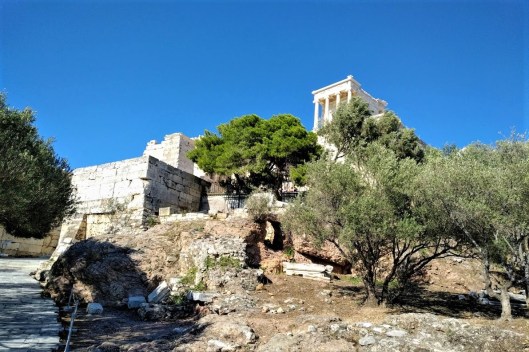
IMG_20180629_1744524 (2)

The ascent to the Acropolis, Athens, Greece — photo by David Kitz

Reflection
Psalm 121 is the second Song of Ascents, and as such it was a psalm, which was intended for use by pilgrims as they journeyed to Jerusalem. This particular psalm was most often sung or chanted as the pilgrims set out from Jericho. As they lifted up their eyes, the sharply rising hill country of Judah stretched off into the distance. Hill after hill rose up before them. Jesus often made this journey to Jerusalem from his youth (see Luke 2:41-52) until his final Passover pilgrimage (see Luke 19).

This final portion of the pilgrimage was truly an ascent. From the Dead Sea plain the road to Jerusalem climbs nearly five thousand feet—1600 meters. This is truly an ascent—an ascent from the Dead Sea plain, the lowest point on the earth’s surface, to the heights of Mount Zion.

For the bone-weary pilgrims, who had already walked more than one hundred kilometers (60 miles) from Galilee, the sight of those distant hills must have brought a measure of aching discouragement. Here was a looming challenge. Could they make this final ascent? The opening question of this psalm was not a matter of poetic whimsy. It was spoken in earnest. I lift up my eyes to the mountains—where does my help come from?

The weary pilgrim may well be asking, “Having come this far, can I complete this journey? Do I have enough energy—enough stamina to climb those hills? Will I be able to reach Zion? I am exhausted now—before I even start the ascent. I can’t do this on my own. Where does my help come from?”

The psalmist’s answer resounds off those ancient hills. Even today, it echoes down through the ages and reverberates through the chambers of the heart. My help comes from the LORD, the Maker of heaven and earth. 

Response: Father God, I am on a lifelong journey—a pilgrimage to the heavenly Jerusalem. When I become weary, give me strength.  I need your help. I know my strength comes from you, LORD. Amen.

Your Turn: Do you need strength? Have you become weary at times in serving the Lord?

An Introduction to the Songs of Ascent

16 Monday Jul 2018

Posted by davidkitz in Devotionals, God's word, Psalm 120, Psalms

≈ 1 Comment

Tags

lament, Mount Zion, peace, pilgrimage, pilgrims, Songs of Ascent

Reading: Psalm 120
A song of ascents.
I call on the LORD in my distress,
and he answers me.
Save me, L
ORD, from lying lips
and from deceitful tongues.
What will he do to you,
and what more besides,
you deceitful tongue?
He will punish you with a warrior’s sharp arrows,
with burning coals of the broom bush.
Woe to me that I dwell in Meshek,
that I live among the tents of Kedar!
Too long have I lived
among those who hate peace.
I am for peace;
but when I speak, they are for war
(NIV).

2018-07-02 (2)

What are the Songs of Ascent? Early morning in Grey Nuns Park, Orleans, ON — photo by David Kitz

Reflection
Psalm 120 is the first in a series of fifteen psalms that are called Songs of Ascent. Each psalm begins with this statement or title: A Song of Ascents. Some of the psalms also add this phrase: Of David.

Of course, this title begs the question, what are the Songs of Ascent? And furthermore, to what are we ascending? This compilation of fourteen psalms was composed for the use of pilgrims who were making their way to worship at the temple in Jerusalem. These are psalms of pilgrimage. They are called Songs of Ascent, or Psalms of Ascent, because Jerusalem is built on a high point in the land of Israel. Specifically, the temple compound was constructed at the summit of Mount Zion, so pilgrims were literally and figuratively ascending to worship at the House of God.

This first psalm in the series is really a lament. The psalmist is living in a distant place—a place far from God. All of us begin our pilgrimage—our journey to God—from a distant place. Just like the prodigal we find ourselves in a distant land, a land where there is no peace. Sin has its fleeting pleasures, but it brings no lasting peace, no deep contentment. We have wandered far from the Father’s warm embrace. The psalmist laments, “Woe to me that I dwell in Meshek, that I live among the tents of Kedar!”

The Songs of Ascent are all about drawing near to God. They are about going to the heart of worship and finding peace—true peace in the arms of God. But first we must recognize where we are. We are dwelling in Meshek—in a world far from the LORD. We need to acknowledge our true condition. Change happens when we recognize the truth about ourselves and our need for a Savior. Only then can we begin our journey toward peace.

Have faith in this promise. I call on the LORD in my distress, and he answers me. 

Response: Father God, today I am continuing my journey toward you. Lord Jesus, I need you as my Savior. Help me set aside those things that hinder my journey to intimacy with you. Amen.

Your Turn: Are you living in Meshek? Have you begun your pilgrimage to arms of the Father?

Excerpt 11 for Lent from The Soldier Who Killed a King

05 Monday Mar 2018

Posted by davidkitz in Books by David Kitz, Christ's Passion, Lent, Psalms

≈ 1 Comment

Tags

governor, Jesus of Nazareth, king, King Herod, kingdom, Kingdom of God, Marcus, Messiah, pilgrims, prophet, Roman, The Soldier Who Killed a King, weapons

A journey to the cross is a journey to repentance. It’s a journey to deep personal change. Will you take this journey with me?

In today’s reading, Marcus the centurion meets with Flavio, the Roman tribune, who is his commanding officer. He lays out his concerns about a Galilean prophet that he sees as a dangerous threat—Jesus of Nazareth.

“Sometimes I think you worry too much, Marcus.”
“I worry because it’s my job to worry,” I shot back. “Barabbas is in prison because I worry.”
Flavio appeared to consider my reply as he swallowed another stringy morsel. “So what do you know about this prophet?”
“A lot of people think he’s the Messiah.”
“May all the gods help us! Another Roman-killing messiah!” Flavio jeered.
“This one just might be the real thing,” I said.
Centur. Sw“Ha!” he scoffed. “Bring him on!” He reached for his flagon. Finding it empty, he bellowed, “Where’s my wine?”
“Bloody incompetent servants,” he muttered. Then turning to me, he asked, “Does he have weapons?”
“No, not that I’ve seen.”
“Has he threatened us?”
“Not exactly.”
“Assaulted the tax collectors?”
“No.”
“Then leave the Jewish dog alone.”
The servant arrived with a bowl of hot, sticky cheese and placed it before me, along with two small barley loaves.
“Wine! Where’s the ruddy wine?” Flavio demanded of his harried attendant.
“He is preaching about a kingdom—the kingdom of God,” I countered.
“So let him preach.”
“Who do you think will be the king of this kingdom?” I reasoned. When Flavio remained silent, I answered my own question. “I’m sure it will be none other than Jesus of Nazareth. I don’t think there’s room for two kings in this town, and a Roman governor too.”
“I see your point,” Flavio said. He wiped a greasy hand across his mouth and thenbiblical-fiction-award-2017_orig rubbed the three days of stubble on his chin. “So he talks about a kingdom?”
“The coming kingdom,” I clarified. “It’s the whole point—the core of his message. So I’m told.”
The servant arrived with the wine. Flavio helped himself. Drank two- thirds of it in a massive gulp, then poured himself some more.
“And he has followers?” Flavio continued.
“Most of the Galilean pilgrims are firmly in his camp.”
“Galilee?” Flavio questioned. “He’s Herod’s man.” He paused to rub the tip of his nose. “I wonder what the Fox thinks of this Messiah.”

American readers click this link to purchase The Soldier Who Killed a King.

Canadian readers click this link to purchase The Soldier Who Killed a King directly from the author.

Excerpts for Lent from “The Soldier Who Killed a King”

19 Monday Feb 2018

Posted by davidkitz in Books by David Kitz, Christ's Passion, Lent

≈ Leave a comment

Tags

David Kitz, Hosanna, Jerusalem, Messiah, Palm Sunday, Passion Week, Passover, pilgrims, Roman soldiers, soldier, Son of David, The Soldier Who Killed a King, triumphal entry

A journey to the cross is a journey to repentance. It’s a journey to deep personal change. Will you take this journey with me?

Four in the afternoon, Sunday, April 2, AD 30
It was never like this before. biblical-fiction-award-2017_orig
I had been posted in Jerusalem for ten years now, but in all that time, I had never seen a Passover crowd like this.
It wasn’t the numbers. I had seen that before.
The Passover pilgrims always come plodding into the city in reverent caravans. Some of them chant psalms. Others are silent, looking bone-weary as they trudge, like fretful herdsmen with children in tow. Undoubtedly, many are relieved that their holy city is finally in view.
But this year it was different. There was this man—at the center of the whole procession. There had never been a central figure before. Every movement within that huge throng seemed focused on him.
Squinting in a futile attempt to get a better view, I gave Claudius a backhanded slap to the shoulder and demanded, “What are they doing?”
“They’re climbing the trees, sir.”
“I can see that!” I snapped. “But what are they doing?”
“They seem to be tearing off the palm branches, sir.”
“What is going on here?” I said it more to myself than to any of the men standing near me. An uncomfortable feeling crept into me as the procession advanced.
“They don’t usually do this?” Claudius questioned.
“No . . . They’ve never done this before.” There was worry in my voice. Claudius had been recently assigned to this place, the festering armpit of the empire, and I was at a loss to explain what was happening before us. We were standing on the wall above the gate of Jerusalem, and less than a half mile away, we could see the jubilant pilgrims surging toward us in alarming numbers.
“They’re laying the palm branches on the road in front of that man—the man on the donkey.”
Until Claudius said it, I hadn’t noticed the donkey. Its small size and the frenzy of activity round about must have obscured this detail in the picture before me. What an odd way for this man to come. I could make no sense of it.
“They’re throwing down their cloaks before him.”
The sweat- glistened bodies of several men were clearly visible. Outer garments were being cast down before this man as a sign of homage. At the same time the rhythmic chanting of their voices became more distinct.
What were they singing? Could I pick up the words?
     “Hosanna to the Son of David!”
     “Blessed is he who comes in the name of the Lord!”
     “Hosanna in the highest heaven!”
That’s when it hit me like a barbarian’s club. I realized what I was witnessing. It was a triumphal entry—the entry of a king.
It was the words. The words they were now boisterously shouting. He was their Messiah. The Son of David! The one they were waiting for! The one who would rid them of the Romans. He would set up his glorious Jewish kingdom, here, in Jerusalem! This is what I had been warned about since the day I first set foot on this cursed Judean soil. And we, I and my men and the garrison in the city, were all that stood in their way.

Lift Up your Hands

22 Wednesday Feb 2017

Posted by davidkitz in Psalm 134, Psalms

≈ 10 Comments

Tags

Creator, identity, Jesus, Ottawa ON, pilgrim, pilgrimage, pilgrims, praise, Rideau Canal, Rideau Canal Skateway, the LORD, worship

Reading:                                        Psalm 134

A song of ascents.

Praise the LORD, all you servants of the LORD
who minister by night in the house of the L
ORD.
Lift up your hands in the sanctuary
and praise the L
ORD.

May the LORD bless you from Zion,
he who is the Maker of heaven and earth
(NIV).

Reflection

This is the fifteenth and final psalm in the Songs of Ascent series. In reality, this psalm is the pilgrims’ farewell offering of worship to the LORD.  After a week or more in Jerusalem, the time has arrived for the pilgrims to return to their homes. But on the evening before they set out on the return journey, they make one last visit to Mount Zion and the great Temple of the LORD. There they lift their hands in praise to the God of Israel. Early next morning, they will begin the arduous journey back home. But for now, it’s time to bless the LORD and offer thanks.

img_20170218_084630

Skaters on the Rideau Canal, Ottawa, ON — photo by David Kitz

It is likely that the twelve-year-old Jesus sang this psalm with his parents on the final evening of their Passover pilgrimage to Jerusalem. On the following day the family departed for Nazareth where Joseph would resume his trade as a carpenter. When they left the next morning, they assumed Jesus was traveling with them in the large company of other pilgrims from their hometown. See Luke 2:41-52.

Typically, we read this account of the lost twelve-year-old Jesus from the viewpoint of a parent. We identify with the stress of losing a child in a big city. We would title this story, “Mary and Joseph find lost Jesus.” But the story reads quite differently, when we view it from the perspective of a child trying to discover who he really is. Viewed from Jesus’ perspective the title of the story might well be, “Lost Boy finds Himself” or “Lost Boy Discovers His Divinity.”

How did Jesus discover he was the son of God? Some believers might well reason that the answer is obvious. Jesus is God; therefore, he is omniscient. The all-knowing Jesus would surely know that he was God’s son. But many theologians would beg to differ. They view the humanity of Christ as all pervasive. Jesus was 100% human and as such he needed to learn and discover his identity even as any child does.

If through the incarnation Jesus fully took on humanity, then the boy Jesus needed to discover his divine identity. It may have been written into every fibre of his being, but he still needed to discover it, just as any young musical prodigy needs to explore and discover his or her gift. All divine gifts must be discovered and developed to reach their maximum potential.

How do we discover our true identity? From the account in Luke, it would appear that the boy Jesus discovered his true identity in the House of God. Perhaps it began as he lifted his hands in worship. We cannot fully discover who we are until we discover who God is. We must know our Creator to know ourselves. Self-understanding begins with knowing whose we are. You and I belong to the Father.

Response: Father God, I thank you for loving me and inviting me into your family. Lord Jesus, thank you for purchasing my redemption. Holy Spirit, I thank you for the confirmation that I am your child. Amen.

Your Turn: Do you know who you are? How is God the Father shaping your identity?

The Blessings of Family

09 Thursday Feb 2017

Posted by davidkitz in Psalm 128, Psalms

≈ 13 Comments

Tags

blessing, blessings of children, children, family, fearing God, holidays, holy days, love, olive shoots, parents, pilgrims, unity

Reading:                                        Psalm 128

A song of ascents.

Blessed are all who fear the LORD,
who walk in obedience to him.
You will eat the fruit of your labor;
blessings and prosperity will be yours.
Your wife will be like a fruitful vine
within your house;
your children will be like olive shoots
around your table.
Yes, this will be the blessing
for the man who fears the L
ORD.

May the LORD bless you from Zion;
may you see the prosperity of Jerusalem
all the days of your life.
May you live to see your children’s children—
peace be on Israel
(NIV).

Reflection

I got an unexpected call from my son this morning. “Can we have lunch together today?” he asked.

dsc_0145

Enjoying the blessings of family in northern Vermont — photo courtesy of Chris Kennedy.

“Sure,” I responded without hesitation. Who can say no to such a request? We went out to a pizza place for their buffet lunch. We enjoyed a leisurely conversation. There was no urgency to our discussion. He shared a few minor work frustrations, while I did the same. This was simply a father and son enjoying each other’s company, talking a little sports and discussing whatever came to mind.

According to Psalm 128, I was appreciating one of the olive shoots around my table. Now that’s a unique way to view your son or daughter. Children are a blessing, and when adult children enjoy spending time with their parents that’s a double blessing. At a time when many adult children are estranged from their parents or separated by long distances, the opportunity to spend time together at the drop of a hat is a real blessing. As a parent you are enjoying the fruit of your labor. You are reaping the rewards from years spent pouring into the lives of your children.

This is the ninth psalm of the series of psalms known as Songs of Ascent or Psalms of Ascent. These were psalms used by pilgrims as they made the annual trek to Jerusalem for celebrations such as the Feast of Tabernacles or the Passover. In some respects, these ancient holy days correspond to our present day holidays such as Thanksgiving or Christmas. Families today often make long journeys to celebrate together what at their core are religious holidays. Family togetherness is a central feature of such events. We should not be surprised then that this entire psalm highlights the blessings of family unity.

It should be noted that the blessings of family begin with obedience and the fear of the LORD.

Response: Father God, I love my family. I am so blessed to have children who love you, Lord. Watch over them, I pray. Keep their hearts tender before you. Help them to daily hear your voice. Amen.

Your Turn: Are you estranged from family members? Can you build a bridge back to that loved one?

Newer posts →

Psalms 365: Develop a Life of Worship and Prayer

Psalms 365 Volume II

Psalms 365 vol 3
— Psalms 365 Volume III

Psalms

Recent posts

  • Harassed at Every Turn January 30, 2026
  • Do you have a picture of God? January 30, 2026
  • This Is My Body January 29, 2026
  • Tasting God January 29, 2026
  • Much Superior to the Angels January 28, 2026
  • Praise Always for Answered Prayer January 28, 2026
  • All About Hope January 27, 2026

Calendar

January 2026
M T W T F S S
 1234
567891011
12131415161718
19202122232425
262728293031  
« Dec    

Blog Posts

Comments

  • davidkitz on Do you have a picture of God?
  • Do you have a picture of God? | Talmidimblogging on Do you have a picture of God?
  • davidkitz on All About Hope

Blog at WordPress.com.

Privacy & Cookies: This site uses cookies. By continuing to use this website, you agree to their use.
To find out more, including how to control cookies, see here: Cookie Policy
  • Subscribe Subscribed
    • I love the Psalms
    • Join 1,383 other subscribers
    • Already have a WordPress.com account? Log in now.
    • I love the Psalms
    • Subscribe Subscribed
    • Sign up
    • Log in
    • Report this content
    • View site in Reader
    • Manage subscriptions
    • Collapse this bar
 

Loading Comments...