• Home
  • About
  • DavidKitz.ca
  • Youtube Videos
  • Books by David
  • Books on Amazon.com

I love the Psalms

~ Connecting daily with God through the Psalms

I love the Psalms

Tag Archives: revival

The Servant of All

16 Sunday Nov 2025

Posted by davidkitz in The Elisha Code

≈ Leave a comment

Tags

Andrew Murray, Boer War, Christ, concentration camp, crucified, God, God's faithfulness, humility, Jesus, missionary, missions, Prayer, pride, revival

Sitting down, Jesus called the Twelve and said,
“Anyone who wants to be first must be the very last,
and the servant of all.”
(Mark 9:35, NIV)

Are you and I putting Jesus’ teaching on being the least into practise in our daily lives. Are we becoming the servant of all? Do we see ourselves as last or do we put ourselves and our concerns first above all others?
Why is humility so key to missionary breakthrough? In what way has pride and self-righteousness either prevented or killed times of revival? The much-loved devotional writer Andrew Murray has much to teach us in these key areas.

Andrew Jr.’s father, Andrew Senior, had come to South Africa from Scotland as a missionary in 1828.  The Dutch Reformed Church was so desperate for pastors that they would even accept Scottish Presbyterians into their fold.  Revival and missions were the air that Andrew Junior breathed in his father’s house. Missionaries constantly visited the Murray home, including Dr. David Livingstone.

In 1838, when Andrew Junior was ten, he and his brother John were sent by their parents to study in Scotland. In the spring of 1840, the revivalist William C. Burns came and spoke in Aberdeen, Scotland. Burns’ heart was constantly broken over the lost, and he would weep and pray for hours for their salvation. This left a deep impression on young Andrew Murray.

The two brothers then went to Utrecht, Holland, for further theological studies. There, they became part of a revival group called Sechor Dabar (remember the Word in Hebrew).

When he returned to South Africa, Andrew became a Dutch Reformed pastor, being elected six times as the Moderator of the entire Dutch Reformed Church denomination. After initially trying to shut down the 1860 South African revival, he ended up giving strong leadership to this key revival. As people cried out in anguish, Andrew initially said, “This must stop now. I am your pastor!” God changed his mind, so, with Andrew’s blessing, great renewal broke out throughout South Africa with many thousands confessing Christ.

Suddenly in 1879, at age 51, Murray lost his voice for two years. Out of his painful two years of silence, he learned to depend upon God’s faithfulness, surrendering everything to God, and coming into a deep place of humility and love for others. In this time of waiting, he learned that we have nothing but what we humbly receive from God. Humility is about being an empty vessel that God can fill. Are we willing to be radically dependent on God?

Andrew’s amazing book Humility came of this deep time of self-crucifixion. He wrote, “Nothing but a crucified Jesus revealed in the soul can give a humble spirit.”

Humility for Andrew was most clearly seen in the incarnate and crucified Christ who prayed “not my will but Thine be done.” Andrew discovered that “pride is death, and the other (humility) is life; the one is all hell, the other is all heaven.”

During his voice ailment, Andrew came to see that a lack of humility suppresses revival and missions. He wrote, “A lack of humility is the explanation of every defect and failure.”

In 1881, he went to London to Bethshan, a healing home started by W. E. Boardman. He was completely healed there and never had trouble with his voice again. From that point on, he knew and taught that spiritual gifts were for believers today, and that God’s will is for healing and wholeness. While in England in 1882, he attended the Keswick Convention which focused on holiness and deeper life in Christ. Eventually, he founded Keswick South Africa.

Andrew did not just recover his voice; His whole demeanor changed.  He became known for his joyful humour. A long-time friend of the family wrote to Murray’s daughter Mary of this transformation: “A great change came into his life after that. He used to be rather stern and very decided in his judgment of things—after that year he was all love. His great humility also struck me very forcibly at that time.”

Murray’s oldest daughter agreed, saying, “he began to show in all relationships constant tenderness and unruffled lovingkindness and unselfish thought for others which increasingly characterized his life from that point.”

God showed Andrew Murray that “manifestations of temper and touchiness and irritation, feelings of bitterness and estrangement, have their root in nothing but pride.” He concluded that our defensiveness and unkind words reveal a lack of humility.

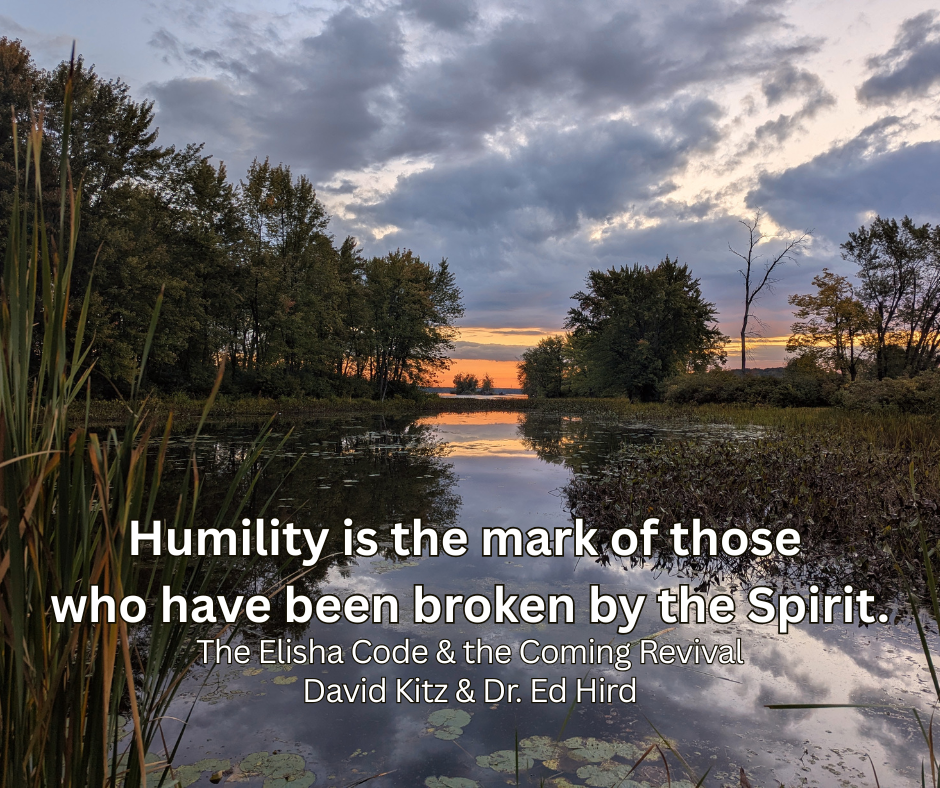
This deep personal change is the hallmark of all who come to a point of full repentance and faith in Christ. Humility is the mark of those who have been broken by the Spirit.

In his play The Power of Darkness, Leo Tolstoy put these words in the mouth of one of the main characters, “Everyone thinks of changing the world, but no one thinks of changing himself.”[i]

World changers—God’s world changers—have first been changed by the Spirit of God. The self has been crucified and now Christ reigns. Leo Tolstoy, Andrew Murray, and the apostle, Paul, knew they were in desperate need of personal transformation. Real change begins with humble submission to Christ the crucified Lord and Savior.

 I have been crucified with Christ and I no longer live, but Christ lives in me. The life I now live in the body, I live by faith in the Son of God, who loved me and gave himself for me (Galatians 2:20, NIV).

Andrew ended up writing two hundred and forty books and booklets, including Waiting on God, The School of Obedience, Absolute Surrender, and The Deeper Christian Life. His anointed pen came from his anointed heart.

One of his most transformative books was called The Key to the Missionary Problem where he taught that missions were “the chief end of the church.” Dr F.B. Meyer said that The Key to the Missionary Problem, if widely read, would lead to one of the greatest revivals of missionary enthusiasm that the world has ever known.

Andrew Murray saw missions as so large and difficult it required the Church returning to “the Pentecostal life of her first love.”

“The Pentecostal commission can only be carried out by a Pentecostal Church in Pentecostal Power. …We have given too much attention to methods and to machinery and to resources and too little to the Source of Power—the filling with the Holy Ghost.”

Humble prayer, said Murray, was the heart of missions. He prayed that the cry of our whole heart, night, and day, would be, “Oh, for the humility of Jesus in myself and all around me!”

Murray saw humility as an essential key to winning the lost and reflecting the true character of Jesus. O that God would use such humility to breath a revival of missions throughout the world.

God eventually used Andrew as a peacemaker, humbly seeking to avoid the horrendous Boer/Anglo War (October 11, 1899 – May 31, 1902) where 26,000 of the 100,000 women and children in British concentration camps died of malnutrition and disease. Andrew Murray was ideally suited to the task of peacemaking. He had spent his entire working life as a bridge builder between the Dutch-speaking Afrikaners and the black tribal communities. Now as a British-born church leader, he interceded for peace in the face of British imperial aggression.

He wrote, “The horrors of war are too terrible; the sin and shame of war are too great; the folly of war is too monstrous… I believe with my whole heart that in many respects Britain is the noblest, the most Christian nation in the world, its greatest power for good or evil… Once again, I beseech the Christian people of Great Britain to rouse themselves, and to say, ‘This war shall not be.’ Let every lover of peace make his voice heard.”

In this time of tragic conflict, in various hot spots around the globe, may we pray that other humble peacemakers, like Andrew Murray, may arise. What might it take for the Russian and Ukrainian people to humbly seek lasting reconciliation and forgiveness?

The earnest prayer and humility of Jesus points the way forward. The hour is late. Hear our Savior’s plea, “Couldn’t you men keep watch with me for one hour?” (Matthew 26:40, NIV).

[i] Leo Tolstoy, The Power of Darkness, Kindle edition, 2012, Aylmer Maude (Translator), Louise Shanks Maude (Translator).

This is the tenth weekly excerpt from the award-winning book 
The Elisha Code & the Coming Revival 

A soul-gripping read.
Is a return-to-Jesus revival possible in our time?
This book points the way forward.
For details click here.

A Call for the Miraculous

02 Sunday Nov 2025

Posted by davidkitz in The Elisha Code

≈ 6 Comments

Tags

AB Simpson, Aimee Semple McPherson, faith, faith in Christ, Foursquare Church, God's grace, gospel, healing, Jesus, miracles, miraculous, Prayer, revival, salvation, scriptures

“And these signs will accompany those who believe:
In my name they will drive out demons;
 

they will speak in new tongues; 
they will pick up snakes with their hands;
and when they drink deadly poison, it will not hurt them at all;
they will place their hands on
 
sick people, and they will get well.”
(Mark 16:17-18, NIV)

More Autumn glory — photo by David Kitz

What will it take to turn this nation and the world to faith in Jesus Christ? That question should set us on a Holy Spirit driven quest to see a world-changing, Book-of-Acts revival take place in our time.

There are those within the church who argue the age of miracles ended with the death of the original apostles. But those who hold such a view are not being true to the Scriptures, or the historical record of the church down through the ages.

Have you noticed that most revivals in the last hundred years involved a renewed emphasis on the healing ministry? Many denominations have functionally delegated the healing ministry to the wastebin of New Testament history. Sorry, they might say, this is the wrong dispensation to get healed. Jesus does not do that anymore. Spiritual gifts like prophecy, tongues, and healing have all ceased since the publishing of the New Testament. If you are sick, all that is left is to go to your medical doctor and hope for the best. “If it be your will” prayers have become the dominant way of praying for the sick. Perhaps God nowadays wants us sick rather than whole.

Aimee Semple McPherson and AB Simpson were two Ontario-raised Canadians who challenged that assumption. Both asserted that spiritual gifts are still available today, including the gifts of healing. While both valued the role of medical doctors, they helped many discover that Jesus Christ our healer is the same yesterday, today, and forever (Hebrews 13:8). Both asserted that this is not the wrong dispensation to get healed by Jesus. He is still willing and able to heal the sick in body, mind, and spirit.

Both Semple McPherson and AB Simpson helped people rediscover the prayer of faith in James 5:15 where we read that if anyone is sick, they are to call the elders who will lay hands on them, anoint them with oil, and exercising the prayer of faith will heal the sick. They will be restored to health. By confessing their sins one to another and praying for each other (sins like rage, unforgiveness, bitterness, self-hatred), many were healed. In the healing revival, it was noticed that people were often healed first spiritually and emotionally. The outer physical healings often naturally followed the inner healings.

Albert Benjamin Simpson was born on Prince Edward Island on December 15th, 1843, of Scottish Covenanter heritage.  His family had emigrated from Morayshire, Scotland to Bayview, P.E.I. After the collapse of his father’s shipbuilding business in the 1840’s depression, his family moved from P.E.I. to a farm in western Ontario.

Fresh out of seminary in 1865, Simpson had accepted the call to pastor Knox Church in Hamilton, a congregation with the second largest Presbyterian church building in Canada. Over the next eight years, 750 new people joined the congregation.

But AB Simpson had been such a workaholic that he destroyed his health.  In 1881, his medical doctor gave him just three months to live.  But upon meeting an Episcopalian (Anglican) physician, Dr. Charles Cullis, at Old Orchard Camp in Maine, he experienced a remarkable healing of his near-fatal heart condition. His restoration to health was so complete that the next day, Simpson was able to climb a 3,000-foot mountain, and then successfully pray for his daughter Margaret’s healing from diphtheria. This was the very disease which had earlier killed his son Melville.

Simpson believed that Jesus Christ is still healing people today (Hebrew 13:8). His first of many books was fittingly called The Gospel of Healing.

Word spread fast regarding these healings. He was inundated by many with pleas for help. By others, he was vilified and ridiculed as another quack miracle worker. Simpson started Friday afternoon healing & holiness meetings, which quickly became New York City’s largest attended spiritual weekday meeting, with 500 to 1,000 in attendance. He even turned his own house into a healing home where people could come for prayer ministry.

Simpson, as founder of the Christian & Missionary Alliance, brought together four separate movements into one alliance (1) missions and evangelism (2) healing (3) holiness, and (4) Jesus’ Second Coming. His four-fold gospel emphasized “Christ our Saviour, Sanctifier, Healer and Coming King.”  Simpson saw that the healing ministry as vital in the fulfillment of the Great Commission to make disciples of all nations.

Few people nowadays realize that Aimee Semple McPherson[i] was the most famous North American woman in the1920s. How is it a Canadian farm girl came to have a lasting impact on the lives of millions around the world?

Aimee Semple McPherson

Growing up on a farm near Salford, Ontario, Aimee was raised in the Salvation Army by her mother.

At age 17, Aimee said, “Lord, I’ll never eat or sleep again until you fill me with the Spirit of power.”

Having been touched by the Spirit, she married the visiting evangelist, Robert Semple. They promptly went to China as missionaries. But within months of their arrival in Hong Kong, her husband died after they both contracted malaria. Aimee came back to North America in 1912 as a broken woman, a widow, and a single mother of a daughter from her brief marriage.

She wrote: “I had come home from China like a wounded little bird, and my bleeding heart was constantly pierced with curious questions from well-meaning people.”[ii]

Remarrying on the rebound to the practical Harold McPherson, she tried unsuccessfully to be the traditional stay-at-home housewife her new husband wanted. It almost killed her. After ending up in hospital, and near death, God told her to go back preaching. She said yes to her calling and was instantly healed.

Leaving that night with her two children, she began preaching in Canada. At her first meetings, only two men and a boy turned up for the first four days. Then, after miraculous healings broke out, the curious crowds appeared.

“My healings?” said Aimee, “I do nothing. If the eyes of the people are on me, nothing will happen. I pray and believe with others, who pray and believe, and the power of Christ works the miracle.”

The next step was travel to the West Coast. Aimee and her mom, Minnie Kennedy, became the first women to drive alone across North America on uncharted roads. After relocating to Los Angeles, Aimee became as well-known as Charlie Chaplain, Harry Houdini, and even President Teddy Roosevelt.

In the 1920s, the sheer numbers of medically verified healings at her services was astounding. This included the wheelchair-bound being able to walk, the blind able to see, the deaf hearing, and tumors disappearing.

Angeles Temple

On January 1st, 1923, Aimee Semple McPherson opened her headquarters church in Los Angeles, the 5,300 seat Angeles Temple. A typical Sunday would see Aimee preaching three services to a full house, while tens of thousands more listened on radio. Her influence on the culture of southern California was so profound that linguists attribute the present-day southern California accent to the impact she had on the language. In those formative years, so many heard her voice in person and via radio that she shaped the pronunciation and syntax of daily speech of that region.

One month after opening Angeles Temple, Aimee started L.I.F.E Bible College which soon attracted 1,000 students. Many of those students became Foursquare pastors and missionaries who spread the Foursquare Gospel around the globe.

Like AB Simpson, Aimee proclaimed a fourfold gospel message centered on Jesus—Jesus as Savior, Healer, Baptizer with the Holy Spirit, and coming King. She called this the Foursquare Gospel and founded the denomination by that name.

Her legacy remains and flourishes. Today, there are 44,000 Foursquare Gospel churches in 143 countries around the world, and through the ministry of those churches, a million new believers committed their lives to Christ in the last calendar year.

But as we know, each new generation needs to discover the scope and power of the gospel for themselves. We cannot live on our parents’ faith. We must experience God’s grace firsthand. Undoubtedly, it was for this reason that Jude begins his epistle with these words:

Dear friends, although I was very eager to write to you about the salvation we share, I felt compelled to write and urge you to contend for the faith that was once for all entrusted to God’s holy people (Jude 1:3, NIV).

Are we contending for the faith that was entrusted to us by the apostles? It is a faith that moved mountains of doubt, fear, and disability and cast them into the sea. It is a faith that healed the sick, restored the crippled, and raised the widow Tabatha from her deathbed.[iii] Are we contending for that kind of world-shaking, bondage-breaking faith?

Photo by Jill Wellington on Pexels.com

The following testimony from evangelist R. W. Shambach illustrates the power of supernatural healing in bringing the lost to faith in Christ. Shambach made his first trip to India in 1956. He was gripped by the poverty and misery he saw in the marketplaces, and by the many he saw who were sick, crippled, and blind.

On that opening day, I preached for two hours, and my interpreter translated for two hours—for a total of four hours. They wanted me to go on. When I gave the altar call, I was so disappointed. I had preached to 50,000 people, and not one soul had come to accept Jesus.

Although no one came forward to accept Christ, and the crowd was obviously ready for the benediction, I said, “I am not done now. God says that signs follow His Word. I did what God called me to do. Now I am going to let God do what He said He was going to do.”

I invited three people from the audience to come forward—they were beggars. I knew who they were. One was blind, one was deaf and dumb, and the other was a crippled woman who had never walked upright.

Fifty thousand people were watching.


They were all healed.


Do you know what happened? The people in that crowd started jumping out of trees, and a mob came running towards me… I never saw such an onslaught of people. They were yelling something at the top of their voice. I asked my interpreter, “What are they saying?”

He said, “They are hollering, ‘Jesus is alive. Jesus is the Christ. Jesus is God.’ They are coming to get saved.”
What a thrill! Not one of them came when I preached, but when they saw the demonstration of the Gospel, they came.

God has called the Church to demonstrate His power.
Aren’t you glad He is alive today?[iv]

What will it take to turn this nation and the world to faith in Jesus Christ? Many are blind and hostile to God and the message of the gospel. The only thing that will open their eyes to the reality of Christ’s love is a demonstration of the Lord’s supernatural healing power.

Paul knew the importance of the miraculous in his ministry to the lost of his time.

 I came to you in weakness with great fear and trembling. My message and my preaching were not with wise and persuasive words, but with a demonstration of the Spirit’s power, so that your faith might not rest on human wisdom, but on God’s power (1 Corinthians 2:3-5, NIV).

Is the gospel message we are presenting just wise and persuasive words? To be truly biblical our message needs to be rooted in a demonstration of the Spirit’s power.

Healing and the miraculous are an integral part of the Elisha Code. Let’s not miss out on this key to future revivals.

[i] For a complete picture of the life and ministry of Aimee Semple McPherson see Sister Aimee by Daniel Mark Epstein, Harcourt Brace & Company.

[ii] “The Story of My Life”, Aimee Semple McPherson, Foursquare Crusader, September 7, 1927, Page 6.

[iii] Acts 28:8-9, Acts 3:1-10, Acts 9:32-43

[iv] Excerpt From “Miracles: Eyewitness to the Miraculous” by R. W. Schambach, 1969.

This is the eighth weekly excerpt from the award-winning book 
The Elisha Code & the Coming Revival 

A soul-gripping read.
Is a return-to-Jesus revival possible in our time?
This book points the way forward.
For details click here.

Introduction to “The Elisha Code”

14 Sunday Sep 2025

Posted by davidkitz in The Elisha Code

≈ Leave a comment

Tags

anointing, Bible, biblical truth, Christ's miracles, church, church history, disciples, Jesus, Martin Luther, miraculous, mission, pestilence, political turmoil, prophet, revival

Discovering Jesus Blueprint for Renewal

By
David Kitz & Dr. Ed Hird

Is there a hidden code to the Bible? Is there some secret interpretation—hidden in plain sight—that we have been missing for generations? If so, what is it, and what are the implications for Christians today?

The book you are holding cracks the code—the code Jesus revealed to his disciples. Furthermore, it signals the pattern for the coming global revival—revivals that may well be marked by miraculous signs and wonders on an unprecedented scale.

We live in dark times—times of fear, pestilence, national and international intrigue, and political turmoil. Many are in despair. But into this darkness, the prophet Isaiah speaks:

         “The land of Zebulun and the land of Naphtali, 
           By the way of the sea, beyond the Jordan,
           Galilee of the Gentiles:
           The people who sat in darkness have seen a great light,
           And upon those who sat in the region and shadow of death
           Light has dawned” (Matthew 4:15-16, NKJV).

At the darkest time, in the darkest region, Jesus appeared on the scene. There he began his ministry. In these dark and divided times, as the truth of the Elisha Code is brought to light, we too will see Jesus revealing his grace and power among us.

Throughout the centuries-long history of the church, biblical truths have been lost—lost through sin, unbelief, and neglect—later to be rediscovered by thirsty souls searching for transformative change in dark times. Martin Luther triggered the reformation with his rediscovery of the truth of salvation by faith through grace. The truth of sanctification triggered the Great Awakening and the Methodist renewal with revival-fire starters such as the Wesley brothers, George Whitefield, and John Newton. The twentieth century began with a fresh outpouring of the Holy Spirit as the truths of Pentecost were brought to the fore through the globe-spanning Welsh revival and the Azusa Street outpouring.

When biblical truth is restored, revival often follows. A harvest of souls is swept into the Kingdom of God, as surely as the morning dawns on a new day.

Sydney Missionary Bible College (Flickr CC).

Let’s return to his Holy Word and uncover the foundation Jesus has already laid. Let’s return to truths we have overlooked for far too long. Jesus is the Master Builder of the church. By studying his earthly ministry, we can discover the blueprint he was following to launch and establish the church of the first century. It is a blueprint that is patterned after the prophetic Old Testament ministries of Elijah and Elisha.

Within this volume, there are chapters that explore this neglected connection to these two prophets of the old covenant. Often, these chapters are then followed by biographical snapshots of individuals in church history who have tapped into key truths. These principles have catapulted the gospel message forward to powerfully impact the world of their time.

To fulfill its divine mission, the church of the twenty-first century does not need to discover new and different truths for this current age. It needs to return to, and rediscover lived truths taught by Jesus and the apostles of the first century church and put into practise by leading men and women of God down through the ages.     

Together, let’s crack the Elisha Code and become participants in the next great end-times revival—a revival marked by a double portion of Christ’s miraculous anointing.

Let the quest begin!

This is the second weekly excerpt from the award-winning book 
The Elisha Code & the Coming Revival 

A soul-gripping read.
Is a return-to-Jesus revival possible in our time?
This book points the way forward.
For details click here.

The Elisha Code & the Coming Revival

07 Sunday Sep 2025

Posted by davidkitz in revival

≈ Leave a comment

Tags

Bible, Billy Graham, Christian theology, Christianity, faith, God, God's word, gospel, Holy Spirit, Holy Spirit inspired, Jesus, Jesus Movement, preach Jesus, revival, spiritual renewal

Discovering Jesus Blueprint for Renewal

By
David Kitz & Dr. Ed Hird

Foreword by Lee Grady

I became a serious Christian at the tail end of the Jesus movement. I was too young to remember the hippie beads, tie-dyed shirts and “Jesus Is Groovy” slogans, but the songs were still popular when I was in college (including musicians such as Andrae Crouch, Love Song and Second Chapter of Acts), as were the movies—especially The Cross and the Switchblade.

The Jesus movement was like a spiritual tsunami that washed over hundreds of thousands of young people in the late 1960s and early ‘70s and brought them into a personal relationship with Christ. Some of these kids had been drug addicts and social misfits; most were just average Joes and Janes who discovered that Jesus is a lot more exciting than traditional churches had led them to believe.

Lately I find myself waxing nostalgic for those days—not because I want to return to the awkward fashions and hairstyles of 1972, but because I miss the spiritual simplicity of that era. The Jesus movement was primarily focused on—surprise!—Jesus. Theology was not complicated; pastors weren’t trying to be hip or sophisticated or tech-savvy, and we hadn’t yet created a Christian subculture with its own celebrities and political power bases.

Today, we just don’t preach enough about Jesus. In today’s ultra cool megachurch era, we’ve become experts on everything but basic Christian theology 101. In my recent travels I’ve been horrified to learn that many believers have given up the discipline of reading their Bibles even semi-regularly, and very few believers have ever led anyone to faith in Christ. One by one we are trading in our solid moral values for a squishy, spineless, whatever-is-right-for-you faith. People today prefer a steady diet of culturally relevant, fast-paced, techno-theology that is a poor substitute for biblical discipleship.

Even many Spirit-filled believers have developed the attitude that a simple focus on Christ isn’t enough. We’d rather go to a “prophetic encounter” to hear who will win the next election, or experience some exotic spiritual manifestation (gold dust, gems falling out of the ceiling). Or we prefer to ask Rev. Flash-in-the-Pan to pray for us for the sixteenth time so we can receive yet another “special anointing” that we will probably never use. 

In the midst of all this chaos, where is Jesus? Am I the only one out there who is weary of this distraction? Thankfully not. I am so pleased to read this book by Ed Hird and David Kitz because they share my concerns. The Elisha Code and the Coming Revival is a refreshing challenge to return to Jesus—and to expect spiritual revival when we clean up our message.

Call me old-fashioned, but I’ve decided to get back to the basics of the faith. That’s why I am reading What Jesus Is All About?, a classic book written 70 years ago by Henrietta Mears, a Bible teacher who helped mentor both Billy Graham and Bill Bright in the 1940s. 

Mears explains in her book how each of the four gospels give us a unique, four-dimensional portrait of the Savior. According to Mears:

  • Matthew was written to Jews to tell of a Promised Messiah who is also a King—and it uses the word “kingdom” 55 times.
  • Mark was written to Gentiles to tell of a Powerful Savior—and it reports more miracles than any other gospel.
  • Luke was written by a Gentile to tell of a Perfect Savior—and it has the most references to Jesus’ humanity.
  • John was written by “the disciple whom Jesus loved” to tell of a Personal Savior—and it has the most references to Jesus’ divine nature.

The Holy Spirit who inspired the Bible knew we needed more than a one, two, or three-dimensional look at Jesus. The Spirit gave us a four-dimensional view so that we could gaze at Him from all sides and become captivated by His magnificence—His supreme kingship, His compassionate mercy, His supernatural power, His perfect justice, His amazing humility and His love for sinners like you and me.

There’s so much more to Jesus than we realize. And there is so much more to say about Him than we are telling our generation. Instead of giving people a gospel diluted with left-wing or right-wing politics, or a message mixed with cultural “relevance,” we need to give them the real Jesus.

In this insightful book, full of keen insights from the lives of the prophets Elijah and Elisha, the authors challenge us to examine our message, repent of our unfaithfulness and embrace the raw courage to preach Jesus again. As you read this book, please allow God’s powerful Word to cut deep.

Lee Grady
Former Editor, Charisma
Author, Follow Me and The Holy Spirit Is Not for Sale
Director, The Mordecai Project

This is the first weekly excerpt from the award-winning book 
The Elisha Code & the Coming Revival 

A soul-gripping read.
Is a return-to-Jesus revival possible in our time?
This book points the way forward.
For details click here.
Filled with Laughter

24 Sunday Aug 2025

Posted by davidkitz in Psalm 126, Psalms

≈ Leave a comment

Tags

churches, faith, fortunes, harvest, Holy Spirit, Jesus, Jesus People, joy, lost generation, Prayer, Psalms, restoration, revival, the LORD, word of God, Zion

Psalm 126

A Song of Ascents

When the LORD brought back the captives to Zion,
we were like men who dreamed.
Our mouths were filled with laughter,
our tongues with songs of joy.
Then it was said among the nations,
“The LORD has done great things for them.”
The LORD has done great things for us,
and we are filled with joy.

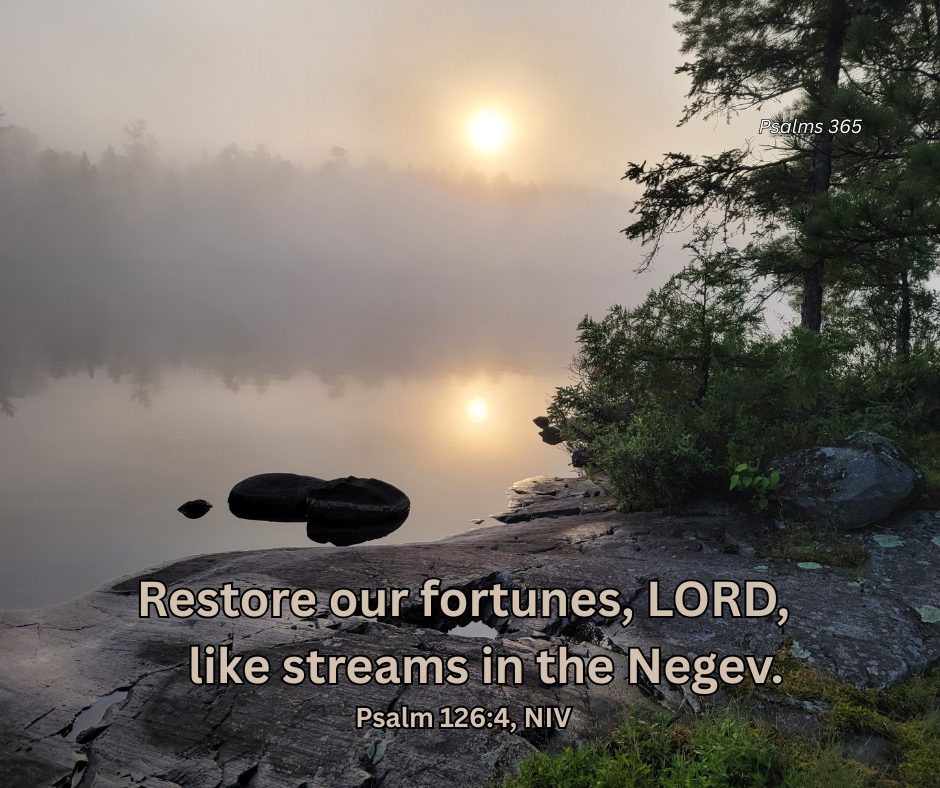
Restore our fortunes, O LORD,
like streams in the Negev.
Those who sow in tears will reap with songs of joy.
He who goes out weeping,
carrying seed to sow,
will return with songs of joy,
carrying sheaves with him.

I cannot read this psalm—Psalm 126—without immediately identifying with it. I have lived this psalm; I have experienced the reality of it.

Now that’s a rather bold statement; some might call it an ignorant or arrogant statement. The historical context of this psalm is readily identifiable. The psalmist is commenting on the joyous return of the exiles following the seventy-year Babylonian captivity—an event that occurred in the sixth century before the birth of Christ. How could anyone alive today claim that they have lived or experienced this particular Psalm? None of us were present during these dramatic events in Jewish history.

But again, I repeat: I have lived this psalm; I have experienced the reality of it.

The whole premise of this book is built on the notion that the psalms can come alive within us. The writer of the Book of Hebrews reminds us that “the word of God is living and active (Hebrews 4:12).

Photo by L. Kranz

What is there then, to prevent this living word from coming alive within us? Why can we not experience this active word of God transforming and transporting us to the throne of grace? Only two things hinder us from living in the power and wonder of the word of God, and they are sin and unbelief. And sin and unbelief are only too eager to form within us, a constricting bond that smothers the Spirit empowered Word.

But when the power of sin is broken, and unbelief is purged from the doubting soul—oh what liberty awaits! The word of God comes alive within us. The LORD is then free to do great and glorious things in us, and through us.

That was my experience as a young man in the early 1970’s. The LORD was bringing back the captives to Zion, “and we were like men who dreamed. Our mouths were filled with laughter, our tongues with songs of joy.”

I was caught up in the vortex of the Jesus People movement of that time, and amazing things were happening. Young men and women were coming to faith in Christ at a phenomenal rate. At every church meeting newcomers were finding the forgiveness they needed. The prodigals were coming home in droves. Every gathering closed with a baptismal service as new believers affirmed their faith in the crucified and risen Christ. There was a heady infectious joy in the church that could not be contained.   

At that time, “Our mouths were filled with laughter, our tongues with songs of joy.”

The spontaneity of the worship experience during those days was truly astonishing. New songs were born—born by the Spirit—right within the corporate worship time. Many of them came directly from the scriptures. The psalms became the source book for our worship. The captives—captives of sin and Satan—had been set free, and now there was a new song in our hearts, and on our lips—a song of praise to our God. We could not keep this to ourselves. Who could possibly contain the overflowing goodness and mercy of God?

This ingathering of souls was God’s doing. A lost generation was arrested by the Almighty. He was turning us around, and we were discovering Jesus. And this move of the Holy Spirit did not begin in the church. No, it began in the flop houses and hippy communes. It started on the street—in the world—the sin-saturated world. It did not start with saintly scholars and philosophers, but rather with the young and restless, the hitchhikers and misfits. God was calling them to Himself, and He was miraculously transforming lives as only can God do.

Because this new thing that God was doing started in the world, many Christians were suspicious of it. Could this really be God? Many churches stood aloof. But those who welcomed these misfits found themselves overwhelmed and transformed by what God was doing. He had initiated this, and He stood at the center of it.

Soon the Jesus’ movement was affecting the entire youth culture. Amazing Grace became the number one hit on top forty radio. A half dozen hit songs spoke of the man from Galilee. Time magazine ran a cover story on how the youth across the continent were discovering Jesus. Suddenly, it was cool to love Jesus and to follow him.

And I was a frontline witness to all this. I was seeing lives changed all around me. Close friends, who were far from God, suddenly were having life altering encounters with Jesus. We were like men who dreamed. And in that dream Jesus had come to live among us. His long flowing hair had become our own. He was with us again, just like he was with that band of fishermen on the Sea of Galilee, and the nets were full of fish—boat swamping full of fish.

“Our mouths were filled with laughter, our tongues with songs of joy. Then it was said among the nations, ‘The LORD has done great things for them.'”

The world knows when God is doing something remarkable, and the psalmist records the ancient world heard that the captive Jewish nation had been released. The exiles were free to return to their homeland, and return they did. In the early 1970’s the modern world heard that Jesus was bringing young people to himself. They too were free—set free from a load of guilt and sin, set free from addictions and hang ups—free to love and serve God with hearts washed pure by the blood of the Lamb.

“The LORD has done great things for us, and we are filled with joy!”

That was my experience—an experience that was shared by thousands of others across this continent during this remarkable time. It was the LORD’s doing. He did great things for us—things I will never forget.

But …

But there is a pause in this psalm. This is a psalm written in two distinct sections, or stanzas. In most translations, this break between stanzas is indicated by a blank line. The psalmist abruptly transitions from joyous triumph to sober petition, from exuberance to sobbing desperation. We are left wondering what happened in between. What happened in that blank line? Why this sharp transition? In bleak desolation the psalmist pleads, “Restore our fortunes, O LORD, like streams in the Negev.”

Atacama Desert, Chile — Photo credit http://www.explora.com

Streams in the Negev are intermittent. A raging torrent one day becomes a mere trickle on the next day, and then nothing on the third day. The boisterous river of joy turns into a blank line on the desert floor. Nothing—just nothing.

The Negev is the parched desert region to the south of the land of Judah. Cloud bursts there can produce these streams in the barren desert, and with the sudden arrival of this moisture, long dormant seeds spring to life. Suddenly new life abounds. But without further moisture, the scorching sun takes its toll. The harsh environment reasserts its dominance. Land that was briefly lush and verdant reverts to desert dust.

Is it any wonder then that the psalmist cries out, “Restore our fortunes, O LORD, like streams in the Negev.” The psalmist longs for the flow of new life to continue.

And right along with the psalmist I cry, “Send your river flowing through here once again. Send a cloud burst of your mercy down on this nation again. Invade this culture again. Turn our young people to Jesus, yet again. Touch this new generation. Let them find themselves walking with you, the living Christ. You did it once, Lord, and I saw it. I experienced it. Now do it again! Do it again, not for me, but for those who don’t know you. Do great things for them. Set them free from the sin and the lies that ensnare them. Touch all of us, once again!”

“Restore our fortunes, O LORD, like streams in the Negev.”

In those days, at the height of what God was doing, I saw a dozen young men line up in the freezing cold. They arrived early. They were waiting for the pastor to arrive on a Saturday night to unlock the church so they could come in and give their hearts to Jesus. I saw hundreds of young people being baptized at that same church—more than three hundred in a year—one for every day of the year. The God of the harvest was adding to the church “daily those who were being saved” (Acts 2:47).

This was not about the Holy Spirit tickling the churches’ funny bone. It was about sinners finding God. Time after time I saw the lost crowding the altar at the close of the service. They wanted Jesus, nothing more, nothing less, just Jesus.

Now, only the faithful come to the altar, if anyone comes at all.

 “Restore our fortunes, O LORD.”

 I echo the psalmist’s prayer, “Restore our fortunes, O LORD.”

Fortunately, we are provided with the promise of God’s word in tandem with the psalmist’s petition, “Those who sow in tears will reap with songs of joy.”

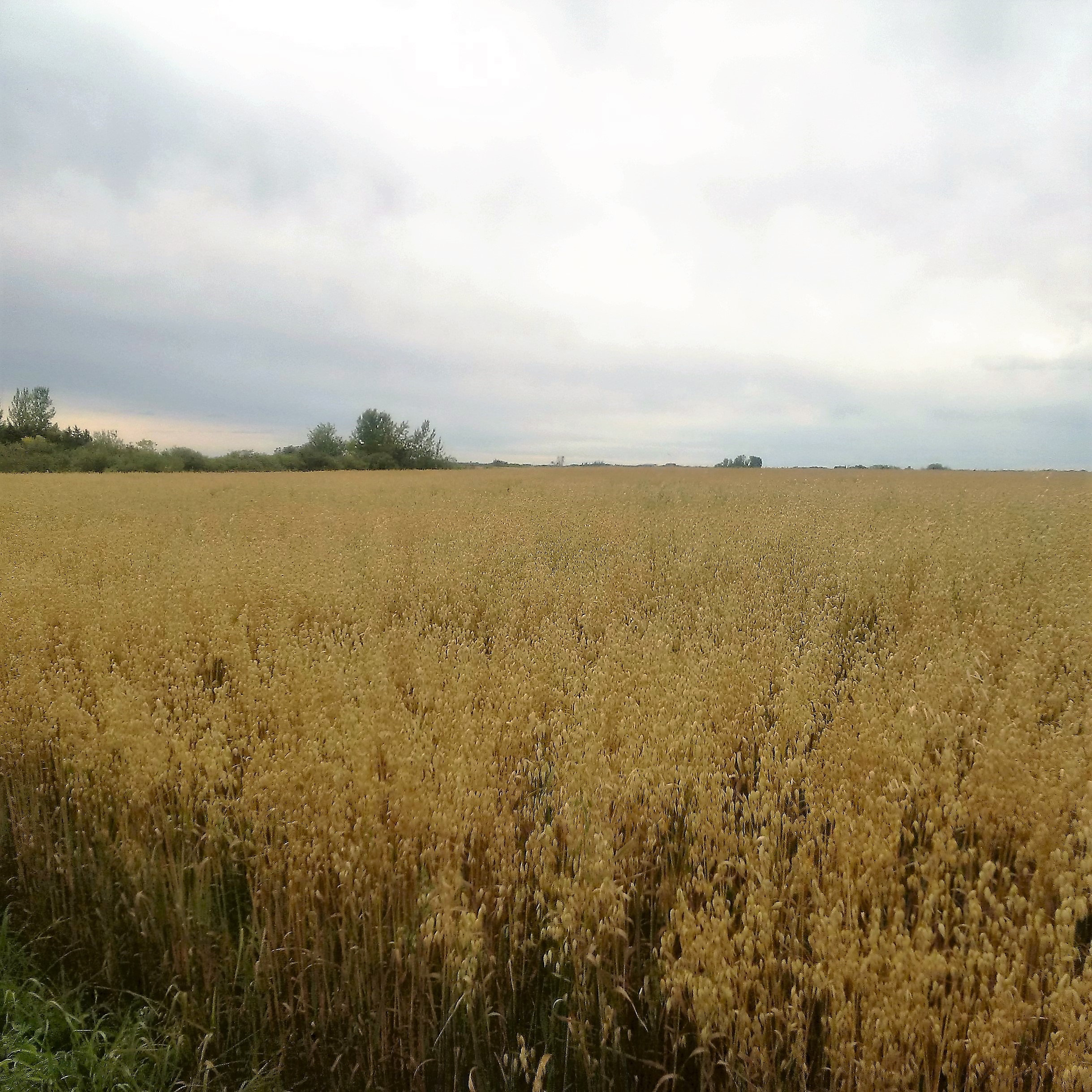
A field of harvest ready oats near MacNutt, SK — photo by David Kitz

If you live in a dry land, water it with your tears. If the wind of God’s Spirit is a distant memory, remember seasons change. The seed of God’s word is still viable. It is always power packed and ready to spring to life. Just add water.

“He who goes out weeping, carrying seed to sow, will return with songs of joy, carrying sheaves with him.”

God’s promise stands sure and certain, but for us, two questions remain. Are you going out weeping? And are you carrying seed to sow?

Perhaps the church in Canada has never experienced a harsher spiritual climate than that which exists today. We live in a society that by and large has turned its back on God. The gospel message is often treated with contempt or outright ridicule. The church exists in a spiritual desert. Figuratively, Canada is the Negev. Conditions in in the United States are only marginally better.

In such a harsh climate the natural inclination is to cocoon ourselves away. The world out there is inhospitable. It’s best to stay inside, to huddle amongst ourselves. Isn’t it better to cloister ourselves away, than to expose ourselves to the harsh elements and the criticism of others? Let’s circle the wagons and entertain ourselves. This has become the unspoken modus operandi for many churches.

Into our cloistered existence the psalmist speaks. He instructs us to step out of our sheltered place. He tells us to go out weeping. What a bizarre command! Weeping is for private places. Why would we want to go out into the world weeping? Yet, this is what we are encouraged to do. Could it be that we are to get out of our churches and cry? Cry over what?

How about crying over a lost generation? How about crying over the homeless, the addicted and the needy? How about crying over the devastating effects of sin, and the degradation of our youth?

One day in the late 1950’s, David Wilkerson opened a copy of Life magazine where he saw photos of young gang members in New York City. Looking into their eyes, he broke down and wept. This young pastor left the shelter of his country church to bring the gospel to the toughest gangs in New York City. He went “out weeping, carrying seed to sow” and yes, David Wilkerson returned “with songs of joy, carrying sheaves with him.” He proved that the message of the cross is more powerful than the switchblade.

God has given us His seed—the word of God—for a reason. We are to scatter it out in the world. There can be no harvest unless someone goes out and plants the seed.

Are you carrying seed to sow? Don’t just carry it into the world. Scatter it. There is no joy quite like the harvester’s joy. The harvester has worked with God, and the LORD’s joy becomes his own.

“He who goes out weeping, carrying seed to sow, will return with songs of joy, carrying sheaves with him.”

Bringing Life to the Psalms

  1. Have you experienced the joy of harvest, where new souls have been added to the Kingdom of God? What was that experience like? What role did you play? Read 1 Corinthians 3:5-9 for Paul’s perspective on planting and harvesting.
  2. What is the difference between ingathering and revival? There appears to be a place for both in the economy of God’s Kingdom. Take note of the revival that took place under the leadership of Josiah, King of Judah, as recorded in 2 Chronicles 34-35. The discovery of the Book of the Law of the LORD was a key element in this revival. In a similar way, I would contend that the release of the Good News, New Testament by the Bible Society contributed significantly to the Jesus People movement of the early 1970’s. How important is it for you to have an understandable translation of the scriptures?
  3. Are we living in a harsh spiritual climate? Is the gospel message impacting the culture in which we live, or is the culture of the world impacting the church?
  4. What are you personally doing to sow the seed of God’s word? What are some innovative ways to get the seed out into the field? What can churches do to facilitate going out with the seed of God’s word? Have you circled the wagons? Are you merely entertaining yourselves? What is the role of tears in the harvest that God wills to bring on the earth?
  5. Reread Psalm 126. What is God saying to you by His Spirit?

Today’s post is Chapter 25 from the book Psalms Alive! Connecting Heaven & Earth by David Kitz. To find out more or purchase click here.
 

Listening to God’s Voice in Difficult Times

21 Friday Feb 2025

Posted by davidkitz in Psalms

≈ 2 Comments

Tags

faith, God’s promises, grace, hardship, hope, listening, peace, Prayer, restoration, revival, Righteousness, salvation, trust

Today’s Devotion from Psalms 365 by David Kitz

Reading: Psalm 85:8-13
I will listen to what God the LORD says;
he promises peace to his people, his faithful servants—
but let them not turn to folly.
Surely his salvation is near those who fear him,
that his glory may dwell in our land.
Love and faithfulness meet together;
righteousness and peace kiss each other.
Faithfulness springs forth from the earth,
and righteousness looks down from heaven.
The LORD will indeed give what is good,
and our land will yield its harvest.
Righteousness goes before him
and prepares the way for his steps (NIV). *

Photo by Aleksandr Neplokhov on Pexels.com

Reflection
Psalm 85 began with the psalmist reflecting on a wonderful time of God’s favor and forgiveness. God’s grace had been abundant and a source of great joy. But that is not the present reality. It would seem for some reason God’s hand of blessing has been lifted and the psalmist finds himself crying out for mercy and revival. Will you not revive us again, that your people may rejoice in you? Show us your unfailing love, LORD, and grant us your salvation (Psalm 85:6-7).

Times of hardship and personal setbacks can leave us wondering if God has abandoned us. Have we sinned? Has God withdrawn His blessing from our lives? Will He show us His kindness once again? In difficult times these questions often flood our minds.

After pleading for restoration and pouring out his troubles before God the psalmist makes this statement, “I will listen to what God the LORD says” (v. 8a).

Now that’s sound advice. Listening to what God says is always a good idea. It resolves inner conflict and brings peace of mind. And what does God the LORD say? “He promises peace to his people, his faithful servants—but let them not turn to folly” (v. 8b).

Often, we feel that when things aren’t going right in our lives, we must be at fault. Perhaps we are and we should repent. But there are other times when the hardships we face are not due to sin or error on our part. Troubles and difficulties come to all of us. On such occasions the LORD promises us peace. He assures us that we are walking in His will, and He is right there with us in the midst of life’s storms. Here is His promise for you: The LORD will indeed give what is good, and our land will yield its harvest. Righteousness goes before him and prepares the way for his steps (v. 12-13).

Hang onto the righteousness of God. He is about to step into your life in a beautiful way.

Response: LORD God, I turn to you in the middle of my difficulties. Open my ears to hear your voice speaking to me. I trust you to lead me. Come and step into my life. Amen.

Your Turn: Can you recall occasions when God has stepped into your life? What did that look like?

Para la publicación de Salmos 365 de hoy en español haga clic aquí.

bgbg_v4.3_1501818
* NEW INTERNATIONAL VERSION, COPYRIGHT ©1973, 1978, 1984, 2011 BY BIBLICA

Please pray for peace to return to Israel, Gaza, and Ukraine!

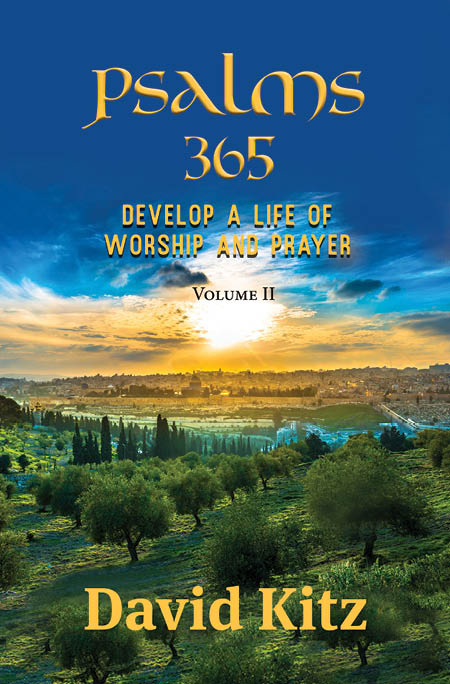
Volume I of Psalms 365: Develop a Life of Worship and Prayer won the Best Book of the Year Award from The Word Guild and Volume II has won the Best Devotional of the Year Award. For those who love God’s word, this three-book series is an ideal way to begin the new year, and daily meet with the Lord. To purchase or for a closer look click here.

RGB72PsalmsVol2

A gripping read from David Kitz.
4485 SHARABLE-2

To purchase or for a closer look click here.

Restoration Through Divine Favor

20 Thursday Feb 2025

Posted by davidkitz in Psalms

≈ Leave a comment

Tags

faith, favor, forgiveness, grace, joy, love, nearness, restoration, revival

Today’s Devotion from Psalms 365 by David Kitz

Reading: Psalm 85:1-7
For the director of music. Of the Sons of Korah. A psalm.
You, LORD, showed favor to your land;
you restored the fortunes of Jacob.
You forgave the iniquity of your people
and covered all their sins.
You set aside all your wrath
and turned from your fierce anger.
Restore us again, God our Savior,
and put away your displeasure toward us.
Will you be angry with us forever?
Will you prolong your anger through all generations?
Will you not revive us again,
that your people may rejoice in you?
Show us your unfailing love, LORD,
and grant us your salvation (NIV). *

Reflection
Psalm 85 begins on a high note as the psalmist reflects on God’s goodness in the past. You, LORD, showed favor to your land; you restored the fortunes of Jacob (v. 1).

God’s favor is not something we earn; it is undeserved. God’s favor is synonymous with God’s grace. We may attempt to explain God’s grace, but in reality, there’s no accounting for it. God showers His grace upon us, but why on us and not someone else? There is an aspect of Divine grace that we may never fully comprehend. We simply need to receive it and rejoice in God’s favor when it comes our way.

Make no mistake. God’s grace and His favor are rooted in forgiveness. Note the words of the psalmist: You forgave the iniquity of your people and covered all their sins. You set aside all your wrath and turned from your fierce anger (v. 2-3).

Because of our sins and disobedience, we deserve God’s wrath and anger, but instead He has shown us favor and forgiveness. How awesome is that! There is something over-the-moon wonderful about the love of God. When we experience its fullness, it puts a smile on our face and a wellspring of joy in our hearts.

But… But there is a point of transition in this psalm. The wonderful sense of nearness to God has been lost. About midway through the passage above the psalmist cries out in anguish. Restore us again, God our Savior, and put away your displeasure toward us. Will you be angry with us forever? (v. 4-5a).

We are not told what has caused this sense of separation from God. Is it sin? Is it unforeseen hardships or calamities of various kinds? Whatever the cause, the psalmist pleads for revival and a return to joy.

Response: LORD God, revive my love for you. I want to sense you near me again—smiling down on me. Show me your favor and your unfailing love. Let me know your grace. Amen.

Your Turn: Have you lost a sense of nearness to God? What can you do to restore it?

Para la publicación de Salmos 365 de hoy en español haga clic aquí.

bgbg_v4.3_1501818
* NEW INTERNATIONAL VERSION, COPYRIGHT ©1973, 1978, 1984, 2011 BY BIBLICA

Please pray for peace to return to Israel, Gaza, and Ukraine!

Volume I of Psalms 365: Develop a Life of Worship and Prayer won the Best Book of the Year Award from The Word Guild and Volume II has won the Best Devotional of the Year Award. For those who love God’s word, this three-book series is an ideal way to begin the new year, and daily meet with the Lord. To purchase or for a closer look click here.
RGB72PsalmsVol2

A gripping read from David Kitz.
4485 SHARABLE-2

To purchase or for a closer look click here.

Who Rules Your Heart?

10 Monday Feb 2025

Posted by adeyemiasaba1 in Psalm 80, Psalms

≈ Leave a comment

Tags

Bible, faith, God, governance, hope, Jesus, nation, Prayer, Psalms, restoration, revival, salvation

Reading: Psalm 80:8-19
You transplanted a vine from Egypt;
you drove out the nations and planted it.
You cleared the ground for it, and it took root and filled the land.
The mountains were covered with its shade,
the mighty cedars with its branches.
Its branches reached as far as the Sea, its shoots as far as the River.
Why have you broken down its walls
so that all who pass by pick its grapes?
Boars from the forest ravage it,
and insects from the fields feed on it.
Return to us, God Almighty! Look down from heaven and see!
Watch over this vine, the root your right hand has planted,
the son you have raised up for yourself.
Your vine is cut down, it is burned with fire;
at your rebuke your people perish.
Let your hand rest on the man at your right hand,
the son of man you have raised up for yourself.
Then we will not turn away from you;
revive us, and we will call on your name.
Restore us, LORD God Almighty;
make your face shine on us, that we may be saved (NIV). *

Reflection
Who can turn around this situation? Who can bring this nation back to God? Essentially that was the question of the psalmist, Asaph, here in Psalm 80. Israel had been ravaged by foreign invaders. The beautiful land had been laid desolate, so Asaph pleads with the LORD. “Your vine is cut down, it is burned with fire; at your rebuke your people perish” (v. 16). But one hope remains. “Let your hand rest on the man at your right hand, the son of man you have raised up for yourself. Then we will not turn away from you; revive us, and we will call on your name” (v. 17-18).

Who is this son of man—this great hope of the people of God? Clearly a man—a champion like David is needed. David defeated Israel’s enemies on all sides. He turned the nation into a great military and economic power. He laid the foundation for the prosperity that followed under the wise rule of Solomon his son. Asaph is writing several generations later when all that wealth has been squandered and there is a dearth of godly leadership.

Who can save us now? The answer lies in the son of man. Jesus continually referred to himself as the Son of Man. He used that phrase thirty times in the Gospel of Matthew. All too often we are busy looking for a political savior. But what we need more than anything is the one and only true Savior. His name is Jesus Christ. He saves us body, soul and spirit from the corruption that is in the world.

Response: LORD God, on so many levels our nation is in a mess. We need a Savior to emerge. Jesus, you are the great Son of Man. I turn my heart to you. Govern my thoughts and my actions every day. Amen.

Your Turn: Who is governing you—governing your heart and mind? Is there something you can do to extend God’s governance to others?

Para la publicación de Salmos 365 de hoy en español haga clic aquí.

* NEW INTERNATIONAL VERSION, COPYRIGHT ©1973, 1978, 1984, 2011 BY BIBLICA

Please pray for peace to return to Israel, Gaza, and Ukraine!

Volume I of Psalms 365: Develop a Life of Worship and Prayer won the Best Book of the Year Award from The Word Guild and Volume II has won the Best Devotional of the Year Award. For those who love God’s word, this three-book series is an ideal way to daily meet with the Lord. To purchase or for a closer look click here.

RGB300Kitz2AWARD

New from David Kitz
TheElishaCodeCVR5

To purchase or for a closer look click here.

Turning Back to God in Times of Desolation

13 Monday Jan 2025

Posted by adeyemiasaba1 in Psalms

≈ Leave a comment

Tags

destruction, faith, lament, Prayer, Psalm, Reflection, renewal, repentance, revival, sanctuaries

Reading: Psalm 74:1-8
A maskil of Asaph.
O God, why have you rejected us forever?
Why does your anger smolder against the sheep of your pasture?
Remember the nation you purchased long ago,
the people of your inheritance, whom you redeemed—
Mount Zion, where you dwelt.
Turn your steps toward these everlasting ruins,
all this destruction the enemy has brought on the sanctuary.
Your foes roared in the place where you met with us;
they set up their standards as signs.
They behaved like men wielding axes
to cut through a thicket of trees.
They smashed all the carved paneling
with their axes and hatchets.
They burned your sanctuary to the ground;
they defiled the dwelling place of your Name.
They said in their hearts, “We will crush them completely!”
They burned every place where God was worshiped in the land (NIV). *

metin-ozer-wYBlsg079Go-unsplash

Reflection
This is a psalm born in a time of disaster and distress. The enemies of the people of God had triumphed. Psalm 74 begins as a lament as the psalmist calls out to God with these words. “Turn your steps toward these everlasting ruins, all this destruction the enemy has brought on the sanctuary” (v. 3).

Foreign armies had invaded the land. Not only had they attacked the people of God, but they also desecrated God’s sanctuary. “They burned your sanctuary to the ground; they defiled the dwelling place of your Name” (v. 7).

It may be hard for many of us to imagine the destruction of war and the invasion of our country by foreign forces. But on the spiritual level our land has already been invaded and the attacks on the sanctuaries of God are unrelenting.

Take a walk or a drive about any large city in Canada and you will see abandoned church buildings. Some have been turned into concert halls or night clubs. Today this statement describes our present reality. “Your foes roared in the place where you met with us; they set up their standards as signs” (v. 4).

Sadly, in many places the standard of the cross has been replaced by standards of hedonism and human pride. This would be easier to fathom if this was the work of some sinister foreign power, but, our own people have turned their backs on God and have instead embraced the gods of this world. God have mercy on our land.

Response: LORD God, help us to become agents of change in our land. We want people throughout this country to turn to you in repentance and faith. Open their eyes to their need and your reality. Amen.

Your Turn: What will it take to awaken your nation to God? What conditions bring about renewal?

Para la publicación de Salmos 365 de hoy en español haga clic aquí.

* NEW INTERNATIONAL VERSION, COPYRIGHT ©1973, 1978, 1984, 2011 BY BIBLICA

Please pray for peace to return to Israel, Gaza, and Ukraine!

Volume I of Psalms 365: Develop a Life of Worship and Prayer won the Best Book of the Year Award from The Word Guild and Volume II has won the Best Devotional of the Year Award. For those who love God’s word, this three-book series is an ideal way to daily meet with the Lord. To purchase or for a closer look click here.
RGB300Kitz2AWARD

New from David Kitz
TheElishaCodeCVR5

To purchase or for a closer look click here.
What Others Say about “The Elisha Code & the Coming Revival

26 Saturday Oct 2024

Posted by davidkitz in Books by David Kitz

≈ 2 Comments

Tags

church history, Elisha, faith, Jesus, New Testament, Old Testament, prophecy, prophet, revival, spiritual renewal

Wow! This is terrific. Reading The Elisha Code and the Coming Revival is like walking the road to Emmaus with the resurrected Jesus and two of his twenty-first century disciples—Ed Hird and David Kitz. Share their excitement as Jesus opens their minds to the Old Testament prophecies about Himself. With the added benefit of New Testament insights and lessons from history, we see the Holy Spirit preparing to ignite fresh revival fires in our day.

Don Hutchinson, pastor, lawyer, and author of
Church in Society: First Century Citizenship Lessons for Twenty-First Century Christians

I found The Elisha Code and the Coming Revival by David Kitz & Dr. Ed Hird to be a rollercoaster-thrill-read from beginning to end … I could not put it down! The authors take you on an adventure of discovery—seeking bold faith—in readiness for the revival to come.

— Alan Kearns, Devotional Treasures blogger, Glenrothes, Scotland


The Elisha Code and the Coming Revival
unpacks an intriguing and thought-provoking case for Jesus being the New Testament Elisha, thus carrying out His role as Prophet (along with Priest and King)—not abolishing the Law and the Prophets but fulfilling them. As was needed in the time of both Elisha and Jesus, the book also points us toward spiritual renewal in our increasingly evil world, but with sure and certain hope, and with the promise that, in Jesus, there is true healing and salvation.

Laverne Hautz, Emeritus Lutheran Pastor

New from David Kitz
Winner of the 2024 Word Award of Merit in Biblical Studies
TheElishaCodeCVR5

To purchase or for a closer look click here.

← Older posts

Psalms 365: Develop a Life of Worship and Prayer

Psalms 365 Volume II

Psalms 365 vol 3
— Psalms 365 Volume III

Psalms

Recent posts

  • Ready for the King of Glory December 19, 2025
  • My Spirit Rejoices in God My Savior December 18, 2025
  • Joining the Generation That Seeks God December 18, 2025
  • Why Am I So Favored December 17, 2025
  • How Can You Find the Good Life? December 17, 2025
  • The Power of the Most High December 16, 2025
  •  The Earth Turns to the LORD December 16, 2025

Calendar

December 2025
M T W T F S S
1234567
891011121314
15161718192021
22232425262728
293031  
« Nov    

Blog Posts

Comments

  • davidkitz on Joining the Generation That Seeks God
  • cjsmissionaryminister on God Sent His Son
  • cjsmissionaryminister on The God of the Broken

Blog at WordPress.com.

Privacy & Cookies: This site uses cookies. By continuing to use this website, you agree to their use.
To find out more, including how to control cookies, see here: Cookie Policy
  • Subscribe Subscribed
    • I love the Psalms
    • Join 1,378 other subscribers
    • Already have a WordPress.com account? Log in now.
    • I love the Psalms
    • Subscribe Subscribed
    • Sign up
    • Log in
    • Report this content
    • View site in Reader
    • Manage subscriptions
    • Collapse this bar
 

Loading Comments...