Tags
I will praise Him!
![IMG_20170308_090758[90]](https://davidkitz.blog/wp-content/uploads/2017/03/img_20170308_09075890.jpg?w=529)
God shines forth — photo by David Kitz

11 Saturday Mar 2017
Posted in Psalms, Saturday's Psalm
Tags
God shines forth — photo by David Kitz
10 Friday Mar 2017
Tags
blood, death, dominion, faith, Jesus, Passover, Passover Lamb, redeemed, redemption, slavery, victory
Reading: Psalm 136
(Verses 10-16)
to him who struck down the firstborn of Egypt
His love endures forever.
and brought Israel out from among them
His love endures forever.
with a mighty hand and outstretched arm;
His love endures forever.
to him who divided the Red Sea asunder
His love endures forever.
and brought Israel through the midst of it,
His love endures forever.
but swept Pharaoh and his army into the Red Sea;
His love endures forever.
to him who led his people through the wilderness;
His love endures forever (NIV).
Reflection
Because of the responsive pattern employed by the psalmist, today’s reading from Psalm 136 begins as an incomplete sentence. When combined with yesterday’s reading, the full sentence reads: Give thanks to the Lord of lords, to him who struck down the firstborn of Egypt, and brought Israel out from among them with a mighty hand and outstretched arm.

He brought us out to bring us in — photo courtesy of Donald Adam
Whereas yesterday’s reading from Psalm 136 celebrates the wonders of God’s creation, today’s reading celebrates the wonders of God’s redemption of Israel. The LORD delivered the captive souls of Israel from hard labor and slavery in Egypt. Though the eldest child of the Egyptians perished, the Hebrew children were spared from the Angel of Death, because the blood of the Passover lamb was applied to the doorposts of their home. See Exodus 12.
At a grim Passover celebration 2,000 years ago, Jesus suffered and died on the cross as our Passover Lamb. When we place our faith in his sacrificial blood, we too are spared from death. Jesus tasted death on our behalf, so that we can live eternally with him. As believers we can rejoice and draw comfort from these words. “Where, O death, is your victory? Where, O death, is your sting?” The sting of death is sin, and the power of sin is the law. But thanks be to God! He gives us the victory through our Lord Jesus Christ (1 Corinthians 15:55-57).
Through the blood of Christ the power of Satan is broken and we are brought into the dominion of the Son of God. For he has rescued us from the dominion of darkness and brought us into the kingdom of the Son he loves, in whom we have redemption, the forgiveness of sins (Colossians 1:13-14).
Surely as redeemed children of God—children personally redeemed by the Son of God—we have this testimony: His love endures forever.
Response: Father God, I thank you for redeeming me with the sacred blood of Jesus. I have been adopted into your family. You are my heavenly Father. I can never thank you enough. Amen.
Your Turn: Are you living in a new kingdom, under a new king—King Jesus?
09 Thursday Mar 2017
Tags
creation, Creator, environment, gardening, God, love, nature, seasons, the LORD, wildlife, winter, worship
Reading: Psalm 136
(Verses 1-9)
Give thanks to the LORD, for he is good.
His love endures forever.
Give thanks to the God of gods.
His love endures forever.
Give thanks to the Lord of lords:
His love endures forever.
to him who alone does great wonders,
His love endures forever.
who by his understanding made the heavens,
His love endures forever.
who spread out the earth upon the waters,
His love endures forever.
who made the great lights—
His love endures forever.
the sun to govern the day,
His love endures forever.
the moon and stars to govern the night;
His love endures forever (NIV).
Reflection
Here are some straightforward facts about me. I love nature. I enjoy all four seasons. I love getting out of the house and hiking through the woods or riding my bicycle along nature trails. I am fascinated by the wildlife I encounter on these excursions. I like planting a backyard garden in spring, and harvesting the produce from it through the summer and fall. I feel knitted to the land and its seasons.
![IMG_20170308_090816[91]](https://davidkitz.blog/wp-content/uploads/2017/03/img_20170308_09081691.jpg?w=529)
A winter walk in God’s creation — photo by David Kitz
Psalm 136 extols the virtues of this awesome limitless God. His love endures forever. For a total of twenty-six verses the psalmist expounds on the goodness of the LORD. In response His people reply, “His love endures forever.”
Today’s reading lays the foundation for our worship. That foundation rests on the wonder of God’s creation. We are to give thanks to God because He alone does great wonders. By his understanding, [He] made the heavens, and spread out the earth upon the waters.
As you go through your day do you find moments where you give God thanks for the wonders of His creation? In an urban, man-made environment we can easily lose touch with nature and our Creator. We lose something precious—something fundamental to our well-being—when that happens.
Response: LORD God, help me to appreciate the wonder of your creation every day. Give me opportunities to see the beauty in it, because it’s a reflection of your magnificent character. Amen.
Your Turn: Do you enjoy nature? Does that appreciation of nature translate into love for God?
08 Wednesday Mar 2017
Tags
Christ, financial system, GDP, gold, idolatrous, idolatry, idols, Mammon, money, praise, silver, wealth, worship
Reading: Psalm 135
(Verses 15-21)
The idols of the nations are silver and gold,
made by human hands.
They have mouths, but cannot speak,
eyes, but cannot see.
They have ears, but cannot hear,
nor is there breath in their mouths.
Those who make them will be like them,
and so will all who trust in them.
All you Israelites, praise the LORD;
house of Aaron, praise the LORD;
house of Levi, praise the LORD;
you who fear him, praise the LORD.
Praise be to the LORD from Zion,
to him who dwells in Jerusalem.
Praise the LORD (NIV).
Reflection
Though it may not be obvious, there is something timeless about the first sentence from today’s reading: The idols of the nations are silver and gold, made by human hands.

Stained glass Llewelyn United Church, SK — photo courtesy of Donald Adam
In today’s world shaping silver or gold into an idol may be unusual, but it still occurs. India and the nations of Southeast Asia have plenty of gold and silver idols. This is not a dying worship form. Many have been cast in recent years.
In the western world we frown on such openly idolatrous displays of wealth and worship. Or do we? Gold and silver represent wealth. In reality, we have simply transformed our worship of wealth from bulky commodities like silver and gold to more transferable assets like securities and paper currency. We are still guilty of bowing before silver and gold, but it comes with a different name. Now we call it the almighty dollar.
The almighty dollar, or more broadly speaking, the market, determines the ebb and flow of commerce, and by extension impacts every aspect of our daily lives. It is not an exaggeration to say we are caught up in financial system that is deeply idolatrous. Our society has taken the worship of wealth (Mammon) to new heights. We elect our political leaders not on the basis of moral character or personal integrity, but rather can they deliver a higher level of GDP—put more money in our pockets.
Into this corrupt world, St. Peter speaks these words to those who have been called to follow Christ: For you know that it was not with perishable things such as silver or gold that you were redeemed from the empty way of life handed down to you from your ancestors, but with the precious blood of Christ, a lamb without blemish or defect (1 Peter 1:18-19).
Response: Father God, I need the right perspective on wealth and finances. Your precious blood is worth more than all the silver and gold this world has to offer. I bow before you as my Almighty Savior. Amen.
Your Turn: Is Jesus the Lord of your finances? Is your Redeemer more important than wealth?
07 Tuesday Mar 2017
Tags
baptism, bondage, Egypt, grace, liberation, Moses, peer pressure, Pharaoh, salvation, Satan, sinful habits, slavery, taskmasters
Reading: Psalm 135
(Verses 8-14)
He struck down the firstborn of Egypt,
the firstborn of people and animals.
He sent his signs and wonders into your midst, Egypt,
against Pharaoh and all his servants.
He struck down many nations
and killed mighty kings—
Sihon king of the Amorites,
Og king of Bashan,
and all the kings of Canaan—
and he gave their land as an inheritance,
an inheritance to his people Israel.
Your name, LORD, endures forever,
your renown, LORD, through all generations.
For the LORD will vindicate his people
and have compassion on his servants (NIV).
Reflection
Psalm 135 began with a call for the LORD’s people to praise Him. For the LORD has chosen Jacob to be his own, Israel to be his treasured possession.

They were all baptized into Moses in the cloud and in the sea (1 Corinthians 10:2). Photo by David Kitz
In today’s reading, the psalmist recounts how Israel came to be God’s treasured possession. It happened as the result of a great cosmic struggle. The descendants of the patriarch Israel (who was also called Jacob) were enslaved in Egypt. There they toiled under cruel taskmasters until by the hand of Moses the LORD sent his signs and wonders into their midst. After ten terrible plagues, Pharaoh finally relented and set God’s people free. Nevertheless, Pharaoh changed his mind and sent his army to pursue Israel. Again at the Red Sea, the LORD intervened. He parted the sea, for His chosen people, but brought it crashing down upon Egypt’s army.
Make no mistake; you too are part of a great cosmic struggle. You were born into a world that is under the control of Satan. Jesus called our adversary the ruler, or prince of this world (John 16:11). We were born under Satan’s authority and within his domain just as the Hebrew children were born into a state slavery in the land of Egypt. As we grow up, Satan has his taskmasters, who set us to work doing his bidding. It begins as we bow to peer pressure, but soon those things we choose begin to assert control. We can soon find ourselves in a downward spiral, imprisoned by sinful habits.
Only Jesus can liberate us from this bondage. At the cross he paid the full price for our redemption. Crossing the Red Sea foreshadows the New Testament sacrament of baptism. It signals our break with the old life—the old bondage. See 1 Corinthians 10:1-4. We have a new master now. His name is Jesus. He is the great liberator. He liberates us from the bondage of sin, and the taunts of the Accuser, who insists that we will never be good enough. But Jesus is our sufficiency. By his grace we are saved.
Response: Father God, I thank you for liberation. Through Jesus you freed me from the bondage of sin. I am eternally grateful. Fill me with the joy of your salvation. You saved me. Hallelujah! Amen.
Your Turn: Have you been liberated from the bondage of sin?
06 Monday Mar 2017
Tags
adoration, Almonte, dance, David, egomaniac, expressions of worship, forms of worship, God, Miriam, praise, selfishness, the LORD, worship
Reading: Psalm 135
(Verses 1-7)
Praise the LORD.
Praise the name of the LORD;
praise him, you servants of the LORD,
you who minister in the house of the LORD,
in the courts of the house of our God.
Praise the LORD, for the LORD is good;
sing praise to his name, for that is pleasant.
For the LORD has chosen Jacob to be his own,
Israel to be his treasured possession.
I know that the LORD is great,
that our Lord is greater than all gods.
The LORD does whatever pleases him,
in the heavens and on the earth,
in the seas and all their depths.
He makes clouds rise from the ends of the earth;
he sends lightning with the rain
and brings out the wind from his storehouses (NIV).
Reflection
Like many of the psalms, Psalm 135 begins by calling us to worship. Specifically, this is a call to praise the LORD. Praise the LORD, for the LORD is good; sing praise to his name, for that is pleasant.
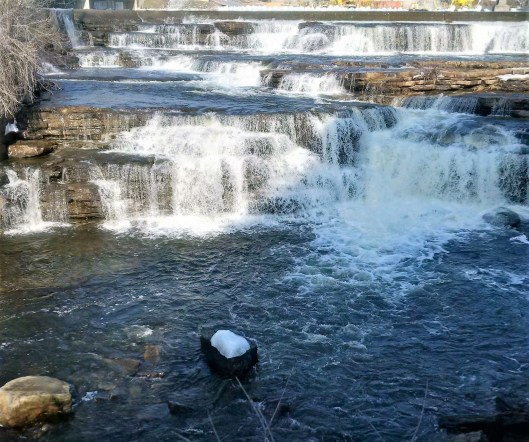
Waterfalls at Almonte, ON — photo by David Kitz
So what is the difference between praise and worship? Worship is a broad term that expresses itself in a variety of ways. The Encarta Dictionary defines worship as “the adoration, devotion, and respect given to a deity.”
We can show devotion, adoration and respect for God in wide range of ways. We can use our bodies to express worship by bowing, kneeling, falling prostrate, or lifting our hands and faces heavenward. We read that both David and Miriam danced before the LORD as an act of worship. See 2 Samuel 6:13-15 and Exodus 15:20-21.
Praise and thanksgiving are verbal forms of worship that reflect a heart of adoration. But why do the Psalms call on us to praise God so frequently? Is the LORD a grand, heavenly egomaniac who demands our worship to satisfy His desire for recognition and importance? Hardly.
Actually, just the opposite is true. God does not need our worship. We are the egomaniacs. Praise and worship counteracts the selfishness that is at the root of our sinful nature. We desperately need to get our eyes off ourselves and onto the One who is worthy of all praise. So here is a simple but powerful prescription from your heavenly Father: Praise the LORD.
Response: Father God, I worship you. Thank you for sending Jesus to be my Savior. Holy Spirit, infuse my praise and worship with joy. You are so very good—so very kind to me. Amen.
Your Turn: What forms or expressions of worship are most meaningful to you?
05 Sunday Mar 2017
Posted in Psalms, Sunday's Psalm
Tags
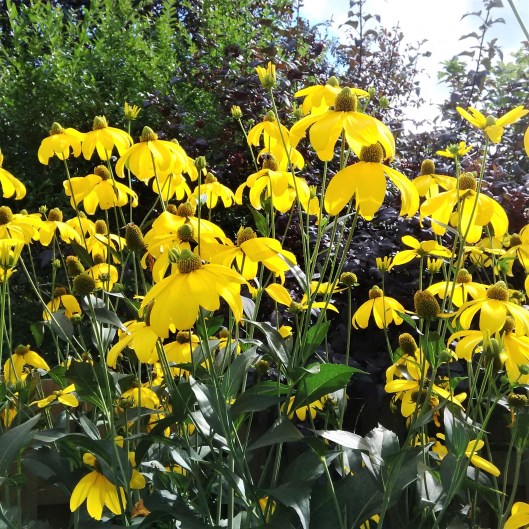
God’s goodness in nature — photo by David Kitz
04 Saturday Mar 2017
Posted in Psalms, Saturday's Psalm
Tags
city, city of God, fortress, God, Jerusalem, Mount Zion, Psalm 48, the LORD
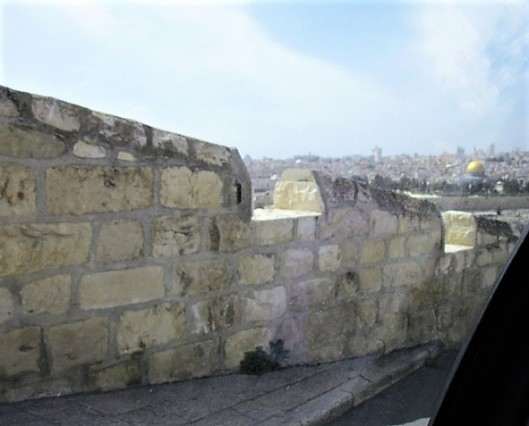
Via-Dolorosa in Jerusalem — photo courtesy of Lois Morrow
03 Friday Mar 2017
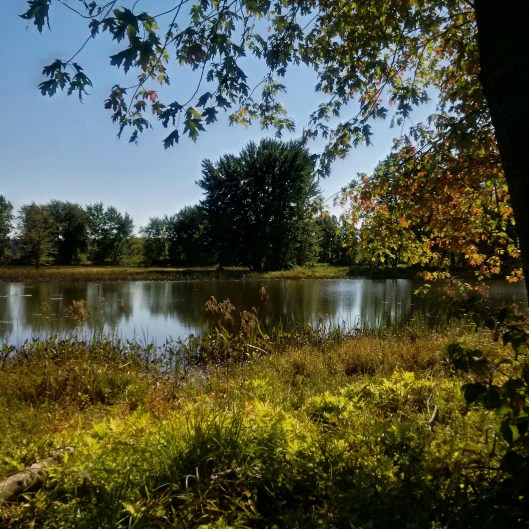
Petrie Island, glory — photo by David Kitz
02 Thursday Mar 2017
Posted in Psalms
There is great truth in this statement.

 I love the Psalms