• Home
  • About
  • DavidKitz.ca
  • Youtube Videos
  • Books by David
  • Books on Amazon.com

I love the Psalms

~ Connecting daily with God through the Psalms

I love the Psalms

Tag Archives: Bible

The God of the Broken

14 Sunday Dec 2025

Posted by davidkitz in The Elisha Code

≈ 3 Comments

Tags

AB Simpson, Aimee Semple McPherson, Andrew Murray, Bible, broken, brokenness, Christ, David, Jacob, Jesus, Prayer, the LORD

 And He said,
“Your name shall no longer be called Jacob, but Israel;
for you have struggled with God and with men,
and have prevailed.”
(Genesis 32:28, NKJV)

The people whom God uses to change the world have first been radically changed by the Spirit of God. Often, these world changers have experienced major setbacks. We might even say they have been broken by God, but they have come through those experiences transformed and empowered by the Spirit.

There is a pattern that emerges as we look back at the lives of the three revival leaders we have examined thus far. Each of them reached a breaking point.
A. B. Simpson was a successful minister, who through much hard work, built a large church but he experienced burnout and a physical breakdown. From this low point, God healed him and raised him up to bring healing and salvation to thousands.

Similarly, Aimee Semple McPherson experienced a complete physical breakdown that left her hospitalized and at the point of death. She had returned from the mission field as a widow and a broken woman. She transitioned to a new life but steadfastly resisted God’s call. But God broke her resistance, miraculously restored her health, and catapulted her into a healing ministry that changed the trajectory of the church in America and the world.

Andrew Murray had what many would consider a successful ministry. But he too reached a breaking point. He lost his voice for two years. From this low point, God healed, transformed, and restored Murray to a far more effective and far-reaching ministry.

The common thread running through these life stories is that all three leaders encountered a breaking point. God broke them. Why would God do such a thing? Do we need to be broken to become effective ministers of the gospel of Christ?

There are several stories in the Bible that illustrate this need for God to break us.

The life story of the patriarch Jacob serves as the primary example of God taking a man to a breaking point. Jacob was a grasper. He grabbed for power. This is graphically illustrated by the way he came into this world. He arrived grasping his twin brother’s heel.[i] From the moment of birth, we see Jacob attempting to supplant Esau, his older brother, through cunning and deception.

Jacob succeeds first by trading a pot of lentil stew for Esau’s birthright (Genesis 25:29-35), and later by conspiring with his mother to rob Esau of his father’s blessing (Genesis 27:1-41). When Esau threatens to kill him, Jacob flees to the distant home of his uncle Laban.

Repeatedly, Jacob bargains with God, and God answers his prayers. Perhaps this is the most remarkable feature of Jacob’s life story. The LORD sticks with this deceiver and blesses him despite his devious ways. His life is a portrait of God’s unmerited favor in the face of constant opposition.

Jacob met his cunning, devious double in the person of Uncle Laban. First, Laban deceived Jacob by swapping Leah for her sister Rachel on his wedding night. There is more than a little divine justice at play in Laban’s clever deception. Jacob who cheated his blind father is cheated blind in his own marriage bed. The irony in this outcome is striking. Jacob is required to work seven years for Leah and then seven more years for Rachel, his true love.[ii]

Then, over the years, Laban changed Jacob’s wages ten times. But despite Laban’s constant readjustments, Jacob’s flocks and herds grew and prospered. God’s blessing bestowed by Isaac remained on Jacob.[iii]

But eventually, God brought Jacob to a breaking point. It happened on Jacob’s return to his homeland.
Jacob gets word that his brother Esau is coming to meet him with 400 men. Why would Esau come with 400 men unless he intended to carry out the threat, he uttered twenty years earlier? Suddenly, Jacob’s life is on the line, and not only his life, but also the lives of his two wives and his twelve sons. His family and all the wealth he accumulated over years of hard labor is about to be wiped out. He finds himself in a truly desperate situation with no way out.

In exchange for his life, he offers to bargain away all his livestock, his wives, and his children. But will this desperate ploy satisfy the angry brother he has cheated? Jacob sends all he has ahead of him. To his servants he says:

“When my brother Esau meets you and asks, ‘Who do you belong to, and where are you going, and who owns all these animals in front of you?’ then you are to say, ‘They belong to your servant Jacob. They are a gift sent to my lord Esau, and he is coming behind us’” (Genesis 32:17-18, NIV).

But Jacob stays back on the opposite side of the Jabok River. There alone in the dark for the whole night, Jacob wrestled with a man. But in truth, he wrestled with God.
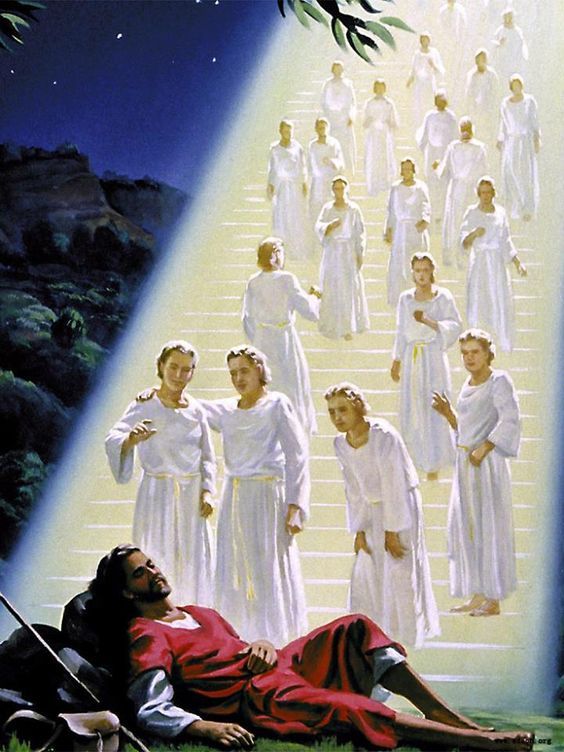
Jacob’s Ladder — Genesis 28:12

Many Bible scholars view this man as a Christophany—a preincarnate appearance of Christ. Christ came down from heaven to break this obstinate cheater—break him and change him into a vessel he could use for his glory and his eternal purpose.

When the man saw that he could not overpower him, he touched the socket of Jacob’s hip so that his hip was wrenched as he wrestled with the man. Then the man said, “Let me go, for it is daybreak.”

But Jacob replied, “I will not let you go unless you bless me.”

The man asked him, “What is your name?”

“Jacob,” he answered.

Then the man said, “Your name will no longer be Jacob, but Israel, because you have struggled with God and with humans and have overcome.”

Jacob said, “Please tell me your name.”

But he replied, “Why do you ask my name?” Then he blessed him there.

So Jacob called the place Peniel, saying, “It is because I saw God face to face, and yet my life was spared” (Genesis 32:25-30).

There can be no doubt who the stronger man was at Peniel. With a simple touch Jacob’s

hip was wrenched. With a simple touch Christ healed the sick, raised the crippled, and restored sight to the blind. But here with a simple touch, Christ wrenched Jacob’s hip and left him limping for the rest of his days.

Why this stark contrast? We can easily understand why Christ would heal a crippled beggar, but why would he break a man? Why break Jacob?

The simple answer is because Jacob needed to be broken. The wild horse serves no one. The wild stallion serves only himself. Only the broken horse is fit for the master’s service. All of Jacob’s service was self-serving, and that includes his service to Laban. From Peniel onward Jacob—broken Jacob—was serving the LORD.

Galloping Horses – Image courtesy of Tina Phillips at FreeDigitalPhotos.net

David, the man after God’s own heart, needed to be broken too. David was true to the LORD in the wilderness with jealous King Saul in hot pursuit, but after he assumed the throne of Israel his fleshly desires led him astray. After his sin with Bathsheba, God needed to break him. The events that followed this sordid affair brought the humility so essential to effective service to God. Psalm 51 reflects the heart cry of a broken man.

This need for the servant of God to be broken by God appears in the New Testament as well. Peter needed to be broken by Jesus. Peter was a natural leader—sure of himself in all situations—ready to step out of a boat and even walk on water. That takes more than a little courage. But that confident self-assurance needed to be broken, and Jesus knew how to do it.

It only took the third crowing of a rooster to break Peter and reduce him to a blubbering, sobbing mess. Jesus knows how to break the strongest men. But he also knows how to restore them.

Three times Jesus asked, “Simon son of John, do you love me?”[iv] Three times Peter affirmed his love for the Lord, and three times Jesus affirmed Peter’s calling:

Jesus said, “Feed my lambs” (John 21:15).
Jesus said, “Take care of my sheep” (John 21:16).
Jesus said, “Feed my sheep” (John 21:17).

Photo by kailash kumar on Pexels.com

The broken Peter was now ready for service. He would fulfill the prophetic words Jesus had spoken over him before his fall and now in his restoration.

“Simon, Simon, Satan has asked to sift all of you as wheat. But I have prayed for you, Simon, that your faith may not fail. And when you have turned back, strengthen your brothers” (Luke 22:31-32, NIV).

The broken Peter had been humbled. Now Jesus ruled Peter. Now the Master was truly the Master and Lord of all.

Have you been broken by Jesus? Most Christians are eager to serve the Lord, but only in an advisory capacity. Peter was quick to give Jesus advice on how he should avoid the cross. See Matthew 16:21-27.

The Lord is not looking for our advice. He is looking for our obedience.

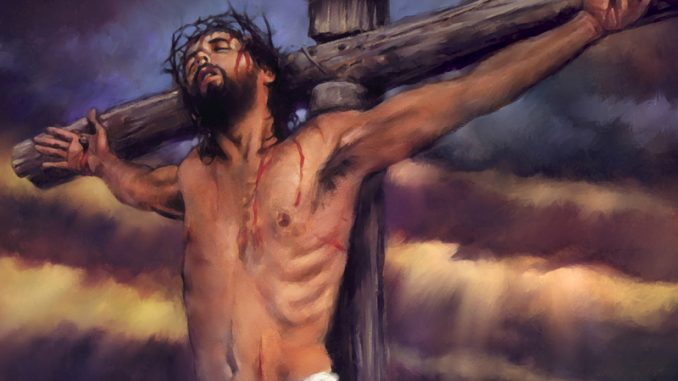
Jesus himself needed to be broken. His Heavenly Father broke him on the cross where he cried out, “Eli, Eli, lema sabachthani?” (Which means “My God, my God, why have you forsaken me?”) (Matthew 27:46, NIV).

When Jesus broke, he broke the stranglehold of sin over humanity. His breaking was essential for the salvation of our souls.

As disciples of our Lord Jesus, we can expect to be broken as well. We need to become like our Master in every way.

Saul of Tarsus was zealous to serve the God of his fathers, so zealous he persecuted the church. Jesus himself intervened in Saul’s life in order to break him. On the road to Damascus, Saul was confronted by Jesus—arrested by Jesus—blinded and broken by him.

Out of his brokenness Paul ministered the gospel to the Gentile world of his day. Through his writing he continues to speak to millions today.

Have we been confronted by Jesus? Has he opposed you at any point in your life? Have you been broken by him? In the power of our own flesh, we can do many good and noble things in the name of our Lord. Many fine churches have been built through clever marketing and ingenuity. Human effort and talent can carry us a long way.

In the eyes of many, A. B. Simpson had a successful ministry before Christ broke him. Andrew Murray was powerfully used by God before God broke him and set him aside for two years. But both these men came out of their time of brokenness refined and empowered by the Spirit of God. In their hearts there had been a regime change. The risen Christ was fully in charge now and the Spirit of God was directing them forward.

Are you and I ready to be broken and poured out at the feet of Jesus?

Then Mary took a pound of very costly oil of spikenard, anointed the feet of Jesus, and wiped His feet with her hair. And the house was filled with the fragrance of the oil (John 12:3, NIV).

[i] Genesis 25:21-26

[ii] Genesis 29:14-30

[iii] Genesis 31:38-42

[iv] John 21:15-19

This is the fourteenth weekly excerpt from the award-winning book 
The Elisha Code & the Coming Revival 

A soul-gripping read.
Is a return-to-Jesus revival possible in our time?
This book points the way forward.
For details click here.

The Power of the Word Revives the Soul

03 Wednesday Dec 2025

Posted by Tim K in Psalm 19, Psalms

≈ 1 Comment

Tags

Bible, inerrant, law of the LORD, Scripture, the LORD, word of God

Today’s Devotion from Psalms 365 by David Kitz

Reading: Psalm 19:7-11

Listen to today’s reading by Jonathan Dent:

https://davidkitz.blog/wp-content/uploads/2025/12/psalm-197-11-mix6-final.mp3


The law of the LORD is perfect,
reviving the soul.
The statutes of the L
ORD are trustworthy,
making wise the simple.
The precepts of the L
ORD are right,
giving joy to the heart.
The commands of the L
ORD are radiant,
giving light to the eyes.
The fear of the L
ORD is pure,
enduring forever.
The decrees of the L
ORD are firm,
and all of them are righteous.
They are more precious than gold,
than much pure gold;
they are sweeter than honey,
than honey from the honeycomb.
By them your servant is warned;
in keeping them there is great reward
(NIV).*

The Word of God — photo by David Kitz

Reflection
The voice of the speaking stars (see yesterday’s reading) is now joined by the voice of the written Holy Word. If nature, specifically the sky, is the first witness to testify to the glory of God, then the Scriptures—the written Word of God—constitute the second great witness to speak of God’s existence. Both these great witnesses have gathered here to testify within the context of Psalm 19.

While nature speaks to us of the existence of God the creator, it is largely silent regarding the nature or character of this all-powerful supernatural being. Is He good? Is He evil? Is He indifferent to us? Is He angry with us? What is this great, overarching, omnipresent God really like? May we approach Him?

God’s word shows us the way. Here David tells us, “The law of the LORD is perfect, reviving the soul” (v. 7).

The law is perfect, flawless, inerrant, and infallible. Only a perfect, flawless, inerrant, and infallible God can be the source of such a document. The law of the LORD referred to here is in fact the Bible, the Word of God. Jack Hayford in his commentary on this verse from the Psalms states, “That the ‘law of the LORD is perfect,’ is direct reference to the absolute, complete, and entire trustworthiness of the Holy Scriptures, which constitute the Bible.”

And this perfect, true, and infallible law, or Word of God, has an effect. The Word of God is active. It revives the soul. God’s word literally brings souls back to spiritual life. There is great power in the written word. The Word of God is redemptive, personal, and transformational.

Response: LORD God, help me draw life, wisdom, and joy from your word every day. Help me see your Word lighting my way. Amen.

Your Turn: Do you read God’s word daily? How has it helped you grow in faith?


Para la publicación de Salmos 365 de hoy en español haga clic aquí.

bgbg_v4.3_1501818
* NEW INTERNATIONAL VERSION, COPYRIGHT ©1973, 1978, 1984, 2011 BY BIBLICA

Please pray for peace to return to Israel, Gaza, Russia and Ukraine!

Volume I of Psalms 365: Develop a Life of Worship and Prayer won the Best Book of the Year Award from The Word Guild and Volume II has won the Best Devotional of the Year Award. For those who love God’s word, this three-book series is an ideal way to daily meet with the Lord. To purchase or for a closer look click here.

Volume I of Psalms 365: Develop a Life of Worship and Prayer won the Best Book of the Year Award from The Word Guild and Volume II has won the Best Devotional of the Year Award. For those who love God’s word, this three-book series is an ideal way to daily meet with the Lord. To purchase or for a closer look click here.


New from David Kitz

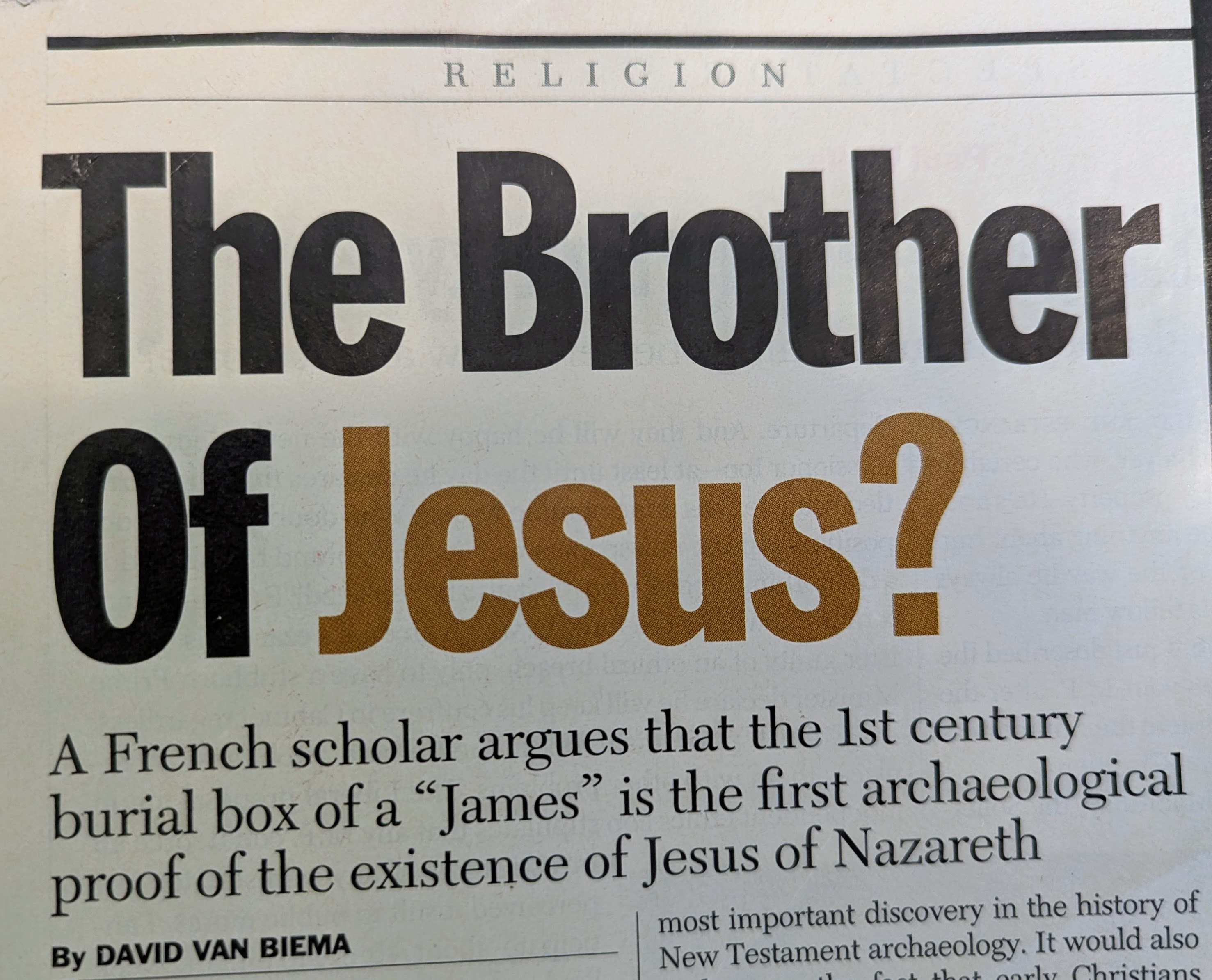
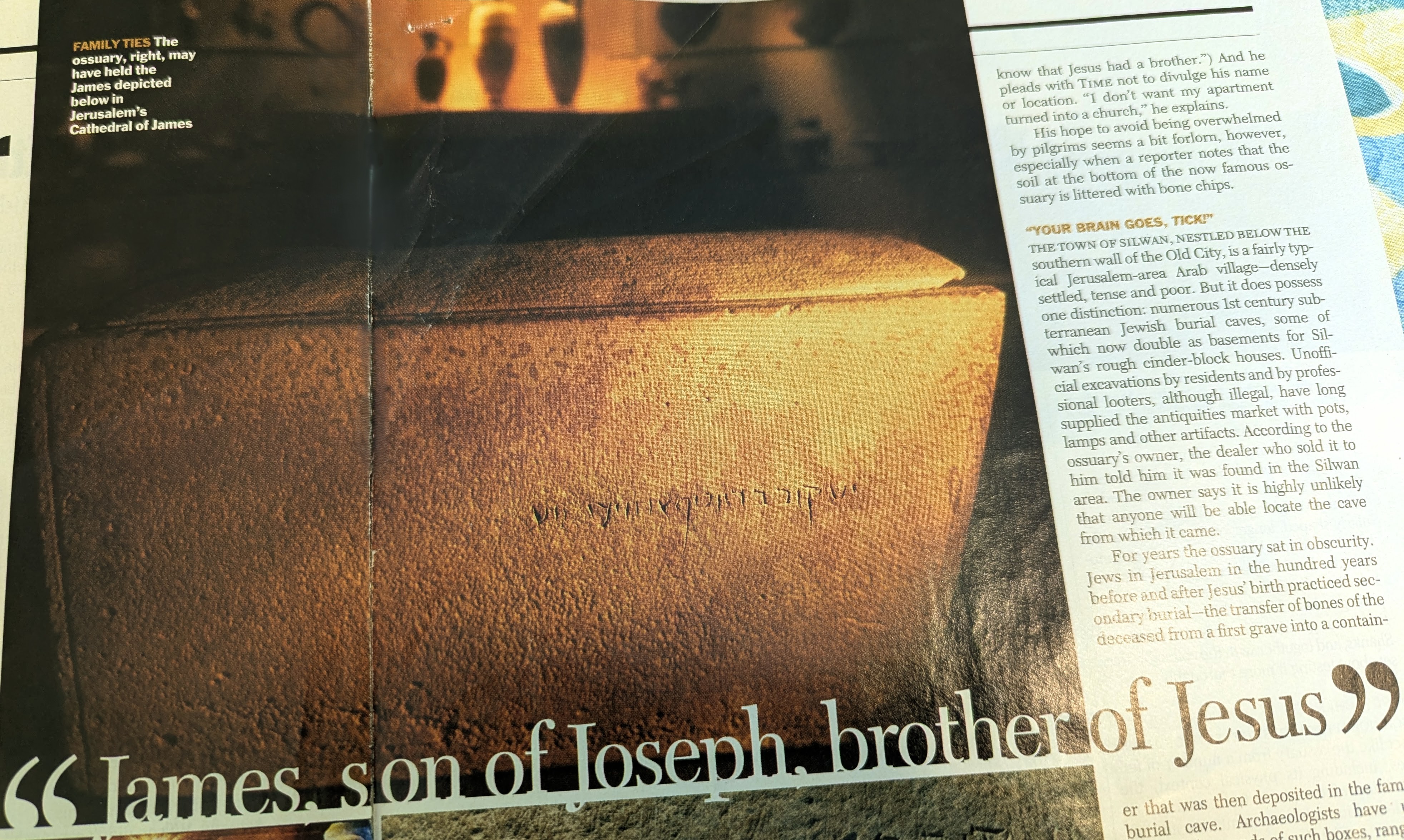
James—the brother of Jesus—who was this man? What evidence do we have that this “brother of our Lord” even existed?

David Kitz digs deep into archeology, family dynamics, church history, and the biblical texts. What emerges from his research is a portrait of a decisive, pivotal leader who embodied the will and character of Jesus Christ.

But how did James—James the unbeliever—transform to become a leader who changed the course of world history? In these pages you will uncover the answer and rediscover for yourself the life-changing power of the gospel.

To view further details or purchase directly from the author click here.

Elijah’s Flight from Woman

30 Sunday Nov 2025

Posted by davidkitz in Psalms, The Elisha Code

≈ Leave a comment

Tags

Bible, boys, E. Stanley Jones, Elijah, Elisha, gospel, healthy men, Heavenly Father, hiding from God, Jesus, Jezebel, prophets, sacrifice

Then the man and his wife heard the sound of the LORD God
as he was walking in the garden in the cool of the day,
and they hid from the LORD God among the trees of the garden.
 But the LORD God called to the man,
“Where are you?”
(Genesis 3:8-9, NIV)

Before continuing to examine the typological link between Elisha and Jesus, a closer look at the low point in Elijah’s ministry is warranted. We are all prone to temptation and often we are blind to our own weaknesses. Thousands of reputable ministries have been tarnished or ruined after notable accomplishments.

It is remarkable how Elijah had great success in challenging the 450 prophets of Baal, calling down fire from heaven, and then having these false prophets put to death (1 Kings 18:20-40). Finally, through prayer, he broke the three-year drought that had ravaged the land (Kings 18:41-46).

But after being cursed by Queen Jezebel, he runs away, becoming depressed and suicidal. How could just one woman have such a devastating impact on this hero of Israel? To what degree was she involved in the occult, and the manipulation of others through secret word curses?

Now Ahab told Jezebel everything Elijah had done and how he had killed all the prophets with the sword. So Jezebel sent a messenger to Elijah to say, “May the gods deal with me, be it ever so severely, if by this time tomorrow I do not make your life like that of one of them.” (1 Kings 19:1-2, NIV)

Jezebel believed she could destroy Elijah just like she destroyed many other men before him. But ultimately, she did not finish well.[i]

In the Alcoholics Anonymous twelve-step program, the acronym HALT is used to identify occasions when we are most vulnerable to temptation and even despair. Elijah suffered from all four temptations after his exhausting victory on Mount Carmel. His stunning success left him 1) Hungry 2) Angry 3) Lonely and 4) Tired.

What began as a flight from the woman, Jezebel, became a flight from God.

But God, in his compassion, ministered to Elijah’s four needs, giving him food and drink, counsel, companionship, and sleep (1 Kings 19:3-9). When Elijah said, “take my life”, it is reminiscent of Jonah after his success in Nineveh, where he too did not want to live. In that loss of hope, God spoke to Elijah not in the thunderstorm, earthquake, and pyrotechnics, but in that still small voice—the whisper of the Spirit (1 Kings 19:11-13).

The flight from woman and the LORD ended when Elijah started listening and instead of just ranting at God.

He replied, “I have been very zealous for the LORD God Almighty. The Israelites have rejected your covenant, torn down your altars, and put your prophets to death with the sword. I am the only one left, and now they are trying to kill me too”
(1 Kings 19:14, NIV).

Elijah had to give up the lie that he was the only one left. And furthermore, in listening to God, Elijah had to admit that he was not ultimately in control.

E. Stanley Jones

One of Ed’s heroes, E. Stanley Jones, listened to that still, small voice every day for one hour in the morning and one hour at night. He called it his listening post. Facing total burnout, Jones told God that he was done. God offered to take over if he would let go and let God order his life. He experienced Jesus’ healing when he came to a deep self-surrender. Elijah on Mount Horeb similarly had to come to a self-surrender. Surrender is like death for spiritual superheroes like Elijah. It is the breaking point that is often needed so we can be fully yielded to God’s will.

This flight from woman can be seen as representing a crisis in masculinity. CS Lewis scholar Leanne Payne wrote a remarkable book Crisis in Masculinity which she dedicated to Dr Karl Stern.  He was a Montreal Jewish psychiatrist (and believer in Jesus) who wrote the 1965 book Flight from Woman.[ii]

Leanne Payne, mentored by the healing pioneer Agnes Sanford, had a remarkable ministry of bringing wholeness to broken people, particularly those struggling with identity issues. She saw that many men were running from the feminine, because they were in crisis with their own masculine identity. The image of Narcissus to Leanne represented how many men curve in on themselves in self-worship.

Leanne was powerfully used in helping many men become whole through embracing their true identity as sons of the heavenly Father. Through healing prayer, Leanne helped many recover the divine imagination and creativity that had been lost in their self-absorption. All of us need healing in areas where the image of God has been broken inside us. Such powerful encounters with the Holy Spirit enable us to become more fully human. Such healing gives men the courage to responsibly embrace the unique challenges of marriage and family.

This crisis in masculinity has only deepened since the days of Payne and Stern. The identity confusion for young men is often paralyzing. The well-known Canadian psychologist Dr. Jordan Peterson often talks about how men are now the minority in university, and how many of them are struggling to find direction and academic accomplishment. These difficulties often begin in the elementary grades, where all too often there are no male teachers, few positive male role models, and academic performance among boys has seen an alarming decline.

We are witnessing a well-documented male aversion to leadership. Both boys and men are refusing to assume the mantel of leadership.

In post-modernism, men are often defined as the problem. Our culture deconstructs people through guilt and shame, and then often leaves them in nihilistic despair. In contrast, the gospel gives hope to people.

While Jordan Peterson is not yet a Christ follower, he has discovered how the Bible can help men be more authentic in living out their life’s calling as responsible contributors. Healthy men fight for their families and marriages. They do not run from them. Healthy men sacrifice for their families. They don’t sacrifice their wives and children on the altar of personal fulfillment and business success.

Elijah has much to teach men in our 21st century context. Even after he ran from woman, he ultimately was found by God, and returned to face the challenges that God had set before him.

Hiding never works. It did not work for Adam and Eve, and it did not work for Elijah. Everyone loses when men hide from the responsibilities of life.

This is the twelfth weekly excerpt from the award-winning book 
The Elisha Code & the Coming Revival 

A soul-gripping read.
Is a return-to-Jesus revival possible in our time?
This book points the way forward.
For details click here.
[i] 2 Kings 9:30-37

[ii] “Karl Stern: Freudian to Catholic”, “The Flight From Woman (1965), a philosophical treatise on modern society’s polarization of the sexes and its de-feminization, would make him a common name in women’s magazines”. https://www.tabletmag.com/sections/arts-letters/articles/karl-stern-freudian-catholic

Planted by Streams of Water

16 Sunday Nov 2025

Posted by davidkitz in Psalm 1, Psalms

≈ Leave a comment

Tags

Bible, Christianity, faith, God, Jesus, judgment, praise the LORD, prosper, Psalms, the law of the LORD, the LORD, the righteous, tree

I will praise the LORD!

Photo by Pixabay on Pexels.com

Psalm 1

Listen to today’s reading by Jonathan Dent:


https://davidkitz.blog/wp-content/uploads/2025/10/psalm-1-final-mix-3-2.mp3

Blessed is the one
    who does not walk in step with the wicked
or stand in the way that sinners take
    or sit in the company of mockers,
but whose delight is in the law of the LORD,
    and who meditates on his law day and night.
That person is like a tree planted by streams of water,
    which yields its fruit in season
and whose leaf does not wither—
    whatever they do prospers.
Not so the wicked!
    They are like chaff
    that the wind blows away.
Therefore the wicked will not stand in the judgment,
    nor sinners in the assembly of the righteous.
For the LORD watches over the way of the righteous,
    but the way of the wicked leads to destruction. *


Para la publicación de 
Salmos 365 de hoy en español haga clic aquí.

bgbg_v4.3_1501818
* NEW INTERNATIONAL VERSION, COPYRIGHT ©1973, 1978, 1984, 2011 BY BIBLICA

Please pray for peace to return to Israel, Gaza, and Ukraine!

Volume I of Psalms 365: Develop a Life of Worship and Prayer won the Best Book of the Year Award from The Word Guild and Volume II has won the Best Devotional of the Year Award. For those who love God’s word, this three-book series is an ideal way to daily meet with the Lord. To purchase or for a closer look click here.

Available now…

James—the brother of Jesus—who was this man? What evidence do we have that this “brother of our Lord” even existed?

David Kitz digs deep into archeology, family dynamics, church history, and the biblical texts. What emerges from his research is a portrait of a decisive, pivotal leader who embodied the will and character of Jesus Christ.

But how did James—James the unbeliever—transform to become a leader who changed the course of world history? In these pages you will uncover the answer and rediscover for yourself the life-changing power of the gospel.

To view further details or purchase directly from the author click here.

Your Father Knows What You Need

10 Monday Nov 2025

Posted by davidkitz in Psalms

≈ 2 Comments

Tags

Bible, children, Father's care, Heavenly Father, Jesus, peace, pray, Prayer, Psalms

Today’s quote and prayer from
“Psalms 365: Develop a Life of Worship and Prayer


Today’s Reading: Psalm 10:12-18

Listen to today’s reading by Jonathan Dent:

https://davidkitz.blog/wp-content/uploads/2025/11/psalm-1012-18-final-1-mix.mp3


LORD God,
father me.
Thank you for caring for me
from the moment I was conceived.
Help me become the father (or mother)
that I need to be
for my children.
Amen.

— — — —

Photo by Andreas Wohlfahrt on Pexels.com

But when you pray,
go into your room,
close the door and pray to your Father,
who is unseen.
Then your Father,
who sees what is done in secret,
will reward you.

And when you pray,
do not keep on babbling like pagans,
for they think they will be heard
because of their many words.

Do not be like them,
for your Father knows what you need
before you ask him.

(Matthew 6:6-8 NIV)*

Para la publicación de Salmos 365 de hoy en español haga clic aquí.

bgbg_v4.3_1501818
* NEW INTERNATIONAL VERSION, COPYRIGHT ©1973, 1978, 1984, 2011 BY BIBLICA

Thank God for peace in Israel and Gaza,
and continue to pray for peace to return to Ukraine and Russia!

Volume I of Psalms 365: Develop a Life of Worship and Prayer won the Best Book of the Year Award from The Word Guild and Volume II has won the Best Devotional of the Year Award. For those who love God’s word, this three-book series is an ideal way to daily meet with the Lord. To purchase or for a closer look click here.

New from David Kitz

James—the brother of Jesus—who was this man? What evidence do we have that this “brother of our Lord” even existed?

David Kitz digs deep into archeology, family dynamics, church history, and the biblical texts. What emerges from his research is a portrait of a decisive, pivotal leader who embodied the will and character of Jesus Christ.

But how did James—James the unbeliever—transform to become a leader who changed the course of world history? In these pages you will uncover the answer and rediscover for yourself the life-changing power of the gospel.

To view further details or purchase this or other books directly from the author click here.

He Who Is Least

09 Sunday Nov 2025

Posted by davidkitz in The Elisha Code

≈ Leave a comment

Tags

Banting, Bible, born again, Christianity, diabetes, evangelical, faith, God, gospel, humble, humility, insulin, Jesus, John the Baptist, Kingdom of God, Matthew, Old Testament, paradox, rebirth, servant, serve

On that day you, Jerusalem, will not be put to shame
for all the wrongs you have done to me,
because I will remove from you your arrogant boasters.
Never again will you be haughty on my holy hill.
But I will leave within you the meek and humble.
The remnant of Israel will trust in the name of the L
ORD
.
(Zephaniah 3:11-12, NIV)

The previous chapter concluded with Paul declaring he came to the Corinthians “in weakness with great fear and trembling” (1 Corinthians 2:3), but despite his weakness, God mightily used him to demonstrate the Spirit’s power.
There is something quite contradictory or paradoxical about Paul’s statement in 1 Corinthians 2:3-5, but this paradox of strength in weakness follows a consistent pattern in Paul’s epistles. He begins his first letter to the Corinthians by highlighting one of these apparent contradictions.

Brothers and sisters, think of what you were when you were called. Not many of you were wise by human standards; not many were influential; not many were of noble birth. But God chose the foolish things of the world to shame the wise; God chose the weak things of the world to shame the strong. God chose the lowly things of this world and the despised things—and the things that are not—to nullify the things that are, so that no one may boast before him (1 Corinthians 1:26-29, NIV).

Paul is telling us that God and his Kingdom operate on entirely different principles than the values and philosophies of this world. God uses and shows favor to those who are weak, foolish, and of low status in the eyes of the world. God’s Kingdom is a totally upside-down Kingdom according to the world’s perspective.

Paul elaborates further on the contradictory, paradoxical nature of God’s Kingdom in his second letter to the Corinthians when he states, “That is why, for Christ’s sake, I delight in weaknesses, in insults, in hardships, in persecutions, in difficulties. For when I am weak, then I am strong” (2 Corinthians 12:10).
This call for humility and submission is not confined to Paul’s letters. Peter explicitly calls for the same.

All of you, clothe yourselves with humility toward one another, because,

“God opposes the proud
but shows favor to the humble.”

Humble yourselves, therefore, under God’s mighty hand, that he may lift you up in due time. (1 Peter 5:5b-6).

James repeats this call for humility in his epistle. In fact, in their appeal James and Peter quote the same verse, Proverbs 3:34. (See James 4:6-7.)

The apostles’ teaching and lived experience simply reflected the teaching of their Lord and master Jesus Christ. Jesus’ life was a continual paradox. He was born in a stable, yet his birth was heralded by angels, the appearance of a star, and the arrival of magi from foreign lands. Then, he began his ministry with a manifesto that sets the operating principles of our world on its head.

“Blessed are the poor in spirit for theirs is the kingdom of heaven.
Blessed are those who mourn, for they will be comforted.
                                        
Blessed are the meek, for they will inherit the earth.
                                         
Blessed are those who hunger and thirst for righteousness, for they will be filled.
                                       
Blessed are the merciful, for they will be shown mercy.
                                                
Blessed are the pure in heart, for they will see God.
                                             
Blessed are the peacemakers, for they will be called children of God.
                                                

Blessed are those who are persecuted because of righteousness, for theirs is the kingdom of heaven” (Matthew 5:3-10)

Jesus’ ministry centered on the poor, the sick, the oppressed and afflicted. Peter described Jesus’ life work with these words, “God anointed Jesus of Nazareth with the Holy Spirit and power, and how he went around doing good and healing all who were under the power of the devil, because God was with him” (Acts 10:38).

Jesus was the eternal Creator of all things, yet through the miracle of incarnation he willingly subjected himself to the frailties and limitations of humanity. That included the humiliation of suffering the death of a criminal on a cruel Roman cross.

This upside-down perspective is at the heart of the Elisha code as revealed in the eleventh chapter of Matthew. In the previous chapters of this book, we recounted how the miracles of Jesus run parallel to the miracles of the prophet Elisha. In fact, there is a striking similarity in the content, style, and tenor of the ministries of Jesus and Elisha.
Furthermore, in Matthew eleven, Jesus definitively states that John the Baptist “is the Elijah who is to come” (Matthew 11:14). Again, there is a remarkable similarity in the intent, tone, and scope of the ministries of John and Elijah. So then, chapter eleven of Matthew establishes the link between the Old Testament prophetic duo of Elijah and Elisha and the New Testament duo of John the Baptist and Jesus Christ.

But in his description of John, Jesus goes on to make a statement that is rather puzzling and frequently misunderstood or misinterpreted.

Truly I tell you, among those born of women there has not risen anyone greater than John the Baptist; yet whoever is least in the kingdom of heaven is greater than he (Matthew 11:11, NIV).

The first part of this statement is very straight forward though quite startling. Clearly, Jesus held John in the highest regard—higher than any human past or present. Higher than Abraham. Higher than Moses. Higher than David. Higher than any of the Old Testament prophets. Jesus places John the Baptist at the head of the list, above all who ever lived. That is quite the honor!

But then Jesus goes on to say, “yet whoever is least in the kingdom of heaven is greater than he.”
So, who then is greater than John?

Evangelicals have puzzled over the meaning of this statement. Some have come up with a rather elaborate interpretation that relies heavily on dispensational theology. They reason that John was not born again; therefore, he is not included in the kingdom of heaven. Hence, anyone who is born again under the New Testament dispensation is greater than John.

However, this dispensational interpretation runs into several obstacles when we compare it with the whole of Scripture.

First, let’s be unequivocally clear. Spiritual rebirth is essential to anyone’s entrance into the kingdom of God. Jesus said, “Most assuredly, I say to you, unless one is born again, he cannot see the kingdom of God” (John 3:3). We must come into relationship with God—be born into his kingdom to be citizens of the kingdom.

Monarch Butterfly — photo by David Kitz

Jesus’ statement in John 3:3 raises other questions concerning the believers of the Old Testament era. Will we see them in heaven? Are they citizens of the kingdom?

There is ample biblical evidence that John the Baptist and all the great saints of the Old Testament are citizens of the Kingdom. In fact, in Luke’s Gospel, Jesus said just that.

“There will be weeping and gnashing of teeth, when you see Abraham and Isaac and Jacob and all the prophets in the kingdom of God, and yourselves thrust out. They will come from the east and the west, from the north and the south, and sit down in the kingdom of God. And indeed there are last who will be first, and there are first who will be last” (Luke 13:28-30).

Moreover, in Matthew 11, Jesus identifies John as being greater than all the prophets.

Then what did you go out to see? A prophet? Yes, I tell you, and more than a prophet. This is the one about whom it is written: “‘I will send my messenger ahead of you, who will prepare your way before you’” (Matthew 11:9-10).

If the patriarchs and prophets of the old covenant are included in the kingdom of God, then surely John who Jesus identifies as being greater than them all is included as well.

Furthermore, Hebrews 11 makes it abundantly clear that great Old Testament heroes of the faith will be present with us in glory. In fact, they are part of a great cloud of witnesses cheering us on (Hebrews 12:1-3).

So from these scriptures it is clear that the Old Testament heroes of the faith are all citizens of the kingdom. But Jesus said they cannot be citizens of the kingdom unless they are born again (John 3:3). How can they be born again when that teaching had not been introduced yet? In John 3, Jesus provides the answer to that conundrum.

“The wind blows where it wishes, and you hear the sound of it, but cannot tell where it comes from and where it goes. So is everyone who is born of the Spirit” (John 3:8).

Rebirth happens by the Spirit, and it has been happening from the very beginning. The day may come when we will meet with Enoch, Moses, and David in the kingdom.

The wind of the Spirit was blowing in the hearts of John the Baptist and the Old Testament citizens of the spiritual kingdom, and they were born again by the Spirit. This must be so, or Jesus could not say what he said in Luke 13:28-30 where he identifies them as sitting down in the kingdom of God. (They could not be sitting down in the kingdom of God unless they were born again.)

Moreover, there are not two kingdoms of God, one for the Old Testament believers and one for the New Testament born-again believers. There is only one eternal, spiritual kingdom of God, and we will all sit together in it.

Jesus is after all the great unifier of Jews and Gentiles just as Paul states.

 In reading this, then, you will be able to understand my insight into the mystery of Christ, which was not made known to people in other generations as it has now been revealed by the Spirit to God’s holy apostles and prophets. This mystery is that through the gospel the Gentiles are heirs together with Israel, members together of one body, and sharers together in the promise in Christ Jesus. (Ephesians 3:4-6)

Jesus introduced us to the teaching and the understanding of being born again, but that does not mean spiritual rebirth was not happening before he introduced that teaching. Isaac Newton introduced us to the concept of gravity, but that does not mean the laws of gravity were not working until he introduced them.

Similarly, Dr. Frederick Banting and Dr. Charles Best discovered insulin in 1921, and in January 1922 they injected insulin into a dying fourteen-year-old, type one diabetic named Leonard Thompson. The transformation in Leonard’s body was nothing short of miraculous. Until that time a diagnosis of type one diabetes was viewed as a death sentence. Most patients died within weeks or months.

Where land ends, Bruce Peninsula National Park — photo by Karen Kitz

We too like Leonard Thompson are under a death sentence. We suffer from a deadly condition called a sinful nature. The cure for this condition is spiritual rebirth at the hands of the Great Physician, Jesus Christ.

Insulin was doing its life-sustaining work in human bodies long before Banting and Best discovered it. In the same way, the Spirit was at work drawing people like Moses and David into relationship with the heavenly Father long before Jesus had his conversation with Nicodemus in John 3. And Old Testament people like Deborah, Ruth, Esther, and Jeremiah responded in faith as the Spirit of God touched their lives. They too came into a life altering relationship with God—a relationship that we now call being born again.

Logic dictates that these Old Testament saints must have experienced rebirth, or they could not sit down in the kingdom of God as Jesus declares they will in Luke 13:28-30.

Consequently, Jesus’ statement in Matthew 11:11 about “he who is least in the kingdom of God” is not about setting up a distinction between those who are born again, and those who are not born again, or drawing a distinction between the Old Testament and New Testament dispensations. Rather, it’s a passage about humility, where Jesus takes on the identity of being the one who is least in the Kingdom of God.

Now let’s again look at Matthew 11:11 with fresh eyes.

Truly I tell you, among those born of women there has not risen anyone greater than John the Baptist; yet whoever is least in the kingdom of heaven is greater than he (Matthew 11:11, NIV).

After stating that John is the greatest man who ever lived, Jesus asserts that the one who is least in the kingdom is greater than John. So, who then is greater than John?

Surely, we can all agree that Jesus is greater than John. He is after all the king of the kingdom. But in true contradictory, paradoxical fashion Jesus casts himself as being least in the kingdom of God. Jesus takes on that identity because he came to serve, suffer, and die.

So then, Matthew 11:11 is a passage that portrays Jesus humbling himself and taking the lowest position though he is King of all. This is the ultimate paradox expressed in a brilliant turn of phrase—so brilliant its meaning has eluded more than a few theologians.

Paul beautifully describes Christ’s humiliation and subsequent exaltation with these familiar words:

Who, being in very nature God,
did not consider equality with God something to be used to his own advantage;
rather, he made himself nothing
by taking the very nature of a servant,
being made in human likeness.
And being found in appearance as a man,
he humbled himself by becoming obedient to death—
even death on a cross!

Therefore God exalted him to the highest place
and gave him the name that is above every name,
that at the name of Jesus every knee should bow,
in heaven and on earth and under the earth,
and every tongue acknowledge that Jesus Christ is Lord,
to the glory of God the Father
(Philippians 2:6-11, NIV).

With his statement in Matthew 11:11, Jesus is making himself nothing and taking on the very nature of a servant just as Paul describes.

Furthermore, this self-deprecation follows a pattern that we see repeated in Matthews Gospel. Jesus repeatedly tells reverse stories, paradoxical parables where the first will be last. See Matthew 18:1-5, Matthew 19:30, Matthew 20:16, Matthew 20:28. These passages assert that Jesus and his kingdom work on principles and values that are the opposite of those found in the world. The poor have true wealth. The weak are strong. The despised are honored. Matthew 11:11 fits into this pattern of reversal with Jesus taking the lowest or least position.

But why is this emphasis on humility significant? What is the application for us today? Humility is at the core of the Elisha Code. We too need to follow in the footsteps of Jesus. We too need to humble ourselves and serve as he did.

The world will not be won to Christ by millionaire evangelists and pastors crisscrossing the globe in their private jets and preaching a gospel of prosperity and self-fulfillment. The world will be won by the meek—those who know how to humble themselves and serve—serve at the cost of their lives as the first century apostles did. That is the Jesus way—the way of the cross.

This is the nineth weekly excerpt from the award-winning book 
The Elisha Code & the Coming Revival 

A soul-gripping read.
Is a return-to-Jesus revival possible in our time?
This book points the way forward.
For details click here.
Lift up the Cup of Salvation

08 Saturday Nov 2025

Posted by davidkitz in Psalm 116

≈ 2 Comments

Tags

Bible, Goodness of God, praise the LORD, Prayer, Psalms, salvation, the LORD, trust in God

I will praise the LORD!

Photo by Ylanite Koppens on Pexels.com


Psalm 116:10-14

I trusted in the LORD when I said,
    “I am greatly afflicted”;
in my alarm I said,
    “Everyone is a liar.”
What shall I return to the LORD
for all his goodness to me?
I will lift up the cup of salvation
and call on the name of the LORD.
I will fulfill my vows to the LORD
in the presence of all his people.
 *


Para la publicación de 
Salmos 365 de hoy en español haga clic aquí.

bgbg_v4.3_1501818
* NEW INTERNATIONAL VERSION, COPYRIGHT ©1973, 1978, 1984, 2011 BY BIBLICA

Please pray for peace to return to Israel, Gaza, and Ukraine!

Volume I of Psalms 365: Develop a Life of Worship and Prayer won the Best Book of the Year Award from The Word Guild and Volume II has won the Best Devotional of the Year Award. For those who love God’s word, this three-book series is an ideal way to daily meet with the Lord. To purchase or for a closer look click here.

Coming soon…

James—the brother of Jesus—who was this man? What evidence do we have that this “brother of our Lord” even existed?

David Kitz digs deep into archeology, family dynamics, church history, and the biblical texts. What emerges from his research is a portrait of a decisive, pivotal leader who embodied the will and character of Jesus Christ.

But how did James—James the unbeliever—transform to become a leader who changed the course of world history? In these pages you will uncover the answer and rediscover for yourself the life-changing power of the gospel.

Why Are You So Afraid?

07 Friday Nov 2025

Posted by davidkitz in Psalm 10, Psalms

≈ Leave a comment

Tags

Bible, disciples, faith, Holy Spirit, Jesus, Prayer, Psalms, stilling storms, storms of life, the LORD

Today’s quote and prayer from
“Psalms 365: Develop a Life of Worship and Prayer


Today’s Reading: Psalm 10:5-11

https://davidkitz.blog/wp-content/uploads/2025/11/psalm-105-11-final-mix.mp3


Lord Jesus,
you are the Lord and Master of the universe.
Even the wind and the waves obey you.
I want to obey you too.
Holy Spirit,
blow into my life
and fill me with your presence today.
Amen.

— — — —

Photo by Pixabay on Pexels.com

Leaving the crowd behind,
they took him along,
just as he was, in the boat.
There were also other boats with him.

A furious squall came up,
and the waves broke over the boat,
so that it was nearly swamped.

Jesus was in the stern,
sleeping on a cushion.
The disciples woke him and said to him,
“Teacher, don’t you care if we drown?”


He got up,
rebuked the wind and said to the waves,
“Quiet! Be still!”
Then the wind died down
and it was completely calm.

He said to his disciples,
“Why are you so afraid?
Do you still have no faith?”

They were terrified
and asked each other,
“Who is this?
Even the wind and the waves obey him!”

(Mark 4:36-41 NIV)*

Para la publicación de Salmos 365 de hoy en español haga clic aquí.

bgbg_v4.3_1501818
* NEW INTERNATIONAL VERSION, COPYRIGHT ©1973, 1978, 1984, 2011 BY BIBLICA

Thank God for peace in Israel and Gaza,
and continue to pray for peace to return to Ukraine and Russia!

Volume I of Psalms 365: Develop a Life of Worship and Prayer won the Best Book of the Year Award from The Word Guild and Volume II has won the Best Devotional of the Year Award. For those who love God’s word, this three-book series is an ideal way to daily meet with the Lord. To purchase or for a closer look click here.

New from David Kitz

James—the brother of Jesus—who was this man? What evidence do we have that this “brother of our Lord” even existed?

David Kitz digs deep into archeology, family dynamics, church history, and the biblical texts. What emerges from his research is a portrait of a decisive, pivotal leader who embodied the will and character of Jesus Christ.

But how did James—James the unbeliever—transform to become a leader who changed the course of world history? In these pages you will uncover the answer and rediscover for yourself the life-changing power of the gospel.

Make Room for Us

06 Thursday Nov 2025

Posted by davidkitz in Psalm 10, Psalms

≈ Leave a comment

Tags

Bible, encouragement, expectant faith, James, Jesus, Prayer, Psalms, room for God, seeking God

Today’s quote and prayer from
“Psalms 365: Develop a Life of Worship and Prayer


Today’s Reading: Psalm 10:1-4

https://davidkitz.blog/wp-content/uploads/2025/11/psalm-101-4-final-mix.mp3


Lord Jesus,
I seek after you.
Open my eyes to see you at work today.
You are not distant from me
in time or space.
Show up in my world today.
I wait expectantly for you.
Amen.

— — — —

[Paul writes]
Make room for us in your hearts.
We have wronged no one,
we have corrupted no one,
we have exploited no one.

I do not say this to condemn you;
I have said before
that you have such a place in our hearts
that we would live or die with you.

I have spoken to you with great frankness;
I take great pride in you.
I am greatly encouraged;
in all our troubles my joy knows no bounds.

(2 Corinthians 7:2-4 NIV)*

Para la publicación de Salmos 365 de hoy en español haga clic aquí.

bgbg_v4.3_1501818
* NEW INTERNATIONAL VERSION, COPYRIGHT ©1973, 1978, 1984, 2011 BY BIBLICA

Thank God for peace in Israel and Gaza,
and continue to pray for peace to return to Ukraine and Russia!

Volume I of Psalms 365: Develop a Life of Worship and Prayer won the Best Book of the Year Award from The Word Guild and Volume II has won the Best Devotional of the Year Award. For those who love God’s word, this three-book series is an ideal way to daily meet with the Lord. To purchase or for a closer look click here.

New from David Kitz

James—the brother of Jesus—who was this man? What evidence do we have that this “brother of our Lord” even existed?

David Kitz digs deep into archeology, family dynamics, church history, and the biblical texts. What emerges from his research is a portrait of a decisive, pivotal leader who embodied the will and character of Jesus Christ.

But how did James—James the unbeliever—transform to become a leader who changed the course of world history? In these pages you will uncover the answer and rediscover for yourself the life-changing power of the gospel.

Can Such Faith Save Them?

05 Wednesday Nov 2025

Posted by davidkitz in Psalms

≈ 4 Comments

Tags

Bible, good deeds, Heavenly Father, James, praise, Prayer, Psalms, salvation, the needy, trouble

Today’s quote and prayer from
“Psalms 365: Develop a Life of Worship and Prayer”


Today’s Reading: Psalm 9:11-20

Listen to today’s reading by Jonathan Dent:

https://davidkitz.blog/wp-content/uploads/2025/11/psalm-91-10-final-mix-3.mp3


Heavenly Father,
in times of trouble,
you are my help.
I lay my troubles
and my requests before you.
I wait expectantly for you.
I praise you for your goodness to me
even in difficult times.
Amen.

— — — —

What good is it,
my brothers and sisters,
if someone claims to have faith but has no deeds?
Can such faith save them?
Suppose a brother or a sister
is without clothes and daily food.

If one of you says to them,
“Go in peace; keep warm and well fed,”
but does nothing about their physical needs,
what good is it?

In the same way,
faith by itself,
if it is not accompanied by action,
is dead.

(James 2:14-17 NIV)*

Para la publicación de Salmos 365 de hoy en español haga clic aquí.

bgbg_v4.3_1501818
* NEW INTERNATIONAL VERSION, COPYRIGHT ©1973, 1978, 1984, 2011 BY BIBLICA

Thank God for peace in Israel and Gaza,
and continue to pray for peace to return to Ukraine and Russia!

Volume I of Psalms 365: Develop a Life of Worship and Prayer won the Best Book of the Year Award from The Word Guild and Volume II has won the Best Devotional of the Year Award. For those who love God’s word, this three-book series is an ideal way to daily meet with the Lord. To purchase or for a closer look click here.

New from David Kitz

James—the brother of Jesus—who was this man? What evidence do we have that this “brother of our Lord” even existed?

David Kitz digs deep into archeology, family dynamics, church history, and the biblical texts. What emerges from his research is a portrait of a decisive, pivotal leader who embodied the will and character of Jesus Christ.

But how did James—James the unbeliever—transform to become a leader who changed the course of world history? In these pages you will uncover the answer and rediscover for yourself the life-changing power of the gospel.

← Older posts

Psalms 365: Develop a Life of Worship and Prayer

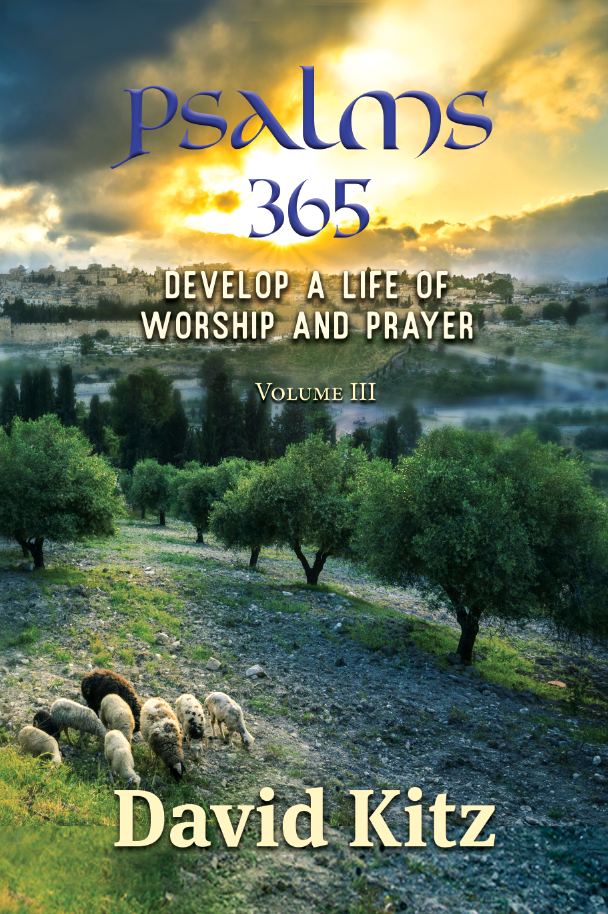
Psalms 365 Volume II

Psalms 365 vol 3
— Psalms 365 Volume III

Psalms

Recent posts

  • Ready for the King of Glory December 19, 2025
  • My Spirit Rejoices in God My Savior December 18, 2025
  • Joining the Generation That Seeks God December 18, 2025
  • Why Am I So Favored December 17, 2025
  • How Can You Find the Good Life? December 17, 2025
  • The Power of the Most High December 16, 2025
  •  The Earth Turns to the LORD December 16, 2025

Calendar

December 2025
M T W T F S S
1234567
891011121314
15161718192021
22232425262728
293031  
« Nov    

Blog Posts

Comments

  • davidkitz on Joining the Generation That Seeks God
  • cjsmissionaryminister on God Sent His Son
  • cjsmissionaryminister on The God of the Broken

Blog at WordPress.com.

Privacy & Cookies: This site uses cookies. By continuing to use this website, you agree to their use.
To find out more, including how to control cookies, see here: Cookie Policy
  • Subscribe Subscribed
    • I love the Psalms
    • Join 1,378 other subscribers
    • Already have a WordPress.com account? Log in now.
    • I love the Psalms
    • Subscribe Subscribed
    • Sign up
    • Log in
    • Report this content
    • View site in Reader
    • Manage subscriptions
    • Collapse this bar
 

Loading Comments...