• Home
  • About
  • DavidKitz.ca
  • Youtube Videos
  • Books by David
  • Books on Amazon.com

I love the Psalms

~ Connecting daily with God through the Psalms

I love the Psalms

Tag Archives: Christ

I Give You My Peace

06 Tuesday Jan 2026

Posted by davidkitz in Psalm 29, Psalms

≈ 1 Comment

Tags

Christ, Holy Spirit, Jesus, Prayer, Psalms, storms of life, worship

Today’s quote and prayer from
“Psalms 365: Develop a Life of Worship and Prayer

 Today’s Reading: Psalm 29

Listen to today’s reading by Jonathan Dent:

https://davidkitz.blog/wp-content/uploads/2026/01/psalm-29-mix2final.mp3


Heavenly Father,
you are the LORD of the storm
and the LORD of peace.
When storms arise in my life
help me to trust you completely.
Lord Jesus,
grant me peace
in the midst of the storm.
Amen.

     — — — —

Great peace have those who love your law — photo by David Kitz


The Peace of Christ

“All this I have spoken
while still with you.

But the Advocate,
the Holy Spirit,
whom the Father will send in my name,
will teach you all things
and will remind you of everything
I have said to you.

Peace I leave with you;
my peace I give you.
I do not give to you as the world gives.
Do not let your hearts be troubled
and do not be afraid.

(John 14:25-27 NIV)*

May God bless you in 2026!

Para la publicación de Salmos 365 de hoy en español haga clic aquí.

bgbg_v4.3_1501818
* NEW INTERNATIONAL VERSION, COPYRIGHT ©1973, 1978, 1984, 2011 BY BIBLICA

Pray for enduring peace in Israel and Gaza,
and continue to pray for peace to return to Ukraine and Russia!

Volume I of Psalms 365: Develop a Life of Worship and Prayer won the Best Book of the Year Award from The Word Guild and Volume II has won the Best Devotional of the Year Award. For those who love God’s word, this three-book series is an ideal way to daily meet with the Lord. To purchase or for a closer look click here.

Also available from David KitzIs a return-to-Jesus revival possible in our time?
This book points the way forward.
For details click here.

The Church and the Third Temptation of Christ

21 Sunday Dec 2025

Posted by davidkitz in Psalms, The Elisha Code

≈ 3 Comments

Tags

Caesar, Christ, church, false christs, false saviors, God and Caesar, Jesus, kingdom, political, politics, prophecy, prophet, Satan, Savior, scriptures, temptation, the cross

And He said to them,
“Render therefore to Caesar the things that are Caesar’s,
and to God the things that are God’s.”
 

(Matthew 22:21b, NKJV)

The church cannot move forward in the right direction unless there is a clear-eyed assessment of where we stand today.

Here then are a few questions to help us assess our current position:

  • Are local churches growing, thriving, and multiplying in your city/community?
  • Are individuals in your community repenting and coming to faith in Christ?
  • Is the message of the gospel transforming society, or is the world transforming the church?
  • Over the last twenty years, has the church become more politically engaged?

We have been keen observers of the church and the impact of the gospel on society for over fifty years. During that time there have been encouraging waves of numerical growth and spiritual renewal, but there have also been seasons of testing and decline. Broadly speaking, over the last decade, decline has been the dominant theme. Yes, there are exceptions to this downward trend, and they should be celebrated, but nevertheless, the trendline is not moving in our favor. Statistical surveys indicate a steady decline in church attendance and self-identification with the Christian faith.

Landestreu Church — photo by Donald Adam

Why is this so?

What has not declined is the church’s level of political engagement. While the embers of spiritual revival have been dying, the fires of political engagement have been burning red hot. And political leaders of all stripes have been eager to fan the flames. After all, they know where the votes lie and how to spark political passions.

The sharp divisions between the political left and right have been mirrored in the church. The theologically liberal have championed social justice issues, while theological conservatives have tried to hold the line against what they see as a creeping socialist sin agenda.

To a degree, these divisions in the church have been present for generations. But in recent years the divisions have grown sharper as political discourse has become more polarized. Throw in some misinformation, a few conspiracy theories, and we have a toxic brew that social media spreads worldwide.

Where is the good news of the gospel in all of this? All too often, it’s been abandoned or drowned out in both camps. A worshipper may attend a Sunday service at a left leaning church and hear a sermon on the merits of caring for the poor and marginalized, but the name of Jesus is never mentioned. Similarly, I have attended so called ‘prayer meetings’ of evangelical pastors where not a single word of prayer is uttered, but the entire conversation is centered on right wing political machinations and strategies.

Is the message of the gospel transforming our society and culture? No. The world is transforming the culture of the church. The glorious light of the gospel has been turned to darkness. Jesus’ call to take up our cross and follow him is being ignored—ignored in the house of God while we pursue purely political objectives.

Christ’s admonition rings true:

“Salt is good; but if the salt has lost its flavor, how shall it be seasoned? It is neither fit for the land nor for the dunghill, but men throw it out. He who has ears to hear, let him hear!” (Luke 14:34-35, NKJV)

The church has too often gone down a political rabbit hole thinking it can somehow save this generation by political means. No such salvation exists, nor has it ever existed, and those who promise it are false saviors. Furthermore, Jesus prophesied such false political saviors would arise.

Then if anyone says to you, ‘Look, here is the Christ!’ or ‘There!’ do not believe it. For false christs and false prophets will rise and show great signs and wonders to deceive, if possible, even the elect. See, I have told you beforehand (Matthew 24:24-25, NKJV).

Every generation has seen its share of false saviors, but after 2,000 years only one Savior remains standing. His name is Jesus. Let’s cling to him and the message of the cross.

Photo by Pixabay on Pexels.com

Often politicians use religion for personal gain—to curry favor and capture votes, therefore, leaders in the Christian community need to exercise caution. We believe Christ followers should vote and be politically engaged, but our first loyalty must be to Christ. A life of service in the political realm can be a noble vocation ordained by God.

What blueprint did Jesus follow as he began his earthly ministry and set the foundation for the church? Was he engaged in the politics of his time? His politics was not the politics of this world. It was the politics of humility, forgiveness, and self-sacrifice.

The blueprint our Lord followed can be found in his response to the three temptations of Christ as recorded in the gospels. The third temptation found in Matthew’s gospel specifically addresses the lure of political engagement.

Again, the devil took Him up on an exceedingly high mountain, and showed Him all the kingdoms of the world and their glory. And he said to Him, “All these things I will give You if You will fall down and worship me.”
Then Jesus said to him, “Away with you, Satan! For it is written, ‘You shall worship the Lord your God, and Him only you shall serve’”
(Matthew 4:8-10)

There is something quite striking, first about the devil’s offer, and then Jesus’ response. Satan offered the kingdoms of the world and their glory. Implied in this offer is the understanding that these kingdoms are currently his—under the devil’s control. Jesus does not refute this. The nations are, in fact, within the devil’s domain. This is in full agreement with Jesus’ teaching on this matter as he identified Satan as the prince of this world. See John 12:30-33.

Similarly, Paul asserts that before their conversion the Ephesians “walked according to the course of this world, according to the prince of the power of the air, the spirit who now works in the sons of disobedience” (Ephesians 2:2).

Jesus refused Satan’s offer of political power and reward if he would worship him. He refused to play on the devil’s turf. He turned down the offer of earthly, political kingdoms so he could establish an eternal, spiritual kingdom—the Kingdom of God.

Matthew ends his account of the three temptations of Christ with this statement: Then the devil left Him, and behold, angels came and ministered to Him (Matthew 4:11, NKJV).

But Luke’s account ends differently: When the devil had finished all this tempting, he left him until an opportune time (Luke 4:13, NIV).

Were there other occasions when Jesus was tempted to become politically engaged and establish an earthly kingdom? There may have been numerous occasions, but three are readily identifiable.

John identifies one such occasion immediately after the feeding of the five thousand.

Then those men, when they had seen the sign that Jesus did, said, “This is truly the Prophet who is to come into the world.”
Therefore when Jesus perceived that they were about to come and take Him by force to make Him king, He departed again to the mountain by Himself alone (John 6:14-15, NKJV).

What a grand opportunity this was! Jesus could become king. Furthermore, it would not appear to be something he sought. He could simply bow to the will of the people, and they would proclaim him king.

Can you hear the devil’s whisper, “Surely, this must be the will of God?”

But what did Jesus do? Did he accept the devil’s latest offer? No. He walked away. Instead of making a deal with the world and the devil, Jesus went to prayer in a lonely place where he met with his Father. He walked away from an earthly political kingdom and all its trappings. Wealth. Fame. Adoration.

Why walk away?

For a second time Jesus walked away from a temporal, material kingdom because he was establishing an eternal, spiritual Kingdom—a Kingdom that exists on a much higher plane than the kingdoms of this world.

And after a time of communion with his Father, what did Christ do?

He walked on water.

The juxtaposition of these events was not due to random chance. Jesus walked out on the Sea of Galilee to visibly demonstrate the spiritual nature of his eternal Kingdom. The disciple’s initial reaction illustrates this perfectly.

Shortly before dawn Jesus went out to them, walking on the lake. When the disciples saw him walking on the lake, they were terrified. “It’s a ghost,” they said, and cried out in fear (Matthew 14:25-26, NIV).

Jesus was entirely at home in the spirit world, but we are not. The disciples reacted just as we would. The truth we must lay hold of is the spiritual nature of Christ and his Kingdom. By faith Peter briefly grasped that truth as he stepped out of the boat, and he too walked on water.

Photo by Pixabay on Pexels.com

Oh, for the faith to do likewise in this day and hour! Are we ready to do as Peter did, step into the supernatural and walk in the Spirit?

The second occasion when Jesus was tempted to take a political position is well known. It occurred within the temple courts during the last week of his earthly ministry.

Then the Pharisees went and plotted how they might entangle Him in His talk. And they sent to Him their disciples with the Herodians, saying, “Teacher, we know that You are true, and teach the way of God in truth; nor do You care about anyone, for You do not regard the person of men. Tell us, therefore, what do You think? Is it lawful to pay taxes to Caesar, or not?”
But Jesus
 perceived their wickedness, and said, “Why do you test Me, you hypocrites? Show Me the tax money.”
So they brought Him a denarius.
And He said to them, “Whose image and inscription is this?”
They said to Him, “Caesar’s.”
And He said to them, “Render therefore to Caesar the things that are Caesar’s, and to God the things that are God’s.” When they had heard these words, they marveled, and left Him and went their way (Matthew 22:15-22, NKJV).

The Pharisees were certain they could trap Jesus on the horns of this dilemma. Note that to execute their devious scheme, the Pharisees teamed with a political party, the Herodians. In this situation, politics and religion conspire together, and undoubtedly Satan is the one who chaired this meeting.

The exact wording of this question is significant. The question could have been, “Is it lawful to pay taxes to Rome, or not?” Or perhaps, “Is it lawful to pay taxes to the Empire, or not?” Why this direct reference to Caesar?

The question as asked goes to the very heart of the Jewish faith, and the Christian faith as well. Caesar was a deity in the Roman pantheon of gods. By paying taxes to Caesar were Jewish believers violating the first commandment of the law of Moses? Were they participating in the worship of a foreign god? To the devout Jew, the image of Caesar on a Roman coin was a graven image signifying idolatry. For this reason, Roman coinage, the denarius, was not accepted in the temple treasury. It must be converted to Tyrian shekels, hence the need for moneychangers in or near the temple courts.

If Jesus said it was wrong to pay taxes to Caesar, he could be accused of supporting the zealots who advocated rebellion against Rome. If he approved of tax payment, he left himself vulnerable to the charge of violating the first commandment and the worship of a foreign god.

How does Jesus solve the dilemma? His answer can be described as a brilliant sidestep. It allows for tax payment and allegiance to both God and Caesar. But…

But we need to qualify this statement. Supremacy and first allegiance belong to the Lord. To put our allegiance to the nation state on an equal footing with our allegiance to God runs contrary to the counsel of Christ and the Scriptures. Note well our Savior’s words:

“No one can serve two masters; for either he will hate the one and love the other, or else he will be loyal to the one and despise the other. You cannot serve God and mammon (Matthew 6:24, NKJV).

Though the reference above contrasts service to God and service to mammon (money/material possessions), the implications of having two masters are clear. One master must take precedence. Is it God or money? Is it God or the state? Is it God or the political leader or party?

Far too many believers have divided loyalties when Christ demands our all. A weak-kneed gospel requires little from us, but in truth, Jesus demands our all.

Now great multitudes went with Him. And He turned and said to them, “If anyone comes to Me and does not hate his father and mother, wife and children, brothers and sisters, yes, and his own life also, he cannot be My disciple. And whoever does not bear his cross and come after Me cannot be My disciple (Matthew 14:25-27, NKJV).

God and Caesar are not on an equal footing. And dual loyalty on an equal basis is not what Christ is advocating for in his discussion with the Pharisees and the Herodians. He is conceding that submission to civil authorities is required.

Photo by Todd Trapani on Pexels.com

In his teaching on the command to honor father and mother, Martin Luther expands the scope of those to whom honor, and obedience are due. He includes masters and goes on to define them as follows: “Masters are all those who by God’s ordinance are placed over us in the home, in the state, at the school and at the place where we work.”[i]

Luther saw in the Ten Commandments a hierarchy of submission and obedience that began with God and extended through the family, the state and the workplace.

Jesus’ answer makes it clear that he is not leading a political rebellion—a rebellion against Rome. He is not taking the devil’s bait or participating in the devil’s rebellion. Since the foundation of the world, the devil has been the author and master of rebellion. For this reason, Christians must exercise due diligence and hear from God before throwing in their lot with those who advocate the overthrow of established authorities. If those authorities are established by God, we may find ourselves working against the God we serve.

There are multiple examples in the Scriptures where God called for submission to authority, even heathen authority, rather than rebellion. The classic example is the Jewish people’s submission to foreign rule during their seventy years of captivity in Babylon. After urging the captives to build homes and raise families, the prophet Jeremiah gave the exiles these instructions:

Also, seek the peace and prosperity of the city to which I have carried you into exile. Pray to the Lord for it, because if it prospers, you too will prosper” (Jeremiah 29:7, NIV).

While serving in a position of submission to ungodly autocrats, leaders such as Daniel and Nehemiah laid the groundwork for the return to the holy land, and the restoration of the Jewish state, and temple worship. This is not the outcome one would expect from yielding to the authority of a pagan government. However, we need to recognize there is a much higher authority who oversees the affairs of all humanity. Surely, this proverb holds true: In the Lord’s hand the king’s heart is a stream of water that he channels toward all who please him (Proverbs 21:1, NIV).

Jesus displayed impeccable wisdom in his response to the politically charged question of taxation. But his wise response did not prevent his arrest, trial, and crucifixion. And what were the charges brought against him?

Jesus before Pilate

Then the whole assembly rose and led him off to Pilate. And they began to accuse him, saying, “We have found this man subverting our nation. He opposes payment of taxes to Caesar and claims to be Messiah, a king” (Luke 23:1-2, NIV).

The charges before Pontius Pilate were entirely political. Let’s remember another name for Satan is the accuser, and he is only too eager to use human vessels to convey his accusations. Furthermore, why not use an outright lie, since he is the father of lies?[ii]

Following the feeding of the five thousand, Jesus rejected the role of an earthly king, and later, he explicitly endorsed the payment of taxes to Caesar, yet the master of lies and distortion accused him of both these political infractions. The devil never plays fair. In Christ’s trial before Pilate, Satan manipulated the high priest, the crowd and all the players to achieve his goal—the death of Jesus.[iii]

Throughout his ministry Jesus steadfastly resisted political entanglement, but in the end, the accusation of political ambition is precisely what Satan used to bring about Christ’s crucifixion.

Finally, let’s examine the third occasion when Jesus was tempted to become politically engaged and establish an earthly kingdom. The location was Gethsemane. After agonizing several hours in prayer, Jesus rises to meet his betrayer. John tells us that Peter rose to Christ’s defense and in the ensuing fracas Peter cut off the ear of the servant of the high priest.

“Put your sword back in its place,” Jesus said to him, “for all who draw the sword will die by the sword. Do you think I cannot call on my Father, and he will at once put at my disposal more than twelve legions of angels? But how then would the Scriptures be fulfilled that say it must happen in this way?”

In that hour Jesus said to the crowd, “Am I leading a rebellion, that you have come out with swords and clubs to capture me? Every day I sat in the temple courts teaching, and you did not arrest me. But this has all taken place that the writings of the prophets might be fulfilled.” Then all the disciples deserted him and fled (Matthew 26:52-56, NIV).

It is clear from the passage above that Jesus was continually tempted to reverse his arrest, trial, and crucifixion. Twelve legions of angels were standing ready to do just that. At any moment, by a dramatic show of force, he could overpower any adversary. Why endure the coming humiliation, torture, and death?

Rising on angel wings — photo by David Kitz

Jesus provides the answer to this question in this statement, “But this has all taken place that the writings of the prophets might be fulfilled.” He was moving according to a plan established in eternity, revealed by the prophets, and prepared well in advance. Nothing was happening by chance. During this Passover celebration, the sacrificial Lamb of God would lay down his life. His redeeming blood would stain a cross to wash away the stains of our corrosive sin.

Jesus had prepared his heart in prayer. He heard his Father’s voice. He must drink this bitter cup of suffering, and nothing would deter him. Not the comforts of the flesh. Not the temptations of the world. Not the demons of hell.

The temptation for Jesus to call on legions of angels for deliverance combines aspects of the three wilderness temptations as described in Matthew chapter four. It brings comfort to the body rather than excruciating torture—the first temptation. It appeals to the desire for fame, self-promotion, and the spectacular—the second temptation. And it finally, it holds the promise of a political victory over an oppressive enemy. Why not call on the angels? Why not establish Christ’s immediate supremacy over his earthly foes? The angels had ministered to him after his forty-day fast and temptation in the wilderness. Why not call on them now?

The answer lies in the nature of the King and the nature of his Kingdom. Jesus is God by nature and coequal within the Trinity. Yes, he was and is fully human, but he is simultaneously fully eternal and divine. This King has no beginning and no end, and his power and authority have no limits. Holiness is the foundation of his throne.

But this same King—this same Jesus—came to the cross in full submission to his Father. He took the lowest position. Jesus became the least in the Kingdom of God, being willing to suffer humiliation and a criminal’s death on the cross.[iv]

Was Jesus leading a rebellion against the political authorities of his day? The answer is a resounding “No!”

But in his human flesh, he was leading a rebellion to unseat the most powerful earthly ruler of all time, the prince of the power of the air. How did Christ defeat him?

Jesus defeated Satan by becoming the exact opposite of his foe. The chief characteristics of Satan are pride and rebellion. To defeat the master of pride and rebellion Jesus took on the form of a servant.[v] He humbled himself to the lowest place—the place of the cross—and from that position he crushed the head of the ancient serpent.
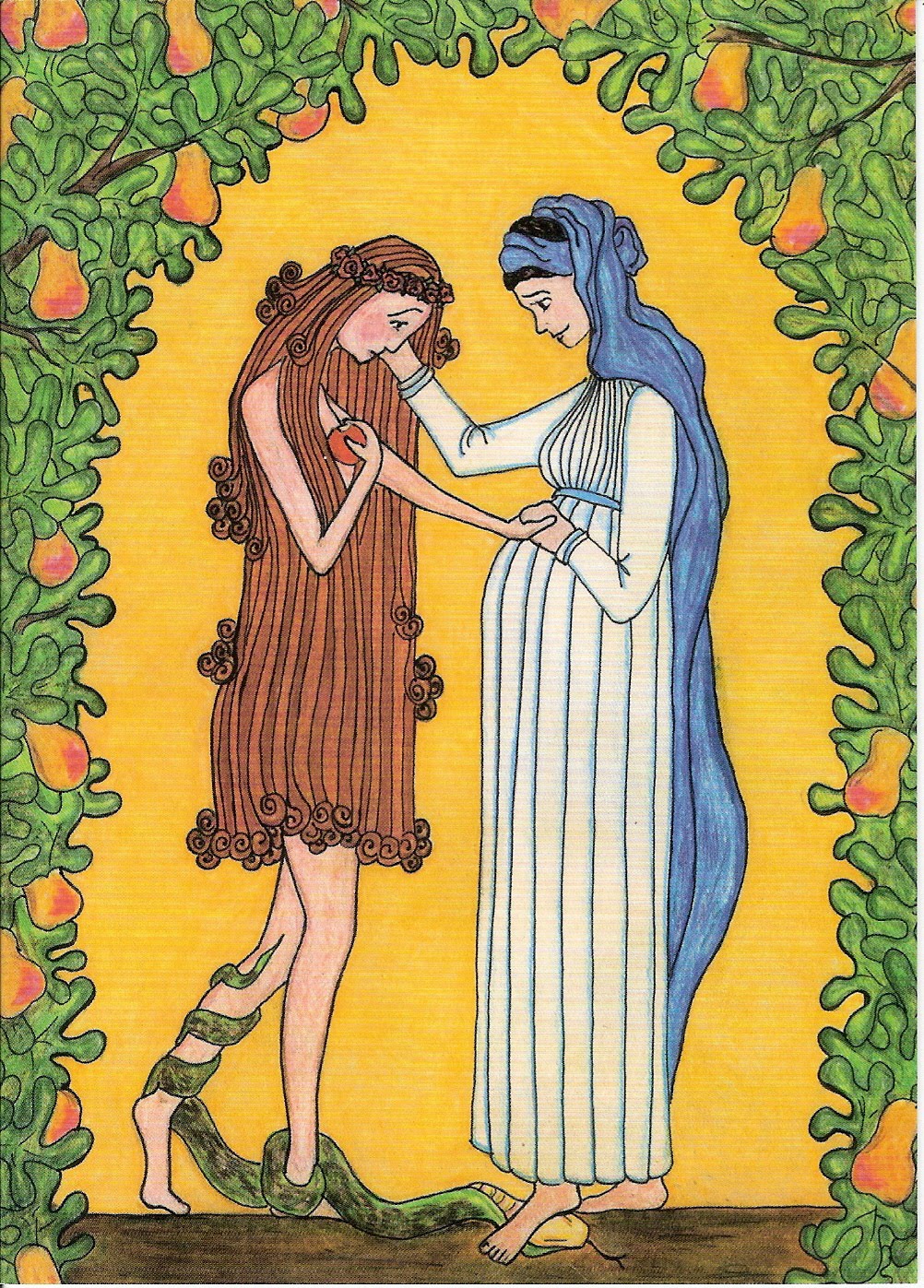
Mary Comforts Eve

At his Last Supper, Jesus demonstrated his servanthood by washing his disciples’ feet.[vi] He clearly taught the principle of humble submission.

Now there was also a dispute among them, as to which of them should be considered the greatest. And He said to them, “The kings of the Gentiles exercise lordship over them, and those who exercise authority over them are called ‘benefactors.’ But not so among you; on the contrary, he who is greatest among you, let him be as the younger, and he who governs as he who serves. For who is
greater, he who sits at the table, or he who serves? Is it not he who sits at the table? Yet I am among you as the One who serves.
“But you are those who have continued with Me in My trials. And I bestow upon you a kingdom, just as My Father bestowed one upon Me, that you may eat and drink at My table in My kingdom, and sit on thrones judging the twelve tribes of Israel
” (Luke 22:24-29, NKJV).

How will we defeat and disarm Satan and lay waste to his kingdom? It will not happen through mere political engagement. That is not the route Jesus took. That political rabbit hole is the devil’s lair. We are intruding on Satan’s turf when we head down that hole, and he knows how to fight and win down there. He has been doing it for thousands of years.

We win by using the same tactics as Jesus. It is the surrendered life that wins battles in the spiritual realm. It is the life surrendered to the will of the Father that prepares the way for salvation and world-transforming revival.


[i] Dr. Martin Luther’s Small Catechism, A Handbook of Christian Doctrine, Concordia Publishing House, Saint Louis, Missouri, P. 64

[ii] John 8:44

[iii] For a thorough play-by-play account of the trial and crucifixion of Christ, and the political machinations of Herod Antipas, Joseph Caiaphas, and Pontius Pilate read The Soldier Who Killed a King by David Kitz, Kregel Publications, 1917.

[iv] Matthew 11:11

[v] Philippians 2:5-11

[vi] John 13:1-17

This is the fifteenth weekly excerpt from the award-winning book 
The Elisha Code & the Coming Revival 

A soul-gripping read.
Is a return-to-Jesus revival possible in our time?
This book points the way forward.
For details click here.

The God of the Broken

14 Sunday Dec 2025

Posted by davidkitz in The Elisha Code

≈ 3 Comments

Tags

AB Simpson, Aimee Semple McPherson, Andrew Murray, Bible, broken, brokenness, Christ, David, Jacob, Jesus, Prayer, the LORD

 And He said,
“Your name shall no longer be called Jacob, but Israel;
for you have struggled with God and with men,
and have prevailed.”
(Genesis 32:28, NKJV)

The people whom God uses to change the world have first been radically changed by the Spirit of God. Often, these world changers have experienced major setbacks. We might even say they have been broken by God, but they have come through those experiences transformed and empowered by the Spirit.

There is a pattern that emerges as we look back at the lives of the three revival leaders we have examined thus far. Each of them reached a breaking point.

A. B. Simpson was a successful minister, who through much hard work, built a large church but he experienced burnout and a physical breakdown. From this low point, God healed him and raised him up to bring healing and salvation to thousands.

Similarly, Aimee Semple McPherson experienced a complete physical breakdown that left her hospitalized and at the point of death. She had returned from the mission field as a widow and a broken woman. She transitioned to a new life but steadfastly resisted God’s call. But God broke her resistance, miraculously restored her health, and catapulted her into a healing ministry that changed the trajectory of the church in America and the world.

Andrew Murray had what many would consider a successful ministry. But he too reached a breaking point. He lost his voice for two years. From this low point, God healed, transformed, and restored Murray to a far more effective and far-reaching ministry.

The common thread running through these life stories is that all three leaders encountered a breaking point. God broke them. Why would God do such a thing? Do we need to be broken to become effective ministers of the gospel of Christ?

There are several stories in the Bible that illustrate this need for God to break us.

The life story of the patriarch Jacob serves as the primary example of God taking a man to a breaking point. Jacob was a grasper. He grabbed for power. This is graphically illustrated by the way he came into this world. He arrived grasping his twin brother’s heel.[i] From the moment of birth, we see Jacob attempting to supplant Esau, his older brother, through cunning and deception.

Jacob succeeds first by trading a pot of lentil stew for Esau’s birthright (Genesis 25:29-35), and later by conspiring with his mother to rob Esau of his father’s blessing (Genesis 27:1-41). When Esau threatens to kill him, Jacob flees to the distant home of his uncle Laban.

Repeatedly, Jacob bargains with God, and God answers his prayers. Perhaps this is the most remarkable feature of Jacob’s life story. The LORD sticks with this deceiver and blesses him despite his devious ways. His life is a portrait of God’s unmerited favor in the face of constant opposition.

Jacob met his cunning, devious double in the person of Uncle Laban. First, Laban deceived Jacob by swapping Leah for her sister Rachel on his wedding night. There is more than a little divine justice at play in Laban’s clever deception. Jacob who cheated his blind father is cheated blind in his own marriage bed. The irony in this outcome is striking. Jacob is required to work seven years for Leah and then seven more years for Rachel, his true love.[ii]

Then, over the years, Laban changed Jacob’s wages ten times. But despite Laban’s constant readjustments, Jacob’s flocks and herds grew and prospered. God’s blessing bestowed by Isaac remained on Jacob.[iii]

But eventually, God brought Jacob to a breaking point. It happened on Jacob’s return to his homeland.
Jacob gets word that his brother Esau is coming to meet him with 400 men. Why would Esau come with 400 men unless he intended to carry out the threat, he uttered twenty years earlier? Suddenly, Jacob’s life is on the line, and not only his life, but also the lives of his two wives and his twelve sons. His family and all the wealth he accumulated over years of hard labor is about to be wiped out. He finds himself in a truly desperate situation with no way out.

In exchange for his life, he offers to bargain away all his livestock, his wives, and his children. But will this desperate ploy satisfy the angry brother he has cheated? Jacob sends all he has ahead of him. To his servants he says:

“When my brother Esau meets you and asks, ‘Who do you belong to, and where are you going, and who owns all these animals in front of you?’ then you are to say, ‘They belong to your servant Jacob. They are a gift sent to my lord Esau, and he is coming behind us’” (Genesis 32:17-18, NIV).

But Jacob stays back on the opposite side of the Jabok River. There alone in the dark for the whole night, Jacob wrestled with a man. But in truth, he wrestled with God.

Jacob’s Ladder — Genesis 28:12

Many Bible scholars view this man as a Christophany—a preincarnate appearance of Christ. Christ came down from heaven to break this obstinate cheater—break him and change him into a vessel he could use for his glory and his eternal purpose.

When the man saw that he could not overpower him, he touched the socket of Jacob’s hip so that his hip was wrenched as he wrestled with the man. Then the man said, “Let me go, for it is daybreak.”

But Jacob replied, “I will not let you go unless you bless me.”

The man asked him, “What is your name?”

“Jacob,” he answered.

Then the man said, “Your name will no longer be Jacob, but Israel, because you have struggled with God and with humans and have overcome.”

Jacob said, “Please tell me your name.”

But he replied, “Why do you ask my name?” Then he blessed him there.

So Jacob called the place Peniel, saying, “It is because I saw God face to face, and yet my life was spared” (Genesis 32:25-30).

There can be no doubt who the stronger man was at Peniel. With a simple touch Jacob’s

hip was wrenched. With a simple touch Christ healed the sick, raised the crippled, and restored sight to the blind. But here with a simple touch, Christ wrenched Jacob’s hip and left him limping for the rest of his days.

Why this stark contrast? We can easily understand why Christ would heal a crippled beggar, but why would he break a man? Why break Jacob?

The simple answer is because Jacob needed to be broken. The wild horse serves no one. The wild stallion serves only himself. Only the broken horse is fit for the master’s service. All of Jacob’s service was self-serving, and that includes his service to Laban. From Peniel onward Jacob—broken Jacob—was serving the LORD.

Galloping Horses – Image courtesy of Tina Phillips at FreeDigitalPhotos.net

David, the man after God’s own heart, needed to be broken too. David was true to the LORD in the wilderness with jealous King Saul in hot pursuit, but after he assumed the throne of Israel his fleshly desires led him astray. After his sin with Bathsheba, God needed to break him. The events that followed this sordid affair brought the humility so essential to effective service to God. Psalm 51 reflects the heart cry of a broken man.

This need for the servant of God to be broken by God appears in the New Testament as well. Peter needed to be broken by Jesus. Peter was a natural leader—sure of himself in all situations—ready to step out of a boat and even walk on water. That takes more than a little courage. But that confident self-assurance needed to be broken, and Jesus knew how to do it.

It only took the third crowing of a rooster to break Peter and reduce him to a blubbering, sobbing mess. Jesus knows how to break the strongest men. But he also knows how to restore them.

Three times Jesus asked, “Simon son of John, do you love me?”[iv] Three times Peter affirmed his love for the Lord, and three times Jesus affirmed Peter’s calling:

Jesus said, “Feed my lambs” (John 21:15).
Jesus said, “Take care of my sheep” (John 21:16).
Jesus said, “Feed my sheep” (John 21:17).

Photo by kailash kumar on Pexels.com

The broken Peter was now ready for service. He would fulfill the prophetic words Jesus had spoken over him before his fall and now in his restoration.

“Simon, Simon, Satan has asked to sift all of you as wheat. But I have prayed for you, Simon, that your faith may not fail. And when you have turned back, strengthen your brothers” (Luke 22:31-32, NIV).

The broken Peter had been humbled. Now Jesus ruled Peter. Now the Master was truly the Master and Lord of all.

Have you been broken by Jesus? Most Christians are eager to serve the Lord, but only in an advisory capacity. Peter was quick to give Jesus advice on how he should avoid the cross. See Matthew 16:21-27.

The Lord is not looking for our advice. He is looking for our obedience.

Jesus himself needed to be broken. His Heavenly Father broke him on the cross where he cried out, “Eli, Eli, lema sabachthani?” (Which means “My God, my God, why have you forsaken me?”) (Matthew 27:46, NIV).

When Jesus broke, he broke the stranglehold of sin over humanity. His breaking was essential for the salvation of our souls.

As disciples of our Lord Jesus, we can expect to be broken as well. We need to become like our Master in every way.

Saul of Tarsus was zealous to serve the God of his fathers, so zealous he persecuted the church. Jesus himself intervened in Saul’s life in order to break him. On the road to Damascus, Saul was confronted by Jesus—arrested by Jesus—blinded and broken by him.

Out of his brokenness Paul ministered the gospel to the Gentile world of his day. Through his writing he continues to speak to millions today.

Have we been confronted by Jesus? Has he opposed you at any point in your life? Have you been broken by him? In the power of our own flesh, we can do many good and noble things in the name of our Lord. Many fine churches have been built through clever marketing and ingenuity. Human effort and talent can carry us a long way.

In the eyes of many, A. B. Simpson had a successful ministry before Christ broke him. Andrew Murray was powerfully used by God before God broke him and set him aside for two years. But both these men came out of their time of brokenness refined and empowered by the Spirit of God. In their hearts there had been a regime change. The risen Christ was fully in charge now and the Spirit of God was directing them forward.

Are you and I ready to be broken and poured out at the feet of Jesus?

Then Mary took a pound of very costly oil of spikenard, anointed the feet of Jesus, and wiped His feet with her hair. And the house was filled with the fragrance of the oil (John 12:3, NIV).

[i] Genesis 25:21-26

[ii] Genesis 29:14-30

[iii] Genesis 31:38-42

[iv] John 21:15-19

This is the fourteenth weekly excerpt from the award-winning book 
The Elisha Code & the Coming Revival 

A soul-gripping read.
Is a return-to-Jesus revival possible in our time?
This book points the way forward.
For details click here.

His Word Was on My Tongue

28 Friday Nov 2025

Posted by davidkitz in Psalm 18, Psalms

≈ Leave a comment

Tags

Christ, conqueror, David, fear of God, Israel, Prayer, Psalms, Righteousness, spiritual warrior, the LORD

Today’s quote and prayer from
“Psalms 365: Develop a Life of Worship and Prayer


Today’s
Reading: Psalm 18:37-45

Listen to today’s reading by Jonathan Dent:

https://davidkitz.blog/wp-content/uploads/2025/11/psalm-18-5-37-45-final-mix.mp3


Heavenly Father,
help me rise up
as a spiritual warrior for you today.
Help me to spread the aroma
of the knowledge of Jesus everywhere.
Through the power of Christ,
I know I am more than a conqueror.
Amen.

— — — —

These are the last words of David:

“The inspired utterance of David son of Jesse,

    the utterance of the man exalted by the Most High,
the man anointed by the God of Jacob,
    the hero of Israel’s songs:

“The Spirit of the LORD spoke through me;
    his word was on my tongue.
The God of Israel spoke,
    the Rock of Israel said to me:
‘When one rules over people in righteousness,
    when he rules in the fear of God,
he is like the light of morning at sunrise
    on a cloudless morning,
like the brightness after rain
    that brings grass from the earth.’
(2 Samuel 23:1-4 NIV)*

Para la publicación de Salmos 365 de hoy en español haga clic aquí.

bgbg_v4.3_1501818
* NEW INTERNATIONAL VERSION, COPYRIGHT ©1973, 1978, 1984, 2011 BY BIBLICA

Pray for ongoing peace in Israel and Gaza,
and continue to pray for peace to return to Ukraine and Russia!

Volume I of Psalms 365: Develop a Life of Worship and Prayer won the Best Book of the Year Award from The Word Guild and Volume II has won the Best Devotional of the Year Award. For those who love God’s word, this three-book series is an ideal way to daily meet with the Lord. To purchase or for a closer look click here.

New from David Kitz

James—the brother of Jesus—who was this man? What evidence do we have that this “brother of our Lord” even existed?

David Kitz digs deep into archeology, family dynamics, church history, and the biblical texts. What emerges from his research is a portrait of a decisive, pivotal leader who embodied the will and character of Jesus Christ.

But how did James—James the unbeliever—transform to become a leader who changed the course of world history? In these pages you will uncover the answer and rediscover for yourself the life-changing power of the gospel.

To view further details or purchase this or other books directly from the author click here.

Becoming a Triumphant Warrior

28 Friday Nov 2025

Posted by davidkitz in Psalm 18, Psalms

≈ Leave a comment

Tags

battle, Christ, courage, David, discipline, faith, Holy Spirit, obedience, Psalms, spirit, strength, the LORD, triumph, victory, warfare, warrior, warrior spirit

Today’s Devotion from Psalms 365 by David Kitz

Reading: Psalm 18:37-45

Listen to today’s reading by Jonathan Dent:

https://davidkitz.blog/wp-content/uploads/2025/11/psalm-18-5-37-45-final-mix.mp3

I pursued my enemies and overtook them;
I did not turn back till they were destroyed.
I crushed them so that they could not rise;
they fell beneath my feet.
You armed me with strength for battle;
you humbled my adversaries before me.
You made my enemies turn their backs in flight,
and I destroyed my foes.
They cried for help, but there was no one to save them—
to the LORD, but he did not answer.
I beat them as fine as windblown dust;
I trampled them like mud in the streets.
You have delivered me from the attacks of the people;
you have made me the head of nations.
People I did not know now serve me, foreigners cower before me;
as soon as they hear of me, they obey me.
They all lose heart; they come trembling from their strongholds (NIV). *

Photo Credit: http://www.joydigitalsa.com

Reflection
Why do you enjoy sports? Why do you take pride in seeing your home team win? The answer is quite simple: Inside you beats the heart of a warrior. I can deny I have a warrior spirit, but there’s a competitive, fighting spirit written into my DNA. It’s in your DNA too. In fact, that warrior spirit is essential to your success and survival.

David had an abundant supply of testosterone fueled warrior spirit, and in the psalm portion above, we see it on full display. David was a fighter, and every competitive warrior signals his triumph. You do as well. This psalm was part of David’s victory celebration. For a scientific discussion of human response in moments of victory visit: Olympic victors’ first reaction is dominance, not pride | TIME.com

For me as a follower of Jesus the question is not, do I have a warrior spirit? The question is how will I direct my warrior’s heart into a path that is pleasing to my heavenly Father?

Filled with the Holy Spirit, Jesus’ twelve disciples turned the world upside down. Their response to Satan’s attacks was not merely defensive. Through prayer and proclamation, they took souls captive to the obedience of Christ. The apostle Paul declares, “But thanks be to God, who always leads us as captives in Christ’s triumphal procession and uses us to spread the aroma of the knowledge of him everywhere (2 Corinthians 2:14). Paul was a triumphant warrior in the spiritual realm. David was triumphant in the natural realm. What about you?

Response: Heavenly Father, help me rise up as a spiritual warrior for you today. Help me to spread the aroma of the knowledge of Jesus everywhere. Through the power of Christ, I know I am more than a conqueror. Amen.

Your Turn: Are you personally gaining ground in the spiritual battle all around you? How do you measure your progress?

Para la publicación de Salmos 365 de hoy en español haga clic aquí.

bgbg_v4.3_1501818
* NEW INTERNATIONAL VERSION, COPYRIGHT ©1973, 1978, 1984, 2011 BY BIBLICA

Thank God for peace in Israel and Gaza,
and continue to pray for peace to return to Ukraine and Russia!

Volume I of Psalms 365: Develop a Life of Worship and Prayer won the Best Book of the Year Award from The Word Guild and Volume II has won the Best Devotional of the Year Award. For those who love God’s word, this three-book series is an ideal way to daily meet with the Lord. To purchase or for a closer look click here.

New from David Kitz

James—the brother of Jesus—who was this man? What evidence do we have that this “brother of our Lord” even existed?

David Kitz digs deep into archeology, family dynamics, church history, and the biblical texts. What emerges from his research is a portrait of a decisive, pivotal leader who embodied the will and character of Jesus Christ.

But how did James—James the unbeliever—transform to become a leader who changed the course of world history? In these pages you will uncover the answer and rediscover for yourself the life-changing power of the gospel.

To view further details or purchase this or other books directly from the author click here.

That Rock was Christ

21 Friday Nov 2025

Posted by davidkitz in Psalm 18, Psalms

≈ 2 Comments

Tags

baptized, Christ, Christ the rock, God's word, Jesus, Prayer, Psalms, spiritual drink, spiritual food, the rock, trust in Jesus

Today’s quote and prayer from
“Psalms 365: Develop a Life of Worship and Prayer

Hopewell Rocks, New Brunswick — David Kitz


Today’s Reading: Psalm 18:1-5

Listen to today’s reading by Jonathan Dent:

https://davidkitz.blog/wp-content/uploads/2025/11/psalm-181-5-final-mix.mp3


Heavenly Father,
help me daily to build my life on the rock,
Christ Jesus.
Lord Jesus,
you are my fortress,
my salvation, and my stronghold.
I put my full trust in you,
today and always.
Amen.

— — — —

For I do not want you to be ignorant of the fact,
brothers and sisters,
that our ancestors were all under the cloud
and that they all passed through the sea.

They were all baptized into Moses
in the cloud and in the sea.

They all ate the same spiritual food
and drank the same spiritual drink;
for they drank from the spiritual rock
that accompanied them,
and that rock was Christ.

(1 Corinthians 10:1-4 NIV)*

Para la publicación de Salmos 365 de hoy en español haga clic aquí.

bgbg_v4.3_1501818
* NEW INTERNATIONAL VERSION, COPYRIGHT ©1973, 1978, 1984, 2011 BY BIBLICA

Thank God for peace in Israel and Gaza,
and continue to pray for peace to return to Ukraine and Russia!

Volume I of Psalms 365: Develop a Life of Worship and Prayer won the Best Book of the Year Award from The Word Guild and Volume II has won the Best Devotional of the Year Award. For those who love God’s word, this three-book series is an ideal way to daily meet with the Lord. To purchase or for a closer look click here.

New from David Kitz

James—the brother of Jesus—who was this man? What evidence do we have that this “brother of our Lord” even existed?

David Kitz digs deep into archeology, family dynamics, church history, and the biblical texts. What emerges from his research is a portrait of a decisive, pivotal leader who embodied the will and character of Jesus Christ.

But how did James—James the unbeliever—transform to become a leader who changed the course of world history? In these pages you will uncover the answer and rediscover for yourself the life-changing power of the gospel.

To view further details or purchase this or other books directly from the author click here.

God Our Rock

21 Friday Nov 2025

Posted by davidkitz in Psalm 18, Psalms

≈ Leave a comment

Tags

Christ, David, deliverance, faith, fortress, praise, refuge, Rock, rock of refuge, salvation, strength, the LORD, trust, worship

Today’s Devotion from Psalms 365 by David Kitz

Reading: Psalm 18:1-5

Listen to today’s reading by Jonathan Dent:

https://davidkitz.blog/wp-content/uploads/2025/11/psalm-181-5-final-mix.mp3

For the director of music. Of David the servant of the LORD.
He sang to the LORD the words of this song
when the LORD delivered him from the hand of all his enemies
and from the hand of Saul. He said:

I love you, LORD, my strength.

The LORD is my rock, my fortress and my deliverer;
my God is my rock, in whom I take refuge,
my shield and the horn of my salvation, my stronghold.
I called to the LORD, who is worthy of praise,
and I have been saved from my enemies.
The cords of death entangled me;
the torrents of destruction overwhelmed me.
The cords of the grave coiled around me;
the snares of death confronted me (NIV). *

Hopewell Rocks, NB — photo by David Kitz

Reflection
Psalm 18 is one of the longer psalms in the Book of Psalms. Step by step, day by day we will glean wisdom from the psalmist, David, as we make our way through this psalm.

In many respects Psalm 18 is a psalm of culmination. The introductory note tells us David composed and sang this psalm when the LORD delivered him from the hand of all his enemies and from the hand of Saul. For many long years David had been fleeing for his life from his master King Saul. At long last, after repeatedly calling on God in great distress, David has triumphed. And now through the words of this psalm, he gives all the credit and all the glory to God.

Notice the list of attributes David ascribes to the LORD: my strength, my rock, my fortress, my deliverer, my God, my rock, my shield, my salvation, and my stronghold. To David the LORD had proven Himself repeatedly during years of hard times to be the embodiment of each of those attributes. If you call on Him, the LORD can be all those things for you as well.

Did you notice my rock is the only attribute that is repeated in this list? Why repeat the phrase my rock? In the prophetic realm, during all those years of severe testing, Christ was the rock on which David took his stand. David did not build his life on the shifting sands of public opinion or popularity. He built his life on Christ. A thousand years in advance, David was putting into practice the words of Jesus, “Therefore everyone who hears these words of mine and puts them into practice is like a wise man who built his house on the rock. The rain came down, the streams rose, and the winds blew and beat against that house; yet it did not fall, because it had its foundation on the rock” (Matthew 7:24-25).

Now that’s wisdom—applied wisdom for the ages!

Response: Heavenly Father, help me daily to build my life on the rock, Christ Jesus. Lord Jesus, you are my fortress, my salvation, and my stronghold. I put my full trust in you. Amen.

Your Turn: How is God like a rock in your life? Has He sustained you during difficult times? Is He helping you through tough times right now, or has He already turned the tide in your favor?

Para la publicación de Salmos 365 de hoy en español haga clic aquí.

bgbg_v4.3_1501818
* NEW INTERNATIONAL VERSION, COPYRIGHT ©1973, 1978, 1984, 2011 BY BIBLICA

Thank God for peace in Israel and Gaza,
and continue to pray for peace to return to Ukraine and Russia!

Volume I of Psalms 365: Develop a Life of Worship and Prayer won the Best Book of the Year Award from The Word Guild and Volume II has won the Best Devotional of the Year Award. For those who love God’s word, this three-book series is an ideal way to daily meet with the Lord. To purchase or for a closer look click here.

New from David Kitz

James—the brother of Jesus—who was this man? What evidence do we have that this “brother of our Lord” even existed?

David Kitz digs deep into archeology, family dynamics, church history, and the biblical texts. What emerges from his research is a portrait of a decisive, pivotal leader who embodied the will and character of Jesus Christ.

But how did James—James the unbeliever—transform to become a leader who changed the course of world history? In these pages you will uncover the answer and rediscover for yourself the life-changing power of the gospel.

To view further details or purchase this or other books directly from the author click here.

The Servant of All

16 Sunday Nov 2025

Posted by davidkitz in The Elisha Code

≈ Leave a comment

Tags

Andrew Murray, Boer War, Christ, concentration camp, crucified, God, God's faithfulness, humility, Jesus, missionary, missions, Prayer, pride, revival

Sitting down, Jesus called the Twelve and said,
“Anyone who wants to be first must be the very last,
and the servant of all.”
(Mark 9:35, NIV)

Are you and I putting Jesus’ teaching on being the least into practise in our daily lives. Are we becoming the servant of all? Do we see ourselves as last or do we put ourselves and our concerns first above all others?
Why is humility so key to missionary breakthrough? In what way has pride and self-righteousness either prevented or killed times of revival? The much-loved devotional writer Andrew Murray has much to teach us in these key areas.

Andrew Jr.’s father, Andrew Senior, had come to South Africa from Scotland as a missionary in 1828.  The Dutch Reformed Church was so desperate for pastors that they would even accept Scottish Presbyterians into their fold.  Revival and missions were the air that Andrew Junior breathed in his father’s house. Missionaries constantly visited the Murray home, including Dr. David Livingstone.

In 1838, when Andrew Junior was ten, he and his brother John were sent by their parents to study in Scotland. In the spring of 1840, the revivalist William C. Burns came and spoke in Aberdeen, Scotland. Burns’ heart was constantly broken over the lost, and he would weep and pray for hours for their salvation. This left a deep impression on young Andrew Murray.

The two brothers then went to Utrecht, Holland, for further theological studies. There, they became part of a revival group called Sechor Dabar (remember the Word in Hebrew).

When he returned to South Africa, Andrew became a Dutch Reformed pastor, being elected six times as the Moderator of the entire Dutch Reformed Church denomination. After initially trying to shut down the 1860 South African revival, he ended up giving strong leadership to this key revival. As people cried out in anguish, Andrew initially said, “This must stop now. I am your pastor!” God changed his mind, so, with Andrew’s blessing, great renewal broke out throughout South Africa with many thousands confessing Christ.

Suddenly in 1879, at age 51, Murray lost his voice for two years. Out of his painful two years of silence, he learned to depend upon God’s faithfulness, surrendering everything to God, and coming into a deep place of humility and love for others. In this time of waiting, he learned that we have nothing but what we humbly receive from God. Humility is about being an empty vessel that God can fill. Are we willing to be radically dependent on God?

Andrew’s amazing book Humility came of this deep time of self-crucifixion. He wrote, “Nothing but a crucified Jesus revealed in the soul can give a humble spirit.”

Humility for Andrew was most clearly seen in the incarnate and crucified Christ who prayed “not my will but Thine be done.” Andrew discovered that “pride is death, and the other (humility) is life; the one is all hell, the other is all heaven.”

During his voice ailment, Andrew came to see that a lack of humility suppresses revival and missions. He wrote, “A lack of humility is the explanation of every defect and failure.”

In 1881, he went to London to Bethshan, a healing home started by W. E. Boardman. He was completely healed there and never had trouble with his voice again. From that point on, he knew and taught that spiritual gifts were for believers today, and that God’s will is for healing and wholeness. While in England in 1882, he attended the Keswick Convention which focused on holiness and deeper life in Christ. Eventually, he founded Keswick South Africa.

Andrew did not just recover his voice; His whole demeanor changed.  He became known for his joyful humour. A long-time friend of the family wrote to Murray’s daughter Mary of this transformation: “A great change came into his life after that. He used to be rather stern and very decided in his judgment of things—after that year he was all love. His great humility also struck me very forcibly at that time.”

Murray’s oldest daughter agreed, saying, “he began to show in all relationships constant tenderness and unruffled lovingkindness and unselfish thought for others which increasingly characterized his life from that point.”

God showed Andrew Murray that “manifestations of temper and touchiness and irritation, feelings of bitterness and estrangement, have their root in nothing but pride.” He concluded that our defensiveness and unkind words reveal a lack of humility.

This deep personal change is the hallmark of all who come to a point of full repentance and faith in Christ. Humility is the mark of those who have been broken by the Spirit.

In his play The Power of Darkness, Leo Tolstoy put these words in the mouth of one of the main characters, “Everyone thinks of changing the world, but no one thinks of changing himself.”[i]

World changers—God’s world changers—have first been changed by the Spirit of God. The self has been crucified and now Christ reigns. Leo Tolstoy, Andrew Murray, and the apostle, Paul, knew they were in desperate need of personal transformation. Real change begins with humble submission to Christ the crucified Lord and Savior.

 I have been crucified with Christ and I no longer live, but Christ lives in me. The life I now live in the body, I live by faith in the Son of God, who loved me and gave himself for me (Galatians 2:20, NIV).

Andrew ended up writing two hundred and forty books and booklets, including Waiting on God, The School of Obedience, Absolute Surrender, and The Deeper Christian Life. His anointed pen came from his anointed heart.

One of his most transformative books was called The Key to the Missionary Problem where he taught that missions were “the chief end of the church.” Dr F.B. Meyer said that The Key to the Missionary Problem, if widely read, would lead to one of the greatest revivals of missionary enthusiasm that the world has ever known.

Andrew Murray saw missions as so large and difficult it required the Church returning to “the Pentecostal life of her first love.”

“The Pentecostal commission can only be carried out by a Pentecostal Church in Pentecostal Power. …We have given too much attention to methods and to machinery and to resources and too little to the Source of Power—the filling with the Holy Ghost.”

Humble prayer, said Murray, was the heart of missions. He prayed that the cry of our whole heart, night, and day, would be, “Oh, for the humility of Jesus in myself and all around me!”

Murray saw humility as an essential key to winning the lost and reflecting the true character of Jesus. O that God would use such humility to breath a revival of missions throughout the world.

God eventually used Andrew as a peacemaker, humbly seeking to avoid the horrendous Boer/Anglo War (October 11, 1899 – May 31, 1902) where 26,000 of the 100,000 women and children in British concentration camps died of malnutrition and disease. Andrew Murray was ideally suited to the task of peacemaking. He had spent his entire working life as a bridge builder between the Dutch-speaking Afrikaners and the black tribal communities. Now as a British-born church leader, he interceded for peace in the face of British imperial aggression.

He wrote, “The horrors of war are too terrible; the sin and shame of war are too great; the folly of war is too monstrous… I believe with my whole heart that in many respects Britain is the noblest, the most Christian nation in the world, its greatest power for good or evil… Once again, I beseech the Christian people of Great Britain to rouse themselves, and to say, ‘This war shall not be.’ Let every lover of peace make his voice heard.”

In this time of tragic conflict, in various hot spots around the globe, may we pray that other humble peacemakers, like Andrew Murray, may arise. What might it take for the Russian and Ukrainian people to humbly seek lasting reconciliation and forgiveness?

The earnest prayer and humility of Jesus points the way forward. The hour is late. Hear our Savior’s plea, “Couldn’t you men keep watch with me for one hour?” (Matthew 26:40, NIV).

[i] Leo Tolstoy, The Power of Darkness, Kindle edition, 2012, Aylmer Maude (Translator), Louise Shanks Maude (Translator).

This is the tenth weekly excerpt from the award-winning book 
The Elisha Code & the Coming Revival 

A soul-gripping read.
Is a return-to-Jesus revival possible in our time?
This book points the way forward.
For details click here.

The Riches of His Grace

15 Wednesday Oct 2025

Posted by davidkitz in Psalm 148

≈ 1 Comment

Tags

blood of Christ, Christ, forgiveness of sins, God's grace, God's wisdom, hallelujah, Jesus, praise the LORD, Psalms, redemption, resurrection, the LORD

Today’s quote and prayer from
“Psalms 365: Develop a Life of Worship and Prayer”

Today’s Reading: Psalm 148:13-14

LORD God,
I praise you for sending Jesus.
I praise you for your great plan of redemption.
Jesus,
I thank you for carrying my sins to Calvary.
I rejoice in your resurrection victory.
Hallelujah!
Amen.

— — — —

In Him we have redemption through His blood,
the forgiveness of sins,
according to the riches of His grace
which He made to abound toward us
in all wisdom and prudence, 

having made known to us
the mystery of His will,
according to His good pleasure
which He purposed in Himself, 

that in the dispensation of the fullness of the times
He might gather together in one
all things in Christ,
both which are in heaven
and which are on earth—
in Him.

(Ephesians 1:7-10 NIV)*

Para la publicación de Salmos 365 de hoy en español haga clic aquí.

bgbg_v4.3_1501818
* NEW INTERNATIONAL VERSION, COPYRIGHT ©1973, 1978, 1984, 2011 BY BIBLICA

Please pray for peace to come to Israel, Gaza, Sudan, and Ukraine!

Volume I of Psalms 365: Develop a Life of Worship and Prayer won the Best Book of the Year Award from The Word Guild and Volume II has won the Best Devotional of the Year Award. For those who love God’s word, this three-book series is an ideal way to daily meet with the Lord. To purchase or for a closer look click here.

A gripping read from David Kitz.
Is a return-to-Jesus revival possible in our time?
This book points the way forward.

Righteousness, Peace and Joy

14 Tuesday Oct 2025

Posted by davidkitz in Psalm 148

≈ Leave a comment

Tags

Christ, eating and drinking, heaven, heaven on earth, Holy Spirit, joy, Kingdom of God, peace, Prayer, Psalms, Righteousness

Today’s quote and prayer from
“Psalms 365: Develop a Life of Worship and Prayer”

Today’s Reading: Psalm 148:7-12

LORD God,
let your Holy Spirit be active among us.
Help us to love and serve you
and those around us.
Help me to bring a little bit of heaven—
a little bit of your will, purpose,
and goodness to the earth today.

Amen.

— — — —

Therefore do not let what you know is good
be spoken of as evil.

For the kingdom of God
is not a matter of eating and drinking,
but of righteousness,
peace and joy in the Holy Spirit,

because anyone who serves Christ in this way
is pleasing to God
and receives human approval.

(Romans 14:16-18 NIV)*

Para la publicación de Salmos 365 de hoy en español haga clic aquí.

bgbg_v4.3_1501818
* NEW INTERNATIONAL VERSION, COPYRIGHT ©1973, 1978, 1984, 2011 BY BIBLICA

Thank God for peace in Israel and Gaza,
and continue to pray for peace to return to Ukraine and Russia!

Volume I of Psalms 365: Develop a Life of Worship and Prayer won the Best Book of the Year Award from The Word Guild and Volume II has won the Best Devotional of the Year Award. For those who love God’s word, this three-book series is an ideal way to daily meet with the Lord. To purchase or for a closer look click here.

A gripping read from David Kitz.
Is a return-to-Jesus revival possible in our time?
This book points the way forward.

← Older posts

Psalms 365: Develop a Life of Worship and Prayer

Psalms 365 Volume II

Psalms 365 vol 3
— Psalms 365 Volume III

Psalms

Recent posts

  • The Need for a Place of Refuge January 9, 2026
  • David Dances before the LORD January 8, 2026
  • The God of Turn-Arounds January 8, 2026
  • The LORD Who Heals You January 7, 2026
  • Why Praise God? January 7, 2026
  • I Give You My Peace January 6, 2026
  • Peace within the Storm January 6, 2026

Calendar

January 2026
M T W T F S S
 1234
567891011
12131415161718
19202122232425
262728293031  
« Dec    

Blog Posts

Comments

  • davidkitz on The Ultimate Come from Behind Victory  
  • cjsmissionaryminister on Preparing a Landing Strip for the Holy Spirit
  • cjsmissionaryminister on The Ultimate Come from Behind Victory  

Blog at WordPress.com.

Privacy & Cookies: This site uses cookies. By continuing to use this website, you agree to their use.
To find out more, including how to control cookies, see here: Cookie Policy
  • Subscribe Subscribed
    • I love the Psalms
    • Join 1,381 other subscribers
    • Already have a WordPress.com account? Log in now.
    • I love the Psalms
    • Subscribe Subscribed
    • Sign up
    • Log in
    • Report this content
    • View site in Reader
    • Manage subscriptions
    • Collapse this bar
 

Loading Comments...