• Home
  • About
  • DavidKitz.ca
  • Youtube Videos
  • Books by David
  • Books on Amazon.com

I love the Psalms

~ Connecting daily with God through the Psalms

I love the Psalms

Tag Archives: David Kitz

Rich in Faith

12 Wednesday Nov 2025

Posted by davidkitz in Psalm 12, Psalms

≈ 1 Comment

Tags

care for others, David Kitz, faith, God's chosen, inherit, James, Jesus, the oppressed, the poor, the rich

Today’s quote and prayer from
“Psalms 365: Develop a Life of Worship and Prayer


Today’s Reading: Psalm 12

Listen to today’s reading by Jonathan Dent:

https://davidkitz.blog/wp-content/uploads/2025/11/psalm-12-final-mix-2.mp3


LORD God,
give me a caring heart
for those who are poor and oppressed.
Help me to demonstrate care
not just in thought but in practical ways
as Jesus would.
Amen.

— — — —

Daisy Lake photo by L. Kranz

Listen,
my dear brothers and sisters:
Has not God chosen those who are poor
in the eyes of the world to be rich in faith
and to inherit the kingdom
he promised those who love him?

But you have dishonored the poor.
Is it not the rich who are exploiting you?
Are they not the ones
who are dragging you into court?

Are they not the ones
who are blaspheming the noble name of him
to whom you belong?
(James 2:5-7 NIV)*

Para la publicación de Salmos 365 de hoy en español haga clic aquí.

bgbg_v4.3_1501818
* NEW INTERNATIONAL VERSION, COPYRIGHT ©1973, 1978, 1984, 2011 BY BIBLICA

Thank God for peace in Israel and Gaza,
and continue to pray for peace to return to Ukraine and Russia!

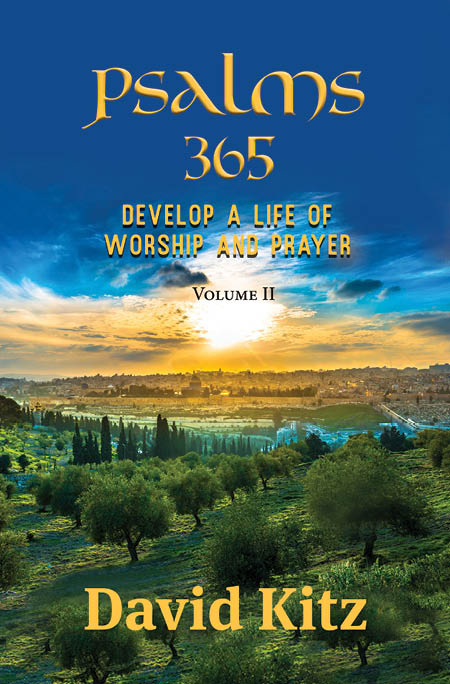
Volume I of Psalms 365: Develop a Life of Worship and Prayer won the Best Book of the Year Award from The Word Guild and Volume II has won the Best Devotional of the Year Award. For those who love God’s word, this three-book series is an ideal way to daily meet with the Lord. To purchase or for a closer look click here.

New from David Kitz

James—the brother of Jesus—who was this man? What evidence do we have that this “brother of our Lord” even existed?

David Kitz digs deep into archeology, family dynamics, church history, and the biblical texts. What emerges from his research is a portrait of a decisive, pivotal leader who embodied the will and character of Jesus Christ.

But how did James—James the unbeliever—transform to become a leader who changed the course of world history? In these pages you will uncover the answer and rediscover for yourself the life-changing power of the gospel.

To view further details or purchase this or other books directly from the author click here.

The Return of the Dynamic Duo

28 Sunday Sep 2025

Posted by davidkitz in The Elisha Code

≈ Leave a comment

Tags

Bible, born again, David Kitz, Elijah, Elisha, gospel, Jesus, Jewish heritage, John the Baptist, Kingdom of God, Moses, repentance, salvation, the LORD, theology

When they had crossed, Elijah said to Elisha,
“Tell me, what can I do for you before I am taken from you?”

“Let me inherit a double portion of your spirit,” Elisha replied.

“You have asked a difficult thing,” Elijah said,
“yet if you see me when I am taken from you, it will be yours—
otherwise, it will not.”
(2 Kings 2:9-10, NIV)

The more things change, the more they stay the same.[i] This common expression captures within it the seed truth that history tends to repeat itself. Human nature, social norms and patterns of behavior stay the same across the continuum of time and space. Consequently, though the individual players, time, and location may differ, outcomes frequently are the same or fall into a familiar pattern. For this very reason, Bible stories remain relevant today, despite being written ages ago to people of a different language and culture.  
            In today’s culture when we use the term dynamic duo, several pictures, or scenarios immediately spring to mind. Batman and Robin from DC Comics popularized the term, but throughout history, and within our own experience we have all encountered dynamic duos—individuals who work together well to accomplish a common purpose.
           Can we identify dynamic duos in the Old Testament? We certainly can. Moses and his young successor Joshua spring to mind.
            The prophets Elijah and Elisha are a dynamic duo whose miraculous powers and exploits rival the adventures of the finest superheroes in the Marvel Universe. First-century Jewish teens reading accounts of their miraculous feats would be immediately drawn to them. Furthermore, the last book of the Old Testament ends with the promise of Elijah’s return.    

“See, I will send the prophet Elijah to you before that great and dreadful day of the Lord comes. He will turn the hearts of the parents to their children, and the hearts of the children to their parents; or else I will come and strike the land with total destruction” (Malachi 4:5-6, NIV).

            And if Elijah is returning, then Elisha, or an Elisha-like figure cannot be far behind. As the New Testament era dawns, the stage is set for the return of the dynamic duo. There is nothing quite like a sequel. In this case it’s a prophetic, dynamic-duo sequel that returns after an absence of about seven centuries. Imagine the anticipation.
           Is it any wonder then that Elijah’s name appears twenty-eight times in the gospels? Aside from Peter, none of the apostles are named as frequently as Elijah. It is quite extraordinary for a hero from a previous era to be referenced so frequently. Yet the expectation of Elijah’s arrival was palpable. Jesus was often incorrectly identified as the Elijah who is to come.[ii] With the start of Christ’s ministry, and his demonstration of miraculous powers, the burning question within the first-century Jewish community was “Has Elijah returned?”
             In the eleventh chapter of Matthew’s Gospel answers that question directly. He identifies who the new Elijah—the second Elijah really is.

           And when John had heard in prison about the works of Christ, he sent two of his disciples and said to Him, “Are You the Coming One, or do we look for another?”
          Jesus answered and said to them, “Go and tell John the things which you hear and see: The blind see and the lame walk; the lepers are cleansed and the deaf hear; the dead are raised up and the poor have the gospel preached to them. And blessed is he who is not offended because of Me.”
          As they departed, Jesus began to say to the multitudes concerning John: “What did you go out into the wilderness to see? A reed shaken by the wind? But what did you go out to see? A man clothed in soft garments? Indeed, those who wear soft clothing are in kings’ houses. But what did you go out to see? A prophet? Yes, I say to you, and more than a prophet. For this is he of whom it is written:
                    ‘Behold, I send My messenger before Your face,
                    Who will prepare Your way before You.’
          “Assuredly, I say to you, among those born of women there has not risen one greater than John the Baptist; but he who is least in the kingdom of heaven is greater than he. And from the days of John the Baptist until now the kingdom of heaven suffers violence, and the violent take it by force. For all the prophets and the law prophesied until John. And if you are willing to receive it, he is Elijah who is to come. He who has ears to hear, let him hear!
(Matthew 11:2-15, NKJV)

          So, there we have the answer to the question on everyone’s mind at that time. John the Baptist is Elijah who is to come. The first member of the New Testament dynamic duo has been identified.    

What does Jesus’ identification of John the Baptist as the new Elijah really mean?

It does not mean John is the reincarnation of Elijah. Elijah’s body was whisked away to heaven in a whirlwind on a chariot of fire.[iii] Centuries later, he returns with Moses to meet with Jesus on the Mount of Transfiguration.[iv]

Chapel of the Transfiguration, Grand Teton National Park — Photo courtesy of Matthew Taylor

            Clearly, John and Elijah are two distinct persons from two distinct historical eras. In fact, when he was questioned about his identity, John denied being the Christ or Elijah.[v] However, Jesus rightly identified John the Baptist as moving and ministering in the spirit of Elijah. He fulfilled the prophecy of Malachi.[vi]
            Elijah’s ministry was a ministry of repentance. His assignment from the LORD was to draw the backslidden people of Israel (the northern kingdom) back to worshipping the one true God. Israel had fallen into the grievous sin of idolatry under the rule of King Ahab and his evil consort Jezebel. Many had bowed their knees to Baal, the male fertility god, and partaken in the worship of the female deity Ashtoreth.
            John the Baptist had a similar assignment. He too was to draw the Jewish nation back to God. But in the New Testament era, the sins of the nation were of a more subtle nature. The worship of Yahweh had become cold and formal while the sinful heart was unchanged.

The Lord says:
“These people come near to me with their mouth
    and honor me with their lips,
    but their hearts are far from me.
Their worship of me is based on merely human rules they have been taught
(Isaiah 29:13, NIV).

This corrupt condition of the heart is what John came to address. He did so with a clarion call to repentance followed by baptism. Furthermore, he insisted no one can claim safety from the coming wrath due to their lineage or national heritage.

Produce fruit in keeping with repentance. And do not think you can say to yourselves, ‘We have Abraham as our father.’ I tell you that out of these stones God can raise up children for Abraham. The ax is already at the root of the trees, and every tree that does not produce good fruit will be cut down and thrown into the fire. (Matthew 3:8-10, NIV).

          What root was John attacking with the above statement? He was hacking away at the presumption of salvation by virtue of national origin. The Sadducees and Pharisees who John was addressing trusted in their Jewish heritage as being sufficient for eternal salvation. Apparently, your birth certificate doesn’t qualify you for entrance into the Kingdom of God. God is looking for a repentant heart—a changed heart. 
                With these words, John was laying the groundwork for Jesus’ core message of salvation through regeneration. We must be born again as Jesus revealed in his conversation with Nicodemus.[vii] And the first step in that regenerative process begins with repentance, initially championed by John,[viii] reiterated by Jesus,[ix] and preached by the apostles.[x]
                Today, we speak of disruptive technology changing the way business and society operate. John’s message was disruptive theology. His message attempted to completely change how Jewish society of that time viewed their relationship with God. Many Jewish people saw themselves as citizens in God’s Kingdom simply because they were children of Abraham. John’s mission was to shatter that misperception. Something more was needed then, and it is needed now. Salvation begins with a repentant heart. And like Elijah of old, John was calling the nation to repent and turn back to God.
                Jesus addressed the same topic in his John 8:12-59 temple discourse with the Jewish religious leadership. In that heated discussion, Jesus’ opponents trumpeted their Abrahamic pedigree, while rejecting the testimony of the Son of God. God is always looking for the fruits of repentance in our lives. But there was an absence of fruit in these religious leaders.
                It was John the Baptist who first raised this issue with the Pharisees and Sadducees. If we are not simply born into the Kingdom by natural birth, as the religious leadership claimed, how then do we gain entrance? Jesus provides the answer:

          “Very truly I tell you, no one can enter the kingdom of God unless they are born of water and the Spirit. Flesh gives birth to flesh, but the Spirit gives birth to spirit. You should not be surprised at my saying, ‘You must be born again’ (John 3:5-7, NIV).

                This disruptive theology was introduced by John and advanced to the next level through the ministry of Jesus. John and Jesus truly worked as a dynamic duo. Furthermore, all four Gospel writers recognized John’s foundational contribution. It’s striking that though each Gospel is focused on the life and ministry of Jesus, none of the Gospel writers begin their account with Jesus. They all begin with John. He truly was the forerunner and the way-maker for our Savior.
                Many of the underpinnings of the Christian faith were introduced by John. Repentance followed by baptism is a prime example. Baptism, with roots in the Jewish mikvah, a ceremonial washing rooted in the Books of Moses, was an innovation introduced and popularized by John. Baptism represents a soul transforming innovation that was, with only slight modification, incorporated directly into Christ’s teaching and the Great Commission.

           Go therefore and make disciples of all the nations, baptizing them in the name of the Father and of the Son and of the Holy Spirit, teaching them to observe all things that I have commanded you; and lo, I am with you always, even to the end of the age.” Amen. (Matthew 28:19-20, NKJV).

                Baptism is a living picture of new birth. It is the defining symbol and sacrament of the born-again experience. John laid the groundwork for the gospel of Christ. He worked like a bulldozer leveling the way for Christ.[xi] He destroyed the argument that salvation was race based and in so doing he paved the way for Jesus’ teaching on spiritual rebirth.
                It logically follows that if salvation is not based on lineage or race, but rather on a spiritual rebirth, then that experience of rebirth is open to all humanity and not the sole domain of the Jewish people.
                Both John and Jesus were looking for fruit—the transformative fruit of repentance.[xii] And through the work of the Holy Spirit, that fruit could be found among both Jews and Gentiles. It was no longer confined to the Jewish nation. All could potentially be grafted into the vine through faith in Jesus.
                Jesus identified John the Baptist as the new Elijah. Who then is the new Elisha?

Chapter 2 Endnotes
[i] “plus ça change, plus c’est la même chose”, Jean-Baptiste Alphonse Karr, 1849. 

[ii] Matthew 16:13-14

[iii] 2 Kings 2:11-12

[iv] Matthew 17:1-13, Mark 9:2-13, Luke 9:28-36

[v] John 1:19-28

[vi] “See, I will send the prophet Elijah to you before that great and dreadful day of the Lord comes. He will turn the hearts of the parents to their children, and the hearts of the children to their parents; or else I will come and strike the land with total destruction” (Malachi 4:5-6, NIV).

[vii] John 3:1-21

[viii] Matthew 3:1-2, Mark 1:4, Luke 3:2-3,

[ix] Matthew 4:17, Mark 1:14-15

[x] Acts 2:36-39, Acts 3:19

[xi] Matthew 3:3

[xii] Matthew 3:8, Matthew 7:15-20, Matthew 21:33-46

This is the fourth weekly excerpt from the award-winning book 
The Elisha Code & the Coming Revival 

A soul-gripping read.
Is a return-to-Jesus revival possible in our time?
This book points the way forward.
For details click here.

The Fire on the Road to Emmaus

21 Sunday Sep 2025

Posted by davidkitz in The Elisha Code

≈ 2 Comments

Tags

bread, breaking bread, Christ's teaching, David Kitz, disciples, fire, Holy Spirit, Jesus, Messiah, New Testament, Old Testament, Road to Emmaus, scriptures

And they said to one another,
“Did not our heart burn within us while He talked with us on the road,
and while He opened the Scriptures to us?”
 (Luke 24:32, NKJV)

Is there a conversation in the Bible, that you wish you could listen in on? How about the conversation between Mary and Joseph when she announces she is pregnant? What about the discussion the disciples had after Jesus stilled the storm on the Sea of Galilee? Or that night when Peter got out of the boat and began walking on the water? Oh, to have been there—to have seen the disciple’s astonishment and have heard their words!

Luke tells us of a conversation two downcast Jesus-followers had on the road to Emmaus on the afternoon of the first resurrection Sunday.

So it was, while they conversed and reasoned, that Jesus Himself drew near and went with them. But their eyes were restrained, so that they did not know Him.

And He said to them, “What kind of conversation is this that you have with one another as you walk and are sad?” (Luke 24:15-17, NKJV)

Jesus patiently listens as they speak of their dashed hopes and shattered dreams—dreams and hopes that ended with the crucifixion of the man they thought was the long-awaited Messiah. They go on to report that some of their women folk who had gone to his tomb had seen a vision of angels who announced this prophet from Nazareth was in fact alive. What were they to make of all this?

Then He said to them, “O foolish ones, and slow of heart to believe in all that the prophets have spoken! Ought not the Christ to have suffered these things and to enter into His glory?” And beginning at Moses and all the Prophets, He expounded to them in all the Scriptures the things concerning Himself (Luke 24:25-27, NKJV).  

Certainly, that was a conversation we all wish we could eavesdrop on. Specifically, what Scriptures did Jesus draw on as he expounded concerning Himself? Let’s keep in mind this was decades before any of the books of the New Testament canon were written.

The Word of God — photo by David Kitz

Surely, Jesus would have drawn on Isaiah 53 as he spoke of his suffering. What about the Psalms? Many of them resound with a prophetic Messianic ring.  To a degree, we can imagine what some of those Old Testament references might be. For example, we know that Peter quoted verbatim from both Psalm 16 and Psalm 110 in his first sermon on the day of Pentecost. (See Acts 2:25-28 and Acts 2:34-35.) Did Peter develop this understand concerning these prophetic Scriptures on his own, or were these passages an integral part of Christ’s teaching concerning himself during his post resurrection ministry? Were they part of the discussion on that eventful resurrection Sunday walk?  

Though the content of the Road to Emmaus discourse remains hidden from us, it is possible to tease out some of Christ’s teaching concerning himself and his ministry by examining other passages in both the New and Old Testament.

According to Luke, Cleopas and his companion were initially unable to recognize Jesus when he walked with them on the road. But their eyes were restrained, so that they did not know Him (Luke 24:16, NKJV).

Two disciples—men who had previously spent time with Jesus—were blind to their Lord and Savior. Why was this the case? Undoubtedly, Jesus looked different. A brutal death followed by a supernatural resurrection must have brought significant changes to his physical appearance. A lifelong friend or relative may look startlingly different after a severe trauma or illness. Surely, this accounts for some of the disciples’ inability to recognise Jesus.

But this inability to recognise Jesus extended beyond his physical appearance. It had a spiritual dimension. They were unable recognise that Jesus was the Christ—their long-awaited Messiah promised to them in their Scriptures. After all, this was what the conversation on the road was all about. It was Jesus revealing himself to these two men through the written Word of Moses and the Prophets.

Do we suffer from the same spiritual blindness? Do we need an eye-opening experience with the Lord and his Word? This lack of perception inhibits our walk with our Savior. We think we know the Word of God. But like these disciples of old, have our eyes been veiled as we read the Scriptures? Do we have a wrong set of expectations?

Many Christ-followers have never read the Old Testament—the first three quarters of their Bibles. Similarly, many Sunday sermons focus exclusively on texts drawn from the New Testament. How can we say we know the Word when we neglect the only Scriptures that Jesus knew and studied?

Something transpires when we immerse ourselves in God’s Word. Hearts and minds are transformed when the Word comes alive.

But let’s not fool ourselves. If we don’t understand the Word, or handle it incorrectly, we gain nothing. Worse yet, we deceive ourselves, pride inflates the mind, and we lead others astray. The Pharisees knew and followed the letter of the Law (the Word), but often they were devoid of the Spirit. The same self-deception can happen to us unless the Holy Spirit lights the way. Christ’s parable of the Sower and the seed plays out in real time to this present moment. The living word must root in us to bear fruit.

So, when did the light come on for Cleopas and his friend? When did recognition occur?

Now it came to pass, as He sat at the table with them, that He took bread, blessed and broke it, and gave it to them. Then their eyes were opened and they knew Him; and He vanished from their sight (Luke 24:30-31, NKJV).

Photo by Pixabay on Pexels.com

Jesus was recognized when he broke bread with these two disciples. In that moment, they had their most intimate view of the living Christ.

Imagine the scene as Jesus picks up the bread. For the first time his hands come into full view. They gasp—awestruck at the sight of the nail scars. Who else could this be? It must be but their Savior! He offers thanks to his Father. With wounded hands, he tears the loaf and offers them a portion.

Like Thomas, who had a similar encounter nine days later, they are beyond astonished. Imagine them humbled—dropping to their knees before their Lord.

And then he is gone.

Only one thing remains. The fire remains. It remains within them.

And they said to one another, “Did not our heart burn within us while He talked with us on the road, and while He opened the Scriptures to us?” (Luke 24:32, NKJV)

It’s the same fire we must catch. The match was struck on the road to Emmaus. In the hearts of these two disciples, dying embers of hope began to glow as Jesus opened the Scriptures. Fifty days later, those embers would burst into open flame on the Day of Pentecost.

And suddenly there came a sound from heaven, as of a rushing mighty wind, and it filled the whole house where they were sitting. Then there appeared to them divided tongues, as of fire, and one sat upon each of them. And they were all filled with the Holy Spirit and began to speak with other tongues, as the Spirit gave them utterance (Acts 2:2-4, NKJV).

Are you ready to catch the fire?

This is the third weekly excerpt from the award-winning book 
The Elisha Code & the Coming Revival 

A soul-gripping read.
Is a return-to-Jesus revival possible in our time?
This book points the way forward.
For details click here.

The Seas Have Lifted Up Their Voice

03 Saturday May 2025

Posted by davidkitz in Psalm 93

≈ Leave a comment

Tags

Bible, David Kitz, eternity, holiness, majesty, mighty, praise the LORD, Psalms, strength, the LORD, the sea

I will praise the LORD!

Jesus Has Risen

Psalm 93

The LORD reigns, he is robed in majesty;
    the LORD is robed in majesty and armed with strength;
    indeed, the world is established, firm and secure.
Your throne was established long ago;
    you are from all eternity.
The seas have lifted up, LORD,
    the seas have lifted up their voice;
    the seas have lifted up their pounding waves.
Mightier than the thunder of the great waters,
    mightier than the breakers of the sea—
    the LORD on high is mighty.
Your statutes, LORD, stand firm;
holiness adorns your house
    for endless days. *

Para la publicación de Salmos 365 de hoy en español haga clic aquí.

bgbg_v4.3_1501818
* NEW INTERNATIONAL VERSION, COPYRIGHT ©1973, 1978, 1984, 2011 BY BIBLICA

Please pray for peace to return to Israel, Gaza, and Ukraine!

Volume I of Psalms 365: Develop a Life of Worship and Prayer won the Best Book of the Year Award from The Word Guild and Volume II has won the Best Devotional of the Year Award. For those who love God’s word, this three-book series is an ideal way to begin the new year, and daily meet with the Lord. To purchase or for a closer look click here.

RGB72PsalmsVol2

A gripping read from David Kitz.
Is a return-to-Jesus revival possible in our time?
This book points the way forward.
For details click here.

The Psalms Speak Life

21 Saturday Dec 2024

Posted by davidkitz in Psalms 365: Develop a Life of Worship and Prayer

≈ Leave a comment

Tags

David Kitz, praise, Prayer, Psalms, repentance, worship

Review: Psalms 365 by David Kitz

Making the Psalms Come Alive

08 Sunday Dec 2024

Posted by davidkitz in Books by David Kitz

≈ 1 Comment

Tags

Bible, biblical, David Kitz, devotional study, drawing near to God, faith, God, inspiring, Jesus, Psalms, sacred, sacred literature

Here are some wise words from author, Phil Callaway:

I’m not certain I’d be alive without the Psalms. While my wife was losing her family to Huntington’s disease we lived in its inspiring pages. We still do. David’s devotional is a welcome companion on this journey, particularly for those needing a fresh shot of hope.

Phil Callaway
award-winning author & Christian humorist, www.laughagain.org

And here is a look at Volume II of the devotional series Phil is talking about.
RGB72PsalmsVol2

For nearly 3,000 years people have been getting in touch with God through the sacred literature of the Psalms. Generation after generation has drawn strength, comfort and inspiration from the words of the psalmist.

Psalms 365: Develop a Life of Worship and Prayer is a devotional study that takes you through all of the Psalms during the course of a full year. The author’s goal is to help the reader interact with each psalm and connect with God in a fresh and living way.

In times of calamity the psalms bring peace. When storms rage within, a psalm can provide a haven of rest. When anger erupts, a psalm can act as a release valve. When God seems distant, the psalms bring us near.

There is something surprisingly practical about the psalms. They are meant to be lived. The Bible is in fact a living document that must be applied to life to be effective. This should not surprise us since, “The word of God is living and active” (Hebrews 4:12a). Author David Kitz draws from a range of biblical sources and real life experiences to make the psalms come alive.

Volume I of Psalms 365: Develop a Life of Worship and Prayer won the Best Book of the Year Award from The Word Guild and Volume II has won the Best Devotional of the Year Award. For those who love God’s word, this three-book series is an ideal way to daily meet with the Lord. To purchase or for a closer look click here.
RGB300Kitz2AWARD

For those who love historical fiction a gripping read from David Kitz. An ideal Christmas gift.
4485 SHARABLE-2

To purchase or for a closer look click here.

Please pray for peace to return to Israel, Gaza, Syria, and Ukraine!

Rediscovering Jesus’ Blueprint for Renewal

22 Sunday Sep 2024

Posted by davidkitz in The Elisha Code

≈ 1 Comment

Tags

art, Bible, biblical, books, Christian faith, Christianity, churches, David Kitz, Elijah, Elisha, hope, Jesus, John the Baptist, morality, revival

Is positive change, revival, and renewal possible today in the church, and more broadly in society and the world? This is a valid question in our culture where many are in despair and have lost hope. Many churches are in decline, public morality is in decline, and many have abandoned the Christian faith. Can this trendline be reversed?

In their book The Elisha Code & the Coming Revival David Kitz and Dr. Ed Hird tackle these issues head-on, and they do so, from a thoroughly biblical perspective.

In this interview with Logan Crawford, David Kitz sketches out some key truths about revival that have been lost and now uncovered through an examination of two prophetic dynamic duos, Elijah and Elisha from the Old Testament, and John the Baptist and Jesus from the New Testament.

Are you ready for renewal and a new perspective?

An Author Interview with David Kitz

02 Thursday May 2024

Posted by davidkitz in Books by David Kitz

≈ Leave a comment

Tags

Christians, church history, David Kitz, Elijah, Elisha, Gaza, Holy Spirit, Israel, Jesus, John the Baptist, miracle, New Testament, Old Testament, renewal, repentance, revival, spiritual renewal, Ukraine

David, what event in your life inspired you to write The Elisha Code & the Coming Revival?

On February 11th, 2018, I delivered a sermon entitled Healing the Water. My message2023-10-06-OnlineSharing-2 was based on Elisha’s first public miracle, the healing of the spring at Jericho. I was struck by the parallel nature of this miracle when compared with Jesus’ first miracle of turning water into wine. This triggered a quest to discover if Elisha’s other miracles resembled the miracles of Jesus. To my amazement they do. Further research uncovered the parallel nature of the ministry of Elijah and John the Baptist, and later, the ministry of Elisha and Jesus. But what are the practical implications of this biblical discovery for believers today?

The Old Testament dynamic duo of Elijah and Elisha sparked spiritual renewal in their day. John the Baptist and Jesus did the same in New Testament times. My friend, Dr. Ed Hird, has been writing about men and women from church history who spark revival in their day. Together we decided to partner in bringing a message of renewal and revival for the people of our time.

David, how is the topic of your book personal to you and why did you choose to share it with readers?

TheElishaCodeCVR5I stumbled upon a unique, unexplored perspective of Elijah and Elisha’s prophetic ministry that linked directly to the ministry of John the Baptist and Jesus. These four men preached repentance and brought revival and new life to the people of their time. Along with many Christians today, Dr. Ed Hird and I believe this message of deep spiritual renewal is urgently needed now.

Why should people purchase and read the book you coauthored with Dr. Ed Hird?

This book is a blueprint for the revival we need in our lives and in our churches today. Furthermore, the thread of practical life applications is both impactful and encouraging.

What are some current and newsworthy world events that relate to the topic(s) of your book?

We live in dark times—times of fear, pestilence, national and international intrigue, and political and environmental turmoil. War rages in Israel, Gaza, Ukraine, and other countries across the globe. Many are in despair. Moral rot is evident everywhere in society. Meanwhile, churches are closing, and faith is in decline. Spiritual renewal is urgently needed.

Explain two things you most want readers to walk away with after reading your book.

Further decline is not inevitable. Throughout history God has sent spiritual fire starters among us—men and women who turn people’s hearts toward God. Now is the time to renew our faith in a miracle working God who powerfully draws people to himself by his Spirit. It has happened before. It will happen again before Christ’s return.

TheElishaCodeCVR5

To purchase or for a closer look click here.

Psalms Alive!

07 Sunday Apr 2024

Posted by davidkitz in Psalms

≈ Leave a comment

Tags

author, Bible, Bible study, David, David Kitz, God, Jesus, Prayer, prophetic, Psalms, Scripture

If you enjoy my daily devotional posts on the Psalms, you may also enjoy Psalms Alive!
Psalms Alive!

Psalms Alive!

How do you connect with God? For three thousand years, God has been connecting with humankind through the prophetic prayer, praise and poetry of the biblical Psalms. Come follow David, the shepherd king, the man after Gods own heart, as we begin a journey to intimacy with God. Discover for yourself what a soul-bonding relationship with God looks like.

As never before, let the psalms come alive for you.

“David Kitz paints pictures with words, taking lessons from Scripture and nature to offer us a three-dimensional, multi-sensory relationship with God.” — Robert L. Briggs, Executive Vice President, American Bible Society

Psalm’s Alive! was inspired by years of the author performing dramatic readings of the Psalms. David still performs Psalms Alive! today.

David also writes weekly blog posts on the Psalms at davidkitz.wordpress.com

237 pages, trade paperback

To purchase from Amazon click here.

To purchase directly from the author click here.

Is Revival Needed in Our Day?

03 Wednesday Apr 2024

Posted by davidkitz in book review

≈ Leave a comment

Tags

awakening, Bible, book review, church, David Kitz, Elijah, Elisha, God, Holy Spirit, Jesus, John the Baptist, revival, spiritual renewal

Many in the church and the broader community readily admit that we need a spiritual awakening or renewal in our nation. Is that even possible in these divisive, troubled times?

In his review of The Elisha Code & the Coming Revival, authored by David Kitz and Ed Hird, John Murray suggests revival may be possible, but much depends on our response.

Here then is John Murray’s review:

As I read through this book three words came to mind, intriguing, interesting and challenging.

The title itself is intriguing as one waits for the Elisha code to be revealed. Then it is further intriguing as the authors introduce the ministry of Elijah and Elisha, the well-known prophets from the Old Testament.

Then came the interesting and fascinating comparison between their ministry and that of John the Baptist and Jesus, recorded in the New Testament. Incredibly revealing was the pattern and similarity in the comparison of their ministry, even down to almost identical miracles performed.

Finally came the personal challenge. Do we have the desire to reflect the character of Jesus or Elisha? Are we open to the work of God’s Holy Spirit in our lives? Do we want to be a blessing to a hurting and needy world? We are left with the question of how deeply do we desire to be part of the needed revival within and outside the church today?

This book puts it on the line.

TheElishaCodeCVR5

To purchase or for a closer look click here.

← Older posts

Psalms 365: Develop a Life of Worship and Prayer

Psalms 365 Volume II

Psalms 365 vol 3
— Psalms 365 Volume III

Psalms

Recent posts

  • A Horn of Salvation December 19, 2025
  • Ready for the King of Glory December 19, 2025
  • My Spirit Rejoices in God My Savior December 18, 2025
  • Joining the Generation That Seeks God December 18, 2025
  • Why Am I So Favored December 17, 2025
  • How Can You Find the Good Life? December 17, 2025
  • The Power of the Most High December 16, 2025

Calendar

December 2025
M T W T F S S
1234567
891011121314
15161718192021
22232425262728
293031  
« Nov    

Blog Posts

Comments

  • davidkitz on Joining the Generation That Seeks God
  • cjsmissionaryminister on God Sent His Son
  • cjsmissionaryminister on The God of the Broken

Blog at WordPress.com.

Privacy & Cookies: This site uses cookies. By continuing to use this website, you agree to their use.
To find out more, including how to control cookies, see here: Cookie Policy
  • Subscribe Subscribed
    • I love the Psalms
    • Join 1,377 other subscribers
    • Already have a WordPress.com account? Log in now.
    • I love the Psalms
    • Subscribe Subscribed
    • Sign up
    • Log in
    • Report this content
    • View site in Reader
    • Manage subscriptions
    • Collapse this bar
 

Loading Comments...