Four in the afternoon, Sunday, April 2, AD 30
It was never like this before.
I have been posted here, in Jerusalem for ten years now, but in all that time I had never seen a Passover crowd like this. It was not the numbers. I had seen that before.
What made the big difference was the person at the center of it all. You see there had never been a central figure before. The Passover pilgrims just came plodding into the city in reverent caravans. Some of them would be chanting psalms. Others were silent; looking bone weary as they trudged, like fretful herdsmen with children in tow. Undoubtedly many were relieved that their holy city was finally in view.
 But, this year it was different. There was this man – at the center of the whole procession. Every movement within that huge throng seemed focused on him.
Squinting in a futile attempt to get a better view, I gave Claudius a backhanded slap to the shoulder and demanded, “What are they doing?”
“They’re climbing the trees, sir.”
“I can see that!” I snapped impatiently, “But what are they doing?”
“They seem to be tearing off the palm branches, sir.”
“What is going on here?” I said it more to myself than to any of the men standing near me. An uncomfortable feeling crept into me as the procession advanced.
“They don’t usually do this?” Claudius questioned.
“No. . . . They’ve never done this before.” There was worry in my voice.
Claudius had been recently assigned to this place, the festering armpit of the Empire, and I was at a loss to explain what was happening before us. We were standing on the wall above the gate of Jerusalem, and there less than a half mile ahead of us, we could see the jubilant pilgrims surging toward us, in numbers that were alarming.
“They’re laying the palm branches on the road in front of that man – the man on the donkey.”
Until Claudius said it, I had not noticed the donkey. Its small size, and the frenzy of activity round about, must have obscured this detail in the picture before me. What an odd way for this man to come? I could make no sense of it.
“They’re throwing down their cloaks before him.”
The sweat-glistened bodies of several men were clearly visible. Outer garments were being cast down as a sign of homage before this man. At the same time the rhythmic chanting of their voices became more distinct.
What were they singing? Could I pick up the words?
“Hosanna to the Son of David!
Blessed is he who comes in the name of the Lord!
Hosanna in the highest!”[i]
That’s when it hit me like a barbarian’s club. I realized what I was witnessing. It was a triumphal entry – the entry of a king.
It was the words. The words they were now boisterously shouting. He was their Messiah. The son of David! The one they were waiting for! The one who would rid them of the Romans. He would set up his glorious Jewish kingdom, here, in Jerusalem! This is what I had been warned about since the day I first set foot on this cursed Judean soil.
And we, I and my men, and the garrison in the city, were all that stood in their way.
This crowd of thousands was sweeping down the Mount of Olives into the Kidron Valley and then on toward us. They advanced like a huge human wave about to collide with the rock hewn palisades on which we stood.
Would they sweep us away?
My initial curiosity had grown into worry. Now in an instant my worry turned to alarm. Instinctively, everything within me shouted, “Stand! Resist! Be a Roman!”
We had soldiers posted all about the city, especially along the pilgrim route. My own hundred men were among the first to be deployed. During Jewish feasts like this we made certain we were highly visible. I dreaded what might happen if this crowd ran wild. Rioting could erupt, and with an impassioned throng such as this riots have a way of quickly turning deadly.
For several moments a debate raged in my mind. Should I order the gate closed to keep this rabble with their pretender king out of the city? Or, should I let everything proceed – let it proceed as though somehow, we had not taken note of what was going on?
“Stand! Ready for orders!” I shouted above the swelling din. The sentinels on the wall snapped to attention.
I hastily scanned the crowd for any sign of weapons, any hint of armed treachery. To my surprise I saw none. They were paying no attention to us. Everyone was caught up with hailing this man, the man on the donkey.
The front edges of the crowd had now reached the first platoon of eight men that I had positioned by the roadside about four hundred yards before the gate. But they ignored them, sweeping past the clump of soldiers, without so much as creating a ripple, like a round stone in a swift flowing stream.
At that moment I knew it made no sense to lower the gate. It would only enrage this crowd that was already fully aroused and moving as one.
Let them come. We’ll handle them and their king inside the city.
Their king. On a donkey. I could only shake my head in disbelief.
I had watched many a triumphal entry, while growing up in Rome, and the conquering hero always rode a gallant war horse. And as a boy, I too had dreams of personal glory. But a donkey? It could only happen here, I thought with an incredulous grin.
I could see him clearly now. Donkey or not, he had the look of a man who knew exactly what he was doing. Those about him might not know, or understand, but he knew. He had a destination in mind, a purpose. You could see it on his face.
“Hosanna to the Son of David!
Blessed is he who comes in the name of the Lord!”
Hosanna in the highest!”
There was something else that was different about him. At the time I did not know what it was. I could not put it into words for a long time. I think I noticed it because I had watched all those other men come into Rome in their triumphal processionals. They were conquerors, but still they were hollow men, feeding off of the adulation of the crowd, thirsting but never satisfied. You could see them vainly drink it in, hoping it would somehow fill the empty soul.
He was not drinking from the crowd. I somehow sensed he was full already, and what he had within, must have come from a different source.
“Hosanna in the highest!
Hosanna to the Son of David!
Blessed is he who comes in the name of the Lord!”
Just at that moment a strange feeling seemed to rise within me. Maybe it was the joy of the crowd. I had expected anger. Maybe it was the children waving the palm branches, or the spontaneity of the singing? I don’t know. For one moment it all seemed to come together. It seemed right somehow. Like heaven and earth had finally, for a moment, come into agreement – an agreement that had never been achieved before.
“Hosanna in the highest!”
He was much closer now.
“Hosanna to the Son of David!”
He was now within the shadow of the gate.
“Blessed is he who comes in the name of the Lord!”
At that moment he looked up. For an instant our eyes met. Then I heard a voice – clearly heard a voice say, “I have a future for you.”
I was confused.
I turned to Claudius and said, “What did you mean by that?”
“What did I mean by what?” He had a blank look on his face.
“By what you said about – about the future?”
“I didn’t say anything about the future, Sir. I didn’t say anything.”
Now I was totally baffled. Was I hearing voices? This whole thing was making no sense, no sense at all. Passover pilgrims are not supposed to come into the city this way. We’ve got a revolutionary on the loose – riding a donkey. And now I’m hearing things?
I rubbed the sweat from my forehead, hoping for some clarity to emerge out of all this.
I had a hundred men whose lives were in danger from this Jewish messiah, and his horde of followers. That’s what mattered now.
By this time the donkey man had passed under the gate and was heading in the direction of the temple in the heart of the city.
I signaled for Claudius to follow, as I raced down the stairs of the gatehouse. As I emerged onto the street, I grabbed the first two-legged bit of Jewish scum I saw. Pressing him against the stone wall I demanded, “Who is that man?” At the same time I pointed at the retreating figure on the donkey.
The poor wretch was in shock and seemed quite unable to get out a word.
Claudius reached for his sword.
“Je – Jesus of Nazareth!” He stammered and then quickly added, “The prophet from Nazareth in Galilee.”
I loosened my grip. Then in a voice loud enough for all near to hear I announced, “Well there is one thing I do know. We’re going to have to keep an eye on that man.”
- For the month of June The Soldier Who Killed a King is available for preorder from Kregel Publishing for the early bird price of $10.99. The worldwide release date is July 25th.
- Place your order today: http://www.kregel.com/fiction/the-soldier-who-killed-a-king/

 indifference about something that happened in history. Instead I am transported to a place filled with conflict, violence, emotional turmoil, restlessness and intrigue via the powerful character of Marcus Longinus, the Centurion in charge of keeping law and order during a tumultuous time.


 When it comes to fiction books that are centered around Biblical times, it takes a really good author to hook me into the story line. Don’t get me wrong, I love reading my Bible, however, not every author can create a story that brings the Biblical portion off the book pages and to the reader like a movie screen. David Kitz, however, truly hooked me with this book, and took me on a first-class whirlwind ride through history.
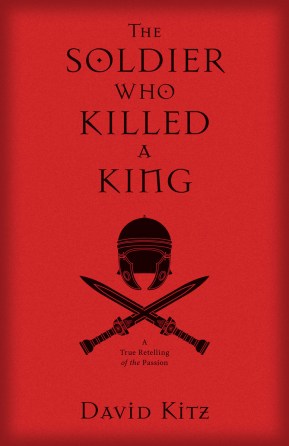 I have no idea whether there will be a movie, but the book is written in a way easily suited to the transition. This first person storytelling, by the centurion who initially saw Jesus during the commotion of His triumphal donkey-riding Palm Sunday entry into Jerusalem and was days later ordered to drive the spikes into Christ’s outstretched palms, effortlessly created in my mind’s eye, images of Marcus Longinus, his family and both friends and foes encountered in this particularly demanding week of his Roman military service in the Judean outpost of Jerusalem. Kitz’s vibrant words breathed life into fictional and non-fictional names in this re-telling of the Holy Week story.
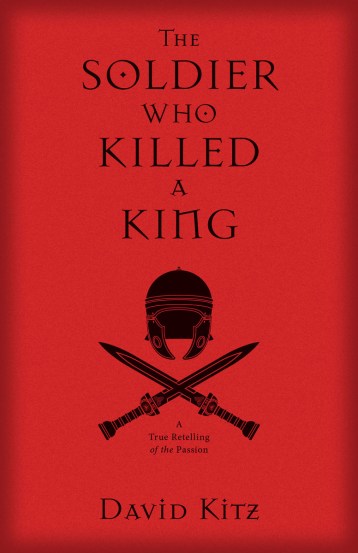 It was a pleasure to work with the dedicated team at Kregel Publications to bring this literary project to fruition. From the editors to the design and marketing team, I felt heard and respected every step of the way. Thanks to everyone at Kregel for the time and effort they put into my novel. (I have decided to avoid listing names for fear of missing someone.) Your dedication and hard work is much appreciated.
 I think it’s safe to say that after years of reading about Christ, I found the most gripping, dramatic account of His passion that I’ve ever read. It arrived in the form of a novel called THE SOLDIER WHO KILLED A KING, written by David Kitz, whom I wholeheartedly thank for the signed copy of the novel. I also hereby declare that the views you are about to read are entirely my own. This is what this book fully deserves, ’cause, to say it briefly, it’s awesome!


