Tags
David Kitz, enemies, foes, honey, Ottawa River, punishment, Rock, satisfaction, the LORD, wheat
I will praise Him!

Ottawa River backwaters — photo by David Kitz
03 Saturday Jun 2017
Tags
David Kitz, enemies, foes, honey, Ottawa River, punishment, Rock, satisfaction, the LORD, wheat

Ottawa River backwaters — photo by David Kitz
01 Thursday Jun 2017
Posted in Books by David Kitz, Psalms
Tags
Canadian Bible Society, Christ, Christ's Passion, crucifixion, David Kitz, donkey-riding King, historic novel, Jesus, Kregel, Navigator Church Ministries, novel, Officers’ Christian Fellowship, One Way Ministries, resurrection, the cross
It’s very gratifying to have reputable people say good things about a book you have written. The following endorsements mean a lot to me:
“The best book I have read in years. A compelling read—I couldn’t put it down.” Doug Sprunt, One Way Ministries
“The most gripping account of the crucifixion I have ever read.” Wilf Wight, eastern Ontario district director, Canadian Bible Society
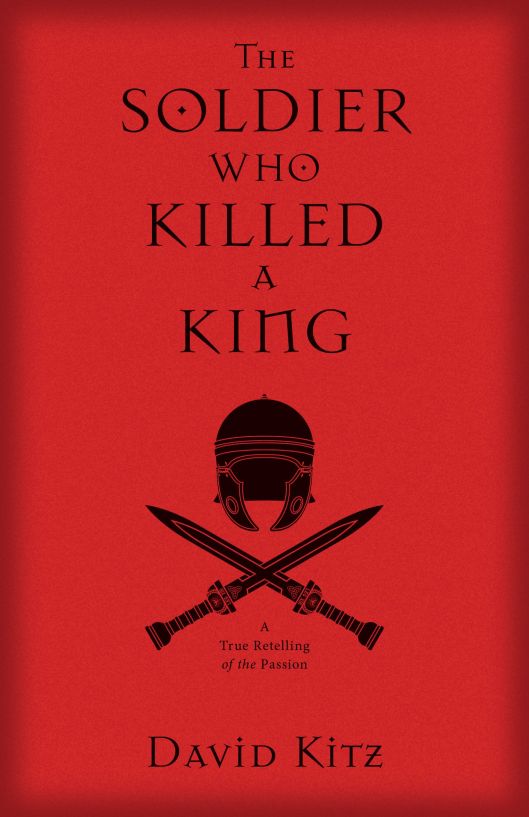
New from David Kitz and Kregel Publishing — now available for preorder
“I was at the foot of the cross. I stepped inside the empty tomb. This book took me there.” Robert DuBroy, cofounder of CHRI-FM, Ottawa, Ontario
“An awesome read: captivating, spellbinding, inspiring! Through the author’s masterful writing, the centurion stood out as a real and personable individual. . . . The book also helped me visualize Jesus, my Savior, and his person and work for the forgiveness of my sins, for my daily walk, and for the eternal life he has in store for all who believe.” Cliff Kentel, Prince of Peace Lutheran Church, Regina, Saskatchewan
“A readable and accurate novel about Jesus Christ’s last week on earth. David Kitz’s portrayal of the collision between pagan Rome and temple Judaism is completely plausible. And as a perfect antidote to the faux expertise of Dan Brown’s The Da Vinci Code, Kitz provides over a hundred endnotes and a handful of thumbnail biographies at the end of his book.” Joe Woodard, Calgary Herald
“Story has a way of capturing our attention and enabling truth to move from head to heart. David Kitz creatively unpacks the events of Passion Week as seen through a Roman centurion’s eyes. Through vivid word pictures, we see the whip-sliced back of our Savior and hear the pounding of each nail that affixed him to the cross. We walk these last steps of Jesus’s earthly ministry, leading to his death, burial, and triumphant resurrection from the dead. Kitz better helps us to do as the apostle John encourages: ‘See what great love the Father has lavished on us, that we should be called children of God!’ (1 John 3:1).” Dean Ridings, author of The Pray! Prayer Journal and communications director of Navigator Church Ministries
“This engaging, hard-hitting narrative is a distillation of Kitz’s study and prayer over fifty years as a pastor and educator, steeped in the wonder of this story. As a novelist, he reveals profound respect for the historical record through his characterization of Marcus Longinus, a Roman centurion who is unwillingly caught in the power struggles of the day. In contrast to the stench of these political machinations, the donkey-riding King emerges in the Roman world offering an entirely new way for humankind to be reborn. The Roman centurion is like us, caught between worlds. Who is king? Why? The Son of God shows unlimited compassion through healing the sick and feeding the hungry, and his purity catches the attention of the masses in a drama that still shakes the world, one aching, open, humble heart at a time.” Dr. Darlene L. Witte-Townsend, former professor of education, Johnson State College
“One of the most exceptional biblical fiction books I have ever read. I was struck by the everyday events and people affected by the dramatic climax of the cross, which Kitz presents on an equal level with Mel Gibson’s The Passion of the Christ. Extremely well documented historically and biblically, the narrative transports you back in time and evokes both grief and thanksgiving as you follow the soldier’s own emotional turmoil in grappling with the dramatic events of the darkest day in history. Like him you will be led to cry out in both despair and trust, ‘Surely this was the Son of God!’” Heather Goodwin, former manager of the Baptist Bookroom, New Brunswick
“David Kitz has written an intriguing book. Taking the point of view of the centurion who crucified Christ is new and fresh and gives the reader much to contemplate. Even though I knew the story, I felt compelled to read on to see how Kitz would unfold the drama. Excellently done!” Tami Waring, Officers’ Christian Fellowship, Maxwell-Gunter Air Force Base
For the month of June The Soldier Who Killed a King is available for preorder from Kregel Publishing for the early bird price of $10.99. The worldwide release date is July 25th.
Place your order today: http://www.kregel.com/fiction/the-soldier-who-killed-a-king/

21 Sunday May 2017
Posted in Books by David Kitz, Psalms
Tags
Caiaphas, centurion, David Kitz, Holy Week, Jesus, King Herod, Kregel, Longinus, Passion Week, Pontius Pilate, terrorist
A stunning story of Holy Week through the eyes of a Roman centurion

New from David Kitz and Kregel Publishing — now available for preorder
Watch the triumphal entry of the donkey-riding king through the eyes of Marcus Longinus, the centurion charged with keeping the streets from erupting into open rebellion.
Look behind the scenes at the political plotting of King Herod, known as the scheming Fox for his ruthless shrewdness.
Get a front-row seat to the confrontation between the Jewish high priest Caiaphas and the Roman governor Pontius Pilate.
Understand as never before the horror of the decision to save a brutal terrorist in order to condemn the peaceful Jew to death.
If you’ve heard the story of Passion Week so often it’s become stale, now is the time to rediscover the terrible events leading from Jesus’s humble ride into the city to his crucifixion. The Soldier Who Killed a King will stun you afresh with how completely Christ’s resurrection changed history, one life at a time.
To pre-order directly from the publisher click on the link below:
http://www.kregel.com/fiction/the-soldier-who-killed-a-king/
20 Saturday May 2017
Posted in Books by David Kitz, Psalms
Tags
American Bible Society, concertos, David Kitz, God, hymns, praise, praise choruses, Psalms, Psalms Alive!
The Psalms Speak to our Deepest needs!
Within the Psalms we hear the deepest longings of the human heart. Here we find the full range of human experience—an experience that brings us face to face with God. Our joys and triumphs are reflected here. Our spirits soar to the heavens, but we also plumb the depths of tragic despair. Is it any wonder then, that throughout the ages men and women have found refuge in the Psalms.

237 pages, trade paperback
In the Psalms we find the wellspring of praise. This has been the churches’ fount of worship, from ancient hymns, to stately concertos, to modern praise choruses, they all find their source in the Psalms.
“David Kitz paints pictures with words, taking lessons from Scripture and nature to offer us a three-dimensional, multi-sensory relationship with God.” — Robert L. Briggs, Executive Vice President, American Bible Society
Yes, my devotional study, Psalms Alive! Connecting Heaven and Earth is available for purchase. Click on the link below for reviews and more details.
http://www.davidkitz.ca/bookcart/index.php?route=product/product&product_id=62&search=psalms
18 Tuesday Apr 2017
Tags
David, David and Goliath, David Kitz, faith, God, habits, imprisonment, National Gallery of Canada, prison, prisons of the mind, the LORD, thought patterns, trapped
Reading: Psalm 142
(Verses 5-7)
I cry to you, LORD;
I say, “You are my refuge,
my portion in the land of the living.”
Listen to my cry, for I am in desperate need;
rescue me from those who pursue me,
for they are too strong for me.
Set me free from my prison,
that I may praise your name.
Then the righteous will gather about me
because of your goodness to me (NIV).
Reflection
Though I have visited prisoners, I have never been imprisoned, at least not in the classic sense of imprisonment. But in the broader meaning of the word, we all have been confined to prisons—prisons of the mind. Some of us are prisoners of counterproductive habits, or prisoners within crippling relationships that hinder personal growth and fulfillment. Prisons come in many forms. Some of them are disguised as places of personal liberty, but all too often the thing we freely choose can become a cruel slave master.

‘Sky root’ behind the National Gallery of Canada — photo by David Kitz
When David prayed the words of this psalm, he was not in a prison. He was confined to a cave or the immediate region around a cave, because he was a fugitive from King Saul who was trying to kill him. He voices this prayer: Listen to my cry, for I am in desperate need; rescue me from those who pursue me, for they are too strong for me. Set me free from my prison that I may praise your name.
Are you in a prison? Is fear of discovery locking you up? Are you trapped in habits, addictions or thought patterns that are too strong for you?
David was in a weak and vulnerable position. Saul, his personal enemy had an entire army on his side. For the second time in his life, David was in what we call the classic David and Goliath situation. He was outnumbered and in every way the advantage belonged to his opponent.
In such adverse circumstances we need God on our side. We need the resources of heaven to tip the scale in our favor. That is precisely what happened in David’s case. The LORD arranged situations that gave all the advantage to David. David ended up sparing Saul’s life on two occasions. For a full account read 1 Samuel 24 & 26.
David ends this psalm with an affirmation of his faith in God. Set me free from my prison that I may praise your name. Then the righteous will gather about me because of your goodness to me. That is exactly what happened. When the LORD set David free from his prison, righteous men took note, and they rallied around David as their leader because they saw that the LORD was with him.
Response: LORD God, set me free from the negative habits and thought patterns that imprison me. Help me identify them one by one, and then help me gain the victory over them in the power of Jesus. Amen.
Your Turn: Can you identify habits or thought patterns that harm your relationships with others?
17 Monday Apr 2017
Tags
cave dwelling, cavemen, caves, complaint, complaint department, David, David Kitz, God, King Saul, pray, Prayer, the LORD, trouble, unfair
Reading: Psalm 142
A maskil of David. When he was in the cave. A prayer.
(Verses 1-4)
I cry aloud to the LORD;
I lift up my voice to the LORD for mercy.
I pour out before him my complaint;
before him I tell my trouble.
When my spirit grows faint within me,
it is you who watch over my way.
In the path where I walk people have hidden a snare for me.
Look and see, there is no one at my right hand;
no one is concerned for me.
I have no refuge; no one cares for my life (NIV).
Reflection
Have you been in a cave? Despite what we read and know about cavemen, caves are not great living spaces. They are dark and dank. They may be fine places to retreat to in times of mortal danger, but they leave much to be desired as a permanent habitation.
![IMG_20170413_112844[207]](https://davidkitz.blog/wp-content/uploads/2017/04/img_20170413_112844207.jpg?w=529)

Spring melt waters, Old Chelsea, QC — photo by David Kitz
Here David hit rock bottom. From this low point in his life he called out to the LORD with these words: I cry aloud to the LORD; I lift up my voice to the LORD for mercy. I pour out before him my complaint; before him I tell my trouble.
The Psalms are the prayer book of the Bible. With this psalm David provides us with an excellent example of prayer—prayer from the lowest position—the position of weakness and vulnerability. The future looked bleak for David. He was living the precarious life of a fugitive. At any time, he could be discovered or betrayed. Would today be his last day?
Where did David take his troubles? He took them to the LORD.
Where do you go with your troubles? Where do you take your complaints? The LORD’s complaint department is open for business. There you will find a listening ear.
There is a host of things that are unfair in this life—sometimes brutally unfair. Are we supposed to suppress our outrage? Should we hide our hurt and pretend that all is well, while on the inside the bottom is falling out of our life? No. A thousand times, no! Take it to the LORD in prayer. That’s what David did. He cried out to his God, and his God answered.
Response: LORD God, when I reach a low point you are there. Hear me when I am down. I bring my troubles and sorrows to you. They are more than I can bear. Jesus, be my burden bearer. Amen.
Your Turn: Are you in a cave or a desert place? Take some time to call out to God.
14 Tuesday Mar 2017
Tags
Babylon, David Kitz, history, idolatry, Israel, Jewish nation, King Solomon, Moses, Old Testament, Psalms, Ten Commandments
Reading: Psalm 137
(Verses 1-6)
By the rivers of Babylon we sat and wept
when we remembered Zion.
There on the poplars we hung our harps,
for there our captors asked us for songs,
our tormentors demanded songs of joy;
they said, “Sing us one of the songs of Zion!”
How can we sing the songs of the LORD
while in a foreign land?
If I forget you, Jerusalem,
may my right hand forget its skill.
May my tongue cling to the roof of my mouth
if I do not remember you,
if I do not consider Jerusalem
my highest joy (NIV)
Reflection
It’s difficult to pinpoint the time in history when many of the Psalms were written. Many scholars believe that the Old Testament was compiled over a period of about 900 to 1,000 years. As for the Book of Psalms, there is considerable evidence to suggest that psalms were collected from three distinct periods: the reign of King David (1 Chronicles 23:5), the rule of Hezekiah (2 Chronicles 29:30), and during the leadership of Ezra and Nehemiah (Nehemiah 12:24).[1]

There on the poplars we hung our harps — photo by David Kitz
Psalm 137 is distinct, because we can tell from its content that this psalm was written early during the period of the Babylonian exile. Memories of Nebuchadnezzar’s destruction of Jerusalem in 586 BC were still fresh—etched with bitterness and pain in the mind of the author.
There are two great pivot points in the history of Old Testament Israel. The first is the liberation of Israel from Egypt and the conquest of the holy land. The second is the destruction of Jerusalem and the temple, and the subsequent seventy-year exile in Babylon. The mercy and power of God brought about the first pivotal event. The disobedience and idolatry of man set in motion the catastrophe of the second event.
From its inception the Jewish nation flirted with idolatry. While Moses was receiving the Ten Commandments, the people were reveling before a golden calf. King Solomon set up idols in Jerusalem so his foreign wives could worship their gods. See 1 Kings 11:1-8. This duplicity continued generation after generation until the Babylonians swept in and destroyed Jerusalem. Judgment brought change.
Response: Father God, I don’t want to learn things the hard way. I want to be quick to obey you. Help me to learn from the lessons of history. You are the one, true God. I worship you. Amen.
Your Turn: How faithful are you to the LORD? Do other interests draw you away?
[1] K.R. “Dick” Iverson, Spirit Filled Life Bible, New King James Version, Jack W. Hayford, General Editor, Thomas Nelson Publishers, Nashville, TN, 1991, p. 750.
11 Wednesday Jan 2017
Tags
adversity, created, David Kitz, formed, glory, God's image, life purpose, meditate, purpose, touched by God
Reading: Psalm 119
י Yodh
(Verses 73-80)
Your hands made me and formed me;
give me understanding to learn your commands.
May those who fear you rejoice when they see me,
for I have put my hope in your word.
I know, LORD, that your laws are righteous,
and that in faithfulness you have afflicted me.
May your unfailing love be my comfort,
according to your promise to your servant.
Let your compassion come to me that I may live,
for your law is my delight.
May the arrogant be put to shame for wronging me without cause;
but I will meditate on your precepts.
May those who fear you turn to me,
those who understand your statutes.
May I wholeheartedly follow your decrees,
that I may not be put to shame (NIV).
Reflection
You have been touched by God. Pause. Consider that for a moment.
When did God touch you? According to the psalmist it happened at the very beginning of your life. Your hands made me and formed me; give me understanding to learn your commands.

Winter glory — photo by David Kitz
Implied in that statement is God’s personal care—His attention to detail. You are not an accident or an afterthought in the mind of God. He formed you with a plan and a purpose. According to the apostle Paul, a large part of that purpose is that you may know Him, and be conformed to the image of His dear Son. And we know that in all things God works for the good of those who love him, who have been called according to his purpose. For those God foreknew he also predestined to be conformed to the image of his Son, that he might be the firstborn among many brothers and sisters (Romans 8:28-29).
When we face difficulties, hardship and suffering has God abandoned us? The answer is a resounding no. Consider the psalmist’s response to these things: I know, LORD, that your laws are righteous, and that in faithfulness you have afflicted me. May your unfailing love be my comfort, according to your promise to your servant.
Every adversity you face should bring you nearer to God. See it as an opportunity to learn, grow and be changed into someone who is more like Jesus. He did not run from adversity, but instead faced suffering and death head on. God the Father brought Jesus safely to the other side, and it’s His purpose to bring you through to glory too.
Response: Father God, I want to be like Jesus. Thank you for touching my life and forming me with your hands. I am yours—yours by creation—yours by redemption. I will meditate on your precepts. Amen.
Your Turn: Have you questioned God’s love for you? Are you living out His plan?
29 Thursday Dec 2016
Tags
blessing, David Kitz, Dow's Lake, God's blessing, God's word, holiness, moral rot, Ottawa ON, the law of the LORD
Reading: Psalm 119
א Aleph
(Verses 1-8)
Blessed are those whose ways are blameless,
who walk according to the law of the LORD.
Blessed are those who keep his statutes
and seek him with all their heart—
they do no wrong
but follow his ways.
You have laid down precepts
that are to be fully obeyed.
Oh, that my ways were steadfast
in obeying your decrees!
Then I would not be put to shame
when I consider all your commands.
I will praise you with an upright heart
as I learn your righteous laws.
I will obey your decrees;
do not utterly forsake me (NIV).
Reflection
We are about to start a twenty-two day journey through Psalm 119, the longest Psalm in the Bible. This is also an acrostic poem, which in this case means each stanza of this poetic psalm begins with a different letter of the Hebrew alphabet. The section above for instance, begins with the letter Aleph, which roughly corresponds to our letter A. Also, within each alphabetic stanza are eight verses, which all begin with the same Hebrew letter. In this way the psalm’s composer works his way through the entire twenty-two letters of the Hebrew alphabet. This psalm is a truly remarkable literary composition, which was originally structured to be memorized, like the alphabet. Alas, for the English reader, much of the elaborate, intricate beauty of this psalm is lost the moment it is translated from its original tongue.

A misty September morning near Dow’s Lake, Ottawa, ON — photo by David Kitz
The theme of this psalm is consistent throughout. It is a poetic testimony in praise of God’s holy, unchanging word. Here we find the alpha and omega of the psalms—a literary tribute to the A to Z wonder of God’s word. Every letter trumpets the salutary goodness of God’s written word.
From the beginning of this poetic masterpiece the author recognizes his need. His life needs to be governed by the law of the LORD. His goal and heart’s desire is to lead a blameless life. God’s blessing comes to such a person. Blessed are those whose ways are blameless, who walk according to the law of the LORD. Blessed are those who keep his statutes and seek him with all their heart—they do no wrong but follow his ways.
In a world of injustice and moral rot the words of Psalm 119 pierce like a steel-tipped bullet to the heart.
Response: LORD God, like the psalmist I want to fall in love with your word. Here is the purpose to my desire. I want to live a blameless life that brings honor to my Maker because you are good. Amen.
Your Turn: Is holy living one of your goals? Do you see value in leading a blameless life before God?
16 Friday Dec 2016
Reading: Psalm 118
(Verses 1-7)
Give thanks to the LORD, for he is good;
his love endures forever.
Let Israel say:
“His love endures forever.”
Let the house of Aaron say:
“His love endures forever.”
Let those who fear the LORD say:
“His love endures forever.”
When hard pressed, I cried to the LORD;
he brought me into a spacious place.
The LORD is with me; I will not be afraid.
What can mere mortals do to me?
The LORD is with me; he is my helper.
I look in triumph on my enemies (NIV).
Reflection
Psalm 118 is a psalm of thanksgiving and triumph, over adversaries and adversity. Many of the enemies we encounter have no human face; instead they are life circumstances, worldly thinking, or schemes hatched in hell. We all have struggles and obstacles that we must overcome. The good news found in this psalm is that God is on our side. When we surrender to the LORD, we join the winning side. Then we can join the psalmist in this declaration: The LORD is with me; he is my helper.

A winter walk in the park — photo by David Kitz
This psalm begins and ends with this statement: Give thanks to the LORD, for he is good; his love endures forever. From ancient times this psalm was likely used in public worship. It may well have been used in a kind of call and response with the priest calling or singing out, “Give thanks to the LORD, for he is good,” while the congregation answers back, “his love endures forever.”
I think at various times we all have experienced the truth of the following words: When hard pressed, I cried to the LORD. If you have prepared for a semester-ending-round-of-exams, you know all about being hard pressed. If you have a crucial work deadline, you know all about being hard pressed. If you have spent countless days and hours preparing for a special event, you know all about being hard pressed. Life is full of hard-pressed moments. How we respond in those stressful situations is crucial to our development as citizens of earth and heaven.
In those high pressure moments have you learned to cry out to the LORD? Have you experienced His help? Have you come out the other side as a stronger, more courageous person because you faced your fears? When you called out to God did He bring you through to victory? If the answer is yes, let these words become your response: He brought me into a spacious place. The LORD is with me; I will not be afraid. What can mere mortals do to me?
Response: Father God, I am facing some deadlines. You are my helper, LORD. I call out to you. I want to triumph over the obstacles I face. I thank you in advance for the victory. Amen.
Your Turn: Has God helped you in a high pressure situation? I would love to hear about your victory.