• Home
  • About
  • DavidKitz.ca
  • Youtube Videos
  • Books by David
  • Books on Amazon.com

I love the Psalms

~ Connecting daily with God through the Psalms

I love the Psalms

Tag Archives: Elijah

Your Prayer Has Been Heard

08 Monday Dec 2025

Posted by davidkitz in Advent, Psalm 21

≈ Leave a comment

Tags

angel, angel of the Lord, Elijah, Elizabeth, Holy Spirit, Jesus, John the Baptist, Prayer, Psalms, success, the LORD, victory, Zechariah

Today’s quote and prayer from
“Psalms 365: Develop a Life of Worship and Prayer


Today’s
Reading: Psalm 21:1-7

Listen to today’s reading by Jonathan Dent:

https://davidkitz.blog/wp-content/uploads/2025/12/psalm-211-7-mix1-final.mp3

Heavenly Father,
help me to rightly handle the success you bring.
Lord Jesus,
you are my victory over death,
hell, and the grave.
Help me remain thankful.
You are more wonderful than I can imagine.
I praise you.
I owe any success I have achieved to you,
Lord Jesus.
Amen.

— — — —

The Birth of John the Baptist Foretold

Then an angel of the Lord appeared to him,
standing at the right side of the altar of incense.

When Zechariah saw him,
he was startled and was gripped with fear.

But the angel said to him:
“Do not be afraid, Zechariah;
your prayer has been heard.
Your wife Elizabeth will bear you a son,
and you are to call him John.

He will be a joy and delight to you,
and many will rejoice because of his birth,

for he will be great in the sight of the Lord.
He is never to take wine or other fermented drink,
and he will be filled with the Holy Spirit
even before he is born.

He will bring back many of the people of Israel
to the Lord their God.

And he will go on before the Lord,
in the spirit and power of Elijah,
to turn the hearts of the parents to their children
and the disobedient to the wisdom of the righteous—
to make ready a people prepared for the Lord.”

(Luke 1:11-17 NIV)*

Para la publicación de Salmos 365 de hoy en español haga clic aquí.

bgbg_v4.3_1501818
* NEW INTERNATIONAL VERSION, COPYRIGHT ©1973, 1978, 1984, 2011 BY BIBLICA

Pray for enduring peace in Israel and Gaza,
and continue to pray for peace to return to Ukraine and Russia!

Volume I of Psalms 365: Develop a Life of Worship and Prayer won the Best Book of the Year Award from The Word Guild and Volume II has won the Best Devotional of the Year Award. For those who love God’s word, this three-book series is an ideal way to daily meet with the Lord. To purchase or for a closer look click here.

New from David Kitz

James—the brother of Jesus—who was this man? What evidence do we have that this “brother of our Lord” even existed?

David Kitz digs deep into archeology, family dynamics, church history, and the biblical texts. What emerges from his research is a portrait of a decisive, pivotal leader who embodied the will and character of Jesus Christ.

But how did James—James the unbeliever—transform to become a leader who changed the course of world history? In these pages you will uncover the answer and rediscover for yourself the life-changing power of the gospel.

To view further details or purchase this or other books directly from the author click here.

Elijah’s Flight from Woman

30 Sunday Nov 2025

Posted by davidkitz in Psalms, The Elisha Code

≈ Leave a comment

Tags

Bible, boys, E. Stanley Jones, Elijah, Elisha, gospel, healthy men, Heavenly Father, hiding from God, Jesus, Jezebel, prophets, sacrifice

Then the man and his wife heard the sound of the LORD God
as he was walking in the garden in the cool of the day,
and they hid from the LORD God among the trees of the garden.
 But the LORD God called to the man,
“Where are you?”
(Genesis 3:8-9, NIV)

Before continuing to examine the typological link between Elisha and Jesus, a closer look at the low point in Elijah’s ministry is warranted. We are all prone to temptation and often we are blind to our own weaknesses. Thousands of reputable ministries have been tarnished or ruined after notable accomplishments.

It is remarkable how Elijah had great success in challenging the 450 prophets of Baal, calling down fire from heaven, and then having these false prophets put to death (1 Kings 18:20-40). Finally, through prayer, he broke the three-year drought that had ravaged the land (Kings 18:41-46).

But after being cursed by Queen Jezebel, he runs away, becoming depressed and suicidal. How could just one woman have such a devastating impact on this hero of Israel? To what degree was she involved in the occult, and the manipulation of others through secret word curses?

Now Ahab told Jezebel everything Elijah had done and how he had killed all the prophets with the sword. So Jezebel sent a messenger to Elijah to say, “May the gods deal with me, be it ever so severely, if by this time tomorrow I do not make your life like that of one of them.” (1 Kings 19:1-2, NIV)

Jezebel believed she could destroy Elijah just like she destroyed many other men before him. But ultimately, she did not finish well.[i]

In the Alcoholics Anonymous twelve-step program, the acronym HALT is used to identify occasions when we are most vulnerable to temptation and even despair. Elijah suffered from all four temptations after his exhausting victory on Mount Carmel. His stunning success left him 1) Hungry 2) Angry 3) Lonely and 4) Tired.

What began as a flight from the woman, Jezebel, became a flight from God.

But God, in his compassion, ministered to Elijah’s four needs, giving him food and drink, counsel, companionship, and sleep (1 Kings 19:3-9). When Elijah said, “take my life”, it is reminiscent of Jonah after his success in Nineveh, where he too did not want to live. In that loss of hope, God spoke to Elijah not in the thunderstorm, earthquake, and pyrotechnics, but in that still small voice—the whisper of the Spirit (1 Kings 19:11-13).

The flight from woman and the LORD ended when Elijah started listening and instead of just ranting at God.

He replied, “I have been very zealous for the LORD God Almighty. The Israelites have rejected your covenant, torn down your altars, and put your prophets to death with the sword. I am the only one left, and now they are trying to kill me too”
(1 Kings 19:14, NIV).

Elijah had to give up the lie that he was the only one left. And furthermore, in listening to God, Elijah had to admit that he was not ultimately in control.

E. Stanley Jones

One of Ed’s heroes, E. Stanley Jones, listened to that still, small voice every day for one hour in the morning and one hour at night. He called it his listening post. Facing total burnout, Jones told God that he was done. God offered to take over if he would let go and let God order his life. He experienced Jesus’ healing when he came to a deep self-surrender. Elijah on Mount Horeb similarly had to come to a self-surrender. Surrender is like death for spiritual superheroes like Elijah. It is the breaking point that is often needed so we can be fully yielded to God’s will.

This flight from woman can be seen as representing a crisis in masculinity. CS Lewis scholar Leanne Payne wrote a remarkable book Crisis in Masculinity which she dedicated to Dr Karl Stern.  He was a Montreal Jewish psychiatrist (and believer in Jesus) who wrote the 1965 book Flight from Woman.[ii]

Leanne Payne, mentored by the healing pioneer Agnes Sanford, had a remarkable ministry of bringing wholeness to broken people, particularly those struggling with identity issues. She saw that many men were running from the feminine, because they were in crisis with their own masculine identity. The image of Narcissus to Leanne represented how many men curve in on themselves in self-worship.

Leanne was powerfully used in helping many men become whole through embracing their true identity as sons of the heavenly Father. Through healing prayer, Leanne helped many recover the divine imagination and creativity that had been lost in their self-absorption. All of us need healing in areas where the image of God has been broken inside us. Such powerful encounters with the Holy Spirit enable us to become more fully human. Such healing gives men the courage to responsibly embrace the unique challenges of marriage and family.

This crisis in masculinity has only deepened since the days of Payne and Stern. The identity confusion for young men is often paralyzing. The well-known Canadian psychologist Dr. Jordan Peterson often talks about how men are now the minority in university, and how many of them are struggling to find direction and academic accomplishment. These difficulties often begin in the elementary grades, where all too often there are no male teachers, few positive male role models, and academic performance among boys has seen an alarming decline.

We are witnessing a well-documented male aversion to leadership. Both boys and men are refusing to assume the mantel of leadership.

In post-modernism, men are often defined as the problem. Our culture deconstructs people through guilt and shame, and then often leaves them in nihilistic despair. In contrast, the gospel gives hope to people.

While Jordan Peterson is not yet a Christ follower, he has discovered how the Bible can help men be more authentic in living out their life’s calling as responsible contributors. Healthy men fight for their families and marriages. They do not run from them. Healthy men sacrifice for their families. They don’t sacrifice their wives and children on the altar of personal fulfillment and business success.

Elijah has much to teach men in our 21st century context. Even after he ran from woman, he ultimately was found by God, and returned to face the challenges that God had set before him.

Hiding never works. It did not work for Adam and Eve, and it did not work for Elijah. Everyone loses when men hide from the responsibilities of life.

This is the twelfth weekly excerpt from the award-winning book 
The Elisha Code & the Coming Revival 

A soul-gripping read.
Is a return-to-Jesus revival possible in our time?
This book points the way forward.
For details click here.

[i] 2 Kings 9:30-37

[ii] “Karl Stern: Freudian to Catholic”, “The Flight From Woman (1965), a philosophical treatise on modern society’s polarization of the sexes and its de-feminization, would make him a common name in women’s magazines”. https://www.tabletmag.com/sections/arts-letters/articles/karl-stern-freudian-catholic

Regime Change: the Mission of the Dynamic Duo

23 Sunday Nov 2025

Posted by davidkitz in The Elisha Code

≈ Leave a comment

Tags

Ahab, Elijah, Elisha, fire from heaven, God's power, humility, idolatry, Jesus, Jezebel, John the Baptist, lies, Mount Carmel, pride, Pride and Humility, regime change, repentance, Russia, the LORD, Ukraine

At that time Jesus, full of joy through the Holy Spirit, said, 
“I praise you, Father, Lord of heaven and earth,
because you have hidden these things from the wise and learned,
and revealed them to little children. 
Yes, Father, for this is what you were pleased to do.
(Luke 10:21, NIV)

Before sunrise on February 24, 2022, Russia launched a multi-pronged attack on Ukraine by air, land, and sea. Kiev, the capital, was expected to fall within days. President Biden offered to evacuate Ukrainian President Volodymyr Zelenskyy from the besieged capital. But a resolute and defiant Zelensky replied, “I need ammunition, not a ride.”[i]

What was Vladimir Putin’s objective in launching this unprovoked Russian attack on his smaller southern neighbor? His immediate goal was regime change. He wanted to oust the democratic, pro-western government of Ukraine and replace it with a pro-Russian regime subservient to his will.

Putin failed in his immediate objective. The Ukrainian defenders mounted a fierce resistance. The invaders were beaten back, though they engaged in rape, and a wanton killing of civilians, and inflicted massive destruction.

Photo by Pixabay on Pexels.com

At the time of this writing, the war rages on. The outcome remains uncertain. Regime change may yet come. But will the regime change be in Kiev or in Moscow? Time will tell.

Here is what we know with certainty from the Scriptures. The LORD wants regime change. Elijah and Elisha, the Old Testament dynamic duo, were on a mission. They had an assignment directly from the LORD God Almighty. What was their mission—the task the LORD assigned to them?

In broad terms their assignment was regime change. The northern Kingdom of Israel had turned its back on God—the God who generations earlier had rescued them from slavery in Egypt. Worse yet, Israel had turned to idolatry. Under the autocratic rule of Ahab and Jezebel, the worship of the fertility gods Baal and Asherah flourished.[ii]

First Elijah, and then, Elisha was tasked with bringing the wayward people of God back to worshipping Yahweh. But King Ahab and Queen Jezebel—Satan’s power couple—stood in the way.

Furthermore, this was a life and death struggle for the minds and hearts of the people.

Amid a famine brought on by a severe drought some dared to defy Israel’s King and Queen. Obadiah, Ahab’s palace administrator, was such a man. A devout believer in the LORD, Obadiah risked his life.

While Jezebel was killing off the Lord’s prophets, Obadiah had taken a hundred prophets and hidden them in two caves, fifty in each, and had supplied them with food and water (1 Kings 18:4, NIV).

In response, Elijah courageously confronted King Ahab and challenged him to assemble all of Israel for a duel to the death on Mount Carmel. Ahab was to bring with him “the four hundred and fifty prophets of Baal and the four hundred prophets of Asherah, who eat at Jezebel’s table” (1 Kings 18:19, NIV).
Thus the stage was set for what many consider the greatest challenge and display of God’s power in the Hebrew Scriptures.

          Elijah went before the people and said, “How long will you waver between two opinions? If the Lord is God, follow him; but if Baal is God, follow him.”
          But the people said nothing.
Then Elijah said to them, “I am the only one of the Lord’s prophets left, but Baal has four hundred and fifty prophets. Get two bulls for us. Let Baal’s prophets choose one for themselves, and let them cut it into pieces and put it on the wood but not set fire to it. I will prepare the other bull and put it on the wood but not set fire to it. Then you call on the name of your god, and I will call on the name of the Lord. The god who answers by fire—he is God.”
Then all the people said, “What you say is good”
(1 Kings 18:21-24, NIV).

The LORD vindicated his prophet, Elijah, by sending fire from heaven that “burned up the sacrifice, the wood, the stones and the soil, and also licked up the water in the trench” (1 Kings 18:38, NIV).

The prophets of Baal were vanquished.[iii] But rather than turn on Ahab and have him killed as well, Elijah declares the king should go and celebrate because a drought-ending rainfall was on its way. Then Elijah ascended the mountain, fell on his knees, and prayed for the rain to come, and after much prayer the downpour arrives.[iv]

Why this show of mercy to Ahab, the tyrant and accessory murder?[v] If the ultimate goal is regime change, then why not eliminate the man who stood in the way? Why didn’t the prophet mete out God’s wrath and retribution? Instead, Elijah portrays mercy and the abundant grace of God. Why?

The answer lies at the heart of the gospel message. The gospel message according to Jesus is all about regime change. It’s about letting King Jesus rule our hearts and minds. The government that affects us most directly isn’t in Washington, London, Moscow, or Ottawa, and it isn’t in a state or provincial capital. The government that affects us most directly is the government of our heart and mind. Is Jesus enthroned there? Is he governing your decision making? Is he calling the shots?

Far too often, we think a change of government at the national, state, or local level will transform our lives. That’s a political fantasy politicians love to peddle. True transformational change begins at the individual level. And there is nothing more transformational than spiritual rebirth. Jesus’ conversation with Nicodemus reveals that truth.[vi]

In Elijah’s interaction with Ahab, we see this principle of repentance and rebirth at work. Elijah was working to change the heart of the king. He wanted to see the LORD enthroned there. What could bring about that profound change in the king Ahab’s heart?

Clearly there was a need for repentance. And what could bring about that change? A jaw-dropping, heart-stopping demonstration of God’s power set the stage for genuine repentance. Surely, the miracle of fire falling from heaven would result in a change of heart and a change allegiance—a change from the worship of Baal to the worship of Yahweh.

Take up the Armor of God

Secondly, nothing melts stony hearts like the kindness and mercy of God. Elijah demonstrated that mercy by his treatment of Ahab, and by praying for the rain that ended a three and-a-half-year drought and famine in the land.[vii]

There’s something extravagant about the patience and mercy of God.

Don’t forget that the Lord is patient because he wants people to be saved
(2 Peter 3:15a, CEV).

Or do you show contempt for the riches of his kindness, forbearance and
patience, not realizing that God’s kindness is intended to lead you to repentance?
(Romans 2:4, NIV).

 In his interactions with Ahab, Elijah consistently displayed the undeserved kindness and patience of God. Nothing demonstrates this better than Elijah’s confrontation of Ahab after the incident involving Naboth’s vineyard. Jezebel plotted to have Naboth killed, and Ahab then seized Naboth’s land.[viii]

Elijah spoke these prophetic words to the king:

‘This is what the Lord says: In the place where dog licked up Naboth’s
blood, dogs will lick up your blood—yes, yours!’”
(1 Kings 21:19, NIV).

Of Jezebel, Elijah said:

“And also concerning Jezebel the Lord says: ‘Dogs will devour Jezebel by the
wall of Jezreel’
(1 Kings 21:23, NIV).

But what happen next is truly astonishing. We read that Ahab “tore his clothes, put on sackcloth, and fasted. He lay in sackcloth and went around meekly” (1 Kings 21:27, NIV).

And how did the LORD respond to Ahab’s apparent repentance and contrition?

Then the word of the LORD came to Elijah the Tishbite: “Have you noticed how Ahab has humbled himself before me? Because he has humbled himself, I will not bring this disaster in his day, but I will bring it on his house in the days of his son” (1 Kings 21:28-29, NIV).

What this turn of events demonstrates is the power of personal repentance. Genuine repentance has the power to change the course of history. It prevented the brutal end to Ahab’s dynasty during his lifetime.

Was Ahab’s repentance genuine? We can certainly debate that question. It appears that Ahab turned away from sin, but did he turn his affections to the LORD? Did he seek after God? Or was this a caught-with-a-hand-in-the-cookie-jar repentance that signaled he was sorry to be caught, but not sorry enough to change his ways?

Let’s remember that true biblical repentance brings about a regime change in the mind. The selfish ego that ruled for so long must abdicate. God is in charge now. King Jesus governs our thoughts and actions.

Perhaps Ahab experienced a measure of true repentance, but the real power—the true ruler of his life—was Queen Jezebel. She suppressed Ahab’s repentance and conversion, both after fire fell from heaven at Mount Carmel, and after Elijah confronted him over the incident involving Naboth’s vineyard.

For national regime change to occur, the true power behind the throne needed to repent or be replaced. But in this case, the kingpin wasn’t the king. The kingpin was Queen Jezebel. All of Elijah’s efforts appear to be aimed at King Ahab. But the queen remained untouched, unchanged, and unrepentant. And she ruled the day.

By faith, Elijah engineered an astonishing display of God’s power at Mount Carmel. But shortly thereafter, he also displayed an astonishing level of cowardice in the face of Jezebel’s threats.

Frequently, a great victory is followed by great temptation.

           Now Ahab told Jezebel everything Elijah had done and how he had killed all the prophets with the sword. So Jezebel sent a messenger to Elijah to say, “May the gods deal with me, be it ever so severely, if by this time tomorrow I do not make your life like that of one of them.
Elijah was afraid and ran for his life.
(1 Kings 19:1-3, NIV)

How could this prophet display such raw courage one day, and on the next day wilt before the threats of this depraved woman? After all, Jezebel was calling on the same disgraced gods that Elijah had revealed as powerless a day earlier. Where was the God of Elijah now in the face of this threat? Was he hiding, or had he fallen asleep?

Of course, not! But the prophet succumbed to his fleshly nature, sheer exhaustion, and the fear of man—or more precisely the fear of a woman.

Some psychologists see the classic hallmarks of a manic-depressive in Elijah’s response. He swings from extreme highs to extreme lows. He storms the mountain heights of emotion, exerts himself to an extreme,[ix] and then sinks into the depths of despair.

After fleeing to Horeb, the mountain of God, twice Elijah lays out his complaint before the LORD.

“I have been very zealous for the Lord God Almighty. The Israelites have rejected your covenant, torn down your altars, and put your prophets to death with the sword. I am the only one left, and now they are trying to kill me too” (1 Kings 19:14, NIV).

How does the LORD respond to Elijah’s complaint? He has him appoint his successor and then corrects his self-pitying exaggeration. The modern equivalent might be an announcement from your boss that you are fired for just cause. Let’s take a closer look at the LORD’s reply to Elijah:

“Go back the way you came, and go to the Desert of Damascus. When you get there, anoint Hazael king over Aram. Also, anoint Jehu son of Nimshi king over Israel, and anoint Elisha son of Shaphat from Abel Meholah to succeed you as prophet. Jehu will put to death any who escape the sword of Hazael, and Elisha will put to death any who escape the sword of Jehu. Yet I reserve seven thousand in Israel—all whose knees have not bowed down to Baal and whose mouths have not kissed him” (1 Kings 19:15-18, NIV).

Let’s first look at Elijah’s lie and Yahweh’s response to it. Yes, Elijah lied. He said he was the only prophet of the LORD left, yet Obadiah specifically told Elijah that as a faithful follower of the LORD since his youth, he had hidden a hundred prophets of the LORD in two caves.[x] Yet, before the people gathered on Mount Carmel, Elijah repeats his boast about being the only prophet of the LORD left in the land.[xi] Clearly this was not true.

Furthermore, there is false humility in Elijah’s plea before the LORD. He states, “I have been very zealous for the LORD God Almighty.” Though he has been zealous he has made his zeal a point of pride. He has compared himself with others and concluded their faith and sacrifices in the face of severe persecution merit no consideration. His efforts alone are noteworthy. Thus, he concludes he is the only faithful man left.

Depression begins when we believe a lie. Elijah believed the lie that he alone was faithful to Yahweh. In addition, depression breeds isolation and self-pity. Both are hallmarks of the state Elijah is in.

Sadly, this great man of God fell short and now a replacement is needed to continue the deep work he set in motion in Israel. The will and purpose of God must prevail. But the LORD uses pure vessels rather than those tainted by pride.[xii]

Elijah’s failings all too frequently have been repeated by churches and ministries down through the annals of history. God dramatically uses an individual or a movement to bring about a spiritual awakening or renewal. But then pride sets in. A sense of superiority emerges. This is coupled with a degree of exclusivity that manifests itself by restricting fellowship to a certain group or an inner circle. Attitudes or statements declaring that, “We alone have the full truth” begin to emerge.

Soon the Spirit that was so evidently present in the early days of fruitful ministry is absent. Pride sets in and the Holy Spirit flees. The LORD will use a different vessel—the humble vessel wiped clean.

There is a striking parallel between the ministry of Elijah and John the Baptist:

  • There appears to be a very deliberate attempt by John to take on the appearance of Elijah in his dress, diet, and demeanor.[xiii]
  • Both men boldly called the nation to repentance.
  • Both directly confronted the political leaders of their time (Ahab and Herod Antipas).
  • Both sank into states of depression where they questioned their ministry (Elijah at Mount Horeb, John while imprisoned).
  • Both had their life and ministry undermine or cut short by a woman (Jezebel and Herodias).
  • Both sought regime change but failed to see it in their day.
  • Both sowed the seeds of a remarkable transition.
  • Both were succeeded by men who brought the work they began to fruition (Elisha and Jesus).

With Elijah’s fiery departure, the mission of regime change fell to Elisha to accomplish. A double portion of Elijah’s anointing now rests on him, and under the LORD’s guidance through his ministry Elisha performs miracle after miracle—fourteen in total—doubling Elijah’s total.

Though the overall mission of this prophetic dynamic duo remained the same, there are some striking differences between Elijah and Elisha in terms of their calling, ministry, character, and personality. In the same vein, there are striking differences between the New Testament duo of John the Baptist and Jesus.

First, we should note that Elisha came from a wealthy farm family. We read that at the time of his calling, he was plowing with twelve yoke of oxen. A common farm family might have a single yoke (pair) of oxen, but Elisha was plowing with twelve yoke (twenty-four oxen). That’s an astonishing number, and it implies the family farm is enormous.

Elijah went up to him and threw his cloak around him. Elisha then left his oxen and ran after Elijah. “Let me kiss my father and mother goodbye,” he said, “and then I will come with you.”
“Go back,” Elijah replied. “What have I done to you?”
So Elisha left him and went back. He took his yoke of oxen and slaughtered them. He burned the plowing equipment to cook the meat and gave it to the people, and they ate. Then he set out to follow Elijah and became his servant
(1 Kings 19:19-21,NIV).

Elisha left all to follow Elijah. There is something highly symbolic about Elisha’s sacrifice of his oxen and the burning of his plow. In his farewell, he burned the bridges back to his former lifestyle. It’s a stunning about face for a wealthy young man. Elisha turned his back on the riches and prestige of this world to become the servant/slave of a homeless roving prophet.
Jesus, the prophet of the new covenant, left his throne in glory to become the servant of all. He set aside the wealth of heaven to serve among the poor. He asks his followers to do the same. Some like Peter, James, John, and Matthew, the tax collector, heeded his call, left all, and followed him. Others like the rich young ruler clung to the security of their wealth.[xiv]

It’s striking that Elijah repeatedly tried to dissuade Elisha from following him.[xv] Yet, Elisha persisted. Similarly, Jesus repeatedly warned his followers of the cost they would bear in becoming his disciples.[xvi] Have you and I persevered in following Jesus despite hardship and opposition?

Second, Elisha was a man of the people, whereas Elijah was a man of solitude—a man of the desert wilderness.

Elijah spent months—possibly years—hidden in a raven while he was fed by ravens.[xvii] Again when he fled from Jezebel, he first retreated to the wilderness and then went on a forty-day trek into the Sinai Desert and Horeb, the mountain of God.[xviii] Elijah chose long periods of isolation and God spoke to him during these times.

By contrast, in the biblical record, there are no extended periods where Elisha self-isolated. Instead, we see a man who was actively engaged with others. His leadership role in the company of the prophets illustrates his gregarious nature. He is portrayed as a man of food and fellowship.[xix]

In his social life Elisha resembles Jesus, his New Testament counterpart. He too was outgoing—a man of the people. Similarly, Elijah, the austere prophet, resembles John the Baptist in his spartan ways and his desert lifestyle. In his discourse on John, Jesus draws our attention to the contrast between his temperament and ministry style when compared with John.

“To what can I compare this generation? They are like children sitting in the marketplaces and calling out to others:

“‘We played the pipe for you,
and you did not dance;
we sang a dirge,
and you did not mourn.’

For John came neither eating nor drinking, and they say, ‘He has a demon.’ The Son of Man came eating and drinking, and they say, ‘Here is a glutton and a drunkard, a friend of tax collectors and sinners.’ But wisdom is proved right by her deeds” (Matthew 11:16-19, NIV).

These words of Jesus are the prelude to his lament over the unrepentant cities (Matthew 11:20-24). Despite their sharply contrasting lifestyles, this New Testament dynamic duo was unable to bring about the deep nationwide repentance both men sought. Furthermore, despite miraculous works the population was largely unmoved, and therefore God’s judgment would fall.[xx]

Let’s remember the paramount goal for the prophetic Old Testament and New Testament dynamic duos is regime change. And genuine regime change starts with repentance. Hearts must be changed. Repentance is entirely about a change in direction. The wayward and rebellious turn away from sin and toward God. A new King begins to reign in the repentant heart and as a result a life is changed from the inside out.

When this happens broadly in a society, a true Spirit led awakening occurs.

Though Elijah was unable to bring about regime change, Elisha succeeded in doing just that, and he accomplished that transition in a remarkable way. He did it by commissioning an unnamed young man. Elisha entrusted the most significant nation-changing-assignment of his career into the hands of a biblical nobody.

And Elisha the prophet called one of the sons of the prophets, and said to him “Get yourself ready, take this flask of oil in your hand, and go to Ramoth Gilead. Now when you arrive at that place, look there for Jehu the son of Jehoshaphat, the son of Nimshi, and go in and make him rise up from among his associates, and take him to an inner room. Then take the flask of oil, and pour it on his head, and say, ‘Thus says the Lord: “I have anointed you king over Israel.”’ Then open the door and flee, and do not delay” (2 Kings 9:1-3, NIV).

The young man did just as he was told. The result was the overthrow of a brutal dynasty that for three generations had led the nation into a cesspool of sin and the clutches of idolatry. The demonic yoke of Jezebel’s oppression over Israel and Judah was broken and the worship of the LORD was restored. This dramatic regime change was the culmination of the prophetic work of Elijah and Elisha.

Why did Elisha entrust this nation-changing-assignment to this unnamed son of the prophets? Since Elisha received the revelation that regime change was at hand, why didn’t he deliver the message himself? Why work through this nameless young man?

The answer lies in the character and ministry style of the prophet. Elisha was a man of humility, and a team builder. He delegated responsibility rather than attempting to do everything by himself. This team building quality is displayed by his leadership role in the company of the prophets.[xxi] He continually worked with and alongside others including his devious servant Gehazi.[xxii]

In his ministry style Elisha resembles Jesus, our Lord and Savior. Above all, Jesus was a humble team builder. Yes, like Elisha, he was a miracle worker, but his most significant work (excluding redemption) was the education and equipping of his disciples. He too, had his greedy Gehazi. His name was Judas Iscariot.[xxiii] But Jesus risked all to train an army of followers who would overthrow the dark spiritual masters of this world and establish his kingdom. As Paul so eloquently states:

For our struggle is not against flesh and blood, but against the rulers, against the authorities, against the powers of this dark world and against the spiritual forces of evil in the heavenly realms (Ephesians 6:12, NIV).

Jesus deputized, empowered, and commissioned his followers to carry on his work, and he began doing so early in his ministry. He sent out the seventy (some translations seventy-two) into the towns where he was about to go. They returned rejoicing that the demons were subject to them. Their success brought Jesus great joy. See Luke 10:1-24.

Yes, Jesus has been using young, unsung, unnamed nobodies to accomplish his purpose from the very beginning.

This is the eleventh weekly excerpt from the award-winning book 
The Elisha Code & the Coming Revival 

A soul-gripping read.
Is a return-to-Jesus revival possible in our time?
This book points the way forward.
For details click here.

[i] “Volodymyr Zelenskiy stands defiant in face of Russian attack”, The Guardian, 26 February 2022. Archived from the original on 1 March 2022. Retrieved 2 March 2022.

[ii] “I have not made trouble for Israel,” Elijah replied. “But you and your father’s family have. You have abandoned the Lord’s commands and have followed the Baals. Now summon the people from all over Israel to meet me on Mount Carmel. And bring the four hundred and fifty prophets of Baal and the four hundred prophets of Asherah, who eat at Jezebel’s table” (1 Kings 18:18-20).

[iii] Then Elijah commanded them, “Seize the prophets of Baal. Don’t let anyone get away!” They seized them, and Elijah had them brought down to the Kishon Valley and slaughtered there (1 Kings 18:40).

[iv] 1 Kings 18:41-45

[v] 1 Kings 18:4, 1 Kings 21:1-16

[vi] John 3:1-21

[vii] James 5:17-18

[viii] 1 Kings 21:1-16

[ix] 1Kings 18:44-46

[x] 1 Kings 18:12-15

[xi] 1 Kings 18:22

[xii] 2 Timothy 2:19-21

[xiii] 2 Kings 1:8, Matthew 3:1-4

[xiv] Matthew 19:16-24, Mark 10:17-23, Luke 18:18-30

[xv] 1 Kings 19:20, 2 Kings 2:2, 2:4, 2:6

[xvi] Matthew 8:18-22, Luke 14:25-33, Matthew 10:37-39,

[xvii] 1 Kings 17:1-9

[xviii] 1 Kings 19:3-9

[xix] 2 Kings 6:1-7, 2 Kings 4:38-41, 2 Kings 4:42-44

[xx] Matthew 11:23-24, Luke 19:41-44

[xxi] 2 Kings 6:1-7

[xxii] 2 Kings 5:19-27, 2 Kings 6:15-17

[xxiii] John 12:4-6

A Call for Literary Prophets

19 Sunday Oct 2025

Posted by davidkitz in The Elisha Code

≈ 4 Comments

Tags

Charles Dickens, Elijah, Elisha, Harriet Beecher Stowe, Jesus, Kingdom of God, Leo Tolstoy, literary prophets, Martin Luther, Napolean, novel, prophets, Russia, Sermon on the Mount, Ukraine, war

Jesus performed many other signs in the presence of his disciples,
which are not recorded in this book.
But these are written that you may believe that Jesus is the Messiah, the Son of God, 
and that by believing you may have life in his name.
(John 20:30-31, NIV)

As stated earlier, the Old Testament prophetic duo of Elijah and Elisha can be categorized as non-literary prophets, in contrast to a host of literary prophets such as Isaiah, Ezekiel, and Micah, who provided us with the Old Testament canon.
            Like Elijah and Elisha, John the Baptist and Jesus are the premier non-literary prophets of the New Testament period. They wrote nothing for us to read. In fact, the memory of their incredible lives and deeds would undoubtedly have faded into obscurity without the work of four diligent publicists named Matthew, Mark, Luke, and John. Such is the indelible power of the written word.
            Have literary prophets arisen in our time—in the era in which we live? There are ample reasons to believe the answer is yes. But before we look for examples of current or historic literary prophets, a point of clarification is required. This search for literary prophets is not about adding to the established canon of Holy Scripture. The literary prophets we are talking about simply draw people back into relationship with God. This after all was the primary goal of godly prophetic voices down through the ages. Often that involved challenging the norms, beliefs, and systems of the time.
           In this respect perhaps the greatest prophet of the last millennium was Martin Luther [1483-1546]. He brought Europe out of the dark ages and into the glorious light of the gospel—a gospel that had been distorted almost beyond recognition by layers of institutional corruption, false doctrine, and a profound ignorance of the Holy Scriptures.
            How did Luther bring about such a radical change? The answer primarily lies in his work as a literary prophet. Scholars and historians agree that foremost among his literary works is his translation of the Bible into German, the vernacular of the people of central Europe. Of course, this inspired translators in other lands to produce Bibles in their local tongue. Suddenly, the Word of God was unleashed and active, changing hearts and lives across the continent and the work of Bible translation continues to this day.
            None of this would have taken place with such speed without the invention of Gutenberg’s printing press which for the first time made the Scriptures affordable and readily available. New technology presents new opportunities to transmit the gospel message. Are we currently using the new technologies available to us to advance the redeeming message of Christ in the world?
            In addition to translating the Bible, Luther authored a host of books, pamphlets, and tracts that expounded on biblical truth and exposed doctrinal error. Some of his views have been discredited, but many remain relevant.[i] He was a prophetic voice to his generation, and through his writing, his message still resounds five hundred years later.
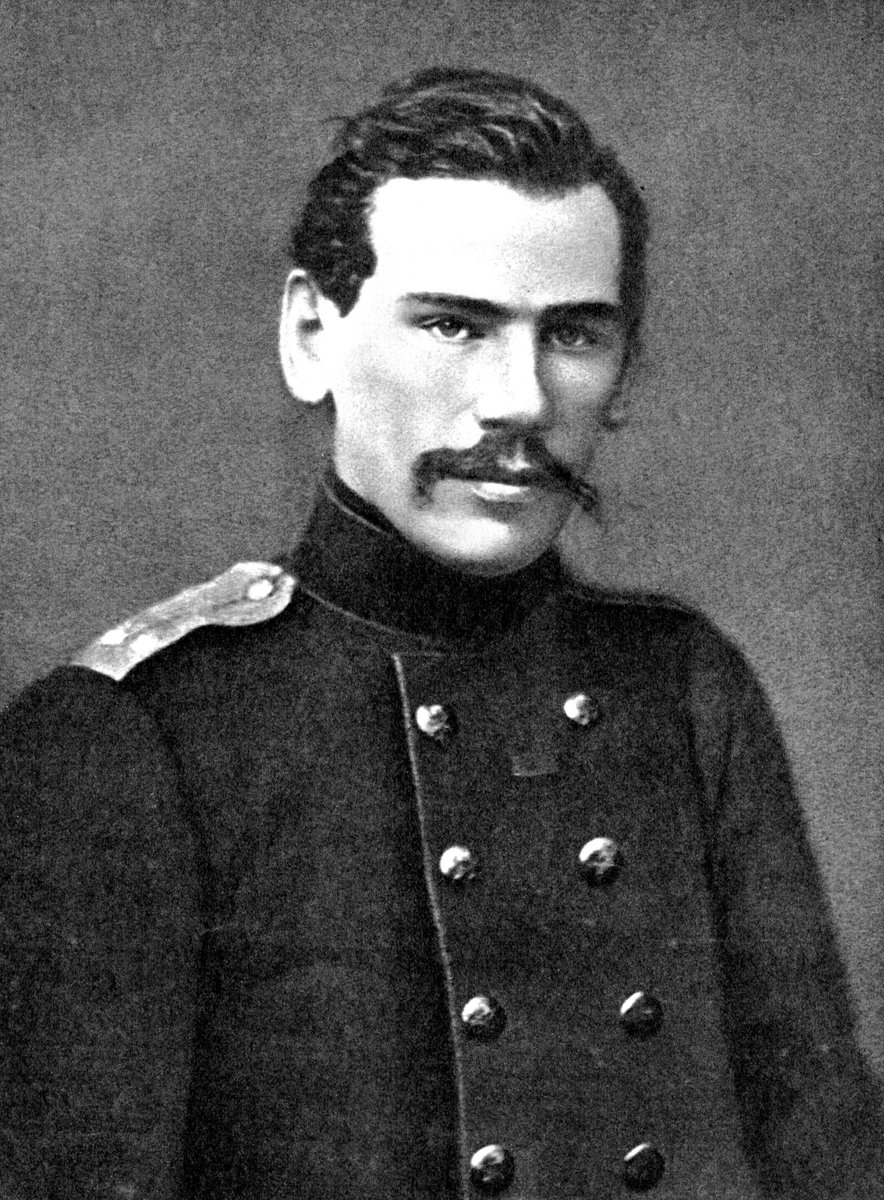
            Four centuries after Luther, in eastern Europe, another literary figure arose to challenge the religious and political thinking of his time. His name was Leo Tolstoy [1828-1910].
            What might it take for peace to come today between Ukraine and Russia? What seems impossible with people is still possible with God.

A young Leo Tolstoy

          What if Ukrainians and Russians would both rediscover the message of peace, forgiveness, and reconciliation in Tolstoy’s War & Peace? Sadly, this book is currently banned in Ukraine because of the mistaken idea that it glorifies the Russian military.
            After serving in the Crimean War as a young officer in the Russian army, Tolstoy became a committed pacifist. War & Peace never glorifies war, but rather, accurately portrays how war often embitters our souls, dehumanizes us, and robs us of the love of neighbor. Ironically, the Russian Orthodox Church excommunicated Tolstoy in 1901, partially because of his questioning their uncritical support for the Russian military.
           Many see Tolstoy as a Russian Charles Dickens. Considered by many as the world’s best novel, War & Peace overwhelms potential readers by its 1,400-page size. What surprised us as readers was how deeply Jesus’ gospel message of forgiveness was woven into this book. God is mentioned 312 times in War & Peace. Outwardly, the book is about Napoleon’s invasion of Russia, but at a deeper level, it was about human conflict and how the Kingdom of God is the only solution. 
           The Russian Prince Andrei, who represented the glorification of war in War & Peace, initially despised forgiveness as just for women and children.[i] After being mortally wounded, Andrei learns to forgive his dying enemy Anatole Kuragin, and his ex-fiancée Natasha who almost ran off with Anatole. He notably commented:

          Compassion, love of our brothers, for those who love us and for those who hate us, love of our enemies; yes, that love which God preached on earth…and I did not understand—that is what made me sorry to part with life, that is what remained for me had I lived. But now it is too late. I know it![ii]

           Andrei asks his doctor to get him a copy of the Gospels, saying that he had now a new source of happiness which had something to do with the Gospels. After discovering the law of love, Andrei met again with Natasha who was devastated with guilt and shame:

          “Forgive me!” she whispered, raising her head and glancing at him. “Forgive me!”
          “I love you,” said Prince Andrei…
          “Forgive…!”
          “Forgive what?” he asked.
          “Forgive me for what I have do-ne!” faltered Natasha in a scarcely audible, broken whisper, and began kissing his hand more rapidly, just touching it with her lips.
          “I love you more, better than before,” said Prince Andrei, lifting her face with his hand so as to look into her eyes.[iii]

            This novel could have been called Love & Forgiveness. Seventy-two times, Tolstoy talks about forgiveness in War & Peace. It was not just about the war with Napoleon, it was about the war between the sexes.

The Word of God — photo by David Kitz

            Another character in War & Peace, Pierre Bezukhov, is like a Russian Forrest Gump. He is a tragically comic figure who awkwardly stumbles into all the key times of the Napoleonic conflict, unexpectedly being a savior figure, and allowing us to observe the historic conflict in person, up close. Everything about him is unlikely, from his being an illegitimate son to becoming the wealthiest person in all of Russia. Through dreams and visions, Pierre discovered on Napoleon’s battlefield that:

            To love life is to love God. Harder and more blessed than all else is to love this life in one’s sufferings, in innocent sufferings.[i]

           Through discovering God, Pierre experienced a deep tranquility and happiness. He was no longer tormented by the meaningless of life: 

          …a simple answer was now always ready in his soul: “Because there is a God, that God without whose will not one hair falls from a man’s head.[ii]

          Meeting God gave him such a new ability to listen that people regularly told Pierre their most intimate secrets. This deep listening was what caused the embittered princess Natasha to fall in love and marry him.
           Tolstoy, a Russian aristocrat, became so enamoured with the Sermon on the Mount that he gave away all his wealth and chose to live like a peasant, tilling the land. When he decided to give up all his book income, his wife threatened to divorce him, so he compromised by only giving away the money from any of his newly written books.
            Tolstoy’s book The Kingdom of God Is Within You so impacted Mahatma Gandhi that he gave it out to his followers. Gandhi was so impressed by Tolstoy’s emphasis on the Sermon on the Mount (Matthew 5 to 7) that he read Jesus’ famous Sermon every day for the rest of his life. Tolstoy’s emphasis on non-violent resistance formed the basis of Gandhi’s campaign for Indian nationhood. Thus, through the influence of Tolstoy’s writing the entire subcontinent of India was transformed.
            Martin Luther King Jr., after reading E. Stanley Jones’ book on Gandhi, discovered the nonviolent key for his civil rights movement in America. So, the torch light of a peace-making gospel passed from a Russian author to India and onto America.
            Tolstoy’s passion for peace-making and forgiveness might even change Russian President Putin, if he would only take the time to read Tolstoy’s book.
            The late British journalist and Christian apologist Malcolm Muggeridge deeply admired the genius of Tolstoy:

         Tolstoy was one of those truly great men who come into the world at long intervals, and we need them, and we rightly continue to look to them just as the Russians do, despite all the changes that have happened.

            What if instead of resenting Russia for its tragic invasion of the Ukraine, we, like Tolstoy, began to pray passionately for its transformation? Could we have faith to believe that Russia will become a Sermon on the Mount nation, overflowing with peacemakers like Tolstoy? Let’s call out to God for such a miracle.
            On this continent in 1852, Harriet Beecher Stowe wrote a novel that transfixed America. Uncle Tom’s Cabin was the bestselling book in United States in the nineteenth century, surpassed only by the Bible.[iii] Stowe was motivated by her deep Christian faith. Her book pricked the conscience of the nation, exposed the horrors of slavery, and fomented the upheaval that led to the American Civil War which culminated in the emancipation of millions.   
            Martin Luther, Leo Tolstoy, and Harriet Beecher Stowe exemplify the incredible power of the printed page. Literary prophets are history shapers. They transformed nations and their influence remains to this day. We need more literary prophets—prophets filled with the courage of their convictions—prophets for our time.
            The written word inspires faith—life transforming faith. Perhaps John, the beloved, expressed this truth best when a the close of his Gospel he penned these immortal words: But these are written that you may believe that Jesus is the Messiah, the Son of God, and that by believing you may have life in his name (John 20:31).

[i] graf Leo Tolstoy. War and Peace (Kindle Locations 22902-22903). Kindle Edition.

[ii] graf Leo Tolstoy. War and Peace (Kindle Locations 23761-23762). Kindle Edition.

[iii] Uncle Tom’s Cabin – Wikipedia accessed March 1, 2023.

[i] graf Leo Tolstoy. War and Peace (Kindle Locations 19935-19936). Kindle Edition.

[ii] graf Leo Tolstoy. War and Peace (Kindle Locations 22902-22903). Kindle Edition.

[iii] graf Leo Tolstoy. War and Peace (Kindle Locations 19935-19936). Kindle Edition.

[i] While we honor Martin Luther as a literary prophet used in the Reformation, we acknowledge the tragic nature of the antisemitism that Luther slipped into later in his ministry.

This is the sixth weekly excerpt from the award-winning book 
The Elisha Code & the Coming Revival 

A soul-gripping read.
Is a return-to-Jesus revival possible in our time?
This book points the way forward.
For details click here.

The Miraculous Power of the New Elisha

05 Sunday Oct 2025

Posted by davidkitz in The Elisha Code

≈ 2 Comments

Tags

Bible, Elijah, Elisha, feeding the five thousand, Jesus, Jewish, miracle, miracles, New Testament, Old Testament, prophet, supernatural, the LORD

Then he took the mantle of Elijah that had fallen from him,
and struck the water, and said,
“Where is the L
ORD
 God of Elijah?”
And when he also had struck the water, 
it was divided this way and that;
and Elisha crossed over.
(2 Kings 2:14, NKJV)

What defines you? Many of us are defined by our work, service, or occupation. We commonly identify people by their occupation or profession, so we speak of Bob, the plumber, Maryanne, the nurse, and Tom, the teacher.

Two office workers working at architect project, elevated view

The Old Testament prophets played a unique role in the plan of God for his people. But unlike angels sent from heaven, they were the LORD’s earthbound messengers—frail human agents sent to his wayward children. Frequently, they heralded a message of repentance, and they used various means to communicate the word of the LORD. Many of them were writers and their writings became an integral part of the Holy Scriptures. Isaiah, Jeremiah, and Amos are examples of these author-prophets who continue to influence lives today through the written Word.

Elijah and Elisha are prime examples of the non-literary prophets. They did not pen any of the books of the Bible, though their deeds are recorded in the Scriptures so we can learn from their ministry and example. What made this prophetic duo unique was the miraculous signs that accompanied their ministry. Specifically, Elisha, the prophet, was defined by his miracle-working power. The LORD granted his request for a double portion of Elijah’s miracle-working anointing.

But there is more to Elisha’s miraculous signs than a simple display of God’s power. In scope and sequence, Elisha’s miracles run parallel to the miracles of Jesus in a most remarkable way.
However, before we consider the miracles of Jesus and Elisha, we should first be aware that their names are identical in meaning. In his commentary on 1 & 2 Kings, Iain W. Provan makes the following statement:

…that the names “Joshua,” “Elisha,” and “Jesus” have essentially the same meaning (“God saves”), and that John the Baptist is so clearly identified in the Gospels with Elijah, it is intriguing that more is not explicitly made in the NT of the Jesus-Elisha connection.[i]

With these words, Provan has clearly identified the Jesus-Elisha connection that is at the heart of the Elisha Code. The first clue in interpreting the Elisha code is found in the names of these two Bible characters. Both men are identified as saviors of their people.

The second clue or identifying marker comes in the miracles they performed.

Let’s begin by looking at the first miracle of Elisha’s public ministry.

            The people of the city said to Elisha, “Look, our lord, this town is well situated, as you can see, but the water is bad and the land is unproductive.”

          “Bring me a new bowl,” he said, “and put salt in it.”

          So they brought it to him. Then he went out to the spring and threw the salt into it, saying, “This is what the Lord says: ‘I have healed this water. Never again will it cause death or make the land unproductive.’” And the water has remained pure to this day, according to the word Elisha had spoken. (1 Kings 2:19-22, NIV).

There is a striking similarity between Elisha’s first public miracle and Jesus’ first miracle—his turning of water into wine as recorded in John 2:1-12. Both miracles involve the transformation of water—foul water into good water by Elisha—and good water into amazing wine by Jesus.

Photo by cottonbro studio on Pexels.com

Both men act at the request of others. Both solve the problem before them by unexpected means.
Jericho is located on the plain of Jordan River near the very saline waters of the Dead Sea. Why was the water bad and the land unproductive? The obvious answer is the high salt content in the soil and water. But what does Elisha do? He asks for a new bowl full of salt.

Can you imagine the consternation of the onlookers as this rooky prophet throws a bowl full of salt into this alkaline spring? Can you hear them muttering, “Good grief! How will that help?”
But Elisha spoke the word of the LORD, “I have healed this water. Never again will it cause death or make the land unproductive.”

In the same way, Jesus, the Word incarnate, spoke transformation over the contents of six twenty-to-thirty-gallon stone jars at the Cana wedding. Imagine the astonishment of the servants who having poured in water, moments later draw out the finest of wines.[ii]

This miraculous sign pointed to the divine nature of the Messiah. He not only duplicates the Elisha miracles but elevates them to a new level. Furthermore, Jesus has been busy transforming the contents of earthen vessels—human vessels—since that time to this present moment.

Which of Elisha’s miracles do believers most readily recall? Undoubtedly, it is the healing of the leper Naaman (2 Kings 5). The story of this Syrian general is frequently taught in Sunday School and occasionally it forms the text for a Sunday sermon. From Elisha’s long series of miracles, pastors and teachers most often cite this account of a healed leper.

In Matthew’s Gospel, following the Sermon on the Mount, the first miracle Jesus performs is the healing of a man with leprosy.

           When Jesus came down from the mountainside, large crowds followed him. A man with leprosy came and knelt before him and said, “Lord, if you are willing, you can make me clean.”
           Jesus reached out his hand and touched the man. “I am willing,” he said. “Be clean!” Immediately he was cleansed of his leprosy. Then Jesus said to him, “See that you don’t tell anyone. But go, show yourself to the priest and offer the gift Moses commanded, as a testimony to them”
(Matthew 8:1-4, NIV).

This miracle acted as a signal—a beacon of hope. A new era had dawned. Surely, the prophets of old had returned. After a long absence, they had returned in spirit and power. Those who were alert to the Scriptures could read the signs of the times. The first sign was visible in the transformed body of this leper. The incurable leper had been cured!
Surely the final words of the prophet Malachi were being fulfilled:

            “See, I will send the prophet Elijah to you before that great and dreadful day of the LORD comes. He will turn the hearts of the parents to their children, and the hearts of the children to their parents; or else I will come and strike the land with total destruction” (Malachi 4:5-6, NIV).

The ministry of John the Baptist was the fulfilment of this prophecy, and now Jesus the miracle worker was on the scene duplicating the wonders of Elisha’s ministry. The Old Testament dynamic duo had returned, and the string of miracles recorded in Matthew chapters eight through ten bear witness to this thesis. Each successive miracle acts as a signpost helping us to crack the Elisha code.

Before we continue our look at these signposts, a word of clarification is warranted. When we consider the return of Elijah and Elisha in New Testament times, we should not view this as a form of biblical reincarnation. The Bible does not support an intrusion of Hindu religious philosophy into Christian theology.

When Jesus says of John the Baptist “he is the Elijah who was to come” (Matthew 11:14, NIV), Jesus is speaking metaphorically as he so often did. Other examples of Jesus employing metaphors are statements such as “I am the bread of life” (John 6:35) or “I am the gate for the sheep” (John 10:7).
In clear and direct language, Jesus was stating that John was the prophetic fulfillment of Malachi 4:5-6, the last passage of the Old Testament covenant.

John the Baptist’s link to Elijah is best summed up in the words of the angel Gabriel spoken to John’s father, Zechariah, before the conception of this New Testament prophet:

“He will bring back many of the people of Israel to the Lord their God. And he will go on before the Lord, in the spirit and power of Elijah, to turn the hearts of the parents to their children and the disobedient to the wisdom of the righteous—to make ready a people prepared for the Lord” (Luke 1:16-17, NIV).

Matthew immediately follows up his account of the healing of the leper with the healing of the centurion’s servant (Matthew 8:5-13). Again, there is an unmistakable link here. Elisha healed Naaman, a foreign military leader of leprosy. Similarly, Jesus, the New Testament healing prophet, after healing a leper, commends the great faith of a foreign military leader before going on to heal this Roman centurion’s servant.

The perceptive Jewish reader of Matthew’s Gospel would be intrigued by this juxtaposition of events. But alas, because we may not be steeped in the Jewish Old Testament tradition, we can too easily breeze past these accounts and see no connection between what Jesus is doing and what Elisha did.

Jesus is our source of living water — photo courtesy of Liz Kranz

The second most frequently sited miracle of Elisha is the raising of the Shunammite’s son from the dead. See 2 Kings 4:8-37. Again, there is a parallel story of bringing a child back to life in Matthew’s Gospel.

While he [Jesus] was saying this, a synagogue leader came and knelt before him and said, “My daughter has just died. But come and put your hand on her, and she will live” (Matthew 9:18, NIV).

The circumstances of the synagogue leader are strikingly similar to the plight of the Shunammite. In both cases, after the death of their child, they travel to their local healing prophet—respectively Elisha and Jesus—fall on their knees before him and plead for the prophet’s intervention. The healing prophet responds by traveling to their home, going alone into to a private room, and raising the child back to life.

Is this similarity a coincidence? Perhaps. If there were two or three instances of similarity in the miracles of Elisha and Jesus, we could chalk it up to coincidence, but as we continue to explore further, we will see a distinct pattern developing. Remarkably many of the miracles of Jesus resemble the miracles of Elisha, though they often rise to a new or higher level.

A classic example of this is Jesus’ feeding of the five thousand. This miracle is found in each of the four Gospels. Furthermore, Matthew and Mark record not one, but two mass feedings, the feeding of the five thousand (Matthew 14:13-21, Mark 6:30-44) and the feeding of the four thousand (Matthew 15:29-39, Mark 8:1-9). But who performed the first miracle of mass feeding recorded in the Scriptures? If you guessed Elisha, give yourself a gold star.

             A man came from Baal Shalishah, bringing the man of God twenty loaves of barley bread baked from the first ripe grain, along with some heads of new grain.

           “Give it to the people to eat,” Elisha said.

           “How can I set this before a hundred men?” his servant asked.

            But Elisha answered, “Give it to the people to eat. For this is what the LORD says: ‘They will eat and have some left over.’” Then he set it before them, and they ate and had some left over, according to the word of the LORD. (2 Kings 4:42-44, NIV)

Despite the much smaller scale of Elisha’s miracle, we see a similar pattern in how this miracle rolls out when it is compared with Jesus’ two crowd-feeding miracles. This includes the instructions given by the respective prophet, the response of their doubt-filled followers, and all three accounts conclude by referring to a surplus of leftovers.

Elisha also accomplished the only miracle of supernatural buoyancy found in the Hebrew Scriptures.

           As one of them was cutting down a tree, the iron axhead fell into the water. “Oh no, my lord!” he cried out. “It was borrowed!”
          The man of God asked, “Where did it fall?” When he showed him the place, Elisha cut a stick and threw it there, and made the iron float. “Lift it out,” he said. Then the man reached out his hand and took it. (2 Kings 6:5-7, NIV).

This is a stunning miracle, but Jesus—Elisha’s New Testament prophetic counterpart—elevates supernatural buoyancy to a whole new level. He walks on water (Matthew 14:22-33, Mark 6:45-52, John 6:15-21), and enables Peter to do the same.

There are also a few examples where Elisha’s miracles are more stunning or perhaps personally relatable than those demonstrated by Jesus. Topping this list is Elisha’s miracle of provision for a widow and her two boys who were about to be sold into slavery to cover an outstanding debt. At Elisha’s command, the widow’s jar of olive oil kept pouring golden liquid until there was sufficient to cover every debt and more leftover to live on. See 2 Kings 4:1-7.

This miracle of provision is an appropriate match with Jesus’ miracle in which he sent Peter to catch a fish. In the mouth of the fish was a four-drachma coin Peter was to use for paying the temple tax for himself and Jesus. See Matthew 17:24-27. Both miracles occur for the purpose of paying money that is owed, and both miracles are stunning when you consider how such events could be possible, but the story of the ever-flowing widow’s jar resonates more strongly with our hearts because of this family’s dire need.
In chapters eight through ten of his Gospel, Matthew is painting a portrait for his Jewish audience of Jesus the miracle-working prophet. It is a portrait that most closely resembles the works of the Old Testament prophet Elisha, and this portrait includes a miracle demonstrating Jesus’ power over nature.

            Then he got into the boat and his disciples followed him. Suddenly a furious storm came up on the lake, so that the waves swept over the boat. But Jesus was sleeping. The disciples went and woke him, saying, “Lord, save us! We’re going to drown!”
           He replied, “You of little faith, why are you so afraid?” Then he got up and rebuked the winds and the waves, and it was completely calm. The men were amazed and asked, “What kind of man is this? Even the winds and the waves obey him!”
(Matthew 8:23-27).

Elisha also has a power-over-nature miracle in his repertoire. During a time of war with Moab, he was called upon to prophecy as the armies of Edom, Israel and Judah faced death from thirst in the sun scorched desert.

           While the harpist was playing, the hand of the Lord came on Elisha and he said, “This is what the LORD says: I will fill this valley with pools of water. For this is what the LORD says: You will see neither wind nor rain, yet this valley will be filled with water, and you, your cattle and your other animals will drink. This is an easy thing in the eyes of the LORD; he will also deliver Moab into your hands (2 Kings 3:15-18, NIV).

Elisha’s word came true the next morning as the desert of Edom was filled with water.[iii]

The question the disciples asked in that boat more than two thousand years ago still resonates today. “What kind of man is this? Even the winds and the waves obey him!”[iv]

Crashing waves, Lake Ontario – photo courtesy of Eric E. Wright

If we are going to rightly interpret the Elisha code, we need a more accurate picture of Jesus. And to get that accurate picture we need eyes that see beyond the shallow surface. We need to comprehend the Old Testament roots of our faith more fully, or we will remain blind to aspects of what Jesus has done and is about to do through his followers in our day.

In his commentary, Iain Provan states that throughout church history “the typological significance of Elisha in relation to Jesus has been downplayed.”[v]

Now is a good time to correct that oversight.

[i] Iain W. Provan, 1 & 2 Kings, Understanding the Bible Commentary Series. Accordance electronic ed. (Grand Rapids: Baker Books, 2012), 234.

[ii] John 2:1-12

[iii] The next morning, about the time for offering the sacrifice, there it was—water flowing from the direction of Edom! And the land was filled with water (2 Kings 3:20, NIV).

[iv] Matthew 8:27, NIV

[v] Iain W. Provan, 1 & 2 Kings, Understanding the Bible Commentary Series. Accordance electronic ed. (Grand Rapids: Baker Books, 2012), 234.

This is the fourth weekly excerpt from the award-winning book 
The Elisha Code & the Coming Revival 

A soul-gripping read.
Is a return-to-Jesus revival possible in our time?
This book points the way forward.
For details click here.

The Return of the Dynamic Duo

28 Sunday Sep 2025

Posted by davidkitz in The Elisha Code

≈ Leave a comment

Tags

Bible, born again, David Kitz, Elijah, Elisha, gospel, Jesus, Jewish heritage, John the Baptist, Kingdom of God, Moses, repentance, salvation, the LORD, theology

When they had crossed, Elijah said to Elisha,
“Tell me, what can I do for you before I am taken from you?”

“Let me inherit a double portion of your spirit,” Elisha replied.

“You have asked a difficult thing,” Elijah said,
“yet if you see me when I am taken from you, it will be yours—
otherwise, it will not.”
(2 Kings 2:9-10, NIV)

The more things change, the more they stay the same.[i] This common expression captures within it the seed truth that history tends to repeat itself. Human nature, social norms and patterns of behavior stay the same across the continuum of time and space. Consequently, though the individual players, time, and location may differ, outcomes frequently are the same or fall into a familiar pattern. For this very reason, Bible stories remain relevant today, despite being written ages ago to people of a different language and culture.  
            In today’s culture when we use the term dynamic duo, several pictures, or scenarios immediately spring to mind. Batman and Robin from DC Comics popularized the term, but throughout history, and within our own experience we have all encountered dynamic duos—individuals who work together well to accomplish a common purpose.
           Can we identify dynamic duos in the Old Testament? We certainly can. Moses and his young successor Joshua spring to mind.
            The prophets Elijah and Elisha are a dynamic duo whose miraculous powers and exploits rival the adventures of the finest superheroes in the Marvel Universe. First-century Jewish teens reading accounts of their miraculous feats would be immediately drawn to them. Furthermore, the last book of the Old Testament ends with the promise of Elijah’s return.    

“See, I will send the prophet Elijah to you before that great and dreadful day of the Lord comes. He will turn the hearts of the parents to their children, and the hearts of the children to their parents; or else I will come and strike the land with total destruction” (Malachi 4:5-6, NIV).

            And if Elijah is returning, then Elisha, or an Elisha-like figure cannot be far behind. As the New Testament era dawns, the stage is set for the return of the dynamic duo. There is nothing quite like a sequel. In this case it’s a prophetic, dynamic-duo sequel that returns after an absence of about seven centuries. Imagine the anticipation.
           Is it any wonder then that Elijah’s name appears twenty-eight times in the gospels? Aside from Peter, none of the apostles are named as frequently as Elijah. It is quite extraordinary for a hero from a previous era to be referenced so frequently. Yet the expectation of Elijah’s arrival was palpable. Jesus was often incorrectly identified as the Elijah who is to come.[ii] With the start of Christ’s ministry, and his demonstration of miraculous powers, the burning question within the first-century Jewish community was “Has Elijah returned?”
             In the eleventh chapter of Matthew’s Gospel answers that question directly. He identifies who the new Elijah—the second Elijah really is.

           And when John had heard in prison about the works of Christ, he sent two of his disciples and said to Him, “Are You the Coming One, or do we look for another?”
          Jesus answered and said to them, “Go and tell John the things which you hear and see: The blind see and the lame walk; the lepers are cleansed and the deaf hear; the dead are raised up and the poor have the gospel preached to them. And blessed is he who is not offended because of Me.”
          As they departed, Jesus began to say to the multitudes concerning John: “What did you go out into the wilderness to see? A reed shaken by the wind? But what did you go out to see? A man clothed in soft garments? Indeed, those who wear soft clothing are in kings’ houses. But what did you go out to see? A prophet? Yes, I say to you, and more than a prophet. For this is he of whom it is written:
                    ‘Behold, I send My messenger before Your face,
                    Who will prepare Your way before You.’
          “Assuredly, I say to you, among those born of women there has not risen one greater than John the Baptist; but he who is least in the kingdom of heaven is greater than he. And from the days of John the Baptist until now the kingdom of heaven suffers violence, and the violent take it by force. For all the prophets and the law prophesied until John. And if you are willing to receive it, he is Elijah who is to come. He who has ears to hear, let him hear!
(Matthew 11:2-15, NKJV)

          So, there we have the answer to the question on everyone’s mind at that time. John the Baptist is Elijah who is to come. The first member of the New Testament dynamic duo has been identified.    

What does Jesus’ identification of John the Baptist as the new Elijah really mean?

It does not mean John is the reincarnation of Elijah. Elijah’s body was whisked away to heaven in a whirlwind on a chariot of fire.[iii] Centuries later, he returns with Moses to meet with Jesus on the Mount of Transfiguration.[iv]

Chapel of the Transfiguration, Grand Teton National Park — Photo courtesy of Matthew Taylor

            Clearly, John and Elijah are two distinct persons from two distinct historical eras. In fact, when he was questioned about his identity, John denied being the Christ or Elijah.[v] However, Jesus rightly identified John the Baptist as moving and ministering in the spirit of Elijah. He fulfilled the prophecy of Malachi.[vi]
            Elijah’s ministry was a ministry of repentance. His assignment from the LORD was to draw the backslidden people of Israel (the northern kingdom) back to worshipping the one true God. Israel had fallen into the grievous sin of idolatry under the rule of King Ahab and his evil consort Jezebel. Many had bowed their knees to Baal, the male fertility god, and partaken in the worship of the female deity Ashtoreth.
            John the Baptist had a similar assignment. He too was to draw the Jewish nation back to God. But in the New Testament era, the sins of the nation were of a more subtle nature. The worship of Yahweh had become cold and formal while the sinful heart was unchanged.

The Lord says:
“These people come near to me with their mouth
    and honor me with their lips,
    but their hearts are far from me.
Their worship of me is based on merely human rules they have been taught
(Isaiah 29:13, NIV).

This corrupt condition of the heart is what John came to address. He did so with a clarion call to repentance followed by baptism. Furthermore, he insisted no one can claim safety from the coming wrath due to their lineage or national heritage.

Produce fruit in keeping with repentance. And do not think you can say to yourselves, ‘We have Abraham as our father.’ I tell you that out of these stones God can raise up children for Abraham. The ax is already at the root of the trees, and every tree that does not produce good fruit will be cut down and thrown into the fire. (Matthew 3:8-10, NIV).

          What root was John attacking with the above statement? He was hacking away at the presumption of salvation by virtue of national origin. The Sadducees and Pharisees who John was addressing trusted in their Jewish heritage as being sufficient for eternal salvation. Apparently, your birth certificate doesn’t qualify you for entrance into the Kingdom of God. God is looking for a repentant heart—a changed heart. 
                With these words, John was laying the groundwork for Jesus’ core message of salvation through regeneration. We must be born again as Jesus revealed in his conversation with Nicodemus.[vii] And the first step in that regenerative process begins with repentance, initially championed by John,[viii] reiterated by Jesus,[ix] and preached by the apostles.[x]
                Today, we speak of disruptive technology changing the way business and society operate. John’s message was disruptive theology. His message attempted to completely change how Jewish society of that time viewed their relationship with God. Many Jewish people saw themselves as citizens in God’s Kingdom simply because they were children of Abraham. John’s mission was to shatter that misperception. Something more was needed then, and it is needed now. Salvation begins with a repentant heart. And like Elijah of old, John was calling the nation to repent and turn back to God.
                Jesus addressed the same topic in his John 8:12-59 temple discourse with the Jewish religious leadership. In that heated discussion, Jesus’ opponents trumpeted their Abrahamic pedigree, while rejecting the testimony of the Son of God. God is always looking for the fruits of repentance in our lives. But there was an absence of fruit in these religious leaders.
                It was John the Baptist who first raised this issue with the Pharisees and Sadducees. If we are not simply born into the Kingdom by natural birth, as the religious leadership claimed, how then do we gain entrance? Jesus provides the answer:

          “Very truly I tell you, no one can enter the kingdom of God unless they are born of water and the Spirit. Flesh gives birth to flesh, but the Spirit gives birth to spirit. You should not be surprised at my saying, ‘You must be born again’ (John 3:5-7, NIV).

                This disruptive theology was introduced by John and advanced to the next level through the ministry of Jesus. John and Jesus truly worked as a dynamic duo. Furthermore, all four Gospel writers recognized John’s foundational contribution. It’s striking that though each Gospel is focused on the life and ministry of Jesus, none of the Gospel writers begin their account with Jesus. They all begin with John. He truly was the forerunner and the way-maker for our Savior.
                Many of the underpinnings of the Christian faith were introduced by John. Repentance followed by baptism is a prime example. Baptism, with roots in the Jewish mikvah, a ceremonial washing rooted in the Books of Moses, was an innovation introduced and popularized by John. Baptism represents a soul transforming innovation that was, with only slight modification, incorporated directly into Christ’s teaching and the Great Commission.

           Go therefore and make disciples of all the nations, baptizing them in the name of the Father and of the Son and of the Holy Spirit, teaching them to observe all things that I have commanded you; and lo, I am with you always, even to the end of the age.” Amen. (Matthew 28:19-20, NKJV).

                Baptism is a living picture of new birth. It is the defining symbol and sacrament of the born-again experience. John laid the groundwork for the gospel of Christ. He worked like a bulldozer leveling the way for Christ.[xi] He destroyed the argument that salvation was race based and in so doing he paved the way for Jesus’ teaching on spiritual rebirth.
                It logically follows that if salvation is not based on lineage or race, but rather on a spiritual rebirth, then that experience of rebirth is open to all humanity and not the sole domain of the Jewish people.
                Both John and Jesus were looking for fruit—the transformative fruit of repentance.[xii] And through the work of the Holy Spirit, that fruit could be found among both Jews and Gentiles. It was no longer confined to the Jewish nation. All could potentially be grafted into the vine through faith in Jesus.
                Jesus identified John the Baptist as the new Elijah. Who then is the new Elisha?

Chapter 2 Endnotes
[i] “plus ça change, plus c’est la même chose”, Jean-Baptiste Alphonse Karr, 1849. 

[ii] Matthew 16:13-14

[iii] 2 Kings 2:11-12

[iv] Matthew 17:1-13, Mark 9:2-13, Luke 9:28-36

[v] John 1:19-28

[vi] “See, I will send the prophet Elijah to you before that great and dreadful day of the Lord comes. He will turn the hearts of the parents to their children, and the hearts of the children to their parents; or else I will come and strike the land with total destruction” (Malachi 4:5-6, NIV).

[vii] John 3:1-21

[viii] Matthew 3:1-2, Mark 1:4, Luke 3:2-3,

[ix] Matthew 4:17, Mark 1:14-15

[x] Acts 2:36-39, Acts 3:19

[xi] Matthew 3:3

[xii] Matthew 3:8, Matthew 7:15-20, Matthew 21:33-46

This is the fourth weekly excerpt from the award-winning book 
The Elisha Code & the Coming Revival 

A soul-gripping read.
Is a return-to-Jesus revival possible in our time?
This book points the way forward.
For details click here.

Rediscovering Jesus’ Blueprint for Renewal

22 Sunday Sep 2024

Posted by davidkitz in The Elisha Code

≈ 1 Comment

Tags

art, Bible, biblical, books, Christian faith, Christianity, churches, David Kitz, Elijah, Elisha, hope, Jesus, John the Baptist, morality, revival

Is positive change, revival, and renewal possible today in the church, and more broadly in society and the world? This is a valid question in our culture where many are in despair and have lost hope. Many churches are in decline, public morality is in decline, and many have abandoned the Christian faith. Can this trendline be reversed?

In their book The Elisha Code & the Coming Revival David Kitz and Dr. Ed Hird tackle these issues head-on, and they do so, from a thoroughly biblical perspective.

In this interview with Logan Crawford, David Kitz sketches out some key truths about revival that have been lost and now uncovered through an examination of two prophetic dynamic duos, Elijah and Elisha from the Old Testament, and John the Baptist and Jesus from the New Testament.

Are you ready for renewal and a new perspective?

An Author Interview with David Kitz

02 Thursday May 2024

Posted by davidkitz in Books by David Kitz

≈ Leave a comment

Tags

Christians, church history, David Kitz, Elijah, Elisha, Gaza, Holy Spirit, Israel, Jesus, John the Baptist, miracle, New Testament, Old Testament, renewal, repentance, revival, spiritual renewal, Ukraine

David, what event in your life inspired you to write The Elisha Code & the Coming Revival?

On February 11th, 2018, I delivered a sermon entitled Healing the Water. My message2023-10-06-OnlineSharing-2 was based on Elisha’s first public miracle, the healing of the spring at Jericho. I was struck by the parallel nature of this miracle when compared with Jesus’ first miracle of turning water into wine. This triggered a quest to discover if Elisha’s other miracles resembled the miracles of Jesus. To my amazement they do. Further research uncovered the parallel nature of the ministry of Elijah and John the Baptist, and later, the ministry of Elisha and Jesus. But what are the practical implications of this biblical discovery for believers today?

The Old Testament dynamic duo of Elijah and Elisha sparked spiritual renewal in their day. John the Baptist and Jesus did the same in New Testament times. My friend, Dr. Ed Hird, has been writing about men and women from church history who spark revival in their day. Together we decided to partner in bringing a message of renewal and revival for the people of our time.

David, how is the topic of your book personal to you and why did you choose to share it with readers?

TheElishaCodeCVR5I stumbled upon a unique, unexplored perspective of Elijah and Elisha’s prophetic ministry that linked directly to the ministry of John the Baptist and Jesus. These four men preached repentance and brought revival and new life to the people of their time. Along with many Christians today, Dr. Ed Hird and I believe this message of deep spiritual renewal is urgently needed now.

Why should people purchase and read the book you coauthored with Dr. Ed Hird?

This book is a blueprint for the revival we need in our lives and in our churches today. Furthermore, the thread of practical life applications is both impactful and encouraging.

What are some current and newsworthy world events that relate to the topic(s) of your book?

We live in dark times—times of fear, pestilence, national and international intrigue, and political and environmental turmoil. War rages in Israel, Gaza, Ukraine, and other countries across the globe. Many are in despair. Moral rot is evident everywhere in society. Meanwhile, churches are closing, and faith is in decline. Spiritual renewal is urgently needed.

Explain two things you most want readers to walk away with after reading your book.

Further decline is not inevitable. Throughout history God has sent spiritual fire starters among us—men and women who turn people’s hearts toward God. Now is the time to renew our faith in a miracle working God who powerfully draws people to himself by his Spirit. It has happened before. It will happen again before Christ’s return.

TheElishaCodeCVR5

To purchase or for a closer look click here.

Is Revival Needed in Our Day?

03 Wednesday Apr 2024

Posted by davidkitz in book review

≈ Leave a comment

Tags

awakening, Bible, book review, church, David Kitz, Elijah, Elisha, God, Holy Spirit, Jesus, John the Baptist, revival, spiritual renewal

Many in the church and the broader community readily admit that we need a spiritual awakening or renewal in our nation. Is that even possible in these divisive, troubled times?

In his review of The Elisha Code & the Coming Revival, authored by David Kitz and Ed Hird, John Murray suggests revival may be possible, but much depends on our response.

Here then is John Murray’s review:

As I read through this book three words came to mind, intriguing, interesting and challenging.

The title itself is intriguing as one waits for the Elisha code to be revealed. Then it is further intriguing as the authors introduce the ministry of Elijah and Elisha, the well-known prophets from the Old Testament.

Then came the interesting and fascinating comparison between their ministry and that of John the Baptist and Jesus, recorded in the New Testament. Incredibly revealing was the pattern and similarity in the comparison of their ministry, even down to almost identical miracles performed.

Finally came the personal challenge. Do we have the desire to reflect the character of Jesus or Elisha? Are we open to the work of God’s Holy Spirit in our lives? Do we want to be a blessing to a hurting and needy world? We are left with the question of how deeply do we desire to be part of the needed revival within and outside the church today?

This book puts it on the line.

TheElishaCodeCVR5

To purchase or for a closer look click here.

What Undeserved Love!

29 Friday Mar 2024

Posted by davidkitz in Good Friday

≈ Leave a comment

Tags

centurion, Christ's love, Elijah, forsaken, Good Friday, Jesus, Prayer, resurrection, suffering of Christ

Today’s Bible quote and prayer for
Good Friday, the day of Christ’s death.

4 Given

Reading: Matthew 27:45-54

From noon until three in the afternoon darkness came over all the land. About three in the afternoon Jesus cried out in a loud voice, “Eli, Eli, lema sabachthani?” (which means “My God, my God, why have you forsaken me?”).

When some of those standing there heard this, they said, “He’s calling Elijah.”

Immediately one of them ran and got a sponge. He filled it with wine vinegar, put it on a staff, and offered it to Jesus to drink. The rest said, “Now leave him alone. Let’s see if Elijah comes to save him.”

And when Jesus had cried out again in a loud voice, he gave up his spirit.

At that moment the curtain of the temple was torn in two from top to bottom. The earth shook, the rocks split and the tombs broke open. The bodies of many holy people who had died were raised to life. They came out of the tombs after Jesus’ resurrection and went into the holy city and appeared to many people.

When the centurion and those with him who were guarding Jesus saw the earthquake and all that had happened, they were terrified, and exclaimed, “Surely he was the Son of God!”

Father God,
you forsook Jesus,
your Son,
while He suffered.
But you have not forsaken me.
What undeserved love!
Thank you, Father God!
Thank you, Jesus!
Amen.

* NEW INTERNATIONAL VERSION, COPYRIGHT ©1973, 1978, 1984, 2011 BY BIBLICA

BGBG_v4.3_150[1818]

Please pray for peace to return to Israel, Gaza, and Ukraine!

Volume I of Psalms 365: Develop a Life of Worship and Prayer won the Best Book of the Year Award from The Word Guild and Volume II has won the Best Devotional of the Year Award. For those who love God’s word, this three-book series is an ideal way to daily meet with the Lord. To purchase or for a closer look click here.

4485 FACEBOOK-1

Holy Week is here. Easter is approaching.
Are you ready for a journey to the cross?
For a closer look or to purchase click here.

← Older posts

Psalms 365: Develop a Life of Worship and Prayer

Psalms 365 Volume II

Psalms 365 vol 3
— Psalms 365 Volume III

Psalms

Recent posts

  • May the LORD Grant All Your Requests December 20, 2025
  • A Horn of Salvation December 19, 2025
  • Ready for the King of Glory December 19, 2025
  • My Spirit Rejoices in God My Savior December 18, 2025
  • Joining the Generation That Seeks God December 18, 2025
  • Why Am I So Favored December 17, 2025
  • How Can You Find the Good Life? December 17, 2025

Calendar

December 2025
M T W T F S S
1234567
891011121314
15161718192021
22232425262728
293031  
« Nov    

Blog Posts

Comments

  • davidkitz on Joining the Generation That Seeks God
  • cjsmissionaryminister on God Sent His Son
  • cjsmissionaryminister on The God of the Broken

Blog at WordPress.com.

Privacy & Cookies: This site uses cookies. By continuing to use this website, you agree to their use.
To find out more, including how to control cookies, see here: Cookie Policy
  • Subscribe Subscribed
    • I love the Psalms
    • Join 1,377 other subscribers
    • Already have a WordPress.com account? Log in now.
    • I love the Psalms
    • Subscribe Subscribed
    • Sign up
    • Log in
    • Report this content
    • View site in Reader
    • Manage subscriptions
    • Collapse this bar
 

Loading Comments...