• Home
  • About
  • DavidKitz.ca
  • Youtube Videos
  • Books by David
  • Books on Amazon.com

I love the Psalms

~ Connecting daily with God through the Psalms

I love the Psalms

Tag Archives: faith

The Mystery in a Box

08 Sunday Feb 2026

Posted by davidkitz in Psalms

≈ 4 Comments

Tags

archeologists, Bible, brother of Jesus, Christians, faith, James, James the brother of Jesus, New Testament, ossuary, skeptics

James: the Lynchpin of Our Faith — Introduction

Dear friends,
now we are children of God,
and what we will be has not yet been made known.
But we know that when Christ appears,
we shall be like him,
for we shall see him as he is.
(1 John 3:2, NIV

Who knew that a medium-size box could create such a stir? Archaeologists, academics, journalists, and theologians were intrigued. A debate raged for weeks about the authenticity of this ancient stone box. A sceptical public grew curious and hungered for more information. What did all this mean? What were the implications?

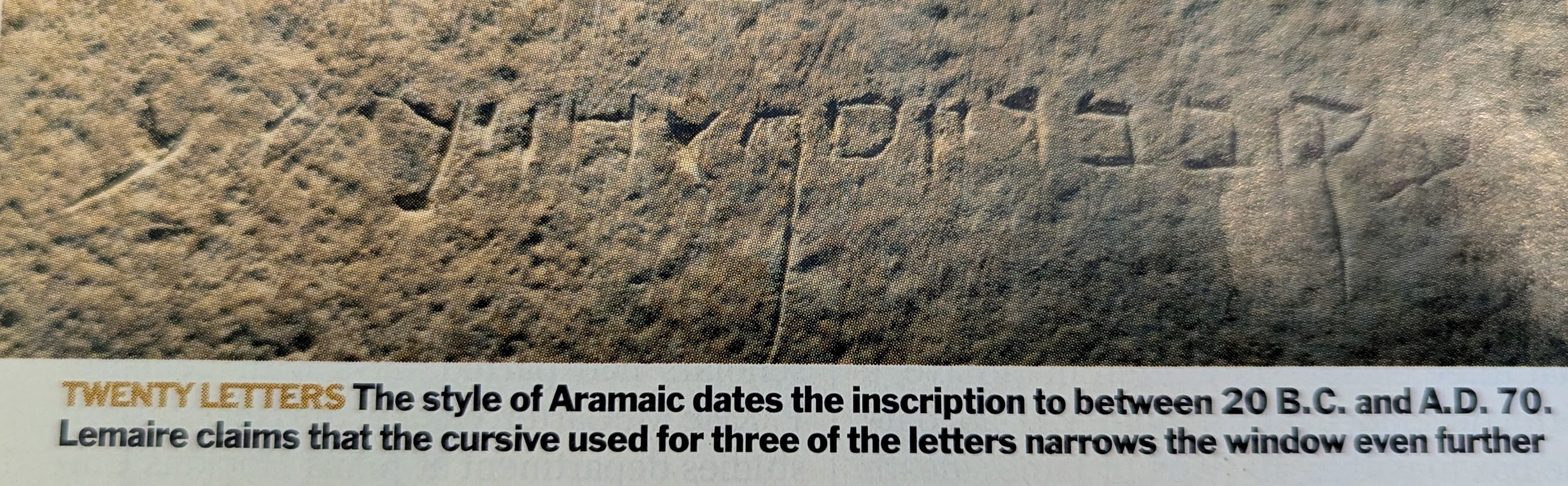
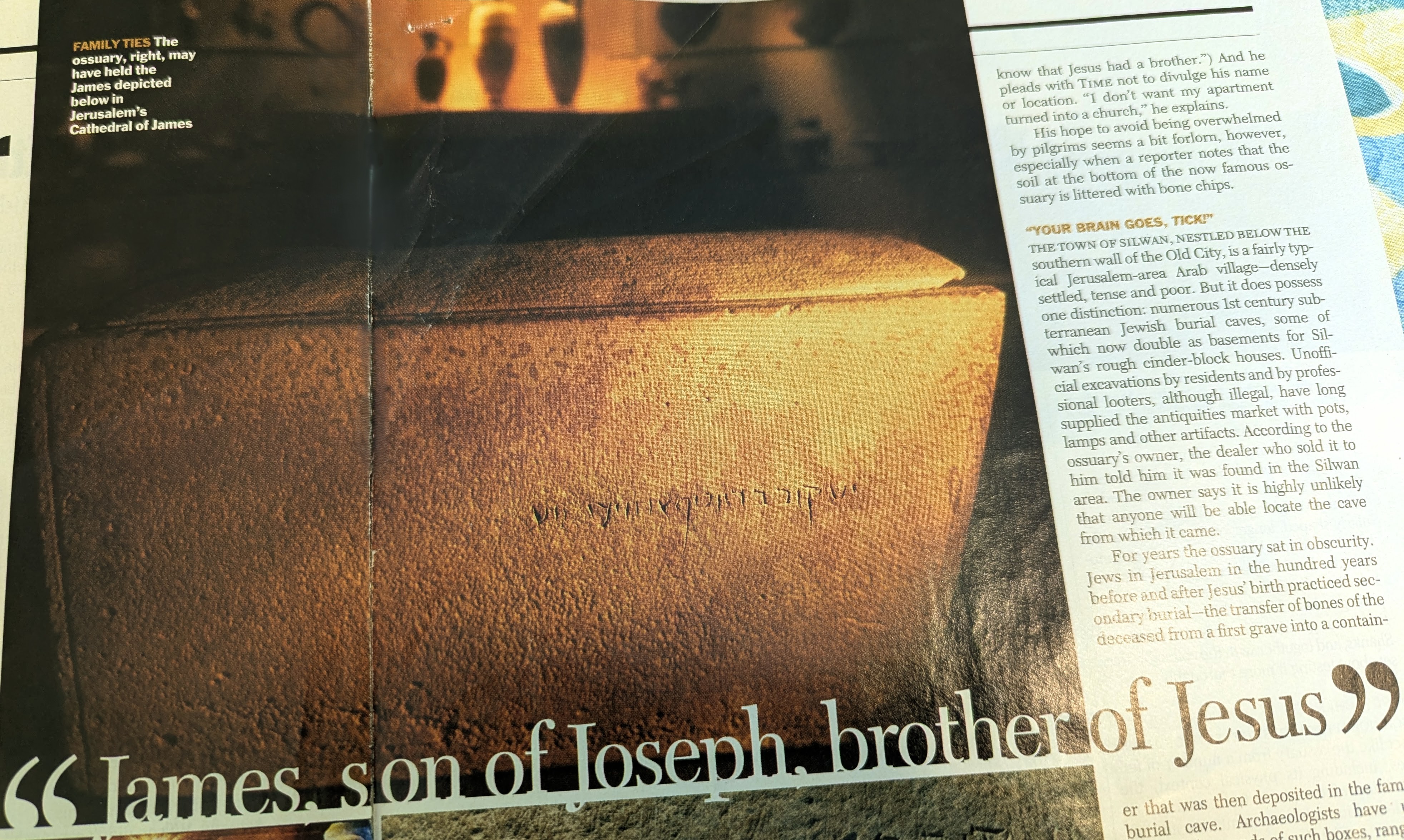
In the fall of 2002, the typical news cycle of war, politics, celebrity missteps, and market fluctuations was briefly interrupted by word that an ancient ossuary had been discovered. The inscription on this stone box read, “James, son of Joseph, brother of Jesus.”

Photo Credit Time Magazine, November 4, 2002

Did Jesus have a brother? Were his brother’s bones once stored in this ancient ossuary? Who precisely was this James? Experts in ancient burial customs claimed that it was common practice to have the name of the father of the deceased inscribed on the burial box, but why include the brother’s name? Jesus—Jesus? Was this the Jesus of the New Testament, the one revered by millions as the Son of God?

The list of questions grew. Scholars speculated, while public curiosity reached a peak. Israeli authorities questioned how this 25 × 50 × 30cm stone box came into the hands of Oded Golan, a private collector of antiquities. Roman Catholic theologians chafed at the very notion that Jesus had a brother. Religious skeptics dredged up a variety of imaginative apocryphal scenarios.

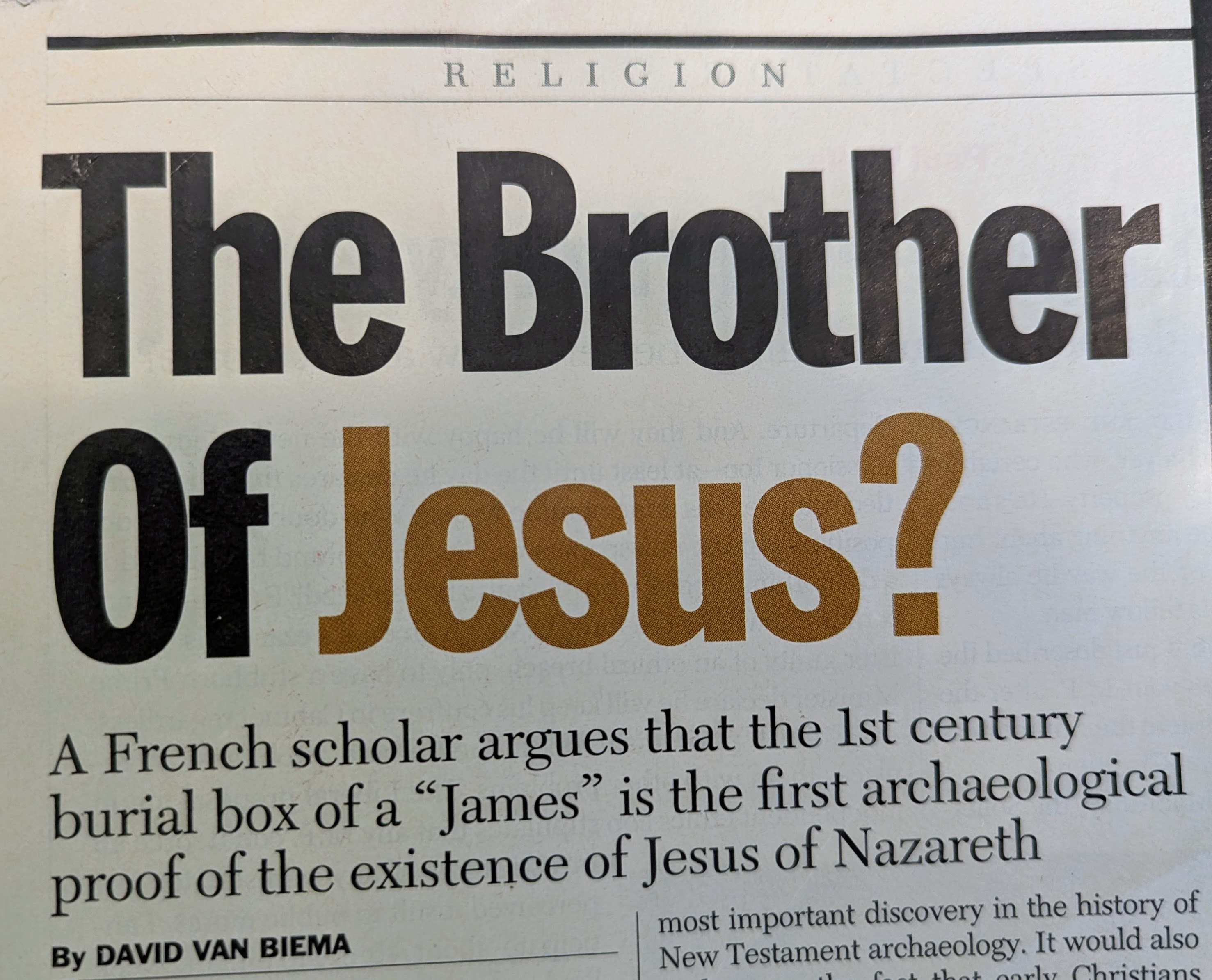
Time magazine, in its November 4, 2002, edition reported that “Andre Lemaire, one of the world’s foremost scholars of ancient scripts, announced that ‘it seems very probable that this [box] is the ossuary of the James in the New Testament.’”

Time Magazine Headline, Nov. 4, 2002

Arrangements were made to have the James Ossuary examined by experts and placed on display at the Royal Ontario Museum (ROM) in Toronto. But alas, when the shipping container arrived by air from Jerusalem, it was discovered that the ancient stone box had fractured in transit. News outlets excitedly reported on this new ill-fated development.

Undeterred by these setbacks, repairs were hastily made to the ossuary, and the highly publicized exhibit went ahead as planned. Thousands flocked to the display at the ROM. In fact, the display curator at the time confessed to this author that no other ROM exhibit generated sucha widespread frenzy of interest in all his years of service.

This stone box—this ancient artifact—may well be the closest physical contact we have to Jesus, the subject of the gospels.

But storm clouds were brewing. Roman Catholic scholars dismissed the discovery on doctrinal grounds. According to long established Vatican teaching, Mary was a perpetual virgin. How could Jesus then have a brother? This teaching has persisted despite several passages in the New Testament which unequivocally refer to James as the brother of Jesus.

Some scholars questioned the authenticity of this discovery. Was the “brother of Jesus” portion of the inscription a forgery—a present day addition to boost the value of this artifact? Then there was the question of provenance. Where exactly was this ossuary discovered? Since the exact original location of this find was unknown, the context that archeologists rely on to ascertain authenticity was sadly missing. How did the ossuary come into the hands of Oded Golan? Was he simply an unscrupulous shyster out to make a fast buck by peddling fake or altered artifacts?

Golan’s activities and his artifacts raised the suspicion of the Israeli Antiquities Authority. For years the Antiquities Authority had been attempting to put a halt to the illegal trade in artifacts discovered in the Holy Land. Here was a high-profile case that could send a clear message to all who sought to profit from this trade. On July 22, 2003, Oded Golan was arrested in Jerusalem for allegedly forging and illegally trading in antiquities. But is the James ossuary a forgery? In a press release following Golan’s arrest, the ROM stood by its initial assessment:

Until the ROM receives convincing evidence to the contrary, we stand by our opinion that the James Ossuary is not a forgery. We had a limited amount of time to study it because of the amount of conservation work that was required after the Ossuary arrived at the Museum after being damaged in transit. The studies that were carried out on the inscription and broken fragments of the Ossuary, however, satisfied the ROM’s investigative team that it was an authentic artifact with an authentic inscription that might make it the Ossuary of James, the brother of Jesus. There is always a question of authenticity when objects do not come from a controlled archaeological excavation, as is the case with the James Ossuary.

While the authenticity of the James Ossuary remains in question, it is the life of James, the brother of Jesus, which is truly intriguing. (1 see footnote) The James of the Bible is far more than bones in a box. He was after all a living, breathing, flesh-and-blood man.

Time photo of the James Ossuary

Present-day believers and church goers view James as an obscure figure, if they know anything about him at all. If Catholics are asked who the most important figure in the early church was, most would answer Peter. If Protestants are asked the same question, they would answer Paul. Yet if we could step in a time machine and ask Peter and Paul the same question, they would both answer James.

Over the centuries the historic importance of James has been overlooked. In the great gallery of early church fathers, typically Peter, Paul, and John draw the most attention. But James’ contribution was truly foundational—even crucial.

Many may be surprised to know that the New Testament has a good deal to say about James, the man known to early Christians as the brother of the Lord. The time has come to put some flesh on those bones missing from the ossuary—to create a portrait of the biblical James—a man who had a monumental influence on the direction of the early church and by extension an impact that echoes down through world history to the present day.

It can be argued that James, known to some as James the Just, is in fact the lynchpin of the Christian faith. Without him the early church would have remained an obscure Jewish sect—an offbeat curiosity in the grand march of civilization. But due to James, the gospel message burst out of the narrow confines of the Jewish faith. It exploded across the Roman Empire and came to dominate the life and thought of the Western world for the next two millennia. Now with the rapid rise of Christianity in the nations of Africa, South America, and Asia, the time has come to take a closer look at the man who set this whole process—this train of events into motion: the man the Bible writers call James, the brother of our Lord.

1 For a thorough exploration of the James Ossuary and its implications for present-day Christianity, see Hershel Shanks and Ben Witherington III’s book The Brother of Jesus: The Dramatic Story & Meaning of the First Archaeological Link to Jesus & His Family (Harper Collins, 2003).

New from David Kitz

James—the brother of Jesus—who was this man? What evidence do we have that this “brother of our Lord” even existed?

David Kitz digs deep into archeology, family dynamics, church history, and the biblical texts. What emerges from his research is a portrait of a decisive, pivotal leader who embodied the will and character of Jesus Christ.

But how did James—James the unbeliever—transform to become a leader who changed the course of world history? In these pages you will uncover the answer and rediscover for yourself the life-changing power of the gospel.

To view further details or purchase directly from the author click here.

My Interview about James the Brother of Jesus

07 Saturday Feb 2026

Posted by davidkitz in Psalms

≈ Leave a comment

Tags

author, believer, Bible, brother of Jesus, David Kitz, faith, gospel, interview, James, Jesus Christ, unbeliever

What would it be like to have Jesus as your older brother? Yes, I’m referring to Jesus, the Son of God.

Well, there was someone who had that experience and his name is James. He is the man who also wrote the epistle in the Bible that bears his name. I wrote a 225-page book about this James.

I recently had a radio and YouTube interviewed about this book. Here’s that interview:

New from David Kitz

James—the brother of Jesus—who was this man? What evidence do we have that this “brother of our Lord” even existed?

David Kitz digs deep into archeology, family dynamics, church history, and the biblical texts. What emerges from his research is a portrait of a decisive, pivotal leader who embodied the will and character of Jesus Christ.

But how did James—James the unbeliever—transform to become a leader who changed the course of world history? In these pages you will uncover the answer and rediscover for yourself the life-changing power of the gospel.

To view further details or purchase directly from the author click here.
Standing Firm in Faith

05 Thursday Feb 2026

Posted by davidkitz in Psalm 35, Psalms

≈ 2 Comments

Tags

accuser, believers, Christ, enemy, faith, grace of God, Jesus, Prayer, Psalms, roaring lion, Suffering, the LORD, victory over sin

Today’s quote and prayer from
“Psalms 365: Develop a Life of Worship and Prayer

 Today’s Reading: Psalm 35:11-16

Listen to today’s reading by Jonathan Dent:

https://davidkitz.blog/wp-content/uploads/2026/02/ps-3511-16-mix1final.mp3

Jesus,
you are my victory
when the enemy accuses me.
I put my trust in your redeeming blood.
Help me to stand firm
against the taunts of the enemy.
My victory comes from you.
Amen.

     — — — —


Standing Firm in Faith

Be alert and of sober mind.
Your enemy the devil prowls around
like a roaring lion
looking for someone to devour.

Resist him,
standing firm in the faith,
because you know that the family of believers
throughout the world is undergoing
the same kind of sufferings.

And the God of all grace,
who called you to his eternal glory in Christ,
after you have suffered a little while,
will himself restore you
and make you strong,
firm and steadfast.

To him be the power for ever and ever.
Amen.

(1 Peter 5:8-11 NIV)*


Whoever does not love does not know God,
because God is love (1 John 4:8 NIV)

Para la publicación de Salmos 365 de hoy en español haga clic aquí.

bgbg_v4.3_1501818
* NEW INTERNATIONAL VERSION, COPYRIGHT ©1973, 1978, 1984, 2011 BY BIBLICA

Pray for enduring peace in Israel and Gaza,
and continue to pray for peace to return to Ukraine and Russia!

Volume I of Psalms 365: Develop a Life of Worship and Prayer won the Best Book of the Year Award from The Word Guild and Volume II has won the Best Devotional of the Year Award. For those who love God’s word, this three-book series is an ideal way to daily meet with the Lord. To purchase or for a closer look click here.

Also available from David KitzIs a return-to-Jesus revival possible in our time?
This book points the way forward.
For details click here.

The Conclusion of “The Elisha Code & the Coming Revival”

25 Sunday Jan 2026

Posted by davidkitz in The Elisha Code

≈ 4 Comments

Tags

courage, Elijah, Elisha, faith, Holy Spirit, Jesus, John the Baptist, miracles, revival, spiritual renewal

A code must be recognized, interpreted, and applied for it to be useful, and for it to effect meaningful change. Codes are recognized by the appearance of repetitive patterns. Through our examination of the lives and ministries of the Old Testament duo of Elijah and Elisha, and the New Testament duo of John the Baptist and Jesus, we can clearly see a pattern—a pattern of ever-increasing power and revelation.

In considerable detail, we have outlined how Elijah and John the Baptist are linked in terms of personality and the scope of their ministry. In the same way we have detailed how the miracles and ministry of Jesus runs parallel to the ministry of the prophet Elisha. The pattern is there for all to see.

What are the implications for Christians today? If we recognize this coded message in the Scriptures, how can it impact our lives in the twenty-first century?

Above all, The Elisha Code is a call to action. Yes, we can learn a great deal about the links between Elijah and John the Baptist and the links between Elisha and Jesus. But of first importance, we need the empowerment of the Holy Spirit to work within us and to transform our churches and society today.

The dynamic duos of this book were the greatest revivalists of their time. Elijah and Elisha brought about transformative change in Old Testament Israel. John the Baptist and Jesus set in motion the greatest spiritual transformation the world has ever seen—a transformation that continues to this day.

Here then are some key takeaways from studying the lives of these biblical dynamic duos and other revivalists and key figures in church history:

  • Revivals/spiritual renewals have been an integral part of our faith from the time of ancient Israel to the present.
  • The age of miracles has not ended. We have Jesus’ promise that believers will do even greater things (John 14:12).
  • Genuine revivals are initiated by the Holy Spirit through fallible, imperfect human vessels (2 Timothy 2:20-22).
  • Literary prophets have played, and will continue to play, an important role in fomenting revival and bringing about social and spiritual change.
  • We need leaders with prophetic hindsight, insight, and foresight for the church to reach its full potential.
  • Humility and selfless service are foundational in initiating and sustaining revival. The Spirit of God is quenched and grieved when pride, sin, or selfishness enter in (1 Thessalonians 5:19).
  • Life-changing repentance is at the core of any authentic revival (Mark 1:15, Acts 2:38).
  • The gospel message according to Jesus is all about regime change on a personal level. It’s about letting King Jesus rule our hearts and minds (Colossians 1:13-14).
  • True spiritual awakenings leap across religious, denominational, racial, and cultural barriers (Acts 10). The most effective revivalists build bridges rather than walls.
  • The church must remain focused on the core of the gospel message, rather than become swallowed by political agendas and yield to the third temptation of Christ (Matthew 4:8-11).
  • We are called to live a crucified life that elevates Christ and others by the power of relentless love and forgiveness (Galatians 2:20).
  • God uses broken people who are yielded to his will (John 21:15-19).
  • Hungry humble prayer prepares a runway for the Holy Spirit to land just as it did on the day of Pentecost (Acts 1:14, 2:1-4).
  • Frequently, revivals begin where and when we least expect them, and they are often spearheaded by the young.
  • Our goal should be to finish well. Our service to the Lord may involve many transitions, but his calling on our lives remains till we take our last breath (Romans 11:29).

Finally, the Elisha code is a call to courageous and audacious faith.

Courage is a matter of the heart. The word courage is derived from the Latin word for heart. We must put our heart into our faith. Courageous faith flows from a heart that has been captured by the love of Jesus.

Let this be our prayer. Lord, give us courageous faith.

Audacious faith refuses to remain silent. It speaks out. It must speak.

After Elijah was swept up to heaven in a chariot of fire, Elisha did not remain silent. He spoke up with audacious faith.

Then he took the mantle of Elijah that had fallen from him, and struck the water, and said, “Where is the LORD God of Elijah?” And when he also had struck the water, it was divided this way and that; and Elisha crossed over. (2 Kings 2:14, NKJV)

Audacious faith is bold—bold like Elisha. The word audacious is derived from the same Latin root as audio. Audacious faith makes noise. It must be heard. Is your faith loud enough to be heard by others? Is it being heard by God?

Jesus, whose New Testament miracles are patterned after Elisha’s miracles, frequently chided his disciples for their lack of faith (Matthew 17:17-20).

Let this be our prayer. Lord Jesus, grant us a mustard seed of your audacious faith—mountain moving faith, and as we walk this road with you, light your fire in our hearts.

This is the final excerpt from the award-winning book 
The Elisha Code & the Coming Revival

Is a return-to-Jesus revival possible in our time?
This book points the way forward.
For details click here.


Playing Hide ‘n’ Seek with God

20 Tuesday Jan 2026

Posted by Tim K in Psalm 32, Psalms

≈ Leave a comment

Tags

dam, David, faith, finding God, forgiveness, hidden God, hiden god, Psalms, seek the Lord, sin, walk by faith

Today’s Devotion from Psalms 365 by David Kitz

Reading: Psalm 32:6-7

Listen to today’s reading by Jonathan Dent:

https://davidkitz.blog/wp-content/uploads/2026/01/ps-326-7-mix2final.mp3

Therefore let all the faithful pray to you,
    while you may be found;
surely when the mighty waters rise,
    they will not reach him.
You are my hiding place;
    you will protect me from trouble
    and surround me with songs of deliverance
(NIV)*

File:Hide n Seek with Sun.jpg

“Hide n Seek with the Sun” (Arsalanhaneef00/Wikimedia)

Reflection
In the previous stanza of this psalm, David received the amazing dam-busting forgiveness of God. He has just experienced a wonderful release from a load of guilt. But now in his next breath he has some advice for us, and here it is. Therefore let everyone who is godly pray to you, while you may be found.

We are to pray to God while He may be found. This raises some interesting questions. Is God unavailable at times? If God cannot be found, is He hiding? Furthermore, if God is hiding, where does He hide?

At this point I feel like jumping to my feet, like a lawyer pleading a case in the court of reason, and shouting out, “I object! All David has told us about God so far would lead us to believe God is always close at hand. Didn’t David testify to this earlier in Psalm twenty-three? He said the following words about the LORD his shepherd: Even though I walk through the valley of the shadow of death, I will fear no evil, for you are with me. And now it seems David is telling us there are times when God cannot be found. Which is it, David? It can’t be both.”

Ah, but it is both. This is one of those great divine paradoxes. The God, who is near, even in my heart, can also be distant—light years away, both in time and space. There exists a perceived distance between us that can vary according to the state of my heart—according to the state of my relationship with God.

The fact remains we cannot see God though we see evidence of His handiwork all around us. Our infinitely complex human bodies and finely tuned senses are themselves proof of His existence, yet Him we cannot see. He is a hidden God, and when we walk beside Him, we walk by faith and not by sight.

Repeatedly in the scriptures we are commanded to seek after the LORD. I find this to be a rather curious expression. We cannot see God, and yet we are commanded to seek Him, as though He might suddenly appear over the next hill, or around the next bend in the road. Suddenly, in unexpected ways, we may encounter God. The Psalms are all about encounters with God. Psalm nineteen began that way. Suddenly the starry hosts began talking to David about God, declaring His glory. We may pick up the Bible, and suddenly it speaks to our deepest need—the need of the moment, and we know this is the voice of God with a word specifically for us today. Even the ungodly people of this world recognize people encounter God. They use expressions like, “He found God,” to describe someone’s conversion to faith in Christ. The LORD invites us to play the most amazing game: Hide ‘n’ seek with God.

Response
LORD God, I want to seek after you. Show yourself to me today in this grand adventure called life. I want to have an encounter with you. I want to know what it means to be found by you. Amen.

Your Turn
Have you had a recent encounter with God? Do you sense His nearness or distance?


Para la publicación de Salmos 365 de hoy en español haga clic aquí.

bgbg_v4.3_1501818
* NEW INTERNATIONAL VERSION, COPYRIGHT ©1973, 1978, 1984, 2011 BY BIBLICA

Please pray for peace to return to Israel, Gaza, Russia and Ukraine!

Volume I of Psalms 365: Develop a Life of Worship and Prayer won the Best Book of the Year Award from The Word Guild and Volume II has won the Best Devotional of the Year Award. For those who love God’s word, this three-book series is an ideal way to daily meet with the Lord. To purchase or for a closer look click here.


New from David Kitz

James—the brother of Jesus—who was this man? What evidence do we have that this “brother of our Lord” even existed?

David Kitz digs deep into archeology, family dynamics, church history, and the biblical texts. What emerges from his research is a portrait of a decisive, pivotal leader who embodied the will and character of Jesus Christ.

But how did James—James the unbeliever—transform to become a leader who changed the course of world history? In these pages you will uncover the answer and rediscover for yourself the life-changing power of the gospel.

To view further details or purchase directly from the author click here.
God Gives Generously

15 Thursday Jan 2026

Posted by davidkitz in Psalm 31, Psalms

≈ Leave a comment

Tags

blessings, faith, generous God, Jesus, joy, perseverance, Prayer, Psalms, wisdom

Today’s quote and prayer from
“Psalms 365: Develop a Life of Worship and Prayer

 Today’s Reading: Psalm 31:19-20

Listen to today’s reading by Jonathan Dent:

https://davidkitz.blog/wp-content/uploads/2026/01/ps-3119-20-mix2final.mp3


LORD God,
thank you for all the good things
you have stored up for me,
both temporal and spiritual.
I rejoice in you!
You are a generous God
lavishing mercy on me
through your son, Jesus.
Amen.

     — — — —


Words of Wisdom

Consider it pure joy, my brothers and sisters,
whenever you face trials of many kinds,

because you know
that the testing of your faith produces perseverance.

Let perseverance finish its work
so that you may be mature and complete,
not lacking anything.

If any of you lacks wisdom,
you should ask God,
who gives generously to all without finding fault,
and it will be given to you.

(James 1:2-5 NIV)*


May God guide you in 2026!

Para la publicación de Salmos 365 de hoy en español haga clic aquí.

bgbg_v4.3_1501818
* NEW INTERNATIONAL VERSION, COPYRIGHT ©1973, 1978, 1984, 2011 BY BIBLICA

Pray for enduring peace in Israel and Gaza,
and continue to pray for peace to return to Ukraine and Russia!

Volume I of Psalms 365: Develop a Life of Worship and Prayer won the Best Book of the Year Award from The Word Guild and Volume II has won the Best Devotional of the Year Award. For those who love God’s word, this three-book series is an ideal way to daily meet with the Lord. To purchase or for a closer look click here.

Also available from David KitzIs a return-to-Jesus revival possible in our time?
This book points the way forward.
For details click here.

Finishing Well and Growing in Fruitfulness 

11 Sunday Jan 2026

Posted by davidkitz in The Elisha Code

≈ 2 Comments

Tags

aging, aging well, E. Stanley Jones, faith, fruitfulness, gratitude, old age, prosper, retirement, revival, the LORD

God will bless you,
if you don’t give up when your faith is being tested.
He will reward you with a glorious life, 
just as he rewards everyone who loves him.
(James 1:12, CEV)

C.S. Lewis memorably commented, “You are never too old to set another goal or to dream a new dream.”[i]

Under the old oak tree — photo by David Kitz

The dynamic duos of Elijah and Elisha were always being stretched by God to set another goal and dream another dream. God wanted both to finish well, not peter out.[ii] You will remember how Elijah was ready to give up on being faithful. He had lost sight of his ongoing calling from God as he anointed his successor Elisha and the next king Jehu.

What if, instead of giving up, they gave over. Surrender to the will of God is always the way forward. If there is breath in their lungs, God still has something for his servants to do. We are never to stop serving others until the Lord takes us home. Never stop learning, reading, and listening. Do you still have fire in your bones to make a difference? Would you like to get your fire, your zest for living, back?

Both Ed Hird and David Kitz have taken many funerals over the past decades of ordained ministry. When we hear the funeral eulogies from family members, it often makes us wish that we had known the deceased better. Many people often wait until the loved one is dead to say how much they loved them. We often wonder: “Why wait?” Part of finishing well is having a faithful team cheer as you aim for the finish line.

Photo by Merched Lopez on Pexels.com

One of Ed’s favorite mentors, Dr. E. Stanley Jones entered his 50s by deciding that it would be the most fruitful decade of his life, and it was. When he became age 60, age 70, and then age 80, he decided the decade was once again the best, and it was. While he was officially ‘retired’ by the Methodist Board of Missions in 1954, he went on to have a remarkable fruitful phase of ministry for almost two more decades. In 1963, for instance, he preached 736 times. Jones deeply lived out Psalm 92:14: “They still shall bring forth fruit to old age, they are ever full of sap and green.”

Stanley Jones reminds people in his twenty-eight books that there is no such thing as retirement from a biblical perspective. Retreading, recycling, repositioning, yes. But we can never retire from being fruitful in life and making a lasting difference. “Never retire”, said Jones, “change your work. The human personality is made for creation; and when it ceases to create, it creaks, and cracks, and crashes.”[iii]

Creativity is at the heart of staying fully alive. Without growing in creativity, we shrink and become less human, less Christlike.

When Ed left St. Simon’s North Vancouver after serving for thirty-one years, he intentionally did not have a retirement party, but rather a ‘new chapter of ministry’ party. In our current culture, we often do not do transitions well.

What new chapter are you currently writing in the book of your life? Are you stuck in any way? Is it time to turn the page? As his departure drew near Paul wrote, “I have fought the fight, I have finished the race, I have kept the faith” (2 Timothy 4:7, NIV). Paul persevered in triumphant faith till the end.

Photo by Skitterphoto on Pexels.com

Many pastors when they get older do not finish well. They may become grumpy, critical, and negative. With aging, we have our aches and pains, and we must work harder at being positive. David recently preached a message on “The glass half-full or glass half-empty.” When you are older, it is easier to be negative, to be a no-centered person. E. Stanley Jones said that we are not as old as our arteries, but rather as our attitudes.[iv] Are you growing in becoming a more positive, thankful person?

Dr. Martin Gumpert in his book You are Younger than You Think says that “idleness is the greatest enemy of the aged and presents them with their ticket to death.”[v]

When the retirement age of sixty-five was introduced by the United States in the 1930s, the average man only lived eighteen months after retirement. It was too much of a shock to their system in ceasing productive activity.

The Alcoholics Anonymous Big Book comments that many people never become alcoholic until they retire. They say to themselves “I’ve worked hard all my life. Now I will do what I want to do with my life.” In contrast, those, who seek first Christ’s Kingdom, say no to idleness and addiction.

As we age, it is too easy to succumb to nostalgia, resenting newer expressions of worship and renewal. Are you still passionate about God’s future revivals? Many people involved in an earlier revival resist a newer revival because it doesn’t look like the older revival. That is tragic.

Photo by James Wheeler on Pexels.com

Evangelist Bill Prankard, though he is a classic, old-school Pentecostal, has aged well. John Arnott invited Bill Prankard to speak at the Toronto Airport Fellowship’s Catch the Fire meetings. Bill initially refused, saying that he was too old-school Pentecostal. John pushed back, saying that we need your healing anointing. Their friendship became a win-win. Prankard embodied those who say no to nostalgia and yes to the next revival.

Elijah said yes to the revival that God ultimately released on Elisha. Whom do you need to invest in that can be your Elisha?

A key verse that can help us finish well is “He who has begun the good work in you will carry it on until the day of Christ Jesus” (Philippians 1:6). We need to never settle down, never get stuck in a rut, never give up on life. E. Stanley Jones commented, “We don’t grow old. We get older by not growing.”[vi]

Are you growing older gracefully? Are you still growing in creativity? As Christians, we grow from the inside out. God cares about producing true beauty of character. It is a good work that God has begun in us and will continue to carry out until he takes us home. There is no retirement from growing in Christ in the Christian life.

Winston Churchill, when he turned seventy-seven, commented, “We are happier in many ways when we grow old than when we were young. The young men sow wild oats. The old grow sage.”[vii]

In a study of four hundred outstanding people as reported by Sunshine Magazine,[viii] they discovered that people in their sixties accomplish 35% of the world’s greatest achievements, people in their seventies 23%, and people after age eighty produced 8 percent. This means that 64% of the greatest achievements have been done by people aged sixty and over. Consider Michelangelo who was writing poetry and designing buildings up to the time of his death at ninety.

Photo by Brian Banford on Pexels.com

Finishing well is about growing daily in gratitude. Elijah on Mount Hermon and John the Baptist in prison had lost sight of God’s goodness in their lives. E. Stanley Jones wrote:

To grow old, not only gracefully, but gratefully, is the Christian’s privilege. For the Christian is not to bear old age but to use it. Is there any more utterly beautiful than a face, now grown old, but chiseled into tenderness and sympathy and experience?[ix]

There is a beauty of holiness into which we can all grow in Christ. Think of Mother Theresa as she poured out her life sacrificially for the least, the last and the lost. Her gray hair truly was a crown of splendor (Proverbs 16:31).

Those who finish well live for others. Is life all about you, and getting your way, or do others come first? Those who live for others grow perpetually young in spirit. As Psalm 103:5 puts it, “your youth is renewed like the eagle’s.” And in Psalm 40:3, we read, “They that wait on the LORD shall renew their strength, mounting up with wings like eagles.”

Secular retirement is often sold to people as getting something that they deserve. This is their time to focus on themselves first. E. Stanley Jones commented that:

Those who come in ‘to enjoy themselves’ the balance of their days wither prematurely and become inane and empty… Where there is no creative purpose, there is nothing but the creation of frustration.[x]  

Every season of our lives has beautiful possibilities for fruitfulness. Think of Revelation 22:2 where it describes the tree of life having unique fruit for each month. Whatever your age, do not fight the current season you are in. Embrace it and use it for God’s glory. Your current season of life is full of adventure if you have eyes to see it. May the Lord give us the courage and strength to bring forth lasting fruit even into our old age. With God’s help everyone can finish well.

He shall be like a tree
Planted by the rivers of water,
That brings forth its fruit in its season,
Whose leaf also shall not wither;
And whatever he does shall prosper
(Psalm 1:3, NKJV).

This is the eighteenth weekly excerpt from the award-winning book 
The Elisha Code & the Coming Revival

Is a return-to-Jesus revival possible in our time?
This book points the way forward.
For details click here.

[i] C. S. Lewis Quote on How You Are Never Too Old To Give Direction To Your Life · MoveMe Quotes (accessed March 15th 2023).

[ii] E. Stanley Jones, Mastery, (Abingdon Press, Nashville, Tennessee, 1955), 324.

[iii] E. Stanley Jones, Mastery, (Abingdon Press, Nashville, Tennessee, 1955), 324.

[iv] Jones, Mastery,327

[v] E. Stanley Jones, In Christ, (Festival Books, Abingdon Press, Nashville, Tennessee), 312.

[vi] E. Stanley Jones, Growing Spiritually, (Abingdon, Nashville, Tennessee, 1975), 350.

[vii] E. Stanley Jones, The Way (Abingdon – Cokesbury Press, Nashville, Tennessee, 1946), 283

[viii] Jones, Growing Spiritually, 310

[ix] Jones, Growing Spiritually, 313.

[x] Jones, Growing Spiritually, 312; Jones, Mastery, 350.


Peace within the Storm

06 Tuesday Jan 2026

Posted by Tim K in Psalm 29, Psalms

≈ Leave a comment

Tags

faith, fear, Jesus, Lord of peace, Lord of the storm, peace, praise, Psalms, storm, the LORD, voice of the Lord

Today’s Devotion from Psalms 365 by David Kitz

Reading: Psalm 29

Listen to today’s reading by Jonathan Dent:

https://davidkitz.blog/wp-content/uploads/2026/01/psalm-29-mix2final.mp3

Ascribe to the LORD, you heavenly beings,
    ascribe to the L
ORD glory and strength.

Ascribe to the LORD the glory due his name;
    worship the L
ORD in the splendor of his holiness.

The voice of the LORD is over the waters; the God of glory thunders,
    the L
ORD thunders over the mighty waters.

The voice of the LORD is powerful; the voice of the LORD is majestic.
The voice of the L
ORD breaks the cedars;
    the L
ORD breaks in pieces the cedars of Lebanon.
He makes Lebanon leap like a calf, Sirion like a young wild ox.

The voice of the LORD strikes with flashes of lightning.
The voice of the L
ORD shakes the desert;
    the L
ORD shakes the Desert of Kadesh.
The voice of the L
ORD twists the oaks and strips the forests bare.
And in his temple all cry, “Glory!”

The LORD sits enthroned over the flood; the LORD is enthroned as King forever.
The LORD gives strength to his people; the LORD blesses his people with peace.
(NIV)*

Photo by Johannes Plenio on Pexels.com

Reflection
In Psalm 29 we see and hear the LORD, the God of the storm. There is an evocative poetic style to this psalm that helps the reader to picture the fury of the approaching tempest. But we not only see the flashes of lightning and the power of the wind, we also hear the booming thunder as it shakes the desert. The voice of the LORD twists the oaks and strips the forests bare. And in his temple all cry, “Glory!”

Nine times the psalmist repeats the phrase the voice of the LORD. In this psalm, the voice of the LORD is a very active force. The voice of the LORD thunders, breaks, strikes, shakes, twists and strips. The voice of the LORD is powerful; the voice of the LORD is majestic. 

The voice of the LORD spoke the world into existence, set the planets in their orbits, and scattered the starry hosts across the heavens. A thunderstorm sweeping down from Lebanon is as nothing to Him.

But the LORD of the storm is also the LORD of peace. One day on the Sea of Galilee Jesus our Lord brought peace to the storm. A furious squall came up, and the waves broke over the boat, so that it was nearly swamped. Jesus was in the stern, sleeping on a cushion. The disciples woke him and said to him, “Teacher, don’t you care if we drown?”

He got up, rebuked the wind and said to the waves, “Quiet! Be still!” Then the wind died down and it was completely calm (Mark 4:37-39).

Response:
You are the LORD of the storm and the LORD of peace. When storms arise in my life help me to trust you completely. Lord Jesus, grant me peace in the midst of the storm. Amen.

Your Turn:
Jesus says to us, “Why are you so afraid? Do you still have no faith?” (Mark 4:40). Do you hear him?

May you and your family draw near to God
as we begin 2026.


Para la publicación de Salmos 365 de hoy en español haga clic aquí.

bgbg_v4.3_1501818
* NEW INTERNATIONAL VERSION, COPYRIGHT ©1973, 1978, 1984, 2011 BY BIBLICA

Please pray for peace to return to Israel, Gaza, Russia and Ukraine!

Volume I of Psalms 365: Develop a Life of Worship and Prayer won the Best Book of the Year Award from The Word Guild and Volume II has won the Best Devotional of the Year Award. For those who love God’s word, this three-book series is an ideal way to daily meet with the Lord. To purchase or for a closer look click here.

Volume I of Psalms 365: Develop a Life of Worship and Prayer won the Best Book of the Year Award from The Word Guild and Volume II has won the Best Devotional of the Year Award. For those who love God’s word, this three-book series is an ideal way to daily meet with the Lord. To purchase or for a closer look click here.


New from David Kitz

James—the brother of Jesus—who was this man? What evidence do we have that this “brother of our Lord” even existed?

David Kitz digs deep into archeology, family dynamics, church history, and the biblical texts. What emerges from his research is a portrait of a decisive, pivotal leader who embodied the will and character of Jesus Christ.

But how did James—James the unbeliever—transform to become a leader who changed the course of world history? In these pages you will uncover the answer and rediscover for yourself the life-changing power of the gospel.

To view further details or purchase directly from the author click here.

Living the Crucified Life

07 Sunday Dec 2025

Posted by davidkitz in The Elisha Code

≈ 5 Comments

Tags

concentration camp, Corrie ten Boom, England, faith, forgiveness, Gestapo, Jesus, John Newton, Nazi Germany, Nazi soldiers, parliament, slave, slavery, Wilberforce

I have been crucified with Christ;
it is no longer I who live, but Christ lives in me;
 and the life which I now live in the flesh 
I live by faith in the Son of God, 
who loved me and gave Himself for me.
(Galatians 2:20, NKJV)

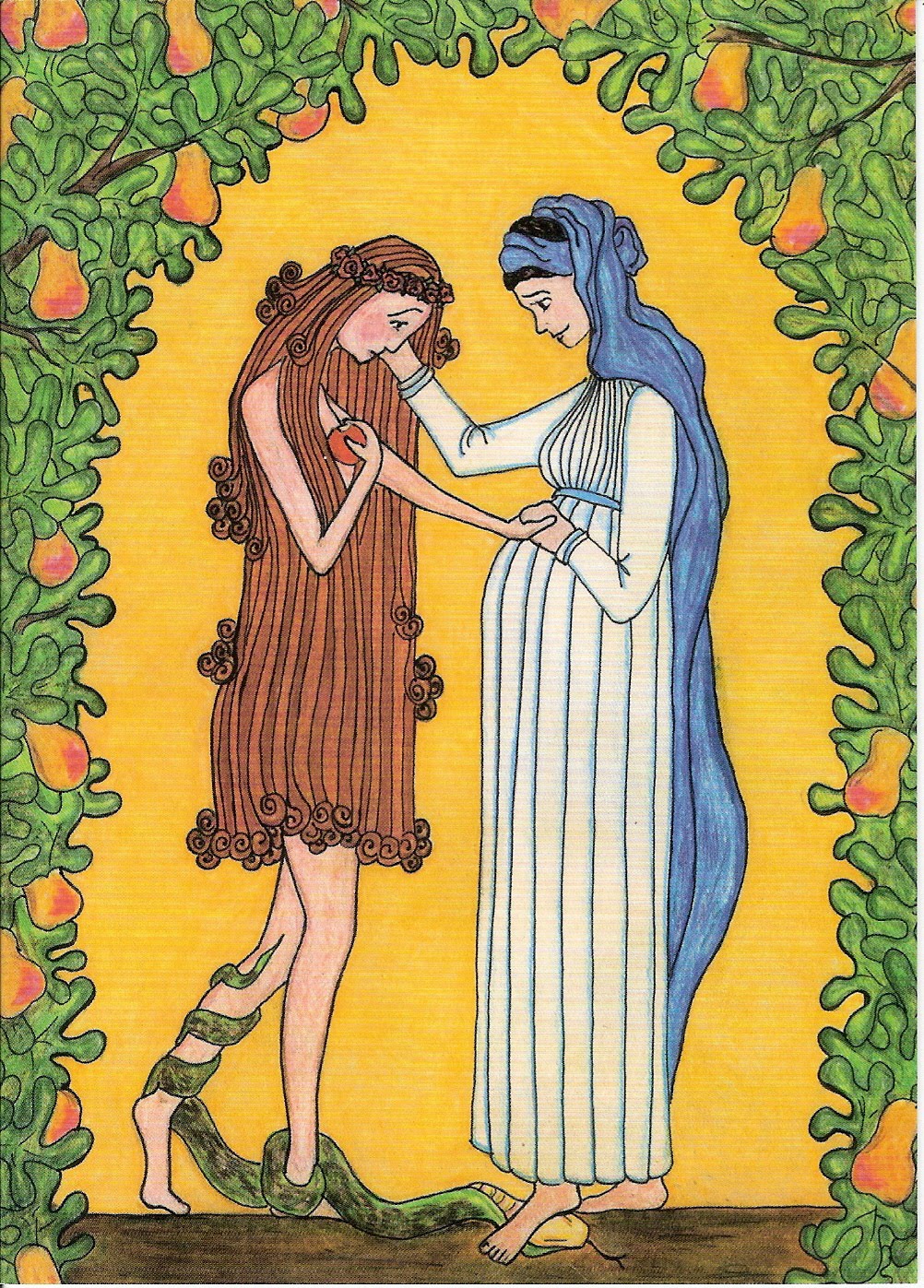
The Elisha Code is all about dying to self and living for Christ. Christ is the second Adam—the new man who fully bears the image of God. In Eden, the tempter succeeded in marring the image of God that was so beautifully evident in Adam and Eve before the fall. Sin robs and defiles. Jesus redeems and restores.

Art by Hult –www.biblicalarchaeology.org

Two people who lived the crucified life were William Wilberforce and Corrie ten Boom. Both fought hatred and the dehumanizing forces of slavery and racism. Their most powerful weapon was relentless love. Today, those who embrace the Christ of the cross are called to do the same.

Abraham Lincoln once said that every school child should know about William Wilberforce.[i] For twenty long years from 1787 to 1807, Wilberforce persistently campaigned for the abolition of the slave trade. It was incredibly painful and often deeply discouraging work.

What kept him from giving up as he faced defeat after defeat? Wilberforce had previously lived a self-indulgent life as a very wealthy upper-class Englishman. What motivated him to stop wasting his life in drinking, gambling, and endless parties? He was a popular Member of Parliament who wowed crowds with his remarkable singing and wit. Prime Minister William Pitt said that Wilberforce had the greatest natural eloquence of all the men he had ever known.[ii] What caused him to choose the unpopular path of putting principle above politics, and conscience over ambition?

With the death of Wilberforce’s father at just age 40, William’s comfortable world was radically shaken. At the age of eight, because of his mother’s serious illness, he was shipped off to his Uncle William and Aunt Hannah in Wimbledon. Unbeknownst to his mother, he was mentored by Rev. John Newton, the former slave-ship captain and author of the song Amazing Grace. Some trace Wilberforce’s hatred of slavery back to this earliest encounter.

When Wilberforce’s wealthy grandfather got wind of his new spirituality, he threatened to disinherit him. So, Wilberforce’s mother promptly rescued him and did her best to cure him through endless parties and upper-class distractions. For a while, the cure was effective. After his grandfather’s death, Wilberforce inherited the family fortune which funded his election as an 18-year-old English member of parliament.

While spending the winter at the fashionable French and Italian Rivieras, he was suddenly called back to London in support of William Pitt’s Parliamentary Reform Bill. While crossing the Swiss Alps, Wilberforce read The Rise and Progress of Religion in the Soul by Philip Doddridge. Both Doddridge and John Wesley were instrumental in reintroducing the forgotten teachings of Richard Baxter about self-examination, solitude, devotions, and diligence.[iii]

In discussing Doddridge’s book with his former tutor Isaac Milner, Wilberforce’s life was radically changed. He rediscovered his childhood faith at an adult level. Wilberforce, with Milner’s assistance, began reading the Bible in the original Greek. He wanted to find out for himself what the Christian faith was truly about. He discovered that it was not about a system of gloomy prohibitions. True faith is about peace, hope, and joy. When Wilberforce fell in love with Jesus, he also fell in love with God’s creation.

Rather than drop out of politics as he was tempted to do, Wilberforce turned his new-found faith into practical action. Prime Minister Pitt wrote him, saying: “Surely the principles as well as the practice of Christianity are simple, and lead not to meditation only but to action.”

Reconnecting with his old mentor, the converted slave-ship captain, John Newton, Wilberforce realized that God could use him to end the slave trade: “God almighty has set before me two great objects: the suppression of the Slave Trade and the reformation of manners.”

Eighteenth-century England was rife with epidemic alcohol abuse, child prostitution, child labor, and animal exploitation. There were over 14,000 slaves in England alone, but hundreds of thousands more in the rich Caribbean English colonies where it was out of sight and out of mind.[iv] The future King of England George IV was famous for his immorality and gambling debts, keeping lockets of hair from all 7,000 women that he had seduced.[v] The King and his royal brothers dismissed abolitionists like Wilberforce as fanatics and hypocrites.[vi]

Because England was the foremost slave-trading nation on earth, it was initially unthinkable for them to give it up. As one merchant accurately put it, the African slave trade was “the foundation of our commerce…the life of our navigation, and first cause of our national industry and riches.”[vii]

Eighty per cent of overseas British income came from the Caribbean slave plantations.[viii] Wilberforce was naively asking England to commit commercial suicide. In Bristol, after the initial defeat of Wilberforce’s bill, bells were rung, a bonfire was lit, and a half-day holiday was awarded to sailors and workers.[ix] The passion for profit and slave-produced sugar had killed their conscience.

While fighting the slave trade, Wilberforce also invested in improving the life of England’s poor, giving one quarter of his income, representing the equivalent of $300,000 away each year. He started cancer hospitals, eye clinics and many faith-based schools for the poor.[x]

William Willberforce portrait (John Russell)

The slave trade was abolished in 1807; however, the slaves were not liberated until just before Wilberforce’s death. On July 31st, 1834, 800,000 Afro-Caribbeans were set free. While moving a motion for abolition, Wilberforce said, “Africa! Africa! Your sufferings have been the theme that has arrested and engages my heart – your sufferings no tongue can express; no language impart.”[xi]

In the 1940’s, Corrie ten Boom also learned to act on her strong faith. The Nazis conquered the Netherlands in May 1940, and during the German occupation 100,000 Dutch Jews were sent to concentration camps. Corrie prayed, “Lord Jesus, I offer myself for your people. In any way. Any place. Any time.”[xii]

By disguising themselves as Nazi soldiers, her underground team saved 100 Jewish babies from being killed in an orphanage.

A well-known architect built them a secret two-and-a-half foot-wide hiding place behind a new brick wall in Corrie’s bedroom.[xiii] Even after arresting the ten Booms, the Gestapo were never able to find the Jews hidden in this ‘angel-crib’ hiding place.[xiv]

At the time of the arrest, Corrie’s interrogator painfully slapped her in the face after every question. Corrie cried out: “Lord Jesus, protect me!”

He hissed at her, “If you mention that name again once more, I will kill you.”

But miraculously, he stopped beating her.[xv]

Corrie and her sister Betsie hid over 800 Jewish people in their Haarlem watchmaker home, before being sent to Ravensbruck Concentration Camp in eastern Germany where 96,000 women died. “The sufferings of Jesus,” said Corrie, “became very real to me at Ravensbruck.”[xvi]

She lost four family members in the concentration camps, including her beloved older sister Betsie who forgave and prayed for the guards even as they mercilessly beat her.

Photo by RODNAE Productions on Pexels.com

“Don’t hate,” Betsie pleaded to Corrie. Three days before Betsie died, she shared with Corrie the vision of opening healing homes in Holland and Germany, before going around the world sharing about Jesus’ love and forgiveness. Two weeks later, Corrie was set free through a God-ordained clerical error.[xvii] One week after this, all the other women her age at Ravensbruck were taken to be killed in the gas chamber.

Upon returning to Holland, Corrie opened a home in Holland to bring healing for people, even including the ostracized Dutch collaborators. She was knighted by the Queen of the Netherlands for her work.
Corrie told God that she was willing to go where he wanted her to go but hoped that he would never send her back to Germany. Finally, after sensing a blockage in her prayer life, she repented, saying, “Yes, Lord, I’ll go to Germany too.”[xviii]

God sent her back to Ravensbruck to lead Bible studies with former guards, now in that prison. Then, she rented and cleaned up a former concentration camp in Germany to bring temporary housing and healing to some of the nine million Germans who had been bombed or driven out of their homes.[xix]

In 1946, a former Ravensbruck guard said to Corrie in Munich, “How grateful I am for your message, Fraulein. To think, as you said, that he washes my sins away!”

Corrie later wrote, “His hand was thrust out to shake mine… Even as angry, vengeful thoughts boiled through me, I saw the sin of them. Jesus Christ had died for this man. Was I going to ask for more? Lord Jesus, I prayed, forgive me and help me to forgive him… Again, I silently prayed ‘Jesus, I cannot forgive him. Give me your forgiveness.’ As I took his hand, my heart felt an overwhelming love for this stranger.”[xx

Corrie became a penniless tramp for the Lord, travelling for three decades to sixty-two countries, and sleeping in over a thousand different beds.[xxi] Wherever she went globally, Corrie shared from her Ravensbruck experience that the light and love of Jesus Christ is deeper than the deepest darkness. She was the favorite travelling companion of the Bible-smuggler Brother Andrew as they both did missionary work behind the Iron Curtain, in Vietnam and twelve other Communist countries. In Vietnam, they gave her the honorific title of “Double-old Grandmother.”

While in the Soviet Union, she intentionally preached the gospel in her hotel room, knowing that everything she said was being listened to and recorded by communist officials.

Through her deep friendship with Rev. Billy and Ruth Graham, Corrie’s The Hiding Place book was turned into a movie reaching tens of millions. Ruth Graham said: “I didn’t know anyone who had suffered so intensely for the Lord and for his people, as Corrie had, and come through with absolutely nothing but love in her heart for her captors—she forgave them.”[xxii]

In 1967, Corrie was recognized by Israel as a righteous Gentile, with the planting of a tree in her honor.[xxiii] When people kept telling her how brave she was, Corrie transparently prayed, “What little courage I have… I was not brave. I was often like a timid, fluttering bird, looking for a hiding place… Lord, I am weak and cowardly and of little faith; do hold me close. Thou art the conqueror. May that assurance give me courage and loyalty.”[xxiv]

Because of her work blessing indigenous people, Corrie was adopted into the Hopi First Nation and given the name Beautiful Flower.[xxv] While staying at a Kansas farm, Corrie challenged her host who had recently kicked his son out, telling him to never darken his doorstep again. She said to the farmer: “If you believe in Jesus Christ and belong to Him, your sins have been cast into the depths of the sea, and that’s very deep. But then he expects also that you forgive the sins of your boy and cast them into the depths of the sea. Just imagine how you would feel if there should be another war, if your son had to go back into service and was killed in action. Don’t you think you should forgive him right now?”

After riding together in silence, the farmer invited Corrie to go with him as he asked his son to forgive him. His son replied, “But, Father. I should ask you for forgiveness.”[xxvi]

In her late sixties, Corrie was betrayed and hurt by some Christians she loved and trusted: “You would have thought that having been able to forgive the guards in Ravensbruck, forgiving Christian friends would be child’s play. It wasn’t. For weeks, I seethed inside. But at last, I asked God again to work His miracle in me… I was restored to the Father.”

She later burnt the painful letters from her friends, as a sign of letting go.[xxvii] She, like Wilberforce, lived the crucified life. Unlike Adam and Eve, Wilberforce and ten Boom did not run from God. They found their hiding place in God (Psalm 32:7). In tumultuous times, they courageously fought against forms of racism that mar and debase the image of God that we all bear.

So God created mankind in his own image,
in the image of God he created them;
male and female he created them.
(Genesis 1:27, NIV)

This is the thirteenth weekly excerpt from the award-winning book 
The Elisha Code & the Coming Revival 

A soul-gripping read.
Is a return-to-Jesus revival possible in our time?
This book points the way forward.
For details click here.

[i] Lincoln on abolition in England and the United States, 1858 | Gilder Lehrman Institute of American History (accessed April 13th 2023).

[ii] Eric Metaxas, Amazing Grace (Harper Collins Publishers, New York, NY, 2007), 41.

[iii] William Hague, William Wilberforce: the Life of the Great Anti-Slave Trade Campaigner, (HarperCollins Publishers, London, UK, 2007), 74.

[iv] Metaxas, Amazing Grace, 94.

[v] Metaxas, 72.

[vi] Metaxas, 158.

[vii] Hague, 119.

[viii] Hague, 119.

[ix] Hague, 225.

[x] Hague, 221.

[xi] Metaxas, 151.

[xii] Corrie ten Boom, The Hiding Place (Chosen Books, Bantam Books, Fleming H Revell, New York, New York, 1971), 114.

[xiii] Ten Boom, The Hiding Place, 120.

[xiv] Corrie ten Boom, A Prisoner—and Yet (Christian Literature Crusade, London, UK, 1954), 12.

[xv] Ten Boom, A Prisoner—and Yet, 13.

[xvi] Ten Boom, A Prisoner—and Yet, 87.

[xvii] Ten Boom, The Hiding Place, 241

[xviii] Corrie ten Boom, Amazing Love, (Christian Literature Crusade, London, UK, 1954), p. 27.

[xix] Ten Boom, Amazing Love, 36.

[xx] Ten Boom The Hiding Place, 238.

[xxi] Corrie ten Boom & Jamie Buckingham, Tramp for the Lord (BBS Publishing Company, New York, 1975, 1995), 185.

[xxii] Corrie Ten Boom “The Lives She Touched” video Ruth Graham: “When I met Corrie, the thing that really impressed me was the twinkle in her eye. There was nothing but love and forgiveness.”

[xxiii] Ten Boom, The Hiding Place, 138.

[xxiv] Ten Boom, A Prisoner— and Yet, 129.

[xxv] Corrie ten Boom “The Lives She Touched” video.

[xxvi] Ten Boom, Amazing Love, 10.

[xxvii] Ten Boom & Buckingham, Tramp for the Lord, 310.

Becoming a Triumphant Warrior

28 Friday Nov 2025

Posted by davidkitz in Psalm 18, Psalms

≈ Leave a comment

Tags

battle, Christ, courage, David, discipline, faith, Holy Spirit, obedience, Psalms, spirit, strength, the LORD, triumph, victory, warfare, warrior, warrior spirit

Today’s Devotion from Psalms 365 by David Kitz

Reading: Psalm 18:37-45

Listen to today’s reading by Jonathan Dent:

https://davidkitz.blog/wp-content/uploads/2025/11/psalm-18-5-37-45-final-mix.mp3

I pursued my enemies and overtook them;
I did not turn back till they were destroyed.
I crushed them so that they could not rise;
they fell beneath my feet.
You armed me with strength for battle;
you humbled my adversaries before me.
You made my enemies turn their backs in flight,
and I destroyed my foes.
They cried for help, but there was no one to save them—
to the LORD, but he did not answer.
I beat them as fine as windblown dust;
I trampled them like mud in the streets.
You have delivered me from the attacks of the people;
you have made me the head of nations.
People I did not know now serve me, foreigners cower before me;
as soon as they hear of me, they obey me.
They all lose heart; they come trembling from their strongholds (NIV). *

Photo Credit: http://www.joydigitalsa.com

Reflection
Why do you enjoy sports? Why do you take pride in seeing your home team win? The answer is quite simple: Inside you beats the heart of a warrior. I can deny I have a warrior spirit, but there’s a competitive, fighting spirit written into my DNA. It’s in your DNA too. In fact, that warrior spirit is essential to your success and survival.

David had an abundant supply of testosterone fueled warrior spirit, and in the psalm portion above, we see it on full display. David was a fighter, and every competitive warrior signals his triumph. You do as well. This psalm was part of David’s victory celebration. For a scientific discussion of human response in moments of victory visit: Olympic victors’ first reaction is dominance, not pride | TIME.com

For me as a follower of Jesus the question is not, do I have a warrior spirit? The question is how will I direct my warrior’s heart into a path that is pleasing to my heavenly Father?

Filled with the Holy Spirit, Jesus’ twelve disciples turned the world upside down. Their response to Satan’s attacks was not merely defensive. Through prayer and proclamation, they took souls captive to the obedience of Christ. The apostle Paul declares, “But thanks be to God, who always leads us as captives in Christ’s triumphal procession and uses us to spread the aroma of the knowledge of him everywhere (2 Corinthians 2:14). Paul was a triumphant warrior in the spiritual realm. David was triumphant in the natural realm. What about you?

Response: Heavenly Father, help me rise up as a spiritual warrior for you today. Help me to spread the aroma of the knowledge of Jesus everywhere. Through the power of Christ, I know I am more than a conqueror. Amen.

Your Turn: Are you personally gaining ground in the spiritual battle all around you? How do you measure your progress?

Para la publicación de Salmos 365 de hoy en español haga clic aquí.

bgbg_v4.3_1501818
* NEW INTERNATIONAL VERSION, COPYRIGHT ©1973, 1978, 1984, 2011 BY BIBLICA

Thank God for peace in Israel and Gaza,
and continue to pray for peace to return to Ukraine and Russia!

Volume I of Psalms 365: Develop a Life of Worship and Prayer won the Best Book of the Year Award from The Word Guild and Volume II has won the Best Devotional of the Year Award. For those who love God’s word, this three-book series is an ideal way to daily meet with the Lord. To purchase or for a closer look click here.

New from David Kitz

James—the brother of Jesus—who was this man? What evidence do we have that this “brother of our Lord” even existed?

David Kitz digs deep into archeology, family dynamics, church history, and the biblical texts. What emerges from his research is a portrait of a decisive, pivotal leader who embodied the will and character of Jesus Christ.

But how did James—James the unbeliever—transform to become a leader who changed the course of world history? In these pages you will uncover the answer and rediscover for yourself the life-changing power of the gospel.

To view further details or purchase this or other books directly from the author click here.

← Older posts

Psalms 365: Develop a Life of Worship and Prayer

Psalms 365 Volume II

Psalms 365 vol 3
— Psalms 365 Volume III

Psalms

Recent posts

  • A Lesson from the Flowers February 17, 2026
  • Do not fret February 17, 2026
  • Minds Set on Things Above February 16, 2026
  • What are the desires of your heart? February 16, 2026
  • The Abundance of Your House February 15, 2026
  • It’s all about DNA February 15, 2026
  • Who Is Like You, LORD? February 14, 2026

Calendar

February 2026
M T W T F S S
 1
2345678
9101112131415
16171819202122
232425262728  
« Jan    

Blog Posts

Comments

  • davidkitz on The Abundance of Your House
  • The Abundance of Your House – QuietMomentsWithGod on The Abundance of Your House
  • pastorpete51 on It’s all about DNA

Blog at WordPress.com.

Privacy & Cookies: This site uses cookies. By continuing to use this website, you agree to their use.
To find out more, including how to control cookies, see here: Cookie Policy
  • Subscribe Subscribed
    • I love the Psalms
    • Join 1,385 other subscribers
    • Already have a WordPress.com account? Log in now.
    • I love the Psalms
    • Subscribe Subscribed
    • Sign up
    • Log in
    • Report this content
    • View site in Reader
    • Manage subscriptions
    • Collapse this bar
 

Loading Comments...