Tags
Sins of Past Generations
19 Thursday Nov 2020
Posted in Psalm 79

19 Thursday Nov 2020
Posted in Psalm 79
Tags

19 Thursday Nov 2020
Tags
Reading: Psalm 79
(Verses 8-13)
Do not hold against us the sins of past generations;
may your mercy come quickly to meet us,
for we are in desperate need.
Help us, God our Savior,
for the glory of your name;
deliver us and forgive our sins for your name’s sake.
Why should the nations say,
“Where is their God?”
Before our eyes, make known among the nations
that you avenge the outpoured blood of your servants.
May the groans of the prisoners come before you;
with your strong arm preserve those condemned to die.
Pay back into the laps of our neighbors seven times
the contempt they have hurled at you, Lord.
Then we your people, the sheep of your pasture,
will praise you forever;
from generation to generation
we will proclaim your praise (NIV).*
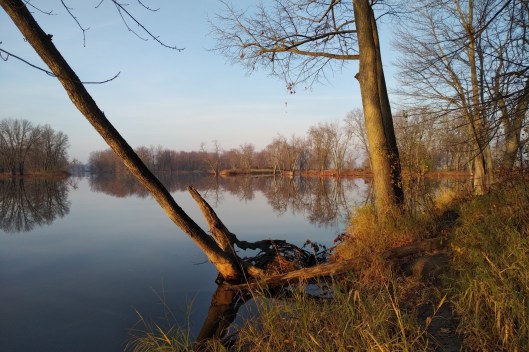
Autumn reflections — photo by David Kitz
Reflection
Psalm 79 began with the psalmist lamenting that Jerusalem had been invaded by foreign armies. Destruction and bloodshed were everywhere. O God, the nations have invaded your inheritance; they have defiled your holy temple, they have reduced Jerusalem to rubble (Psalm 79:1). Now at the conclusion of this psalm there is a plea for God’s help and mercy. Do not hold against us the sins of past generations; may your mercy come quickly to meet us, for we are in desperate need.
It becomes clear from this psalm and other passages in scripture that there are personal sins and there are corporate or national sins. Here specifically the psalmist is reflecting on the sins of the nation. Both personal and national sins can be intergenerational. They are passed down from generation to generation with terrible consequences. The father who disrespects and abuses his wife is far more likely to raise a son who does the same to his partner.
The nation that mistreats racial, religious or ethnic minorities within its borders can expect dire national consequences. The LORD hears the cries of the oppressed. He heard the cries of the people of Israel when they were enslaved in Egypt, and the LORD hasn’t suddenly changed. His ears are still open to the cries of any people who cry out to Him for mercy.
But as for us, we need to recognize our collective or national sins even as we recognize and repent of our personal sins. Why should the nations say, “Where is their God?” As always, our God is watching us. He is watching over the nations and He sees how we treat our neighbors here and around the world.
Response: LORD God, deliver us and forgive our sins for your name’s sake. Forgive the sins we have committed against minorities within our borders. You hold us accountable. Show us your mercy. Amen.
Your Turn: Does the LORD care only about us, or all people? How can we reflect God’s love for all?
Some good news: The first volume of Psalms 365: Develop a Life of Worship and Prayer by award-winning author David Kitz will be published in November, 2020, by Elk Lake Publishing. Two additional volumes will follow in 2021 to complete the three volume set of devotions from the Psalms.
15 Sunday Nov 2020
Tags
15 Sunday Nov 2020
Posted in Psalm 103
Tags
 Praise the LORD, my soul;
30 Monday Sep 2019
Posted in Devotionals, Psalm 106, Psalms
Tags
Reading: Psalm 106
(Verses 28-39)
They yoked themselves to the Baal of Peor
and ate sacrifices offered to lifeless gods;
they aroused the LORD’s anger by their wicked deeds,
and a plague broke out among them.
But Phinehas stood up and intervened,
and the plague was checked.
This was credited to him as righteousness
for endless generations to come.
By the waters of Meribah they angered the LORD,
and trouble came to Moses because of them;
for they rebelled against the Spirit of God,
and rash words came from Moses’ lips.
They did not destroy the peoples as the LORD had commanded them,
but they mingled with the nations and adopted their customs.
They worshiped their idols, which became a snare to them.
They sacrificed their sons and their daughters to false gods.
They shed innocent blood, the blood of their sons and daughters,
whom they sacrificed to the idols of Canaan,
and the land was desecrated by their blood.
They defiled themselves by what they did;
by their deeds they prostituted themselves (NIV).

Algonquin Park canoe trip — photo by Liz Kranz
Reflection
Psalm 106 began with with praise, but in verse three it transitioned to this opening thought, “Blessed are those who act justly, who always do what is right.”
Now there’s a mind-blowing concept. Talk about setting the bar completely out of reach! Nobody—I repeat—nobody always does right and acts justly in every situation. Human fallibility and self-interest dictate to the contrary.
The psalmist then goes on to recount a litany of Israel’s sins. By my estimation there are nine major transgressions outlined in Israel’s history through this psalm. There’s a failure to remember God’s kindness. There’s rebellion, wickedness, idolatry, envy, sensual craving, impatience, ingratitude, unbelief, outright disobedience, bloodshed, human sacrifice and further rebellion.
What is truly remarkable about this psalm is not Israel’s sinful ways; sinful ways are common to all humanity. What is truly mind-boggling is God’s faithfulness and readiness to forgive. He hears us in our distress. He seeks out the lost and wayward. He welcomes back the sin infested prodigals knowing full well where they have been. That’s the wonder of our God. He is always, always, always ready to forgive, when we are ready to admit the error of our ways. Now that’s a reason for praise!
Response: Father God, I acknowledge that my people and my nation have been caught up in sinful ways. Please be merciful to us. We are deserving of your judgment. Forgive us through your son Jesus. Amen.
Your Turn: Like Phinehas are you ready to take a stand against sin in your life and your community?
09 Monday Sep 2019
Posted in Devotionals, Psalm 103, Psalms
Tags
compassionate, forgive, God's character, grace, Psalm, Psalm 103
Reading: Psalm 103
(Verses 7-12)
He made known his ways to Moses,
his deeds to the people of Israel:
The LORD is compassionate and gracious,
slow to anger, abounding in love.
He will not always accuse,
nor will he harbor his anger forever;
he does not treat us as our sins deserve
or repay us according to our iniquities.
For as high as the heavens are above the earth,
so great is his love for those who fear him;
as far as the east is from the west,
so far has he removed our transgressions from us (NIV).

Petrie Island cove — photo by David Kitz
Reflection
Here is a little secret that will be a secret no longer: Of all the psalms, Psalm 103 is my favorite.
Why do I have such a deep love for this psalm? The answer lies in what the psalm tells us about God. The LORD is compassionate and gracious, slow to anger, abounding in love.
That sentence should be etched on our hearts and minds. The character of God is revealed in these traits. I stand in need of a God who has these qualities because by nature I am the polar opposite. In various situations I have lacked compassion. I have reasoned that those who suffer are getting what they deserve. Rather than extent grace, I have a tendency to be judgmental. When things don’t go my way, I can be quick tempered rather than slow to anger. I like to think I am loving, but I’m not sure others would always agree.
The amazing truth is that despite all our shortcomings God still loves you and me. He [the LORD] will not always accuse, nor will he harbor his anger forever; he does not treat us as our sins deserve or repay us according to our iniquities.
Satan is the accuser; God is the merciful forgiver. Sometimes I think in our minds we have reversed those roles. That’s why this psalm acts as such a powerful antidote to wrong thinking. Do you think God cannot forgive you because of some past transgression? Think again. Psalm 103 tells us to view God differently. He is more compassionate than we can imagine, more loving than we can fathom, more patient than we can comprehend.
For as high as the heavens are above the earth, so great is his love for those who fear him; as far as the east is from the west, so far has he removed our transgressions from us.
Infinite—our God’s love and compassion are infinite. Enough said.
Response: Father God, because of your love, mercy and grace I want to serve you. Please accept my feeble attempts at loving you back. Your forgiveness leaves me with a debt of love I cannot pay. Amen.
Your Turn: What is your favorite psalm? Why?
27 Tuesday Aug 2019
Posted in Devotionals, Psalm 99, Psalms
Tags
Aaron, consequences, discipline, forgive, forgiveness, Moses, Samuel
Reading: Psalm 99
(Verses 6-9)
Moses and Aaron were among his priests,
Samuel was among those who called on his name;
they called on the LORD
and he answered them.
He spoke to them from the pillar of cloud;
they kept his statutes and the decrees he gave them.
LORD our God,
you answered them;
you were to Israel a forgiving God,
though you punished their misdeeds.
Exalt the LORD our God
and worship at his holy mountain,
for the LORD our God is holy (NIV).

Exalt the LORD our God — photo by David Kitz
Reflection
David’s name appears in the text of several of the psalms, but this is the only psalm that lists other heroes of the faith. Moses, Aaron and Samuel, three heavy hitters of the Old Testament, are honored here. They are honored because they called on the LORD and he answered them.
I could quibble with the choice of these three. Moses struck the rock in anger when he was told to speak to it and thereby bring forth water for the people. As a consequence, he was not allowed to enter the Promised Land. Aaron gave into the people’s will and fashioned an idol—the golden calf. Samuel appointed Saul as the first king of Israel—a man who became a disappointing, disastrous leader who descended into witchcraft.
But… But then can I claim to be error free in the way I have lived my life? Like Moses I have lost my patience in more than one situation. If God treated me like Moses, there would be little hope of me reaching the Promised Land. Like Aaron I have a tendency to be led astray by the crowd, and like the prophet Samuel, at times I have backed people who stumbled badly and betrayed the Lord.
I have not lived a flawless life. That’s why I take comfort in these words: LORD our God, you answered them; you were to Israel a forgiving God, though you punished their misdeeds.
I need a forgiving God. I need a God who forgives my transgressions—those times when I think I know better, but of course I’m wrong. And if I am truly honest, I also admit that I need a God who punishes my misdeeds. If there are no consequences for my wrong doing, my transgressions will escalate. I need the discipline of the LORD, or I will go astray by following my own selfish desires. Just like the ancient people of Israel I need to live under the wise and loving rule of a holy God. How about you? Do you need a forgiving God?
Response: LORD God, you are holy. I want to live in a way that honors you. You know my failings and shortcomings. Forgive me as I call on you. I am needy, but in you I find all that I need. Amen.
Your Turn: If there were no consequences for sin would that change your life and conduct? Do you fear the consequences that come from wrong doing?
12 Wednesday Dec 2018
Posted in Bible, Devotionals, Psalm 25, Psalms
Tags
Reading: Psalm 25
Of David.
(Verses 1-7)
In you, LORD my God, I put my trust.
I trust in you; do not let me be put to shame,
nor let my enemies triumph over me.
No one who hopes in you will ever be put to shame,
but shame will come on those
who are treacherous without cause.
Show me your ways, LORD,
teach me your paths.
Guide me in your truth and teach me,
for you are God my Savior,
and my hope is in you all day long.
Remember, LORD, your great mercy and love,
for they are from of old.
Do not remember the sins of my youth
and my rebellious ways;
according to your love remember me,
for you, LORD, are good (NIV).
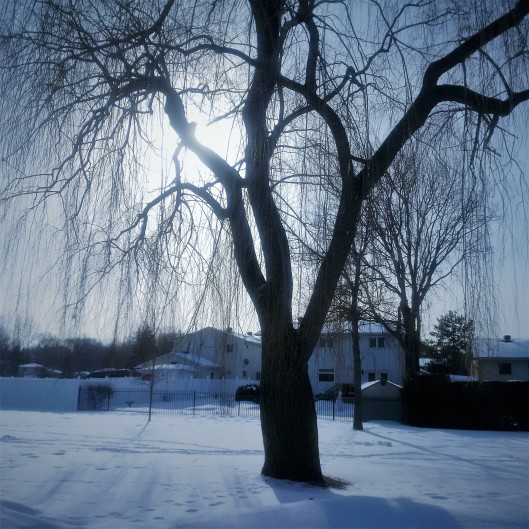
Light dawns for the upright — Grey Nuns Park, Orleans, ON — photo by David Kitz
Reflection
Shame is often viewed as a very negative feeling, and it is. Some pop psychologists are of the opinion that this emotional response should be completely removed from our lives. They argue that it has no useful function, since it often holds us back from exploring and experimenting with new behaviors and activities in the world around us.
However, a life lived without any sense of shame is a life without an active conscience. Those who lack a shame gland soon find themselves trapped in self-destructive behavior that spirals out of control. A sense of shame when we have done wrong can act as the messenger of God calling us to repentance and a change of heart.
Here in this psalm, David pleads with the LORD that he will not be put to shame. That should be our prayer as well. And how can we avoid being put to shame? David gives us the answer. No one who hopes in you [the LORD] will ever be put to shame, but shame will come on those who are treacherous without cause.
If your hope is in the LORD, He will protect you from shame and disgrace. Trusting in God, rather than in ourselves is the point where freedom from shame begins. A humble teachable spirit is what God desires. Because of His great mercy and love, He forgives the sins of our youth and our rebellious ways. Praise the LORD!
Response: LORD, this is my prayer: Show me your ways, LORD, teach me your paths. Guide me in your truth and teach me, for you are God my Savior, and my hope is in you all day long. Amen.
Your Turn: How does trusting in God protect you from experiencing shame?
26 Monday Nov 2018
Posted in Bible, Devotionals, Psalm 19, Psalms
Tags
Reading: Psalm 19
(Verses 12-14)
But who can discern their own errors?
Forgive my hidden faults.
Keep your servant also from willful sins;
may they not rule over me.
Then I will be blameless,
innocent of great transgression.
May these words of my mouth
and this meditation of my heart
be pleasing in your sight,
LORD, my Rock and my Redeemer (NIV).

Lead me on the right path — Gatineau Park trail — photo by David Kitz
Reflection
What is your response to God’s word and His voice as it speaks to your heart? In this final portion of Psalm 19 we see David’s response to God. God has been doing the talking thus far. The LORD has been speaking to David through the stars, through the night sky, and the blazing heat of the sun—the first witness. He has spoken to him through the Word of God—His written revelation—the second witness. Now as this Psalm draws to a close, we hear David responding back to God.
In actuality, David is responding to the third witness. His heart is bearing witness to the reality of God. His conscience is convicting him of his sin and of the righteousness of God. We all have this third witness within us—a witness that will not be silenced, though we may try to drown out this inner voice of the Spirit. The Holy Spirit is at work in every case when we respond in a right way to God.
If along with David, we have heard the voices of the first and second witness, then there is only one appropriate response. It is the response recorded here in Holy Scriptures. If we see and grasp the awesome power and majesty of God, if through His word we have glimpsed His holiness, then we are brought low. We are humbled before him. Our greatest achievements are nothing. Our pride dissolves. Our weakness, our smallness is self-evident in the presence of the LORD of heaven and earth. We are exposed; our sin is exposed before this holy, magnificent God.
Along with David we cry out, “But who can discern their own errors? Forgive my hidden faults. Keep your servant also from willful sins; may they not rule over me.”
If we perceive God correctly, and if we assess ourselves accurately and honestly, then we quickly realize our greatest need. Our greatest need is for forgiveness. This is the solid bedrock on which any human relationship with God is built.
Here is the truth. I need forgiveness. My failings and shortcomings are many. What about you?
Response: Heavenly Father, please forgive my sins. Often I have lived according to my will, not yours. Forgive my selfish ways. May these words of my mouth and this meditation of my heart be pleasing in your sight, LORD, my Rock and my Redeemer. Amen.
Your Turn: Have you confessed your hidden sins, and admitted your need for a Savior from yourself?
03 Saturday Nov 2018
Tags

Early evening glow on the Ottawa River — photo by David Kitz
 I love the Psalms