Tags
commands, delight, God's word, life, obey, praise, promise, Righteousness, selfish, teach, the LORD, understanding
I will praise Him!

All creation speaks its praise — photo courtesy of Karen Kitz

21 Saturday Apr 2018
Posted in Bible, Psalm 119, Psalms, Saturday's Psalm
Tags
commands, delight, God's word, life, obey, praise, promise, Righteousness, selfish, teach, the LORD, understanding
All creation speaks its praise — photo courtesy of Karen Kitz
02 Friday Mar 2018
Posted in Bible, Devotionals, Psalm 89, Psalms
Tags
Babylonian invasion, Bible, Bible attacked, Creator, Darwin, defeat, foundation, foundational truth, God's word, inerrancy, Judea, King of Judah, North America, shame
Reading: Psalm 89
(Verses 38-45)
But you have rejected, you have spurned,
you have been very angry with your anointed one.
You have renounced the covenant with your servant
and have defiled his crown in the dust.
You have broken through all his walls
and reduced his strongholds to ruins.
All who pass by have plundered him;
he has become the scorn of his neighbors.
You have exalted the right hand of his foes;
you have made all his enemies rejoice.
Indeed, you have turned back the edge of his sword
and have not supported him in battle.
You have put an end to his splendor
and cast his throne to the ground.
You have cut short the days of his youth;
you have covered him with a mantle of shame (NIV).
Reflection
Though we cannot be absolutely certain, it seems likely that Psalm 89 was written during the time of the Babylonian invasion of Judea. These were days of disaster brought on by idolatry as the people turned away from God. The rebellious King of Judah suffered a catastrophic defeat as the words of this psalm state: You have put an end to his splendor and cast his throne to the ground. You have cut short the days of his youth; you have covered him with a mantle of shame.

Photo courtesy of Liz Kranz
In the last few decades the church in North America has also experienced a number of defeats or setbacks. Enemies of the Christian faith have risen up and become bold in their attacks. Just as ancient Jerusalem was attacked and laid low, so too Christian belief systems have been under constant assault. The walls and strongholds of our faith have been undermined.
Two unshakeable biblical truths have come under relentless attack. The first is the truth of creation. Our God is the Creator of the universe—the source point of all matter and life. Since the days of Darwin, who incidentally believed in God, atheists have mounted a ferocious attack on this foundational truth. The Christian response has often been jingoistic or at best disjointed. A more coherent and scientifically sound defense is needed.
The second truth that has been under continual attack is the veracity of the Bible. God’s holy word is mocked and routinely discredited especially at our universities. The word of God is our stronghold. Over and over again it has been proven to be accurate, reliable and true. Archeologists and scholars have marvelled at the veracity and authenticity of God’s word. But the real proof of the inerrancy of God’s word does not come from scholarly research. It comes from the transformed lives of believers.
Response: LORD God, my trust is in you and your word. Creator God, I want my faith to be as secure for me as the earth beneath my feet and the air in my lungs. You are all around me. Thank you, Lord. Amen.
Your Turn: Have attacks on your faith caused doubt? How did you overcome?
22 Wednesday Nov 2017
Posted in book review, Books by David Kitz, Devotionals, Psalms
Tags
author, Bible, David Kitz, God's word, literature, Psalm, Psalms, Psalms Alive!, word of God
There’s something innately powerful about good literature. The characters and events we read about can become very real to us. We come to know these people; their experiences become our own.
For nearly 3,000 years people have been getting in touch with God through the sacred literature from the Book of Psalms. Generation after generation has drawn strength, comfort and inspiration from the words of the psalmist.
In times of calamity the psalms bring peace. When storms rage within, a psalm can provide a haven of rest. When anger erupts, a psalm can act as a release valve. When God seems distant, the psalms bring us near.
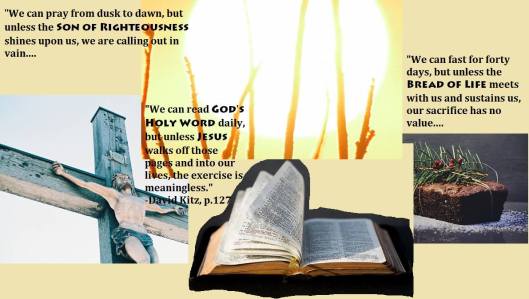
Collage composed by Lila Diller with photos selected from Unsplash
Psalms Alive! Connecting Heaven and Earth is a devotional study of thirteen selected psalms. Each chapter is designed to help the reader interact with God’s word, and connect with their Creator in a fresh and living way.
There is something surprisingly practical about the psalms. They are meant to be lived.

237 pages, trade paperback
The Bible is in fact a living document that must be applied to life to be effective. This should not surprise us since, “The word of God is living and active” (Hebrews 4:12a). Author David Kitz draws from other biblical sources and real life experiences to make these psalms come alive for you.
There is power in the unchanging word of God. Why not experience that power for yourself? Discover Jesus, the Good Shepherd, walking off the pages of the psalms and into your life.
13 Monday Nov 2017
Posted in Bible, Devotionals, Psalm 56, Psalms
Tags
David, election, election campaigns, God, God's word, Grey Nuns Park, meditate, misery, Orleans, politicians, praise, scandal, tears, the cross, the LORD, trust, trust in God, voter
Reading: Psalm 56
(Verses 8-13)
Record my misery;
list my tears on your scroll—
are they not in your record?
Then my enemies will turn back
when I call for help.
By this I will know that God is for me.
In God, whose word I praise,
in the LORD, whose word I praise—
in God I trust and am not afraid.
What can man do to me?
I am under vows to you, my God;
I will present my thank offerings to you.
For you have delivered me from death
and my feet from stumbling,
that I may walk before God
in the light of life (NIV).
Reflection
Psalm 56 is a relatively short psalm. Yet in this short psalm, David repeats the phrase ‘whose word I praise’ three times. In today’s reading he states, “In God, whose word I praise, in the LORD, whose word I praise—in God I trust and am not afraid.”

Light my path, Lord — Grey Nuns Park, Orleans, ON — photo by David Kitz
For me this phrase raises a question. Whose word do I praise? Do I praise God’s word? Do I appreciate and value the written word of God? Have I made it my refuge as it was for David? Is it my sustenance? Do I feed on it daily? While fasting in the wilderness Jesus answered the tempter, “It is written, ‘One does not live by bread alone, but by every word that comes from the mouth of God’” (Matthew 4:4).
Do you trust the living, active word of God to help you today and every day? Trust really is crucial. If I don’t trust that God’s word will help, encourage, correct and sustain me, I won’t bother reading it or meditating on it. I’ll trust in my own abilities or seek direction from other sources.
Trust is crucial in election campaigns. During such campaigns politicians from a variety of parties make their pitch to the electorate. Again the fundamental question for each voter is whose word, do you trust? Politicians often promise more than they can deliver. Often I have been let down by a politician who promised to do things differently, but once in office failed to deliver, or became caught up in scandal after scandal. I presume the same disappointment holds true for many voters.
We need to remember that salvation won’t ever be achieved at the ballot box. It was achieved at the cross—only at the cross. The remedy for my sin is found there. The living word of God reminds us of that trustworthy, unchanging truth.
Response: LORD God, I put my trust in your word. I praise your life-giving word for it is good and completely trustworthy. Your word is a lamp for my feet, a light on my path (Psalm 119:105). Amen.
Your Turn: Do you make it your habit to read and meditate on the word of God?
10 Friday Nov 2017
Posted in Bible, Devotionals, Psalm 56, Psalms
Tags
confidence, David, faith, faith in God, fear, fearing God, God's word, Jesus, Philistines, praise, protection, redemption, salvation, trust, trust in God
Reading: Psalm 56
For the director of music. To the tune of “A Dove on Distant Oaks.” Of David. A miktam. When the Philistines had seized him in Gath.
(Verses 1-7)
Be merciful to me, my God,
for my enemies are in hot pursuit;
all day long they press their attack.
My adversaries pursue me all day long;
in their pride many are attacking me.
When I am afraid, I put my trust in you.
In God, whose word I praise—
in God I trust and am not afraid.
What can mere mortals do to me?
All day long they twist my words;
all their schemes are for my ruin.
They conspire, they lurk,
they watch my steps, hoping to take my life.
Because of their wickedness do not let them escape;
in your anger, God, bring the nations down (NIV).
Reflection
In times of trouble David knew where to turn. With his enemies, the Philistines, surrounding him, he turned to God. Hear his bold confession, “When I am afraid, I put my trust in you. In God, whose word I praise—in God I trust and am not afraid. What can mere mortals do to me?”

New York City skyline as seen from Liberty Island — photo by David Kitz
David, the obvious answer is, “Mere mortals can torture and kill you.”
Despite this David remained confident. The Philistines could destroy his body but they could not harm his eternal spirit which was at peace—protected by God. Do you and I have the same confidence? That confidence can be ours if we put our trust in God.
Jesus warned his disciples, “Do not be afraid of those who kill the body but cannot kill the soul. Rather, be afraid of the One who can destroy both soul and body in hell” (Matthew 10:28). The One we are to fear is God alone. Jesus perfectly demonstrated his trust in God the Father when he went to the cross on our behalf. There he was tortured and killed, but three days later he was vindicated by the Father, who raised him from the dead. Our redemption and salvation come from Jesus.
When we face mortal danger or a deadly prognosis may these words be on our lips and in our heart: When I am afraid, I put my trust in you. In God, whose word I praise—in God I trust and am not afraid. What can mere mortals do to me?
Response: LORD God, right now I put my faith and trust in you. By the blood of Jesus you forgive all my sins and have paid the price for my redemption. When I am afraid, I turn to you. I put my trust in you alone. Amen.
Your Turn: Who do you trust and turn to when bad news comes? Friends and family can provide support, but is your Father—your heavenly Father with you? Are you leaning into Him?
17 Thursday Aug 2017
Posted in Bible, Devotionals, Psalm 32, Psalms
Tags
confession, David, forgiveness, God's voice, God's word, hearing God, instruct, instruction, Jesus, Petrie Island, teach
Reading: Psalm 32
(Verses 8-11)
I will instruct you and teach you in the way you should go;
I will counsel you and watch over you.
Do not be like the horse or the mule,
which have no understanding
but must be controlled by bit and bridle
or they will not come to you.
Many are the woes of the wicked,
but the LORD’s unfailing love
surrounds the one who trusts in him.
Rejoice in the LORD and be glad, you righteous;
sing, all you who are upright in heart! (NIV)
Reflection
In Psalm 32 God speaks back. David begins this psalm and we clearly can hear his voice addressing us, as he tells how wonderful it is to be forgiven. He then goes on to speak of his own struggle with unconfessed sin. Finally, he tells us of the great relief he experienced as he is pardoned and restored to a place of close fellowship with the LORD. But then abruptly in verse eight, we hear a different voice. God is speaking. The LORD responds to what David has said. Through this psalm David is modelling true prayer. This psalm is two-way communication.

Petrie Island sunset — photo by David Kitz
We have heard David’s words; let’s hear God’s words now. I will instruct you and teach you in the way you should go; I will counsel you and watch over you.
Clearly this is not the voice of David. David is not going to counsel and watch over us. This is the work of the LORD. The LORD will teach and guide us. It is His role to shepherd the flock of His pasture.
These words, from verse eight to the end of this psalm are coming from the LORD. David has heard God speak, and now he is passing on this message from the LORD directly to us. In this respect David is fulfilling the role of a prophet. He is acting as God’s spokesperson. In fact in Acts 2:30, Peter asserts that David was a prophet. And what is a prophet? In the simplest terms, it is someone who hears God, and then passes on God’s message to others.
Do you hear God? This is no idle, rhetorical question. It is essential to our Christian faith that we as believers hear the voice of God. I would go so far as to say, that you cannot experience salvation unless you first hear God. Jesus said, “My sheep listen to my voice; I know them, and they follow me. I give them eternal life, and they shall never perish” John 10:27-28a (NIV).
In short, we must be able to hear Jesus in order to follow Him, and it is in following Him that we receive eternal life. Hearing God’s voice is of paramount importance.
Response: LORD God, give me ears to hear what you have to say to me. Please instruct me and teach me in the way I should go. Then give me grace to obey. I put my trust in you, O LORD. Amen.
Your Turn: Do you hear God’s voice? How does He speak to you? Have you heard the Lord’s voice recently? How do you distinguish God’s voice from all the other voices that you hear?
30 Friday Jun 2017
Posted in Devotionals, Psalm 19, Psalms
Tags
Bible, Creator, Durham ON, fishing hole, God, God's word, Holy Scriptures, inerrant, infallible, Jack Hayford, Law, perfect, redemptive, the Law, the LORD, transformational, trustworthy, word of God
Reading: Psalm 19
Verses 7-11
The law of the LORD is perfect,
reviving the soul.
The statutes of the LORD are trustworthy,
making wise the simple.
The precepts of the LORD are right,
giving joy to the heart.
The commands of the LORD are radiant,
giving light to the eyes.
The fear of the LORD is pure,
enduring forever.
The decrees of the LORD are firm,
and all of them are righteous.
They are more precious than gold,
than much pure gold;
they are sweeter than honey,
than honey from the honeycomb.
By them your servant is warned;
in keeping them there is great reward (NIV).
Reflection
The voice of the speaking stars (see yesterday’s reading) is now joined by the voice of the written Holy Word. If nature, specifically the sky, is the first witness to testify to the glory of God, then the scriptures—the written word of God—constitute the second great witness to speak of God’s existence. Both these great witnesses have gathered here to testify within the context of Psalm 19.

The fishing hole — Foster farm near Durham, ON — photo by David Kitz
While nature speaks to us of the existence of God the creator, it is largely silent regarding the nature or character of this all-powerful supernatural being. Is He good? Is He evil? Is He indifferent to us? Is He angry with us? What is this great, overarching, omnipresent God really like? May we approach Him?
God’s word shows us the way. Here David tells us, “The law of the LORD is perfect, reviving the soul.”
The law is perfect, flawless, inerrant and infallible. Only a perfect, flawless, inerrant and infallible God can be the source of such a document. The law of the LORD that is referred to here is in fact the Bible, the Word of God. Jack Hayford in his commentary on this verse from the Psalms states, “That the ‘law of the LORD is perfect,’ is direct reference to the absolute, complete, and entire trustworthiness of the Holy Scriptures, which constitute the Bible.”
And this perfect, true and infallible law, or Word of God, has an effect. The Word of God is active. It revives the soul. God’s word literally brings souls back to spiritual life. There is great power in the written word. The word of God is redemptive, personal and transformational.
Response: LORD God, help me draw life, wisdom and joy from your word every day. Light my way. Amen.
Your Turn: Do you read God’s word daily? How has it helped you grow in faith?
18 Thursday May 2017
Tags
crown of life, gender bias, God's word, heroes, Jesus, Old Testament history, praise, racial bias, rewriting history, Savior, spiritual warfare, sword of the Spirit, temptations, the LORD, word of God
Reading: Psalm 149
(Verses 1-5)
May the praise of God be in their mouths
and a double-edged sword in their hands,
to inflict vengeance on the nations
and punishment on the peoples,
to bind their kings with fetters,
their nobles with shackles of iron,
to carry out the sentence written against them—
this is the glory of all his faithful people.
Praise the LORD (NIV).
Reflection
In society today there are moves afoot to rewrite history. Old monuments are being torn down or neglected. Places and buildings are being renamed because past victories or policies are now seen as oppressive or unjust. Many of the heroes of the past have lost their luster. In many cases there is sound reasoning that goes into justifying this change. Let’s face it; not every conquest was undertaken with pure motives. Not every government policy in the past was without racial or gender bias.

Statue of King David, the shepherd king, Jerusalem — photo by Lois Morrow
But are we wise when we judge people from a different era with the moral positions and perspectives of today? Do we carry our own set of biases that color our view of history? Of course we do.
We encounter the same issues when we look back at Old Testament history. It’s difficult for New Testament believers to justify Old Testament vengeance, genocide and slaughter. And yes, there’s plenty of that recorded in our Bibles. Today’s reading from Psalm 149 touches on this very point. The psalmist urges the infliction of vengeance on the nations and punishment on the peoples, to bind their kings with fetters, their nobles with shackles of iron. As followers of a gentle Jesus, who taught us to love our enemies, how are we to interpret and apply this call to action?
First, let’s realize that we are living under a new and better covenant with Jesus as our Lord and Savior. When he was arrested, Jesus told Peter to put away his sword. We do well when we heed that advice. The eager warmongers among us often need to take a chill pill. Jesus showed no tendencies to war.
But we do have a battle to fight, and we urgently need a double-edged sword. St. Paul calls it the sword of the Spirit, which is the word of God (Ephesians 6:17b). How effective are you in handling the word of God? How effective are you in battling the spiritual forces and daily temptations that are arrayed against you? With the praises of God in your mouth, and the sword of the Spirit in your hand, are you propelling your way to victory in the daily grind of life? Are the joy and peace of God reigning in your life?
Blessed is the one who perseveres under trial because, having stood the test, that person will receive the crown of life that the Lord has promised to those who love him (James 1:12).
Response: LORD God, I want to grow in my love for your word. Help me to use it wisely and deftly to the advance of your Kingdom. Lord Jesus, help me gain victory over spiritual forces that oppose me. Amen.
Your Turn: Are you developing competence in using the sword of the Spirit, which is the word of God?
11 Thursday May 2017
Tags
divine, divine revelation, God's word, incarnate, incarnation, Jesus Christ, logos, omnipresent, revelation, word of God, written word
Reading: Psalm 147
(Verses 19-20)
He has revealed his word to Jacob,
his laws and decrees to Israel.
He has done this for no other nation;
they do not know his laws.
Praise the LORD (NIV).
Reflection
Have you ever asked yourself this question: Where is God?

Shine your light on me, Lord — photo by David Kitz
It’s a valid question. But when we ask that question, it may indicate a lack of faith or at least a level of doubt. When disaster strikes it’s not unusual to wonder, where is God in all this?
There are several theologically correct answers to that question. One could reply that God is in heaven, where He always has been. Or we could say God is everywhere because the Bible teaches that the LORD is omnipresent. See Psalm 139:7-10. Still others may say that the Lord is in their heart. St. Paul reminds us of this truth with this admonition: Do you not know that your bodies are temples of the Holy Spirit, who is in you, whom you have received from God? You are not your own; you were bought at a price. Therefore honor God with your bodies (1 Corinthians 6:19-20).
The simple truth is God needs to reveal Himself to us. The most obvious way that God does this is through His written word. Today’s reading from Psalm 147 speaks of the importance of that revelation. He has revealed his word to Jacob, his laws and decrees to Israel. He has done this for no other nation; they do not know his laws.
But the written word of God can be nothing but dead words on a page to us unless those words are activated—made alive by the Spirit of God. We need the intervention of God—a revelation from God. When that happens, the written words dance off the page and into our hearts. The writer of Hebrews expresses it this way. For the word of God is alive and active. Sharper than any double-edged sword, it penetrates even to dividing soul and spirit, joints and marrow; it judges the thoughts and attitudes of the heart (Hebrews 4:12).
Just as God revealed His word to Jacob, we need God to speak to us today. He does that through His written word, but He also does that through the direct prompting of the Holy Spirit. God still speaks to people today. Are your ears open to hear His voice?
The greatest revelation of God came through the person of Jesus Christ. He is the word incarnate—the logos of God who came to dwell among us. At Christmas we celebrate the miracle of Jesus’ birth—God revealed in human flesh.
Where is God? He is in the person of Jesus. Jesus, come and dwell in my heart.
Response: LORD God, I need a greater revelation of you. When you show yourself to me, I am changed. Come, Lord Jesus. Invigorate my life. Help me to know you better. Speak deeply to my heart. Amen.
Your Turn: How does God speak to your heart? Does He reveal Himself to you in a variety of ways?
10 Wednesday May 2017
Tags
blessings, commands, God's word, habits, new life, Ottawa, peace, Rideau Falls, security, sins, unproductive, word of God, words
Reading: Psalm 147
(Verses 13-18)
He strengthens the bars of your gates
and blesses your people within you.
He grants peace to your borders
and satisfies you with the finest of wheat.
He sends his command to the earth;
his word runs swiftly.
He spreads the snow like wool
and scatters the frost like ashes.
He hurls down his hail like pebbles.
Who can withstand his icy blast?
He sends his word and melts them;
he stirs up his breezes, and the waters flow (NIV).
Reflection
What does a swiftly running word look like? Does it have legs on the bottom of each letter so it can run along, somewhat like a scurrying centipede? Or maybe when words run, they flow like a babbling stream rushing around and over rocks? How do you visualize running words?

The Rideau Falls, Ottawa, ON — photo by David Kitz
Here in Psalm 147, the psalmist uses this metaphor to describe God’s word in action. He [the LORD] sends his command to the earth; his word runs swiftly.
We can be sure of one thing. When the word of the LORD is sent forth, it accomplishes its purpose. The prophet Isaiah wrote of that unchanging truth. As the rain and the snow come down from heaven, and do not return to it without watering the earth and making it bud and flourish, so that it yields seed for the sower and bread for the eater, so is my word that goes out from my mouth: It will not return to me empty, but will accomplish what I desire and achieve the purpose for which I sent it (Isaiah 55:10-11).
God’s word brings blessing. That’s the picture that the psalmist paints. Isaiah uses different brush strokes, but in essence he paints a similar picture. The outpouring of the word of God onto His people brings a bountiful blessing. He strengthens the bars of your gates and blesses your people within you. He grants peace to your borders and satisfies you with the finest of wheat.
Wherever God’s word reaches, it brings new life and fullness to life. Yes, it often brings conviction of sins, but those are the dead limbs that need to be cut off so new growth can flourish. God’s word reorients my life from a path that leads to death to the way everlasting.
The inner peace and security that I need are found in the presence of the LORD. I need a constant flow of God’s word into my heart and my mind. True prosperity, healing and strength are found in the swiftly running words of God. I want to be immersed in those running words.
Response: LORD God, I treasure your commands and your words. I want your word to be active within me, cutting off those sins and habits that are unproductive, and then bringing forth new life and the fruits of righteousness, peace and joy. Thank you, Jesus. Amen.
Your Turn: Do you allow God’s word to run and play in your mind? Has a Bible verse changed your life?
 I love the Psalms