• Home
  • About
  • DavidKitz.ca
  • Youtube Videos
  • Books by David
  • Books on Amazon.com

I love the Psalms

~ Connecting daily with God through the Psalms

I love the Psalms

Tag Archives: Holy Spirit

Becoming a Triumphant Warrior

28 Friday Nov 2025

Posted by davidkitz in Psalm 18, Psalms

≈ Leave a comment

Tags

battle, Christ, courage, David, discipline, faith, Holy Spirit, obedience, Psalms, spirit, strength, the LORD, triumph, victory, warfare, warrior, warrior spirit

Today’s Devotion from Psalms 365 by David Kitz

Reading: Psalm 18:37-45

Listen to today’s reading by Jonathan Dent:

https://davidkitz.blog/wp-content/uploads/2025/11/psalm-18-5-37-45-final-mix.mp3

I pursued my enemies and overtook them;
I did not turn back till they were destroyed.
I crushed them so that they could not rise;
they fell beneath my feet.
You armed me with strength for battle;
you humbled my adversaries before me.
You made my enemies turn their backs in flight,
and I destroyed my foes.
They cried for help, but there was no one to save them—
to the LORD, but he did not answer.
I beat them as fine as windblown dust;
I trampled them like mud in the streets.
You have delivered me from the attacks of the people;
you have made me the head of nations.
People I did not know now serve me, foreigners cower before me;
as soon as they hear of me, they obey me.
They all lose heart; they come trembling from their strongholds (NIV). *

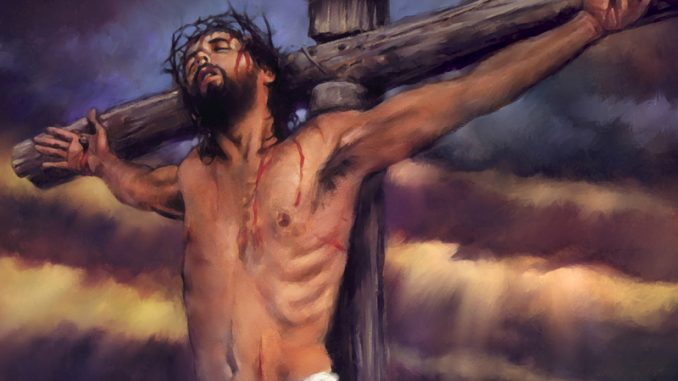
Photo Credit: http://www.joydigitalsa.com

Reflection
Why do you enjoy sports? Why do you take pride in seeing your home team win? The answer is quite simple: Inside you beats the heart of a warrior. I can deny I have a warrior spirit, but there’s a competitive, fighting spirit written into my DNA. It’s in your DNA too. In fact, that warrior spirit is essential to your success and survival.

David had an abundant supply of testosterone fueled warrior spirit, and in the psalm portion above, we see it on full display. David was a fighter, and every competitive warrior signals his triumph. You do as well. This psalm was part of David’s victory celebration. For a scientific discussion of human response in moments of victory visit: Olympic victors’ first reaction is dominance, not pride | TIME.com

For me as a follower of Jesus the question is not, do I have a warrior spirit? The question is how will I direct my warrior’s heart into a path that is pleasing to my heavenly Father?

Filled with the Holy Spirit, Jesus’ twelve disciples turned the world upside down. Their response to Satan’s attacks was not merely defensive. Through prayer and proclamation, they took souls captive to the obedience of Christ. The apostle Paul declares, “But thanks be to God, who always leads us as captives in Christ’s triumphal procession and uses us to spread the aroma of the knowledge of him everywhere (2 Corinthians 2:14). Paul was a triumphant warrior in the spiritual realm. David was triumphant in the natural realm. What about you?

Response: Heavenly Father, help me rise up as a spiritual warrior for you today. Help me to spread the aroma of the knowledge of Jesus everywhere. Through the power of Christ, I know I am more than a conqueror. Amen.

Your Turn: Are you personally gaining ground in the spiritual battle all around you? How do you measure your progress?

Para la publicación de Salmos 365 de hoy en español haga clic aquí.

bgbg_v4.3_1501818
* NEW INTERNATIONAL VERSION, COPYRIGHT ©1973, 1978, 1984, 2011 BY BIBLICA

Thank God for peace in Israel and Gaza,
and continue to pray for peace to return to Ukraine and Russia!

Volume I of Psalms 365: Develop a Life of Worship and Prayer won the Best Book of the Year Award from The Word Guild and Volume II has won the Best Devotional of the Year Award. For those who love God’s word, this three-book series is an ideal way to daily meet with the Lord. To purchase or for a closer look click here.

New from David Kitz

James—the brother of Jesus—who was this man? What evidence do we have that this “brother of our Lord” even existed?

David Kitz digs deep into archeology, family dynamics, church history, and the biblical texts. What emerges from his research is a portrait of a decisive, pivotal leader who embodied the will and character of Jesus Christ.

But how did James—James the unbeliever—transform to become a leader who changed the course of world history? In these pages you will uncover the answer and rediscover for yourself the life-changing power of the gospel.

To view further details or purchase this or other books directly from the author click here.

Why Are You So Afraid?

07 Friday Nov 2025

Posted by davidkitz in Psalm 10, Psalms

≈ Leave a comment

Tags

Bible, disciples, faith, Holy Spirit, Jesus, Prayer, Psalms, stilling storms, storms of life, the LORD

Today’s quote and prayer from
“Psalms 365: Develop a Life of Worship and Prayer


Today’s Reading: Psalm 10:5-11

https://davidkitz.blog/wp-content/uploads/2025/11/psalm-105-11-final-mix.mp3


Lord Jesus,
you are the Lord and Master of the universe.
Even the wind and the waves obey you.
I want to obey you too.
Holy Spirit,
blow into my life
and fill me with your presence today.
Amen.

— — — —

Photo by Pixabay on Pexels.com

Leaving the crowd behind,
they took him along,
just as he was, in the boat.
There were also other boats with him.

A furious squall came up,
and the waves broke over the boat,
so that it was nearly swamped.

Jesus was in the stern,
sleeping on a cushion.
The disciples woke him and said to him,
“Teacher, don’t you care if we drown?”


He got up,
rebuked the wind and said to the waves,
“Quiet! Be still!”
Then the wind died down
and it was completely calm.

He said to his disciples,
“Why are you so afraid?
Do you still have no faith?”

They were terrified
and asked each other,
“Who is this?
Even the wind and the waves obey him!”

(Mark 4:36-41 NIV)*

Para la publicación de Salmos 365 de hoy en español haga clic aquí.

bgbg_v4.3_1501818
* NEW INTERNATIONAL VERSION, COPYRIGHT ©1973, 1978, 1984, 2011 BY BIBLICA

Thank God for peace in Israel and Gaza,
and continue to pray for peace to return to Ukraine and Russia!

Volume I of Psalms 365: Develop a Life of Worship and Prayer won the Best Book of the Year Award from The Word Guild and Volume II has won the Best Devotional of the Year Award. For those who love God’s word, this three-book series is an ideal way to daily meet with the Lord. To purchase or for a closer look click here.

New from David Kitz

James—the brother of Jesus—who was this man? What evidence do we have that this “brother of our Lord” even existed?

David Kitz digs deep into archeology, family dynamics, church history, and the biblical texts. What emerges from his research is a portrait of a decisive, pivotal leader who embodied the will and character of Jesus Christ.

But how did James—James the unbeliever—transform to become a leader who changed the course of world history? In these pages you will uncover the answer and rediscover for yourself the life-changing power of the gospel.

Righteousness, Peace and Joy

14 Tuesday Oct 2025

Posted by davidkitz in Psalm 148

≈ Leave a comment

Tags

Christ, eating and drinking, heaven, heaven on earth, Holy Spirit, joy, Kingdom of God, peace, Prayer, Psalms, Righteousness

Today’s quote and prayer from
“Psalms 365: Develop a Life of Worship and Prayer”

Today’s Reading: Psalm 148:7-12

LORD God,
let your Holy Spirit be active among us.
Help us to love and serve you
and those around us.
Help me to bring a little bit of heaven—
a little bit of your will, purpose,
and goodness to the earth today.

Amen.

— — — —

Therefore do not let what you know is good
be spoken of as evil.

For the kingdom of God
is not a matter of eating and drinking,
but of righteousness,
peace and joy in the Holy Spirit,

because anyone who serves Christ in this way
is pleasing to God
and receives human approval.

(Romans 14:16-18 NIV)*

Para la publicación de Salmos 365 de hoy en español haga clic aquí.

bgbg_v4.3_1501818
* NEW INTERNATIONAL VERSION, COPYRIGHT ©1973, 1978, 1984, 2011 BY BIBLICA

Thank God for peace in Israel and Gaza,
and continue to pray for peace to return to Ukraine and Russia!

Volume I of Psalms 365: Develop a Life of Worship and Prayer won the Best Book of the Year Award from The Word Guild and Volume II has won the Best Devotional of the Year Award. For those who love God’s word, this three-book series is an ideal way to daily meet with the Lord. To purchase or for a closer look click here.

A gripping read from David Kitz.
Is a return-to-Jesus revival possible in our time?
This book points the way forward.

Jesus as the Ultimate Revelation of God

10 Friday Oct 2025

Posted by davidkitz in Psalm 147, Psalms

≈ Leave a comment

Tags

Bible, devotion, faith, guidance, Holy Spirit, Jesus, presence, revelation, Scripture, spirit, truth, word of God

Today’s Devotion from Psalms 365 by David Kitz

Reading: Psalm 147:19-20
He has revealed his word to Jacob,
his laws and decrees to Israel.
He has done this for no other nation;
they do not know his laws.
Praise the LORD (NIV). *

Reflection
Have you ever asked yourself this question: Where is God?

It’s a valid question. But when we ask that question, it may indicate a lack of faith or at least a level of doubt. When disaster strikes it’s not unusual to wonder, where is God in all this?

There are several theologically correct answers to that question. One could reply that God is in heaven, where He always has been. Or we could say God is everywhere because the Bible teaches that the LORD is omnipresent. See Psalm 139:7-10. Still others may say that the Lord is in their heart. St. Paul reminds us of this truth with this admonition: Do you not know that your bodies are temples of the Holy Spirit, who is in you, whom you have received from God? You are not your own; you were bought at a price. Therefore honor God with your bodies (1 Corinthians 6:19-20).

The simple truth is God needs to reveal Himself to us. The most obvious way that God does this is through His written word. Today’s reading from Psalm 147 speaks of the importance of that revelation. He has revealed his word to Jacob, his laws and decrees to Israel. He has done this for no other nation; they do not know his laws (v. 19-20).

But the written word of God can be nothing but dead words on a page to us unless those words are activated—made alive by the Spirit of God. We need the intervention of God—a revelation from God. When that happens, the written words dance off the page and into our hearts. The writer of Hebrews expresses it this way. For the word of God is alive and active. Sharper than any double-edged sword, it penetrates even to dividing soul and spirit, joints and marrow; it judges the thoughts and attitudes of the heart (Hebrews 4:12).

Just as God revealed His word to Jacob, we need God to speak to us today. He does that through His written word, but He also does that through the direct prompting of the Holy Spirit. God still speaks to people today. Are your ears open to hear His voice?

The greatest revelation of God came through the person of Jesus Christ. He is the word incarnate—the logos of God who came to dwell among us. At Christmas we celebrate the miracle of Jesus’ birth—God revealed in human flesh.

Where is God? He is in the person of Jesus. Jesus, come and dwell in my heart.

Response: LORD God, I need a greater revelation of you. When you show yourself to me, I am changed. Come, Lord Jesus. Invigorate my life. Help me to know you better. Speak deeply to my heart. Amen.

Your Turn: How does God speak to your heart? Does He reveal Himself to you in a variety of ways?

Para la publicación de Salmos 365 de hoy en español haga clic aquí.

bgbg_v4.3_1501818
* NEW INTERNATIONAL VERSION, COPYRIGHT ©1973, 1978, 1984, 2011 BY BIBLICA

Please pray for peace to return to Israel, Gaza, and Ukraine!

Volume I of Psalms 365: Develop a Life of Worship and Prayer won the Best Book of the Year Award from The Word Guild and Volume II has won the Best Devotional of the Year Award. For those who love God’s word, this three-book series is an ideal way to daily meet with the Lord. To purchase or for a closer look click here.

A gripping read from David Kitz.
Is a return-to-Jesus revival possible in our time?
This book points the way forward.
For details click here.

The Fire on the Road to Emmaus

21 Sunday Sep 2025

Posted by davidkitz in The Elisha Code

≈ 2 Comments

Tags

bread, breaking bread, Christ's teaching, David Kitz, disciples, fire, Holy Spirit, Jesus, Messiah, New Testament, Old Testament, Road to Emmaus, scriptures

And they said to one another,
“Did not our heart burn within us while He talked with us on the road,
and while He opened the Scriptures to us?”
 (Luke 24:32, NKJV)

Is there a conversation in the Bible, that you wish you could listen in on? How about the conversation between Mary and Joseph when she announces she is pregnant? What about the discussion the disciples had after Jesus stilled the storm on the Sea of Galilee? Or that night when Peter got out of the boat and began walking on the water? Oh, to have been there—to have seen the disciple’s astonishment and have heard their words!

Luke tells us of a conversation two downcast Jesus-followers had on the road to Emmaus on the afternoon of the first resurrection Sunday.

So it was, while they conversed and reasoned, that Jesus Himself drew near and went with them. But their eyes were restrained, so that they did not know Him.

And He said to them, “What kind of conversation is this that you have with one another as you walk and are sad?” (Luke 24:15-17, NKJV)

Jesus patiently listens as they speak of their dashed hopes and shattered dreams—dreams and hopes that ended with the crucifixion of the man they thought was the long-awaited Messiah. They go on to report that some of their women folk who had gone to his tomb had seen a vision of angels who announced this prophet from Nazareth was in fact alive. What were they to make of all this?

Then He said to them, “O foolish ones, and slow of heart to believe in all that the prophets have spoken! Ought not the Christ to have suffered these things and to enter into His glory?” And beginning at Moses and all the Prophets, He expounded to them in all the Scriptures the things concerning Himself (Luke 24:25-27, NKJV).  

Certainly, that was a conversation we all wish we could eavesdrop on. Specifically, what Scriptures did Jesus draw on as he expounded concerning Himself? Let’s keep in mind this was decades before any of the books of the New Testament canon were written.

The Word of God — photo by David Kitz

Surely, Jesus would have drawn on Isaiah 53 as he spoke of his suffering. What about the Psalms? Many of them resound with a prophetic Messianic ring.  To a degree, we can imagine what some of those Old Testament references might be. For example, we know that Peter quoted verbatim from both Psalm 16 and Psalm 110 in his first sermon on the day of Pentecost. (See Acts 2:25-28 and Acts 2:34-35.) Did Peter develop this understand concerning these prophetic Scriptures on his own, or were these passages an integral part of Christ’s teaching concerning himself during his post resurrection ministry? Were they part of the discussion on that eventful resurrection Sunday walk?  

Though the content of the Road to Emmaus discourse remains hidden from us, it is possible to tease out some of Christ’s teaching concerning himself and his ministry by examining other passages in both the New and Old Testament.

According to Luke, Cleopas and his companion were initially unable to recognize Jesus when he walked with them on the road. But their eyes were restrained, so that they did not know Him (Luke 24:16, NKJV).

Two disciples—men who had previously spent time with Jesus—were blind to their Lord and Savior. Why was this the case? Undoubtedly, Jesus looked different. A brutal death followed by a supernatural resurrection must have brought significant changes to his physical appearance. A lifelong friend or relative may look startlingly different after a severe trauma or illness. Surely, this accounts for some of the disciples’ inability to recognise Jesus.

But this inability to recognise Jesus extended beyond his physical appearance. It had a spiritual dimension. They were unable recognise that Jesus was the Christ—their long-awaited Messiah promised to them in their Scriptures. After all, this was what the conversation on the road was all about. It was Jesus revealing himself to these two men through the written Word of Moses and the Prophets.

Do we suffer from the same spiritual blindness? Do we need an eye-opening experience with the Lord and his Word? This lack of perception inhibits our walk with our Savior. We think we know the Word of God. But like these disciples of old, have our eyes been veiled as we read the Scriptures? Do we have a wrong set of expectations?

Many Christ-followers have never read the Old Testament—the first three quarters of their Bibles. Similarly, many Sunday sermons focus exclusively on texts drawn from the New Testament. How can we say we know the Word when we neglect the only Scriptures that Jesus knew and studied?

Something transpires when we immerse ourselves in God’s Word. Hearts and minds are transformed when the Word comes alive.

But let’s not fool ourselves. If we don’t understand the Word, or handle it incorrectly, we gain nothing. Worse yet, we deceive ourselves, pride inflates the mind, and we lead others astray. The Pharisees knew and followed the letter of the Law (the Word), but often they were devoid of the Spirit. The same self-deception can happen to us unless the Holy Spirit lights the way. Christ’s parable of the Sower and the seed plays out in real time to this present moment. The living word must root in us to bear fruit.

So, when did the light come on for Cleopas and his friend? When did recognition occur?

Now it came to pass, as He sat at the table with them, that He took bread, blessed and broke it, and gave it to them. Then their eyes were opened and they knew Him; and He vanished from their sight (Luke 24:30-31, NKJV).

Photo by Pixabay on Pexels.com

Jesus was recognized when he broke bread with these two disciples. In that moment, they had their most intimate view of the living Christ.

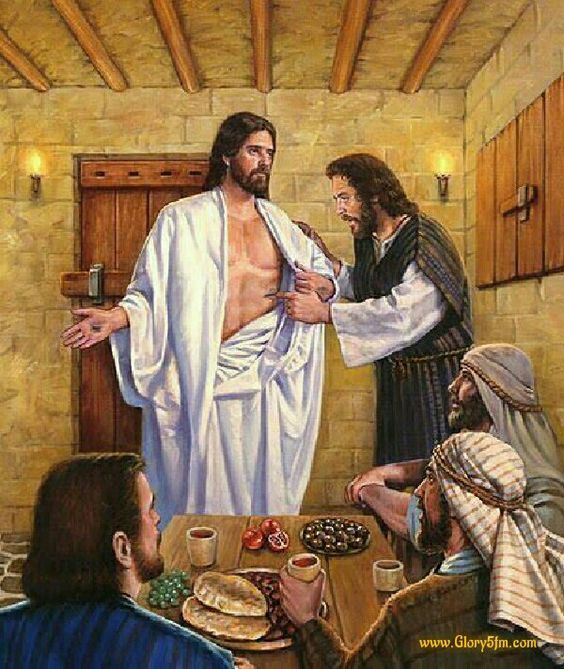
Imagine the scene as Jesus picks up the bread. For the first time his hands come into full view. They gasp—awestruck at the sight of the nail scars. Who else could this be? It must be but their Savior! He offers thanks to his Father. With wounded hands, he tears the loaf and offers them a portion.

Like Thomas, who had a similar encounter nine days later, they are beyond astonished. Imagine them humbled—dropping to their knees before their Lord.

And then he is gone.

Only one thing remains. The fire remains. It remains within them.

And they said to one another, “Did not our heart burn within us while He talked with us on the road, and while He opened the Scriptures to us?” (Luke 24:32, NKJV)

It’s the same fire we must catch. The match was struck on the road to Emmaus. In the hearts of these two disciples, dying embers of hope began to glow as Jesus opened the Scriptures. Fifty days later, those embers would burst into open flame on the Day of Pentecost.

And suddenly there came a sound from heaven, as of a rushing mighty wind, and it filled the whole house where they were sitting. Then there appeared to them divided tongues, as of fire, and one sat upon each of them. And they were all filled with the Holy Spirit and began to speak with other tongues, as the Spirit gave them utterance (Acts 2:2-4, NKJV).

Are you ready to catch the fire?

This is the third weekly excerpt from the award-winning book 
The Elisha Code & the Coming Revival 

A soul-gripping read.
Is a return-to-Jesus revival possible in our time?
This book points the way forward.
For details click here.

Here I Am!

19 Friday Sep 2025

Posted by davidkitz in Psalm 143

≈ 2 Comments

Tags

Bible, Holy Spirit, Jesus, Prayer, Psalms, relationship with God, repent, the LORD, trust in God

Today’s quote and prayer from
“Psalms 365: Develop a Life of Worship and Prayer”

Today’s Reading: Psalm 143:7-10

LORD God,
I have put my trust in you.
I want to connect with your Holy Spirit.
I want to be fully alive in you,
body, soul, and spirit.
Show me the way forward
to a vibrant relationship with you.
LORD,
 may your good Spirit lead me
on level ground
.
Amen.

— — — —

Those whom I love
I rebuke and discipline.
So be earnest and repent.

Here I am!
I stand at the door and knock.
If anyone hears my voice
and opens the door, 
I will come in 
and eat with that person,
and they with me.

(Revelation 3:19-20 NIV)*

Para la publicación de Salmos 365 de hoy en español haga clic aquí.

bgbg_v4.3_1501818
* NEW INTERNATIONAL VERSION, COPYRIGHT ©1973, 1978, 1984, 2011 BY BIBLICA

Please pray for peace to return to Israel, Gaza, Sudan, and Ukraine!

Volume I of Psalms 365: Develop a Life of Worship and Prayer won the Best Book of the Year Award from The Word Guild and Volume II has won the Best Devotional of the Year Award. For those who love God’s word, this three-book series is an ideal way to daily meet with the Lord. To purchase or for a closer look click here.

A gripping read from David Kitz.
Is a return-to-Jesus revival possible in our time?
This book points the way forward.

The Elisha Code & the Coming Revival

07 Sunday Sep 2025

Posted by davidkitz in revival

≈ Leave a comment

Tags

Bible, Billy Graham, Christian theology, Christianity, faith, God, God's word, gospel, Holy Spirit, Holy Spirit inspired, Jesus, Jesus Movement, preach Jesus, revival, spiritual renewal

Discovering Jesus Blueprint for Renewal

By
David Kitz & Dr. Ed Hird

Foreword by Lee Grady

I became a serious Christian at the tail end of the Jesus movement. I was too young to remember the hippie beads, tie-dyed shirts and “Jesus Is Groovy” slogans, but the songs were still popular when I was in college (including musicians such as Andrae Crouch, Love Song and Second Chapter of Acts), as were the movies—especially The Cross and the Switchblade.

The Jesus movement was like a spiritual tsunami that washed over hundreds of thousands of young people in the late 1960s and early ‘70s and brought them into a personal relationship with Christ. Some of these kids had been drug addicts and social misfits; most were just average Joes and Janes who discovered that Jesus is a lot more exciting than traditional churches had led them to believe.

Lately I find myself waxing nostalgic for those days—not because I want to return to the awkward fashions and hairstyles of 1972, but because I miss the spiritual simplicity of that era. The Jesus movement was primarily focused on—surprise!—Jesus. Theology was not complicated; pastors weren’t trying to be hip or sophisticated or tech-savvy, and we hadn’t yet created a Christian subculture with its own celebrities and political power bases.

Today, we just don’t preach enough about Jesus. In today’s ultra cool megachurch era, we’ve become experts on everything but basic Christian theology 101. In my recent travels I’ve been horrified to learn that many believers have given up the discipline of reading their Bibles even semi-regularly, and very few believers have ever led anyone to faith in Christ. One by one we are trading in our solid moral values for a squishy, spineless, whatever-is-right-for-you faith. People today prefer a steady diet of culturally relevant, fast-paced, techno-theology that is a poor substitute for biblical discipleship.

Even many Spirit-filled believers have developed the attitude that a simple focus on Christ isn’t enough. We’d rather go to a “prophetic encounter” to hear who will win the next election, or experience some exotic spiritual manifestation (gold dust, gems falling out of the ceiling). Or we prefer to ask Rev. Flash-in-the-Pan to pray for us for the sixteenth time so we can receive yet another “special anointing” that we will probably never use. 

In the midst of all this chaos, where is Jesus? Am I the only one out there who is weary of this distraction? Thankfully not. I am so pleased to read this book by Ed Hird and David Kitz because they share my concerns. The Elisha Code and the Coming Revival is a refreshing challenge to return to Jesus—and to expect spiritual revival when we clean up our message.

Call me old-fashioned, but I’ve decided to get back to the basics of the faith. That’s why I am reading What Jesus Is All About?, a classic book written 70 years ago by Henrietta Mears, a Bible teacher who helped mentor both Billy Graham and Bill Bright in the 1940s. 

Mears explains in her book how each of the four gospels give us a unique, four-dimensional portrait of the Savior. According to Mears:

  • Matthew was written to Jews to tell of a Promised Messiah who is also a King—and it uses the word “kingdom” 55 times.
  • Mark was written to Gentiles to tell of a Powerful Savior—and it reports more miracles than any other gospel.
  • Luke was written by a Gentile to tell of a Perfect Savior—and it has the most references to Jesus’ humanity.
  • John was written by “the disciple whom Jesus loved” to tell of a Personal Savior—and it has the most references to Jesus’ divine nature.

The Holy Spirit who inspired the Bible knew we needed more than a one, two, or three-dimensional look at Jesus. The Spirit gave us a four-dimensional view so that we could gaze at Him from all sides and become captivated by His magnificence—His supreme kingship, His compassionate mercy, His supernatural power, His perfect justice, His amazing humility and His love for sinners like you and me.

There’s so much more to Jesus than we realize. And there is so much more to say about Him than we are telling our generation. Instead of giving people a gospel diluted with left-wing or right-wing politics, or a message mixed with cultural “relevance,” we need to give them the real Jesus.

In this insightful book, full of keen insights from the lives of the prophets Elijah and Elisha, the authors challenge us to examine our message, repent of our unfaithfulness and embrace the raw courage to preach Jesus again. As you read this book, please allow God’s powerful Word to cut deep.

Lee Grady
Former Editor, Charisma
Author, Follow Me and The Holy Spirit Is Not for Sale
Director, The Mordecai Project

This is the first weekly excerpt from the award-winning book 
The Elisha Code & the Coming Revival 

A soul-gripping read.
Is a return-to-Jesus revival possible in our time?
This book points the way forward.
For details click here.

Will the LORD Abandon Us?

29 Friday Aug 2025

Posted by davidkitz in Psalm 138

≈ Leave a comment

Tags

abandoned, abandoned houses, abandoning God, Bible, devotion, gospel, Holy Spirit, Jesus, Prayer, Psalms, Savior, the LORD

Reading: Psalm 138:6-8

Though the LORD is exalted, he looks kindly on the lowly;
    though lofty, he sees them from afar.
 Though I walk in the midst of trouble,
    you preserve my life.
You stretch out your hand against the anger of my foes;
    with your right hand you save me.
The L
ORD will vindicate me;
    your love, L
ORD, endures forever—
    do not abandon the works of your hands
(NIV). *

The abandoned McNeill Estate in the Spirit Rock Conservation Area, Wiarton, Ontario — photo by David Kitz.

Reflection
There is something tragic about an abandoned house. An empty house has a missing soul. It was built to have souls—people—in it, so an absence of life invokes feelings of sadness in me. At one point, hopes and dreams were alive in that house. It was a place of comfort and love—a refuge from nature’s elements. Perhaps it echoed with the voices of children at play, but now it sits empty and forlorn.

I find it surprising how quickly a home or community deteriorates after it’s abandoned. Have you viewed videos or the haunting images of the abandoned communities around the Chernobyl and Fukushima nuclear plants? In a few short years everything constructed by humans has become completely overgrown, and it begins to decay and breakdown.  

Turning to today’s reading, we see that David ends this psalm with both a confession of faith and a prayer: The LORD will vindicate me; your love, LORD, endures forever—do not abandon the works of your hands (v. 8).

David lives in confidence that the LORD is with him and will vindicate him—will side with him in the battles of life. But he adds this petition—do not abandon the works of your hands.

What happens when God abandons us? I dread the thought. When the LORD no longer lives among us, our lives—our spiritual lives—begin to deteriorate like an abandoned house in a nuclear exclusion zone. Around Fukushima wild boars have taken over. With no one to oppose them, they have ravaged the countryside and have moved into the abandoned towns. 

Will the LORD abandon us? There is little chance of that happening. The far greater concern is that we abandon the LORD. I have witnessed firsthand the devastation that occurs when that happens. When people who respond to the gospel turn their backs on their Savior, over time the outcome resembles the ravages of nature on an abandoned home.

We need to recall these words: Though the LORD is exalted, he looks kindly on the lowly; though lofty, he sees them from afar. Though I walk in the midst of trouble, you preserve my life (v. 6-7a).

Response: LORD God, I want you to be fully at home in my heart and my mind. Show me your kindness. My body is a temple for your Holy Spirit. Live in me and through me, Lord Jesus. Amen.

Your Turn: How do you feel about abandoned houses? Is your inner man (woman) occupied by God?

Para la publicación de Salmos 365 de hoy en español haga clic aquí.

bgbg_v4.3_1501818
* NEW INTERNATIONAL VERSION, COPYRIGHT ©1973, 1978, 1984, 2011 BY BIBLICA


Please pray for peace to return to Israel, Gaza, and Ukraine!

Volume I of Psalms 365: Develop a Life of Worship and Prayer won the Best Book of the Year Award from The Word Guild and Volume II has won the Best Devotional of the Year Award. For those who love God’s word, this three-book series is an ideal way to daily meet with the Lord. To purchase or for a closer look click here.

A gripping read from David Kitz.
Is a return-to-Jesus revival possible in our time?
This book points the way forward.
For details click here.

This Corrupt Generation

26 Tuesday Aug 2025

Posted by davidkitz in Psalm 137

≈ Leave a comment

Tags

baptized, Bible, forgiveness of sins, God, Holy Spirit, Jesus, message, Peter, Prayer, Psalms, repent, the LORD

Today’s quote and prayer from
“Psalms 365: Develop a Life of Worship and Prayer”

Today’s Reading: Psalm 137:1-6

Father God,
 I don’t want to learn things
the hard way.
I want to be quick to obey you.
Help us all to learn from the lessons of history.
You are the one, true God.
I worship you.
Amen.

— — — —
 
 Peter replied,
“Repent and be baptized,
every one of you,
in the name of Jesus Christ
for the forgiveness of your sins.
And you will receive the gift of the Holy Spirit.
 
The promise is for you and your children
and for all who are far off—
for all whom the Lord our God will call.”

With many other words he warned them;
and he pleaded with them,
“Save yourselves from this corrupt generation.”
 
Those who accepted his message were baptized,
and about three thousand
were added to their number that day.
(Acts 2:38-41 NIV)*

Para la publicación de Salmos 365 de hoy en español haga clic aquí.

bgbg_v4.3_1501818
* NEW INTERNATIONAL VERSION, COPYRIGHT ©1973, 1978, 1984, 2011 BY BIBLICA

Please pray for peace to return to Israel, Gaza, Iran, and Ukraine!

Volume I of Psalms 365: Develop a Life of Worship and Prayer won the Best Book of the Year Award from The Word Guild and Volume II has won the Best Devotional of the Year Award. For those who love God’s word, this three-book series is an ideal way to daily meet with the Lord. To purchase or for a closer look click here.

A gripping read from David Kitz.
Is a return-to-Jesus revival possible in our time?
This book points the way forward.

Filled with Laughter

24 Sunday Aug 2025

Posted by davidkitz in Psalm 126, Psalms

≈ Leave a comment

Tags

churches, faith, fortunes, harvest, Holy Spirit, Jesus, Jesus People, joy, lost generation, Prayer, Psalms, restoration, revival, the LORD, word of God, Zion

Psalm 126

A Song of Ascents

When the LORD brought back the captives to Zion,
we were like men who dreamed.
Our mouths were filled with laughter,
our tongues with songs of joy.
Then it was said among the nations,
“The LORD has done great things for them.”
The LORD has done great things for us,
and we are filled with joy.

Restore our fortunes, O LORD,
like streams in the Negev.
Those who sow in tears will reap with songs of joy.
He who goes out weeping,
carrying seed to sow,
will return with songs of joy,
carrying sheaves with him.

I cannot read this psalm—Psalm 126—without immediately identifying with it. I have lived this psalm; I have experienced the reality of it.

Now that’s a rather bold statement; some might call it an ignorant or arrogant statement. The historical context of this psalm is readily identifiable. The psalmist is commenting on the joyous return of the exiles following the seventy-year Babylonian captivity—an event that occurred in the sixth century before the birth of Christ. How could anyone alive today claim that they have lived or experienced this particular Psalm? None of us were present during these dramatic events in Jewish history.

But again, I repeat: I have lived this psalm; I have experienced the reality of it.

The whole premise of this book is built on the notion that the psalms can come alive within us. The writer of the Book of Hebrews reminds us that “the word of God is living and active (Hebrews 4:12).

Photo by L. Kranz

What is there then, to prevent this living word from coming alive within us? Why can we not experience this active word of God transforming and transporting us to the throne of grace? Only two things hinder us from living in the power and wonder of the word of God, and they are sin and unbelief. And sin and unbelief are only too eager to form within us, a constricting bond that smothers the Spirit empowered Word.

But when the power of sin is broken, and unbelief is purged from the doubting soul—oh what liberty awaits! The word of God comes alive within us. The LORD is then free to do great and glorious things in us, and through us.

That was my experience as a young man in the early 1970’s. The LORD was bringing back the captives to Zion, “and we were like men who dreamed. Our mouths were filled with laughter, our tongues with songs of joy.”

I was caught up in the vortex of the Jesus People movement of that time, and amazing things were happening. Young men and women were coming to faith in Christ at a phenomenal rate. At every church meeting newcomers were finding the forgiveness they needed. The prodigals were coming home in droves. Every gathering closed with a baptismal service as new believers affirmed their faith in the crucified and risen Christ. There was a heady infectious joy in the church that could not be contained.   

At that time, “Our mouths were filled with laughter, our tongues with songs of joy.”

The spontaneity of the worship experience during those days was truly astonishing. New songs were born—born by the Spirit—right within the corporate worship time. Many of them came directly from the scriptures. The psalms became the source book for our worship. The captives—captives of sin and Satan—had been set free, and now there was a new song in our hearts, and on our lips—a song of praise to our God. We could not keep this to ourselves. Who could possibly contain the overflowing goodness and mercy of God?

This ingathering of souls was God’s doing. A lost generation was arrested by the Almighty. He was turning us around, and we were discovering Jesus. And this move of the Holy Spirit did not begin in the church. No, it began in the flop houses and hippy communes. It started on the street—in the world—the sin-saturated world. It did not start with saintly scholars and philosophers, but rather with the young and restless, the hitchhikers and misfits. God was calling them to Himself, and He was miraculously transforming lives as only can God do.

Because this new thing that God was doing started in the world, many Christians were suspicious of it. Could this really be God? Many churches stood aloof. But those who welcomed these misfits found themselves overwhelmed and transformed by what God was doing. He had initiated this, and He stood at the center of it.

Soon the Jesus’ movement was affecting the entire youth culture. Amazing Grace became the number one hit on top forty radio. A half dozen hit songs spoke of the man from Galilee. Time magazine ran a cover story on how the youth across the continent were discovering Jesus. Suddenly, it was cool to love Jesus and to follow him.

And I was a frontline witness to all this. I was seeing lives changed all around me. Close friends, who were far from God, suddenly were having life altering encounters with Jesus. We were like men who dreamed. And in that dream Jesus had come to live among us. His long flowing hair had become our own. He was with us again, just like he was with that band of fishermen on the Sea of Galilee, and the nets were full of fish—boat swamping full of fish.

“Our mouths were filled with laughter, our tongues with songs of joy. Then it was said among the nations, ‘The LORD has done great things for them.'”

The world knows when God is doing something remarkable, and the psalmist records the ancient world heard that the captive Jewish nation had been released. The exiles were free to return to their homeland, and return they did. In the early 1970’s the modern world heard that Jesus was bringing young people to himself. They too were free—set free from a load of guilt and sin, set free from addictions and hang ups—free to love and serve God with hearts washed pure by the blood of the Lamb.

“The LORD has done great things for us, and we are filled with joy!”

That was my experience—an experience that was shared by thousands of others across this continent during this remarkable time. It was the LORD’s doing. He did great things for us—things I will never forget.

But …

But there is a pause in this psalm. This is a psalm written in two distinct sections, or stanzas. In most translations, this break between stanzas is indicated by a blank line. The psalmist abruptly transitions from joyous triumph to sober petition, from exuberance to sobbing desperation. We are left wondering what happened in between. What happened in that blank line? Why this sharp transition? In bleak desolation the psalmist pleads, “Restore our fortunes, O LORD, like streams in the Negev.”

Atacama Desert, Chile — Photo credit http://www.explora.com

Streams in the Negev are intermittent. A raging torrent one day becomes a mere trickle on the next day, and then nothing on the third day. The boisterous river of joy turns into a blank line on the desert floor. Nothing—just nothing.

The Negev is the parched desert region to the south of the land of Judah. Cloud bursts there can produce these streams in the barren desert, and with the sudden arrival of this moisture, long dormant seeds spring to life. Suddenly new life abounds. But without further moisture, the scorching sun takes its toll. The harsh environment reasserts its dominance. Land that was briefly lush and verdant reverts to desert dust.

Is it any wonder then that the psalmist cries out, “Restore our fortunes, O LORD, like streams in the Negev.” The psalmist longs for the flow of new life to continue.

And right along with the psalmist I cry, “Send your river flowing through here once again. Send a cloud burst of your mercy down on this nation again. Invade this culture again. Turn our young people to Jesus, yet again. Touch this new generation. Let them find themselves walking with you, the living Christ. You did it once, Lord, and I saw it. I experienced it. Now do it again! Do it again, not for me, but for those who don’t know you. Do great things for them. Set them free from the sin and the lies that ensnare them. Touch all of us, once again!”

“Restore our fortunes, O LORD, like streams in the Negev.”

In those days, at the height of what God was doing, I saw a dozen young men line up in the freezing cold. They arrived early. They were waiting for the pastor to arrive on a Saturday night to unlock the church so they could come in and give their hearts to Jesus. I saw hundreds of young people being baptized at that same church—more than three hundred in a year—one for every day of the year. The God of the harvest was adding to the church “daily those who were being saved” (Acts 2:47).

This was not about the Holy Spirit tickling the churches’ funny bone. It was about sinners finding God. Time after time I saw the lost crowding the altar at the close of the service. They wanted Jesus, nothing more, nothing less, just Jesus.

Now, only the faithful come to the altar, if anyone comes at all.

 “Restore our fortunes, O LORD.”

 I echo the psalmist’s prayer, “Restore our fortunes, O LORD.”

Fortunately, we are provided with the promise of God’s word in tandem with the psalmist’s petition, “Those who sow in tears will reap with songs of joy.”

A field of harvest ready oats near MacNutt, SK — photo by David Kitz

If you live in a dry land, water it with your tears. If the wind of God’s Spirit is a distant memory, remember seasons change. The seed of God’s word is still viable. It is always power packed and ready to spring to life. Just add water.

“He who goes out weeping, carrying seed to sow, will return with songs of joy, carrying sheaves with him.”

God’s promise stands sure and certain, but for us, two questions remain. Are you going out weeping? And are you carrying seed to sow?

Perhaps the church in Canada has never experienced a harsher spiritual climate than that which exists today. We live in a society that by and large has turned its back on God. The gospel message is often treated with contempt or outright ridicule. The church exists in a spiritual desert. Figuratively, Canada is the Negev. Conditions in in the United States are only marginally better.

In such a harsh climate the natural inclination is to cocoon ourselves away. The world out there is inhospitable. It’s best to stay inside, to huddle amongst ourselves. Isn’t it better to cloister ourselves away, than to expose ourselves to the harsh elements and the criticism of others? Let’s circle the wagons and entertain ourselves. This has become the unspoken modus operandi for many churches.

Into our cloistered existence the psalmist speaks. He instructs us to step out of our sheltered place. He tells us to go out weeping. What a bizarre command! Weeping is for private places. Why would we want to go out into the world weeping? Yet, this is what we are encouraged to do. Could it be that we are to get out of our churches and cry? Cry over what?

How about crying over a lost generation? How about crying over the homeless, the addicted and the needy? How about crying over the devastating effects of sin, and the degradation of our youth?

One day in the late 1950’s, David Wilkerson opened a copy of Life magazine where he saw photos of young gang members in New York City. Looking into their eyes, he broke down and wept. This young pastor left the shelter of his country church to bring the gospel to the toughest gangs in New York City. He went “out weeping, carrying seed to sow” and yes, David Wilkerson returned “with songs of joy, carrying sheaves with him.” He proved that the message of the cross is more powerful than the switchblade.

God has given us His seed—the word of God—for a reason. We are to scatter it out in the world. There can be no harvest unless someone goes out and plants the seed.

Are you carrying seed to sow? Don’t just carry it into the world. Scatter it. There is no joy quite like the harvester’s joy. The harvester has worked with God, and the LORD’s joy becomes his own.

“He who goes out weeping, carrying seed to sow, will return with songs of joy, carrying sheaves with him.”

Bringing Life to the Psalms

  1. Have you experienced the joy of harvest, where new souls have been added to the Kingdom of God? What was that experience like? What role did you play? Read 1 Corinthians 3:5-9 for Paul’s perspective on planting and harvesting.
  2. What is the difference between ingathering and revival? There appears to be a place for both in the economy of God’s Kingdom. Take note of the revival that took place under the leadership of Josiah, King of Judah, as recorded in 2 Chronicles 34-35. The discovery of the Book of the Law of the LORD was a key element in this revival. In a similar way, I would contend that the release of the Good News, New Testament by the Bible Society contributed significantly to the Jesus People movement of the early 1970’s. How important is it for you to have an understandable translation of the scriptures?
  3. Are we living in a harsh spiritual climate? Is the gospel message impacting the culture in which we live, or is the culture of the world impacting the church?
  4. What are you personally doing to sow the seed of God’s word? What are some innovative ways to get the seed out into the field? What can churches do to facilitate going out with the seed of God’s word? Have you circled the wagons? Are you merely entertaining yourselves? What is the role of tears in the harvest that God wills to bring on the earth?
  5. Reread Psalm 126. What is God saying to you by His Spirit?

Today’s post is Chapter 25 from the book Psalms Alive! Connecting Heaven & Earth by David Kitz. To find out more or purchase click here.


← Older posts
Newer posts →

Psalms 365: Develop a Life of Worship & Prayer

Psalms 365 Volume II

Psalms 365 vol 3
— Psalms 365 Volume III

Now available:

Psalms

Recent posts

  • The Father Revealed in the Son May 15, 2026
  • God on Your Side May 15, 2026
  • Woe on Unrepentant Towns May 14, 2026
  • A Hymn of Triumph May 14, 2026
  • The Workers Are Few May 13, 2026
  • Blessing so we might bless May 13, 2026
  • Jesus Raises a Dead Girl and Heals a Sick Woman May 12, 2026

Calendar

May 2026
M T W T F S S
 123
45678910
11121314151617
18192021222324
25262728293031
« Apr    

Blog Posts

Comments

  • davidkitz on The Workers Are Few
  • The Workers Are Few – QuietMomentsWithGod on The Workers Are Few
  • davidkitz on A Hymn of Triumph

Blog at WordPress.com.

Privacy & Cookies: This site uses cookies. By continuing to use this website, you agree to their use.
To find out more, including how to control cookies, see here: Cookie Policy
  • Subscribe Subscribed
    • I love the Psalms
    • Join 1,349 other subscribers
    • Already have a WordPress.com account? Log in now.
    • I love the Psalms
    • Subscribe Subscribed
    • Sign up
    • Log in
    • Report this content
    • View site in Reader
    • Manage subscriptions
    • Collapse this bar

Loading Comments...