• Home
  • About
  • DavidKitz.ca
  • Youtube Videos
  • Books by David
  • Books on Amazon.com

I love the Psalms

~ Connecting daily with God through the Psalms

I love the Psalms

Tag Archives: Jesus

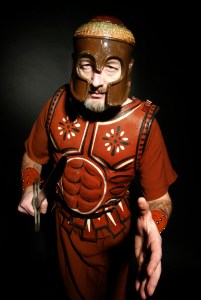
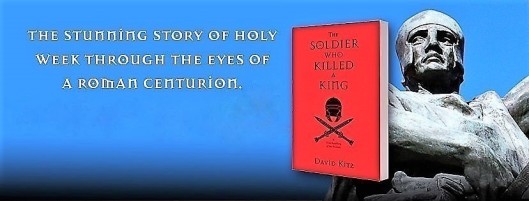
More about THE SOLDIER WHO KILLED A KING

01 Thursday Nov 2018

Posted by davidkitz in Books by David Kitz, Easter Sunday, Lent, Psalms, The Soldier Who Killed a King

≈ 5 Comments

Tags

centurion, David Kitz, dramatization, endorsements, Jesus, passion, The Soldier Who Killed a King

Soldier book“An awesome read: captivating, spellbinding, inspiring! Through the author’s masterful writing, the centurion stood out as a real and personable individual…The book also helped me visualize Jesus, my Savior, and his person and work for the forgiveness of my sins, for my daily walk, and for the eternal life he has in store for all who believe.”

Cliff Kentel, Prince of Peace Lutheran Church, Regina, Saskatchewan

“Story has a way of capturing our attention and enabling truth to move from head to heart. David Kitz creatively unpacks the events of Passion Week as seen through a Roman centurion’s eyes.  Through vivid word pictures, we see the whip-sliced back of our  Savior and hear the pounding of each nail that affixed him to the cross. We walk these lasts steps of Jesus’s earthly ministry, leading to his death, burial, and triumphant resurrection from the dead. Kitz Better helps us to do as the apostle John encourages: ‘See what great love the Father has lavished on us, that we should be called children of God!” (1 John 3:1)

Dean Ridings, author of The Pray! Prayer Journal and communications director of Navigator Church Ministries

For more information regarding the author and his live dramatizations visit https://davidkitz.ca/centurion.php

For more information regarding book purchase from the author visit https://www.davidkitz.ca/bookcart/index.php?route=product/product&product_id=50

or

For more information regarding U.S. book purchases visit https://www.amazon.com/Soldier-Who-Killed-King-Retelling/dp/0825444853/ref=sr_1_1?ie=UTF8&qid=1537465478&sr=8-1&keywords=the+soldier+who+killed+a+king


Nature Abhors a Vacuum.

30 Tuesday Oct 2018

Posted by davidkitz in Bible, Devotionals, Psalm 10, Psalms

≈ Leave a comment

Tags

God, Jesus, Lord, pride, Psalm 10, self-deception, selfish nature, selfishness

Reading: Psalm 10
Verses 5-11
His ways are always prosperous;
your laws are rejected by him;
he sneers at all his enemies.
He says to himself, “Nothing will ever shake me.”
He swears, “No one will ever do me harm.”
His mouth is full of lies and threats;
trouble and evil are under his tongue.
He lies in wait near the villages;
from ambush he murders the innocent.
His eyes watch in secret for his victims;
like a lion in cover he lies in wait.
He lies in wait to catch the helpless;
he catches the helpless and drags them off in his net.
His victims are crushed, they collapse;
they fall under his strength.
He says to himself, “God will never notice;
he covers his face and never sees” (NIV).

20181014_1254359 (2)

Autumn hues, Ottawa, Ontario — photo by David Kitz

Reflection
Yesterday’s reading from Psalm 10 was an introduction to the man who has no room for God in his life. The psalmist states, “In his pride the wicked man does not seek him; in all his thoughts there is no room for God.”

Today’s reading continues to describe in disturbing detail, the thoughts, deeds and attitudes of the heart of such a person. He says to himself, “Nothing will ever shake me.” He swears, “No one will ever do me harm.” His mouth is full of lies and threats; trouble and evil are under his tongue.

Nature abhors a vacuum. All manner of things will rush in to fill an empty space. When God is removed from His rightful place as the Master of our life, selfishness and pride rise to the top. If Jesus isn’t the Lord of my life, then my selfish nature will rise to the occasion. But when my selfish nature rules, all manner of sin follows. Worst of all self-deception follows. We deceive ourselves into believing a lie.

The psalmist states: He says to himself, “God will never notice; he covers his face and never sees”

Of course, God does see. Our pride and ignorance are on full display before Him. Jesus has these words to say about this topic. “But I tell you that everyone will have to give account on the day of judgment for every empty word they have spoken” (Matthew 12:36).

I have spoken more than a few empty words. How about you? The simple truth is I need a Lord and Master like Jesus to help me govern my life. I also need his love and forgiveness when I slip up.

Response: Lord Jesus, you are the Lord and Master of the universe. Even the wind and the waves obey you. I want to obey you too. Holy Spirit, blow into my life and fill me with your presence today. Amen.

Your Turn: What fills the vacuum in your life? Is it Jesus?

A Crescendo of Praise

11 Thursday Oct 2018

Posted by davidkitz in Bible, Devotionals, Psalm 150, Psalms

≈ 3 Comments

Tags

breath, Creator, Holy Spirit, Jesus, Maker, praise, praise the LORD

Reading: Psalm 150
Praise the LORD.
Praise God in his sanctuary;
praise him in his mighty heavens.
Praise him for his acts of power;
praise him for his surpassing greatness.
Praise him with the sounding of the trumpet,
praise him with the harp and lyre,
praise him with timbrel and dancing,
praise him with the strings and pipe,
praise him with the clash of cymbals,
praise him with resounding cymbals.
Let everything that has breath praise the LORD.
Praise the LORD (NIV).

038

Let everything that has breath praise the LORD! — photo by David Kitz

Reflection
We have reached the crescendo—the conclusion and the high point of the Book of Psalms. Hallelujah and praise the LORD!

The word praise appears thirteen times in this final psalm. The number thirteen is suggestive of Jesus and his apostles. He is at the core—the very center of God ordained worship.

Eight forms or instruments of praise are listed in this psalm. Eight is the number of new beginnings. Seven suggests completeness, so we see that God rested on the seventh day. But eight signals a new start. In the same way, these eight means or instruments of praise do not represent a complete list. They simply suggest the varied ways in which we can express our praise to the LORD. We have only just begun to discover and explore the many ways in which we can show our gratitude to our Creator.

No one—no living being—is excluded from this call to praise. Let everything that has breath praise the LORD. 

This call for all the breathing to praise the LORD is truly fitting. We received our original breath from the LORD. Then the LORD God formed a man from the dust of the ground and breathed into his nostrils the breath of life, and the man became a living being (Genesis 2:7). Now with our breath—our God-given breath—let us praise our Maker.

In the same way after his resurrection Jesus breathed on his disciples.  Again Jesus said, “Peace be with you! As the Father has sent me, I am sending you.” And with that he breathed on them and said, “Receive the Holy Spirit” (John 20:21-22).

We need the breath of God in us—the breath of the Holy Spirit in us to live—to truly live in the overcoming power and joy of the psalms. For the Holy Spirit’s presence I will praise the LORD!

Response: LORD God, I praise you. You are my strength and my song. Help me to discover new ways to praise you because you are good. Let my entire life reflect your redemptive presence in me. Amen.

Your Turn: Why are you breathing? Is praising God an integral part of your purpose?

Our Double-Edged Sword

10 Wednesday Oct 2018

Posted by davidkitz in Bible, Devotionals, Psalm 149, Psalms

≈ 3 Comments

Tags

genocide, Jesus, New Testament, Old Testament, praise, spiritual warfare, sword of the Spirit

Reading: Psalm 149
(Verses 6-9)
May the praise of God be in their mouths
and a double-edged sword in their hands,
to inflict vengeance on the nations
and punishment on the peoples,
to bind their kings with fetters,
their nobles with shackles of iron,
to carry out the sentence written against them—
this is the glory of all his faithful people.
Praise the LORD (NIV).

IMG_20180629_1825564-ANIMATION (2)

The Parthenon, Athens, Greece — photo by David Kitz

Reflection
In society today there are moves afoot to rewrite history. Old monuments are being torn down or neglected. Places and buildings are being renamed because past victories or policies are now seen as oppressive or unjust. Many of the heroes of the past have lost their luster. In many cases there is sound reasoning that goes into justifying this change. Let’s face it; not every conquest was undertaken with pure motives. Not every government policy in the past was without racial or gender bias.

But are we wise when we judge people from a different era with the moral positions and perspectives of today? Do we carry our own set of biases that color our view of history? Of course we do.

We encounter the same issues when we look back at Old Testament history. It’s difficult for New Testament believers to justify Old Testament vengeance, genocide and slaughter. And yes, there’s plenty of that recorded in our Bibles. Today’s reading from Psalm 149 touches on this very point. The psalmist urges the infliction of vengeance on the nations and punishment on the peoples, to bind their kings with fetters, their nobles with shackles of iron. As followers of a gentle Jesus, who taught us to love our enemies, how are we to interpret and apply this call to action?

First, let’s realize that we are living under a new and better covenant with Jesus as our Lord and Savior. When he was arrested, Jesus told Peter to put away his sword. We do well when we heed that advice. The eager warmongers among us often need to take a chill pill. Jesus showed no tendencies to war, or armed revolt against the oppression of the Roman Empire.

But we do have a battle to fight, and we urgently need a double-edged sword. St. Paul calls it the sword of the Spirit, which is the word of God (Ephesians 6:17b). How effective are you in handling the word of God? How effective are you in battling the spiritual forces and daily temptations that are arrayed against you? With the praises of God in your mouth, and the sword of the Spirit in your hand, are you propelling your way to victory in the daily grind of life? Are the joy and peace of God reigning in your life?

Blessed is the one who perseveres under trial because, having stood the test, that person will receive the crown of life that the Lord has promised to those who love him (James 1:12).

Response: LORD God, I want to grow in my love for your word. Help me to use it wisely and deftly to the advance of your Kingdom. Lord Jesus, help me gain victory over spiritual forces that oppose me. Amen.

Your Turn: Are you developing competence in using the sword of the Spirit, which is the word of God?

Do Something, LORD!

17 Monday Sep 2018

Posted by davidkitz in Bible, Devotionals, God's word, Psalm 144, Psalms

≈ 3 Comments

Tags

crucified, Gatineau Park, gospel, Jesus, messed-up world, Prayer

Reading: Psalm 144
(Verses 5-10)
Part your heavens, LORD, and come down;
touch the mountains, so that they smoke.
Send forth lightning and scatter the enemy;
shoot your arrows and rout them.
Reach down your hand from on high;
deliver me and rescue me
from the mighty waters,
from the hands of foreigners
whose mouths are full of lies,
whose right hands are deceitful.
I will sing a new song to you, my God;
on the ten-stringed lyre I will make music to you,
to the One who gives victory to kings,
who delivers his servant David (NIV).

20180831_1157131

Gatineau Park lookout bench — photo by David Kitz

Reflection
“Lord, why don’t you come and fix this mess?” Have you ever thought that thought, or voiced that prayer?

When we look at the world around us, there are a great many things that appear to be coming off the rails. This past week the abandoned body of a toddler was found in a church parking lot in Edmonton, Canada. Where are the parents? They haven’t come forward. Who would harm a child like that? Sadly, you can check the news services and see that cases like this occur all too frequently all over the globe. It appears that the love of many has grown cold. See 2 Timothy 3:1-5.

Here’s a chilling statistic. In America on average every month fifty women are shot to death by their male partners. Meanwhile gun advocates keep insisting that more guns will keep America safe—safe from whom? Sadly, a gun in the hands of their partner did not keep these women safe. It did just the opposite.

On the international scene, wars, violence and mass migration are creating havoc and instability in Europe, the Middle East and North Africa. Terrorists and dictators continually amp up their threats. Has the world gone mad?

In this context, David’s prayer in this portion of Psalm 144 makes a lot of sense. Part your heavens, LORD, and come down; touch the mountains, so that they smoke. Send forth lightning and scatter the enemy; shoot your arrows and rout them.

David is asking for the LORD to come down and fix this mess. Down through the ages believers have prayed similar prayers. Jesus did come down to fix this mess, and the world he created turned on him and had him crucified. But we can be sure a final day is coming when he returns again triumphant.

Response: LORD, I look forward to the return of Jesus. He alone can fix this mess. Lord, help me to do what I can to speed your return. Let your gospel be preached in the entire world as a witness. Amen.

Your Turn: Do you believe the Lord will fix this mess? Do we have a role to play in Christ’s return?

My Eyes Are Fixed on You

06 Thursday Sep 2018

Posted by davidkitz in Bible, Devotionals, Psalm 141, Psalms

≈ 2 Comments

Tags

holiness, Jesus, King David, protection, snares, the devil

Reading: Psalm 141
(Verses 6-10)
Their rulers will be thrown down from the cliffs,
and the wicked will learn that my words were well spoken.
They will say, “As one plows and breaks up the earth,
so our bones have been scattered at the mouth of the grave.”
But my eyes are fixed on you, Sovereign LORD;
in you I take refuge—do not give me over to death.
Keep me safe from the traps set by evildoers,
from the snares they have laid for me.
Let the wicked fall into their own nets,
while I pass by in safety (NIV).

2017-07-03a

Who in the skies above can compare with the Lord? — photo by David Kitz

Reflection
King David lived in treacherous times, and the opening lines from today’s reading reflect that reality. In fact, in its entirety Psalm 141 is a prayer for protection and personal safety. David had enemies who were eager to see his demise.

On a personal level the same is true for every redeemed believer. The apostle Peter provides us with this reminder: Be alert and of sober mind. Your enemy the devil prowls around like a roaring lion looking for someone to devour (1 Peter 5:8). Our very survival depends on heeding Peter’s advice.

David pleads for safety from the traps and snares that have been set for him. This brings to mind the word circumspect. As we move forward in life, we should be alert and circumspect. Circumspect is actually a compound Latin word. The circum portion of the word means around, or literally in a circle. The spect portion of the word means to look or see; this is the root for words such as spectacle or inspect. The circumspect person is looking around, so he does not step into the snares of the enemy.

But if we are truly circumspect, we don’t only look down for snares and traps. It is essential that we also look up. David expresses this thought with these words. But my eyes are fixed on you, Sovereign LORD; in you I take refuge—do not give me over to death.

The writer of Hebrews urges us on in our faith with these words: Therefore, since we are surrounded by such a great cloud of witnesses, let us throw off everything that hinders and the sin that so easily entangles. And let us run with perseverance the race marked out for us, fixing our eyes on Jesus, the pioneer and perfecter of faith. For the joy set before him he endured the cross, scorning its shame, and sat down at the right hand of the throne of God. Consider him who endured such opposition from sinners, so that you will not grow weary and lose heart (Hebrews 12:1-3).

During this season of my life, I need eyes that are fixed on Jesus. He knows where the snares are, and he is well able to deliver each of us from the jaws of the enemy.

Response: Sovereign LORD, I commit my thoughts and ways to you. Guide me in the way of holiness for your name’s sake. I fix my eyes on you, Jesus, babe in a manger, suffering Savior, and my risen Lord. Amen.

Your Turn: How alert are you to the devil’s tactics? Are you fixing your eyes on Jesus?

Justice for the Poor

03 Monday Sep 2018

Posted by davidkitz in Bible, Devotionals, Psalm 140, Psalms

≈ 3 Comments

Tags

church, fairness, Jesus, love of God, salvation, social justice, the poor

Reading: Psalm 140
(Verses 9-13)
Those who surround me proudly rear their heads;
may the mischief of their lips engulf them.
May burning coals fall on them;
may they be thrown into the fire,
into miry pits, never to rise.
May slanderers not be established in the land;
may disaster hunt down the violent.
I know that the LORD secures justice for the poor
and upholds the cause of the needy.
Surely the righteous will praise your name,
and the upright will live in your presence (NIV).

IMG_20180717_0915242

Divided cycling path, Orleans, ON — photo by David Kitz

Reflection
Here is an observation I have made as a result of visiting and speaking at a wide variety of churches across this continent. Christians and Christian churches in North America appear to fall into two broad camps: Those that are primarily concerned about personal salvation, and those that are concerned mainly about social justice.

There’s often a considerable amount of tension between these two camps. Both are convinced they are doing the will of God as revealed in the scriptures, and they can quote chapter and verse to back up their particular perspective. So which position is correct?

The short answer is they are both right. The eternal destination of your soul is of primary importance, but love and compassion for others is central to the entire mission of Jesus, and the full scope of the scriptures. Today’s reading from Psalm 140 reminds that issues of justice and fairness rank high with the LORD. I know that the LORD secures justice for the poor and upholds the cause of the needy.

John, the apostle, gives us this perspective: This is how we know what love is: Jesus Christ laid down his life for us. And we ought to lay down our lives for our brothers and sisters. If anyone has material possessions and sees a brother or sister in need but has no pity on them, how can the love of God be in that person? Dear children, let us not love with words or speech but with actions and in truth (1 John 3:16-18).

It got very messy when Jesus Christ laid down his life for us. A lot of blood was spilled. It was brutal beyond measure—humiliation and suffering beyond measure. Our personal salvation was messy—in every way a high cost affair. Are we willing to do the same for others? That’s what John is saying when he writes and we ought to lay down our lives for our brothers and sisters. Now there’s a high calling. Do you want to change the world? It starts with a change in your heart. Jesus is in the heart changing business. I need an appointment with him. What about you?

Response: LORD God, I am selfish by nature. It’s not natural for me to think of others first. Help me to change. I want to genuinely care about others. Show me what I can to help because Jesus cares. Amen.

Your Turn: Should the church be involved in social justice issues or just stick to the salvation message? Should it be doing both?

Hate Versus Love

28 Tuesday Aug 2018

Posted by davidkitz in Bible, Devotionals, Psalm 139, Psalms

≈ 6 Comments

Tags

enemies, forgiveness, hatred, Jesus, love, wounded

Reading: Psalm 139
(Verses 19-22)
If only you, God, would slay the wicked!
Away from me, you who are bloodthirsty!
They speak of you with evil intent;
your adversaries misuse your name.
Do I not hate those who hate you, L
ORD,
and abhor those who are in rebellion against you?
 I have nothing but hatred for them;
I count them my enemies.

DSCN1024

Percé, Quebec – photo by David Kitz

Reflection
As much as I love the psalms of the Bible, there are some psalms, or verses within psalms that I would just like to skip. I wish they weren’t there. Today’s reading from Psalm 139 is a prime example. The author’s words are filled with venom. Why are they even in the Bible? (Please bear with me.)

Passages like today’s reading are particularly troubling in light of Jesus’ teaching in the New Testament. In his great Sermon on the Mount, he gave us this teaching: “You have heard that it was said, ‘Love your neighbor and hate your enemy.’ But I tell you, love your enemies and pray for those who persecute you, that you may be children of your Father in heaven. He causes his sun to rise on the evil and the good, and sends rain on the righteous and the unrighteous” (Matthew 5:43-45).

Reconciling today’s reading from Psalm 139 with Jesus’ words makes my head hurt. Jesus calls us to an incredibly high standard—God’s standard. God shows kindness and love even to the unrighteous. They like us receive both sunshine and rain. Let’s face it, when someone hurts me, my default position is to hurt them back. That’s the natural human response. That’s the way it has been since the beginning, and the world is full of lasting scars—intergenerational scars because of it. Wounded people have been busy hurting other wounded people as hate builds on hate in the home, at work and internationally.

But Jesus came to interrupt that corrosive cycle. He asks us to counter that hurt—that slight—that injury with love. Now that’s truly revolutionary. It’s a revolt against the status quo of hatred that has poisoned human relations in our country and the world. Has someone gone out of their way to hurt you? Retaliate with an act of love. That’s what Jesus is saying.

Is that hard? Absolutely. It’s much easier to respond like the author of today’s reading from Psalm 139. So why is this portion of Psalm 139 in the Bible? Maybe it should be redacted—blacked over like a secret government file.

In reality, Psalm 139 like all the psalms, began as someone’s personal prayer—their personal interaction with God. They are pouring out their heart before God. It’s a heart that has been wounded by others. Should they bottle up those feelings and never express them to God? Of course not. We need to pour out our hurts to God. He alone can heal and change that wounded heart.

Response: LORD God, you know all my hurts. I bring them before you. Pour your love into me, so I can love my enemies. Show me the way forward. Jesus, you forgave even those who killed you. Amen.

Your Turn: Have you changed your default position from hate to love?

He Rescues us at our Lowest Point

16 Thursday Aug 2018

Posted by davidkitz in Bible, Devotionals, Psalm 136, Psalms

≈ 7 Comments

Tags

humble, Jesus, pride, rescue, salvation, Savior

Reading: Psalm 136
(Verses 17-26)
to him who struck down great kings,
His love endures forever.
and killed mighty kings—
His love endures forever.
Sihon king of the Amorites
His love endures forever.
and Og king of Bashan—
His love endures forever.
and gave their land as an inheritance,
His love endures forever.
an inheritance to his servant Israel.
His love endures forever.
He remembered us in our low estate
His love endures forever.
and freed us from our enemies.
His love endures forever.
He gives food to every creature.
His love endures forever.
Give thanks to the God of heaven.
His love endures forever (NIV).

IMG_20180806_0928537

Wild marsh blossoms — photo by David Kitz

Reflection
In recent months I have transitioned from attending an established church to involvement in a new church plant. In many respects the change has been refreshing. This new church has a clear focus on reaching the lost in our city, specifically those who are trapped in addictions. Almost weekly new converts are coming forward to put their trust in Christ. The church itself is a place of transition, as deadly habits are broken, and the healing power of Jesus is applied to long festering inner wounds.

So how does this connect with our reading from Psalm 136? In his description of Israel, the psalmist makes this statement: He remembered us in our low estate… and freed us from our enemies.

We serve a God who rescues us at our lowest point, in our low estate. In our foolish pride, we would never turn to God. But when we hit bottom—when there is no way forward, put up—then we turn to the Lord. You see, Christ has been patiently waiting for us to acknowledge our need. But Jesus doesn’t rescue the proud. He doesn’t save those who see no need for salvation. He only comes to the humble—those who admit they need a lift from the hole they find themselves in.

Sadly, there are many who sit in fine churches that have never discovered their low estate. Actually, they have become experts at hiding it. We all have a secret addiction to sin. Even St. Paul wrote, “For I do not do the good I want to do, but the evil I do not want to do—this I keep on doing” (Romans 7:19). The only one who can turn us around is Jesus, our Savior. See Romans 7:25.

Response: Father God, I admit my need for Jesus, your Son, my Savior. His love endures forever. Amen.

Your Turn: Why do we hide our sins rather than confess them? Does pride hold you back?

Discovering Your Identity in Worship

08 Wednesday Aug 2018

Posted by davidkitz in Bible, Devotionals, God's word, Psalm 134, Psalms

≈ Leave a comment

Tags

child of God, Creator, identity, Jerusalem, Jesus, Songs of Ascent, temple

Reading: Psalm 134
A song of ascents.
Praise the LORD, all you servants of the LORD
who minister by night in the house of the L
ORD.
Lift up your hands in the sanctuary
and praise the L
ORD.
May the LORD bless you from Zion,
he who is the Maker of heaven and earth
(NIV).

IMG_20180629_1750359[3581]

Columns at the gateway to the Acropolis in Athens, Greece — photo by David Kitz

Reflection
This is the fifteenth and final psalm in the Songs of Ascent series. In reality, this psalm is the pilgrims’ farewell offering of worship to the LORD.  After a week or more in Jerusalem, the time has arrived for the pilgrims to return to their homes. But on the evening before they set out on the return journey, they make one last visit to Mount Zion and the great Temple of the LORD. There they lift their hands in praise to the God of Israel. Early next morning, they will begin the arduous journey back home. But for now, it’s time to bless the LORD and offer thanks.

It is likely that the twelve-year-old Jesus sang this psalm with his parents on the final evening of their Passover pilgrimage to Jerusalem. On the following day the family departed for Nazareth where Joseph would resume his trade as a carpenter. When they left the next morning, they assumed Jesus was traveling with them in the large company of other pilgrims from their hometown. See Luke 2:41-52.

Typically, we read this account of the lost twelve-year-old Jesus from the viewpoint of a parent. We identify with the stress of losing a child in a big city. We would title this story, “Mary and Joseph find lost Jesus.” But the story reads quite differently, when we view it from the perspective of a child trying to discover who he really is. Viewed from Jesus’ perspective the title of the story might well be, “Lost Boy finds Himself” or “Lost Boy Discovers His Divinity.”

How did Jesus discover he was the son of God? Some believers might well reason that the answer is obvious. Jesus is God; therefore, he is omniscient. The all-knowing Jesus would surely know that he was God’s son. But many theologians would beg to differ. They view the humanity of Christ as all pervasive. Jesus was 100% human and as such he needed to learn and discover his identity even as any child does.

If through the incarnation Jesus fully took on humanity, then the boy Jesus needed to discover his divine identity. It may have been written into every fibre of his being, but he still needed to discover it, just as any young musical prodigy needs to explore and discover his or her gift. All divine gifts must be discovered and developed to reach their maximum potential.

How do we discover our true identity? From the account in Luke, it would appear that the boy Jesus discovered his true identity in the House of God. Perhaps it began as he lifted his hands in worship. We cannot fully discover who we are until we discover who God is. We must know our Creator to know ourselves. Self-understanding begins with knowing whose we are. You and I belong to the Father.

Response: Father God, I thank you for loving me and inviting me into your family. Lord Jesus, thank you for purchasing my redemption. Holy Spirit, I thank you for the confirmation that I am your child. Amen.

Your Turn: Do you know who you are? How is God the Father shaping your identity?

← Older posts
Newer posts →

Psalms 365: Develop a Life of Worship & Prayer

Psalms 365 Volume II

Psalms 365 vol 3
— Psalms 365 Volume III

Now available:

Psalms

Recent posts

  • What is your life resting on? April 30, 2026
  • Wise and Foolish Builders April 29, 2026
  • We Can Draw Close April 29, 2026
  • True and False Disciples April 28, 2026
  • Who is your enemy? April 28, 2026
  • True and False Prophets April 27, 2026
  • I Will Sing of Love April 27, 2026

Calendar

April 2026
M T W T F S S
 12345
6789101112
13141516171819
20212223242526
27282930  
« Mar    

Blog Posts

Comments

  • davidkitz on We Can Draw Close
  • cjsmissionaryminister on Wise and Foolish Builders
  • cjsmissionaryminister on We Can Draw Close

Blog at WordPress.com.

Privacy & Cookies: This site uses cookies. By continuing to use this website, you agree to their use.
To find out more, including how to control cookies, see here: Cookie Policy
  • Subscribe Subscribed
    • I love the Psalms
    • Join 1,345 other subscribers
    • Already have a WordPress.com account? Log in now.
    • I love the Psalms
    • Subscribe Subscribed
    • Sign up
    • Log in
    • Report this content
    • View site in Reader
    • Manage subscriptions
    • Collapse this bar

Loading Comments...