• Home
  • About
  • DavidKitz.ca
  • Youtube Videos
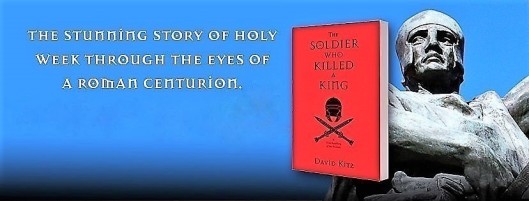
  • Books by David
  • Books on Amazon.com

I love the Psalms

~ Connecting daily with God through the Psalms

I love the Psalms

Tag Archives: Jesus

What If…

06 Monday Aug 2018

Posted by davidkitz in Bible, Devotionals, Psalm 132, Psalms

≈ 6 Comments

Tags

alternate history, covenant, David, history, history of Israel, Jesus, World War I

Reading: Psalm 132
(Verses 11-18)
The LORD swore an oath to David,
a sure oath he will not revoke:
“One of your own descendants
I will place on your throne.
If your sons keep my covenant
and the statutes I teach them,
then their sons will sit on your throne for ever and ever.”
For the LORD has chosen Zion,
he has desired it for his dwelling, saying,
“This is my resting place for ever and ever;
here I will sit enthroned, for I have desired it.
I will bless her with abundant provisions;
her poor I will satisfy with food.
I will clothe her priests with salvation,
and her faithful people will ever sing for joy.
“Here I will make a horn grow for David
and set up a lamp for my anointed one.
I will clothe his enemies with shame,
but his head will be adorned with a radiant crown”
(NIV).

IMG_20180717_0920572

The muddy waters of Bilberry Creek — photo by David Kitz

Reflection
I am an armchair student of history. I enjoy reading history books, particularly books about war and great epic battles. In recent years, several books have appeared on the market, which examine alternate scenarios in history. The authors of these books imagine what might have happened if historic events had unfolded differently. For instance what might have happened if Lee Harvey Oswald’s gun had jammed as he attempted to shoot President Kennedy? How would the Kennedy presidency have unfolded? Or what would the world look like today, if cooler heads had prevailed and the great bloodbath commonly called World War I had been avoided? These are fascinating questions.

I call these “What if…” books. They imagine history unfolding differently. Today’s reading from Psalm 132 leaves me in a “What if…” frame of mind. The LORD made this promise to King David: “One of your own descendants I will place on your throne. If your sons keep my covenant and the statutes I teach them, then their sons will sit on your throne for ever and ever.”  

God promised that history would unfold in a certain way. A descendant of David would sit on the throne of Israel in perpetuity. But there was a condition attached to that promise. God’s promise would be fulfilled, if the sons of David kept the covenant and the statutes. Unfortunately, that did not happen. The descendants of David disobeyed and succumbed to idolatry. But what if those sons had obeyed…

How will history be different, if I wholeheartedly obey the LORD?  

Response: Father God, I thank you for your son, Jesus. He is the descendant of King David who fulfilled your covenant and now he reigns forever. King Jesus, I am your servant. Reign in my life today. Amen.

Your Turn: Is Jesus your king? How are you serving him?

The Discipline of Self-Denial

02 Thursday Aug 2018

Posted by davidkitz in Bible, Devotionals, God's word, Psalm 132, Psalms

≈ 12 Comments

Tags

Jesus, self-denial, self-discipline, Songs of Ascent, spiritual battle, spiritual disciplines

Reading: Psalm 132
A song of ascents.
(Verses 1-5)
LORD, remember David
and all his self-denial.
He swore an oath to the LORD,
he made a vow to the Mighty One of Jacob:
“I will not enter my house or go to my bed,
I will allow no sleep to my eyes
or slumber to my eyelids,
till I find a place for the L
ORD,
a dwelling for the Mighty One of Jacob”
(NIV).

2017-08-24a

The waters of Georgian Bay, Bruce Peninsula National Park — photo by David Kitz

Reflection
This is the thirteenth psalm in the Songs of Ascent series. With this psalm, the author returns to a familiar theme—the glory of God’s presence in Zion. It is what has drawn the pilgrims to this holy place. They have come to worship and meet with God.

But this psalm has a different approach. It recounts the history of Zion and how this particular place was chosen as the site for Israel to worship God. It all began with David. At the prompting of the LORD, David chose Mount Zion to set up the Tabernacle of the LORD. But before Mount Zion could become a place of worship the stronghold of Zion had to be conquered. It was in enemy hands. Nevertheless, David captured the fortress of Zion—which is the City of David (2 Samuel 5:7).

In this psalm we hear of David’s vow. “I will not enter my house or go to my bed, I will allow no sleep to my eyes or slumber to my eyelids, till I find a place for the LORD, a dwelling for the Mighty One of Jacob” 

In David’s case, finding a place for the LORD required self-denial. It involved a physical battle. There is a spiritual battle that we too need to fight so the LORD can occupy His rightful place in our lives. The enemy does not leave the strongholds in our mind without a fight. We must take action to evict him.

We live in a world where self-denial is rare, and often frowned upon. Our society pushes the easy life—the comfortable life—the path of least resistance. Self-denial in pursuit of a relationship with God is a foreign concept. In many churches fasting and prayer is a lost discipline.

Jesus encountered the same problem with his own disciples. While he was praying fervently in the Garden of Gethsemane, his disciples were fast asleep. “Simon,” he said to Peter, “are you asleep? Couldn’t you keep watch for one hour?” See Mark 14:32-42.

This inability to pray for an hour is an indicator that at our core we have not surrendered fully to God. Other things are more important. There is no self-denial. That TV show is more important. The game is more important. Perhaps our Zion is still occupied by the enemy and the LORD is not enthroned there.

Response: LORD God, help me to change. I want to put you first in my life. Come and occupy the throne of my life. I want my thoughts, words and actions to be governed by you, Lord Jesus. Amen.

Your Turn: Do you find self-denial difficult? Do you practice a variety of spiritual disciplines?

The Wisdom of Humility

01 Wednesday Aug 2018

Posted by davidkitz in Bible, Devotionals, God's word, Psalm 131, Psalms

≈ 1 Comment

Tags

humility, Jesus, meek, pride, Songs of Ascent

Reading: Psalm 131
A song of ascents. Of David.
My heart is not proud, LORD,
my eyes are not haughty;
I do not concern myself with great matters
or things too wonderful for me.
But I have calmed and quieted myself,
I am like a weaned child with its mother;
like a weaned child I am content.
Israel, put your hope in the LORD
both now and forevermore
(NIV).

Watson Lake, YK - L Kranz

Watson Lake, Yukon — photo courtesy of Liz Kranz

Reflection
In my personal quiet time this morning I highlighted this verse. When pride comes, then comes disgrace, but with humility comes wisdom (Proverbs 11:2).

The wisdom that comes with humility is a rare commodity in today’s world. It appears that the crude bravado of boasting egocentrics is winning the day. Every field of human endeavor has its loudmouthed champions—men who heap scorn on meeker souls.

But Jesus has a message that runs completely contrary to this approach. In his Sermon on the Mount, he said, “Blessed are the meek, for they will inherit the earth” (Matthew 5:5). On another occasion, the disciples asked Jesus this question, “Who, then, is the greatest in the kingdom of heaven?”

This is Jesus’ response.  “Truly I tell you, unless you change and become like little children, you will never enter the kingdom of heaven. Therefore, whoever takes the lowly position of this child is the greatest in the kingdom of heaven. And whoever welcomes one such child in my name welcomes me.” (See Matthew 18:1-5).

Jesus turns this world’s operating system on its head. He heaps honor on the weak, the humble and the vulnerable. He praises the soul of the weaned child—the one who takes the position of humility. Of course, Jesus is right. The folly of the proud ends in disgrace, but the humility of the meek ends in honor and a glorious inheritance.

Your eternal destiny is determined by your humility. These words of Jesus are an ominous warning:  “Truly I tell you, unless you change and become like little children, you will never enter the kingdom of heaven.”

I need to become like the weaned child of Psalm 131. Can I truthfully say these words? My heart is not proud, LORD, my eyes are not haughty. Have I calmed and quieted myself? Am I like a weaned child with its mother? Am I content? Becoming like the weaned child requires change. I need to change. Jesus asks me to change. How about you? 

Response: Father God, help me to change. I want to become more like Jesus. He was the servant of all.  Help me to avoid the pitfall of pride. Teach how to quiet my soul and be content in you. Amen.

Your Turn: Are you learning to quiet your soul before God?

The Problem with Brain Slivers

22 Friday Jun 2018

Posted by davidkitz in Bible, Devotionals, God's word, Psalm 119, Psalms

≈ 5 Comments

Tags

comfort, Jesus, Lord, Petrie Island, Psalm 119, repent, slivers, Suffering, surgery

Reading: Psalm 119
ז Zayin
(Verses 49-56)
Remember your word to your servant,
for you have given me hope.
My comfort in my suffering is this:
Your promise preserves my life.
The arrogant mock me unmercifully,
but I do not turn from your law.
 I remember, L
ORD, your ancient laws,
and I find comfort in them.
Indignation grips me because of the wicked,
who have forsaken your law.
 Your decrees are the theme of my song
wherever I lodge.
 In the night, L
ORD, I remember your name,
that I may keep your law.
This has been my practice:
I obey your precepts
(NIV).

2018-06-12a

You have given me hope — Petrie Island — photo by David Kitz

Reflection
Raise your hand if you want a dose of suffering. There aren’t many volunteers when that question is asked. But in all seriousness, we do volunteer for suffering, if we believe there is a benefit.

As a youngster growing up on a farm, I remember getting a sliver in my finger. It took some convincing from my mother to allow her to dig it out with a needle. Once that sliver was gone, the suffering stopped almost immediately. A small dose of short term pain brought long-lasting relief. 

There’s a similar principle at work in a statement from today’s reading. My comfort in my suffering is this: Your promise preserves my life. 

It’s the promise of a better future that helps us endure suffering in the present. I’ll endure the suffering of surgery, if it comes with the promise of a pain-free future. But the LORD’s promises are on a grand scale. He doesn’t just preserve my life for the present; He promises to preserve it for eternity. That’s an enormous promise, but our God is far beyond enormous. How do you measure infinity?

Now let’s return to that sliver. You can’t walk through this life without picking up mental slivers—foreign objects that lodge in your mind. It could be an erotic picture, an emotional scar, or an errant thought that grows into a bad habit. Brain slivers aren’t easily removed. And yes, they fester and become infected. It isn’t long and they may begin to take over your whole thought pattern. You can try to remove them yourself, but Jesus is the best brain-sliver remover that I know. Go to him. A little repentant pain can bring eternal relief.

Response: Father God, remove my brain slivers. Forgive me for allowing wrong thoughts and habits to fester. I remember, LORD, your ancient laws, and I find comfort in them. Preserve my life. Amen.

Your Turn: Are there brain slivers that have invaded your mind? Set your mind on God’s promise.

Walking the Path of Purity

15 Friday Jun 2018

Posted by davidkitz in Bible, Devotionals, God's word, Psalm 119, Psalms

≈ Leave a comment

Tags

God, holiness, Jesus, pornography, Psalm 119, pure, purity, sin

Reading: Psalm 119
ב Beth
(Verses 9-16)
How can a young person stay on the path of purity?
    By living according to your word.
I seek you with all my heart;
    do not let me stray from your commands.
 I have hidden your word in my heart
    that I might not sin against you.
Praise be to you, LORD;
    teach me your decrees.
With my lips I recount
    all the laws that come from your mouth.
I rejoice in following your statutes
    as one rejoices in great riches.
I meditate on your precepts
    and consider your ways.
I delight in your decrees;
    I will not neglect your word (NIV).

2018-06-10a

Are you walking the path of purity? — photo by David Kitz

Reflection
In the age of the internet and one-click-away pornographic websites, the opening question in today’s reading from Psalm 119 has never been more salient. How can a young person stay on the path of purity?

Why would a young man want to keep his way pure? Why not chase every skirt in town? Why not have some fun? Why not eat, drink and be merry? We only pass through this life once. Why not live it up?

But if the God of the universe has called men and women into relationship with Him, then purity and holiness are at the very core of that relationship. If we are called to be with God—to dwell in harmony with Him—then we must embrace holiness. To embrace God is to embrace holiness. Those filthy sin spots have got to go. If we are to walk with God, we must willingly walk away from mind and soul-fouling sin.

The writer of the Book of Hebrews urges on the young faith runners with these words: Let us fix our eyes on Jesus, the author and perfecter of our faith, who for the joy set before him endured the cross, scorning its shame, and sat down at the right hand of the throne of God (Hebrews 12:1-2, NIV).

In a world awash in pornography, we all need fixed eyes—eyes fixed on Jesus—eyes that see the cross— eyes that see the blood-drenched cross. Purity comes at a price. It cost the heavenly Father the life of His very own Son. A young man named Jesus—in flesh like my own—in skin like my own—poured out his life’s blood to make me pure. Fix your eyes on Him!

 Response: LORD, I want to live my life according to your word. I seek you with all my heart; do not let me stray from your commands. I have hidden your word in my heart that I might not sin against you. Amen.

Your Turn: Do you struggle with impure thoughts? Are you neglecting God’s word?

The Rejected Rock

13 Wednesday Jun 2018

Posted by davidkitz in Bible, Devotionals, God's word, Psalm 118, Psalms

≈ 5 Comments

Tags

cornerstone, Jesus, messianic, messianic prophecies, Passion Week, prophetic, stone, Sulphur Mountain

Reading: Psalm 118
(Verses 22-29)
The stone the builders rejected
has become the cornerstone;
the L
ORD has done this,
and it is marvelous in our eyes.
 The L
ORD has done it this very day;
let us rejoice today and be glad.
LORD, save us! LORD, grant us success!
Blessed is he who comes in the name of the LORD.
From the house of the L
ORD we bless you.
The L
ORD is God,
and he has made his light shine on us.
With boughs in hand, join in the festal procession
up to the horns of the altar.
You are my God, and I will praise you;
you are my God, and I will exalt you.
Give thanks to the LORD, for he is good;
his love endures forever
(NIV).

2018-05-16 Banff

Banff townsite as viewed from the top of Sulphur Mountain — photo by David Kitz

Reflection
This final reading from Psalm 118 contains one of the most profound messianic prophecies of the Old Testament. The opening sentence carries great significance: The stone the builders rejected has become the cornerstone; the LORD has done this, and it is marvelous in our eyes. 

The apostle Peter identifies Jesus as the stone the builders rejected. He adds that this rejection was due to disobedience and unbelief and he quotes Isaiah 8:14 to prove his point. “[Jesus is] A stone that causes people to stumble and a rock that makes them fall.” They stumble because they disobey the message—which is also what they were destined for. But you are a chosen people, a royal priesthood, a holy nation, God’s special possession, that you may declare the praises of him who called you out of darkness into his wonderful light (1 Peter 2:8-9).

In reality our reading from Psalm 118 paints a metaphoric picture of Christ’s Passion Week. When Jesus arrived triumphant in Jerusalem on Palm Sunday he was greeted by the crowds chanting this line from Psalm 118: “Blessed is he who comes in the name of the Lord!” (Matthew 21:9). But later, Jesus, the rock of our salvation, was rejected by the religious leadership. Metaphorically, he was taken up to the horns of the altar and there on a cruel wooden cross, the Lamb of God became our sacrificial offering.

But… but praise be to God! The stone the builders rejected has become the cornerstone. This same Jesus was raised from the dead on the third day, and now he offers forgiveness and salvation for all those who put their faith in him. He is our living rock—the rock that accompanied Israel through the wilderness. See 1 Corinthians 10:1-5. Jesus is the rock on which you can build your life—your cornerstone.

Response: Father God, I thank you for your prophetic word because it points to Jesus. Lord Jesus, you are the rock solid foundation of my life. I give thanks to the LORD, for he is good! Amen.

Your Turn: Are you building on the Rock, which is Christ?

Lift up the Cup of Salvation

05 Tuesday Jun 2018

Posted by davidkitz in Bible, Devotionals, Psalm 116, Psalms

≈ 4 Comments

Tags

Alberta, Canmore, coffee, Gethsemane, Jesus, psalmist, resurrection, salvation, the cross

Reading: Psalm 116
(Verses 10-14)
I trusted in the LORD when I said,
    “I am greatly afflicted”;
in my alarm I said, “Everyone is a liar.”
What shall I return to the LORD
for all his goodness to me?
I will lift up the cup of salvation
  and call on the name of the LORD.
I will fulfill my vows to the LORD
    in the presence of all his people (NIV).

2018-05-15a

Policeman Creek, Canmore, Alberta — photo by David Kitz

Reflection
Today started a bit different. Rather than beginning my day with a hot cup of coffee, I had a few sips of water and then headed off for some blood tests. I missed that cup of coffee, but in reality going without it was no great hardship. Some view their morning shot of caffeine like a cup of salvation—early morning salvation. Today’s reading from Psalm 116 speaks of the cup of salvation. I’m sure the psalmist wasn’t speaking of his morning cup of java. What was he speaking of?

The psalmist lifts up the cup of salvation and calls on the name of the LORD in response to this question: What shall I return to the LORD for all his goodness to me? The psalmist lifts up his cup as an expression of thanksgiving to the LORD for the salvation he has received from God.

But salvation came at a price. To purchase our salvation, Jesus lifted up a cup and brought it to his lips. It was a cup of unimaginable suffering. In the Garden of Gethsemane he prayed, “Father, if you are willing, take this cup from me; yet not my will, but yours be done” (Luke 22:42). He was referring to the anguish he would endure. In the hours that followed, Jesus drained that cup of suffering dry, even as his body was drained of blood on a cruel Roman cross.

In the great plan of redemption, Jesus’ cup of suffering became for us a cup of salvation. He drank it down to save us from the cruel consequences of our sin. Jesus assumed the full penalty of our disobedience, rebellion and devious ways. But now by faith, we can become active recipients of the salvation that he won on our behalf.

The next time you bring the communion cup to your lips you are remembering—acknowledging in a tangible way—that Jesus’ blood was shed for you. Salvation came through a cup of suffering. We can rejoice in that truth because early on a Sunday morning Jesus’ dead body was jolted back to life. He was resurrected by the power of the Father, and one day the body of every believer will be resurrected too. In that moment we will experience the fullness of our salvation.

Tomorrow morning, I’ll return to my usual routine and I’ll enjoy my hot cup of coffee. But the cup I savour most is the cup the Lord provides—the cup of salvation.

Response: Lord Jesus, I thank you for your sacrifice. You gave yourself fully for me. On a crude wooden cross you purchased my salvation. Today, help me fulfill my vows to the LORD. Amen.

Your Turn: Which cup do you appreciate most? How can you show your appreciation?

Are There Idols in your Life?

31 Thursday May 2018

Posted by davidkitz in Bible, Devotionals, Psalm 115, Psalms

≈ 4 Comments

Tags

gold, idolatry, idols, Jesus, Mammon, serve, silver, two masters

Reading: Psalm 115
(Verses 1-8)
Not to us, LORD, not to us
but to your name be the glory,
because of your love and faithfulness.
Why do the nations say,
“Where is their God?”
Our God is in heaven; he does whatever pleases him.
 But their idols are silver and gold,
made by human hands.
They have mouths, but cannot speak,
eyes, but cannot see.
They have ears, but cannot hear,
noses, but cannot smell.
They have hands, but cannot feel,
feet, but cannot walk,
nor can they utter a sound with their throats.
Those who make them will be like them,
and so will all who trust in them
(NIV).

Reflection
Where are your idols? “I have none,” you say. Are you sure? Most readers of this post would deny being idol worshippers, but perhaps we have more idols than we care to admit.

2018-05-18 3 sisters b

The “Three Sisters” mountain peaks in the Canadian Rockies — photo by David Kitz

Idolatry was commonly practiced during Israel’s kingdom era. In Old Testament times, the nations around God’s people all practiced various forms of idol worship. One might assume that God’s redeemed people, who were rescued from slavery, would have nothing to do with such vile practices. But you would be wrong. Time and again Israel fell into idolatry.

King Solomon, who was revered for his wisdom, is a prime example of someone who condoned idol worship. Here’s what we read about this ‘esteemed’ leader: On a hill east of Jerusalem, Solomon built a high place for Chemosh the detestable god of Moab, and for Molek the detestable god of the Ammonites. He did the same for all his foreign wives, who burned incense and offered sacrifices to their gods (1 Kings 11:7-8).

When leaders go astray, there will be many who follow. In the church today we have many leaders who have fallen captive to the god of Mammon—material goods. Jesus said, “No one can serve two masters. Either you will hate the one and love the other, or you will be devoted to the one and despise the other. You cannot serve both God and money” (Matthew 6:24).

Before we claim to be free from idols, we need to examine our hearts. Are we yielding to the Holy Spirit, or are we controlled by our desire for what this world has to offer?

Response: Father God, show me if there are idols in my life. In love, correct me when I stray. I want to serve you—put you first in my life. Lord Jesus, be my master.  It’s an honor to serve you. Amen.

Your Turn: Are there other things that can become idols in your life?

My Adonai—my Messiah

23 Wednesday May 2018

Posted by davidkitz in Bible, Devotionals, Psalm 110, Psalms

≈ Leave a comment

Tags

Adonai, Jesus, king, Lake Louise, Melchizedek, Messiah, messianic, priest, prophet

Reading: Psalm 110

Of David. A psalm.
The LORD says to my Lord:
“Sit at my right hand until I make your enemies a footstool for your feet.”
The LORD will extend your mighty scepter from Zion, saying,
“Rule in the midst of your enemies!”
Your troops will be willing on your day of battle.
Arrayed in holy splendor,
your young men will come to you
like dew from the morning’s womb.
The LORD has sworn and will not change his mind:
“You are a priest forever, in the order of Melchizedek.”
The Lord is at your right hand;
he will crush kings on the day of his wrath.
He will judge the nations, heaping up the dead
and crushing the rulers of the whole earth.
He will drink from a brook along the way,
and so he will lift his head high
(NIV).

Reflection
Psalm 110 is perhaps the most messianic psalm in the entire psalter. Jesus made a direct reference to the opening line of this psalm in a discussion he had with the Pharisees in the temple courts during the week of his crucifixion. See Matthew 22:41-46 and Luke 20:41-44.

2018-05-18 L L high2

Lake Louise, Alberta — photo by David Kitz

Jesus asks, “What do you think about the Messiah? Whose son is he?” In response the Pharisees answer, “The son of David.”

But Jesus refutes their answer by quoting from Psalm 110. His answer does not carry the same punch in the English language quote we see in Matthew, because we fail to see the distinction between the first ‘LORD’ and the second ‘Lord’. We see these words as synonymous, but in the original Hebrew they most certainly are not. The first LORD is Yahweh (Jehovah), but the second Lord is Adonai, the Messiah.

Speaking prophetically by the Spirit, David was referring to his Adonai—his Messiah. By quoting this scripture Jesus was affirming his designation by God as the Messiah that the Jewish nation had longed to see. The long wait was over. Jesus the Messiah was standing directly in front of Pharisees who were blind to his presence and his deity.

This Lord or Adonai is also the divinely designated priest who will present his own body as a sacrifice on the cross. The LORD has sworn and will not change his mind: “You are a priest forever, in the order of Melchizedek.” The writer of the Book of Hebrews has a great deal to say about the priesthood of Melchizedek. He systematically reasons that Jesus is our heaven-sent prophet, priest and king. See Hebrews chapters 6-8.   

Response: Father God, thank you for sending Jesus into the world to be my personal Messiah. Jesus, you suffered and died for me. Now extend your reign as conquering king over me and through me. Amen.

Your Turn: Have you bowed your knee before the Messiah King?

Healing for the Wounded Heart

22 Tuesday May 2018

Posted by davidkitz in Bible, Devotionals, Psalm 109, Psalms

≈ 1 Comment

Tags

Banff, Bow River, Jesus, Post-traumatic stress disorder, PTSD, self-medicating, soldiers, the LORD, wounded

Reading: Psalm 109  
(Verses 21-31)
But you, Sovereign LORD, help me for your name’s sake;
    out of the goodness of your love, deliver me.
For I am poor and needy, and my heart is wounded within me.
 I fade away like an evening shadow;
    I am shaken off like a locust.
My knees give way from fasting; my body is thin and gaunt.
I am an object of scorn to my accusers;
    when they see me, they shake their heads.
Help me, LORD my God; save me according to your unfailing love.
Let them know that it is your hand, that you, LORD, have done it.
While they curse, may you bless;
    may those who attack me be put to shame,
    but may your servant rejoice.
May my accusers be clothed with disgrace
    and wrapped in shame as in a cloak.
With my mouth I will greatly extol the LORD;
    in the great throng of worshipers I will praise him.
For he stands at the right hand of the needy,
to save their lives from those who would condemn them (NIV).

Reflection
Post-traumatic stress disorder—PTSD—its effects are real. Soldiers are returning from theatres of war looking fit and healthy, but in reality they are deeply wounded by what they have seen or participated in. Of course one does not need to go to the battle field to experience the devastating effects of PTSD. First responders and witnesses to horrific events here at home can also become wounded and scarred.

2018-05-18 Banff

The Bow River in Banff National Park — photo by David Kitz

In this concluding portion of Psalm 109, David makes this confession: I am poor and needy, and my heart is wounded within me.

Our world is full of wounded people. Keep this in mind the next time you see someone in a fit of rage or self-medicating with a bottle of booze or pills or a hypodermic needle. The wounds are real. The way back to social and emotional health is often long, difficult and fraught with pain.

David, the wounded warrior, does two things that are vital for anyone who wants to recover from PTSD or any form of spiritual wounding. He admits his need. Rather than tough it out, he confesses that he is in a desperate state. I am poor and needy, and my heart is wounded within me.

Secondly, David called out to the LORD. Help me, LORD my God; save me according to your unfailing love. The LORD’s ears are always open to that kind of prayer—the prayer of the wounded. Jesus our Savior was wounded. With his wounds, Jesus heals the wounded heart. Will you let him in? 

Response: LORD, I confess events in my life have left me wounded. Heal me on the inside. Today I turn to you. I can’t do this by myself. Help me, LORD my God; save me according to your unfailing love. Amen.

Your Turn: Are there wounded people in your life? Have you been wounded?

← Older posts
Newer posts →

Psalms 365: Develop a Life of Worship & Prayer

Psalms 365 Volume II

Psalms 365 vol 3
— Psalms 365 Volume III

Now available:

Psalms

Recent posts

  • What is your life resting on? April 30, 2026
  • Wise and Foolish Builders April 29, 2026
  • We Can Draw Close April 29, 2026
  • True and False Disciples April 28, 2026
  • Who is your enemy? April 28, 2026
  • True and False Prophets April 27, 2026
  • I Will Sing of Love April 27, 2026

Calendar

April 2026
M T W T F S S
 12345
6789101112
13141516171819
20212223242526
27282930  
« Mar    

Blog Posts

Comments

  • davidkitz on We Can Draw Close
  • cjsmissionaryminister on Wise and Foolish Builders
  • cjsmissionaryminister on We Can Draw Close

Blog at WordPress.com.

Privacy & Cookies: This site uses cookies. By continuing to use this website, you agree to their use.
To find out more, including how to control cookies, see here: Cookie Policy
  • Subscribe Subscribed
    • I love the Psalms
    • Join 1,345 other subscribers
    • Already have a WordPress.com account? Log in now.
    • I love the Psalms
    • Subscribe Subscribed
    • Sign up
    • Log in
    • Report this content
    • View site in Reader
    • Manage subscriptions
    • Collapse this bar

Loading Comments...