• Home
  • About
  • DavidKitz.ca
  • Youtube Videos
  • Books by David
  • Books on Amazon.com

I love the Psalms

~ Connecting daily with God through the Psalms

I love the Psalms

Tag Archives: Jesus

You Welcomed the Message

23 Monday Jun 2025

Posted by davidkitz in Psalm 119

≈ Leave a comment

Tags

Bible, Christianity, faith, God, Jesus

Today’s quote and prayer from
“Psalms 365: Develop a Life of Worship and Prayer”
by David Kitz.


Reading: Psalm 119:1-8

Father God,
like the psalmist
I want to fall in love with your Word.
Here is the purpose to my desire.
I want to live a blameless life
that brings honor to my Creator
because you are good.
Amen.

— — — —

For we know,
brothers and sisters loved by God,
that he has chosen you,
 because our gospel came to you
not simply with words
but also with power,
with the Holy Spirit
and deep conviction.
You know how we lived among you
for your sake.
 
You became imitators of us
and of the Lord,
for you welcomed the message
in the midst of severe suffering
with the joy given by the Holy Spirit.
 
And so you became a model
to all the believers in Macedonia and Achaia.
 
The Lord’s message rang out from you
not only in Macedonia and Achaia—
your faith in God has become known everywhere.
Therefore
we do not need to say anything about it,
 
for they themselves report
what kind of reception you gave us.
They tell how you turned to God
from idols to serve the living and true God,
 
and to wait for his Son from heaven,
whom he raised from the dead—
Jesus, who rescues us from the coming wrath.

(1 Thessalonians 1:4-10 NIV)*

Para la publicación de Salmos 365 de hoy en español haga clic aquí.

bgbg_v4.3_1501818
* NEW INTERNATIONAL VERSION, COPYRIGHT ©1973, 1978, 1984, 2011 BY BIBLICA

Please pray for peace to return to Israel, Gaza, Iran, and Ukraine!

Volume I of Psalms 365: Develop a Life of Worship and Prayer won the Best Book of the Year Award from The Word Guild and Volume II has won the Best Devotional of the Year Award. For those who love God’s word, this three-book series is an ideal way to daily meet with the Lord. To purchase or for a closer look click here.

A gripping read from David Kitz.
Is a return-to-Jesus revival possible in our time?
This book points the way forward.
For details click here.

The LORD Rules over All

22 Sunday Jun 2025

Posted by davidkitz in Psalms, Psalms Alive!

≈ Leave a comment

Tags

Bible, circumstances, constancy of God, David, God, Jesus, Martin Rinkart, praise, praise the LORD, Prayer, Psalms, sacrifice of praise, sing praise, worship, worship amid suffering

Psalm 103:19-22

The LORD has established his throne in the heavens,
and his kingdom rules over all.
Praise the LORD you his angels,
you mighty ones who do his bidding,
who obey his word.
Praise the LORD all his heavenly hosts,
you his servants who do his will.
Praise the L
ORD, all his works everywhere in his dominion.
Praise the LORD, O my soul.

Psalm 103 is a sandwich, or if you prefer, a big beefy hamburger. By that I mean this psalm begins with a personal call to praise the LORD, and it ends, as we see from the passage above, with what amounts to a universal call to praise the LORD. Between these calls to worship, we find a great big helping of God’s goodness. In between we discover the why—the reasons why—we should be overflowing with praise to the LORD.

David experienced God’s saving grace, goodness, love and forgiveness over and over again. Consequently, his heart was full to bursting with praise. Herein is the why of praise; the reason for praise rests in God, not in us, or our circumstances.

But Psalm 103 is not just a beefy hamburger. It is also an express train—a big steam locomotive. There is a distinct momentum to this psalm, which can be missed by breaking it into sections. It begins with David addressing his soul. It would appear, at the start, to be a sluggish soul that is somewhat reluctant to praise God. But this reluctance begins to melt away as David recounts the LORD’s great goodness. One by one David declares the character qualities of the LORD. As each attribute is portrayed, David’s sense of awe and his desire to praise God picks up momentum. By the end of this psalm, David’s praise has become an express train, loaded with divine purpose and headed full speed for glory!

Shinkansen (bullet train) photo by David Kitz

His final call to worship in the above stanza is a great cry for all to get aboard this express train of praise. Now with a full head of steam, in exultant praise, I can hear him shouting, “Hop on board, one and all. Praise the LORD! We are heaven bound!”

Many see praise and worship as a purely cathartic response to the manifest goodness of God. Something good happens to us. Unexpectedly, we get a thousand-dollar payment in the mail. Quite naturally our response is praise to God.

For many people, praise to God never progresses beyond this natural, cathartic level. If God does not bless, no praise is forthcoming. Our praise for the LORD becomes or simply remains circumstance dependent. But that was not the case with David. His praise extended beyond simple catharsis. He taught his soul to praise the LORD in all circumstances. True biblical praise and worship is after all a spiritual exercise, a discipline we grow in, just as we grow in the discipline of prayer.

The LORD, the object of our praise, does not change with our circumstances. He is forever the same. Jesus Christ is the same yesterday and today and forever (Hebrews 13:8). He is constant, hence our praise and worship of him should be constant, unaffected by weather conditions, world events, the gyrations of the stock market, our swings of mood or our personal situation.

Of course, this constancy in praise is something the natural man simply rebels against. Our world needs to be right in order for us to praise God aright, or so we reason. The only problem with this logic is that the world has never been right since the Fall. Death, disease, war and misery have been raining down on the children of Adam, since wilful disobedience to God first took root among us. And this is one weather forecast, for all humanity, that is not about to change—not until Christ returns.

If we are waiting for a perfect world before we lift our voice in praise to God, we will never praise Him. In fact, if our eyes are on the world, or on ourselves, there will always be grounds to withhold our praise. But then, the whole purpose of praise and worship is to lift up our eyes. We desperately need to get our eyes off ourselves, off the world, and onto God our Maker.

Photo by Thirdman on Pexels.com

Martin Rinkart was a man who could be forgiven for cursing God. But rather than cursing his Creator, or withholding worship, he composed the ageless hymn of praise, Now Thank we all our God. Pastor Rinkart (1586-1649) was caught up in the horrors of the Thirty Years’ War. For a full year his hometown, Eilenburg in Saxony, was besieged as war raged round about. The triple scourge of war, disease and famine ravaged the community. Death was everywhere. The walled city was swamped by destitute refugees. Three times it was overrun by pillaging armies. As the crisis worsened, Rinkart’s pastoral colleagues succumbed to the plague; only he was left to conduct the funerals. In that horrific year, 1637, he conducted more than 4,000 funerals, as many as fifty in a single day. One of those funerals was for his own dear wife.

Yet it was this man, Martin Rinkart, who composed these words of praise:

            Now thank we all our God
            With heart and hands and voices
            Who wondrous things hath done
            In whom this world rejoices;
            Who from our mothers’ arms
            Hath blessed us on the way
            With countless gifts of love
            And still is ours today.

Martin Rinkart did not live in a perfect world. But his eyes saw beyond the death and destruction that lay before him. He lifted his eyes above the world, and beyond himself. And when he did, he beheld God. He saw Him as LORD over all, and a God to be thanked and praised for countless gifts of love. Amid the most desperate situation imaginable, Pastor Rinkart fixed his gaze on the LORD his Maker. Then this humble pastor did a most remarkable thing—a Spirit-directed thing. He raised his voice in praise to God.

In a world run amok, the first casualty all too often is our faith in God. The chaos of disaster leads us to question the very existence of God. The god of order and control would not—should not—unleash tsunamis of war and disease on this world. We reason, “What kind of god is this? Why would an all-powerful god permit this? Why would he not spare those dear to me?”

Photo by Pixabay on Pexels.com

But Martin Rinkart the hymnist, and David the psalmist, knew the true God, a god who exists beyond our narrow definitions of order and control. Both these men knew the LORD of all the earth. Here in Psalm 103, David declared, “The LORD has established his throne in the heavens, and his kingdom rules over all.”

That divine rule, and that eternal kingdom, truly encompasses all, including disasters. Yes, He is LORD over disasters too, over war, over hurricanes, over floods and droughts, over both feasts and famines, joys and sorrows. He is LORD of all.

This declaration of God’s kingdom rule collides head on with my own preconceived notions of how the world should be. In my world death should never steal a friend away. In my world abundance should be a preordained right. In my world sickness should have no foothold, cancer should hold no sway. In my world all stories should have happy endings.

I want an ideal world like that. I want the real world to conform to my desired ends. And when God does not meekly comply, by granting me my ideal vision of the world, I stamp my foot and shake my fist at Him. In reality, when I do that, I am announcing that I want to be God. I want to be LORD. A refusal to bow in worship before God, is a declaration of my desire to be the sole ruler of my life, and the Creator my own world apart from God.

In a world run amok, Martin Rinkart did not stamp his foot and shake his fist at God; he lifted his voice in praise. Praise to God in the midst of tragedy aligns us afresh with the LORD of the universe. It re-establishes and reasserts his direct rule over us. Along with David we declared, “The LORD has established his throne in the heavens, and his kingdom rules over all.”

God in His wisdom has not given me my ideal world. He has given me His world—the real world—where sorrow mingles with joy, where the curse and the blessing of Eden coexist, where life and death dance nimbly together.

Man praying to God.

Prayer is my attempt before God to change this present world. And this world is in desperate need of change. God and I are in agreement on that point. That’s why He sent His Son. The world can be changed by God through prayer. What an astonishing truth! My prayers can change the world. God can as a consequence of my prayers, intervene and stunningly alter the natural course of events. I have seen Him do astonishing miracles. He is after all, who says He is. He is LORD.

But if God does not intervene, if my prayers are not answered, if no miracle comes, He is still LORD. He is still to be praised. This inalterable fact remains, “The LORD has established his throne in the heavens, and his kingdom rules over all.”

After 4,000 funerals, after his hopes and dreams lay buried, for Martin Rinkart, God was still God. He was still LORD over all. He was still worthy of all praise and so he wrote:

            O may this bounteous God 
            Through all our life be near us,
            With ever joyful hearts
            And blessed peace to cheer us;
            And keep us in his grace,
            And guide us when perplexed,
            And free us from all ills
            In this world and the next.[1]

How shallow is your praise? Do you believe your world needs to be right before you praise God? Lift up your eyes for a moment. Lift them to the One, who was lifted up for you. Lift your eyes to the Father, who did not spare His Son, but sent him into a messed-up world to die upon a cross. Fix your eyes on Him, the bloodied fount of redemption. Fix your eyes on the one who said, “I am the way, the truth and the life” (John 14:6).

Then, lift your voice in praise to God.

How shallow is your praise? Do you believe you need to feel right in order to praise right? After all, wouldn’t we be hypocritical if we were outwardly exuberant in praise to God, but our heart was not in it? Now in this instance, when we are speaking of our heart, we really mean our feelings. But if we see praise as a biblical command, our feelings are inconsequential. We are to praise God regardless of our feelings. Feelings come and go, but the goodness of God stands secure and unchanging. 

As residents of North America, we are a pampered lot. We live in affluence, materially rich, but mired in deep spiritual poverty. Gratification must be instant. Personal comfort trumps all other considerations. What do we know of hardship? In this sheltered atmosphere, praise for God grows like a spindly hothouse plant. Untested by hardship or the cold winds of adversity, our faith lacks depth. Our worship remains shallow.

If the music isn’t right on Sunday, we are incapable of praise. What an outrageous affront to God! True worship is so much more than a lip-synced ditty. It goes deeper. It flows higher. It breaks through our emotional indifference and reaches the heart of God.

The deepest praise is sacrificial. It floats heavenward on a sea of suffering. It confounds all logic and rises above whim or emotion.

Through Jesus, therefore, let us continually offer to God a sacrifice of praise—the fruit of lips that confess his name (Hebrews 13:15).

True worship is born of the Spirit. Along with David, it invites all of heaven—all of creation to join in the chorus of praise.

Praise the LORD you his angels, you mighty ones who do his bidding, who obey his word. Praise the LORD all his heavenly hosts, you his servants who do his will. Praise the LORD, all his works everywhere in his dominion. Praise the LORD, O my soul!  

Bringing Life to the Psalms

  1. What does it mean to offer a sacrifice of praise? Have you faced times of hardship when you found it difficult to praise God? Were you able to offer praise?
  2. Read a biographical portrait of Martin Rinkart. There are several internet sites that provide a closer look at this man who knew how to praise God through adversity.
  3. Read or sing Rinkart’s great hymn, Now Thank we all our God. It’s a wonderful way to set free the wellspring of praise within you.
  1. Reread Psalm 103. Is it a hamburger, an express train, or both? Can you think of another metaphor that helps our minds to capture the magnificence of this psalm? What is God saying to you as you read this psalm?

[1] Now Thank We All Our God, words by Martin Rinkart (1586-1649), 1636. Translated by Catherine Winkworth (1827-1878), 1858 MIDI: Nun danket alle Gott (later form of melody by Johann Cruger, (1598-1662).


Today’s post is Chapter 17 from the book Psalms A
live! Connecting Heaven & Earth by David Kitz. To find out more or purchase click here.


Chosen and Precious

20 Friday Jun 2025

Posted by davidkitz in Psalm 118

≈ 2 Comments

Tags

foundation, Jesus, living stones, Prayer, priesthood, prophetic, Psalms, Scripture, the LORD, Zion

Today’s quote and prayer from
“Psalms 365: Develop a Life of Worship and Prayer”
by David Kitz.


Reading: Psalm 118:22-29

Father God,
I thank you for your prophetic word
because it points to Jesus.
Lord Jesus,
you are the rock-solid foundation of my life.
I give thanks to the LORD, for he is good!
His love endures forever.

Amen.

— — — —

As you come to him,
the living Stone—rejected by humans
but chosen by God and precious to him—
 
you also, like living stones,
are being built into a spiritual house
to be a holy priesthood, 
offering spiritual sacrifices acceptable to God
through Jesus Christ.

For in Scripture it says:

“See, I lay a stone in Zion,
    a chosen and precious cornerstone,
and the one who trusts in him
    will never be put to shame.”

Now to you who believe, this stone is precious.
(1 Peter 2:4-7a NIV)*


Para la publicación de Salmos 365 de hoy en español haga clic aquí.

bgbg_v4.3_1501818
* NEW INTERNATIONAL VERSION, COPYRIGHT ©1973, 1978, 1984, 2011 BY BIBLICA

Please pray for peace to return to Israel, Gaza, Iran, and Ukraine!

Volume I of Psalms 365: Develop a Life of Worship and Prayer won the Best Book of the Year Award from The Word Guild and Volume II has won the Best Devotional of the Year Award. For those who love God’s word, this three-book series is an ideal way to daily meet with the Lord. To purchase or for a closer look click here.

A gripping read from David Kitz.
Is a return-to-Jesus revival possible in our time?
This book points the way forward.
For details click here.

Jesus, the Rock That Saves

20 Friday Jun 2025

Posted by davidkitz in Psalms

≈ Leave a comment

Tags

cornerstone, faith, foundation, hope, Jesus, Messiah, praise, prophecy, resurrection, sacrifice, salvation, Scripture, the LORD, triumph, truth, worship

Today’s Devotion from Psalms 365 by David Kitz

Reading: Psalm 118:22-29
The stone the builders rejected
has become the cornerstone;
the LORD has done this,
and it is marvelous in our eyes.
The LORD has done it this very day;
let us rejoice today and be glad.
LORD, save us! LORD, grant us success!
Blessed is he who comes in the name of the LORD.
From the house of the LORD we bless you.
The LORD is God,
and he has made his light shine on us.
With boughs in hand, join in the festal procession
up to the horns of the altar.
You are my God, and I will praise you;
you are my God, and I will exalt you.
Give thanks to the LORD, for he is good;
his love endures forever (NIV). *

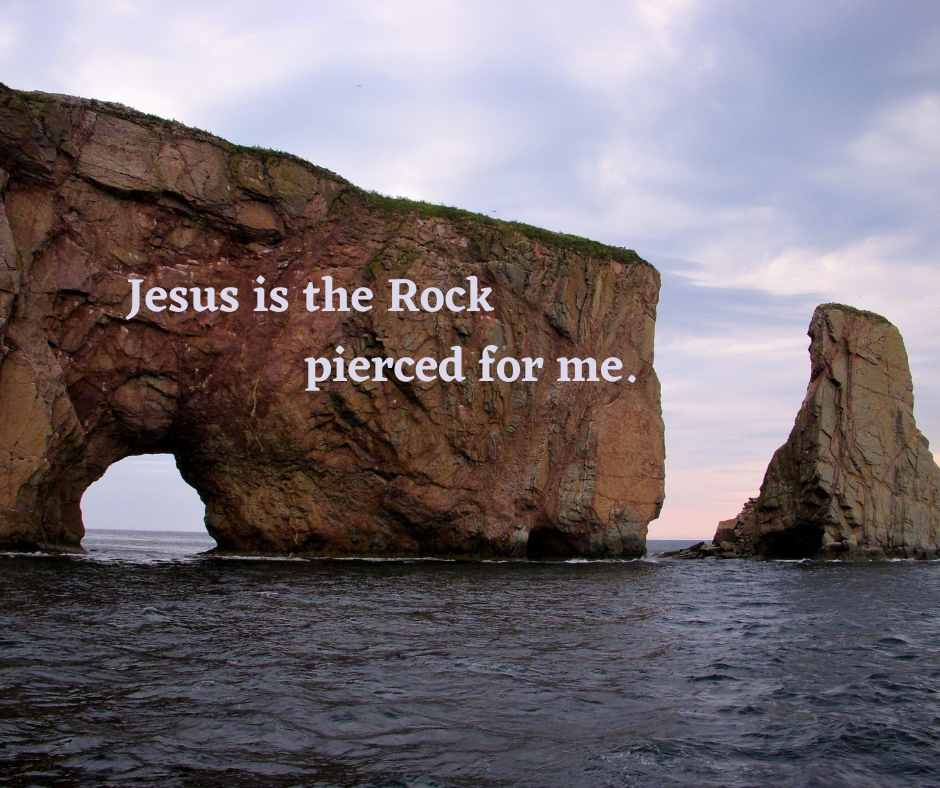
A tree growing around a giant rock, Gatineau Park, QC — photo by David Kitz

Reflection
This final reading from Psalm 118 contains one of the most profound messianic prophecies of the Old Testament. The opening sentence carries great significance: The stone the builders rejected has become the cornerstone; the LORD has done this, and it is marvelous in our eyes (v. 22-23).

The apostle Peter identifies Jesus as the stone the builders rejected. He adds that this rejection was due to disobedience and unbelief, and he quotes Isaiah 8:14 to prove his point. “[Jesus is] A stone that causes people to stumble and a rock that makes them fall.” They stumble because they disobey the message—which is also what they were destined for. But you are a chosen people, a royal priesthood, a holy nation, God’s special possession, that you may declare the praises of him who called you out of darkness into his wonderful light (1 Peter 2:8-9).

Our reading from Psalm 118 paints a metaphoric picture of Christ’s Passion Week. When Jesus arrived triumphant in Jerusalem on Palm Sunday, he was greeted by the crowds chanting this line from Psalm 118: “Blessed is he who comes in the name of the Lord!” (Matthew 21:9). But later, Jesus, the rock of our salvation, was rejected by the religious leadership. Metaphorically, he was taken up to the horns of the altar and there on a cruel wooden cross, the Lamb of God became our sacrificial offering.

But… but praise be to God! The stone the builders rejected has become the cornerstone. This same Jesus was raised from the dead on the third day, and now he offers forgiveness and salvation for all those who put their faith in him. He is our living rock—the rock that accompanied Israel through the wilderness. See 1 Corinthians 10:1-5. Jesus is the rock on which you can build your life—your cornerstone.

Response: Father God, I thank you for your prophetic word because it points to Jesus. Lord Jesus, you are the rock-solid foundation of my life. I give thanks to the LORD, for he is good! Amen.

Your Turn: Are you building on the Rock, which is Christ? What building materials are you using?

Para la publicación de Salmos 365 de hoy en español haga clic aquí.

bgbg_v4.3_1501818
* NEW INTERNATIONAL VERSION, COPYRIGHT ©1973, 1978, 1984, 2011 BY BIBLICA

Please pray for peace to return to Israel, Gaza, and Ukraine!

Volume I of Psalms 365: Develop a Life of Worship and Prayer won the Best Book of the Year Award from The Word Guild and Volume II has won the Best Devotional of the Year Award. For those who love God’s word, this three-book series is an ideal way to daily meet with the Lord. To purchase or for a closer look click here.

A gripping read from David Kitz.
Is a return-to-Jesus revival possible in our time?
This book points the way forward.
For details click here.

Then Jesus Came to Them

16 Monday Jun 2025

Posted by davidkitz in Psalm 117, Psalms

≈ Leave a comment

Tags

Father God, God's love, great commission, Jesus, Prayer, Psalms, salvation, the cross, the LORD

Today’s quote and prayer from
“Psalms 365: Develop a Life of Worship and Prayer”
by David Kitz.


Reading: Psalm 117

Father God,
I just want to praise you.
Thank you for your great love and faithfulness
as revealed by Jesus on the cross.
I love you, Lord Jesus.
I am grateful that your love
encompasses all people.
Amen.

— — — —

Then Jesus came to them and said,
“All authority in heaven
and on earth has been given to me.

Therefore go and make disciples of all nations,
baptizing them in the name of the Father
and of the Son and of the Holy Spirit,

and teaching them to obey everything
I have commanded you.
And surely I am with you always,
to the very end of the age.”

(Matthew 28:18-20 NIV)*

Para la publicación de Salmos 365 de hoy en español haga clic aquí.

bgbg_v4.3_1501818
* NEW INTERNATIONAL VERSION, COPYRIGHT ©1973, 1978, 1984, 2011 BY BIBLICA

Please pray for peace to return to Israel, Gaza, Iran, and Ukraine!

Volume I of Psalms 365: Develop a Life of Worship and Prayer won the Best Book of the Year Award from The Word Guild and Volume II has won the Best Devotional of the Year Award. For those who love God’s word, this three-book series is an ideal way to daily meet with the Lord. To purchase or for a closer look click here.

A gripping read from David Kitz.
Is a return-to-Jesus revival possible in our time?
This book points the way forward.
For details click here.

Our God, the Extremist

15 Sunday Jun 2025

Posted by davidkitz in Psalms, Psalms Alive!

≈ Leave a comment

Tags

conquer, David, David and Goliath, forgiveness of sins, Jesus, knowing God, leaving a legacy, Prayer, Righteousness, stages of life, the LORD

Psalm 103:6-18

The LORD works righteousness
    and justice for all the oppressed.

He made known his ways to Moses,
    his deeds to the people of Israel:
The LORD is compassionate and gracious,
    slow to anger, abounding in love.
He will not always accuse,
    nor will he harbor his anger forever;
he does not treat us as our sins deserve
    or repay us according to our iniquities.
For as high as the heavens are above the earth,
    so great is his love for those who fear him;
as far as the east is from the west,
    so far has he removed our transgressions from us.

As a father has compassion on his children,
so the LORD has compassion on those who fear him;
for he knows how we are formed,
he remembers that we are dust.
The life of mortals is like grass,
they flourish like a flower of the field;
the wind blows over it and it is gone,
and its place remembers it no more.
But from everlasting to everlasting
the LORD’s love is with those who fear him,
and his righteousness with their children’s children—
with those who keep his covenant
and remember to obey his precepts.

It is well worth noting that Psalm 103 was written by David. David was a man of extremes; he lived life to the full. Never one to rest on his laurels—he was always up for a challenge, and if no challenge existed, he would create one for himself. He was a man’s kind of man, not easily discouraged or deterred, ready to throw himself headlong into the fray. Undoubtedly, others saw and admired these qualities in him. That’s why they gathered around him, and stuck with him through the extremes, the highs and lows of a life lived fully and unreservedly for God.

Sometimes I wonder what David would be like if we met him today—if he lived in today’s world. Into what endeavour would he throw his boundless energy? Who are the extreme men, the Davids of our time? Who are the men—or the women for that matter—who take on the Goliaths of our present world?

This gutsy determination was evident throughout David’s long and eventful life. As a young teenager, a mere scamp, David had the in-your-face audacity to take on Goliath, the towering, undefeated, Philistine champion. And this battle was no game of tiddlywinks, no computer simulation—this was mortal combat—the real thing, winner takes all, including your severed head (1 Samuel 17).

Do we have any young Davids—any teens—who with God on their side, will step out from the crowd, and risk all in the defence of faith and truth?

Later as a young man, we find David at Ziklag. After a meteoric start to his career, he has plummeted from favour. He has persevered through round after round of downward spiralling misfortune. Now at his lowest point, with his own men about to stone him, he rises above an embittered throng of naysayers and doubters. With his very life in the balance, he finds strength in the LORD his God. Then by the extraordinary grace of his God, this indefatigable David pursues his enemies. He seizes victory by the sandal straps and refuses—absolutely refuses—to let it escape over the next hill (1 Samuel 30).

Do we have any never-give-up, never-say-die Davids like that today? Or do we give up at the first sign of opposition? It takes young men of extreme faith to persevere in the face of an unrelenting foe. Have you seen a David lately?

A middle-aged David faced betrayal and heartbreak as his own son, Absalom, sought to kill him and wrench the kingdom from his faltering hands. As this grand tragedy unfolds, David humbles himself before God and his people. He flees Jerusalem barefoot, weeping and with his head covered as a sign of deep contrition (2 Samuel 15:30). The God of all mercy hears his prayers and restores the fallen king—the repentant king—to the throne. Sometimes humility takes far more courage than a strutting cocksure leader can muster. But King David—the man at the top—still knew how to humble himself. He knew how to repent.

What a stark contrast to the middle-aged barons of business, who in recent years have been hauled before the courts in disgrace. All we hear from them is deny, deny, and lie follows lie. Men are a strange lot. Once the great ego puffs itself up, it seems to be incapable of self-deflation. We cannot prick our own balloon.

Do we have any top-of-their-game Davids, who know how to humble themselves before God, and before the public, and openly repent? Upper echelon Davids like that are in extremely short supply, perhaps even extinct. Have you caught a glimpse of one?

In his old age David looked ahead. With a prophet’s eye he saw the future and he planned for a nation without him. He installed his son Solomon on the throne, but he placed the LORD at the helm of Israel, even as the LORD had always been at the helm of David’s entire life. Now in his last days, the House of God became David’s prime concern. He was not permitted to build the temple of the LORD (1 Chronicles 17). But, he made extensive preparations for it. Upon David’s death the House of God would rise. How like another descendant of David? Upon Jesus’ death, by the power of the Spirit, the Church of God would arise.

In his instructions to his son Solomon, David says,

“I have taken great pains to provide for the temple of the LORD a hundred thousand talents of gold, a million talents of silver, quantities of bronze and iron too great to be weighed, and wood and stone” (1Chronicles 22:14).

Do we have any end-of-life Davids like that today? Will you leave behind a visible legacy to the LORD’s great goodness? What preparations are you making that will honor God for generations yet to come? Remember a life lived for God never ends, and its influence never ceases.

Consider this. David is still influencing lives today—far more lives in fact, than he did three thousand years ago. And though Solomon’s temple no longer stands, David’s words—his psalms of praise to God—resound in every nation under heaven. Now that’s a legacy of faith—extreme faith!

The world needs far more faithful-to-the-LORD Davids. We need them at every stage of life. And if biblical Davids like that are in short supply in today’s world, why not decide to become one yourself? Never underestimate what God can do through a life that is wholly yielded to him. When complacency is replaced by extreme, in-touch-with-God faith, anything is possible.

Now verse by verse, let’s look at what David wrote in Psalm 103 about the wonderful God he served throughout his life. David declares, “The LORD works righteousness and justice for all the oppressed” (v. 6).

When David was oppressed by Saul, he did not give up, nor did he take vengeance into his own hands. He entrusted his fate to the LORD. And the LORD saw; he took note of his servant David. Saul falsely accused David of rebellion, but David was a faithful servant both to King Saul and to the LORD, the highest king. David waited on God and ultimately, he saw the LORD work righteousness and justice on his behalf. Saul was defeated by the Philistines and in due course, faithful David ascended to the throne.

He made known his ways to Moses, his deeds to the people of Israel (v. 7). There is a curious phraseology to this statement. It is well worth noting. Revelation is always based on relationship. My wife knows my bank account number; she has free access to my account at any time. That access is based on our relationship. Moses was shown the ways of God, but the people of Israel only saw his deeds. Moses had access to the LORD’s inner sanctum. He met regularly with God in the Tent of Meeting. He was privy to the counsel of the LORD. That relationship resulted in a far greater revelation of God’s plans and purposes.

Do you want a greater revelation of God’s plan and purpose for your life? Seek to know God better. Spend time with him. David brought the Ark of the Covenant to Jerusalem for that very reason. He wanted to be close to God, to spend time with him daily, and to praise and worship him freely. Relationship is always the wellspring of all revelation. It is while we are in God’s presence that we discover the mind of Christ. 

David certainly discovered the very nature of God. He discovered that “the LORD is compassionate and gracious, slow to anger, abounding in love” (v. 8). No sentence in the entire Bible captures the pure essence of God quite as fully as this one. It should be indelibly written on our hearts and minds. David could pen these words because he experienced them. He experienced God’s boundless grace; he was an object of the LORD’s great compassion.  

When you live life in the extreme, as David did, you are capable of both extreme failure and extreme success. You can bring down Goliath to the glory of God, and you can bring down an innocent man, Uriah the Hittite, to satisfy your selfish fleshly cravings. We are capable of both. The same testosterone fuelled spirit of conquest under girds both endeavors. One is inspired by God, the other reeks of hell’s sulphur.

Men are divinely engineered to conquer. We despise wimps. The real test is whether our conquests are directed by the Spirit of God, or by Satan working through our base desires. In God’s eyes, David was both an extreme success and an extreme failure. That’s why David needed an extreme God—extremely loving, extremely patient, and above all extremely forgiving. The LORD is an extremist.

The amazing thing about David is that he clung to God in both extremes, when he succeeded beyond his wildest dreams and when he failed spectacularly. In his success David tapped into the amazing grace of God—the supernatural enablement of the LORD. In his moral failure David found the extreme love and mercy of God.   

So it is that David could pen these words about the LORD: “He will not always accuse, nor will he harbour his anger forever; he does not treat us as our sins deserve or repay us according to our iniquities” (v. 9-10).

David, the adulterer and murderer, penned those words. The extreme sinner found the God of extreme mercy. David’s adultery with Bathsheba, and his premeditated murder of Uriah, meant that David deserved death. The Law of the LORD prescribed it. But instead, he received mercy, extreme mercy from an extreme God. He did not deserve God’s goodness; we never do. A cross on a hill makes that abundantly clear.

“For as high as the heavens are above the earth, so great is his love for those that fear him; as far as the east is from the west, so far has he removed our transgressions from us” (v. 11-12).

David, the spectacular failure, found the LORD to be spectacularly loving. And this extreme sinner needed an extremely loving and forgiving God.

How far has God removed your sins from you? In the infinity of space, east never meets west. The cleansing is complete. The sin is gone. Forgiven. Forever gone in time, space and eternity. Gone.

Totally forgiven means just that. What an extreme God!

As a father has compassion on his children, so the LORD has compassion on those who fear him; for he knows how we are formed, he remembers that we are dust. As for man, his days are like grass. He flourishes like a flower of the field; the wind blows over it and it is gone, and its place remembers it no more (v. 13-16).

There is a humble humanity to these words, a certain taste of Jesus in them. Jesus taught us to pray, “Our Father… “

Did Jesus have these words of David in mind as he taught his disciples about his heavenly Father? Did David grasp the finite nature of his own earthly life as he contemplated the magnificent infinite One? We certainly catch a glimpse of eternity in his words that follow: 

But from everlasting to everlasting the LORD’s love is with those that fear him and his righteousness with their children’s children—with those who keep his covenant and remember to obey his precepts (v. 17-18).

It is striking to note that the extreme forgiveness of the LORD does not produce a flippant nonchalant attitude toward sin. It didn’t in David, and shouldn’t in us. Just the opposite is true. The extreme love of God for humanity gives birth within us to a hunger for righteousness. On the contrary, the loved and forgiven yearn to obey the LORD of mercy.

Who would not fear and love such an extreme God? Who would not want to transfer the knowledge of this extreme LORD to the generations yet to come? I long to see my children’s children loving and obeying this extremist God.

After all, I am forgiven.

Praise the LORD!

Bringing Life to the Psalms

  1. Are you aware of any present-day Davids? Who are they? What can we learn from them?
  2. David had a life of ups and downs, but throughout he was faithful to the LORD, and he finished well. Take time to read about the close of David’s life in 1 Chronicles 28 & 29. What can you learn about finishing well from this biblical account?
  3. Psalm 103 is filled with superlatives regarding the love of God. In many ways it has its New Testament parallel in Paul’s prayer for the Ephesians. Take a moment now to read that prayer in Ephesians 3:14-21
  4. Do you want a greater revelation of God’s plan and purpose for your life? Seek to know God better. Spend time with him this week. Be purposeful in prayer, praise and worship; David was.
  5. Jesus came to announce and establish the Kingdom of God. In the first century, it burst upon the Roman world with power. Has it now turned into the Wimpdom of God? Has the church become effeminate? What can you do to make your church a place where men become Kingdom builders and true disciples of Christ?

    Today’s post is Chapter 16 from the book Psalms Alive! Connecting Heaven & Earth by David Kitz. To find out more or purchase click here.
    Happy Father’s Day!


The Best Possible Servant

13 Friday Jun 2025

Posted by davidkitz in Psalm 116

≈ Leave a comment

Tags

God, gratitude, Jesus, Passover, Prayer, Psalms, servant, service to others, serving God, the LORD

Today’s quote and prayer from
“Psalms 365: Develop a Life of Worship and Prayer”
by David Kitz.


Reading: Psalm 116:15-19

LORD God,
I want to serve you.
Today, please show me
how I can be the best possible servant
to you and those around me.
Open my eyes to the needs of others.
I want to serve with a heart
filled with gratitude and joy.
Amen.

— — — —

It was just before the Passover Festival.
Jesus knew that the hour had come for him
to leave this world and go to the Father.
Having loved his own who were in the world,
he loved them to the end.

The evening meal was in progress,
and the devil had already prompted Judas,
the son of Simon Iscariot, to betray Jesus.

Jesus knew that the Father had put all things
under his power,
and that he had come from God
and was returning to God;
so he got up from the meal,
took off his outer clothing,
and wrapped a towel around his waist.

After that, he poured water into a basin
and began to wash his disciples’ feet,
drying them with the towel
that was wrapped around him.

(John 13:1-5 NIV)*

Para la publicación de Salmos 365 de hoy en español haga clic aquí.

bgbg_v4.3_1501818
* NEW INTERNATIONAL VERSION, COPYRIGHT ©1973, 1978, 1984, 2011 BY BIBLICA

Please pray for peace to return to Israel, Gaza, and Ukraine!

Volume I of Psalms 365: Develop a Life of Worship and Prayer won the Best Book of the Year Award from The Word Guild and Volume II has won the Best Devotional of the Year Award. For those who love God’s word, this three-book series is an ideal way to daily meet with the Lord. To purchase or for a closer look click here.

A gripping read from David Kitz.
Is a return-to-Jesus revival possible in our time?
This book points the way forward.
For details click here.

He Took the Cup

12 Thursday Jun 2025

Posted by davidkitz in Psalm 116

≈ Leave a comment

Tags

apostles, blood of Jesus, Jesus, Kingdom of God, New Covenant, Passover, Prayer, remembrance, salvation, the cross

Today’s quote and prayer from
“Psalms 365: Develop a Life of Worship and Prayer”
by David Kitz.


Reading: Psalm 116:10-14

 Lord Jesus,
I thank you for your sacrifice.
You gave yourself fully for me.
On a crude wooden cross,
you purchased my salvation.
Today,
help me fulfill my vows to the LORD.
Amen.

— — — —

When the hour came,
Jesus and his apostles reclined at the table.

And he said to them,
“I have eagerly desired to eat this Passover
with you before I suffer.
For I tell you,
I will not eat it again until it finds fulfillment
in the kingdom of God.”

After taking the cup,
he gave thanks and said,
“Take this and divide it among you.

For I tell you I will not drink again
from the fruit of the vine
until the kingdom of God comes.”

And he took bread,
gave thanks and broke it,
and gave it to them, saying,
“This is my body given for you;
do this in remembrance of me.”

In the same way,
after the supper he took the cup, saying,
“This cup is the new covenant in my blood,
which is poured out for you.

(Luke 22:14-20 NIV)*

Para la publicación de Salmos 365 de hoy en español haga clic aquí.

bgbg_v4.3_1501818
* NEW INTERNATIONAL VERSION, COPYRIGHT ©1973, 1978, 1984, 2011 BY BIBLICA

Please pray for peace to return to Israel, Gaza, and Ukraine!

Volume I of Psalms 365: Develop a Life of Worship and Prayer won the Best Book of the Year Award from The Word Guild and Volume II has won the Best Devotional of the Year Award. For those who love God’s word, this three-book series is an ideal way to daily meet with the Lord. To purchase or for a closer look click here.

A gripping read from David Kitz.
Is a return-to-Jesus revival possible in our time?
This book points the way forward.
For details click here.

The cost of Salvation

12 Thursday Jun 2025

Posted by davidkitz in Psalms

≈ Leave a comment

Tags

communion, faith, grace, Jesus, redemption, Reflection, resurrection, sacrifice, salvation, thanksgiving

Today’s Devotion from Psalms 365 by David Kitz

Reading: Psalm 116:10-14
I trusted in the LORD when I said,
“I am greatly afflicted”;
in my alarm I said, “Everyone is a liar.”
What shall I return to the LORD
for all his goodness to me?
I will lift up the cup of salvation
and call on the name of the LORD.
I will fulfill my vows to the LORD
in the presence of all his people (NIV). *

Reflection
Today started a bit different. Rather than beginning my day with a hot cup of coffee, I had a few sips of water and then headed off for some blood tests. I missed that cup of coffee, but in reality going without it was no great hardship. Some view their morning shot of caffeine like a cup of salvation—early morning salvation. Today’s reading from Psalm 116 speaks of the cup of salvation. I’m sure the psalmist wasn’t speaking of his morning cup of java. What was he speaking of?

The psalmist lifts up the cup of salvation and calls on the name of the LORD in response to this question: What shall I return to the LORD for all his goodness to me? (v. 12) The psalmist lifts up his cup as an expression of thanksgiving to the LORD for the salvation he has received from God.

But salvation came at a price. To purchase our salvation, Jesus lifted a cup and brought it to his lips. It was a cup of unimaginable suffering. In the Garden of Gethsemane he prayed, “Father, if you are willing, take this cup from me; yet not my will, but yours be done” (Luke 22:42). He was referring to the anguish he would endure. In the hours that followed, Jesus drained that cup of suffering dry, even as his body was drained of blood on a cruel Roman cross.

In the great plan of redemption, Jesus’ cup of suffering became for us a cup of salvation. He drank it down to save us from the cruel consequences of our sin. Jesus assumed the full penalty of our disobedience, rebellion, and devious ways. But now by faith, we can become active recipients of the salvation he won on our behalf.

The next time you bring the communion cup to your lips you are remembering—acknowledging in a tangible way—that Jesus’ blood was shed for you. Salvation came through a cup of suffering. We can rejoice in that truth because early on a Sunday morning, Jesus’ dead body was jolted back to life. He was resurrected by the power of the Father, and one day the body of every believer will be resurrected too. In that moment we will experience the fullness of our salvation.

Tomorrow morning, I’ll return to my usual routine, and I’ll enjoy my hot cup of coffee. But the cup I savour most is the cup the Lord provides—the cup of salvation.

Response: Lord Jesus, I thank you for your sacrifice. You gave yourself fully for me. On a crude wooden cross, you purchased my salvation. Today, help me fulfill my vows to the LORD. Amen.

Your Turn: Which cup do you appreciate most? How can you show your appreciation for the cup of salvation?

Para la publicación de Salmos 365 de hoy en español haga clic aquí.

bgbg_v4.3_1501818
* NEW INTERNATIONAL VERSION, COPYRIGHT ©1973, 1978, 1984, 2011 BY BIBLICA

Please pray for peace to return to Israel, Gaza, and Ukraine!

Volume I of Psalms 365: Develop a Life of Worship and Prayer won the Best Book of the Year Award from The Word Guild and Volume II has won the Best Devotional of the Year Award. For those who love God’s word, this three-book series is an ideal way to daily meet with the Lord. To purchase or for a closer look click here.

A gripping read from David Kitz.
Is a return-to-Jesus revival possible in our time?
This book points the way forward.
For details click here.

Choose Whom You Will Serve

09 Monday Jun 2025

Posted by davidkitz in Psalm 115

≈ 1 Comment

Tags

faithfulness to God, foreign gods, idols, Jesus, Prayer, Psalms, serving God, serving the LORD, the LORD

Today’s quote and prayer from
“Psalms 365: Develop a Life of Worship and Prayer”
by David Kitz.


Reading: Psalm 115:1-8

Father God,
 show me if there are idols in my life.
In love,
correct me when I stray.
I want to serve you—
put you first in my life.
Lord Jesus,
be my master.
It’s an honor to serve you. 
Amen.

— — — —

“Now fear the LORD
and serve him with all faithfulness. 
Throw away the gods your ancestors worshiped
beyond the Euphrates River and in Egypt, 
and serve the LORD.

But if serving the LORD seems undesirable to you,
then choose for yourselves this day whom you will serve,
whether the gods your ancestors served beyond the Euphrates,
or the gods of the Amorites,
 in whose land you are living.
But as for me and my household, 
we will serve the LORD.”

(Joshua 24:14-15 NIV)*

Para la publicación de Salmos 365 de hoy en español haga clic aquí.

bgbg_v4.3_1501818
* NEW INTERNATIONAL VERSION, COPYRIGHT ©1973, 1978, 1984, 2011 BY BIBLICA

Please pray for peace to return to Israel, Gaza, and Ukraine!

Volume I of Psalms 365: Develop a Life of Worship and Prayer won the Best Book of the Year Award from The Word Guild and Volume II has won the Best Devotional of the Year Award. For those who love God’s word, this three-book series is an ideal way to daily meet with the Lord. To purchase or for a closer look click here.

A gripping read from David Kitz.
Is a return-to-Jesus revival possible in our time?
This book points the way forward.
For details click here.

← Older posts
Newer posts →

Psalms 365: Develop a Life of Worship and Prayer

Psalms 365 Volume II

Psalms 365 vol 3
— Psalms 365 Volume III

Psalms

Recent posts

  • Altered by the Altar March 13, 2026
  • Judas Took the Bread March 12, 2026
  • Hope for the Downcast March 12, 2026
  • Jesus Washes His Disciples Feet March 11, 2026
  • Thirst for the LORD March 11, 2026
  • Jesus Predicts His Betrayal March 10, 2026
  • Absalom to Judas, Betrayal to Triumph March 10, 2026

Calendar

March 2026
M T W T F S S
 1
2345678
9101112131415
16171819202122
23242526272829
3031  
« Feb    

Blog Posts

Comments

  • davidkitz on Jesus Predicts His Betrayal
  • davidkitz on Hope for the Downcast
  • Jesus Predicts His Betrayal – QuietMomentsWithGod on Jesus Predicts His Betrayal

Blog at WordPress.com.

Privacy & Cookies: This site uses cookies. By continuing to use this website, you agree to their use.
To find out more, including how to control cookies, see here: Cookie Policy
  • Subscribe Subscribed
    • I love the Psalms
    • Join 1,384 other subscribers
    • Already have a WordPress.com account? Log in now.
    • I love the Psalms
    • Subscribe Subscribed
    • Sign up
    • Log in
    • Report this content
    • View site in Reader
    • Manage subscriptions
    • Collapse this bar
 

Loading Comments...