• Home
  • About
  • DavidKitz.ca
  • Youtube Videos
  • Books by David
  • Books on Amazon.com

I love the Psalms

~ Connecting daily with God through the Psalms

I love the Psalms

Tag Archives: Jesus

A Better Son than David

24 Wednesday Jul 2019

Posted by davidkitz in Devotionals, Psalm 89, Psalms

≈ 5 Comments

Tags

Bible, David, Jesus, Mary, Savior

Reading: Psalm 89
(Verses 19-29)
Once you spoke in a vision,
to your faithful people you said:
“I have bestowed strength on a warrior;
I have raised up a young man from among the people.
I have found David my servant; with my sacred oil I have anointed him.
My hand will sustain him; surely my arm will strengthen him.
The enemy will not get the better of him;
the wicked will not oppress him.
I will crush his foes before him and strike down his adversaries.
My faithful love will be with him,
and through my name his horn will be exalted.
I will set his hand over the sea, his right hand over the rivers.
He will call out to me, ‘You are my Father,
my God, the Rock my Savior.’
And I will appoint him to be my firstborn,
the most exalted of the kings of the earth.
I will maintain my love to him forever,
and my covenant with him will never fail.
I will establish his line forever,
his throne as long as the heavens endure
(NIV).

img_20190714_1702597

Green’s Creek, Ottawa, ON — photo by David Kitz

Reflection
Who is the principal figure in the Old Testament canon? Some would argue for Moses, the liberator of a nation of slaves. Others would go farther back yet to Abraham, the ancestral father of the nation of Israel. Here in Psalm 89, Ethan the Ezrahite and author of this psalm casts his vote in favor of David.

David’s name appears more frequently in the Bible than any name including the name of Jesus. Here in Psalm 89, Ethan draws a direct prophetic link to Jesus, the Son of God. He writes this about David: He will call out to me, ‘You are my Father, my God, the Rock my Savior.’ And I will appoint him to be my firstborn, the most exalted of the kings of the earth.

No other man in the Holy Scriptures can claim to be appointed as God’s firstborn. This is an honor that is reserved for David alone. But David prefigures or foreshadows Jesus, the true Son of God. Jesus was not appointed to the role of God’s son. He was conceived and born into this world as the divine Son of the Most High. Through the miracle of incarnation the son of Mary was also the Son of God and the Savior of the world. And this Mary was of royal lineage. She was a direct descendant of King David.

In Jesus Christ these words find their fulfillment: I will maintain my love to him [David] forever, and my covenant with him will never fail. I will establish his [David’s] line forever, his throne as long as the heavens endure.

 Response: LORD God, I am thankful for Jesus. I am thankful that in the dark long ago you devised a plan to send a Savior to this world. You sent a better son than David. You sent Jesus. Amen.

Your Turn: Are you thankful for God’s Son? Why?

Are You Turning Back on the Day of Battle?

12 Wednesday Jun 2019

Posted by davidkitz in Devotionals, Psalm 78, Psalms

≈ Leave a comment

Tags

battle, Jesus, miracle, obey, war

Reading: Psalm 78
(Verses 9-16)
The men of Ephraim, though armed with bows,
turned back on the day of battle;
they did not keep God’s covenant
and refused to live by his law.
They forgot what he had done,
the wonders he had shown them.
He did miracles in the sight of their ancestors
in the land of Egypt, in the region of Zoan.
He divided the sea and led them through;
he made the water stand up like a wall.
He guided them with the cloud by day
and with light from the fire all night.
He split the rocks in the wilderness
and gave them water as abundant as the seas;
he brought streams out of a rocky crag
and made water flow down like rivers
(NIV).

20180831_1157131

Gatineau Park lookout bench — photo by David Kitz

Reflection
Today’s reading from Psalm 78 discusses the cowardly behavior of the men of Ephraim. Though they were well-armed, they turned back on the day of battle. There are numerous instances in the annals of war, when a superior force was overwhelmed by fighters who were fewer in number, poorly equipped or both. Why does that happen?

Undoubtedly, armchair generals can provide a list of reasons for the poor performance of “superior forces” in a variety of historic battles. In every instance, the psychology or spirit of the troops is a contributing factor to their success or failure in war. In the case of the men of Ephraim, the psalmist tells us they did not keep God’s covenant and refused to live by his law. They forgot what he had done, the wonders he had shown them. How could this forgetfulness lead to defeat in battle?

Actually, Christian men are daily defeated in battle because they refuse to live by God’s commands and they forget that God is all-powerful. Soldiers who do not obey orders can’t be counted on in the day of battle. An army that knows its proud history is likely to rise to the occasion, rather than slink off in retreat. It has often been said that past performance is the best predictor of future results.

In the daily battles of life, how are you performing? Are you keeping God’s covenant and obeying the orders of Jesus, our commander-in-chief? Do you realize He is victorious over death, hell and the grave? He’s no third-class wimp. Compared to our Lord, Satan is the second-class wimp, and when you come under the Lord’s command you are on the winning side; so live like it and act like it. He is the miracle worker. Today, the first miracle He is working on is the transformation of your life and mine. Are you up for the challenge, or like the men of Ephraim will you turn back on the day of battle?

Response: LORD God, today I accept the challenge to follow you with all my mind, heart, soul and strength. Give me ears to hear and obey your commands. I pray in Jesus’ all-powerful name. Amen.

Your Turn: Why is daily obedience so crucial to the advancement of the kingdom of God?

Resurrection and Restoration

22 Wednesday May 2019

Posted by davidkitz in Devotionals, Psalm 71, Psalms

≈ Leave a comment

Tags

Jesus, New Testament, praise, psalmist, restore, resurrection

Reading: Psalm 71
(Verses 19-24)
Your righteousness, God, reaches to the heavens,
you who have done great things.
Who is like you, God?
Though you have made me see troubles,
many and bitter,
you will restore my life again;
from the depths of the earth
you will again bring me up.
You will increase my honor
and comfort me once more.
I will praise you with the harp
for your faithfulness, my God;
I will sing praise to you with the lyre,
Holy One of Israel.
My lips will shout for joy when I sing praise to you—
I whom you have delivered.
My tongue will tell of your righteous acts all day long,
for those who wanted to harm me
have been put to shame and confusion
(NIV).

IMG_20180515_140044

Mountain stream, Canmore, Alberta — photo by David Kitz

Reflection
Typically Christians view resurrection as a New Testament concept, but here in the conclusion to Psalm 71, we can see that the Old Testament psalmist had a solid grasp of resurrection truths. Consider his words. Though you have made me see troubles, many and bitter, you will restore my life again; from the depths of the earth you will again bring me up. 

That sounds like resurrection to me. Jesus fulfilled the prophetic words of the psalmist when he stepped out of the tomb on resurrection morning. Elsewhere David spoke prophetically of Christ and his resurrection when he wrote, “I am your chosen one. You won’t leave me in the grave or let my body decay” (Psalm 16:10).

Peter sited this verse as proof of Jesus’ resurrection when he preached to the crowd that gathered on the Day of Pentecost. See Acts 2:22-36.

The promise of the resurrection filled the psalmist with hope and it should do the same for us. Because Jesus is alive now, we too will be raised to life. That thought should buoy us on tough days. When we lose a loved one, whose faith was rooted in God’s redeeming love, we can rest assured that our farewell is not forever. We will see them again at the resurrection. On that great day we can join with the psalmist and declare, “My lips will shout for joy when I sing praise to you—I whom you have delivered.”

Response: LORD God, thank you for the promise of resurrection. Thank you for the hope we have in Jesus. Through Jesus’ shed blood we have redemption, and the forgiveness that makes resurrection possible. Hallelujah! Amen.

Your Turn: Why is the resurrection meaningful to you?

Drinking Vinegar

15 Wednesday May 2019

Posted by davidkitz in Devotionals, Psalm 69, Psalms

≈ 1 Comment

Tags

betrayal, crucifixion, Jesus, Judas, prophetic, Psalm 69

Reading: Psalm 69
(Verses 19-28)
You know how I am scorned, disgraced and shamed;
all my enemies are before you.
Scorn has broken my heart and has left me helpless;
I looked for sympathy, but there was none,
for comforters, but I found none.
They put gall in my food
and gave me vinegar for my thirst.
May the table set before them become a snare;
may it become retribution and a trap.
May their eyes be darkened so they cannot see,
and their backs be bent forever.
Pour out your wrath on them;
let your fierce anger overtake them.
May their place be deserted;
let there be no one to dwell in their tents.
For they persecute those you wound
and talk about the pain of those you hurt.
Charge them with crime upon crime;
do not let them share in your salvation.
May they be blotted out of the book of life
and not be listed with the righteous
(NIV).

img_20190502_1747452-effects

Wild flowers, Winfield Park, Abbotsford, BC — photo by David Kitz

Reflection
Vinegar is not the first thing I would reach for, if I wanted to quench my thirst. Vinegar sets my teeth on edge. It curdles milk. It crinkles the stomach. Why? Because it’s acid, a naturally occurring acid. 

You don’t give your friend acid to drink. But at his crucifixion that’s what the soldiers gave Jesus to quench his thirst. The soldiers also came up and mocked him. They offered him wine vinegar (Luke 23:36).

Like many of David’s psalms, there is a prophetic element in them and in this portion of Psalm 69; we see that prophetic element vividly portrayed. Jesus experienced the rejection described here. His friends deserted him. There were none to comfort him. He was scorned, disgraced and shamed. As he hung dying, he was given vinegar for his thirst.

The retribution that this psalm calls for fell on Judas. In Acts 1:20, Peter references this psalm as he speaks of the judgment that fell on Judas for his betrayal of Jesus. Yet in his moment of weakness even Peter denied knowing the Lord.

When our time of testing comes will we stand true to the Lord?

Response: Lord Jesus, you suffered rejection on my behalf. Help me be faithful to you when the world mocks you. Help me stand true. Give me courage through the power of your Holy Spirit. Amen.

Your Turn: Have you always stood true, aligning yourself with Jesus?

The Scars Show His Glory

13 Monday May 2019

Posted by davidkitz in book review

≈ Leave a comment

Tags

cancer, faith, healing, Jesus, Ralph Lucien, scars, testimony, tumor

A Book Review

“The Scars Show His Glory” can be characterized as a testimonial book. It is a personal 41800141testimony to the healing and sustaining power of God.

As a young teen the author, Ralph Lucien, developed a fast-growing cancer tumor that required massive brain surgery. The book goes into considerable detail about the extent of the tumor and the complexity of the surgery, but it also explores Ralph’s faith, and the faith of his mother as they faced those difficult days.

Here is a favorite quote from this book:

“God’s love and comfort are more powerful than our pain.” — Ralph Lucien

Due to two rounds of surgery, Ralph’s face has been permanently scared. But he has also experienced divine healing and the grace and presence of God in his life. This short 92-page book recounts Ralph’s journey through those very trying times. From personal experience he believes the healing power of God is available today, and he quotes a good deal of scripture to prove his point.

Jesus emerged from the grave triumphant but with scars. Ralph Lucien has also emerged from his bout with cancer triumphant but with scars.

This book portrays a radiant, overcoming, contagious faith in the healing and saving power of Jesus. Today’s world needs a healthy dose of that kind of contagion.

Our Burden Bearer

07 Tuesday May 2019

Posted by davidkitz in Psalm 68, Psalms

≈ Leave a comment

Tags

burdens, Jesus, Savior, the cross, the LORD

Reading: Psalm 68
(Verses 15-23)
Mount Bashan, majestic mountain,
Mount Bashan, rugged mountain,
why gaze in envy, you rugged mountain,
at the mountain where God chooses to reign,
where the L
ORD himself will dwell forever?
The chariots of God are tens of thousands
and thousands of thousands;
the Lord has come from Sinai into his sanctuary.
When you ascended on high, you took many captives;
you received gifts from people, even from the rebellious—
that you, L
ORD God, might dwell there.
Praise be to the Lord, to God our Savior,
who daily bears our burdens.
Our God is a God who saves;
from the Sovereign L
ORD comes escape from death.
Surely God will crush the heads of his enemies,
the hairy crowns of those who go on in their sins.
The Lord says, “I will bring them from Bashan;
I will bring them from the depths of the sea,
that your feet may wade in the blood of your foes,
while the tongues of your dogs have their share”
(NIV).

img_20190501_1433142-effects

Tulip field, Abbotsford, BC — photo by David Kitz

Reflection
There is one thought from today’s psalm reading that jumps out at me and here it is: Praise be to the Lord, to God our Savior, who daily bears our burdens.

Why would or should God our Savior bear our burdens? He sits enthroned in heaven above the fray. Why should He entangle Himself in the affairs of humanity? But apparently He does. Jesus our Savior gives us this invitation, “Come to me, all you who are weary and burdened, and I will give you rest. Take my yoke upon you and learn from me, for I am gentle and humble in heart, and you will find rest for your souls. For my yoke is easy and my burden is light” (Matthew 11:28-30).

Jesus is inviting us to step into the harness with him. Then he assures us that he will do the heavy lifting and pulling. I’m not sure that was a wise offer for Jesus to make. Did he really know the extent of my burden? Did he know all that burden bearing would lead him directly to the cross? He must have known, but he did it anyway. What a foolish man! What a foolish God!

Some Saviors will do anything to show their love.

Response: LORD God, thank you for being foolish enough to love me. Thank you, Jesus for bearing my burdens to the cross and beyond. My hope rests in you. Our God is a God who saves;  from the Sovereign LORD comes escape from death. Amen.

Your Turn: Has the Lord lifted some of your burdens recently? Have you stepped into the harness with Him? Are you letting Him carry His portion?

Reading 34 for Lent from “The Soldier Who Killed a King”

10 Wednesday Apr 2019

Posted by davidkitz in Lent, The Soldier Who Killed a King

≈ Leave a comment

Tags

centurion, Jesus, Lent, prophet, repentance

A journey to the cross is a journey to repentance. It’s a journey to deep personal change. Will you take this journey with me?

Date: Eight in the morning, Saturday, April 8, 30AD
Marcus Longinus, the Roman centurion, meets with Renaldo, a fellow centurion, to discuss the setting of a guard at Jesus’ tomb.

“I may have some work for you men,” I called out to these soldiers. “So don’t leave just yet.”
Upon hearing my voice Renaldo emerged from a side room where he and his wife had been tending to Lucas. “What is it, Marcus?” he asked.
“Oh, I need some men to guard the prophet’s tomb.” It was impossible to hide my frustration.
“Why?” Renaldo reacted with a shake of his head. He found this quite perplexing.
“Well,” I responded, “it seems that the high priest and his crew are worried that either Jesus will arise from the dead or his disciples will come and steal his body.”
“That’s bizarre.” Renaldo shook his head again. “Just bizarre. Where did they get that notion?”
“From Jesus. From the prophet himself. Apparently he predicted it.”
He bowed his head slightly, and then brought his hand to his forehead in what appeared to be a desperate attempt to mentally digest it all.
“Look, Renaldo. I don’t have time to try and explain this.” My exasperation was clearly showing. “And I don’t really know if I even can. Right now I need sixteen men to take to the tomb for the first shift. I need them there within the hour. I thought if we combined your men here with my men next door, we could make up this first contingent.”
“First contingent?”
“First contingent—first shift. They want it guarded day and night for the next three days.”
He shook his head again. “Fine.” He threw up his hands in exasperation. “We’ll prance around and do the Weasel’s bidding.” He was clearly angry. “Did Pilate approve this?”

DSC_0060

Roman centurion — Andrew Nicholls

“Yes sir.” I bowed low in a show of mock subservience. “He’s back lickin’ the holy man’s stinkin’ feet—once again! He started yesterday during the Messiah’s trial,” I said bitterly, “and now, who knows when he’ll stop.”
“I can only shake my head,” Renaldo answered as he did just that. Then after a pause, with grim resignation in his voice, he said, “Let’s get on with it. I suppose we have to do it.”
He turned and bellowed at the twelve waiting men, “All of you head over next door.”

To download a free study guide for this high-impact, bible-based novel visit: https://www.davidkitz.ca/centurion.php/free study guide PDF

For book purchases of The Soldier Who Killed a King try Amazon or christianbook.com.

Reading 33 for Lent from “The Soldier Who Killed a King”

09 Tuesday Apr 2019

Posted by davidkitz in Lent, The Soldier Who Killed a King

≈ 4 Comments

Tags

crown of thorns, crucifixion, Golgotha, Jesus, Lent, repentance

A journey to the cross is a journey to repentance. It’s a journey to deep personal change. Will you take this journey with me?

Date: Eight in the morning, Saturday, April 8, 30 A.D.
Marcus Longinus, the Roman centurion, endures a sleepless night as he reflects on his role in Christ’s crucifixion.

It was a horrible night. Horrible!biblical-fiction-award-2017_orig
I could not sleep. The events of the day kept flooding over my mind—a constant bloody torrent. During the daylight hours you can steel yourself against another man’s suffering. But at night your hard shell dissolves from around you, and you are left in just your own skin again. Then their suffering soaks into your flesh, and it becomes your own.
There seemed to be no end to it—no end to this torment. I willed myself to sleep. But I could not find that door of escape. It eluded me.
Instead I was pursued relentlessly by the dreadful events of the day. The hammer blows kept ringing in my head. And now their pain was mine.
All night my mind was on Golgotha.
Why me? Why Jesus? Why by some cruel twist of heaven’s fate did I find myself with him upon the hill of execution?
When I closed my eyes, his face appeared before me. His gentle eyes stared down on me, boring a hole into my very soul. Blood oozed down from the stabbing crown of thorns. It pooled and dried along his eyebrows. And his pain? His pain was my own.
Once in the night Zelda put her arm around me and drew close.
I pulled away. I could not be comforted. I could not be loved, and neither could I give love. She could not reach me. I was well beyond all this.
Why did I spit in Jesus’s face? Why did all hell erupt from within me? I hated being forced into this role, the role of the killer, the executioner. Just as in Germania, I was compelled—forced by circumstances into a role that I despised. But when my moment came, with my men gathered around, I played it to the hilt. The brute lurking at the bottom of the chasm within me took full control. Today on Golgotha the horror and rage of Germania had found a fresh vent.
But this was no barbarian village. This was no blond-haired girl; this was the Son of God. The Son of God . . .
The words of my confession reverberated through my throbbing mind, over and over, until I thought my head would split.
4485 FACEBOOK-1

To download a free study guide for this high-impact, bible-based novel visit: https://www.davidkitz.ca/centurion.php/free study guide PDF

For book purchases of The Soldier Who Killed a King try Amazon or christianbook.com.

In God I Trust and am not Afraid

08 Monday Apr 2019

Posted by davidkitz in Devotionals, Psalm 56, Psalms

≈ 1 Comment

Tags

afraid, David, fear, fearing God, Jesus, trust, trust in God

Reading: Psalm 56
For the director of music. To the tune of “A Dove on Distant Oaks.”
Of David.
A miktam. When the Philistines had seized him in Gath.
(Verses 1-7)
Be merciful to me, my God,
for my enemies are in hot pursuit;
all day long they press their attack.
My adversaries pursue me all day long;
in their pride many are attacking me.
When I am afraid, I put my trust in you.
In God, whose word I praise—
in God I trust and am not afraid.
What can mere mortals do to me?
All day long they twist my words;
all their schemes are for my ruin.
They conspire, they lurk,
they watch my steps, hoping to take my life.
Because of their wickedness do not let them escape;
in your anger, God, bring the nations down
(NIV).

M Taylor Plum blossoms

Plum blossoms, Nagoya, Japan — photo courtesy of Matthew Taylor

Reflection
In times of trouble David knew where to turn. With his enemies, the Philistines, surrounding him, he turned to God. Hear his bold confession, “When I am afraid, I put my trust in you. In God, whose word I praise—in God I trust and am not afraid. What can mere mortals do to me?”

 David, the obvious answer is, “Mere mortals can torture and kill you.”

Despite this David remained confident. The Philistines could destroy his body but they could not harm his eternal spirit which was at peace—protected by God. Do you and I have the same confidence? That confidence can be ours if we put our trust in God.

Jesus warned his disciples, “Do not be afraid of those who kill the body but cannot kill the soul. Rather, be afraid of the One who can destroy both soul and body in hell” (Matthew 10:28). The One we are to fear is God alone. Jesus perfectly demonstrated his trust in God the Father when he went to the cross on our behalf. There he was tortured and killed, but three days later he was vindicated by the Father, who raised him from the dead. Our redemption and salvation come from Jesus.

When we face mortal danger or a deadly prognosis may these words be on our lips and in our heart: When I am afraid, I put my trust in you. In God, whose word I praise—in God I trust and am not afraid. What can mere mortals do to me?

Response: LORD God, right now I put my faith and trust in you. By the blood of Jesus you forgive all my sins and have paid the price for my redemption. When I am afraid, I turn to you. I put my trust in you alone. Amen.

Your Turn: Who do you trust and turn to when bad news comes? Friends and family can provide support, but is your Father—your heavenly Father with you? Are you leaning into Him?

Reading 32 for Easter from “The Soldier Who Killed a King”

06 Saturday Apr 2019

Posted by davidkitz in Lent, The Soldier Who Killed a King

≈ 4 Comments

Tags

centurion, Jesus, prophet, repentance, resurrection, tomb

A journey to the cross is a journey to repentance. It’s a journey to deep personal change. Will you take this journey with me?

Date: Nine in the morning, Sunday, April 9, 30 A.D.
Marcus Longinus, the Roman centurion, investigates his soldiers’ report that Jesus had risen from the dead.

It was as they said. The stone was rolled away. But it was not merely rolled to the side as I had expected. It had been pushed right up and out of its stone track, and it had toppled over a good distance from the tomb entrance.
I edged my way toward it. About two paces from the end of the stone track, there was gouge in the shallow soil, where the round cover stone had landed and then rolled. This was a real headshaker. How had this happened? It must have been rolled back with such force that when it reached the end of the track, it bounced up and out. No wonder the men were scared! This was awesome. Forty men could not do this!
Suddenly I felt very small, small and afraid.

OTT0304-KITZ1

Photo credit Jean Levac, Ottawa Citizen

And this was the very stone we had sealed just a day earlier. A close examination showed that in a few spots there were still fragments of broken plaster on it. I exhaled a huge puff of air. This discovery in itself was beyond all expectation. The force of the quake could not have done this. A quake of such magnitude would have collapsed the tomb itself, and not a building in the city would be standing. No, a direct force had hurled this boulder away from the tomb’s entrance.
An almighty warrior from heaven’s realm?
I rejoined my two men. Suddenly they gained a new level of respect in my eyes. Their fears had become my own. I found I was rolling my head from side to side just as I had seen Claudius do.

“You saw this happen?” I gestured to the fallen round rock and then put a finger to my lips. I was astounded.
“Actually,” Philip admitted, “I didn’t see him roll the stone. We all fell like dead men when the earthquake hit. But after, when I opened my eyes, the angel was sitting on it, and . . . and Jesus was walking out of the tomb.” He fell to his knees and began to beat the ground as he said this last part. He was gripped afresh by the memory.
“Where were you when this happened?” He raised his head and pointed to a spot a few paces away. “Right there.”
“And you?” I looked at Claudius. He pointed to another spot. “Just over here,” he said. “That’s my cloak. I left it when I ran.”
There was, in fact, a good bit of flotsam scattered about: a few cloaks, a water jug, Philip’s precious dice, even a helmet. Here were all the signs of panicked flight. They had left all and fled for their lives.
For me only one question remained. Was the open tomb truly empty?
“Get to your feet, Philip,” I said. “You two stay here and watch while I go take a look inside.”
I took three deep breaths and set out on my little journey. It was only about twenty paces4485 SHARABLE-2 to the tomb entrance. A distance made much longer by my fear. But the whole scene was bathed in the warmth of morning sunlight. I started slowly. About halfway to the entrance, a songbird broke forth in glorious melody. The sun’s rays streamed into the rock tomb, lighting my way.
It was empty! The stone slab lay empty. Actually, it was not entirely so. The death shroud had been rolled up, and the face covering was neatly folded and lay off to one side. It appeared as though the awakened corpse took a moment to make his bed after getting up.
The Galilean prophet, the true king, had arisen and gone forth!

To download a free study guide for this high-impact, bible-based novel visit: https://www.davidkitz.ca/centurion.php/free study guide PDF

For book purchases of The Soldier Who Killed a King try Amazon or https://www.christianbook.com

← Older posts
Newer posts →

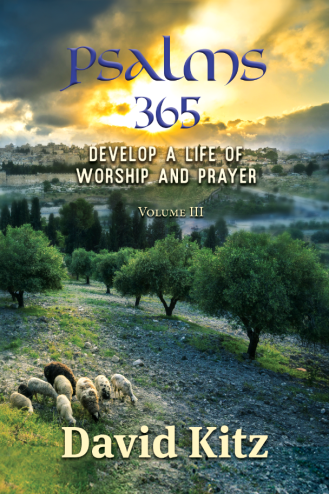
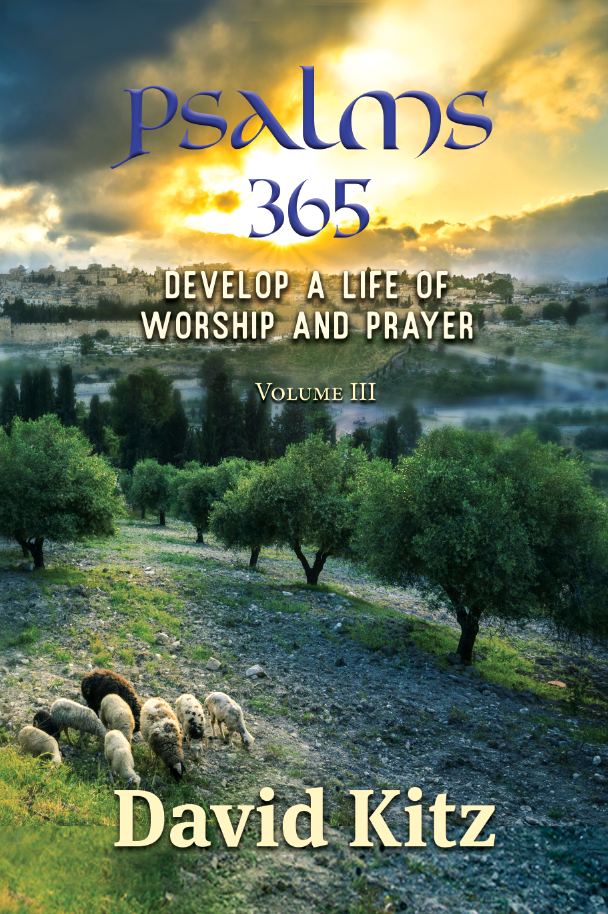
Psalms 365: Develop a Life of Worship & Prayer

Psalms 365 Volume II

Psalms 365 vol 3
— Psalms 365 Volume III

Now available:

Psalms

Recent posts

  • What is your life resting on? April 30, 2026
  • Wise and Foolish Builders April 29, 2026
  • We Can Draw Close April 29, 2026
  • True and False Disciples April 28, 2026
  • Who is your enemy? April 28, 2026
  • True and False Prophets April 27, 2026
  • I Will Sing of Love April 27, 2026

Calendar

April 2026
M T W T F S S
 12345
6789101112
13141516171819
20212223242526
27282930  
« Mar    

Blog Posts

Comments

  • cjsmissionaryminister on Wise and Foolish Builders
  • cjsmissionaryminister on We Can Draw Close
  • davidkitz on The Narrow Gate

Blog at WordPress.com.

Privacy & Cookies: This site uses cookies. By continuing to use this website, you agree to their use.
To find out more, including how to control cookies, see here: Cookie Policy
  • Subscribe Subscribed
    • I love the Psalms
    • Join 1,345 other subscribers
    • Already have a WordPress.com account? Log in now.
    • I love the Psalms
    • Subscribe Subscribed
    • Sign up
    • Log in
    • Report this content
    • View site in Reader
    • Manage subscriptions
    • Collapse this bar

Loading Comments...