• Home
  • About
  • DavidKitz.ca
  • Youtube Videos
  • Books by David
  • Books on Amazon.com

I love the Psalms

~ Connecting daily with God through the Psalms

I love the Psalms

Tag Archives: New Testament

Saving the Best till Last

26 Sunday Oct 2025

Posted by davidkitz in The Elisha Code

≈ Leave a comment

Tags

Bible, blind, double anointing, Elisha, faith, God, gospel writers, Gospels, Jesus, Jewish audience, Matthew, Messiah, miracles, miraculous, New Testament, Old Testament, prophet, resurrection

Up from the grave he arose;
with a mighty triumph o’er his foes;
he arose a victor from the dark domain,
and he lives forever, with his saints to reign.
He arose! He arose! Hallelujah! Christ arose![i]

[i] Robert Lowry, Christ Arose, 1874, Public Domain

Photo by L. Kranz

Thus far in our examination of the ministry of Elisha and Jesus, we can see there are striking parallels in the miracles they worked:  

  • Their first public miracle was the transformation of water. Elisha turned a spring of foul water into good water at Jericho (2 Kings 2:19-22). Jesus turned water into wine at the wedding in Cana (John 2:1-12).
  • Elisha healed Naaman the Syrian leper (2 Kings 5:1-19). Jesus healed a leper after delivering his Sermon on the Mount (Matthew 8:1-4).
  • Elisha brought the Shunammite’s son back to life (2 Kings 4:8-37), and Jesus brought the synagogue leader’s daughter back to life (Matthew 9:18-26).
  • Elisha miraculously fed a hundred men (2 Kings 4:42-44). Jesus miraculously fed a crowd of five thousand men (Matthew 14:13-21), and then a crowd of four thousand (Matthew 15:29-39).
  • Both prophets demonstrated miracles of supernatural buoyancy. Elisha caused an iron axe-head to float (2 Kings 6:5-7), and Jesus walked on water (Matthew 14:22-33, Mark 6:45-52, John 6:15-21).
  • Both men worked miracles of provision. A widow’s jar of olive oil kept pouring and filled dozens of containers (2 Kings 4:1-7), and at Jesus’ command Peter caught a fish with a gold coin in its mouth (Matthew 17:24-27).
  • Both demonstrated power over nature. Elisha prophesied the arrival of water in the desert without wind or rain (2 Kings 3:15-18). Jesus stilled the wind and waves on the Sea of Galilee (Matthew 8:23-27).
  • Elisha opened the spiritual eyes of his servant (2 Kings 6:16-17), and Jesus opened the eyes of the blindman at the Pool of Siloam (John 9:5-7), as well as numerous others.

            When seen in tandem, this string of eight parallel miracles points to the arrival of the great Messianic prophet that Israel was longing for. Elisha’s double anointing was being doubled yet again through the ministry of Jesus. The New Testament Elisha had arrived, and his name was Jesus of Nazareth.
            Matthew deliberately framed his Gospel narrative so his Jewish readers could easily discern how Jesus duplicated and fulfilled the pattern established by the Old Testament miracle-working prophets.
            When the disciples of John the Baptist arrived to inquire if Jesus was the long-awaited Messiah, how did he respond? He listed a string of miracles:

            Jesus replied, “Go back and report to John what you hear and see: The blind receive sight, the lame walk, those who have leprosy are cleansed, the deaf hear, the dead are raised, and the good news is proclaimed to the poor. Blessed is anyone who does not stumble on account of me” (Matthew 11:4-6, NIV).

           Why did Jesus respond in this somewhat indirect enigmatic way? With his answer, he was drawing the link between his current ministry and the miracle-working prophetic ministry of the Old Testament duo of Elijah and Elisha. When John’s disciples leave, Jesus makes this abundantly clear to the crowd gathered around him by explicitly stating that John “is the Elijah who is to come” (Matthew 11:14).
            For those who have ears to hear, the implications are clear. If the new Elijah is already here in the person of John, then the miracles of Jesus herald his arrival as the new Elisha. Furthermore, Jesus’ answer implies that he is John the Baptist’s successor just as Elisha was Elijah’s successor. With John imprisoned, the double anointing now rests on Jesus, and in his conversation with John’s disciples he offers up his accomplishments as a miracle-worker as full proof of this prophetic transition.
            The hallmark of Elisha’s ministry was his double anointing (2 Kings 2:9). Elisha performed twice as many miracles as Elijah—more than thrice as many by some calculations. In his Gospel, Matthew signals that this double anointing resting on Jesus in a most unusual way. Generations of Bible scholars and apologists have puzzled over Matthew’s double vision. Repeatedly, Matthew reports on two men receiving miraculous help when the other Gospel writers report only one person receiving help.
            The first example of this is found in Matthew’s report on the restoration of two demon possessed men in the region of the Gadarenes (Matthew 8:28-34). This corresponds closely with the report of what appears to be the same event in Mark’s Gospel (Mark 5:1-20) and Luke’s Gospel (Luke 8:26-39). Mark’s account goes into considerably more detail, but Mark and Luke make no mention of a second man.
            The second occurrence is found in Matthew’s healing of two blindmen (Matthew 9:27-31). Again, for the perceptive, this double healing serves as a sign of the double anointing now resting on Jesus.
            The third example of Matthew’s double vision occurs as Jesus is leaving Jericho on his last Passover pilgrimage to Jerusalem.

           Two blind men were sitting by the roadside, and when they heard that Jesus was going by, they shouted, “Lord, Son of David, have mercy on us!” (Matthew 20:30, NIV).

          Similar accounts appear in Mark’s Gospel (Mark 10:46-52) and Luke’s Gospel (Luke 18:35-43). Again, Mark provides more detail by identifying the blindman as Bartimaeus. And yet again, Mark and Luke make no mention of a second man.
            Finally, all four Gospel writers report on the feeding of the 5,000, but only Matthew and Mark include the feeding of the 4,000. Again, Matthew reports a double miracle, while Luke and John remain silent on the second miraculous feeding.
            Bible scholars and apologists have come up with some sound reasons for these discrepancies in the four Gospels, which for the sake of brevity we will not explore here. But the following is one possible explanation:
            We tend to see what we are looking for, and undoubtedly, this principle applies to Matthew as well. When we are watching for something, we will pick out the item or event we are searching for against a busy backdrop of other sights and events. We see it because we are watching for it. The words of Jesus ring true, “Seek and you will find” (Matthew 7:7).
            A recent experience David Kitz had serves to illustrate this point. While walking along the shoreline of a marsh, he came upon a muskrat lodge protruding above the ice. He was fascinated by this discovery. After continuing further, he returned and then retraced his steps and found five more muskrat lodges. He had passed by these lodges minutes earlier but had noticed none of them. He saw them now because he was looking for them.

Petrie Island — photo by David Kitz

            So, why did Matthew see and record his list of double miracles? Could it be because he was actively watching for evidence of a double anointing resting on Jesus, whereas the other Gospel writers had their attention fixed elsewhere? Matthew was expecting to see miracles in duplicate because he was keenly aware of the Old Testament dynamic duo and their prophetic narrative. He was familiar with Elisha’s miracles, and now he was watching the same pattern of miracles repeated with a twofold impact. Yes, Elisha’s double anointing was being doubled yet again.
            Furthermore, Matthew was writing with his Jewish audience in mind—an audience that was familiar with and watching for the return of the voice and power of the Old Covenant prophets. He was writing to his people in a code they could readily decipher because they were steeped in Old Testament lore and primed to expect the arrival of their Messiah. Matthew was declaring to his countrymen that the prophetic power and anointing had returned first in the person of John the Baptist, and now through the ministry of Jesus. For this reason, his Gospel narrative directly sites more than forty Old Testament references and alludes to many others.[i]
            Like any great storyteller, Matthew saves the climax of the story until the end—just before the conclusion of his Gospel. And there is no greater climax to any story than the resurrection of Jesus. Again, in Matthew’s account, there is a discernable link to resurrection and the end-of-life experiences of both Elisha and Jesus.

The promise of resurrection — photo by David Kitz

            Elisha has his own post-death resurrection story. Like many of Elisha’s miracles, it is an event without precedent in the Old Testament. Elisha’s final miracle happened months or possibly years after his death.

             Elisha died and was buried.
             Now Moabite raiders used to enter the country every spring. Once while some Israelites were burying a man, suddenly they saw a band of raiders; so they threw the man’s body into Elisha’s tomb. When the body touched Elisha’s bones, the man came to life and stood up on his feet
(2 Kings 13:20-21, NIV).

            In his death Elisha brought forth life. How miraculous—how Christ like!
            In the same way Jesus, the New Testament Elisha, brought forth resurrection life when he died.

             And when Jesus had cried out again in a loud voice, he gave up his spirit.
            At that moment the curtain of the temple was torn in two from top to bottom. The earth shook, the rocks split and the tombs broke open. The bodies of many holy people who had died were raised to life. They came out of the tombs after Jesus’ resurrection and went into the holy city and appeared to many people. (Matthew 27:50-53, NIV)

                Again, Matthew is the only Gospel writer who reports this phenomenal event. Perhaps Matthew met with residents of Jerusalem who told him of their encounters with these resurrected holy people. Perhaps, he or some of the other apostles had such an encounter.
                Once more, we see a striking parallel between this final resurrection miracle of Jesus’ earthly ministry, and the final resurrection miracle of Elisha. Of course, Christ’s miracle in death is an amplified version of Elisha’s posthumous resurrection miracle. Elisha brought only one man back to life, while Jesus brought many holy people up from their graves. Jesus was, after all, more than a prophet. He was and is the only begotten Son of God, and this resurrection miracle acts as a token or sign pointing to the final resurrection that will come at the end of the age when Jesus returns.
                This then is the nineth and final miracle of Jesus that reflects a direct parallel miracle from the life and ministry of Elisha. It is a miracle that is found exclusively in Matthew’s Gospel. It is recorded there because Matthew was painting a portrait of Jesus for a Jewish audience. For the perceptive, it is a portrait of a prophet who came in the miracle-working power of Elisha. And like any great storyteller, Matthew saved the most power-packed event until the end.
                Will you and I be sparking a revival after our death just as Elisha did?

[i] Matthew’s use of the Old Testament — Wednesday in the Word

This is the seventh weekly excerpt from the award-winning book 
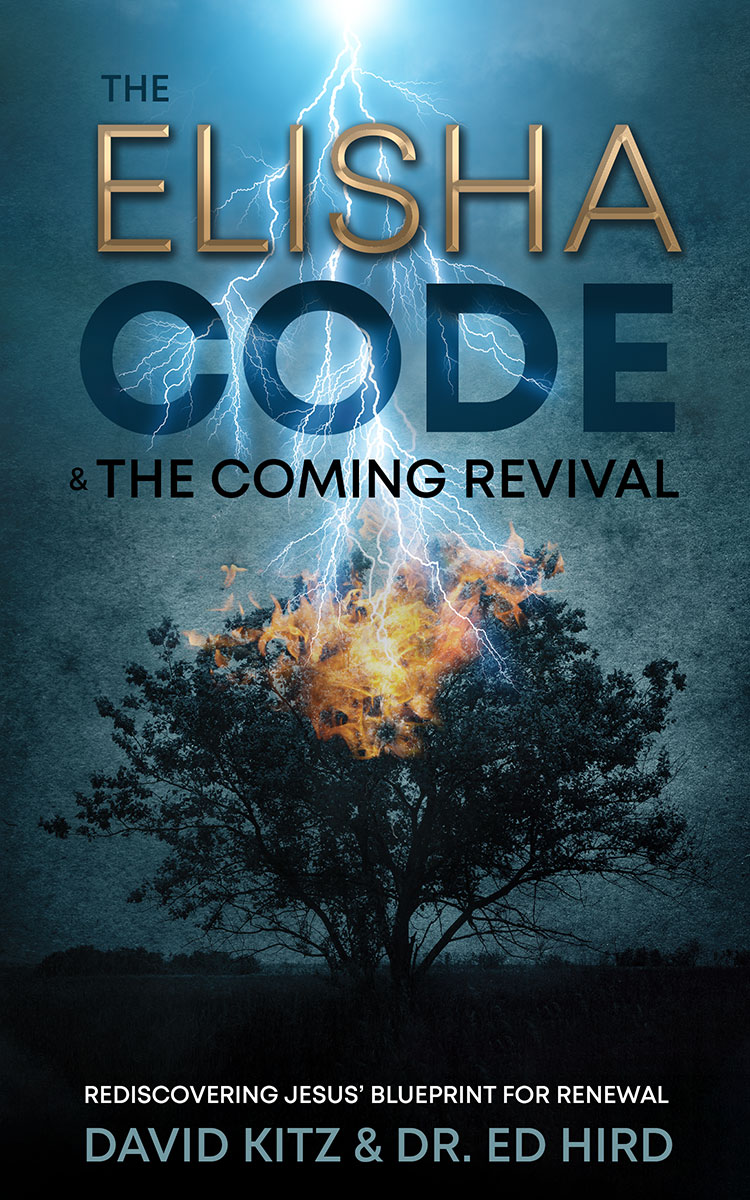
The Elisha Code & the Coming Revival 

A soul-gripping read.
Is a return-to-Jesus revival possible in our time?
This book points the way forward.
For details click here.

Opening Blind Eyes

12 Sunday Oct 2025

Posted by davidkitz in The Elisha Code

≈ 2 Comments

Tags

apostles, blind, church, Elisha, Jesus, New Testament, Old Testament history, Pharisees, prophetic, prophets, repentance, spirtual blindness

In that day the deaf will hear the words of the scroll,
and out of gloom and darkness the eyes of the blind will see.
(Isaiah 29:18, NIV)

In 1546, the English writer and poet, John Heywood, penned this proverb, “There are none so blind as those who will not see.”[i]
            Heywood’s proverb is as relevant to our times as it was in his day. The most damaging condition modern humanity suffers from is spiritual blindness. But alas, this condition has been afflicting humans since we exited Eden.
            Perhaps no biblical account portrays spiritual blindness better than the story of Elisha and his servant as they are trapped in the besieged city of Samaria. On the first morning of the siege, Elisha’s servant panicked when he saw the foreign army, but the prophet responded with these words:

             “Don’t be afraid,” the prophet answered. “Those who are with us are more than those who are with them.”
             And Elisha prayed, “Open his eyes, LORD, so that he may see.” Then the LORD opened the servant’s eyes, and he looked and saw the hills full of horses and chariots of fire all around Elisha
(2 Kings 6:16-17, NIV).

            As is so often the case, the servant was blind to the spiritual realm. Today, the servants of God suffer from the same short-sightedness. It took the prayer of Elisha to open the servant’s eyes. In our day, it also takes the Holy Spirit and present-day prophets to open our eyes.  
            This eye-opening miracle was paired with a mass-blinding miracle on an unprecedented scale.

             As the enemy came down toward him, Elisha prayed to the Lord, “Strike this army with blindness.” So he struck them with blindness, as Elisha had asked.
            Elisha told them, “This is not the road and this is not the city. Follow me, and I will lead you to the man you are looking for.” And he led them to Samaria
(2 Kings 6:18-19, NIV).

          Elisha led the enemy army into the presence of the king of Israel in the heart of the capital. The king then inquired if he should slaughter his enemies. But Elisha counseled kindness rather than retribution, and a feast was prepared for the Aramean army. This act of unprecedented grace and generosity led to a time of peace between these two warring nations (2 Kings 6:23).
            Eight centuries before Christ, Elisha’s advice to the king puts into practice the words of Jesus from his Sermon on the Mount. 

           “But to you who are listening I say: Love your enemies, do good to those who hate you, bless those who curse you, pray for those who mistreat you. If someone slaps you on one cheek, turn to them the other also. If someone takes your coat, do not withhold your shirt from them. Give to everyone who asks you, and if anyone takes what belongs to you, do not demand it back. Do to others as you would have them do to you (Luke 6:27-31).

          There is an uncanny link between Elisha, the Old Testament prophet, and Jesus, his New Testament counterpart. Both men see beyond the natural realm to the astonishment of the people of their day, and both prophets counsel kindness rather than revenge in dealing with enemies.
            Though there are many outstanding miracles recorded in the Old Testament, there is no account of the physically blind receiving their sight. Yet, time after time in the Gospels, Jesus restored sight to the blind.[ii] These physical miracles were signposts pointing to an even more significant restoration of sight—the restoration of spiritual eyesight—eyesight that allows us to see who Jesus truly is and what he is doing.
            The account of Jesus healing the blindman at the Pool of Siloam is entirely about opening the eyes of those who are both physically and spiritually blind. (See John 9.) The man who received his sight was blind from birth. This was not simply a miracle of restoration. It was a creative miracle, on par with the Adam and Eve account in Genesis 2, as Jesus so aptly demonstrated.

              While I am in the world, I am the light of the world.”
 After saying this, he spit on the ground, made some mud with the saliva, and put it on the man’s eyes. “Go,” he told him, “wash in the Pool of Siloam” (this word means “Sent”). So the man went and washed, and came home seeing
(John 9:5-7, NIV).

             Jesus opened the eyes of the blindman, but as the story continues, we see he is unable to open the eyes of the spiritually blind Pharisees. John Heywood’s proverb proves true, “There are none so blind as those who will not see.”
            The Pharisees in this account were wilfully blind. Many today suffer from the same willful blindness. Due to their stubborn hearts, they are unable to see who Jesus truly is.
            The entirety of John 9 is about seeing—seeing and recognizing who Jesus is. The miracle of the man blind from birth receiving his sight should have alerted the Pharisees and temple authorities to the divine nature of Jesus, the miracle worker. But the Pharisees could not see past the fact this miracle had been wrought on the Sabbath. The miracle worker had violated the Sabbath, so they reasoned, he must be a sinner and unworthy of respect.

                 Then they turned again to the blind man, “What have you to say about him? It was your eyes he opened.”
               
The man replied, “He is a prophet.” (John 9:17, NIV)

                The healed blindman stated what was patently obvious to him. He recognized that he had been touched by the hand of God. He saw Jesus as a prophet. All of Israel was waiting expectantly for a prophet—a prophet who would once again demonstrate the power of the Almighty. Surely, restoring sight to one who was born blind was a demonstration of this power. But the Pharisees questioned the validity of the miracle and the miracle worker.
                Why were many Pharisees so spiritually blind? Despite the evidence of multiple miracles, they were unwilling to recognize Jesus as a prophet. But this blindness was not a new condition. They had already rejected John the Baptist the forerunner of the Messiah. They refused to recognize John as a prophet too. See Matthew 21:25-27.
                And why did most Pharisees reject John the Baptist? The simple answer is because John preached a message of repentance. Repentance requires an acknowledgement of sin and a turning away from it. But the Pharisees, like many people nowadays, saw themselves as righteous already. They were blind to their sin, so they saw no need for repentance. Furthermore, repentance requires humility, a character quality they shunned in favor of obstinate pride—pride in their self-professed righteousness.
                Because the Pharisees did not recognize the first prophet, John, they were blind to the second prophet, Jesus. But Jesus was far more than a prophet. As his name implies, he was and is the Savior of the world. But the proud and the self-righteous have no felt need for a Savior. They see themselves as saved already—saved through their own efforts. In their own eyes—their spiritually blind eyes—they see no need for a Savior.
                This same spiritual blindness afflicts many in both the church and society today. The cure for spiritual blindness is repentance and rebirth by the power of the Holy Spirit. That was the message of our two New Testament prophets John the Baptist and Jesus.
                A gospel message that is preached without a call to repentance is not a gospel message at all. Coming to faith in Jesus requires—no, demands repentance. Real repentance is real change. Change from the inside out. Change that is deep, meaningful, and evident in daily life.
                John demanded change from those who came to be baptized, whatever their station in life, and that included Pharisees who in their pride believed no change was required. See Matthew 3:1-12.
                Furthermore, we should not see repentance simply as a one-time occurrence. Yes, it is the vital starting point in our walk of faith,[iii] but true repentance goes far beyond that. Repentance must be incorporated into our way of life—a life of continual turning away from sin and living in humble service to our Savior-King.[iv]
                Though the blindman received his sight, the Pharisees persisted in their spiritual blindness even though the miracle-working Savior was standing before them. 

                 Jesus said, “For judgment I have come into this world, so that the blind will see and those who see will become blind.”
                Some Pharisees who were with him heard him say this and asked, “What? Are we blind too?”
                Jesus said, “If you were blind, you would not be guilty of sin; but now that you claim you can see, your guilt remains.
(John 9:39-41, NIV)  

                For the Pharisees of Jesus day and the spiritually blind of our day, this maxim holds true: If we don’t recognize the prophet, we won’t recognize the Savior.
                Jesus’ words remain relevant today:      

                Whoever welcomes a prophet as a prophet will receive a prophet’s reward, and whoever welcomes a righteous person as a righteous person will receive a righteous person’s reward. (Matthew 10:41, NIV)

                The voice of the prophet is needed today just as it was in Jesus’ day. A national call to repentance is needed now. Who will voice that call? Where are the prophets for our time?
                The relative absence of legitimate prophetic voices in the church today should trouble us. There was a four-hundred-year prophetic gap between the Old and New Testament—a gap when the Spirit of God was silent. But then suddenly John the Baptist and Jesus appeared on the scene. The first two chapters of Luke describe an astonishing flurry of Spirit initiated activity as heaven set the great redemption story into motion. Will there be a similar flood of Spirit directed activity before Christ’s second coming?
                It is clear from the Scriptures prophets were active within the New Testament church, and furthermore, Paul considered them essential to the proper functioning of the body of Christ.

               So Christ himself gave the apostles, the prophets, the evangelists, the pastors and teachers, to equip his people for works of service, so that the body of Christ may be built up until we all reach unity in the faith and in the knowledge of the Son of God and become mature, attaining to the whole measure of the fullness of Christ. (Ephesians 4:11-13, NIV)

                In Acts we read that there were numerous prophets active in the church. Some of them are listed by name. They include Agabus, Barnabas, Simeon called Niger, Lucius of Cyrene, Manaen, and Saul.[v] This Saul is also known as Paul, and he and Barnabas were commissioned by the church leadership in Antioch to go on the first great missionary journey (Acts 13:1-3).
                Where would the church be today if these prophets had not spoken the word of the Lord over Paul and Barnabas? Would there be a church in Europe? Would we even know of the ministry of Paul? The New Testament church grew as it received prophetic direction from those who were tuned to hear the plans of God.

Landestreu Church

                The church of God grows and flourishes when there are men and women who hear what the Spirit is saying, see what the Spirit is doing, and then declare it to the church and the world. That is the role of the prophet.
                We need leaders with prophetic hindsight, insight, and foresight for the church to reach its full potential.
                Prophetic vision is not always forward looking or predictive. Sometimes it looks back at events in the past and sees them with heaven-endowed clarity. For example, Jesus spoke to the Samaritan woman at the well about her past marriages and current living arrangement (John 4:15-19). As a result, the Samaritan woman immediately recognized Jesus as a prophet. This gift of prophetic hindsight was pivotal in this entire community coming to faith.

                Many of the Samaritans from that town believed in him because of the woman’s testimony, “He told me everything I ever did.” So when the Samaritans came to him, they urged him to stay with them, and he stayed two days. And because of his words many more became believers. (John 4:39-41, NIV)

                The same prophetic hindsight is need today to capture the attention of individuals and reach whole communities estranged from Christ and the gospel.
                A word of caution is in order. Not all who call themselves prophets or apostles are prophets and apostles. A true prophet or apostle will be known by the fruit of their ministry, not by the self-styled handle on their business card. There have been false prophets throughout history. We should not be surprised when we see a raft of them emerge today. But the emergence of the counterfeit should not keep us from heeding those who genuinely hear from God and declare his word.
                Paul’s admonition to the Thessalonians remains valid:

                Do not quench the Spirit. Do not despise prophecies. Test all things; hold fast what is good. Abstain from every form of evil. (1 Thessalonians 5:19-22, NKJV)

                Humility and service to others are the hallmarks of genuine faith. Pride and self-aggrandizement are flashing red lights signalling error and deception. Know the Scriptures, heed the Spirit, and proceed with caution. God guides those who humbly seek him. Jesus still opens the eyes of the blind and he still uses prophetic voices to do just that.
                The third key that helps us unlock the Elisha code is prophetic vision or spiritual insight. It is vitally needed today.

[i] Who wrote the proverb “There are… | Trivia Answers | QuizzClub

[ii] Matthew 12:22, Matthew 15:30, Mark 8:22-26, Mark 10:46-52, Luke 7:2, John 9

[iii] Peter replied, “Repent and be baptized, every one of you, in the name of Jesus Christ for the forgiveness of your sins. And you will receive the gift of the Holy Spirit (Acts 2:28, NIV).

[iv] If we claim to be without sin, we deceive ourselves and the truth is not in us. If we confess our sins, he is faithful and just and will forgive us our sins and purify us from all unrighteousness. If we claim we have not sinned, we make him out to be a liar and his word is not in us (1 John 1:8-10, NIV).

[v] Acts 11:27-28, Acts 13:1-3, Acts 15:32, Acts 21:8-10

This is the fifth weekly excerpt from the award-winning book 
The Elisha Code & the Coming Revival 

A soul-gripping read.
Is a return-to-Jesus revival possible in our time?
This book points the way forward.
For details click here.

The Miraculous Power of the New Elisha

05 Sunday Oct 2025

Posted by davidkitz in The Elisha Code

≈ 2 Comments

Tags

Bible, Elijah, Elisha, feeding the five thousand, Jesus, Jewish, miracle, miracles, New Testament, Old Testament, prophet, supernatural, the LORD

Then he took the mantle of Elijah that had fallen from him,
and struck the water, and said,
“Where is the L
ORD
 God of Elijah?”
And when he also had struck the water, 
it was divided this way and that;
and Elisha crossed over.
(2 Kings 2:14, NKJV)

What defines you? Many of us are defined by our work, service, or occupation. We commonly identify people by their occupation or profession, so we speak of Bob, the plumber, Maryanne, the nurse, and Tom, the teacher.

Two office workers working at architect project, elevated view

The Old Testament prophets played a unique role in the plan of God for his people. But unlike angels sent from heaven, they were the LORD’s earthbound messengers—frail human agents sent to his wayward children. Frequently, they heralded a message of repentance, and they used various means to communicate the word of the LORD. Many of them were writers and their writings became an integral part of the Holy Scriptures. Isaiah, Jeremiah, and Amos are examples of these author-prophets who continue to influence lives today through the written Word.

Elijah and Elisha are prime examples of the non-literary prophets. They did not pen any of the books of the Bible, though their deeds are recorded in the Scriptures so we can learn from their ministry and example. What made this prophetic duo unique was the miraculous signs that accompanied their ministry. Specifically, Elisha, the prophet, was defined by his miracle-working power. The LORD granted his request for a double portion of Elijah’s miracle-working anointing.

But there is more to Elisha’s miraculous signs than a simple display of God’s power. In scope and sequence, Elisha’s miracles run parallel to the miracles of Jesus in a most remarkable way.
However, before we consider the miracles of Jesus and Elisha, we should first be aware that their names are identical in meaning. In his commentary on 1 & 2 Kings, Iain W. Provan makes the following statement:

…that the names “Joshua,” “Elisha,” and “Jesus” have essentially the same meaning (“God saves”), and that John the Baptist is so clearly identified in the Gospels with Elijah, it is intriguing that more is not explicitly made in the NT of the Jesus-Elisha connection.[i]

With these words, Provan has clearly identified the Jesus-Elisha connection that is at the heart of the Elisha Code. The first clue in interpreting the Elisha code is found in the names of these two Bible characters. Both men are identified as saviors of their people.

The second clue or identifying marker comes in the miracles they performed.

Let’s begin by looking at the first miracle of Elisha’s public ministry.

            The people of the city said to Elisha, “Look, our lord, this town is well situated, as you can see, but the water is bad and the land is unproductive.”

          “Bring me a new bowl,” he said, “and put salt in it.”

          So they brought it to him. Then he went out to the spring and threw the salt into it, saying, “This is what the Lord says: ‘I have healed this water. Never again will it cause death or make the land unproductive.’” And the water has remained pure to this day, according to the word Elisha had spoken. (1 Kings 2:19-22, NIV).

There is a striking similarity between Elisha’s first public miracle and Jesus’ first miracle—his turning of water into wine as recorded in John 2:1-12. Both miracles involve the transformation of water—foul water into good water by Elisha—and good water into amazing wine by Jesus.

Photo by cottonbro studio on Pexels.com

Both men act at the request of others. Both solve the problem before them by unexpected means.
Jericho is located on the plain of Jordan River near the very saline waters of the Dead Sea. Why was the water bad and the land unproductive? The obvious answer is the high salt content in the soil and water. But what does Elisha do? He asks for a new bowl full of salt.

Can you imagine the consternation of the onlookers as this rooky prophet throws a bowl full of salt into this alkaline spring? Can you hear them muttering, “Good grief! How will that help?”
But Elisha spoke the word of the LORD, “I have healed this water. Never again will it cause death or make the land unproductive.”

In the same way, Jesus, the Word incarnate, spoke transformation over the contents of six twenty-to-thirty-gallon stone jars at the Cana wedding. Imagine the astonishment of the servants who having poured in water, moments later draw out the finest of wines.[ii]

This miraculous sign pointed to the divine nature of the Messiah. He not only duplicates the Elisha miracles but elevates them to a new level. Furthermore, Jesus has been busy transforming the contents of earthen vessels—human vessels—since that time to this present moment.

Which of Elisha’s miracles do believers most readily recall? Undoubtedly, it is the healing of the leper Naaman (2 Kings 5). The story of this Syrian general is frequently taught in Sunday School and occasionally it forms the text for a Sunday sermon. From Elisha’s long series of miracles, pastors and teachers most often cite this account of a healed leper.

In Matthew’s Gospel, following the Sermon on the Mount, the first miracle Jesus performs is the healing of a man with leprosy.

           When Jesus came down from the mountainside, large crowds followed him. A man with leprosy came and knelt before him and said, “Lord, if you are willing, you can make me clean.”
           Jesus reached out his hand and touched the man. “I am willing,” he said. “Be clean!” Immediately he was cleansed of his leprosy. Then Jesus said to him, “See that you don’t tell anyone. But go, show yourself to the priest and offer the gift Moses commanded, as a testimony to them”
(Matthew 8:1-4, NIV).

This miracle acted as a signal—a beacon of hope. A new era had dawned. Surely, the prophets of old had returned. After a long absence, they had returned in spirit and power. Those who were alert to the Scriptures could read the signs of the times. The first sign was visible in the transformed body of this leper. The incurable leper had been cured!
Surely the final words of the prophet Malachi were being fulfilled:

            “See, I will send the prophet Elijah to you before that great and dreadful day of the LORD comes. He will turn the hearts of the parents to their children, and the hearts of the children to their parents; or else I will come and strike the land with total destruction” (Malachi 4:5-6, NIV).

The ministry of John the Baptist was the fulfilment of this prophecy, and now Jesus the miracle worker was on the scene duplicating the wonders of Elisha’s ministry. The Old Testament dynamic duo had returned, and the string of miracles recorded in Matthew chapters eight through ten bear witness to this thesis. Each successive miracle acts as a signpost helping us to crack the Elisha code.

Before we continue our look at these signposts, a word of clarification is warranted. When we consider the return of Elijah and Elisha in New Testament times, we should not view this as a form of biblical reincarnation. The Bible does not support an intrusion of Hindu religious philosophy into Christian theology.

When Jesus says of John the Baptist “he is the Elijah who was to come” (Matthew 11:14, NIV), Jesus is speaking metaphorically as he so often did. Other examples of Jesus employing metaphors are statements such as “I am the bread of life” (John 6:35) or “I am the gate for the sheep” (John 10:7).
In clear and direct language, Jesus was stating that John was the prophetic fulfillment of Malachi 4:5-6, the last passage of the Old Testament covenant.

John the Baptist’s link to Elijah is best summed up in the words of the angel Gabriel spoken to John’s father, Zechariah, before the conception of this New Testament prophet:

“He will bring back many of the people of Israel to the Lord their God. And he will go on before the Lord, in the spirit and power of Elijah, to turn the hearts of the parents to their children and the disobedient to the wisdom of the righteous—to make ready a people prepared for the Lord” (Luke 1:16-17, NIV).

Matthew immediately follows up his account of the healing of the leper with the healing of the centurion’s servant (Matthew 8:5-13). Again, there is an unmistakable link here. Elisha healed Naaman, a foreign military leader of leprosy. Similarly, Jesus, the New Testament healing prophet, after healing a leper, commends the great faith of a foreign military leader before going on to heal this Roman centurion’s servant.

The perceptive Jewish reader of Matthew’s Gospel would be intrigued by this juxtaposition of events. But alas, because we may not be steeped in the Jewish Old Testament tradition, we can too easily breeze past these accounts and see no connection between what Jesus is doing and what Elisha did.

Jesus is our source of living water — photo courtesy of Liz Kranz

The second most frequently sited miracle of Elisha is the raising of the Shunammite’s son from the dead. See 2 Kings 4:8-37. Again, there is a parallel story of bringing a child back to life in Matthew’s Gospel.

While he [Jesus] was saying this, a synagogue leader came and knelt before him and said, “My daughter has just died. But come and put your hand on her, and she will live” (Matthew 9:18, NIV).

The circumstances of the synagogue leader are strikingly similar to the plight of the Shunammite. In both cases, after the death of their child, they travel to their local healing prophet—respectively Elisha and Jesus—fall on their knees before him and plead for the prophet’s intervention. The healing prophet responds by traveling to their home, going alone into to a private room, and raising the child back to life.

Is this similarity a coincidence? Perhaps. If there were two or three instances of similarity in the miracles of Elisha and Jesus, we could chalk it up to coincidence, but as we continue to explore further, we will see a distinct pattern developing. Remarkably many of the miracles of Jesus resemble the miracles of Elisha, though they often rise to a new or higher level.

A classic example of this is Jesus’ feeding of the five thousand. This miracle is found in each of the four Gospels. Furthermore, Matthew and Mark record not one, but two mass feedings, the feeding of the five thousand (Matthew 14:13-21, Mark 6:30-44) and the feeding of the four thousand (Matthew 15:29-39, Mark 8:1-9). But who performed the first miracle of mass feeding recorded in the Scriptures? If you guessed Elisha, give yourself a gold star.

             A man came from Baal Shalishah, bringing the man of God twenty loaves of barley bread baked from the first ripe grain, along with some heads of new grain.

           “Give it to the people to eat,” Elisha said.

           “How can I set this before a hundred men?” his servant asked.

            But Elisha answered, “Give it to the people to eat. For this is what the LORD says: ‘They will eat and have some left over.’” Then he set it before them, and they ate and had some left over, according to the word of the LORD. (2 Kings 4:42-44, NIV)

Despite the much smaller scale of Elisha’s miracle, we see a similar pattern in how this miracle rolls out when it is compared with Jesus’ two crowd-feeding miracles. This includes the instructions given by the respective prophet, the response of their doubt-filled followers, and all three accounts conclude by referring to a surplus of leftovers.

Elisha also accomplished the only miracle of supernatural buoyancy found in the Hebrew Scriptures.

           As one of them was cutting down a tree, the iron axhead fell into the water. “Oh no, my lord!” he cried out. “It was borrowed!”
          The man of God asked, “Where did it fall?” When he showed him the place, Elisha cut a stick and threw it there, and made the iron float. “Lift it out,” he said. Then the man reached out his hand and took it. (2 Kings 6:5-7, NIV).

This is a stunning miracle, but Jesus—Elisha’s New Testament prophetic counterpart—elevates supernatural buoyancy to a whole new level. He walks on water (Matthew 14:22-33, Mark 6:45-52, John 6:15-21), and enables Peter to do the same.

There are also a few examples where Elisha’s miracles are more stunning or perhaps personally relatable than those demonstrated by Jesus. Topping this list is Elisha’s miracle of provision for a widow and her two boys who were about to be sold into slavery to cover an outstanding debt. At Elisha’s command, the widow’s jar of olive oil kept pouring golden liquid until there was sufficient to cover every debt and more leftover to live on. See 2 Kings 4:1-7.

This miracle of provision is an appropriate match with Jesus’ miracle in which he sent Peter to catch a fish. In the mouth of the fish was a four-drachma coin Peter was to use for paying the temple tax for himself and Jesus. See Matthew 17:24-27. Both miracles occur for the purpose of paying money that is owed, and both miracles are stunning when you consider how such events could be possible, but the story of the ever-flowing widow’s jar resonates more strongly with our hearts because of this family’s dire need.
In chapters eight through ten of his Gospel, Matthew is painting a portrait for his Jewish audience of Jesus the miracle-working prophet. It is a portrait that most closely resembles the works of the Old Testament prophet Elisha, and this portrait includes a miracle demonstrating Jesus’ power over nature.

            Then he got into the boat and his disciples followed him. Suddenly a furious storm came up on the lake, so that the waves swept over the boat. But Jesus was sleeping. The disciples went and woke him, saying, “Lord, save us! We’re going to drown!”
           He replied, “You of little faith, why are you so afraid?” Then he got up and rebuked the winds and the waves, and it was completely calm. The men were amazed and asked, “What kind of man is this? Even the winds and the waves obey him!”
(Matthew 8:23-27).

Elisha also has a power-over-nature miracle in his repertoire. During a time of war with Moab, he was called upon to prophecy as the armies of Edom, Israel and Judah faced death from thirst in the sun scorched desert.

           While the harpist was playing, the hand of the Lord came on Elisha and he said, “This is what the LORD says: I will fill this valley with pools of water. For this is what the LORD says: You will see neither wind nor rain, yet this valley will be filled with water, and you, your cattle and your other animals will drink. This is an easy thing in the eyes of the LORD; he will also deliver Moab into your hands (2 Kings 3:15-18, NIV).

Elisha’s word came true the next morning as the desert of Edom was filled with water.[iii]

The question the disciples asked in that boat more than two thousand years ago still resonates today. “What kind of man is this? Even the winds and the waves obey him!”[iv]

Crashing waves, Lake Ontario – photo courtesy of Eric E. Wright

If we are going to rightly interpret the Elisha code, we need a more accurate picture of Jesus. And to get that accurate picture we need eyes that see beyond the shallow surface. We need to comprehend the Old Testament roots of our faith more fully, or we will remain blind to aspects of what Jesus has done and is about to do through his followers in our day.

In his commentary, Iain Provan states that throughout church history “the typological significance of Elisha in relation to Jesus has been downplayed.”[v]

Now is a good time to correct that oversight.

[i] Iain W. Provan, 1 & 2 Kings, Understanding the Bible Commentary Series. Accordance electronic ed. (Grand Rapids: Baker Books, 2012), 234.

[ii] John 2:1-12

[iii] The next morning, about the time for offering the sacrifice, there it was—water flowing from the direction of Edom! And the land was filled with water (2 Kings 3:20, NIV).

[iv] Matthew 8:27, NIV

[v] Iain W. Provan, 1 & 2 Kings, Understanding the Bible Commentary Series. Accordance electronic ed. (Grand Rapids: Baker Books, 2012), 234.

This is the fourth weekly excerpt from the award-winning book 
The Elisha Code & the Coming Revival 

A soul-gripping read.
Is a return-to-Jesus revival possible in our time?
This book points the way forward.
For details click here.

The Fire on the Road to Emmaus

21 Sunday Sep 2025

Posted by davidkitz in The Elisha Code

≈ 2 Comments

Tags

bread, breaking bread, Christ's teaching, David Kitz, disciples, fire, Holy Spirit, Jesus, Messiah, New Testament, Old Testament, Road to Emmaus, scriptures

And they said to one another,
“Did not our heart burn within us while He talked with us on the road,
and while He opened the Scriptures to us?”
 (Luke 24:32, NKJV)

Is there a conversation in the Bible, that you wish you could listen in on? How about the conversation between Mary and Joseph when she announces she is pregnant? What about the discussion the disciples had after Jesus stilled the storm on the Sea of Galilee? Or that night when Peter got out of the boat and began walking on the water? Oh, to have been there—to have seen the disciple’s astonishment and have heard their words!

Luke tells us of a conversation two downcast Jesus-followers had on the road to Emmaus on the afternoon of the first resurrection Sunday.

So it was, while they conversed and reasoned, that Jesus Himself drew near and went with them. But their eyes were restrained, so that they did not know Him.

And He said to them, “What kind of conversation is this that you have with one another as you walk and are sad?” (Luke 24:15-17, NKJV)

Jesus patiently listens as they speak of their dashed hopes and shattered dreams—dreams and hopes that ended with the crucifixion of the man they thought was the long-awaited Messiah. They go on to report that some of their women folk who had gone to his tomb had seen a vision of angels who announced this prophet from Nazareth was in fact alive. What were they to make of all this?

Then He said to them, “O foolish ones, and slow of heart to believe in all that the prophets have spoken! Ought not the Christ to have suffered these things and to enter into His glory?” And beginning at Moses and all the Prophets, He expounded to them in all the Scriptures the things concerning Himself (Luke 24:25-27, NKJV).  

Certainly, that was a conversation we all wish we could eavesdrop on. Specifically, what Scriptures did Jesus draw on as he expounded concerning Himself? Let’s keep in mind this was decades before any of the books of the New Testament canon were written.

The Word of God — photo by David Kitz

Surely, Jesus would have drawn on Isaiah 53 as he spoke of his suffering. What about the Psalms? Many of them resound with a prophetic Messianic ring.  To a degree, we can imagine what some of those Old Testament references might be. For example, we know that Peter quoted verbatim from both Psalm 16 and Psalm 110 in his first sermon on the day of Pentecost. (See Acts 2:25-28 and Acts 2:34-35.) Did Peter develop this understand concerning these prophetic Scriptures on his own, or were these passages an integral part of Christ’s teaching concerning himself during his post resurrection ministry? Were they part of the discussion on that eventful resurrection Sunday walk?  

Though the content of the Road to Emmaus discourse remains hidden from us, it is possible to tease out some of Christ’s teaching concerning himself and his ministry by examining other passages in both the New and Old Testament.

According to Luke, Cleopas and his companion were initially unable to recognize Jesus when he walked with them on the road. But their eyes were restrained, so that they did not know Him (Luke 24:16, NKJV).

Two disciples—men who had previously spent time with Jesus—were blind to their Lord and Savior. Why was this the case? Undoubtedly, Jesus looked different. A brutal death followed by a supernatural resurrection must have brought significant changes to his physical appearance. A lifelong friend or relative may look startlingly different after a severe trauma or illness. Surely, this accounts for some of the disciples’ inability to recognise Jesus.

But this inability to recognise Jesus extended beyond his physical appearance. It had a spiritual dimension. They were unable recognise that Jesus was the Christ—their long-awaited Messiah promised to them in their Scriptures. After all, this was what the conversation on the road was all about. It was Jesus revealing himself to these two men through the written Word of Moses and the Prophets.

Do we suffer from the same spiritual blindness? Do we need an eye-opening experience with the Lord and his Word? This lack of perception inhibits our walk with our Savior. We think we know the Word of God. But like these disciples of old, have our eyes been veiled as we read the Scriptures? Do we have a wrong set of expectations?

Many Christ-followers have never read the Old Testament—the first three quarters of their Bibles. Similarly, many Sunday sermons focus exclusively on texts drawn from the New Testament. How can we say we know the Word when we neglect the only Scriptures that Jesus knew and studied?

Something transpires when we immerse ourselves in God’s Word. Hearts and minds are transformed when the Word comes alive.

But let’s not fool ourselves. If we don’t understand the Word, or handle it incorrectly, we gain nothing. Worse yet, we deceive ourselves, pride inflates the mind, and we lead others astray. The Pharisees knew and followed the letter of the Law (the Word), but often they were devoid of the Spirit. The same self-deception can happen to us unless the Holy Spirit lights the way. Christ’s parable of the Sower and the seed plays out in real time to this present moment. The living word must root in us to bear fruit.

So, when did the light come on for Cleopas and his friend? When did recognition occur?

Now it came to pass, as He sat at the table with them, that He took bread, blessed and broke it, and gave it to them. Then their eyes were opened and they knew Him; and He vanished from their sight (Luke 24:30-31, NKJV).

Photo by Pixabay on Pexels.com

Jesus was recognized when he broke bread with these two disciples. In that moment, they had their most intimate view of the living Christ.

Imagine the scene as Jesus picks up the bread. For the first time his hands come into full view. They gasp—awestruck at the sight of the nail scars. Who else could this be? It must be but their Savior! He offers thanks to his Father. With wounded hands, he tears the loaf and offers them a portion.

Like Thomas, who had a similar encounter nine days later, they are beyond astonished. Imagine them humbled—dropping to their knees before their Lord.

And then he is gone.

Only one thing remains. The fire remains. It remains within them.

And they said to one another, “Did not our heart burn within us while He talked with us on the road, and while He opened the Scriptures to us?” (Luke 24:32, NKJV)

It’s the same fire we must catch. The match was struck on the road to Emmaus. In the hearts of these two disciples, dying embers of hope began to glow as Jesus opened the Scriptures. Fifty days later, those embers would burst into open flame on the Day of Pentecost.

And suddenly there came a sound from heaven, as of a rushing mighty wind, and it filled the whole house where they were sitting. Then there appeared to them divided tongues, as of fire, and one sat upon each of them. And they were all filled with the Holy Spirit and began to speak with other tongues, as the Spirit gave them utterance (Acts 2:2-4, NKJV).

Are you ready to catch the fire?

This is the third weekly excerpt from the award-winning book 
The Elisha Code & the Coming Revival 

A soul-gripping read.
Is a return-to-Jesus revival possible in our time?
This book points the way forward.
For details click here.

What Others Say about “The Elisha Code & the Coming Revival

26 Saturday Oct 2024

Posted by davidkitz in Books by David Kitz

≈ 2 Comments

Tags

church history, Elisha, faith, Jesus, New Testament, Old Testament, prophecy, prophet, revival, spiritual renewal

Wow! This is terrific. Reading The Elisha Code and the Coming Revival is like walking the road to Emmaus with the resurrected Jesus and two of his twenty-first century disciples—Ed Hird and David Kitz. Share their excitement as Jesus opens their minds to the Old Testament prophecies about Himself. With the added benefit of New Testament insights and lessons from history, we see the Holy Spirit preparing to ignite fresh revival fires in our day.

Don Hutchinson, pastor, lawyer, and author of
Church in Society: First Century Citizenship Lessons for Twenty-First Century Christians

I found The Elisha Code and the Coming Revival by David Kitz & Dr. Ed Hird to be a rollercoaster-thrill-read from beginning to end … I could not put it down! The authors take you on an adventure of discovery—seeking bold faith—in readiness for the revival to come.

— Alan Kearns, Devotional Treasures blogger, Glenrothes, Scotland


The Elisha Code and the Coming Revival
unpacks an intriguing and thought-provoking case for Jesus being the New Testament Elisha, thus carrying out His role as Prophet (along with Priest and King)—not abolishing the Law and the Prophets but fulfilling them. As was needed in the time of both Elisha and Jesus, the book also points us toward spiritual renewal in our increasingly evil world, but with sure and certain hope, and with the promise that, in Jesus, there is true healing and salvation.

Laverne Hautz, Emeritus Lutheran Pastor

New from David Kitz
Winner of the 2024 Word Award of Merit in Biblical Studies
TheElishaCodeCVR5

To purchase or for a closer look click here.

You Are His Target

04 Thursday Jul 2024

Posted by davidkitz in Psalm 18, Psalms

≈ Leave a comment

Tags

armor of God, church, David, demons, devil, Jesus, Kingdom of God, New Testament, Psalms, Satan, spiritual attacks, the LORD

Reading: Psalm 18:30-36
As for God, his way is perfect:
The L
ORD’s word is flawless;
he shields all who take refuge in him.
For who is God besides the L
ORD?
And who is the Rock except our God?
 It is God who arms me with strength
and keeps my way secure.
He makes my feet like the feet of a deer;
he causes me to stand on the heights.
He trains my hands for battle;
my arms can bend a bow of bronze.
You make your saving help my shield,
and your right hand sustains me;
your help has made me great.
You provide a broad path for my feet,
so that my ankles do not give way
(NIV). *

L Kranz 2024-04-06

Sunset photo by Liz Kranz

Reflection
There’s a principle of biblical interpretation that goes something like this: The natural comes first, and then comes the spiritual. We can see this illustrated in Paul’s comparison of the first man, Adam, with the new man, Christ, in 1 Corinthians 15:20-28. Similarly, the natural Kingdom of Israel is replaced in the New Testament by the spiritual Kingdom of God, which has no physical or geographic boundaries.

In David’s time natural Israel had borders, which needed to be defended from attack by flesh and blood enemies only too eager to take advantage of any perceived weakness. In the same way today, the church and every born-again believer must be on guard, because Satan and his demons are lying in wait, ready to attack.

Yes, Virginia, there is a Devil. And he has marked you as his target. He has spiritual murder as his top priority—your murder. Your enemy the devil prowls around like a roaring lion looking for someone to devour (1 Peter 5:8).

But God did not leave David or natural Israel defenseless. The LORD provided His matchless word and His impenetrable shield of faith against the foes attack. Furthermore, there was strength for the battle. David declares, “It is God who arms me with strength and keeps my way secure… He trains my hands for battle; my arms can bend a bow of bronze.”

This portion of Psalm 18 has its New Testament spiritual counterpart in Ephesians 6:10-17, where Paul the apostle, calls us as spiritual warriors to put on the armor of God. Like David, we are in a battle.

Response: Heavenly Father, help me to fight the good fight. Today, I put on the armor of God to fight the attacks of the enemy. Give me your strength in Jesus’ name. Amen.

Your Turn: How does Satan try to bring you down? What weapons are you using to counter his attacks?

Happy Independence Day to my American readers.

Para la publicación de Salmos 365 de hoy en español haga clic aquí.

* NEW INTERNATIONAL VERSION, COPYRIGHT ©1973, 1978, 1984, 2011 BY BIBLICA

BGBG_v4.3_150[1818]

Please pray for peace to return to Israel, Gaza, and Ukraine!

Volume I of Psalms 365: Develop a Life of Worship and Prayer won the Best Book of the Year Award from The Word Guild and Volume II has won the Best Devotional of the Year Award. For those who love God’s word, this three-book series is an ideal way to daily meet with the Lord. To purchase or for a closer look click here.

New from David Kitz
TheElishaCodeCVR5

To purchase or for a closer look click here.

Great Truths Rooted in the Psalms

25 Tuesday Jun 2024

Posted by davidkitz in Psalms

≈ Leave a comment

Tags

communion, cup, David, God, New Testament, Psalms, redemption, Savior, the LORD, victory over sin

Today’s Devotion from Psalms 365

Reading: Psalm 16
A miktam of David.
Keep me safe, my God, for in you I take refuge.
I say to the L
ORD, “You are my Lord;
apart from you I have no good thing.”
I say of the holy people who are in the land,
“They are the noble ones in whom is all my delight.”
Those who run after other gods will suffer more and more.
I will not pour out libations of blood to such gods
or take up their names on my lips.
L
ORD, you alone are my portion and my cup;
you make my lot secure.
The boundary lines have fallen for me in pleasant places;
surely I have a delightful inheritance.
I will praise the L
ORD, who counsels me;
even at night my heart instructs me.
I keep my eyes always on the L
ORD.
With him at my right hand, I will not be shaken.
Therefore my heart is glad and my tongue rejoices;
my body also will rest secure,
because you will not abandon me to the realm of the dead,
nor will you let your faithful one see decay.
You make known to me the path of life;
you will fill me with joy in your presence,
with eternal pleasures at your right hand
(NIV). *

focus photography of sprinkled bread

Photo by Pixabay on Pexels.com

Reflection
In seed form all the great truths of the New Testament are rooted in the Psalms. Psalm sixteen perfectly illustrates this little-known fact. At the start of this psalm David declares, “You are my Lord; apart from you I have no good thing.”

In his epistle to the Romans, Paul writes, “For I know that in me (that is, in my flesh) nothing good dwells; for to will is present with me, but how to perform what is good I do not find” (Romans 7:18). His words are a rough paraphrase of David’s opening thoughts in Psalm 16. All of Romans chapter seven reflects our great need for our God and Savior. Without Jesus there is no redemption and no hope for victory over sin. But with Paul we can joyfully conclude, “Thanks be to God, who delivers me through Jesus Christ our Lord!” (Romans 7:25).

We find ourselves in full agreement with David’s words, “LORD, you alone are my portion and my cup; you make my lot secure.” Our Savior is our portion and cup—our food and drink. He alone is our cup of salvation. Unless we eat and drink of Him we die. David eloquently expresses his communion with the LORD; David ate and drank in the LORD and so must we. In seed form, David grasped the New Testament concept of communion.

Jesus was echoing David’s thoughts when he said, “Very truly I tell you, unless you eat the flesh of the Son of Man and drink his blood, you have no life in you. Whoever eats my flesh and drinks my blood has eternal life, and I will raise them up at the last day” (John 6:53-54).

Response: Heavenly Father, I want to live my life in constant communion with you. I want to live in your presence and eat and drink of you, Lord Jesus. I know apart from you I have no good thing. You are my portion and my cup. I give you thanks. Amen.

Your Turn: How are you eating and drinking in God today? How does that concept become a reality?

Para la publicación de Salmos 365 de hoy en español haga clic aquí.

* NEW INTERNATIONAL VERSION, COPYRIGHT ©1973, 1978, 1984, 2011 BY BIBLICA

BGBG_v4.3_150[1818]

Please pray for peace to return to Israel, Gaza, and Ukraine!

Volume I of Psalms 365: Develop a Life of Worship and Prayer won the Best Book of the Year Award from The Word Guild and Volume II has won the Best Devotional of the Year Award. For those who love God’s word, this three-book series is an ideal way to daily meet with the Lord. To purchase or for a closer look click here.

A gripping summer read from David Kitz
4485 SHARABLE-2

To purchase or for a closer look click here.

An Author Interview with David Kitz

02 Thursday May 2024

Posted by davidkitz in Books by David Kitz

≈ Leave a comment

Tags

Christians, church history, David Kitz, Elijah, Elisha, Gaza, Holy Spirit, Israel, Jesus, John the Baptist, miracle, New Testament, Old Testament, renewal, repentance, revival, spiritual renewal, Ukraine

David, what event in your life inspired you to write The Elisha Code & the Coming Revival?

On February 11th, 2018, I delivered a sermon entitled Healing the Water. My message2023-10-06-OnlineSharing-2 was based on Elisha’s first public miracle, the healing of the spring at Jericho. I was struck by the parallel nature of this miracle when compared with Jesus’ first miracle of turning water into wine. This triggered a quest to discover if Elisha’s other miracles resembled the miracles of Jesus. To my amazement they do. Further research uncovered the parallel nature of the ministry of Elijah and John the Baptist, and later, the ministry of Elisha and Jesus. But what are the practical implications of this biblical discovery for believers today?

The Old Testament dynamic duo of Elijah and Elisha sparked spiritual renewal in their day. John the Baptist and Jesus did the same in New Testament times. My friend, Dr. Ed Hird, has been writing about men and women from church history who spark revival in their day. Together we decided to partner in bringing a message of renewal and revival for the people of our time.

David, how is the topic of your book personal to you and why did you choose to share it with readers?

TheElishaCodeCVR5I stumbled upon a unique, unexplored perspective of Elijah and Elisha’s prophetic ministry that linked directly to the ministry of John the Baptist and Jesus. These four men preached repentance and brought revival and new life to the people of their time. Along with many Christians today, Dr. Ed Hird and I believe this message of deep spiritual renewal is urgently needed now.

Why should people purchase and read the book you coauthored with Dr. Ed Hird?

This book is a blueprint for the revival we need in our lives and in our churches today. Furthermore, the thread of practical life applications is both impactful and encouraging.

What are some current and newsworthy world events that relate to the topic(s) of your book?

We live in dark times—times of fear, pestilence, national and international intrigue, and political and environmental turmoil. War rages in Israel, Gaza, Ukraine, and other countries across the globe. Many are in despair. Moral rot is evident everywhere in society. Meanwhile, churches are closing, and faith is in decline. Spiritual renewal is urgently needed.

Explain two things you most want readers to walk away with after reading your book.

Further decline is not inevitable. Throughout history God has sent spiritual fire starters among us—men and women who turn people’s hearts toward God. Now is the time to renew our faith in a miracle working God who powerfully draws people to himself by his Spirit. It has happened before. It will happen again before Christ’s return.

TheElishaCodeCVR5

To purchase or for a closer look click here.

Five Star Reviews for The Elisha Code

17 Saturday Feb 2024

Posted by davidkitz in Books by David Kitz

≈ Leave a comment

Tags

Bible, book review, Christian, Elijah, Elisha, Jesus, leaders, New Testament, Old Testament, revival

Fascinating Parallels between Elisha and Jesus        5 Stars

In their fascinating biblical expose of the Elisha Code—the typological parallels between Elisha and Jesus—Foursquare pastor David Kitz and Anglican pastor Ed Hird demonstrate remarkable insight into the nature of a Spirt-endowed, audacious faith. Their call to live the surrendered and crucified life, illustrated with compelling stories of key Christian leaders, will inspire and instruct every reader to explore Jesus’ blueprint for engaging culture and embracing revival. I offer my commendation for The Elisha Code & The Coming Revival.                    — Roger Helland 

The Bible Comes Alive!                   5 Stars

I thoroughly enjoyed this “connect-the-dots” blueprint between the Old Testament ministries of Elijah and Elisha and the New Testament ministries of John the Baptist and Jesus. I found each chapter engaging, relevant to today, and insightful in a way that makes me eager to revisit these passages in my Bible. The Elisha Code has helped me see deeper connections between the Old and New Testaments, and has truly helped the Bible come alive in my own reading! I’m thankful to know author David Kitz and am grateful for this book and more books to come!              — Danny Covey

A Hopeful Outlook for Coming Revival              5 Stars

Many Christians long for an end-time revival — one similar, or even greater, than the first and second great awakenings. The premise of the book, that there is a code in scripture that gives believers hope for a greater than ever end-time revival, one where Jesus “saves the best wine until last.” Political measures, as the authors point out, may be the calling of some, but for most, who put all their eggs in that basket, it leads “to the devil’s lair,” and to disappointment. Better to pray and wait on Him. A very encouraging book.                                                    — Rose McCormick Brandon

To purchase or for a closer look at The Elisha Code & the Coming Revival click here.
Or visit the author’s website here.

Redemption Flowed

13 Wednesday Dec 2023

Posted by davidkitz in Psalm 105

≈ Leave a comment

Tags

Abraham, Christ, Israel, New Testament, Old Testament, redemption

Reading: Psalm 105:39-45
He spread out a cloud as a covering,
and a fire to give light at night.
They asked, and he brought them quail;
he fed them well with the bread of heaven.
He opened the rock, and water gushed out;
it flowed like a river in the desert.
For he remembered his holy promise
given to his servant Abraham.
He brought out his people with rejoicing,
his chosen ones with shouts of joy;
he gave them the lands of the nations,
and they fell heir to what others had toiled for—
that they might keep his precepts
and observe his laws.
Praise the LORD (NIV). *

img_20230114_1454195

Photo by David Kitz

Reflection
In the previous readings from Psalm 105, the psalmist described the LORD’s covenant relationship with His chosen people, the descendants of Abraham. The psalm then proceeds to outline the redemption and release of the people of Israel from cruel bondage and oppression in Egypt. Today’s reading celebrates God’s provision for them in the wilderness and their arrival in the Promised Land.

He brought out his people with rejoicing, his chosen ones with shouts of joy; he gave them the lands of the nations, and they fell heir to what others had toiled for—that they might keep his precepts and observe his laws.

There is a striking parallel between the Old Testament redemption of the people of Israel and the New Testament redemption of the Christian believer. Paul, the apostle draws our attention to this parallel experience in the tenth chapter of his first letter to the Corinthians. For I do not want you to be ignorant of the fact, brothers and sisters, that our ancestors were all under the cloud and that they all passed through the sea. They were all baptized into Moses in the cloud and in the sea. They all ate the same spiritual food and drank the same spiritual drink; for they drank from the spiritual rock that accompanied them, and that rock was Christ (1 Corinthians 10:1-4).

In today’s psalm portion we read: He opened the rock, and water gushed out; it flowed like a river in the desert. From Paul’s writing we understand that the opened rock was Christ. On the cross he was opened, and water and blood gushed out. Life-giving—life-changing redemption flowed out to all who will receive him. Yet to all who did receive him, to those who believed in his name, he gave the right to become children of God—children born not of natural descent, nor of human decision or a husband’s will, but born of God (John 1:12-13).

Response: Father God, I live in thanksgiving for the rock that was opened for my redemption. By faith I receive you. Today, I drink in your new life and your redemptive purpose for me. Praise the LORD! Amen.

Your Turn: Is the Rock accompanying you as you travel through the wilderness of this life? What evidence do you have of God’s abiding presence in your life?

* NEW INTERNATIONAL VERSION, COPYRIGHT ©1973, 1978, 1984, 2011 BY BIBLICA

BGBG_v4.3_150[1818]

Please pray for peace to return to Israel and Ukraine!

Volume I of Psalms 365: Develop a Life of Worship and Prayer won the Best Book of the Year Award from The Word Guild and Volume II has won the Best Devotional of the Year Award. For those who love God’s word, this three-book series is an ideal way to daily meet with the Lord.

TheElishaCodeCVR5To purchase or for a closer look click here.

← Older posts

Psalms 365: Develop a Life of Worship and Prayer

Psalms 365 Volume II

Psalms 365 vol 3
— Psalms 365 Volume III

Psalms

Recent posts

  • May the LORD Grant All Your Requests December 20, 2025
  • A Horn of Salvation December 19, 2025
  • Ready for the King of Glory December 19, 2025
  • My Spirit Rejoices in God My Savior December 18, 2025
  • Joining the Generation That Seeks God December 18, 2025
  • Why Am I So Favored December 17, 2025
  • How Can You Find the Good Life? December 17, 2025

Calendar

December 2025
M T W T F S S
1234567
891011121314
15161718192021
22232425262728
293031  
« Nov    

Blog Posts

Comments

  • davidkitz on Joining the Generation That Seeks God
  • cjsmissionaryminister on God Sent His Son
  • cjsmissionaryminister on The God of the Broken

Blog at WordPress.com.

Privacy & Cookies: This site uses cookies. By continuing to use this website, you agree to their use.
To find out more, including how to control cookies, see here: Cookie Policy
  • Subscribe Subscribed
    • I love the Psalms
    • Join 1,377 other subscribers
    • Already have a WordPress.com account? Log in now.
    • I love the Psalms
    • Subscribe Subscribed
    • Sign up
    • Log in
    • Report this content
    • View site in Reader
    • Manage subscriptions
    • Collapse this bar
 

Loading Comments...