
• Home
  • About
  • DavidKitz.ca
  • Youtube Videos
  • Books by David
  • Books on Amazon.com

I love the Psalms

~ Connecting daily with God through the Psalms

I love the Psalms

Tag Archives: prophet

Excerpt 23 for Lent from The Soldier Who Killed a King

21 Wednesday Mar 2018

Posted by davidkitz in Books by David Kitz, Christ's Passion, Good Friday, Lent

≈ 1 Comment

Tags

governor, Jesus, Jewish, king, kingdom, Messiah, Pontius Pilate, prophet, repentance, truth

A journey to the cross is a journey to repentance. It’s a journey to deep personal change. Will you take this journey with me?

Date: Six fifty in the morning, Friday, April 7 A.D.
Jesus trial before Pontius Pilate continues.

When we entered the judgment hall, the dark-eyed Badger was seething. He knew Caiaphas was using him. He had said so to the assessor. He let fly a string of profanity. “He has me trapped!” he snarled. “Trapped like a rat in a stone water jar.” And with that he tossed the list of charges onto his desk.
James ThtThen he turned to Jesus in the center of the room. He looked him over, walked fully around him. Pilate sighed and nervously ran his fingers through his thinning hair. He made a smacking sound with his lips and asked, “Are you the king of the Jews?”
“You have said so,” came his equivocal answer.
This answer left the governor rocking on his heels. He brought a finger to his lips in pensive thought.
Jesus was not making an acquittal any easier.
But after a moment Jesus continued. “Is that your own idea, or did others talk to you about me?”
“Am I a Jew?”
Pilate shot back with an ample measure of haughty contempt. “Your own people and chief priests handed you over to me.” He continued the questioning. “What is it you have done?”
“My kingdom is not of this world,” Jesus said, and to drive home this point, he added, “If it were, my servants would fight to prevent my arrest by the Jewish leaders. But now my kingdom is from another place.”
Certain words that Claudius had spoken came echoing back into my mind. He had been convinced that this kingdom Jesus spoke of was somehow different from kingdoms as we know them. Now I heard it from this would-be Messiah’s mouth. He was no armed insurrectionist, and he had offered the actions of his followers as proof.
But Pilate seized on that word—kingdom. “You are a king, then!” Pilate deduced.
With calm, clear deliberation the prophet spoke. “You say that I am a king. In fact, the reason I was born and came into the world is to testify to the truth. Everyone on the side of truth listens to me.”
It almost seemed from this response that Jesus was operating from, and speaking on,Biblical fiction winner 2017 some higher plane—a dimension I had witnessed him operate from during the healings at the temple. He was inviting Pilate to join him in discovering this higher ground of truth.
Pilate would not be moved. They were speaking past each other.
“What is truth?” Pilate shrugged. The question was rhetorical. He had no intention of being dragged into a philosophical discussion with this prophet of the Jewish masses. Once again, the Badger retreated.
Grabbing the list of charges from off his desk, he motioned for us to follow him back outside.

American readers click this link to purchase The Soldier Who Killed a King.

Canadian readers click this link to purchase The Soldier Who Killed a King directly from the author.
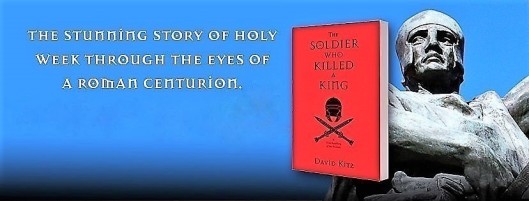
 

Excerpt 17 for Lent from The Soldier Who Killed a King

13 Tuesday Mar 2018

Posted by davidkitz in Books by David Kitz, Christ's Passion, Lent, The Soldier Who Killed a King

≈ 1 Comment

Tags

Barabbas, Caesar, Caiaphas, centurion, Golgotha, Jerusalem, Jesus, Kidron Valley, Messiah, prophet, repentance, Romans, Rome, sinners, tax collector, temple

A journey to the cross is a journey to repentance. It’s a journey to deep personal change. Will you take this journey with me?

In today’s reading, Marcus, the centurion, meets with Jonas the tax collector. They discuss the news of the week, namely the huge stir that Jesus has caused in Jerusalem since his triumphal entry into the city. Date: Early morning April 6th, 30 A.D.

As I descended the stairs of the gate, I caught sight of Jonas and his son, unoccupied at the customs booth. With a quick wave of my hand, I signaled my intention to speak with him, and after taking the salute of the sentinels at the gate, I headed straight to the booth. “Good morning, you old goat!” I called out as I approached.
“Well, if it isn’t the top dog himself,” he shot back.
“It’s always good to see a man standing around doing nothing. It sets me at ease,” I said. “Ease?” His eyebrows shot up. “Oh yeah.” He nodded emphatically. “It’s been a week of ease all right. I’ve had my feet up all week.”
Of course, just the opposite was true, and it was true for both of us.
Free WW-e FACEBOOK-2 (2)
“Do you think we could have a short word?” With a jerk of my head, I motioned in the direction of the road leading down the Kidron Valley.
“Sure,” he answered, and then with a glance and a nod to his son, he transferred responsibility to him. A light mist still hung over the lowest reaches of the valley, but the early-morning sun was promising to burn it off. The swallows nesting along the crevices in the city wall were engaged in a full-throated competition with the songbirds in the trees along the brook. Traffic to and from the city was just beginning to stir.
When we had gone a few paces beyond the gate, I spoke. “I just wanted to say thanks for the help with the Barabbas case.”
“Oh, don’t mention it.” There was relief in his voice. “I thought you were going to warn me about some new plot.”
“No, there’s no new plot.” I hesitated. “Let me rephrase that. There’s no new plot that I know about. You never can be sure what’s being hatched in this crazy city.”
“Yeah, you’re right about that. I guess we learned that with Barabbas.” Jonas nervously bit on the corner whiskers of his mustache, and then continued. “Now, that Galilean prophet? I’ve been losing sleep over him all week.”
“Harmless as a dove,” I said. “Harmless as a dove.”
“How do you know?”
“I checked him out myself on Monday, right back there in the temple courts.” I made a quick double-pump motion with my upraised thumb aimed over my shoulder. “Then on Tuesday I had Claudius in there with the prophet.”
“You Romans have more nerve than brains.” He kicked a loose pebble off the pathway, looked up at me with a quizzical grin, and then with an incredulous shake of his head, he repeated, “More nerve than brains, that’s all I can say.”
“If we didn’t have nerve, we wouldn’t be running this place. Or any other place for that matter.”
He shrugged, furrowed his brow, and then cocked his head to one side. It was his way of reluctantly conceding my point.
“So he’s harmless?”
“Harmless to us.” With my index finger, I pointed first at myself, then at Jonas, and then back again. “Caiaphas, on the other hand”—I paused for effect—“now there’s a man who I’m sure hasn’t slept well all week.”
“So you think the old rusty gate has lost some sleep? Over what?”
“Money. Money and prestige. It can’t look too good having some roving up-country rabbi come in and take over your temple at the religious high point of the year.”
“I suppose not,” Jonas said. But then he added, “You know this prophet, Jesus of Nazareth, he’s been here before. He kicked out the money changers a few years back. Caused quite a stir then. But nothing like this. He’s got the temple guards running scared. That’s what my uncle told me.”
James Tht“Your uncle’s right. I saw that firsthand on Monday. So what else do you know about this Galilean?”
“My wife tells me he’s a friend of tax collectors and sinners. She told me one of his disciples was a tax collector before he met the prophet.”
“Ah, tax collectors and sinners?” I responded with a wink and a nod. “Maybe there is hope for the two of us yet.”
Jonas smiled back at me. “So, Marcus, where is this all headed? Some people think he’s the Messiah. You know that, don’t you?”
“Yes, we’re well aware of that. But he doesn’t oppose paying taxes to Caesar.” I gave my tax collector a supportive thumbs-up signal. “And he hasn’t spoken a word against Rome since he’s been here.”
“That’s not a surprise. He knows better. You and your boys would have him nailed up on Golgotha the moment he did.”
“You’re right about that,” I agreed. “But I honestly don’t think he’s got a quarrel with us. He’s going after the parading hypocrites in long, flowing robes, those killjoy Pharisees and teachers of the law. You know the ones—the religious police who run this place.”

American readers click this link to purchase The Soldier Who Killed a King.

Canadian readers click this link to purchase The Soldier Who Killed a King directly from the author.

 

Excerpt 15 for Lent from The Soldier Who Killed a King

09 Friday Mar 2018

Posted by davidkitz in Books by David Kitz, Christ's Passion, Lent

≈ 1 Comment

Tags

Caiaphas, David Kitz, Jesus, Jesus of Nazareth, Kingdom of God, Lent, prophet, repentance, The Soldier Who Killed a King

A journey to the cross is a journey to repentance. It’s a journey to deep personal change. Will you take this journey with me?

In today’s reading, Marcus continues his conversation with his nephew, the young soldier Claudius. Claudius is reporting on the activities and the message of Jesus of Nazareth on Tuesday of Holy Week.

But Claudius wasn’t done.
“You know about this kingdom notion,” he said. “Jesus told another story, and it helped me catch what he was driving at. He talked about a landowner who planted a vineyard and then went away. He rented the land out to farmers, but when he sent servants to collect the rent, the farmers would beat the servants or kill them. Finally, in desperation he sent his own son to collect the rent, thinking the farmers would respect him. But the renters said, ‘Let’s kill him and the land will be ours.’ So they took the son outside the vineyard and killed him.
“Then Jesus asked the people around him what would happen to those renters when the owner came back. They answered that the landowner would kill those miserable renters and give the vineyard to someone else who would pay him on time.
“Jesus said they were right. And then he said, now catch this”—Claudius gestured with an upraised index finger—“‘The kingdom of God will be taken away from you and given to a people who will produce its fruit.’ Those were his very words.”
“So what did he mean by that?” I asked, quite mystified.
Free WWe SHARABLE-1 (2)“I wasn’t too sure myself at first. I knew he said this as a rebuke to the high priest and the religious establishment. Everyone there knew he was telling this story against them. But later I asked the man beside me what he thought Jesus meant by this parable. He said the landowner was God, the religious leaders were the renters, and the servants who came to collect the rent were the prophets of the past. We just weren’t sure who the son was. I suggested that Jesus himself might be the son. But he just looked at me like I was a complete idiot, shook his head, and said, ‘God doesn’t have a son.’ I kept my mouth shut after that.”
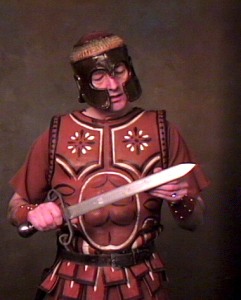
“Well then,” I surmised, “this prophet, this Jesus, really has set himself up in opposition to the religious authorities. If he’s publicly predicting the end of their rule, he has picked a fight with them.”
I sucked in a long, slow breath. “And, Claudius”—I nodded in his direction—“it’ll be a fight to the finish.”
I continued as my mind caught the implications of my own words. “Jesus may have the people or at least a good number of the common people on his side. But Caiaphas is nobody’s fool. He’s got money and power behind him. The son in that story, if that’s who Jesus is”—I gestured with an upraised open palm—“he might yet be taken out and killed.”

American readers click this link to purchase The Soldier Who Killed a King.

Canadian readers click this link to purchase The Soldier Who Killed a King directly from the author.

Excerpt 11 for Lent from The Soldier Who Killed a King

05 Monday Mar 2018

Posted by davidkitz in Books by David Kitz, Christ's Passion, Lent, Psalms

≈ 1 Comment

Tags

governor, Jesus of Nazareth, king, King Herod, kingdom, Kingdom of God, Marcus, Messiah, pilgrims, prophet, Roman, The Soldier Who Killed a King, weapons

A journey to the cross is a journey to repentance. It’s a journey to deep personal change. Will you take this journey with me?

In today’s reading, Marcus the centurion meets with Flavio, the Roman tribune, who is his commanding officer. He lays out his concerns about a Galilean prophet that he sees as a dangerous threat—Jesus of Nazareth.

“Sometimes I think you worry too much, Marcus.”
“I worry because it’s my job to worry,” I shot back. “Barabbas is in prison because I worry.”
Flavio appeared to consider my reply as he swallowed another stringy morsel. “So what do you know about this prophet?”
“A lot of people think he’s the Messiah.”
“May all the gods help us! Another Roman-killing messiah!” Flavio jeered.
“This one just might be the real thing,” I said.
Centur. Sw“Ha!” he scoffed. “Bring him on!” He reached for his flagon. Finding it empty, he bellowed, “Where’s my wine?”

“Bloody incompetent servants,” he muttered. Then turning to me, he asked, “Does he have weapons?”
“No, not that I’ve seen.”
“Has he threatened us?”
“Not exactly.”
“Assaulted the tax collectors?”
“No.”
“Then leave the Jewish dog alone.”
The servant arrived with a bowl of hot, sticky cheese and placed it before me, along with two small barley loaves.
“Wine! Where’s the ruddy wine?” Flavio demanded of his harried attendant.
“He is preaching about a kingdom—the kingdom of God,” I countered.
“So let him preach.”
“Who do you think will be the king of this kingdom?” I reasoned. When Flavio remained silent, I answered my own question. “I’m sure it will be none other than Jesus of Nazareth. I don’t think there’s room for two kings in this town, and a Roman governor too.”
“I see your point,” Flavio said. He wiped a greasy hand across his mouth and thenbiblical-fiction-award-2017_orig rubbed the three days of stubble on his chin. “So he talks about a kingdom?”
“The coming kingdom,” I clarified. “It’s the whole point—the core of his message. So I’m told.”
The servant arrived with the wine. Flavio helped himself. Drank two- thirds of it in a massive gulp, then poured himself some more.
“And he has followers?” Flavio continued.
“Most of the Galilean pilgrims are firmly in his camp.”
“Galilee?” Flavio questioned. “He’s Herod’s man.” He paused to rub the tip of his nose. “I wonder what the Fox thinks of this Messiah.”

American readers click this link to purchase The Soldier Who Killed a King.

Canadian readers click this link to purchase The Soldier Who Killed a King directly from the author.

Excerpt 9 for Lent from “The Soldier Who Killed a King”

01 Thursday Mar 2018

Posted by davidkitz in Books by David Kitz, Christ's Passion, Lent

≈ 3 Comments

Tags

Antonia Fortress, Caiaphas, centurion, Jesus of Nazareth, Jews, prophet, revolutionary, Rome, temple, The Soldier Who Killed a King

A journey to the cross is a journey to repentance. It’s a journey to deep personal change. Will you take this journey with me?

In today’s reading, Marcus is in a discussion with his friend and fellow centurion Renaldo. He gives an eyewitness account of what he saw Jesus doing in the temple courts.

“I know it’s hard to believe, but I saw it with my own eyes. His leg grew a full hand span. It happened right in front of me!”
For emphasis I gestured at an imaginary spot a few feet ahead.
“Are you sure it was Lucas?”
“Who else could it be? What other kid hobbles along on a crutch and has a bum leg aFree WWe SHARABLE-1 (2) hand span shorter than the other?”
“Lucas?” Renaldo snorted as he shook his head. He was incredulous.
“It was the same boy I’ve seen begging at the Fish Gate for the last six months.”
“The one with the copper begging bowl?”
“The one with the copper begging bowl,” I affirmed with a nod and then added, “Don’t believe me? Check it out yourself. The last time I saw him, he was dancing around on both feet. He’ll be back at your gate soon enough. But I don’t think he’ll be carrying his begging bowl or his crutch.”
Renaldo looked thoughtful as his eyes scanned the streets of the city below. We were standing atop one of the four turrets of the Antonia Fortress, the hub for military command here in the city. We had finished a light noon meal and then, for sake of privacy, had climbed the stairs to the top of the northeast tower.
“Look, Renaldo, like I said, I wouldn’t have believed any of this if I hadn’t seen it myself.” “So let me get this straight. This Jesus of Nazareth does miracles, and you saw him do them?”
“That’s right.”
“He kicked the money changers and merchants out of the temple courts?”
“He went at ’em like a wild man.”
“He defied the delegation from the high priest?” Renaldo questioned.
“Sent them scurrying for the exits like bugs under a rock.”
Picture Cent-helmet“What do you make of this prophet, Marcus? This Messiah?”

Now it was my turn to be pensive. I was so awestruck by what I had witnessed that I was having a hard time sorting through all my thoughts and impressions. The words came to me slowly. “He’s not at all like what I expected. He’s not at all like a revolutionary.”
“So he’s not a revolutionary. Then we’ve got nothing to worry about,” Renaldo said.
“I didn’t say that.” I paused but then added, “He’s not like your common revolutionary.” I put emphasis on the word “common.”
“So, he is a revolutionary.”
“His revolution, if that’s what he’s leading, doesn’t seem to be against us, against Rome—at least not at this point.” The vagueness of my answer left me feeling awkward.
“Then who is he fighting?”
“He’s not exactly endeared himself to the religious establishment. Caiaphas is probably having a holy altar- kicking tantrum right now. Those merchants pay good money to set up shop in there”—I gestured with a sweep of my hand in the direction of the temple compound—“and they’re going to be after him to get that Northern hick- town Messiah out of there. Now!” In imitation of their tactics, I made a downward stab with my index finger. “And I mean now.”
“So we let the high priest and his clan handle it. They’ve got the authority and the manpower.”
“Not at the moment. Jesus and his followers outnumber those temple guards maybe a hundred to one. I tell you he has the people—the crowd—in his hands. They don’t dare move against him.”
“Marcus, it’s still up to Caiaphas. It’s his problem. Let the Jews sort it out.”
“I suppose you’re right. He still scares me,” I confessed. “Scares me like no man ever has.”
“Why?” Renaldo queried.
“He’s got power like no man I’ve ever seen.” I shuddered inside at the thought of the unearthly nature of that power.
“This prophet really has you rattled, doesn’t he?” Renaldo said. “You’re still worried, aren’t you?”
“Yeah, I’m still worried.” Then to justify my concern, I added, “This talk about a kingdom bothers me. Besides, you didn’t see what I saw today. It makes all the difference.”

American readers click this link to purchase The Soldier Who Killed a King.

Canadian readers click this link to purchase The Soldier Who Killed a King directly from the author.

Excerpt 4 for Lent from “The Soldier Who Killed a King”

22 Thursday Feb 2018

Posted by davidkitz in Books by David Kitz, Lent

≈ 1 Comment

Tags

Damascus, David Kitz, Jesus, Jesus of Nazareth, Kingdom of God, Matthias, miracles, prophet, Rome, The Soldier Who Killed a King

A journey to the cross is a journey to repentance. It’s a journey to deep personal change. Will you take this journey with me?

In today’s reading, Marcus the centurion, disguised in his civilian clothes, is in a discussion about Jesus with Timaeus, a linen merchant from Damascus.

“As for this Jesus of Nazareth?” He shrugged. “I know only a little more than you. My brother here in Jerusalem knew nothing about him. Had never heard the name. But I heard of him once, about a year ago, in Damascus.”
“In Damascus?”
“Yes. I’m in the linen trade.” He put his hand to an elaborately embroidered sleeveBiblical fiction winner 2017 and stroked the pattern. “We supply market stalls in Galilee. One of our sellers there told me of this prophet. He had seen him in Galilee.”
“So what did he say about him?”
“Actually, he told me quite a lot, but I don’t know how much I can believe. He said this Jesus worked miracles.”
“Miracles? What do you mean, miracles?”
“He said Jesus drove out demons, healed the sick. He told me about this one time he went out to hear this prophet, if that’s what he is. Jesus was on this hillside. Thousands had come to hear him speak. Matthias—that’s the man’s name—he said he had never heard anyone speak like him. ‘It was like heaven was talking.’ He kept saying that. ‘It was like heaven was talking.’”
Timaeus spread his arms heavenward in mock imitation. “Poor Matthias!” He shook his head.
“So was that the miracle? The way he talked?”
“No, no. It’s not that, though Matthias kept going on about ‘the kingdom of God.’ Whatever that is. I suppose he got that from this Jesus. Anyway, after they had been there all day—he said there were more than five thousand people—this prophet told them all to sit down in groups of fifty or a hundred. Then he prayed and started breaking bread. He fed that whole crowd. Every last one of them.”
“What’s so miraculous about that?”
“Matthias said he only had five loaves and two fish when he started. He was watching him, and Jesus just kept on breaking bread until the whole crowd was fed. Five thousand people.”
“Five thousand people?”
“More than five thousand people.” He shrugged incredulously. “Look, I wasn’t there. I’m just repeating this fool’s story. Matthias kept saying, ‘It was like he was giving himself to us! Like it came from inside him!’”
Now I was incredulous. I paused in my walk and asked, “What did he mean by that?”
“I swear by the altar, I have no idea.”
“So what do you make of this Matthias and his story?”
“Matthias? He’s a nutcase. And he’s from a fine family in Capernaum.” He frowned, shaking his head. “I know them well. It’s hard to believe he’d get into something like this. He’s following this prophet around the country. It’s all he talks about. He was probably up some tree yesterday breaking off palm branches.” He spat out the words in utter disgust.
“And Jesus of Nazareth?” He raised a stout index finger and waved it in my face. “There’s the real nutcase! There’s no nut like a religious nut! And this kingdom of God talk. It’ll end in disaster.”
He glanced about to see if other ears were listening.
I continued in a more hushed voice. “How do you mean? Do you think the Romans will get involved?”
“Look, I’m no prophet, but by the throne I swear.” He looked me square in the eyes. “You don’t preach about a kingdom in this place and get away with it. Rome will see to that!”
4485 TWITTER

Excerpt 2 for Lent from “The Soldier Who Killed a King”

20 Tuesday Feb 2018

Posted by davidkitz in Lent

≈ Leave a comment

Tags

conquer, David Kitz, donkey, Galilee, Hosanna, Jesus, Jesus of Nazareth, Lord, Messiah, prophet, Rome, Son of David, temple, The Soldier Who Killed a King

A journey to the cross is a journey to repentance. It’s a journey to deep personal change. Will you take this journey with me?

Soldier bookI could see him clearly now. Donkey or not, he had the look of a man who knew exactly what he was doing. Those about him might not know or understand, but he knew. He had a destination in mind, a purpose. You could see it on his face.
“Hosanna to the Son of David!”
“Blessed is he who comes in the name of the Lord!”
“Hosanna in the highest heaven!”
There was something else different about him. At the time I didn’t know what it was. I couldn’t put it into words for a long time. I think I noticed it because I had watched all those other men come into Rome in their triumphal processionals. They were conquerors, but still they were hollow men, feeding off the adulation of the crowd, thirsting but never satisfied. You could see them vainly drink it in, hoping it would somehow fill the empty soul.
This donkey-riding king wasn’t drinking from the crowd. I somehow sensed he was full already, and what he had within must have come from a different source.
“Hosanna in the highest heaven!”
“Hosanna to the Son of David!”
“Blessed is he who comes in the name of the Lord!”
Just at that moment a strange feeling seemed to rise within me. Maybe it was the joy of the crowd. I had expected anger. Maybe it was the children waving palm branches or the spontaneity of the singing? I don’t know. For one moment it all seemed to come together. It seemed right somehow. Like heaven and earth had finally, for a moment, come into agreement—an agreement that had never been achieved before.
“Hosanna in the highest heaven!”
He was much closer now.
“Hosanna to the Son of David!”
He was now within the shadow of the gate.
“Blessed is he who comes in the name of the Lord!”
At that moment he looked up. For an instant our eyes met. Then I heard a voice—clearly heard a voice say, “I have a future for you.”
I was confused.
I turned to Claudius and said, “What did you mean by that?”
“What did I mean by what?” He had a blank look on his face.
“By what you said about—about the future?”
“I didn’t say anything about the future, sir. I didn’t say anything.”4485 SHARABLE-1
I was totally baffled. Was I hearing voices? This whole thing was making no sense, no sense at all. Passover pilgrims weren’t supposed to come into the city this way. We had a revolutionary on the loose—riding a donkey. And now I was hearing things?
I rubbed the sweat from my forehead, hoping for some clarity to emerge.
I had a hundred men whose lives were in danger from this Jewish Messiah and his horde of followers. That was what mattered.
By this time the donkey man had passed under the gate and was heading in the direction of the temple in the heart of the city.
I signaled for Claudius to follow as I raced down the stairs of the gatehouse. I emerged onto the street and grabbed the first two-legged bit of Jewish scum I saw. Pressing him against the stone wall, I demanded, “Who is that man?”
I pointed at the retreating figure on the donkey.
The poor wretch was in shock and seemed quite unable to get out a word.
Claudius reached for his sword.
“Je- Jesus of Nazareth,” he stammered and then quickly added, “the prophet from Nazareth in Galilee.”
I loosened my grip. Then in a voice loud enough for all near to hear, I announced, “Well, there is one thing I do know. We’re going to have to keep an eye on that man.”

Praising God for Answered Prayer

24 Thursday Aug 2017

Posted by davidkitz in Bible, Devotionals, Psalm 34, Psalms

≈ 3 Comments

Tags

actor, answered prayer, author, David, Gath, glory, God, Jesus Christ, justice, King Achish, King David, king of Gath, King Saul, leader, madmen, Messiah, musician, Philistine, poet, praise, prophet, Psalms, skills, talents, warrior, wisdom

Reading:                                     Psalm 34

Of David.
When he pretended to be insane before Abimelek, who drove him away, and he left.(Verses 1-7)
I will extol the LORD at all times;
his praise will always be on my lips.
I will glory in the L
ORD; let the afflicted hear and rejoice.
Glorify the L
ORD with me; let us exalt his name together.
I sought the LORD, and he answered me;
he delivered me from all my fears.
Those who look to him are radiant;
their faces are never covered with shame.
This poor man called, and the L
ORD heard him;
he saved him out of all his troubles.
The angel of the L
ORD encamps around those who fear him,
and he delivers them
(NIV).

Reflection
David was a man of many talents. He was a gifted musician and a poet—the author of many of the psalms. He was a battle-hardened warrior and a leader of men. After many years of struggle he became the king of all Israel, and in that role he governed an unruly people with wisdom, justice and demonstrable success. David was also a prophet. Many of his psalms are infused with prophetic significance as they point to the coming Messiah—Jesus Christ.

David Warrior

Photo Credit: http://www.joydigitalsa.com

In addition to this long list of David’s skills and accomplishments, we should also add actor. In an early episode in David’s flight from King Saul, he escaped to the Philistine city of Gath. But he was recognized by some of the people who said, “Isn’t this David, the king of the land? Isn’t he the one they sing about in their dances: “‘Saul has slain his thousands, and David his tens of thousands’?” (1 Samuel 21:11). 

To escape certain death, David pretended to be stark raving mad. He must have been a convincing actor because the king of Gath released him saying, “Look at the man! He is insane! Why bring him to me? Am I so short of madmen that you have to bring this fellow here to carry on like this in front of me? Must this man come into my house?” (1 Samuel 21:14-15).

In response to his release from King Achish, David composed Psalm 34—one of the most joyous of all the psalms. Nothing inspires praise like answered prayer when your life is on the line. David did not take the credit for his skill as an actor. Neither did he take credit for conceiving the idea for this clever deception. He gave all the glory to God and he invites us to join in his celebration of praise. Glorify the LORD with me; let us exalt his name together. I sought the LORD, and he answered me; he delivered me from all my fears.

Along with David we have good reason to rejoice; we have a God who saves us. This poor man called, and the LORD heard him; he saved him out of all his troubles.

Response: Those who look to him are radiant. LORD, we look to you. Today let me shine for you. Amen.

Your Turn: What talents can you thank God for? How has he answered your prayers?

Who Cares for those in Need?

09 Friday Jun 2017

Posted by davidkitz in Psalm 12, Psalms

≈ 3 Comments

Tags

bank executives, caring, corporate titans, God, golden parachutes, political leaders, power brokers, profits, prophet, Psalm, the needy, the poor

Reading:                                            Psalm 12

For the director of music. According to sheminith. A psalm of David.

Help, LORD, for no one is faithful anymore;
those who are loyal have vanished from the human race.
Everyone lies to their neighbor;
they flatter with their lips
but harbor deception in their hearts.
May the L
ORD silence all flattering lips and every boastful tongue—
those who say,
“By our tongues we will prevail;
our own lips will defend us—who is lord over us?”
“Because the poor are plundered and the needy groan,
I will now arise,” says the L
ORD.
“I will protect them from those who malign them.”
And the words of the L
ORD are flawless,
like silver purified in a crucible,
like gold refined seven times.
You, L
ORD, will keep the needy safe and will protect us forever from the wicked,
who freely strut about when what is vile is honored by the human race
(NIV).

Reflection
Who cares for the needy? The corporate titans and bank executives don’t. It seems they are far too busy lining their pockets and preparing their golden parachutes to give a thought or a dollar to low paid employees or the poor. The relentless pursuit of profit trumps all other concerns.

2017-05-31L

Pine tree path, Orleans, ON — photo by David Kitz

Who cares for the poor? The political leaders and power brokers don’t. When called upon, they mouth meaningless platitudes and profess concern. But policy is dictated by those with fat bank accounts and the right connections. They ensure that very little trickles down to those in need. In their hearts these are those who say, “By our tongues we will prevail; our own lips will defend us—who is lord over us?”

Who cares for the poor and needy? According to the words of this psalm the LORD does. “Because the poor are plundered and the needy groan, I will now arise,” says the LORD. “I will protect them from those who malign them.”

God has always demonstrated concern for the poor. The prophet Amos declared the LORD’s severe judgment on Israel because of their mistreatment of the poor. “For three sins of Israel, even for four, I will not relent. They sell the innocent for silver, and the needy for a pair of sandals. They trample on the heads of the poor as on the dust of the ground and deny justice to the oppressed” (Amos 2:6-7).

Will God judge us for how we treat the poor? Absolutely. God has not changed. He defends the poor and He remains true to His word. The word of the LORD is tried, tested and true. You can count on it.

Response: LORD God, give me a caring heart for those who are poor and oppressed. Help me to demonstrate that care not just in thought but in practical ways. Amen.

Your Turn: What can you do today for someone who is needy or suffering? Let your actions speak.

Newer posts →

Psalms 365: Develop a Life of Worship and Prayer

Psalms 365 Volume II

Psalms 365 vol 3
— Psalms 365 Volume III

Psalms

Recent posts

  • Teach Me Your Paths February 18, 2026
  • Who holds you up? February 18, 2026
  • A Lesson from the Flowers February 17, 2026
  • Do not fret February 17, 2026
  • Minds Set on Things Above February 16, 2026
  • What are the desires of your heart? February 16, 2026
  • The Abundance of Your House February 15, 2026

Calendar

February 2026
M T W T F S S
 1
2345678
9101112131415
16171819202122
232425262728  
« Jan    

Blog Posts

Comments

  • K.L. Hale on Teach Me Your Paths
  • davidkitz on An Unflattering View of Yourself
  • davidkitz on A Lesson from the Flowers

Blog at WordPress.com.

Privacy & Cookies: This site uses cookies. By continuing to use this website, you agree to their use.
To find out more, including how to control cookies, see here: Cookie Policy
  • Subscribe Subscribed
    • I love the Psalms
    • Join 1,385 other subscribers
    • Already have a WordPress.com account? Log in now.
    • I love the Psalms
    • Subscribe Subscribed
    • Sign up
    • Log in
    • Report this content
    • View site in Reader
    • Manage subscriptions
    • Collapse this bar
 

Loading Comments...