• Home
  • About
  • DavidKitz.ca
  • Youtube Videos
  • Books by David
  • Books on Amazon.com

I love the Psalms

~ Connecting daily with God through the Psalms

I love the Psalms

Tag Archives: repentance

The Folly of Denying God

14 Friday Nov 2025

Posted by davidkitz in Psalm 14, Psalms

≈ Leave a comment

Tags

accountability, Atheism, David, faith, God, humanity, Jesus, morality, Psalms, Reflection, repentance, sin, the LORD, Unbelief, wisdom

Today’s Devotion from Psalms 365 by David Kitz

Reading: Psalm 14

Listen to today’s reading by Jonathan Dent:

https://davidkitz.blog/wp-content/uploads/2025/11/psalm-14-final-mix-2.mp3


For the director of music. Of David.

The fool says in his heart, “There is no God.”
They are corrupt, their deeds are vile;
there is no one who does good.
The LORD looks down from heaven on all mankind
to see if there are any who understand, any who seek God.
All have turned away, all have become corrupt;
there is no one who does good, not even one.
Do all these evildoers know nothing?
They devour my people as though eating bread;
they never call on the LORD.
But there they are, overwhelmed with dread,
for God is present in the company of the righteous.
You evildoers frustrate the plans of the poor,
but the LORD is their refuge.
Oh, that salvation for Israel would come out of Zion!
When the LORD restores his people,
let Jacob rejoice and Israel be glad! (NIV) *

Reflection
Apparently, atheism is not a modern phenomenon. Three thousand years ago in David’s time, there were people who said in their heart, “There is no God.” Atheism has a long and ignoble pedigree. I say ignoble because as David observes, it is the fool who says, “There is no God” (v. 1).

There is a footnote in my Bible indicating the word translated in this psalm as fool denotes someone who is morally deficient. David goes on to describe this moral deficiency. He uses the words corrupt and vile. In fact, there is a complete absence of anything good. But this isn’t just David’s indictment against a few errant atheists; this is the LORD’s view of all mankind. All have turned away, all have become corrupt; there is no one who does good, not even one (v. 3). In the New Testament, Paul the Apostle quotes from this psalm in his epistle to the Romans as he outlines the depravity of humanity.

Is there a link between unbelief and the sinful state of the human soul? Does sin breed unbelief? There is ample biblical and anecdotal evidence that it does. When Adam and Eve sinned, in an instant, they turned from God seekers to God avoiders. Add a little more sin, and it’s only a short step for a God avoider to become a God denier.

We deny the existence of God to avoid accountability for our sin. We foolishly assume that since we can’t see God, He can’t see us and our misdeeds. Better yet why not pretend God doesn’t exist? Then we are at liberty to sin as much as we please without fear of God’s judgment. That sounds like morally deficient reasoning to me. But the fool fools only himself.

Response: Father, I want to seek you always, especially when I sin. That’s when I need you most. You have the remedy for my sin—the blood of Jesus. You forgive me and clean me up. Amen.

Your Turn: Does sinful conduct affect or infect your belief system? How does sin cloud our reasoning?

Para la publicación de Salmos 365 de hoy en español haga clic aquí.

bgbg_v4.3_1501818
* NEW INTERNATIONAL VERSION, COPYRIGHT ©1973, 1978, 1984, 2011 BY BIBLICA

Thank God for peace in Israel and Gaza,
and continue to pray for peace to return to Ukraine and Russia!

Volume I of Psalms 365: Develop a Life of Worship and Prayer won the Best Book of the Year Award from The Word Guild and Volume II has won the Best Devotional of the Year Award. For those who love God’s word, this three-book series is an ideal way to daily meet with the Lord. To purchase or for a closer look click here.

New from David Kitz

James—the brother of Jesus—who was this man? What evidence do we have that this “brother of our Lord” even existed?

David Kitz digs deep into archeology, family dynamics, church history, and the biblical texts. What emerges from his research is a portrait of a decisive, pivotal leader who embodied the will and character of Jesus Christ.

But how did James—James the unbeliever—transform to become a leader who changed the course of world history? In these pages you will uncover the answer and rediscover for yourself the life-changing power of the gospel.

To view further details or purchase this or other books directly from the author click here.

The Empty Space Without God

07 Friday Nov 2025

Posted by davidkitz in Psalm 10, Psalms

≈ 2 Comments

Tags

faith, forgiveness, humility, Jesus, judgment, No room for God, obedience, pride, Reflection, repentance, SelfDeception, wickedness

Today’s Devotion from Psalms 365 by David Kitz

Reading: Psalm 10:5-11

Listen to today’s reading by Jonathan Dent:

https://davidkitz.blog/wp-content/uploads/2025/11/psalm-105-11-final-mix.mp3

His ways are always prosperous;
your laws are rejected by him;
he sneers at all his enemies.
He says to himself, “Nothing will ever shake me.”
He swears, “No one will ever do me harm.”
His mouth is full of lies and threats;
trouble and evil are under his tongue.
He lies in wait near the villages;
from ambush he murders the innocent.
His eyes watch in secret for his victims;
like a lion in cover he lies in wait.
He lies in wait to catch the helpless;
he catches the helpless and drags them off in his net.
His victims are crushed, they collapse;
they fall under his strength.
He says to himself, “God will never notice;
he covers his face and never sees” (NIV). *

Photo by David Kitz

Reflection
Yesterday’s reading from Psalm 10 was an introduction to the man who has no room for God in his life. The psalmist states, “In his pride the wicked man does not seek him; in all his thoughts there is no room for God” (v. 4).

Today’s reading continues to describe in disturbing detail, the thoughts, deeds, and attitudes of the heart of such a person. He says to himself, “Nothing will ever shake me.” He swears, “No one will ever do me harm.” His mouth is full of lies and threats; trouble and evil are under his tongue (v. 6-7).

Nature abhors a vacuum. All manner of things will rush in to fill an empty space. When God is removed from His rightful place as the Master of our life, selfishness and pride rise to the top. If Jesus isn’t the Lord of my life, then my selfish nature will rise to the occasion. But when my selfish nature rules, all manner of sin follows. Worst of all self-deception follows. We deceive ourselves into believing a lie.

The psalmist states: He says to himself, “God will never notice; he covers his face and never sees” (v. 11).

Of course, God does see. Our pride and ignorance are on full display before Him. Jesus has these words to say about this topic. “But I tell you that everyone will have to give account on the day of judgment for every empty word they have spoken” (Matthew 12:36).

I have spoken more than a few empty words. How about you? The simple truth is I need a Lord and Master like Jesus to help me govern my life. I also need his love and forgiveness when I slip up.

Response: Lord Jesus, you are the Lord and Master of the universe. Even the wind and the waves obey you. I want to obey you too. Holy Spirit, blow into my life and fill me with your presence today. Amen.

Your Turn: What fills the vacuum in your life? Take some time to let Jesus fill that empty spot today.

Para la publicación de Salmos 365 de hoy en español haga clic aquí.

bgbg_v4.3_1501818
* NEW INTERNATIONAL VERSION, COPYRIGHT ©1973, 1978, 1984, 2011 BY BIBLICA

Thank God for peace in Israel and Gaza,
and continue to pray for peace to return to Ukraine and Russia!

Volume I of Psalms 365: Develop a Life of Worship and Prayer won the Best Book of the Year Award from The Word Guild and Volume II has won the Best Devotional of the Year Award. For those who love God’s word, this three-book series is an ideal way to daily meet with the Lord. To purchase or for a closer look click here.

New from David Kitz

James—the brother of Jesus—who was this man? What evidence do we have that this “brother of our Lord” even existed?

David Kitz digs deep into archeology, family dynamics, church history, and the biblical texts. What emerges from his research is a portrait of a decisive, pivotal leader who embodied the will and character of Jesus Christ.

But how did James—James the unbeliever—transform to become a leader who changed the course of world history? In these pages you will uncover the answer and rediscover for yourself the life-changing power of the gospel.

Let God Be the Judge

30 Thursday Oct 2025

Posted by davidkitz in Psalms

≈ Leave a comment

Tags

Accusation, courage, David, faith, Heart, integrity, judgment, justice, Psalms, repentance, Righteousness, the LORD, transparency

Today’s Devotion from Psalms 365 by David Kitz

Reading: Psalm 7:1-9

Listen to Psalm 7:1-9 as read by Jonathan Dent:

https://davidkitz.blog/wp-content/uploads/2025/10/ps-71-9-remix3final.mp3

A shiggaion of David, which he sang to the LORD concerning Cush, a Benjamite.
LORD my God, I take refuge in you;
save and deliver me from all who pursue me,
or they will tear me apart like a lion
and rip me to pieces with no one to rescue me.
LORD my God, if I have done this and there is guilt on my hands—
if I have repaid my ally with evil or without cause have robbed my foe—
then let my enemy pursue and overtake me;
let him trample my life to the ground and make me sleep in the dust.
Arise, LORD, in your anger; rise up against the rage of my enemies.
Awake, my God; decree justice.
Let the assembled peoples gather around you,
while you sit enthroned over them on high.
Let the LORD judge the peoples.
Vindicate me, LORD, according to my righteousness,
according to my integrity, O Most High.
Bring to an end the violence of the wicked and make the righteous secure—
you, the righteous God who probes minds and hearts (NIV). *

Reflection
Have you ever been falsely accused? Have you been accused of wrongdoing by someone you consider a friend? That can be a deeply hurtful experience. In the context of this psalm, that’s the situation David found himself in. He stands accused of repaying his ally with evil.

How did David respond? Did he strike down his accuser? Remember David is the king. It is within his power to act—to unleash his vengeance. Is that his just and righteous response? No, he takes his case before the LORD. In prayer he declares, “Let the LORD judge the peoples.” He invites God to judge him. He presents his case before the righteous God who probes minds and hearts.

That takes some courage; that takes some integrity. That takes a level of faith and transparency we often see lacking in men of position and power. Are you willing to let God probe your heart and your mind? What might He find hidden away in there? The writer of the Book of Hebrews reminds us about the power of God’s word, “For the word of God is alive and active. Sharper than any double-edged sword, it penetrates even to dividing soul and spirit, joints and marrow; it judges the thoughts and attitudes of the heart” (Hebrews 4:12).

David was a man of God. He submitted his heart and mind to the all-seeing eye of God. He wanted the sin source cut off within him. Right thinking and righteous judgment begin when God and His word gain entry to your heart.

Response: LORD, I open my heart and my mind to your probing. I have nothing to hide, since you see all and know all, even the hidden things of the heart. Help me repent and change where needed. Amen.

Your Turn: How transparent are you before God? Why do we think we can hide something from God?

Para la publicación de Salmos 365 de hoy en español haga clic aquí.

bgbg_v4.3_1501818
* NEW INTERNATIONAL VERSION, COPYRIGHT ©1973, 1978, 1984, 2011 BY BIBLICA

Thank God for peace in Israel and Gaza,
and continue to pray for peace to return to Ukraine and Russia!

Volume I of Psalms 365: Develop a Life of Worship and Prayer won the Best Book of the Year Award from The Word Guild and Volume II has won the Best Devotional of the Year Award. For those who love God’s word, this three-book series is an ideal way to daily meet with the Lord. To purchase or for a closer look click here.

New from David Kitz

James—the brother of Jesus—who was this man? What evidence do we have that this “brother of our Lord” even existed?

David Kitz digs deep into archeology, family dynamics, church history, and the biblical texts. What emerges from his research is a portrait of a decisive, pivotal leader who embodied the will and character of Jesus Christ.

But how did James—James the unbeliever—transform to become a leader who changed the course of world history? In these pages you will uncover the answer and rediscover for yourself the life-changing power of the gospel.

Opening Blind Eyes

12 Sunday Oct 2025

Posted by davidkitz in The Elisha Code

≈ 2 Comments

Tags

apostles, blind, church, Elisha, Jesus, New Testament, Old Testament history, Pharisees, prophetic, prophets, repentance, spirtual blindness

In that day the deaf will hear the words of the scroll,
and out of gloom and darkness the eyes of the blind will see.
(Isaiah 29:18, NIV)

In 1546, the English writer and poet, John Heywood, penned this proverb, “There are none so blind as those who will not see.”[i]
            Heywood’s proverb is as relevant to our times as it was in his day. The most damaging condition modern humanity suffers from is spiritual blindness. But alas, this condition has been afflicting humans since we exited Eden.
            Perhaps no biblical account portrays spiritual blindness better than the story of Elisha and his servant as they are trapped in the besieged city of Samaria. On the first morning of the siege, Elisha’s servant panicked when he saw the foreign army, but the prophet responded with these words:

             “Don’t be afraid,” the prophet answered. “Those who are with us are more than those who are with them.”
             And Elisha prayed, “Open his eyes, LORD, so that he may see.” Then the LORD opened the servant’s eyes, and he looked and saw the hills full of horses and chariots of fire all around Elisha
(2 Kings 6:16-17, NIV).

            As is so often the case, the servant was blind to the spiritual realm. Today, the servants of God suffer from the same short-sightedness. It took the prayer of Elisha to open the servant’s eyes. In our day, it also takes the Holy Spirit and present-day prophets to open our eyes.  
            This eye-opening miracle was paired with a mass-blinding miracle on an unprecedented scale.

             As the enemy came down toward him, Elisha prayed to the Lord, “Strike this army with blindness.” So he struck them with blindness, as Elisha had asked.
            Elisha told them, “This is not the road and this is not the city. Follow me, and I will lead you to the man you are looking for.” And he led them to Samaria
(2 Kings 6:18-19, NIV).

          Elisha led the enemy army into the presence of the king of Israel in the heart of the capital. The king then inquired if he should slaughter his enemies. But Elisha counseled kindness rather than retribution, and a feast was prepared for the Aramean army. This act of unprecedented grace and generosity led to a time of peace between these two warring nations (2 Kings 6:23).
            Eight centuries before Christ, Elisha’s advice to the king puts into practice the words of Jesus from his Sermon on the Mount. 

           “But to you who are listening I say: Love your enemies, do good to those who hate you, bless those who curse you, pray for those who mistreat you. If someone slaps you on one cheek, turn to them the other also. If someone takes your coat, do not withhold your shirt from them. Give to everyone who asks you, and if anyone takes what belongs to you, do not demand it back. Do to others as you would have them do to you (Luke 6:27-31).

          There is an uncanny link between Elisha, the Old Testament prophet, and Jesus, his New Testament counterpart. Both men see beyond the natural realm to the astonishment of the people of their day, and both prophets counsel kindness rather than revenge in dealing with enemies.
            Though there are many outstanding miracles recorded in the Old Testament, there is no account of the physically blind receiving their sight. Yet, time after time in the Gospels, Jesus restored sight to the blind.[ii] These physical miracles were signposts pointing to an even more significant restoration of sight—the restoration of spiritual eyesight—eyesight that allows us to see who Jesus truly is and what he is doing.
            The account of Jesus healing the blindman at the Pool of Siloam is entirely about opening the eyes of those who are both physically and spiritually blind. (See John 9.) The man who received his sight was blind from birth. This was not simply a miracle of restoration. It was a creative miracle, on par with the Adam and Eve account in Genesis 2, as Jesus so aptly demonstrated.

              While I am in the world, I am the light of the world.”
 After saying this, he spit on the ground, made some mud with the saliva, and put it on the man’s eyes. “Go,” he told him, “wash in the Pool of Siloam” (this word means “Sent”). So the man went and washed, and came home seeing
(John 9:5-7, NIV).

             Jesus opened the eyes of the blindman, but as the story continues, we see he is unable to open the eyes of the spiritually blind Pharisees. John Heywood’s proverb proves true, “There are none so blind as those who will not see.”
            The Pharisees in this account were wilfully blind. Many today suffer from the same willful blindness. Due to their stubborn hearts, they are unable to see who Jesus truly is.
            The entirety of John 9 is about seeing—seeing and recognizing who Jesus is. The miracle of the man blind from birth receiving his sight should have alerted the Pharisees and temple authorities to the divine nature of Jesus, the miracle worker. But the Pharisees could not see past the fact this miracle had been wrought on the Sabbath. The miracle worker had violated the Sabbath, so they reasoned, he must be a sinner and unworthy of respect.

                 Then they turned again to the blind man, “What have you to say about him? It was your eyes he opened.”
               
The man replied, “He is a prophet.” (John 9:17, NIV)

                The healed blindman stated what was patently obvious to him. He recognized that he had been touched by the hand of God. He saw Jesus as a prophet. All of Israel was waiting expectantly for a prophet—a prophet who would once again demonstrate the power of the Almighty. Surely, restoring sight to one who was born blind was a demonstration of this power. But the Pharisees questioned the validity of the miracle and the miracle worker.
                Why were many Pharisees so spiritually blind? Despite the evidence of multiple miracles, they were unwilling to recognize Jesus as a prophet. But this blindness was not a new condition. They had already rejected John the Baptist the forerunner of the Messiah. They refused to recognize John as a prophet too. See Matthew 21:25-27.
                And why did most Pharisees reject John the Baptist? The simple answer is because John preached a message of repentance. Repentance requires an acknowledgement of sin and a turning away from it. But the Pharisees, like many people nowadays, saw themselves as righteous already. They were blind to their sin, so they saw no need for repentance. Furthermore, repentance requires humility, a character quality they shunned in favor of obstinate pride—pride in their self-professed righteousness.
                Because the Pharisees did not recognize the first prophet, John, they were blind to the second prophet, Jesus. But Jesus was far more than a prophet. As his name implies, he was and is the Savior of the world. But the proud and the self-righteous have no felt need for a Savior. They see themselves as saved already—saved through their own efforts. In their own eyes—their spiritually blind eyes—they see no need for a Savior.
                This same spiritual blindness afflicts many in both the church and society today. The cure for spiritual blindness is repentance and rebirth by the power of the Holy Spirit. That was the message of our two New Testament prophets John the Baptist and Jesus.
                A gospel message that is preached without a call to repentance is not a gospel message at all. Coming to faith in Jesus requires—no, demands repentance. Real repentance is real change. Change from the inside out. Change that is deep, meaningful, and evident in daily life.
                John demanded change from those who came to be baptized, whatever their station in life, and that included Pharisees who in their pride believed no change was required. See Matthew 3:1-12.
                Furthermore, we should not see repentance simply as a one-time occurrence. Yes, it is the vital starting point in our walk of faith,[iii] but true repentance goes far beyond that. Repentance must be incorporated into our way of life—a life of continual turning away from sin and living in humble service to our Savior-King.[iv]
                Though the blindman received his sight, the Pharisees persisted in their spiritual blindness even though the miracle-working Savior was standing before them. 

                 Jesus said, “For judgment I have come into this world, so that the blind will see and those who see will become blind.”
                Some Pharisees who were with him heard him say this and asked, “What? Are we blind too?”
                Jesus said, “If you were blind, you would not be guilty of sin; but now that you claim you can see, your guilt remains.
(John 9:39-41, NIV)  

                For the Pharisees of Jesus day and the spiritually blind of our day, this maxim holds true: If we don’t recognize the prophet, we won’t recognize the Savior.
                Jesus’ words remain relevant today:      

                Whoever welcomes a prophet as a prophet will receive a prophet’s reward, and whoever welcomes a righteous person as a righteous person will receive a righteous person’s reward. (Matthew 10:41, NIV)

                The voice of the prophet is needed today just as it was in Jesus’ day. A national call to repentance is needed now. Who will voice that call? Where are the prophets for our time?
                The relative absence of legitimate prophetic voices in the church today should trouble us. There was a four-hundred-year prophetic gap between the Old and New Testament—a gap when the Spirit of God was silent. But then suddenly John the Baptist and Jesus appeared on the scene. The first two chapters of Luke describe an astonishing flurry of Spirit initiated activity as heaven set the great redemption story into motion. Will there be a similar flood of Spirit directed activity before Christ’s second coming?
                It is clear from the Scriptures prophets were active within the New Testament church, and furthermore, Paul considered them essential to the proper functioning of the body of Christ.

               So Christ himself gave the apostles, the prophets, the evangelists, the pastors and teachers, to equip his people for works of service, so that the body of Christ may be built up until we all reach unity in the faith and in the knowledge of the Son of God and become mature, attaining to the whole measure of the fullness of Christ. (Ephesians 4:11-13, NIV)

                In Acts we read that there were numerous prophets active in the church. Some of them are listed by name. They include Agabus, Barnabas, Simeon called Niger, Lucius of Cyrene, Manaen, and Saul.[v] This Saul is also known as Paul, and he and Barnabas were commissioned by the church leadership in Antioch to go on the first great missionary journey (Acts 13:1-3).
                Where would the church be today if these prophets had not spoken the word of the Lord over Paul and Barnabas? Would there be a church in Europe? Would we even know of the ministry of Paul? The New Testament church grew as it received prophetic direction from those who were tuned to hear the plans of God.

Landestreu Church

                The church of God grows and flourishes when there are men and women who hear what the Spirit is saying, see what the Spirit is doing, and then declare it to the church and the world. That is the role of the prophet.
                We need leaders with prophetic hindsight, insight, and foresight for the church to reach its full potential.
                Prophetic vision is not always forward looking or predictive. Sometimes it looks back at events in the past and sees them with heaven-endowed clarity. For example, Jesus spoke to the Samaritan woman at the well about her past marriages and current living arrangement (John 4:15-19). As a result, the Samaritan woman immediately recognized Jesus as a prophet. This gift of prophetic hindsight was pivotal in this entire community coming to faith.

                Many of the Samaritans from that town believed in him because of the woman’s testimony, “He told me everything I ever did.” So when the Samaritans came to him, they urged him to stay with them, and he stayed two days. And because of his words many more became believers. (John 4:39-41, NIV)

                The same prophetic hindsight is need today to capture the attention of individuals and reach whole communities estranged from Christ and the gospel.
                A word of caution is in order. Not all who call themselves prophets or apostles are prophets and apostles. A true prophet or apostle will be known by the fruit of their ministry, not by the self-styled handle on their business card. There have been false prophets throughout history. We should not be surprised when we see a raft of them emerge today. But the emergence of the counterfeit should not keep us from heeding those who genuinely hear from God and declare his word.
                Paul’s admonition to the Thessalonians remains valid:

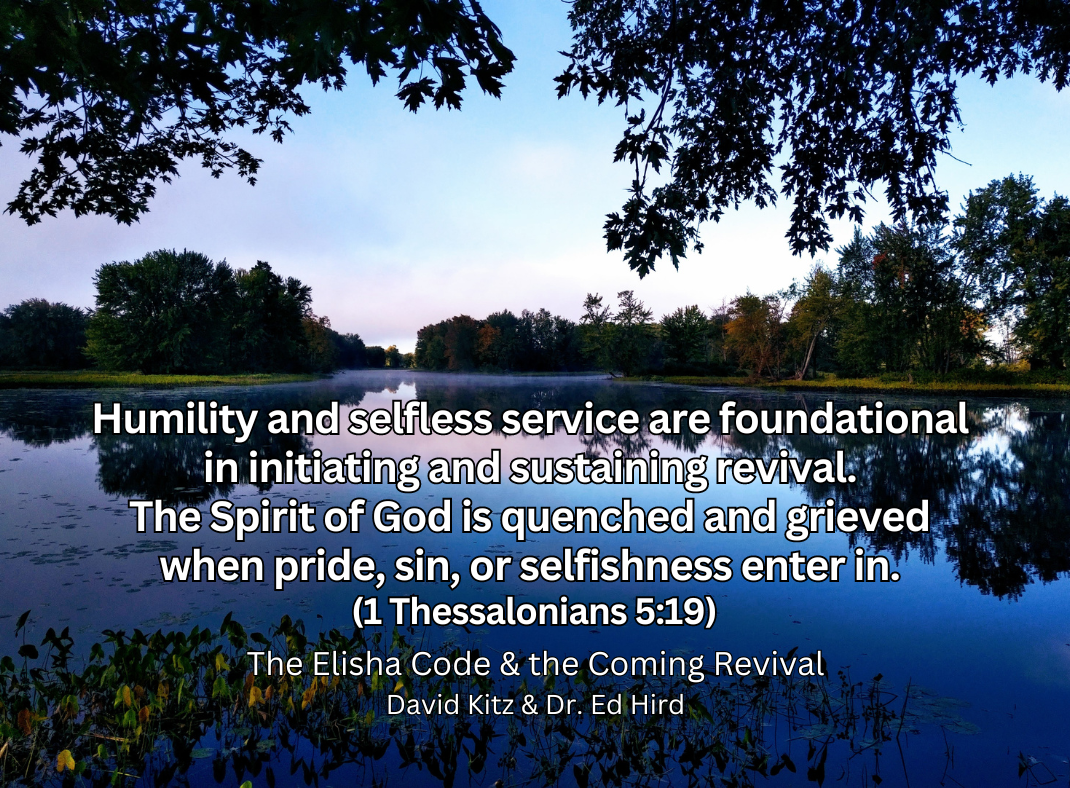
                Do not quench the Spirit. Do not despise prophecies. Test all things; hold fast what is good. Abstain from every form of evil. (1 Thessalonians 5:19-22, NKJV)

                Humility and service to others are the hallmarks of genuine faith. Pride and self-aggrandizement are flashing red lights signalling error and deception. Know the Scriptures, heed the Spirit, and proceed with caution. God guides those who humbly seek him. Jesus still opens the eyes of the blind and he still uses prophetic voices to do just that.
                The third key that helps us unlock the Elisha code is prophetic vision or spiritual insight. It is vitally needed today.

[i] Who wrote the proverb “There are… | Trivia Answers | QuizzClub

[ii] Matthew 12:22, Matthew 15:30, Mark 8:22-26, Mark 10:46-52, Luke 7:2, John 9

[iii] Peter replied, “Repent and be baptized, every one of you, in the name of Jesus Christ for the forgiveness of your sins. And you will receive the gift of the Holy Spirit (Acts 2:28, NIV).

[iv] If we claim to be without sin, we deceive ourselves and the truth is not in us. If we confess our sins, he is faithful and just and will forgive us our sins and purify us from all unrighteousness. If we claim we have not sinned, we make him out to be a liar and his word is not in us (1 John 1:8-10, NIV).

[v] Acts 11:27-28, Acts 13:1-3, Acts 15:32, Acts 21:8-10

This is the fifth weekly excerpt from the award-winning book 
The Elisha Code & the Coming Revival 

A soul-gripping read.
Is a return-to-Jesus revival possible in our time?
This book points the way forward.
For details click here.

The Return of the Dynamic Duo

28 Sunday Sep 2025

Posted by davidkitz in The Elisha Code

≈ Leave a comment

Tags

Bible, born again, David Kitz, Elijah, Elisha, gospel, Jesus, Jewish heritage, John the Baptist, Kingdom of God, Moses, repentance, salvation, the LORD, theology

When they had crossed, Elijah said to Elisha,
“Tell me, what can I do for you before I am taken from you?”

“Let me inherit a double portion of your spirit,” Elisha replied.

“You have asked a difficult thing,” Elijah said,
“yet if you see me when I am taken from you, it will be yours—
otherwise, it will not.”
(2 Kings 2:9-10, NIV)

The more things change, the more they stay the same.[i] This common expression captures within it the seed truth that history tends to repeat itself. Human nature, social norms and patterns of behavior stay the same across the continuum of time and space. Consequently, though the individual players, time, and location may differ, outcomes frequently are the same or fall into a familiar pattern. For this very reason, Bible stories remain relevant today, despite being written ages ago to people of a different language and culture.  
            In today’s culture when we use the term dynamic duo, several pictures, or scenarios immediately spring to mind. Batman and Robin from DC Comics popularized the term, but throughout history, and within our own experience we have all encountered dynamic duos—individuals who work together well to accomplish a common purpose.
           Can we identify dynamic duos in the Old Testament? We certainly can. Moses and his young successor Joshua spring to mind.
            The prophets Elijah and Elisha are a dynamic duo whose miraculous powers and exploits rival the adventures of the finest superheroes in the Marvel Universe. First-century Jewish teens reading accounts of their miraculous feats would be immediately drawn to them. Furthermore, the last book of the Old Testament ends with the promise of Elijah’s return.    

“See, I will send the prophet Elijah to you before that great and dreadful day of the Lord comes. He will turn the hearts of the parents to their children, and the hearts of the children to their parents; or else I will come and strike the land with total destruction” (Malachi 4:5-6, NIV).

            And if Elijah is returning, then Elisha, or an Elisha-like figure cannot be far behind. As the New Testament era dawns, the stage is set for the return of the dynamic duo. There is nothing quite like a sequel. In this case it’s a prophetic, dynamic-duo sequel that returns after an absence of about seven centuries. Imagine the anticipation.
           Is it any wonder then that Elijah’s name appears twenty-eight times in the gospels? Aside from Peter, none of the apostles are named as frequently as Elijah. It is quite extraordinary for a hero from a previous era to be referenced so frequently. Yet the expectation of Elijah’s arrival was palpable. Jesus was often incorrectly identified as the Elijah who is to come.[ii] With the start of Christ’s ministry, and his demonstration of miraculous powers, the burning question within the first-century Jewish community was “Has Elijah returned?”
             In the eleventh chapter of Matthew’s Gospel answers that question directly. He identifies who the new Elijah—the second Elijah really is.

           And when John had heard in prison about the works of Christ, he sent two of his disciples and said to Him, “Are You the Coming One, or do we look for another?”
          Jesus answered and said to them, “Go and tell John the things which you hear and see: The blind see and the lame walk; the lepers are cleansed and the deaf hear; the dead are raised up and the poor have the gospel preached to them. And blessed is he who is not offended because of Me.”
          As they departed, Jesus began to say to the multitudes concerning John: “What did you go out into the wilderness to see? A reed shaken by the wind? But what did you go out to see? A man clothed in soft garments? Indeed, those who wear soft clothing are in kings’ houses. But what did you go out to see? A prophet? Yes, I say to you, and more than a prophet. For this is he of whom it is written:
                    ‘Behold, I send My messenger before Your face,
                    Who will prepare Your way before You.’
          “Assuredly, I say to you, among those born of women there has not risen one greater than John the Baptist; but he who is least in the kingdom of heaven is greater than he. And from the days of John the Baptist until now the kingdom of heaven suffers violence, and the violent take it by force. For all the prophets and the law prophesied until John. And if you are willing to receive it, he is Elijah who is to come. He who has ears to hear, let him hear!
(Matthew 11:2-15, NKJV)

          So, there we have the answer to the question on everyone’s mind at that time. John the Baptist is Elijah who is to come. The first member of the New Testament dynamic duo has been identified.    

What does Jesus’ identification of John the Baptist as the new Elijah really mean?

It does not mean John is the reincarnation of Elijah. Elijah’s body was whisked away to heaven in a whirlwind on a chariot of fire.[iii] Centuries later, he returns with Moses to meet with Jesus on the Mount of Transfiguration.[iv]

Chapel of the Transfiguration, Grand Teton National Park — Photo courtesy of Matthew Taylor

            Clearly, John and Elijah are two distinct persons from two distinct historical eras. In fact, when he was questioned about his identity, John denied being the Christ or Elijah.[v] However, Jesus rightly identified John the Baptist as moving and ministering in the spirit of Elijah. He fulfilled the prophecy of Malachi.[vi]
            Elijah’s ministry was a ministry of repentance. His assignment from the LORD was to draw the backslidden people of Israel (the northern kingdom) back to worshipping the one true God. Israel had fallen into the grievous sin of idolatry under the rule of King Ahab and his evil consort Jezebel. Many had bowed their knees to Baal, the male fertility god, and partaken in the worship of the female deity Ashtoreth.
            John the Baptist had a similar assignment. He too was to draw the Jewish nation back to God. But in the New Testament era, the sins of the nation were of a more subtle nature. The worship of Yahweh had become cold and formal while the sinful heart was unchanged.

The Lord says:
“These people come near to me with their mouth
    and honor me with their lips,
    but their hearts are far from me.
Their worship of me is based on merely human rules they have been taught
(Isaiah 29:13, NIV).

This corrupt condition of the heart is what John came to address. He did so with a clarion call to repentance followed by baptism. Furthermore, he insisted no one can claim safety from the coming wrath due to their lineage or national heritage.

Produce fruit in keeping with repentance. And do not think you can say to yourselves, ‘We have Abraham as our father.’ I tell you that out of these stones God can raise up children for Abraham. The ax is already at the root of the trees, and every tree that does not produce good fruit will be cut down and thrown into the fire. (Matthew 3:8-10, NIV).

          What root was John attacking with the above statement? He was hacking away at the presumption of salvation by virtue of national origin. The Sadducees and Pharisees who John was addressing trusted in their Jewish heritage as being sufficient for eternal salvation. Apparently, your birth certificate doesn’t qualify you for entrance into the Kingdom of God. God is looking for a repentant heart—a changed heart. 
                With these words, John was laying the groundwork for Jesus’ core message of salvation through regeneration. We must be born again as Jesus revealed in his conversation with Nicodemus.[vii] And the first step in that regenerative process begins with repentance, initially championed by John,[viii] reiterated by Jesus,[ix] and preached by the apostles.[x]
                Today, we speak of disruptive technology changing the way business and society operate. John’s message was disruptive theology. His message attempted to completely change how Jewish society of that time viewed their relationship with God. Many Jewish people saw themselves as citizens in God’s Kingdom simply because they were children of Abraham. John’s mission was to shatter that misperception. Something more was needed then, and it is needed now. Salvation begins with a repentant heart. And like Elijah of old, John was calling the nation to repent and turn back to God.
                Jesus addressed the same topic in his John 8:12-59 temple discourse with the Jewish religious leadership. In that heated discussion, Jesus’ opponents trumpeted their Abrahamic pedigree, while rejecting the testimony of the Son of God. God is always looking for the fruits of repentance in our lives. But there was an absence of fruit in these religious leaders.
                It was John the Baptist who first raised this issue with the Pharisees and Sadducees. If we are not simply born into the Kingdom by natural birth, as the religious leadership claimed, how then do we gain entrance? Jesus provides the answer:

          “Very truly I tell you, no one can enter the kingdom of God unless they are born of water and the Spirit. Flesh gives birth to flesh, but the Spirit gives birth to spirit. You should not be surprised at my saying, ‘You must be born again’ (John 3:5-7, NIV).

                This disruptive theology was introduced by John and advanced to the next level through the ministry of Jesus. John and Jesus truly worked as a dynamic duo. Furthermore, all four Gospel writers recognized John’s foundational contribution. It’s striking that though each Gospel is focused on the life and ministry of Jesus, none of the Gospel writers begin their account with Jesus. They all begin with John. He truly was the forerunner and the way-maker for our Savior.
                Many of the underpinnings of the Christian faith were introduced by John. Repentance followed by baptism is a prime example. Baptism, with roots in the Jewish mikvah, a ceremonial washing rooted in the Books of Moses, was an innovation introduced and popularized by John. Baptism represents a soul transforming innovation that was, with only slight modification, incorporated directly into Christ’s teaching and the Great Commission.

           Go therefore and make disciples of all the nations, baptizing them in the name of the Father and of the Son and of the Holy Spirit, teaching them to observe all things that I have commanded you; and lo, I am with you always, even to the end of the age.” Amen. (Matthew 28:19-20, NKJV).

                Baptism is a living picture of new birth. It is the defining symbol and sacrament of the born-again experience. John laid the groundwork for the gospel of Christ. He worked like a bulldozer leveling the way for Christ.[xi] He destroyed the argument that salvation was race based and in so doing he paved the way for Jesus’ teaching on spiritual rebirth.
                It logically follows that if salvation is not based on lineage or race, but rather on a spiritual rebirth, then that experience of rebirth is open to all humanity and not the sole domain of the Jewish people.
                Both John and Jesus were looking for fruit—the transformative fruit of repentance.[xii] And through the work of the Holy Spirit, that fruit could be found among both Jews and Gentiles. It was no longer confined to the Jewish nation. All could potentially be grafted into the vine through faith in Jesus.
                Jesus identified John the Baptist as the new Elijah. Who then is the new Elisha?

Chapter 2 Endnotes
[i] “plus ça change, plus c’est la même chose”, Jean-Baptiste Alphonse Karr, 1849. 

[ii] Matthew 16:13-14

[iii] 2 Kings 2:11-12

[iv] Matthew 17:1-13, Mark 9:2-13, Luke 9:28-36

[v] John 1:19-28

[vi] “See, I will send the prophet Elijah to you before that great and dreadful day of the Lord comes. He will turn the hearts of the parents to their children, and the hearts of the children to their parents; or else I will come and strike the land with total destruction” (Malachi 4:5-6, NIV).

[vii] John 3:1-21

[viii] Matthew 3:1-2, Mark 1:4, Luke 3:2-3,

[ix] Matthew 4:17, Mark 1:14-15

[x] Acts 2:36-39, Acts 3:19

[xi] Matthew 3:3

[xii] Matthew 3:8, Matthew 7:15-20, Matthew 21:33-46

This is the fourth weekly excerpt from the award-winning book 
The Elisha Code & the Coming Revival 

A soul-gripping read.
Is a return-to-Jesus revival possible in our time?
This book points the way forward.
For details click here.

Not by Works but Grace

18 Thursday Sep 2025

Posted by davidkitz in Psalms

≈ 2 Comments

Tags

dependence, devotion, faith, God's mercy, grace, humility, mercy, Prayer, repentance, Righteousness, salvation, sin

Today’s Devotion from Psalms 365 by David Kitz

Reading: Psalm 143:1-6
A psalm of David.
LORD, hear my prayer,
listen to my cry for mercy;
in your faithfulness and righteousness come to my relief.
Do not bring your servant into judgment,
for no one living is righteous before you.
The enemy pursues me,
he crushes me to the ground;
he makes me dwell in the darkness like those long dead.
So my spirit grows faint within me;
my heart within me is dismayed.
I remember the days of long ago;
I meditate on all your works
and consider what your hands have done.
I spread out my hands to you;
I thirst for you like a parched land (NIV). *

Reflection
On my best day, I need God’s mercy. On my worst day my need for outside help and mercy are visible to all. In truth, my need for the mercy of the LORD is never ending. All too often, we only call out to God in times of need or perceived difficulty. In reality, our need for God’s help and mercy are constant.

Here in Psalm 143, as he so often does, David calls out for God’s mercy. In many respects David’s plea for mercy is rather repetitive throughout the psalms. Why would this be? Could it be that he is in constant need of God’s sustaining support and mercy? From the following request, we can see why David repeatedly prays for God’s mercy: Do not bring your servant into judgment, for no one living is righteous before you (v. 2).

David recognized that within himself he had no righteousness. This is the starting point for a life transforming relationship with God. Contrary to a good deal of modern psychology and religious philosophy, we are not okay. We have a warped nature that is inclined to sin. It delights in rebelling against God. St. Paul describes this human condition with these words. For I know that good itself does not dwell in me, that is, in my sinful nature. For I have the desire to do what is good, but I cannot carry it out (Romans 7:18).

The prophet Isaiah described this universal human condition in this way. All of us have become like one who is unclean, and all our righteous acts are like filthy rags; we all shrivel up like a leaf, and like the wind our sins sweep us away (Isaiah 64:6).

Do I need God’s mercy? Yes, a thousand times yes!

Response: LORD God, I need your righteousness. My own righteousness is tainted with pride. I freely acknowledge my need for a Savior. You are my constant help. I thirst for you like a parched land. Amen.

Your Turn: Are you aware of your constant need for God’s mercy? Are you calling out to Him?

Para la publicación de Salmos 365 de hoy en español haga clic aquí.

bgbg_v4.3_1501818
* NEW INTERNATIONAL VERSION, COPYRIGHT ©1973, 1978, 1984, 2011 BY BIBLICA

Please pray for peace to return to Israel, Gaza, and Ukraine!

Volume I of Psalms 365: Develop a Life of Worship and Prayer won the Best Book of the Year Award from The Word Guild and Volume II has won the Best Devotional of the Year Award. For those who love God’s word, this three-book series is an ideal way to daily meet with the Lord. To purchase or for a closer look click here.

A gripping read from David Kitz.
Is a return-to-Jesus revival possible in our time?
This book points the way forward.
For details click here.


Godly Sorrow Brings Repentance

12 Friday Sep 2025

Posted by davidkitz in Psalm 141

≈ 2 Comments

Tags

Bible, correction, God, godly sorrow, grace, innocent, Jesus, Prayer, Psalms, repentance, sorrow over sin, the LORD

Today’s quote and prayer from
“Psalms 365: Develop a Life of Worship and Prayer”

Today’s Reading: Psalm 141:5

LORD God,
please correct me when I err.
When others point out my faults,
help me to receive that correction
with grace and not anger.
Lord Jesus,
you alone are faultless.
Forgive me.
Amen.

— — — —
 
Even if I caused you sorrow by my letter,
I do not regret it.
Though I did regret it—
I see that my letter hurt you,
but only for a little while—

yet now I am happy,
not because you were made sorry,
but because your sorrow led you to repentance.
For you became sorrowful as God intended
and so were not harmed in any way by us.

Godly sorrow brings repentance
that leads to salvation and leaves no regret,
but worldly sorrow brings death.

See what this godly sorrow has produced in you:
what earnestness,
what eagerness to clear yourselves,
what indignation, what alarm,
what longing, what concern,
what readiness to see justice done.
At every point you have proved yourselves
to be innocent in this matter.
(2 Corinthians 7:8-11 NIV)*

Para la publicación de Salmos 365 de hoy en español haga clic aquí.

bgbg_v4.3_1501818
* NEW INTERNATIONAL VERSION, COPYRIGHT ©1973, 1978, 1984, 2011 BY BIBLICA

Please pray for peace to return to Israel, Gaza, Sudan, and Ukraine!

Volume I of Psalms 365: Develop a Life of Worship and Prayer won the Best Book of the Year Award from The Word Guild and Volume II has won the Best Devotional of the Year Award. For those who love God’s word, this three-book series is an ideal way to daily meet with the Lord. To purchase or for a closer look click here.

A gripping read from David Kitz.
Is a return-to-Jesus revival possible in our time?
This book points the way forward.

Intimacy with Jesus the Seeker

05 Friday Sep 2025

Posted by davidkitz in Psalm 139, Psalms

≈ 5 Comments

Tags

confession, courage, devotion, exposure, faith, freedom, guidance, Heart, humility, intimacy, Prayer, Psalm, Reflection, repentance, self-discovery, shepherd

Today’s Devotion from Psalms 365 by David Kitz

Reading: Psalm 139:23-24
Search me, God, and know my heart;
test me and know my anxious thoughts.
See if there is any offensive way in me,
and lead me in the way everlasting (NIV). *

Reflection
In my opinion, Psalm 139 rates in the top ten of the 150 psalms in the Bible. Many find deep comfort and encouragement in it. It is arguably the most intimate or personal psalm. Take a minute to read the entire psalm and you will see for yourself why I draw these conclusions.

The Psalm begins by pointing out the futility of fleeing from God. We can’t hide from Him though we may try. The prophet Jonah discovered this truth the hard way. In Jonah’s case, it took three days and three nights in the belly of a huge fish to come around to right perspective. See Jonah 1 & 2. How long does it take for us to realize how foolish it is to run from God? I dare say some of us sink below sea-level before the wisdom of Psalm 139 takes hold.

Though the psalmist begins by discussing the futility of hiding from God, he concludes by asking for God to search his heart. He willingly comes before the LORD and asks to be tested. That takes humility and courage—more humility and courage than many of us can muster.

Search me, God, and know my heart; test me and know my anxious thoughts (v. 23). This appears to be a very straightforward request, but there are intricacies to this statement that deserve some careful consideration.

Does God need to search my heart? Does He need to search for anything? Not really. He already knows everything that’s there. I’m the one who doesn’t know what is in my own heart. I’m the one who is surprised when some emotion is triggered, or I react in an unpredictable or irrational way. Do I understand my heart? Do I know what is lurking down there? My knowledge is partial at best. Self-flattery and subtle forms of self-deception can blind me to what is really in my heart.

When we are asking God to search us and test us, we are really asking to begin a process of self-discovery. We are exposing our soul to God, so He can point out what is there. Then you and I can repent and turn our heart-hidden sins over to God. I cannot trust myself to see and acknowledge what is there. I need God’s help. By nature, I am a hider. Jesus is the Great Seeker. Remember he came to seek and save the lost. See Luke 19:10.

Jesus is the one who can see if there is any offensive way in me. He is the Good Shepherd, the one who will lead me in the way everlasting. When I freely confess my need for him, his blood cleanses me from the darkest sins. Real freedom for us begins with exposure—exposure to the penetrating searchlight of God.

Response: LORD God, you know my heart. You know what triggers my wrong responses. Search me and show me what needs to change and how to make those changes. Lead me in the way everlasting. Amen.

Your Turn: How well do you know your heart? How can we become more open-hearted before God?

Para la publicación de Salmos 365 de hoy en español haga clic aquí.

bgbg_v4.3_1501818
* NEW INTERNATIONAL VERSION, COPYRIGHT ©1973, 1978, 1984, 2011 BY BIBLICA

Please pray for peace to return to Israel, Gaza, and Ukraine!

Volume I of Psalms 365: Develop a Life of Worship and Prayer won the Best Book of the Year Award from The Word Guild and Volume II has won the Best Devotional of the Year Award. For those who love God’s word, this three-book series is an ideal way to daily meet with the Lord. To purchase or for a closer look click here.

A gripping read from David Kitz.
Is a return-to-Jesus revival possible in our time?
This book points the way forward.
For details click here.

A Lament for Jerusalem

26 Tuesday Aug 2025

Posted by davidkitz in Psalm 137

≈ Leave a comment

Tags

Babylon, Babylonian exile, Bible, destruction of Jerusalem, devotion, God, idolatry, Jerusalem, judgment, mercy of God, Psalms, repentance, Ten Commandments, Zion

Reading: Psalm 137:1-6

By the rivers of Babylon we sat and wept
when we remembered Zion.
There on the poplars we hung our harps,
 for there our captors asked us for songs,
our tormentors demanded songs of joy;
they said, “Sing us one of the songs of Zion!”
How can we sing the songs of the LORD
while in a foreign land?
If I forget you, Jerusalem,
may my right hand forget its skill.
May my tongue cling to the roof of my mouth
if I do not remember you,
if I do not consider Jerusalem my highest joy
(NIV) *

Reflection
It’s difficult to pinpoint the time in history when many of the Psalms were written. Many scholars believe that the Old Testament was compiled over a period of about 900 to 1,000 years. As for the Book of Psalms, there is considerable evidence to suggest that psalms were collected from three distinct periods: the reign of King David (1 Chronicles 23:5), the rule of Hezekiah (2 Chronicles 29:30), and during the leadership of Ezra and Nehemiah (Nehemiah 12:24).[1]

Psalm 137 is distinct, because we can tell from its content that this psalm was written early during the period of the Babylonian exile. Memories of Nebuchadnezzar’s destruction of Jerusalem in 586 BC were still fresh—etched with bitterness and pain in the mind of the author.

There are two great pivot points in the history of Old Testament Israel. The first is the liberation of Israel from Egypt and the subsequent conquest of the holy land. The second is the destruction of Jerusalem and the temple, which was followed by the seventy-year exile in Babylon. The mercy and power of God brought about the first pivotal event. The disobedience and idolatry of man set in motion the catastrophe of the second event.

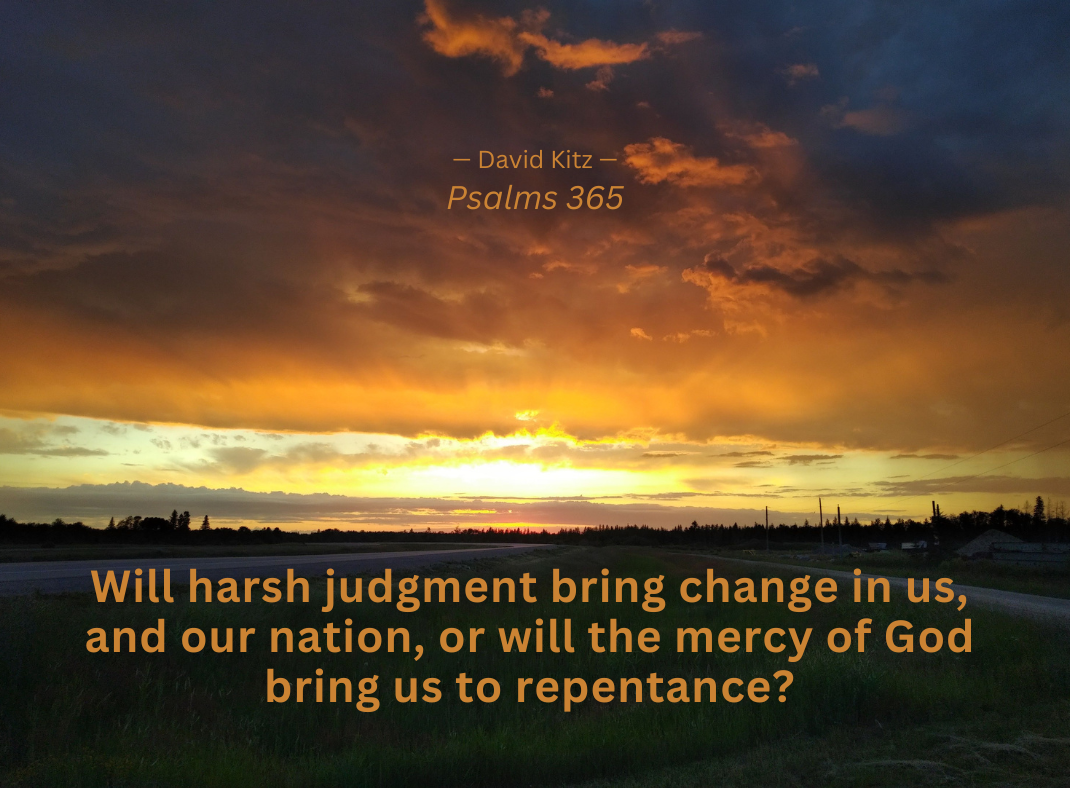
From its inception the Jewish nation flirted with idolatry. While Moses was receiving the Ten Commandments, the people were reveling before a golden calf. King Solomon set up idols in Jerusalem so his foreign wives could worship their gods. See 1 Kings 11:1-8. This duplicity continued generation after generation until the Babylonians swept in and destroyed Jerusalem. Harsh judgment brought change. Will harsh judgment bring change in us, or will the mercy of God bring us to repentance?

Response: Father God, I don’t want to learn things the hard way. I want to be quick to obey you. Help me to learn from the lessons of history. You are the one, true God. I worship you. Amen.

Your Turn: How faithful are you to the LORD? Do other interests draw you away?

[1] K.R. “Dick” Iverson, Spirit Filled Life Bible, New King James Version, Jack W. Hayford, General Editor, Thomas Nelson Publishers, Nashville, TN, 1991, p. 750.

Para la publicación de Salmos 365 de hoy en español haga clic aquí.

bgbg_v4.3_1501818
* NEW INTERNATIONAL VERSION, COPYRIGHT ©1973, 1978, 1984, 2011 BY BIBLICA


Please pray for peace to return to Israel, Gaza, and Ukraine!

Volume I of Psalms 365: Develop a Life of Worship and Prayer won the Best Book of the Year Award from The Word Guild and Volume II has won the Best Devotional of the Year Award. For those who love God’s word, this three-book series is an ideal way to daily meet with the Lord. To purchase or for a closer look click here.

A gripping read from David Kitz.
Is a return-to-Jesus revival possible in our time?
This book points the way forward.
For details click here.

The Punishment That Brought Us Peace

07 Thursday Aug 2025

Posted by davidkitz in Psalm 130, Psalms

≈ Leave a comment

Tags

Bible, God, healed, healing, Jesus, Prayer, prophetic, Psalms, redeem, Redeemer, repentance, the LORD

Today’s quote and prayer from
“Psalms 365: Develop a Life of Worship and Prayer”
by David Kitz

Reading: Psalm 130:5-8

Father God,
I thank you for your prophetic word
because it points to Jesus.
Lord Jesus,
thank you for laying down your life to redeem me,
and all who bow before you in repentance.
Amen.

— — — —

Surely he took up our pain
    and bore our suffering,
yet we considered him punished by God,
    stricken by him, and afflicted.
But he was pierced for our transgressions,

    he was crushed for our iniquities;
the punishment that brought us peace was on him,
    and by his wounds we are healed.
We all, like sheep, have gone astray,

    each of us has turned to our own way;
and the LORD has laid on him
    the iniquity of us all.
(Isaiah 53:4-6
NIV)*

Para la publicación de Salmos 365 de hoy en español haga clic aquí.

bgbg_v4.3_1501818
* NEW INTERNATIONAL VERSION, COPYRIGHT ©1973, 1978, 1984, 2011 BY BIBLICA

Please pray for peace to return to Israel, Gaza, Iran, and Ukraine!

Volume I of Psalms 365: Develop a Life of Worship and Prayer won the Best Book of the Year Award from The Word Guild and Volume II has won the Best Devotional of the Year Award. For those who love God’s word, this three-book series is an ideal way to daily meet with the Lord. To purchase or for a closer look click here.

A gripping read from David Kitz.
Is a return-to-Jesus revival possible in our time?
This book points the way forward.

← Older posts
Newer posts →

Psalms 365: Develop a Life of Worship & Prayer

Psalms 365 Volume II

Psalms 365 vol 3
— Psalms 365 Volume III

Now available:

Psalms

Recent posts

  • Awake My Soul! April 25, 2026
  • The Narrow Gate April 24, 2026
  • My Secure Fortress April 24, 2026
  • The Sum of the Law and the Prophets April 23, 2026
  • Godly Anger April 23, 2026
  • Asking, Seeking, Knocking April 22, 2026
  • Awake, O My Soul! April 22, 2026

Calendar

April 2026
M T W T F S S
 12345
6789101112
13141516171819
20212223242526
27282930  
« Mar    

Blog Posts

Comments

  • Signora Sheila on Molly Jaber’s Review
  • Asking, Seeking, Knocking – QuietMomentsWithGod on Asking, Seeking, Knocking
  • davidkitz on My Secure Fortress

Blog at WordPress.com.

Privacy & Cookies: This site uses cookies. By continuing to use this website, you agree to their use.
To find out more, including how to control cookies, see here: Cookie Policy
  • Subscribe Subscribed
    • I love the Psalms
    • Join 1,344 other subscribers
    • Already have a WordPress.com account? Log in now.
    • I love the Psalms
    • Subscribe Subscribed
    • Sign up
    • Log in
    • Report this content
    • View site in Reader
    • Manage subscriptions
    • Collapse this bar
 

Loading Comments...