• Home
  • About
  • DavidKitz.ca
  • Youtube Videos
  • Books by David
  • Books on Amazon.com

I love the Psalms

~ Connecting daily with God through the Psalms

I love the Psalms

Category Archives: The Elisha Code

The Church and the Third Temptation of Christ

21 Sunday Dec 2025

Posted by davidkitz in Psalms, The Elisha Code

≈ 1 Comment

Tags

Caesar, Christ, church, false christs, false saviors, God and Caesar, Jesus, kingdom, political, politics, prophecy, prophet, Satan, Savior, scriptures, temptation, the cross

And He said to them,
“Render therefore to Caesar the things that are Caesar’s,
and to God the things that are God’s.”
 

(Matthew 22:21b, NKJV)

The church cannot move forward in the right direction unless there is a clear-eyed assessment of where we stand today.

Here then are a few questions to help us assess our current position:

  • Are local churches growing, thriving, and multiplying in your city/community?
  • Are individuals in your community repenting and coming to faith in Christ?
  • Is the message of the gospel transforming society, or is the world transforming the church?
  • Over the last twenty years, has the church become more politically engaged?

We have been keen observers of the church and the impact of the gospel on society for over fifty years. During that time there have been encouraging waves of numerical growth and spiritual renewal, but there have also been seasons of testing and decline. Broadly speaking, over the last decade, decline has been the dominant theme. Yes, there are exceptions to this downward trend, and they should be celebrated, but nevertheless, the trendline is not moving in our favor. Statistical surveys indicate a steady decline in church attendance and self-identification with the Christian faith.

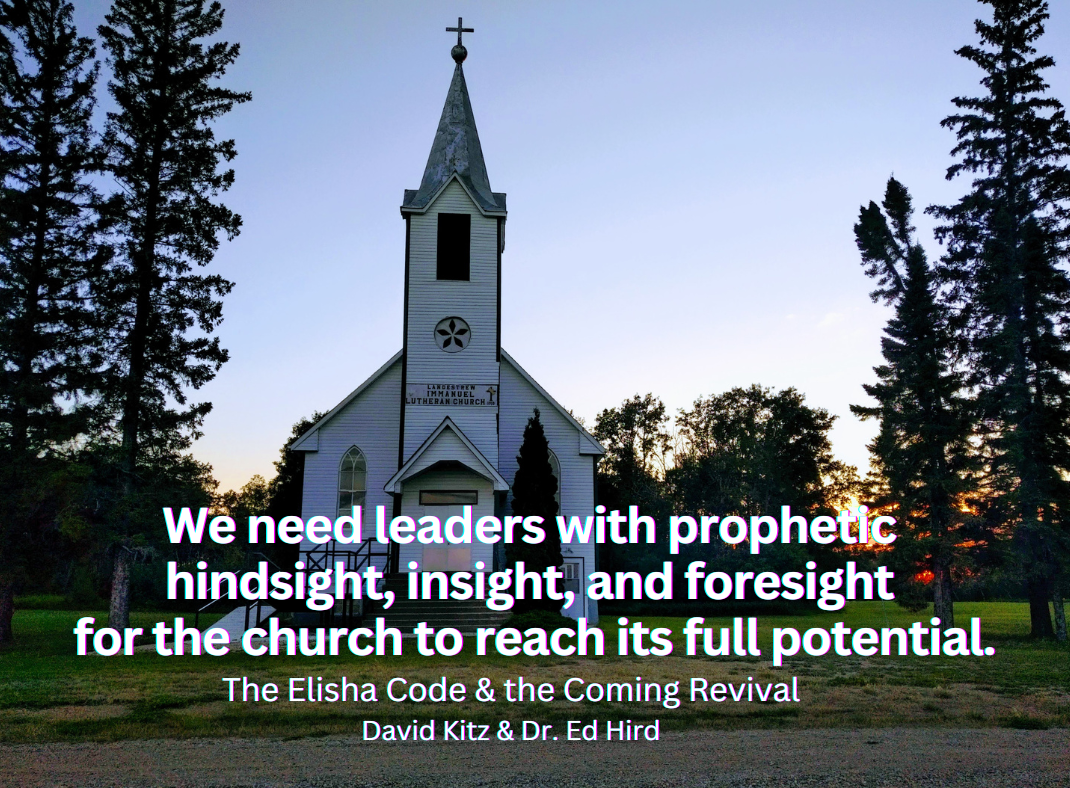
Landestreu Church — photo by Donald Adam

Why is this so?

What has not declined is the church’s level of political engagement. While the embers of spiritual revival have been dying, the fires of political engagement have been burning red hot. And political leaders of all stripes have been eager to fan the flames. After all, they know where the votes lie and how to spark political passions.

The sharp divisions between the political left and right have been mirrored in the church. The theologically liberal have championed social justice issues, while theological conservatives have tried to hold the line against what they see as a creeping socialist sin agenda.

To a degree, these divisions in the church have been present for generations. But in recent years the divisions have grown sharper as political discourse has become more polarized. Throw in some misinformation, a few conspiracy theories, and we have a toxic brew that social media spreads worldwide.

Where is the good news of the gospel in all of this? All too often, it’s been abandoned or drowned out in both camps. A worshipper may attend a Sunday service at a left leaning church and hear a sermon on the merits of caring for the poor and marginalized, but the name of Jesus is never mentioned. Similarly, I have attended so called ‘prayer meetings’ of evangelical pastors where not a single word of prayer is uttered, but the entire conversation is centered on right wing political machinations and strategies.

Is the message of the gospel transforming our society and culture? No. The world is transforming the culture of the church. The glorious light of the gospel has been turned to darkness. Jesus’ call to take up our cross and follow him is being ignored—ignored in the house of God while we pursue purely political objectives.

Christ’s admonition rings true:

“Salt is good; but if the salt has lost its flavor, how shall it be seasoned? It is neither fit for the land nor for the dunghill, but men throw it out. He who has ears to hear, let him hear!” (Luke 14:34-35, NKJV)

The church has too often gone down a political rabbit hole thinking it can somehow save this generation by political means. No such salvation exists, nor has it ever existed, and those who promise it are false saviors. Furthermore, Jesus prophesied such false political saviors would arise.

Then if anyone says to you, ‘Look, here is the Christ!’ or ‘There!’ do not believe it. For false christs and false prophets will rise and show great signs and wonders to deceive, if possible, even the elect. See, I have told you beforehand (Matthew 24:24-25, NKJV).

Every generation has seen its share of false saviors, but after 2,000 years only one Savior remains standing. His name is Jesus. Let’s cling to him and the message of the cross.

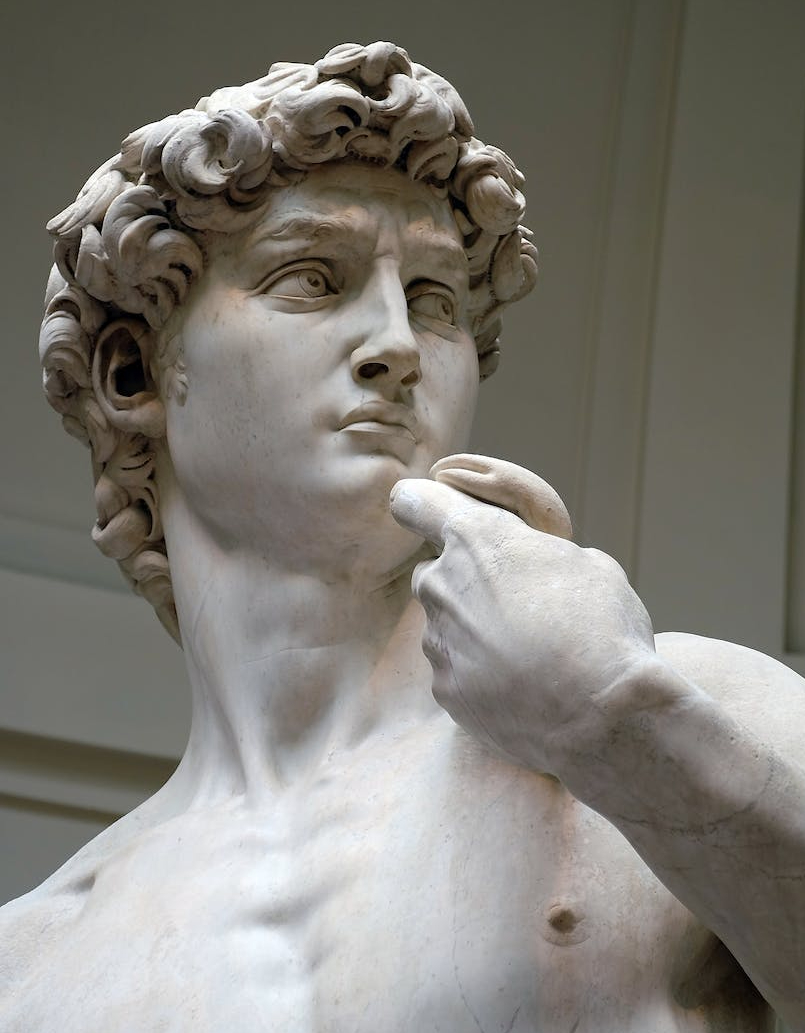
Photo by Pixabay on Pexels.com

Often politicians use religion for personal gain—to curry favor and capture votes, therefore, leaders in the Christian community need to exercise caution. We believe Christ followers should vote and be politically engaged, but our first loyalty must be to Christ. A life of service in the political realm can be a noble vocation ordained by God.

What blueprint did Jesus follow as he began his earthly ministry and set the foundation for the church? Was he engaged in the politics of his time? His politics was not the politics of this world. It was the politics of humility, forgiveness, and self-sacrifice.

The blueprint our Lord followed can be found in his response to the three temptations of Christ as recorded in the gospels. The third temptation found in Matthew’s gospel specifically addresses the lure of political engagement.

Again, the devil took Him up on an exceedingly high mountain, and showed Him all the kingdoms of the world and their glory. And he said to Him, “All these things I will give You if You will fall down and worship me.”
Then Jesus said to him, “Away with you, Satan! For it is written, ‘You shall worship the Lord your God, and Him only you shall serve’”
(Matthew 4:8-10)

There is something quite striking, first about the devil’s offer, and then Jesus’ response. Satan offered the kingdoms of the world and their glory. Implied in this offer is the understanding that these kingdoms are currently his—under the devil’s control. Jesus does not refute this. The nations are, in fact, within the devil’s domain. This is in full agreement with Jesus’ teaching on this matter as he identified Satan as the prince of this world. See John 12:30-33.

Similarly, Paul asserts that before their conversion the Ephesians “walked according to the course of this world, according to the prince of the power of the air, the spirit who now works in the sons of disobedience” (Ephesians 2:2).

Jesus refused Satan’s offer of political power and reward if he would worship him. He refused to play on the devil’s turf. He turned down the offer of earthly, political kingdoms so he could establish an eternal, spiritual kingdom—the Kingdom of God.

Matthew ends his account of the three temptations of Christ with this statement: Then the devil left Him, and behold, angels came and ministered to Him (Matthew 4:11, NKJV).

But Luke’s account ends differently: When the devil had finished all this tempting, he left him until an opportune time (Luke 4:13, NIV).

Were there other occasions when Jesus was tempted to become politically engaged and establish an earthly kingdom? There may have been numerous occasions, but three are readily identifiable.

John identifies one such occasion immediately after the feeding of the five thousand.

Then those men, when they had seen the sign that Jesus did, said, “This is truly the Prophet who is to come into the world.”
Therefore when Jesus perceived that they were about to come and take Him by force to make Him king, He departed again to the mountain by Himself alone (John 6:14-15, NKJV).

What a grand opportunity this was! Jesus could become king. Furthermore, it would not appear to be something he sought. He could simply bow to the will of the people, and they would proclaim him king.

Can you hear the devil’s whisper, “Surely, this must be the will of God?”

But what did Jesus do? Did he accept the devil’s latest offer? No. He walked away. Instead of making a deal with the world and the devil, Jesus went to prayer in a lonely place where he met with his Father. He walked away from an earthly political kingdom and all its trappings. Wealth. Fame. Adoration.

Why walk away?

For a second time Jesus walked away from a temporal, material kingdom because he was establishing an eternal, spiritual Kingdom—a Kingdom that exists on a much higher plane than the kingdoms of this world.

And after a time of communion with his Father, what did Christ do?

He walked on water.

The juxtaposition of these events was not due to random chance. Jesus walked out on the Sea of Galilee to visibly demonstrate the spiritual nature of his eternal Kingdom. The disciple’s initial reaction illustrates this perfectly.

Shortly before dawn Jesus went out to them, walking on the lake. When the disciples saw him walking on the lake, they were terrified. “It’s a ghost,” they said, and cried out in fear (Matthew 14:25-26, NIV).

Jesus was entirely at home in the spirit world, but we are not. The disciples reacted just as we would. The truth we must lay hold of is the spiritual nature of Christ and his Kingdom. By faith Peter briefly grasped that truth as he stepped out of the boat, and he too walked on water.

Photo by Pixabay on Pexels.com

Oh, for the faith to do likewise in this day and hour! Are we ready to do as Peter did, step into the supernatural and walk in the Spirit?

The second occasion when Jesus was tempted to take a political position is well known. It occurred within the temple courts during the last week of his earthly ministry.

Then the Pharisees went and plotted how they might entangle Him in His talk. And they sent to Him their disciples with the Herodians, saying, “Teacher, we know that You are true, and teach the way of God in truth; nor do You care about anyone, for You do not regard the person of men. Tell us, therefore, what do You think? Is it lawful to pay taxes to Caesar, or not?”
But Jesus
 perceived their wickedness, and said, “Why do you test Me, you hypocrites? Show Me the tax money.”
So they brought Him a denarius.
And He said to them, “Whose image and inscription is this?”
They said to Him, “Caesar’s.”
And He said to them, “Render therefore to Caesar the things that are Caesar’s, and to God the things that are God’s.” When they had heard these words, they marveled, and left Him and went their way (Matthew 22:15-22, NKJV).

The Pharisees were certain they could trap Jesus on the horns of this dilemma. Note that to execute their devious scheme, the Pharisees teamed with a political party, the Herodians. In this situation, politics and religion conspire together, and undoubtedly Satan is the one who chaired this meeting.

The exact wording of this question is significant. The question could have been, “Is it lawful to pay taxes to Rome, or not?” Or perhaps, “Is it lawful to pay taxes to the Empire, or not?” Why this direct reference to Caesar?

The question as asked goes to the very heart of the Jewish faith, and the Christian faith as well. Caesar was a deity in the Roman pantheon of gods. By paying taxes to Caesar were Jewish believers violating the first commandment of the law of Moses? Were they participating in the worship of a foreign god? To the devout Jew, the image of Caesar on a Roman coin was a graven image signifying idolatry. For this reason, Roman coinage, the denarius, was not accepted in the temple treasury. It must be converted to Tyrian shekels, hence the need for moneychangers in or near the temple courts.

If Jesus said it was wrong to pay taxes to Caesar, he could be accused of supporting the zealots who advocated rebellion against Rome. If he approved of tax payment, he left himself vulnerable to the charge of violating the first commandment and the worship of a foreign god.

How does Jesus solve the dilemma? His answer can be described as a brilliant sidestep. It allows for tax payment and allegiance to both God and Caesar. But…

But we need to qualify this statement. Supremacy and first allegiance belong to the Lord. To put our allegiance to the nation state on an equal footing with our allegiance to God runs contrary to the counsel of Christ and the Scriptures. Note well our Savior’s words:

“No one can serve two masters; for either he will hate the one and love the other, or else he will be loyal to the one and despise the other. You cannot serve God and mammon (Matthew 6:24, NKJV).

Though the reference above contrasts service to God and service to mammon (money/material possessions), the implications of having two masters are clear. One master must take precedence. Is it God or money? Is it God or the state? Is it God or the political leader or party?

Far too many believers have divided loyalties when Christ demands our all. A weak-kneed gospel requires little from us, but in truth, Jesus demands our all.

Now great multitudes went with Him. And He turned and said to them, “If anyone comes to Me and does not hate his father and mother, wife and children, brothers and sisters, yes, and his own life also, he cannot be My disciple. And whoever does not bear his cross and come after Me cannot be My disciple (Matthew 14:25-27, NKJV).

God and Caesar are not on an equal footing. And dual loyalty on an equal basis is not what Christ is advocating for in his discussion with the Pharisees and the Herodians. He is conceding that submission to civil authorities is required.

Photo by Todd Trapani on Pexels.com

In his teaching on the command to honor father and mother, Martin Luther expands the scope of those to whom honor, and obedience are due. He includes masters and goes on to define them as follows: “Masters are all those who by God’s ordinance are placed over us in the home, in the state, at the school and at the place where we work.”[i]

Luther saw in the Ten Commandments a hierarchy of submission and obedience that began with God and extended through the family, the state and the workplace.

Jesus’ answer makes it clear that he is not leading a political rebellion—a rebellion against Rome. He is not taking the devil’s bait or participating in the devil’s rebellion. Since the foundation of the world, the devil has been the author and master of rebellion. For this reason, Christians must exercise due diligence and hear from God before throwing in their lot with those who advocate the overthrow of established authorities. If those authorities are established by God, we may find ourselves working against the God we serve.

There are multiple examples in the Scriptures where God called for submission to authority, even heathen authority, rather than rebellion. The classic example is the Jewish people’s submission to foreign rule during their seventy years of captivity in Babylon. After urging the captives to build homes and raise families, the prophet Jeremiah gave the exiles these instructions:

Also, seek the peace and prosperity of the city to which I have carried you into exile. Pray to the Lord for it, because if it prospers, you too will prosper” (Jeremiah 29:7, NIV).

While serving in a position of submission to ungodly autocrats, leaders such as Daniel and Nehemiah laid the groundwork for the return to the holy land, and the restoration of the Jewish state, and temple worship. This is not the outcome one would expect from yielding to the authority of a pagan government. However, we need to recognize there is a much higher authority who oversees the affairs of all humanity. Surely, this proverb holds true: In the Lord’s hand the king’s heart is a stream of water that he channels toward all who please him (Proverbs 21:1, NIV).

Jesus displayed impeccable wisdom in his response to the politically charged question of taxation. But his wise response did not prevent his arrest, trial, and crucifixion. And what were the charges brought against him?

Jesus before Pilate

Then the whole assembly rose and led him off to Pilate. And they began to accuse him, saying, “We have found this man subverting our nation. He opposes payment of taxes to Caesar and claims to be Messiah, a king” (Luke 23:1-2, NIV).

The charges before Pontius Pilate were entirely political. Let’s remember another name for Satan is the accuser, and he is only too eager to use human vessels to convey his accusations. Furthermore, why not use an outright lie, since he is the father of lies?[ii]

Following the feeding of the five thousand, Jesus rejected the role of an earthly king, and later, he explicitly endorsed the payment of taxes to Caesar, yet the master of lies and distortion accused him of both these political infractions. The devil never plays fair. In Christ’s trial before Pilate, Satan manipulated the high priest, the crowd and all the players to achieve his goal—the death of Jesus.[iii]

Throughout his ministry Jesus steadfastly resisted political entanglement, but in the end, the accusation of political ambition is precisely what Satan used to bring about Christ’s crucifixion.

Finally, let’s examine the third occasion when Jesus was tempted to become politically engaged and establish an earthly kingdom. The location was Gethsemane. After agonizing several hours in prayer, Jesus rises to meet his betrayer. John tells us that Peter rose to Christ’s defense and in the ensuing fracas Peter cut off the ear of the servant of the high priest.

“Put your sword back in its place,” Jesus said to him, “for all who draw the sword will die by the sword. Do you think I cannot call on my Father, and he will at once put at my disposal more than twelve legions of angels? But how then would the Scriptures be fulfilled that say it must happen in this way?”

In that hour Jesus said to the crowd, “Am I leading a rebellion, that you have come out with swords and clubs to capture me? Every day I sat in the temple courts teaching, and you did not arrest me. But this has all taken place that the writings of the prophets might be fulfilled.” Then all the disciples deserted him and fled (Matthew 26:52-56, NIV).

It is clear from the passage above that Jesus was continually tempted to reverse his arrest, trial, and crucifixion. Twelve legions of angels were standing ready to do just that. At any moment, by a dramatic show of force, he could overpower any adversary. Why endure the coming humiliation, torture, and death?

Rising on angel wings — photo by David Kitz

Jesus provides the answer to this question in this statement, “But this has all taken place that the writings of the prophets might be fulfilled.” He was moving according to a plan established in eternity, revealed by the prophets, and prepared well in advance. Nothing was happening by chance. During this Passover celebration, the sacrificial Lamb of God would lay down his life. His redeeming blood would stain a cross to wash away the stains of our corrosive sin.

Jesus had prepared his heart in prayer. He heard his Father’s voice. He must drink this bitter cup of suffering, and nothing would deter him. Not the comforts of the flesh. Not the temptations of the world. Not the demons of hell.

The temptation for Jesus to call on legions of angels for deliverance combines aspects of the three wilderness temptations as described in Matthew chapter four. It brings comfort to the body rather than excruciating torture—the first temptation. It appeals to the desire for fame, self-promotion, and the spectacular—the second temptation. And it finally, it holds the promise of a political victory over an oppressive enemy. Why not call on the angels? Why not establish Christ’s immediate supremacy over his earthly foes? The angels had ministered to him after his forty-day fast and temptation in the wilderness. Why not call on them now?

The answer lies in the nature of the King and the nature of his Kingdom. Jesus is God by nature and coequal within the Trinity. Yes, he was and is fully human, but he is simultaneously fully eternal and divine. This King has no beginning and no end, and his power and authority have no limits. Holiness is the foundation of his throne.

But this same King—this same Jesus—came to the cross in full submission to his Father. He took the lowest position. Jesus became the least in the Kingdom of God, being willing to suffer humiliation and a criminal’s death on the cross.[iv]

Was Jesus leading a rebellion against the political authorities of his day? The answer is a resounding “No!”

But in his human flesh, he was leading a rebellion to unseat the most powerful earthly ruler of all time, the prince of the power of the air. How did Christ defeat him?

Jesus defeated Satan by becoming the exact opposite of his foe. The chief characteristics of Satan are pride and rebellion. To defeat the master of pride and rebellion Jesus took on the form of a servant.[v] He humbled himself to the lowest place—the place of the cross—and from that position he crushed the head of the ancient serpent.

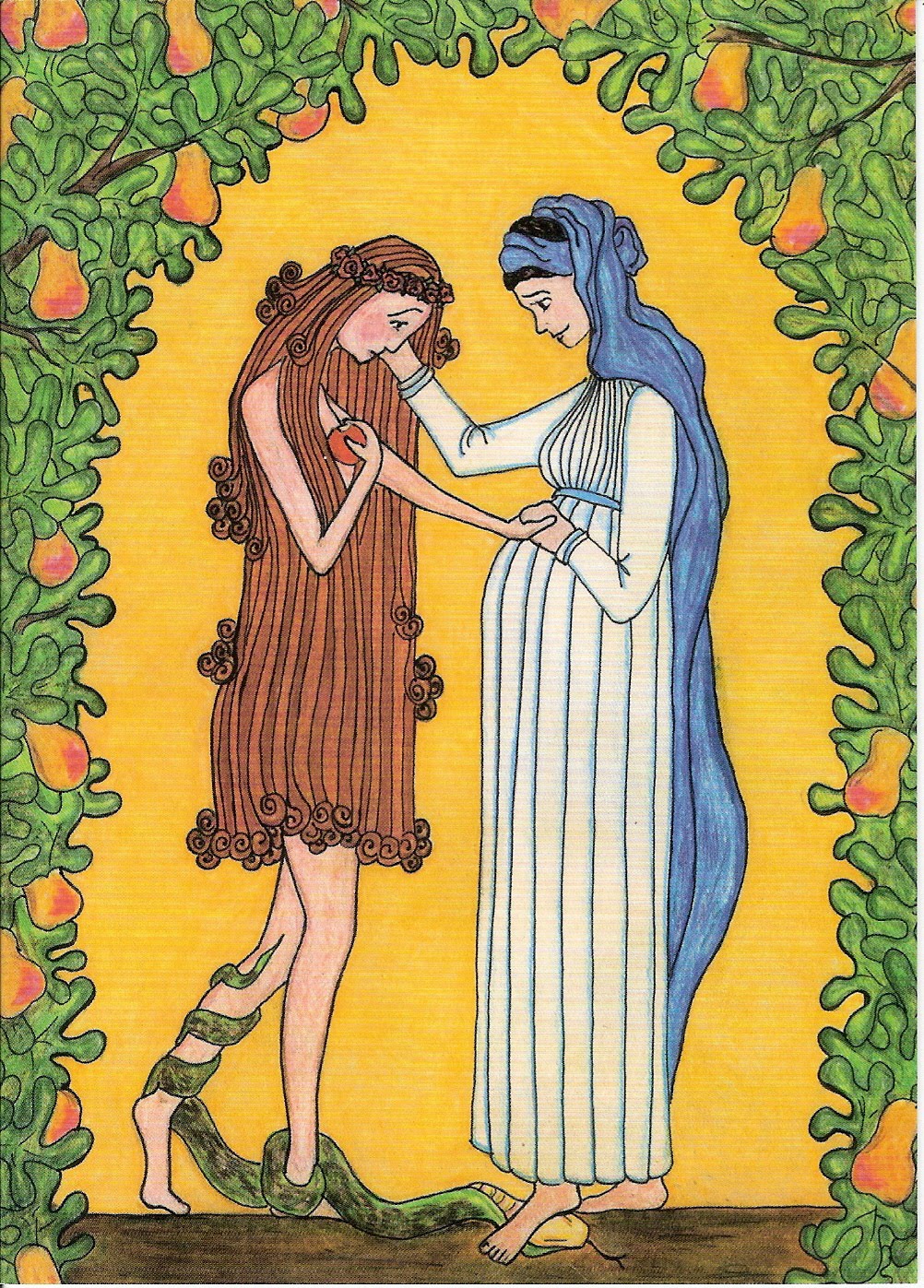
Mary Comforts Eve

At his Last Supper, Jesus demonstrated his servanthood by washing his disciples’ feet.[vi] He clearly taught the principle of humble submission.

Now there was also a dispute among them, as to which of them should be considered the greatest. And He said to them, “The kings of the Gentiles exercise lordship over them, and those who exercise authority over them are called ‘benefactors.’ But not so among you; on the contrary, he who is greatest among you, let him be as the younger, and he who governs as he who serves. For who is
greater, he who sits at the table, or he who serves? Is it not he who sits at the table? Yet I am among you as the One who serves.
“But you are those who have continued with Me in My trials. And I bestow upon you a kingdom, just as My Father bestowed one upon Me, that you may eat and drink at My table in My kingdom, and sit on thrones judging the twelve tribes of Israel
” (Luke 22:24-29, NKJV).

How will we defeat and disarm Satan and lay waste to his kingdom? It will not happen through mere political engagement. That is not the route Jesus took. That political rabbit hole is the devil’s lair. We are intruding on Satan’s turf when we head down that hole, and he knows how to fight and win down there. He has been doing it for thousands of years.

We win by using the same tactics as Jesus. It is the surrendered life that wins battles in the spiritual realm. It is the life surrendered to the will of the Father that prepares the way for salvation and world-transforming revival.


[i] Dr. Martin Luther’s Small Catechism, A Handbook of Christian Doctrine, Concordia Publishing House, Saint Louis, Missouri, P. 64

[ii] John 8:44

[iii] For a thorough play-by-play account of the trial and crucifixion of Christ, and the political machinations of Herod Antipas, Joseph Caiaphas, and Pontius Pilate read The Soldier Who Killed a King by David Kitz, Kregel Publications, 1917.

[iv] Matthew 11:11

[v] Philippians 2:5-11

[vi] John 13:1-17

This is the fifteenth weekly excerpt from the award-winning book 
The Elisha Code & the Coming Revival 

A soul-gripping read.
Is a return-to-Jesus revival possible in our time?
This book points the way forward.
For details click here.

The God of the Broken

14 Sunday Dec 2025

Posted by davidkitz in The Elisha Code

≈ 3 Comments

Tags

AB Simpson, Aimee Semple McPherson, Andrew Murray, Bible, broken, brokenness, Christ, David, Jacob, Jesus, Prayer, the LORD

 And He said,
“Your name shall no longer be called Jacob, but Israel;
for you have struggled with God and with men,
and have prevailed.”
(Genesis 32:28, NKJV)

The people whom God uses to change the world have first been radically changed by the Spirit of God. Often, these world changers have experienced major setbacks. We might even say they have been broken by God, but they have come through those experiences transformed and empowered by the Spirit.

There is a pattern that emerges as we look back at the lives of the three revival leaders we have examined thus far. Each of them reached a breaking point.

A. B. Simpson was a successful minister, who through much hard work, built a large church but he experienced burnout and a physical breakdown. From this low point, God healed him and raised him up to bring healing and salvation to thousands.

Similarly, Aimee Semple McPherson experienced a complete physical breakdown that left her hospitalized and at the point of death. She had returned from the mission field as a widow and a broken woman. She transitioned to a new life but steadfastly resisted God’s call. But God broke her resistance, miraculously restored her health, and catapulted her into a healing ministry that changed the trajectory of the church in America and the world.

Andrew Murray had what many would consider a successful ministry. But he too reached a breaking point. He lost his voice for two years. From this low point, God healed, transformed, and restored Murray to a far more effective and far-reaching ministry.

The common thread running through these life stories is that all three leaders encountered a breaking point. God broke them. Why would God do such a thing? Do we need to be broken to become effective ministers of the gospel of Christ?

There are several stories in the Bible that illustrate this need for God to break us.

The life story of the patriarch Jacob serves as the primary example of God taking a man to a breaking point. Jacob was a grasper. He grabbed for power. This is graphically illustrated by the way he came into this world. He arrived grasping his twin brother’s heel.[i] From the moment of birth, we see Jacob attempting to supplant Esau, his older brother, through cunning and deception.

Jacob succeeds first by trading a pot of lentil stew for Esau’s birthright (Genesis 25:29-35), and later by conspiring with his mother to rob Esau of his father’s blessing (Genesis 27:1-41). When Esau threatens to kill him, Jacob flees to the distant home of his uncle Laban.

Repeatedly, Jacob bargains with God, and God answers his prayers. Perhaps this is the most remarkable feature of Jacob’s life story. The LORD sticks with this deceiver and blesses him despite his devious ways. His life is a portrait of God’s unmerited favor in the face of constant opposition.

Jacob met his cunning, devious double in the person of Uncle Laban. First, Laban deceived Jacob by swapping Leah for her sister Rachel on his wedding night. There is more than a little divine justice at play in Laban’s clever deception. Jacob who cheated his blind father is cheated blind in his own marriage bed. The irony in this outcome is striking. Jacob is required to work seven years for Leah and then seven more years for Rachel, his true love.[ii]

Then, over the years, Laban changed Jacob’s wages ten times. But despite Laban’s constant readjustments, Jacob’s flocks and herds grew and prospered. God’s blessing bestowed by Isaac remained on Jacob.[iii]

But eventually, God brought Jacob to a breaking point. It happened on Jacob’s return to his homeland.
Jacob gets word that his brother Esau is coming to meet him with 400 men. Why would Esau come with 400 men unless he intended to carry out the threat, he uttered twenty years earlier? Suddenly, Jacob’s life is on the line, and not only his life, but also the lives of his two wives and his twelve sons. His family and all the wealth he accumulated over years of hard labor is about to be wiped out. He finds himself in a truly desperate situation with no way out.

In exchange for his life, he offers to bargain away all his livestock, his wives, and his children. But will this desperate ploy satisfy the angry brother he has cheated? Jacob sends all he has ahead of him. To his servants he says:

“When my brother Esau meets you and asks, ‘Who do you belong to, and where are you going, and who owns all these animals in front of you?’ then you are to say, ‘They belong to your servant Jacob. They are a gift sent to my lord Esau, and he is coming behind us’” (Genesis 32:17-18, NIV).

But Jacob stays back on the opposite side of the Jabok River. There alone in the dark for the whole night, Jacob wrestled with a man. But in truth, he wrestled with God.

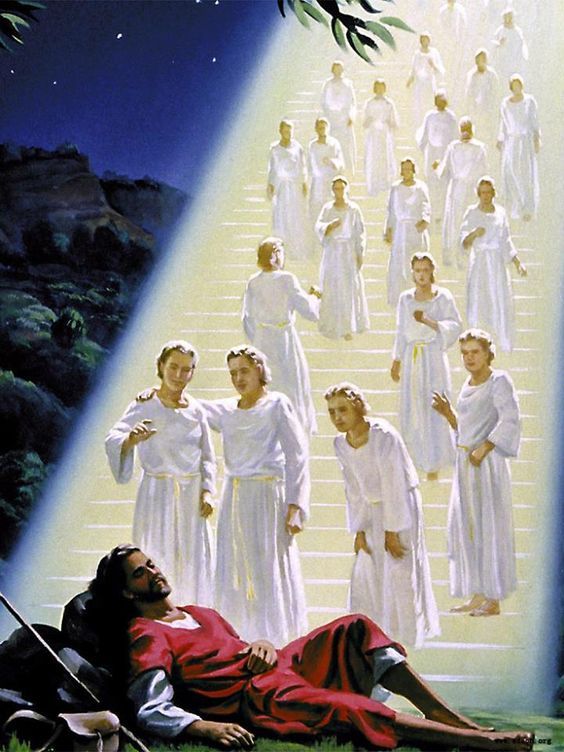
Jacob’s Ladder — Genesis 28:12

Many Bible scholars view this man as a Christophany—a preincarnate appearance of Christ. Christ came down from heaven to break this obstinate cheater—break him and change him into a vessel he could use for his glory and his eternal purpose.

When the man saw that he could not overpower him, he touched the socket of Jacob’s hip so that his hip was wrenched as he wrestled with the man. Then the man said, “Let me go, for it is daybreak.”

But Jacob replied, “I will not let you go unless you bless me.”

The man asked him, “What is your name?”

“Jacob,” he answered.

Then the man said, “Your name will no longer be Jacob, but Israel, because you have struggled with God and with humans and have overcome.”

Jacob said, “Please tell me your name.”

But he replied, “Why do you ask my name?” Then he blessed him there.

So Jacob called the place Peniel, saying, “It is because I saw God face to face, and yet my life was spared” (Genesis 32:25-30).

There can be no doubt who the stronger man was at Peniel. With a simple touch Jacob’s

hip was wrenched. With a simple touch Christ healed the sick, raised the crippled, and restored sight to the blind. But here with a simple touch, Christ wrenched Jacob’s hip and left him limping for the rest of his days.

Why this stark contrast? We can easily understand why Christ would heal a crippled beggar, but why would he break a man? Why break Jacob?

The simple answer is because Jacob needed to be broken. The wild horse serves no one. The wild stallion serves only himself. Only the broken horse is fit for the master’s service. All of Jacob’s service was self-serving, and that includes his service to Laban. From Peniel onward Jacob—broken Jacob—was serving the LORD.

Galloping Horses – Image courtesy of Tina Phillips at FreeDigitalPhotos.net

David, the man after God’s own heart, needed to be broken too. David was true to the LORD in the wilderness with jealous King Saul in hot pursuit, but after he assumed the throne of Israel his fleshly desires led him astray. After his sin with Bathsheba, God needed to break him. The events that followed this sordid affair brought the humility so essential to effective service to God. Psalm 51 reflects the heart cry of a broken man.

This need for the servant of God to be broken by God appears in the New Testament as well. Peter needed to be broken by Jesus. Peter was a natural leader—sure of himself in all situations—ready to step out of a boat and even walk on water. That takes more than a little courage. But that confident self-assurance needed to be broken, and Jesus knew how to do it.

It only took the third crowing of a rooster to break Peter and reduce him to a blubbering, sobbing mess. Jesus knows how to break the strongest men. But he also knows how to restore them.

Three times Jesus asked, “Simon son of John, do you love me?”[iv] Three times Peter affirmed his love for the Lord, and three times Jesus affirmed Peter’s calling:

Jesus said, “Feed my lambs” (John 21:15).
Jesus said, “Take care of my sheep” (John 21:16).
Jesus said, “Feed my sheep” (John 21:17).

Photo by kailash kumar on Pexels.com

The broken Peter was now ready for service. He would fulfill the prophetic words Jesus had spoken over him before his fall and now in his restoration.

“Simon, Simon, Satan has asked to sift all of you as wheat. But I have prayed for you, Simon, that your faith may not fail. And when you have turned back, strengthen your brothers” (Luke 22:31-32, NIV).

The broken Peter had been humbled. Now Jesus ruled Peter. Now the Master was truly the Master and Lord of all.

Have you been broken by Jesus? Most Christians are eager to serve the Lord, but only in an advisory capacity. Peter was quick to give Jesus advice on how he should avoid the cross. See Matthew 16:21-27.

The Lord is not looking for our advice. He is looking for our obedience.

Jesus himself needed to be broken. His Heavenly Father broke him on the cross where he cried out, “Eli, Eli, lema sabachthani?” (Which means “My God, my God, why have you forsaken me?”) (Matthew 27:46, NIV).

When Jesus broke, he broke the stranglehold of sin over humanity. His breaking was essential for the salvation of our souls.

As disciples of our Lord Jesus, we can expect to be broken as well. We need to become like our Master in every way.

Saul of Tarsus was zealous to serve the God of his fathers, so zealous he persecuted the church. Jesus himself intervened in Saul’s life in order to break him. On the road to Damascus, Saul was confronted by Jesus—arrested by Jesus—blinded and broken by him.

Out of his brokenness Paul ministered the gospel to the Gentile world of his day. Through his writing he continues to speak to millions today.

Have we been confronted by Jesus? Has he opposed you at any point in your life? Have you been broken by him? In the power of our own flesh, we can do many good and noble things in the name of our Lord. Many fine churches have been built through clever marketing and ingenuity. Human effort and talent can carry us a long way.

In the eyes of many, A. B. Simpson had a successful ministry before Christ broke him. Andrew Murray was powerfully used by God before God broke him and set him aside for two years. But both these men came out of their time of brokenness refined and empowered by the Spirit of God. In their hearts there had been a regime change. The risen Christ was fully in charge now and the Spirit of God was directing them forward.

Are you and I ready to be broken and poured out at the feet of Jesus?

Then Mary took a pound of very costly oil of spikenard, anointed the feet of Jesus, and wiped His feet with her hair. And the house was filled with the fragrance of the oil (John 12:3, NIV).

[i] Genesis 25:21-26

[ii] Genesis 29:14-30

[iii] Genesis 31:38-42

[iv] John 21:15-19

This is the fourteenth weekly excerpt from the award-winning book 
The Elisha Code & the Coming Revival 

A soul-gripping read.
Is a return-to-Jesus revival possible in our time?
This book points the way forward.
For details click here.

Living the Crucified Life

07 Sunday Dec 2025

Posted by davidkitz in The Elisha Code

≈ 5 Comments

Tags

concentration camp, Corrie ten Boom, England, faith, forgiveness, Gestapo, Jesus, John Newton, Nazi Germany, Nazi soldiers, parliament, slave, slavery, Wilberforce

I have been crucified with Christ;
it is no longer I who live, but Christ lives in me;
 and the life which I now live in the flesh 
I live by faith in the Son of God, 
who loved me and gave Himself for me.
(Galatians 2:20, NKJV)

The Elisha Code is all about dying to self and living for Christ. Christ is the second Adam—the new man who fully bears the image of God. In Eden, the tempter succeeded in marring the image of God that was so beautifully evident in Adam and Eve before the fall. Sin robs and defiles. Jesus redeems and restores.

Art by Hult –www.biblicalarchaeology.org

Two people who lived the crucified life were William Wilberforce and Corrie ten Boom. Both fought hatred and the dehumanizing forces of slavery and racism. Their most powerful weapon was relentless love. Today, those who embrace the Christ of the cross are called to do the same.

Abraham Lincoln once said that every school child should know about William Wilberforce.[i] For twenty long years from 1787 to 1807, Wilberforce persistently campaigned for the abolition of the slave trade. It was incredibly painful and often deeply discouraging work.

What kept him from giving up as he faced defeat after defeat? Wilberforce had previously lived a self-indulgent life as a very wealthy upper-class Englishman. What motivated him to stop wasting his life in drinking, gambling, and endless parties? He was a popular Member of Parliament who wowed crowds with his remarkable singing and wit. Prime Minister William Pitt said that Wilberforce had the greatest natural eloquence of all the men he had ever known.[ii] What caused him to choose the unpopular path of putting principle above politics, and conscience over ambition?

With the death of Wilberforce’s father at just age 40, William’s comfortable world was radically shaken. At the age of eight, because of his mother’s serious illness, he was shipped off to his Uncle William and Aunt Hannah in Wimbledon. Unbeknownst to his mother, he was mentored by Rev. John Newton, the former slave-ship captain and author of the song Amazing Grace. Some trace Wilberforce’s hatred of slavery back to this earliest encounter.

When Wilberforce’s wealthy grandfather got wind of his new spirituality, he threatened to disinherit him. So, Wilberforce’s mother promptly rescued him and did her best to cure him through endless parties and upper-class distractions. For a while, the cure was effective. After his grandfather’s death, Wilberforce inherited the family fortune which funded his election as an 18-year-old English member of parliament.

While spending the winter at the fashionable French and Italian Rivieras, he was suddenly called back to London in support of William Pitt’s Parliamentary Reform Bill. While crossing the Swiss Alps, Wilberforce read The Rise and Progress of Religion in the Soul by Philip Doddridge. Both Doddridge and John Wesley were instrumental in reintroducing the forgotten teachings of Richard Baxter about self-examination, solitude, devotions, and diligence.[iii]

In discussing Doddridge’s book with his former tutor Isaac Milner, Wilberforce’s life was radically changed. He rediscovered his childhood faith at an adult level. Wilberforce, with Milner’s assistance, began reading the Bible in the original Greek. He wanted to find out for himself what the Christian faith was truly about. He discovered that it was not about a system of gloomy prohibitions. True faith is about peace, hope, and joy. When Wilberforce fell in love with Jesus, he also fell in love with God’s creation.

Rather than drop out of politics as he was tempted to do, Wilberforce turned his new-found faith into practical action. Prime Minister Pitt wrote him, saying: “Surely the principles as well as the practice of Christianity are simple, and lead not to meditation only but to action.”

Reconnecting with his old mentor, the converted slave-ship captain, John Newton, Wilberforce realized that God could use him to end the slave trade: “God almighty has set before me two great objects: the suppression of the Slave Trade and the reformation of manners.”

Eighteenth-century England was rife with epidemic alcohol abuse, child prostitution, child labor, and animal exploitation. There were over 14,000 slaves in England alone, but hundreds of thousands more in the rich Caribbean English colonies where it was out of sight and out of mind.[iv] The future King of England George IV was famous for his immorality and gambling debts, keeping lockets of hair from all 7,000 women that he had seduced.[v] The King and his royal brothers dismissed abolitionists like Wilberforce as fanatics and hypocrites.[vi]

Because England was the foremost slave-trading nation on earth, it was initially unthinkable for them to give it up. As one merchant accurately put it, the African slave trade was “the foundation of our commerce…the life of our navigation, and first cause of our national industry and riches.”[vii]

Eighty per cent of overseas British income came from the Caribbean slave plantations.[viii] Wilberforce was naively asking England to commit commercial suicide. In Bristol, after the initial defeat of Wilberforce’s bill, bells were rung, a bonfire was lit, and a half-day holiday was awarded to sailors and workers.[ix] The passion for profit and slave-produced sugar had killed their conscience.

While fighting the slave trade, Wilberforce also invested in improving the life of England’s poor, giving one quarter of his income, representing the equivalent of $300,000 away each year. He started cancer hospitals, eye clinics and many faith-based schools for the poor.[x]

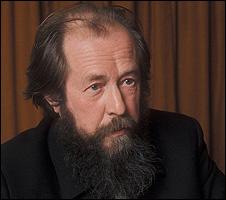
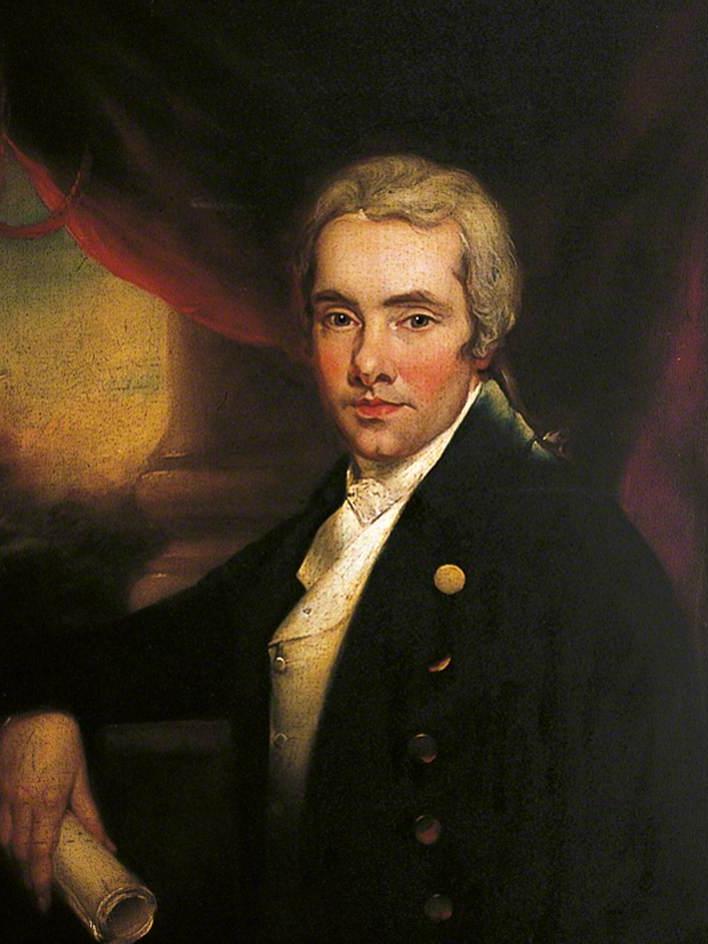
William Willberforce portrait (John Russell)

The slave trade was abolished in 1807; however, the slaves were not liberated until just before Wilberforce’s death. On July 31st, 1834, 800,000 Afro-Caribbeans were set free. While moving a motion for abolition, Wilberforce said, “Africa! Africa! Your sufferings have been the theme that has arrested and engages my heart – your sufferings no tongue can express; no language impart.”[xi]

In the 1940’s, Corrie ten Boom also learned to act on her strong faith. The Nazis conquered the Netherlands in May 1940, and during the German occupation 100,000 Dutch Jews were sent to concentration camps. Corrie prayed, “Lord Jesus, I offer myself for your people. In any way. Any place. Any time.”[xii]

By disguising themselves as Nazi soldiers, her underground team saved 100 Jewish babies from being killed in an orphanage.

A well-known architect built them a secret two-and-a-half foot-wide hiding place behind a new brick wall in Corrie’s bedroom.[xiii] Even after arresting the ten Booms, the Gestapo were never able to find the Jews hidden in this ‘angel-crib’ hiding place.[xiv]

At the time of the arrest, Corrie’s interrogator painfully slapped her in the face after every question. Corrie cried out: “Lord Jesus, protect me!”

He hissed at her, “If you mention that name again once more, I will kill you.”

But miraculously, he stopped beating her.[xv]

Corrie and her sister Betsie hid over 800 Jewish people in their Haarlem watchmaker home, before being sent to Ravensbruck Concentration Camp in eastern Germany where 96,000 women died. “The sufferings of Jesus,” said Corrie, “became very real to me at Ravensbruck.”[xvi]

She lost four family members in the concentration camps, including her beloved older sister Betsie who forgave and prayed for the guards even as they mercilessly beat her.

Photo by RODNAE Productions on Pexels.com

“Don’t hate,” Betsie pleaded to Corrie. Three days before Betsie died, she shared with Corrie the vision of opening healing homes in Holland and Germany, before going around the world sharing about Jesus’ love and forgiveness. Two weeks later, Corrie was set free through a God-ordained clerical error.[xvii] One week after this, all the other women her age at Ravensbruck were taken to be killed in the gas chamber.

Upon returning to Holland, Corrie opened a home in Holland to bring healing for people, even including the ostracized Dutch collaborators. She was knighted by the Queen of the Netherlands for her work.
Corrie told God that she was willing to go where he wanted her to go but hoped that he would never send her back to Germany. Finally, after sensing a blockage in her prayer life, she repented, saying, “Yes, Lord, I’ll go to Germany too.”[xviii]

God sent her back to Ravensbruck to lead Bible studies with former guards, now in that prison. Then, she rented and cleaned up a former concentration camp in Germany to bring temporary housing and healing to some of the nine million Germans who had been bombed or driven out of their homes.[xix]

In 1946, a former Ravensbruck guard said to Corrie in Munich, “How grateful I am for your message, Fraulein. To think, as you said, that he washes my sins away!”

Corrie later wrote, “His hand was thrust out to shake mine… Even as angry, vengeful thoughts boiled through me, I saw the sin of them. Jesus Christ had died for this man. Was I going to ask for more? Lord Jesus, I prayed, forgive me and help me to forgive him… Again, I silently prayed ‘Jesus, I cannot forgive him. Give me your forgiveness.’ As I took his hand, my heart felt an overwhelming love for this stranger.”[xx

Corrie became a penniless tramp for the Lord, travelling for three decades to sixty-two countries, and sleeping in over a thousand different beds.[xxi] Wherever she went globally, Corrie shared from her Ravensbruck experience that the light and love of Jesus Christ is deeper than the deepest darkness. She was the favorite travelling companion of the Bible-smuggler Brother Andrew as they both did missionary work behind the Iron Curtain, in Vietnam and twelve other Communist countries. In Vietnam, they gave her the honorific title of “Double-old Grandmother.”

While in the Soviet Union, she intentionally preached the gospel in her hotel room, knowing that everything she said was being listened to and recorded by communist officials.

Through her deep friendship with Rev. Billy and Ruth Graham, Corrie’s The Hiding Place book was turned into a movie reaching tens of millions. Ruth Graham said: “I didn’t know anyone who had suffered so intensely for the Lord and for his people, as Corrie had, and come through with absolutely nothing but love in her heart for her captors—she forgave them.”[xxii]

In 1967, Corrie was recognized by Israel as a righteous Gentile, with the planting of a tree in her honor.[xxiii] When people kept telling her how brave she was, Corrie transparently prayed, “What little courage I have… I was not brave. I was often like a timid, fluttering bird, looking for a hiding place… Lord, I am weak and cowardly and of little faith; do hold me close. Thou art the conqueror. May that assurance give me courage and loyalty.”[xxiv]

Because of her work blessing indigenous people, Corrie was adopted into the Hopi First Nation and given the name Beautiful Flower.[xxv] While staying at a Kansas farm, Corrie challenged her host who had recently kicked his son out, telling him to never darken his doorstep again. She said to the farmer: “If you believe in Jesus Christ and belong to Him, your sins have been cast into the depths of the sea, and that’s very deep. But then he expects also that you forgive the sins of your boy and cast them into the depths of the sea. Just imagine how you would feel if there should be another war, if your son had to go back into service and was killed in action. Don’t you think you should forgive him right now?”

After riding together in silence, the farmer invited Corrie to go with him as he asked his son to forgive him. His son replied, “But, Father. I should ask you for forgiveness.”[xxvi]

In her late sixties, Corrie was betrayed and hurt by some Christians she loved and trusted: “You would have thought that having been able to forgive the guards in Ravensbruck, forgiving Christian friends would be child’s play. It wasn’t. For weeks, I seethed inside. But at last, I asked God again to work His miracle in me… I was restored to the Father.”

She later burnt the painful letters from her friends, as a sign of letting go.[xxvii] She, like Wilberforce, lived the crucified life. Unlike Adam and Eve, Wilberforce and ten Boom did not run from God. They found their hiding place in God (Psalm 32:7). In tumultuous times, they courageously fought against forms of racism that mar and debase the image of God that we all bear.

So God created mankind in his own image,
in the image of God he created them;
male and female he created them.
(Genesis 1:27, NIV)

This is the thirteenth weekly excerpt from the award-winning book 
The Elisha Code & the Coming Revival 

A soul-gripping read.
Is a return-to-Jesus revival possible in our time?
This book points the way forward.
For details click here.

[i] Lincoln on abolition in England and the United States, 1858 | Gilder Lehrman Institute of American History (accessed April 13th 2023).

[ii] Eric Metaxas, Amazing Grace (Harper Collins Publishers, New York, NY, 2007), 41.

[iii] William Hague, William Wilberforce: the Life of the Great Anti-Slave Trade Campaigner, (HarperCollins Publishers, London, UK, 2007), 74.

[iv] Metaxas, Amazing Grace, 94.

[v] Metaxas, 72.

[vi] Metaxas, 158.

[vii] Hague, 119.

[viii] Hague, 119.

[ix] Hague, 225.

[x] Hague, 221.

[xi] Metaxas, 151.

[xii] Corrie ten Boom, The Hiding Place (Chosen Books, Bantam Books, Fleming H Revell, New York, New York, 1971), 114.

[xiii] Ten Boom, The Hiding Place, 120.

[xiv] Corrie ten Boom, A Prisoner—and Yet (Christian Literature Crusade, London, UK, 1954), 12.

[xv] Ten Boom, A Prisoner—and Yet, 13.

[xvi] Ten Boom, A Prisoner—and Yet, 87.

[xvii] Ten Boom, The Hiding Place, 241

[xviii] Corrie ten Boom, Amazing Love, (Christian Literature Crusade, London, UK, 1954), p. 27.

[xix] Ten Boom, Amazing Love, 36.

[xx] Ten Boom The Hiding Place, 238.

[xxi] Corrie ten Boom & Jamie Buckingham, Tramp for the Lord (BBS Publishing Company, New York, 1975, 1995), 185.

[xxii] Corrie Ten Boom “The Lives She Touched” video Ruth Graham: “When I met Corrie, the thing that really impressed me was the twinkle in her eye. There was nothing but love and forgiveness.”

[xxiii] Ten Boom, The Hiding Place, 138.

[xxiv] Ten Boom, A Prisoner— and Yet, 129.

[xxv] Corrie ten Boom “The Lives She Touched” video.

[xxvi] Ten Boom, Amazing Love, 10.

[xxvii] Ten Boom & Buckingham, Tramp for the Lord, 310.

Elijah’s Flight from Woman

30 Sunday Nov 2025

Posted by davidkitz in Psalms, The Elisha Code

≈ Leave a comment

Tags

Bible, boys, E. Stanley Jones, Elijah, Elisha, gospel, healthy men, Heavenly Father, hiding from God, Jesus, Jezebel, prophets, sacrifice

Then the man and his wife heard the sound of the LORD God
as he was walking in the garden in the cool of the day,
and they hid from the LORD God among the trees of the garden.
 But the LORD God called to the man,
“Where are you?”
(Genesis 3:8-9, NIV)

Before continuing to examine the typological link between Elisha and Jesus, a closer look at the low point in Elijah’s ministry is warranted. We are all prone to temptation and often we are blind to our own weaknesses. Thousands of reputable ministries have been tarnished or ruined after notable accomplishments.

It is remarkable how Elijah had great success in challenging the 450 prophets of Baal, calling down fire from heaven, and then having these false prophets put to death (1 Kings 18:20-40). Finally, through prayer, he broke the three-year drought that had ravaged the land (Kings 18:41-46).

But after being cursed by Queen Jezebel, he runs away, becoming depressed and suicidal. How could just one woman have such a devastating impact on this hero of Israel? To what degree was she involved in the occult, and the manipulation of others through secret word curses?

Now Ahab told Jezebel everything Elijah had done and how he had killed all the prophets with the sword. So Jezebel sent a messenger to Elijah to say, “May the gods deal with me, be it ever so severely, if by this time tomorrow I do not make your life like that of one of them.” (1 Kings 19:1-2, NIV)

Jezebel believed she could destroy Elijah just like she destroyed many other men before him. But ultimately, she did not finish well.[i]

In the Alcoholics Anonymous twelve-step program, the acronym HALT is used to identify occasions when we are most vulnerable to temptation and even despair. Elijah suffered from all four temptations after his exhausting victory on Mount Carmel. His stunning success left him 1) Hungry 2) Angry 3) Lonely and 4) Tired.

What began as a flight from the woman, Jezebel, became a flight from God.

But God, in his compassion, ministered to Elijah’s four needs, giving him food and drink, counsel, companionship, and sleep (1 Kings 19:3-9). When Elijah said, “take my life”, it is reminiscent of Jonah after his success in Nineveh, where he too did not want to live. In that loss of hope, God spoke to Elijah not in the thunderstorm, earthquake, and pyrotechnics, but in that still small voice—the whisper of the Spirit (1 Kings 19:11-13).

The flight from woman and the LORD ended when Elijah started listening and instead of just ranting at God.

He replied, “I have been very zealous for the LORD God Almighty. The Israelites have rejected your covenant, torn down your altars, and put your prophets to death with the sword. I am the only one left, and now they are trying to kill me too”
(1 Kings 19:14, NIV).

Elijah had to give up the lie that he was the only one left. And furthermore, in listening to God, Elijah had to admit that he was not ultimately in control.

E. Stanley Jones

One of Ed’s heroes, E. Stanley Jones, listened to that still, small voice every day for one hour in the morning and one hour at night. He called it his listening post. Facing total burnout, Jones told God that he was done. God offered to take over if he would let go and let God order his life. He experienced Jesus’ healing when he came to a deep self-surrender. Elijah on Mount Horeb similarly had to come to a self-surrender. Surrender is like death for spiritual superheroes like Elijah. It is the breaking point that is often needed so we can be fully yielded to God’s will.

This flight from woman can be seen as representing a crisis in masculinity. CS Lewis scholar Leanne Payne wrote a remarkable book Crisis in Masculinity which she dedicated to Dr Karl Stern.  He was a Montreal Jewish psychiatrist (and believer in Jesus) who wrote the 1965 book Flight from Woman.[ii]

Leanne Payne, mentored by the healing pioneer Agnes Sanford, had a remarkable ministry of bringing wholeness to broken people, particularly those struggling with identity issues. She saw that many men were running from the feminine, because they were in crisis with their own masculine identity. The image of Narcissus to Leanne represented how many men curve in on themselves in self-worship.

Leanne was powerfully used in helping many men become whole through embracing their true identity as sons of the heavenly Father. Through healing prayer, Leanne helped many recover the divine imagination and creativity that had been lost in their self-absorption. All of us need healing in areas where the image of God has been broken inside us. Such powerful encounters with the Holy Spirit enable us to become more fully human. Such healing gives men the courage to responsibly embrace the unique challenges of marriage and family.

This crisis in masculinity has only deepened since the days of Payne and Stern. The identity confusion for young men is often paralyzing. The well-known Canadian psychologist Dr. Jordan Peterson often talks about how men are now the minority in university, and how many of them are struggling to find direction and academic accomplishment. These difficulties often begin in the elementary grades, where all too often there are no male teachers, few positive male role models, and academic performance among boys has seen an alarming decline.

We are witnessing a well-documented male aversion to leadership. Both boys and men are refusing to assume the mantel of leadership.

In post-modernism, men are often defined as the problem. Our culture deconstructs people through guilt and shame, and then often leaves them in nihilistic despair. In contrast, the gospel gives hope to people.

While Jordan Peterson is not yet a Christ follower, he has discovered how the Bible can help men be more authentic in living out their life’s calling as responsible contributors. Healthy men fight for their families and marriages. They do not run from them. Healthy men sacrifice for their families. They don’t sacrifice their wives and children on the altar of personal fulfillment and business success.

Elijah has much to teach men in our 21st century context. Even after he ran from woman, he ultimately was found by God, and returned to face the challenges that God had set before him.

Hiding never works. It did not work for Adam and Eve, and it did not work for Elijah. Everyone loses when men hide from the responsibilities of life.

This is the twelfth weekly excerpt from the award-winning book 
The Elisha Code & the Coming Revival 

A soul-gripping read.
Is a return-to-Jesus revival possible in our time?
This book points the way forward.
For details click here.

[i] 2 Kings 9:30-37

[ii] “Karl Stern: Freudian to Catholic”, “The Flight From Woman (1965), a philosophical treatise on modern society’s polarization of the sexes and its de-feminization, would make him a common name in women’s magazines”. https://www.tabletmag.com/sections/arts-letters/articles/karl-stern-freudian-catholic

Regime Change: the Mission of the Dynamic Duo

23 Sunday Nov 2025

Posted by davidkitz in The Elisha Code

≈ Leave a comment

Tags

Ahab, Elijah, Elisha, fire from heaven, God's power, humility, idolatry, Jesus, Jezebel, John the Baptist, lies, Mount Carmel, pride, Pride and Humility, regime change, repentance, Russia, the LORD, Ukraine

At that time Jesus, full of joy through the Holy Spirit, said, 
“I praise you, Father, Lord of heaven and earth,
because you have hidden these things from the wise and learned,
and revealed them to little children. 
Yes, Father, for this is what you were pleased to do.
(Luke 10:21, NIV)

Before sunrise on February 24, 2022, Russia launched a multi-pronged attack on Ukraine by air, land, and sea. Kiev, the capital, was expected to fall within days. President Biden offered to evacuate Ukrainian President Volodymyr Zelenskyy from the besieged capital. But a resolute and defiant Zelensky replied, “I need ammunition, not a ride.”[i]

What was Vladimir Putin’s objective in launching this unprovoked Russian attack on his smaller southern neighbor? His immediate goal was regime change. He wanted to oust the democratic, pro-western government of Ukraine and replace it with a pro-Russian regime subservient to his will.

Putin failed in his immediate objective. The Ukrainian defenders mounted a fierce resistance. The invaders were beaten back, though they engaged in rape, and a wanton killing of civilians, and inflicted massive destruction.

Photo by Pixabay on Pexels.com

At the time of this writing, the war rages on. The outcome remains uncertain. Regime change may yet come. But will the regime change be in Kiev or in Moscow? Time will tell.

Here is what we know with certainty from the Scriptures. The LORD wants regime change. Elijah and Elisha, the Old Testament dynamic duo, were on a mission. They had an assignment directly from the LORD God Almighty. What was their mission—the task the LORD assigned to them?

In broad terms their assignment was regime change. The northern Kingdom of Israel had turned its back on God—the God who generations earlier had rescued them from slavery in Egypt. Worse yet, Israel had turned to idolatry. Under the autocratic rule of Ahab and Jezebel, the worship of the fertility gods Baal and Asherah flourished.[ii]

First Elijah, and then, Elisha was tasked with bringing the wayward people of God back to worshipping Yahweh. But King Ahab and Queen Jezebel—Satan’s power couple—stood in the way.

Furthermore, this was a life and death struggle for the minds and hearts of the people.

Amid a famine brought on by a severe drought some dared to defy Israel’s King and Queen. Obadiah, Ahab’s palace administrator, was such a man. A devout believer in the LORD, Obadiah risked his life.

While Jezebel was killing off the Lord’s prophets, Obadiah had taken a hundred prophets and hidden them in two caves, fifty in each, and had supplied them with food and water (1 Kings 18:4, NIV).

In response, Elijah courageously confronted King Ahab and challenged him to assemble all of Israel for a duel to the death on Mount Carmel. Ahab was to bring with him “the four hundred and fifty prophets of Baal and the four hundred prophets of Asherah, who eat at Jezebel’s table” (1 Kings 18:19, NIV).
Thus the stage was set for what many consider the greatest challenge and display of God’s power in the Hebrew Scriptures.

          Elijah went before the people and said, “How long will you waver between two opinions? If the Lord is God, follow him; but if Baal is God, follow him.”
          But the people said nothing.
Then Elijah said to them, “I am the only one of the Lord’s prophets left, but Baal has four hundred and fifty prophets. Get two bulls for us. Let Baal’s prophets choose one for themselves, and let them cut it into pieces and put it on the wood but not set fire to it. I will prepare the other bull and put it on the wood but not set fire to it. Then you call on the name of your god, and I will call on the name of the Lord. The god who answers by fire—he is God.”
Then all the people said, “What you say is good”
(1 Kings 18:21-24, NIV).

The LORD vindicated his prophet, Elijah, by sending fire from heaven that “burned up the sacrifice, the wood, the stones and the soil, and also licked up the water in the trench” (1 Kings 18:38, NIV).

The prophets of Baal were vanquished.[iii] But rather than turn on Ahab and have him killed as well, Elijah declares the king should go and celebrate because a drought-ending rainfall was on its way. Then Elijah ascended the mountain, fell on his knees, and prayed for the rain to come, and after much prayer the downpour arrives.[iv]

Why this show of mercy to Ahab, the tyrant and accessory murder?[v] If the ultimate goal is regime change, then why not eliminate the man who stood in the way? Why didn’t the prophet mete out God’s wrath and retribution? Instead, Elijah portrays mercy and the abundant grace of God. Why?

The answer lies at the heart of the gospel message. The gospel message according to Jesus is all about regime change. It’s about letting King Jesus rule our hearts and minds. The government that affects us most directly isn’t in Washington, London, Moscow, or Ottawa, and it isn’t in a state or provincial capital. The government that affects us most directly is the government of our heart and mind. Is Jesus enthroned there? Is he governing your decision making? Is he calling the shots?

Far too often, we think a change of government at the national, state, or local level will transform our lives. That’s a political fantasy politicians love to peddle. True transformational change begins at the individual level. And there is nothing more transformational than spiritual rebirth. Jesus’ conversation with Nicodemus reveals that truth.[vi]

In Elijah’s interaction with Ahab, we see this principle of repentance and rebirth at work. Elijah was working to change the heart of the king. He wanted to see the LORD enthroned there. What could bring about that profound change in the king Ahab’s heart?

Clearly there was a need for repentance. And what could bring about that change? A jaw-dropping, heart-stopping demonstration of God’s power set the stage for genuine repentance. Surely, the miracle of fire falling from heaven would result in a change of heart and a change allegiance—a change from the worship of Baal to the worship of Yahweh.

Take up the Armor of God

Secondly, nothing melts stony hearts like the kindness and mercy of God. Elijah demonstrated that mercy by his treatment of Ahab, and by praying for the rain that ended a three and-a-half-year drought and famine in the land.[vii]

There’s something extravagant about the patience and mercy of God.

Don’t forget that the Lord is patient because he wants people to be saved
(2 Peter 3:15a, CEV).

Or do you show contempt for the riches of his kindness, forbearance and
patience, not realizing that God’s kindness is intended to lead you to repentance?
(Romans 2:4, NIV).

 In his interactions with Ahab, Elijah consistently displayed the undeserved kindness and patience of God. Nothing demonstrates this better than Elijah’s confrontation of Ahab after the incident involving Naboth’s vineyard. Jezebel plotted to have Naboth killed, and Ahab then seized Naboth’s land.[viii]

Elijah spoke these prophetic words to the king:

‘This is what the Lord says: In the place where dog licked up Naboth’s
blood, dogs will lick up your blood—yes, yours!’”
(1 Kings 21:19, NIV).

Of Jezebel, Elijah said:

“And also concerning Jezebel the Lord says: ‘Dogs will devour Jezebel by the
wall of Jezreel’
(1 Kings 21:23, NIV).

But what happen next is truly astonishing. We read that Ahab “tore his clothes, put on sackcloth, and fasted. He lay in sackcloth and went around meekly” (1 Kings 21:27, NIV).

And how did the LORD respond to Ahab’s apparent repentance and contrition?

Then the word of the LORD came to Elijah the Tishbite: “Have you noticed how Ahab has humbled himself before me? Because he has humbled himself, I will not bring this disaster in his day, but I will bring it on his house in the days of his son” (1 Kings 21:28-29, NIV).

What this turn of events demonstrates is the power of personal repentance. Genuine repentance has the power to change the course of history. It prevented the brutal end to Ahab’s dynasty during his lifetime.

Was Ahab’s repentance genuine? We can certainly debate that question. It appears that Ahab turned away from sin, but did he turn his affections to the LORD? Did he seek after God? Or was this a caught-with-a-hand-in-the-cookie-jar repentance that signaled he was sorry to be caught, but not sorry enough to change his ways?

Let’s remember that true biblical repentance brings about a regime change in the mind. The selfish ego that ruled for so long must abdicate. God is in charge now. King Jesus governs our thoughts and actions.

Perhaps Ahab experienced a measure of true repentance, but the real power—the true ruler of his life—was Queen Jezebel. She suppressed Ahab’s repentance and conversion, both after fire fell from heaven at Mount Carmel, and after Elijah confronted him over the incident involving Naboth’s vineyard.

For national regime change to occur, the true power behind the throne needed to repent or be replaced. But in this case, the kingpin wasn’t the king. The kingpin was Queen Jezebel. All of Elijah’s efforts appear to be aimed at King Ahab. But the queen remained untouched, unchanged, and unrepentant. And she ruled the day.

By faith, Elijah engineered an astonishing display of God’s power at Mount Carmel. But shortly thereafter, he also displayed an astonishing level of cowardice in the face of Jezebel’s threats.

Frequently, a great victory is followed by great temptation.

           Now Ahab told Jezebel everything Elijah had done and how he had killed all the prophets with the sword. So Jezebel sent a messenger to Elijah to say, “May the gods deal with me, be it ever so severely, if by this time tomorrow I do not make your life like that of one of them.
Elijah was afraid and ran for his life.
(1 Kings 19:1-3, NIV)

How could this prophet display such raw courage one day, and on the next day wilt before the threats of this depraved woman? After all, Jezebel was calling on the same disgraced gods that Elijah had revealed as powerless a day earlier. Where was the God of Elijah now in the face of this threat? Was he hiding, or had he fallen asleep?

Of course, not! But the prophet succumbed to his fleshly nature, sheer exhaustion, and the fear of man—or more precisely the fear of a woman.

Some psychologists see the classic hallmarks of a manic-depressive in Elijah’s response. He swings from extreme highs to extreme lows. He storms the mountain heights of emotion, exerts himself to an extreme,[ix] and then sinks into the depths of despair.

After fleeing to Horeb, the mountain of God, twice Elijah lays out his complaint before the LORD.

“I have been very zealous for the Lord God Almighty. The Israelites have rejected your covenant, torn down your altars, and put your prophets to death with the sword. I am the only one left, and now they are trying to kill me too” (1 Kings 19:14, NIV).

How does the LORD respond to Elijah’s complaint? He has him appoint his successor and then corrects his self-pitying exaggeration. The modern equivalent might be an announcement from your boss that you are fired for just cause. Let’s take a closer look at the LORD’s reply to Elijah:

“Go back the way you came, and go to the Desert of Damascus. When you get there, anoint Hazael king over Aram. Also, anoint Jehu son of Nimshi king over Israel, and anoint Elisha son of Shaphat from Abel Meholah to succeed you as prophet. Jehu will put to death any who escape the sword of Hazael, and Elisha will put to death any who escape the sword of Jehu. Yet I reserve seven thousand in Israel—all whose knees have not bowed down to Baal and whose mouths have not kissed him” (1 Kings 19:15-18, NIV).

Let’s first look at Elijah’s lie and Yahweh’s response to it. Yes, Elijah lied. He said he was the only prophet of the LORD left, yet Obadiah specifically told Elijah that as a faithful follower of the LORD since his youth, he had hidden a hundred prophets of the LORD in two caves.[x] Yet, before the people gathered on Mount Carmel, Elijah repeats his boast about being the only prophet of the LORD left in the land.[xi] Clearly this was not true.

Furthermore, there is false humility in Elijah’s plea before the LORD. He states, “I have been very zealous for the LORD God Almighty.” Though he has been zealous he has made his zeal a point of pride. He has compared himself with others and concluded their faith and sacrifices in the face of severe persecution merit no consideration. His efforts alone are noteworthy. Thus, he concludes he is the only faithful man left.

Depression begins when we believe a lie. Elijah believed the lie that he alone was faithful to Yahweh. In addition, depression breeds isolation and self-pity. Both are hallmarks of the state Elijah is in.

Sadly, this great man of God fell short and now a replacement is needed to continue the deep work he set in motion in Israel. The will and purpose of God must prevail. But the LORD uses pure vessels rather than those tainted by pride.[xii]

Elijah’s failings all too frequently have been repeated by churches and ministries down through the annals of history. God dramatically uses an individual or a movement to bring about a spiritual awakening or renewal. But then pride sets in. A sense of superiority emerges. This is coupled with a degree of exclusivity that manifests itself by restricting fellowship to a certain group or an inner circle. Attitudes or statements declaring that, “We alone have the full truth” begin to emerge.

Soon the Spirit that was so evidently present in the early days of fruitful ministry is absent. Pride sets in and the Holy Spirit flees. The LORD will use a different vessel—the humble vessel wiped clean.

There is a striking parallel between the ministry of Elijah and John the Baptist:

  • There appears to be a very deliberate attempt by John to take on the appearance of Elijah in his dress, diet, and demeanor.[xiii]
  • Both men boldly called the nation to repentance.
  • Both directly confronted the political leaders of their time (Ahab and Herod Antipas).
  • Both sank into states of depression where they questioned their ministry (Elijah at Mount Horeb, John while imprisoned).
  • Both had their life and ministry undermine or cut short by a woman (Jezebel and Herodias).
  • Both sought regime change but failed to see it in their day.
  • Both sowed the seeds of a remarkable transition.
  • Both were succeeded by men who brought the work they began to fruition (Elisha and Jesus).

With Elijah’s fiery departure, the mission of regime change fell to Elisha to accomplish. A double portion of Elijah’s anointing now rests on him, and under the LORD’s guidance through his ministry Elisha performs miracle after miracle—fourteen in total—doubling Elijah’s total.

Though the overall mission of this prophetic dynamic duo remained the same, there are some striking differences between Elijah and Elisha in terms of their calling, ministry, character, and personality. In the same vein, there are striking differences between the New Testament duo of John the Baptist and Jesus.

First, we should note that Elisha came from a wealthy farm family. We read that at the time of his calling, he was plowing with twelve yoke of oxen. A common farm family might have a single yoke (pair) of oxen, but Elisha was plowing with twelve yoke (twenty-four oxen). That’s an astonishing number, and it implies the family farm is enormous.

Elijah went up to him and threw his cloak around him. Elisha then left his oxen and ran after Elijah. “Let me kiss my father and mother goodbye,” he said, “and then I will come with you.”
“Go back,” Elijah replied. “What have I done to you?”
So Elisha left him and went back. He took his yoke of oxen and slaughtered them. He burned the plowing equipment to cook the meat and gave it to the people, and they ate. Then he set out to follow Elijah and became his servant
(1 Kings 19:19-21,NIV).

Elisha left all to follow Elijah. There is something highly symbolic about Elisha’s sacrifice of his oxen and the burning of his plow. In his farewell, he burned the bridges back to his former lifestyle. It’s a stunning about face for a wealthy young man. Elisha turned his back on the riches and prestige of this world to become the servant/slave of a homeless roving prophet.
Jesus, the prophet of the new covenant, left his throne in glory to become the servant of all. He set aside the wealth of heaven to serve among the poor. He asks his followers to do the same. Some like Peter, James, John, and Matthew, the tax collector, heeded his call, left all, and followed him. Others like the rich young ruler clung to the security of their wealth.[xiv]

It’s striking that Elijah repeatedly tried to dissuade Elisha from following him.[xv] Yet, Elisha persisted. Similarly, Jesus repeatedly warned his followers of the cost they would bear in becoming his disciples.[xvi] Have you and I persevered in following Jesus despite hardship and opposition?

Second, Elisha was a man of the people, whereas Elijah was a man of solitude—a man of the desert wilderness.

Elijah spent months—possibly years—hidden in a raven while he was fed by ravens.[xvii] Again when he fled from Jezebel, he first retreated to the wilderness and then went on a forty-day trek into the Sinai Desert and Horeb, the mountain of God.[xviii] Elijah chose long periods of isolation and God spoke to him during these times.

By contrast, in the biblical record, there are no extended periods where Elisha self-isolated. Instead, we see a man who was actively engaged with others. His leadership role in the company of the prophets illustrates his gregarious nature. He is portrayed as a man of food and fellowship.[xix]

In his social life Elisha resembles Jesus, his New Testament counterpart. He too was outgoing—a man of the people. Similarly, Elijah, the austere prophet, resembles John the Baptist in his spartan ways and his desert lifestyle. In his discourse on John, Jesus draws our attention to the contrast between his temperament and ministry style when compared with John.

“To what can I compare this generation? They are like children sitting in the marketplaces and calling out to others:

“‘We played the pipe for you,
and you did not dance;
we sang a dirge,
and you did not mourn.’

For John came neither eating nor drinking, and they say, ‘He has a demon.’ The Son of Man came eating and drinking, and they say, ‘Here is a glutton and a drunkard, a friend of tax collectors and sinners.’ But wisdom is proved right by her deeds” (Matthew 11:16-19, NIV).

These words of Jesus are the prelude to his lament over the unrepentant cities (Matthew 11:20-24). Despite their sharply contrasting lifestyles, this New Testament dynamic duo was unable to bring about the deep nationwide repentance both men sought. Furthermore, despite miraculous works the population was largely unmoved, and therefore God’s judgment would fall.[xx]

Let’s remember the paramount goal for the prophetic Old Testament and New Testament dynamic duos is regime change. And genuine regime change starts with repentance. Hearts must be changed. Repentance is entirely about a change in direction. The wayward and rebellious turn away from sin and toward God. A new King begins to reign in the repentant heart and as a result a life is changed from the inside out.

When this happens broadly in a society, a true Spirit led awakening occurs.

Though Elijah was unable to bring about regime change, Elisha succeeded in doing just that, and he accomplished that transition in a remarkable way. He did it by commissioning an unnamed young man. Elisha entrusted the most significant nation-changing-assignment of his career into the hands of a biblical nobody.

And Elisha the prophet called one of the sons of the prophets, and said to him “Get yourself ready, take this flask of oil in your hand, and go to Ramoth Gilead. Now when you arrive at that place, look there for Jehu the son of Jehoshaphat, the son of Nimshi, and go in and make him rise up from among his associates, and take him to an inner room. Then take the flask of oil, and pour it on his head, and say, ‘Thus says the Lord: “I have anointed you king over Israel.”’ Then open the door and flee, and do not delay” (2 Kings 9:1-3, NIV).

The young man did just as he was told. The result was the overthrow of a brutal dynasty that for three generations had led the nation into a cesspool of sin and the clutches of idolatry. The demonic yoke of Jezebel’s oppression over Israel and Judah was broken and the worship of the LORD was restored. This dramatic regime change was the culmination of the prophetic work of Elijah and Elisha.

Why did Elisha entrust this nation-changing-assignment to this unnamed son of the prophets? Since Elisha received the revelation that regime change was at hand, why didn’t he deliver the message himself? Why work through this nameless young man?

The answer lies in the character and ministry style of the prophet. Elisha was a man of humility, and a team builder. He delegated responsibility rather than attempting to do everything by himself. This team building quality is displayed by his leadership role in the company of the prophets.[xxi] He continually worked with and alongside others including his devious servant Gehazi.[xxii]

In his ministry style Elisha resembles Jesus, our Lord and Savior. Above all, Jesus was a humble team builder. Yes, like Elisha, he was a miracle worker, but his most significant work (excluding redemption) was the education and equipping of his disciples. He too, had his greedy Gehazi. His name was Judas Iscariot.[xxiii] But Jesus risked all to train an army of followers who would overthrow the dark spiritual masters of this world and establish his kingdom. As Paul so eloquently states:

For our struggle is not against flesh and blood, but against the rulers, against the authorities, against the powers of this dark world and against the spiritual forces of evil in the heavenly realms (Ephesians 6:12, NIV).

Jesus deputized, empowered, and commissioned his followers to carry on his work, and he began doing so early in his ministry. He sent out the seventy (some translations seventy-two) into the towns where he was about to go. They returned rejoicing that the demons were subject to them. Their success brought Jesus great joy. See Luke 10:1-24.

Yes, Jesus has been using young, unsung, unnamed nobodies to accomplish his purpose from the very beginning.

This is the eleventh weekly excerpt from the award-winning book 
The Elisha Code & the Coming Revival 

A soul-gripping read.
Is a return-to-Jesus revival possible in our time?
This book points the way forward.
For details click here.

[i] “Volodymyr Zelenskiy stands defiant in face of Russian attack”, The Guardian, 26 February 2022. Archived from the original on 1 March 2022. Retrieved 2 March 2022.

[ii] “I have not made trouble for Israel,” Elijah replied. “But you and your father’s family have. You have abandoned the Lord’s commands and have followed the Baals. Now summon the people from all over Israel to meet me on Mount Carmel. And bring the four hundred and fifty prophets of Baal and the four hundred prophets of Asherah, who eat at Jezebel’s table” (1 Kings 18:18-20).

[iii] Then Elijah commanded them, “Seize the prophets of Baal. Don’t let anyone get away!” They seized them, and Elijah had them brought down to the Kishon Valley and slaughtered there (1 Kings 18:40).

[iv] 1 Kings 18:41-45

[v] 1 Kings 18:4, 1 Kings 21:1-16

[vi] John 3:1-21

[vii] James 5:17-18

[viii] 1 Kings 21:1-16

[ix] 1Kings 18:44-46

[x] 1 Kings 18:12-15

[xi] 1 Kings 18:22

[xii] 2 Timothy 2:19-21

[xiii] 2 Kings 1:8, Matthew 3:1-4

[xiv] Matthew 19:16-24, Mark 10:17-23, Luke 18:18-30

[xv] 1 Kings 19:20, 2 Kings 2:2, 2:4, 2:6

[xvi] Matthew 8:18-22, Luke 14:25-33, Matthew 10:37-39,

[xvii] 1 Kings 17:1-9

[xviii] 1 Kings 19:3-9

[xix] 2 Kings 6:1-7, 2 Kings 4:38-41, 2 Kings 4:42-44

[xx] Matthew 11:23-24, Luke 19:41-44

[xxi] 2 Kings 6:1-7

[xxii] 2 Kings 5:19-27, 2 Kings 6:15-17

[xxiii] John 12:4-6

The Servant of All

16 Sunday Nov 2025

Posted by davidkitz in The Elisha Code

≈ Leave a comment

Tags

Andrew Murray, Boer War, Christ, concentration camp, crucified, God, God's faithfulness, humility, Jesus, missionary, missions, Prayer, pride, revival

Sitting down, Jesus called the Twelve and said,
“Anyone who wants to be first must be the very last,
and the servant of all.”
(Mark 9:35, NIV)

Are you and I putting Jesus’ teaching on being the least into practise in our daily lives. Are we becoming the servant of all? Do we see ourselves as last or do we put ourselves and our concerns first above all others?
Why is humility so key to missionary breakthrough? In what way has pride and self-righteousness either prevented or killed times of revival? The much-loved devotional writer Andrew Murray has much to teach us in these key areas.

Andrew Jr.’s father, Andrew Senior, had come to South Africa from Scotland as a missionary in 1828.  The Dutch Reformed Church was so desperate for pastors that they would even accept Scottish Presbyterians into their fold.  Revival and missions were the air that Andrew Junior breathed in his father’s house. Missionaries constantly visited the Murray home, including Dr. David Livingstone.

In 1838, when Andrew Junior was ten, he and his brother John were sent by their parents to study in Scotland. In the spring of 1840, the revivalist William C. Burns came and spoke in Aberdeen, Scotland. Burns’ heart was constantly broken over the lost, and he would weep and pray for hours for their salvation. This left a deep impression on young Andrew Murray.

The two brothers then went to Utrecht, Holland, for further theological studies. There, they became part of a revival group called Sechor Dabar (remember the Word in Hebrew).

When he returned to South Africa, Andrew became a Dutch Reformed pastor, being elected six times as the Moderator of the entire Dutch Reformed Church denomination. After initially trying to shut down the 1860 South African revival, he ended up giving strong leadership to this key revival. As people cried out in anguish, Andrew initially said, “This must stop now. I am your pastor!” God changed his mind, so, with Andrew’s blessing, great renewal broke out throughout South Africa with many thousands confessing Christ.

Suddenly in 1879, at age 51, Murray lost his voice for two years. Out of his painful two years of silence, he learned to depend upon God’s faithfulness, surrendering everything to God, and coming into a deep place of humility and love for others. In this time of waiting, he learned that we have nothing but what we humbly receive from God. Humility is about being an empty vessel that God can fill. Are we willing to be radically dependent on God?

Andrew’s amazing book Humility came of this deep time of self-crucifixion. He wrote, “Nothing but a crucified Jesus revealed in the soul can give a humble spirit.”

Humility for Andrew was most clearly seen in the incarnate and crucified Christ who prayed “not my will but Thine be done.” Andrew discovered that “pride is death, and the other (humility) is life; the one is all hell, the other is all heaven.”

During his voice ailment, Andrew came to see that a lack of humility suppresses revival and missions. He wrote, “A lack of humility is the explanation of every defect and failure.”

In 1881, he went to London to Bethshan, a healing home started by W. E. Boardman. He was completely healed there and never had trouble with his voice again. From that point on, he knew and taught that spiritual gifts were for believers today, and that God’s will is for healing and wholeness. While in England in 1882, he attended the Keswick Convention which focused on holiness and deeper life in Christ. Eventually, he founded Keswick South Africa.

Andrew did not just recover his voice; His whole demeanor changed.  He became known for his joyful humour. A long-time friend of the family wrote to Murray’s daughter Mary of this transformation: “A great change came into his life after that. He used to be rather stern and very decided in his judgment of things—after that year he was all love. His great humility also struck me very forcibly at that time.”

Murray’s oldest daughter agreed, saying, “he began to show in all relationships constant tenderness and unruffled lovingkindness and unselfish thought for others which increasingly characterized his life from that point.”

God showed Andrew Murray that “manifestations of temper and touchiness and irritation, feelings of bitterness and estrangement, have their root in nothing but pride.” He concluded that our defensiveness and unkind words reveal a lack of humility.

This deep personal change is the hallmark of all who come to a point of full repentance and faith in Christ. Humility is the mark of those who have been broken by the Spirit.

In his play The Power of Darkness, Leo Tolstoy put these words in the mouth of one of the main characters, “Everyone thinks of changing the world, but no one thinks of changing himself.”[i]

World changers—God’s world changers—have first been changed by the Spirit of God. The self has been crucified and now Christ reigns. Leo Tolstoy, Andrew Murray, and the apostle, Paul, knew they were in desperate need of personal transformation. Real change begins with humble submission to Christ the crucified Lord and Savior.

 I have been crucified with Christ and I no longer live, but Christ lives in me. The life I now live in the body, I live by faith in the Son of God, who loved me and gave himself for me (Galatians 2:20, NIV).

Andrew ended up writing two hundred and forty books and booklets, including Waiting on God, The School of Obedience, Absolute Surrender, and The Deeper Christian Life. His anointed pen came from his anointed heart.

One of his most transformative books was called The Key to the Missionary Problem where he taught that missions were “the chief end of the church.” Dr F.B. Meyer said that The Key to the Missionary Problem, if widely read, would lead to one of the greatest revivals of missionary enthusiasm that the world has ever known.

Andrew Murray saw missions as so large and difficult it required the Church returning to “the Pentecostal life of her first love.”

“The Pentecostal commission can only be carried out by a Pentecostal Church in Pentecostal Power. …We have given too much attention to methods and to machinery and to resources and too little to the Source of Power—the filling with the Holy Ghost.”

Humble prayer, said Murray, was the heart of missions. He prayed that the cry of our whole heart, night, and day, would be, “Oh, for the humility of Jesus in myself and all around me!”

Murray saw humility as an essential key to winning the lost and reflecting the true character of Jesus. O that God would use such humility to breath a revival of missions throughout the world.

God eventually used Andrew as a peacemaker, humbly seeking to avoid the horrendous Boer/Anglo War (October 11, 1899 – May 31, 1902) where 26,000 of the 100,000 women and children in British concentration camps died of malnutrition and disease. Andrew Murray was ideally suited to the task of peacemaking. He had spent his entire working life as a bridge builder between the Dutch-speaking Afrikaners and the black tribal communities. Now as a British-born church leader, he interceded for peace in the face of British imperial aggression.

He wrote, “The horrors of war are too terrible; the sin and shame of war are too great; the folly of war is too monstrous… I believe with my whole heart that in many respects Britain is the noblest, the most Christian nation in the world, its greatest power for good or evil… Once again, I beseech the Christian people of Great Britain to rouse themselves, and to say, ‘This war shall not be.’ Let every lover of peace make his voice heard.”

In this time of tragic conflict, in various hot spots around the globe, may we pray that other humble peacemakers, like Andrew Murray, may arise. What might it take for the Russian and Ukrainian people to humbly seek lasting reconciliation and forgiveness?

The earnest prayer and humility of Jesus points the way forward. The hour is late. Hear our Savior’s plea, “Couldn’t you men keep watch with me for one hour?” (Matthew 26:40, NIV).

[i] Leo Tolstoy, The Power of Darkness, Kindle edition, 2012, Aylmer Maude (Translator), Louise Shanks Maude (Translator).

This is the tenth weekly excerpt from the award-winning book 
The Elisha Code & the Coming Revival 

A soul-gripping read.
Is a return-to-Jesus revival possible in our time?
This book points the way forward.
For details click here.

He Who Is Least

09 Sunday Nov 2025

Posted by davidkitz in The Elisha Code

≈ Leave a comment

Tags

Banting, Bible, born again, Christianity, diabetes, evangelical, faith, God, gospel, humble, humility, insulin, Jesus, John the Baptist, Kingdom of God, Matthew, Old Testament, paradox, rebirth, servant, serve

On that day you, Jerusalem, will not be put to shame
for all the wrongs you have done to me,
because I will remove from you your arrogant boasters.
Never again will you be haughty on my holy hill.
But I will leave within you the meek and humble.
The remnant of Israel will trust in the name of the L
ORD
.
(Zephaniah 3:11-12, NIV)

The previous chapter concluded with Paul declaring he came to the Corinthians “in weakness with great fear and trembling” (1 Corinthians 2:3), but despite his weakness, God mightily used him to demonstrate the Spirit’s power.
There is something quite contradictory or paradoxical about Paul’s statement in 1 Corinthians 2:3-5, but this paradox of strength in weakness follows a consistent pattern in Paul’s epistles. He begins his first letter to the Corinthians by highlighting one of these apparent contradictions.

Brothers and sisters, think of what you were when you were called. Not many of you were wise by human standards; not many were influential; not many were of noble birth. But God chose the foolish things of the world to shame the wise; God chose the weak things of the world to shame the strong. God chose the lowly things of this world and the despised things—and the things that are not—to nullify the things that are, so that no one may boast before him (1 Corinthians 1:26-29, NIV).

Paul is telling us that God and his Kingdom operate on entirely different principles than the values and philosophies of this world. God uses and shows favor to those who are weak, foolish, and of low status in the eyes of the world. God’s Kingdom is a totally upside-down Kingdom according to the world’s perspective.

Paul elaborates further on the contradictory, paradoxical nature of God’s Kingdom in his second letter to the Corinthians when he states, “That is why, for Christ’s sake, I delight in weaknesses, in insults, in hardships, in persecutions, in difficulties. For when I am weak, then I am strong” (2 Corinthians 12:10).
This call for humility and submission is not confined to Paul’s letters. Peter explicitly calls for the same.

All of you, clothe yourselves with humility toward one another, because,

“God opposes the proud
but shows favor to the humble.”

Humble yourselves, therefore, under God’s mighty hand, that he may lift you up in due time. (1 Peter 5:5b-6).

James repeats this call for humility in his epistle. In fact, in their appeal James and Peter quote the same verse, Proverbs 3:34. (See James 4:6-7.)

The apostles’ teaching and lived experience simply reflected the teaching of their Lord and master Jesus Christ. Jesus’ life was a continual paradox. He was born in a stable, yet his birth was heralded by angels, the appearance of a star, and the arrival of magi from foreign lands. Then, he began his ministry with a manifesto that sets the operating principles of our world on its head.

“Blessed are the poor in spirit for theirs is the kingdom of heaven.
Blessed are those who mourn, for they will be comforted.
                                        
Blessed are the meek, for they will inherit the earth.
                                         
Blessed are those who hunger and thirst for righteousness, for they will be filled.
                                       
Blessed are the merciful, for they will be shown mercy.
                                                
Blessed are the pure in heart, for they will see God.
                                             
Blessed are the peacemakers, for they will be called children of God.
                                                

Blessed are those who are persecuted because of righteousness, for theirs is the kingdom of heaven” (Matthew 5:3-10)

Jesus’ ministry centered on the poor, the sick, the oppressed and afflicted. Peter described Jesus’ life work with these words, “God anointed Jesus of Nazareth with the Holy Spirit and power, and how he went around doing good and healing all who were under the power of the devil, because God was with him” (Acts 10:38).

Jesus was the eternal Creator of all things, yet through the miracle of incarnation he willingly subjected himself to the frailties and limitations of humanity. That included the humiliation of suffering the death of a criminal on a cruel Roman cross.

This upside-down perspective is at the heart of the Elisha code as revealed in the eleventh chapter of Matthew. In the previous chapters of this book, we recounted how the miracles of Jesus run parallel to the miracles of the prophet Elisha. In fact, there is a striking similarity in the content, style, and tenor of the ministries of Jesus and Elisha.
Furthermore, in Matthew eleven, Jesus definitively states that John the Baptist “is the Elijah who is to come” (Matthew 11:14). Again, there is a remarkable similarity in the intent, tone, and scope of the ministries of John and Elijah. So then, chapter eleven of Matthew establishes the link between the Old Testament prophetic duo of Elijah and Elisha and the New Testament duo of John the Baptist and Jesus Christ.

But in his description of John, Jesus goes on to make a statement that is rather puzzling and frequently misunderstood or misinterpreted.

Truly I tell you, among those born of women there has not risen anyone greater than John the Baptist; yet whoever is least in the kingdom of heaven is greater than he (Matthew 11:11, NIV).

The first part of this statement is very straight forward though quite startling. Clearly, Jesus held John in the highest regard—higher than any human past or present. Higher than Abraham. Higher than Moses. Higher than David. Higher than any of the Old Testament prophets. Jesus places John the Baptist at the head of the list, above all who ever lived. That is quite the honor!

But then Jesus goes on to say, “yet whoever is least in the kingdom of heaven is greater than he.”
So, who then is greater than John?

Evangelicals have puzzled over the meaning of this statement. Some have come up with a rather elaborate interpretation that relies heavily on dispensational theology. They reason that John was not born again; therefore, he is not included in the kingdom of heaven. Hence, anyone who is born again under the New Testament dispensation is greater than John.

However, this dispensational interpretation runs into several obstacles when we compare it with the whole of Scripture.

First, let’s be unequivocally clear. Spiritual rebirth is essential to anyone’s entrance into the kingdom of God. Jesus said, “Most assuredly, I say to you, unless one is born again, he cannot see the kingdom of God” (John 3:3). We must come into relationship with God—be born into his kingdom to be citizens of the kingdom.

Monarch Butterfly — photo by David Kitz

Jesus’ statement in John 3:3 raises other questions concerning the believers of the Old Testament era. Will we see them in heaven? Are they citizens of the kingdom?

There is ample biblical evidence that John the Baptist and all the great saints of the Old Testament are citizens of the Kingdom. In fact, in Luke’s Gospel, Jesus said just that.

“There will be weeping and gnashing of teeth, when you see Abraham and Isaac and Jacob and all the prophets in the kingdom of God, and yourselves thrust out. They will come from the east and the west, from the north and the south, and sit down in the kingdom of God. And indeed there are last who will be first, and there are first who will be last” (Luke 13:28-30).

Moreover, in Matthew 11, Jesus identifies John as being greater than all the prophets.

Then what did you go out to see? A prophet? Yes, I tell you, and more than a prophet. This is the one about whom it is written: “‘I will send my messenger ahead of you, who will prepare your way before you’” (Matthew 11:9-10).

If the patriarchs and prophets of the old covenant are included in the kingdom of God, then surely John who Jesus identifies as being greater than them all is included as well.

Furthermore, Hebrews 11 makes it abundantly clear that great Old Testament heroes of the faith will be present with us in glory. In fact, they are part of a great cloud of witnesses cheering us on (Hebrews 12:1-3).

So from these scriptures it is clear that the Old Testament heroes of the faith are all citizens of the kingdom. But Jesus said they cannot be citizens of the kingdom unless they are born again (John 3:3). How can they be born again when that teaching had not been introduced yet? In John 3, Jesus provides the answer to that conundrum.

“The wind blows where it wishes, and you hear the sound of it, but cannot tell where it comes from and where it goes. So is everyone who is born of the Spirit” (John 3:8).

Rebirth happens by the Spirit, and it has been happening from the very beginning. The day may come when we will meet with Enoch, Moses, and David in the kingdom.

The wind of the Spirit was blowing in the hearts of John the Baptist and the Old Testament citizens of the spiritual kingdom, and they were born again by the Spirit. This must be so, or Jesus could not say what he said in Luke 13:28-30 where he identifies them as sitting down in the kingdom of God. (They could not be sitting down in the kingdom of God unless they were born again.)

Moreover, there are not two kingdoms of God, one for the Old Testament believers and one for the New Testament born-again believers. There is only one eternal, spiritual kingdom of God, and we will all sit together in it.

Jesus is after all the great unifier of Jews and Gentiles just as Paul states.

 In reading this, then, you will be able to understand my insight into the mystery of Christ, which was not made known to people in other generations as it has now been revealed by the Spirit to God’s holy apostles and prophets. This mystery is that through the gospel the Gentiles are heirs together with Israel, members together of one body, and sharers together in the promise in Christ Jesus. (Ephesians 3:4-6)

Jesus introduced us to the teaching and the understanding of being born again, but that does not mean spiritual rebirth was not happening before he introduced that teaching. Isaac Newton introduced us to the concept of gravity, but that does not mean the laws of gravity were not working until he introduced them.

Similarly, Dr. Frederick Banting and Dr. Charles Best discovered insulin in 1921, and in January 1922 they injected insulin into a dying fourteen-year-old, type one diabetic named Leonard Thompson. The transformation in Leonard’s body was nothing short of miraculous. Until that time a diagnosis of type one diabetes was viewed as a death sentence. Most patients died within weeks or months.

Where land ends, Bruce Peninsula National Park — photo by Karen Kitz

We too like Leonard Thompson are under a death sentence. We suffer from a deadly condition called a sinful nature. The cure for this condition is spiritual rebirth at the hands of the Great Physician, Jesus Christ.

Insulin was doing its life-sustaining work in human bodies long before Banting and Best discovered it. In the same way, the Spirit was at work drawing people like Moses and David into relationship with the heavenly Father long before Jesus had his conversation with Nicodemus in John 3. And Old Testament people like Deborah, Ruth, Esther, and Jeremiah responded in faith as the Spirit of God touched their lives. They too came into a life altering relationship with God—a relationship that we now call being born again.

Logic dictates that these Old Testament saints must have experienced rebirth, or they could not sit down in the kingdom of God as Jesus declares they will in Luke 13:28-30.

Consequently, Jesus’ statement in Matthew 11:11 about “he who is least in the kingdom of God” is not about setting up a distinction between those who are born again, and those who are not born again, or drawing a distinction between the Old Testament and New Testament dispensations. Rather, it’s a passage about humility, where Jesus takes on the identity of being the one who is least in the Kingdom of God.

Now let’s again look at Matthew 11:11 with fresh eyes.

Truly I tell you, among those born of women there has not risen anyone greater than John the Baptist; yet whoever is least in the kingdom of heaven is greater than he (Matthew 11:11, NIV).

After stating that John is the greatest man who ever lived, Jesus asserts that the one who is least in the kingdom is greater than John. So, who then is greater than John?

Surely, we can all agree that Jesus is greater than John. He is after all the king of the kingdom. But in true contradictory, paradoxical fashion Jesus casts himself as being least in the kingdom of God. Jesus takes on that identity because he came to serve, suffer, and die.

So then, Matthew 11:11 is a passage that portrays Jesus humbling himself and taking the lowest position though he is King of all. This is the ultimate paradox expressed in a brilliant turn of phrase—so brilliant its meaning has eluded more than a few theologians.

Paul beautifully describes Christ’s humiliation and subsequent exaltation with these familiar words:

Who, being in very nature God,
did not consider equality with God something to be used to his own advantage;
rather, he made himself nothing
by taking the very nature of a servant,
being made in human likeness.
And being found in appearance as a man,
he humbled himself by becoming obedient to death—
even death on a cross!

Therefore God exalted him to the highest place
and gave him the name that is above every name,
that at the name of Jesus every knee should bow,
in heaven and on earth and under the earth,
and every tongue acknowledge that Jesus Christ is Lord,
to the glory of God the Father
(Philippians 2:6-11, NIV).

With his statement in Matthew 11:11, Jesus is making himself nothing and taking on the very nature of a servant just as Paul describes.

Furthermore, this self-deprecation follows a pattern that we see repeated in Matthews Gospel. Jesus repeatedly tells reverse stories, paradoxical parables where the first will be last. See Matthew 18:1-5, Matthew 19:30, Matthew 20:16, Matthew 20:28. These passages assert that Jesus and his kingdom work on principles and values that are the opposite of those found in the world. The poor have true wealth. The weak are strong. The despised are honored. Matthew 11:11 fits into this pattern of reversal with Jesus taking the lowest or least position.

But why is this emphasis on humility significant? What is the application for us today? Humility is at the core of the Elisha Code. We too need to follow in the footsteps of Jesus. We too need to humble ourselves and serve as he did.

The world will not be won to Christ by millionaire evangelists and pastors crisscrossing the globe in their private jets and preaching a gospel of prosperity and self-fulfillment. The world will be won by the meek—those who know how to humble themselves and serve—serve at the cost of their lives as the first century apostles did. That is the Jesus way—the way of the cross.

This is the nineth weekly excerpt from the award-winning book 
The Elisha Code & the Coming Revival 

A soul-gripping read.
Is a return-to-Jesus revival possible in our time?
This book points the way forward.
For details click here.

A Call for the Miraculous

02 Sunday Nov 2025

Posted by davidkitz in The Elisha Code

≈ 6 Comments

Tags

AB Simpson, Aimee Semple McPherson, faith, faith in Christ, Foursquare Church, God's grace, gospel, healing, Jesus, miracles, miraculous, Prayer, revival, salvation, scriptures

“And these signs will accompany those who believe:
In my name they will drive out demons;
 

they will speak in new tongues; 
they will pick up snakes with their hands;
and when they drink deadly poison, it will not hurt them at all;
they will place their hands on
 
sick people, and they will get well.”
(Mark 16:17-18, NIV)

More Autumn glory — photo by David Kitz

What will it take to turn this nation and the world to faith in Jesus Christ? That question should set us on a Holy Spirit driven quest to see a world-changing, Book-of-Acts revival take place in our time.

There are those within the church who argue the age of miracles ended with the death of the original apostles. But those who hold such a view are not being true to the Scriptures, or the historical record of the church down through the ages.

Have you noticed that most revivals in the last hundred years involved a renewed emphasis on the healing ministry? Many denominations have functionally delegated the healing ministry to the wastebin of New Testament history. Sorry, they might say, this is the wrong dispensation to get healed. Jesus does not do that anymore. Spiritual gifts like prophecy, tongues, and healing have all ceased since the publishing of the New Testament. If you are sick, all that is left is to go to your medical doctor and hope for the best. “If it be your will” prayers have become the dominant way of praying for the sick. Perhaps God nowadays wants us sick rather than whole.

Aimee Semple McPherson and AB Simpson were two Ontario-raised Canadians who challenged that assumption. Both asserted that spiritual gifts are still available today, including the gifts of healing. While both valued the role of medical doctors, they helped many discover that Jesus Christ our healer is the same yesterday, today, and forever (Hebrews 13:8). Both asserted that this is not the wrong dispensation to get healed by Jesus. He is still willing and able to heal the sick in body, mind, and spirit.

Both Semple McPherson and AB Simpson helped people rediscover the prayer of faith in James 5:15 where we read that if anyone is sick, they are to call the elders who will lay hands on them, anoint them with oil, and exercising the prayer of faith will heal the sick. They will be restored to health. By confessing their sins one to another and praying for each other (sins like rage, unforgiveness, bitterness, self-hatred), many were healed. In the healing revival, it was noticed that people were often healed first spiritually and emotionally. The outer physical healings often naturally followed the inner healings.

Albert Benjamin Simpson was born on Prince Edward Island on December 15th, 1843, of Scottish Covenanter heritage.  His family had emigrated from Morayshire, Scotland to Bayview, P.E.I. After the collapse of his father’s shipbuilding business in the 1840’s depression, his family moved from P.E.I. to a farm in western Ontario.

Fresh out of seminary in 1865, Simpson had accepted the call to pastor Knox Church in Hamilton, a congregation with the second largest Presbyterian church building in Canada. Over the next eight years, 750 new people joined the congregation.

But AB Simpson had been such a workaholic that he destroyed his health.  In 1881, his medical doctor gave him just three months to live.  But upon meeting an Episcopalian (Anglican) physician, Dr. Charles Cullis, at Old Orchard Camp in Maine, he experienced a remarkable healing of his near-fatal heart condition. His restoration to health was so complete that the next day, Simpson was able to climb a 3,000-foot mountain, and then successfully pray for his daughter Margaret’s healing from diphtheria. This was the very disease which had earlier killed his son Melville.

Simpson believed that Jesus Christ is still healing people today (Hebrew 13:8). His first of many books was fittingly called The Gospel of Healing.

Word spread fast regarding these healings. He was inundated by many with pleas for help. By others, he was vilified and ridiculed as another quack miracle worker. Simpson started Friday afternoon healing & holiness meetings, which quickly became New York City’s largest attended spiritual weekday meeting, with 500 to 1,000 in attendance. He even turned his own house into a healing home where people could come for prayer ministry.

Simpson, as founder of the Christian & Missionary Alliance, brought together four separate movements into one alliance (1) missions and evangelism (2) healing (3) holiness, and (4) Jesus’ Second Coming. His four-fold gospel emphasized “Christ our Saviour, Sanctifier, Healer and Coming King.”  Simpson saw that the healing ministry as vital in the fulfillment of the Great Commission to make disciples of all nations.

Few people nowadays realize that Aimee Semple McPherson[i] was the most famous North American woman in the1920s. How is it a Canadian farm girl came to have a lasting impact on the lives of millions around the world?

Aimee Semple McPherson

Growing up on a farm near Salford, Ontario, Aimee was raised in the Salvation Army by her mother.

At age 17, Aimee said, “Lord, I’ll never eat or sleep again until you fill me with the Spirit of power.”

Having been touched by the Spirit, she married the visiting evangelist, Robert Semple. They promptly went to China as missionaries. But within months of their arrival in Hong Kong, her husband died after they both contracted malaria. Aimee came back to North America in 1912 as a broken woman, a widow, and a single mother of a daughter from her brief marriage.

She wrote: “I had come home from China like a wounded little bird, and my bleeding heart was constantly pierced with curious questions from well-meaning people.”[ii]

Remarrying on the rebound to the practical Harold McPherson, she tried unsuccessfully to be the traditional stay-at-home housewife her new husband wanted. It almost killed her. After ending up in hospital, and near death, God told her to go back preaching. She said yes to her calling and was instantly healed.

Leaving that night with her two children, she began preaching in Canada. At her first meetings, only two men and a boy turned up for the first four days. Then, after miraculous healings broke out, the curious crowds appeared.

“My healings?” said Aimee, “I do nothing. If the eyes of the people are on me, nothing will happen. I pray and believe with others, who pray and believe, and the power of Christ works the miracle.”

The next step was travel to the West Coast. Aimee and her mom, Minnie Kennedy, became the first women to drive alone across North America on uncharted roads. After relocating to Los Angeles, Aimee became as well-known as Charlie Chaplain, Harry Houdini, and even President Teddy Roosevelt.

In the 1920s, the sheer numbers of medically verified healings at her services was astounding. This included the wheelchair-bound being able to walk, the blind able to see, the deaf hearing, and tumors disappearing.

Angeles Temple

On January 1st, 1923, Aimee Semple McPherson opened her headquarters church in Los Angeles, the 5,300 seat Angeles Temple. A typical Sunday would see Aimee preaching three services to a full house, while tens of thousands more listened on radio. Her influence on the culture of southern California was so profound that linguists attribute the present-day southern California accent to the impact she had on the language. In those formative years, so many heard her voice in person and via radio that she shaped the pronunciation and syntax of daily speech of that region.

One month after opening Angeles Temple, Aimee started L.I.F.E Bible College which soon attracted 1,000 students. Many of those students became Foursquare pastors and missionaries who spread the Foursquare Gospel around the globe.

Like AB Simpson, Aimee proclaimed a fourfold gospel message centered on Jesus—Jesus as Savior, Healer, Baptizer with the Holy Spirit, and coming King. She called this the Foursquare Gospel and founded the denomination by that name.

Her legacy remains and flourishes. Today, there are 44,000 Foursquare Gospel churches in 143 countries around the world, and through the ministry of those churches, a million new believers committed their lives to Christ in the last calendar year.

But as we know, each new generation needs to discover the scope and power of the gospel for themselves. We cannot live on our parents’ faith. We must experience God’s grace firsthand. Undoubtedly, it was for this reason that Jude begins his epistle with these words:

Dear friends, although I was very eager to write to you about the salvation we share, I felt compelled to write and urge you to contend for the faith that was once for all entrusted to God’s holy people (Jude 1:3, NIV).

Are we contending for the faith that was entrusted to us by the apostles? It is a faith that moved mountains of doubt, fear, and disability and cast them into the sea. It is a faith that healed the sick, restored the crippled, and raised the widow Tabatha from her deathbed.[iii] Are we contending for that kind of world-shaking, bondage-breaking faith?

Photo by Jill Wellington on Pexels.com

The following testimony from evangelist R. W. Shambach illustrates the power of supernatural healing in bringing the lost to faith in Christ. Shambach made his first trip to India in 1956. He was gripped by the poverty and misery he saw in the marketplaces, and by the many he saw who were sick, crippled, and blind.

On that opening day, I preached for two hours, and my interpreter translated for two hours—for a total of four hours. They wanted me to go on. When I gave the altar call, I was so disappointed. I had preached to 50,000 people, and not one soul had come to accept Jesus.

Although no one came forward to accept Christ, and the crowd was obviously ready for the benediction, I said, “I am not done now. God says that signs follow His Word. I did what God called me to do. Now I am going to let God do what He said He was going to do.”

I invited three people from the audience to come forward—they were beggars. I knew who they were. One was blind, one was deaf and dumb, and the other was a crippled woman who had never walked upright.

Fifty thousand people were watching.


They were all healed.


Do you know what happened? The people in that crowd started jumping out of trees, and a mob came running towards me… I never saw such an onslaught of people. They were yelling something at the top of their voice. I asked my interpreter, “What are they saying?”

He said, “They are hollering, ‘Jesus is alive. Jesus is the Christ. Jesus is God.’ They are coming to get saved.”
What a thrill! Not one of them came when I preached, but when they saw the demonstration of the Gospel, they came.

God has called the Church to demonstrate His power.
Aren’t you glad He is alive today?[iv]

What will it take to turn this nation and the world to faith in Jesus Christ? Many are blind and hostile to God and the message of the gospel. The only thing that will open their eyes to the reality of Christ’s love is a demonstration of the Lord’s supernatural healing power.

Paul knew the importance of the miraculous in his ministry to the lost of his time.

 I came to you in weakness with great fear and trembling. My message and my preaching were not with wise and persuasive words, but with a demonstration of the Spirit’s power, so that your faith might not rest on human wisdom, but on God’s power (1 Corinthians 2:3-5, NIV).

Is the gospel message we are presenting just wise and persuasive words? To be truly biblical our message needs to be rooted in a demonstration of the Spirit’s power.

Healing and the miraculous are an integral part of the Elisha Code. Let’s not miss out on this key to future revivals.

[i] For a complete picture of the life and ministry of Aimee Semple McPherson see Sister Aimee by Daniel Mark Epstein, Harcourt Brace & Company.

[ii] “The Story of My Life”, Aimee Semple McPherson, Foursquare Crusader, September 7, 1927, Page 6.

[iii] Acts 28:8-9, Acts 3:1-10, Acts 9:32-43

[iv] Excerpt From “Miracles: Eyewitness to the Miraculous” by R. W. Schambach, 1969.

This is the eighth weekly excerpt from the award-winning book 
The Elisha Code & the Coming Revival 

A soul-gripping read.
Is a return-to-Jesus revival possible in our time?
This book points the way forward.
For details click here.

Saving the Best till Last

26 Sunday Oct 2025

Posted by davidkitz in The Elisha Code

≈ Leave a comment

Tags

Bible, blind, double anointing, Elisha, faith, God, gospel writers, Gospels, Jesus, Jewish audience, Matthew, Messiah, miracles, miraculous, New Testament, Old Testament, prophet, resurrection

Up from the grave he arose;
with a mighty triumph o’er his foes;
he arose a victor from the dark domain,
and he lives forever, with his saints to reign.
He arose! He arose! Hallelujah! Christ arose![i]

[i] Robert Lowry, Christ Arose, 1874, Public Domain

Photo by L. Kranz

Thus far in our examination of the ministry of Elisha and Jesus, we can see there are striking parallels in the miracles they worked:  

  • Their first public miracle was the transformation of water. Elisha turned a spring of foul water into good water at Jericho (2 Kings 2:19-22). Jesus turned water into wine at the wedding in Cana (John 2:1-12).
  • Elisha healed Naaman the Syrian leper (2 Kings 5:1-19). Jesus healed a leper after delivering his Sermon on the Mount (Matthew 8:1-4).
  • Elisha brought the Shunammite’s son back to life (2 Kings 4:8-37), and Jesus brought the synagogue leader’s daughter back to life (Matthew 9:18-26).
  • Elisha miraculously fed a hundred men (2 Kings 4:42-44). Jesus miraculously fed a crowd of five thousand men (Matthew 14:13-21), and then a crowd of four thousand (Matthew 15:29-39).
  • Both prophets demonstrated miracles of supernatural buoyancy. Elisha caused an iron axe-head to float (2 Kings 6:5-7), and Jesus walked on water (Matthew 14:22-33, Mark 6:45-52, John 6:15-21).
  • Both men worked miracles of provision. A widow’s jar of olive oil kept pouring and filled dozens of containers (2 Kings 4:1-7), and at Jesus’ command Peter caught a fish with a gold coin in its mouth (Matthew 17:24-27).
  • Both demonstrated power over nature. Elisha prophesied the arrival of water in the desert without wind or rain (2 Kings 3:15-18). Jesus stilled the wind and waves on the Sea of Galilee (Matthew 8:23-27).
  • Elisha opened the spiritual eyes of his servant (2 Kings 6:16-17), and Jesus opened the eyes of the blindman at the Pool of Siloam (John 9:5-7), as well as numerous others.

            When seen in tandem, this string of eight parallel miracles points to the arrival of the great Messianic prophet that Israel was longing for. Elisha’s double anointing was being doubled yet again through the ministry of Jesus. The New Testament Elisha had arrived, and his name was Jesus of Nazareth.
            Matthew deliberately framed his Gospel narrative so his Jewish readers could easily discern how Jesus duplicated and fulfilled the pattern established by the Old Testament miracle-working prophets.
            When the disciples of John the Baptist arrived to inquire if Jesus was the long-awaited Messiah, how did he respond? He listed a string of miracles:

            Jesus replied, “Go back and report to John what you hear and see: The blind receive sight, the lame walk, those who have leprosy are cleansed, the deaf hear, the dead are raised, and the good news is proclaimed to the poor. Blessed is anyone who does not stumble on account of me” (Matthew 11:4-6, NIV).

           Why did Jesus respond in this somewhat indirect enigmatic way? With his answer, he was drawing the link between his current ministry and the miracle-working prophetic ministry of the Old Testament duo of Elijah and Elisha. When John’s disciples leave, Jesus makes this abundantly clear to the crowd gathered around him by explicitly stating that John “is the Elijah who is to come” (Matthew 11:14).
            For those who have ears to hear, the implications are clear. If the new Elijah is already here in the person of John, then the miracles of Jesus herald his arrival as the new Elisha. Furthermore, Jesus’ answer implies that he is John the Baptist’s successor just as Elisha was Elijah’s successor. With John imprisoned, the double anointing now rests on Jesus, and in his conversation with John’s disciples he offers up his accomplishments as a miracle-worker as full proof of this prophetic transition.
            The hallmark of Elisha’s ministry was his double anointing (2 Kings 2:9). Elisha performed twice as many miracles as Elijah—more than thrice as many by some calculations. In his Gospel, Matthew signals that this double anointing resting on Jesus in a most unusual way. Generations of Bible scholars and apologists have puzzled over Matthew’s double vision. Repeatedly, Matthew reports on two men receiving miraculous help when the other Gospel writers report only one person receiving help.
            The first example of this is found in Matthew’s report on the restoration of two demon possessed men in the region of the Gadarenes (Matthew 8:28-34). This corresponds closely with the report of what appears to be the same event in Mark’s Gospel (Mark 5:1-20) and Luke’s Gospel (Luke 8:26-39). Mark’s account goes into considerably more detail, but Mark and Luke make no mention of a second man.
            The second occurrence is found in Matthew’s healing of two blindmen (Matthew 9:27-31). Again, for the perceptive, this double healing serves as a sign of the double anointing now resting on Jesus.
            The third example of Matthew’s double vision occurs as Jesus is leaving Jericho on his last Passover pilgrimage to Jerusalem.

           Two blind men were sitting by the roadside, and when they heard that Jesus was going by, they shouted, “Lord, Son of David, have mercy on us!” (Matthew 20:30, NIV).

          Similar accounts appear in Mark’s Gospel (Mark 10:46-52) and Luke’s Gospel (Luke 18:35-43). Again, Mark provides more detail by identifying the blindman as Bartimaeus. And yet again, Mark and Luke make no mention of a second man.
            Finally, all four Gospel writers report on the feeding of the 5,000, but only Matthew and Mark include the feeding of the 4,000. Again, Matthew reports a double miracle, while Luke and John remain silent on the second miraculous feeding.
            Bible scholars and apologists have come up with some sound reasons for these discrepancies in the four Gospels, which for the sake of brevity we will not explore here. But the following is one possible explanation:
            We tend to see what we are looking for, and undoubtedly, this principle applies to Matthew as well. When we are watching for something, we will pick out the item or event we are searching for against a busy backdrop of other sights and events. We see it because we are watching for it. The words of Jesus ring true, “Seek and you will find” (Matthew 7:7).
            A recent experience David Kitz had serves to illustrate this point. While walking along the shoreline of a marsh, he came upon a muskrat lodge protruding above the ice. He was fascinated by this discovery. After continuing further, he returned and then retraced his steps and found five more muskrat lodges. He had passed by these lodges minutes earlier but had noticed none of them. He saw them now because he was looking for them.

Petrie Island — photo by David Kitz

            So, why did Matthew see and record his list of double miracles? Could it be because he was actively watching for evidence of a double anointing resting on Jesus, whereas the other Gospel writers had their attention fixed elsewhere? Matthew was expecting to see miracles in duplicate because he was keenly aware of the Old Testament dynamic duo and their prophetic narrative. He was familiar with Elisha’s miracles, and now he was watching the same pattern of miracles repeated with a twofold impact. Yes, Elisha’s double anointing was being doubled yet again.
            Furthermore, Matthew was writing with his Jewish audience in mind—an audience that was familiar with and watching for the return of the voice and power of the Old Covenant prophets. He was writing to his people in a code they could readily decipher because they were steeped in Old Testament lore and primed to expect the arrival of their Messiah. Matthew was declaring to his countrymen that the prophetic power and anointing had returned first in the person of John the Baptist, and now through the ministry of Jesus. For this reason, his Gospel narrative directly sites more than forty Old Testament references and alludes to many others.[i]
            Like any great storyteller, Matthew saves the climax of the story until the end—just before the conclusion of his Gospel. And there is no greater climax to any story than the resurrection of Jesus. Again, in Matthew’s account, there is a discernable link to resurrection and the end-of-life experiences of both Elisha and Jesus.

The promise of resurrection — photo by David Kitz

            Elisha has his own post-death resurrection story. Like many of Elisha’s miracles, it is an event without precedent in the Old Testament. Elisha’s final miracle happened months or possibly years after his death.

             Elisha died and was buried.
             Now Moabite raiders used to enter the country every spring. Once while some Israelites were burying a man, suddenly they saw a band of raiders; so they threw the man’s body into Elisha’s tomb. When the body touched Elisha’s bones, the man came to life and stood up on his feet
(2 Kings 13:20-21, NIV).

            In his death Elisha brought forth life. How miraculous—how Christ like!
            In the same way Jesus, the New Testament Elisha, brought forth resurrection life when he died.

             And when Jesus had cried out again in a loud voice, he gave up his spirit.
            At that moment the curtain of the temple was torn in two from top to bottom. The earth shook, the rocks split and the tombs broke open. The bodies of many holy people who had died were raised to life. They came out of the tombs after Jesus’ resurrection and went into the holy city and appeared to many people. (Matthew 27:50-53, NIV)

                Again, Matthew is the only Gospel writer who reports this phenomenal event. Perhaps Matthew met with residents of Jerusalem who told him of their encounters with these resurrected holy people. Perhaps, he or some of the other apostles had such an encounter.
                Once more, we see a striking parallel between this final resurrection miracle of Jesus’ earthly ministry, and the final resurrection miracle of Elisha. Of course, Christ’s miracle in death is an amplified version of Elisha’s posthumous resurrection miracle. Elisha brought only one man back to life, while Jesus brought many holy people up from their graves. Jesus was, after all, more than a prophet. He was and is the only begotten Son of God, and this resurrection miracle acts as a token or sign pointing to the final resurrection that will come at the end of the age when Jesus returns.
                This then is the nineth and final miracle of Jesus that reflects a direct parallel miracle from the life and ministry of Elisha. It is a miracle that is found exclusively in Matthew’s Gospel. It is recorded there because Matthew was painting a portrait of Jesus for a Jewish audience. For the perceptive, it is a portrait of a prophet who came in the miracle-working power of Elisha. And like any great storyteller, Matthew saved the most power-packed event until the end.
                Will you and I be sparking a revival after our death just as Elisha did?

[i] Matthew’s use of the Old Testament — Wednesday in the Word

This is the seventh weekly excerpt from the award-winning book 
The Elisha Code & the Coming Revival 

A soul-gripping read.
Is a return-to-Jesus revival possible in our time?
This book points the way forward.
For details click here.

A Call for Literary Prophets

19 Sunday Oct 2025

Posted by davidkitz in The Elisha Code

≈ 4 Comments

Tags

Charles Dickens, Elijah, Elisha, Harriet Beecher Stowe, Jesus, Kingdom of God, Leo Tolstoy, literary prophets, Martin Luther, Napolean, novel, prophets, Russia, Sermon on the Mount, Ukraine, war

Jesus performed many other signs in the presence of his disciples,
which are not recorded in this book.
But these are written that you may believe that Jesus is the Messiah, the Son of God, 
and that by believing you may have life in his name.
(John 20:30-31, NIV)

As stated earlier, the Old Testament prophetic duo of Elijah and Elisha can be categorized as non-literary prophets, in contrast to a host of literary prophets such as Isaiah, Ezekiel, and Micah, who provided us with the Old Testament canon.
            Like Elijah and Elisha, John the Baptist and Jesus are the premier non-literary prophets of the New Testament period. They wrote nothing for us to read. In fact, the memory of their incredible lives and deeds would undoubtedly have faded into obscurity without the work of four diligent publicists named Matthew, Mark, Luke, and John. Such is the indelible power of the written word.
            Have literary prophets arisen in our time—in the era in which we live? There are ample reasons to believe the answer is yes. But before we look for examples of current or historic literary prophets, a point of clarification is required. This search for literary prophets is not about adding to the established canon of Holy Scripture. The literary prophets we are talking about simply draw people back into relationship with God. This after all was the primary goal of godly prophetic voices down through the ages. Often that involved challenging the norms, beliefs, and systems of the time.
           In this respect perhaps the greatest prophet of the last millennium was Martin Luther [1483-1546]. He brought Europe out of the dark ages and into the glorious light of the gospel—a gospel that had been distorted almost beyond recognition by layers of institutional corruption, false doctrine, and a profound ignorance of the Holy Scriptures.
            How did Luther bring about such a radical change? The answer primarily lies in his work as a literary prophet. Scholars and historians agree that foremost among his literary works is his translation of the Bible into German, the vernacular of the people of central Europe. Of course, this inspired translators in other lands to produce Bibles in their local tongue. Suddenly, the Word of God was unleashed and active, changing hearts and lives across the continent and the work of Bible translation continues to this day.
            None of this would have taken place with such speed without the invention of Gutenberg’s printing press which for the first time made the Scriptures affordable and readily available. New technology presents new opportunities to transmit the gospel message. Are we currently using the new technologies available to us to advance the redeeming message of Christ in the world?
            In addition to translating the Bible, Luther authored a host of books, pamphlets, and tracts that expounded on biblical truth and exposed doctrinal error. Some of his views have been discredited, but many remain relevant.[i] He was a prophetic voice to his generation, and through his writing, his message still resounds five hundred years later.
            Four centuries after Luther, in eastern Europe, another literary figure arose to challenge the religious and political thinking of his time. His name was Leo Tolstoy [1828-1910].
            What might it take for peace to come today between Ukraine and Russia? What seems impossible with people is still possible with God.

A young Leo Tolstoy

          What if Ukrainians and Russians would both rediscover the message of peace, forgiveness, and reconciliation in Tolstoy’s War & Peace? Sadly, this book is currently banned in Ukraine because of the mistaken idea that it glorifies the Russian military.
            After serving in the Crimean War as a young officer in the Russian army, Tolstoy became a committed pacifist. War & Peace never glorifies war, but rather, accurately portrays how war often embitters our souls, dehumanizes us, and robs us of the love of neighbor. Ironically, the Russian Orthodox Church excommunicated Tolstoy in 1901, partially because of his questioning their uncritical support for the Russian military.
           Many see Tolstoy as a Russian Charles Dickens. Considered by many as the world’s best novel, War & Peace overwhelms potential readers by its 1,400-page size. What surprised us as readers was how deeply Jesus’ gospel message of forgiveness was woven into this book. God is mentioned 312 times in War & Peace. Outwardly, the book is about Napoleon’s invasion of Russia, but at a deeper level, it was about human conflict and how the Kingdom of God is the only solution. 
           The Russian Prince Andrei, who represented the glorification of war in War & Peace, initially despised forgiveness as just for women and children.[i] After being mortally wounded, Andrei learns to forgive his dying enemy Anatole Kuragin, and his ex-fiancée Natasha who almost ran off with Anatole. He notably commented:

          Compassion, love of our brothers, for those who love us and for those who hate us, love of our enemies; yes, that love which God preached on earth…and I did not understand—that is what made me sorry to part with life, that is what remained for me had I lived. But now it is too late. I know it![ii]

           Andrei asks his doctor to get him a copy of the Gospels, saying that he had now a new source of happiness which had something to do with the Gospels. After discovering the law of love, Andrei met again with Natasha who was devastated with guilt and shame:

          “Forgive me!” she whispered, raising her head and glancing at him. “Forgive me!”
          “I love you,” said Prince Andrei…
          “Forgive…!”
          “Forgive what?” he asked.
          “Forgive me for what I have do-ne!” faltered Natasha in a scarcely audible, broken whisper, and began kissing his hand more rapidly, just touching it with her lips.
          “I love you more, better than before,” said Prince Andrei, lifting her face with his hand so as to look into her eyes.[iii]

            This novel could have been called Love & Forgiveness. Seventy-two times, Tolstoy talks about forgiveness in War & Peace. It was not just about the war with Napoleon, it was about the war between the sexes.

The Word of God — photo by David Kitz

            Another character in War & Peace, Pierre Bezukhov, is like a Russian Forrest Gump. He is a tragically comic figure who awkwardly stumbles into all the key times of the Napoleonic conflict, unexpectedly being a savior figure, and allowing us to observe the historic conflict in person, up close. Everything about him is unlikely, from his being an illegitimate son to becoming the wealthiest person in all of Russia. Through dreams and visions, Pierre discovered on Napoleon’s battlefield that:

            To love life is to love God. Harder and more blessed than all else is to love this life in one’s sufferings, in innocent sufferings.[i]

           Through discovering God, Pierre experienced a deep tranquility and happiness. He was no longer tormented by the meaningless of life: 

          …a simple answer was now always ready in his soul: “Because there is a God, that God without whose will not one hair falls from a man’s head.[ii]

          Meeting God gave him such a new ability to listen that people regularly told Pierre their most intimate secrets. This deep listening was what caused the embittered princess Natasha to fall in love and marry him.
           Tolstoy, a Russian aristocrat, became so enamoured with the Sermon on the Mount that he gave away all his wealth and chose to live like a peasant, tilling the land. When he decided to give up all his book income, his wife threatened to divorce him, so he compromised by only giving away the money from any of his newly written books.
            Tolstoy’s book The Kingdom of God Is Within You so impacted Mahatma Gandhi that he gave it out to his followers. Gandhi was so impressed by Tolstoy’s emphasis on the Sermon on the Mount (Matthew 5 to 7) that he read Jesus’ famous Sermon every day for the rest of his life. Tolstoy’s emphasis on non-violent resistance formed the basis of Gandhi’s campaign for Indian nationhood. Thus, through the influence of Tolstoy’s writing the entire subcontinent of India was transformed.
            Martin Luther King Jr., after reading E. Stanley Jones’ book on Gandhi, discovered the nonviolent key for his civil rights movement in America. So, the torch light of a peace-making gospel passed from a Russian author to India and onto America.
            Tolstoy’s passion for peace-making and forgiveness might even change Russian President Putin, if he would only take the time to read Tolstoy’s book.
            The late British journalist and Christian apologist Malcolm Muggeridge deeply admired the genius of Tolstoy:

         Tolstoy was one of those truly great men who come into the world at long intervals, and we need them, and we rightly continue to look to them just as the Russians do, despite all the changes that have happened.

            What if instead of resenting Russia for its tragic invasion of the Ukraine, we, like Tolstoy, began to pray passionately for its transformation? Could we have faith to believe that Russia will become a Sermon on the Mount nation, overflowing with peacemakers like Tolstoy? Let’s call out to God for such a miracle.
            On this continent in 1852, Harriet Beecher Stowe wrote a novel that transfixed America. Uncle Tom’s Cabin was the bestselling book in United States in the nineteenth century, surpassed only by the Bible.[iii] Stowe was motivated by her deep Christian faith. Her book pricked the conscience of the nation, exposed the horrors of slavery, and fomented the upheaval that led to the American Civil War which culminated in the emancipation of millions.   
            Martin Luther, Leo Tolstoy, and Harriet Beecher Stowe exemplify the incredible power of the printed page. Literary prophets are history shapers. They transformed nations and their influence remains to this day. We need more literary prophets—prophets filled with the courage of their convictions—prophets for our time.
            The written word inspires faith—life transforming faith. Perhaps John, the beloved, expressed this truth best when a the close of his Gospel he penned these immortal words: But these are written that you may believe that Jesus is the Messiah, the Son of God, and that by believing you may have life in his name (John 20:31).

[i] graf Leo Tolstoy. War and Peace (Kindle Locations 22902-22903). Kindle Edition.

[ii] graf Leo Tolstoy. War and Peace (Kindle Locations 23761-23762). Kindle Edition.

[iii] Uncle Tom’s Cabin – Wikipedia accessed March 1, 2023.

[i] graf Leo Tolstoy. War and Peace (Kindle Locations 19935-19936). Kindle Edition.

[ii] graf Leo Tolstoy. War and Peace (Kindle Locations 22902-22903). Kindle Edition.

[iii] graf Leo Tolstoy. War and Peace (Kindle Locations 19935-19936). Kindle Edition.

[i] While we honor Martin Luther as a literary prophet used in the Reformation, we acknowledge the tragic nature of the antisemitism that Luther slipped into later in his ministry.

This is the sixth weekly excerpt from the award-winning book 
The Elisha Code & the Coming Revival 

A soul-gripping read.
Is a return-to-Jesus revival possible in our time?
This book points the way forward.
For details click here.

← Older posts

Psalms 365: Develop a Life of Worship and Prayer

Psalms 365 Volume II

Psalms 365 vol 3
— Psalms 365 Volume III

Psalms

Recent posts

  • The Church and the Third Temptation of Christ December 21, 2025
  • May the LORD Grant All Your Requests December 20, 2025
  • A Horn of Salvation December 19, 2025
  • Ready for the King of Glory December 19, 2025
  • My Spirit Rejoices in God My Savior December 18, 2025
  • Joining the Generation That Seeks God December 18, 2025
  • Why Am I So Favored December 17, 2025

Calendar

December 2025
M T W T F S S
1234567
891011121314
15161718192021
22232425262728
293031  
« Nov    

Blog Posts

Enter your email address to follow this blog and receive notifications of new posts by email.

Comments

  • davidkitz on My Spirit Rejoices in God My Savior
  • My Spirit Rejoices in God My Savior – QuietMomentsWithGod on My Spirit Rejoices in God My Savior
  • davidkitz on Joining the Generation That Seeks God

Blog at WordPress.com.

Privacy & Cookies: This site uses cookies. By continuing to use this website, you agree to their use.
To find out more, including how to control cookies, see here: Cookie Policy
  • Subscribe Subscribed
    • I love the Psalms
    • Join 1,377 other subscribers
    • Already have a WordPress.com account? Log in now.
    • I love the Psalms
    • Subscribe Subscribed
    • Sign up
    • Log in
    • Report this content
    • View site in Reader
    • Manage subscriptions
    • Collapse this bar
 

Loading Comments...