• Home
  • About
  • DavidKitz.ca
  • Youtube Videos
  • Books by David
  • Books on Amazon.com

I love the Psalms

~ Connecting daily with God through the Psalms

I love the Psalms

Category Archives: The Elisha Code

Opening Blind Eyes

12 Sunday Oct 2025

Posted by davidkitz in The Elisha Code

≈ 2 Comments

Tags

apostles, blind, church, Elisha, Jesus, New Testament, Old Testament history, Pharisees, prophetic, prophets, repentance, spirtual blindness

In that day the deaf will hear the words of the scroll,
and out of gloom and darkness the eyes of the blind will see.
(Isaiah 29:18, NIV)

In 1546, the English writer and poet, John Heywood, penned this proverb, “There are none so blind as those who will not see.”[i]
            Heywood’s proverb is as relevant to our times as it was in his day. The most damaging condition modern humanity suffers from is spiritual blindness. But alas, this condition has been afflicting humans since we exited Eden.
            Perhaps no biblical account portrays spiritual blindness better than the story of Elisha and his servant as they are trapped in the besieged city of Samaria. On the first morning of the siege, Elisha’s servant panicked when he saw the foreign army, but the prophet responded with these words:

             “Don’t be afraid,” the prophet answered. “Those who are with us are more than those who are with them.”
             And Elisha prayed, “Open his eyes, LORD, so that he may see.” Then the LORD opened the servant’s eyes, and he looked and saw the hills full of horses and chariots of fire all around Elisha
(2 Kings 6:16-17, NIV).

            As is so often the case, the servant was blind to the spiritual realm. Today, the servants of God suffer from the same short-sightedness. It took the prayer of Elisha to open the servant’s eyes. In our day, it also takes the Holy Spirit and present-day prophets to open our eyes.  
            This eye-opening miracle was paired with a mass-blinding miracle on an unprecedented scale.

             As the enemy came down toward him, Elisha prayed to the Lord, “Strike this army with blindness.” So he struck them with blindness, as Elisha had asked.
            Elisha told them, “This is not the road and this is not the city. Follow me, and I will lead you to the man you are looking for.” And he led them to Samaria
(2 Kings 6:18-19, NIV).

          Elisha led the enemy army into the presence of the king of Israel in the heart of the capital. The king then inquired if he should slaughter his enemies. But Elisha counseled kindness rather than retribution, and a feast was prepared for the Aramean army. This act of unprecedented grace and generosity led to a time of peace between these two warring nations (2 Kings 6:23).
            Eight centuries before Christ, Elisha’s advice to the king puts into practice the words of Jesus from his Sermon on the Mount. 

           “But to you who are listening I say: Love your enemies, do good to those who hate you, bless those who curse you, pray for those who mistreat you. If someone slaps you on one cheek, turn to them the other also. If someone takes your coat, do not withhold your shirt from them. Give to everyone who asks you, and if anyone takes what belongs to you, do not demand it back. Do to others as you would have them do to you (Luke 6:27-31).

          There is an uncanny link between Elisha, the Old Testament prophet, and Jesus, his New Testament counterpart. Both men see beyond the natural realm to the astonishment of the people of their day, and both prophets counsel kindness rather than revenge in dealing with enemies.
            Though there are many outstanding miracles recorded in the Old Testament, there is no account of the physically blind receiving their sight. Yet, time after time in the Gospels, Jesus restored sight to the blind.[ii] These physical miracles were signposts pointing to an even more significant restoration of sight—the restoration of spiritual eyesight—eyesight that allows us to see who Jesus truly is and what he is doing.
            The account of Jesus healing the blindman at the Pool of Siloam is entirely about opening the eyes of those who are both physically and spiritually blind. (See John 9.) The man who received his sight was blind from birth. This was not simply a miracle of restoration. It was a creative miracle, on par with the Adam and Eve account in Genesis 2, as Jesus so aptly demonstrated.

              While I am in the world, I am the light of the world.”
 After saying this, he spit on the ground, made some mud with the saliva, and put it on the man’s eyes. “Go,” he told him, “wash in the Pool of Siloam” (this word means “Sent”). So the man went and washed, and came home seeing
(John 9:5-7, NIV).

             Jesus opened the eyes of the blindman, but as the story continues, we see he is unable to open the eyes of the spiritually blind Pharisees. John Heywood’s proverb proves true, “There are none so blind as those who will not see.”
            The Pharisees in this account were wilfully blind. Many today suffer from the same willful blindness. Due to their stubborn hearts, they are unable to see who Jesus truly is.
            The entirety of John 9 is about seeing—seeing and recognizing who Jesus is. The miracle of the man blind from birth receiving his sight should have alerted the Pharisees and temple authorities to the divine nature of Jesus, the miracle worker. But the Pharisees could not see past the fact this miracle had been wrought on the Sabbath. The miracle worker had violated the Sabbath, so they reasoned, he must be a sinner and unworthy of respect.

                 Then they turned again to the blind man, “What have you to say about him? It was your eyes he opened.”
               
The man replied, “He is a prophet.” (John 9:17, NIV)

                The healed blindman stated what was patently obvious to him. He recognized that he had been touched by the hand of God. He saw Jesus as a prophet. All of Israel was waiting expectantly for a prophet—a prophet who would once again demonstrate the power of the Almighty. Surely, restoring sight to one who was born blind was a demonstration of this power. But the Pharisees questioned the validity of the miracle and the miracle worker.
                Why were many Pharisees so spiritually blind? Despite the evidence of multiple miracles, they were unwilling to recognize Jesus as a prophet. But this blindness was not a new condition. They had already rejected John the Baptist the forerunner of the Messiah. They refused to recognize John as a prophet too. See Matthew 21:25-27.
                And why did most Pharisees reject John the Baptist? The simple answer is because John preached a message of repentance. Repentance requires an acknowledgement of sin and a turning away from it. But the Pharisees, like many people nowadays, saw themselves as righteous already. They were blind to their sin, so they saw no need for repentance. Furthermore, repentance requires humility, a character quality they shunned in favor of obstinate pride—pride in their self-professed righteousness.
                Because the Pharisees did not recognize the first prophet, John, they were blind to the second prophet, Jesus. But Jesus was far more than a prophet. As his name implies, he was and is the Savior of the world. But the proud and the self-righteous have no felt need for a Savior. They see themselves as saved already—saved through their own efforts. In their own eyes—their spiritually blind eyes—they see no need for a Savior.
                This same spiritual blindness afflicts many in both the church and society today. The cure for spiritual blindness is repentance and rebirth by the power of the Holy Spirit. That was the message of our two New Testament prophets John the Baptist and Jesus.
                A gospel message that is preached without a call to repentance is not a gospel message at all. Coming to faith in Jesus requires—no, demands repentance. Real repentance is real change. Change from the inside out. Change that is deep, meaningful, and evident in daily life.
                John demanded change from those who came to be baptized, whatever their station in life, and that included Pharisees who in their pride believed no change was required. See Matthew 3:1-12.
                Furthermore, we should not see repentance simply as a one-time occurrence. Yes, it is the vital starting point in our walk of faith,[iii] but true repentance goes far beyond that. Repentance must be incorporated into our way of life—a life of continual turning away from sin and living in humble service to our Savior-King.[iv]
                Though the blindman received his sight, the Pharisees persisted in their spiritual blindness even though the miracle-working Savior was standing before them. 

                 Jesus said, “For judgment I have come into this world, so that the blind will see and those who see will become blind.”
                Some Pharisees who were with him heard him say this and asked, “What? Are we blind too?”
                Jesus said, “If you were blind, you would not be guilty of sin; but now that you claim you can see, your guilt remains.
(John 9:39-41, NIV)  

                For the Pharisees of Jesus day and the spiritually blind of our day, this maxim holds true: If we don’t recognize the prophet, we won’t recognize the Savior.
                Jesus’ words remain relevant today:      

                Whoever welcomes a prophet as a prophet will receive a prophet’s reward, and whoever welcomes a righteous person as a righteous person will receive a righteous person’s reward. (Matthew 10:41, NIV)

                The voice of the prophet is needed today just as it was in Jesus’ day. A national call to repentance is needed now. Who will voice that call? Where are the prophets for our time?
                The relative absence of legitimate prophetic voices in the church today should trouble us. There was a four-hundred-year prophetic gap between the Old and New Testament—a gap when the Spirit of God was silent. But then suddenly John the Baptist and Jesus appeared on the scene. The first two chapters of Luke describe an astonishing flurry of Spirit initiated activity as heaven set the great redemption story into motion. Will there be a similar flood of Spirit directed activity before Christ’s second coming?
                It is clear from the Scriptures prophets were active within the New Testament church, and furthermore, Paul considered them essential to the proper functioning of the body of Christ.

               So Christ himself gave the apostles, the prophets, the evangelists, the pastors and teachers, to equip his people for works of service, so that the body of Christ may be built up until we all reach unity in the faith and in the knowledge of the Son of God and become mature, attaining to the whole measure of the fullness of Christ. (Ephesians 4:11-13, NIV)

                In Acts we read that there were numerous prophets active in the church. Some of them are listed by name. They include Agabus, Barnabas, Simeon called Niger, Lucius of Cyrene, Manaen, and Saul.[v] This Saul is also known as Paul, and he and Barnabas were commissioned by the church leadership in Antioch to go on the first great missionary journey (Acts 13:1-3).
                Where would the church be today if these prophets had not spoken the word of the Lord over Paul and Barnabas? Would there be a church in Europe? Would we even know of the ministry of Paul? The New Testament church grew as it received prophetic direction from those who were tuned to hear the plans of God.

Landestreu Church

                The church of God grows and flourishes when there are men and women who hear what the Spirit is saying, see what the Spirit is doing, and then declare it to the church and the world. That is the role of the prophet.
                We need leaders with prophetic hindsight, insight, and foresight for the church to reach its full potential.
                Prophetic vision is not always forward looking or predictive. Sometimes it looks back at events in the past and sees them with heaven-endowed clarity. For example, Jesus spoke to the Samaritan woman at the well about her past marriages and current living arrangement (John 4:15-19). As a result, the Samaritan woman immediately recognized Jesus as a prophet. This gift of prophetic hindsight was pivotal in this entire community coming to faith.

                Many of the Samaritans from that town believed in him because of the woman’s testimony, “He told me everything I ever did.” So when the Samaritans came to him, they urged him to stay with them, and he stayed two days. And because of his words many more became believers. (John 4:39-41, NIV)

                The same prophetic hindsight is need today to capture the attention of individuals and reach whole communities estranged from Christ and the gospel.
                A word of caution is in order. Not all who call themselves prophets or apostles are prophets and apostles. A true prophet or apostle will be known by the fruit of their ministry, not by the self-styled handle on their business card. There have been false prophets throughout history. We should not be surprised when we see a raft of them emerge today. But the emergence of the counterfeit should not keep us from heeding those who genuinely hear from God and declare his word.
                Paul’s admonition to the Thessalonians remains valid:

                Do not quench the Spirit. Do not despise prophecies. Test all things; hold fast what is good. Abstain from every form of evil. (1 Thessalonians 5:19-22, NKJV)

                Humility and service to others are the hallmarks of genuine faith. Pride and self-aggrandizement are flashing red lights signalling error and deception. Know the Scriptures, heed the Spirit, and proceed with caution. God guides those who humbly seek him. Jesus still opens the eyes of the blind and he still uses prophetic voices to do just that.
                The third key that helps us unlock the Elisha code is prophetic vision or spiritual insight. It is vitally needed today.

[i] Who wrote the proverb “There are… | Trivia Answers | QuizzClub

[ii] Matthew 12:22, Matthew 15:30, Mark 8:22-26, Mark 10:46-52, Luke 7:2, John 9

[iii] Peter replied, “Repent and be baptized, every one of you, in the name of Jesus Christ for the forgiveness of your sins. And you will receive the gift of the Holy Spirit (Acts 2:28, NIV).

[iv] If we claim to be without sin, we deceive ourselves and the truth is not in us. If we confess our sins, he is faithful and just and will forgive us our sins and purify us from all unrighteousness. If we claim we have not sinned, we make him out to be a liar and his word is not in us (1 John 1:8-10, NIV).

[v] Acts 11:27-28, Acts 13:1-3, Acts 15:32, Acts 21:8-10

This is the fifth weekly excerpt from the award-winning book 
The Elisha Code & the Coming Revival 

A soul-gripping read.
Is a return-to-Jesus revival possible in our time?
This book points the way forward.
For details click here.

The Miraculous Power of the New Elisha

05 Sunday Oct 2025

Posted by davidkitz in The Elisha Code

≈ 2 Comments

Tags

Bible, Elijah, Elisha, feeding the five thousand, Jesus, Jewish, miracle, miracles, New Testament, Old Testament, prophet, supernatural, the LORD

Then he took the mantle of Elijah that had fallen from him,
and struck the water, and said,
“Where is the L
ORD
 God of Elijah?”
And when he also had struck the water, 
it was divided this way and that;
and Elisha crossed over.
(2 Kings 2:14, NKJV)

What defines you? Many of us are defined by our work, service, or occupation. We commonly identify people by their occupation or profession, so we speak of Bob, the plumber, Maryanne, the nurse, and Tom, the teacher.

Two office workers working at architect project, elevated view

The Old Testament prophets played a unique role in the plan of God for his people. But unlike angels sent from heaven, they were the LORD’s earthbound messengers—frail human agents sent to his wayward children. Frequently, they heralded a message of repentance, and they used various means to communicate the word of the LORD. Many of them were writers and their writings became an integral part of the Holy Scriptures. Isaiah, Jeremiah, and Amos are examples of these author-prophets who continue to influence lives today through the written Word.

Elijah and Elisha are prime examples of the non-literary prophets. They did not pen any of the books of the Bible, though their deeds are recorded in the Scriptures so we can learn from their ministry and example. What made this prophetic duo unique was the miraculous signs that accompanied their ministry. Specifically, Elisha, the prophet, was defined by his miracle-working power. The LORD granted his request for a double portion of Elijah’s miracle-working anointing.

But there is more to Elisha’s miraculous signs than a simple display of God’s power. In scope and sequence, Elisha’s miracles run parallel to the miracles of Jesus in a most remarkable way.
However, before we consider the miracles of Jesus and Elisha, we should first be aware that their names are identical in meaning. In his commentary on 1 & 2 Kings, Iain W. Provan makes the following statement:

…that the names “Joshua,” “Elisha,” and “Jesus” have essentially the same meaning (“God saves”), and that John the Baptist is so clearly identified in the Gospels with Elijah, it is intriguing that more is not explicitly made in the NT of the Jesus-Elisha connection.[i]

With these words, Provan has clearly identified the Jesus-Elisha connection that is at the heart of the Elisha Code. The first clue in interpreting the Elisha code is found in the names of these two Bible characters. Both men are identified as saviors of their people.

The second clue or identifying marker comes in the miracles they performed.

Let’s begin by looking at the first miracle of Elisha’s public ministry.

            The people of the city said to Elisha, “Look, our lord, this town is well situated, as you can see, but the water is bad and the land is unproductive.”

          “Bring me a new bowl,” he said, “and put salt in it.”

          So they brought it to him. Then he went out to the spring and threw the salt into it, saying, “This is what the Lord says: ‘I have healed this water. Never again will it cause death or make the land unproductive.’” And the water has remained pure to this day, according to the word Elisha had spoken. (1 Kings 2:19-22, NIV).

There is a striking similarity between Elisha’s first public miracle and Jesus’ first miracle—his turning of water into wine as recorded in John 2:1-12. Both miracles involve the transformation of water—foul water into good water by Elisha—and good water into amazing wine by Jesus.

Photo by cottonbro studio on Pexels.com

Both men act at the request of others. Both solve the problem before them by unexpected means.
Jericho is located on the plain of Jordan River near the very saline waters of the Dead Sea. Why was the water bad and the land unproductive? The obvious answer is the high salt content in the soil and water. But what does Elisha do? He asks for a new bowl full of salt.

Can you imagine the consternation of the onlookers as this rooky prophet throws a bowl full of salt into this alkaline spring? Can you hear them muttering, “Good grief! How will that help?”
But Elisha spoke the word of the LORD, “I have healed this water. Never again will it cause death or make the land unproductive.”

In the same way, Jesus, the Word incarnate, spoke transformation over the contents of six twenty-to-thirty-gallon stone jars at the Cana wedding. Imagine the astonishment of the servants who having poured in water, moments later draw out the finest of wines.[ii]

This miraculous sign pointed to the divine nature of the Messiah. He not only duplicates the Elisha miracles but elevates them to a new level. Furthermore, Jesus has been busy transforming the contents of earthen vessels—human vessels—since that time to this present moment.

Which of Elisha’s miracles do believers most readily recall? Undoubtedly, it is the healing of the leper Naaman (2 Kings 5). The story of this Syrian general is frequently taught in Sunday School and occasionally it forms the text for a Sunday sermon. From Elisha’s long series of miracles, pastors and teachers most often cite this account of a healed leper.

In Matthew’s Gospel, following the Sermon on the Mount, the first miracle Jesus performs is the healing of a man with leprosy.

           When Jesus came down from the mountainside, large crowds followed him. A man with leprosy came and knelt before him and said, “Lord, if you are willing, you can make me clean.”
           Jesus reached out his hand and touched the man. “I am willing,” he said. “Be clean!” Immediately he was cleansed of his leprosy. Then Jesus said to him, “See that you don’t tell anyone. But go, show yourself to the priest and offer the gift Moses commanded, as a testimony to them”
(Matthew 8:1-4, NIV).

This miracle acted as a signal—a beacon of hope. A new era had dawned. Surely, the prophets of old had returned. After a long absence, they had returned in spirit and power. Those who were alert to the Scriptures could read the signs of the times. The first sign was visible in the transformed body of this leper. The incurable leper had been cured!
Surely the final words of the prophet Malachi were being fulfilled:

            “See, I will send the prophet Elijah to you before that great and dreadful day of the LORD comes. He will turn the hearts of the parents to their children, and the hearts of the children to their parents; or else I will come and strike the land with total destruction” (Malachi 4:5-6, NIV).

The ministry of John the Baptist was the fulfilment of this prophecy, and now Jesus the miracle worker was on the scene duplicating the wonders of Elisha’s ministry. The Old Testament dynamic duo had returned, and the string of miracles recorded in Matthew chapters eight through ten bear witness to this thesis. Each successive miracle acts as a signpost helping us to crack the Elisha code.

Before we continue our look at these signposts, a word of clarification is warranted. When we consider the return of Elijah and Elisha in New Testament times, we should not view this as a form of biblical reincarnation. The Bible does not support an intrusion of Hindu religious philosophy into Christian theology.

When Jesus says of John the Baptist “he is the Elijah who was to come” (Matthew 11:14, NIV), Jesus is speaking metaphorically as he so often did. Other examples of Jesus employing metaphors are statements such as “I am the bread of life” (John 6:35) or “I am the gate for the sheep” (John 10:7).
In clear and direct language, Jesus was stating that John was the prophetic fulfillment of Malachi 4:5-6, the last passage of the Old Testament covenant.

John the Baptist’s link to Elijah is best summed up in the words of the angel Gabriel spoken to John’s father, Zechariah, before the conception of this New Testament prophet:

“He will bring back many of the people of Israel to the Lord their God. And he will go on before the Lord, in the spirit and power of Elijah, to turn the hearts of the parents to their children and the disobedient to the wisdom of the righteous—to make ready a people prepared for the Lord” (Luke 1:16-17, NIV).

Matthew immediately follows up his account of the healing of the leper with the healing of the centurion’s servant (Matthew 8:5-13). Again, there is an unmistakable link here. Elisha healed Naaman, a foreign military leader of leprosy. Similarly, Jesus, the New Testament healing prophet, after healing a leper, commends the great faith of a foreign military leader before going on to heal this Roman centurion’s servant.

The perceptive Jewish reader of Matthew’s Gospel would be intrigued by this juxtaposition of events. But alas, because we may not be steeped in the Jewish Old Testament tradition, we can too easily breeze past these accounts and see no connection between what Jesus is doing and what Elisha did.

Jesus is our source of living water — photo courtesy of Liz Kranz

The second most frequently sited miracle of Elisha is the raising of the Shunammite’s son from the dead. See 2 Kings 4:8-37. Again, there is a parallel story of bringing a child back to life in Matthew’s Gospel.

While he [Jesus] was saying this, a synagogue leader came and knelt before him and said, “My daughter has just died. But come and put your hand on her, and she will live” (Matthew 9:18, NIV).

The circumstances of the synagogue leader are strikingly similar to the plight of the Shunammite. In both cases, after the death of their child, they travel to their local healing prophet—respectively Elisha and Jesus—fall on their knees before him and plead for the prophet’s intervention. The healing prophet responds by traveling to their home, going alone into to a private room, and raising the child back to life.

Is this similarity a coincidence? Perhaps. If there were two or three instances of similarity in the miracles of Elisha and Jesus, we could chalk it up to coincidence, but as we continue to explore further, we will see a distinct pattern developing. Remarkably many of the miracles of Jesus resemble the miracles of Elisha, though they often rise to a new or higher level.

A classic example of this is Jesus’ feeding of the five thousand. This miracle is found in each of the four Gospels. Furthermore, Matthew and Mark record not one, but two mass feedings, the feeding of the five thousand (Matthew 14:13-21, Mark 6:30-44) and the feeding of the four thousand (Matthew 15:29-39, Mark 8:1-9). But who performed the first miracle of mass feeding recorded in the Scriptures? If you guessed Elisha, give yourself a gold star.

             A man came from Baal Shalishah, bringing the man of God twenty loaves of barley bread baked from the first ripe grain, along with some heads of new grain.

           “Give it to the people to eat,” Elisha said.

           “How can I set this before a hundred men?” his servant asked.

            But Elisha answered, “Give it to the people to eat. For this is what the LORD says: ‘They will eat and have some left over.’” Then he set it before them, and they ate and had some left over, according to the word of the LORD. (2 Kings 4:42-44, NIV)

Despite the much smaller scale of Elisha’s miracle, we see a similar pattern in how this miracle rolls out when it is compared with Jesus’ two crowd-feeding miracles. This includes the instructions given by the respective prophet, the response of their doubt-filled followers, and all three accounts conclude by referring to a surplus of leftovers.

Elisha also accomplished the only miracle of supernatural buoyancy found in the Hebrew Scriptures.

           As one of them was cutting down a tree, the iron axhead fell into the water. “Oh no, my lord!” he cried out. “It was borrowed!”
          The man of God asked, “Where did it fall?” When he showed him the place, Elisha cut a stick and threw it there, and made the iron float. “Lift it out,” he said. Then the man reached out his hand and took it. (2 Kings 6:5-7, NIV).

This is a stunning miracle, but Jesus—Elisha’s New Testament prophetic counterpart—elevates supernatural buoyancy to a whole new level. He walks on water (Matthew 14:22-33, Mark 6:45-52, John 6:15-21), and enables Peter to do the same.

There are also a few examples where Elisha’s miracles are more stunning or perhaps personally relatable than those demonstrated by Jesus. Topping this list is Elisha’s miracle of provision for a widow and her two boys who were about to be sold into slavery to cover an outstanding debt. At Elisha’s command, the widow’s jar of olive oil kept pouring golden liquid until there was sufficient to cover every debt and more leftover to live on. See 2 Kings 4:1-7.

This miracle of provision is an appropriate match with Jesus’ miracle in which he sent Peter to catch a fish. In the mouth of the fish was a four-drachma coin Peter was to use for paying the temple tax for himself and Jesus. See Matthew 17:24-27. Both miracles occur for the purpose of paying money that is owed, and both miracles are stunning when you consider how such events could be possible, but the story of the ever-flowing widow’s jar resonates more strongly with our hearts because of this family’s dire need.
In chapters eight through ten of his Gospel, Matthew is painting a portrait for his Jewish audience of Jesus the miracle-working prophet. It is a portrait that most closely resembles the works of the Old Testament prophet Elisha, and this portrait includes a miracle demonstrating Jesus’ power over nature.

            Then he got into the boat and his disciples followed him. Suddenly a furious storm came up on the lake, so that the waves swept over the boat. But Jesus was sleeping. The disciples went and woke him, saying, “Lord, save us! We’re going to drown!”
           He replied, “You of little faith, why are you so afraid?” Then he got up and rebuked the winds and the waves, and it was completely calm. The men were amazed and asked, “What kind of man is this? Even the winds and the waves obey him!”
(Matthew 8:23-27).

Elisha also has a power-over-nature miracle in his repertoire. During a time of war with Moab, he was called upon to prophecy as the armies of Edom, Israel and Judah faced death from thirst in the sun scorched desert.

           While the harpist was playing, the hand of the Lord came on Elisha and he said, “This is what the LORD says: I will fill this valley with pools of water. For this is what the LORD says: You will see neither wind nor rain, yet this valley will be filled with water, and you, your cattle and your other animals will drink. This is an easy thing in the eyes of the LORD; he will also deliver Moab into your hands (2 Kings 3:15-18, NIV).

Elisha’s word came true the next morning as the desert of Edom was filled with water.[iii]

The question the disciples asked in that boat more than two thousand years ago still resonates today. “What kind of man is this? Even the winds and the waves obey him!”[iv]

Crashing waves, Lake Ontario – photo courtesy of Eric E. Wright

If we are going to rightly interpret the Elisha code, we need a more accurate picture of Jesus. And to get that accurate picture we need eyes that see beyond the shallow surface. We need to comprehend the Old Testament roots of our faith more fully, or we will remain blind to aspects of what Jesus has done and is about to do through his followers in our day.

In his commentary, Iain Provan states that throughout church history “the typological significance of Elisha in relation to Jesus has been downplayed.”[v]

Now is a good time to correct that oversight.

[i] Iain W. Provan, 1 & 2 Kings, Understanding the Bible Commentary Series. Accordance electronic ed. (Grand Rapids: Baker Books, 2012), 234.

[ii] John 2:1-12

[iii] The next morning, about the time for offering the sacrifice, there it was—water flowing from the direction of Edom! And the land was filled with water (2 Kings 3:20, NIV).

[iv] Matthew 8:27, NIV

[v] Iain W. Provan, 1 & 2 Kings, Understanding the Bible Commentary Series. Accordance electronic ed. (Grand Rapids: Baker Books, 2012), 234.

This is the fourth weekly excerpt from the award-winning book 
The Elisha Code & the Coming Revival 

A soul-gripping read.
Is a return-to-Jesus revival possible in our time?
This book points the way forward.
For details click here.

The Return of the Dynamic Duo

28 Sunday Sep 2025

Posted by davidkitz in The Elisha Code

≈ Leave a comment

Tags

Bible, born again, David Kitz, Elijah, Elisha, gospel, Jesus, Jewish heritage, John the Baptist, Kingdom of God, Moses, repentance, salvation, the LORD, theology

When they had crossed, Elijah said to Elisha,
“Tell me, what can I do for you before I am taken from you?”

“Let me inherit a double portion of your spirit,” Elisha replied.

“You have asked a difficult thing,” Elijah said,
“yet if you see me when I am taken from you, it will be yours—
otherwise, it will not.”
(2 Kings 2:9-10, NIV)

The more things change, the more they stay the same.[i] This common expression captures within it the seed truth that history tends to repeat itself. Human nature, social norms and patterns of behavior stay the same across the continuum of time and space. Consequently, though the individual players, time, and location may differ, outcomes frequently are the same or fall into a familiar pattern. For this very reason, Bible stories remain relevant today, despite being written ages ago to people of a different language and culture.  
            In today’s culture when we use the term dynamic duo, several pictures, or scenarios immediately spring to mind. Batman and Robin from DC Comics popularized the term, but throughout history, and within our own experience we have all encountered dynamic duos—individuals who work together well to accomplish a common purpose.
           Can we identify dynamic duos in the Old Testament? We certainly can. Moses and his young successor Joshua spring to mind.
            The prophets Elijah and Elisha are a dynamic duo whose miraculous powers and exploits rival the adventures of the finest superheroes in the Marvel Universe. First-century Jewish teens reading accounts of their miraculous feats would be immediately drawn to them. Furthermore, the last book of the Old Testament ends with the promise of Elijah’s return.    

“See, I will send the prophet Elijah to you before that great and dreadful day of the Lord comes. He will turn the hearts of the parents to their children, and the hearts of the children to their parents; or else I will come and strike the land with total destruction” (Malachi 4:5-6, NIV).

            And if Elijah is returning, then Elisha, or an Elisha-like figure cannot be far behind. As the New Testament era dawns, the stage is set for the return of the dynamic duo. There is nothing quite like a sequel. In this case it’s a prophetic, dynamic-duo sequel that returns after an absence of about seven centuries. Imagine the anticipation.
           Is it any wonder then that Elijah’s name appears twenty-eight times in the gospels? Aside from Peter, none of the apostles are named as frequently as Elijah. It is quite extraordinary for a hero from a previous era to be referenced so frequently. Yet the expectation of Elijah’s arrival was palpable. Jesus was often incorrectly identified as the Elijah who is to come.[ii] With the start of Christ’s ministry, and his demonstration of miraculous powers, the burning question within the first-century Jewish community was “Has Elijah returned?”
             In the eleventh chapter of Matthew’s Gospel answers that question directly. He identifies who the new Elijah—the second Elijah really is.

           And when John had heard in prison about the works of Christ, he sent two of his disciples and said to Him, “Are You the Coming One, or do we look for another?”
          Jesus answered and said to them, “Go and tell John the things which you hear and see: The blind see and the lame walk; the lepers are cleansed and the deaf hear; the dead are raised up and the poor have the gospel preached to them. And blessed is he who is not offended because of Me.”
          As they departed, Jesus began to say to the multitudes concerning John: “What did you go out into the wilderness to see? A reed shaken by the wind? But what did you go out to see? A man clothed in soft garments? Indeed, those who wear soft clothing are in kings’ houses. But what did you go out to see? A prophet? Yes, I say to you, and more than a prophet. For this is he of whom it is written:
                    ‘Behold, I send My messenger before Your face,
                    Who will prepare Your way before You.’
          “Assuredly, I say to you, among those born of women there has not risen one greater than John the Baptist; but he who is least in the kingdom of heaven is greater than he. And from the days of John the Baptist until now the kingdom of heaven suffers violence, and the violent take it by force. For all the prophets and the law prophesied until John. And if you are willing to receive it, he is Elijah who is to come. He who has ears to hear, let him hear!
(Matthew 11:2-15, NKJV)

          So, there we have the answer to the question on everyone’s mind at that time. John the Baptist is Elijah who is to come. The first member of the New Testament dynamic duo has been identified.    

What does Jesus’ identification of John the Baptist as the new Elijah really mean?

It does not mean John is the reincarnation of Elijah. Elijah’s body was whisked away to heaven in a whirlwind on a chariot of fire.[iii] Centuries later, he returns with Moses to meet with Jesus on the Mount of Transfiguration.[iv]

Chapel of the Transfiguration, Grand Teton National Park — Photo courtesy of Matthew Taylor

            Clearly, John and Elijah are two distinct persons from two distinct historical eras. In fact, when he was questioned about his identity, John denied being the Christ or Elijah.[v] However, Jesus rightly identified John the Baptist as moving and ministering in the spirit of Elijah. He fulfilled the prophecy of Malachi.[vi]
            Elijah’s ministry was a ministry of repentance. His assignment from the LORD was to draw the backslidden people of Israel (the northern kingdom) back to worshipping the one true God. Israel had fallen into the grievous sin of idolatry under the rule of King Ahab and his evil consort Jezebel. Many had bowed their knees to Baal, the male fertility god, and partaken in the worship of the female deity Ashtoreth.
            John the Baptist had a similar assignment. He too was to draw the Jewish nation back to God. But in the New Testament era, the sins of the nation were of a more subtle nature. The worship of Yahweh had become cold and formal while the sinful heart was unchanged.

The Lord says:
“These people come near to me with their mouth
    and honor me with their lips,
    but their hearts are far from me.
Their worship of me is based on merely human rules they have been taught
(Isaiah 29:13, NIV).

This corrupt condition of the heart is what John came to address. He did so with a clarion call to repentance followed by baptism. Furthermore, he insisted no one can claim safety from the coming wrath due to their lineage or national heritage.

Produce fruit in keeping with repentance. And do not think you can say to yourselves, ‘We have Abraham as our father.’ I tell you that out of these stones God can raise up children for Abraham. The ax is already at the root of the trees, and every tree that does not produce good fruit will be cut down and thrown into the fire. (Matthew 3:8-10, NIV).

          What root was John attacking with the above statement? He was hacking away at the presumption of salvation by virtue of national origin. The Sadducees and Pharisees who John was addressing trusted in their Jewish heritage as being sufficient for eternal salvation. Apparently, your birth certificate doesn’t qualify you for entrance into the Kingdom of God. God is looking for a repentant heart—a changed heart. 
                With these words, John was laying the groundwork for Jesus’ core message of salvation through regeneration. We must be born again as Jesus revealed in his conversation with Nicodemus.[vii] And the first step in that regenerative process begins with repentance, initially championed by John,[viii] reiterated by Jesus,[ix] and preached by the apostles.[x]
                Today, we speak of disruptive technology changing the way business and society operate. John’s message was disruptive theology. His message attempted to completely change how Jewish society of that time viewed their relationship with God. Many Jewish people saw themselves as citizens in God’s Kingdom simply because they were children of Abraham. John’s mission was to shatter that misperception. Something more was needed then, and it is needed now. Salvation begins with a repentant heart. And like Elijah of old, John was calling the nation to repent and turn back to God.
                Jesus addressed the same topic in his John 8:12-59 temple discourse with the Jewish religious leadership. In that heated discussion, Jesus’ opponents trumpeted their Abrahamic pedigree, while rejecting the testimony of the Son of God. God is always looking for the fruits of repentance in our lives. But there was an absence of fruit in these religious leaders.
                It was John the Baptist who first raised this issue with the Pharisees and Sadducees. If we are not simply born into the Kingdom by natural birth, as the religious leadership claimed, how then do we gain entrance? Jesus provides the answer:

          “Very truly I tell you, no one can enter the kingdom of God unless they are born of water and the Spirit. Flesh gives birth to flesh, but the Spirit gives birth to spirit. You should not be surprised at my saying, ‘You must be born again’ (John 3:5-7, NIV).

                This disruptive theology was introduced by John and advanced to the next level through the ministry of Jesus. John and Jesus truly worked as a dynamic duo. Furthermore, all four Gospel writers recognized John’s foundational contribution. It’s striking that though each Gospel is focused on the life and ministry of Jesus, none of the Gospel writers begin their account with Jesus. They all begin with John. He truly was the forerunner and the way-maker for our Savior.
                Many of the underpinnings of the Christian faith were introduced by John. Repentance followed by baptism is a prime example. Baptism, with roots in the Jewish mikvah, a ceremonial washing rooted in the Books of Moses, was an innovation introduced and popularized by John. Baptism represents a soul transforming innovation that was, with only slight modification, incorporated directly into Christ’s teaching and the Great Commission.

           Go therefore and make disciples of all the nations, baptizing them in the name of the Father and of the Son and of the Holy Spirit, teaching them to observe all things that I have commanded you; and lo, I am with you always, even to the end of the age.” Amen. (Matthew 28:19-20, NKJV).

                Baptism is a living picture of new birth. It is the defining symbol and sacrament of the born-again experience. John laid the groundwork for the gospel of Christ. He worked like a bulldozer leveling the way for Christ.[xi] He destroyed the argument that salvation was race based and in so doing he paved the way for Jesus’ teaching on spiritual rebirth.
                It logically follows that if salvation is not based on lineage or race, but rather on a spiritual rebirth, then that experience of rebirth is open to all humanity and not the sole domain of the Jewish people.
                Both John and Jesus were looking for fruit—the transformative fruit of repentance.[xii] And through the work of the Holy Spirit, that fruit could be found among both Jews and Gentiles. It was no longer confined to the Jewish nation. All could potentially be grafted into the vine through faith in Jesus.
                Jesus identified John the Baptist as the new Elijah. Who then is the new Elisha?

Chapter 2 Endnotes
[i] “plus ça change, plus c’est la même chose”, Jean-Baptiste Alphonse Karr, 1849. 

[ii] Matthew 16:13-14

[iii] 2 Kings 2:11-12

[iv] Matthew 17:1-13, Mark 9:2-13, Luke 9:28-36

[v] John 1:19-28

[vi] “See, I will send the prophet Elijah to you before that great and dreadful day of the Lord comes. He will turn the hearts of the parents to their children, and the hearts of the children to their parents; or else I will come and strike the land with total destruction” (Malachi 4:5-6, NIV).

[vii] John 3:1-21

[viii] Matthew 3:1-2, Mark 1:4, Luke 3:2-3,

[ix] Matthew 4:17, Mark 1:14-15

[x] Acts 2:36-39, Acts 3:19

[xi] Matthew 3:3

[xii] Matthew 3:8, Matthew 7:15-20, Matthew 21:33-46

This is the fourth weekly excerpt from the award-winning book 
The Elisha Code & the Coming Revival 

A soul-gripping read.
Is a return-to-Jesus revival possible in our time?
This book points the way forward.
For details click here.

The Fire on the Road to Emmaus

21 Sunday Sep 2025

Posted by davidkitz in The Elisha Code

≈ 2 Comments

Tags

bread, breaking bread, Christ's teaching, David Kitz, disciples, fire, Holy Spirit, Jesus, Messiah, New Testament, Old Testament, Road to Emmaus, scriptures

And they said to one another,
“Did not our heart burn within us while He talked with us on the road,
and while He opened the Scriptures to us?”
 (Luke 24:32, NKJV)

Is there a conversation in the Bible, that you wish you could listen in on? How about the conversation between Mary and Joseph when she announces she is pregnant? What about the discussion the disciples had after Jesus stilled the storm on the Sea of Galilee? Or that night when Peter got out of the boat and began walking on the water? Oh, to have been there—to have seen the disciple’s astonishment and have heard their words!

Luke tells us of a conversation two downcast Jesus-followers had on the road to Emmaus on the afternoon of the first resurrection Sunday.

So it was, while they conversed and reasoned, that Jesus Himself drew near and went with them. But their eyes were restrained, so that they did not know Him.

And He said to them, “What kind of conversation is this that you have with one another as you walk and are sad?” (Luke 24:15-17, NKJV)

Jesus patiently listens as they speak of their dashed hopes and shattered dreams—dreams and hopes that ended with the crucifixion of the man they thought was the long-awaited Messiah. They go on to report that some of their women folk who had gone to his tomb had seen a vision of angels who announced this prophet from Nazareth was in fact alive. What were they to make of all this?

Then He said to them, “O foolish ones, and slow of heart to believe in all that the prophets have spoken! Ought not the Christ to have suffered these things and to enter into His glory?” And beginning at Moses and all the Prophets, He expounded to them in all the Scriptures the things concerning Himself (Luke 24:25-27, NKJV).  

Certainly, that was a conversation we all wish we could eavesdrop on. Specifically, what Scriptures did Jesus draw on as he expounded concerning Himself? Let’s keep in mind this was decades before any of the books of the New Testament canon were written.

The Word of God — photo by David Kitz

Surely, Jesus would have drawn on Isaiah 53 as he spoke of his suffering. What about the Psalms? Many of them resound with a prophetic Messianic ring.  To a degree, we can imagine what some of those Old Testament references might be. For example, we know that Peter quoted verbatim from both Psalm 16 and Psalm 110 in his first sermon on the day of Pentecost. (See Acts 2:25-28 and Acts 2:34-35.) Did Peter develop this understand concerning these prophetic Scriptures on his own, or were these passages an integral part of Christ’s teaching concerning himself during his post resurrection ministry? Were they part of the discussion on that eventful resurrection Sunday walk?  

Though the content of the Road to Emmaus discourse remains hidden from us, it is possible to tease out some of Christ’s teaching concerning himself and his ministry by examining other passages in both the New and Old Testament.

According to Luke, Cleopas and his companion were initially unable to recognize Jesus when he walked with them on the road. But their eyes were restrained, so that they did not know Him (Luke 24:16, NKJV).

Two disciples—men who had previously spent time with Jesus—were blind to their Lord and Savior. Why was this the case? Undoubtedly, Jesus looked different. A brutal death followed by a supernatural resurrection must have brought significant changes to his physical appearance. A lifelong friend or relative may look startlingly different after a severe trauma or illness. Surely, this accounts for some of the disciples’ inability to recognise Jesus.

But this inability to recognise Jesus extended beyond his physical appearance. It had a spiritual dimension. They were unable recognise that Jesus was the Christ—their long-awaited Messiah promised to them in their Scriptures. After all, this was what the conversation on the road was all about. It was Jesus revealing himself to these two men through the written Word of Moses and the Prophets.

Do we suffer from the same spiritual blindness? Do we need an eye-opening experience with the Lord and his Word? This lack of perception inhibits our walk with our Savior. We think we know the Word of God. But like these disciples of old, have our eyes been veiled as we read the Scriptures? Do we have a wrong set of expectations?

Many Christ-followers have never read the Old Testament—the first three quarters of their Bibles. Similarly, many Sunday sermons focus exclusively on texts drawn from the New Testament. How can we say we know the Word when we neglect the only Scriptures that Jesus knew and studied?

Something transpires when we immerse ourselves in God’s Word. Hearts and minds are transformed when the Word comes alive.

But let’s not fool ourselves. If we don’t understand the Word, or handle it incorrectly, we gain nothing. Worse yet, we deceive ourselves, pride inflates the mind, and we lead others astray. The Pharisees knew and followed the letter of the Law (the Word), but often they were devoid of the Spirit. The same self-deception can happen to us unless the Holy Spirit lights the way. Christ’s parable of the Sower and the seed plays out in real time to this present moment. The living word must root in us to bear fruit.

So, when did the light come on for Cleopas and his friend? When did recognition occur?

Now it came to pass, as He sat at the table with them, that He took bread, blessed and broke it, and gave it to them. Then their eyes were opened and they knew Him; and He vanished from their sight (Luke 24:30-31, NKJV).

Photo by Pixabay on Pexels.com

Jesus was recognized when he broke bread with these two disciples. In that moment, they had their most intimate view of the living Christ.

Imagine the scene as Jesus picks up the bread. For the first time his hands come into full view. They gasp—awestruck at the sight of the nail scars. Who else could this be? It must be but their Savior! He offers thanks to his Father. With wounded hands, he tears the loaf and offers them a portion.

Like Thomas, who had a similar encounter nine days later, they are beyond astonished. Imagine them humbled—dropping to their knees before their Lord.

And then he is gone.

Only one thing remains. The fire remains. It remains within them.

And they said to one another, “Did not our heart burn within us while He talked with us on the road, and while He opened the Scriptures to us?” (Luke 24:32, NKJV)

It’s the same fire we must catch. The match was struck on the road to Emmaus. In the hearts of these two disciples, dying embers of hope began to glow as Jesus opened the Scriptures. Fifty days later, those embers would burst into open flame on the Day of Pentecost.

And suddenly there came a sound from heaven, as of a rushing mighty wind, and it filled the whole house where they were sitting. Then there appeared to them divided tongues, as of fire, and one sat upon each of them. And they were all filled with the Holy Spirit and began to speak with other tongues, as the Spirit gave them utterance (Acts 2:2-4, NKJV).

Are you ready to catch the fire?

This is the third weekly excerpt from the award-winning book 
The Elisha Code & the Coming Revival 

A soul-gripping read.
Is a return-to-Jesus revival possible in our time?
This book points the way forward.
For details click here.

Introduction to “The Elisha Code”

14 Sunday Sep 2025

Posted by davidkitz in The Elisha Code

≈ Leave a comment

Tags

anointing, Bible, biblical truth, Christ's miracles, church, church history, disciples, Jesus, Martin Luther, miraculous, mission, pestilence, political turmoil, prophet, revival

Discovering Jesus Blueprint for Renewal

By
David Kitz & Dr. Ed Hird

Is there a hidden code to the Bible? Is there some secret interpretation—hidden in plain sight—that we have been missing for generations? If so, what is it, and what are the implications for Christians today?

The book you are holding cracks the code—the code Jesus revealed to his disciples. Furthermore, it signals the pattern for the coming global revival—revivals that may well be marked by miraculous signs and wonders on an unprecedented scale.

We live in dark times—times of fear, pestilence, national and international intrigue, and political turmoil. Many are in despair. But into this darkness, the prophet Isaiah speaks:

         “The land of Zebulun and the land of Naphtali, 
           By the way of the sea, beyond the Jordan,
           Galilee of the Gentiles:
           The people who sat in darkness have seen a great light,
           And upon those who sat in the region and shadow of death
           Light has dawned” (Matthew 4:15-16, NKJV).

At the darkest time, in the darkest region, Jesus appeared on the scene. There he began his ministry. In these dark and divided times, as the truth of the Elisha Code is brought to light, we too will see Jesus revealing his grace and power among us.

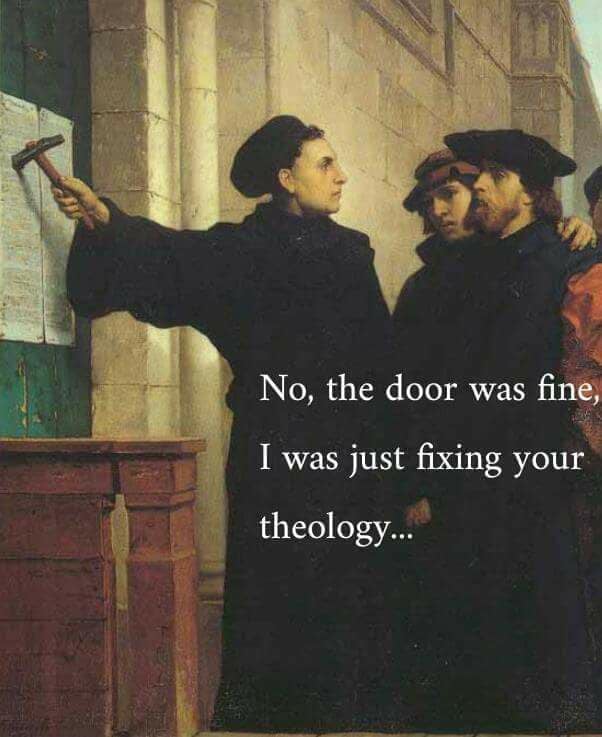
Throughout the centuries-long history of the church, biblical truths have been lost—lost through sin, unbelief, and neglect—later to be rediscovered by thirsty souls searching for transformative change in dark times. Martin Luther triggered the reformation with his rediscovery of the truth of salvation by faith through grace. The truth of sanctification triggered the Great Awakening and the Methodist renewal with revival-fire starters such as the Wesley brothers, George Whitefield, and John Newton. The twentieth century began with a fresh outpouring of the Holy Spirit as the truths of Pentecost were brought to the fore through the globe-spanning Welsh revival and the Azusa Street outpouring.

When biblical truth is restored, revival often follows. A harvest of souls is swept into the Kingdom of God, as surely as the morning dawns on a new day.

Sydney Missionary Bible College (Flickr CC).

Let’s return to his Holy Word and uncover the foundation Jesus has already laid. Let’s return to truths we have overlooked for far too long. Jesus is the Master Builder of the church. By studying his earthly ministry, we can discover the blueprint he was following to launch and establish the church of the first century. It is a blueprint that is patterned after the prophetic Old Testament ministries of Elijah and Elisha.

Within this volume, there are chapters that explore this neglected connection to these two prophets of the old covenant. Often, these chapters are then followed by biographical snapshots of individuals in church history who have tapped into key truths. These principles have catapulted the gospel message forward to powerfully impact the world of their time.

To fulfill its divine mission, the church of the twenty-first century does not need to discover new and different truths for this current age. It needs to return to, and rediscover lived truths taught by Jesus and the apostles of the first century church and put into practise by leading men and women of God down through the ages.     

Together, let’s crack the Elisha Code and become participants in the next great end-times revival—a revival marked by a double portion of Christ’s miraculous anointing.

Let the quest begin!

This is the second weekly excerpt from the award-winning book 
The Elisha Code & the Coming Revival 

A soul-gripping read.
Is a return-to-Jesus revival possible in our time?
This book points the way forward.
For details click here.

Rediscovering Jesus’ Blueprint for Renewal

22 Sunday Sep 2024

Posted by davidkitz in The Elisha Code

≈ 1 Comment

Tags

art, Bible, biblical, books, Christian faith, Christianity, churches, David Kitz, Elijah, Elisha, hope, Jesus, John the Baptist, morality, revival

Is positive change, revival, and renewal possible today in the church, and more broadly in society and the world? This is a valid question in our culture where many are in despair and have lost hope. Many churches are in decline, public morality is in decline, and many have abandoned the Christian faith. Can this trendline be reversed?

In their book The Elisha Code & the Coming Revival David Kitz and Dr. Ed Hird tackle these issues head-on, and they do so, from a thoroughly biblical perspective.

In this interview with Logan Crawford, David Kitz sketches out some key truths about revival that have been lost and now uncovered through an examination of two prophetic dynamic duos, Elijah and Elisha from the Old Testament, and John the Baptist and Jesus from the New Testament.

Are you ready for renewal and a new perspective?

Prophetic Voices Are Needed Today

09 Sunday Jun 2024

Posted by davidkitz in The Elisha Code

≈ 2 Comments

Tags

Bible, Christianity, church, Elisha, faith, God, gospel, Jesus, John the Baptist, Luther, prophet, prophetic, repentance, revival, spiritual blindness

In that day the deaf will hear
the words of the scroll,
and out of gloom and darkness the eyes of the blind will see.
(Isaiah 29:18)

The prophetic role of Christ is often ignored or downplayed in the church today. But the early reformers recognized this crucial function in Jesus’ ministry. In his explanation of the second article of the Apostles’ Creed, Luther writes:

Christ was anointed to be my Prophet, Priest, and King.
As my Prophet, He revealed Himself by word and deed,
and by the preaching of the Gospel still reveals Himself
as the Son of God and the Redeemer of the world. *

A gospel message that is preached without a call to repentance is not a gospel message at all. Coming to faith in Jesus requires—no, demands—repentance. Real repentance is real change. Change from the inside out. Change that is deep, meaningful, and evident in daily life.

John demanded change from those who came to be baptized, whatever their station in life, and that included Pharisees who in their pride believed no change was required (see Matthew 3:1–12).

Furthermore, we should not see repentance simply as a onetime occurrence. Yes, it is the vital starting point in our walk of faith,  but true repentance goes far beyond that. Repentance must be incorporated into our way of life—a life of continual turning away from sin and living in humble service to our
Savior-King.

Though the blind man received his sight, (see John 9) the Pharisees persisted in their spiritual blindness, even though the miracle-working Savior was standing before them.

Jesus said, “For judgment I have come into this world,
so that the blind will see and those who see will become blind.”

Some Pharisees who were with him heard him say
this and asked, “What? Are we blind too?”

Jesus said, “If you were blind, you would not be
guilty of sin; but now that you claim you can see,
your guilt remains.” (John 9:39–41)

For the Pharisees of Jesus’ day and the spiritually blind of our day, this maxim holds true: If we don’t recognize the prophet, we won’t recognize the Savior. Jesus’ words remain relevant today:

Whoever welcomes a prophet as a prophet will receive
a prophet’s reward, and whoever welcomes a righteous
person as a righteous person will receive a righteous
person’s reward. (Matthew 10:41)

The voice of the prophet is needed today, just as it was in Jesus’ day. A national call to repentance is needed now. Who will voice that call? Where are the prophets for our time?

#6 leaders with hindsight, insight, and foresight
The relative absence of legitimate prophetic voices in the church today should trouble us. There was a four-hundred-year prophetic gap between the Old and New Testament—a gap when the Spirit of God was silent. But then suddenly John the Baptist and Jesus appeared on the scene. The first two chapters
of Luke describe an astonishing flurry of Spirit-initiated activity as heaven set the great redemption story into motion. Will there be a similar flood of Spirit-directed activity before Christ’s second coming?

It is clear from the Scriptures that prophets were active within the New Testament church, and furthermore, Paul considered them essential to the proper functioning of the body of Christ.

So Christ himself gave the apostles, the prophets,
the evangelists, the pastors and teachers, to equip his people
for works of service, so that the body of Christ
may be built up until we all reach unity in the faith
and in the knowledge of the Son of God and become
mature, attaining to the whole measure of the fullness of Christ.
(Ephesians 4:11–13)

In Acts we read that there were numerous prophets active in the church. Some of them are listed by name. They includeAgabus, Barnabas, Simeon called Niger, Lucius of Cyrene, Manaen, and Saul (Acts 11:27–28, Acts 13:1–3, Acts 15:32, Acts 21:8–10). This Saul is also known as Paul, and he and Barnabas were commissioned by the church leadership in Antioch to go on the first great missionary journey (Acts 13:1–3).

Where would the church be today if these prophets had not spoken the word of the Lord over Paul and Barnabas? Would there be a church in Europe? Would we even know of theministry of Paul? The New Testament church grew as it received prophetic direction from those who were attuned to hear the
plans of God.

The church of God grows and flourishes when there are men and women who hear what the Spirit is saying, see what the Spirit is doing, and then declare it to the church and the world. That is the role of the prophet.

We need leaders with prophetic hindsight, insight, and foresight for the church to reach its full potential.

* Luther’s Small Catechism: A Handbook of Christian Doctrine (St. Louis, MO: Concordia Publishing House), 107.

An excerpt from
The Elisha Code & the Coming Revival
by David Kitz and Dr. Ed Hird.TheElishaCodeCVR5

To purchase or for a closer look click here.

At the Core of Revival

03 Saturday Feb 2024

Posted by davidkitz in The Elisha Code

≈ Leave a comment

Tags

baptize, forgiveness of sins, good news, Jesus Christ, repent, repentance, revival

Today’s revival principle from “The Elisha Code & the Coming Revival.”
#8 Life-changing repentance
“The time has come,” he [Jesus] said. “The kingdom of God has come near.
Repent and believe the good news!”
(Mark 1:15, NIV)

Peter replied, “Repent and be baptized, every one of you,
in the name of Jesus Christ for the forgiveness of your sins.
And you will receive the gift of the Holy Spirit.
(Acts 2:38, NIV)
TheElishaCodeCVR5For a closer look or to purchase click here.

Newer posts →

Psalms 365: Develop a Life of Worship and Prayer

Psalms 365 Volume II

Psalms 365 vol 3
— Psalms 365 Volume III

Psalms

Recent posts

  • He Refreshes My Soul December 21, 2025
  • The Church and the Third Temptation of Christ December 21, 2025
  • May the LORD Grant All Your Requests December 20, 2025
  • A Horn of Salvation December 19, 2025
  • Ready for the King of Glory December 19, 2025
  • My Spirit Rejoices in God My Savior December 18, 2025
  • Joining the Generation That Seeks God December 18, 2025

Calendar

December 2025
M T W T F S S
1234567
891011121314
15161718192021
22232425262728
293031  
« Nov    

Blog Posts

Enter your email address to follow this blog and receive notifications of new posts by email.

Comments

  • davidkitz on The Church and the Third Temptation of Christ
  • My Life in Our Father's World on The Church and the Third Temptation of Christ
  • davidkitz on My Spirit Rejoices in God My Savior

Blog at WordPress.com.

Privacy & Cookies: This site uses cookies. By continuing to use this website, you agree to their use.
To find out more, including how to control cookies, see here: Cookie Policy
  • Subscribe Subscribed
    • I love the Psalms
    • Join 1,377 other subscribers
    • Already have a WordPress.com account? Log in now.
    • I love the Psalms
    • Subscribe Subscribed
    • Sign up
    • Log in
    • Report this content
    • View site in Reader
    • Manage subscriptions
    • Collapse this bar
 

Loading Comments...