• Home
  • About
  • DavidKitz.ca
  • Youtube Videos
  • Books by David
  • Books on Amazon.com

I love the Psalms

~ Connecting daily with God through the Psalms

I love the Psalms

Tag Archives: Bible

The Right Hand of God

12 Tuesday Jun 2018

Posted by davidkitz in Bible, Devotionals, God's word, Psalm 118, Psalms

≈ 5 Comments

Tags

Bible, blessing, God's blessing, Holy Spirit, honor, left-handed, right-handed, righteous

Reading: Psalm 118
(Verses 15-21)
Shouts of joy and victory
resound in the tents of the righteous:
“The L
ORD’s right hand has done mighty things!
The L
ORD’s right hand is lifted high;
the L
ORD’s right hand has done mighty things!”
I will not die but live,
and will proclaim what the L
ORD has done.
The L
ORD has chastened me severely,
but he has not given me over to death.
Open for me the gates of the righteous;
I will enter and give thanks to the L
ORD.
This is the gate of the L
ORD
through which the righteous may enter.
I will give you thanks, for you answered me;
you have become my salvation
(NIV).

2018-05-20

Flood your people with your grace mercy and peace, LORD — photo by David Kitz

Reflection
Are you left handed? Today in western cultures being left handed presents some challenges since many devices are designed with right-handed people in mind. Try finding left-handed scissors next time you’re at a store. Good luck with that! Oh, and if you find them, expect to pay three times the price of a right-handed model. Often lefties don’t have it so good.

Even today in Middle Eastern cultures being born left handed presents an enormous challenge. The right hand is used for eating food; the left hand is used for personal hygiene—bottom wiping. You dare not reverse that assigned role. Toddlers are strictly trained in this cultural practice. Usually left-handed children are forced to switch so they conform to the social norm. Making this switch plays havoc with the developing brain and often results in speech impediments such as stuttering, since this transition requires a complete rewiring of the child’s brain.

The Bible was written by Holy Spirit inspired authors, but like authors today they were not blank slates. They wrote from their cultural perspective to the people of their time. As a result, readers today can easily miss or misunderstand concepts that were readily understood in their original context.

The significance of the right hand is one of those culturally important concepts that we often pass over with little thought. The Bible is replete with references to the right hand or specifically God’s right hand. So what’s the big deal, we think to ourselves. But in Middle Eastern culture the right hand holds great significance. This is the hand of righteousness, honor and blessing. Thus, there is immense significance in this statement: “The LORD’s right hand has done mighty things! The LORD’s right hand is lifted high; the LORD’s right hand has done mighty things!”

Response: Father God, extend your right hand of blessing over me. Work on my behalf. Show me your mercy, your power and glory. Again and again I will give you thanks, for you answered me. Amen.

Your Turn: Are you like the psalmist? Has the LORD spared your life for a purpose? Has God lifted His right hand to save and bless you?
The Soldier Who Killed a King—A Review

17 Tuesday Apr 2018

Posted by davidkitz in book review, Books by David Kitz, Christ's Passion, The Soldier Who Killed a King

≈ 8 Comments

Tags

Bible, Caiaphas, David Kitz, Herod Antipas, Jesus, king, Longinus, Marcus, Palm Sunday, Pontius Pilate, redemption, resurrection, Roman, Roman centurion, The Soldier Who Killed a King

As published in Testimony Magazine, March/April Edition, 2018, reviewed by Dr. Darlene Witte-Townsend 

The Soldier Who Killed a King was voted the top book in the biblical fiction categorybiblical-fiction-award-2017_orig for 2017 by the Christian book service, Interviews and Reviews. Having recently read this book, it’s not difficult to see why. It plays like a high-stakes movie in your mind.

Canadian author, David Kitz, closely examines the events occurring between Jesus’ entry into Jerusalem on Palm Sunday and his resurrection a few days later. But we see all these events from a unique perspective—through the eyes of a Roman soldier.

This engaging, hard-hitting narrative is a distillation of Kitz’s study and prayer over a 50-year span, when as pastor, educator and Bible dramatist, he steeped himself in the wonder of this story. As a novelist, he reveals profound respect for the historical record through his characterization of Marcus Longinus, a Roman centurion who is unwillingly caught in the power struggles of the day. Furthermore, Kitz stays true to the scriptural account by integrating more than a hundred quotes from the Gospels into the story text.

Three corrupt men, Herod Antipas, “the Fox,” Pontius Pilate, “the Badger,” and Joseph Caiaphas, “the Weasel” have an insatiable lust for money and power. They each attempt to use the political tumult of the time for their own gain. In contrast to the stench of their machinations, Kitz offers a deep sense of Jesus, the donkey-riding King, as the man in whom all of heaven is invested. Jesus emerges in the Roman world offering an entirely new way for humankind to be reborn.

Above all else, this is a story of personal redemption. Marcus, the Roman Centurion is like us, caught between worlds. Who is his king? Why?

The Son of God shows unlimited compassion through healing the sick and feeding the hungry, and his purity catches the attention of the masses in a drama that still shakes the world, one aching, open, humble heart at a time. Do you need to rediscover the power of the cross? The Soldier Who Killed a King will take you there.

Gaining a Heart of Wisdom

07 Wednesday Mar 2018

Posted by davidkitz in Bible, Devotionals, Psalm 90, Psalms

≈ 5 Comments

Tags

accomplishments, achievement, ambition, Bible, God's call, humility, Moses, Orleans, Pharaoh, secret sins, the LORD, wasted life, wisdom

Reading:                                      Psalm 90

(Verses 7-12)
We are consumed by your anger
and terrified by your indignation.
You have set our iniquities before you,
our secret sins in the light of your presence.
All our days pass away under your wrath;
we finish our years with a moan.
Our days may come to seventy years,
or eighty, if our strength endures;
yet the best of them are but trouble and sorrow,
for they quickly pass, and we fly away.
If only we knew the power of your anger!
Your wrath is as great as the fear that is your due.
Teach us to number our days,
that we may gain a heart of wisdom (NIV).

Reflection
The finite nature of our lives here on planet earth should cause us to give serious thought to how we spend the days that we have been allotted. Once we reach the age of forty, roughly half of our life is over. Some claim it’s all downhill from that point forward. Life seems to speed up—to pass by quickly— as we careen toward our demise.

Violets 2017-04-28

Wood violets, Orleans, ON — photo by David Kitz

Moses concludes his prayer here in Psalm 90 with these words: Teach us to number our days, that we may gain a heart of wisdom.

No one wants to reach the end of their days and then realize that they have wasted their life. In our hearts, we all want to have a meaningful life filled with purpose. Much of that striving for success and our drive for a long list of accomplishments comes from a desire for meaning and purpose in life. Moses certainly had a string of achievements on his resume before the LORD called him home. He was after all the liberator of a nation. He was revered as a great leader and the great law giver. But was that due to Moses’ great ambition?

The Bible paints a different picture of Moses. When God called him into service, Moses resisted. The adopted son of Pharaoh was content to shepherd a few sheep on the backside of the desert. But God had other plans—bigger plans. This is what we are told about Moses. Now Moses was a very humble man, more humble than anyone else on the face of the earth (Numbers 12:3).

Perhaps true wisdom begins with humility—with knowing our place in the grand scheme of things. It starts as it did for Moses by hearing God’s call and ultimately being willing to obey, whatever that takes and wherever that takes us.

Response: LORD, teach me to number my days, so I may gain a heart of wisdom. Give me ears to hear what you are saying to me. I want to live a meaningful life filled with purpose coming from you. Amen.

Your Turn: Are you numbering your days or are they numbering you? Are you following God’s call and purpose for your life?

Under Attack

02 Friday Mar 2018

Posted by davidkitz in Bible, Devotionals, Psalm 89, Psalms

≈ 7 Comments

Tags

Babylonian invasion, Bible, Bible attacked, Creator, Darwin, defeat, foundation, foundational truth, God's word, inerrancy, Judea, King of Judah, North America, shame

Reading:                                      Psalm 89

(Verses 38-45)
But you have rejected, you have spurned,
you have been very angry with your anointed one.
You have renounced the covenant with your servant
and have defiled his crown in the dust.
You have broken through all his walls
and reduced his strongholds to ruins.
All who pass by have plundered him;
he has become the scorn of his neighbors.
You have exalted the right hand of his foes;
you have made all his enemies rejoice.
Indeed, you have turned back the edge of his sword
and have not supported him in battle.
You have put an end to his splendor
and cast his throne to the ground.
You have cut short the days of his youth;
you have covered him with a mantle of shame
(NIV).

Reflection
Though we cannot be absolutely certain, it seems likely that Psalm 89 was written during the time of the Babylonian invasion of Judea. These were days of disaster brought on by idolatry as the people turned away from God. The rebellious King of Judah suffered a catastrophic defeat as the words of this psalm state: You have put an end to his splendor and cast his throne to the ground. You have cut short the days of his youth; you have covered him with a mantle of shame.

2018-02-13 L Kranz

Photo courtesy of Liz Kranz

 In the last few decades the church in North America has also experienced a number of defeats or setbacks. Enemies of the Christian faith have risen up and become bold in their attacks. Just as ancient Jerusalem was attacked and laid low, so too Christian belief systems have been under constant assault. The walls and strongholds of our faith have been undermined.

Two unshakeable biblical truths have come under relentless attack. The first is the truth of creation. Our God is the Creator of the universe—the source point of all matter and life. Since the days of Darwin, who incidentally believed in God, atheists have mounted a ferocious attack on this foundational truth. The Christian response has often been jingoistic or at best disjointed. A more coherent and scientifically sound defense is needed.

The second truth that has been under continual attack is the veracity of the Bible. God’s holy word is mocked and routinely discredited especially at our universities. The word of God is our stronghold. Over and over again it has been proven to be accurate, reliable and true. Archeologists and scholars have marvelled at the veracity and authenticity of God’s word. But the real proof of the inerrancy of God’s word does not come from scholarly research. It comes from the transformed lives of believers.

Response: LORD God, my trust is in you and your word. Creator God, I want my faith to be as secure for me as the earth beneath my feet and the air in my lungs. You are all around me. Thank you, Lord. Amen.

Your Turn: Have attacks on your faith caused doubt? How did you overcome?

Walking off the Pages

22 Wednesday Nov 2017

Posted by davidkitz in book review, Books by David Kitz, Devotionals, Psalms

≈ 5 Comments

Tags

author, Bible, David Kitz, God's word, literature, Psalm, Psalms, Psalms Alive!, word of God

There’s something innately powerful about good literature. The characters and events we read about can become very real to us. We come to know these people; their experiences become our own.

For nearly 3,000 years people have been getting in touch with God through the sacred literature from the Book of Psalms. Generation after generation has drawn strength, comfort and inspiration from the words of the psalmist.

In times of calamity the psalms bring peace. When storms rage within, a psalm can provide a haven of rest. When anger erupts, a psalm can act as a release valve. When God seems distant, the psalms bring us near.

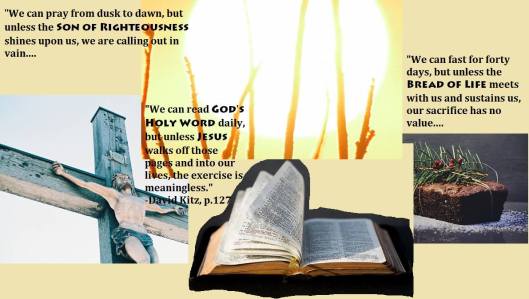
Lila Diller Collage - all photos courtesy of Unsplash

Collage composed by Lila Diller with photos selected from Unsplash

Psalms Alive! Connecting Heaven and Earth is a devotional study of thirteen selected psalms. Each chapter is designed to help the reader interact with God’s word, and connect with their Creator in a fresh and living way.

There is something surprisingly practical about the psalms. They are meant to be lived.

sample-cover

237 pages, trade paperback

The Bible is in fact a living document that must be applied to life to be effective. This should not surprise us since, “The word of God is living and active” (Hebrews 4:12a). Author David Kitz draws from other biblical sources and real life experiences to make these psalms come alive for you.

There is power in the unchanging word of God. Why not experience that power for yourself? Discover Jesus, the Good Shepherd, walking off the pages of the psalms and into your life.

Caught in a Dilemma of Silence

26 Tuesday Sep 2017

Posted by davidkitz in Bible, Devotionals, Psalm 39, Psalms

≈ 3 Comments

Tags

anguish, Bible, David, dilemma, God, meditate, moral dilemma, Petrie Island, silence, wicked

Reading:                                       Psalm 39

For the director of music. For Jeduthun. A psalm of David.
(Verses 1-5)
I said, “I will watch my ways
and keep my tongue from sin;
I will put a muzzle on my mouth
while in the presence of the wicked.”
So I remained utterly silent,
not even saying anything good.
But my anguish increased;
my heart grew hot within me.
While I meditated, the fire burned;
then I spoke with my tongue:
“Show me, LORD, my life’s end
and the number of my days;
let me know how fleeting my life is.
You have made my days a mere handbreadth;
the span of my years is as nothing before you.
Everyone is but a breath,
even those who seem secure
(NIV).

Reflection
Do you often find yourself in a dilemma of silence? In this psalm David finds himself in this very predicament. He decided, “I will put a muzzle on my mouth while in the presence of the wicked.”

2017-09-20

Petrie Island morning calm — photo by David Kitz

If your ways and your thoughts run contrary to the ways of the wicked, you are in good company. You are in the company of the LORD. But don’t be surprised if you are socially ostracized, when you express your opinion. The ungodly rarely want to hear about the error of their ways. They usually prefer to blunder along in the darkness and curse the sudden appearance of light. It’s seen as too great a threat to their way of life.

David remained silent, “not even saying anything good.” But it was an uneasy silence.

Often as I listen to others—as I listen to news reports and the ruminations of cultural icons—I find myself in an uneasy silence. We live in a world that has largely abandoned God and His ways. When we embrace the God of the Bible, we are choosing to swim upstream against the flow of gravity and humanity. The world heaps scorn on those who have caught a different vision.

In his silence, David’s anguish increased. He states, “My heart grew hot within me. While I meditated, the fire burned.”

Is passion for God burning in your heart? True worth and eternal values can only be found in Him.

Response: LORD, show me your ways. Show me how much I need you day by day. Help me to value every day you give me on this earth. Shine your light in me and through me by the power of Jesus. Amen.

Your Turn: Are we silent too often when we should speak?

REVIEW OF: The Soldier Who Killed a King

31 Thursday Aug 2017

Posted by davidkitz in Books by David Kitz, Psalms

≈ 6 Comments

Tags

author, Barabbas, Bible, Canadian Bible Society, centurion, Christian, crucifixion, David Kitz, Easter, gospel, historic novel, historical research, Jesus, Passion Week, plot, Roman centurion, terrorist, The Soldier Who Killed a King

REVIEW OF: The Soldier Who Killed a King
SUB-TITLE: A True Retelling of the Passion
PUBLISHER: Kregel Publishing, 2017, 285 pages Soldier book
CLASSIFICATION: Historical Christian fiction
ISBN: 978-0-8254-4485-2
AUTHOR: David Kitz

BY: Wilf Wight, Director, (retired)
Eastern Ontario District
Canadian Bible Society

Maybe it is because I am left-handed, or maybe it demonstrates impatience, but when I first pick up any book, I invariably flip to the concluding pages. Call me a cheater if you will, but I am looking for a conclusion worthy of the time required to read the book! When I turned to the back of The Soldier Who Killed a King, the concluding pages of this story accomplished what every well-written book should do. The author reached back into the plot for a brief review and then projected the reader toward the future. In this case, the plot obviously had elements of violence and suffering which were being transformed through forgiveness and healing. And the future held promise of hope and excitement.

My attention next is concentrated on the first couple of chapters. Has the author grasped my attention in the opening paragraphs? Was sufficient detail given to introduce the plot, while only hinting at more intrigue to follow? Were the characters being carefully introduced in a way that begged my investigation? Yes, the author passed the basic tests. He had been successful in reaching out to me and I wanted to read this book!

Our western world has had major exposure to the Christian Gospel and most readers know at least something of what has come to be known as Holy Week, the week between Palm Sunday and Easter. However, the Bible makes only passing reference to two of the main characters in the story, the Centurion (military officer) who carried out the crucifixion and Barabbas (the convicted murderer) released by the authorities. The author seizes upon this opportunity to give them personalities, develop their thoughts and articulate their opinions. This proved to be a clever and effective tool to experience the unfolding of the drama in a fresh perspective.

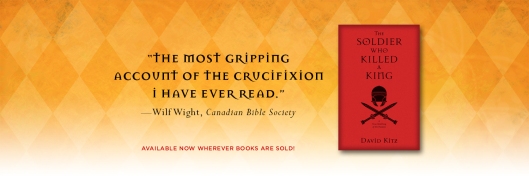
For readers who have the mistaken idea that the biblical account is far removed from reality, here is fiction that will help them discover truth. As the author effectively paints the picture of the process of first century justice, political influence and compromise become realities. We cringe as the sentence is carried out by the most cruel and violent method. This is the most gripping account of the crucifixion that I have ever read! One could almost hear the hammer fall, feel the pain, sense the dishonor and share the guilt of that scene. After reading the description of the crucifixion of the first two victims, I hesitated, in fact halted.  I was not sure if I wanted to tackle the third one—that of the Christ. And yet, despite the graphic description of this horrible experience, the author accomplished his goal without resorting to gross descriptions of the mangled human body.

We are confronted with the enigma of the Christ. He is the one who has demonstrated miraculous power to heal the lame and restore sight to the blind. He is the one who gently took children on his knee to teach them. Yet he set aside the exercise of his powers to submit to the terror of the Cross. The terrorist, Barabbas, was released—set free from prison and back into society—as the peoples’ alternative choice. And the sentence was carried out under Pilate’s  orders by the Soldier. Through the eyes of these two characters we see another perspective, which does not usually come to the mind of the worshiper during Passion Week.

One device the author uses effectively is the introduction of each chapter with a day and time orientation. In this way the unfolding of the drama is situated on the calendar. Those who know the biblical account realize that Friday is coming but that is not the end of the story because Easter Sunday will be the revelation of the resurrected Christ.

As we approach the chapter dealing with Easter Sunday, the reader is rewarded with the hope and excitement of an amazing new day. The darkness of the crucifixion is not forgotten but rather dims in the light of the resurrection. The despair of death is replaced by the hope of new life. The willing submission of Jesus, the Donkey King, to the soldiers is now recast as the power of the One who can forgive and restore.

The concluding pages of the story bring us to a climax, so well-crafted and tensioned that I dare not give it away.

The epilogue provides further details of the main characters of the plot, gleaned from historical research. The endnotes reference biblical and other texts, which document the main course of events. The author has done his homework. His account of these events is well researched and credible.

4485 TWITTER


Hide ‘n’ Seek with God

16 Wednesday Aug 2017

Posted by davidkitz in Bible, Devotionals, Psalm 32, Psalms

≈ 2 Comments

Tags

Bible, David, David Kitz, distant, God, guilt, hidden, hide 'n' seek, hiding place, nearness of God, scriptures, seeing God, seeking God

Reading:                                      Psalm 32

(Verses 6-7)
Therefore let everyone who is godly pray to you,
while you may be found;
surely when the mighty waters rise,
they will not reach him.
You are my hiding place;
you will protect me from trouble
and surround me with songs of deliverance
(NIV).

Reflection
In the previous stanza of this psalm, David received the amazing dam-busting forgiveness of God. He has just experienced a wonderful release from a load of guilt. But now in his next breath he has some advice for us, and here it is. Therefore let everyone who is godly pray to you, while you may be found.

2017-08-07

Is God near or distant? — Ottawa River photo by David Kitz

We are to pray to God while He may be found. This raises some interesting questions. Is God unavailable at times? If God cannot be found, is He hiding? Furthermore, if God is hiding, where does He hide?

At this point I feel like jumping to my feet, like a lawyer pleading a case in the court of reason, and shouting out, “I object! All that David has told us about God so far would lead us to believe that God is always close at hand. Didn’t David testify to this earlier in Psalm twenty-three? He said the following words about the LORD his shepherd: Even though I walk through the valley of the shadow of death, I will fear no evil, for you are with me. And now it seems David is telling us that there are times when God cannot be found. Which is it David? It can’t be both.”

Ah, but it is both. This is one of those great divine paradoxes. The God, who is near, even in my heart, can also be distant—light years away, both in time and space. There exists a perceived distance between us that can vary according to the state of my heart—according to the state of my relationship with God.

The fact remains that we cannot see God though we see evidence of His handiwork all around us. Our infinitely complex human bodies and finely tuned senses are themselves proof of His existence, yet Him we cannot see. He is a hidden God, and when we walk beside Him, we walk by faith and not by sight.

Repeatedly in the scriptures we are commanded to seek after the LORD. I find this to be a rather curious expression. We cannot see God, and yet we are commanded to seek Him, as though He might suddenly appear over the next hill, or around the next bend in the road. Suddenly, in unexpected ways, we may encounter God. In reality the Psalms are all about encounters with God. Psalm nineteen began that way. Suddenly the starry hosts began talking to David about God, declaring His glory. We may pick up the Bible, and suddenly it speaks to our deepest need—the need of the moment, and we know that this is the voice of God with a word specifically for us today. Even the ungodly people of this world recognize that people encounter God. They use expressions like, “He found God,” to describe someone’s conversion to faith in Christ. The LORD invites us to play the most amazing game: Hide ‘n’ seek with God.

Response: LORD God, I want to seek after you. Show yourself to me today in this grand adventure called life. I want to have an encounter with you. I want to know what it means to be found by you. Amen.

Your Turn: Have you had a recent encounter with God? Do you sense His nearness or distance?

Book Release

25 Tuesday Jul 2017

Posted by davidkitz in Books by David Kitz, Psalms

≈ 10 Comments

Tags

Amazon, Bible, biblical, book, cover design, David Kitz, editors, endorsement, Kregel, Kregel Publications, Lawson Murray, novel, Scripture, Scripture Union, the Passion

Today marks the official release of my Biblically-based novel The Soldier Who Killed a King.

Soldier bookIt was a pleasure to work with the dedicated team at Kregel Publications to bring this literary project to fruition. From the editors to the design and marketing team, I  felt heard and respected every step of the way. Thanks to everyone at Kregel for the time and effort they put into my novel. (I have decided to avoid listing names for fear of missing someone.) Your dedication and hard work is much appreciated.

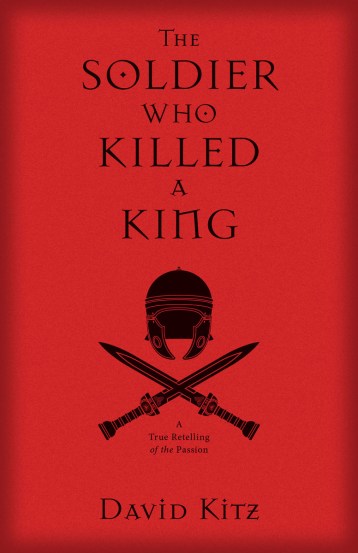
Already, I have received a good number of compliments on the cover design. The picture to the left does not fully convey the striking appearance this book presents when it is in your hands.

This past weekend I received an endorsement for my book from a reputable source. Here it is for your consideration:

David Kitz’s book is “a true retelling of the Passion” because he’s mastered the use of sanctified imagination while simultaneously staying tethered to the historical realities of the dramatic events leading to Christ’s death and resurrection. In the genre of biblical fiction, “The Soldier Who Killed a King” deserves two thumbs up! 

– Dr. Lawson Murray, President, Scripture Union

As of today “The Soldier Who Killed a King” is available through Amazon, the Kregel website and at a wide range of bookstores. See: http://www.kregel.com/fiction/the-soldier-who-killed-a-king/

Canadian readers can visit: https://www.amazon.ca/s/ref=nb_sb_ss_i_1_8?url=search-alias%3Dstripbooks&field-keywords=the+soldier+who+killed+a+king&sprefix=The+sold%2Caps%2C454&crid=1E7C9RT8QWWXU

Rejoice with me!


The Word Revives the Soul

30 Friday Jun 2017

Posted by davidkitz in Devotionals, Psalm 19, Psalms

≈ 2 Comments

Tags

Bible, Creator, Durham ON, fishing hole, God, God's word, Holy Scriptures, inerrant, infallible, Jack Hayford, Law, perfect, redemptive, the Law, the LORD, transformational, trustworthy, word of God

Reading:                                      Psalm 19

Verses 7-11

The law of the LORD is perfect,
reviving the soul.
The statutes of the L
ORD are trustworthy,
making wise the simple.
The precepts of the L
ORD are right,
giving joy to the heart.
The commands of the L
ORD are radiant,
giving light to the eyes.
The fear of the L
ORD is pure,
enduring forever.
The decrees of the L
ORD are firm,
and all of them are righteous.
They are more precious than gold,
than much pure gold;
they are sweeter than honey,
than honey from the honeycomb.
By them your servant is warned;
in keeping them there is great reward
(NIV).

Reflection
The voice of the speaking stars (see yesterday’s reading) is now joined by the voice of the written Holy Word. If nature, specifically the sky, is the first witness to testify to the glory of God, then the scriptures—the written word of God—constitute the second great witness to speak of God’s existence. Both these great witnesses have gathered here to testify within the context of Psalm 19.

2017-06-24

The fishing hole — Foster farm near Durham, ON — photo by David Kitz

While nature speaks to us of the existence of God the creator, it is largely silent regarding the nature or character of this all-powerful supernatural being. Is He good? Is He evil? Is He indifferent to us? Is He angry with us? What is this great, overarching, omnipresent God really like? May we approach Him?

God’s word shows us the way. Here David tells us, “The law of the LORD is perfect, reviving the soul.”

The law is perfect, flawless, inerrant and infallible. Only a perfect, flawless, inerrant and infallible God can be the source of such a document. The law of the LORD that is referred to here is in fact the Bible, the Word of God. Jack Hayford in his commentary on this verse from the Psalms states, “That the ‘law of the LORD is perfect,’ is direct reference to the absolute, complete, and entire trustworthiness of the Holy Scriptures, which constitute the Bible.”

And this perfect, true and infallible law, or Word of God, has an effect. The Word of God is active. It revives the soul. God’s word literally brings souls back to spiritual life. There is great power in the written word. The word of God is redemptive, personal and transformational.

Response: LORD God, help me draw life, wisdom and joy from your word every day. Light my way. Amen.

Your Turn: Do you read God’s word daily? How has it helped you grow in faith?

← Older posts
Newer posts →

Psalms 365: Develop a Life of Worship and Prayer

Psalms 365 Volume II

Psalms 365 vol 3
— Psalms 365 Volume III

Psalms

Recent posts

  • A Gallant Lover March 20, 2026
  • The Disciples Are Asleep March 19, 2026
  • The Oil of Joy March 19, 2026
  • Jesus Prays on the Mount of Olives March 18, 2026
  • Your Complaint to God March 18, 2026
  • Jesus Predicts Peter’s Restoration March 17, 2026
  • Adversity Brings Character Development March 17, 2026

Calendar

March 2026
M T W T F S S
 1
2345678
9101112131415
16171819202122
23242526272829
3031  
« Feb    

Blog Posts

Comments

  • davidkitz on Jesus Predicts Peter’s Restoration
  • Jesus Predicts Peter’s Restoration – QuietMomentsWithGod on Jesus Predicts Peter’s Restoration
  • davidkitz on Jesus Predicts Peter’s Denial

Blog at WordPress.com.

Privacy & Cookies: This site uses cookies. By continuing to use this website, you agree to their use.
To find out more, including how to control cookies, see here: Cookie Policy
  • Subscribe Subscribed
    • I love the Psalms
    • Join 1,383 other subscribers
    • Already have a WordPress.com account? Log in now.
    • I love the Psalms
    • Subscribe Subscribed
    • Sign up
    • Log in
    • Report this content
    • View site in Reader
    • Manage subscriptions
    • Collapse this bar
 

Loading Comments...