• Home
  • About
  • DavidKitz.ca
  • Youtube Videos
  • Books by David
  • Books on Amazon.com

I love the Psalms

~ Connecting daily with God through the Psalms

I love the Psalms

Tag Archives: Christians

It’s all about DNA

15 Sunday Feb 2026

Posted by davidkitz in Books by David Kitz

≈ 3 Comments

Tags

angel Gabriel, Christians, David, DNA, Holy Spirit, James the brother of Jesus, Jesus, Joseph, king, King Herod, Mary, Messiah

James: the Lynchpin of Our Faith — Chapter 1

Have you ever wondered what your life would be like, if you grew up in a different family? I think we all have considered that thought. Maybe it occurred to you the first time you slept over at a friend’s house. You thought, what would it be like to grow up in this house, with this family? Would you be where you are today? Now stretch that thought a bit. What if you were born into a different nation, culture or religious tradition? Would you still be the same person? What would you be like, if you were raised by a low-caste family in southern India, or by Masai warriors in Kenya? We all know that our home and upbringing influence our adult life in a thousand different ways.

Photo by samer daboul on Pexels.com

Then there is the question of DNA. We also know that our genetic make-up impacts everything about us. Every cell and fiber in our body is programmed according to the genetic code inherited from our parents. That code determines more than just our eye colour and shoe size. It shapes facets of personality, disposition, and even subtleties such as our posture, the way we move, and the gestures we use. Of course the influences of nature and nurture, DNA, and upbringing were just as important in biblical times as they are today. We are who we are because of the complex interactions of heredity, family, and social influences. These same influences were at play in shaping the life of James

It is only natural that, following in this vein, the New Testament begins by highlighting heredity. The Gospel of Matthew starts with a recitation of the lineage of Jesus. Incidentally, since they were half-brothers by blood, this also would be the lineage of James. And to truly under stand James—to paint a portrait of him—we need to grasp the paramount role that his older brother played. With this purpose in mind, let’s examine Matthew’s account.

This is the genealogy of Jesus the Messiah the son of David, the son of Abraham:
Abraham was the father of Isaac,
Isaac the father of Jacob,
Jacob the father of Judah and his brothers,
Judah the father of Perez and Zerah, whose mother
was Tamar,
Perez the father of Hezron,
Hezron the father of Ram,
Ram the father of Amminadab,
Amminadab the father of Nahshon,
Nahshon the father of Salmon,
Salmon the father of Boaz, whose mother was Rahab,
Boaz the father of Obed, whose mother was Ruth,
Obed the father of Jesse,
and Jesse the father of King David. (Matthew 1:1–5)

The gospel writer’s purpose here is to establish the quintessential Jewishness of Jesus. He does this in the most organic way possible, by linking him back to the father of the Jewish nation, Abraham. Matthew’s
gospel is written to a Jewish audience and so by doing this, Matthew is saying to his fellow Jews, “Look folks, Jesus, the Messiah is one of us. Just like you, he can trace back his bloodline right to Abraham. We have
a common heritage and here it is spelled out in black and white.” With the next portion of the genealogy Matthew takes this message a step further:

David was the father of Solomon, whose mother had been Uriah’s wife,
Solomon the father of Rehoboam,
Rehoboam the father of Abijah,
Abijah the father of Asa,
Asa the father of Jehoshaphat,
Jehoshaphat the father of Jehoram,
Jehoram the father of Uzziah,
Uzziah the father of Jotham,
Jotham the father of Ahaz,
Ahaz the father of Hezekiah,
Hezekiah the father of Manasseh,
Manasseh the father of Amon,
Amon the father of Josiah,
and Josiah the father of Jeconiah and his brothers
at the time of the exile to Babylon. (Matthew 1:6b–11)

To the casual present-day reader, this list of names means next to nothing, but in Matthew’s time every educated Jewish boy or girl would recognize that this is the full pantheon of Jewish kings. Here are the great and not so great leaders of the Jewish nation—royal heroes and scoundrels all. By providing this list Matthew has just upped the ante. He is telling his Jewish readers, “Have a look at this. Jesus is a royal descendant from the line of David. He is no ordinary Jew. Surely, he is marked for a higher calling.”

Matthew continues:

After the exile to Babylon:
Jeconiah was the father of Shealtiel,
Shealtiel the father of Zerubbabel,
Zerubbabel the father of Abihud,
Abihud the father of Eliakim,
Eliakim the father of Azor,
Azor the father of Zadok,
Zadok the father of Akim,
Akim the father of Elihud,
Elihud the father of Eleazar,
Eleazar the father of Matthan,
Matthan the father of Jacob,
and Jacob the father of Joseph, the husband of Mary,
and Mary was the mother of Jesus who is called
the Messiah. (Matthew 1:12–16)

Matthew has laid out this catalog of patriarchs to establish Jesus’ provenance. This is his royal heritage. To his Jewish audience he is saying, “We all know that the coming Messiah—the promised one—is a descendant of David. Well, here is Jesus’ family tree. He springs from the right stock. He’s got the bona fides.”

But did you notice that surprising little twist at the end? We are introduced to “Joseph, the husband of Mary, and Mary was the mother of Jesus who is called the Messiah” (Matthew 1:16). That’s right! After that great, long, monotonous list of was the-father-of’s, there’s an abrupt change. Joseph was not the father of Jesus. The genetic link breaks down. “Mary was the mother of Jesus who is called the Messiah” (Matthew 1:16).

Matthew goes on to explain:

This is how the birth of Jesus the Messiah came about:
His mother Mary was pledged to be married to Joseph,
but before they came together, she was found to be
pregnant through the Holy Spirit. (Matthew 1:18)


It’s as though God is saying through Matthew that royal heritage is significant, but it isn’t good enough; the best human DNA isn’t good enough. It’s only human after all. For the Messiah we must look to a higher source—a divine source. “But before they came together, she was found to be pregnant through the Holy Spirit” (Matthew 1:18).

God intervened. God put some skin in the game. If the redemption of mankind was a rescue mission, then the Maker of the universe just got seriously committed. He inserted Himself into the human genome.

Divine DNA—Holy Spirit DNA. Think of that for a minute. Divine DNA, the very nature of God, is linked with human DNA in theperson of Jesus. “She [Mary] was found to be pregnant through the HolySpirit” (Matthew 1:18). If you find it difficult to wrap your mind aroundthat statement, you are not alone. Joseph had some difficulty with it too. In fact, he needed a bit of angelic dream therapy to convince him of the heavenly origin this pregnancy. Let’s return to Matthew’s account:

This is how the birth of Jesus the Messiah came about:
His mother Mary was pledged to be married to Joseph,
but before they came together, she was found to be
pregnant through the Holy Spirit. Because Joseph her
husband was faithful to the law, and yet did not want
to expose her to public disgrace, he had in mind to
divorce her quietly.

But after he had considered this, an angel of the
Lord appeared to him in a dream and said, “Joseph son
of David, do not be afraid to take Mary home as your
wife, because what is conceived in her is from the Holy
Spirit. She will give birth to a son, and you are to give
him the name Jesus, because he will save his people
from their sins.”

All this took place to fulfill what the Lord had said
through the prophet: “The virgin will conceive and
give birth to a son, and they will call him Immanuel”
(which means “God with us”).

When Joseph woke up, he did what the angel of
the Lord had commanded him and took Mary home
as his wife. But he did not consummate their marriage
until she gave birth to a son. And he gave him the
name Jesus. (Matthew 1:18–24)

In a normal human pregnancy, the father’s sperm, containing his DNA, unites with the mother’s DNA in the egg to form a new child (zygote). In Mary’s case, the Holy Spirit supplied the required male DNA, or its spiritual equivalent, to set the growth of the zygote (child) into motion.

Theologians have pondered and debated the topic of the virgin birth from the very foundation of the Christian faith. For unbelievers it is a huge stumbling block. How could this come about? It should not surprise us that those most intimately involved with this miracle—Mary and Joseph— would also have doubts and questions. They needed divine assurance and convincing proofs, even as many believers do today.

It’s easy for us who live in a postmodern world to assume that the ancients of biblical times lived in an age of faith where everyone was quick to believe in miracles and the supernatural intervention of God. But a careful reading of the New Testament tells quite a different story. Many struggled with their faith. There are skeptics who demand proof in every age. But how glorious it is when the skeptic has his questions answered, his doubts stripped away, and he finds himself confronted by the living God. This was the case with both Mary and Joseph.

In Luke’s gospel account, Mary’s encounter with the angel Gabriel quite logically sets off some serious questions and doubts. We are told that “Mary was greatly troubled at his [Gabriel’s] words and wondered
what kind of greeting this might be” (Luke 1:29).

Mary had just heard that she “is highly favoured,” and “the Lord is with her.” If she found that angelic greeting disturbing, or as some translations say “confusing,” I am sure she found Gabriel’s announcement
which followed even more troubling.

“Do not be afraid, Mary; you have found favor with
God. You will conceive and give birth to a son, and you
are to call him Jesus. He will be great and will be called
the Son of the Most High. The Lord God will give him
the throne of his father David, and he will reign over
Jacob’s descendants forever; his kingdom will never
end.”
“How will this be,” Mary asked the angel, “since

I am a virgin?” (Luke 1:30b–34)
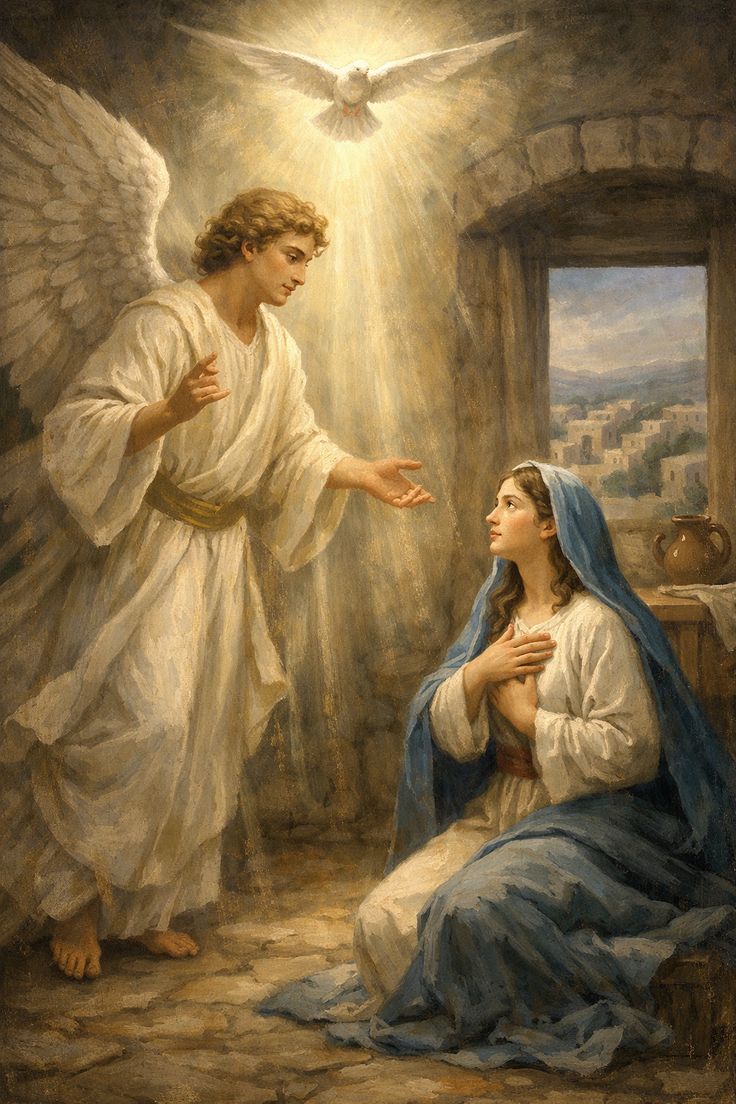
 

Evangelho — Lc 1, 26-38 AI Modified

Mary’s uncertainty is evident through her question. This girl without doubt knew about the birds and the bees and the normal ways and means that produce a pregnancy. Her question flowed logically from everything she knew about human reproduction. Would this promised-child come from her union with Joseph? That would certainly be the natural, predictable course of events, since she was already pledged in marriage to him. Can you imagine her surprise when she heard the angel’s response to her question?

The angel answered, “The Holy Spirit will come on
you, and the power of the Most High will overshadow
you. So the holy one to be born will be called the Son
of God. Even Elizabeth your relative is going to have a
child in her old age, and she who was said to be unable
to conceive is in her sixth month. For no word from
God will ever fail.” (Luke 1:35-37)

Mary is unequivocally told that God would be the father of this child, “so the holy one to be born will be called the Son of God.” This echoes what she had been told before she questioned Gabriel. Mary was told, “He will be great and will be called the Son of the Most High.” Undoubtedly, it takes time and repetition to fully grasp the implications of such statements. In Mary’s case it would take a lifetime. After all, this angelic announcement confounded her Jewish theology. How could God take on human flesh? It defied logic and the norms of human experience. While a Jewish Messiah was hoped for, even expected, who knew that it would come this way? From her own body no less?

To reassure Mary, Gabriel adds the news about Elizabeth’s pregnancy. This aged, barren woman was the last woman among her relatives that Mary would expect to be pregnant. If the miraculous pregnancy of Elizabeth was possible, then perhaps this divine conception via a virgin was possible too.

Mary’s response indicates the spark of faith was alive within her.

“I am the Lord’s servant,” Mary answered. “May your word to me be fulfilled.” Then the angel left her. (Luke 1:38)

Following this angelic visitation, Mary did not remain in her hometown, Nazareth, for long. Luke goes on to tell us that she went down to Zachariah and Elizabeth’s house in Judea. We are not told why she made this journey, but Mary probably hoped for confirmation that Gabriel’s words were true—that Elizabeth was indeed pregnant. If it was confirmation that she sought, it came upon her arrival.

When Elizabeth heard Mary’s greeting, the baby leaped in her womb, and Elizabeth was filled with the Holy Spirit. In a loud voice she exclaimed: “Blessed are you among women, and blessed is the child you will bear! But why am I so favored, that the mother of my Lord should come to me? As soon as the sound of your greeting reached my ears, the baby in my womb leaped for joy. Blessed is she who has believed that the Lord would fulfill his promises to her!” (Luke 1:41–45)

Elizabeth’s words confirm that the spark of faith in Mary was sufficient. She had believed the angel’s words—the Lord’s promise to her via Gabriel—and as a result conception had become reality. As the gospel writer John puts it, “The Word [Jesus] became flesh and made his dwelling among us” (John 1:14). In the coming days, God would become flesh within the womb of Mary.

Later, we see that this concept of power residing in spoken words becomes a prominent theme in Jesus’ ministry. When mixed with faith, the spoken word releases transformation, healing and the miraculous. Jesus speaks to the wind and the waves, and they obeyed him. With a simple spoken word, he heals the sick, restores sight to the blind and casts out demons. Time and again we hear him say, “Your faith has healed you,” as the afflicted walk away in perfect health (Matthew 9:22, Mark5:34, Mark 10:52, Luke 8:48, Luke18:42).

It is this potent mix of the spoken word and faith in the heart of the listener that brings forth amazing transformation. As it was at conception, so it continued through Jesus’ life—words and faith formed an astonishing blend. His words brought life; God’s word brings life.

Later we will see that James, the brother of Jesus, fully grasps this concept of power residing in the spoken word. It is a major theme in his writing, and he hammers it home like no other New Testament writer.

Is it legitimate to speak of divine DNA linking with human DNA to produce the God/man Jesus Christ? Deoxyribonucleic acid or DNA is a physical molecular structure after all, but the Bible asserts that God is a spirit. How could God, who is a spirit, have a physical component or discernible material structure?

If this question seems baffling, then consider this. For the last 50 years nuclear physicists have been trying to find the Higgs boson or ‘God particle’—that elusive element that gives everything in the universe its mass. After spending billions of dollars on the Large Hadron Collider near Geneva, Switzerland, and then creating millions of subatomic particle collisions, scientists have concluded that what we call nothing (totally empty space) is actually something. The God particle discovery announced on July 4th, 2012, is the theological equivalent of saying that God has substance.

For more than two thousand years, Christians have been arguing that God has substance. He took on substance at the conception of Christ in Mary’s womb. In an instant God took on human form. Godly characteristics found their full expression in a human form—first as a zygote, then a fetus, an infant, a child, an adolescent, and a man named Jesus. At every stage of development, he was both God and man. The essence and nature of God took on substance—a material form—and became incarnate. God was no longer only a spirit. He had a physical structure—a human form through which the world could see the express nature and character of God. As a human father expresses his nature and characteristics genetically through his offspring, so too the heavenly Father’s spiritual code was written into every molecule and fiber of Jesus’ being.

Furthermore, it bears noting that this God/man, Jesus Christ, was not a demigod in the Greek and Roman religious tradition of that period. He was simultaneously fully God and fully man, according to sound biblical interpretation and the earliest Christian conventions.

From a biblical perspective the divine nature of the child Jesus is undeniable. Jesus’ biological father was God, as clearly stated in Matthew and Luke’s gospel accounts. But why does Matthew bother listing his earthly, adoptive father’s genealogy if, as stated, Joseph had no DNA in the mix?

The answer appears to be threefold. First, nurture matters. An all-knowing God recognized that Joseph would act as an ideal father to the boy Jesus. Joseph would raise Jesus in the faith. He would love and discipline him in a godly way and educate him in what it means to be a man in Jewish society. Everything we know about child rearing points to the importance of the father figure in the home. This is especially true in the case of boys. Joseph played a very significant role in the life of Jesus. But Joseph played a crucial role in the life of James—crucial because he was the biological father of James. As the lives of these two boys develop, we will see the pivotal role this difference in DNA played.

Secondly, family lineage matters. In Western society we downplay the importance of family heritage. Rugged individualism is highly valued. But even today in Middle Eastern culture, a person’s family name and lineage are of great importance, even paramount. An individual’s life is always viewed in the context of family and family heritage. This is why such a high premium is placed on family honor. It is also why blood feuds go on for multiple generations, as families are locked into past modes of behavior and interaction. To fully introduce a person within such a society, one needs to provide their lineage. Matthew does just that by delineating Jesus’ heritage at the outset of his gospel account.

Finally, royalty matters. The long-awaited, promised Messiah was to come from the royal line of David. This was common knowledge to all Jews of this period. Hence, Matthew begins his gospel with these words: “This is the genealogy of Jesus the Messiah, the son of David, the son of Abraham” (Matthew 1:1). Similarly, in Joseph’s dream, recorded inthe first chapter, the angel does not address Joseph as the son of Jacob, Jacob being his immediate father, but rather as, “Joseph, son of David” (Matthew 1:29). Why jump fourteen generations back? Simply put, it’s because royalty matters.

Because royalty matters, it is the opening theme of Matthew’s first gospel narrative:

After Jesus was born in Bethlehem in Judea, during the
time of King Herod, Magi from the east came to Jerusalem
and asked, “Where is the one who has been born king of the Jews?
We saw his star when it rose and have come to worship him.”

When King Herod heard this he was disturbed,
and all Jerusalem with him. When he had called to
gether all the people’s chief priests and teachers of the
law, he asked them where the Messiah was to be born.
“In Bethlehem in Judea,” they replied, “for this is what
the prophet has written:

“‘But you, Bethlehem, in the land of Judah,
are by no means least among the rulers of Judah;
for out of you will come a ruler who will shepherd
my people Israel.’” (Matthew 2:1–6)

Because royalty matters, jealous King Herod had all the male infants under the age of two put to death in Bethlehem and its environs. Clearly this newborn king had the endorsement of heaven, since the appearance of a star marked his birth. Furthermore, the scriptures predicted his birth. The crafty Herod immediately sensed the threat to his dynastic rule.
In Luke’s gospel account we see that being a descendant of royalty mattered to Joseph. Why else would a resident of Nazareth make the long journey to Bethlehem for the sake of an imperial census, especially since his wife was in the final stages of pregnancy?

So Joseph also went up from the town of Nazareth in Galilee to Judea, to Bethlehem the town of David, because he belonged to the house and line of David. He went there to register with Mary, who was pledged to be married to him and was expecting a child. (Luke 2:4–5)

As you can see, it’s all about DNA—royal DNA—messianic DNA. It’s all about being from the right family, the right clan, and being born in the right place at the right time as a fulfillment of ancient biblical prophecy. It’s about divine DNA or its spiritual equivalent touching the right human DNA to trigger the birth of the Messiah—the God-man who came into the world.
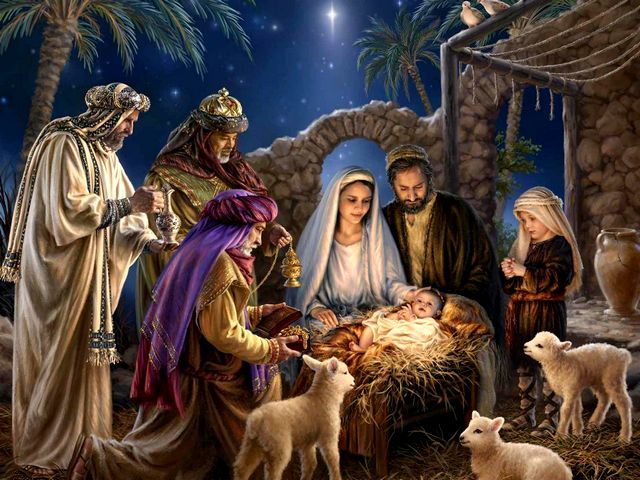
But the DNA that the Holy Spirit touched to trigger conception was Mary’s DNA. Luke provides us with a different genealogical list than Matthew as he traces back Jesus’ ancestors all the way to Adam and finally to God. (See Luke 3:23–38.) He does this because unlike Matthew, who is writing to a Jewish audience, Luke is writing to a Gentile audience. Luke wants his readers to understand that this Jewish Messiah is not just the Savior for Jews, but for all humankind. Of course, Luke goes on to describe the stable birth, the shepherd’s visit and the heavenly, angelic light and sound show that heralded the nativity of the Son of God.

Many Bible scholars believe that the differences between Matthew’s genealogical list and Luke’s list are due to Luke following Mary’s line of descent, while Matthew follows Joseph’s line. What is abundantly clear from both lists is that we are tracing the royal line of David, since at some point the lists merge and are identical.

Implicitly what both authors are saying by providing these lineages is that Jesus is the rightful heir of the Jewish throne. He is the long-awaited Messiah and the fulfillment of prophecy. His birth and arrival on the
scene mark a turning point in world history. God has stepped into human flesh and has come to live among us.

The gospel writer John puts it this way:

The Word became flesh and made his dwelling among us. We have seen his glory, the glory of the one and only Son, who came from the Father, full of grace and truth. (John 1:14)

James was born into this family, with this heritage, with this more-than-preeminent older brother. Talk about being overshadowed by an older brother! Like no one else on this planet James had the blessing, the challenge, and the curse of being overshadowed by the Almighty. And in human form, this Almighty was none other than his living, breathing, flesh, and blood older brother.


New from David Kitz

James—the brother of Jesus—who was this man? What evidence do we have that this “brother of our Lord” even existed?

David Kitz digs deep into archeology, family dynamics, church history, and the biblical texts. What emerges from his research is a portrait of a decisive, pivotal leader who embodied the will and character of Jesus Christ.

But how did James—James the unbeliever—transform to become a leader who changed the course of world history? In these pages you will uncover the answer and rediscover for yourself the life-changing power of the gospel.

To view further details or purchase directly from the author click here.
The Mystery in a Box

08 Sunday Feb 2026

Posted by davidkitz in Psalms

≈ 4 Comments

Tags

archeologists, Bible, brother of Jesus, Christians, faith, James, James the brother of Jesus, New Testament, ossuary, skeptics

James: the Lynchpin of Our Faith — Introduction

Dear friends,
now we are children of God,
and what we will be has not yet been made known.
But we know that when Christ appears,
we shall be like him,
for we shall see him as he is.
(1 John 3:2, NIV

Who knew that a medium-size box could create such a stir? Archaeologists, academics, journalists, and theologians were intrigued. A debate raged for weeks about the authenticity of this ancient stone box. A sceptical public grew curious and hungered for more information. What did all this mean? What were the implications?

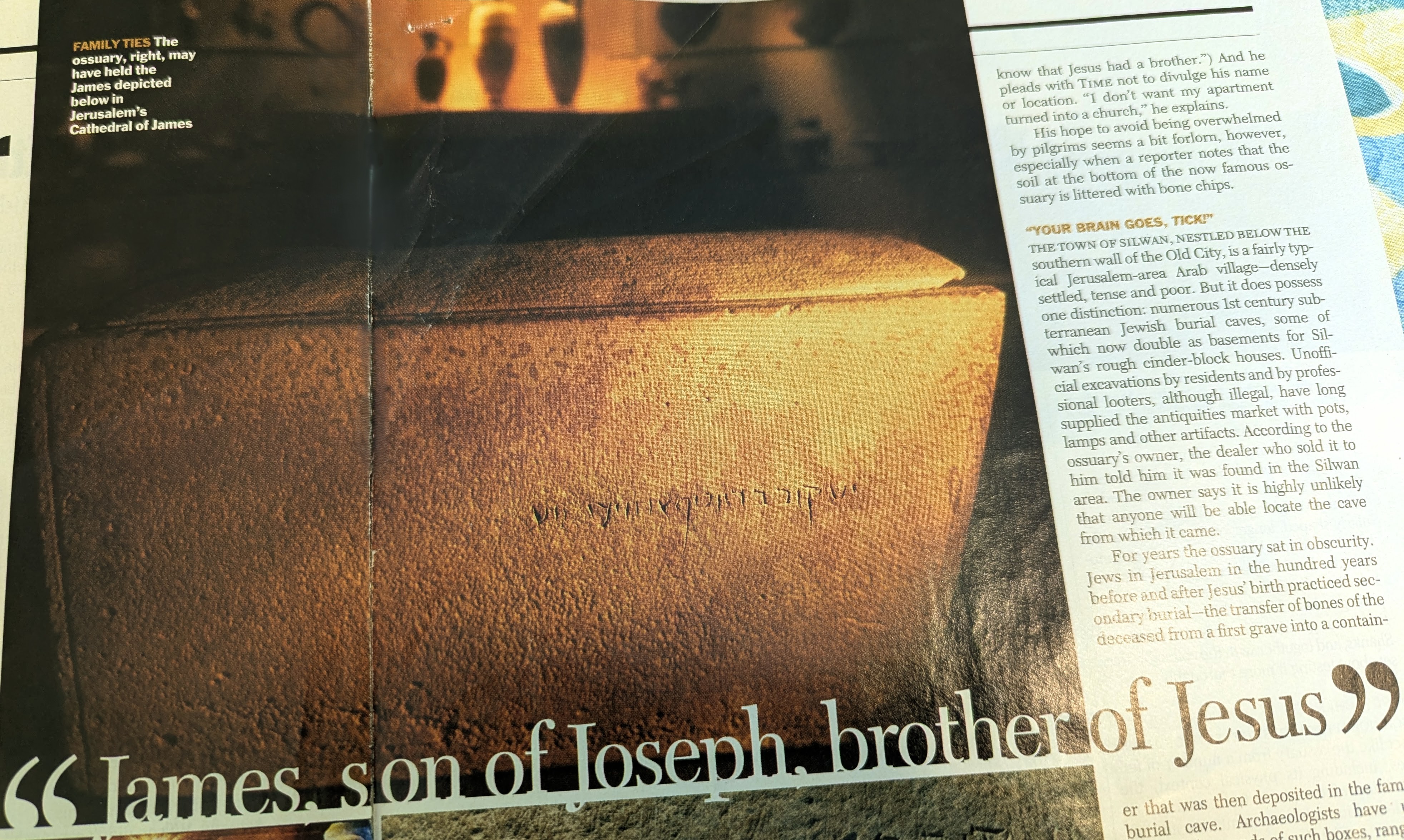
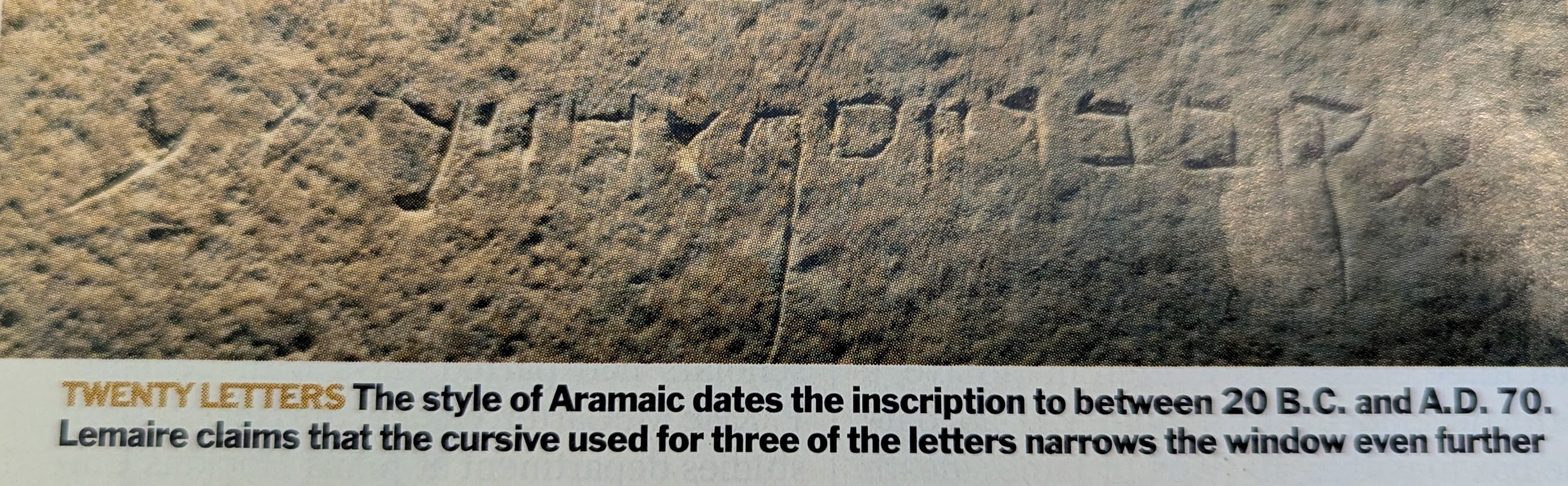
In the fall of 2002, the typical news cycle of war, politics, celebrity missteps, and market fluctuations was briefly interrupted by word that an ancient ossuary had been discovered. The inscription on this stone box read, “James, son of Joseph, brother of Jesus.”

Photo Credit Time Magazine, November 4, 2002

Did Jesus have a brother? Were his brother’s bones once stored in this ancient ossuary? Who precisely was this James? Experts in ancient burial customs claimed that it was common practice to have the name of the father of the deceased inscribed on the burial box, but why include the brother’s name? Jesus—Jesus? Was this the Jesus of the New Testament, the one revered by millions as the Son of God?

The list of questions grew. Scholars speculated, while public curiosity reached a peak. Israeli authorities questioned how this 25 × 50 × 30cm stone box came into the hands of Oded Golan, a private collector of antiquities. Roman Catholic theologians chafed at the very notion that Jesus had a brother. Religious skeptics dredged up a variety of imaginative apocryphal scenarios.

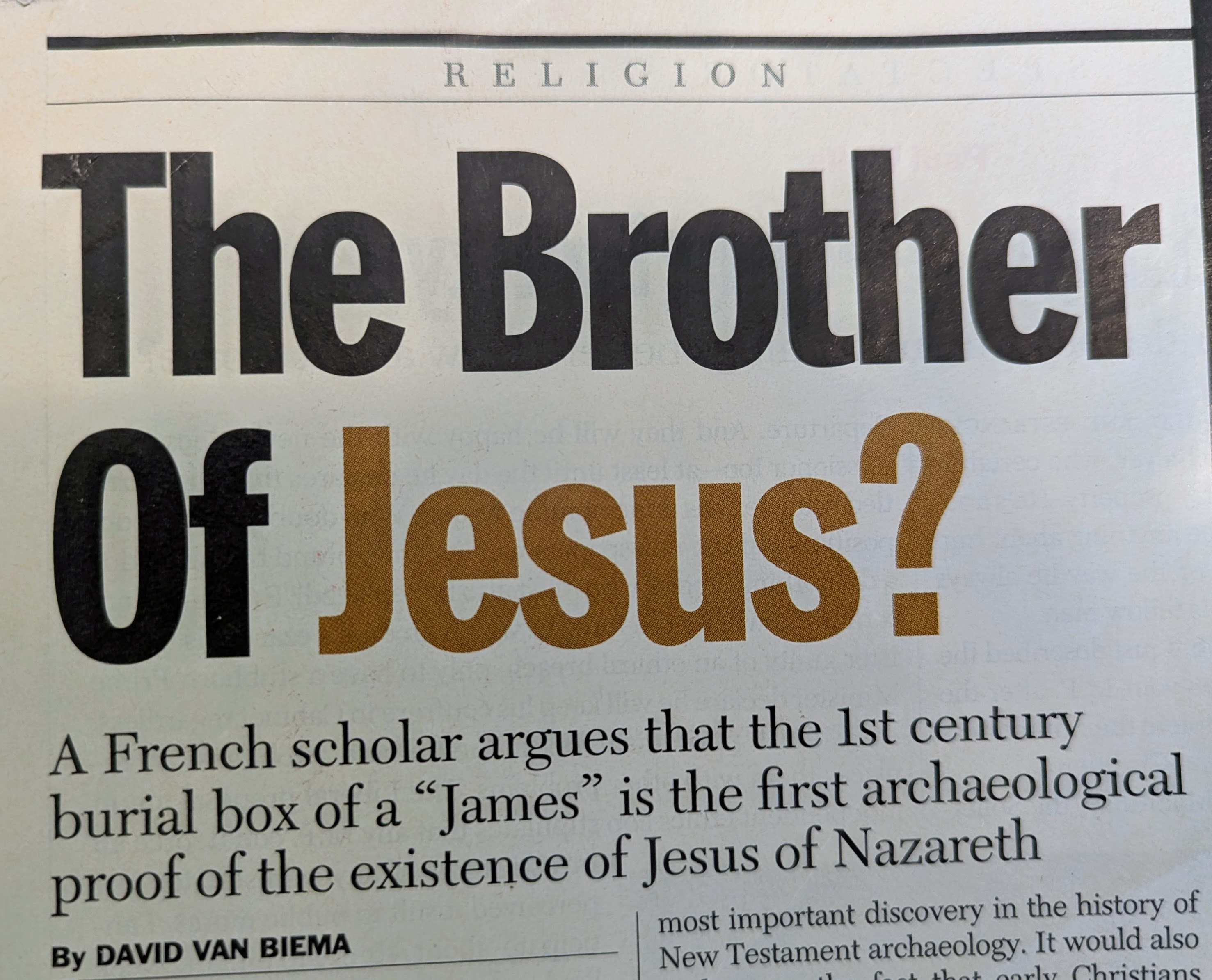
Time magazine, in its November 4, 2002, edition reported that “Andre Lemaire, one of the world’s foremost scholars of ancient scripts, announced that ‘it seems very probable that this [box] is the ossuary of the James in the New Testament.’”

Time Magazine Headline, Nov. 4, 2002

Arrangements were made to have the James Ossuary examined by experts and placed on display at the Royal Ontario Museum (ROM) in Toronto. But alas, when the shipping container arrived by air from Jerusalem, it was discovered that the ancient stone box had fractured in transit. News outlets excitedly reported on this new ill-fated development.

Undeterred by these setbacks, repairs were hastily made to the ossuary, and the highly publicized exhibit went ahead as planned. Thousands flocked to the display at the ROM. In fact, the display curator at the time confessed to this author that no other ROM exhibit generated sucha widespread frenzy of interest in all his years of service.

This stone box—this ancient artifact—may well be the closest physical contact we have to Jesus, the subject of the gospels.

But storm clouds were brewing. Roman Catholic scholars dismissed the discovery on doctrinal grounds. According to long established Vatican teaching, Mary was a perpetual virgin. How could Jesus then have a brother? This teaching has persisted despite several passages in the New Testament which unequivocally refer to James as the brother of Jesus.

Some scholars questioned the authenticity of this discovery. Was the “brother of Jesus” portion of the inscription a forgery—a present day addition to boost the value of this artifact? Then there was the question of provenance. Where exactly was this ossuary discovered? Since the exact original location of this find was unknown, the context that archeologists rely on to ascertain authenticity was sadly missing. How did the ossuary come into the hands of Oded Golan? Was he simply an unscrupulous shyster out to make a fast buck by peddling fake or altered artifacts?

Golan’s activities and his artifacts raised the suspicion of the Israeli Antiquities Authority. For years the Antiquities Authority had been attempting to put a halt to the illegal trade in artifacts discovered in the Holy Land. Here was a high-profile case that could send a clear message to all who sought to profit from this trade. On July 22, 2003, Oded Golan was arrested in Jerusalem for allegedly forging and illegally trading in antiquities. But is the James ossuary a forgery? In a press release following Golan’s arrest, the ROM stood by its initial assessment:

Until the ROM receives convincing evidence to the contrary, we stand by our opinion that the James Ossuary is not a forgery. We had a limited amount of time to study it because of the amount of conservation work that was required after the Ossuary arrived at the Museum after being damaged in transit. The studies that were carried out on the inscription and broken fragments of the Ossuary, however, satisfied the ROM’s investigative team that it was an authentic artifact with an authentic inscription that might make it the Ossuary of James, the brother of Jesus. There is always a question of authenticity when objects do not come from a controlled archaeological excavation, as is the case with the James Ossuary.

While the authenticity of the James Ossuary remains in question, it is the life of James, the brother of Jesus, which is truly intriguing. (1 see footnote) The James of the Bible is far more than bones in a box. He was after all a living, breathing, flesh-and-blood man.

Time photo of the James Ossuary

Present-day believers and church goers view James as an obscure figure, if they know anything about him at all. If Catholics are asked who the most important figure in the early church was, most would answer Peter. If Protestants are asked the same question, they would answer Paul. Yet if we could step in a time machine and ask Peter and Paul the same question, they would both answer James.

Over the centuries the historic importance of James has been overlooked. In the great gallery of early church fathers, typically Peter, Paul, and John draw the most attention. But James’ contribution was truly foundational—even crucial.

Many may be surprised to know that the New Testament has a good deal to say about James, the man known to early Christians as the brother of the Lord. The time has come to put some flesh on those bones missing from the ossuary—to create a portrait of the biblical James—a man who had a monumental influence on the direction of the early church and by extension an impact that echoes down through world history to the present day.

It can be argued that James, known to some as James the Just, is in fact the lynchpin of the Christian faith. Without him the early church would have remained an obscure Jewish sect—an offbeat curiosity in the grand march of civilization. But due to James, the gospel message burst out of the narrow confines of the Jewish faith. It exploded across the Roman Empire and came to dominate the life and thought of the Western world for the next two millennia. Now with the rapid rise of Christianity in the nations of Africa, South America, and Asia, the time has come to take a closer look at the man who set this whole process—this train of events into motion: the man the Bible writers call James, the brother of our Lord.

1 For a thorough exploration of the James Ossuary and its implications for present-day Christianity, see Hershel Shanks and Ben Witherington III’s book The Brother of Jesus: The Dramatic Story & Meaning of the First Archaeological Link to Jesus & His Family (Harper Collins, 2003).

New from David Kitz

James—the brother of Jesus—who was this man? What evidence do we have that this “brother of our Lord” even existed?

David Kitz digs deep into archeology, family dynamics, church history, and the biblical texts. What emerges from his research is a portrait of a decisive, pivotal leader who embodied the will and character of Jesus Christ.

But how did James—James the unbeliever—transform to become a leader who changed the course of world history? In these pages you will uncover the answer and rediscover for yourself the life-changing power of the gospel.

To view further details or purchase directly from the author click here.
Protected in Battle

09 Tuesday Sep 2025

Posted by davidkitz in Psalms

≈ 2 Comments

Tags

armor, armor of God, battle, Christians, deliverance, faith, mercy, mind, miracle, Prayer, protection, Reflection, resilience, salvation, Scripture, selfcontrol, shield, testimony

Today’s Devotion from Psalms 365 by David Kitz

Reading: Psalm 140:6-8
I say to the LORD, “You are my God.”
Hear, LORD, my cry for mercy.
Sovereign LORD, my strong deliverer,
you shield my head in the day of battle.
Do not grant the wicked their desires, LORD;
do not let their plans succeed (NIV). *

Reflection
On a beautiful spring evening about twenty-five years ago, I went for a bicycle ride with my fourteen-year-old son, Josh. At that time, there were some beautiful mountain bike trails on a forest-covered escarpment above our home. After exploring these trails for a while, the time came for us to return home.

We crossed to the opposite side of the paved road and began our descent down the hill. Of course, our bikes began to pick up speed—no pedaling needed. There was a traffic light at the bottom of the hill where we needed to make a right turn down our street. Soon Josh was well ahead of me. He went sailing around that corner at top speed and launched himself and his bike onto the sidewalk. What Josh could not see due to a tall hedge was the minivan pulling into the intersection directly ahead.

Boom! His bike collided with the back wheel and side of the minivan. Next, I see Josh’s body flying over the roof of the van. I expect to find him dead or disabled on the other side of the vehicle. Not so. Miraculously, not so! He was shaken but conscious. We rushed him to a hospital to have him checked. No signs of concussion were detected. Answered prayer and his bicycle helmet saved him. The minivan owner was not so fortunate. Josh’s head dented the rear roof column. Body shop repairs cost $1,600.

David voices this prayer in today’s reading from Psalm 140: Sovereign LORD, my strong deliverer, you shield my head in the day of battle (v. 7).

Is your head shielded? It’s your body’s most crucial asset. You can lose a limb—several limbs—and survive. But your head is essential. A lot of Christians are losing the battle for their heads these days. By that I mean we are filling our minds with the philosophical garbage and filth of this world. Many of the most active sites on the internet are porn sites. Christian men are particularly vulnerable.

Paul, the apostle, admonishes us: Put on the full armor of God, so that you can take your stand against the devil’s schemes (Ephesians 6:11). One of the most important elements of that armor is the helmet of salvation. Are you certain of your salvation? Our salvation is as certain as the blood of Christ. It’s as certain as the empty tomb. But if we do not guard our minds and our eyes, which are the gateway to the mind, we can quickly find ourselves vulnerable. We need self-control and God’s help—His shielding. It doesn’t take long to pick up speed when your mind starts rolling downhill. Is your helmet on?

Response: Sovereign LORD, my strong deliverer, you shield my head in the day of battle. Do not grant the wicked their desires, LORD; do not let their plans succeed (v. 7-8). I put on the helmet of salvation. I commit my thoughts and ways to you. Amen.

Your Turn: How vulnerable are you to attacks from the enemy? Are you holding your ground?

Para la publicación de Salmos 365 de hoy en español haga clic aquí.

bgbg_v4.3_1501818
* NEW INTERNATIONAL VERSION, COPYRIGHT ©1973, 1978, 1984, 2011 BY BIBLICA

Please pray for peace to return to Israel, Gaza, and Ukraine!

Volume I of Psalms 365: Develop a Life of Worship and Prayer won the Best Book of the Year Award from The Word Guild and Volume II has won the Best Devotional of the Year Award. For those who love God’s word, this three-book series is an ideal way to daily meet with the Lord. To purchase or for a closer look click here.

A gripping read from David Kitz.
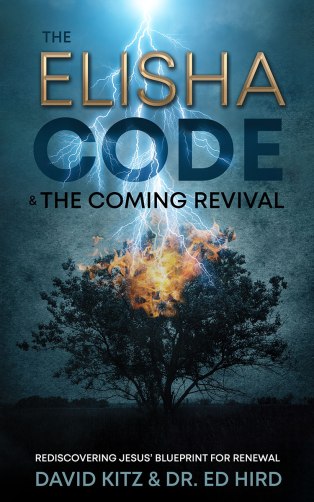
Is a return-to-Jesus revival possible in our time?
This book points the way forward.
For details click here.

Being God’s Chosen May Come at a Price

05 Tuesday Aug 2025

Posted by davidkitz in Psalm 129

≈ Leave a comment

Tags

Bible, blessing, Christians, devotion, God's chosen, imprisonment, Israel, martyrdom, mission, oppressed, persecution, Psalms, Suffering, the LORD, Zion

Today’s Devotion from Psalms 365 by David Kitz

Reading: Psalm 129

A song of ascents.

“They have greatly oppressed me from my youth,”
let Israel say;
“they have greatly oppressed me from my youth,
but they have not gained the victory over me.
Plowmen have plowed my back
and made their furrows long.
But the L
ORD is righteous;
he has cut me free from the cords of the wicked.”
May all who hate Zion
    be turned back in shame.
May they be like grass on the roof,
which withers before it can grow
a reaper cannot fill his hands with it,
nor one who gathers fill his arms.
May those who pass by not say to them,
“The blessing of the L
ORD be on you;
we bless you in the name of the L
ORD” (NIV). *

Reflection
A few years back I had a conversation with a Jewish friend about what it means to be numbered among God’s chosen people. I found his response quite surprising.

“Most people see being God’s chosen as a great honor or a blessing. The reality is quite different. The reality is persecution. The reality is envy and hatred by your neighbors. The reality is six million dead in the Holocaust. We are God’s chosen people. Is that a blessing? Sometimes it feels like a curse.”

Psalm 129 reflects the truth of my friend’s words: “They have greatly oppressed me from my youth, but they have not gained the victory over me. Plowmen have plowed my back and made their furrows long.”

Often, we assume that being chosen by God will bring great blessing. But being called and chosen does not mean trouble free. The apostle Paul was God’s called and chosen messenger to the Gentiles, but fulfilling his mission involved tremendous suffering, beatings, imprisonment and ultimately martyrdom. See 2 Corinthians 11:22-33. Paul makes this observation about his calling: For it seems to me that God has put us apostles on display at the end of the procession, like those condemned to die in the arena. We have been made a spectacle to the whole universe, to angels as well as to human beings (1 Corinthians 4:9).

Genuinely following Jesus in the world today can lead directly to persecution. Amnesty International reports that 80% of the systemic persecution in the world today is targeted at Christians. There is often a price to pay for being God’s chosen.

Response: Father God, I pray for those who are facing severe persecution, whatever their faith may be. But I pray especially for my brothers and sisters in Christ. Have mercy on them for Jesus’ sake. Amen.

Your Turn: Do you see yourself as chosen by God? How do stories of suffering and persecution affect you? Is there something you can do to help those in need?

Para la publicación de Salmos 365 de hoy en español haga clic aquí.

bgbg_v4.3_1501818
* NEW INTERNATIONAL VERSION, COPYRIGHT ©1973, 1978, 1984, 2011 BY BIBLICA

Please pray for peace to return to Israel, Gaza, and Ukraine!

Volume I of Psalms 365: Develop a Life of Worship and Prayer won the Best Book of the Year Award from The Word Guild and Volume II has won the Best Devotional of the Year Award. For those who love God’s word, this three-book series is an ideal way to daily meet with the Lord. To purchase or for a closer look click here.

A gripping read from David Kitz.
Is a return-to-Jesus revival possible in our time?
This book points the way forward.
For details click here.

Do Symbols and Tradition Matter?

05 Saturday Apr 2025

Posted by davidkitz in Uncategorized

≈ 31 Comments

Tags

Bible, Canada, Canadian, Christianity, Christians, Donald Trump, God, history, Mark Carney, politics, supremacy of God, tradition, United States

It is with a good deal of regret that I feel compelled to write this post. I have steadfastly avoided posting anything political. My posts are about knowing God and His Word. At the same time I have not hidden my nationality. I am Canadian. It’s gratifying to know that people from around the world are reading my thoughts and reflections on the Psalms.

In recent weeks, my country has been threatened daily with annexation by Donald Trump, the president of the United States. This has produce a huge amount of stress among Canadians. To put it bluntly we love our country and have no desire to be forced into a union with any country against our will. 

Furthermore, it distresses me to see many American Christians coming under the spell of someone who shows contempt for the weak. Canadians want friendship with our American neighbors, but your president is making that difficult if not impossible.

Here is a brief reflection on two significant events that have happened in our two countries since the new year:

On Friday March 14th, at Rideau Hall in Ottawa in the presence of the Governor General, Mary Simon, Mark Carney stepped forward with his Bible in his hand and took the oath of office pledging his allegiance to King Charles III and his heirs and successors. He thus became the 24th Prime Minister of Canada in a long progression of leaders that extends back to 1867. In the past, Conservative Prime Ministers have done the same. There was nothing particularly unusual or partisan about this ceremony which is rich in tradition and symbolism.

Does the tradition and symbolism matter? Does history and continuity matter? I would argue that it does. It matters more now than at any time in our history since our very existence as a nation is under threat.

There was a striking contrast between how Mark Carney took the oath of office, and how Donald Trump swore to uphold the United States constitution on January 20th, the day of his inauguration. Carney held his Bible in his hand as he took the oath.

In a sharp departure from tradition, Donald Trump did not place his hand on the Bible. His wife Melania extended the Bible toward him, but unlike every American president before him, he did not place his hand on the sacred book. This stands in contrast to the first time he took the oath of office as president in 2016. On that occasion, he placed his hand on the Bible.

Was this a minor oversight? No. Clearly this was a deliberate act—an act of calculated defiance. And what was Donald J. Trump defying? He was defying the supremacy of the law, and by extension the supremacy of God. Though he mouthed the words of the oath of office his actions said he stood apart from the law and above the law.

Every day since his inauguration he has acted in ways that defy the law, the constitution, the judiciary, and the entire legal system. This includes breaking laws and treaties that he enacted and signed in his first term, such as the trade agreement with Mexico and Canada. Should we be surprised? No. Donald Trump signaled he would do this on day one of his presidency by not putting his hand on the Bible.

The Bible that Donald Trump ignored has some choice words to say about such conduct:

 My friends, don’t say cruel things about others! If you do, or if you condemn others, you are condemning God’s Law. And if you condemn the Law, you put yourself above the Law and refuse to obey either it or God who gave it (James 4:11-12, CEV).

For people of faith Trump’s conduct should be alarming. But sadly, many have bought into the lies and animosity spouted by this man of lawlessness.

Does tradition and symbolism matter? Because the Word of God is foundational to the legal and national traditions in both United States and Canada it matters immensely. Truth matters.

As for me during this time, these words from our national anthem have deep resonance. “God keep our land glorious and free.”

An Author Interview with David Kitz

02 Thursday May 2024

Posted by davidkitz in Books by David Kitz

≈ Leave a comment

Tags

Christians, church history, David Kitz, Elijah, Elisha, Gaza, Holy Spirit, Israel, Jesus, John the Baptist, miracle, New Testament, Old Testament, renewal, repentance, revival, spiritual renewal, Ukraine

David, what event in your life inspired you to write The Elisha Code & the Coming Revival?

On February 11th, 2018, I delivered a sermon entitled Healing the Water. My message2023-10-06-OnlineSharing-2 was based on Elisha’s first public miracle, the healing of the spring at Jericho. I was struck by the parallel nature of this miracle when compared with Jesus’ first miracle of turning water into wine. This triggered a quest to discover if Elisha’s other miracles resembled the miracles of Jesus. To my amazement they do. Further research uncovered the parallel nature of the ministry of Elijah and John the Baptist, and later, the ministry of Elisha and Jesus. But what are the practical implications of this biblical discovery for believers today?
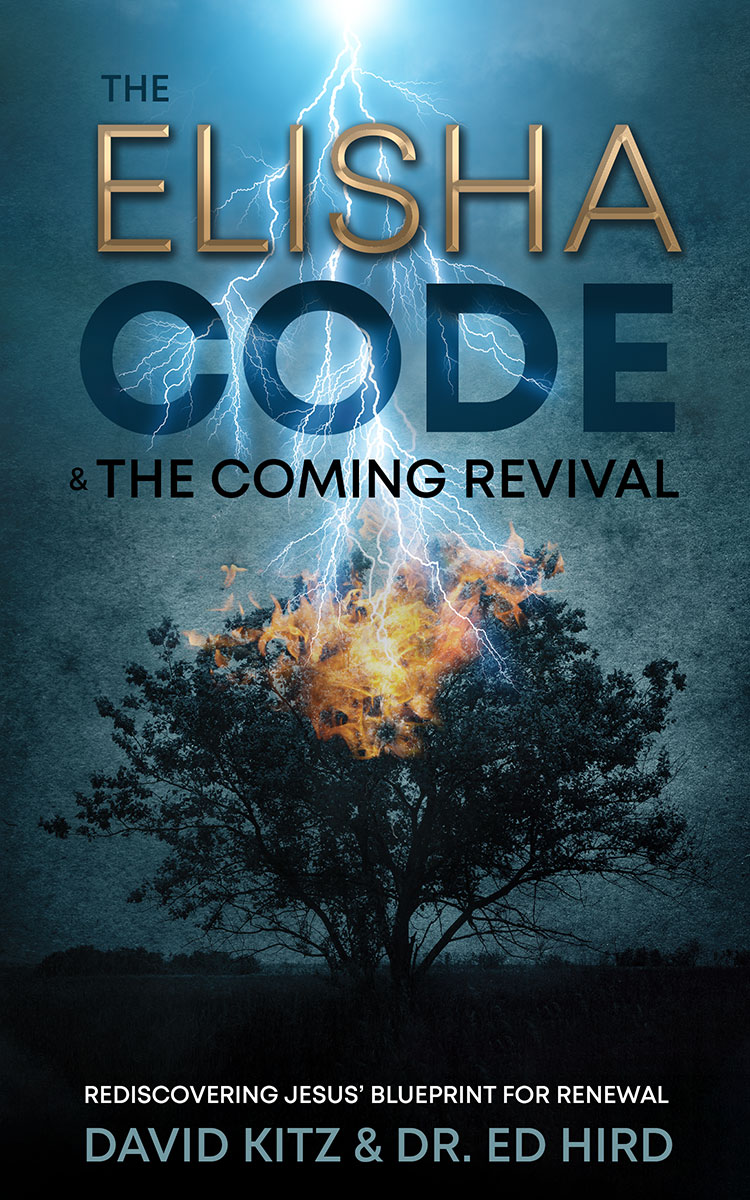
The Old Testament dynamic duo of Elijah and Elisha sparked spiritual renewal in their day. John the Baptist and Jesus did the same in New Testament times. My friend, Dr. Ed Hird, has been writing about men and women from church history who spark revival in their day. Together we decided to partner in bringing a message of renewal and revival for the people of our time.

David, how is the topic of your book personal to you and why did you choose to share it with readers?

TheElishaCodeCVR5I stumbled upon a unique, unexplored perspective of Elijah and Elisha’s prophetic ministry that linked directly to the ministry of John the Baptist and Jesus. These four men preached repentance and brought revival and new life to the people of their time. Along with many Christians today, Dr. Ed Hird and I believe this message of deep spiritual renewal is urgently needed now.

Why should people purchase and read the book you coauthored with Dr. Ed Hird?

This book is a blueprint for the revival we need in our lives and in our churches today. Furthermore, the thread of practical life applications is both impactful and encouraging.

What are some current and newsworthy world events that relate to the topic(s) of your book?

We live in dark times—times of fear, pestilence, national and international intrigue, and political and environmental turmoil. War rages in Israel, Gaza, Ukraine, and other countries across the globe. Many are in despair. Moral rot is evident everywhere in society. Meanwhile, churches are closing, and faith is in decline. Spiritual renewal is urgently needed.

Explain two things you most want readers to walk away with after reading your book.

Further decline is not inevitable. Throughout history God has sent spiritual fire starters among us—men and women who turn people’s hearts toward God. Now is the time to renew our faith in a miracle working God who powerfully draws people to himself by his Spirit. It has happened before. It will happen again before Christ’s return.

TheElishaCodeCVR5

To purchase or for a closer look click here.

God’s Called and Chosen

12 Tuesday Mar 2024

Posted by davidkitz in Psalm 129

≈ 2 Comments

Tags

Christians, devotion, Holocaust, Israel, Jesus, Jewish faith, martyrdom, persecution, Prayer, Psalms, Suffering, Zion

Today’s Devotion from the Psalms

Reading: Psalm 129
A song of ascents.
“They have greatly oppressed me from my youth,”
let Israel say;
“they have greatly oppressed me from my youth,
but they have not gained the victory over me.
Plowmen have plowed my back
and made their furrows long.
But the L
ORD is righteous;
he has cut me free from the cords of the wicked.”
May all who hate Zion
be turned back in shame.
May they be like grass on the roof,
which withers before it can grow;
a reaper cannot fill his hands with it,
nor one who gathers fill his arms.
May those who pass by not say to them,
“The blessing of the L
ORD be on you;
we bless you in the name of the L
ORD” (NIV). *

img_20220807_2012460

Landestreu Church

Reflection
A few years back I had a conversation with a Jewish friend about what it means to be numbered among God’s chosen people. I found his response quite surprising.

“Most people see being God’s chosen as a great honor or a blessing. The reality is quite different. The reality is persecution. The reality is envy and hatred by your neighbors. The reality is six million dead in the Holocaust. We are God’s chosen people. Is that a blessing? Sometimes it feels like a curse.”

Psalm 129 reflects the truth of my friend’s words: “They have greatly oppressed me from my youth, but they have not gained the victory over me. Plowmen have plowed my back and made their furrows long.”

Often, we assume that being chosen by God will bring great blessing. But being called and chosen does not mean trouble free. The apostle Paul was God’s called and chosen messenger to the Gentiles, but fulfilling his mission involved tremendous suffering, beatings, imprisonment and ultimately martyrdom. See 2 Corinthians 11:22-33. Paul makes this observation about his calling: For it seems to me that God has put us apostles on display at the end of the procession, like those condemned to die in the arena. We have been made a spectacle to the whole universe, to angels as well as to human beings (1 Corinthians 4:9).

Genuinely following Jesus in the world today can lead directly to persecution. Amnesty International reports that 80% of the systemic persecution in the world today is targeted at Christians. There is often a price to pay for being God’s chosen.

Response: Father God, I pray for those who are facing severe persecution, whatever their faith may be. But I pray especially for my brothers and sisters in Christ. Have mercy on them for Jesus’ sake. Amen.

Your Turn: Do you see yourself as chosen by God? How do stories of suffering and persecution affect you? Is there something you can do to help those in need?

* NEW INTERNATIONAL VERSION, COPYRIGHT ©1973, 1978, 1984, 2011 BY BIBLICA

BGBG_v4.3_150[1818]

Please pray for peace to return to Israel, Gaza, and Ukraine!

Volume I of Psalms 365: Develop a Life of Worship and Prayer won the Best Book of the Year Award from The Word Guild and Volume II has won the Best Devotional of the Year Award. For those who love God’s word, this three-book series is an ideal way to daily meet with the Lord. To purchase or for a closer look click here.TheElishaCodeCVR5

To purchase or for a closer look click here.

Resurrection Hope

27 Wednesday Dec 2017

Posted by davidkitz in Bible, Devotionals, Psalm 71, Psalms

≈ 7 Comments

Tags

Christ, Christians, faithfulness, hope, Jesus, New Testament, Old Testament, Pentecost, promise, prophetic, psalmist, redemption, resurrection

Reading:                                      Psalm 71

(Verses 19-24)
Your righteousness, God, reaches to the heavens,
you who have done great things.
Who is like you, God?
Though you have made me see troubles,
many and bitter, you will restore my life again;
from the depths of the earth
you will again bring me up.
You will increase my honor
and comfort me once more.
I will praise you with the harp
for your faithfulness, my God;
I will sing praise to you with the lyre,
Holy One of Israel.
My lips will shout for joy when I sing praise to you—
I whom you have delivered.
My tongue will tell of your righteous acts all day long,
for those who wanted to harm me
have been put to shame and confusion
(NIV).

Reflection
Typically Christians view resurrection as a New Testament concept, but here in the conclusion to Psalm 71, we can see that the Old Testament psalmist had a solid grasp of resurrection truths. Consider his words. Though you have made me see troubles, many and bitter, you will restore my life again; from the depths of the earth you will again bring me up.

img_20170209_162239

Icy sunset, Grey Nuns Park, Ottawa, ON — photo by David Kitz

That sounds like resurrection to me. Jesus fulfilled the prophetic words of the psalmist when he stepped out of the tomb on resurrection morning. Elsewhere David spoke prophetically of Christ and his resurrection when he wrote, “I am your chosen one. You won’t leave me in the grave or let my body decay” (Psalm 16:10).

Peter sited this verse as proof of Jesus’ resurrection when he preached to the crowd that gathered on the Day of Pentecost. See Acts 2:22-36.

The promise of the resurrection filled the psalmist with hope and it should do the same for us. Because Jesus is alive now, we too will be raised to life. That thought should buoy us on tough days. When we lose a loved one, whose faith was rooted in God’s redeeming love, we can rest assured that our farewell is not forever. We will see them again at the resurrection. On that great day we can join with the psalmist and declare, “My lips will shout for joy when I sing praise to you—I whom you have delivered.”

Response: LORD God, thank you for the promise of resurrection. Thank you for the hope we have in Jesus. Through Jesus’ shed blood we have redemption, and the forgiveness that makes resurrection possible. Hallelujah! Amen.

Your Turn: Why is the resurrection meaningful to you?

Pouring Out Your Complaint

12 Thursday Oct 2017

Posted by davidkitz in Bible, Devotionals, Psalm 44, Psalms

≈ 3 Comments

Tags

anguish, Christians, death, defeat, destruction, God, grief, Libya, martyred, the LORD, tribulations, unfair

Reading:                                      Psalm 44

 (Verses 17-26)
All this came upon us, though we had not forgotten you;
we had not been false to your covenant.
Our hearts had not turned back;
our feet had not strayed from your path.
But you crushed us and made us a haunt for jackals;
you covered us over with deep darkness.
If we had forgotten the name of our God
or spread out our hands to a foreign god,
would not God have discovered it,
since he knows the secrets of the heart?
Yet for your sake we face death all day long;
we are considered as sheep to be slaughtered.
Awake, LORD! Why do you sleep?
Rouse yourself! Do not reject us forever.
Why do you hide your face and forget our misery and oppression?
We are brought down to the dust;
our bodies cling to the ground.
Rise up and help us; rescue us because of your unfailing love
(NIV).

Reflection
As previously noted, Psalm 44 begins in a very positive fashion as the psalmist recalls the goodness of the LORD and the great victories Israel has won because of the LORD’s help. But that is not the present reality. The present reality is filled with defeat, death and destruction. The psalmist moves from rejoicing over past victories to lamenting over present-day tribulations. Hear his words of anguish: Yet for your sake we face death all day long; we are considered as sheep to be slaughtered.

2017-09-29b

Mist rising from the Fairfax Falls on the Lamoille River, Fairfax, Vermont — photo by David Kitz

What do you do in the midst of defeat? Do you put on a brave face and pretend all is going well? There may be occasions when putting on a brave face is warranted, even necessary—but inside, when we are alone with our thoughts we question why God would allow such things. Why would God allow a child to die? Why would He allow a natural disaster like an earthquake to claim countless innocent lives? Normally, these life-shattering matters don’t come with pat answers in tow. We are left in a state of grief and bewilderment.

Often believers see such events as retribution for sins committed against a holy God. But note the psalmist’s complaint: All this came upon us, though we had not forgotten you; we had not been false to your covenant. Our hearts had not turned back; our feet had not strayed from your path. 

The brutal truth is bad things happen to good people. Sometimes Christians are martyred on a beach in Libya. Sometimes a cruel disease hems us in on every side and there is no escape, aside from death and heaven’s door. Sometimes all we can do is pour out our complaint before a God of unfailing love.

Response: LORD God, when life is hard, help me to remember to bring my complaints and travails to you. You are bigger than any agony or grief I may face. I call out to you, my Savior and my God. Amen.

Your Turn: In your opinion has God been unfair to you? How do you respond?

Those Who Hate Zion

10 Friday Feb 2017

Posted by davidkitz in Psalm 129, Psalms

≈ 9 Comments

Tags

Amnesty International, called, chosen, chosen people, Christians, imprisonment, martyrdom, persecution, Zion

Reading:                                        Psalm 129

A song of ascents.

“They have greatly oppressed me from my youth,”
let Israel say;
“they have greatly oppressed me from my youth,
but they have not gained the victory over me.
Plowmen have plowed my back
and made their furrows long.
But the L
ORD is righteous;
he has cut me free from the cords of the wicked.”

May all who hate Zion
be turned back in shame.
May they be like grass on the roof,
which withers before it can grow;
a reaper cannot fill his hands with it,
nor one who gathers fill his arms.
May those who pass by not say to them,
“The blessing of the L
ORD be on you;
we bless you in the name of the L
ORD” (NIV).

Reflection

A few years back I had a conversation with a Jewish friend about what it means to be numbered among God’s chosen people. I found his response quite surprising.

img_20170208_134244

Are you called to live in a harsh climate? — photo by David KItz

“Most people see being God’s chosen as a great honor or a blessing. The reality is quite different. The reality is persecution. The reality is envy and hatred by your neighbors. The reality is six million dead in the Holocaust. We are God’s chosen people. Is that a blessing? Sometimes it feels like a curse.”

Psalm 129 reflects the truth of my friend’s words: “They have greatly oppressed me from my youth, but they have not gained the victory over me. Plowmen have plowed my back and made their furrows long.”

Often we make the assumption that being chosen by God will bring great blessing. But being called and chosen does not mean trouble free. The apostle Paul was God’s called and chosen messenger to the Gentiles, but fulfilling his mission involved tremendous suffering, beatings, imprisonment and ultimately martyrdom. See 2 Corinthians 11:22-33. Paul makes this observation about his calling: For it seems to me that God has put us apostles on display at the end of the procession, like those condemned to die in the arena. We have been made a spectacle to the whole universe, to angels as well as to human beings (1 Corinthians 4:9).

Genuinely following Jesus in the world today can lead directly to persecution. Amnesty International reports that 80% of the systematic persecution in the world today is targeted at Christians. There is often a price to pay for being God’s chosen.

Response: Father God, I pray for those who are facing severe persecution, whatever their faith may be. But I pray especially for my brothers and sisters in Christ. Have mercy on them for Jesus sake. Amen.

Your Turn: Do you see yourself as chosen by God? He has called you to be His child by regeneration.

Psalms 365: Develop a Life of Worship and Prayer

Psalms 365 Volume II

Psalms 365 vol 3
— Psalms 365 Volume III

Psalms

Recent posts

  • Generosity Is Never out of Season February 20, 2026
  • Your Heart’s Delight February 20, 2026
  • Generosity Is Never out of Season February 19, 2026
  • Givers & Takers February 19, 2026
  • Teach Me Your Paths February 18, 2026
  • Who holds you up? February 18, 2026
  • A Lesson from the Flowers February 17, 2026

Calendar

February 2026
M T W T F S S
 1
2345678
9101112131415
16171819202122
232425262728  
« Jan    

Blog Posts

Comments

  • K.L. Hale on Teach Me Your Paths
  • davidkitz on Teach Me Your Paths
  • K.L. Hale on Teach Me Your Paths

Blog at WordPress.com.

Privacy & Cookies: This site uses cookies. By continuing to use this website, you agree to their use.
To find out more, including how to control cookies, see here: Cookie Policy
  • Subscribe Subscribed
    • I love the Psalms
    • Join 1,385 other subscribers
    • Already have a WordPress.com account? Log in now.
    • I love the Psalms
    • Subscribe Subscribed
    • Sign up
    • Log in
    • Report this content
    • View site in Reader
    • Manage subscriptions
    • Collapse this bar
 

Loading Comments...