
Tags
Bible, Bonhoeffer, Christ, Christianity, church, epistle, epistle of James, faith, good works, gospel, grace, James, James the brother of Jesus, Jerusalem, Jesus, Judaism, leadership, Martin Luther, Messiah, Paul, Peter, Reformation, Roman Catholic, Scripture, Soren Kierkegaard
James: the Lynchpin of Our Faith — Chapter 18
There is something quite unique about the Epistle of James. It does not easily fit into the pattern of the other apostolic writings. There is a sharpness—a directness—that many readers find both challenging and refreshing.
In his writing James goes for the jugular with the relentless precision of an attack dog. And what is he attacking? He is attacking the hypocrisy, lethargy, and complacency that can so easily set into a believer’s life.
When the epistle is read in its entirety, the reader may come away with a keen desire to repent. It is an epistle that demands change—that requires action—that convicts the wayward.
If you are looking for comfort, you won’t find it in the Epistle of James. If you are looking for a philosophical discussion on the merits of the gospel or a treatise on various doctrinal points, you won’t find that either. What you do find is an unequivocal call for right living. For practical-minded James, wisdom is not an intellectual exercise. Wis-dom must be expressed through right words and actions.
Are any of you wise or sensible? Then show it by living right and by being humble and wise in everything you do. But if your heart is full of bitter jealousy and selfishness, don’t brag or lie to cover up the truth. That kind of wisdom doesn’t come from above. It is earthly and selfish and comes from the devil himself. Whenever people are jealous or selfish, they cause trouble and do all sorts of cruel things. But the wisdom that comes from above leads us to be pure, friendly, gentle, sensible, kind, helpful, genuine, and sincere. When peacemakers plant seeds of peace, they will harvest justice. (James 3:13–18, CEV)

An appeal for humility, right living, and bold faith are at the core of this epistle.
Jon Mark Ruthven makes these observations on James’ purpose for writing the Epistle of James:
[The Epistle of ] James is primarily practical and ethical, emphasizing duty rather than doctrine. The author wrote to rebuke the shameful neglect of certain Christian duties. In doing so, he analyzed the nature of genuine faith and urged his readers to demonstrate the validity of their experience with Christ. His supreme concern was reality in religion, and he set forth the practical claims of the gospel. (1)
It is the uniqueness of the Epistle of James that led to the near rejection of this book from the canon of scripture in the sixteenth century. No other book of the New Testament has such a laser-like focus on right living. To be clear, the Epistle of James was readily accepted by the early church fathers and was author-itatively quoted by Origen in the first half of the third century.
According to R.V.G. Tasker, “the Epistle of James had become firmly established in the canon of the western part of Christendom by the end of the fourth century.” (2)
But the early reformers and Luther in particular had little use for the Epistle of James. Luther considered the letter an “epistle of straw,” since it lacked the doctrinal heft of the other epistles. He relegated the epistle to the back of his German translation of the New Testament because, among other things, he doubted that it was actually authored by James.
Citing J.H. Ropes, Tasker asserts that Erasmus and Luther “ascribed the letter to ‘some good, pious man who had taken some sayings from the apostle’s disciples.’” (3)
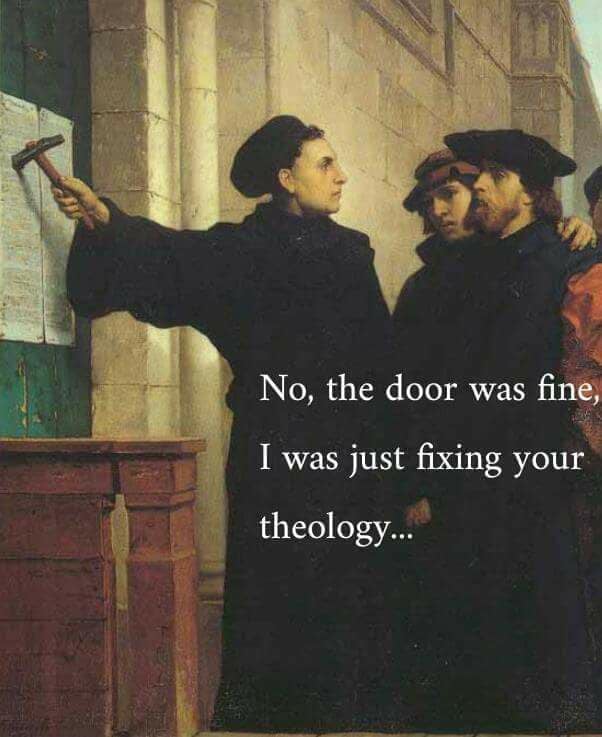
But Martin Luther’s problems with Epistle of James ran much deeper than uncertainty about the book’s authorship. Luther objected to one of the central tenets of James’ epistle. James boldly asserted that “faith without works is dead.”
My friends, what good is it to say you have faith, when you don’t do anything to show that you really do have faith? Can that kind of faith save you? If you know someone who doesn’t have any clothes or food, you shouldn’t just say, “I hope all goes well for you. I hope you will be warm and have plenty to eat.” What good is it to say this, unless you do something to help? Faith that doesn’t lead us to do good deeds is all alone and dead!
Suppose someone disagrees and says, “It is possible to have faith without doing kind deeds.” I would answer, “Prove that you have faith without doing kind deeds, and I will prove that I have faith by doing them.” You surely believe there is only one God. That’s fine. Even demons believe this, and it makes them shake with fear.
Does some stupid person want proof that faith without deeds is useless? Well, our ancestor Abraham pleased God by putting his son Isaac on the altar to sacrifice him. Now you see how Abraham’s faith and deeds worked together. He proved that his faith was real by what he did. This is what the Scriptures mean by saying, “Abraham had faith in God, and God was pleased with him.” That’s how Abraham became God’s friend.
You can now see that we please God by what we do and not only by what we believe. For example, Rahab had been a prostitute. But she pleased God when she welcomed the spies and sent them home by another way.
Anyone who doesn’t breathe is dead, and faith that doesn’t do anything is just as dead! (James 2:14–26, CEV)
Luther had ushered in the Reformation on the doctrine of salvation by faith alone—sola fide. He had staked his faith and actions on the writings of Paul, which clearly stated that salvation came as a result of grace through faith and not of works.
We who are Jews by birth and not sinful Gentiles know that a person is not justified by the works of the law, but by faith in Jesus Christ. So we, too, have put our faith in Christ Jesus that we may be justified by faith in Christ and not by the works of the law, because by the works of the law no one will be justified. (Galatians 2:15–16, NIV)

Photo by Sora Shimazaki on Pexels.com
For Luther the Epistle of James represented a clear contradiction of his interpretation of the passage above from Galatians, and other passages from Paul’s epistles such as Ephesians 2:4–8 and Romans 5:1–2. James’ letter placed great emphasis on right living, while Paul’s letters emphasized the rightness of faith in Christ.
Under Luther’s leadership, justification before God by grace through faith became the central theme of the Reformation. Works had no part to play in personal salvation, since salvation was not earned. It came as a gift by God’s grace. But with statements such as, “As the body without the spirit is dead, so faith without deeds is dead” (James 2:26, NIV), James appeared to contradict the central tenet on which Luther’s understanding of faith was built. The Epistle of James appeared to undermine the founding premise of the entire Reformation.
Rather than reconcile these apparent doctrinal contradictions between two beloved apostles, Luther discounted James as an epistle of straw and shuffled it off to the back of his translation of the Bible—along with what he considered to be other low value books, such as Hebrews, Jude, and Revelation.
Tasker makes the following assessment:
He [Luther] had arbitrarily, and without any support from ancient manuscripts, placed the four books which he considered to be of doubtful apostolic authority and of secondary value doctrinally at the end of the New Testament published in 1522, to form a kind of supplement; and he did not number them in the table of contents. (4)
So, what exactly did Luther say about the Epistle of James? In context, here is J. H. Ropes’ translation from German of his 1522 words:
In fine, Saint John’s Gospel and in his first Epistle, Saint Paul’s epistles, especially those to the Romans, Galatians and Ephesians, and Saint Peter’s first epistle—these are the books which show thee Christ, and teach thee everything that is needful and blessed for thee to know even though thou never see or hear any other book or doctrine. Therefore is Saint James’s epistle a right strawy epistle in comparison with them, for it has no gospel character to it. (5)

The impact of this negative assessment of James’ epistle has rippled down through centuries. It has also colored our perspective of the person of James. He has been viewed as a theological lightweight beside the likes of Peter and Paul. But is this a fair and accurate assessment?
History has not been kind to James. Although James played a prominent and pivotal role in the first-century church, his role and his theological significance has largely been ignored, downplayed, or misunderstood down through the ages.
In the medieval period, the Roman Catholic Church drifted into what many reformers would call an idolatrous worship of Mary. This exaltation of Mary was matched with the development of several doctrinal positions which find no basis in scripture. These include the doctrine of the immaculate conception of Mary, her perpetual virginity, and her bodily assumption into heaven.
The doctrine of the perpetual virginity of Mary is particularly troublesome when it comes to our under-standing of James, since it strips him of his lineage and his direct brotherhood with Jesus. Thus emasculated, his words and life story lack the rightful authority and gravitas that this direct link to Christ confers.
With the emergence of the Reformation, with its emphasis on the centrality of the holy scriptures, it would only seem logical that James would regain the recognition he deserved. But alas, this was not the case. Luther found James’ epistle wanting because he viewed it as undermining the doctrine of sola fide.
Furthermore, Roman Catholic theologians drew comfort from the Epistle of James because in it they found the basis for two sacraments: the sacrament of divine unction (anointing the sick with oil for healing), and the sacrament of confession to the parish priest. Luther rejected both as sacraments of the church.
Though the early reformers recognized James’ lineage as the half-brother of Jesus, they found his theology suspect, since it appeared to contradict the writings of Paul. They believed, the Epistle of James appeared to undercut one of the foundational truths of the Reformation, namely the doctrine of justification by faith.
With the dawn of the Reformation, a great rift emerged in Christendom, which led to the formation of the various Protestant churches.
The Epistle of James lies right at the heart of that fault line. Catholicism embraced a more works-oriented path to salvation—a path apparently endorsed by James—while Protestantism embraced salvation by grace through faith—a path endorsed by Paul.
These opposing positions led to war and upheaval in Europe on a massive scale. All this is beyond strange when we consider that in their lifetime, according to the scriptures, Paul and James got along very well. They collaborated, respected one another, and each admired the other’s gifting and calling. Now some 1,500 years later, Christians were killing one another in an argument over letters that these two friends had written.

Photo by Pixabay on Pexels.com
Since the Reformation, some theologians would have us believe that these two men were at loggerheads, each with their doctrinal daggers drawn. As we have seen in earlier chapters, by examining their relationship through the lens of scripture, there is no basis for such an argument. Despite having strongly held views and differing spheres of in-fluence—Paul among the Gentile converts and James among Jewish converts—both were able to work with one another for the common good of the church.
So, are the theological differences between James and Paul more apparent than real? There certainly are several reasons to believe this is the case.
The first argument for a theological reconciliation between Paul and James has already been made. There is no evidence of relational conflict between Paul and James. Doctrinal conflict frequently leads to relational conflict, but the scripture provides us with no smoking gun in this regard. Texts written by Luke and Paul and the quoted words of James indicate a strong, healthy relationship between these two leaders.
Secondly, when examining a piece of writing, one needs to consider the author’s purpose. In his epistle, James was not writing with the purpose of laying out a theological framework for salvation, as was the case with Paul’s epistle to the Romans. James was writing an appeal to believers for righteous living. Much of Luther’s criticism of the Epistle of James is unwarranted. James is being faulted for what he did not write. This is like criticizing a dog for not being a cat.
Thirdly, on the surface it may appear that James and Paul are at odds on the role that faith and deeds play in salvation, but a closer examination reveals otherwise. For both Paul and James, having faith—saving faith—is not a passive response. True and saving faith is more than providing intellectual assent to a prescribed set of beliefs. That is precisely the argument that James is making when he claims that even demons believe in God, but their faith does not save them (James 2:19). For Paul as well, saving faith meant far more than intellectual assent.
Fourth, Paul and James agreed that genuine faith is personally transformative. Paul expected and called for personal transformation in the lives of every one of his converts. (See Ephesians 2:1–10.) How did that changed life reveal itself? Through deeds, of course. Time and again in his epistles, Paul calls for evidence of changed lives in the daily conduct of believers. Often these direct calls to action or works are found near the end of Paul’s epistles, since often he begins his letters by dealing with specific problems that have arisen in the church, or by presenting foundational truths of the Christian faith. (For examples of Paul’s calls to action, see Ephesians 4:25–6:20, 1 Thessalonians 5:12–22, and Colossians 3:18–4:6.)
James expected and called for personal transformation as well, but his epistle represents a shift from the Pauline paradigm. His entire epistle is a call for trans-formative, Christ-motivated actions, attitudes, and behavior.
In his discussion of the content of the Epistle of James, Jon Mark Ruthven makes this observation:
Rather than speculating or debating on religious theories, James directs his readers toward godly living. From the beginning to the end the mood of his letter is imperative. In 108 verses, 54 clear commands are given, and seven times James calls attention to his statements by using terms that are imperative in nature. This “bondservant of God” [James 1:1] writes as one supervising other slaves. The result is a statement of Christian ethics, which stands on par with any such teaching in the New Testament. (6)

The Word of God — photo by David Kitz
Finally, one needs to consider the work of the Holy Spirit. The Holy Spirit inspired both Paul and James to write their epistles. If we believe in the divine inspiration of the holy scriptures, it then follows that these two apostles, using their skills and experiences, wrote as the Holy Spirit directed them to write.
All Scripture is God-breathed and is useful for teaching, rebuking, correcting and training in righteousness, so that the servant of God may be thoroughly equipped for every good work. (2 Timothy 3:16–17)
From the earliest times the church has recognized the writings of James and Paul as God-breathed. If the Holy Spirit directed James to write an epistle focussed on practical Christian living, who are we question the wisdom of the Holy Spirit? Our understanding of what it means to live as a follower of Jesus would be considerably diminished without the Epistle of James.
In many respects James acts as a counterbalance to Paul. His epistle counters the notion of cheap grace that places no requirements on the believer. A hefty dose of Luther’s doctrine of sola fide can lead to a culture of easy believe-ism and an aversion to calls for personal holiness. Within such a church culture, anything that requires effort or personal sacrifice is frowned upon because it might be misconstrued as an attempt to earn one’s salvation.
In the last century, through his writing and the example he set by his life and death, the German Lutheran theologian Dietrich Bonhoeffer warned about the consequences of cheap grace—the results of which are a church rife with sin, which has no effective witness to the world because it conforms to the social and moral norms of the world. The Epistle of James is the biblical antidote to the easy believe-ism that Bonhoeffer warned against.
Similarly, a century before Bonhoeffer, the noted theologian and philosopher Soren Kierkegaard saw the Epistle of James as his chief weapon against the hypocrisy of his day.
It is surely both interesting and illuminating to recall that, when Soren Kierkegaard in the middle of the nineteenth century felt called to use his great gifts of eloquence and satire in a sustained warfare against the worldliness and hypocrisy of the contempor-ary Church, it was the Epistle of James that both inspired him for battle and supplied him with the ammunition with which to fight. (7)
It has been said that any doctrinal truth pushed to an extreme can lead to heresy. Though there is great truth in the doctrine of justification by grace through faith, when this teaching is embraced to the exclusion of other biblical truths, the result is a dis-tortion of truth, since it does not take into account the whole counsel of the Scriptures.
Kierkegaard was keenly aware of the effects of this distortion of truth. For him, according to one of his biographers, the Epistle of James represented the ideal counterweight.
Kierkegaard, while acknowledging the truth of Justification by Faith, as directed against “work-righteousness” and the assumption that one can earn his righteousness, had seen that the temper of the times “especially in Protestantism, and more especially in Denmark” required the proclamation of a complementary truth—a bringing to the fore of the practical, ethical side of Christianity, not by any means to the exclusion or minimizing of its dogmatic aspects, but to the exclusion of that barren orthodoxy which would make mere intellectual belief the primary act of Christian faith. The highly practical Epistle of James… was and remained Kierkegaard’s favourite Scripture. (8)
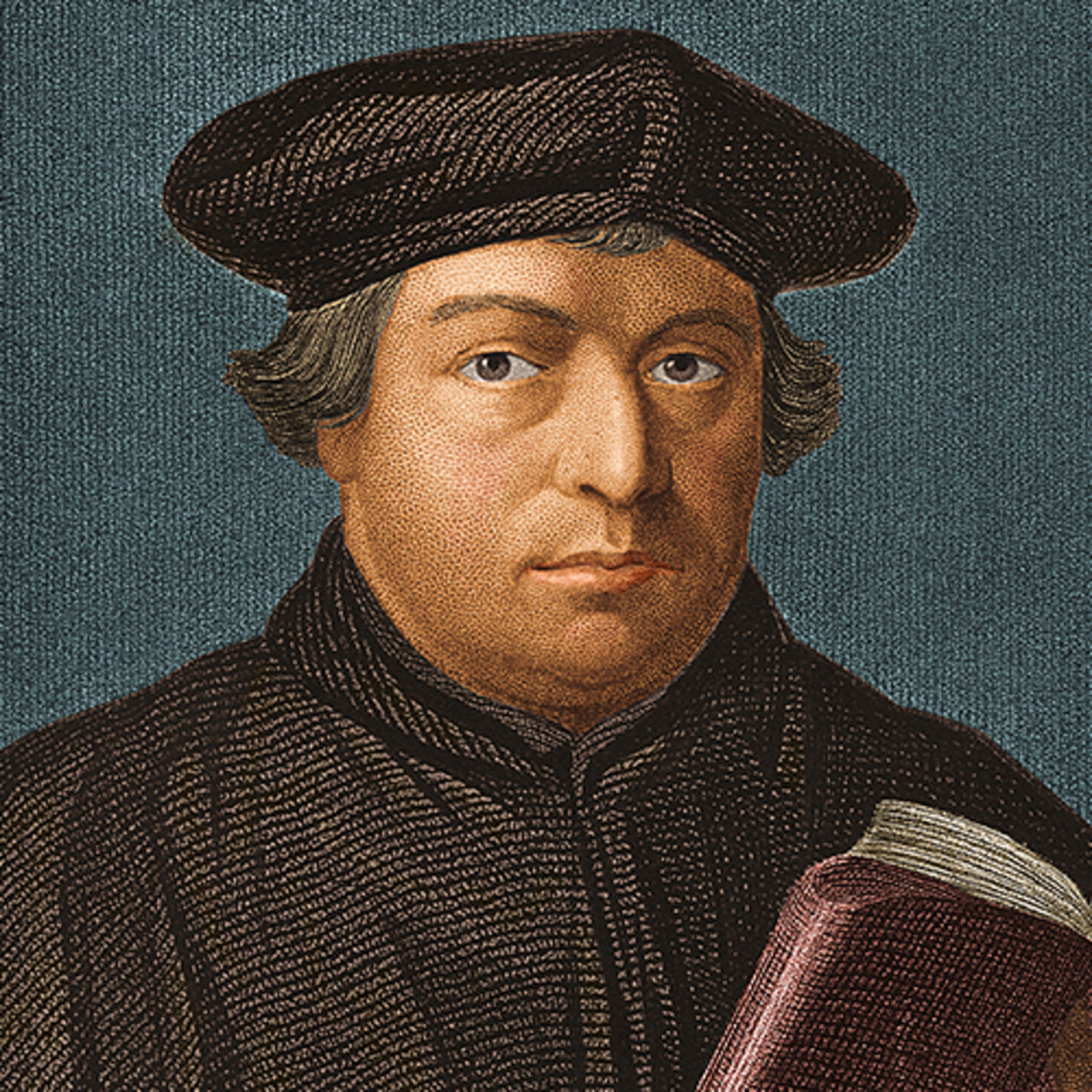
So, what are we to make of Luther’s assessment of the Epistle of James? Through the benefits of history and hindsight, we can see that this “right strawy Epistle” was and is the perfect counterweight to the excesses of sola fide, when this doctrine is pushed to the extreme while ignoring the full counsel of scripture.
Clearly Luther made an enormous contribution to our understanding of the Christian faith and his courage, determination, and hard work rescued many truths of the Bible from the dustbin of history. His translation of the Bible into the vernacular of the people unleashed a tidal wave that transformed Europe and the world. Thanks to his foundational work, people all over the world can read the Bible in their mother tongue and decide for themselves if this letter from James is an epistle of straw or an epistle filled with nuggets of pure gold.
(1) Ruthven, “Introduction: James,” Spirit Filled Life Bible, p. 1893.
(2) R.V.G. Tasker, The General Epistle of James: An Introduction and Commentary—Tyndale New Testament Commentaries (Eerdmans, 1983), p. 17.
(3) Tasker, The General Epistle of James, p. 21.
(4) Tasker, The General Epistle of James, p. 13.
(5) James Hardy Ropes, A Critical and Exegetical Commentary on the Epistle of St. James (Clark, 1916), p. 106.
(6) Ruthven, “Introduction: James,” Spirit Filled Life Bible, p. 1893.
(7) Tasker, The General Epistle of James, pp. 10–11.
(8) Robert Brettall, A Kierkegaard Anthology (Oxford University, 1947), p. 282.
New from David Kitz
James—the brother of Jesus—who was this man? What evidence do we have that this “brother of our Lord” even existed?
David Kitz digs deep into archeology, family dynamics, church history, and the biblical texts. What emerges from his research is a portrait of a decisive, pivotal leader who embodied the will and character of Jesus Christ.
But how did James—James the unbeliever—transform to become a leader who changed the course of world history? In these pages you will uncover the answer and rediscover for yourself the life-changing power of the gospel.
To view further details or purchase directly from the author click here.

