• Home
  • About
  • DavidKitz.ca
  • Youtube Videos
  • Books by David
  • Books on Amazon.com

I love the Psalms

~ Connecting daily with God through the Psalms

I love the Psalms

Tag Archives: Jesus

The Soldier Who Killed a King—A Review

17 Tuesday Apr 2018

Posted by davidkitz in book review, Books by David Kitz, Christ's Passion, The Soldier Who Killed a King

≈ 8 Comments

Tags

Bible, Caiaphas, David Kitz, Herod Antipas, Jesus, king, Longinus, Marcus, Palm Sunday, Pontius Pilate, redemption, resurrection, Roman, Roman centurion, The Soldier Who Killed a King

As published in Testimony Magazine, March/April Edition, 2018, reviewed by Dr. Darlene Witte-Townsend 

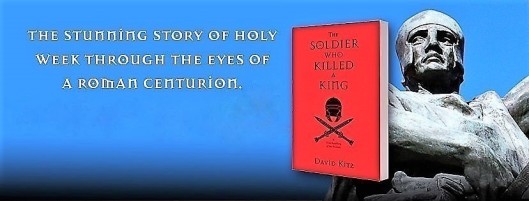
The Soldier Who Killed a King was voted the top book in the biblical fiction categorybiblical-fiction-award-2017_orig for 2017 by the Christian book service, Interviews and Reviews. Having recently read this book, it’s not difficult to see why. It plays like a high-stakes movie in your mind.

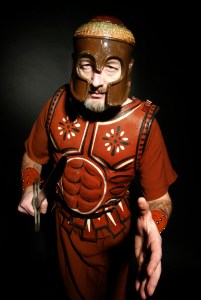
Canadian author, David Kitz, closely examines the events occurring between Jesus’ entry into Jerusalem on Palm Sunday and his resurrection a few days later. But we see all these events from a unique perspective—through the eyes of a Roman soldier.

This engaging, hard-hitting narrative is a distillation of Kitz’s study and prayer over a 50-year span, when as pastor, educator and Bible dramatist, he steeped himself in the wonder of this story. As a novelist, he reveals profound respect for the historical record through his characterization of Marcus Longinus, a Roman centurion who is unwillingly caught in the power struggles of the day. Furthermore, Kitz stays true to the scriptural account by integrating more than a hundred quotes from the Gospels into the story text.

Three corrupt men, Herod Antipas, “the Fox,” Pontius Pilate, “the Badger,” and Joseph Caiaphas, “the Weasel” have an insatiable lust for money and power. They each attempt to use the political tumult of the time for their own gain. In contrast to the stench of their machinations, Kitz offers a deep sense of Jesus, the donkey-riding King, as the man in whom all of heaven is invested. Jesus emerges in the Roman world offering an entirely new way for humankind to be reborn.

Above all else, this is a story of personal redemption. Marcus, the Roman Centurion is like us, caught between worlds. Who is his king? Why?

The Son of God shows unlimited compassion through healing the sick and feeding the hungry, and his purity catches the attention of the masses in a drama that still shakes the world, one aching, open, humble heart at a time. Do you need to rediscover the power of the cross? The Soldier Who Killed a King will take you there.


Constant Praise

12 Thursday Apr 2018

Posted by davidkitz in Bible, Devotionals, Psalm 103, Psalms

≈ 8 Comments

Tags

catharsis, Christ, circumstances, compassion, death, disease, Jesus, love, Maker, praise, praise the LORD, psalm of praise, redeem, stock market, the LORD, war, weather, world, worthy

   Reading: Psalm 103      
Of David.
(Verses 1-6)
Praise the LORD, my soul;
all my inmost being, praise his holy name.
Praise the L
ORD, my soul,
and forget not all his benefits—
who forgives all your sins
and heals all your diseases,
who redeems your life from the pit
and crowns you with love and compassion,
who satisfies your desires with good things
so that your youth is renewed like the eagle’s.
The LORD works righteousness
and justice for all the oppressed
(NIV).

Reflection
Psalm 103 begins by David calling on his soul to praise the LORD. Many see praise and worship as a purely cathartic response to the manifest goodness of God. Something good happens to us. Unexpectedly, we get a thousand-dollar check in the mail. Quite naturally our response is praise to God.

2018-04-02b

Along a prairie trail, north of Maple Creek, Saskatchewan — photo by David Kitz

For many people, praise to God never progresses beyond this natural, cathartic level. If God does not bless, no praise is forthcoming. Our praise for the LORD becomes, or simply remains circumstance dependent. But that was not the case with David. His praise extended beyond simple catharsis. He taught his soul to praise the LORD in all circumstances. True biblical praise and worship is after all a spiritual exercise, a discipline we grow in, just as we grow in the discipline of prayer.

The LORD, the object of our praise, does not change with our circumstances. He is forever the same. Jesus Christ is the same yesterday and today and forever (Hebrews 13:8). He is constant, hence our praise and worship of him should be constant, unaffected by weather conditions, world events, the gyrations of the stock market, our swings of mood or our personal situation.

Of course this constancy in praise is something the natural man simply rebels against. Our world needs to be right in order for us to praise God aright, or so we reason. The only problem with this logic is that the world has never been right since the Fall. Death, disease, war and misery have been raining down on the children of Adam, since wilful disobedience to God first took root among us. And this is one weather forecast, for all humanity, that is not about to change—not until Christ returns.

If we are waiting for a perfect world before we lift our voice in praise to God, we will never praise Him. In fact, if our eyes are on the world, or on ourselves, there will always be grounds to withhold our praise. But then, the whole purpose of praise and worship is to lift up our eyes. We desperately need to get our eyes off ourselves, off the world, and onto God our Maker. 

Response: Father God, I genuinely want to learn to praise you in all situations. You are always good, loving and worthy of praise. Along with David I declare, “Praise the LORD, my soul!” Amen.

Your Turn: Have you learned to praise God even in difficult times?

The Everlasting Constant

11 Wednesday Apr 2018

Posted by davidkitz in Bible, Devotionals, Psalm 102, Psalms

≈ 1 Comment

Tags

Alberta, eternity, everlasting, forever, God, Jesus, perish, praise, psalmist, Red Deer River Valley

Reading: Psalm 102

(Verses 23-28)
In the course of my life he broke my strength;
he cut short my days.
So I said:
“Do not take me away, my God, in the midst of my days;
your years go on through all generations.
In the beginning you laid the foundations of the earth,
and the heavens are the work of your hands.
 They will perish, but you remain;
they will all wear out like a garment.
Like clothing you will change them
and they will be discarded.
But you remain the same,
and your years will never end.
The children of your servants will live in your presence;
their descendants will be established before you”
(NIV).

Reflection
We like to think that we are the captains of our own destiny—the masters of our own future—and to some extent we are. We can determine our attitude and response to many situations. But eventually the truth will hit home. Our ultimate destiny is in God’s hands. We cannot determine how tall we will grow, or the color of our eyes or our skin. These are matters that are beyond our control.

2018-03-31

Big sky country in the Red Deer River Valley, Alberta — photo by David Kitz

God has predetermined the number of our days on this earth. Jesus said, “Even the very hairs of your head are all numbered” (Matthew 10:30). So I also expect that God knows the exact number of breaths that you and I will breathe.

In today’s reading from Psalm 102, the psalmist is coming to grips with his own mortality. He laments: In the course of my life he [the LORD] broke my strength; he cut short my days. So I said: “Do not take me away, my God, in the midst of my days; your years go on through all generations.” 

The LORD is the great everlasting constant. Our days may be numbered, but God’s are not. He is the ageless One without beginning of days or end of life. Even the earth itself may wear out, but He remains. “In the beginning you laid the foundations of the earth, and the heavens are the work of your hands. They will perish, but you remain; they will all wear out like a garment. Like clothing you will change them and they will be discarded. But you remain the same, and your years will never end.” 

If even the earth will perish and wear out, what hope is there for us? But in the next breath the psalmist provides us with hope. “The children of your servants will live in your presence; their descendants will be established before you.”

Response: Father God, I want to live in your presence now and in eternity. Establish my children before you. They are gifts from your hand. You are constant and I want to live in constant praise of you. Amen.

Your Turn: Are you in control of your life or is God in control? Are you yielded to Him and ready to do His will?

Time Capsule Testimony

10 Tuesday Apr 2018

Posted by davidkitz in Bible, Devotionals, Psalm 102, Psalms

≈ 1 Comment

Tags

bondage, Cypress Hills, death penalty, generations, Holy Spirit, hula-hoop, Jesus, praise, prisoners, Saskatchewan, sin, testify, testimony, the LORD, time capsule, unborn, Zion

Reading:                                    Psalm 102                                                                  

 (Verses 18-22)
Let this be written for a future generation,
that a people not yet created may praise the L
ORD:
“The L
ORD looked down from his sanctuary on high,
from heaven he viewed the earth,
to hear the groans of the prisoners
and release those condemned to death.”
So the name of the L
ORD will be declared in Zion
and his praise in Jerusalem
when the peoples and the kingdoms
assemble to worship the L
ORD (NIV).

Reflection
Time capsules are a fascinating idea. They can tell us a great deal about what people at a certain point in history considered important or indicative of that particular time. What was significant in the lives of people 100 years ago? A time capsule gives us a glimpse into that long ago period. For instance, a time capsule from 1959 might contain a hula-hoop, but the significance of that craze might well be lost on the current generation of young people.

IMG_20180402_105449 (2)

Fenced ranch land north of the Cypress Hills in Saskatchewan — photo by David Kitz

In some respects, this reading from Psalm 102 acts as a time capsule. It is a written testimony of what the LORD has done. “The LORD looked down from his sanctuary on high, from heaven he viewed the earth, to hear the groans of the prisoners and release those condemned to death.” 

Generation after generation of Bible readers has read this written testimony. They know that the LORD hears the groans of prisoners and sets them free. But this testimony doesn’t end there. It doesn’t end there because the LORD has not stopped listening and acting. He continues to do these things today.

I can personally testify to being set free from the bondage of sin. I know that due to my sinful nature I was condemned to die. But Jesus suffered the punishment I deserve on my behalf. When I called out to God, He heard my cry and set me free from the death penalty I was living under. My body may perish, but through the blood shed by Jesus and the work of the Holy Spirit, I have eternal life. That’s my testimony. That’s the time capsule message I want to send to the next generation and beyond.

By the way, my testimony is not unique. Millions of people around the world can testify to the life changing power of the LORD. They all have time capsule testimonies that they want to send to a generation as yet unborn.

What about you? Do you have a testimony to God’s redeeming forgiveness and power? It might be worth your time to write it down. We overcome the attacks of the enemy by the words of our testimony. You have a story to tell. It’s a time capsule with contents far more valuable than a hula-hoop. 

Response: Heavenly Father, I thank you for your intervention in my life. You have given me a story to tell—a testimony to your amazing grace. Help me to carry that testimony to a future generation—a generation that is not yet born. Amen.

Your Turn: Have you testified to the saving power of Jesus? How has the Lord changed your life?

Do you have a blameless heart?

05 Thursday Apr 2018

Posted by davidkitz in Bible, Devotionals, Psalm 101, Psalms

≈ Leave a comment

Tags

adultery, Blame, blameless, commitment, David, goals, holiness, Jesus, justice, legalistic, love of God, loving, murder, repentance, Savior

Reading:                                     Psalm 101                                                                   

Of David. A psalm.
(Verses 1-4)
I will sing of your love and justice;
to you, L
ORD, I will sing praise.
I will be careful to lead a blameless life—
when will you come to me?
I will conduct the affairs of my house
with a blameless heart.
I will not look with approval
on anything that is vile.
I hate what faithless people do;
I will have no part in it.
The perverse of heart shall be far from me;
I will have nothing to do with what is evil
(NIV).

Reflection
Psalm 101 is a call to action or commitment. David, the author of this psalm, commits himself to a course of action. In this short opening portion of the psalm, David makes seven ‘I will’ statements. Each commitment is life altering in some way.

2018-04-04 Liz Kranz

Early April snowfall — photo courtesy of Liz Kranz

The first commitment David makes is to sing of the LORD’s justice and love. He is determined to praise his God with a full, joyous awareness of the LORD’s character. This is the true starting point of any sustained relationship with God. The LORD is both loving and just. If we emphasize aspects of God’s justice too much, we risk becoming legalistic. If we focus only on the love of God, His holiness is ignored resulting in a break down in personal responsibility. Within the Godhead there exists a perfect tension between His justice and His love. As God’s servants, we do well when we recognize and maintain that tension.

Twice David uses the word blameless. I will be careful to lead a blameless life—when will you come to me? I will conduct the affairs of my house with a blameless heart. With these words, David has set for himself a high standard—an impossible standard. Did David succeed in reaching his lofty goal? The biblical record leaves no room for doubt. He failed miserably. In his affair with Bathsheba, King David was guilty of both adultery and murder.

Well, what good is there then in setting lofty goals? Why make any ‘I will’ statements, if I am doomed to fail? Why not freely look on the vile and indulge in it?

Actually, despite David’s stunning failures, there are many sound reasons for calling ourselves to a high standard. To put it bluntly, God expects it of us. He demands holiness from us—always has—always will. Will we succeed? Of course not. That’s why there’s the gift of repentance. That’s why there’s a Savior named Jesus. He’s the blameless one. I need his sinless record applied to my account.

Response: Dear God, I want my will to be conformed to your will. I want to lead a blameless life. By Jesus’ blood, grant me a blameless heart that is determined to love and serve you for all my days. Amen.

Your Turn: Should we set goals for ourselves? How do you measure the progress in your love for God?

Excerpt 32 for Easter from The Soldier Who Killed a King

01 Sunday Apr 2018

Posted by davidkitz in Books by David Kitz, Christ's Passion, Easter Sunday, The Soldier Who Killed a King

≈ 1 Comment

Tags

centurion, corpse, David Kitz, Jesus, Longinus, Marcus, prophet, repentance, resurrection, shroud, tomb

A journey to the cross is a journey to repentance. It’s a journey to deep personal change. Will you take this journey with me?

Date: Nine in the morning, Sunday, April 9, 30 A.D.
Marcus Longinus, the Roman centurion, investigates his soldiers’ report that Jesus had risen from the dead.

It was as they said. The stone was rolled away. But it was not merely rolled to the side as I had expected. It had been pushed right up and out of its stone track, and it had toppled over a good distance from the tomb entrance.
I edged my way toward it. About two paces from the end of the stone track, there was gouge in the shallow soil, where the round cover stone had landed and then rolled. This was a real headshaker. How had this happened? It must have been rolled back with such force that when it reached the end of the track, it bounced up and out. No wonder the men were scared! This was awesome. Forty men could not do this!
Suddenly I felt very small, small and afraid.

OTT0304-KITZ1

Photo credit Jean Levac, Ottawa Citizen

And this was the very stone we had sealed just a day earlier. A close examination showed that in a few spots there were still fragments of broken plaster on it.I exhaled a huge puff of air. This discovery in itself was beyond all expectation. The force of the quake could not have done this. A quake of such magnitude would have collapsed the tomb itself, and not a building in the city would be standing. No, a direct force had hurled this boulder away from the tomb’s entrance.
An almighty warrior from heaven’s realm?
I rejoined my two men. Suddenly they gained a new level of respect in my eyes. Their fears had become my own. I found I was rolling my head from side to side just as I had seen Claudius do.

“You saw this happen?” I gestured to the fallen round rock and then put a finger to my lips. I was astounded.
“Actually,” Philip admitted, “I didn’t see him roll the stone. We all fell like dead men when the earthquake hit. But after, when I opened my eyes, the angel was sitting on it, and . . . and Jesus was walking out of the tomb.” He fell to his knees and began to beat the ground as he said this last part. He was gripped afresh by the memory.
“Where were you when this happened?” He raised his head and pointed to a spot a few paces away. “Right there.”
“And you?” I looked at Claudius. He pointed to another spot. “Just over here,” he said. “That’s my cloak. I left it when I ran.”
There was, in fact, a good bit of flotsam scattered about: a few cloaks, a water jug, Philip’s precious dice, even a helmet. Here were all the signs of panicked flight. They had left all and fled for their lives.
For me only one question remained. Was the open tomb truly empty?
“Get to your feet, Philip,” I said. “You two stay here and watch while I go take a look inside.”
I took three deep breaths and set out on my little journey. It was only about twenty paces4485 SHARABLE-2 to the tomb entrance. A distance made much longer by my fear. But the whole scene was bathed in the warmth of morning sunlight. I started slowly. About halfway to the entrance, a songbird broke forth in glorious melody. The sun’s rays streamed into the rock tomb, lighting my way.

It was empty! The stone slab lay empty. Actually, it was not entirely so. The death shroud had been rolled up, and the face covering was neatly folded and lay off to one side. It appeared as though the awakened corpse took a moment to make his bed after getting up.
The Galilean prophet, the true king, had arisen and gone forth!

American readers click this link to purchase The Soldier Who Killed a King.

Canadian readers click this link to purchase The Soldier Who Killed a King directly from the author.

Excerpt 30 for Lent from The Soldier Who Killed a King

30 Friday Mar 2018

Posted by davidkitz in Books by David Kitz, Christ's Passion, Good Friday, Lent, The Soldier Who Killed a King

≈ Leave a comment

Tags

Christ, Creator, David Kitz, Elijah, Jesus, Jesus' last words, kingdom, pain, sacrilege, Son of God, the cross, The Soldier Who Killed a King

A journey to the cross is a journey to repentance. It’s a journey to deep personal change. Will you take this journey with me?

Date: Three o’clock in the afternoon, Friday, April 7, 30A.D.
Jesus’ final moments on the cross.

Here is the obscenity of crucifixion. Naked men are unwillingly mated to two wooden beams. They must thrust the whole of their bodies upward in excruciating pain, ever- increasing pain to catch their next breath—until all strength is drained away. Then death steals in.
This is the shame of the cross. Here is the depravity—a profane sacrilege inflicted upon the human body.
The ghastly rhythm of it was driving me mad.
Then in soul- wrenching anguish, his voice erupted. “Eli, Eli, lema sabachthani?”
“What does that mean?” I cried out into the darkness.
From beyond the military cordon came the answer. “My God, my God, why have you forsaken me?”
He had broken. The Christ hung broken. The cross had broken him. He too was human. We were all together now, a great crowd caught up in this drama. There was no us and them. We were together. We were caught between heaven and hell in this dark, surreal atmosphere.
It was dreadful. Centur Rep
Someone frantically yelled, “It’s Elijah! He’s calling Elijah.”
Exhaling.
Mounting up.
Ever-heightening pain.
Catching a breath.
Retreating.
From on the Mother’s Hill, a wail went up. It was steady, constant, a wave of woe flowing over the dark scene.
Exhaling.
Mounting up.
Ever-heightening pain.
Catching a breath.
Retreating.
“Will Elijah come?” someone asked. “Will he come?” Many of the hostile were even now on bended knees. The cavalrymen dismounted.
Exhaling.
Mounting up.
Ever-heightening pain.
Catching a breath.
Retreating.
“I thirst!” the king called out.
Claudius leaped to his feet. There was a jar of wine off to one side. The soldiers had been drinking freely from this. He ran over to it and got a sponge. He dropped the sponge into the jar of wine and then skewered it with a long reed. This he held up to dampen the lips of the donkey king.
But some yelled out, “Wait! Let’s see if Elijah will come and save him.”
Exhale.
Mounting up.
Ever-heightening pain.
Catch a breath.
Retreat.
The rarified air crackled with anticipation.
Exhaling.
Mounting up.
Ever-heightening pain.
Catching a breath.
Retreating.
Can the Creator—the God of heaven and earth—save him now?
Exhaling.
Mounting up.
Ever-heightening pain.
Catching a breath.
Retreating.
“It is finished!” he cried.
But there was no anguish in his voice. There was the ring of victory to it, as if he had caught with that last breath a glimpse—a glimpse of his kingdom. A glorious kingdom! He had gained the summit. Now with vigor renewed, he pushed up and forward one last time.Free WWe SHARABLE-1 (2)
Exhaling.
Mounting up.
Ever- heightening pain.
Catching a breath.
Retreating.
“Father . . .
“Into your hands . . .
“I commit . . .
“My Spirit.”
His head dropped. It was over.
As his chin hit his chest, the earth began to rumble. Low thrumming. Building . . . building . . .
The rock Skull began to move beneath my feet. And with it, my soul.
I fell to the ground.
The crosses began to vibrate and rock with the power of the quake. His head bobbed from side to side.
But he was dead.
He was dead!
Everyone was with me on bended knees.
Heaven had rendered its dark judgment. The sun had hidden its face. The very earth had answered back. The verdict was in.
I caught two huge breaths of air, and then for the whole world to hear, I cried out, “He really was the Son of God.”
He was the Son of God.
The sun broke through.
A rooster crowed.

American readers click this link to purchase The Soldier Who Killed a King.

Canadian readers click this link to purchase The Soldier Who Killed a King directly from the author.

Is God’s Judgment a Good Thing

30 Friday Mar 2018

Posted by davidkitz in Bible, Devotionals, Good Friday, Psalm 98, Psalms

≈ 1 Comment

Tags

communion, creation, Eden, injustice, Jesus, joy, judge, judgment, mountains, pain, perversity, power of sin, resurrection, Righteousness, rivers, shalom, sin, Tree of Life

Reading:                                      Psalm 98

(Verses 7-9)
Let the sea resound, and everything in it,
the world, and all who live in it.
Let the rivers clap their hands,
let the mountains sing together for joy;
let them sing before the L
ORD,
for he comes to judge the earth.
He will judge the world in righteousness
and the peoples with equity
(NIV).

Reflection
What comes to mind when you think of God’s judgment? Do you envision pictures of doom, gloom and destruction? If that’s your response, you are not alone, but maybe you have the wrong set of pictures? Maybe you have a wrong understanding of God? Should the redeemed live in dread of God’s judgment?

jesus_on_cross_crucifixion-full (2)

He was pierced for our transgressions.

Psalm 98 is a joyous anthem of praise to God—praise for the salvation the LORD has won for us. The psalmist begins this psalm by calling us to sing to the LORD a new song. In today’s reading, that call for praise and worship is extended to all of nature. Let the sea resound, and everything in it, the world, and all who live in it. Let the rivers clap their hands; let the mountains sing together for joy.

Have you seen any mountains singing for joy? Have you heard the rivers clap their hands? I love the pictures such thoughts put in my mind. In reality all of creation is speaking daily. The earth, sea and sky are telling of God’s mercy and glory. The setting sun shouts out the praises of God. Can you hear it?

According to the psalmist, there is a cause for this great celebration by the sea, the rivers and the mountains. These elements of creation are celebrating because the LORD is coming to judge the earth. He will judge the world in righteousness and the peoples with equity. In other words God’s judgment should bring joy not dread. The LORD will set things right.

For far too long we have lived in a world of injustice, suffering and death. When the LORD comes, He will bring all this pain and perversity to an end. The environmental degradation that we have caused will come to an end. The Eden that was lost because of mans’ sin will be restored. Once again we will have access to the Tree of Life. Best of all we will walk in sweet communion with our heavenly Father. All this is possible because of the suffering, death and resurrection of Jesus. The power of sin was broken at the cross. Since God’s coming judgment will bring about all this glorious restoration, why wouldn’t we join the mountains as they sing for joy?

Many of us have a wrong understanding of God and a wrong understanding of the purpose for His judgment. His judgments are good. They bring about peace—the shalom of God. Here in Psalm 98 we have the promise of His word on that. He will judge the world in righteousness and the peoples with equity.

Response: LORD God, in the past I have dreaded your judgment, but now I recognize your goodness. Come quickly, Lord Jesus. I want to see this world set right through your power and grace. Amen.

Your Turn: Do you fear God’s judgment? Is that always a good thing? Can it be misunderstood?

Excerpt 29 for Lent from The Soldier Who Killed a King

29 Thursday Mar 2018

Posted by davidkitz in Books by David Kitz, Christ's Passion, Good Friday, Lent, The Soldier Who Killed a King

≈ 1 Comment

Tags

Christ, crucifixion, disciple, Golgotha, Jesus

A journey to the cross is a journey to repentance. It’s a journey to deep personal change. Will you take this journey with me?

Date: About noon, Friday, April 7 30A.D.
The crucifixion of Jesus.

Now there was movement on the Mother’s Hill. A middle-aged couple came down. Their heads were hanging. They clung to each other, supported each other, every step an anguish. They made their way before the encircling pikemen.
I knew who they were—knew why they had come. Here were the broken parents, broken beyond this world’s repair. I met them at the base of the hill, told them they had some time.
They advanced up the Skull. She fell, fell whimpering before her son. Thaddaeus. Boisterous soldiers fell silent and then walked off, right off the hill. The family was alone with their grief.
4485 TWITTER
Having witnessed this grim but welcoming reception, another party stepped off the Mother’s Hill and advanced to Golgotha. This was a group of five. The women clung to one another in couples. They were shepherded by a tall young man. His fresh face and scant beard bore witness to his youth. I recognized him. He had been with Jesus, had stood closest to him.
He introduced himself. He said his name was John. I received his party—ushered them by the outer ring of soldiers.
They were bowed by the sight. They clung to one another afresh, repulsed by the horror of what met their eyes.
After a few moments the young man came before two of the huddled older women. He stooped to speak with one of the women—the Christ’s mother, I assumed. Then with his arm about her shoulder, John advanced up the rock mound.
Jesus saw them.
He struggled.
“Woman . . . behold your son!”
There was a double- edged meaning here, almost too painful for words. At first I thought he was simply referring to himself—to his own wretched state. And perhaps on one level he was.
His body sagged. But then he thrust himself up and forward for another breath, and with his next words his meaning became clear. To the young man, to his disciple, he said, “Behold your mother!”
He had committed his mother into this disciple’s care. She fell to her knees. She trembled, unable to speak. Only wretched sobbing was heard from within the circle of the hill.
In due time I led both families off. They left willingly. This was too much to bear, too much to watch.
From his cross Animal watched the Mother’s Hill. But no one came. That’s when he broke—broke like a clay pot dropped onto the hard rock of the Skull.
He sobbed. He moaned.
His tears flowed like rivers into his dark, young beard.
But no mother came. No one came at all. Free WW-e FACEBOOK-2 (2)
The wind picked up. The sky grew dark. Then it grew darker yet. The horses began to neigh and paw the ground. In the distance a dog barked. It was a bark that changed to a howl but ended in a whimper. I looked about. I could see it on every face. It was fear. Raw fear. This was not the dark of cloud or storm. This was the sun covering, hiding its face from what it saw upon the earth.
A total darkness descended, as black as any night.
There was a discord here—a discord utter and complete. If heaven and earth had come into some perfect union—some perfect harmony—on the day Jesus arrived in this city, it was in blaring dissonance now. Blaring dissonance echoed off the empty chambers of my soul.
It was a deafening darkness.
The mocking crowds fell silent. The highway traffic stopped. All was still.
Silent.
Only the three men were heard. Heard in the darkness. Three men working to maintain this perverted thing called life.
Working.
Pushing up.
Up to catch a breath.

American readers click this link to purchase The Soldier Who Killed a King.

Canadian readers click this link to purchase The Soldier Who Killed a King directly from the author.


The LORD Has Made His Salvation Known

29 Thursday Mar 2018

Posted by davidkitz in Bible, Devotionals, Lent, Psalm 98, Psalms

≈ 2 Comments

Tags

blood of Christ, death, hell, Jesus, joy, love, love of God, New Testament, Psalm, psalmist, resurrection, Righteousness, salvation, Savior, sin, sing praise, singing, song, surrender, the cross, the grave, the LORD

Reading:                                     Psalm 98

A psalm.
(Verses 1-6)
Sing to the LORD a new song,
for he has done marvelous things;
his right hand and his holy arm
have worked salvation for him.
The L
ORD has made his salvation known
and revealed his righteousness to the nations.
He has remembered his love
and his faithfulness to Israel;
all the ends of the earth have seen
the salvation of our God.
Shout for joy to the LORD, all the earth,
burst into jubilant song with music;
make music to the LORD with the harp,
with the harp and the sound of singing,
with trumpets and the blast of the ram’s horn—
shout for joy before the L
ORD, the King (NIV).

Reflection
Once again in Psalm 98 the psalmist calls us to break forth with a new song of praise to our God. This call to worship is a frequent theme in many psalms. In this case the cause for worship is well worth noting. We are to worship in music and song because of the salvation of our God. The LORD has made his salvation known and revealed his righteousness to the nations. He has remembered his love and his faithfulness to Israel; all the ends of the earth have seen the salvation of our God.

Title_March_20183

Photo credit Book Fun Magazine

To some extent these words trouble me. What salvation is the psalmist talking about? Is he referring to the miraculous redemption and rescue of Israel from slavery in Egypt? That’s the most significant act of national salvation in the Old Testament. On the other hand, the psalmist could be referring to the restoration of the Jewish nation after the destruction of the temple and the Babylonian captivity. Again this is a very significant event that was witnessed by the surrounding nations. Since we do not have a timeline or date for when this psalm was written, we are left guessing the answer.
For the New Testament believer we see the fulfillment of this psalm in the salvation that was won for us by Christ at the cross. There the ancient powers of sin, hell and the grave were defeated. Death itself was vanquished through the resurrection of Jesus. In reality, the true enemies of the people of God are not foreigners or foreign nations. Our enemies are spiritual; they lurk within—within us. Salvation from those enemies was purchased at the cross with the precious blood of Jesus.

Now here is a bizarre twist. Salvation arrives with our surrender. It arrives when we surrender our lives to our Savior and kneel before our King on a cross. That’s a salvation worth singing about!

Response: LORD God, I am so grateful for the salvation you purchased for me through the blood of Jesus. I want all the ends of the earth to know about that great salvation. Thank you, Jesus. Amen.

Your Turn: Have you knelt before the King on a cross? Take some time to do that now.

← Older posts
Newer posts →

Psalms 365: Develop a Life of Worship and Prayer

Psalms 365 Volume II

Psalms 365 vol 3
— Psalms 365 Volume III

Psalms

Recent posts

  • Thankful Hearts April 2, 2026
  • Jesus Before Pilate April 1, 2026
  • A Great Summoning! April 1, 2026
  • With Him in the Garden March 31, 2026
  • Two Fates from One Choice March 31, 2026
  • The High Priest Questions Jesus March 30, 2026
  • The Psalmist is Wrong! March 30, 2026

Calendar

April 2026
M T W T F S S
 12345
6789101112
13141516171819
20212223242526
27282930  
« Mar    

Blog Posts

Comments

  • davidkitz on The High Priest Questions Jesus
  • davidkitz on Jesus Before Pilate
  • pastorpete51 on Jesus Before Pilate

Blog at WordPress.com.

Privacy & Cookies: This site uses cookies. By continuing to use this website, you agree to their use.
To find out more, including how to control cookies, see here: Cookie Policy
  • Subscribe Subscribed
    • I love the Psalms
    • Join 1,381 other subscribers
    • Already have a WordPress.com account? Log in now.
    • I love the Psalms
    • Subscribe Subscribed
    • Sign up
    • Log in
    • Report this content
    • View site in Reader
    • Manage subscriptions
    • Collapse this bar
 

Loading Comments...