• Home
  • About
  • DavidKitz.ca
  • Youtube Videos
  • Books by David
  • Books on Amazon.com

I love the Psalms

~ Connecting daily with God through the Psalms

I love the Psalms

Tag Archives: Kingdom of God

The Conquering King

12 Tuesday Dec 2017

Posted by davidkitz in Bible, Devotionals, Psalm 68, Psalms

≈ 3 Comments

Tags

conquer, conquest, David, Egypt, God, Jerusalem, Jesus, Kingdom of God, military conquest, submission, submit, the LORD, triumph, triumphant, victorious

Reading:                                      Psalm 68

(Verses 24-31)
Your procession, God, has come into view,
the procession of my God and King into the sanctuary.
In front are the singers, after them the musicians;
with them are the young women playing the timbrels.
Praise God in the great congregation;
praise the L
ORD in the assembly of Israel.
There is the little tribe of Benjamin, leading them,
there the great throng of Judah’s princes,
and there the princes of Zebulun and of Naphtali.
Summon your power, God;
show us your strength, our God, as you have done before.
Because of your temple at Jerusalem
kings will bring you gifts.
Rebuke the beast among the reeds,
the herd of bulls among the calves of the nations.
Humbled, may the beast bring bars of silver.
Scatter the nations who delight in war.
Envoys will come from Egypt;
Cush will submit herself to God
(NIV).

Reflection
All of Psalm 68 is a hymn of triumph—national triumph. In today’s reading it is apparent that this psalm is a triumphant processional song penned by David. The enemies of Israel have been vanquished and God’s army has returned victorious.

via-dolorosa

Via-Dolorosa in Jerusalem — photo courtesy of Lois Morrow

For Christians today, does this psalm hold a deeper significance? Does it signify more than a celebration after a military conquest?

The King we serve—the one born in a stable—didn’t come to establish an earthly kingdom by means of guns and war. In his defence before Pilate Jesus said, “My kingdom is not of this world. If it were, my servants would fight to prevent my arrest by the Jewish leaders. But now my kingdom is from another place” (John 18:36).

Make no mistake; Jesus calls us to be citizens in his heavenly Kingdom. It is a Kingdom that is headquartered in heaven, but its address on the earth is the human heart—your heart—my heart. Furthermore, that Kingdom grows in power and influence as we yield our will to God and joyfully become more like His son, Jesus. For followers of Jesus, battles are won as we submit our will to God.

There are nations—Egypt and Cush (the upper Nile region) are mentioned here—that will submit themselves to God. But for us today, submission must first come from our own stubborn heart.

Response: LORD God, I yield my will to you. Conquer my heart with your love. Through Jesus sacrifice on the cross I am yours. Help me to joyfully live as a productive citizen of your Kingdom on earth. Amen.

Your Turn: Have you been conquered by the love of God? Where is your primary citizenship?
An Evangelical Psalm

06 Wednesday Dec 2017

Posted by davidkitz in Bible, Devotionals, Psalm 67, Psalms

≈ 6 Comments

Tags

bless, evangelical, family of God, God, God's blessing, good news, harvest, international, Kingdom of God, MacNutt SK, nations, people, praise, Psalm, salvation, wheat

Reading:                                      Psalm 67

For the director of music. With stringed instruments. A psalm. A song.
May God be gracious to us and bless us
and make his face shine on us—
so that your ways may be known on earth,
your salvation among all nations.
May the peoples praise you, God;
may all the peoples praise you.
May the nations be glad and sing for joy,
for you rule the peoples with equity
and guide the nations of the earth.
May the peoples praise you, God;
may all the peoples praise you.
The land yields its harvest;
God, our God, blesses us.
May God bless us still,
so that all the ends of the earth will fear him
(NIV).

Reflection
This is perhaps the most evangelical of all the psalms. By that I mean there is good news in this psalm, and the good news of God’s loving-kindness, which is found here, is not to be kept to oneself. It is to be taken to the whole world. Twice within this short psalm the psalmist declares, “May the peoples praise you, God; may all the peoples praise you.”

img_20160910_142538

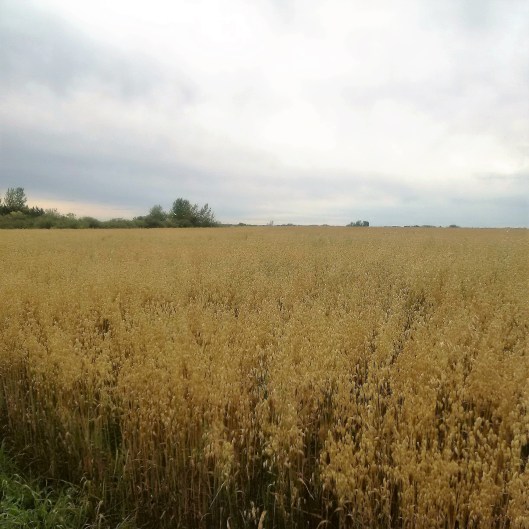
A field of harvest-ready oats near MacNutt, SK — photo by David Kitz

Like any loving parent, God draws pleasure from blessing his children. But is there a divine motivation that extends beyond the family of God. As the opening verse of this psalm makes clear, God desires to bless us, so that his ways and his salvation may be known all over this world.

So then, Psalm 67 should be our prayer, not only for us, but for the world. That includes the world that does not know Jesus. May God be gracious to us and bless us and make his face shine upon us, that your ways may be known on earth, your salvation among all nations.

In other words, God’s blessing is not to be selfishly hoarded. It is to extend around the world and beyond the family of God. Is God in fact, blessing us abundantly, so that we may in turn bless others? Is he blessing us, so that we may make his salvation known among all nations? That certainly would appear to be the plan according to Psalm 67.

There is a great harvest day that is still coming on the earth. It is not a harvest of wheat, corn or rice, but a harvest of souls that will be swept into the Kingdom of God. If this psalm is to be believed, it is a harvest that is propelled and swelled by our joyous praise.

Is your thanksgiving for God’s blessing extending beyond the borders of your family?

Response: LORD God, I thank you for all the blessings you have showered on my life. Most of all I thank you for my salvation through Jesus Christ. Show me how I can extend your blessing to others. Amen.

Your Turn: Have you taken the message of God’s salvation across international borders? How?

The Plans of the Nations

22 Tuesday Aug 2017

Posted by davidkitz in Bible, Devotionals, Psalm 33, Psalms

≈ 3 Comments

Tags

1914, atheists, blaming God, citizen, conflict, disaster, human stupidity, Kingdom of God, Margaret MacMillan, national interests, national objectives, nations, plans, slaughter, The War that Ended Peace, war, World War I

Reading:                                     Psalm 33

(Verses 10-15)
The LORD foils the plans of the nations;
he thwarts the purposes of the peoples.
But the plans of the L
ORD stand firm forever,
the purposes of his heart through all generations.
Blessed is the nation whose God is the LORD,
the people he chose for his inheritance.
From heaven the L
ORD looks down
and sees all mankind;
from his dwelling place he watches
all who live on earth—
he who forms the hearts of all,
who considers everything they do
(NIV).

Reflection
I confess I am a bit of a history buff. I am currently reading The War that Ended Peace by Margaret MacMillan. The subtitle is The Road to 1914. As you might guess, it highlights the causes of World War I. Throughout, the author meticulously points out that war was not inevitable. A change in course by any of the key players in the years leading up to 1914 could have prevented this monumental catastrophe. Each nation had plans and objectives that they considered in their best interest. Quite naturally the pursuit of those plans led to conflict with neighbouring nations with opposing objectives.

2017-08-09e

MosaiCanada 150, Jacques Cartier Park, Gatineau, Quebec — photo by David Kitz

What does the psalmist say about national objectives? The LORD foils the plans of the nations; he thwarts the purposes of the peoples. But the plans of the LORD stand firm forever, the purposes of his heart through all generations. 

Nations pursue their own perceived national interest. Despite the rhetoric we sometimes hear, they do not pursue the plans and purposes of the LORD. For political leaders national self-interest trumps the purposes of God. In fact the purposes of God are seldom considered. But the plans of the LORD stand firm forever, the purposes of his heart through all generations.

Was it God’s plan and purpose to have millions of Christian believers go to their slaughter in World War I? Many atheists purport that this is what we believe. Nothing could be further from the truth. We are responsible for our own actions. God does not cause war. Humans cause war and they carry it out. Why should we suddenly blame God for what we have engineered through our own dogged stupidity? Blaming God for our own arrogant idiocy is the pinnacle of irresponsibility, yet we do it all the time, both on a national and a personal level. Most often we are the author of our own disaster. We stubbornly fail to pull back and change course before it’s too late.

Blessed is the nation whose God is the LORD, the people he chose for his inheritance.

Response: LORD God, thank you for choosing me to be to be one of your people. Help me to live a life that is pleasing to you, my Father. You watch over me. You, O LORD are my inheritance, and first and foremost I am a citizen of your eternal Kingdom. Amen.

Your Turn: How does personal conflict escalate? Do you blame God rather than yourself?

Praises from the Earth

15 Monday May 2017

Posted by davidkitz in Psalm 148, Psalms

≈ 1 Comment

Tags

creation, heaven, heaven on earth, heavens, Holy Spirit, Jesus, Kingdom of God, Lord's Prayer, praise, worship

Reading:                                        Psalm 148

(Verses 7-12)
Praise the LORD from the earth,
you great sea creatures and all ocean depths,
lightning and hail, snow and clouds,
stormy winds that do his bidding,
you mountains and all hills,
fruit trees and all cedars,
wild animals and all cattle,
small creatures and flying birds,
kings of the earth and all nations,
you princes and all rulers on earth,
young men and women,
old men and children (NIV).

Reflection

Psalm 148 began with a call for praise for the LORD from the angels, who are heaven’s messengers, from the heavenly hosts and all the heavenly bodies. In today’s reading, the psalmist expands this call for praise to all the creatures of the earth, the elements of nature, wind, cloud and ocean depths, and finally to all humanity.

IMG_20160425_153133

Azaleas in bloom, Victoria, BC — photo by David Kitz

There is a logical progression in this call for thunderous praise. The call begins with what is distant, the galaxies and the heavenly beings, and then it descends to the earth, and finally it touches humanity. It becomes personal. We are called to praise God. Will you join the swelling chorus?

John, the beloved, gives us a picture of what heaven’s praise party looks like.

Then I looked and heard the voice of many angels, numbering thousands upon thousands, and ten thousand times ten thousand. They encircled the throne and the living creatures and the elders. In a loud voice they were saying:

“Worthy is the Lamb, who was slain,
to receive power and wealth and wisdom and strength
and honor and glory and praise!” (Revelation 5:11-12).

Our Lord taught us to pray, “Our Father in heaven, hallowed be your name, your kingdom come, your will be done, on earth as it is in heaven” (Matthew 6:9b-10).

Surely, it is the will of God that He be praised and worshipped on earth just as He is around His throne in heaven. The purpose of God’s Kingdom—the Kingdom that Jesus came to establish—is to bring heaven to earth. God did not remain distant. In the person of Jesus, He came to dwell among us. He brought and is presently bringing the will of God to the earth through the Holy Spirit. For that Jesus is to be praised. Let all of creation praise Him—praise Him from the earth, because from it we were formed. Let the praise for our Lord ascend from you and me.

Response: LORD God, let your Holy Spirit be active among us. Help us to love and serve you and those around us. Help me to bring a little bit of heaven—a little bit of your will to the earth today. Amen.

Your Turn: How do you picture heaven? What does a little bit of heaven on earth look like to you?

An Everlasting Kingdom

28 Friday Apr 2017

Posted by davidkitz in Psalm 145, Psalms

≈ 5 Comments

Tags

Adolf Hitler, Central Park, compassionate, grace, gracious, Jesus Christ, king, kingdom, Kingdom of God, love, New York, the cross, the LORD

Reading:                                         Psalm 145

(Verses 8-13)
The LORD is gracious and compassionate,
slow to anger and rich in love.
The LORD is good to all;
he has compassion on all he has made.
All your works praise you, LORD;
your faithful people extol you.
They tell of the glory of your kingdom
and speak of your might,
so that all people may know of your mighty acts
and the glorious splendor of your kingdom.
Your kingdom is an everlasting kingdom,
and your dominion endures through all generations (NIV).

Reflection

Adolf Hitler boasted that his rise to power would lead to the thousand-year reign of the Third Reich. Instead, his diabolical reign of terror came to an end after twelve years with millions dead and Europe lying in ruins. His brand of race-based nationalism ended in an unparalleled catastrophe.

Pink Glory 2014-11-11

Floral glory in Central Park, New York — photo by David Kitz

Where did Hitler get his idea of a thousand-year reign? Undoubtedly, he stole the concept from the millennial rule of Christ, which is described in the revelation of Jesus Christ to John. Blessed and holy are those who share in the first resurrection. The second death has no power over them, but they will be priests of God and of Christ and will reign with him for a thousand years (Revelation 20:6).

The contrast between the reign of Christ and his kingdom, and the reign of a tyrant like Hitler is stunning. In today’s reading from Psalm 145 we catch a glimpse of the reign of God. All your works praise you, LORD; your faithful people extol you. They tell of the glory of your kingdom and speak of your might, so that all people may know of your mighty acts and the glorious splendor of your kingdom.

What makes the reign of God so wonderful—so glorious? The answer lies in the character of the King. The LORD is gracious and compassionate; slow to anger and rich in love. The LORD is good to all; he has compassion on all he has made.

Yes, the LORD is good to all. He is good even to the wayward and disobedient, including me. He shows compassion to those who don’t deserve it. His compassion isn’t based on race. But even more surprising, it’s not based on conduct or performance; for all have sinned and fall short of the glory of God (Romans 3:23). No, God’s compassion looks beyond that. He is the God of grace—unmerited favor.

This unmerited favor flows from a King whose blood flowed to save us—flowed to purchase our redemption. A blood stained cross stood on a hill to declare these words to the world: The LORD is gracious and compassionate; slow to anger and rich in love. Have you surrendered to His love?

Response: LORD God, I thank you that I am a citizen of your kingdom. Your grace and compassion have won my heart. I want to serve you. Your dominion endures through all generations. I praise you. Amen.

Your Turn: Are you a citizen of the LORD’s kingdom—His everlasting kingdom?

Jerusalem!

09 Thursday Jun 2016

Posted by davidkitz in Psalms, Thursday's Thought

≈ 1 Comment

Tags

citizenship, home, homeland, Jerusalem, Kingdom of God, tongue

Jerusalem, if I forget you,
    let my right hand go limp.
Let my tongue stick
    to the roof of my mouth,
    if I don’t think about you
    above all else (Psalm 137:5-6, CEV).

Rampart Walk- Lois Walker

Greenery growing on the rampart walls of Jerusalem — photo courtesy of Lois Morrow

Reflection

This week’s I Love the Psalms theme is the tongue.

Today’s verse from the Psalms highlights the psalmist’s love for Jerusalem. While in captivity in Babylon, he longs to return to Jerusalem.

Jerusalem, if I forget you, let my right hand go limp. Let my tongue stick to the roof of my mouth, if I don’t think about you above all else (Psalm 137:5-6, CEV).

In this verse the psalmist was expressing his deep-felt desire to return home. We all have a homeland and that desire for home never leaves us. We may grow up and move a thousand miles from home, but that desire to return home—and the imprint of that place of belonging remains with us for a lifetime.

On the spiritual level, we too have a homeland and it’s not defined by national borders. Our true homeland is within the Kingdom of God, which is both here and now, and far beyond and forever.

May I never forget that place of spiritual rebirth—that place of belonging near to the heart of God.

Response: LORD God, my real and forever home is with you. I never want to forget that truth. With my tongue I affirm my citizenship is in your eternal Kingdom. Amen.

Your Turn: Are you a citizen of the New Jerusalem? How do you define your citizenship?

Newer posts →

Psalms 365: Develop a Life of Worship and Prayer

Psalms 365 Volume II

Psalms 365 vol 3
— Psalms 365 Volume III

Psalms

Recent posts

  • Altered by the Altar March 13, 2026
  • Judas Took the Bread March 12, 2026
  • Hope for the Downcast March 12, 2026
  • Jesus Washes His Disciples Feet March 11, 2026
  • Thirst for the LORD March 11, 2026
  • Jesus Predicts His Betrayal March 10, 2026
  • Absalom to Judas, Betrayal to Triumph March 10, 2026

Calendar

March 2026
M T W T F S S
 1
2345678
9101112131415
16171819202122
23242526272829
3031  
« Feb    

Blog Posts

Comments

  • davidkitz on Jesus Predicts His Betrayal
  • davidkitz on Hope for the Downcast
  • Jesus Predicts His Betrayal – QuietMomentsWithGod on Jesus Predicts His Betrayal

Blog at WordPress.com.

Privacy & Cookies: This site uses cookies. By continuing to use this website, you agree to their use.
To find out more, including how to control cookies, see here: Cookie Policy
  • Subscribe Subscribed
    • I love the Psalms
    • Join 1,384 other subscribers
    • Already have a WordPress.com account? Log in now.
    • I love the Psalms
    • Subscribe Subscribed
    • Sign up
    • Log in
    • Report this content
    • View site in Reader
    • Manage subscriptions
    • Collapse this bar
 

Loading Comments...