• Home
  • About
  • DavidKitz.ca
  • Youtube Videos
  • Books by David
  • Books on Amazon.com

I love the Psalms

~ Connecting daily with God through the Psalms

I love the Psalms

Tag Archives: Peter

He Healed All the Sick

03 Friday Oct 2025

Posted by davidkitz in Psalms

≈ 1 Comment

Tags

Bible, compassion, healed, Isaiah, Jesus, Peter, Prayer, prophet, Psalms, the LORD, the needy

Today’s quote and prayer from
“Psalms 365: Develop a Life of Worship and Prayer”

Today’s Reading: Psalm 146:6-10

LORD God,
I confess that often I avoid the needy
rather than seeking to help them.
Give me a heart of compassion—
a heart like your Son, Jesus.
You are my great provider.
Thank you.
Amen.

— — — —

When Jesus came into Peter’s house,
he saw Peter’s mother-in-law
lying in bed with a fever.

He touched her hand
and the fever left her,
and she got up and began to wait on him.

When evening came,
many who were demon-possessed were brought to him,
and he drove out the spirits with a word
and healed all the sick.
 
This was to fulfill what was spoken
through the prophet Isaiah:

“He took up our infirmities
    and bore our diseases.”

(Matthew 8:14-17 NIV)*

Para la publicación de Salmos 365 de hoy en español haga clic aquí.

bgbg_v4.3_1501818
* NEW INTERNATIONAL VERSION, COPYRIGHT ©1973, 1978, 1984, 2011 BY BIBLICA

Please pray for peace to return to Israel, Gaza, Sudan, and Ukraine!

Volume I of Psalms 365: Develop a Life of Worship and Prayer won the Best Book of the Year Award from The Word Guild and Volume II has won the Best Devotional of the Year Award. For those who love God’s word, this three-book series is an ideal way to daily meet with the Lord. To purchase or for a closer look click here.

A gripping read from David Kitz.
Is a return-to-Jesus revival possible in our time?
This book points the way forward.

This Corrupt Generation

26 Tuesday Aug 2025

Posted by davidkitz in Psalm 137

≈ Leave a comment

Tags

baptized, Bible, forgiveness of sins, God, Holy Spirit, Jesus, message, Peter, Prayer, Psalms, repent, the LORD

Today’s quote and prayer from
“Psalms 365: Develop a Life of Worship and Prayer”

Today’s Reading: Psalm 137:1-6

Father God,
 I don’t want to learn things
the hard way.
I want to be quick to obey you.
Help us all to learn from the lessons of history.
You are the one, true God.
I worship you.
Amen.

— — — —
 
 Peter replied,
“Repent and be baptized,
every one of you,
in the name of Jesus Christ
for the forgiveness of your sins.
And you will receive the gift of the Holy Spirit.
 
The promise is for you and your children
and for all who are far off—
for all whom the Lord our God will call.”

With many other words he warned them;
and he pleaded with them,
“Save yourselves from this corrupt generation.”
 
Those who accepted his message were baptized,
and about three thousand
were added to their number that day.
(Acts 2:38-41 NIV)*

Para la publicación de Salmos 365 de hoy en español haga clic aquí.

bgbg_v4.3_1501818
* NEW INTERNATIONAL VERSION, COPYRIGHT ©1973, 1978, 1984, 2011 BY BIBLICA

Please pray for peace to return to Israel, Gaza, Iran, and Ukraine!

Volume I of Psalms 365: Develop a Life of Worship and Prayer won the Best Book of the Year Award from The Word Guild and Volume II has won the Best Devotional of the Year Award. For those who love God’s word, this three-book series is an ideal way to daily meet with the Lord. To purchase or for a closer look click here.

A gripping read from David Kitz.
Is a return-to-Jesus revival possible in our time?
This book points the way forward.

The Timing of God

13 Sunday Jul 2025

Posted by davidkitz in Psalms, Psalms Alive!

≈ Leave a comment

Tags

baptized, burning bush, dead men, Egypt, Egyptians, God, Moses, perfect timing, Peter, Psalms, Red Sea, the LORD, timing

Psalm 114:1-4

When Israel came out of Egypt,
the house of Jacob from a people of foreign tongue,
Judah became God’s sanctuary,
Israel his dominion.
The sea looked and fled,
the Jordan turned back;
The mountains skipped like rams,
the hills like lambs.

All day, I just wanted to get out. The park across the street beckoned. On sunny days it only seems natural to want to get outside—at least for part of the day. In January sunny warm days are a rarity in Ottawa, and this particular day was a real gem. There was no snow on the ground—an unheard-of phenomenon for this part of the country—at what is normally the coldest time of year. The thermometer was on the plus side of the ledger, and from dawn onward, warm sunshine was pouring down. Best of all, this January gem had landed on the weekend.

But a variety of chores and obligations kept me indoors. Finally at three thirty in the afternoon I was able to escape the confines of our home. But it was too late. Only moments before I stepped outside, the sun disappeared behind a thick cloud. Within an hour it sank below the horizon. My much-anticipated sunlit stroll through the park never happened. Actually, the stroll took place, but it transpired in an ever-deepening midwinter gloom.
Time works that way; it always works that way. If we don’t seize the moment, the moment escapes, never to be recaptured. We can try to make amends, or rearrange our schedule, but time is an unforgiving tyrant. It marches on, the sun sets. We will never have that day, hour, minute or moment again. We seize it or lose it. We catch the sun’s rays, when it shines, or we reap the gathering gloom.

Furthermore, events that occur in time can affect all of eternity. Catch the right moment and you change the course of the world. Seize the apex moment with God, and all of human history will be transformed. That familiar old maxim is true. Timing is everything

Here in Psalm 114 we find an apex moment. Moses seized that apex moment—the ideal instant in time—and as a consequence a nation was set free. Israel, the nation, was born in that apex moment.

“When Israel came out of Egypt, the house of Jacob from a people of foreign tongue, Judah became God’s sanctuary, Israel his dominion.”

Moses was first summoned by God at the burning bush, and despite his hesitance, he responded to the LORD’s call. His full obedience to that call resulted in his people’s deliverance from the yoke of cruel oppression. There was a perfect timing—a divine timing—in all this. Deliverance did not come a moment too soon or arrive a moment too late. The LORD is always right on time.

We are the ones who are impatient, who miss the moment, who come too early or show up too late. Young Moses suffered from this problem too. His timing was off. He harboured ambitions of delivering his people. He wanted to rescue them. And why not? He saw their desperate need. He wanted to help. He was both a son of Pharaoh’s daughter, and a son of Israel. Moses bridged these two communities. Surely, as a man of position and influence raised in Pharaoh’s household, he could use that influence to bring about change. But unfettered ambition can be impetuous. After murdering an Egyptian taskmaster, Moses fled in fear for his life.

The burning bush, Regina, SK — photo by David Kitz

Moses had jumped the gun. On his own strength, he had raced ahead of God. He was fuelled by good intentions, but his ill-conceived attempt at helping his people ended in disaster and disgrace. For forty years he lived as a guilt-ridden fugitive in the Desert of Sinai. His self-generated efforts were out of sync with God. Forty years is a long time. Sometimes it takes a long time to get right timing—to get into God’s timing.

Finally, when the time was right, it was God who got Moses. Now that is a strange reversal. Typically, we see a need, and we then go and enlist God to help us rectify the situation. But here it was God who initiated the project. This rescue mission was the LORD’s idea, and it would be done His way, on His timetable, under His leadership. The LORD made this perfectly clear in his introductory remarks to Moses at the burning bush. Speaking of the suffering Israelites He says, “I have come down to rescue them from the hand of the Egyptians and to bring them up and out of that land into a good land, a land flowing with milk and honey” (Exodus 3:8).

Unlike Moses’ earlier clumsy attempt at national deliverance, this time, this was solely the LORD’s rescue mission; it was His project. Moses was invited to join the operation, or he could sit on the sidelines.

The formerly eager Moses almost chose the sidelines.

Take a moment to consider this. How many needs do you see? How many well-intentioned projects do you take on? And now ask yourself, how many of these projects are first conceived in the heart of God? How many are initiated by Him? There is a vast difference between what is self-initiated and that which is God-initiated. Has the LORD summoned you to the burning bush? Or are you busy trying to enlist Him to your well-intentioned causes?

There is no room for personal ambition at the burning bush. Perhaps that was the reason for Moses’ reluctance to sign on for this divine rescue mission. He had already tried and failed to bring deliverance, and now the LORD wanted him to take up the cause again. But this time Moses would not be in charge. The LORD would be calling all the plays. Personal pride would need to be sent to the sidelines.

I doubt that among the descendants of Israel, the LORD could have found a more reluctant leader than Moses. Moses spent a full chapter and a half in the Book of Exodus trying to wheedle his way out of this divine assignment. Finally, in Exodus 4:13 we read: “Moses begged, ‘LORD, please send someone else to do it'” (CEV).

If I was Moses and the LORD had tapped me for this assignment, I too may have been reluctant. I might have had a few choice questions for the LORD. I think the first question would have been, “Where have you been for the last eighty years? It’s nice for you to show up now, LORD, but this suffering has been going on for a very long time. My people have been whipped and mistreated, and their babies have been tossed in the Nile. Where have you been, LORD? I think your timing is off.

And where were you, LORD, when I tried to get something going forty years ago? I could have used your help back then. Now you show up forty years after the fact. Suddenly you’re a convert to the cause—a late comer. Welcome on board. But aside from your heavenly status, I am not sure why you should be the one in charge of this Hebrew rescue mission?”

They were all baptized into Moses in the cloud and in the sea (1 Corinthians 10:2). Photo by David Kitz

These questions may be crudely put, but I suspect that below the surface they were percolating in Moses’ mind. Fortunately for the Hebrews, I was not living in Moses’ skin, or they might still be stuck in the slime pits of Egypt.

But this was a different Moses, than the rash young man, who fled to the Sinai Desert forty years earlier. Perhaps it was time spent in the wilderness that liberated Moses from the tyranny of self. His personal agenda now lay buried under the shifting sands of time. Youthful self-assurance yielded at last to the Master’s plan. When this hard earthen vessel finally removed his shoes in submission, the LORD could use him. The old Moses was dead—dead and buried. The new Moses—the Moses of the burning bush—was at last pliable in the Master’s hands. 

Forty years earlier Moses had buried the Egyptian taskmaster beneath the sands of Egypt. Now the self-confident, I’ll-do-it-myself Moses, the do-it-my-way Moses was finally laid to rest beneath the desert sands of Sinai. 

God is accustomed to using dead men. In fact, it can be argued that they are His preferred instruments to accomplish His purpose in the world. Dead men don’t take credit for the sovereign work of God. They don’t swell with pride. Dead men don’t argue with the Master over His chosen course of action. Dead men don’t frighten easily. They don’t shrink back when they are asked to do the impossible. Dead men don’t give up when the going gets tough. Only dead men are fully in sync with God’s timing.

God can use dead men. He did not use Abraham to become the father of the faithful until the apex moment—until Abraham was “as good as dead … so from this one man … came descendants as numerous as the stars in the sky and as countless as the sand on the seashore (Hebrews 11:12).

Figuratively, Isaac the son of promise needed to die on the hill of sacrifice. Out of death came life—life in harmony with God. Jacob’s grasping ambition died at Peniel. Joseph’s dreams of glory died a thousand deaths before Israel and his sons bowed before the master of all of Egypt. When at last the strong arm of the flesh is dead and buried, there is room for the life of God to spring forth.

Headstrong, impetuous Peter needed to hear the third crow from the rooster before his heart broke. Only then was he fully ready to yield to the master’s touch. All his self-deceiving, self-aggrandising ambition needed to die. His rancid sinful nature was a stench in the very nostrils of God. The old man—the old egotistical Peter—was finally buried in the tomb right along with the body of Jesus. The old man was dead.

Future Site of a Mass Resurrection, Landestreu Cemetery, Landestreu, SK — photo by Donald Adam

A new life awaited. The resurrected Jesus raised a new Peter to a new life—a life infused with the Spirit of God—a new life moving in God’s perfect timing.

The grave is the best place for our bloated sinful nature. It is always out of sync with God. It loves to dictate to God. The sinful nature, by its very nature, always feels it knows best. Like the pre-Pentecost Peter, our fleshly nature always believes it lives and moves in God’s timing. But the only god it serves is the god of self.

No one understood this truth better than Paul the apostle. The old Paul—Saul of Tarsus—died on the road to Damascus. So, it was this new man—the new Paul—who wrote, “I have been crucified with Christ and I no longer live, but Christ lives in me. The life I live in the body, I live by faith in the Son of God, who loved me and gave himself for me” (Galatians 2:20).

When Moses died to himself and his worldly ambitions, God could use him for His eternal purpose. He became a vessel of honor, fit for the master’s use. The new Moses was infused with life and power from on high. It was the new Moses who led Israel out of Egypt.

“When Israel came out of Egypt, the house of Jacob from a people of foreign tongue, Judah became God’s sanctuary, Israel his dominion.”


Have you come out of Egypt? Have you left the world and its enticements behind?
Or are you still under pharaoh’s jurisdiction, within Satan’s domain? Are you a slave to the same old taskmasters? Have you crossed the Red Sea? In 1 Corinthians 10, Paul likens this passing through the sea to Christian baptism.

Or don’t you know that all of us who were baptized into Christ Jesus were baptized into his death? We were therefore buried with him through baptism into death in order that, just as Christ was raised from the dead through the glory of the Father, we too may live a new life (Romans 6:3-4).

When we come out of Egypt, God can come in. When the old man is dead and buried, the new life of Christ can be formed within us. When we have crossed the sea, our hearts become God’s sanctuary, His habitation. We have renounced the world and its ways; we are now citizens in His dominion. When God comes in, everything changes.

“When … Judah became God’s sanctuary, Israel his dominion … the sea looked and fled, the Jordan turned back; the mountains skipped like rams, the hills like lambs.”


When God is present, He changes everything.
When our time is aligned with God’s time, we are in the apex moment. Anything is possible. The seas flee—the sea of worry, the sea of doubt, the sea of guilt. They all flee away at the presence of the LORD. Mountains of heartache and trouble begin to skip away. They skip right out of sight. The God of the impossible casts them into the heart of the sea.

When God is present my needs are met; God’s purpose is accomplished. There is joy. I am God’s dwelling place—His sanctuary. He has dominion here. The old, rancid, sinful man is dead—dead and buried. Christ has arisen in me. I am in God’s timing. It is as Jesus says, “Everything is possible for him who believes” (Mark 9:23).

Resurrection Sunrise, Durham, ON –David Kitz

The Son is shining. The LORD is here.

Bringing Life to the Psalms

  1. Have there been instances in your life where you have caught the apex moment with God? Reflect on those times. Were there preconditions of the heart or your attitude that brought you into right timing with God? What is the role of God’s sovereign grace during such times?
  2. Many believers have not been baptized. Have you buried the old man—your sinful nature—through baptism? Have you been resurrected with Christ to a new life? Are you still struggling with sin? Baptism can act as a clear break with the old life. Take time to read Romans 6:1-14. New life begins on the other side of the sea.
  3. Are you trying to enlist God to your well-intentioned causes? Have you taken on tasks without hearing from God first? Examine your life in the light of God’s calling. Weed out what has not been planted by God. We are all called to fulfill God’s purpose for our lives. Remember, if the LORD is giving you an assignment, He will direct and empower you. It may be your assignment, but it will always be His project—His mission. Be sure to do it His way.

Today’s post is Chapter 20 from the book Psalms Alive! Connecting Heaven & Earth by David Kitz. To find out more or purchase click here.

 

He Is Not Here; He Has Risen!

20 Sunday Apr 2025

Posted by davidkitz in Easter Sunday

≈ 4 Comments

Tags

angels, apostles, Bible, Easter, faith, Jesus, Mary Magdalene, Peter, praise the LORD, resurrection, Son of Man, the tomb

I will praise the LORD!

Luke 24:1-12

Jesus Has Risen

On the first day of the week,
very early in the morning,
the women took the spices they had prepared
and went to the tomb.
 
They found the stone rolled away
from the tomb,
 
but when they entered,
they did not find the body of the Lord Jesus.
 
While they were wondering about this,
suddenly two men in clothes
that gleamed like lightning stood beside them.
 
In their fright the women bowed down
with their faces to the ground,
but the men said to them,
“Why do you look for the living among the dead?
 
He is not here; he has risen!
Remember how he told you,
while he was still with you in Galilee:
 
‘The Son of Man must be delivered over
to the hands of sinners,
be crucified and on the third day be raised again.’
 ”
 
Then they remembered his words.

When they came back from the tomb,
they told all these things to the Eleven
and to all the others.
 
It was Mary Magdalene, Joanna,
Mary the mother of James,
and the others with them
who told this to the apostles.
 
But they did not believe the women,
because their words seemed to them like nonsense.
 
Peter, however,
got up and ran to the tomb.
Bending over,
he saw the strips of linen lying by themselves,
and he went away,
wondering to himself what had happened.
*

Para la publicación de Salmos 365 de hoy en español haga clic aquí.

bgbg_v4.3_1501818
* NEW INTERNATIONAL VERSION, COPYRIGHT ©1973, 1978, 1984, 2011 BY BIBLICA

Please pray for peace to return to Israel, Gaza, and Ukraine!

Volume I of Psalms 365: Develop a Life of Worship and Prayer won the Best Book of the Year Award from The Word Guild and Volume II has won the Best Devotional of the Year Award. For those who love God’s word, this three-book series is an ideal way to begin the new year, and daily meet with the Lord. To purchase or for a closer look click here.

RGB72PsalmsVol2

A gripping read from David Kitz.
4485 SHARABLE-2

This biblically accurate novel is ideal for the Lent/Easter season.
For details click here.

Why Did You Doubt?

19 Monday Aug 2024

Posted by davidkitz in Psalm 31, Psalms

≈ Leave a comment

Tags

Jesus, Peter, Prayer, Psalms, Son of God, the LORD, trust in God

Today’s quote and prayer from
“Psalms 365: Develop a Life of Worship and Prayer”
by David Kitz.


Reading: Psalm 31:9-13

LORD God,
have mercy on me.
Come to my aid.
When I stumble and fall into the dry well of despair,
please come to my rescue.
Help me see Jesus peering down at me.
Loving Jesus,
extend your hand of help.

Amen.

— — —

“Come,” he said.

Then Peter got down out of the boat,
walked on the water and came toward Jesus.

But when he saw the wind,
he was afraid and, beginning to sink,
cried out, “Lord, save me!”

Immediately Jesus reached out his hand and caught him.
“You of little faith,”
he said,
“why did you doubt?”

And when they climbed into the boat,
the wind died down.

Then those who were in the boat worshiped him, saying,
“Truly you are the Son of God.”

(Matthew 14:4-7), NIV)*

Para la publicación de Salmos 365 de hoy en español haga clic aquí.

* NEW INTERNATIONAL VERSION, COPYRIGHT ©1973, 1978, 1984, 2011 BY BIBLICA

BGBG_v4.3_150[1818]

Please pray for peace to return to Israel, Gaza, and Ukraine!

Volume I of Psalms 365: Develop a Life of Worship and Prayer won the Best Book of the Year Award from The Word Guild and Volume II has won the Best Devotional of the Year Award. For those who love God’s word, this three-book series is an ideal way to daily meet with the Lord. To purchase or for a closer look click here.

RGB300Kitz2AWARD

New from David Kitz
TheElishaCodeCVR5

To purchase or for a closer look click here.

Drinking Acid

19 Tuesday Dec 2017

Posted by davidkitz in Bible, Devotionals, Psalms

≈ 1 Comment

Tags

acid, betrayal, crucifixion, David's psalms, disgrace, Jesus, Judas, judgment, Peter, prophetic, scorned, shamed, thirst, vinegar

Reading:                                      Psalm 69

(Verses 19-28)
You know how I am scorned, disgraced and shamed;
all my enemies are before you.
Scorn has broken my heart and has left me helpless;
I looked for sympathy, but there was none,
for comforters, but I found none.
They put gall in my food
and gave me vinegar for my thirst.
May the table set before them become a snare;
may it become retribution and a trap.
May their eyes be darkened so they cannot see,
and their backs be bent forever.
Pour out your wrath on them;
let your fierce anger overtake them.
May their place be deserted;
let there be no one to dwell in their tents.
For they persecute those you wound
and talk about the pain of those you hurt.
Charge them with crime upon crime;
do not let them share in your salvation.
May they be blotted out of the book of life
and not be listed with the righteous
(NIV).

Reflection
Vinegar is not the first thing I would reach for, if I wanted to quench my thirst. Vinegar sets my teeth on edge. It curdles milk. It crinkles the stomach. Why? Because it’s acid, a naturally occurring acid.

2017-12-17

Cold December sunshine — photo by David Kitz

You don’t give your friend acid to drink. But at his crucifixion that’s what the soldiers gave Jesus to quench his thirst. The soldiers also came up and mocked him. They offered him wine vinegar (Luke 23:36).

Like many of David’s psalms, there is a prophetic element in them and in this portion of Psalm 69; we see that prophetic element vividly portrayed. Jesus experienced the rejection described here. His friends deserted him. There were none to comfort him. He was scorned, disgraced and shamed. As he hung dying, he was given vinegar for his thirst.

The retribution that this psalm calls for fell on Judas. In Acts 1:20, Peter references this psalm as he speaks of the judgment that fell on Judas for his betrayal of Jesus. Yet in his moment of weakness even Peter denied knowing the Lord.

When our time of testing comes will we stand true to the Lord?

Response: Lord Jesus, you suffered rejection on my behalf. Help me be faithful to you when the world mocks you. Help me stand true. Give me courage through the power of your Holy Spirit. Amen.

Your Turn: Have you always stood true, aligning yourself with Jesus?

Wonder Worker

27 Wednesday Jul 2016

Posted by davidkitz in Mid-Week Medtiation, Psalms

≈ 1 Comment

Tags

David, Goliath, Jesus, miracles, Peter, praise, the LORD, wonders

I will praise you, LORD, with all my heart and tell about the wonders you have worked (Psalm 9:1, CEV).

Eric E. Wright 24

Moonlight on Lake Ontario — photo courtesy of Eric E. Wright

Reflection

This week’s I Love the Psalms theme is wonders.

Has God worked wonders in your life? God certainly has worked wonders when we consider the glories of creation. But has God worked wonders for you personally. Has He answered your prayers in marvelous or miraculous ways?

David, who wrote this psalm, certainly had many good reasons to praise the LORD. Notice his exuberant call to worship:

I will praise you, LORD, with all my heart and tell about the wonders you have worked (Psalm 9:1, CEV).

God was with the shepherd boy David as he slew a lion and a bear. Later God was with him as he took down the fearsome giant Goliath. Then David went on to win battle after battle against the Philistines. As David stepped forward in faith, the LORD was working wonders on his behalf.

On a personal level we can’t fully know the wonders of God until we take steps of faith—risky steps of faith. Jesus invited Peter to step out of a boat and onto the stormy waters of the Sea of Galilee. Peter experienced the wonders of God as he took those few hesitant steps. Will we dare to do the same if Jesus calls us?

Response: LORD God, give me faith to see you as you are—a wonder worker. You have done and continue to great and marvelous things. Help me to hear your voice and follow you. Amen.

Your Turn: Has the Lord worked a wonder in your life?

Vinegar for my Thirst

19 Tuesday Jan 2016

Posted by davidkitz in Psalm 69, Psalms

≈ 4 Comments

Tags

acid, crucifixion, David, Jesus, Judas, Peter, testing, thirst, vinegar

Reading:                                     Psalm 69

Verses 19-28

You know how I am scorned, disgraced and shamed;
all my enemies are before you.
Scorn has broken my heart and has left me helpless;
I looked for sympathy, but there was none,
for comforters, but I found none.
They put gall in my food

and gave me vinegar for my thirst.

May the table set before them become a snare;
may it become retribution and a trap.
May their eyes be darkened so they cannot see,
and their backs be bent forever.
Pour out your wrath on them;
let your fierce anger overtake them.
May their place be deserted;
let there be no one to dwell in their tents.
For they persecute those you wound
and talk about the pain of those you hurt.
Charge them with crime upon crime;
do not let them share in your salvation.
May they be blotted out of the book of life
and not be listed with the righteous
(NIV).

Reflection

Vinegar is not the first thing I would reach for, if I wanted to quench my thirst. Vinegar sets my teeth on edge. It curdles milk. It crinkles the stomach. Why? Because it’s acid, a naturally occurring acid.

fog 4

Photo by Robert S. Schemenauer

You don’t give your friend acid to drink. But at his crucifixion that’s what the soldiers gave Jesus to quench his thirst. The soldiers also came up and mocked him. They offered him wine vinegar (Luke 23:36).

Like many of David’s psalms, there is a prophetic element in them and in this portion of Psalm 69; we see that prophetic element vividly portrayed. Jesus experienced the rejection described here. His friends deserted him. There were none to comfort him. He was scorned, disgraced and shamed. As he hung dying, he was given vinegar for his thirst.

The retribution that this psalm calls for fell on Judas. In Acts 1:20 Peter references this psalm as he speaks of the judgment that fell on Judas for his betrayal of Jesus. Yet in his moment of weakness even Peter denied knowing the Lord.

When our time of testing comes will we stand true to the Lord?

Response: Lord Jesus, you suffered rejection on my behalf. Help me be faithful to you when the world mocks you. Help me stand true. Give me your Holy Spirit. Amen.

Your Turn: Have you always stood true, aligning yourself with Jesus?

From Betrayal to Triumph

20 Tuesday Jan 2015

Posted by davidkitz in Psalm 41, Psalms

≈ Leave a comment

Tags

Absalom, betrayal, Central Park, David, David Kitz, Jesus, Judas, Peter, Psalm 41, Psalms

Reading:                                      Psalm 41

 (Verses 7-13)

All my enemies whisper together against me;     

they imagine the worst for me, saying,

“A vile disease has afflicted him;     

he will never get up from the place where he lies.”

Even my close friend, someone I trusted,

one who shared my bread, has turned against me.

But may you have mercy on me, LORD;     

raise me up, that I may repay them.

I know that you are pleased with me,     

for my enemy does not triumph over me.  

Because of my integrity you uphold me     

and set me in your presence forever.

Praise be to the LORD, the God of Israel,     

from everlasting to everlasting.

Amen and Amen. (NIV)

Reflection

This concluding portion of Psalm 41 comes with a prophetic twist. You need not take my word for it. As he sat with his disciples at the Last Supper, Jesus himself said he was fulfilling the words of this psalm.

“I am not referring to all of you; I know those I have chosen. But this is to fulfill this passage of Scripture: ‘He who shared my bread has turned against me.’ I am telling you now before it happens, so that when it does happen you will believe that I am who I am. Very truly I tell you, whoever accepts anyone I send accepts me; and whoever accepts me accepts the one who sent me.”

After he had said this, Jesus was troubled in spirit and testified, “Very truly I tell you, one of you is going to betray me” (John 13:18-21).

Bethesda, Central Park, NYC -- David Kitz

Bethesda, Central Park, NYC — David Kitz

The psalmist, David experienced the heartbreak of betrayal. It was betrayal of the worst kind. Not only did David’s friends turn on him, but his own son, Absalom, sought to snatch the throne in a bloody coup—an act of open rebellion. See 2 Samuel 15-18.

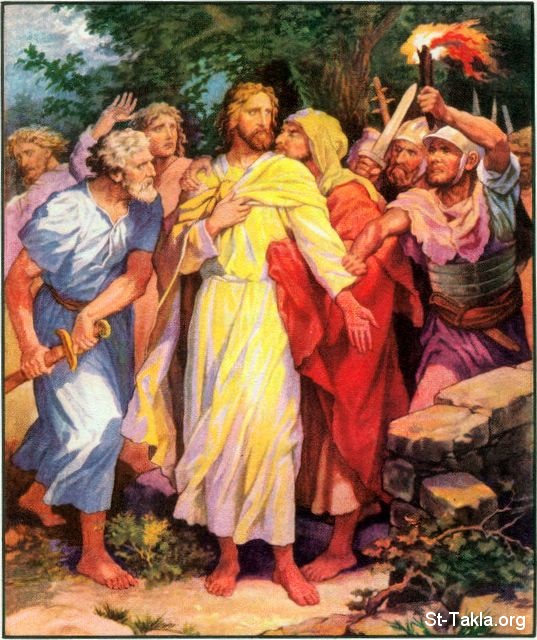
David was betrayed by his son, Absalom; Jesus was betrayed by his friend and disciple, Judas Iscariot. But Jesus stayed loyal to his heavenly Father. He willingly went to the cross when he could have resisted arrest. He rebuked Peter for using his sword. “Put your sword back in its place,” Jesus said to him, “for all who draw the sword will die by the sword. Do you think I cannot call on my Father, and he will at once put at my disposal more than twelve legions of angels?” (Matthew 26:52-53).

Jesus experienced the resurrection truth of David’s words. Because of my integrity you uphold me and set me in your presence forever. Praise be to the LORD, the God of Israel, from everlasting to everlasting. Amen and Amen.

Response: LORD, I thank you for Jesus. Through Jesus I can overcome all things, even betrayal.  Amen.

Your Turn: Have you experienced betrayal? Has the LORD upheld your cause?

Psalms 365: Develop a Life of Worship and Prayer

Psalms 365 Volume II

Psalms 365 vol 3
— Psalms 365 Volume III

Psalms

Recent posts

  • A Horn of Salvation December 19, 2025
  • Ready for the King of Glory December 19, 2025
  • My Spirit Rejoices in God My Savior December 18, 2025
  • Joining the Generation That Seeks God December 18, 2025
  • Why Am I So Favored December 17, 2025
  • How Can You Find the Good Life? December 17, 2025
  • The Power of the Most High December 16, 2025

Calendar

December 2025
M T W T F S S
1234567
891011121314
15161718192021
22232425262728
293031  
« Nov    

Blog Posts

Comments

  • davidkitz on Joining the Generation That Seeks God
  • cjsmissionaryminister on God Sent His Son
  • cjsmissionaryminister on The God of the Broken

Blog at WordPress.com.

Privacy & Cookies: This site uses cookies. By continuing to use this website, you agree to their use.
To find out more, including how to control cookies, see here: Cookie Policy
  • Subscribe Subscribed
    • I love the Psalms
    • Join 1,377 other subscribers
    • Already have a WordPress.com account? Log in now.
    • I love the Psalms
    • Subscribe Subscribed
    • Sign up
    • Log in
    • Report this content
    • View site in Reader
    • Manage subscriptions
    • Collapse this bar
 

Loading Comments...