• Home
  • About
  • DavidKitz.ca
  • Youtube Videos
  • Books by David
  • Books on Amazon.com

I love the Psalms

~ Connecting daily with God through the Psalms

I love the Psalms

Tag Archives: prophet

Looking Forward to the Redemption

29 Monday Dec 2025

Posted by davidkitz in Psalm 26, Psalms

≈ Leave a comment

Tags

congregation, fasting, Jesus, Prayer, praying, presence of God, prophet, Psalms, temple, the LORD, worship

Today’s quote and prayer from
“Psalms 365: Develop a Life of Worship and Prayer

 Today’s Reading: Psalm 26:8-12

Listen to today’s reading by Jonathan Dent:

https://davidkitz.blog/wp-content/uploads/2025/12/ps-268-12-mix2final1.mp3


Come, Lord Jesus,
dwell among.
This is my confession:
“LORD, I love the house where you live,
the place where your glory dwells.”
Lord come and dwell
in my local congregation.
Manifest your presence there,
so many will see it
and be changed by your Spirit.
Amen.

— — — —


Anna’s Testimony

There was also a prophet,
Anna,
the daughter of Penuel,
of the tribe of Asher.
She was very old;
she had lived with her husband
seven years after her marriage,

and then was a widow until she was eighty-four.
She never left the temple
but worshiped night and day,
fasting and praying.

Coming up to them at that very moment,
she gave thanks to God
and spoke about the child [Jesus] to all
who were looking forward to the redemption of Jerusalem.

(Luke 2:36-38 NIV)*

Para la publicación de Salmos 365 de hoy en español haga clic aquí.

bgbg_v4.3_1501818
* NEW INTERNATIONAL VERSION, COPYRIGHT ©1973, 1978, 1984, 2011 BY BIBLICA

Pray for enduring peace in Israel and Gaza,
and continue to pray for peace to return to Ukraine and Russia!

Volume I of Psalms 365: Develop a Life of Worship and Prayer won the Best Book of the Year Award from The Word Guild and Volume II has won the Best Devotional of the Year Award. For those who love God’s word, this three-book series is an ideal way to daily meet with the Lord. To purchase or for a closer look click here.

Also available from David Kitz

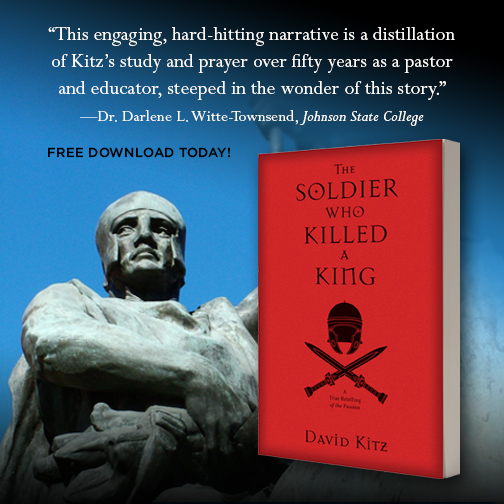
Holy Week as seen from a soldier’s perspective

American readers click this link to purchase The Soldier Who Killed a King.

Canadian readers click this link to purchase The Soldier Who Killed a King directly from the author.


We Saw His Star When It Rose

26 Friday Dec 2025

Posted by davidkitz in Psalm 26, Psalms

≈ 1 Comment

Tags

Bethlehem, confidence in God, Jesus, king of the Jews, magi, Messiah, Prayer, prophet, Psalms

Today’s quote and prayer from
“Psalms 365: Develop a Life of Worship and Prayer

 Today’s Reading: Psalm 26:1-7

Listen to today’s reading by Jonathan Dent:

https://davidkitz.blog/wp-content/uploads/2025/12/psalm-261-7-mix1final.mp3


LORD,
examine my heart and my mind.
I want to grow in my knowledge of you
and my confidence in you.
Help me to have a pure heart
and mind before you.
I want to experience your presence
in my life.
Amen.

— — — —


The Magi Visit the Messiah

After Jesus was born in Bethlehem in Judea,
during the time of King Herod,
Magi from the east came to Jerusalem
and asked,
“Where is the one
who has been born king of the Jews?
We saw his star when it rose
and have come to worship him.”


When King Herod heard this he was disturbed,
and all Jerusalem with him.

When he had called together all
the people’s chief priests and teachers of the law,
he asked them where the Messiah was to be born.
 “In Bethlehem in Judea,” they replied,
“for this is what the prophet has written:

“‘But you, Bethlehem, in the land of Judah,
    are by no means least among the rulers of Judah;
for out of you will come a ruler
    who will shepherd my people Israel.
(Matthew 2:1-6 NIV)*

Para la publicación de Salmos 365 de hoy en español haga clic aquí.

bgbg_v4.3_1501818
* NEW INTERNATIONAL VERSION, COPYRIGHT ©1973, 1978, 1984, 2011 BY BIBLICA

Pray for enduring peace in Israel and Gaza,
and continue to pray for peace to return to Ukraine and Russia!

Volume I of Psalms 365: Develop a Life of Worship and Prayer won the Best Book of the Year Award from The Word Guild and Volume II has won the Best Devotional of the Year Award. For those who love God’s word, this three-book series is an ideal way to daily meet with the Lord. To purchase or for a closer look click here.

Also available from David Kitz

Holy Week as seen from a soldier’s perspective

American readers click this link to purchase The Soldier Who Killed a King.

Canadian readers click this link to purchase The Soldier Who Killed a King directly from the author.

She Placed Him in a Manger

24 Wednesday Dec 2025

Posted by davidkitz in Advent

≈ 2 Comments

Tags

angel of the Lord, conceive, guidance, humility, Immanuel, Jesus, Joseph, marriage, Mary, prophet, Psalms, virgin

Today’s quote and prayer from
“Psalms 365: Develop a Life of Worship and Prayer

 Today’s Reading: Psalm 25:16-22

Listen to today’s reading by Jonathan Dent:

https://davidkitz.blog/wp-content/uploads/2025/12/psalm-2516-22-mix2final1.mp3

Lord Jesus,
whose birth we celebrate,
help me to be open and transparent before you.
Take away all my sins.
My hope is in you.
Protect me from the attacks of the enemy.
Deliver me from all my troubles,
my gracious Savior.
Amen.

— — — —


The Birth of Jesus

In those days Caesar Augustus issued a decree
that a census should be taken
of the entire Roman world.
 
(This was the first census that took place
while Quirinius was governor of Syria.)
 
And everyone went to their own town to register.

So Joseph also went up
from the town of Nazareth in Galilee to Judea,
to Bethlehem the town of David,
because he belonged to the house and line of David.

He went there to register with Mary,
who was pledged to be married to him
and was expecting a child.

While they were there,
the time came for the baby to be born,

and she gave birth to her firstborn,
a son.
She wrapped him in cloths
and placed him in a manger,
because there was no guest room available for them.
(Luke 2:1-7 NIV)*

Para la publicación de Salmos 365 de hoy en español haga clic aquí.

bgbg_v4.3_1501818
* NEW INTERNATIONAL VERSION, COPYRIGHT ©1973, 1978, 1984, 2011 BY BIBLICA

Pray for enduring peace in Israel and Gaza,
and continue to pray for peace to return to Ukraine and Russia!

Volume I of Psalms 365: Develop a Life of Worship and Prayer won the Best Book of the Year Award from The Word Guild and Volume II has won the Best Devotional of the Year Award. For those who love God’s word, this three-book series is an ideal way to daily meet with the Lord. To purchase or for a closer look click here.

Also available from David Kitz

American readers click this link to purchase The Soldier Who Killed a King.

Canadian readers click this link to purchase The Soldier Who Killed a King directly from the author.

They Will Call Him Immanuel

23 Tuesday Dec 2025

Posted by davidkitz in Advent

≈ 2 Comments

Tags

angel of the Lord, conceive, guidance, humility, Immanuel, Jesus, Joseph, marriage, Mary, prophet, Psalms, virgin

Today’s quote and prayer from
“Psalms 365: Develop a Life of Worship and Prayer

 Today’s Reading: Psalm 25:8-15

Listen to today’s reading by Jonathan Dent:

https://davidkitz.blog/wp-content/uploads/2025/12/psalm-258-15-mix2final.mp3


LORD God,
in humility I come before you.
I need your help
and guidance every moment of the day.
Teach me your ways in every circumstance I face.
Lord Jesus,
you are my Good Shepherd.
Amen.

— — — —


Joseph Obeys the Angel’s Command

All this took place to fulfill
what the Lord had said through the prophet:
 
“The virgin will conceive
and give birth to a son,
and they will call him Immanuel”
 (which means “God with us”).

When Joseph woke up,
he did what the angel of the Lord
had commanded him
and took Mary home as his wife.
 
But he did not consummate their marriage
until she gave birth to a son.
And he gave him the name Jesus.
(Matthew 1:22-25 NIV)*

Para la publicación de Salmos 365 de hoy en español haga clic aquí.

bgbg_v4.3_1501818
* NEW INTERNATIONAL VERSION, COPYRIGHT ©1973, 1978, 1984, 2011 BY BIBLICA

Pray for enduring peace in Israel and Gaza,
and continue to pray for peace to return to Ukraine and Russia!

Volume I of Psalms 365: Develop a Life of Worship and Prayer won the Best Book of the Year Award from The Word Guild and Volume II has won the Best Devotional of the Year Award. For those who love God’s word, this three-book series is an ideal way to daily meet with the Lord. To purchase or for a closer look click here.

Also available from David Kitz

American readers click this link to purchase The Soldier Who Killed a King.

Canadian readers click this link to purchase The Soldier Who Killed a Kingdirectly from the author.

The Church and the Third Temptation of Christ

21 Sunday Dec 2025

Posted by davidkitz in Psalms, The Elisha Code

≈ 3 Comments

Tags

Caesar, Christ, church, false christs, false saviors, God and Caesar, Jesus, kingdom, political, politics, prophecy, prophet, Satan, Savior, scriptures, temptation, the cross

And He said to them,
“Render therefore to Caesar the things that are Caesar’s,
and to God the things that are God’s.”
 

(Matthew 22:21b, NKJV)

The church cannot move forward in the right direction unless there is a clear-eyed assessment of where we stand today.

Here then are a few questions to help us assess our current position:

  • Are local churches growing, thriving, and multiplying in your city/community?
  • Are individuals in your community repenting and coming to faith in Christ?
  • Is the message of the gospel transforming society, or is the world transforming the church?
  • Over the last twenty years, has the church become more politically engaged?

We have been keen observers of the church and the impact of the gospel on society for over fifty years. During that time there have been encouraging waves of numerical growth and spiritual renewal, but there have also been seasons of testing and decline. Broadly speaking, over the last decade, decline has been the dominant theme. Yes, there are exceptions to this downward trend, and they should be celebrated, but nevertheless, the trendline is not moving in our favor. Statistical surveys indicate a steady decline in church attendance and self-identification with the Christian faith.

Landestreu Church — photo by Donald Adam

Why is this so?

What has not declined is the church’s level of political engagement. While the embers of spiritual revival have been dying, the fires of political engagement have been burning red hot. And political leaders of all stripes have been eager to fan the flames. After all, they know where the votes lie and how to spark political passions.

The sharp divisions between the political left and right have been mirrored in the church. The theologically liberal have championed social justice issues, while theological conservatives have tried to hold the line against what they see as a creeping socialist sin agenda.

To a degree, these divisions in the church have been present for generations. But in recent years the divisions have grown sharper as political discourse has become more polarized. Throw in some misinformation, a few conspiracy theories, and we have a toxic brew that social media spreads worldwide.

Where is the good news of the gospel in all of this? All too often, it’s been abandoned or drowned out in both camps. A worshipper may attend a Sunday service at a left leaning church and hear a sermon on the merits of caring for the poor and marginalized, but the name of Jesus is never mentioned. Similarly, I have attended so called ‘prayer meetings’ of evangelical pastors where not a single word of prayer is uttered, but the entire conversation is centered on right wing political machinations and strategies.

Is the message of the gospel transforming our society and culture? No. The world is transforming the culture of the church. The glorious light of the gospel has been turned to darkness. Jesus’ call to take up our cross and follow him is being ignored—ignored in the house of God while we pursue purely political objectives.

Christ’s admonition rings true:

“Salt is good; but if the salt has lost its flavor, how shall it be seasoned? It is neither fit for the land nor for the dunghill, but men throw it out. He who has ears to hear, let him hear!” (Luke 14:34-35, NKJV)

The church has too often gone down a political rabbit hole thinking it can somehow save this generation by political means. No such salvation exists, nor has it ever existed, and those who promise it are false saviors. Furthermore, Jesus prophesied such false political saviors would arise.

Then if anyone says to you, ‘Look, here is the Christ!’ or ‘There!’ do not believe it. For false christs and false prophets will rise and show great signs and wonders to deceive, if possible, even the elect. See, I have told you beforehand (Matthew 24:24-25, NKJV).

Every generation has seen its share of false saviors, but after 2,000 years only one Savior remains standing. His name is Jesus. Let’s cling to him and the message of the cross.

Photo by Pixabay on Pexels.com

Often politicians use religion for personal gain—to curry favor and capture votes, therefore, leaders in the Christian community need to exercise caution. We believe Christ followers should vote and be politically engaged, but our first loyalty must be to Christ. A life of service in the political realm can be a noble vocation ordained by God.

What blueprint did Jesus follow as he began his earthly ministry and set the foundation for the church? Was he engaged in the politics of his time? His politics was not the politics of this world. It was the politics of humility, forgiveness, and self-sacrifice.

The blueprint our Lord followed can be found in his response to the three temptations of Christ as recorded in the gospels. The third temptation found in Matthew’s gospel specifically addresses the lure of political engagement.

Again, the devil took Him up on an exceedingly high mountain, and showed Him all the kingdoms of the world and their glory. And he said to Him, “All these things I will give You if You will fall down and worship me.”
Then Jesus said to him, “Away with you, Satan! For it is written, ‘You shall worship the Lord your God, and Him only you shall serve’”
(Matthew 4:8-10)

There is something quite striking, first about the devil’s offer, and then Jesus’ response. Satan offered the kingdoms of the world and their glory. Implied in this offer is the understanding that these kingdoms are currently his—under the devil’s control. Jesus does not refute this. The nations are, in fact, within the devil’s domain. This is in full agreement with Jesus’ teaching on this matter as he identified Satan as the prince of this world. See John 12:30-33.

Similarly, Paul asserts that before their conversion the Ephesians “walked according to the course of this world, according to the prince of the power of the air, the spirit who now works in the sons of disobedience” (Ephesians 2:2).

Jesus refused Satan’s offer of political power and reward if he would worship him. He refused to play on the devil’s turf. He turned down the offer of earthly, political kingdoms so he could establish an eternal, spiritual kingdom—the Kingdom of God.

Matthew ends his account of the three temptations of Christ with this statement: Then the devil left Him, and behold, angels came and ministered to Him (Matthew 4:11, NKJV).

But Luke’s account ends differently: When the devil had finished all this tempting, he left him until an opportune time (Luke 4:13, NIV).

Were there other occasions when Jesus was tempted to become politically engaged and establish an earthly kingdom? There may have been numerous occasions, but three are readily identifiable.

John identifies one such occasion immediately after the feeding of the five thousand.

Then those men, when they had seen the sign that Jesus did, said, “This is truly the Prophet who is to come into the world.”
Therefore when Jesus perceived that they were about to come and take Him by force to make Him king, He departed again to the mountain by Himself alone (John 6:14-15, NKJV).

What a grand opportunity this was! Jesus could become king. Furthermore, it would not appear to be something he sought. He could simply bow to the will of the people, and they would proclaim him king.

Can you hear the devil’s whisper, “Surely, this must be the will of God?”

But what did Jesus do? Did he accept the devil’s latest offer? No. He walked away. Instead of making a deal with the world and the devil, Jesus went to prayer in a lonely place where he met with his Father. He walked away from an earthly political kingdom and all its trappings. Wealth. Fame. Adoration.

Why walk away?

For a second time Jesus walked away from a temporal, material kingdom because he was establishing an eternal, spiritual Kingdom—a Kingdom that exists on a much higher plane than the kingdoms of this world.

And after a time of communion with his Father, what did Christ do?

He walked on water.

The juxtaposition of these events was not due to random chance. Jesus walked out on the Sea of Galilee to visibly demonstrate the spiritual nature of his eternal Kingdom. The disciple’s initial reaction illustrates this perfectly.

Shortly before dawn Jesus went out to them, walking on the lake. When the disciples saw him walking on the lake, they were terrified. “It’s a ghost,” they said, and cried out in fear (Matthew 14:25-26, NIV).

Jesus was entirely at home in the spirit world, but we are not. The disciples reacted just as we would. The truth we must lay hold of is the spiritual nature of Christ and his Kingdom. By faith Peter briefly grasped that truth as he stepped out of the boat, and he too walked on water.

Photo by Pixabay on Pexels.com

Oh, for the faith to do likewise in this day and hour! Are we ready to do as Peter did, step into the supernatural and walk in the Spirit?

The second occasion when Jesus was tempted to take a political position is well known. It occurred within the temple courts during the last week of his earthly ministry.

Then the Pharisees went and plotted how they might entangle Him in His talk. And they sent to Him their disciples with the Herodians, saying, “Teacher, we know that You are true, and teach the way of God in truth; nor do You care about anyone, for You do not regard the person of men. Tell us, therefore, what do You think? Is it lawful to pay taxes to Caesar, or not?”
But Jesus
 perceived their wickedness, and said, “Why do you test Me, you hypocrites? Show Me the tax money.”
So they brought Him a denarius.
And He said to them, “Whose image and inscription is this?”
They said to Him, “Caesar’s.”
And He said to them, “Render therefore to Caesar the things that are Caesar’s, and to God the things that are God’s.” When they had heard these words, they marveled, and left Him and went their way (Matthew 22:15-22, NKJV).

The Pharisees were certain they could trap Jesus on the horns of this dilemma. Note that to execute their devious scheme, the Pharisees teamed with a political party, the Herodians. In this situation, politics and religion conspire together, and undoubtedly Satan is the one who chaired this meeting.

The exact wording of this question is significant. The question could have been, “Is it lawful to pay taxes to Rome, or not?” Or perhaps, “Is it lawful to pay taxes to the Empire, or not?” Why this direct reference to Caesar?

The question as asked goes to the very heart of the Jewish faith, and the Christian faith as well. Caesar was a deity in the Roman pantheon of gods. By paying taxes to Caesar were Jewish believers violating the first commandment of the law of Moses? Were they participating in the worship of a foreign god? To the devout Jew, the image of Caesar on a Roman coin was a graven image signifying idolatry. For this reason, Roman coinage, the denarius, was not accepted in the temple treasury. It must be converted to Tyrian shekels, hence the need for moneychangers in or near the temple courts.

If Jesus said it was wrong to pay taxes to Caesar, he could be accused of supporting the zealots who advocated rebellion against Rome. If he approved of tax payment, he left himself vulnerable to the charge of violating the first commandment and the worship of a foreign god.

How does Jesus solve the dilemma? His answer can be described as a brilliant sidestep. It allows for tax payment and allegiance to both God and Caesar. But…

But we need to qualify this statement. Supremacy and first allegiance belong to the Lord. To put our allegiance to the nation state on an equal footing with our allegiance to God runs contrary to the counsel of Christ and the Scriptures. Note well our Savior’s words:

“No one can serve two masters; for either he will hate the one and love the other, or else he will be loyal to the one and despise the other. You cannot serve God and mammon (Matthew 6:24, NKJV).

Though the reference above contrasts service to God and service to mammon (money/material possessions), the implications of having two masters are clear. One master must take precedence. Is it God or money? Is it God or the state? Is it God or the political leader or party?

Far too many believers have divided loyalties when Christ demands our all. A weak-kneed gospel requires little from us, but in truth, Jesus demands our all.

Now great multitudes went with Him. And He turned and said to them, “If anyone comes to Me and does not hate his father and mother, wife and children, brothers and sisters, yes, and his own life also, he cannot be My disciple. And whoever does not bear his cross and come after Me cannot be My disciple (Matthew 14:25-27, NKJV).

God and Caesar are not on an equal footing. And dual loyalty on an equal basis is not what Christ is advocating for in his discussion with the Pharisees and the Herodians. He is conceding that submission to civil authorities is required.

Photo by Todd Trapani on Pexels.com

In his teaching on the command to honor father and mother, Martin Luther expands the scope of those to whom honor, and obedience are due. He includes masters and goes on to define them as follows: “Masters are all those who by God’s ordinance are placed over us in the home, in the state, at the school and at the place where we work.”[i]

Luther saw in the Ten Commandments a hierarchy of submission and obedience that began with God and extended through the family, the state and the workplace.

Jesus’ answer makes it clear that he is not leading a political rebellion—a rebellion against Rome. He is not taking the devil’s bait or participating in the devil’s rebellion. Since the foundation of the world, the devil has been the author and master of rebellion. For this reason, Christians must exercise due diligence and hear from God before throwing in their lot with those who advocate the overthrow of established authorities. If those authorities are established by God, we may find ourselves working against the God we serve.

There are multiple examples in the Scriptures where God called for submission to authority, even heathen authority, rather than rebellion. The classic example is the Jewish people’s submission to foreign rule during their seventy years of captivity in Babylon. After urging the captives to build homes and raise families, the prophet Jeremiah gave the exiles these instructions:

Also, seek the peace and prosperity of the city to which I have carried you into exile. Pray to the Lord for it, because if it prospers, you too will prosper” (Jeremiah 29:7, NIV).

While serving in a position of submission to ungodly autocrats, leaders such as Daniel and Nehemiah laid the groundwork for the return to the holy land, and the restoration of the Jewish state, and temple worship. This is not the outcome one would expect from yielding to the authority of a pagan government. However, we need to recognize there is a much higher authority who oversees the affairs of all humanity. Surely, this proverb holds true: In the Lord’s hand the king’s heart is a stream of water that he channels toward all who please him (Proverbs 21:1, NIV).

Jesus displayed impeccable wisdom in his response to the politically charged question of taxation. But his wise response did not prevent his arrest, trial, and crucifixion. And what were the charges brought against him?

Jesus before Pilate

Then the whole assembly rose and led him off to Pilate. And they began to accuse him, saying, “We have found this man subverting our nation. He opposes payment of taxes to Caesar and claims to be Messiah, a king” (Luke 23:1-2, NIV).

The charges before Pontius Pilate were entirely political. Let’s remember another name for Satan is the accuser, and he is only too eager to use human vessels to convey his accusations. Furthermore, why not use an outright lie, since he is the father of lies?[ii]

Following the feeding of the five thousand, Jesus rejected the role of an earthly king, and later, he explicitly endorsed the payment of taxes to Caesar, yet the master of lies and distortion accused him of both these political infractions. The devil never plays fair. In Christ’s trial before Pilate, Satan manipulated the high priest, the crowd and all the players to achieve his goal—the death of Jesus.[iii]

Throughout his ministry Jesus steadfastly resisted political entanglement, but in the end, the accusation of political ambition is precisely what Satan used to bring about Christ’s crucifixion.

Finally, let’s examine the third occasion when Jesus was tempted to become politically engaged and establish an earthly kingdom. The location was Gethsemane. After agonizing several hours in prayer, Jesus rises to meet his betrayer. John tells us that Peter rose to Christ’s defense and in the ensuing fracas Peter cut off the ear of the servant of the high priest.

“Put your sword back in its place,” Jesus said to him, “for all who draw the sword will die by the sword. Do you think I cannot call on my Father, and he will at once put at my disposal more than twelve legions of angels? But how then would the Scriptures be fulfilled that say it must happen in this way?”

In that hour Jesus said to the crowd, “Am I leading a rebellion, that you have come out with swords and clubs to capture me? Every day I sat in the temple courts teaching, and you did not arrest me. But this has all taken place that the writings of the prophets might be fulfilled.” Then all the disciples deserted him and fled (Matthew 26:52-56, NIV).

It is clear from the passage above that Jesus was continually tempted to reverse his arrest, trial, and crucifixion. Twelve legions of angels were standing ready to do just that. At any moment, by a dramatic show of force, he could overpower any adversary. Why endure the coming humiliation, torture, and death?

Rising on angel wings — photo by David Kitz

Jesus provides the answer to this question in this statement, “But this has all taken place that the writings of the prophets might be fulfilled.” He was moving according to a plan established in eternity, revealed by the prophets, and prepared well in advance. Nothing was happening by chance. During this Passover celebration, the sacrificial Lamb of God would lay down his life. His redeeming blood would stain a cross to wash away the stains of our corrosive sin.

Jesus had prepared his heart in prayer. He heard his Father’s voice. He must drink this bitter cup of suffering, and nothing would deter him. Not the comforts of the flesh. Not the temptations of the world. Not the demons of hell.

The temptation for Jesus to call on legions of angels for deliverance combines aspects of the three wilderness temptations as described in Matthew chapter four. It brings comfort to the body rather than excruciating torture—the first temptation. It appeals to the desire for fame, self-promotion, and the spectacular—the second temptation. And it finally, it holds the promise of a political victory over an oppressive enemy. Why not call on the angels? Why not establish Christ’s immediate supremacy over his earthly foes? The angels had ministered to him after his forty-day fast and temptation in the wilderness. Why not call on them now?

The answer lies in the nature of the King and the nature of his Kingdom. Jesus is God by nature and coequal within the Trinity. Yes, he was and is fully human, but he is simultaneously fully eternal and divine. This King has no beginning and no end, and his power and authority have no limits. Holiness is the foundation of his throne.

But this same King—this same Jesus—came to the cross in full submission to his Father. He took the lowest position. Jesus became the least in the Kingdom of God, being willing to suffer humiliation and a criminal’s death on the cross.[iv]

Was Jesus leading a rebellion against the political authorities of his day? The answer is a resounding “No!”

But in his human flesh, he was leading a rebellion to unseat the most powerful earthly ruler of all time, the prince of the power of the air. How did Christ defeat him?

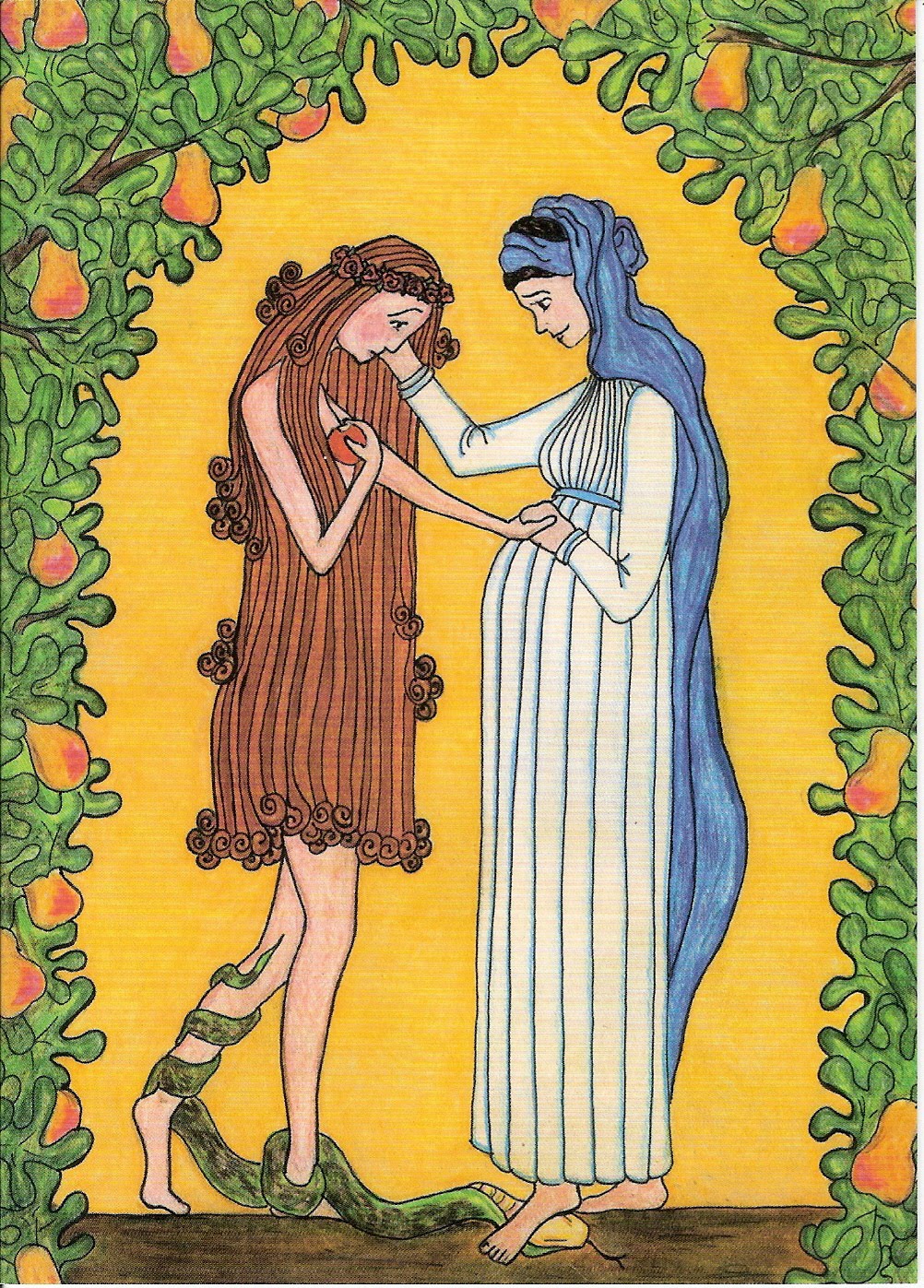
Jesus defeated Satan by becoming the exact opposite of his foe. The chief characteristics of Satan are pride and rebellion. To defeat the master of pride and rebellion Jesus took on the form of a servant.[v] He humbled himself to the lowest place—the place of the cross—and from that position he crushed the head of the ancient serpent.
Mary Comforts Eve

At his Last Supper, Jesus demonstrated his servanthood by washing his disciples’ feet.[vi] He clearly taught the principle of humble submission.

Now there was also a dispute among them, as to which of them should be considered the greatest. And He said to them, “The kings of the Gentiles exercise lordship over them, and those who exercise authority over them are called ‘benefactors.’ But not so among you; on the contrary, he who is greatest among you, let him be as the younger, and he who governs as he who serves. For who is
greater, he who sits at the table, or he who serves? Is it not he who sits at the table? Yet I am among you as the One who serves.
“But you are those who have continued with Me in My trials. And I bestow upon you a kingdom, just as My Father bestowed one upon Me, that you may eat and drink at My table in My kingdom, and sit on thrones judging the twelve tribes of Israel
” (Luke 22:24-29, NKJV).

How will we defeat and disarm Satan and lay waste to his kingdom? It will not happen through mere political engagement. That is not the route Jesus took. That political rabbit hole is the devil’s lair. We are intruding on Satan’s turf when we head down that hole, and he knows how to fight and win down there. He has been doing it for thousands of years.

We win by using the same tactics as Jesus. It is the surrendered life that wins battles in the spiritual realm. It is the life surrendered to the will of the Father that prepares the way for salvation and world-transforming revival.


[i] Dr. Martin Luther’s Small Catechism, A Handbook of Christian Doctrine, Concordia Publishing House, Saint Louis, Missouri, P. 64

[ii] John 8:44

[iii] For a thorough play-by-play account of the trial and crucifixion of Christ, and the political machinations of Herod Antipas, Joseph Caiaphas, and Pontius Pilate read The Soldier Who Killed a King by David Kitz, Kregel Publications, 1917.

[iv] Matthew 11:11

[v] Philippians 2:5-11

[vi] John 13:1-17

This is the fifteenth weekly excerpt from the award-winning book 
The Elisha Code & the Coming Revival 

A soul-gripping read.
Is a return-to-Jesus revival possible in our time?
This book points the way forward.
For details click here.

Saving the Best till Last

26 Sunday Oct 2025

Posted by davidkitz in The Elisha Code

≈ Leave a comment

Tags

Bible, blind, double anointing, Elisha, faith, God, gospel writers, Gospels, Jesus, Jewish audience, Matthew, Messiah, miracles, miraculous, New Testament, Old Testament, prophet, resurrection

Up from the grave he arose;
with a mighty triumph o’er his foes;
he arose a victor from the dark domain,
and he lives forever, with his saints to reign.
He arose! He arose! Hallelujah! Christ arose![i]

[i] Robert Lowry, Christ Arose, 1874, Public Domain

Photo by L. Kranz

Thus far in our examination of the ministry of Elisha and Jesus, we can see there are striking parallels in the miracles they worked:  

  • Their first public miracle was the transformation of water. Elisha turned a spring of foul water into good water at Jericho (2 Kings 2:19-22). Jesus turned water into wine at the wedding in Cana (John 2:1-12).
  • Elisha healed Naaman the Syrian leper (2 Kings 5:1-19). Jesus healed a leper after delivering his Sermon on the Mount (Matthew 8:1-4).
  • Elisha brought the Shunammite’s son back to life (2 Kings 4:8-37), and Jesus brought the synagogue leader’s daughter back to life (Matthew 9:18-26).
  • Elisha miraculously fed a hundred men (2 Kings 4:42-44). Jesus miraculously fed a crowd of five thousand men (Matthew 14:13-21), and then a crowd of four thousand (Matthew 15:29-39).
  • Both prophets demonstrated miracles of supernatural buoyancy. Elisha caused an iron axe-head to float (2 Kings 6:5-7), and Jesus walked on water (Matthew 14:22-33, Mark 6:45-52, John 6:15-21).
  • Both men worked miracles of provision. A widow’s jar of olive oil kept pouring and filled dozens of containers (2 Kings 4:1-7), and at Jesus’ command Peter caught a fish with a gold coin in its mouth (Matthew 17:24-27).
  • Both demonstrated power over nature. Elisha prophesied the arrival of water in the desert without wind or rain (2 Kings 3:15-18). Jesus stilled the wind and waves on the Sea of Galilee (Matthew 8:23-27).
  • Elisha opened the spiritual eyes of his servant (2 Kings 6:16-17), and Jesus opened the eyes of the blindman at the Pool of Siloam (John 9:5-7), as well as numerous others.

            When seen in tandem, this string of eight parallel miracles points to the arrival of the great Messianic prophet that Israel was longing for. Elisha’s double anointing was being doubled yet again through the ministry of Jesus. The New Testament Elisha had arrived, and his name was Jesus of Nazareth.
            Matthew deliberately framed his Gospel narrative so his Jewish readers could easily discern how Jesus duplicated and fulfilled the pattern established by the Old Testament miracle-working prophets.
            When the disciples of John the Baptist arrived to inquire if Jesus was the long-awaited Messiah, how did he respond? He listed a string of miracles:

            Jesus replied, “Go back and report to John what you hear and see: The blind receive sight, the lame walk, those who have leprosy are cleansed, the deaf hear, the dead are raised, and the good news is proclaimed to the poor. Blessed is anyone who does not stumble on account of me” (Matthew 11:4-6, NIV).

           Why did Jesus respond in this somewhat indirect enigmatic way? With his answer, he was drawing the link between his current ministry and the miracle-working prophetic ministry of the Old Testament duo of Elijah and Elisha. When John’s disciples leave, Jesus makes this abundantly clear to the crowd gathered around him by explicitly stating that John “is the Elijah who is to come” (Matthew 11:14).
            For those who have ears to hear, the implications are clear. If the new Elijah is already here in the person of John, then the miracles of Jesus herald his arrival as the new Elisha. Furthermore, Jesus’ answer implies that he is John the Baptist’s successor just as Elisha was Elijah’s successor. With John imprisoned, the double anointing now rests on Jesus, and in his conversation with John’s disciples he offers up his accomplishments as a miracle-worker as full proof of this prophetic transition.
            The hallmark of Elisha’s ministry was his double anointing (2 Kings 2:9). Elisha performed twice as many miracles as Elijah—more than thrice as many by some calculations. In his Gospel, Matthew signals that this double anointing resting on Jesus in a most unusual way. Generations of Bible scholars and apologists have puzzled over Matthew’s double vision. Repeatedly, Matthew reports on two men receiving miraculous help when the other Gospel writers report only one person receiving help.
            The first example of this is found in Matthew’s report on the restoration of two demon possessed men in the region of the Gadarenes (Matthew 8:28-34). This corresponds closely with the report of what appears to be the same event in Mark’s Gospel (Mark 5:1-20) and Luke’s Gospel (Luke 8:26-39). Mark’s account goes into considerably more detail, but Mark and Luke make no mention of a second man.
            The second occurrence is found in Matthew’s healing of two blindmen (Matthew 9:27-31). Again, for the perceptive, this double healing serves as a sign of the double anointing now resting on Jesus.
            The third example of Matthew’s double vision occurs as Jesus is leaving Jericho on his last Passover pilgrimage to Jerusalem.

           Two blind men were sitting by the roadside, and when they heard that Jesus was going by, they shouted, “Lord, Son of David, have mercy on us!” (Matthew 20:30, NIV).

          Similar accounts appear in Mark’s Gospel (Mark 10:46-52) and Luke’s Gospel (Luke 18:35-43). Again, Mark provides more detail by identifying the blindman as Bartimaeus. And yet again, Mark and Luke make no mention of a second man.
            Finally, all four Gospel writers report on the feeding of the 5,000, but only Matthew and Mark include the feeding of the 4,000. Again, Matthew reports a double miracle, while Luke and John remain silent on the second miraculous feeding.
            Bible scholars and apologists have come up with some sound reasons for these discrepancies in the four Gospels, which for the sake of brevity we will not explore here. But the following is one possible explanation:
            We tend to see what we are looking for, and undoubtedly, this principle applies to Matthew as well. When we are watching for something, we will pick out the item or event we are searching for against a busy backdrop of other sights and events. We see it because we are watching for it. The words of Jesus ring true, “Seek and you will find” (Matthew 7:7).
            A recent experience David Kitz had serves to illustrate this point. While walking along the shoreline of a marsh, he came upon a muskrat lodge protruding above the ice. He was fascinated by this discovery. After continuing further, he returned and then retraced his steps and found five more muskrat lodges. He had passed by these lodges minutes earlier but had noticed none of them. He saw them now because he was looking for them.

Petrie Island — photo by David Kitz

            So, why did Matthew see and record his list of double miracles? Could it be because he was actively watching for evidence of a double anointing resting on Jesus, whereas the other Gospel writers had their attention fixed elsewhere? Matthew was expecting to see miracles in duplicate because he was keenly aware of the Old Testament dynamic duo and their prophetic narrative. He was familiar with Elisha’s miracles, and now he was watching the same pattern of miracles repeated with a twofold impact. Yes, Elisha’s double anointing was being doubled yet again.
            Furthermore, Matthew was writing with his Jewish audience in mind—an audience that was familiar with and watching for the return of the voice and power of the Old Covenant prophets. He was writing to his people in a code they could readily decipher because they were steeped in Old Testament lore and primed to expect the arrival of their Messiah. Matthew was declaring to his countrymen that the prophetic power and anointing had returned first in the person of John the Baptist, and now through the ministry of Jesus. For this reason, his Gospel narrative directly sites more than forty Old Testament references and alludes to many others.[i]
            Like any great storyteller, Matthew saves the climax of the story until the end—just before the conclusion of his Gospel. And there is no greater climax to any story than the resurrection of Jesus. Again, in Matthew’s account, there is a discernable link to resurrection and the end-of-life experiences of both Elisha and Jesus.

The promise of resurrection — photo by David Kitz

            Elisha has his own post-death resurrection story. Like many of Elisha’s miracles, it is an event without precedent in the Old Testament. Elisha’s final miracle happened months or possibly years after his death.

             Elisha died and was buried.
             Now Moabite raiders used to enter the country every spring. Once while some Israelites were burying a man, suddenly they saw a band of raiders; so they threw the man’s body into Elisha’s tomb. When the body touched Elisha’s bones, the man came to life and stood up on his feet
(2 Kings 13:20-21, NIV).

            In his death Elisha brought forth life. How miraculous—how Christ like!
            In the same way Jesus, the New Testament Elisha, brought forth resurrection life when he died.

             And when Jesus had cried out again in a loud voice, he gave up his spirit.
            At that moment the curtain of the temple was torn in two from top to bottom. The earth shook, the rocks split and the tombs broke open. The bodies of many holy people who had died were raised to life. They came out of the tombs after Jesus’ resurrection and went into the holy city and appeared to many people. (Matthew 27:50-53, NIV)

                Again, Matthew is the only Gospel writer who reports this phenomenal event. Perhaps Matthew met with residents of Jerusalem who told him of their encounters with these resurrected holy people. Perhaps, he or some of the other apostles had such an encounter.
                Once more, we see a striking parallel between this final resurrection miracle of Jesus’ earthly ministry, and the final resurrection miracle of Elisha. Of course, Christ’s miracle in death is an amplified version of Elisha’s posthumous resurrection miracle. Elisha brought only one man back to life, while Jesus brought many holy people up from their graves. Jesus was, after all, more than a prophet. He was and is the only begotten Son of God, and this resurrection miracle acts as a token or sign pointing to the final resurrection that will come at the end of the age when Jesus returns.
                This then is the nineth and final miracle of Jesus that reflects a direct parallel miracle from the life and ministry of Elisha. It is a miracle that is found exclusively in Matthew’s Gospel. It is recorded there because Matthew was painting a portrait of Jesus for a Jewish audience. For the perceptive, it is a portrait of a prophet who came in the miracle-working power of Elisha. And like any great storyteller, Matthew saved the most power-packed event until the end.
                Will you and I be sparking a revival after our death just as Elisha did?

[i] Matthew’s use of the Old Testament — Wednesday in the Word

This is the seventh weekly excerpt from the award-winning book 
The Elisha Code & the Coming Revival 

A soul-gripping read.
Is a return-to-Jesus revival possible in our time?
This book points the way forward.
For details click here.

The Miraculous Power of the New Elisha

05 Sunday Oct 2025

Posted by davidkitz in The Elisha Code

≈ 2 Comments

Tags

Bible, Elijah, Elisha, feeding the five thousand, Jesus, Jewish, miracle, miracles, New Testament, Old Testament, prophet, supernatural, the LORD

Then he took the mantle of Elijah that had fallen from him,
and struck the water, and said,
“Where is the L
ORD
 God of Elijah?”
And when he also had struck the water, 
it was divided this way and that;
and Elisha crossed over.
(2 Kings 2:14, NKJV)

What defines you? Many of us are defined by our work, service, or occupation. We commonly identify people by their occupation or profession, so we speak of Bob, the plumber, Maryanne, the nurse, and Tom, the teacher.

Two office workers working at architect project, elevated view

The Old Testament prophets played a unique role in the plan of God for his people. But unlike angels sent from heaven, they were the LORD’s earthbound messengers—frail human agents sent to his wayward children. Frequently, they heralded a message of repentance, and they used various means to communicate the word of the LORD. Many of them were writers and their writings became an integral part of the Holy Scriptures. Isaiah, Jeremiah, and Amos are examples of these author-prophets who continue to influence lives today through the written Word.

Elijah and Elisha are prime examples of the non-literary prophets. They did not pen any of the books of the Bible, though their deeds are recorded in the Scriptures so we can learn from their ministry and example. What made this prophetic duo unique was the miraculous signs that accompanied their ministry. Specifically, Elisha, the prophet, was defined by his miracle-working power. The LORD granted his request for a double portion of Elijah’s miracle-working anointing.

But there is more to Elisha’s miraculous signs than a simple display of God’s power. In scope and sequence, Elisha’s miracles run parallel to the miracles of Jesus in a most remarkable way.
However, before we consider the miracles of Jesus and Elisha, we should first be aware that their names are identical in meaning. In his commentary on 1 & 2 Kings, Iain W. Provan makes the following statement:

…that the names “Joshua,” “Elisha,” and “Jesus” have essentially the same meaning (“God saves”), and that John the Baptist is so clearly identified in the Gospels with Elijah, it is intriguing that more is not explicitly made in the NT of the Jesus-Elisha connection.[i]

With these words, Provan has clearly identified the Jesus-Elisha connection that is at the heart of the Elisha Code. The first clue in interpreting the Elisha code is found in the names of these two Bible characters. Both men are identified as saviors of their people.

The second clue or identifying marker comes in the miracles they performed.

Let’s begin by looking at the first miracle of Elisha’s public ministry.

            The people of the city said to Elisha, “Look, our lord, this town is well situated, as you can see, but the water is bad and the land is unproductive.”

          “Bring me a new bowl,” he said, “and put salt in it.”

          So they brought it to him. Then he went out to the spring and threw the salt into it, saying, “This is what the Lord says: ‘I have healed this water. Never again will it cause death or make the land unproductive.’” And the water has remained pure to this day, according to the word Elisha had spoken. (1 Kings 2:19-22, NIV).

There is a striking similarity between Elisha’s first public miracle and Jesus’ first miracle—his turning of water into wine as recorded in John 2:1-12. Both miracles involve the transformation of water—foul water into good water by Elisha—and good water into amazing wine by Jesus.

Photo by cottonbro studio on Pexels.com

Both men act at the request of others. Both solve the problem before them by unexpected means.
Jericho is located on the plain of Jordan River near the very saline waters of the Dead Sea. Why was the water bad and the land unproductive? The obvious answer is the high salt content in the soil and water. But what does Elisha do? He asks for a new bowl full of salt.

Can you imagine the consternation of the onlookers as this rooky prophet throws a bowl full of salt into this alkaline spring? Can you hear them muttering, “Good grief! How will that help?”
But Elisha spoke the word of the LORD, “I have healed this water. Never again will it cause death or make the land unproductive.”

In the same way, Jesus, the Word incarnate, spoke transformation over the contents of six twenty-to-thirty-gallon stone jars at the Cana wedding. Imagine the astonishment of the servants who having poured in water, moments later draw out the finest of wines.[ii]

This miraculous sign pointed to the divine nature of the Messiah. He not only duplicates the Elisha miracles but elevates them to a new level. Furthermore, Jesus has been busy transforming the contents of earthen vessels—human vessels—since that time to this present moment.

Which of Elisha’s miracles do believers most readily recall? Undoubtedly, it is the healing of the leper Naaman (2 Kings 5). The story of this Syrian general is frequently taught in Sunday School and occasionally it forms the text for a Sunday sermon. From Elisha’s long series of miracles, pastors and teachers most often cite this account of a healed leper.

In Matthew’s Gospel, following the Sermon on the Mount, the first miracle Jesus performs is the healing of a man with leprosy.

           When Jesus came down from the mountainside, large crowds followed him. A man with leprosy came and knelt before him and said, “Lord, if you are willing, you can make me clean.”
           Jesus reached out his hand and touched the man. “I am willing,” he said. “Be clean!” Immediately he was cleansed of his leprosy. Then Jesus said to him, “See that you don’t tell anyone. But go, show yourself to the priest and offer the gift Moses commanded, as a testimony to them”
(Matthew 8:1-4, NIV).

This miracle acted as a signal—a beacon of hope. A new era had dawned. Surely, the prophets of old had returned. After a long absence, they had returned in spirit and power. Those who were alert to the Scriptures could read the signs of the times. The first sign was visible in the transformed body of this leper. The incurable leper had been cured!
Surely the final words of the prophet Malachi were being fulfilled:

            “See, I will send the prophet Elijah to you before that great and dreadful day of the LORD comes. He will turn the hearts of the parents to their children, and the hearts of the children to their parents; or else I will come and strike the land with total destruction” (Malachi 4:5-6, NIV).

The ministry of John the Baptist was the fulfilment of this prophecy, and now Jesus the miracle worker was on the scene duplicating the wonders of Elisha’s ministry. The Old Testament dynamic duo had returned, and the string of miracles recorded in Matthew chapters eight through ten bear witness to this thesis. Each successive miracle acts as a signpost helping us to crack the Elisha code.

Before we continue our look at these signposts, a word of clarification is warranted. When we consider the return of Elijah and Elisha in New Testament times, we should not view this as a form of biblical reincarnation. The Bible does not support an intrusion of Hindu religious philosophy into Christian theology.

When Jesus says of John the Baptist “he is the Elijah who was to come” (Matthew 11:14, NIV), Jesus is speaking metaphorically as he so often did. Other examples of Jesus employing metaphors are statements such as “I am the bread of life” (John 6:35) or “I am the gate for the sheep” (John 10:7).
In clear and direct language, Jesus was stating that John was the prophetic fulfillment of Malachi 4:5-6, the last passage of the Old Testament covenant.

John the Baptist’s link to Elijah is best summed up in the words of the angel Gabriel spoken to John’s father, Zechariah, before the conception of this New Testament prophet:

“He will bring back many of the people of Israel to the Lord their God. And he will go on before the Lord, in the spirit and power of Elijah, to turn the hearts of the parents to their children and the disobedient to the wisdom of the righteous—to make ready a people prepared for the Lord” (Luke 1:16-17, NIV).

Matthew immediately follows up his account of the healing of the leper with the healing of the centurion’s servant (Matthew 8:5-13). Again, there is an unmistakable link here. Elisha healed Naaman, a foreign military leader of leprosy. Similarly, Jesus, the New Testament healing prophet, after healing a leper, commends the great faith of a foreign military leader before going on to heal this Roman centurion’s servant.

The perceptive Jewish reader of Matthew’s Gospel would be intrigued by this juxtaposition of events. But alas, because we may not be steeped in the Jewish Old Testament tradition, we can too easily breeze past these accounts and see no connection between what Jesus is doing and what Elisha did.

Jesus is our source of living water — photo courtesy of Liz Kranz

The second most frequently sited miracle of Elisha is the raising of the Shunammite’s son from the dead. See 2 Kings 4:8-37. Again, there is a parallel story of bringing a child back to life in Matthew’s Gospel.

While he [Jesus] was saying this, a synagogue leader came and knelt before him and said, “My daughter has just died. But come and put your hand on her, and she will live” (Matthew 9:18, NIV).

The circumstances of the synagogue leader are strikingly similar to the plight of the Shunammite. In both cases, after the death of their child, they travel to their local healing prophet—respectively Elisha and Jesus—fall on their knees before him and plead for the prophet’s intervention. The healing prophet responds by traveling to their home, going alone into to a private room, and raising the child back to life.

Is this similarity a coincidence? Perhaps. If there were two or three instances of similarity in the miracles of Elisha and Jesus, we could chalk it up to coincidence, but as we continue to explore further, we will see a distinct pattern developing. Remarkably many of the miracles of Jesus resemble the miracles of Elisha, though they often rise to a new or higher level.

A classic example of this is Jesus’ feeding of the five thousand. This miracle is found in each of the four Gospels. Furthermore, Matthew and Mark record not one, but two mass feedings, the feeding of the five thousand (Matthew 14:13-21, Mark 6:30-44) and the feeding of the four thousand (Matthew 15:29-39, Mark 8:1-9). But who performed the first miracle of mass feeding recorded in the Scriptures? If you guessed Elisha, give yourself a gold star.

             A man came from Baal Shalishah, bringing the man of God twenty loaves of barley bread baked from the first ripe grain, along with some heads of new grain.

           “Give it to the people to eat,” Elisha said.

           “How can I set this before a hundred men?” his servant asked.

            But Elisha answered, “Give it to the people to eat. For this is what the LORD says: ‘They will eat and have some left over.’” Then he set it before them, and they ate and had some left over, according to the word of the LORD. (2 Kings 4:42-44, NIV)

Despite the much smaller scale of Elisha’s miracle, we see a similar pattern in how this miracle rolls out when it is compared with Jesus’ two crowd-feeding miracles. This includes the instructions given by the respective prophet, the response of their doubt-filled followers, and all three accounts conclude by referring to a surplus of leftovers.

Elisha also accomplished the only miracle of supernatural buoyancy found in the Hebrew Scriptures.

           As one of them was cutting down a tree, the iron axhead fell into the water. “Oh no, my lord!” he cried out. “It was borrowed!”
          The man of God asked, “Where did it fall?” When he showed him the place, Elisha cut a stick and threw it there, and made the iron float. “Lift it out,” he said. Then the man reached out his hand and took it. (2 Kings 6:5-7, NIV).

This is a stunning miracle, but Jesus—Elisha’s New Testament prophetic counterpart—elevates supernatural buoyancy to a whole new level. He walks on water (Matthew 14:22-33, Mark 6:45-52, John 6:15-21), and enables Peter to do the same.

There are also a few examples where Elisha’s miracles are more stunning or perhaps personally relatable than those demonstrated by Jesus. Topping this list is Elisha’s miracle of provision for a widow and her two boys who were about to be sold into slavery to cover an outstanding debt. At Elisha’s command, the widow’s jar of olive oil kept pouring golden liquid until there was sufficient to cover every debt and more leftover to live on. See 2 Kings 4:1-7.

This miracle of provision is an appropriate match with Jesus’ miracle in which he sent Peter to catch a fish. In the mouth of the fish was a four-drachma coin Peter was to use for paying the temple tax for himself and Jesus. See Matthew 17:24-27. Both miracles occur for the purpose of paying money that is owed, and both miracles are stunning when you consider how such events could be possible, but the story of the ever-flowing widow’s jar resonates more strongly with our hearts because of this family’s dire need.
In chapters eight through ten of his Gospel, Matthew is painting a portrait for his Jewish audience of Jesus the miracle-working prophet. It is a portrait that most closely resembles the works of the Old Testament prophet Elisha, and this portrait includes a miracle demonstrating Jesus’ power over nature.

            Then he got into the boat and his disciples followed him. Suddenly a furious storm came up on the lake, so that the waves swept over the boat. But Jesus was sleeping. The disciples went and woke him, saying, “Lord, save us! We’re going to drown!”
           He replied, “You of little faith, why are you so afraid?” Then he got up and rebuked the winds and the waves, and it was completely calm. The men were amazed and asked, “What kind of man is this? Even the winds and the waves obey him!”
(Matthew 8:23-27).

Elisha also has a power-over-nature miracle in his repertoire. During a time of war with Moab, he was called upon to prophecy as the armies of Edom, Israel and Judah faced death from thirst in the sun scorched desert.

           While the harpist was playing, the hand of the Lord came on Elisha and he said, “This is what the LORD says: I will fill this valley with pools of water. For this is what the LORD says: You will see neither wind nor rain, yet this valley will be filled with water, and you, your cattle and your other animals will drink. This is an easy thing in the eyes of the LORD; he will also deliver Moab into your hands (2 Kings 3:15-18, NIV).

Elisha’s word came true the next morning as the desert of Edom was filled with water.[iii]

The question the disciples asked in that boat more than two thousand years ago still resonates today. “What kind of man is this? Even the winds and the waves obey him!”[iv]

Crashing waves, Lake Ontario – photo courtesy of Eric E. Wright

If we are going to rightly interpret the Elisha code, we need a more accurate picture of Jesus. And to get that accurate picture we need eyes that see beyond the shallow surface. We need to comprehend the Old Testament roots of our faith more fully, or we will remain blind to aspects of what Jesus has done and is about to do through his followers in our day.

In his commentary, Iain Provan states that throughout church history “the typological significance of Elisha in relation to Jesus has been downplayed.”[v]

Now is a good time to correct that oversight.

[i] Iain W. Provan, 1 & 2 Kings, Understanding the Bible Commentary Series. Accordance electronic ed. (Grand Rapids: Baker Books, 2012), 234.

[ii] John 2:1-12

[iii] The next morning, about the time for offering the sacrifice, there it was—water flowing from the direction of Edom! And the land was filled with water (2 Kings 3:20, NIV).

[iv] Matthew 8:27, NIV

[v] Iain W. Provan, 1 & 2 Kings, Understanding the Bible Commentary Series. Accordance electronic ed. (Grand Rapids: Baker Books, 2012), 234.

This is the fourth weekly excerpt from the award-winning book 
The Elisha Code & the Coming Revival 

A soul-gripping read.
Is a return-to-Jesus revival possible in our time?
This book points the way forward.
For details click here.

He Healed All the Sick

03 Friday Oct 2025

Posted by davidkitz in Psalms

≈ 1 Comment

Tags

Bible, compassion, healed, Isaiah, Jesus, Peter, Prayer, prophet, Psalms, the LORD, the needy

Today’s quote and prayer from
“Psalms 365: Develop a Life of Worship and Prayer”

Today’s Reading: Psalm 146:6-10

LORD God,
I confess that often I avoid the needy
rather than seeking to help them.
Give me a heart of compassion—
a heart like your Son, Jesus.
You are my great provider.
Thank you.
Amen.

— — — —

When Jesus came into Peter’s house,
he saw Peter’s mother-in-law
lying in bed with a fever.

He touched her hand
and the fever left her,
and she got up and began to wait on him.

When evening came,
many who were demon-possessed were brought to him,
and he drove out the spirits with a word
and healed all the sick.
 
This was to fulfill what was spoken
through the prophet Isaiah:

“He took up our infirmities
    and bore our diseases.”

(Matthew 8:14-17 NIV)*

Para la publicación de Salmos 365 de hoy en español haga clic aquí.

bgbg_v4.3_1501818
* NEW INTERNATIONAL VERSION, COPYRIGHT ©1973, 1978, 1984, 2011 BY BIBLICA

Please pray for peace to return to Israel, Gaza, Sudan, and Ukraine!

Volume I of Psalms 365: Develop a Life of Worship and Prayer won the Best Book of the Year Award from The Word Guild and Volume II has won the Best Devotional of the Year Award. For those who love God’s word, this three-book series is an ideal way to daily meet with the Lord. To purchase or for a closer look click here.

A gripping read from David Kitz.
Is a return-to-Jesus revival possible in our time?
This book points the way forward.

Introduction to “The Elisha Code”

14 Sunday Sep 2025

Posted by davidkitz in The Elisha Code

≈ Leave a comment

Tags

anointing, Bible, biblical truth, Christ's miracles, church, church history, disciples, Jesus, Martin Luther, miraculous, mission, pestilence, political turmoil, prophet, revival

Discovering Jesus Blueprint for Renewal

By
David Kitz & Dr. Ed Hird

Is there a hidden code to the Bible? Is there some secret interpretation—hidden in plain sight—that we have been missing for generations? If so, what is it, and what are the implications for Christians today?

The book you are holding cracks the code—the code Jesus revealed to his disciples. Furthermore, it signals the pattern for the coming global revival—revivals that may well be marked by miraculous signs and wonders on an unprecedented scale.

We live in dark times—times of fear, pestilence, national and international intrigue, and political turmoil. Many are in despair. But into this darkness, the prophet Isaiah speaks:

         “The land of Zebulun and the land of Naphtali, 
           By the way of the sea, beyond the Jordan,
           Galilee of the Gentiles:
           The people who sat in darkness have seen a great light,
           And upon those who sat in the region and shadow of death
           Light has dawned” (Matthew 4:15-16, NKJV).

At the darkest time, in the darkest region, Jesus appeared on the scene. There he began his ministry. In these dark and divided times, as the truth of the Elisha Code is brought to light, we too will see Jesus revealing his grace and power among us.

Throughout the centuries-long history of the church, biblical truths have been lost—lost through sin, unbelief, and neglect—later to be rediscovered by thirsty souls searching for transformative change in dark times. Martin Luther triggered the reformation with his rediscovery of the truth of salvation by faith through grace. The truth of sanctification triggered the Great Awakening and the Methodist renewal with revival-fire starters such as the Wesley brothers, George Whitefield, and John Newton. The twentieth century began with a fresh outpouring of the Holy Spirit as the truths of Pentecost were brought to the fore through the globe-spanning Welsh revival and the Azusa Street outpouring.

When biblical truth is restored, revival often follows. A harvest of souls is swept into the Kingdom of God, as surely as the morning dawns on a new day.

Sydney Missionary Bible College (Flickr CC).

Let’s return to his Holy Word and uncover the foundation Jesus has already laid. Let’s return to truths we have overlooked for far too long. Jesus is the Master Builder of the church. By studying his earthly ministry, we can discover the blueprint he was following to launch and establish the church of the first century. It is a blueprint that is patterned after the prophetic Old Testament ministries of Elijah and Elisha.

Within this volume, there are chapters that explore this neglected connection to these two prophets of the old covenant. Often, these chapters are then followed by biographical snapshots of individuals in church history who have tapped into key truths. These principles have catapulted the gospel message forward to powerfully impact the world of their time.

To fulfill its divine mission, the church of the twenty-first century does not need to discover new and different truths for this current age. It needs to return to, and rediscover lived truths taught by Jesus and the apostles of the first century church and put into practise by leading men and women of God down through the ages.     

Together, let’s crack the Elisha Code and become participants in the next great end-times revival—a revival marked by a double portion of Christ’s miraculous anointing.

Let the quest begin!

This is the second weekly excerpt from the award-winning book 
The Elisha Code & the Coming Revival 

A soul-gripping read.
Is a return-to-Jesus revival possible in our time?
This book points the way forward.
For details click here.

Those Who Are with Us

09 Thursday Jan 2025

Posted by davidkitz in Psalm 73

≈ Leave a comment

Tags

communion, Elisha, God, horses and chariots, idols, Prayer, prophet, Psalms, sanctuary, the LORD

Today’s quote and prayer from
“Psalms 365: Develop a Life of Worship and Prayer”
by David Kitz.Psalm 73_12-20 -365a

Reading: Psalm 73:12-20

LORD God,
bring me to your sanctuary.
Help me to enter into communion with you.
Help me discern what is of real value
in a world filled with idols and shams.
Give me your understanding.

Amen.

— — —

When the servant of the man of God got up
and went out early the next morning,
an army with horses and chariots
had surrounded the city.
“Oh no, my lord! What shall we do?”
the servant asked.

“Don’t be afraid,”
the prophet answered.
“Those who are with us
are more than those who are with them.”

And Elisha prayed,
“Open his eyes, LORD, so that he may see.”
Then the LORD opened the servant’s eyes,
and he looked and saw the hills full of horses
and chariots of fire all around Elisha.
(2 Kings 6:15-17)*

Para la publicación de Salmos 365 de hoy en español haga clic aquí.

bgbg_v4.3_1501818
* NEW INTERNATIONAL VERSION, COPYRIGHT ©1973, 1978, 1984, 2011 BY BIBLICA

Please pray for peace to return to Israel, Gaza, and Ukraine!

New from David Kitz
Winner of the 2024 Word Award of Merit in Biblical Studies
TheElishaCodeCVR5

To purchase or for a closer look click here.

Volume I of Psalms 365: Develop a Life of Worship and Prayer won the Best Book of the Year Award from The Word Guild and Volume II has won the Best Devotional of the Year Award. For those who love God’s word, this three-book series is an ideal way to daily meet with the Lord. To purchase or for a closer look click here

Vol III 2021-07-17 at 8.15.36 AM.

← Older posts

Psalms 365: Develop a Life of Worship and Prayer

Psalms 365 Volume II

Psalms 365 vol 3
— Psalms 365 Volume III

Psalms

Recent posts

  • The Need for a Place of Refuge January 9, 2026
  • David Dances before the LORD January 8, 2026
  • The God of Turn-Arounds January 8, 2026
  • The LORD Who Heals You January 7, 2026
  • Why Praise God? January 7, 2026
  • I Give You My Peace January 6, 2026
  • Peace within the Storm January 6, 2026

Calendar

January 2026
M T W T F S S
 1234
567891011
12131415161718
19202122232425
262728293031  
« Dec    

Blog Posts

Comments

  • davidkitz on The Ultimate Come from Behind Victory  
  • cjsmissionaryminister on Preparing a Landing Strip for the Holy Spirit
  • cjsmissionaryminister on The Ultimate Come from Behind Victory  

Blog at WordPress.com.

Privacy & Cookies: This site uses cookies. By continuing to use this website, you agree to their use.
To find out more, including how to control cookies, see here: Cookie Policy
  • Subscribe Subscribed
    • I love the Psalms
    • Join 1,381 other subscribers
    • Already have a WordPress.com account? Log in now.
    • I love the Psalms
    • Subscribe Subscribed
    • Sign up
    • Log in
    • Report this content
    • View site in Reader
    • Manage subscriptions
    • Collapse this bar
 

Loading Comments...