• Home
  • About
  • DavidKitz.ca
  • Youtube Videos
  • Books by David
  • Books on Amazon.com

I love the Psalms

~ Connecting daily with God through the Psalms

I love the Psalms

Tag Archives: redemption

Hands and Feet Pierced for Me

11 Tuesday Jul 2017

Posted by davidkitz in Bible, Devotionals, Psalm 22, Psalms

≈ 4 Comments

Tags

David, Golgotha, Gospels, Jesus, Jesus' death, Lamb of God, Landestreu, messianic Psalms, pardon, pierce, psalm of David, redemption, Roman soldiers, suffering of Christ, thanks, the cross, victory

Reading:                                      Psalm 22

(Verses 16-21)

Dogs surround me,
a pack of villains encircles me;
they pierce my hands and my feet.
All my bones are on display;
people stare and gloat over me.
They divide my clothes among them
and cast lots for my garment.
But you, LORD, do not be far from me.
You are my strength; come quickly to help me.
Deliver me from the sword,
my precious life from the power of the dogs.
Rescue me from the mouth of the lions;
save me from the horns of the wild oxen
(NIV).

Reflection
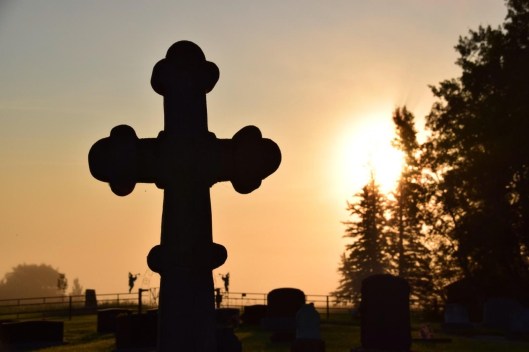
The title notes to Psalm 22 state, “A psalm of David.” But while this is David’s psalm, it’s entirely about Jesus—about our Savior’s personal thoughts and experience—about his suffering and death. Nowhere is this expressed more clearly than in the opening lines posted above: Dogs surround me, a pack of villains encircles me; they pierce my hands and my feet.

d-adam-4

Landestreu sunrise — photo courtesy of Donald Adam

On the rock hill called Golgotha, surrounded by his taunting enemies, Jesus is stripped naked. His hands and feet are pierced as he is nailed to the cross and lifted up for the whole world to see. The helpless Christ silently laments, “All my bones are on display; people stare and gloat over me.”

All four Gospels record what happens next. The soldiers divide up Jesus clothes and gamble for his seamless garment. “Let’s not tear it,” they said to one another. “Let’s decide by lot who will get it.” This happened that the scripture might be fulfilled that said, “They divided my clothes among them and cast lots for my garment.” So this is what the soldiers did (John 19:24).

Thoughtless Roman soldiers fulfilled what David penned nine centuries earlier. But was Jesus truly helpless? If he was helpless, he was helpless by design. If he was forsaken by his Father, he was forsaken by choice—his choice. This was a course of action that Jesus willingly chose. He lay down his life. The Lamb of God suffered and died that our sins might be atoned, that we may receive a full pardon. Redemption has come; the price has been paid in full—paid in blood.

The turning point in this psalm is found in the last stanza above. With unvoiced words Jesus cries out to be rescued and delivered from death. Three days later his prayer was answered through his bodily resurrection. Ultimately, Jesus triumphed over death, hell and the grave. By faith his suffering brings our redemption and victory.

Response: Lord Jesus, my thanks flows to you. You were forsaken that I might have eternal life. Thank you for thinking of me rather than of yourself. You deserve all praise. Amen.

Your Turn: What is the right response to the love Jesus showed?

What Does Jesus’ Suffering Mean for You?

10 Monday Jul 2017

Posted by davidkitz in Devotionals, Psalm 22, Psalms

≈ 5 Comments

Tags

blood, crucifixion, Dieppe Raid, God, Heart, Jesus, messianic, mother's love, mother's womb, prophetic, redemption, Savior, the cross, victim

Reading:                                      Psalm 22

(Verses 9-15)

Yet you brought me out of the womb;
you made me trust in you, even at my mother’s breast.
From birth I was cast on you;
from my mother’s womb you have been my God.
Do not be far from me,
for trouble is near and there is no one to help.
Many bulls surround me;
strong bulls of Bashan encircle me.
Roaring lions that tear their prey
open their mouths wide against me.
I am poured out like water,
and all my bones are out of joint.
My heart has turned to wax; it has melted within me.
My mouth is dried up like a potsherd,
and my tongue sticks to the roof of my mouth;
you lay me in the dust of death
(NIV).

Reflection
As we continue this meditation on Psalm 22, it is essential that we bear in mind that prophetically this is the crucifixion psalm. As stated in my previous post, the crucifixion is portrayed from the victim’s point of view—Jesus’ point of view. Through the poetic medium of this psalm, Jesus is speaking. He is describing his thoughts amid the horror of his excruciating affliction.

jesus_on_cross_crucifixion-full (2)

He was pierced for our transgressions.

I recently read an account of the disastrous Dieppe Raid of 1942. In one scene from the carnage on the Normandy beach, a horribly-mangled, mortally-wounded young man is trapped in coils of razor wire. With his last desperate breaths what does he do? He cries out for his mother. In the pain of death the thoughts of grown men often turn to the soothing remembrance of their mother’s love. For our Savior it was no different. But from birth Jesus put his trust in God. Yet you brought me out of the womb; you made me trust in you, even at my mother’s breast. From birth I was cast on you; from my mother’s womb you have been my God.

As Jesus hangs pinned to the cross, he is encircled by his accusers—strong bulls of Bashan—who hurl insults at him. Peering down at his mangled and bleeding body he laments, I am poured out like water, and all my bones are out of joint. My heart has turned to wax; it has melted within me.

As the heat of the day builds, the trickle of blood continues and severe dehydration sets in. He cries out, “I thirst!” (John 19:28). This is our Savior’s confession—his stark reality—a reality he endured for our redemption. My mouth is dried up like a potsherd, and my tongue sticks to the roof of my mouth; you lay me in the dust of death.

Response: Father God, thank you for sending your Son Jesus to this cruel world to suffer on my behalf. Your unconditional love for me was demonstrated on the cross for all to see. I thank you. Amen.

Your Turn: What does Jesus suffering mean for you?

The Tree of Eternal Life

22 Monday May 2017

Posted by davidkitz in Psalm 1, Psalms

≈ 1 Comment

Tags

Bible, Christ, disobedience, forgiveness, fruit, fruitful, grace, Mount Calvary, redemption, righteous, Tree of Knowledge of Good and Evil, Tree of Life, trees, wicked

Reading:                                            Psalm 1

Blessed is the one
who does not walk in step with the wicked
or stand in the way that sinners take
or sit in the company of mockers,
but whose delight is in the law of the L
ORD,
and who meditates on his law day and night.
That person is like a tree planted by streams of water,
which yields its fruit in season
and whose leaf does not wither—
whatever they do prospers.

Not so the wicked!
They are like chaff that the wind blows away.
Therefore the wicked will not stand in the judgment,
nor sinners in the assembly of the righteous.

 For the LORD watches over the way of the righteous,
but the way of the wicked leads to destruction
(NIV).

Reflection

Have you ever noticed the prominent role that trees play in the Bible? The creation account in Genesis begins with God planting two very special trees in the Garden of Eden: the Tree of Life and the Tree of Knowledge of Good and Evil. After our first parent’s disobedience, we were banned from access the Tree of Life. But the amazing, good news of the Bible is that at the end of the book, in the last chapter of the Book of Revelation, God restores our access to the Tree of Life (Revelations 22:1-5).

2017-05-20

The fresh green leaves of spring — photo by David Kitz

In a very real sense the Bible is a story about trees.

Here in the very first Psalm, the life of the righteous is compared to a fruit-bearing tree, flourishing by streams of water. The psalmist presents a picture of tranquil beauty. Is that a picture of my life? Sometimes I feel more like windblown chaff—rather worthless and lacking a sense of direction.

But that’s where the other tree at the heart of the Bible comes into play. It stands on a hill called Calvary. There my Savior bled and died. There he showed me my true worth. There my sins were washed away, never to be remembered again. That’s where I became righteous, not by works that I had done, but by the grace and forgiveness of Christ.

What a beautiful tree! The tree on Mount Calvary isn’t beautiful because of its leaves. It’s beautiful because of its fruit—the fruit of redemption purchased by the blood of Jesus. My righteousness is solely due to him.

Response: Dear Lord Jesus, thank you for your sacrifice. Help me to always remember that you are the true source of my righteousness. At your prompting help me to rid myself of the worthless chaff in my life. Wind of God, blow on me. Water of life, refresh my soul. May I be fruitful, Lord, for you. Amen.

Your Turn: Have you knelt before the tree on Mount Calvary?

He Brought Israel Out

10 Friday Mar 2017

Posted by davidkitz in Psalm 136, Psalms

≈ 3 Comments

Tags

blood, death, dominion, faith, Jesus, Passover, Passover Lamb, redeemed, redemption, slavery, victory

Reading:                                         Psalm 136

(Verses 10-16)

to him who struck down the firstborn of Egypt
His love endures forever.

and brought Israel out from among them
His love endures forever.
with a mighty hand and outstretched arm;
His love endures forever.

to him who divided the Red Sea asunder
His love endures forever.
and brought Israel through the midst of it,
His love endures forever.
but swept Pharaoh and his army into the Red Sea;
His love endures forever.

 to him who led his people through the wilderness;
His love endures forever (NIV).

Reflection

Because of the responsive pattern employed by the psalmist, today’s reading from Psalm 136 begins as an incomplete sentence. When combined with yesterday’s reading, the full sentence reads: Give thanks to the Lord of lords, to him who struck down the firstborn of Egypt, and brought Israel out from among them with a mighty hand and outstretched arm. 

D Adam lone tree

He brought us out to bring us in — photo courtesy of Donald Adam

Whereas yesterday’s reading from Psalm 136 celebrates the wonders of God’s creation, today’s reading celebrates the wonders of God’s redemption of Israel. The LORD delivered the captive souls of Israel from hard labor and slavery in Egypt. Though the eldest child of the Egyptians perished, the Hebrew children were spared from the Angel of Death, because the blood of the Passover lamb was applied to the doorposts of their home. See Exodus 12.

At a grim Passover celebration 2,000 years ago, Jesus suffered and died on the cross as our Passover Lamb. When we place our faith in his sacrificial blood, we too are spared from death. Jesus tasted death on our behalf, so that we can live eternally with him.  As believers we can rejoice and draw comfort from these words. “Where, O death, is your victory? Where, O death, is your sting?” The sting of death is sin, and the power of sin is the law. But thanks be to God! He gives us the victory through our Lord Jesus Christ (1 Corinthians 15:55-57).

Through the blood of Christ the power of Satan is broken and we are brought into the dominion of the Son of God. For he has rescued us from the dominion of darkness and brought us into the kingdom of the Son he loves, in whom we have redemption, the forgiveness of sins (Colossians 1:13-14).

Surely as redeemed children of God—children personally redeemed by the Son of God—we have this testimony: His love endures forever.

Response: Father God, I thank you for redeeming me with the sacred blood of Jesus. I have been adopted into your family. You are my heavenly Father. I can never thank you enough. Amen.

Your Turn: Are you living in a new kingdom, under a new king—King Jesus?

Full Redemption

14 Tuesday Feb 2017

Posted by davidkitz in Psalm 130, Psalms

≈ 9 Comments

Tags

Israel, Jesus, Messiah, Prayer, prophetic, redeem, Redeemer, redemption, Savior, the LORD, waiting, waiting on God

Reading:                                        Psalm 130

(Verses 5-8)

I wait for the LORD, my whole being waits,
and in his word I put my hope.
 I wait for the L
ORD
more than watchmen wait for the morning,
more than watchmen wait for the morning.

Israel, put your hope in the LORD,
for with the L
ORD is unfailing love
and with him is full redemption.
He himself will redeem Israel
from all their sins
(NIV).

Reflection

Psalm 130 can be divided into three distinct sections: the confessional approach, the wait, and the LORD’s response. In yesterday’s reading, we looked at the confessional approach. The psalmist came before his God and poured out his heart. In desperation he pleaded for mercy and forgiveness. At the same time he acknowledged the extreme mercy of God. He knows full well that this God forgives the undeserving.

555

Joy comes in the morning — photo by David Kitz

Now, the psalmist waits: “I wait for the LORD, my soul waits, and in his word I put my hope. My soul waits for the LORD more than watchmen wait for the morning, more than watchmen wait for the morning.”

This is the step that is most frequently missing in our communion with God. We cannot wait; we rush on. We have things to do, people to see, a life to live. We have no time to wait for the LORD’s response. But without waiting, we cannot hear the LORD speaking to our hearts. The rush of life takes over. We do not hear our Savior speak the words of divine pardon. Prayer is reduced to one way communication. We speak into the silence, and allow no time for the God of silence to answer back.

But in his time of silence, the psalmist heard from God. In this third section of the psalm, the author is no longer addressing the LORD in prayer. Now he is addresses us. The wait is over. God has spoken, and now the psalmist rises to his feet. He has a message from the LORD for us—the Israel of God.

Israel, put your hope in the LORD, for with the LORD is unfailing love and with him is full redemption.

For Israel, there was a long wait. The promised Messiah was a long time in coming. The centuries slipped by. Generation after generation passed on, but the word of the LORD stood firm. A Redeemer was coming. With an uncanny accuracy the Old Testament prophets foretold the coming of the Christ. Many of those prophetic words are found in the Psalms. The Lord Jesus is our fount of hope—our Redeemer. He is love and the source of unfailing love. It is he who with his blood redeemed us, body, soul and spirit. In the person of Jesus, God took on human flesh. On the cross he fulfilled these words. “He himself will redeem Israel from all their sins.”

Now that’s a heaven sent valentine!

Response: Father God, I thank you for your prophetic word because it points to Jesus. Lord Jesus, thank you for laying down your life to redeem me, and all those who bow before you in repentance. Amen.

Your Turn: Are you taking time to listen for the voice of God in prayer?

The Cup of Salvation

13 Tuesday Dec 2016

Posted by davidkitz in Psalm 116, Psalms

≈ 1 Comment

Tags

coffee, communion, communion cup, cup of salvation, hot coffee, java, Jesus, Jesus' blood, redemption, salvation, the cross

Reading:                                         Psalm 116

(Verses 10-14)

I trusted in the LORD when I said,
“I am greatly afflicted”;
in my alarm I said, “Everyone is a liar.”

What shall I return to the LORD

for all his goodness to me?

I will lift up the cup of salvation
and call on the name of the L
ORD.
I will fulfill my vows to the L
ORD
in the presence of all his people
(NIV).

Reflection

This morning started out a bit different. Rather than beginning my day with a hot cup of coffee, I had a few sips of water and then headed off for some blood tests. I missed that cup of coffee, but in reality going without it was no great hardship. Some view their morning shot of caffeine like a cup of salvation—early morning salvation. Today’s reading from Psalm 116 speaks of the cup of salvation. I’m sure the psalmist wasn’t speaking of his morning cup of java. What was he speaking of?

img_20161208_102645

Your cup of salvation? — photo by David Kitz

The psalmist lifts up the cup of salvation and calls on the name of the LORD in response to this question: What shall I return to the LORD for all his goodness to me? The psalmist lifts up his cup as an expression of thanksgiving to the LORD for the salvation he has received from God.

But salvation came at a price. To purchase our salvation, Jesus lifted up a cup and brought it to his lips. It was a cup of unimaginable suffering. In the Garden of Gethsemane he prayed, “Father, if you are willing, take this cup from me; yet not my will, but yours be done” (Luke 22:42). He was referring to the anguish he would endure. In the hours that followed, Jesus drained that cup of suffering dry, even as his body was drained of blood on a cruel Roman cross.

In the great plan of redemption, Jesus’ cup of suffering became for us a cup of salvation. He drank it down to save us from the cruel consequences of our sin. Jesus assumed the full penalty of our disobedience, rebellion and devious ways. But now by faith, we can become active recipients of the salvation that he won on our behalf.

The next time you bring the communion cup to your lips you are remembering—acknowledging in a tangible way—that Jesus’ blood was shed for you. Salvation came through a cup of suffering. We can rejoice in that truth because early on a Sunday morning Jesus’ dead body was jolted back to life. He was resurrected by the power of the Father, and one day the body of every believer will be resurrected too.

Tomorrow morning, I’ll return to my usual routine and I’ll enjoy my hot cup of coffee. But the cup I savour most is the cup the Lord provides—the cup of salvation.

Response: Lord Jesus, I thank you for your sacrifice. You gave yourself fully for me. On a crude wooden cross you purchased my salvation. Today, help me fulfill my vows to the LORD. Amen.

Your Turn: Which cup do you appreciate most?

The Redemption Cycle

21 Monday Nov 2016

Posted by davidkitz in Psalm 107, Psalms

≈ 1 Comment

Tags

blessings, cyclical, God, prosperity, redemption, steadfast, thankful, thanks

Reading:                                         Psalm 107                                                               

 (Verses 33-43)

He turned rivers into a desert,
flowing springs into thirsty ground,
and fruitful land into a salt waste,
because of the wickedness of those who lived there.
He turned the desert into pools of water
and the parched ground into flowing springs;
there he brought the hungry to live,
and they founded a city where they could settle.
They sowed fields and planted vineyards that yielded a fruitful harvest;
he blessed them, and their numbers greatly increased,

and he did not let their herds diminish.

Then their numbers decreased, and they were humbled
by oppression, calamity and sorrow;
he who pours contempt on nobles
made them wander in a trackless waste.
But he lifted the needy out of their affliction
and increased their families like flocks.
The upright see and rejoice, but all the wicked shut their mouths.

Let the one who is wise heed these things
and ponder the loving deeds of the L
ORD (NIV).

Reflection

I wish I could say that I was always steadfast in my love for the LORD and steadfast in the pursuit of His will and purpose for my life. But in reality my walk with God has been cyclical. There have been times when I have sensed God’s great love and intimacy, and other times when I have followed the Lord from a distance.

img_20161108_172430_hdr

Saskatchewan sunset — photo by David Kitz

In this concluding portion of Psalm 107, we see the cyclical nature of our love for God on full display. As people cry out to the LORD in their distress, He hears and answers their prayers. The LORD blesses them abundantly. He turned the desert into pools of water and the parched ground into flowing springs;
there he brought the hungry to live, and they founded a city where they could settle.

But with increased prosperity, people often forget God who brought the blessing. They assume that wealth and good times have arrived simply because of their own effort. Yes, God expects us to exert some effort. But we can put in effort and get no increase. Ultimately, God is the source of every blessing. Every good and perfect gift is from above, coming down from the Father of the heavenly lights, who does not change like shifting shadows (James 1:17).

When we forget to be thankful, we set ourselves on a downward spiral where again we will soon need to repent and call out to God for mercy. We need national and personal steadfastness to the LORD.

Response: Father God, thank you for my personal story of redemption. Help me to always remain thankful. I don’t want to be trapped in a cycle. Help me to be steadfast in pursuing your will. Amen.

Your Turn: Are you steadfast or cyclical in your pursuit of God?

Vignettes of Redemption

15 Tuesday Nov 2016

Posted by davidkitz in Psalm 107, Psalms

≈ 1 Comment

Tags

calling on God, enduring love, redeemed, redemption, redemption stories, the LORD, trouble

Reading:                                         Psalm 107                                                                 

 (Verses 1-9)

Give thanks to the LORD, for he is good;
his love endures forever.

 Let the redeemed of the LORD tell their story—
those he redeemed from the hand of the foe,
those he gathered from the lands,
from east and west, from north and south.

Some wandered in desert wastelands,
finding no way to a city where they could settle.
They were hungry and thirsty,
and their lives ebbed away.
Then they cried out to the L
ORD in their trouble,
and he delivered them from their distress.
He led them by a straight way
to a city where they could settle.
Let them give thanks to the L
ORD for his unfailing love
and his wonderful deeds for mankind,
for he satisfies the thirsty
and fills the hungry with good things
(NIV).

Reflection

This psalm is different. It’s unique among the 150 psalms in the Bible because it presents us with various vignettes of redemption—brief stories or scenes where the LORD rains down his mercy and rescues the wayward and downtrodden.

img_20160427_160747

Fountains on the grounds of Government House, Victoria, BC — photo by David Kitz

In verse two the psalmist declares, “Let the redeemed of the LORD tell their story.” Then as the psalm progresses, he goes on to describe five scenes of redemption. The desert-stranded traveler is rescued; the prisoner is set free, the rebellious are brought healing and encouragement, those lost in a storm-tossed sea find a safe harbor, and prosperity returns to the inhabitants of a parched wasteland. In every situation, the great God of heaven hears the cries of His people and shows them His plenteous mercy.

What a good God we serve! With the psalmist we exclaim, “His love endures forever!”

If you are a follower of Jesus, you too have a story of redemption to tell. He rescued you from a downward hellish spiral just as real as those described in this psalm. Some rescues come in the nick of time; others come early on. We might call them preemptive rescues. Whatever your personal story, it’s a testimony worth telling. God intervened in your life, and the good news is He stands ready to intervene again at the very moment you cry out to Him.

He loves to redeem His people. It’s in His nature. Spiritually, are you in a desert place? Call out to Him.

Response: Father God, I am thankful that I have a story of redemption. You intervened in my life. Thank you for satisfying my thirst and filling my life with good things. Amen.

Your Turn: Do you have a story of redemption to tell? Was it preemptive or in the nick of time?

They Forgot God

10 Thursday Nov 2016

Posted by davidkitz in Psalm 106, Psalms

≈ 6 Comments

Tags

forgetting, redemption, remembering, Remembrance Day, sacrifice, salvation, slavery, soldiers, Veterans Day

Reading:                                          Psalm 106                                                                 

 (Verses 16-27)

In the camp they grew envious of Moses
and of Aaron, who was consecrated to the L
ORD.
The earth opened up and swallowed Dathan;
it buried the company of Abiram.
Fire blazed among their followers; a flame consumed the wicked.
At Horeb they made a calf and worshiped an idol cast from metal.
They exchanged their glorious God
for an image of a bull, which eats grass.
They forgot the God who saved them,
who had done great things in Egypt,
miracles in the land of Ham and awesome deeds by the Red Sea.
So he said he would destroy them—
had not Moses, his chosen one,
stood in the breach before him
to keep his wrath from destroying them.

Then they despised the pleasant land;
they did not believe his promise.
They grumbled in their tents and did not obey the L
ORD.
So he swore to them with uplifted hand
that he would make them fall in the wilderness,
make their descendants fall among the nations
and scatter them throughout the lands
(NIV).

Reflection

Tomorrow is Remembrance Day in Canada and Veterans Day in United States. That day was chosen to honor and remember our fallen soldiers because November 11, 1918 marked the end of the First World War. It is fitting that we remember those who sacrificed their lives in the defense of their country and its way of life. To forget them would be a disgrace to them and to the nation. We owe our liberty to these brave men and women. Lest we forget is the oft repeated motto of this day of solemn remembrance.

img_20160918_183232

Ottawa River marsh, Orleans, ON — photo by David Kitz

Today’s reading from Psalm 106 highlights the importance of a nation’s collective memory. Israel was redeemed and set free from slavery in Egypt by the miracle working power of God, yet in a few short years they forgot, or chose to ignore the LORD who rescued them. They forgot the God who saved them, who had done great things in Egypt, miracles in the land of Ham and awesome deeds by the Red Sea.

There are serious consequences for the nation that forgets, or turns its back on the God who called its people out of darkness. The same is true on a personal level. We need to routinely mind ourselves that Jesus paid the ultimate price to redeem us and make us his very own.

Response: Father God, I thank you for my personal redemption. Lead me in the right path for my life. Guide our nation. May there be a collective turning to you in repentance and faith. Amen.

Your Turn: Is there such a thing as national redemption or salvation, or is it always personal?

He Opened the Rock

07 Monday Nov 2016

Posted by davidkitz in Psalm 105, Psalms

≈ 1 Comment

Tags

Abraham, blood, Christ, God's covenant, life-giving water, new life, promised land, redemption, water

Reading:                                         Psalm 105                                                                 

 (Verses 39-45)

He spread out a cloud as a covering,
and a fire to give light at night.
They asked, and he brought them quail;
he fed them well with the bread of heaven.
He opened the rock, and water gushed out;
it flowed like a river in the desert.

For he remembered his holy promise
given to his servant Abraham.
He brought out his people with rejoicing,
his chosen ones with shouts of joy;
he gave them the lands of the nations,
and they fell heir to what others had toiled for—
that they might keep his precepts
and observe his laws.

Praise the LORD (NIV).

Reflection

In the previous readings from Psalm 105, the psalmist described the LORD’s covenant relationship with His chosen people, the descendants of Abraham. The psalm then proceeds to outline the redemption and release of the people of Israel from cruel bondage and oppression in Egypt. Today’s reading celebrates God’s provision for them in the wilderness and their arrival in the Promised Land.

img_20160905_175947

He opened the rock, and water gushed out — Bilberry Creek, Orleans, ON — photo by David Kitz

He brought out his people with rejoicing, his chosen ones with shouts of joy; he gave them the lands of the nations, and they fell heir to what others had toiled for—that they might keep his precepts and observe his laws.

There is a striking parallel between the Old Testament redemption of the people of Israel and the New Testament redemption of the Christian believer. Paul, the apostle draws our attention to this parallel experience in the tenth chapter of his first letter to the Corinthians. For I do not want you to be ignorant of the fact, brothers and sisters, that our ancestors were all under the cloud and that they all passed through the sea. They were all baptized into Moses in the cloud and in the sea. They all ate the same spiritual food and drank the same spiritual drink; for they drank from the spiritual rock that accompanied them, and that rock was Christ (1 Corinthians 10:1-4).

In today’s psalm portion we read: He opened the rock, and water gushed out; it flowed like a river in the desert. From Paul’s writing we understand that the opened rock was Christ. On the cross he was opened and water and blood gushed out. Life-giving—life-changing redemption flowed out to all who will receive him. Yet to all who did receive him, to those who believed in his name, he gave the right to become children of God—children born not of natural descent, nor of human decision or a husband’s will, but born of God (John 1:12-13).

Response: Father God, I live in thanksgiving for the rock that was opened for my redemption. By faith I receive you. Today, I drink in your new life and your redemptive purpose for me. Praise the LORD! Amen.

Your Turn: Is the Rock accompanying you as you travel through the wilderness of this life?

← Older posts
Newer posts →

Psalms 365: Develop a Life of Worship and Prayer

Psalms 365 Volume II

Psalms 365 vol 3
— Psalms 365 Volume III

Psalms

Recent posts

  • The Oil of Joy March 19, 2026
  • Jesus Prays on the Mount of Olives March 18, 2026
  • Your Complaint to God March 18, 2026
  • Jesus Predicts Peter’s Restoration March 17, 2026
  • Adversity Brings Character Development March 17, 2026
  • Jesus Predicts Peter’s Denial March 16, 2026
  • What brings success? March 16, 2026

Calendar

March 2026
M T W T F S S
 1
2345678
9101112131415
16171819202122
23242526272829
3031  
« Feb    

Blog Posts

Comments

  • davidkitz on Jesus Predicts Peter’s Denial
  • Jesus Predicts Peter’s Denial – QuietMomentsWithGod on Jesus Predicts Peter’s Denial
  • davidkitz on What brings success?

Blog at WordPress.com.

Privacy & Cookies: This site uses cookies. By continuing to use this website, you agree to their use.
To find out more, including how to control cookies, see here: Cookie Policy
  • Subscribe Subscribed
    • I love the Psalms
    • Join 1,382 other subscribers
    • Already have a WordPress.com account? Log in now.
    • I love the Psalms
    • Subscribe Subscribed
    • Sign up
    • Log in
    • Report this content
    • View site in Reader
    • Manage subscriptions
    • Collapse this bar
 

Loading Comments...