Tags
commands, delight, God's word, life, obey, praise, promise, Righteousness, selfish, teach, the LORD, understanding
I will praise Him!

All creation speaks its praise — photo courtesy of Karen Kitz

21 Saturday Apr 2018
Posted in Bible, Psalm 119, Psalms, Saturday's Psalm
Tags
commands, delight, God's word, life, obey, praise, promise, Righteousness, selfish, teach, the LORD, understanding
All creation speaks its praise — photo courtesy of Karen Kitz
20 Friday Apr 2018
Posted in Bible, Devotionals, Psalm 104, Psalms
Tags
Christ, creatures, faith, faith in God, labor, lion, Lord, praise, renewal, resurrection, sea, seasons, spring, winter
Reading: Psalm 104
(Verses 19-26)
He made the moon to mark the seasons,
and the sun knows when to go down.
You bring darkness, it becomes night,
and all the beasts of the forest prowl.
The lions roar for their prey
and seek their food from God.
The sun rises, and they steal away;
they return and lie down in their dens.
Then people go out to their work,
to their labor until evening.
How many are your works, LORD!
In wisdom you made them all;
the earth is full of your creatures.
There is the sea, vast and spacious,
teeming with creatures beyond number—
living things both large and small.
There the ships go to and fro,
and Leviathan, which you formed to frolic there (NIV).
Reflection
There is something to be said for routine and regularity. By that I mean the whole vast rhythm of life. Today’s reading from Psalm 104 eloquently reflects the rhythm of life from sunrise to sunset and the return to sunrise once again.

The earth is full of your creatures — photo credit Warwick Burgess
This past weekend, though the calendar said mid April, we were hit hard by freezing rain, and arctic winds. Everyone is anxious for spring like weather to finally make an appearance. Enough of this snow and cold already! The seasons are changing. They always have. In this part of the world, all we can do is prepare for the transition; we can’t speed its coming or prevent it from happening.
In reality, transitions are about rest and renewal. The setting sun lets us know that it’s time to stop our labor and get the rest that is essential for our well-being. In the same way as winter approaches trees and vegetation go dormant, but after a season of rest the great spring renewal will surely come. It always has, and so it will continue until the end of time.
In the same way there is a renewal promised to us at the end this life. Resurrection happens every spring and it will happen to this old clod of earth as well. That’s the great hope we have because of Christ. The word of God has been planted in our hearts and it will bear fruit now and in eternity, which has been promised to those who believe. Do you believe? Do you have faith in the changing seasons? Do you have faith in the One who created the seasons?
Response: Father God, thank you for designing the days, months and seasons. I want to draw near to you in every season of life. How many are your works, LORD! You are worthy of all praise. Renew and refresh me in the seasons of my life. Amen.
Your Turn: What is your favorite season? Why?
19 Thursday Apr 2018
Posted in Bible, Devotionals, Psalm 104, Psalms
Tags
animals, birds, creation, God, God's care, Jesus, oceans, planet, provision, vegetation, western bluebird
Reading: Psalm 104
(Verses 10-18)
He makes springs pour water into the ravines;
it flows between the mountains.
They give water to all the beasts of the field;
the wild donkeys quench their thirst.
The birds of the sky nest by the waters;
they sing among the branches.
He waters the mountains from his upper chambers;
the land is satisfied by the fruit of his work.
He makes grass grow for the cattle,
and plants for people to cultivate—
bringing forth food from the earth:
wine that gladdens human hearts,
oil to make their faces shine,
and bread that sustains their hearts.
The trees of the LORD are well watered,
the cedars of Lebanon that he planted.
There the birds make their nests;
the stork has its home in the junipers.
The high mountains belong to the wild goats;
the crags are a refuge for the hyrax (NIV).
Reflection
Psalm 104 is a poetic ode in praise of God’s creation. In yesterday’s reading, God lay down the foundations of the earth, and set the boundaries of the oceans. Today we see how He waters the land and covers it with vegetation. He populates it with a vast variety of animals and birds.

Western bluebird — photo by Warwick Burgess
He makes grass grow for the cattle, and plants for people to cultivate—bringing forth food from the earth: wine that gladdens human hearts, oil to make their faces shine, and bread that sustains their hearts.
In this psalm we see a God of teeming abundance. He is an extravagant God of infinite variety. Consider for a moment the various kinds of birds from the soaring eagle to the tiny hummingbird. Our God cares for them all. Jesus gives us these words of assurance concerning the humble sparrow, “not one of them will fall to the ground outside your Father’s care” (Matthew 10:29). In reality, all of today’s reading is about the Father’s care and His rich provision for all His creatures.
Have your eyes been opened to the LORD’s rich provision for you? He’s not a stingy God. Those who call on Him will have their needs met. Perhaps David said it best: The LORD is my shepherd, I lack nothing (Psalm 23:1).
Response: Father God, you created such a wonderful world! I marvel at your handiwork. I thank you for the great variety of lifeforms on this planet—the plants, the birds, the animals. Help us appreciate and safeguard your creation. Amen.
Your Turn: How can we go beyond words of thanks and demonstrate our thanks for God’s creation?
18 Wednesday Apr 2018
Posted in Bible, Devotionals, Psalm 104, Psalms
Tags
creation, Creator, foundation, Genesis, Horseshoe Bay, mountains, North Vancouver, praise, psalm of praise, Spirit of God, the LORD
Reading: Psalm 104
(Verses 1-9)
Praise the LORD, my soul.
LORD my God, you are very great;
you are clothed with splendor and majesty.
The LORD wraps himself in light as with a garment;
he stretches out the heavens like a tent
and lays the beams of his upper chambers on their waters.
He makes the clouds his chariot
and rides on the wings of the wind.
He makes winds his messengers, flames of fire his servants.
He set the earth on its foundations; it can never be moved.
You covered it with the watery depths as with a garment;
the waters stood above the mountains.
But at your rebuke the waters fled,
at the sound of your thunder they took to flight;
they flowed over the mountains, they went down into the valleys,
to the place you assigned for them.
You set a boundary they cannot cross;
never again will they cover the earth (NIV).
Reflection
All of Psalm 104 is a poetic ode in praise of God’s creation. Like the previous psalm it begins and ends by calling us to praise the LORD.

At your rebuke the waters fled — Horseshoe Bay, North Vancouver, BC — photo by David Kitz
The psalmist begins his description of creation at the beginning. By that I mean he begins with the LORD in the heavens. He is the source point. It’s a very fitting start since the LORD called into being all of creation—all that we can see, hear and examine. In the creation account we read, “the Spirit of God was hovering over the waters” (Genesis 1:2). But here we read a more detailed—a more poetic description: The LORD wraps himself in light as with a garment; he stretches out the heavens like a tent and lays the beams of his upper chambers on their waters.
The God of the heavens separates the waters of sky and earth. He establishes the boundaries of the oceans. These are the events of the second and third day in the Genesis account, but here they are portrayed as a seamless whole. In all this, the LORD is the actor, the mover, the sole performer. He makes winds his messengers, flames of fire his servants. He set the earth on its foundations; it can never be moved.
And what a performance this is! It has no equal and no precedent. Land, sky and sea are His handiwork and do His bidding. They respond to the Master Builder, and so should we.
Response: LORD God, you are very great! I kneel before you, my awesome God! I praise you for your creation. It is magnificent because you are more than magnificent. All praise belongs to you. Amen.
Your Turn: Is there a particular aspect of creation that you are drawn to or enjoy, for example the stars, the oceans or the animal kingdom?
17 Tuesday Apr 2018
Tags
Bible, Caiaphas, David Kitz, Herod Antipas, Jesus, king, Longinus, Marcus, Palm Sunday, Pontius Pilate, redemption, resurrection, Roman, Roman centurion, The Soldier Who Killed a King
The Soldier Who Killed a King was voted the top book in the biblical fiction category for 2017 by the Christian book service, Interviews and Reviews. Having recently read this book, it’s not difficult to see why. It plays like a high-stakes movie in your mind.
Canadian author, David Kitz, closely examines the events occurring between Jesus’ entry into Jerusalem on Palm Sunday and his resurrection a few days later. But we see all these events from a unique perspective—through the eyes of a Roman soldier.
This engaging, hard-hitting narrative is a distillation of Kitz’s study and prayer over a 50-year span, when as pastor, educator and Bible dramatist, he steeped himself in the wonder of this story. As a novelist, he reveals profound respect for the historical record through his characterization of Marcus Longinus, a Roman centurion who is unwillingly caught in the power struggles of the day. Furthermore, Kitz stays true to the scriptural account by integrating more than a hundred quotes from the Gospels into the story text.
Three corrupt men, Herod Antipas, “the Fox,” Pontius Pilate, “the Badger,” and Joseph Caiaphas, “the Weasel” have an insatiable lust for money and power. They each attempt to use the political tumult of the time for their own gain. In contrast to the stench of their machinations, Kitz offers a deep sense of Jesus, the donkey-riding King, as the man in whom all of heaven is invested. Jesus emerges in the Roman world offering an entirely new way for humankind to be reborn.
Above all else, this is a story of personal redemption. Marcus, the Roman Centurion is like us, caught between worlds. Who is his king? Why?
The Son of God shows unlimited compassion through healing the sick and feeding the hungry, and his purity catches the attention of the masses in a drama that still shakes the world, one aching, open, humble heart at a time. Do you need to rediscover the power of the cross? The Soldier Who Killed a King will take you there.
17 Tuesday Apr 2018
Posted in Bible, Devotionals, Psalm 103, Psalms
Tags
angels, dominion, evil, force, free moral agents, good, kingdom, love, Lover, obey, praise, praise the LORD, rapist, Sally Meadows, teacher, throne, worship
Reading: Psalm 103
(Verses 19-22)
The LORD has established his throne in heaven,
and his kingdom rules over all.
Praise the LORD, you his angels,
you mighty ones who do his bidding,
who obey his word.
Praise the LORD, all his heavenly hosts,
you his servants who do his will.
Praise the LORD, all his works
everywhere in his dominion.
Praise the LORD, my soul (NIV).
Reflection
Have you ever found yourself in a chaotic situation where you immediately ask this question, “Who’s in charge here?” Sometimes I have walked into an unruly classroom where that question is very pertinent. The teacher may be nowhere in sight, or is absorbed with one or two students while bedlam reigns supreme all around. It takes very little to lose control of thirty thirteen-year-olds. Trust me on this point: It takes a wide range of skills to get a class of youngsters motivated, engaged and moving in the same direction.

All His works will sing His praise, Bohemian waxwing — photo courtesy of Christian recording artist Sally Meadows
Today’s reading from the psalms gives us an answer to that age old question, “Who’s in charge here?” The LORD has established his throne in heaven, and his kingdom rules over all.
So there is your answer. The LORD is in charge here. He’s in charge of everything—the orderly and the controlled, and the seemingly random. Above this world and its mixture of order, routine, bedlam and chaos, the LORD sits enthroned as ruler over all.
Often the LORD is blamed for the bedlam and the chaos, but is that a fair assessment? Yes, He could control everything—every detail, but then there would be no humans on this planet—no free moral agents. To be human is to have the ability to choose both good and evil. If God sovereignly decided that we could only do good, then we would be robotic humanoids—not true humans at all.
Can there be true love, if love is enforced from on high rather than freely chosen? Can there be genuine worship, if this divine privilege is induced by the Creator rather than willingly offered by the created? No, the LORD calls for our worship, but He forces it on no one. Forced love isn’t love at all. The God I serve is not a rapist; He is a true lover.
So I will freely join with all creation to praise Him. I will join the angels, the heavenly hosts and all his works everywhere in his dominion. I will join in praising my Creator and my Redeemer, who was born in a stable and raised high to suffer on a cross, but now His throne is established in heaven and His kingdom rules over all. He is the One I will praise. How about you?
Response: Father God, I appreciate the free will that you have given me. I choose to worship you. You are the lover of my soul. Thank you for all you have done. I owe my life to Jesus. Amen.
Your Turn: Do we choose God or does He choose us, or are both answers correct?
16 Monday Apr 2018
Posted in Bible, Devotionals, Psalm 103, Psalms
Tags
astronomers, compassion, dust, everlasting, galaxies, God, God's love, Milky Way, Righteousness, stars, the LORD
Reading: Psalm 103
(Verses 13-18)
As a father has compassion on his children,
so the LORD has compassion on those who fear him;
for he knows how we are formed,
he remembers that we are dust.
The life of mortals is like grass,
they flourish like a flower of the field;
the wind blows over it and it is gone,
and its place remembers it no more.
But from everlasting to everlasting
the LORD’s love is with those who fear him,
and his righteousness with their children’s children—
with those who keep his covenant
and remember to obey his precepts (NIV).
Reflection
Last week I heard a news report that stated that new research has led astronomers to realize that there are ten times more stars in the universe than they previously estimated. A minor miscalculation you may assume. Not really!

Stairway to the moon — photo courtesy of Donald Adam
Our own Milky Way galaxy contains about 400 billion stars of varying sizes. The most recent astronomical estimate counts 170 billion galaxies in the observable universe. To do a rough calculation of the total number of stars in the universe, you multiply 400 billion stars X 170 billion galaxies and get a number with twenty-five zeroes tacked on the end. Now that’s astronomical!
So how does that ginormous number connect with today’s reading from Psalm 103? It tells us the LORD’s concern and care for us are nothing short of astounding. The God who created all that vast array of stars cares even for you and me. As a father has compassion on his children, so the LORD has compassion on those who fear him; for he knows how we are formed, he remembers that we are dust.
Dust… We are nothing more than dust. From dust we were formed and to dust we will return. (See Genesis 3:19.) Yet despite our humble origin and our body’s grave fate, we have a God who has the compassion of a father for his children. Furthermore, this care and compassion is not fleeting; it’s eternal. Our time on earth may be transitory, but God’s love for us persists. But from everlasting to everlasting the LORD’s love is with those who fear him, and his righteousness with their children’s children—with those who keep his covenant and remember to obey his precepts.
Why would a God of such infinite capacity commit Himself to a creature of such miniscule significance? The LORD is mind-boggling; God is completely mind-boggling! You can see it in the stars. You can count it in the grains of dust—dust that the LORD loves!
Response: Father God, you are matchless. There is none like you. Your compassion is astonishing. Your grandeur is beyond my ability to even imagine. I love you, LORD. I bow in awe and amazement. Keep me in your care. Amen.
Your Turn: How big is your God? How tiny are you before this awesome God?
15 Sunday Apr 2018
Posted in Bible, Psalm 119, Psalms, Sunday's Psalm
Tags
commands, deceit, faithfulness, Law, meditate, praise, shame, sorrow, strength, the LORD, word of God

Apple blossoms — photo courtesy of Karen Kitz
14 Saturday Apr 2018
Posted in Bible, Psalm 119, Psalms, Saturday's Psalm
Tags
arrogant, commands, counselors, delight, Law, laws, meditate, slander, word of God

Rose blossoms celebrating the goodness of the Lord — photo by David Kitz
13 Friday Apr 2018
Posted in Bible, Devotionals, Psalm 103, Psalms
Tags
accuser, anger, character, compassionate, Durham ON, forgiveness, grace, gracious, love of God, Moses, Psalms, Satan, the LORD, transgressions
Reading: Psalm 103
(Verses 7-12)
He made known his ways to Moses,
his deeds to the people of Israel:
The LORD is compassionate and gracious,
slow to anger, abounding in love.
He will not always accuse,
nor will he harbor his anger forever;
he does not treat us as our sins deserve
or repay us according to our iniquities.
For as high as the heavens are above the earth,
so great is his love for those who fear him;
as far as the east is from the west,
so far has he removed our transgressions from us (NIV).
Reflection
Here is a little secret that will be a secret no longer: Of all the psalms, Psalm 103 is my favorite.
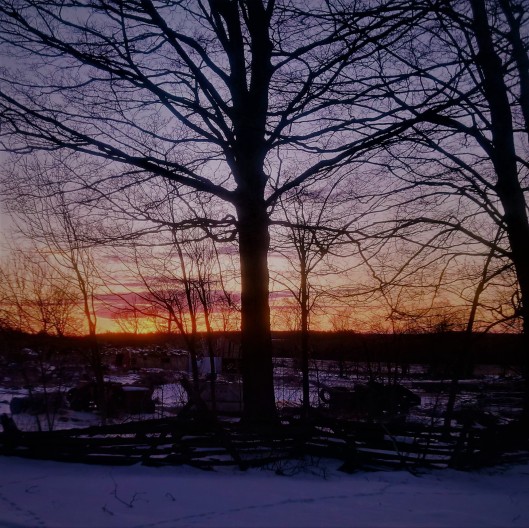
Seeing God’s grace in the setting sun, near Durham, ON — photo by David Kitz
Why do I have such a deep love for this psalm? The answer lies in what the psalm tells us about God. The LORD is compassionate and gracious, slow to anger, abounding in love.
That sentence should be etched on our hearts and minds. The character of God is revealed in these traits. I stand in need of a God who has these qualities because by nature I am the polar opposite. In various situations I have lacked compassion. I have reasoned that those who suffer are getting what they deserve. Rather than extent grace, I have a tendency to be judgmental. When things don’t go my way, I can be quick tempered rather than slow to anger. I like to think I am loving, but I’m not sure others would always agree.
The amazing truth is that despite all our shortcomings God still loves you and me. He [the LORD] will not always accuse, nor will he harbor his anger forever; he does not treat us as our sins deserve or repay us according to our iniquities.
Satan is the accuser; God is the merciful forgiver. Sometimes I think in our minds we have reversed those roles. That’s why this psalm acts as such a powerful antidote to wrong thinking. Do you think God cannot forgive you because of some past transgression? Think again. Psalm 103 tells us to view God differently. He is more compassionate than we can imagine, more loving than we can fathom, more patient than we can comprehend.
For as high as the heavens are above the earth, so great is his love for those who fear him; as far as the east is from the west, so far has he removed our transgressions from us.
Infinite—our God’s love and compassion are infinite. Enough said.
Response: Father God, because of your love, mercy and grace I want to serve you. Please accept my feeble attempts at loving you back. Your forgiveness leaves me with a debt of love I cannot pay. Amen.
Your Turn: What is your favorite psalm? Why?
 I love the Psalms